

Mindfulness training for stress management: a randomised controlled study of medical and psychology students
Open accessThe DOI matches its Crossref record; 50 of the 51 references it cites were found in a registry or an index.
Abstract
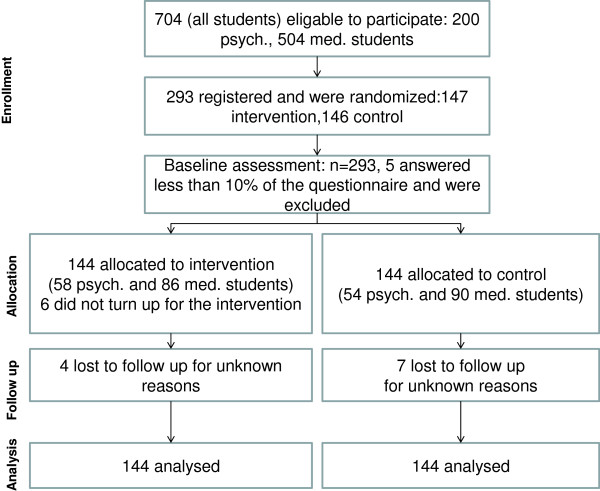
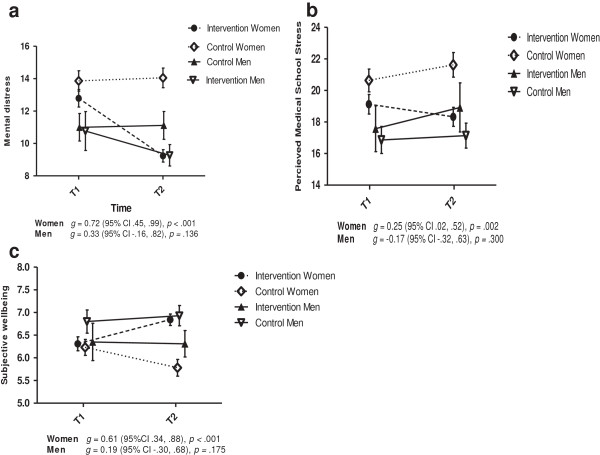
Background: Distress and burnout among medical and psychology professionals are commonly reported and have implications for the quality of patient care delivered. Already in the course of university studies, medicine and psychology students report mental distress and low life satisfaction. There is a need for interventions that promote better coping skills in students in order to prevent distress and future burnout. This study examines the effect of a seven-week Mindfulness-Based Stress Reduction (MBSR) programme on mental distress, study stress, burnout, subjective well-being, and mindfulness of medical and psychology students. Methods: A total of 288 students (mean age = 23 years, 76% female) from the University of Oslo and the University of Tromsø were randomly allocated to an intervention or control group. The control group continued with their standard university courses and received no intervention. Participants were evaluated using self-reported measures both before and after the intervention. These were: the ‘General Health Questionnaire, Maslach Burnout Inventory Student version, Perceived Medical School Stress, Subjective Well-being, and Five Facet Mindfulness Questionnaire’ and additional indices of compliance. Results: Following the intervention, a moderate effect on mental distress (Hedges’g 0.65, CI = .41, .88), and a small effect on both subjective well-being (Hedges’g 0.40, CI = .27, .63) and the mindfulness facet ‘non-reacting’ (Hedges’g 0.33, CI = .10, .56) were found in the intervention group compared with the control group. A higher level of programme attendance and reported mindfulness exercises predicted these changes. Significant effects were only found for female students who additionally reported reduced study stress and an increase in the mindfulness facet ‘non-judging’. Gender specific effects of participation in the MBSR programme have not previously been reported, and gender differences in the present study are discussed. Conclusion: Female medical and psychology students experienced significant positive improvements in mental distress, study stress, subjective well-being and mindfulness after participating in the MBSR programme. Trial registration: NCT00892138
Overview
The claims and statistics of this paper haven’t been checked yet.
Free: it reads the open-access text and checks the first 5 claims that cite a source we can check. Create a free account to check every claim.
Integrity signals
Registry
Cites
Statistics
Figures
Verification
Claims the paper makes
The claims and statistics of this paper haven’t been checked yet.
Free: it reads the open-access text and checks the first 5 claims that cite a source we can check. Create a free account to check every claim.
Claims other papers make about this one
Each is checked against this paper’s own text: does it say what the citing paper says it does?
The cited source says what the claim attributes to it.
In the citing paper
“It was suggested that unpleasant experiences are part of the intervention effect [124]”
In the citing paper
“One study reported that some participants “…experienced adverse emotional, mental or bodily states during mindfulness practice. However, this was not considered to be unintended effects of the intervention, but rather expected results of becoming more mindful of inner experiences” (page 5) [124].”
Self-check
Percentages, sums and reported differences re-computed from the paper’s own numbers.
The self-check needs the paper’s full text.
Citations
Cites
Cochrane Handbook for Systematic Reviews of Interventions: Cochrane Book Series
(2008) · doi:10.1002/9780470712184 · Cited by 25,048
Using Self-Report Assessment Methods to Explore Facets of Mindfulness
Baer, R. A., Smith, G. T., Hopkins, J., Krietemeyer, J., & Toney, L. (2006) · Assessment · doi:10.1177/1073191105283504 · Cited by 7,511 · cited 4×
“Suboptimal properties of the non-reactivity facet in a student sample have also been found in previous research [37].”
BackgroundMethodResultInfluential(1988) · NFER-Nelson eBooks · Cited by 5,560
Burnout and Engagement in University Students: A Cross-National Study
Schaufeli, W. B., Martínez, I. M., Pinto, A. M., Salanova, M., & Bakker, A. B. (2002) · Journal of Cross-Cultural Psychology · doi:10.1177/0022022102033005003 · Cited by 3,418
Baer, R. A., Smith, G. T., Lykins, E., Button, D., Krietemeyer, J., Sauer, S., Walsh, E., Duggan, D., & Williams, J. M. G. (2008) · Assessment · doi:10.1177/1073191107313003 · Cited by 2,930 · cited 2×
“However, we have found only small effect sizes for mindfulness, and the level of mindfulness measured at T2 is considerably lower than those reported in studies of experienced meditators [48].”
ResultDyrbye, L. N., Thomas, M. R., & Shanafelt, T. D. (2006) · Academic Medicine · doi:10.1097/00001888-200604000-00009 · Cited by 2,909
Assessment of Mindfulness by Self-Report: The Kentucky Inventory of Mindfulness Skills
Baer, R. A., Smith, G. T., & Allen, K. B. (2004) · Assessment · doi:10.1177/1073191104268029 · Cited by 2,298 · cited 1×
“By learning mindfulness, student mental health can be enhanced 2a), perceived medical school stress (Figure 2b) and subjective wellbeing (Figure 2c) including means and SD. through an improved ability to observe with an acceptance that is non-judging and non-reacting [47].”
BackgroundBurnout and Medical Errors Among American Surgeons
Shanafelt, T. D., Balch, C. M., Bechamps, G., Russell, T., Dyrbye, L., Satele, D., Collicott, P., Novotny, P. J., Sloan, J., & Freischlag, J. (2010) · Annals of Surgery · doi:10.1097/sla.0b013e3181bfdab3 · Cited by 2,099 · cited 1×
“Distress among medical and psychology professionals is associated with poorer patient care [1], a higher risk of future medical errors [2], as well as depression, anxiety and reduced life satisfaction [3-5].”
BackgroundEffects of mindfulness-based stress reduction on medical and premedical students
Shapiro, S. L., Schwartz, G. E., & Bonner, G. (1998) · Journal of Behavioral Medicine · doi:10.1023/a:1018700829825 · Cited by 1,493
How to Select, Calculate, and Interpret Effect Sizes
Durlak, J. A. (2009) · Journal of Pediatric Psychology · doi:10.1093/jpepsy/jsp004 · Cited by 1,446
Research works printed but not linked: 2
- De Vibe M Mindfulness training for stress management: a two-centre randomised controlled study of medical and psychology students with long-term follow up 2009 ClinicalTrials.gov [Internet] 2009-. Available from http://clinicaltrials.gov/ct2/show/NCT00892138. Identifier NCT00892138 PMC3751423 23941053
- Kabat-Zinn J Full Chatastrophe Living: Using the wisdom of your body and mind to face stress, pain and illness 2005 New York: Bantam Dell
Cited by
Mindfulness-based stress reduction for healthy individuals: A meta-analysis
Khoury, B., Sharma, M., Rush, S. E., & Fournier, C. (2015) · Journal of Psychosomatic Research · doi:10.1016/j.jpsychores.2015.03.009 · Cited by 1,617
“[52] Medical and psychology students (288) 23.”
In their own words: stressors facing medical students in the millennial generation
Hill, M. R., Goicochea, S., & Merlo, L. J. (2018) · Medical Education Online · doi:10.1080/10872981.2018.1530558 · Cited by 530
Galante, J., Dufour, G., Vainre, M., Wagner, A. P., Stochl, J., Benton, A., Lathia, N., Howarth, E., & Jones, P. B. (2018) · The Lancet Public Health · doi:10.1016/s2468-2667(17)30231-1 · Cited by 516
A systematic review and meta-analysis of psychological interventions to improve mental wellbeing
van Agteren, J., Iasiello, M., Lo, L., Bartholomaeus, J., Kopsaftis, Z., Carey, M., & Kyrios, M. (2021) · Nature Human Behaviour · doi:10.1038/s41562-021-01093-w · Cited by 510
Huberty, J., Green, J., Glissmann, C., Larkey, L., Puzia, M., & Lee, C. (2019) · JMIR mHealth and uHealth · doi:10.2196/14273 · Cited by 488
“Men are often underrepresented in mindfulness interventions, and women may be more engaged in the intervention [85] and experience greater benefit [86].”
Bamber, M. D., & Kraenzle Schneider, J. (2016) · Educational Research Review · doi:10.1016/j.edurev.2015.12.004 · Cited by 348
Quaglia, J. T., Braun, S. E., Freeman, S. P., McDaniel, M. A., & Brown, K. W. (2016) · Psychological Assessment · doi:10.1037/pas0000268 · Cited by 341
Sharma, M., & Rush, S. E. (2014) · Journal of Evidence-Based Complementary & Alternative Medicine · doi:10.1177/2156587214543143 · Cited by 342
“Total sample sizes (n) were typically between 30 and 155, with 3 studies having sample sizes less than 30(60,67) and 3 studies with sample sizes more than 155.(69,75,78) The samples with which the mindfulness-based stress reduction interventions for stress management were conducted were in undergraduate students (n 1⁄…”
BackgroundMethodResultMcConville, J., McAleer, R., & Hahne, A. (2017) · EXPLORE · doi:10.1016/j.explore.2016.10.002 · Cited by 336
“Due to higher baseline levels of stress and anxiety, the mindfulness training may have had a greater effect on mental distress and well-being as described in relation to increased baseline levels of neuroticism in a group of medical and psychology students.(38) Programs allowing self-selection by students with higher…”
BackgroundGalante, J., Friedrich, C., Dawson, A. F., Modrego-Alarcón, M., Gebbing, P., Delgado-Suárez, I., Gupta, R., Dean, L., Dalgleish, T., White, I. R., et al. (2021) · PLOS Medicine · doi:10.1371/journal.pmed.1003481 · Cited by 319
“…Healthy adults (1) 34 (7.7) 62% Anx, Dep Mindful attention training (1) a) Cognitively–Based Compassion Training (3) merged with b) Health discussion (3) Post–int De Vibe 2013 [72,124–128], Norway 293 Health undergraduate students (1) 24 (5.2) 76% Dis, WB, Mindf, Real func MBSR (3) No…”
InfluentialDawson, A. F., Brown, W. W., Anderson, J., Datta, B., Donald, J. N., Hong, K., Allan, S., Mole, T. B., Jones, P. B., & Galante, J. (2020) · Applied Psychology: Health and Well-Being · doi:10.1111/aphw.12188 · Cited by 312
Adverse events in meditation practices and meditation‐based therapies: a systematic review
Farias, M., Maraldi, E., Wallenkampf, K. C., & Lucchetti, G. (2020) · Acta Psychiatrica Scandinavica · doi:10.1111/acps.13225 · Cited by 262
Waqas, A., Khan, S., Sharif, W., Khalid, U., & Ali, A. (2015) · PeerJ · doi:10.7717/peerj.840 · Cited by 240
Lomas, T., Medina, J. C., Ivtzan, I., Rupprecht, S., & Eiroa-Orosa, F. J. (2019) · The Journal of Positive Psychology · doi:10.1080/17439760.2018.1519588 · Cited by 236
Lomas, T., Medina, J. C., Ivtzan, I., Rupprecht, S., Hart, R., & Eiroa-Orosa, F. J. (2017) · European Journal of Work and Organizational Psychology · doi:10.1080/1359432x.2017.1308924 · Cited by 230
“…beneficial outcomes in relation to an MBI, including four HQTs, which reported on outcomes including spiritual experiences (Shapiro et al., 1998), job satisfaction (Hülsheger et al., 2013), professional quality of life (Duchemin et al., 2015), and subjective well-being (De Vibe et al., 2013).”
BackgroundLamothe, M., Rondeau, É., Malboeuf-Hurtubise, C., Duval, M., & Sultan, S. (2016) · Complementary Therapies in Medicine · doi:10.1016/j.ctim.2015.11.001 · Cited by 228
Daya, Z., & Hearn, J. H. (2018) · Medical Teacher · doi:10.1080/0142159x.2017.1394999 · Cited by 224
A systematic review of the impact of mindfulness on the well‐being of healthcare professionals
Lomas, T., Medina, J. C., Ivtzan, I., Rupprecht, S., & Eiroa‐Orosa, F. J. (2018) · Journal of Clinical Psychology · doi:10.1002/jclp.22515 · Cited by 222
“…find a significant improvement in burnout certainly observed trends in the predicted direction (e.g., Mealer et al., 2014; Poulin, Mackenzie, Soloway, & Karayolas, 2008; Raab, Sogge, Parker, & Flament, 2015; Shapiro et al., 2005), although De Vibe et al. (2013) found trends in the other direction.”
BackgrounddeVibe, M., Bjørndal, A., Fattah, S., Dyrdal, G. M., Halland, E., & Tanner-Smith, E. E. (2017) · Campbell Systematic Reviews: Better Evidence for a Better World · doi:10.4073/csr.2017.11 · Cited by 198
Self-citationEffects of Mindfulness Meditation on college student anxiety: a meta-analysis
Bamber, M. D., & Morpeth, E. (2019) · Mindfulness · doi:10.1007/s12671-018-0965-5 · Cited by 198
Shi, M., Wang, X., Bian, Y., & Wang, L. (2015) · BMC Medical Education · doi:10.1186/s12909-015-0297-2 · Cited by 197
de Vibe, M., Solhaug, I., Rosenvinge, J. H., Tyssen, R., Hanley, A., & Garland, E. (2018) · PLOS ONE · doi:10.1371/journal.pone.0196053 · Cited by 192
Self-citationJennings, P. A., Doyle, S., Oh, Y., Rasheed, D., Frank, J. L., & Brown, J. L. (2019) · Journal of School Psychology · doi:10.1016/j.jsp.2019.07.009 · Cited by 186
Kötter, T., Wagner, J., Brüheim, L., & Voltmer, E. (2017) · BMC Medical Education · doi:10.1186/s12909-017-1091-0 · Cited by 172
“This corresponds to a medium effect size, which we interpret as clinically relevant in comparison with the absolute changes achieved in interventional studies aiming to reduce Medical School related stress [13, 30].”
BackgroundResultSpinelli, C., Wisener, M., & Khoury, B. (2019) · Journal of Psychosomatic Research · doi:10.1016/j.jpsychores.2019.03.003 · Cited by 170
Psychological interventions to foster resilience in healthcare students
Kunzler, A. M., Helmreich, I., König, J., Chmitorz, A., Wessa, M., Binder, H., & Lieb, K. (2020) · Cochrane Database of Systematic Reviews · doi:10.1002/14651858.cd013684 · Cited by 165
Aherne, D., Farrant, K., Hickey, L., Hickey, E., McGrath, L., & McGrath, D. (2016) · BMC Medical Education · doi:10.1186/s12909-016-0728-8 · Cited by 158
“The personal and psychological difficulties experienced by many medical doctors and students can negatively impact on patient care [1, 2, 9, 16, 27]; reduce the ability to empathise with patients [28], and decrease the ability to connect with patients [29].”
BackgroundResultA realist informed mixed-methods evaluation of Schwartz Center Rounds® in England
Maben, J., Taylor, C., Dawson, J., Leamy, M., McCarthy, I., Reynolds, E., Ross, S., Shuldham, C., Bennett, L., & Foot, C. (2018) · Health Services and Delivery Research · doi:10.3310/hsdr06370 · Cited by 154
Does Personality Moderate the Effects of Mindfulness Training for Medical and Psychology Students?
de Vibe, M., Solhaug, I., Tyssen, R., Friborg, O., Rosenvinge, J. H., Sørlie, T., Halland, E., & Bjørndal, A. (2015) · Mindfulness · doi:10.1007/s12671-013-0258-y · Cited by 144
“Previously, we have reported that mindfulness training had a moderately large effect on mental distress and subjective well-being and a small effect on study stress among female medical and psychology students (de Vibe et al. 2013).”
BackgroundSelf-citationLomas, T., Medina, J. C., Ivtzan, I., Rupprecht, S., & Eiroa-Orosa, F. J. (2019) · Mindfulness · doi:10.1007/s12671-018-1062-5 · Cited by 152
“…SWLS, Job Satisfaction Scale; McConachie et al. 2014: Warwick-Edinburgh Mental Well-Being Scale; Raab et al. 2015: Quality of life inventory; De Vibe et al. 2013: SubjectiveWellbeing Scale; Shapiro et al. 2005: SWLS; Shapiro et al. 1998: Index of Core Spiritual Experiences; West et al.…”
BackgroundInfluentialEffects of mindfulness meditation on mindfulness, mental well-being, and perceived stress
Zollars, I., Poirier, T. I., & Pailden, J. (2019) · Currents in Pharmacy Teaching and Learning · doi:10.1016/j.cptl.2019.06.005 · Cited by 151
Stress management interventions for college students: A systematic review and meta-analysis.
Amanvermez, Y., Rahmadiana, M., Karyotaki, E., de Wit, L., Ebert, D. D., Kessler, R. C., & Cuijpers, P. (2023) · Clinical Psychology: Science and Practice · doi:10.1111/cpsp.12342 · Cited by 148
Kang, Y., Rahrig, H., Eichel, K., Niles, H. F., Rocha, T., Lepp, N. E., Gold, J., & Britton, W. B. (2018) · Journal of School Psychology · doi:10.1016/j.jsp.2018.03.004 · Cited by 143
“Data from our own lab (Rojiani et al., 2017) and others (de Vibe et al., 2013) showed gender at as an outcome moderator in adults (for a review, see Katz & Toner, 2013), such that female adults were generally shown to respond to meditation intervention favorably whereas male counterparts did not.”
Medical School Strategies to Address Student Well-Being: A National Survey
Dyrbye, L. N., Sciolla, A., Dekhtyar, M., Rajasekaran, S. K., Allgood, J. A., Rea, M. M., Knight, A. P., Haywood, A. M., Smith, S., & Stephens, M. B. (2019) · Academic Medicine · doi:10.1097/acm.0000000000002611 · Cited by 178
What is known about paediatric nurse burnout: a scoping review
Buckley, L., Berta, W. B., Cleverley, K., Medeiros, C., & Widger, K. A. (2020) · Human Resources for Health · doi:10.1186/s12960-020-0451-8 · Cited by 183
“[70] found a marginal improvement in pediatric nurse burnout with smartphonebased intervention vs. traditional mindfulness interventions, studies investigating mindfulness interventions in other healthcare populations reported mixed results [144] [145] [146] [147] .”
ResultPhang, C. K., Mukhtar, F., Ibrahim, N., Keng, S., & Sidik, S. M. (2015) · Advances in Health Sciences Education · doi:10.1007/s10459-015-9591-3 · Cited by 168
“The finding that the intervention resulted in significant reductions in mental distress (GHQ) is consistent with the finding of a study by De Vibe et al. (2013), which demonstrated that a 6-week, 1.”
BackgroundResultHalladay, J. E., Dawdy, J. L., McNamara, I. F., Chen, A. J., Vitoroulis, I., McInnes, N., & Munn, C. (2019) · Mindfulness · doi:10.1007/s12671-018-0979-z · Cited by 124
Mindfulness-based stress reduction for residents: A randomized controlled trial
Verweij, H., van Ravesteijn, H., van Hooff, M. L. M., Lagro-Janssen, A. L. M., & Speckens, A. E. M. (2018) · Journal of General Internal Medicine · doi:10.1007/s11606-017-4249-x · Cited by 122
“This is consistent with previous studies on mindfulness in healthy participants.(15,24,25) Although the differences between the two groups were modest, they are comparable to those in other studies on MBSR in non-clinical populations.”
Medical Student Stress, Burnout and Depression in Trinidad and Tobago
Youssef, F. F. (2016) · Academic Psychiatry · doi:10.1007/s40596-015-0468-9 · Cited by 145
“Indeed, mindfulness and exercise are now being shown to not only prevent burnout but also reverse it [23, 24].”
Frögéli, E., Djordjevic, A., Rudman, A., Livheim, F., & Gustavsson, P. (2016) · Anxiety, Stress, & Coping · doi:10.1080/10615806.2015.1025765 · Cited by 114
Galante, J., Friedrich, C., Collaboration of Mindfulness Trials (CoMinT), Aeamla-Or, N., Arts-de Jong, M., Barrett, B., Bögels, S. M., Buitelaar, J. K., Checovich, M. M., Christopher, M. S., et al. (2023) · Nature Mental Health · doi:10.1038/s44220-023-00081-5 · Cited by 113
Dyrbye, L. N., Shanafelt, T. D., Werner, L., Sood, A., Satele, D., & Wolanskyj, A. P. (2017) · Journal of General Internal Medicine · doi:10.1007/s11606-017-4171-2 · Cited by 139
Greeson, J. M., Toohey, M. J., & Pearce, M. (2015) · EXPLORE · doi:10.1016/j.explore.2015.02.003 · Cited by 133
Kechter, A., Amaro, H., & Black, D. S. (2019) · Mindfulness · doi:10.1007/s12671-018-0974-4 · Cited by 102
Mindfulness in Healthcare Professionals and Medical Education
Chmielewski, J., Łoś, K., & Łuczyński, W. (2021) · International Journal of Occupational Medicine and Environmental Health · doi:10.13075/ijomeh.1896.01542 · Cited by 96
Modrego‐Alarcón, M., del Hoyo, Y. L., García‐Campayo, J., Pérez‐Aranda, A., Navarro‐Gil, M., Beltrán-Ruiz, M., Morillo, H., Delgado-Suárez, I., Oliván-Arévalo, R., & Montero‐Marín, J. (2021) · Behaviour Research and Therapy · doi:10.1016/j.brat.2021.103866 · Cited by 123
O’Driscoll, M., Byrne, S., Mc Gillicuddy, A., Lambert, S., & Sahm, L. J. (2017) · Psychology, Health & Medicine · doi:10.1080/13548506.2017.1280178 · Cited by 93
“Another study showed a significant increase in the non-reactive mindfulness facets (de Vibe et al., 2013).”
BackgroundInfluentialThe Safety of Mindfulness-Based Interventions: a Systematic Review of Randomized Controlled Trials
Wong, S. Y. S., Chan, J. Y. C., Zhang, D., Lee, E. K. P., & Tsoi, K. K. F. (2018) · Mindfulness · doi:10.1007/s12671-018-0897-0 · Cited by 92
Sousa, G. M. D., Lima-Araújo, G. L. D., Araújo, D. B. D., & Sousa, M. B. C. D. (2021) · BMC Psychology · doi:10.1186/s40359-021-00520-x · Cited by 92
“The same intervention time reduced mental distress and study-related stress, while also increasing subjective well-being [26].”
BackgroundMethodResilience in Veterinary Students and the Predictive Role of Mindfulness and Self-Compassion
McArthur, M., Mansfield, C., Matthew, S., Zaki, S., Brand, C., Andrews, J., & Hazel, S. (2017) · Journal of Veterinary Medical Education · doi:10.3138/jvme.0116-027r1 · Cited by 90
Mindfulness vs psychoeducation in adult ADHD: a randomized controlled trial
Hoxhaj, E., Sadohara, C., Borel, P., D’Amelio, R., Sobanski, E., Müller, H., Feige, B., Matthies, S., & Philipsen, A. (2018) · European Archives of Psychiatry and Clinical Neuroscience · doi:10.1007/s00406-018-0868-4 · Cited by 70
González-Martín, A. M., Aibar‐Almazán, A., Rivas-Campo, Y., Castellote‐Caballero, Y., & Carcelén‐Fraile, M. D. C. (2023) · Frontiers in Public Health · doi:10.3389/fpubh.2023.1284632 · Cited by 160
A psychological flexibility -based intervention for Burnout:A randomized controlled trial
Puolakanaho, A., Tolvanen, A., Kinnunen, S. M., & Lappalainen, R. (2020) · Journal of Contextual Behavioral Science · doi:10.1016/j.jcbs.2019.11.007 · Cited by 82
Hathaisaard, C., Wannarit, K., & Pattanaseri, K. (2022) · Asian Journal of Psychiatry · doi:10.1016/j.ajp.2021.102997 · Cited by 82
Neufeld, A., Mossière, A. M., & Malin, G. (2020) · Medical Teacher · doi:10.1080/0142159x.2020.1813876 · Cited by 112
“While some studies have found no effects of gender on wellbeing (Hojat et al. 1999; Tempski et al. 2015), others have demonstrated important differences, such as in mindfulness (and effects of mindfulness interventions) (De Vibe et al. 2013).”
BackgroundLong-term mental health effects of mindfulness training: A 4-year follow-up study
Solhaug, I., de Vibe, M., Friborg, O., Sørlie, T., Tyssen, R., Bjørndal, A., & Rosenvinge, J. H. (2019) · Mindfulness · doi:10.1007/s12671-019-01100-2 · Cited by 80
Self-citationKlein, A., Taieb, O., Xavier, S., Baubet, T., & Reyre, A. (2020) · EXPLORE · doi:10.1016/j.explore.2019.09.002 · Cited by 79
Komariah, M., Ibrahim, K., Pahria, T., Rahayuwati, L., & Somantri, I. (2022) · Healthcare · doi:10.3390/healthcare11010026 · Cited by 132
“In addition, based on research on 288 students, mindfulness did not show a positive reaction to both reducing stress and student welfare [26].”
Kuhlmann, S. M., Huss, M., Bürger, A., & Hammerle, F. (2016) · BMC Medical Education · doi:10.1186/s12909-016-0833-8 · Cited by 74
Mindfulness-based stress reduction for medical students: a narrative review
Polle, E., & Gair, J. (2021) · Canadian Medical Education Journal · doi:10.36834/cmej.68406 · Cited by 95
An Examination of Mindfulness-Based Programs in US Medical Schools
Barnes, N., Hattan, P., Black, D. S., & Schuman‐Olivier, Z. (2016) · Mindfulness · doi:10.1007/s12671-016-0623-8 · Cited by 82
“Research has demonstrated reduced psychological distress in medical students who receive mindfulness training (de Vibe et al. 2013; Phang et al. 2016; Phang et al. 2015; Rosenzweig et al. 2003; Shapiro et al. 1998).”
BackgroundLo, K., Waterland, J., Todd, P., Gupta, T., Bearman, M., Hassed, C., & Keating, J. L. (2018) · Advances in Health Sciences Education · doi:10.1007/s10459-017-9770-5 · Cited by 70
Wagner, J. A., Bermudez-Millan, A., Damio, G., Segura-Perez, S., Chhabra, J., Vergara, C., Feinn, R., & Perez-Escamilla, R. (2016) · Diabetes Research and Clinical Practice · doi:10.1016/j.diabres.2016.07.022 · Cited by 67
“[43] de Vibe M, Solhaug I, Tyssen R, Friborg O, Rosenvinge JH, Sorlie T, Bjorndal A.”
BackgroundZarotti, N., Povah, C., & Simpson, J. (2020) · Personality and Individual Differences · doi:10.1016/j.paid.2019.109795 · Cited by 67
Yamada, Y., Klugar, M., Ivanova, K., & Oborna, I. (2014) · BMC Medical Education · doi:10.1186/s12909-014-0256-3 · Cited by 66
“Examining possible factors that could alter this negative association could have important implications for medical schools in the development of effective measures to improve student’s well-being and academic performance [20].”
BackgroundNeto, A. D., Lucchetti, A. L. G., Ezequiel, O. D. S., & Lucchetti, G. (2019) · Journal of General Internal Medicine · doi:10.1007/s11606-019-05284-0 · Cited by 85
Recabarren, R. E., Gaillard, C., Guillod, M., & Martin-Soelch, C. (2019) · Frontiers in Psychiatry · doi:10.3389/fpsyt.2019.00088 · Cited by 66
Moore, S., Barbour, R., Ngo, H., Sinclair, C., Chambers, R., Auret, K., Hassed, C., & Playford, D. (2020) · BMC Medical Education · doi:10.1186/s12909-020-02015-6 · Cited by 65
Mindfulness-based programs and school adjustment: A systematic review and meta-analysis
Mettler, J., Khoury, B., Zito, S., Sadowski, I., & Heath, N. L. (2023) · Journal of School Psychology · doi:10.1016/j.jsp.2022.10.007 · Cited by 107
Mantzios, M., Egan, H., Bahia, H., Hussain, M., & Keyte, R. (2018) · Health Psychology Open · doi:10.1177/2055102918762701 · Cited by 65
“For instance, De Vibe et al. (2013) found that 7 weeks of mindfulness training benefitted students differently when explored by sex.”
BackgroundBurnout prevalence and correlates amongst Colombian dental students: the STRESSCODE study.
Mafla, A. C., Villa-Torres, L., Polychronopoulou, A., Polanco, H., Moreno-Juvinao, V., Parra-Galvis, D., Duran, C., Villalobos, M., & Divaris, K. (2015) · European journal of dental education · doi:10.1111/eje.12128 · Cited by 63
Loving-Kindness Meditation Promotes Mental Health in University Students
Totzeck, C., Teismann, T., Hofmann, S. G., von Brachel, R., Pflug, V., Wannemüller, A., & Margraf, J. (2020) · Mindfulness · doi:10.1007/s12671-020-01375-w · Cited by 63
The global prevalence of burnout among general practitioners: a systematic review and meta-analysis
Shen, X., Xu, H., Feng, J. B., Ye, J., Lu, Z., & Gan, Y. (2022) · Family Practice · doi:10.1093/fampra/cmab180 · Cited by 75
Interventions to reduce burnout in students: A systematic review and meta-analysis
Madigan, D. J., Kim, L. E., & Glandorf, H. L. (2023) · European Journal of Psychology of Education · doi:10.1007/s10212-023-00731-3 · Cited by 131
“A total of six interventions adopted this approach (two randomized controlled trials, four quasi-experimental studies; Clarkson et al., 2019; de Vibe et al., 2013; Lo et al. 2021; Modrego-Alarcon et al., 2021; O’Driscoll et al., 2019a; O’Driscoll et al., 2019b).”
Hypnosis in patients with perceived stress – a systematic review
Fisch, S., Brinkhaus, B., & Teut, M. (2017) · BMC Complementary and Alternative Medicine · doi:10.1186/s12906-017-1806-0 · Cited by 49
A Retrospective Systematic Review of Diversity Variables in Mindfulness Research, 2000–2016
Eichel, K., Gawande, R., Acabchuk, R. L., Palitsky, R., Chau, S., Pham, A., Cheaito, A., Yam, D., Lipsky, J., Dumais, T., et al. (2021) · Mindfulness · doi:10.1007/s12671-021-01715-4 · Cited by 65
Walsh, A. L., Lehmann, S. W., Zabinski, J. S., Truskey, M. P., Purvis, T. E., Gould, N. F., Stagno, S. J., & Chisolm, M. S. (2019) · Academic Psychiatry · doi:10.1007/s40596-019-01023-z · Cited by 92
Folk, D. P., & Dunn, E. W. (2023) · Nature Human Behaviour · doi:10.1038/s41562-023-01651-4 · Cited by 84
“…compared with participants in a life-as-usual control condition ( n per condition ≈ 144), Norwegian university students exhibited significantly greater subjective wellbeing right after completing a 7 week MBSR programme 58 , although these effects did not persist at a follow-up years later 59 .”
BackgroundHanley, A. W., de Vibe, M., Solhaug, I., Farb, N., Goldin, P. R., Gross, J. J., & Garland, E. L. (2021) · Stress and Health · doi:10.1002/smi.3035 · Cited by 56
Self-citationAdolescent sex differences in response to a mindfulness intervention: A call for research
Bluth, K., Roberson, P. N. E., & Girdler, S. S. (2017) · Journal of Child and Family Studies · doi:10.1007/s10826-017-0696-6 · Cited by 55
“In one modified (7-week) MBSR course, female medical students reported significantly greater decreases in stress, mental distress, and subjective wellbeing compared to male medical students over the course of the intervention (De Vibe et al., 2013).”
BackgroundResultMental health during COVID-19 pandemic: the role of optimism and emotional regulation
Krifa, I., van Zyl, L. E., Braham, A., Ben Nasr, S., & Shankland, R. (2022) · International Journal of Environmental Research and Public Health · doi:10.3390/ijerph19031413 · Cited by 55
“Mindfulness-based programs have also been shown to be effective on student stress [97] and psychological distress [98,99], which can notably be due to greater emotional regulation, as shown in school-based mindfulness programs [100].”
BackgroundInsight into resident burnout, mental wellness, and coping mechanisms early in the COVID-19 pandemic
Zoorob, D., Shah, S., La Saevig, D., Murphy, C., Aouthmany, S., & Brickman, K. (2021) · PLOS ONE · doi:10.1371/journal.pone.0250104 · Cited by 55
Solhaug, I., Eriksen, T. E., de Vibe, M., Haavind, H., Friborg, O., Sørlie, T., & Rosenvinge, J. H. (2016) · Mindfulness · doi:10.1007/s12671-016-0521-0 · Cited by 54
Self-citationWitt, K., Boland, A. K., Lamblin, M., McGorry, P. D., Veness, B. G., Cipriani, A., Hawton, K., Harvey, S. B., Christensen, H. M., & Robinson, J. (2019) · Evidence-Based Mental Health · doi:10.1136/ebmental-2019-300082 · Cited by 70
Salazar de Pablo, G., De Micheli, A., Solmi, M., Oliver, D., Catalan, A., Verdino, V., Di Maggio, L., Bonoldi, I., Radua, J., Baccaredda Boy, O., et al. (2021) · Harvard Review of Psychiatry · doi:10.1097/hrp.0000000000000294 · Cited by 51
Alhawatmeh, H. N., Rababa, M., Alfaqih, M. A., Albataineh, R., Hweidi, I. M., & Awwad, A. A. (2022) · Advances in Medical Education and Practice · doi:10.2147/amep.s348062 · Cited by 62
“In addition, mindfulness meditation has been used among non-clinical populations, including students, therapists, and prisoners.(18) Whilst mindfulness meditation has been shown by a growing body of evidence to improve several health and psychological well-being measures in university students, its mechanism of action…”
MethodPhang, C. K., Chiang, K. C., Ng, A. L. O., Keng, S., & Oei, T. P. S. (2015) · Mindfulness · doi:10.1007/s12671-015-0399-2 · Cited by 61
Lampe, L. C., & Müller‐Hilke, B. (2021) · BMC Medical Education · doi:10.1186/s12909-021-02578-y · Cited by 65
Johnson, B. T., Acabchuk, R. L., George, E. A., Nardi, W. R., Sun, S., Salmoirago‐Blotcher, E., Scharf, J. Y., & Loucks, E. B. (2023) · Mindfulness · doi:10.1007/s12671-023-02212-6 · Cited by 72
“A second study reported that some (number not specified) students experienced unpleasant emotional, mental, or bodily states during mindfulness practice; these findings were considered by authors to be an expected result of becoming more mindful of inner experiences (de Vibe et al., 2013).”
BackgroundThe effects of mindfulness-based interventions in medical students: a systematic review
Kaisti, I., Kulmala, P., Hintsanen, M., Hurtig, T. M., Repo, S., Paunio, T., Miettunen, J., Halt, A., & Jääskeläinen, E. (2023) · Advances in Health Sciences Education · doi:10.1007/s10459-023-10231-0 · Cited by 73
“Compliance was assessed in 17 studies (2015b; Aherne et al., 2016; Danilewitz et al, 2016, 2018; de Vibe et al., 2013; Erogul et al., 2014; Greeson et al., 2015; Kuhlmann et al., 2016; Moir et al., 2016; Moore et al., 2020; Phang et al., 2015a, 2016; Shapiro et al., 1998, 2019; van Dijk et al.,…”
Galante, J., Dufour, G., Benton, A., Howarth, E., Vainre, M., Croudace, T. J., Wagner, A. P., Stochl, J., & Jones, P. B. (2016) · BMJ Open · doi:10.1136/bmjopen-2016-012300 · Cited by 46
Lyons, K. E., & DeLange, J. (2016) · Mindfulness in behavioral health · doi:10.1007/978-1-4939-3506-2_17 · Cited by 79
Lamothe, M., McDuff, P., Pastore, Y. D., Duval, M., & Sultan, S. (2018) · BMJ Open · doi:10.1136/bmjopen-2017-018421 · Cited by 45
O'Driscoll, M., Byrne, S., Byrne, H., Lambert, S., & Sahm, L. J. (2019) · Currents in Pharmacy Teaching and Learning · doi:10.1016/j.cptl.2019.05.013 · Cited by 45
Mindfulness in allied health and social care professional education: a scoping review.
Kinsella, E. A., Smith, K., Bhanji, S., Shepley, R., Modor, A., & Bertrim, A. (2020) · Disability and Rehabilitation · doi:10.1080/09638288.2018.1496150 · Cited by 44
“fulness only led to a decrease in stress in the female students in the study [101].”
BackgroundInfluentialPan, Y., Li, F., Liang, H., Shen, X., Bing, Z., Cheng, L., & Dong, Y. (2024) · Evidence-based Complementary and Alternative Medicine · doi:10.1155/2024/8872685 · Cited by 93
Parsons, D. N., Gardner, P., Parry, S. P., & Smart, S. J. (2021) · Mindfulness · doi:10.1007/s12671-021-01740-3 · Cited by 65
Martínez‐Rubio, D., Martínez‐Brotons, C., Monreal‐Bartolomé, A., Barceló‐Soler, A., Campos, D., Pérez‐Aranda, A., Colomer‐Carbonell, A., Cervera‐Torres, S., Solé, S., Moreno, Y., et al. (2021) · Journal of Advanced Nursing · doi:10.1111/jan.14870 · Cited by 42
Sekhar, P., Tee, Q. X., Ashraf, G., Trinh, D., Shachar, J., Jiang, A., Hewitt, J., Green, S., & Turner, T. (2021) · Cochrane Database of Systematic Reviews · doi:10.1002/14651858.cd013740.pub2 · Cited by 59
Wang, Z., Wu, P., Hou, Y., Guo, J., & Lin, C. (2024) · BMC Public Health · doi:10.1186/s12889-024-18938-4 · Cited by 67
“Two studies used the Mindfulness-Based Stress Reduction (MBSR) course [32, 37], five studies used the modified MBSR course [29–31, 34, 35], one study used online version of MBSR programme [33], and one study used “Five-week Living Mindfully MBSR” [36].”
BackgroundMethodInfluential
Metadata
- Authors
- de Vibe, M., Solhaug, I., Tyssen, R., Friborg, O., Rosenvinge, J. H., Sørlie, T., & Bjørndal, A.
- Affiliations
- UiT The Arctic University of Norway (NO)
- University of Oslo (NO)
- University Hospital of North Norway (NO)
- Center for Child and Adolescent Mental Health, Eastern and Southern Norway (NO)
- Corresponding author
- Solhaug, Ida
- Venue
- BMC Medical Education
- Published
- 2013-08-13
- Volume
- 13
- Issue
- 1
- Pages
- 107-107
- ISSN
- 1472-6920 (ISSN-L)
- PMC
- PMC3751423
- OpenAlex
- W2164910355
- Cited by
- 398
- References
- 51
- Citations by year
- 2026: 21 · 2025: 32 · 2024: 25 · 2023: 33 · 2022: 40 · 2021: 56 · 2020: 38 · 2019: 37 · 2018: 32 · 2017: 23 · 2016: 23 · 2015: 26 · 2014: 8 · 2013: 2
- FWCI
- 21.86
- Type
- journal article
- Language
- en
- Open access
- gold
- doi.org
- Licence
- Locations
- BMC Medical Education (publishedVersion, cc-by)
- Europe PMC (PubMed Central) (publishedVersion, cc-by)
- PubMed Central (publishedVersion, cc-by)
- PubMed (publishedVersion)
- NORA - Norwegian Open Research Archives (submittedVersion, other-oa)
- NORA - Norwegian Open Research Archives (submittedVersion, cc-by)
- Funders
- Norske Legeforening
- Topics
- Social Sciences › Psychology › Clinical Psychology › Mindfulness and Compassion Interventions
- Health Sciences › Health Professions › General Health Professions › Healthcare professionals’ stress and burnout
- Social Sciences › Psychology › Social Psychology › Stress and Burnout Research
- Keywords
- mindfulness-based stress reduction, medical students, psychology students, academic burnout, psychological distress, academic stress, subjective well-being, mindfulness, gender differences, coping strategies, non-judgment
- MeSH terms
- Burnout, Professional, Female, Humans, Male, Psychiatric Status Rating Scales, Psychology, Surveys and Questionnaires, Stress, Psychological, Students, Students, Medical, Young Adult, Mindfulness
About these checks
Registry, retraction, Cites and statistics results are computed, not judged, with one exception: a printed reference that no index lists is read once by a model before it counts as a citation error. Claims are extracted by a model and kept only when their quote appears verbatim in the text; each cited source is then checked, with a model’s help, for whether it says what the claim relies on. Those verdicts can be wrong — read the claim’s quote and the cited source before relying on one.
Statistics and arithmetic are recomputed, not judged.
Confidence bands are shown only for fields calibrated on our annotated test set. None is calibrated yet, so no band is shown.
What counts as a claim ›How we measure confidence ›How we check this ›
Are you an author, or do you see a problem with this page? Request a review
Data sources
Bibliographic data: Semantic Scholar, OpenAlex, Crossref.
Contains information from the Semantic Scholar Academic Graph Datasets, made available under the ODC Attribution License (ODC-BY 1.0).
Semantic Scholar’s data is described in: Kinney, R., et al. (2023). The Semantic Scholar Open Data Platform. arXiv:2301.10140.
