

The DOI matches its Crossref record; 35 of the 36 references it cites were found in a registry or an index.
Programmatic assessment of competency-based workplace learning: when theory meets practice
Open accessAbstract
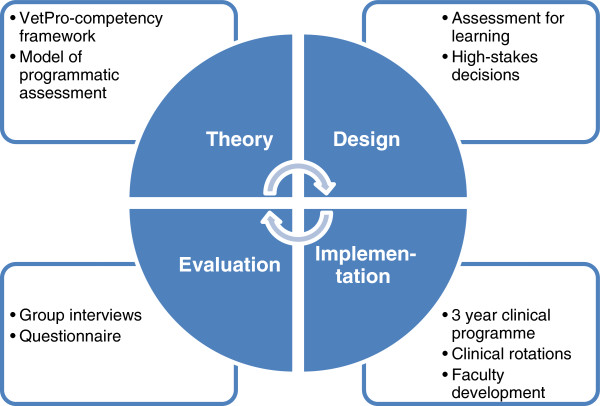
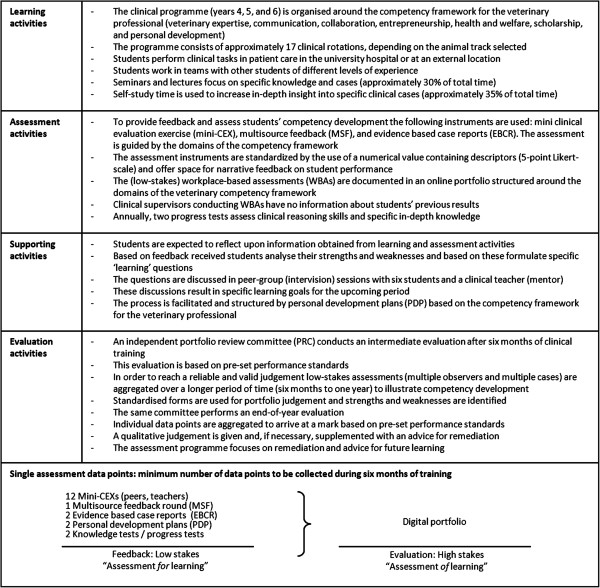
BACKGROUND: In competency-based medical education emphasis has shifted towards outcomes, capabilities, and learner-centeredness. Together with a focus on sustained evidence of professional competence this calls for new methods of teaching and assessment. Recently, medical educators advocated the use of a holistic, programmatic approach towards assessment. Besides maximum facilitation of learning it should improve the validity and reliability of measurements and documentation of competence development. We explored how, in a competency-based curriculum, current theories on programmatic assessment interacted with educational practice. METHODS: In a development study including evaluation, we investigated the implementation of a theory-based programme of assessment. Between April 2011 and May 2012 quantitative evaluation data were collected and used to guide group interviews that explored the experiences of students and clinical supervisors with the assessment programme. We coded the transcripts and emerging topics were organised into a list of lessons learned. RESULTS: The programme mainly focuses on the integration of learning and assessment by motivating and supporting students to seek and accumulate feedback. The assessment instruments were aligned to cover predefined competencies to enable aggregation of information in a structured and meaningful way. Assessments that were designed as formative learning experiences were increasingly perceived as summative by students. Peer feedback was experienced as a valuable method for formative feedback. Social interaction and external guidance seemed to be of crucial importance to scaffold self-directed learning. Aggregating data from individual assessments into a holistic portfolio judgement required expertise and extensive training and supervision of judges. CONCLUSIONS: A programme of assessment with low-stakes assessments providing simultaneously formative feedback and input for summative decisions proved not easy to implement. Careful preparation and guidance of the implementation process was crucial. Assessment for learning requires meaningful feedback with each assessment. Special attention should be paid to the quality of feedback at individual assessment moments. Comprehensive attention for faculty development and training for students is essential for the successful implementation of an assessment programme.
Overview
The claims and statistics of this paper haven’t been checked yet.
Run the check — free, no account needed. It reads the open-access text and checks the sources it cites.
Integrity signals
Registry
Cites
Statistics
Figures
Verification
Claims the paper makes
The claims and statistics of this paper haven’t been checked yet.
Run the check — free, no account needed. It reads the open-access text and checks the sources it cites.
Claims other papers make about this one
Each is checked against this paper’s own text: does it say what the citing paper says it does?
The cited source says what the claim attributes to it.
In the citing paper
“Evidence is now emerging from qualitative evaluations of programmatic assessment curricula which raises questions about the mixing of formative and summative assessment.”
From Guidelines: The do’s, don’ts and don’t knows of feedback for clinical education. (2015) · cites this paper as [69]
In the citing paper
“although it has also met some difficulties in implementation [69]”
From Guidelines: The do’s, don’ts and don’t knows of feedback for clinical education. (2015) · cites this paper as [69]
In the citing paper
“As Bok et al. showed, durable teacher-learner relationships also prompt learners to seek feedback more readily [69].”
From Guidelines: The do’s, don’ts and don’t knows of feedback for clinical education. (2015) · cites this paper as [69]
In the citing paper
“Institutions can create opportunities for longitudinal teacher-learner relationships to flourish, such as extended placements [68–70].”
From Guidelines: The do’s, don’ts and don’t knows of feedback for clinical education. (2015) · cites this paper as [69]
In the citing paper
“As a result, the formative assessments did not play the powerful assessment-for-learning role they are meant to have in a curriculum based on programmatic assessment [69].”
From Guidelines: The do’s, don’ts and don’t knows of feedback for clinical education. (2015) · cites this paper as [69]
In the citing paper
“A qualitative study with clinical undergraduate veterinary students and their supervisors highlighted that both struggled with formative assessments that are used as ‘data points’ for a final summative judgment.”
From Guidelines: The do’s, don’ts and don’t knows of feedback for clinical education. (2015) · cites this paper as [69]
Self-check
Percentages, sums and reported differences re-computed from the paper’s own numbers.
The self-check needs the paper’s full text.
Citations
Cites
Defining and Assessing Professional Competence
Epstein, R. M. (2002) · JAMA · doi:10.1001/jama.287.2.226 · Cited by 3,114
Competency-based medical education: Theory to practice.
Frank, J. R., Snell, L. S., Cate, O. T., Holmboe, E. S., Carraccio, C., Swing, S. R., Harris, P., Glasgow, N. J., Campbell, C., Dath, D., et al. (2010) · Medical Teacher · doi:10.3109/0142159x.2010.501190 · Cited by 2,883
Design Research: Theoretical and Methodological Issues
Collins, A., Joseph, D., & Bielaczyc, K. (2004) · Journal of the Learning Sciences · doi:10.1207/s15327809jls1301_2 · Cited by 1,946
Assessing professional competence: from methods to programmes
Van Der Vleuten, C. P. M., & Schuwirth, L. W. T. (2005) · Medical Education · doi:10.1111/j.1365-2929.2005.02094.x · Cited by 1,268
The assessment of professional competence: Developments, research and practical implications
Van Der Vleuten, C. P. M. (1996) · Advances in Health Sciences Education · doi:10.1007/bf00596229 · Cited by 1,247
Workplace-based assessment as an educational tool: AMEE Guide No. 31
Norcini, J., & Burch, V. (2007) · Medical Teacher · doi:10.1080/01421590701775453 · Cited by 984
Carraccio, C. L., Wolfsthal, S. D., Englander, R., Ferentz, K. S., & Martin, C. (2002) · Academic Medicine · doi:10.1097/00001888-200205000-00003 · Cited by 979
Programmatic assessment: From assessment of learning to assessment for learning
Schuwirth, L. W. T., & Van der Vleuten, C. P. M. (2011) · Medical Teacher · doi:10.3109/0142159x.2011.565828 · Cited by 902
A model for programmatic assessment fit for purpose.
van der Vleuten, C. P. M., Schuwirth, L. W. T., Driessen, E. W., Dijkstra, J., Tigelaar, D., Baartman, L. K. J., & van Tartwijk, J. (2012) · Medical Teacher · doi:10.3109/0142159x.2012.652239 · Cited by 892
Peer teaching in medical education: twelve reasons to move from theory to practice
ten Cate, O., & Durning, S. J. (2007) · Medical Teacher · doi:10.1080/01421590701606799 · Cited by 729
Research works printed but not linked: 1
- Pritchard WR: Report of the Pew National Veterinary Education Program. Future directions for veterinary medicine. 1988, Durham, NC: Duke University
Cited by
Sorted by citations
Items 101–200 of 303
Developing a digital application for quality assurance of assessment programmes in higher education
Schellekens, L. H., van der Schaaf, M. F., van der Vleuten, C. P. M., Prins, F. J., Wools, S., & Bok, H. G. J. (2022) · Quality Assurance in Education · doi:10.1108/qae-03-2022-0066 · Cited by 20
Self-citationA Call for an Integrated Program of Assessment
Fielding, D. W., & Regehr, G. (2017) · American Journal of Pharmaceutical Education · doi:10.5688/ajpe81477 · Cited by 21
MacNeil, K. A., Cuncic, C., Voyer, S., Butler, D. L., & Hatala, R. A. (2019) · Advances in Health Sciences Education · doi:10.1007/s10459-019-09948-8 · Cited by 20
Stringer, J. K., Gruppen, L. D., Ryan, M. S., Ginzburg, S. B., Cutrer, W. B., Wolff, M., & Santen, S. A. (2022) · Medical Science Educator · doi:10.1007/s40670-021-01491-9 · Cited by 19
Dunne, K., Moffett, J., Loughran, S. T., Duggan, V. E., & Campion, D. P. (2018) · Irish Veterinary Journal · doi:10.1186/s13620-018-0127-z · Cited by 24
Favier, R. P., ten Cate, O., Duijn, C. C. M. A., & Bok, H. G. J. (2020) · Journal of Veterinary Medical Education · doi:10.3138/jvme.2019-0051 · Cited by 19
Self-citationMukhatayev, A., Omirbayev, S., Kassenov, K., & Idiyatova, Y. (2024) · Education Sciences · doi:10.3390/educsci14121297 · Cited by 27
Maxson, I., Su, E. R., Brown, K. A., Tcharmtchi, M. H., Ginsburg, S., Bhargava, V., Wenger, J. L., Centers, G. I., Alade, K. H., Leung, S. K., et al. (2023) · Pediatric Critical Care Medicine · doi:10.1097/pcc.0000000000003288 · Cited by 18
Janssens, O., Andreou, V., Embo, M., Valcke, M., Ruyck, O. D., Robbrecht, M., & Haerens, L. L. (2024) · BMC Medical Education · doi:10.1186/s12909-024-05428-9 · Cited by 23
Judging residents’ performance: a qualitative study using grounded theory
Duitsman, M. E., Fluit, C. R. M. G., van der Goot, W. E., ten Kate-Booij, M., Graaf, J. D., & Jaarsma, D. A. D. C. (2019) · BMC Medical Education · doi:10.1186/s12909-018-1446-1 · Cited by 17
Self-citationThe use of portfolios to foster professionalism: attributes, outcomes, and recommendations
Franco, R., Franco, C. A. G. D. S., Pestana, O., Severo, M., & Ferreira, M. A. (2016) · Assessment & Evaluation in Higher Education · doi:10.1080/02602938.2016.1186149 · Cited by 20
Weijs, C. A., Coe, J. B., & Hecker, K. G. (2015) · Journal of Veterinary Medical Education · doi:10.3138/jvme.1214-123r1 · Cited by 16
Entrustable Professional Activities and Learning: The Postgraduate Trainee Perspective
Stephan, A., Cheung, G., & van der Vleuten, C. P. M. (2022) · Academic Psychiatry · doi:10.1007/s40596-022-01712-2 · Cited by 15
Berger, S., Stalmeijer, R. E., Marty, A., & Berendonk, C. (2023) · Academic Medicine · doi:10.1097/acm.0000000000005188 · Cited by 17
Broadly sampled assessment reduces ethnicity‐related differences in clinical grades
van Andel, C. E. E., Born, M. P., Themmen, A. P. N., & Stegers‐Jager, K. M. (2019) · Medical Education · doi:10.1111/medu.13790 · Cited by 15
de Jonge, L. P. J. W. M., Mesters, I., Govaerts, M., Timmerman, A. A., Muris, J. W. M., Kramer, A. W. M., & van der Vleuten, C. P. M. (2020) · BMC Medical Education · doi:10.1186/s12909-020-02047-y · Cited by 15
Assessing professional competence: a critical review of the Annual Review of Competence Progression
Woolf, K., Page, M., & Viney, R. (2019) · Journal of the Royal Society of Medicine · doi:10.1177/0141076819848113 · Cited by 14
The introduction of competency-based medical education for postgraduate training in South Africa
Nel, D., Burch, V. C., Adam, S., Ras, T., Mawela, D., Buch, E., & Green-Thompson, L. P. (2022) · South African Medical Journal · doi:10.7196/samj.2022.v112i9.16717 · Cited by 14
Assessment in Undergraduate Competency-Based Medical Education: A Systematic Review
Gupta, S. K., & Srivastava, T. K. (2024) · Cureus · doi:10.7759/cureus.58073 · Cited by 13
Self-regulated learning lens on trainee perceptions of the mini-CEX: a qualitative study
Kipen, E., Flynn, E. M., & Woodward‐Kron, R. E. (2019) · BMJ Open · doi:10.1136/bmjopen-2018-026796 · Cited by 14
Advancing Workplace-Based Assessment in Psychiatric Education
Young, J. Q., Frank, J. R., & Holmboe, E. S. (2021) · Psychiatric Clinics of North America · doi:10.1016/j.psc.2021.03.005 · Cited by 12
Kalikulla, S. (2017) · JDMP (Jurnal Dinamika Manajemen Pendidikan) · doi:10.26740/jdmp.v1n2.p79-90 · Cited by 23
Analysis of dental students' written peer feedback from a prospective peer assessment protocol
Tricio, J., Woolford, M. J., & Escudier, M. P. (2016) · European Journal Of Dental Education · doi:10.1111/eje.12187 · Cited by 12
Keator, C. S., Vandré, D. D., & Morris, A. (2016) · Medical Science Educator · doi:10.1007/s40670-016-0298-8 · Cited by 12
von Bergmann, H., Shuler, C. F., Yang, J., Köhler, D., Reynolds, C., Best, L., Black, N., Richardson, J. T., & Childs, R. A. (2018) · Journal of Dental Education · doi:10.21815/jde.018.063 · Cited by 12
What competencies does an orthodontic postgraduate need?
Mahdavifard, H., Noorollahian, S., Omid, A., & Yamani, N. (2024) · BMC Medical Education · doi:10.1186/s12909-024-06475-y · Cited by 11
Guo, F., Chen, Y., Hsu, W., Wang, P., Chen, M., & Chen, J. (2024) · Otolaryngology · doi:10.1002/ohn.1104 · Cited by 11
Bok, H. G. J., van der Vleuten, C. P. M., & de Jong, L. H. (2021) · Frontiers in Veterinary Science · doi:10.3389/fvets.2021.638455 · Cited by 11
Self-citation‘Next steps are…’: An exploration of coaching and feedback language in EPA assessment comments
Day, L. B., Rassos, J., Billick, M. J., & Ginsburg, S. (2022) · Medical Teacher · doi:10.1080/0142159x.2022.2098098 · Cited by 11
Perceptions of portfolio assessment in family medicine graduates: a qualitative interview study
Alradini, F. A. (2022) · BMC Medical Education · doi:10.1186/s12909-022-03991-7 · Cited by 11
Assessment-Seeking Strategies: Navigating the Decision to Initiate Workplace-Based Assessment
Gauthier, S. R., Braund, H., Dalgarno, N., & Taylor, D. R. (2023) · Teaching and Learning in Medicine · doi:10.1080/10401334.2023.2229803 · Cited by 14
Plakiotis, C. (2017) · Advances in experimental medicine and biology · doi:10.1007/978-3-319-57348-9_19 · Cited by 11
Ekpenyong, A., & Becker, K. (2020) · Medical Teacher · doi:10.1080/0142159x.2020.1817878 · Cited by 11
Workplace‐based Assessment Data in Emergency Medicine: A Scoping Review of the Literature
Chan, T. M., Sebok‐Syer, S. S., Cheung, W. J., Pusic, M. V., Stehman, C. R., & Gottlieb, M. A. (2020) · AEM Education and Training · doi:10.1002/aet2.10544 · Cited by 11
The Senior Medical Resident’s New Role in Assessment in Internal Medicine
Rassos, J., Ginsburg, S., Stalmeijer, R. E., & Melvin, L. (2021) · Academic Medicine · doi:10.1097/acm.0000000000004552 · Cited by 11
Anderson, H. L. K., Abdulla, L., Balmer, D. F., Govaerts, M., & Busari, J. O. (2023) · Advances in Health Sciences Education · doi:10.1007/s10459-023-10260-9 · Cited by 11
Can assessment be a barrier to successful professional development?
Dawson, L. J., & Fox, K. (2017) · Physical Therapy Reviews · doi:10.1080/10833196.2017.1336840 · Cited by 12
Chin, M., Pack, R., & Cristancho, S. (2022) · Advances in Health Sciences Education · doi:10.1007/s10459-022-10156-0 · Cited by 10
van der Aa, J. E., Scheele, F., Goverde, A. J., & Teunissen, P. W. (2019) · Perspectives on Medical Education · doi:10.1007/s40037-019-0523-4 · Cited by 10
Self-citationRotthoff, T., Schneider, M., Ritz‐Timme, S., & Windolf, J. (2015) · Europe PMC (PubMed Central) · doi:10.3205/zma000946 · Cited by 10
Searching for a written patient feedback instrument for patient–medical student consultations
Hogan, N., Li, H., Pezaro, C. J., Roberts, N., Schmidt, E., & Martin, J. A. (2017) · Advances in Medical Education and Practice · doi:10.2147/amep.s119611 · Cited by 10
Inter-Rater Reliability of Grading Undergraduate Portfolios in Veterinary Medical Education
Favier, R. P., Vernooij, J. C. M., Jonker, F. H., & Bok, H. G. J. (2019) · Journal of Veterinary Medical Education · doi:10.3138/jvme.0917-128r1 · Cited by 10
Self-citationTeacher, Gatekeeper, or Team Member: supervisor positioning in programmatic assessment
Jamieson, J., Gibson, S., Hay, M., & Palermo, C. E. (2022) · Advances in Health Sciences Education · doi:10.1007/s10459-022-10193-9 · Cited by 9
Greenfield, J., Qua, K., Prayson, R. A., & Bierer, S. B. (2023) · Medical Science Educator · doi:10.1007/s40670-023-01829-5 · Cited by 10
Dabbagh, A., Abtahi, D., Aghamohammadi, H., Ahmadizadeh, S. N., & Ardehali, S. H. (2020) · Anesthesiology and Pain Medicine · doi:10.5812/aapm.106640 · Cited by 9
Barrett, A., Galvin, R., Steinert, Y., Scherpbier, A. J. J. A., O’Shaughnessy, A., Walsh, G., & Horgan, M. M. (2016) · SpringerPlus · doi:10.1186/s40064-016-1748-x · Cited by 9
Development of entrustable professional activities for family medicine in South Africa
Mash, R. J., Jenkins, L. S., & Naidoo, M. (2024) · African Journal of Primary Health Care & Family Medicine · doi:10.4102/phcfm.v16i1.4483 · Cited by 8
Programmatic Assessment of Clinical Reasoning: New Opportunities to Meet an Ongoing Challenge
Torre, D. M., Daniel, M. M., Ratcliffe, T. A., Durning, S. J., Holmboe, E. S., & Schuwirth, L. (2024) · Teaching and Learning in Medicine · doi:10.1080/10401334.2024.2333921 · Cited by 11
Troncon, L. E. D. A. (2016) · Revista de Graduação USP · doi:10.11606/issn.2525-376x.v1i1p53-58 · Cited by 8
Colbert, C. Y., & Bierer, S. B. (2022) · Education Sciences · doi:10.3390/educsci12030220 · Cited by 11
Do Resident Archetypes Influence the Functioning of Programs of Assessment?
Rich, J. V., Cheung, W. J., Cooke, L., Oswald, A., Gauthier, S. R., & Hall, A. K. (2022) · Education Sciences · doi:10.3390/educsci12050293 · Cited by 8
New innovations and educational process in undergraduate neurology education in blended learning
Mu, S., Hu, J., Liu, F., Zhao, C., & Sun, Y. (2023) · Postgraduate Medicine · doi:10.1080/00325481.2023.2234273 · Cited by 8
Warman, S. M., Pritchard, J., & Baillie, S. (2015) · Journal of Veterinary Medical Education · doi:10.3138/jvme.1214-124r1 · Cited by 8
Applicability of Progress Testing in Veterinary Medical Education
Favier, R. P., van der Vleuten, C. P. M., & Ramaekers, S. P. J. (2017) · Journal of Veterinary Medical Education · doi:10.3138/jvme.0116-008r · Cited by 8
Self-citationHägg‐Martinell, A., Hult, H., Henriksson, P., & Kiessling, A. (2019) · BMJ Open · doi:10.1136/bmjopen-2018-027590 · Cited by 8
Bremer, A. E., Scharenborg, S. W. J., Fluit, C. R. M. G., & van de Pol, M. H. J. (2025) · BMC Medical Education · doi:10.1186/s12909-025-07162-2 · Cited by 8
Chen, J., Tu, H.-L., Chang, C., Hsu, W., Wang, P., Liao, C., & Chen, M. (2025) · JMIR Medical Education · doi:10.2196/81718 · Cited by 7
Lungeanu, D., Petrică, A., Lupușoru, R., Marza, A. M., Mederle, O. A., & Timar, B. (2022) · International Journal of Environmental Research and Public Health · doi:10.3390/ijerph192315958 · Cited by 7
Loosveld, L. M., Driessen, E. W., Theys, M., Gerven, P. W. M. V., & Vanassche, E. (2023) · Perspectives on Medical Education · doi:10.5334/pme.1004 · Cited by 7
Baartman, L. K. J., & Prins, F. J. (2018) · Frontiers in Education · doi:10.3389/feduc.2018.00104 · Cited by 8
Conflict between clinician teachers and their students: the clinician perspective
Shanahan, E. M., van der Vleuten, C. P. M., & Schuwirth, L. (2019) · Advances in Health Sciences Education · doi:10.1007/s10459-019-09933-1 · Cited by 8
Dudek, N. L., Duffy, M. C., Wood, T. J., & Gofton, W. T. (2021) · Journal of surgical education · doi:10.1016/j.jsurg.2021.03.014 · Cited by 7
Ryan, A., O'Mara, D. A., & Tweed, M. (2023) · Focus on Health Professional Education A Multi-Professional Journal · doi:10.11157/fohpe.v24i2.703 · Cited by 7
Solymos, O., Snyman, L., Condon, E., Power, C. K., & Boland, J. (2020) · Irish Journal of Medical Science (1971 -) · doi:10.1007/s11845-020-02216-4 · Cited by 7
Hägg‐Martinell, A., Hult, H., Henriksson, P., & Kiessling, A. (2020) · Advances in Medical Education and Practice · doi:10.2147/amep.s230476 · Cited by 7
Myths and legends in workplace-based assessment; it’s all about perspective?
Barrett, A., & Hanley, K. (2020) · Education for Primary Care · doi:10.1080/14739879.2020.1712664 · Cited by 7
Workplace-based assessment – a new era of surgical training competency assessment in South Africa
Nel, D., Cairncross, L. L., Burch, V. C., Burch, E., Green-Thompson, L., Koto, Z., Montwedi, O., Fagan, J., & Jonas, E. (2022) · South African Journal of Surgery · doi:10.17159/2078-5151/sajs3972 · Cited by 6
Skill or Competency: What Should we be Assessing?
Shah, N., Gupta, P., & Singh, T. (2024) · Indian Pediatrics · doi:10.1007/s13312-024-3135-y · Cited by 10
Troncon, L. E. D. A. (2018) · Revista Brasileira de Educação Médica · doi:10.1590/1981-52712018v42n2rb20170103 · Cited by 6
Ryan, A., & WILKINSON, T. J. (2021) · Anatomical Sciences Education · doi:10.1002/ase.2075 · Cited by 6
Schellekens, L. H., van der Schaaf, M. F., Baartman, L. K. J., van der Vleuten, C. P. M., Kremer, W. D. J., & Bok, H. G. J. (2024) · Assessment & Evaluation in Higher Education · doi:10.1080/02602938.2024.2343317 · Cited by 6
Self-citationZechariah, S., Waller, J. L., Stallings, J., Gess, A., & Lehman, L. A. (2022) · Healthcare · doi:10.3390/healthcare10020212 · Cited by 7
Sud, R., & Khanduja, S. (2022) · Indian Journal of Ophthalmology · doi:10.4103/ijo.ijo_417_22 · Cited by 6
Evaluating assessment programmes using programme evaluation models
Gandomkar, R., Jalili, M., & Mirzazadeh, A. (2015) · Medical Teacher · doi:10.3109/0142159x.2015.1042436 · Cited by 6
A new holistic way of assessment: programmatic assessment
van der Vleuten, C. P. M., & Heeneman, S. (2016) · Educación Médica · doi:10.33588/fem.196.860 · Cited by 5
Development of an electronic learning progression dashboard to monitor student clinical experiences
Lai, H., Ameli, N., Patterson, S. K., Senior, A., & Lunardon, D. (2022) · Journal of Dental Education · doi:10.1002/jdd.12871 · Cited by 5
On Purpose: The Case for Alignment in Assessment
Norcini, J. J. (2023) · Academic Medicine · doi:10.1097/acm.0000000000005430 · Cited by 5
Döhms, M., Rocha, A., Rasenberg, E. M. C., Dielissen, P. W., & Thoonen, B. P. A. (2023) · Medical Teacher · doi:10.1080/0142159x.2023.2285248 · Cited by 5
de Jonge, L. P. J. W. M., Minkels, F. N. E., Govaerts, M., Muris, J. W. M., Kramer, A. W. M., van der Vleuten, C. P. M., & Timmerman, A. A. (2022) · BMC Medical Education · doi:10.1186/s12909-022-03395-7 · Cited by 5
Portfolio as a tool to evaluate clinical competences of traumatology in medical students
García‐Estañ, J., Santonja‐Medina, F., García-Sanz, M. P., Martínez‐Martínez, F., & Rueda, D. B. (2016) · Advances in Medical Education and Practice · doi:10.2147/amep.s91401 · Cited by 5
Dawson, L. J., Fox, K., Harris, M., Jellicoe, M., & Youngson, C. C. (2025) · BDJ · doi:10.1038/s41415-024-8231-9 · Cited by 5
Triastuti, N. J., Kristina, T. N., & Prihatiningsih, T. S. (2025) · Al-Rafidain Journal of Medical Sciences · doi:10.54133/ajms.v9i2.2310 · Cited by 5
Nel, D., McNamee, L., Wright, M., Alseidi, A. A., Cairncross, L. L., Jonas, E., & Burch, V. C. (2023) · Journal of surgical education · doi:10.1016/j.jsurg.2023.06.027 · Cited by 4
Development of competency-based assessment model for KRU RAK THIN scholarship’ recipients
Kritkharuehart, S., Vimolsilp, U., & Photipussa, P. (2024) · Cogent Education · doi:10.1080/2331186x.2024.2373230 · Cited by 11
AlAskari, A. M., Alsharif, A., AlSairafi, A., Abbad, K. A., Mohamed, E., Almulhem, M., Elq, A. A., & Zeeshan, M. (2024) · Cureus · doi:10.7759/cureus.74107 · Cited by 5
Osgerby, J., Jennings, P., & Bonathan, A. (2018) · The International Journal of Management Education · doi:10.1016/j.ijme.2018.04.006 · Cited by 4
Blaževičienė, A., Vanckavičienė, A., Paukštaitienė, R., & Baranauskaitė, A. (2021) · Healthcare · doi:10.3390/healthcare9080963 · Cited by 4
Peart, J., Michels, N. R. M., Hanley, K., Dolan, C., Luyckx, J., Tanghe, V., Peeters, E., Burneikaite, M., Varvuolyte, S., Homar, V., et al. (2023) · European Journal of General Practice · doi:10.1080/13814788.2023.2191947 · Cited by 4
Assessing veterinary students using in‐training evaluation scores: what is being assessed?
Norman, E. J. (2019) · Veterinary Record · doi:10.1136/vr.105033 · Cited by 4
Burm, S., Sebok‐Syer, S. S., Koughnett, J. A. V., & Watling, C. (2020) · Perspectives on Medical Education · doi:10.1007/s40037-020-00594-0 · Cited by 4
Guidelines for designing programmes of assessment
Dijkstra, J. (2014) · doi:10.26481/dis.20140625jd · Cited by 4
Francis, J. D. (2015) · ScholarWorks (Walden University) · Cited by 4
Lin, C.-P., Hsu, W., Wang, G., Su, H., Chung, H.-C., Hung, S.-H., Chen, M., Chen, J., & Wang, P. (2025) · BMC Medical Education · doi:10.1186/s12909-025-07679-6 · Cited by 3
Daitz, E., Jenkins, L. S., van Rensburg, J. J., Muller, M., Singaram, V. S., Cooke, R., Adam, S., Mawela, D., Botha, G. C., Mamashela, T. A., et al. (2026) · BMC Medical Education · doi:10.1186/s12909-026-08792-w · Cited by 3
Hall, A. K., Andriole, D. A., Chen, A. M. H., Englander, R., Rojas, D., Ryan, M. S., Boscardin, C., Caretta‐Weyer, H. A., Dalseg, T. R., Incoll, I. W., et al. (2026) · Perspectives on Medical Education · doi:10.5334/pme.2628 · Cited by 3
Roberts, C., Burgess, A. W., Mossman, K., & Kumar, K. (2025) · BMC Medical Education · doi:10.1186/s12909-024-06535-3 · Cited by 3
Donker, E. M., van Rosse, F., Janssen, B. J., Knol, W., Dumont, G., van Smeden, J., Atiqi, R., Hessel, M. H. M., Richir, M. C., van Agtmael, M. A., et al. (2025) · European Journal of Pharmacology · doi:10.1016/j.ejphar.2025.177266 · Cited by 3
Yang, J., Liu, Y. H., Wei, W., Xie, S., Tang, X., Wu, L. G., & Sun, W. (2025) · Journal of Dental Education · doi:10.1002/jdd.13864 · Cited by 3
Assessment Model of Competence Certification for Construction Workers
Utomo, H. B., Harto, S. P., & Jaedun, . (2019) · International Journal of Control and Automation · doi:10.33832/ijca.2019.12.8.05 · Cited by 3
BUCHNER, H. H. F., Burger, C., & Ehlers, J. P. (2018) · Europe PMC (PubMed Central) · doi:10.3205/zma001170 · Cited by 3
Metadata
- Authors
- Bok, H. G., Teunissen, P. W., Favier, R. P., Rietbroek, N. J., Theyse, L. F., Brommer, H., Haarhuis, J. C., van Beukelen, P., van der Vleuten, C. P., & Jaarsma, D. A.
- Affiliations
- Utrecht University (NL)
- Maastricht University (NL)
- University of Amsterdam (NL)
- Corresponding author
- Bok, Harold GJ
- Venue
- BMC Medical Education
- Published
- 2013-09-11
- Volume
- 13
- Issue
- 1
- Pages
- 123-123
- ISSN
- 1472-6920 (ISSN-L)
- PMC
- PMC3851012
- OpenAlex
- W2153422278
- Cited by
- 303
- References
- 36
- Citations by year
- 2026: 20 · 2025: 14 · 2024: 24 · 2023: 31 · 2022: 36 · 2021: 24 · 2020: 29 · 2019: 29 · 2018: 25 · 2017: 26 · 2016: 25 · 2015: 13 · 2014: 5
- FWCI
- 14.62
- Type
- journal article
- Language
- en
- Open access
- gold
- doi.org
- Licence
- Locations
- BMC Medical Education (publishedVersion, cc-by)
- Europe PMC (PubMed Central) (publishedVersion, cc-by)
- PubMed Central (publishedVersion, cc-by)
- PubMed (publishedVersion)
- Pure Amsterdam UMC (publishedVersion)
- Amsterdam UMC (VU Amsterdam) - Institutional Repository (publishedVersion)
- Data Archiving and Networked Services (DANS) (submittedVersion)
- Research Publications (Maastricht University) (submittedVersion, cc-by)
- Radboud Repository (Radboud University) (submittedVersion)
- Radboud Repository (Radboud University) (submittedVersion, other-oa)
- Research Publications (Maastricht University) (submittedVersion, other-oa)
- Funders
- Flinders University
- Topics
- Social Sciences › Education › Innovations in Medical Education
- Social Sciences › Education › Student Assessment and Feedback
- Social Sciences › Business, Management and Accounting › Organizational Behavior and Human Resource Management › Competency Development and Evaluation
- Keywords
- competency-based medical education, programmatic assessment, workplace-based assessment, formative assessment, summative assessment, feedback, peer feedback, self-directed learning, portfolio assessment, low-stakes assessment, assessment implementation, faculty development, clinical supervisors, medical students
- MeSH terms
- Competency-Based Education, Curriculum, Education, Medical, Education, Veterinary, Educational Measurement, Humans, Netherlands, Surveys and Questionnaires, Schools, Veterinary
About these checks
Registry, retraction, Cites and statistics results are computed, not judged, with one exception: a printed reference that no index lists is read once by a model before it counts as a citation error. Claims are extracted by a model and kept only when their quote appears verbatim in the text; each cited source is then checked, with a model’s help, for whether it says what the claim relies on. Those verdicts can be wrong — read the claim’s quote and the cited source before relying on one.
Statistics and arithmetic are recomputed, not judged.
Confidence bands are shown only for fields calibrated on our annotated test set. None is calibrated yet, so no band is shown.
What counts as a claim ›How we measure confidence ›How we check this ›
Are you an author, or do you see a problem with this page? Request a review
