

Evaluating complex interventions and health technologies using normalization process theory: development of a simplified approach and web-enabled toolkit
Open accessThe DOI matches its Crossref record; 35 of the 35 references it cites were found in a registry or an index.
Abstract
Background: Normalization Process Theory (NPT) can be used to explain implementation processes in health care relating to new technologies and complex interventions. This paper describes the processes by which we developed a simplified version of NPT for use by clinicians, managers, and policy makers, and which could be embedded in a web-enabled toolkit and on-line users manual. Methods: Between 2006 and 2010 we undertook four tasks. (i) We presented NPT to potential and actual users in multiple workshops, seminars, and presentations. (ii) Using what we discovered from these meetings, we decided to create a simplified set of statements and explanations expressing core constructs of the theory (iii) We circulated these statements to a criterion sample of 60 researchers, clinicians and others, using SurveyMonkey to collect qualitative textual data about their criticisms of the statements. (iv) We then reconstructed the statements and explanations to meet users' criticisms, embedded them in a web-enabled toolkit, and beta tested this 'in the wild'. Results: On-line data collection was effective: over a four week period 50/60 participants responded using SurveyMonkey (40/60) or direct phone and email contact (10/60). An additional nine responses were received from people who had been sent the SurveyMonkey form by other respondents. Beta testing of the web enabled toolkit produced 13 responses, from 327 visits to http://www.normalizationprocess.org. Qualitative analysis of both sets of responses showed a high level of support for the statements but also showed that some statements poorly expressed their underlying constructs or overlapped with others. These were rewritten to take account of users' criticisms and then embedded in a web-enabled toolkit. As a result we were able translate the core constructs into a simplified set of statements that could be utilized by non-experts. Conclusion: Normalization Process Theory has been developed through transparent procedures at each stage of its life. The theory has been shown to be sufficiently robust to merit formal testing. This project has provided a user friendly version of NPT that can be embedded in a web-enabled toolkit and used as a heuristic device to think through implementation and integration problems.
Overview
The claims and statistics of this paper haven’t been checked yet.
Free: it reads the open-access text and checks the first 5 claims that cite a source we can check. Create a free account to check every claim.
Integrity signals
Registry
Cites
Statistics
Figures
Verification
Claims the paper makes
The claims and statistics of this paper haven’t been checked yet.
Free: it reads the open-access text and checks the first 5 claims that cite a source we can check. Create a free account to check every claim.
Claims other papers make about this one
Each is checked against this paper’s own text: does it say what the citing paper says it does?
The source backs part of the claim, not all of it — or backs it for a different population, condition or comparison.
In the citing paper
“When applied to the 22 case studies, NPT 121,134 had sufficient explanatory power to predict which case studies had PPI embedded as normal practice; therefore, it predicted both policy outcomes and the processes and infrastructure required for effective PPI that had positive outcomes both methodologically and morally.”
From ReseArch with Patient and Public invOlvement: a RealisT evaluation – the RAPPORT study (2015) · cites this paper as [134]
Experimental — accuracy not yet measuredThe source backs part of the claim, not all of it — or backs it for a different population, condition or comparison.
In the citing paper
“From this, tools were developed to assist implementation practitioners and researchers [13–16] in thinking through and measuring important elements of implementation processes.”
From Using Normalization Process Theory in feasibility studies and process evaluations of complex healthcare interventions: a systematic review (2018) · cites this paper as [16]
Experimental — accuracy not yet measuredIn the citing paper
“As an 'action' theory, NPT also sharpens our analytical focus on the actual work that people performing PPI do, or do not do, rather than people's attitudes (how they feel about what they do) or their intentions (what they say they are going to do).134”
From ReseArch with Patient and Public invOlvement: a RealisT evaluation – the RAPPORT study (2015) · cites this paper as [134]
In the citing paper
“There is currently no published review of its empirical application, but it has been seen to have been applied to good effect in a number of social and health-care settings.121,134,135”
From ReseArch with Patient and Public invOlvement: a RealisT evaluation – the RAPPORT study (2015) · cites this paper as [134]
In the citing paper
“To this end, the NPT toolkit (www.normalizationprocess.org) has been developed to help researchers consider implementation issues from the early stages of developing and evaluating complex interventions [119].”
From Web-Based Interventions for Behavior Change and Self-Management: Potential, Pitfalls, and Progress (2012) · cites this paper as [119]
Self-check
Percentages, sums and reported differences re-computed from the paper’s own numbers.
The self-check needs the paper’s full text.
Citations
Cites
The theory of planned behavior
Ajzen, I. (1991) · Organizational Behavior and Human Decision Processes · doi:10.1016/0749-5978(91)90020-t · Cited by 134,657
Reassembling the Social: An Introduction to Actor-Network-Theory
Latour, B. (2005) · doi:10.1093/oso/9780199256044.001.0001 · Cited by 16,778
Qualitative data analysis for applied policy research
Ritchie, J., & Spencer, L. (2010) · Analyzing qualitative data · doi:10.4324/9780203413081_chapter_9 · Cited by 4,800
Framework for design and evaluation of complex interventions to improve health
Campbell, M. (2000) · BMJ · doi:10.1136/bmj.321.7262.694 · Cited by 3,474 · cited 1×
“In particular, evaluation frameworks like that proposed by the UK Medical Research Council have emphasized the need to understand the complex components and contingent underpinnings of outcomes studies, especially clinical trials [1,2].”
MethodImplementing, Embedding, and Integrating Practices: An Outline of Normalization Process Theory
May, C., & Finch, T. (2009) · Sociology · doi:10.1177/0038038509103208 · Cited by 2,115
Self-citationMurray, E., Treweek, S., Pope, C., MacFarlane, A., Ballini, L., Dowrick, C., Finch, T., Kennedy, A., Mair, F., O'Donnell, C., et al. (2010) · BMC Medicine · doi:10.1186/1741-7015-8-63 · Cited by 1,478 · cited 1×
“and the multiple everyday needs of researchers and practitioners in applied settings [46].”
Self-citationDevelopment of a theory of implementation and integration: Normalization Process Theory
May, C. R., Mair, F., Finch, T., MacFarlane, A., Dowrick, C., Treweek, S., Rapley, T., Ballini, L., Ong, B. N., Rogers, A., et al. (2009) · Implementation Science · doi:10.1186/1748-5908-4-29 · Cited by 1,409 · cited 1×
“This included work to stabilize the constructs of the theory that we have described else-where [40], apply them in practice to statement development for surveys, systematic reviews and qualitative investigations [41,42] and to define appropriate ways to apply the theory.”
MethodSelf-citationDesigning and evaluating complex interventions to improve health care
Campbell, N. C., Murray, E., Darbyshire, J., Emery, J., Farmer, A., Griffiths, F., Guthrie, B., Lester, H., Wilson, P., & Kinmonth, A. L. (2007) · BMJ · doi:10.1136/bmj.39108.379965.be · Cited by 1,331 · cited 2×
“In particular, evaluation frameworks like that proposed by the UK Medical Research Council have emphasized the need to understand the complex components and contingent underpinnings of outcomes studies, especially clinical trials [1,2].”
BackgroundMethodSelf-citationPlanning and Studying Improvement in Patient Care: The Use of Theoretical Perspectives
GROL, R. P. T. M., BOSCH, M. C., HULSCHER, M. E. J. L., ECCLES, M. P., & WENSING, M. (2007) · The Milbank Quarterly · doi:10.1111/j.1468-0009.2007.00478.x · Cited by 943 · cited 1×
“At the same time, there have been calls for theory-driven approaches to such work [3,4].”
BackgroundMay, C., Finch, T., Mair, F., Ballini, L., Dowrick, C., Eccles, M., Gask, L., MacFarlane, A., Murray, E., Rapley, T., et al. (2007) · BMC Health Services Research · doi:10.1186/1472-6963-7-148 · Cited by 768 · cited 3×
“Normalization Process Theory (NPT) [7], and its pre-decessor, the Normalization Process Model [8,9] provides a conceptual framework to assist in understanding and explaining the dynamic processes that are encountered during the implementation of complex interventions and technological or…”
Self-citation
Research works printed but not linked: 11
- Angus D Brouwers M Driedger M Eccles M Francis J Godin G Graham I Grimshaw J Hanna S Harrison MB Designing theoretically-informed implementation interventions The Improved Clinical Effectiveness through Behavioural Research Group (ICEBeRG) Implement Sci 2006 1 PMC1436012 16722571
- Goldthorpe JH On Sociology: Critique and Program 2006 Stanford: Stanford University Press
- Hechter M Horne C Hechter M, Horne C Theory is explanation Theories of social order 2003 Stanford CA, Stanford University Press
- Rogers EM The Diffusion of Innovations 1995 4 New York: Free Press
- Gagnon MP Legare F Fortin JP Lamothe L Labrecque M Duplantie J An integrated strategy of knowledge application for optimal e-health implementation: A multi-method study protocol BMC Med Inform Decis Mak 2008 8 PMC2390530 18435853
- King G Richards H Godden D Adoption of telemedicine in Scottish remote and rural general practices: a qualitative study J Telemed Telecare 2007 13 8 382 386 10.1258/135763307783064430 18078547 · DOI · Paper page
- Boddy D King G Clark J Heaney D Mair F The influence of context and process when implementing e-health Bmc Med Inform Decis 2009 9 1 9 10.1186/1472-6947-9-9 PMC2642812 19183479 · DOI · Paper page
- Murray E Burns J May C Finch T O'Donnell C Wallace P Mair F Why is it difficult to implement e-health initiatives? A qualitative study Implement Sci 2011 6 PMC3038974 21244714
- Stinchcombe A Constructing social theories 1968 New York: Harcourt, Brace and World
- Mair F May C Murray E Finch T Anderson G O'Donnell C Wallace P Sullivan F Understanding the Implementation and Integration of E-Health Services London: National Co-ordinating 2009 Centre for the National Institute for Health Research Service Delivery and Organisation Programme (NCCSDO)
- Banister P Burman E Parker I Taylor M Tindall C Qualitative methods in psychology 1994 Buckingham: Open University Press
Cited by
Implementation, context and complexity
May, C. R., Johnson, M., & Finch, T. (2016) · Implementation Science · doi:10.1186/s13012-016-0506-3 · Cited by 978
“At each stage in the development of NPT, we have been concerned with its utility as a way of understanding the dynamics of complex intervention trials [27–29].”
MethodSelf-citationMay, C. R., Cummings, A., Girling, M., Bracher, M., Mair, F. S., May, C. M., Murray, E., Myall, M., Rapley, T., & Finch, T. (2018) · Implementation Science · doi:10.1186/s13012-018-0758-1 · Cited by 683
Self-citationJohnson, M. J., & May, C. R. (2015) · BMJ Open · doi:10.1136/bmjopen-2015-008592 · Cited by 513
Self-citationScreening women for intimate partner violence in healthcare settings
O'Doherty, L., Hegarty, K., Ramsay, J., Davidson, L. L., Feder, G., & Taft, A. (2015) · Cochrane Database of Systematic Reviews · doi:10.1002/14651858.cd007007.pub3 · Cited by 452
McEvoy, R., Ballini, L., Maltoni, S., O’Donnell, C. A., Mair, F. S., & MacFarlane, A. (2014) · Implementation Science · doi:10.1186/1748-5908-9-2 · Cited by 413
“[31] NPT Presented NPT to potential and actual users for review.”
InfluentialSelf-citationMatthew-Maich, N., Harris, L., Ploeg, J., Markle-Reid, M., Valaitis, R., Ibrahim, S., Gafni, A., & Isaacs, S. (2016) · JMIR mHealth and uHealth · doi:10.2196/mhealth.5127 · Cited by 390
“Caregivers, patients, and HCP /managers Telecare implementation Chronic disease Qualitative descriptive 2 May et al (2011) UK [87]”
Finch, T. L., Girling, M., May, C. R., Mair, F. S., Murray, E., Treweek, S., McColl, E., Steen, I. N., Cook, C., Vernazza, C. R., et al. (2018) · BMC Medical Research Methodology · doi:10.1186/s12874-018-0591-x · Cited by 337
Self-citationReseArch with Patient and Public invOlvement: a RealisT evaluation – the RAPPORT study
Wilson, P., Mathie, E., Keenan, J., McNeilly, E., Goodman, C., Howe, A., Poland, F., Staniszewska, S., Kendall, S., Munday, D., et al. (2015) · Health Services and Delivery Research · doi:10.3310/hsdr03380 · Cited by 297
“There is currently no published review of its empirical application, but it has been seen to have been applied to good effect in a number of social and health-care settings.(121,134,135) Of relevance in the RAPPORT study, and discussed in the following sections, is that case study methods have been seen to be more rob…”
May, C. R., Albers, B., Bracher, M., Finch, T. L., Gilbert, A., Girling, M., Greenwood, K., MacFarlane, A., Mair, F. S., May, C. M., et al. (2022) · Implementation Science · doi:10.1186/s13012-022-01191-x · Cited by 234
“It also forms a translational framework for researching and evaluating implementation processes and thus complements other resources for NPT researchers such as the NPT Toolkit and the NOMAD survey instrument [17, 19, 21, 22].”
BackgroundMethodSelf-citationWeb-Based Interventions for Behavior Change and Self-Management: Potential, Pitfalls, and Progress
Murray, E. (2012) · Medicine 2.0 · doi:10.2196/med20.1741 · Cited by 219
“To this end, the NPT toolkit (www.normalizationprocess.org) has been developed to help researchers consider implementation issues from the early stages of developing and evaluating complex interventions [119].”
MethodSelf-citationO'Doherty, L. J., Taft, A., Hegarty, K., Ramsay, J., Davidson, L. L., & Feder, G. (2014) · BMJ · doi:10.1136/bmj.g2913 · Cited by 202
Gallacher, K., Morrison, D., Jani, B., Macdonald, S., May, C. R., Montori, V. M., Erwin, P. J., Batty, G. D., Eton, D. T., Langhorne, P., et al. (2013) · PLoS Medicine · doi:10.1371/journal.pmed.1001473 · Cited by 192
“NPT is a robust analytic framework for understanding the organisation and operationalisation of tasks or practices (their implementation), of making them routine elements of everyday life (their embedding), and of sustaining embedded practices in their social contexts (their integration) [45–47].”
BackgroundSelf-citationBeyond “implementation”: digital health innovation and service design
Shaw, J., Agarwal, P., Desveaux, L., Palma, D. C., Stamenova, V., Jamieson, T., Yang, R., Bhatia, R. S., & Bhattacharyya, O. (2018) · npj Digital Medicine · doi:10.1038/s41746-018-0059-8 · Cited by 186
“The heuristic [Tool+Team+Routine] is grounded in a variety of theories and frameworks about the introduction of technologies into health care environments, and especially the Fit between the Individual, Task and Technology (FITT) Model,(30,31) the ARCHIE framework on technology design and implementation,(32) and norma…”
MethodRapley, T., Girling, M., Mair, F. S., Murray, E., Treweek, S., McColl, E., Steen, I. N., May, C. R., & Finch, T. L. (2018) · BMC Medical Research Methodology · doi:10.1186/s12874-018-0590-y · Cited by 193
Self-citationFinch, T. L., Rapley, T., Girling, M., Mair, F. S., Murray, E., Treweek, S., McColl, E., Steen, I. N., & May, C. R. (2013) · Implementation Science · doi:10.1186/1748-5908-8-43 · Cited by 177
“In a previous project [23], we have undertaken work that has given us the basis for a set of generic statements for each of the constructs of NPT.”
BackgroundMethodInfluentialSelf-citationTuti, T., Nzinga, J., Njoroge, M., Brown, B., Peek, N., English, M., Paton, C., & van der Veer, S. N. (2017) · Implementation Science · doi:10.1186/s13012-017-0590-z · Cited by 159
“This expectation is informed by component theories such as normalisation process theory [24, 25] theory of planned behaviour [26] and control theory [27].”
MethodScreening women for intimate partner violence in healthcare settings
Taft, A., O'Doherty, L., Hegarty, K., Ramsay, J., Davidson, L., & Feder, G. (2013) · Cochrane Database of Systematic Reviews · doi:10.1002/14651858.cd007007.pub2 · Cited by 120
Aligning technology and institutional readiness: the adoption of innovation
Webster, A., & Gardner, J. (2019) · Technology Analysis & Strategic Management · doi:10.1080/09537325.2019.1601694 · Cited by 122
“Moreover, as May et al. (2011) have shown through the development of ‘normalisation process theory’, what implementation means in practice depends on the play of processes that enable new technologies or techniques to be normalised, or routinised in clinical (and indeed other) settings.”
BackgroundFinch, T. L., Mair, F. S., O’Donnell, C., Murray, E., & May, C. R. (2012) · BMC Medical Research Methodology · doi:10.1186/1471-2288-12-69 · Cited by 127
“Recently, theory-based tools for assisting implementers in planning and ‘thinking through’ particular interventions with reference to the social and organisational contexts in which they are to be implemented have been offered [35,36].”
BackgroundSelf-citationTheories Informing eHealth Implementation: Systematic Review and Typology Classification
Heinsch, M., Wyllie, J., Carlson, J., Wells, H., Tickner, C., & Kay-Lambkin, F. (2021) · Journal of Medical Internet Research · doi:10.2196/18500 · Cited by 114
Kennedy, A., Rogers, A., Bowen, R., Lee, V., Blakeman, T., Gardner, C., Morris, R., Protheroe, J., & Chew-Graham, C. (2014) · International Journal of Nursing Studies · doi:10.1016/j.ijnurstu.2013.11.008 · Cited by 97
Devlin, A. M., McGee-Lennon, M., O’Donnell, C. A., Bouamrane, M.-M., Agbakoba, R., O’Connor, S., Grieve, E., Finch, T., Wyke, S., Watson, N., et al. (2016) · Journal of the American Medical Informatics Association · doi:10.1093/jamia/ocv097 · Cited by 90
“The e-HIT is a tool to aid consideration of implementation issues in e-health, underpinned by Normalization Process Theory (NPT).(21,22) Stakeholders sampled represent a cross-section of those involved in the dallas digital service redesign and delivery and include professionals from public sector health (NHS) and soc…”
MethodSelf-citationLeeman, J., Calancie, L., Kegler, M. C., Escoffery, C. T., Herrmann, A. K., Thatcher, E., Hartman, M. A., & Fernandez, M. E. (2017) · Health Education & Behavior · doi:10.1177/1090198115610572 · Cited by 90
“…stakeholders in collectively developing a shared understanding of the problem and context and in formulating an intervention plan that is both evidence-informed and context specific (DeGroff et al., 2010; Elwyn et al., 2007; Lanham et al., 2013; Le et al., 2014; May et al., 2009; May et al., 2011).”
Gallacher, K., Jani, B., Morrison, D., Macdonald, S., Blane, D., Erwin, P., May, C. R., Montori, V. M., Eton, D. T., Smith, F., et al. (2013) · BMC Medical Research Methodology · doi:10.1186/1471-2288-13-10 · Cited by 87
Self-citationClarke, D. J., Godfrey, M., Hawkins, R., Sadler, E., Harding, G., Forster, A., McKevitt, C., Dickerson, J., & Farrin, A. (2013) · Implementation Science · doi:10.1186/1748-5908-8-96 · Cited by 88
Hall, A., Shoesmith, A., Doherty, E., McEvoy, B., Mettert, K., Lewis, C. C., Wolfenden, L., Yoong, S., Kingsland, M., Shelton, R. C., et al. (2022) · Implementation Science · doi:10.1186/s13012-022-01252-1 · Cited by 81
Studying Scale-Up and Spread as Social Practice: Theoretical Introduction and Empirical Case Study
Shaw, J., Shaw, S., Wherton, J., Hughes, G., & Greenhalgh, T. (2017) · Journal of Medical Internet Research · doi:10.2196/jmir.7482 · Cited by 68
“Other researchers have used normalization process theory [6,8,24], actor-network theory [25,26], cultural-historical activity theory [27], technological sensemaking [28], technology structuration theory [29], socio-technical systems theory [30], or simply “practice theory” [31,32] to conduct similar studies of technol…”
Danner, M., Geiger, F., Wehkamp, K., Rueffer, J. U., Kuch, C., Sundmacher, L., Skjelbakken, T., Rummer, A., Novelli, A., Debrouwere, M., et al. (2020) · BMJ Open · doi:10.1136/bmjopen-2020-037575 · Cited by 78
“32 As part of a process evaluation, these questions/constructs will be addressed with key stakeholders at specific points in time throughout the 4-year project time to continuously monitor implementation processes at the level of all involved stakeholders at the University Hospital Campus Kiel.”
BackgroundCommunity engagement in dissemination and implementation models: A narrative review
Pinto, R. M., Park, S., Miles, R., & Ong, P. N. (2021) · Implementation Research and Practice · doi:10.1177/2633489520985305 · Cited by 71
Herber, O. R., Atkins, L., Störk, S., & Wilm, S. (2018) · BMJ Open · doi:10.1136/bmjopen-2018-025907 · Cited by 64
“48 NPT will be used to identify factors that individuals and groups need to do in order to enable true integration of BCIs designed in stage 3 into routine work.(49) To promote adoption and faithful delivery of our interventions in the future, it is crucial to involve all stakeholders in determining the intervention c…”
MethodThe implementation of medical revalidation: an assessment using normalisation process theory
Tazzyman, A., Ferguson, J., Hillier, C., Boyd, A., Tredinnick-Rowe, J., Archer, J., de Bere, S. R., & Walshe, K. (2017) · BMC Health Services Research · doi:10.1186/s12913-017-2710-5 · Cited by 60
“implementation of complex interventions such as technology in healthcare, [16] delivering digital health at scale, [17] and care pathways for elderly patients [17].”
Tsang, J. Y., Blakeman, T., Hegarty, J., Humphreys, J., & Harvey, G. (2015) · Implementation Science · doi:10.1186/s13012-016-0413-7 · Cited by 63
“It was designed to identify and understand the processes underpinning care, through which existing interventions had become taken-for-granted or ‘normalised’ [21, 22].”
BackgroundMcCrorie, C., Benn, J., Johnson, O. A., & Scantlebury, A. (2019) · BMC Medical Informatics and Decision Making · doi:10.1186/s12911-019-0952-3 · Cited by 67
“A topic guide (Additional file 1) provided the framework for the interviews, and was informed by the Normalisation Measure Development Questionnaire (NoMAD) instrument, and NPT implementation toolkit (47, 62-64).”
MethodHind, D., Parkin, J., Whitworth, V., Rex, S., Young, T. A., Hampson, L. V., Sheehan, J., Maguire, C., Cantrill, H., Scott, E., et al. (2017) · Health Technology Assessment · doi:10.3310/hta21270 · Cited by 67
Dalkin, S. M., Hardwick, R., Haighton, C., & Finch, T. L. (2021) · Implementation Science Communications · doi:10.1186/s43058-021-00172-3 · Cited by 56
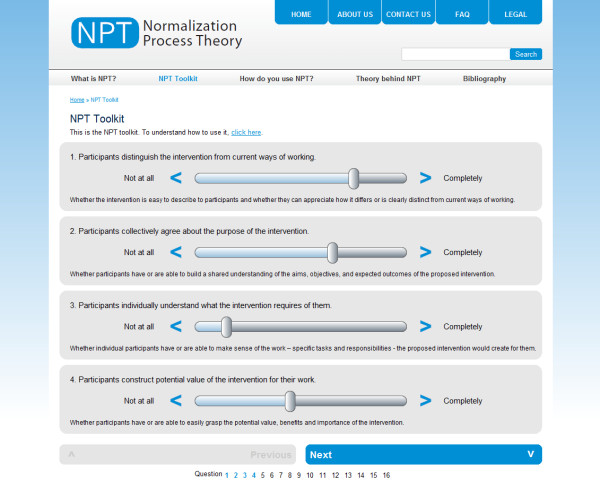
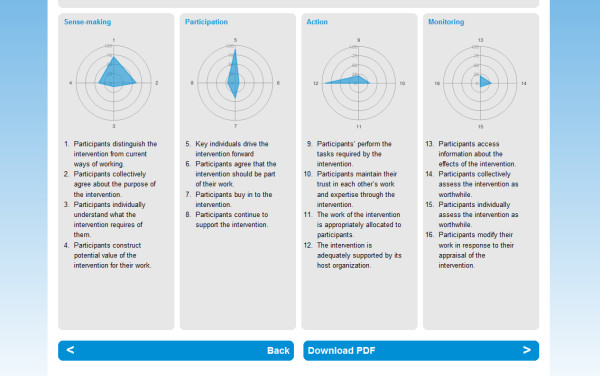
“Wilson et al. [20] used The Economic and Social Research Council-funded web-based NPT toolkit (www.normalizationprocess.org) [27] to develop radar plots for each case study within the four NPT constructs and 16 domains.”
Self-citationVest, B. M., York, T. R., Sand, J., Fox, C. H., & Kahn, L. (2015) · The Journal of the American Board of Family Medicine · doi:10.3122/jabfm.2015.05.150070 · Cited by 56
Holt, R. I. G., Hind, D., Gossage-Worrall, R., Bradburn, M. J., Saxon, D. H., McCrone, P., Morris, T., Etherington, A., Shiers, D., Barnard-Kelly, K. D., et al. (2018) · Health Technology Assessment · doi:10.3310/hta22650 · Cited by 56
Beyond TRL – Understanding institutional readiness for implementation of nature-based solutions
Cauwenbergh, N. V., Dourojeanni, P., van der Zaag, P., Brugnach, M., Dartée, K., Giordano, R., & López‐Gunn, E. (2021) · Environmental Science & Policy · doi:10.1016/j.envsci.2021.09.021 · Cited by 54
Murthi, S., Martini, N. D., Falconer, N., & Scahill, S. L. (2024) · Journal of Medical Systems · doi:10.1007/s10916-024-02097-5 · Cited by 62
“Therefore, it is essential to develop improved reporting standards to address these gaps and strengthen the validity of future research efforts [90, 91].”
BackgroundHooker, L., Small, R., & Taft, A. (2016) · Journal of Advanced Nursing · doi:10.1111/jan.12851 · Cited by 47
Richter, C., Fleischer, S., Langner, H., Meyer, G., Balzer, K., Köpke, S., Sönnichsen, A. C., Löscher, S., & Berg, A. (2022) · BMC Nursing · doi:10.1186/s12912-022-00963-6 · Cited by 43
“Collective action: implementing PCC ‘Collective action’ as operational work (described by four components [25]; see Fig.”
BackgroundMethodInfluentialMaking sense of change: patients’ views of diabetes and GP‐led integrated diabetes care
Burridge, L. H., Foster, M. M., Donald, M., Zhang, J., Russell, A. W., & Jackson, C. L. (2016) · Health Expectations · doi:10.1111/hex.12331 · Cited by 42
Scalia, P., Elwyn, G. J., & Durand, M. (2017) · BMC Medical Informatics and Decision Making · doi:10.1186/s12911-017-0517-2 · Cited by 43
“This theory was developed to investigate the processes by which interventions become part of normal work [23, 24].”
BackgroundPaleri, V., Patterson, J., Rousseau, N. S., Moloney, E., Craig, D., Tzelis, D., Wilkinson, N., Franks, J., Hynes, A. M., Heaven, B., et al. (2018) · Health Technology Assessment · doi:10.3310/hta22160 · Cited by 43
Self-citationvan Rensburg, A. J., & Fourie, P. (2016) · International Journal of Mental Health Systems · doi:10.1186/s13033-016-0081-7 · Cited by 47
“Coherent individual as well as communal understanding and sense-making of the components and purpose of complex social interventions are crucial mechanisms in its implementation [48, 49].”
BackgroundMyall, M., May, C. R., Grimmett, C., May, C., Calman, L. A., Richardson, A. M., & Foster, C. L. (2015) · BMC Medical Informatics and Decision Making · doi:10.1186/s12911-015-0214-y · Cited by 44
“NPT assists “in understanding and explaining the dynamic processes that are encountered during the implementation of complex interventions and technological or organisational innovations in healthcare” [5].”
BackgroundSelf-citationWaller, G., Finch, T. L., Giles, E. L., & Newbury‐Birch, D. (2017) · Implementation Science · doi:10.1186/s13012-017-0659-8 · Cited by 45
“(XLSX 52 kb) Abbreviations ANOVA: Analysis of variable; ASSIST: A Stop Smoking In Schools Trial; CASP: Critical Appraisal Skills Programme; CINAHL: Cumulative Index to Nursing and Allied Health Literature; cRCT: Cluster Randomised Controlled Trial; EPHPP: Effective Public Health Practice Project; ERIC: Education Resou…”
BackgroundMethodInfluentialSelf-citationZiegler, E., Valaitis, R. K., Yost, J., Carter, N., & Risdon, C. (2019) · PLoS ONE · doi:10.1371/journal.pone.0215873 · Cited by 36
The e-health implementation toolkit: qualitative evaluation across four European countries
MacFarlane, A., Clerkin, P., Murray, E., Heaney, D. J., Wakeling, M., Pesola, U.-M., Waterworth, E. L., Larsen, F., Makiniemi, M., & Winblad, I. (2011) · Implementation Science · doi:10.1186/1748-5908-6-122 · Cited by 34
Self-citationWilliams, A., Lennox, L., Harris, M. J., & Antonacci, G. (2023) · Implementation Science · doi:10.1186/s13012-023-01311-1 · Cited by 40
“It has been used principally in qualitative implementation studies, as well as in studies such as complex healthcare interventions, technological interventions, feasibility studies and process evaluations [38–40].”
MethodThe challenges of implementing a telestroke network: a systematic review and case study
French, B., Day, E., Watkins, C. L., McLoughlin, A. S. R., Fitzgerald, J., Leathley, M. J., Davies, P., Emsley, H. C. A., Ford, G. A., Jenkinson, D. F., et al. (2013) · BMC Medical Informatics and Decision Making · doi:10.1186/1472-6947-13-125 · Cited by 35
Self-citationTaft, A. J., Small, R., Humphreys, C., Hegarty, K., Walter, R., Adams, C., & Agius, P. (2012) · BMC Public Health · doi:10.1186/1471-2458-12-811 · Cited by 32
Eco-Normalization: Evaluating the Longevity of an Innovation in Context
Hamza, D. M., & Regehr, G. (2021) · Academic Medicine · doi:10.1097/acm.0000000000004318 · Cited by 33
Carlisle, K., Farmer, J., Taylor, J., Larkins, S., & Evans, R. (2018) · The International Journal of Health Planning and Management · doi:10.1002/hpm.2523 · Cited by 32
Scalia, P., Durand, M., Forcino, R. C., Schubbe, D. C., Barr, P. J., O’Brien, N., O’Malley, A. J., Foster, T. C., Politi, M. C., Laughlin-Tommaso, S. K., et al. (2019) · Implementation Science · doi:10.1186/s13012-019-0933-z · Cited by 31
Cox, M., O’Connor, C. A., Biggs, K., Hind, D., Bortolami, O., Franklin, M. K., Collins, B., Walters, S. J., Wailoo, A., Channell, J., et al. (2018) · Health Technology Assessment · doi:10.3310/hta22110 · Cited by 41
Shafran, R., Bennett, S. D., Coughtrey, A. E., Welch, A., Walji, F., Cross, J. H., Heyman, I., Sibelli, A., Smith, J. S., Ross, J., et al. (2020) · Clinical Child and Family Psychology Review · doi:10.1007/s10567-019-00310-3 · Cited by 35
Rubie, I., Haighton, C., O’Hara, J., Rousseau, N. S., Steen, N., Stocken, D. D., Sullivan, F., Vale, L. D., Wilkes, S., & Wilson, J. A. (2015) · Trials · doi:10.1186/s13063-015-0768-0 · Cited by 32
“Our analysis of barriers and facilitators to: 1) trial participation and 2) the normalisation of study interventions in clinical practice will be informed by Normalization Process Theory [23].”
Roberts, S., Eaton, S. D., Finch, T. L., Lewis‐Barned, N., Lhussier, M., Oliver, L., Rapley, T., & Temple-Scott, D. (2019) · BMC Family Practice · doi:10.1186/s12875-019-1042-4 · Cited by 34
Self-citationCoorey, G., Peiris, D., Neubeck, L., & Redfern, J. (2020) · BMC Health Services Research · doi:10.1186/s12913-020-05597-5 · Cited by 31
Malan, Z., Mash, R., & Everett-Murphy, K. (2015) · BMC Family Practice · doi:10.1186/s12875-015-0318-6 · Cited by 27
Forsdike, K., Ison, J., Hooker, L., Henry, N., & Taft, A. (2024) · Transport Policy · doi:10.1016/j.tranpol.2024.03.005 · Cited by 27
Cognitive Bias Modification for paranoia (CBM-pa): study protocol for a randomised controlled trial
Yiend, J., Trotta, A., Meek, C., Dzafic, I., Baldus, N., Crane, B., Kabir, T., Stahl, D. R., Heslin, M., Shergill, S. S., et al. (2017) · Trials · doi:10.1186/s13063-017-2037-x · Cited by 26
“New targeted interventions are required because CBT effect sizes for delusions are small to modest [75], a significant proportion of patients do not respond fully and resource limitations restrict availability [76].”
BackgroundInfluentialMartel, R., Shepherd, M., & Goodyear‐Smith, F. (2021) · JMIR Mental Health · doi:10.2196/30479 · Cited by 25
“As an implementation theory of action, the Normalization Process Theory [54] consists of 4 constructs (coherence, cognitive participation, collective action, and reflexive monitoring) that outline what intended users need to do to make sense of, commit to, engage with, and evaluate complex interventions [41,55-57].”
MethodMedical education: a particularly complex intervention to research
Mattick, K. L., Barnes, R., & Dieppe, P. A. (2012) · Advances in Health Sciences Education · doi:10.1007/s10459-012-9415-7 · Cited by 31
“Other publications focus on specific aspects or phases in the assessment of complex interventions, such as trial designs, or implementation, some of which recommend a rather different approach—an example being the use of normalisation process theory to aid implementation (May et al. 2011).”
Davidsen, A. S., & Fosgerau, C. F. (2014) · Patient Education and Counseling · doi:10.1016/j.pec.2013.12.018 · Cited by 27
Hashem, F., Brigden, C., Wilson, P., & Butler, C. (2019) · Palliative Medicine · doi:10.1177/0269216319867424 · Cited by 27
Durand, M., Yen, R. W., O’Malley, A. J., Politi, M. C., Dhage, S., Rosenkranz, K. M., Weichman, K. E., Margenthaler, J. A., Tosteson, A. N. A., Crayton, E., et al. (2018) · BMC Public Health · doi:10.1186/s12889-018-5109-2 · Cited by 26
“Analyses corresponding to aim 3 We will use a framework analysis, guided by Normalization Process Theory (NPT) [101, 102], having successfully used this approach previously [55, 70, 103, 104].”
BackgroundMethodLewis, M., Palmer, V. J., Kotevski, A., Densley, K., O'Donnell, M. L., Johnson, C., Wohlgezogen, F., Gray, K. M., Robins–Browne, K., & Burchill, L. J. (2021) · JMIR Research Protocols · doi:10.2196/26168 · Cited by 25
“NPT comprises four key constructs: coherence, which relates to the level of understanding people have about an intervention and the ways they make sense of new practices or technologies; cognitive participation, which describes the level of engagement and commitment people have to an intervention and the ways in which…”
BackgroundMay, C. R., Hillis, A., Albers, B., Desveaux, L., Gilbert, A. W., Girling, M., Kislov, R., MacFarlane, A. E., Mair, F. S., Potthoff, S., et al. (2025) · Implementation Science · doi:10.1186/s13012-025-01444-5 · Cited by 28
“…Web of Science bibliographic databases, and Google Scholar, to find publications that cited papers and chapters that developed or expounded the main constructs of NPT [26–32]; papers that developed NPT related meth-ods or tools [33–35]; and citations of the NPT web-enabled on-line toolkit’ [36].”
Self-citationEarly, F. H., Wilson, P. M., Deaton, C., Wellwood, I., Dickerson, T., Ward, J., Jongepier, L., Barlow, R., Singh, S., BENSON, J. A., et al. (2019) · BMJ Open · doi:10.1136/bmjopen-2018-024806 · Cited by 23
Using co-production to increase activity in acute stroke units: the CREATE mixed-methods study
Jones, F., Gombert, K., Honey, S., CLOUD, G. C., Harris, R. G., Macdonald, A. S., McKevitt, C., Robert, G., & Clarke, D. J. (2020) · Health Services and Delivery Research · doi:10.3310/hsdr08350 · Cited by 25
Dzandu, M. D., Hatsu, S., & de Cesare, S. (2023) · Information Systems Frontiers · doi:10.1007/s10796-023-10452-z · Cited by 29
“For example, future studies on remote working can consider theories such as the normalisation process theory (May et al., 2011), to help understand how remote working can be normalised in current and future work settings.”
Goldthorpe, J., Walsh, T., Tickle, M., Birch, S., Hill, H. R., Sanders, C., Coulthard, P., & Pretty, I. (2018) · Health Services and Delivery Research · doi:10.3310/hsdr06080 · Cited by 26
“Topics for discussion were identified through reviewing relevant literature and discussion with the research team, and were informed by NPT.(67,95) All transcripts were anonymous and checked for accuracy against the audio record.”
BackgroundMethodInfluentialMishuris, R. G., Palmisano, J. N., McCullagh, L., Hess, R., Feldstein, D., Smith, P. D., McGinn, T. G., & Mann, D. M. (2019) · BMJ Health & Care Informatics · doi:10.1136/bmjhci-2019-100088 · Cited by 25
Schubbe, D. C., Yen, R. W., Saunders, C. H., Elwyn, G. J., Forcino, R. C., O’Malley, A. J., Politi, M. C., Margenthaler, J. A., Volk, R. J., Sepucha, K., et al. (2021) · Implementation Science · doi:10.1186/s13012-021-01115-1 · Cited by 26
“NPT is a framework that was developed to understand how complex interventions become implemented in routine healthcare settings using four theoretical constructs to contextualize implementation mechanisms [45, 46].”
BackgroundTuschick, E., Barker, J., Giles, E. L., Jones, S., Hogg, J., Kanmodi, K. K., Sill, J., & Sykes, K. (2024) · Psycho-Oncology · doi:10.1002/pon.6274 · Cited by 28
“28,29 NPT was developed for use when implementing an intervention or reviewing an existing process or practice at an organisational level.”
MethodPalm, K., & Persson-Fischier, U. (2021) · International Journal of Health Policy and Management · doi:10.34172/ijhpm.2021.146 · Cited by 26
Bakelants, H., Vanderstichelen, S., Chambaere, K., Droogenbroeck, F. V., Donder, L. D., Deliëns, L., Dury, S., & Cohen, J. (2022) · Palliative Medicine · doi:10.1177/02692163221146589 · Cited by 25
Goderis, G., Colman, E., Irusta, L. A., Hecke, A. V., Pétré, B., Devroey, D., Deun, E. V., Faes, K., Charlier, N., Verhaeghe, N., et al. (2020) · International Journal of Integrated Care · doi:10.5334/ijic.5435 · Cited by 28
Tew, G. A., Bissell, L. J. L., Corbacho, B., Fairhurst, C. M., Howsam, J., Hugill-Jones, J., Maturana, C., Paul, S.-A. S., Rapley, T., Roche, J., et al. (2021) · Trials · doi:10.1186/s13063-021-05217-5 · Cited by 26
“The analysis will be theoretically informed by the Normalisation Process Theory [37, 38] and will be conducted according to the standard procedures of rigorous qualitative analysis [39] including open and focused coding, constant comparison, memoing [40], deviant case analysis [41], and mapping [42].”
MethodSelf-citationPrimary Care and Public Health Perspectives on Integration at the Local Level: A Multi-State Study
Pratt, R. J., Gyllstrom, B., Gearin, K., Hahn, D. L., VanRaemdonck, L., PETERSON, K. A., & Baldwin, L. (2017) · The Journal of the American Board of Family Medicine · doi:10.3122/jabfm.2017.05.170034 · Cited by 24
for the NAIROS Study Group, Rennie, K., O’Hara, J., Rousseau, N. S., Stocken, D. D., Howel, D., Ternent, L., Drinnan, M., Bray, A., Rooshenas, L., et al. (2020) · Trials · doi:10.1186/s13063-020-4081-1 · Cited by 24
“Sampling strategy The sampling strategy is informed by current and prior experience [42, 46, 47] .”
BackgroundChudleigh, J. H., Holder, P., Moody, L., Simpson, A., Southern, K. W., Morris, S., Fusco, F., Ulph, F., Bryon, M., Bonham, J. R., et al. (2021) · BMJ Open · doi:10.1136/bmjopen-2021-050773 · Cited by 22
“The interview questions (online supplemental file A) were based on those proposed by the developers of the NPT approach 22 22 23 23 and the success criteria (figure 1).”
Hespe, C. M., Giskes, K., Harris, M., & Peiris, D. (2022) · BMC Health Services Research · doi:10.1186/s12913-021-07310-6 · Cited by 19
“The aim of the analysis was to examine the ‘real world’ participant perceptions of, and responses to the multicomponent QI program, and at which points it was considered to be sustainable or have failed [21].”
BackgroundMethodInfluentialThompson, C. A., Mebrahtu, T. F., Skyrme, S., Bloor, K. E., Andre, D., Keenan, A., Ledward, A., Yang, H., & Randell, R. (2024) · Health and Social Care Delivery Research · doi:10.3310/grnm5147 · Cited by 28
Grant, S., Greenfield, S., Nouwen, A., & McManus, R. J. (2015) · British Journal of General Practice · doi:10.3399/bjgp15x687433 · Cited by 24
Gossage-Worrall, R., Hind, D., Barnard-Kelly, K. D., Shiers, D., Etherington, A., Swaby, L., & Holt, R. I. G. (2019) · BMC Psychiatry · doi:10.1186/s12888-019-2282-5 · Cited by 20
Em, S., Schafheutle, E. I., & Willis, S. C. (2021) · International Journal of Clinical Pharmacy · doi:10.1007/s11096-021-01353-9 · Cited by 18
Herepath, A., Kitchener, M., & Waring, J. J. (2015) · Health Services and Delivery Research · doi:10.3310/hsdr03400 · Cited by 25
Improving facility-based care: eliciting tacit knowledge to advance intervention design
English, M., Nzinga, J., Oliwa, J. N., Maina, M., Oluoch, D., Barasa, E., Irimu, G., Muinga, N., Vincent, C. A., & McKnight, J. (2022) · BMJ Global Health · doi:10.1136/bmjgh-2022-009410 · Cited by 19
Practice-centred evaluation and the privileging of care in health information technology evaluation
Darking, M., Anson, R., Bravo, F., Davis, J., Flowers, S., Gillingham, E., Goldberg, L., Helliwell, P., Henwood, F., Hudson, C., et al. (2014) · BMC Health Services Research · doi:10.1186/1472-6963-14-243 · Cited by 18
“Whilst broad outcome measures for the SRIP were defined in advance the dynamic and evolving character of events meant specific benefits were hard to pinpoint due to the intensive product development, technology infrastructure work, hardware procurement and implementation activities taking place [6].”
BackgroundInfluentialZiegler, E., Valaitis, R. K., Risdon, C., Carter, N., & Yost, J. (2020) · Transgender Health · doi:10.1089/trgh.2019.0082 · Cited by 19
“NPT is a framework used to understand and explain the dynamic processes that occur during implementation of interventions in health care.(33) For this study, the delivery of primary care services was ex-”
MethodThomas, L. H., French, B., Sutton, C., Forshaw, D., Leathley, M. J., Burton, C. R., Roe, B. H., Cheater, F., Booth, J., McColl, E., et al. (2015) · Programme Grants for Applied Research · doi:10.3310/pgfar03010 · Cited by 23
Chrzan, S., & Pott, C. (2021) · Review of Quantitative Finance and Accounting · doi:10.1007/s11156-024-01297-x · Cited by 18
“35 This online panel has been used in many previous studies, especially in the fields of health-related theories and psychological research (Barlett and Gentile 2012; Gollust et al. 2012; Gore and Widiger 2013; May et al. 2011; Waller et al. 2012).”
Gherson, S., Tripp, R., Goudelias, D., & Johnson, A. M. (2023) · Journal of Voice · doi:10.1016/j.jvoice.2023.06.024 · Cited by 15
Douglas, S. R., Bovendeerd, B., van Sonsbeek, M. A. M. S., Manns, M., Milling, X. P., Tyler, K., Bala, N., Satterthwaite, T., Hovland, R. T., Amble, I., et al. (2023) · Administration and Policy in Mental Health and Mental Health Services Research · doi:10.1007/s10488-023-01314-6 · Cited by 17
“Such standardized coding schemes can be used to simplify the integration of qualitative inquiry into implementation research (e.g., May et al., 2011;, 2022).”
A qualitative study on the implementation of quality systems in Australian hospitals
Leggat, S. G., & Balding, C. (2017) · Health Services Management Research · doi:10.1177/0951484817715594 · Cited by 16
Pearse, B. L., Rickard, C. M., Keogh, S. J., & Fung, Y. L. (2018) · Australian Critical Care · doi:10.1016/j.aucc.2018.01.001 · Cited by 15
Larsson, I., Siira, E., Nygren, J., Petersson, L., Svedberg, P., Nilsén, P., & Neher, M. (2025) · BMC Family Practice · doi:10.1186/s12875-025-03057-9 · Cited by 16
“Instead, a more systematic approach is needed to ensure the normalization of the practice across the whole cohort of healthcare professionals involved [49, 50].”
Metadata
- Authors
- May, C. R., Finch, T., Ballini, L., MacFarlane, A., Mair, F., Murray, E., Treweek, S., & Rapley, T.
- Affiliations
- University of Southampton (GB)
- Newcastle University (GB)
- Agenzia Sanitaria e Sociale Regionale (IT)
- Ollscoil na Gaillimhe – University of Galway (IE)
- University of Glasgow (GB)
- University College London (GB)
- University of Dundee (GB)
- Corresponding author
- Rapley, Tim
- ORCID
- Venue
- BMC Health Services Research
- Published
- 2011-09-30
- Volume
- 11
- Issue
- 1
- Pages
- 245-245
- ISSN
- 1472-6963 (ISSN-L)
- PMC
- PMC3205031
- OpenAlex
- W6884888902
- Cited by
- 3
- References
- 28
- Citations by year
- 2026: 2 · 2013: 1
- FWCI
- 0.59
- Type
- journal article
- Language
- en
- Open access
- gold
- doi.org
- Licence
- Locations
- BMC Health Services Research (publishedVersion, cc-by)
- PubMed Central (publishedVersion, cc-by)
- PubMed (publishedVersion)
- ARAN (University of Galway Research Repository) (Ollscoil na Gaillimhe – University of Galway) (acceptedVersion, cc-by-nc-nd)
- Northumbria Research Link (Northumbria University) (acceptedVersion)
- ENLIGHTEN (Jurnal Bimbingan dan Konseling Islam) (acceptedVersion)
- ePrints Soton (University of Southampton) (acceptedVersion)
- LSHTM Research Online (London School of Hygiene and Tropical Medicine) (acceptedVersion)
- Aberdeen University Research Archive (Aberdeen University) (submittedVersion)
- Arrow@dit (Dublin Institute of Technology) (submittedVersion)
- ARAN (University of Galway Research Repository) (Ollscoil na Gaillimhe – University of Galway) (submittedVersion, cc-by-nc-nd)
- Discovery Research Portal (University of Dundee) (submittedVersion, cc-by)
- DOAJ (DOAJ: Directory of Open Access Journals) (submittedVersion)
- UCL Discovery (University College London) (submittedVersion)
- University of Galway Research Repository (submittedVersion, cc-by-nc)
- Lenus, The Irish Health Repository (Dr Steevens Hospital Library) (submittedVersion)
- Research Repository UCD (University College Dublin) (cc-by-nc)
- Newcastle University ePrints (Newcastle Univesity) (cc-by)
- Funders
- Economic and Social Research Council
- Topics
- Health Sciences › Health Professions › General Health Professions › Health Policy Implementation Science
- Social Sciences › Sociology and Political Science › Delphi Technique in Research
- Health Sciences › Medicine › Public Health, Environmental and Occupational Health › Clinical practice guidelines implementation
- Keywords
- Normalization Process Theory, complex interventions, health technology implementation, user feedback, theory development
- MeSH terms
- Delivery of Health Care, Health Services Research, Humans, Outcome and Process Assessment, Health Care, Technology Assessment, Biomedical, User-Computer Interface, Models, Organizational, Internet, Qualitative Research
About these checks
Registry, retraction, Cites and statistics results are computed, not judged, with one exception: a printed reference that no index lists is read once by a model before it counts as a citation error. Claims are extracted by a model and kept only when their quote appears verbatim in the text; each cited source is then checked, with a model’s help, for whether it says what the claim relies on. Those verdicts can be wrong — read the claim’s quote and the cited source before relying on one.
Statistics and arithmetic are recomputed, not judged.
Confidence bands are shown only for fields calibrated on our annotated test set. None is calibrated yet, so no band is shown.
What counts as a claim ›How we measure confidence ›How we check this ›
Are you an author, or do you see a problem with this page? Request a review
Data sources
Bibliographic data: Semantic Scholar, OpenAlex, Crossref.
Contains information from the Semantic Scholar Academic Graph Datasets, made available under the ODC Attribution License (ODC-BY 1.0).
Semantic Scholar’s data is described in: Kinney, R., et al. (2023). The Semantic Scholar Open Data Platform. arXiv:2301.10140.
