

The DOI matches its Crossref record; 232 of the 232 references it cites were found in a registry or an index; 61 of the 91 sources its claims cite were checked for support.
Using Normalization Process Theory in feasibility studies and process evaluations of complex healthcare interventions: a systematic review
Open accessAbstract
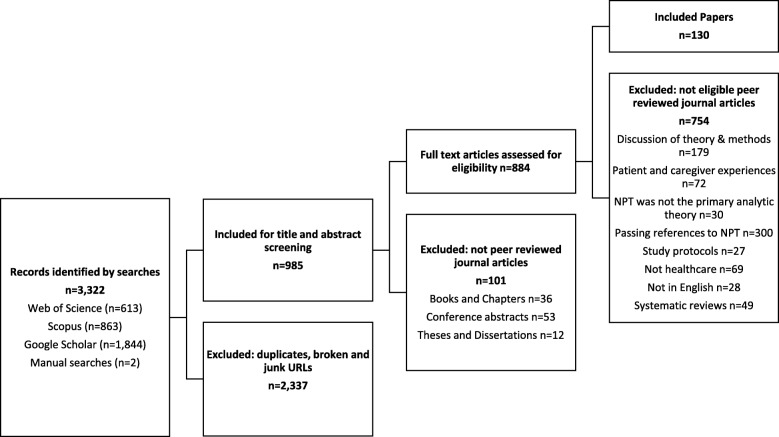
BACKGROUND: Normalization Process Theory (NPT) identifies, characterises and explains key mechanisms that promote and inhibit the implementation, embedding and integration of new health techniques, technologies and other complex interventions. A large body of literature that employs NPT to inform feasibility studies and process evaluations of complex healthcare interventions has now emerged. The aims of this review were to review this literature; to identify and characterise the uses and limits of NPT in research on the implementation and integration of healthcare interventions; and to explore NPT's contribution to understanding the dynamics of these processes. METHODS: A qualitative systematic review was conducted. We searched Web of Science, Scopus and Google Scholar for articles with empirical data in peer-reviewed journals that cited either key papers presenting and developing NPT, or the NPT Online Toolkit ( www.normalizationprocess.org ). We included in the review only articles that used NPT as the primary approach to collection, analysis or reporting of data in studies of the implementation of healthcare techniques, technologies or other interventions. A structured data extraction instrument was used, and data were analysed qualitatively. RESULTS: Searches revealed 3322 citations. We show that after eliminating 2337 duplicates and broken or junk URLs, 985 were screened as titles and abstracts. Of these, 101 were excluded because they did not fit the inclusion criteria for the review. This left 884 articles for full-text screening. Of these, 754 did not fit the inclusion criteria for the review. This left 130 papers presenting results from 108 identifiable studies to be included in the review. NPT appears to provide researchers and practitioners with a conceptual vocabulary for rigorous studies of implementation processes. It identifies, characterises and explains empirically identifiable mechanisms that motivate and shape implementation processes. Taken together, these mean that analyses using NPT can effectively assist in the explanation of the success or failure of specific implementation projects. Ten percent of papers included critiques of some aspect of NPT, with those that did mainly focusing on its terminology. However, two studies critiqued NPT emphasis on agency, and one study critiqued NPT for its normative focus. CONCLUSIONS: This review demonstrates that researchers found NPT useful and applied it across a wide range of interventions. It has been effectively used to aid intervention development and implementation planning as well as evaluating and understanding implementation processes themselves. In particular, NPT appears to have offered a valuable set of conceptual tools to aid understanding of implementation as a dynamic process.
Overview
CoChat Summary
TL;DR
This qualitative systematic review identified 130 papers reporting 108 studies that used Normalization Process Theory (NPT) as the primary analytic framework in feasibility studies and process evaluations of complex healthcare interventions. The authors conclude that NPT provides a coherent, stable, and flexibly applicable conceptual vocabulary that helped explain implementation outcomes, though some users criticized its terminology, agency emphasis, and normative focus.
Key findings
- Searches revealed 3322 citations; after screening, 130 papers from 108 identifiable studies were included. NPT was used in 26 controlled studies, generating 40/130 (30.8%) articles, and 82 uncontrolled studies, generating 90/130 (69.2%) articles.
- Use of NPT was planned in the study protocol in 54/108 (50%) studies overall: 19/26 (73%) controlled studies and 35/82 (42.7%) uncontrolled studies. 64/108 (59.2%) studies cited systematic reviews or rigorously developed clinical guidelines as the evidence base for the intervention.
- In all but one study, implementation outcomes could be explained by reference to NPT mechanisms; differences between participant groups were characterized in 69/108 (64%) studies and between settings in 36/108 (33%) studies. About 10% of papers included critiques of NPT, mainly about terminology; two critiqued its emphasis on agency, and one critiqued its normative focus.
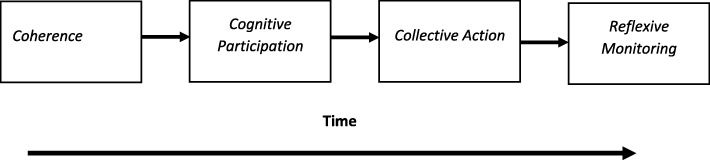
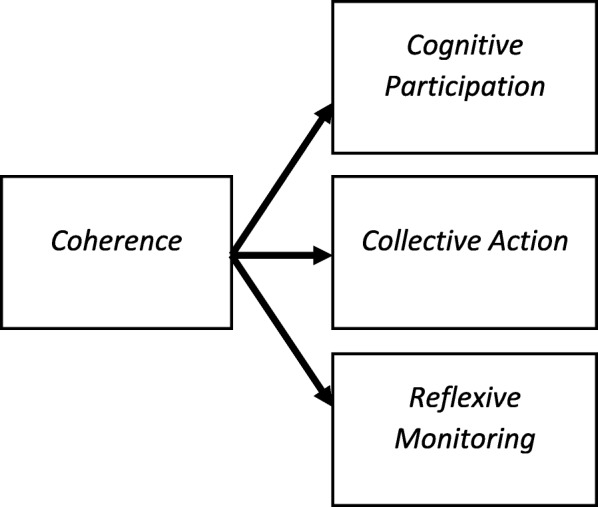
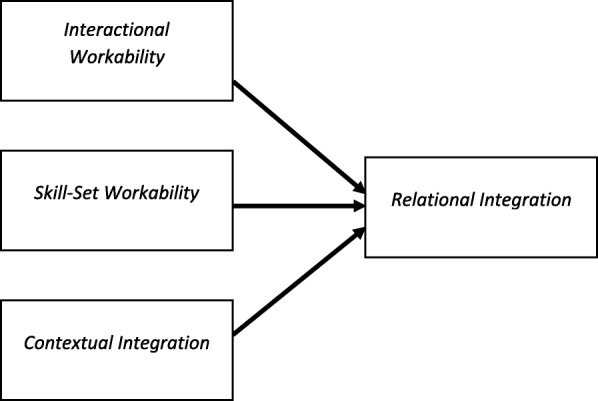
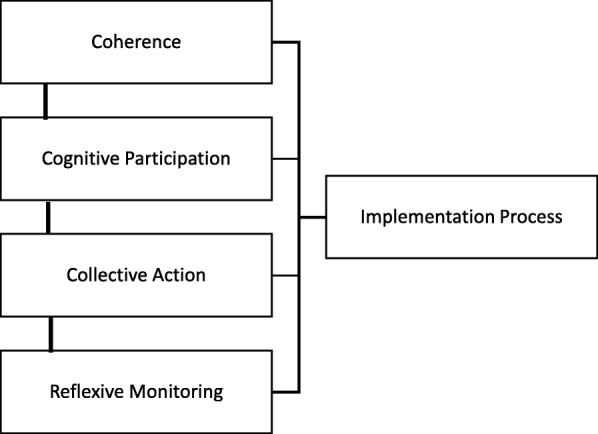
- Researchers applied NPT constructs in four distinctive ways: as a linear sequence over time, with coherence as an obligatory starting point, with relational integration as an obligatory point of passage, or as mechanisms operating simultaneously but unevenly. NPT was used to aid intervention development and implementation planning as well as to evaluate and understand implementation processes.
Methods
- Qualitative systematic review using citation searches of Web of Science, Scopus, and Google Scholar for articles citing key NPT papers or the NPT Online Toolkit; searches ran from June 2015 to December 2017. Inclusion criteria were peer-reviewed English-language empirical articles on healthcare intervention implementation in which NPT was the primary analytic framework; exclusions included protocols, reviews, non-healthcare settings, non-English papers, and passing references to NPT.
- Screening was done by independent reviewer pairs; data were extracted with a structured instrument, and qualitative analysis characterized uses, limits, and contributions of NPT. Coding was jointly checked on 75/130 included papers, and categorisation was jointly checked for all included papers. PROSPERO deemed the review ineligible for public registration because NPT was not a healthcare intervention.
Limitations
- Stated by the authors: searches were undertaken in only two databases, so some studies may have been missed; Google Scholar results were unstable and produced multiple versions of references, though it identified about 20 papers that would otherwise have been excluded; non-English studies were excluded; a different research team might reach different conclusions; and findings apply only to healthcare implementation research.
- Evident from the text: included studies often focused on feasibility or early implementation phases, skewing analyses toward implementation rather than embedding and integration; few studies tracked an intervention over its whole life; most papers used the 2009 elaboration of NPT; and critiques of NPT were rare.
Model-written summary. Check it against the paper before relying on it.
Integrity signals
Registry
Cites
Statistics
Figures
Verification
Claims the paper makes
34 Valid · 3 Not valid · 24 Not checked · 105 Own results and interpretations
The cited sources support only part of this claim — read each source’s verdict below.
In the paper
“The development of NPT first involved the iterative development of a robust generic theory of implementation [5–9, 11, 12].”
§ Using Normalization Process Theory in feasibility studies and process evaluations of complex healthcare interventions: a systematic review > Background > What is NPT and what does it do?
What the sources say
- Not matchedcites [5] May C. A rational model for assessing and evaluating complex interventions in health care. BMC Health Serv Res. 2006;6(86):1–11.
Couldn’t be matched to a paper in Crossref, so it can’t be checked.
- Partly supportedcites [6] May C, Finch T, Mair F, Ballini L, Dowrick C, Eccles M, Gask L, MacFarlane A, Murray E, Rapley T, et al. Understanding the implementation of complex interventions in health care: the normalization process model. BMC Health Serv Res. 2007;7:148. sourceExperimental — accuracy not yet measured
The Background describes successive development of the Normalization Process Model from empirical studies into a robust applied theory. But the Conclusion explicitly says the model is not a general theory: its scope is the implementation of complex interventions in healthcare, so this paper does not support calling it a generic theory of implementation. (LLM, conf=0.86)
- Not checked — no full text of the sourcecites [7] May C, Finch T. Implementation, embedding, and integration: an outline of normalization process theory. Sociology. 2009;43(3):535–54. source
- Supportedcites [8] May C, Mair FS, Finch T, MacFarlane A, Dowrick C, Treweek S, Rapley T, Ballini L, Ong BN, Rogers A, et al. Development of a theory of implementation and integration: normalization process theory. Implement Sci. 2009:4(29). source
The Methods (Abstract; no page given) describe successive stages from empirical generalizations to an applied model and then a formal theory. The Results ('The changing scope of the theory'; no page given) describe the resulting NPT as a generalizable middle-range theory of implementation, embedding, and integration. (LLM, conf=0.91)
- Partly supportedcites [9] May C. Towards a general theory of implementation. Implement Sci. 2013;8(1):18. sourceExperimental — accuracy not yet measured
The ‘Theory-building as a journey’ section describes a progression from the Normalization Process Model to NPT, which it calls a generic, middle-range theory of implementation. It says the journey began with the narrower model, however, and that the proposed general theory was a later extension of NPT—not the first step in its development. (LLM, conf=0.82)
- Partly supportedcites [11] May CR, Mair FS, Dowrick CF, Finch TL. Process evaluation for complex interventions in primary care: understanding trials using the normalization process model. BMC Fam Pract. 2007;8 sourceExperimental — accuracy not yet measured
The Background (page unavailable) describes the development and application of the Normalization Process Model (NPM) to understand implementation, and the Authors’ contributions say the model was modified for this paper. The copy does not establish that NPT’s development first involved an iterative process yielding a robust generic theory of implementation; it discusses NPM and refers the fuller account of its development elsewhere. (LLM, conf=0.83)
- Not checked — no full text of the sourcecites [12] May C. Agency and implementation: understanding the embedding of healthcare innovations in practice. Soc Sci Med. 2013;78(0):26–33. source
plainstates a cause- Asserted: passes — The authors put it forward as true.
- Checkable: passes — It can be checked against evidence.
- Load-bearing: unclear — It is unclear whether the paper’s conclusions depend on it.
- Based: passes — The paper gives a reason why it holds.
- Not matched
Every source the paper cites for this claim was checked and supports it.
In the paper
“concerns raised by McEvoy et al. about the lack of prospective application do not just apply to NPT.”
§ Using Normalization Process Theory in feasibility studies and process evaluations of complex healthcare interventions: a systematic review > Discussion > Key results of the review
What the sources say
- Supportedcites Kirk et al. [18] Kirk MA, Kelley C, Yankey N, Birken SA, Abadie B, Damschroder L. A systematic review of the use of the consolidated framework for implementation research. Implement Sci. 2016;11:72. source
The Discussion (Phase of implementation; page unavailable) reports that only two studies used CFIR before implementation and calls this a missed opportunity. The Discussion (Contribution of the CFIR to implementation science; page unavailable) also reports minimal prospective use of PARIHS. Together, these passages support the point that the concern is not limited to NPT. (LLM, conf=0.92)
plain- Asserted: passes — The authors put it forward as true.
- Checkable: passes — It can be checked against evidence.
- Load-bearing: unclear — It is unclear whether the paper’s conclusions depend on it.
- Based: passes — The paper gives a reason why it holds.
- Supported
The cited sources support only part of this claim — read each source’s verdict below.
In the paper
“Normalization Process Theory (NPT) identifies, characterises and explains key mechanisms that promote and inhibit the implementation, embedding and integration of new health techniques, technologies and other complex interventions.”
- Also stated in: § Background · boosted
“Normalization Process Theory (NPT) [5–10] is one of these. It identifies, characterises and explains mechanisms that have been empirically demonstrated to motivate and shape implementation processes and affect their outcomes.”
§ Using Normalization Process Theory in feasibility studies and process evaluations of complex healthcare interventions: a systematic review > Abstract > Background
What the sources say
- Not matchedcites [5] May C. A rational model for assessing and evaluating complex interventions in health care. BMC Health Serv Res. 2006;6(86):1–11.
Couldn’t be matched to a paper in Crossref, so it can’t be checked.
- Partly supportedcites [6] May C, Finch T, Mair F, Ballini L, Dowrick C, Eccles M, Gask L, MacFarlane A, Murray E, Rapley T, et al. Understanding the implementation of complex interventions in health care: the normalization process model. BMC Health Serv Res. 2007;7:148. sourceExperimental — accuracy not yet measured
The Background and Abstract Results sections say the Normalization Process Model identifies factors that promote or inhibit implementation and explains how complex interventions become embedded in health care practice. The cited paper calls this the Normalization Process Model, not Normalization Process Theory (NPT), and describes its scope as complex interventions in health care rather than the broader formulation in the claim. The copy provides no page numbers. (LLM, conf=0.88)
- Not checked — no full text of the sourcecites [7] May C, Finch T. Implementation, embedding, and integration: an outline of normalization process theory. Sociology. 2009;43(3):535–54. source
- Supportedcites [8] May C, Mair FS, Finch T, MacFarlane A, Dowrick C, Treweek S, Rapley T, Ballini L, Ong BN, Rogers A, et al. Development of a theory of implementation and integration: normalization process theory. Implement Sci. 2009:4(29). source
The Background section (‘What is NPT?’; page not provided) says NPT explains implementation, embedding and integration, and identifies mechanisms that promote or inhibit the enactment of practices. The Methods section (‘Phase three: Making a formal theory’; page not provided) describes it as a general theory applicable beyond healthcare and complex interventions. (LLM, conf=0.94)
- Supportedcites [9] May C. Towards a general theory of implementation. Implement Sci. 2013;8(1):18. source
The Background’s ‘Constructs of the general theory’ section says NPT characterizes social mechanisms involved in implementing and embedding complex interventions, then identifies four mechanisms. The same section discusses techniques and technologies as components of complex interventions. Page numbers are not available in our copy. (LLM, conf=0.91)
- Supportedcites [10] May CR, Johnson M, Finch T. Implementation, context and complexity. Implement Sci. 2016;11(1):141. source
The Background’s Table 1 describes NPT as analysing mechanisms of implementation and asks what promotes or inhibits the implementation, embedding and integration of practices. It identifies the practices as new techniques, technologies or organisational interventions, while the Purpose of this paper section also discusses the routine incorporation of complex interventions. (LLM, conf=0.92)
boostedstates a cause- Asserted: passes — The authors put it forward as true.
- Checkable: passes — It can be checked against evidence.
- Load-bearing: passes — The paper’s conclusions depend on it.
- Based: passes — The paper gives a reason why it holds.
- Also stated in: § Background · boosted
Every source the paper cites for this claim was checked and supports it.
In the paper
“In the period since McEvoy et al.’s review [17], studies using NPT have proliferated.”
§ Using Normalization Process Theory in feasibility studies and process evaluations of complex healthcare interventions: a systematic review > Background > The purpose of this review
What the sources say
- Supportedcites [17] McEvoy R, Ballini L, Maltoni S, ODonnell C, Mair F, MacFarlane A. A qualitative systematic review of studies using the normalization process theory to research implementation processes. Implement Sci. 2014;9(1):2. source
The citation identifies McEvoy et al.’s review as the point from which the citing authors measure time. The Discussion describes the paper as a review of 29 NPT papers; the statement about proliferation since that review is the citing authors’ own observation, not a finding attributed to the review. (LLM, conf=0.91)
plain- Asserted: passes — The authors put it forward as true.
- Checkable: passes — It can be checked against evidence.
- Load-bearing: passes — The paper’s conclusions depend on it.
- Based: passes — The paper gives a reason why it holds.
- Supported
Every source the paper cites for this claim was checked and supports it.
In the paper
“A review by McEvoy et al. [17], published in 2014, provided a qualitative synthesis of 29 early and heterogeneous studies in which NPT was used.”
§ Using Normalization Process Theory in feasibility studies and process evaluations of complex healthcare interventions: a systematic review > Background > The purpose of this review
What the sources say
- Supportedcites [17] McEvoy R, Ballini L, Maltoni S, ODonnell C, Mair F, MacFarlane A. A qualitative systematic review of studies using the normalization process theory to research implementation processes. Implement Sci. 2014;9(1):2. source
The Methods describe a qualitative systematic review using framework analysis and limit the included publications to 2006–June 2012. The Results report 29 articles using NPT across several healthcare fields, and the Discussion describes a diverse range of settings. These passages support the characterization of the studies as early and heterogeneous. (LLM, conf=0.92)
plain- Asserted: passes — The authors put it forward as true.
- Checkable: passes — It can be checked against evidence.
- Load-bearing: passes — The paper’s conclusions depend on it.
- Based: passes — The paper gives a reason why it holds.
- Supported
75 more claims · 5 with their cited sources checked
Create a free account to see all 166 claims and every source verdict.
- Probably not a substantial claim. 61
- It may state two separate claims as one. 32
- The quote only partly states this claim. 1
Claims other papers make about this one
Each is checked against this paper’s own text: does it say what the citing paper says it does?
The cited source says what the claim attributes to it.
In the citing paper
“Previous research has shown that NPT can be applied effectively to qualitative data in healthcare contexts and, more recently, in school-based research [38, 40, 41].”
In the citing paper
“NPT is a useful framework to explain and understand how people integrate new interventions into their everyday routines [24].”
Self-check
Percentages, sums and reported differences re-computed from the paper’s own numbers.
Each contradiction between two passages listed here was confirmed by an independent check.
Rated minor: it would not touch a result — a value no result rests on, a p-value that stays on the same side of the significance level, or a conflict that is clerical, resolved elsewhere in the paper, or outside its own findings.
In the paper
§ Using Normalization Process Theory in feasibility studies and process evaluations of complex healthcare interventions: a systematic review > Discussion > Key results of the review
“The major papers by Clarke et al. [34, 35] and Hooker et al. [38–41] are important examples of such work.”
§ Using Normalization Process Theory in feasibility studies and process evaluations of complex healthcare interventions: a systematic review > References
“34. Grant A Dreischulte T Guthrie B Process evaluation of the data-driven quality improvement in primary care (DQIP) trial: active and less active ingredients of a multi-component complex intervention to reduce high-risk primary care prescribing Implement Sci 2017 12 1 4”
Rated minor: it would not touch a result — a value no result rests on, a p-value that stays on the same side of the significance level, or a conflict that is clerical, resolved elsewhere in the paper, or outside its own findings.
In the paper
§ Using Normalization Process Theory in feasibility studies and process evaluations of complex healthcare interventions: a systematic review > Results > Types of studies
“106. Walker et al. [144] | Australia | NPT | Colorectal cancer risk prediction | NICE guideline [199]”
§ Using Normalization Process Theory in feasibility studies and process evaluations of complex healthcare interventions: a systematic review > References
“199. NICE Depression in adults with a chronic physical health problem (CG91) 2009 Manchester National Institute for Health and Clinical Excellence”
Rated minor: it would not touch a result — a value no result rests on, a p-value that stays on the same side of the significance level, or a conflict that is clerical, resolved elsewhere in the paper, or outside its own findings.
In the paper
§ Using Normalization Process Theory in feasibility studies and process evaluations of complex healthcare interventions: a systematic review > Results > Types of studies
“13. Grant et al. [34, 35] | UK | NPT | Primary care prescribing | NICE guideline [157]”
§ Using Normalization Process Theory in feasibility studies and process evaluations of complex healthcare interventions: a systematic review > References
“157. NICE Delirium: diagnosis, prevention and management (CG103) 2010 Manchester National Institute for Clinical Excellence”
Rated minor: it would not touch a result — a value no result rests on, a p-value that stays on the same side of the significance level, or a conflict that is clerical, resolved elsewhere in the paper, or outside its own findings.
In the paper
§ Using Normalization Process Theory in feasibility studies and process evaluations of complex healthcare interventions: a systematic review > Results > Types of studies
“14. Godfrey et al. [36] | UK | NPT | Delirium prevention in hospital | Systematic review [158]”
§ Using Normalization Process Theory in feasibility studies and process evaluations of complex healthcare interventions: a systematic review > References
“158. Howard RL Avery AJ Slavenburg S Royal S Pipe G Lucassen P Pirmohamed M Which drugs cause preventable admissions to hospital? A systematic review Br J Clin Pharmacol 2007 63 2 136 147”
Citations
Cites
Three Approaches to Qualitative Content Analysis
Hsieh, H.-F., & Shannon, S. E. (2005) · Qualitative Health Research · doi:10.1177/1049732305276687 · Cited by 44,601 · cited 1×
“Some used deductive strategies that relied on framework or directed content [204, 205] analyses and in which interpretation of data was structured prospectively by the theory.”
MethodDamschroder, L. J., Aron, D. C., Keith, R. E., Kirsh, S. R., Alexander, J. A., & Lowery, J. C. (2009) · Implementation Science · doi:10.1186/1748-5908-4-50 · Cited by 14,496 · cited 2×
“For example, Kirk et al. [18] point to the problem of low levels of prospective use of the CFIR [208] and PARIHS [209] frameworks.”
Diffusion of Innovations in Service Organizations: Systematic Review and Recommendations
GREENHALGH, T., ROBERT, G., MACFARLANE, F., BATE, P., & KYRIAKIDOU, O. (2004) · The Milbank Quarterly · doi:10.1111/j.0887-378x.2004.00325.x · Cited by 7,448
Decision aids for people facing health treatment or screening decisions
Stacey, D., Légaré, F., Lewis, K., Barry, M. J., Bennett, C. L., Eden, K. B., Holmes-Rovner, M., Llewellyn-Thomas, H., Lyddiatt, A., Thomson, R., et al. (2017) · Cochrane Database of Systematic Reviews · doi:10.1002/14651858.cd001431.pub5 · Cited by 6,685
Audit and feedback: effects on professional practice and healthcare outcomes
Ivers, N., Jamtvedt, G., Flottorp, S., Young, J. M., Odgaard-Jensen, J., French, S. D., O'Brien, M. A., Johansen, M., Grimshaw, J., & Oxman, A. D. (2012) · Cochrane Database of Systematic Reviews · doi:10.1002/14651858.cd000259.pub3 · Cited by 5,485
Qualitative data analysis for applied policy research
(2002) · Analyzing Qualitative Data · doi:10.4324/9780203413081-14 · Cited by 4,964 · cited 2×
“Some used deductive strategies that relied on framework or directed content [204, 205] analyses and in which interpretation of data was structured prospectively by the theory.”
MethodQualitative data analysis for applied policy research
Ritchie, J., & Spencer, L. (2010) · Analyzing qualitative data · doi:10.4324/9780203413081_chapter_9 · Cited by 4,800
Making sense of implementation theories, models and frameworks
Nilsen, P. (2015) · Implementation Science · doi:10.1186/s13012-015-0242-0 · Cited by 4,447
Chaudhry, B., Wang, J., Wu, S., Maglione, M., Mojica, W., Roth, E., Morton, S. C., & Shekelle, P. G. (2006) · Annals of Internal Medicine · doi:10.7326/0003-4819-144-10-200605160-00125 · Cited by 3,159
Garg, A. X., Adhikari, N. K. J., McDonald, H., Rosas-Arellano, M. P., Devereaux, P. J., Beyene, J., Sam, J., & Haynes, R. B. (2005) · JAMA · doi:10.1001/jama.293.10.1223 · Cited by 2,936
Research works printed but not linked: 16
- Hooker L, Small R, Taft A. Understanding sustained domestic violence identification in maternal and child health nurse care: process evaluation from a 2-year follow-up of the MOVE trial. J Adv Nurs. 2016;72(3):533–44. · DOI · Paper page
- NICE. Chronic kidney disease. Early identification and management of chronic kidney disease in adults in primary and secondary care (CG73). London: National Institute for Health and Clinical Excellence; 2008.
- NICE. Delirium: diagnosis, prevention and management (CG103). Manchester: National Institute for Clinical Excellence; 2010.
- WHO. WHO recommendations for prevention and treatment of pre-eclampsia and eclampsia. Geneva: World Health Organization; 2011.
- FSA. Guidance on food served to older people in residential care. London: Food Standards Agency; 2007.
- NICE. Chronic fatigue syndrome/myalgic encephalitis (or encalopathy): diagnosis and management of CFS/ME in adults and children (CG53). London: National Institute of Clinical Excellence; 2007.
- NICE. Falls in older people: assessing risk and prevention (CG161). Manchester: National Institute for Clinical Excellence; 2013.
- NICE. Osteoporosis: secondary prevention including strontium ranelate (TA161). Manchester: National Institue of Clinical Excellence; 2008.
- Deshpande A, Khoja S, McKibbon A, Rizo C, Jadad A. Telehealth for acute stroke management (Telestroke): systematic review and environment scan (technology overview 37). Ottowa: Canadian Agency for Drugs and Technologies in Health; 2008.
- NICE. Referral guidelines for suspected cancer. London: National Institute for Health and Clinical Excellence; 2005.
- NICE. Acute kidney injury: prevention, detection and management of acute kidney injury up to the point of renal replacement therapy (CG169). Manchester: National Institute of Health and Care Excellence; 2013.
- NICE. Chronic heart failure: management of chronic heart failure in adults in primary and secondary care. London: National Institute of Health and Care Excellence; 2008.
- NICE. Depression in adults with a chronic physical health problem (CG91). Manchester: National Institute for Health and Clinical Excellence; 2009.
- Dedoose. Dedoose version 4.5, web application for managing, analyzing, and presenting qualitative and mixed method research data. Los Angeles: SocioCultural Research Consultants, LLC; 2013. http://www.dedoose.com
- de Brún T, de-Brún MOR, van Weel-Baumgarten E, van Weel C, Dowrick C, Lionis C, O’Donnell CA, Burns N, Mair FS, Saridaki A, et al. Guidelines and training initiatives that support communication in cross-cultural primary-care settings: appraising their implementability using normalization process theory. Fam Pract. 2015;32(4):420–5.
- NICE. Psychosis and schizophrenia in adults: prevention and management [CG178]. London: National Institute for Health and Care Excellence; 2014.
Cited by
Harnessing the power of theorising in implementation science
Kislov, R., Pope, C., Martin, G. P., & Wilson, P. M. (2019) · Implementation Science · doi:10.1186/s13012-019-0957-4 · Cited by 289
“For instance, a systematic review on the use of normalisation process theory (NPT) shows that studies informed by this theoretical approach rarely engage in its critique or add a contribution to it [30].”
InfluentialMay, C. R., Albers, B., Bracher, M., Finch, T. L., Gilbert, A., Girling, M., Greenwood, K., MacFarlane, A., Mair, F. S., May, C. M., et al. (2022) · Implementation Science · doi:10.1186/s13012-022-01191-x · Cited by 234
“As the theory was developed and applied, further consideration was given to the problem of contexts [9, 13, 16] and to the question of how mechanisms interact with contexts to produce specific outcomes [11, 24, 25, 55].”
Self-citationHuddlestone, L., Turner, J., Eborall, H., Hudson, N., Davies, M. J., & Martin, G. P. (2020) · BMC Family Practice · doi:10.1186/s12875-020-01107-y · Cited by 170
Ross, J., Stevenson, F. A., Dack, C., Pal, K., May, C. R., Michie, S., Barnard, M., & Murray, E. (2018) · BMC Health Services Research · doi:10.1186/s12913-018-3615-7 · Cited by 160
“NPT is a widely used [39, 40] theory of implementation that can be used to explain the processes by which an intervention becomes, or indeed fails to become, normalised into routine practice.”
BackgroundSelf-citationImplementing AI in healthcare—the relevance of trust: a scoping review
Steerling, E., Siira, E., Nilsén, P., Svedberg, P., & Nygren, J. (2023) · Frontiers in Health Services · doi:10.3389/frhs.2023.1211150 · Cited by 158
Metadata
- Authors
- May, C. R., Cummings, A., Girling, M., Bracher, M., Mair, F. S., May, C. M., Murray, E., Myall, M., Rapley, T., & Finch, T.
- Affiliations
- London School of Hygiene & Tropical Medicine (GB)
- Corresponding author
- May, Carl R.
- ORCID
- Venue
- Implementation Science
- Published
- 2018-06-07
- Volume
- 13
- Issue
- 1
- Pages
- 80-80
- ISSN
- 1748-5908 (ISSN-L)
- PMC
- PMC5992634
- OpenAlex
- W2807684088
- Semantic Scholar
- ef32367f55a3af726f807d58aa67422e9778dc6b
- Cited by
- 683
- References
- 231
- Citations by year
- 2026: 65 · 2025: 78 · 2024: 127 · 2023: 115 · 2022: 94 · 2021: 95 · 2020: 71 · 2019: 31 · 2018: 6
- FWCI
- 9.17
- Type
- journal article
- Language
- en
- Open access
- gold
- doi.org
- Licence
- cc-by
- creativecommons.org/licenses/by/4.0/ (tdm)
- Locations
- Implementation Science (publishedVersion, cc-by)
- Europe PMC (PubMed Central) (publishedVersion, cc-by)
- PubMed Central (publishedVersion, cc-by)
- PubMed (publishedVersion)
- ePrints Soton (University of Southampton) (acceptedVersion, cc-by)
- Northumbria Research Link (Northumbria University) (acceptedVersion)
- DOAJ (DOAJ: Directory of Open Access Journals) (acceptedVersion)
- ENLIGHTEN (Jurnal Bimbingan dan Konseling Islam) (acceptedVersion, cc-by-sa)
- UCL Discovery (University College London) (acceptedVersion)
- LSHTM Research Online (London School of Hygiene and Tropical Medicine) (acceptedVersion)
- Funders
- Macmillan Cancer Support
- National Institute for Health and Care Research
- University of Southampton
- Economic and Social Research Council (ES/I037342/1, ES-062-23-3274)
- Topics
- Health Sciences › Health Professions › General Health Professions › Health Policy Implementation Science
- Health Sciences › Medicine › Public Health, Environmental and Occupational Health › Clinical practice guidelines implementation
- Social Sciences › Sociology and Political Science › Delphi Technique in Research
- Keywords
- Normalization Process Theory, feasibility study, process evaluation, complex interventions, implementation mechanisms, implementation planning, agency
- MeSH terms
- Adolescent, Australia, Child, Delivery of Health Care, Feasibility Studies, Female, Humans, Models, Theoretical, Pregnancy, Systems Theory, Process Assessment, Health Care
About these checks
Registry, retraction, Cites and statistics results are computed, not judged, with one exception: a printed reference that no index lists is read once by a model before it counts as a citation error. Claims are extracted by a model and kept only when their quote appears verbatim in the text; each cited source is then checked, with a model’s help, for whether it says what the claim relies on. Those verdicts can be wrong — read the claim’s quote and the cited source before relying on one.
The claim verdicts this report counts are experimental: their accuracy is not yet measured.
A language model drew the claims from the paper on 2026-10-10, under version 3 of the claim definition (model deepseek-v4.1-flash, prompt extract-v3).
A second model labelled each claim on 2026-10-10 (model jev-1.13-20260917, definition revision gold-guideline-v0.2).
Cited sources are checked with a language model’s help (gpt-6-sol).
Statistics and arithmetic are recomputed, not judged.
Confidence bands are shown only for fields calibrated on our annotated test set. None is calibrated yet, so no band is shown.
What counts as a claim ›How we measure confidence ›How we check this ›
Are you an author, or do you see a problem with this page? Request a review
How to cite
Cite CoChat for the checks on this page, and the paper for its own findings.
- This page
- CoChat. (2026). Citation check: Using Normalization Process Theory in feasibility studies and process evaluations of complex healthcare interventions: a systematic review. https://app.cochat.ai/papers/10.1186/s13012-018-0758-1
- The paper
- May, C. R., Cummings, A., Girling, M., Bracher, M., Mair, F. S., May, C. M., Murray, E., Myall, M., Rapley, T., & Finch, T. (2018). Using Normalization Process Theory in feasibility studies and process evaluations of complex healthcare interventions: a systematic review. Implementation Science. https://doi.org/10.1186/s13012-018-0758-1
Data sources
Bibliographic data: Semantic Scholar, OpenAlex, Crossref.
Contains information from the Semantic Scholar Academic Graph Datasets, made available under the ODC Attribution License (ODC-BY 1.0).
Semantic Scholar’s data is described in: Kinney, R., et al. (2023). The Semantic Scholar Open Data Platform. arXiv:2301.10140.
