

'The girl with her period is the one to hang her head' Reflections on menstrual management among schoolgirls in rural Kenya
Open accessThe DOI matches its Crossref record; 17 of the 18 references it cites were found in a registry or an index.
Abstract
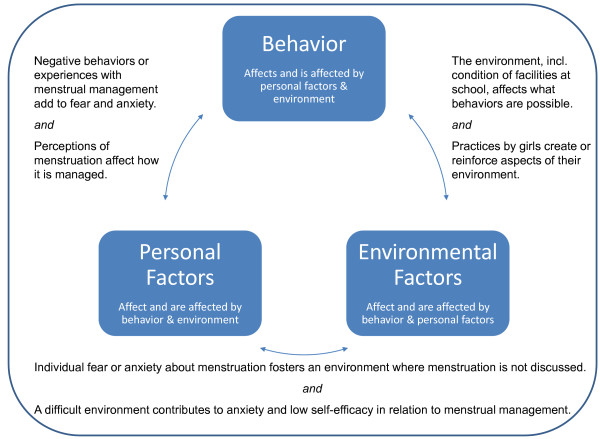
Background: The onset of menstruation is a landmark event in the life of a young woman. Yet the complications and challenges that can accompany such an event have been understudied, specifically in resource-poor settings. As interventions aim to improve female attendance in schools, it is important to explore how menstruation is perceived and navigated by girls in the school setting. This research conveys rural Kenyan schoolgirls' perceptions and practices related to menstruation Methods: Data were collected at six rural schools in the Nyanza Province of Western Kenya. Using focus group discussions, in-depth interviews, and field notes from observations, researchers collected information from 48 primary schoolgirls and nine teachers. Systematic analysis began with a reading of transcripts and debriefing notes, followed by manual coding of the narratives. Results: Focus group discussions became opportunities for girls to share thoughts on menstruation, instruct one another on management practices and advise one another on coping mechanisms. Girls expressed fear, shame, distraction and confusion as feelings associated with menstruation. These feelings are largely linked to a sense of embarrassment, concerns about being stigmatized by fellow students and, as teachers explained, a perception that the onset of menstruation signals the advent of a girl's sexual status. Among the many methods for managing their periods, girls most frequently said they folded, bunched up or sewed cloth, including cloth from shirts or dresses, scraps of old cloth, or strips of an old blanket. Cloth was reported to frequently leak and cause chafing, which made school attendance difficult particularly as the day progressed. Attitudes and practices of girls toward menstruation have been arranged into personal, environmental and behavioural factors. Conclusion: Further research on menstrual management options that are practical, sustainable and culturally acceptable must be conducted to inform future programs and policies that aim to empower young girls as they transition into womanhood. Stakeholders working within this and similar contexts must consider systematic mechanisms to explain to young girls what menstruation is and how to manage it. Providing sanitary supplies or guiding girls on how to create supplies serve as critical components for future interventions.
Overview
The claims and statistics of this paper haven’t been checked yet.
Free: it reads the open-access text and checks the first 5 claims that cite a source we can check. Create a free account to check every claim.
Integrity signals
Registry
Cites
Statistics
Figures
Verification
Claims the paper makes
The claims and statistics of this paper haven’t been checked yet.
Free: it reads the open-access text and checks the first 5 claims that cite a source we can check. Create a free account to check every claim.
Claims other papers make about this one
Each is checked against this paper’s own text: does it say what the citing paper says it does?
The source backs part of the claim, not all of it — or backs it for a different population, condition or comparison.
In the citing paper
“A lack of adequate guidance on menstrual management; water, disposal, and private changing facilities; and sanitary hygiene materials in low- and middle-income countries leaves schoolgirls with limited options for healthy personal hygiene during monthly menses.”
From Menstrual hygiene management among adolescent schoolgirls in low- and middle-income countries: research priorities (2016) · cites this paper as [11]
Experimental — accuracy not yet measuredThe source backs part of the claim, not all of it — or backs it for a different population, condition or comparison.
In the citing paper
“inadequate social support, ongoing gender inequality, and social and hygiene taboos around menstruation in numerous countries leave girls experiencing shame, fear, and confusion when trying to cope with their menstrual flow (9–15, 20, 21).”
From Menstrual hygiene management among adolescent schoolgirls in low- and middle-income countries: research priorities (2016) · cites this paper as [11]
Experimental — accuracy not yet measuredThe source backs part of the claim, not all of it — or backs it for a different population, condition or comparison.
In the citing paper
“Many girls in LMIC cannot afford sanitary pads and resort to impromptu items like old cloth or cotton wool, or use a minimal number of pads, which leak, smell and chafe, causing them stigma, shame and discomfort.3–6”
From Menstrual cups and sanitary pads to reduce school attrition, and sexually transmitted and reproductive tract infections: a cluster randomised controlled feasibility study in rural Western Kenya (2016) · cites this paper as [5]
Experimental — accuracy not yet measuredThe source backs part of the claim, not all of it — or backs it for a different population, condition or comparison.
In the citing paper
“In addition to these structural and resource barriers, women and girls face information and social support challenges: girls are often unprepared, uninformed, misinformed, and lack adequate support for understanding and managing menarche, menstruation, and puberty, resulting in fear, uncertainty, and potentially harmful behaviors, like risky sex, reduced bathing, and limited food and water intake”
From ’It’s like a burden on the head’: Redefining adequate menstrual hygiene management throughout women’s varied life stages in Odisha, India. (2019) · cites this paper as [26]
Experimental — accuracy not yet measured
32 more claims about this paper
Create a free account to see every claim other papers make about this one.
Self-check
Percentages, sums and reported differences re-computed from the paper’s own numbers.
The self-check needs the paper’s full text.
Citations
Cites
Kenya Demographic and Health Survey 1989
Kenya, & Std Control Programme (1989) · Cited by 1,756
Obonyo, J. (2010) · Cited by 732
Menstrual hygiene: How hygienic is the adolescent girl?
Dasgupta, A., & Sarkar, M. (2008) · Indian Journal of Community Medicine · doi:10.4103/0970-0218.40872 · Cited by 592 · cited 1×
“The fact that girls in this study expressed negative feelings such as fear and anxiety is supported by studies conducted in India, Nigeria, Tanzania and Pakistan [4][9][5][19][3][1][11].”
Unsafe sexual behaviour in South African youth
Eaton, L., Flisher, A. J., & Aarø, L. E. (2003) · Social Science & Medicine · doi:10.1016/s0277-9536(02)00017-5 · Cited by 536 · cited 1×
“The inadequate level of information girls conveyed in interviews speaks to the urgent need for girls to receive more guidance on menstruation, which has been previously recommended [ 18 ][1][11].”
The state of the world's children 2011 - adolescence: an age of opportunity.
Anthony, D. (2011) · Cited by 346
Sommer, M. (2010) · Journal of Adolescence · doi:10.1016/j.adolescence.2009.03.008 · Cited by 305 · cited 6×
“The fact that girls in this study expressed negative feelings such as fear and anxiety is supported by studies conducted in India, Nigeria, Tanzania and Pakistan [4][9][5][19][3][1][11].”
InfluentialMenstrual Practices and Reproductive Problems: A Study of Adolescent Girls in Rajasthan
Khanna, A., Goyal, R. S., & Bhawsar, R. (2005) · Journal of Health Management · doi:10.1177/097206340400700103 · Cited by 248
The State of the World's Children, 2004: Girls, Education And Development
Bellamy, C. (2004) · Medical Entomology and Zoology · Cited by 204
Angier, N. (1999) · Virago Press eBooks · Cited by 202
Menstrual knowledge and practices of female adolescents in urban Karachi, Pakistan
Ali, T. S., & Rizvi, S. N. (2010) · Journal of Adolescence · doi:10.1016/j.adolescence.2009.05.013 · Cited by 187
Research works printed but not linked: 8
- Scott L Dopson S Montgomery P Dolan C Ryus C Impact of Providing Sanitary Pads to Poor Girls in Africa 2009 University of Oxford
- Greene L SWASH+ Application of Lessons Learned to Current and Future Practice SWASH+ Programatic Management Group Meeting: 2009 2009; Tom Mboya Labour College, Kisumu Kenya 2009
- Thomas E Publications C Healthy Futures, Reducing Barriers to Primary School Completion for Kenyan Girls Special Publication No 23 2002 Baltimore: Johns Hopkins University, Center for Communication Programs, Population Communication Services; Washington DC: The Academy for Educational Development
- Sommer M Kirk J 'Menstruation is on her mind': Girl-centered, holistic thinking for school sanitation WASH in Schools Notes and News Volume April 2008 IRC and UNICEF 4 6
- Nahar Q Ahmed R Addressing Special Needs of Girls: Challenges in school SACOSAN II 2006 Islamabad, Pakistan
- UNFPA The state of the world's adolescents 2003 New York: UNFPA
- UNICEF UNICEF, Ministry of Rural Development GoI Sharing Simple Facts 2008 http://www.indiasanitationportal.org/sites/default/files/MHM_Book.pdf accessed March 15, 2011
- Sommer M The Puberty (Kubalehe) Book 2010 http://www.growandknow.org/Grow_and_Know/Puberty_(kubalehe)_book.pdf accessed December 2, 2010
Cited by
Items 101–200 of 316
Patriarchy, gender norms and female student dropout from high schools in Nepal
Dahal, T. P., Topping, K. J., & Levy, S. (2021) · Compare A Journal of Comparative and International Education · doi:10.1080/03057925.2021.1987191 · Cited by 53
Munro, A. K., Keep, M., Hunter, E. C., & Hossain, S. Z. (2022) · Women s Health · doi:10.1177/17455065211070666 · Cited by 39
Stoilova, D., Cai, R., Aguilar-Gómez, S., Batzer, N. H., Nyanza, E. C., & Benshaul-Tolonen, A. (2022) · PLOS Global Public Health · doi:10.1371/journal.pgph.0000110 · Cited by 36
Long, J. L., Haver, J., Mendoza, P., & Kotasek, S. M. V. (2022) · Frontiers in Global Women s Health · doi:10.3389/fgwh.2022.859797 · Cited by 52
Blake, S., Boone, M. R., Kassa, A. Y., & Sommer, M. (2017) · Journal of Adolescent Research · doi:10.1177/0743558417701246 · Cited by 36
Duby, Z., Katz, A. W. K., Musara, P., Nabukeera, J., Zimba, C. C., Woeber, K., Palanee‐Phillips, T., & van der Straten, A. (2019) · Women & Health · doi:10.1080/03630242.2019.1607803 · Cited by 31
“Associated with the concept of menstrual blood as a dirty, polluting, malodorous substance, is the induction of feelings of shame, embarrassment and social discomfort surrounding menstruation (Costos, Ackerman, and Paradis 2002; Jaffer 2015; Lahme, Stern, and Cooper 2016; McMahon et al. 2011).”
InfluentialCultural taboos and misinformation about menstrual health management in rural Bangladesh
Castro, S., & Czura, K. (2024) · World Development · doi:10.1016/j.worlddev.2024.106871 · Cited by 42
Menstruation experiences of South African women belonging to the ama-Xhosa ethnic group
Padmanabhanunni, A., Jaffer, L., & Steenkamp, J. (2017) · Culture Health & Sexuality · doi:10.1080/13691058.2017.1371335 · Cited by 36
“In common with the existing literature from various other African countries (Mason et al. 2013; McMahon et al. 2011; Sommer 2010), the majority of women in the study viewed menstruation negatively as shameful, embarrassing and something to be kept hidden.”
InfluentialMason, L., Nyothach, E., van Eijk, A. M., Obor, D., Alexander, K., Ngere, I., Laserson, K., & Phillips‐Howard, P. A. (2019) · International Journal of Reproduction Contraception Obstetrics and Gynecology · doi:10.18203/2320-1770.ijrcog20193506 · Cited by 36
“International Journal of Reproduction, Contraception, Obstetrics and Gynecology Volume 8 · Issue 8 Page 2975 seclusion, as well as lack of effective pain management.(2,3,6-8) Research studies assert these factors compete to reduce school engagement and lower academic achievement; which has implications for girls’ futu…”
Zamudio‐Haas, S., Auerswald, C. L., Miller, L. E., Amboka, S., Agot, I., Kadede, K., Otieno, B., Odhiambo, H., Odeny, D., Onyango, J., et al. (2020) · Journal of Adolescent Health · doi:10.1016/j.jadohealth.2020.09.027 · Cited by 33
Yalew, M., Adane, B., Arefaynie, M., Kefale, B., Damtie, Y., Mitiku, K., Andualem, A. A., Biset, G., Alene, T. D., Adane, M., et al. (2021) · PLoS ONE · doi:10.1371/journal.pone.0254092 · Cited by 37
Cherenack, E. M., & Sikkema, K. J. (2021) · International Journal of Behavioral Medicine · doi:10.1007/s12529-021-10005-1 · Cited by 40
Asumah, M. N., Abubakari, A., & Gariba, A. (2022) · BMJ Open · doi:10.1136/bmjopen-2021-056526 · Cited by 30
Menstrual Hygiene Management in Secondary schools in Tanzania
Kimwaga, R. J., Mayo, A. W., & Guya, E. (2014) · Cited by 34
Adolescent Experience of Menstruation in Rural Kenya
Secor-Turner, M., Schmitz, K., & Benson, K. (2016) · Nursing Research · doi:10.1097/nnr.0000000000000161 · Cited by 23
“I: 10.1097/NNR.0000000000000161 rsing Research Copyright © 2016 Wolters Kluwer H medication for menstrual cramping also hinder school attendance (Jewitt & Ryley, 2014; McMahon et al., 2011).”
InfluentialZulaika, G., Nyothach, E., van Eijk, A. M., Wang, D., Opollo, V. S., Obor, D., Mason, L., Chen, T., Kerubo, E., Oyaro, B., et al. (2023) · EClinicalMedicine · doi:10.1016/j.eclinm.2023.102261 · Cited by 27
“1,30 However, in our study the primary driver of dropout was pregnancy (Appendix p 4), indicating menstruation-related absence may not be a major attributor to school dropout.”
Girls’ Menstrual Management in Five Districts of Nepal: Implications for Policy and Practice
Morrison, J., Basnet, M., Bhatt, A., Khimbanjar, S., Chaulagain, S., Sah, N., Baral, S., Mahon, T., & Hodgkin, M. (2018) · Studies in Social Justice · doi:10.26522/ssj.v12i2.1623 · Cited by 29
“A lack of accurate and pragmatic information can lead girls to feel ashamed, anxious, confused and fearful about menstruation (Crichton et al., 2013; McMahon et al., 2011; Sommer, 2010).”
Borg, S. A., Bukenya, J. N., Kibira, S. P. S., Nakamya, P., Makumbi, F. E., Exum, N. G., Schwab, K. J., & Hennegan, J. M. (2023) · PLoS ONE · doi:10.1371/journal.pone.0288942 · Cited by 21
“Previous qualitative studies have found reports of irritation and chafing with 34 improvised materials like cloth (50, 51).”
Sadique, S., Ali, I., & Ali, S. (2023) · Journal of Biosocial Science · doi:10.1017/s0021932023000159 · Cited by 22
Bhusal, C. K., Bhattarai, S., Kafle, R., Shrestha, R., Chhetri, P., & Adhikari, K. (2020) · Advances in Preventive Medicine · doi:10.1155/2020/8872119 · Cited by 23
Behera, M. R., Parida, S., Pradhan, H. S., Priyabadini, S., Dehury, R. K., & Mishra, B. (2022) · Journal of Family Medicine and Primary Care · doi:10.4103/jfmpc.jfmpc_1593_21 · Cited by 24
Bohnert, K., Chard, A. N., Mwaki, A., Kirby, A. E., Muga, R., Nagel, C., Thomas, E., & Freeman, M. C. (2016) · International Journal of Environmental Research and Public Health · doi:10.3390/ijerph13121189 · Cited by 20
“…and educational benefits and sustainability of school WASH to inform an increase in recurrent payments to improve school conditions [12,13,18,23], collected data on life-cycle costs for school WASH [24], and addressed issues of menstrual hygiene management to inform free provision of pads [25].”
Dudeja, P., Sindhu, A., Shankar, P., & Gadekar, T. (2016) · International Journal of Adolescent Medicine and Health · doi:10.1515/ijamh-2016-0079 · Cited by 28
What can existing data on water and sanitation tell us about menstrual hygiene management?
Libbet C. Loughnan, L. C. L., Rob Bain, R. B., Rosemary Rop, R. R., Marni Sommer, M. S., & Tom Slaymaker, T. S. (2016) · Waterlines · doi:10.3362/1756-3488.2016.019 · Cited by 19
Almeida-Velasco, A. A.-V. A., & Sivakami, M. (2019) · Waterlines · doi:10.3362/1756-3488.18-00032 · Cited by 24
Asha, A. C., Karim, N. B., Bakhtiar, M., & Rahaman, K. S. (2019) · Asian Journal of Medical and Biological Research · doi:10.3329/ajmbr.v5i2.42494 · Cited by 26
“Many of them suffers from fear, shame and confusion during their menstrual cycle having a great deal of challenges to manage it due to lack of information and social support, and existing social taboos (Van de Walle and Renne, 2001; McMahon et al., 2011).”
Yeasmin, F., WINCH, P. J., Hwang, S. T., Leontsini, E., Jahir, T., Das, J. B., Amin, M., Hossain, M. K., Huda, T. M. N., Akter, F., et al. (2021) · American Journal of Tropical Medicine and Hygiene · doi:10.4269/ajtmh.20-0991 · Cited by 21
Self-citationConstraints and current practices of menstrual hygiene among Rohingya adolescent girls
Pandit, K., Hasan, M. J., Islam, T., & Rakib, T. M. (2022) · Heliyon · doi:10.1016/j.heliyon.2022.e09465 · Cited by 28
Deriba, B. S., Goyomsa, G. G., Gemeda, D., Geleta, T. A., Jemal, K., Bala, E. T., Mekuria, M., Nigussie, T., Edosa, D., & Legesse, E. (2022) · Frontiers in Public Health · doi:10.3389/fpubh.2022.913262 · Cited by 24
“Access to MHM is fundamental to achieve the Sustainable Development Goals (SDGs) (8).”
Khan, R., Sarker, S., Sultana, F., Alam, M., Mahfuz, M. T., Nuruzzaman, M., Uddin, M. R., Masud, A. A., Khan, S. M., Hunter, E. C., et al. (2023) · Journal of Water Sanitation and Hygiene for Development · doi:10.2166/washdev.2023.153 · Cited by 27
Self-citationTowards Gender Equality Through Sanitation Access
Women, U. N., Burt, Z., Nelson, K. L., & Ray, I. (2016) · Discussion paper · doi:10.18356/25216112/12 · Cited by 54
“26 Sommer 2010; McMahon et al. 2011; Long et al. 2015. towards gender equality through sanitation access 6 3.”
Chebii, S. J. (2018) · Women s Reproductive Health · doi:10.1080/23293691.2018.1490534 · Cited by 18
Ahmed, M. S., Yunus, F. M., Hossain, M. B., Sarker, K. K., & Khan, S. (2021) · Adolescents · doi:10.3390/adolescents1030025 · Cited by 27
“Several qualitative studies found that many school-age girls do not attend school during menstruation [2,4] due to shame, fear of having visible stains on their clothing, and absence of a private place to manage menstruation [2,4] or dysmenorrhea [5].”
Diamond‐Smith, N., Onyango, G. O., Wawire, S., & Ayodo, G. (2020) · PLoS ONE · doi:10.1371/journal.pone.0229871 · Cited by 19
“This literature has focused on adolescent’s experiences of stigma or fear about menstruation, and the support and information (or lack thereof) that they received [7,8].”
Sommer, M., Lee, C., Liu, D., & Gruer, C. (2020) · Frontiers in Public Health · doi:10.3389/fpubh.2020.00442 · Cited by 20
Atari, D. O., Tariquzzaman, S. K., & Nancy, A. (2021) · Journal of Adolescent Research · doi:10.1177/07435584211043293 · Cited by 31
“Other studies conducted in low-income countries such as Nepal (Jothy & Kalaiselvi, 2012), Kenya (McMahon et al., 2011), and India (Suhasini & Chandra, 2017) found similar results.”
Improving Menstrual Health Literacy Through Life-Skills Programming in Rural Ethiopia
Baird, S., Hicks, J. H., Gezahegne, K., Pincock, K., Woldehanna, T., Yadete, W., & Jones, N. (2022) · Frontiers in Global Women s Health · doi:10.3389/fgwh.2022.838961 · Cited by 29
Hanissa, J., Nasution, A., & Arsyati, A. M. (2017) · HEARTY · doi:10.32832/hearty.v5i2.1057 · Cited by 19
Yang, Y.-T., & Chen, D. (2023) · Journal of Public Health in Africa · doi:10.4081/jphia.2023.1971 · Cited by 29
Punzi, M. C., & Werner, M. (2020) · Springer eBooks · doi:10.1007/978-981-15-0614-7_60 · Cited by 33
“The objective is to help women and girls overcome the belief that their body is dirty while understanding that periods are normal and shouldn’t exclude them from society (McMahon et al. 2011; Boosey and Wilson 2014).”
The menstruation experience: Attitude dimensions among South African students
Padmanabhanunni, A., & Fennie, T. (2017) · Journal of Psychology in Africa · doi:10.1080/14330237.2016.1250428 · Cited by 28
Mkumbuzi, N. S., Dlamini, S. B., Serner, A., Kryger, K. O., Brown, N., Larsen, B., & Chibhabha, F. (2023) · Women in Sport and Physical Activity Journal · doi:10.1123/wspaj.2023-0024 · Cited by 25
Menstrual Education and Personal Hygiene Supplies to Empower Young Women in Haiti
Coker‐Bolt, P., Jansson, A., Bigg, S., Hammond, E. A., Hudson, H., Hunkler, S., Kitch, J., Richardson, H., Tiedemann, E., O'Flynn, J., et al. (2017) · OTJR Occupational Therapy Journal of Research · doi:10.1177/1539449217719866 · Cited by 21
Wasan, Y., Baxter, J. B., Rizvi, A., Shaheen, F., Junejo, Q., Abro, M. A., Hussain, A., Ahmed, I., Soofi, S. B., & Bhutta, Z. A. (2022) · Journal of Global Health · doi:10.7189/jogh.12.04059 · Cited by 28
Yilmaz, S. K., Bohara, A. K., & Thapa, S. (2021) · International Journal of Environmental Research and Public Health · doi:10.3390/ijerph18178894 · Cited by 22
“Findings show that parents fear sending their girls to school, and girls fear judgment from others [55] for not having underwear/leaking.”
Mason, L., Zulaika, G., van Eijk, A. M., Fwaya, E., Obor, D., Phillips‐Howard, P. A., & Nyothach, E. (2022) · PLOS Global Public Health · doi:10.1371/journal.pgph.0000987 · Cited by 15
“Many qualitative studies document that girls absent themselves from school during their menses for a variety of reasons including menstrual pain, having suitable WASH facilities or time to change their absorbent [20, 23, 24, 51].”
Njee, R. M., Imeda, C., Ali, S. M., Mushi, A. K., Mbata, D. D., Kapala, A. W., Makundi, E. A., Nyigo, V. A., Majura, A., Akyoo, W. O., et al. (2024) · PLoS ONE · doi:10.1371/journal.pone.0284072 · Cited by 34
Kelland, L., Paphitis, S. A., & Macleod, C. I. (2017) · Women s Studies International Forum · doi:10.1016/j.wsif.2017.09.004 · Cited by 23
Cluster randomized evaluation of the Nia Project: study protocol
Muthengi, E., & Austrian, K. (2018) · Reproductive Health · doi:10.1186/s12978-018-0586-4 · Cited by 17
Handwashing for menstrual hygiene management among primary schoolgirls in rural western Kenya
Nyothach, E., Alexander, K., Oduor, C., Mason, L., Oruko, K., Odhiambo, F., VULULE, J. M., Laserson, K. F., & Phillips‐Howard, P. A. (2015) · Waterlines · doi:10.3362/1756-3488.2015.027 · Cited by 16
“Use of traditional items such as cloth, pieces of mattress, and socks make girls vulnerable to leaking and odour (McMahon et al., 2011; Mason et al., 2013).”
Haver, J., Long, J. L., Caruso, B. A., & Dreibelbis, R. (2018) · Studies in Social Justice · doi:10.26522/ssj.v12i2.1947 · Cited by 18
“…can pray, among others (Alexander et al., 2014; Caruso et al., 2013; Ellis et al., 2016; Haver et al., 2013; Long et al., 2013; Mason et al., 2013; McMahon et al., 2011; Sommer, 2009; Sommer, 2010; Sommer, Ackatia-Armah, Connolly, & Smiles, 2014; Sumpter & Torondel, 2013; Trinies, Caruso, Sogoré,…”
Self-citationAlimoradi, Z., Kariman, N., Ahmadi, F., Simbar, M., & Majd, H. A. (2019) · International Journal of Adolescent Medicine and Health · doi:10.1515/ijamh-2018-0116 · Cited by 16
Time to talk about menstruation: a response
Hennegan, J. M., Torondel, B., Phillips‐Howard, P. A., Sommer, M., & Montgomery, P. (2017) · The Lancet · doi:10.1016/s0140-6736(17)31950-5 · Cited by 15
Logie, C. H., Loutet, M. G., Mackenzie, F., Okumu, M., Leggett, R., Akinwande, S. F., Lukone, S. O., Kisubi, N., Kyambadde, P., Otika, L., et al. (2025) · Global Public Health · doi:10.1080/17441692.2025.2503863 · Cited by 14
“Corroborating prior research in non-humanitarian settings, participants identified menstruation insecurity as a barrier to school attendance (McMahon et al., 2011), a driver of transactional sex (Onyango & Elliott, 2020; Phil-lips-Howard et al., 2015) and a risk factor for reproductive tract…”
Tembo, M., Weiss, H. A., Larsson, L. S., Bandason, T., Redzo, N., Dauya, E., Nzanza, T., Ishumael, P., Gweshe, N., Ndlovu, P., et al. (2023) · BMJ Open · doi:10.1136/bmjopen-2022-067897 · Cited by 17
Biruk, E., Tefera, W. M., Tadesse, N., & Sisay, A. (2018) · bioRxiv (Cold Spring Harbor Laboratory) · doi:10.1101/450007 · Cited by 18
King, A., Sikkema, K. J., Rubli, J., DeVries, B., & Cherenack, E. M. (2025) · Journal of Adolescence · doi:10.1002/jad.12463 · Cited by 18
Improved menstrual health and the workplace: An RCT with female Bangladeshi garment workers
Czura, K., Menzel, A., & Miotto, M. (2023) · Journal of Development Economics · doi:10.1016/j.jdeveco.2023.103174 · Cited by 19
“, 2016), which pose health risk if not treated hygienically (McMahon et al., 2011; Crichton et al., 2013).”
Educational factors influencing female students’ dropout from high schools in Nepal
Dahal, T. P., Topping, K. J., & Levy, S. (2019) · International Journal of Educational Research · doi:10.1016/j.ijer.2019.08.010 · Cited by 13
Inthaphatha, S., Louangpradith, V., Xiong, L. I., Xiong, V., Ly, L., Xaitengcha, V., Phengsavanh, A., Hamajima, N., & Yamamoto, E. (2021) · PLoS ONE · doi:10.1371/journal.pone.0261268 · Cited by 13
Shenkman, J., Neubauer, L. C., Mason, L., Oruko, K., Alexander, K., Phillips‐Howard, P. A., & Nyothach, E. (2023) · Frontiers in Public Health · doi:10.3389/fpubh.2023.1206069 · Cited by 16
Bali, S., Sembiah, S., Yadav, K., & Burman, J. (2020) · International Journal of Reproduction Contraception Obstetrics and Gynecology · doi:10.18203/2320-1770.ijrcog20204295 · Cited by 13
Babbar, K., Rustagi, N., & Dev, P. (2022) · Journal of Social Issues · doi:10.1111/josi.12533 · Cited by 13
“Multiple studies focused on adolescent girls have highlighted how their menstrual experiences are coupled with feelings of discomfort, fear, and shame (Anand et al., 2015; Babbar et al., 2021; Dolan et al., 2014; Eijk et al., 2016; Goli et al., 2020; McMahon et al., 2011; Sommer, 2009).”
Beyond the Managed Body: Putting Menstrual Literacy at the Center
Bobel, C. (2018) · Springer eBooks · doi:10.1007/978-3-319-89414-0_8 · Cited by 17
Early Adolescence in Madagascar: Girls’ Transitions Through Puberty in and out of School
Sommer, M., Skolnik, A., Ramírez, A. M., Lee, J. C., Rasoazanany, H., & Ibitoye, M. (2019) · The Journal of Early Adolescence · doi:10.1177/0272431619847529 · Cited by 14
“This is similar to findings from other countries in sub-Saharan Africa, including Tanzania, Kenya, Ethiopia, and Ghana, where many teachers were found to skip over puberty or menstruation-related content, or the content is taught in late adolescence, long after pubertal body changes have begun (Mason et al., 2013; McM…”
InfluentialMurat Sahin, M. S., Jeanne Long, J. L., Bethany Caruso, B. C., Matthew Freeman, M. F., Maribel Mamani, M. M., Gladys Camacho, G. C., & Koenraad Vancraeynest, K. V. (2015) · Waterlines · doi:10.3362/1756-3488.2015.007 · Cited by 10
Thiaw, Y., Nyothach, E., Zulaika, G., van Eijk, A. M., Fwaya, E., Obor, D., Phillips‐Howard, P. A., & Mason, L. (2024) · Frontiers in Reproductive Health · doi:10.3389/frph.2024.1325038 · Cited by 10
Chidya, R. C. G., Kachuma, O., Thole, T., Banda, L., Loewenberger, M., & Nicholson, J. (2024) · BMC Public Health · doi:10.1186/s12889-024-18940-w · Cited by 25
“Furthermore, the absence of proper latrines both in schools and homes has globally been reported to deprive adolescent girls of privacy, safety and dignity to change used menstrual materials within the household in Zambia and Kenya [11, 20].”
Logie, C. H., Hasham, A., Kagunda, J., Evelia, H., Gachoki, C., Omondi, B., Wanjiru, M., Gittings, L., Borek, S. V., Newman, P. A., et al. (2025) · BMJ Global Health · doi:10.1136/bmjgh-2024-016637 · Cited by 14
“55”
Ahmed, T., Hasan, M. K., Aunto, T. K., Ahmed, T., & Zahid, D. (2025) · Reproductive Health · doi:10.1186/s12978-025-02041-x · Cited by 27
“In addition, adolescents in low-and middle-income nations reported a variety of adverse experiences associated with menstruation, such as low self-esteem, anxiety, frustration, disgrace, and difficulty in controlling menstrual bleeding [7, 8].”
Shah, V., Phillips‐Howard, P. A., Hennegan, J. M., Cavill, S., Sonko, B. J., Sinjanka, E., Trawally, N. C., Kanteh, A., Mendy, F., Bah, A. B., et al. (2022) · Emerging Themes in Epidemiology · doi:10.1186/s12982-022-00114-x · Cited by 17
Addressing menstrual stigma through sex education in England- taking a sociomaterial turn
Bowen-Viner, K., Watson, D., & Symonds, J. (2022) · Sex Education · doi:10.1080/14681811.2022.2145461 · Cited by 12
“Although some human-centred enquiry explores young people’s lack of access to material menstrual products (e.g. Briggs 2020; McMahon et al. 2011), the material is only considered in the context of deficit.”
InfluentialSambo, J., Nyambe, S., & Yamauchi, T. (2024) · Journal of Water Sanitation and Hygiene for Development · doi:10.2166/washdev.2024.069 · Cited by 16
Trimmer, J. T., Nakyanjo, N., Ssekubugu, R., Sklar, M., Mihelcic, J. R., & Ergas, S. J. (2016) · Journal of Water Sanitation and Hygiene for Development · doi:10.2166/washdev.2016.045 · Cited by 11
Public toilets and their potential impact on an individual's health
Kelly, A. M. (2024) · British Journal of Nursing · doi:10.12968/bjon.2023.0217 · Cited by 10
Zaman, M. N. U., Takashima, R., Sai, A., & Yamauchi, T. (2025) · Health & Place · doi:10.1016/j.healthplace.2025.103467 · Cited by 12
Advancing the Global Agenda for Menstrual Hygiene Management for Schoolgirls
Sommer, M., & Şahin, M. (2013) · RePEc: Research Papers in Economics · doi:10.2105/ajph.2013.301374_9 · Cited by 9
Reducing barriers to primary school education for girls in rural Kenya: reusable pads’ intervention
Mucherah, W. M., & Thomas, K. J. (2017) · International Journal of Adolescent Medicine and Health · doi:10.1515/ijamh-2017-0005 · Cited by 14
Sanitation and water supply in schools and girls' educational progression in Zambia
Agol, D., Harvey, P., & Maíllo, J. (2017) · Journal of Water Sanitation and Hygiene for Development · doi:10.2166/washdev.2017.032 · Cited by 14
Sobudula, V., & Naidoo, D. (2024) · Sexuality Gender & Policy · doi:10.1002/sgp2.12107 · Cited by 13
Exploring menstrual hygiene management practices among displaced coastal women in Kerala, India
Jessy, P., Aswin, M. G., Asmi, F. N., Adarsh, M. S., Jibin Job, P. J., Nisam, A. P., Krishna Priya, M. J., & Mini, G. (2024) · The Journal of Climate Change and Health · doi:10.1016/j.joclim.2024.100375 · Cited by 12
“Moreover, the shame and taboo associated with menstruation hinder the development of appropriate solutions [8 − 10].”
Nurunnahar, S., Akter, N., Jahan, F., Haque, R. S., Hennegan, J. M., & Mahfuz, M. T. (2025) · BMC Women s Health · doi:10.1186/s12905-025-03800-5 · Cited by 13
“Many adolescent girls, particularly in low-and middle-income countries (LMICs), encounter their first menstruation unprepared, often facing fear, shame, and confusion due to limited information and the prevailing societal taboo [13–15].”
Onyango, E. O., & Elliott, S. J. (2020) · International Journal of Environmental Research and Public Health · doi:10.3390/ijerph17207555 · Cited by 11
“Furthermore, survival strategies such as the use of cloths when pads are not available or not affordable can pose health challenges in areas that lack access to clean water, soap, or toilets [51,52], and the need for these supplies and money can lead to transactional sex, which may have psychosocial and physical healt…”
Mohammadinia, N., Rezaei, M. A., Morowatisharifabad, M. A., & Heydarikhayat, N. (2021) · Health Education Research · doi:10.1093/her/cyab001 · Cited by 11
Adane, Y., Ambelu, A. B., Azage, M., & Mekonnen, Y. (2024) · Women s Health · doi:10.1177/17455057241308343 · Cited by 7
Fennie, T., Moletsane, M., & Padmanabhanunni, A. (2021) · Health Education · doi:10.1108/he-12-2020-0122 · Cited by 15
Tsuda, S., & Takada, S. (2022) · Journal of Intellectual Disabilities · doi:10.1177/17446295221130423 · Cited by 7
“The topic of menstruation is not widely-discussed topic in public; many prepubescent girls with intellectual disability/HSN do not receive enough information about it (Castañeda et al., 1996; McMahon et al., 2011).”
Sexual reproductive health service provision to young people in Kenya; what is the best model?
Godia, P. (2012) · University of Liverpool · doi:10.17638/00005873 · Cited by 8
Effective factors on menstrual health among female students in Bam city: a qualitative study
Morowatisharifabad, M. A., Vaezi, A., & Mohammadinia, N. (2018) · Electronic physician · doi:10.19082/6310 · Cited by 9
Snyder, J. S., Prentice‐Mott, G., Boera, C., Mwaki, A., Alexander, K., & Freeman, M. C. (2020) · International Journal of Environmental Research and Public Health · doi:10.3390/ijerph17155298 · Cited by 10
Rome, E. S., & Tyson, N. A. (2024) · Obstetrics and Gynecology Clinics of North America · doi:10.1016/j.ogc.2024.08.008 · Cited by 9
Understanding the tampon density and density gradient through computed tomography imaging
Hou, M., & Acton, P. D. (2015) · Textile Research Journal · doi:10.1177/0040517515595026 · Cited by 6
Identifying Paths to Successful Higher Education for Girls in the Solukhumbu District, Nepal
Wier, S. E., & Price, M. F. (2019) · Mountain Research and Development · doi:10.1659/mrd-journal-d-19-00030.1 · Cited by 6
Dave, U., Palaniappan, A., Lewis, E. G., & Gosine, B. (2022) · International Journal of Health Services Research and Policy · doi:10.33457/ijhsrp.971839 · Cited by 10
Ames, P., & Leau, C. Y. (2022) · Cogent Education · doi:10.1080/2331186x.2022.2132060 · Cited by 13
Menstrual health: Inequities in a cohort of menstruating people in the Brazilian southeastern region
Camas‐Castillo, M. A., Gallardo-Alvarado, N., Yánez-Sánchez, P., Makuch, M. Y., Osis, M. J. D., & Bahamondes, L. G. (2023) · International Journal of Gynecology & Obstetrics · doi:10.1002/ijgo.15223 · Cited by 12
“Our results are relevant to the lives of menstruating people at different ages 11,12 and in various settings, such as schools, 11 workplaces, 21 on the streets, 25 or in shelters.”
A Review of Menstruation Hygiene Management among Schoolgirls in Sub-Saharan Africa
Vaughn, J. G. (2013) · Carolina Digital Repository (University of North Carolina at Chapel Hill) · doi:10.17615/5dpf-1g60 · Cited by 11
Ndichu, E. G., & Upadhyaya, S. N. (2023) · Health Marketing Quarterly · doi:10.1080/07359683.2023.2193075 · Cited by 7
Choi, Y., & Lee, T. W. (2021) · Japan Journal of Nursing Science · doi:10.1111/jjns.12463 · Cited by 7
Metadata
- Authors
- McMahon, S. A., Winch, P. J., Caruso, B. A., Obure, A. F., Ogutu, E. A., Ochari, I. A., & Rheingans, R. D.
- Affiliations
- Johns Hopkins University (US)
- Emory University (US)
- Great Lakes University of Kisumu (KE)
- University of Florida (US)
- Corresponding author
- Caruso, Bethany A
- Venue
- BMC International Health and Human Rights
- Published
- 2011-06-16
- Volume
- 11
- Issue
- 1
- Pages
- 7-7
- ISSN
- 1472-698X (ISSN-L)
- PMC
- PMC3129305
- OpenAlex
- W2112927998
- Semantic Scholar
- 2d287821305a52108afd1aef6903690c2b4209d6
- Cited by
- 316
- References
- 18
- Citations by year
- 2026: 16 · 2025: 25 · 2024: 20 · 2023: 23 · 2022: 37 · 2021: 31 · 2020: 31 · 2019: 25 · 2018: 24 · 2017: 23 · 2016: 16 · 2015: 17 · 2014: 14 · 2013: 9 · 2012: 5
- FWCI
- 8.81
- Type
- journal article
- Language
- en
- Open access
- gold
- doi.org
- Licence
- Locations
- BMC International Health and Human Rights (publishedVersion, cc-by)
- PubMed Central (publishedVersion, cc-by)
- PubMed (publishedVersion)
- NC Digital Online Collection of Knowledge and Scholarship (The University of North Carolina at Greensboro) (submittedVersion)
- DOAJ (DOAJ: Directory of Open Access Journals) (submittedVersion, cc-by-sa)
- Figshare (submittedVersion)
- Appalachian State University
- Funders
- Bill and Melinda Gates Foundation
- Emory University
- Topics
- Health Sciences › Medicine › Public Health, Environmental and Occupational Health › Menstrual Health and Disorders
- Health Sciences › Medicine › Public Health, Environmental and Occupational Health › Adolescent Sexual and Reproductive Health
- Health Sciences › Medicine › Reproductive Medicine › Hypothalamic control of reproductive hormones
- Keywords
- menstrual management, female students, rural Kenya, school attendance, stigma, shame, girls' perceptions, coping strategies, women's empowerment, transition to womanhood
About these checks
Registry, retraction, Cites and statistics results are computed, not judged, with one exception: a printed reference that no index lists is read once by a model before it counts as a citation error. Claims are extracted by a model and kept only when their quote appears verbatim in the text; each cited source is then checked, with a model’s help, for whether it says what the claim relies on. Those verdicts can be wrong — read the claim’s quote and the cited source before relying on one.
Statistics and arithmetic are recomputed, not judged.
Confidence bands are shown only for fields calibrated on our annotated test set. None is calibrated yet, so no band is shown.
What counts as a claim ›How we measure confidence ›How we check this ›
Are you an author, or do you see a problem with this page? Request a review
Data sources
Bibliographic data: Semantic Scholar, OpenAlex, Crossref.
Contains information from the Semantic Scholar Academic Graph Datasets, made available under the ODC Attribution License (ODC-BY 1.0).
Semantic Scholar’s data is described in: Kinney, R., et al. (2023). The Semantic Scholar Open Data Platform. arXiv:2301.10140.
