

'The girl with her period is the one to hang her head' Reflections on menstrual management among schoolgirls in rural Kenya
Open accessThe DOI matches its Crossref record; 17 of the 18 references it cites were found in a registry or an index.
Abstract
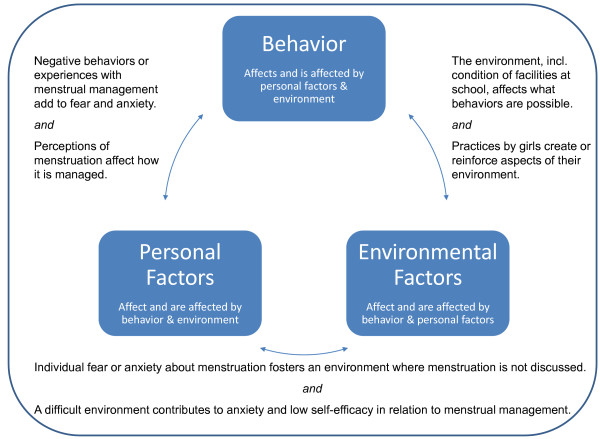
Background: The onset of menstruation is a landmark event in the life of a young woman. Yet the complications and challenges that can accompany such an event have been understudied, specifically in resource-poor settings. As interventions aim to improve female attendance in schools, it is important to explore how menstruation is perceived and navigated by girls in the school setting. This research conveys rural Kenyan schoolgirls' perceptions and practices related to menstruation Methods: Data were collected at six rural schools in the Nyanza Province of Western Kenya. Using focus group discussions, in-depth interviews, and field notes from observations, researchers collected information from 48 primary schoolgirls and nine teachers. Systematic analysis began with a reading of transcripts and debriefing notes, followed by manual coding of the narratives. Results: Focus group discussions became opportunities for girls to share thoughts on menstruation, instruct one another on management practices and advise one another on coping mechanisms. Girls expressed fear, shame, distraction and confusion as feelings associated with menstruation. These feelings are largely linked to a sense of embarrassment, concerns about being stigmatized by fellow students and, as teachers explained, a perception that the onset of menstruation signals the advent of a girl's sexual status. Among the many methods for managing their periods, girls most frequently said they folded, bunched up or sewed cloth, including cloth from shirts or dresses, scraps of old cloth, or strips of an old blanket. Cloth was reported to frequently leak and cause chafing, which made school attendance difficult particularly as the day progressed. Attitudes and practices of girls toward menstruation have been arranged into personal, environmental and behavioural factors. Conclusion: Further research on menstrual management options that are practical, sustainable and culturally acceptable must be conducted to inform future programs and policies that aim to empower young girls as they transition into womanhood. Stakeholders working within this and similar contexts must consider systematic mechanisms to explain to young girls what menstruation is and how to manage it. Providing sanitary supplies or guiding girls on how to create supplies serve as critical components for future interventions.
Overview
The claims and statistics of this paper haven’t been checked yet.
Free: it reads the open-access text and checks the first 5 claims that cite a source we can check. Create a free account to check every claim.
Integrity signals
Registry
Cites
Statistics
Figures
Verification
Claims the paper makes
The claims and statistics of this paper haven’t been checked yet.
Free: it reads the open-access text and checks the first 5 claims that cite a source we can check. Create a free account to check every claim.
Claims other papers make about this one
Each is checked against this paper’s own text: does it say what the citing paper says it does?
The source backs part of the claim, not all of it — or backs it for a different population, condition or comparison.
In the citing paper
“A lack of adequate guidance on menstrual management; water, disposal, and private changing facilities; and sanitary hygiene materials in low- and middle-income countries leaves schoolgirls with limited options for healthy personal hygiene during monthly menses.”
From Menstrual hygiene management among adolescent schoolgirls in low- and middle-income countries: research priorities (2016) · cites this paper as [11]
Experimental — accuracy not yet measuredThe source backs part of the claim, not all of it — or backs it for a different population, condition or comparison.
In the citing paper
“inadequate social support, ongoing gender inequality, and social and hygiene taboos around menstruation in numerous countries leave girls experiencing shame, fear, and confusion when trying to cope with their menstrual flow (9–15, 20, 21).”
From Menstrual hygiene management among adolescent schoolgirls in low- and middle-income countries: research priorities (2016) · cites this paper as [11]
Experimental — accuracy not yet measuredThe source backs part of the claim, not all of it — or backs it for a different population, condition or comparison.
In the citing paper
“Many girls in LMIC cannot afford sanitary pads and resort to impromptu items like old cloth or cotton wool, or use a minimal number of pads, which leak, smell and chafe, causing them stigma, shame and discomfort.3–6”
From Menstrual cups and sanitary pads to reduce school attrition, and sexually transmitted and reproductive tract infections: a cluster randomised controlled feasibility study in rural Western Kenya (2016) · cites this paper as [5]
Experimental — accuracy not yet measuredThe source backs part of the claim, not all of it — or backs it for a different population, condition or comparison.
In the citing paper
“In addition to these structural and resource barriers, women and girls face information and social support challenges: girls are often unprepared, uninformed, misinformed, and lack adequate support for understanding and managing menarche, menstruation, and puberty, resulting in fear, uncertainty, and potentially harmful behaviors, like risky sex, reduced bathing, and limited food and water intake”
From ’It’s like a burden on the head’: Redefining adequate menstrual hygiene management throughout women’s varied life stages in Odisha, India. (2019) · cites this paper as [26]
Experimental — accuracy not yet measured
32 more claims about this paper
Create a free account to see every claim other papers make about this one.
Self-check
Percentages, sums and reported differences re-computed from the paper’s own numbers.
The self-check needs the paper’s full text.
Citations
Cites
Kenya Demographic and Health Survey 1989
Kenya, & Std Control Programme (1989) · Cited by 1,756
Obonyo, J. (2010) · Cited by 732
Menstrual hygiene: How hygienic is the adolescent girl?
Dasgupta, A., & Sarkar, M. (2008) · Indian Journal of Community Medicine · doi:10.4103/0970-0218.40872 · Cited by 592 · cited 1×
“The fact that girls in this study expressed negative feelings such as fear and anxiety is supported by studies conducted in India, Nigeria, Tanzania and Pakistan [4][9][5][19][3][1][11].”
Unsafe sexual behaviour in South African youth
Eaton, L., Flisher, A. J., & Aarø, L. E. (2003) · Social Science & Medicine · doi:10.1016/s0277-9536(02)00017-5 · Cited by 536 · cited 1×
“The inadequate level of information girls conveyed in interviews speaks to the urgent need for girls to receive more guidance on menstruation, which has been previously recommended [ 18 ][1][11].”
The state of the world's children 2011 - adolescence: an age of opportunity.
Anthony, D. (2011) · Cited by 346
Sommer, M. (2010) · Journal of Adolescence · doi:10.1016/j.adolescence.2009.03.008 · Cited by 305 · cited 6×
“The fact that girls in this study expressed negative feelings such as fear and anxiety is supported by studies conducted in India, Nigeria, Tanzania and Pakistan [4][9][5][19][3][1][11].”
InfluentialMenstrual Practices and Reproductive Problems: A Study of Adolescent Girls in Rajasthan
Khanna, A., Goyal, R. S., & Bhawsar, R. (2005) · Journal of Health Management · doi:10.1177/097206340400700103 · Cited by 248
The State of the World's Children, 2004: Girls, Education And Development
Bellamy, C. (2004) · Medical Entomology and Zoology · Cited by 204
Angier, N. (1999) · Virago Press eBooks · Cited by 202
Menstrual knowledge and practices of female adolescents in urban Karachi, Pakistan
Ali, T. S., & Rizvi, S. N. (2010) · Journal of Adolescence · doi:10.1016/j.adolescence.2009.05.013 · Cited by 187
Research works printed but not linked: 8
- Scott L Dopson S Montgomery P Dolan C Ryus C Impact of Providing Sanitary Pads to Poor Girls in Africa 2009 University of Oxford
- Greene L SWASH+ Application of Lessons Learned to Current and Future Practice SWASH+ Programatic Management Group Meeting: 2009 2009; Tom Mboya Labour College, Kisumu Kenya 2009
- Thomas E Publications C Healthy Futures, Reducing Barriers to Primary School Completion for Kenyan Girls Special Publication No 23 2002 Baltimore: Johns Hopkins University, Center for Communication Programs, Population Communication Services; Washington DC: The Academy for Educational Development
- Sommer M Kirk J 'Menstruation is on her mind': Girl-centered, holistic thinking for school sanitation WASH in Schools Notes and News Volume April 2008 IRC and UNICEF 4 6
- Nahar Q Ahmed R Addressing Special Needs of Girls: Challenges in school SACOSAN II 2006 Islamabad, Pakistan
- UNFPA The state of the world's adolescents 2003 New York: UNFPA
- UNICEF UNICEF, Ministry of Rural Development GoI Sharing Simple Facts 2008 http://www.indiasanitationportal.org/sites/default/files/MHM_Book.pdf accessed March 15, 2011
- Sommer M The Puberty (Kubalehe) Book 2010 http://www.growandknow.org/Grow_and_Know/Puberty_(kubalehe)_book.pdf accessed December 2, 2010
Cited by
Items 201–300 of 316
Empowering Women: Teaching Ethiopian Girls to Make Reusable Sanitary Pads
Desjardins, K. S., Moran, M. B., & Smolowitz, J. L. (2014) · Journal of Doctoral Nursing Practice · doi:10.1891/1939-2095.7.1.77 · Cited by 5
Rakhshanda, S., Ahmed, S., Saidu, S., Nderitu, C., Thapa, B., Awal, A., Farnaz, N., Rahman, A., Aktar, B., & Faruque, A. S. G. (2021) · International Journal of Human Rights in Healthcare · doi:10.1108/ijhrh-10-2020-0096 · Cited by 11
Exploring a sample of university students’ perceptions of menstruation
Ismail, K., Pedro, A., & Andipatin, M. (2016) · Journal of Psychology in Africa · doi:10.1080/14330237.2016.1208962 · Cited by 5
“For instance, the experience of menstruation may be tied to the social control of women’s bodies by patriachal and pronatalist society (Burrows & Johnson, 2005; Rembeck, Möller & Gunnarsson, 2006; McMahon et al., 2011).”
Responding to changes in HIV policy: Updating and enhancing the Families Matter! curriculum
Miller, K. S., Winskell, K., & Berrier, F. L. (2015) · Health Education Journal · doi:10.1177/0017896915595530 · Cited by 5
“Amidst growing recognition of the mental health and other burdens associated with managing menstruation in contexts where resources and support are lacking (McMahon et al., 2011), the enhanced curriculum promotes parent–child communication and support around this issue.”
Prerogative on Women Health: A Qualitative Study on Feminine Hygiene Practices in IndiaPreprint
Shukla, S., & Sanjeev, R. (2022) · Research Square · doi:10.21203/rs.3.rs-2108436/v1 · Cited by 5
NARRATIVES ABOUT MENSTRUATION IN TURKEY: SELF-SHAME, SUPPRESSION AND SILENCE
GEDİK, E., & Pehlivanlı, E. (2022) · Sosyoloji araştırmaları dergisi/Sosyoloji araştırmaları dergisi · doi:10.18490/sosars.1196604 · Cited by 9
Assefa, G. M., Stulz, V. M., Mengie, G., Atnafe, L., Gezahegn, W., Smet, E., & Muluneh, M. D. (2025) · Journal of Water Sanitation and Hygiene for Development · doi:10.2166/washdev.2025.233 · Cited by 6
Dodroe, K. B., Wampande, L. N., Nishimwe, A., Mukinisha, M., & Schurer, J. M. (2025) · PLOS Global Public Health · doi:10.1371/journal.pgph.0004152 · Cited by 6
“Can You Imagine?” Making the Case for a Bloody Crisis
Bobel, C. (2018) · Springer eBooks · doi:10.1007/978-3-319-89414-0_4 · Cited by 4
A Qualitative Study to Explore Adolescent Girls Belief on Menstruation and Health Seeking Behavior
Bhattarai, K., Karkee, R., Ghimire, A., Pyakurel, P., Sharma, P. P., Adhikari, T. B., & Shrestha, R. (2020) · Biomedical Sciences · doi:10.11648/j.bs.20200602.13 · Cited by 5
Meitei, W. B., & Chaudhary, A. (2021) · International Journal of Pregnancy & Child Birth · doi:10.15406/ipcb.2021.07.00249 · Cited by 4
Water, economic systems, and mental health: A review of theorized relationships
Choudhary, N., Brewis, A., Beresford, M., Workman, C. L., & Wutich, A. (2022) · CABI Reviews · doi:10.1079/cabireviews202217042 · Cited by 4
Das, A., Dasgupta, A., Biswas, R., Ray, D., Ghosal, A., & Sarkar, T. (2014) · Cited by 5
Yilmaz, S. K., Bohara, A. K., & Chowdhury, S. R. (2019) · PharmacoEconomics - Open · doi:10.1007/s41669-019-0168-6 · Cited by 8
Macleod, C. I., Glover, J. M., Makuse, M., Kelland, L., & Paphitis, S. A. (2022) · Women s Reproductive Health · doi:10.1080/23293691.2022.2057830 · Cited by 5
Premkumar, J. P. J., Sedegah, D. D., McApreko, P. F., Dalaba, M. A., & Ane, J. (2023) · Journal of Environment and Sustainable Development · doi:10.55921/fosd3466 · Cited by 5
The Nia Project: Baseline report
Muthengi, E., Farris, E., & Austrian, K. (2017) · doi:10.31899/pgy8.1041 · Cited by 4
Benshaul-Tolonen, A., Zulaik, G., Nyothach, E., Oduor, C., Mason, L., Obor, D., Alexander, K., & Phillips‐Howard, P. A. (2026) · Journal of African Economies · doi:10.2139/ssrn.4302551 · Cited by 6
Awareness of menstrual cup among reproductive age group women
Bharatnur, S., & Aishwarya (2023) · International Journal of Reproduction Contraception Obstetrics and Gynecology · doi:10.18203/2320-1770.ijrcog20232726 · Cited by 4
Veleshala, J., Malhotra, V. M., Thomas, S. J., & Kondagunta, N. (2019) · International Journal of Community Medicine and Public Health · doi:10.18203/2394-6040.ijcmph20195853 · Cited by 4
Menstrual Hygiene Management: A Literature Review
Pagore, P., & Chaudhari, S. G. (2021) · Journal of Pharmaceutical Research International · doi:10.9734/jpri/2021/v33i60b34881 · Cited by 3
“available however these items are often unavailable and/or costly for many girls and womens [12-16].”
Sangha, N. K., Kaur, P., Sangha, F. S., Kaur, N., & Singh, S. (2022) · International Journal of Community Medicine and Public Health · doi:10.18203/2394-6040.ijcmph20222916 · Cited by 3
Britto, D. R., George, N. S., M., S. R. A., Ratchagar, J. S., Muniyapillai, T., & Kulothungan, K. (2023) · Journal of Datta Meghe Institute of Medical Sciences University · doi:10.4103/jdmimsu.jdmimsu_388_22 · Cited by 5
‘She has become Brave:’ the role of menstrual health education in building girls’ agency
Sidle, A. A., Suedi, A., Schwarz, H., Swai, M.-Z., Kafanabo, E. J., & Oulo, B. (2025) · International Journal of Adolescence and Youth · doi:10.1080/02673843.2025.2467116 · Cited by 3
Human Rights Framework on Menstrual Health and Hygiene
Wardana, K. A. (2020) · Proceedings of the International Conference on Law, Economics and Health (ICLEH 2020) · doi:10.2991/aebmr.k.200513.029 · Cited by 5
Mirassou-Wolf, T., Chanthou, V., Grossman, K. G., DeCoursey, M., & Ryan, E. P. (2017) · JOURNAL OF ENVIRONMENT AND HEALTH SCIENCE · doi:10.15436/2378-6841.17.1168 · Cited by 3
Investing in Gender-Equal Sustainable Development
Ray, I. (2016) · Discussion paper · doi:10.18356/36d5de82-en · Cited by 6
“91 McMahon et al. 2011.”
Kipchumba, E. K., & Sulaiman, M. (2017) · International Journal of Education and Practice · doi:10.18488/journal.61.2017.511.189.198 · Cited by 3
“More specifically, menstruation may inhibit girls‟ ability to attend school if they lack access to appropriate sanitary facilities (McMahon et al., 2011; Jewitt and Ryley, 2014).”
Innovative Ways of Dealing With Menstrual Health Among the Marginalized Communities in Kenya.
Birech, J. K. (2019) · Advances in Social Sciences Research Journal · doi:10.14738/assrj.62.6168 · Cited by 3
Menstrual Hygiene Practices among Adolescent School Girls in Pakistan
Mansoori, N., Tanweer, H., Ahmed, I., ., A., Noor, I., & Mubeen, S. M. (2020) · ANNALS of JINNAH SINDH MEDICAL UNIVERSITY · doi:10.46663/ajsmu.v6i2.44-49 · Cited by 4
Duru, C. O., Ikeanyi, E. M., & Merenu, I. A. (2021) · International Journal of Reproduction Contraception Obstetrics and Gynecology · doi:10.18203/2320-1770.ijrcog20210293 · Cited by 5
“Still in some other settings it is taboo to freely discuss menstruation.(2,8) For instance a study on schoolgirls in India reported that less than two in five of the participant girls were aware of menstruation premenarchal.”
Breaking the silence around menstruation: experiences from urban and rural India
Verma, A., Patyal, A., Meena, J. K., & Mathur, M. (2021) · International Journal of Community Medicine and Public Health · doi:10.18203/2394-6040.ijcmph20210859 · Cited by 7
“In addition to this, there is lack of accessibility and availability of adequate sanitary hygiene products, which force some girls to use unhygienic materials.(4) A study by Das et al in India has shown that due to the use of unhygienic materials, girls are potentially at more risk of developing urogenital symptoms an…”
MENSTRUAL EXPERIENCES AT WORKPLACES AMONG FEMALE EMPLOYEES
Sinha, A., & Jethwani, L. M. (2023) · PARIPEX-INDIAN JOURNAL OF RESEARCH · doi:10.36106/paripex/7503993 · Cited by 2
Nguegang, F., & Kum, F. V. (2024) · Journal of Behavioral and Experimental Economics · doi:10.1016/j.socec.2024.102302 · Cited by 3
Dvalishvili, D., Namuwonge, F., Ahmed, R. F. M., Andom, F., Bahar, O. S., Nabunya, P., & Ssewamala, F. M. (2025) · Children and Youth Services Review · doi:10.1016/j.childyouth.2025.108562 · Cited by 6
The plight of menstruating secondary school-girls: a wake-up call for parents and the school system
Metta, E. O., Mwita, H., & Leshabari, M. T. (2021) · International Journal of Community Medicine and Public Health · doi:10.18203/2394-6040.ijcmph20210793 · Cited by 2
Tsuda, S., Maruyama, Y., Muroka, C., Kondo, C., & Takada, S. (2024) · Journal of Intellectual Disabilities · doi:10.1177/17446295241281394 · Cited by 2
Mapping Menstrual and Pelvic Health Scenario in India: A Scoping Review of Biopsychosocial Factors
Mitra, S., Arora, A., & Shimpi, A. P. (2025) · Cureus · doi:10.7759/cureus.85541 · Cited by 4
Alsalami, O. A., Kamel, S., Almatrafi, R. S., Alalwani, B. M., Alanazi, A. I., Algarni, A. D., Almatrafi, N. S., Alsalami, F. A., Algarni, M. D., & Almatrafi, M. A. (2025) · Cureus · doi:10.7759/cureus.91541 · Cited by 7
“Adolescents with college-educated mothers were twice as likely to have sufficient knowledge compared to those with less-educated mothers (p=0.002), aligning with studies from the United States, Pakistan, India, and Kenya, where maternal literacy strongly predicted menstrual awareness [6,10,12,13].”
InfluentialShrivastava, S. R. (2013) · International Journal of Public Health Research · Cited by 3
Comparison of Menstrual Distress in Adolescent Girls Across Residential Area
Sihag, J. (2022) · Indian Research Journal of Extension Education · doi:10.54986/irjee/2022/dec_spl/67-71 · Cited by 2
Dimensions of Menstrual Rights for Menstruators: A Systematic Review
Valipour, N. S., Farnam, F., Abbasi, M., & Damghanian, M. (2023) · International Journal of Women s Health and Reproduction Sciences · doi:10.15296/ijwhr.2023.34 · Cited by 3
“Therefore, health personnel and health care providers should participate in developing appropriate evidence-based educational contents on menstruation and MHH and regularly providing women and girls with the given contents (22,33,36).”
Attitudes and Conceptions of Menstruation and Menstrual Hygiene among Schoolgirls (Morocco)
Lghoul, S., Loukid, M., & Hilali, M. K. (2019) · Bulletins et Mémoires de la Société d anthropologie de Paris · doi:10.3166/bmsap-2019-0059 · Cited by 2
Ombago, C. D. O. (2014) · University of Nairobi Research Archive (University of Nairobi) · Cited by 4
Menstrual hygiene management in two districts of MalawiPreprint
Hinton, R., Tremblay-Lévesque, L.-C., Kanjaye, M. B., Macleod, C. J. A., Troldborg, M., & Kalin, R. M. (2024) · medRxiv · doi:10.1101/2024.04.12.24305724 · Cited by 1
Healthy menstruation: Myth or reality? Insights into urban slums of Vishakhapatnam city, India
Pandey, G., Darbhamulla, T., Athe, R., & Dwivedi, R. (2025) · Journal of Water Sanitation and Hygiene for Development · doi:10.2166/washdev.2025.247 · Cited by 3
Niwemukiza, T., Mochama, M., & Andegiorgish, A. K. (2025) · BMC Research Notes · doi:10.1186/s13104-025-07429-3 · Cited by 3
“Effective menstrual hygiene management (MHM) is crucial to safeguard health and prevent discomfort or embarrassment [5, 6].”
Shakil, Z., Caruso, B. A., Patrick, M., Mink, T. L., Bhan, T., Ahmed, T., Chipungu, J., Reddy, M., Chiwala, C. B., & Sinharoy, S. S. (2025) · Health & Place · doi:10.1016/j.healthplace.2025.103576 · Cited by 2
“School girls face time constraints in managing menstrual health needs, such as bathing privately without stigma (McMahon et al., 2011).”
Self-citationLogie, C. H., MacNeil, A., Hasham, A., Kagunda, J., Evelia, H., Gachoki, C., Omondi, B., Wanjiru, M., Borek, S. V., Gittings, L., et al. (2026) · Sexual Health · doi:10.1071/sh25161 · Cited by 1
Hong, Z. (2026) · Evolution and Human Behavior · doi:10.1016/j.evolhumbehav.2026.106899 · Cited by 1
Sakwa, J. M., & Okunya, O. L. (2018) · International Journal of Learning and Development · doi:10.5296/ijld.v8i3.13418 · Cited by 1
The Tale of Adolescent Girls’ Menstrual Challenges in Junior High Schools
Kuranchie, A. (2021) · Journal of Education · doi:10.1177/00220574211032347 · Cited by 1
Aluko, O. O., Udechukwu, J. N., Arowosafe, P. O., Loto, O., Ojogba, G. O., & Orisawayi, O. (2023) · Women s Reproductive Health · doi:10.1080/23293691.2023.2287528 · Cited by 3
Level of Education and Menstrual Challenges for Adolescent Girls in Rural Tanzania
Loper, S., & Nyaronga, D. O. (2024) · Youth & Society · doi:10.1177/0044118x241261722 · Cited by 3
“The pervasive taboo around menstruation in developing countries like Tanzania inhibits open discussions about menstrual management, preventing a comprehensive response to this evident educational challenge (Dolan et al., 2014; McMahon et al., 2011).”
A Pilot Study of Menstrual Health Education, Attitudes, and Product Access in Rural Honduras
Stubley, E., & Marshall, J. M. (2025) · International Journal of Environmental Research and Public Health · doi:10.3390/ijerph22030374 · Cited by 2
Khound, M., Bhattacharyya, H., & Ghosh, S. (2025) · Indian Journal of Community Medicine · doi:10.4103/ijcm.ijcm_513_24 · Cited by 5
“[5,6] Addressing these worries through education and improving sanitary facilities can significantly enhance menstrual hygiene management and reduce associated anxiety among adolescent girls.”
Knowledge Management Strategies and Profitability of Selected Deposit Money Banks in Nigeria
Opeke, R. O., & Adelowo, O. T. (2020) · Information Impact Journal of Information and Knowledge Management · doi:10.4314/iijikm.v11i1.5 · Cited by 1
Chapter 6: Simple Technology for Menstrual Hygiene Management: A Case Study from Northern Ethiopia
Belay, S., Mebrahtu, F., Kuhlmann, A. S., Haile, A., & Wall, L. L. (2020) · Springer eBooks · doi:10.1007/978-3-030-46355-7_11 · Cited by 1
School-based sexuality education in Uganda : a grounded theory approach
Achora, S. (2014) · Unisa Institutional Repository (University of South Africa) · Cited by 1
Exploring Health and Wellbeing in a Low-to-Middle Income Country: A Case Study of Kenya
Onyango, E. O. (2019) · UWSpace (University of Waterloo) · Cited by 2
Gelo, A., Geleto, A. B., Demena, M., & Tura, A. K. (2023) · Research Square · doi:10.21203/rs.3.rs-3700784/v1 · Cited by 2
Working in a cross cultural context considering Culture and Health Behavior
Margalit, R. S., Haworth, R., Flower, C., Gehle, A., & Acharya, R. (2013)
MENSTRUAL HYGIENE An ancient - but ignored Global Health problem of all women
Rheinländer, T., & WACHIRA, M. W. (2015)
The Petal Project: An innovation in sexual healthcare and education for Kenyan schoolgirl
Parker, K. M. (2018) · Nursing Forum · doi:10.1111/nuf.12219
Teachers’ Understanding of Menstrual Cycle in Navakholo Sub-County, Kakamega County, Kenya
Sakwa, J. M., & Odiemo, L. O. (2018) · International Journal of Learning and Development · doi:10.5296/ijld.v8i4.13927
Menstrual health among school adolescent girls
Mishra, L. (2019) · International Journal of Advance Research in Nursing · doi:10.33545/nursing.2019.v2.i1.c.1
Huynh, J. C. (2019) · NVA (Nasjonalt vitenarkiv) · Cited by 1
Reports of missing persons in innovation and infrastructure to achieve water and sanitation for all
Hyun, C. (2020) · eScholarship (California Digital Library)
Knowledge and practices of menstrual hygiene among women in Farwest Nepal
Bist, S. (2020) · Scholars Journal · doi:10.3126/scholars.v3i0.37133 · Cited by 2
Menarche's Experience In Adolescents Scoping Review
Mukaromah, N., & Ismarwati, I. (2021) · International Journal of Health Science and Technology · doi:10.31101/ijhst.v2i3.1946
Yakubu, L., Bello, M., Hussaini, R. A., & Jongshwan, C. S. (2021) · International Journal of Reproduction Contraception Obstetrics and Gynecology · doi:10.18203/2320-1770.ijrcog20214633
Perception and Practice about Menstrual Health/Hygiene Among Adolescent Girls in Barisal District
Shelley, F. E. (2022) · Ibrahim Cardiac Medical Journal · doi:10.3329/icmj.v11i1.58710
Johnston‐Robledo, I., Stubbs, M. L., & Walch, A. (2013) · Oxford University Press eBooks · doi:10.1093/obo/9780199791231-0130
Challenges and Gaps in Sanitary Towels Provision in Kenya During COVID-19 Pandemic
Gichuhi, L. (2022) · International Journal of Learning and Development · doi:10.5296/ijld.v12i3.20060
Ahangari, N., Bakhtiari, M., & Naeiji, Z. (2022) · Medical Science · doi:10.54905/disssi/v26i130/ms553e2117
Menstrual Hygiene Management (MHM): A Scheme for Improving Women Welfare
-, A. (2023) · International Journal For Multidisciplinary Research · doi:10.36948/ijfmr.2023.v05i03.3551 · Cited by 1
Saúde e higiene menstrual no Brasil: Uma revisão de literatura
de Campos, D. D., Correa, V. E. D., de Sousa, L. B., ALMEIDA, A. F. D., Baia, A. C. G., Martins, A. V., Moura, L. M., sobrinho, V. C. A., Araujo, F. M. S., Navarro, A. M., et al. (2023) · Research Society and Development · doi:10.33448/rsd-v12i9.42700 · Cited by 3
Experiences of menstrual exiles (Chaupadi) and its consequences among women in Nepal
Lama, S. M. (2019) · Chula Digiverse · doi:10.58837/chula.the.2019.469 · Cited by 2
Bavadiya, B., & Thakur, D. (2023) · International Journal of Medical Students · doi:10.5195/ijms.2023.2325
Phiri, R., & Ilubala-Ziwa, J. L. (2023) · International Journal of Education and Teaching · doi:10.51483/ijedt.3.2.2023.62-71 · Cited by 2
Men on Menstruation: A Causal Comparative Analysis of College Males’ Attitudes Toward Menstruation
Kim, N. (2023) · Journal of Student Research · doi:10.47611/jsrhs.v12i4.5786 · Cited by 1
“Menstruation is often considered impure or un-clean in various cultures, causing menstruating individuals to be excluded from certain spaces (McMahon et al., 2011).”
Menstrual Hygiene Knowledge and Practices Among Adolescent Girls of Selected Schools
Kniranda, M. C., Liangkiuwiliu, R., & Paul, T. D. R. (2024) · doi:10.53555/kuey.v30i5.4623
Nadiv, M. A., Nishat, M. T. A., Ormi, N. J., & Chowdhury, S. A. (2024) · SN Social Sciences · doi:10.1007/s43545-024-00957-y
“The previous studies conducted by Ssewanyana and Bitanihirwe (2019) (2011), which showed that students’ fear of being teased, and their lack of confidence hinder their participation in management training or education.”
Tsuda, S., Maruyama, Y., Muroka, C., Kondo, C., & Takada, S. (2024) · Journal of Intellectual Disabilities · doi:10.1177/17446295241276272
“Since the subject of menstruation may be considered taboo by the general public (McMahon et al., 2011), education on menstruation is largely left to the family (Tsuda and Takada, 2022).”
What can existing data on water and sanitation tell us about menstrual hygiene management?
Loughnan, L., Bain, R. B. R., Rop, R., Sommer, M., & Slaymaker, T. (2024) · Waterlines · doi:10.3362/1756-3488.24-00007
Navigating Menstrual Taboos in Rural Ghana: The Subjective Experiences of Adolescent Schoolgirls
Wohoyie, H. S. (2025) · Girlhood Studies · doi:10.3167/ghs.2025.180103 · Cited by 2
Spiller, E., Blackwell, A., Ayella, C., Mansi, E., & Falb, K. (2025) · International Journal of Educational Development · doi:10.1016/j.ijedudev.2025.103264
Koshy, M., Khadir, F., Cheriyan, S., & Kumari, B. (2025) · International Journal of Community Medicine and Public Health · doi:10.18203/2394-6040.ijcmph20251697 · Cited by 1
Assessment of Menstruation Awareness Among School Students in Takhatpur Block of Bilaspur District
Dhurve, R. S. (2025) · International Journal For Multidisciplinary Research · doi:10.36948/ijfmr.2025.v07i04.50516
Das, G., & Wani, Z. A. (2025) · International Journal of Inclusive Education · doi:10.1080/13603116.2025.2564339 · Cited by 1
“Menstruation is a natural physiological process of the female body, experienced by 1.8 billion girls and women of reproductive age (UNICEF 2021), yet it is not widely discussed (McMahon et al. 2011).”
InfluentialNigatu, D. T., Desta, R., & Feleke, A. (2025) · Journal of Family Medicine and Health Care · doi:10.11648/j.jfmhc.20251104.11
Dialogue for Dignity: How Communication Shapes Menstrual Health Outcomes in Tanzania
Pfender, E. J., Bleakley, A., Bowman, J. L., & Blowes, C. (2025) · Women s Reproductive Health · doi:10.1080/23293691.2025.2573339
Shah, V., Phillips‐Howard, P. A., Hennegan, J. M., Cavill, S., Sonko, B. J., Sinjanka, E., Trawally, N. C., Kanteh, A., Mendy, F., Bah, A. B., et al. (2022) · Figshare · doi:10.6084/m9.figshare.20329873
Shah, V., Phillips‐Howard, P. A., Hennegan, J. M., Cavill, S., Sonko, B. J., Sinjanka, E., Trawally, N. C., Kanteh, A., Mendy, F., Bah, A. B., et al. (2022) · Figshare · doi:10.6084/m9.figshare.20329867
Shah, V., Phillips‐Howard, P. A., Hennegan, J. M., Cavill, S., Sonko, B. J., Sinjanka, E., Trawally, N. C., Kanteh, A., Mendy, F., Bah, A. B., et al. (2022) · Figshare · doi:10.6084/m9.figshare.20329858
Chidya, R. C. G., Kachuma, O., Thole, T., Banda, L., Loewenberger, M., & Nicholson, J. (2024) · Figshare · doi:10.6084/m9.figshare.26727001
Shah, V., Phillips‐Howard, P. A., Hennegan, J. M., Cavill, S., Sonko, B. J., Sinjanka, E., Trawally, N. C., Kanteh, A., Mendy, F., Bah, A. B., et al. (2022) · Figshare · doi:10.6084/m9.figshare.20329864
Austrian, K., Kangwana, B. P., Muthengi, E., & Soler‐Hampejsek, E. (2021) · Figshare · doi:10.6084/m9.figshare.16551343
Shah, V., Phillips‐Howard, P. A., Hennegan, J. M., Cavill, S., Sonko, B. J., Sinjanka, E., Trawally, N. C., Kanteh, A., Mendy, F., Bah, A. B., et al. (2022) · Figshare · doi:10.6084/m9.figshare.20329870
Metadata
- Authors
- McMahon, S. A., Winch, P. J., Caruso, B. A., Obure, A. F., Ogutu, E. A., Ochari, I. A., & Rheingans, R. D.
- Affiliations
- Johns Hopkins University (US)
- Emory University (US)
- Great Lakes University of Kisumu (KE)
- University of Florida (US)
- Corresponding author
- Caruso, Bethany A
- Venue
- BMC International Health and Human Rights
- Published
- 2011-06-16
- Volume
- 11
- Issue
- 1
- Pages
- 7-7
- ISSN
- 1472-698X (ISSN-L)
- PMC
- PMC3129305
- OpenAlex
- W2112927998
- Semantic Scholar
- 2d287821305a52108afd1aef6903690c2b4209d6
- Cited by
- 316
- References
- 18
- Citations by year
- 2026: 16 · 2025: 25 · 2024: 20 · 2023: 23 · 2022: 37 · 2021: 31 · 2020: 31 · 2019: 25 · 2018: 24 · 2017: 23 · 2016: 16 · 2015: 17 · 2014: 14 · 2013: 9 · 2012: 5
- FWCI
- 8.81
- Type
- journal article
- Language
- en
- Open access
- gold
- doi.org
- Licence
- Locations
- BMC International Health and Human Rights (publishedVersion, cc-by)
- PubMed Central (publishedVersion, cc-by)
- PubMed (publishedVersion)
- NC Digital Online Collection of Knowledge and Scholarship (The University of North Carolina at Greensboro) (submittedVersion)
- DOAJ (DOAJ: Directory of Open Access Journals) (submittedVersion, cc-by-sa)
- Figshare (submittedVersion)
- Appalachian State University
- Funders
- Bill and Melinda Gates Foundation
- Emory University
- Topics
- Health Sciences › Medicine › Public Health, Environmental and Occupational Health › Menstrual Health and Disorders
- Health Sciences › Medicine › Public Health, Environmental and Occupational Health › Adolescent Sexual and Reproductive Health
- Health Sciences › Medicine › Reproductive Medicine › Hypothalamic control of reproductive hormones
- Keywords
- menstrual management, female students, rural Kenya, school attendance, stigma, shame, girls' perceptions, coping strategies, women's empowerment, transition to womanhood
About these checks
Registry, retraction, Cites and statistics results are computed, not judged, with one exception: a printed reference that no index lists is read once by a model before it counts as a citation error. Claims are extracted by a model and kept only when their quote appears verbatim in the text; each cited source is then checked, with a model’s help, for whether it says what the claim relies on. Those verdicts can be wrong — read the claim’s quote and the cited source before relying on one.
Statistics and arithmetic are recomputed, not judged.
Confidence bands are shown only for fields calibrated on our annotated test set. None is calibrated yet, so no band is shown.
What counts as a claim ›How we measure confidence ›How we check this ›
Are you an author, or do you see a problem with this page? Request a review
Data sources
Bibliographic data: Semantic Scholar, OpenAlex, Crossref.
Contains information from the Semantic Scholar Academic Graph Datasets, made available under the ODC Attribution License (ODC-BY 1.0).
Semantic Scholar’s data is described in: Kinney, R., et al. (2023). The Semantic Scholar Open Data Platform. arXiv:2301.10140.
