

'The girl with her period is the one to hang her head' Reflections on menstrual management among schoolgirls in rural Kenya
Open accessThe DOI matches its Crossref record; 17 of the 18 references it cites were found in a registry or an index.
Abstract
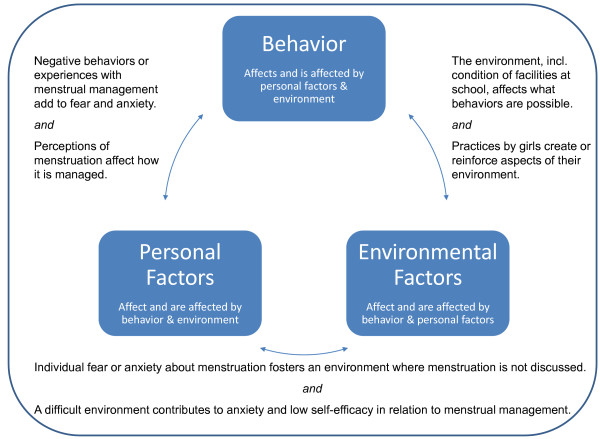
Background: The onset of menstruation is a landmark event in the life of a young woman. Yet the complications and challenges that can accompany such an event have been understudied, specifically in resource-poor settings. As interventions aim to improve female attendance in schools, it is important to explore how menstruation is perceived and navigated by girls in the school setting. This research conveys rural Kenyan schoolgirls' perceptions and practices related to menstruation Methods: Data were collected at six rural schools in the Nyanza Province of Western Kenya. Using focus group discussions, in-depth interviews, and field notes from observations, researchers collected information from 48 primary schoolgirls and nine teachers. Systematic analysis began with a reading of transcripts and debriefing notes, followed by manual coding of the narratives. Results: Focus group discussions became opportunities for girls to share thoughts on menstruation, instruct one another on management practices and advise one another on coping mechanisms. Girls expressed fear, shame, distraction and confusion as feelings associated with menstruation. These feelings are largely linked to a sense of embarrassment, concerns about being stigmatized by fellow students and, as teachers explained, a perception that the onset of menstruation signals the advent of a girl's sexual status. Among the many methods for managing their periods, girls most frequently said they folded, bunched up or sewed cloth, including cloth from shirts or dresses, scraps of old cloth, or strips of an old blanket. Cloth was reported to frequently leak and cause chafing, which made school attendance difficult particularly as the day progressed. Attitudes and practices of girls toward menstruation have been arranged into personal, environmental and behavioural factors. Conclusion: Further research on menstrual management options that are practical, sustainable and culturally acceptable must be conducted to inform future programs and policies that aim to empower young girls as they transition into womanhood. Stakeholders working within this and similar contexts must consider systematic mechanisms to explain to young girls what menstruation is and how to manage it. Providing sanitary supplies or guiding girls on how to create supplies serve as critical components for future interventions.
Overview
The claims and statistics of this paper haven’t been checked yet.
Free: it reads the open-access text and checks the first 5 claims that cite a source we can check. Create a free account to check every claim.
Integrity signals
Registry
Cites
Statistics
Figures
Verification
Claims the paper makes
The claims and statistics of this paper haven’t been checked yet.
Free: it reads the open-access text and checks the first 5 claims that cite a source we can check. Create a free account to check every claim.
Claims other papers make about this one
Each is checked against this paper’s own text: does it say what the citing paper says it does?
The source backs part of the claim, not all of it — or backs it for a different population, condition or comparison.
In the citing paper
“A lack of adequate guidance on menstrual management; water, disposal, and private changing facilities; and sanitary hygiene materials in low- and middle-income countries leaves schoolgirls with limited options for healthy personal hygiene during monthly menses.”
From Menstrual hygiene management among adolescent schoolgirls in low- and middle-income countries: research priorities (2016) · cites this paper as [11]
Experimental — accuracy not yet measuredThe source backs part of the claim, not all of it — or backs it for a different population, condition or comparison.
In the citing paper
“inadequate social support, ongoing gender inequality, and social and hygiene taboos around menstruation in numerous countries leave girls experiencing shame, fear, and confusion when trying to cope with their menstrual flow (9–15, 20, 21).”
From Menstrual hygiene management among adolescent schoolgirls in low- and middle-income countries: research priorities (2016) · cites this paper as [11]
Experimental — accuracy not yet measuredThe source backs part of the claim, not all of it — or backs it for a different population, condition or comparison.
In the citing paper
“Many girls in LMIC cannot afford sanitary pads and resort to impromptu items like old cloth or cotton wool, or use a minimal number of pads, which leak, smell and chafe, causing them stigma, shame and discomfort.3–6”
From Menstrual cups and sanitary pads to reduce school attrition, and sexually transmitted and reproductive tract infections: a cluster randomised controlled feasibility study in rural Western Kenya (2016) · cites this paper as [5]
Experimental — accuracy not yet measuredThe source backs part of the claim, not all of it — or backs it for a different population, condition or comparison.
In the citing paper
“In addition to these structural and resource barriers, women and girls face information and social support challenges: girls are often unprepared, uninformed, misinformed, and lack adequate support for understanding and managing menarche, menstruation, and puberty, resulting in fear, uncertainty, and potentially harmful behaviors, like risky sex, reduced bathing, and limited food and water intake”
From ’It’s like a burden on the head’: Redefining adequate menstrual hygiene management throughout women’s varied life stages in Odisha, India. (2019) · cites this paper as [26]
Experimental — accuracy not yet measured
32 more claims about this paper
Create a free account to see every claim other papers make about this one.
Self-check
Percentages, sums and reported differences re-computed from the paper’s own numbers.
The self-check needs the paper’s full text.
Citations
Cites
Kenya Demographic and Health Survey 1989
Kenya, & Std Control Programme (1989) · Cited by 1,756
Obonyo, J. (2010) · Cited by 732
Menstrual hygiene: How hygienic is the adolescent girl?
Dasgupta, A., & Sarkar, M. (2008) · Indian Journal of Community Medicine · doi:10.4103/0970-0218.40872 · Cited by 592 · cited 1×
“The fact that girls in this study expressed negative feelings such as fear and anxiety is supported by studies conducted in India, Nigeria, Tanzania and Pakistan [4][9][5][19][3][1][11].”
Unsafe sexual behaviour in South African youth
Eaton, L., Flisher, A. J., & Aarø, L. E. (2003) · Social Science & Medicine · doi:10.1016/s0277-9536(02)00017-5 · Cited by 536 · cited 1×
“The inadequate level of information girls conveyed in interviews speaks to the urgent need for girls to receive more guidance on menstruation, which has been previously recommended [ 18 ][1][11].”
The state of the world's children 2011 - adolescence: an age of opportunity.
Anthony, D. (2011) · Cited by 346
Sommer, M. (2010) · Journal of Adolescence · doi:10.1016/j.adolescence.2009.03.008 · Cited by 305 · cited 6×
“The fact that girls in this study expressed negative feelings such as fear and anxiety is supported by studies conducted in India, Nigeria, Tanzania and Pakistan [4][9][5][19][3][1][11].”
InfluentialMenstrual Practices and Reproductive Problems: A Study of Adolescent Girls in Rajasthan
Khanna, A., Goyal, R. S., & Bhawsar, R. (2005) · Journal of Health Management · doi:10.1177/097206340400700103 · Cited by 248
The State of the World's Children, 2004: Girls, Education And Development
Bellamy, C. (2004) · Medical Entomology and Zoology · Cited by 204
Angier, N. (1999) · Virago Press eBooks · Cited by 202
Menstrual knowledge and practices of female adolescents in urban Karachi, Pakistan
Ali, T. S., & Rizvi, S. N. (2010) · Journal of Adolescence · doi:10.1016/j.adolescence.2009.05.013 · Cited by 187
Research works printed but not linked: 8
- Scott L Dopson S Montgomery P Dolan C Ryus C Impact of Providing Sanitary Pads to Poor Girls in Africa 2009 University of Oxford
- Greene L SWASH+ Application of Lessons Learned to Current and Future Practice SWASH+ Programatic Management Group Meeting: 2009 2009; Tom Mboya Labour College, Kisumu Kenya 2009
- Thomas E Publications C Healthy Futures, Reducing Barriers to Primary School Completion for Kenyan Girls Special Publication No 23 2002 Baltimore: Johns Hopkins University, Center for Communication Programs, Population Communication Services; Washington DC: The Academy for Educational Development
- Sommer M Kirk J 'Menstruation is on her mind': Girl-centered, holistic thinking for school sanitation WASH in Schools Notes and News Volume April 2008 IRC and UNICEF 4 6
- Nahar Q Ahmed R Addressing Special Needs of Girls: Challenges in school SACOSAN II 2006 Islamabad, Pakistan
- UNFPA The state of the world's adolescents 2003 New York: UNFPA
- UNICEF UNICEF, Ministry of Rural Development GoI Sharing Simple Facts 2008 http://www.indiasanitationportal.org/sites/default/files/MHM_Book.pdf accessed March 15, 2011
- Sommer M The Puberty (Kubalehe) Book 2010 http://www.growandknow.org/Grow_and_Know/Puberty_(kubalehe)_book.pdf accessed December 2, 2010
Cited by
Hennegan, J., Shannon, A. K., Rubli, J., Schwab, K. J., & Melendez-Torres, G. J. (2019) · PLOS Medicine · doi:10.1371/journal.pmed.1002803 · Cited by 577
“Abbreviations: FGD, Focus Group Discussion; IDI, individual (in-depth) interview; NR, not reported. https://doi.org/10.1371/journal.pmed.1002803.t002 PLOS Medicine | https://doi.org/10.1371/journal.pmed.1002803 May 16, 2019 12 / 40 evidence of menses and control the body.”
InfluentialA systematic review of the health and social effects of menstrual hygiene management
Sumpter, C., & Torondel, B. (2013) · PLoS ONE · doi:10.1371/journal.pone.0062004 · Cited by 518
“[17,18] The sexual and disgust connotations of menstruation make it a taboo subject for girls to raise, even with their mothers.”
Menstrual hygiene management among adolescent girls in India: a systematic review and meta-analysis
van Eijk, A. M., Sivakami, M., Thakkar, M. B., Bauman, A., Laserson, K. F., Coates, S., & Phillips-Howard, P. A. (2016) · BMJ Open · doi:10.1136/bmjopen-2015-010290 · Cited by 471
Menstruation: science and society
Critchley, H. O. D., Babayev, E., Bulun, S. E., Clark, S., Garcia-Grau, I., Gregersen, P. K., Kilcoyne, A., Kim, J.-Y. J., Lavender, M., Marsh, E. E., et al. (2020) · American Journal of Obstetrics and Gynecology · doi:10.1016/j.ajog.2020.06.004 · Cited by 448
A Time for Global Action: Addressing Girls’ Menstrual Hygiene Management Needs in Schools
Sommer, M., Caruso, B. A., Sahin, M., Calderon, T., Cavill, S., Mahon, T., & Phillips-Howard, P. A. (2016) · PLOS Medicine · doi:10.1371/journal.pmed.1001962 · Cited by 435
“The education sector has been less engaged, even though girls’ school experiences are negatively impacted if they are distracted, uncomfortable, or unable to participate because of anxiety over menstrual leakage and odor [7] or without the support of teachers, adequate latrines [20], or a place to rest if menstrual cr…”
InfluentialSelf-citationChandra-Mouli, V., & Patel, S. V. (2017) · Reproductive Health · doi:10.1186/s12978-017-0293-6 · Cited by 423
Sommer, M., Hirsch, J. S., Nathanson, C., & Parker, R. G. (2015) · American Journal of Public Health · doi:10.2105/ajph.2014.302525 · Cited by 401
Mason, L., Nyothach, E., Alexander, K., Odhiambo, F. O., Eleveld, A., Vulule, J., Rheingans, R., Laserson, K. F., Mohammed, A., & Phillips-Howard, P. A. (2013) · PLoS ONE · doi:10.1371/journal.pone.0079132 · Cited by 375
“McMahon et al [23] questioned girls aged 12–16 years on their methods for managing menstruation, and the difficulties they faced in the school setting.”
InfluentialSelf-citationOvercoming the taboo: advancing the global agenda for menstrual hygiene management for schoolgirls
Sommer, M., & Sahin, M. (2013) · American Journal of Public Health · doi:10.2105/ajph.2013.301374 · Cited by 364
Tegegne, T. K., & Sisay, M. M. (2014) · BMC Public Health · doi:10.1186/1471-2458-14-1118 · Cited by 342
“As a result girls preferred to stay at home during their menstruation period [9].”
Hennegan, J., & Montgomery, P. (2016) · PLOS ONE · doi:10.1371/journal.pone.0146985 · Cited by 333
“Authors have argued that a singular focus on attendance is a limitation of present literature.[16,29,56,57] However, no studies reported on academic achievement so this would not have affected the conclusions of the review.”
Miiro, G., Rutakumwa, R., Nakiyingi-Miiro, J., Nakuya, K., Musoke, S., Namakula, J., Francis, S., Torondel, B., Gibson, L. J., Ross, D. A., et al. (2018) · BMC Women's Health · doi:10.1186/s12905-017-0502-z · Cited by 297
Alam, M.-U., Luby, S. P., Halder, A. K., Islam, K., Opel, A., Shoab, A. K., Ghosh, P. K., Rahman, M., Mahon, T., & Unicomb, L. (2017) · BMJ Open · doi:10.1136/bmjopen-2016-015508 · Cited by 283
“Background Menstrual hygiene management (MHM) at school is constrained by poor access to water and sanitation, lack of privacy and limited education about menstrual hygiene(1) as well as social stigma and cultural restrictions on activities.(2) Menstruation poses a set of physical, sociocultural and economic challenge…”
InfluentialMenstrual Hygiene Management in Resource-Poor Countries
Kuhlmann, A. S., Henry, K., & Wall, L. L. (2017) · Obstetrical & Gynecological Survey · doi:10.1097/ogx.0000000000000443 · Cited by 261
“Qualitative studies indicate that girls who know about commercial sanitary products may prefer these products because they are seen as more comfortable and less likely to leak, but for many girls such products are usually unavailable and/or unaffordable.(13,19,24,40,44) Use of commercially produced sanitary pads is re…”
Phillips-Howard, P. A., Caruso, B., Torondel, B., Zulaika, G., Sahin, M., & Sommer, M. (2016) · Global Health Action · doi:10.3402/gha.v9.33032 · Cited by 236
“In addition, a lack of adequate sanitary hygiene products forces some girls to use unhygienic materials (11, 13, 15, 16), potentially increasing urogenital symptoms and infections (17).”
Self-citationPhillips-Howard, P. A., Nyothach, E., ter Kuile, F. O., Omoto, J., Wang, D., Zeh, C., Onyango, C., Mason, L., Alexander, K. T., Odhiambo, F. O., et al. (2016) · BMJ Open · doi:10.1136/bmjopen-2016-013229 · Cited by 209
School absenteeism during menstruation amongst adolescent girls in Delhi, India
Agarwalla, R., Vashisht, A., Pathak, R., Patavegar, B., & Panda, M. (2018) · Journal of Family and Community Medicine · doi:10.4103/jfcm.jfcm_161_17 · Cited by 175
“[3,4] Inadequate water and sanitation facilities is a major impediment to school attendance for girls during menstruation, compromising their ability to maintain proper hygiene and privacy.[5] More than half the schools in low‐income countries either lack sufficient toilets for girls or they are frequently not very cl…”
Chinyama, J., Chipungu, J., Rudd, C., Mwale, M., Verstraete, L., Sikamo, C., Mutale, W., Chilengi, R., & Sharma, A. (2019) · BMC Public Health · doi:10.1186/s12889-018-6360-2 · Cited by 163
Jewitt, S., & Ryley, H. (2014) · Geoforum · doi:10.1016/j.geoforum.2014.07.006 · Cited by 158
“…studies in SSA highlighting the practical and emotional difficulties that many girls face in managing their menses and hiding their menstruating status (Kirk and Sommer, 2005, 2006; Scott et al., 2009; Sommer, 2010a; McMahon et al., 2011; Muvea, 2011; Mason et al., 2013; Malusu and Zani, 2014).”
InfluentialSanitation, stress, and life stage: A systematic data collection study among women in Odisha, India.
Hulland, K. R. S., Chase, R. P., Caruso, B. A., Swain, R., Biswal, B., Sahoo, K. C., Panigrahi, P., & Dreibelbis, R. (2015) · PLoS ONE · doi:10.1371/journal.pone.0141883 · Cited by 152
Self-citationBudhathoki, S. S., Bhattachan, M., Castro-Sánchez, E., Sagtani, R. A., Rayamajhi, R. B., Rai, P., & Sharma, G. (2018) · BMC Women's Health · doi:10.1186/s12905-018-0527-y · Cited by 144
“Practical, sustainable and culturally acceptable methods are recommended for addressing the menstrual hygiene needs of women in low income countries [4, 16].”
Crichton, J., Okal, J., Kabiru, C. W., & Zulu, E. M. (2013) · Health Care for Women International · doi:10.1080/07399332.2012.740112 · Cited by 147
“, 2002) and can lead to prejudice and peer antagonism (McMahon et al., 2011; Sommer, 2009a).”
InfluentialWilbur, J., Torondel, B., Hameed, S., Mahon, T., & Kuper, H. (2019) · PLoS ONE · doi:10.1371/journal.pone.0210974 · Cited by 167
Adolescent Menstrual Health Literacy in Low, Middle and High-Income Countries: A Narrative Review
Holmes, K., Curry, C., Sherry, M., Ferfolja, T., Parry, K., Smith, C. A., Hyman, M. S., & Armour, M. (2021) · International Journal of Environmental Research and Public Health · doi:10.3390/ijerph18052260 · Cited by 173
“communities imposed restrictions on her participation in household chores such as cooking, cleaning [72] as well as worshipping Gods in the temples [45], since they were considered ‘dirty’ or ‘polluting’ during this time [71].”
InfluentialMontgomery, P., Hennegan, J., Dolan, C., Wu, M., Steinfield, L., & Scott, L. (2016) · PLOS ONE · doi:10.1371/journal.pone.0166122 · Cited by 132
Phillips-Howard, P. A., Otieno, G., Burmen, B., Otieno, F., Odongo, F., Odour, C., Nyothach, E., Amek, N., Zielinski-Gutierrez, E., Odhiambo, F., et al. (2015) · Journal of Women's Health · doi:10.1089/jwh.2014.5031 · Cited by 119
“These findings suggest a paucity of options for impoverished females, where traditionally old cloths have been used,(7,13) with a variety of other items used, such as cotton wool, grass, socks, plastic, and paper, especially among adolescent girls.(16,17) Seemingly, only the most privileged have access to commercial p…”
Putting menarche and girls into the global population health agenda
Sommer, M., Sutherland, C., & Chandra-Mouli, V. (2015) · Reproductive Health · doi:10.1186/s12978-015-0009-8 · Cited by 118
Schmitt, M. L., Clatworthy, D., Ratnayake, R., Klaesener-Metzner, N., Roesch, E., Wheeler, E., & Sommer, M. (2017) · Conflict and Health · doi:10.1186/s13031-017-0121-1 · Cited by 117
MacRae, E. R., Clasen, T., Dasmohapatra, M., & Caruso, B. A. (2019) · PLOS ONE · doi:10.1371/journal.pone.0220114 · Cited by 111
“Further, the taboo and stigma around menstruation can lead to secrecy, shame, decreased mobility, social and religious restrictions, and impacts on confidence and self-efficacy [2, 11, 21, 26, 34, 35].”
InfluentialSelf-citationKnowledge and practices regarding menstruation among school going adolescents of rural Nepal
Sapkota, D., Sharma, D., Pokharel, H. P., Budhathoki, S. S., & Khanal, V. K. (2014) · Journal of Kathmandu Medical College · doi:10.3126/jkmc.v2i3.9962 · Cited by 113
Murat Sahin, M. S., Linda Mason, L. M., Kayla Laserson, K. L., Kelvin Oruko, K. O., Elizabeth Nyothach, E. N., Kelly Alexander, K. A., Frank Odhiambo, F. O., Alie Eleveld, A. E., Emily Isiye, E. I., Isaac Ngere, I. N., et al. (2015) · Waterlines · doi:10.3362/1756-3488.2015.003 · Cited by 108
Chandra‐Mouli, V., & Patel, S. V. (2020) · Springer eBooks · doi:10.1007/978-981-15-0614-7_46 · Cited by 179
Pokhrel, D., Bhattarai, S., Emgård, M., von Schickfus, M., Forsberg, B. C., & Biermann, O. (2021) · Reproductive Health · doi:10.1186/s12978-020-01036-0 · Cited by 136
Menstrual Hygiene Management and Human Rights: The Case for an Evidence-Based Approach
Hennegan, J. M. (2017) · Women s Reproductive Health · doi:10.1080/23293691.2017.1388720 · Cited by 124
Shah, V., Nabwera, H., Sosseh, F., Jallow, Y., Comma, E., Keita, O., & Torondel, B. (2019) · BMC Public Health · doi:10.1186/s12889-019-6599-2 · Cited by 142
“[23] and Kenya [43], where menstruation is still considered a taboo.”
A Systematic Review of Water and Gender Interlinkages: Assessing the Intersection With Health
Pouramin, P., Nagabhatla, N., & Miletto, M. (2020) · Frontiers in Water · doi:10.3389/frwa.2020.00006 · Cited by 96
van Eijk, A. M., Jayasinghe, N., Zulaika, G., Mason, L., Sivakami, M., Unger, H. W., & Phillips‐Howard, P. A. (2021) · PLoS ONE · doi:10.1371/journal.pone.0257610 · Cited by 123
Michael, J., Iqbal, Q., Haider, S., Khalid, A., Haque, N., Ishaq, R., Saleem, F., Hassali, M. A., & Bashaar, M. (2020) · BMC Women s Health · doi:10.1186/s12905-019-0874-3 · Cited by 150
“Girls are frequently faced with difficulties in managing menstrual periods at school due to lack of adequate privacy and sanitary facilities [38].”
Water, sanitation, and women’s empowerment: A systematic review and qualitative metasynthesis
Caruso, B. A., Conrad, A., Patrick, M., Owens, A., Kviten, K., Zarella, O., Rogers, H., & Sinharoy, S. S. (2022) · PLOS Water · doi:10.1371/journal.pwat.0000026 · Cited by 94
Self-citationAlexander, K., Oduor, C., Nyothach, E., Laserson, K., Amek, N., Eleveld, A., Mason, L., Rheingans, R., Beynon, C., Mohammed, A., et al. (2014) · Water · doi:10.3390/w6051453 · Cited by 90
“the school environment for pre-pubescent and menstruating girls in Tanzania [19], Kenya [20,21], and South Asia [22]; however, a recent study in Malawi found no impact of school WASH conditions on”
Self-citationKansiime, C., Hytti, L., Nalugya, R., Nakuya, K., Namirembe, P., Nakalema, S., Neema, S., Tanton, C., Alezuyo, C., Musoke, S. N., et al. (2020) · BMJ Open · doi:10.1136/bmjopen-2019-031182 · Cited by 113
Girod, C., Ellis, A., Andes, K. L., Freeman, M. C., & Caruso, B. A. (2017) · Journal of Urban Health · doi:10.1007/s11524-017-0189-3 · Cited by 79
“Studies in Ghana, Bolivia, and Kenya describe mothers and teachers conflating topics similarly [3, 52, 53, 59, 60].”
Self-citation‘We do not know’: a qualitative study exploring boys perceptions of menstruation in India
Mason, L., Sivakami, M., Thakur, H. P., Kakade, N., Beauman, A., Alexander, K., van Eijk, A. M., Laserson, K. F., Thakkar, M. B., & Phillips‐Howard, P. A. (2017) · Reproductive Health · doi:10.1186/s12978-017-0435-x · Cited by 120
“Haver J, Caruso B, Ellis A, Sahin M, Villasenor J, Andes K, et al. WASH in schools empowers girls’ education in Masbate province and metro manila, Philippines: an assessment of menstrual hygiene management in schools.”
Dreibelbis, R., Greene, L. E., Freeman, M. C., Saboori, S., Chase, R. P., & Rheingans, R. (2013) · International Journal of Educational Development · doi:10.1016/j.ijedudev.2012.07.002 · Cited by 84
“School sanitation and hygiene can be particularly important for child attendance, especially among female students during menstrual periods (Sommer, 2010; McMahon et al., 2011).”
Self-citationFehintola, F. O., Fehintola, A. O., Aremu, A. O., Idowu, A., Ogunlaja, O. A., & Ogunlaja, I. P. (2017) · International Journal of Reproduction Contraception Obstetrics and Gynecology · doi:10.18203/2320-1770.ijrcog20171932 · Cited by 111
Period teasing, stigma and knowledge: A survey of adolescent boys and girls in Northern Tanzania
Benshaul-Tolonen, A., Aguilar-Gómez, S., Batzer, N. H., Cai, R., & Nyanza, E. C. (2020) · PLoS ONE · doi:10.1371/journal.pone.0239914 · Cited by 93
Students’ Perceptions and Doubts About Menstruation in Developing Countries: A Case Study From India
Chothe, V., Khubchandani, J., Seabert, D., Asalkar, M., Rakshe, S., Firke, A., Midha, I., & Simmons, R. (2014) · Health Promotion Practice · doi:10.1177/1524839914525175 · Cited by 82
“In addition, lack of knowledge about menstruation is associated with profound psychological and reproductive health issues (Aniebue, Aniebue, & Nwankwo, 2009; Deo & Ghattargi, 2005; McMahon et al., 2011; Sommer, 2010).”
InfluentialHabtegiorgis, Y., Sisay, T., Kloos, H., Malede, A., Yalew, M., Arefaynie, M., Damtie, Y., Kefale, B., Tegegne, T. B., Addisu, E., et al. (2021) · PLoS ONE · doi:10.1371/journal.pone.0248825 · Cited by 100
“A study in Kenya showed that school girls had difficulties managing their menstrual periods at school, causing them to remain at home during their menstruation periods [8].”
Sommer, M., & Mmari, K. (2015) · American Journal of Public Health · doi:10.2105/ajph.2015.302740 · Cited by 103
Kwiringira, J., Atekyereza, P., Niwagaba, C., & Günther, I. (2014) · BMC Public Health · doi:10.1186/1471-2458-14-1180 · Cited by 76
“Available literature on gender, women and sanitation does not analyse the intricate issues of access, choice to use and cleaning in developing countries, leave alone in urban poor settings or shared facilities [6-9].”
Kambala, C., Chinangwa, A., Chipeta, E. K., Torondel, B., & Morse, T. (2020) · Reproductive Health · doi:10.1186/s12978-020-01045-z · Cited by 96
Oruko, K., Nyothach, E., Zielinski-Gutierrez, E., Mason, L., Alexander, K., Vulule, J., Laserson, K. F., & Phillips-Howard, P. A. (2015) · PLOS ONE · doi:10.1371/journal.pone.0144321 · Cited by 73
“Teasing and public humiliation, discomfort from poor quality sanitary items, and poor engagement due to fear of leakage and odour are well described in the literature [20,21,34].”
Menstrual hygiene practice among adolescent girls in Ethiopia: A systematic review and meta-analysis
Sahiledengle, B., Atlaw, D., Kumie, A., Tekalegn, Y., Woldeyohannes, D., & Agho, K. (2022) · PLoS ONE · doi:10.1371/journal.pone.0262295 · Cited by 93
Caruso, B. A., Freeman, M. C., Garn, J. V., Dreibelbis, R., Saboori, S., Muga, R., & Rheingans, R. (2014) · Tropical Medicine & International Health · doi:10.1111/tmi.12360 · Cited by 72
Self-citationGarn, J. V., Greene, L. E., Dreibelbis, R., Saboori, S., Rheingans, R. D., & Freeman, M. C. (2013) · Journal of Water, Sanitation and Hygiene for Development · doi:10.2166/washdev.2013.217 · Cited by 71
“Another potential mechanism for improvements in gender parity for enrollment is that a comprehensive WASH program that includes water source improvements may be particularly important to girls as they reach the age of menarche (McMahon et al., 2011; Pearson & McPhedran, 2008; Sommer, 2010).”
Self-citationMurat Sahin, M. S., Selamawit Tamiru, S. T., Kuribachew Mamo, K. M., Pasquina Acidria, P. A., Rozalia Mushi, R. M., Chemisto Satya Ali, C. S. A., & Lindiwe Ndebele, L. N. (2015) · Waterlines · doi:10.3362/1756-3488.2015.009 · Cited by 70
Sommer, M., Gruer, C., Smith, R. C., Maroko, A., & Hopper, K. J. (2020) · Health & Place · doi:10.1016/j.healthplace.2020.102431 · Cited by 92
Making the Case for a Female-Friendly Toilet
Schmitt, M., Clatworthy, D., Ogello, T., & Sommer, M. (2018) · Water · doi:10.3390/w10091193 · Cited by 68
Scorgie, F., Foster, J., Stadler, J., Phiri, T., Hoppenjans, L., Rees, H., & Muller, N. (2016) · Medical Anthropology · doi:10.1080/01459740.2015.1094067 · Cited by 67
Bulto, G. A. (2021) · Risk Management and Healthcare Policy · doi:10.2147/rmhp.s296670 · Cited by 95
“As a result, adolescent girls reported as they are frequently using folded, bunched up, or sewed cloth, tissues, or toilet paper, scraps of old cloth, or strips of an old blanket, which often leak and cause chafing, which made school attendance difficult.(13,16,22) Water, Hygiene, and Sanitation (WASH) are the leading…”
Mohamed, Y., Durrant, K., Huggett, C., Davis, J., Macintyre, A., Menu, S., Wilson, J. N., Ramosaea, M., Sami, M., Barrington, D. J., et al. (2018) · PLOS ONE · doi:10.1371/journal.pone.0208224 · Cited by 63
“A study among schoolgirls in rural Kenya also found that harassment by boys–and in some cases male teachers–was common, adding to feelings of fear and shame [47].”
Smiles, D., Short, S. E., & Sommer, M. (2017) · Women s Reproductive Health · doi:10.1080/23293691.2017.1388721 · Cited by 62
“In Kenya, girls associated feelings of fear, shame, embarrassment, distraction and confusion with menstruation, which they linked to concerns of stigmatization by peers sometimes due to the perception that menstrual onset signals the advent of a girls’ sexual status (McMahon et al., 2011; Mason et al., 2015).”
InfluentialMenstrual hygiene management in humanitarian emergencies: Gaps and recommendations
Marni Sommer, M. S. (2012) · Waterlines · doi:10.3362/1756-3488.2012.008 · Cited by 61
Sommer, M., Phillips-Howard, P. A., Mahon, T., Zients, S., Jones, M., & Caruso, B. A. (2017) · BMJ Global Health · doi:10.1136/bmjgh-2017-000405 · Cited by 54
“21 Even when menarche’s arrival is celebrated, girls are taught to hide and manage menstruation discreetly, 33 with some findings illustrating a wider misunderstanding among women and adults in society.”
Self-citationMaroko, A., Hopper, K. J., Gruer, C., Jaffe, M., Zhen, E., & Sommer, M. (2021) · PLoS ONE · doi:10.1371/journal.pone.0252946 · Cited by 81
Handbook for Gender-Inclusive Urban Planning and Design
Terraza, H., Orlando, M. B., Lakovits, C., Janik, V. L., & Kalashyan, A. (2020) · World Bank, Washington, DC eBooks · doi:10.1596/33197 · Cited by 145
Boyers, M., Garikipati, S., Biggane, A. M., Douglas, E. A., Hawkes, N., Kiely, C., Giddings, C., Kelly, J., Exley, D., Phillips‐Howard, P. A., et al. (2022) · PLoS ONE · doi:10.1371/journal.pone.0269341 · Cited by 69
van Eijk, A. M., Laserson, K. F., Nyothach, E., Oruko, K., Omoto, J., Mason, L., Alexander, K., Oduor, C., Mohammed, A., Eleveld, A., et al. (2018) · Reproductive Health · doi:10.1186/s12978-018-0582-8 · Cited by 78
Tending the ‘monthly flower:’ a qualitative study of menstrual beliefs in Tigray, Ethiopia
Wall, L. L., Gebru, K. T., Desta, A., & Belay, S. (2018) · BMC Women s Health · doi:10.1186/s12905-018-0676-z · Cited by 74
Sanitation for Low-Income Regions: A Cross-Disciplinary Review
Hyun, C., Burt, Z., Crider, Y. S., Nelson, K. L., Prasad, C. S. S., Rayasam, S. D. G., Tarpeh, W. A., & Ray, I. (2019) · Annual Review of Environment and Resources · doi:10.1146/annurev-environ-101718-033327 · Cited by 74
Menstrual management: a neglected aspect of hygiene interventions
H. Parker, A., A. Smith, J., Verdemato, T., Cooke, J., Webster, J., & C. Carter, R. (2014) · Disaster Prevention and Management · doi:10.1108/dpm-04-2013-0070 · Cited by 55
“…and Patkar 2004, WaterAid 2005, 2009, Adhikan et al 2007, Ten 2007, Deo and Ghattargi 2005, Kirk and Sommer 2006, Dasgupta and Sarkar 2008, Anibue et al 2009, Dhingra et al 2009, Erulkar et al 2010, Sommer 2010, McMahon et al 2011, Thakre et al (2012) Kamaljit et al 2012, Shanbag et al 2012).”
Austrian, K., Kangwana, B. P., Muthengi, E., & Soler‐Hampejsek, E. (2021) · Reproductive Health · doi:10.1186/s12978-021-01223-7 · Cited by 79
Menarche: A Missing Indicator in Population Health from Low-Income Countries
Sommer, M. (2013) · Public Health Reports® · doi:10.1177/003335491312800511 · Cited by 53
Rheinländer, T., Gyapong, M., Akpakli, D. E., & Konradsen, F. (2019) · Health Care for Women International · doi:10.1080/07399332.2018.1444041 · Cited by 52
Menstrual restriction prevalence and association with intimate partner violence among Nepali women
Cardoso, L., Clark, C. J., Rivers, K., Ferguson, G., Shrestha, B., & Gupta, J. (2018) · BMJ Sexual & Reproductive Health · doi:10.1136/bmjsrh-2017-101908 · Cited by 53
Korir, E., Okwara, F. N., & Okumbe, G. (2018) · Pan African Medical Journal · doi:10.11604/pamj.2018.31.222.13521 · Cited by 64
Anna Ellis, A. E., Jacquelyn Haver, J. H., Jon Villasenor, J. V., Amado Parawan, A. P., Mohini Venkatesh, M. V., Matthew C. Freeman, M. C. F., & Bethany A. Caruso, B. A. C. (2016) · Waterlines · doi:10.3362/1756-3488.2016.022 · Cited by 45
“…onset and management of menstruation during girls’ adolescence can negatively impact girls’ learning experience, including school absenteeism, decreased participation, distraction, and falling behind in course work (sommer, 2009a, b; McMahon et al., 2011; Mason et al., 2013; abioye-Kuteyi, 2000).”
Wilson, L. C., Rademacher, K. H., Rosenbaum, J., Callahan, R. L., Nanda, G., Fry, S., & Mackenzie, A. C. L. (2021) · Sexual and Reproductive Health Matters · doi:10.1080/26410397.2021.1882791 · Cited by 65
“Lack of knowledge and shame about the menstrual cycle can lead to unhygienic and otherwise negative practices.(7,72,73) This lack of body literacy also contributes to a feeling of lack of bodily control and/or bodily shame, especially in regards to sexuality and reproduction, and may impact a child’s future ability to…”
Hennegan, J. M., & Sol, L. (2019) · Culture Health & Sexuality · doi:10.1080/13691058.2019.1580768 · Cited by 60
Gruer, C., Hopper, K., Smith, R. C., Kelly, E., Maroko, A., & Sommer, M. (2021) · Reproductive Health · doi:10.1186/s12978-021-01133-8 · Cited by 46
Sommer, M., Figueroa, C., Kwauk, C., Jones, M., & Fyles, N. (2017) · International Journal of Educational Development · doi:10.1016/j.ijedudev.2017.09.008 · Cited by 46
Uncovering the challenges to menstrual hygiene management in schools in Mali
Murat Sahin, M. S., Victoria Trinies, V. T., Bethany Caruso, B. C., Assitan Sogoré, A. S., Jérémie Toubkiss, J. T., & Matthew Freeman, M. F. (2015) · Waterlines · doi:10.3362/1756-3488.2015.004 · Cited by 44
“The lack of discussion at school echoes findings from across sub-Saharan Africa (McMahon et al., 2011; Keihas, 2013; sommer et al., 2014).”
Enabling factors for sustainable menstrual hygiene management practices: a rapid review
Pednekar, S., Some, S., Rivankar, K., & Thakore, R. (2022) · Discover Sustainability · doi:10.1007/s43621-022-00097-4 · Cited by 67
King, N., Dewey, C., & Borish, D. (2015) · PLOS ONE · doi:10.1371/journal.pone.0138362 · Cited by 42
Dismantling menstrual taboos to overcome gender inequality
Wilson, E., Haver, J., Torondel, B., Rubli, J., & Caruso, B. A. (2018) · The Lancet Child & Adolescent Health · doi:10.1016/s2352-4642(18)30209-8 · Cited by 42
Self-citationHennegan, J., Zimmerman, L., Shannon, A. K., Exum, N. G., OlaOlorun, F., Omoluabi, E., & Schwab, K. J. (2018) · International Journal of Environmental Research and Public Health · doi:10.3390/ijerph15050905 · Cited by 38
“Studies that have captured facility needs for menstrual hygiene have focused on girls’ experiences in school environments [8,9].”
Structural factors influencing menstruating school girls’ health and well-being in Tanzania
Sommer, M. (2013) · Compare A Journal of Comparative and International Education · doi:10.1080/03057925.2012.693280 · Cited by 39
“The current adaptation of the successful Tanzania girl’s puberty book (www.growandknow.org; Sommer 2011a) to Ghana, Cambodia, Zimbabwe, Nepal and elsewhere, suggests this may be an effective approach to filling the information gap.”
Measuring Menstruation-Related Absenteeism Among Adolescents in Low-Income Countries
Benshaul-Tolonen, A., Zulaika, G., Sommer, M., & Phillips‐Howard, P. A. (2020) · Springer eBooks · doi:10.1007/978-981-15-0614-7_52 · Cited by 56
Alhelou, N., Kavattur, P. S., Rountree, L., & Winkler, I. T. (2021) · Global Public Health · doi:10.1080/17441692.2021.2011945 · Cited by 42
“…for more in-depth exploration of the impact of menstrual pain as well as measures of self-esteem, anxiety, and psychosocial stress (Benshaul-Tolonen et al., 2020), and several studies indicate that these factors have a significant impact on learning outcomes (McMahon et al., 2011; Sommer, 2010).”
Patel, K., Dwivedy, S., Panda, N., Swain, S. P., Pati, S., & Palo, S. K. (2022) · Clinical Epidemiology and Global Health · doi:10.1016/j.cegh.2022.101212 · Cited by 46
Menstruation practice among school and out-of-school adolescent girls, Lao PDR
Sychareun, V., Chaleunvong, K., Essink, D. R., Phommavongsa, P., & Durham, J. (2020) · Global Health Action · doi:10.1080/16549716.2020.1785170 · Cited by 48
Stigma of staining? Negotiating menstrual taboos amongst young women in Kenya
MacLean, K., Hearle, C., & Ruwanpura, K. N. (2019) · Women s Studies International Forum · doi:10.1016/j.wsif.2019.102290 · Cited by 53
Betsu, B. D., Medhanyie, A. A., Gebrehiwet, T. G., & Wall, L. L. (2024) · PLoS ONE · doi:10.1371/journal.pone.0302523 · Cited by 80
Sommer, M., Schmitt, M. L., Ogello, T., Mathenge, P., Mark, M., Clatworthy, D., Khandakji, S., & Ratnayake, R. (2018) · Journal of International Humanitarian Action · doi:10.1186/s41018-018-0034-7 · Cited by 34
“This results in a variety of practices including burning, burying, or directly dropping materials into latrines (McMahon et al. 2011; Sommer and Sahin 2013).”
Gold-Watts, A., Hovdenak, M., Daniel, M., Gandhimathi, S., Sudha, R., & Bastien, S. (2020) · International Journal of Qualitative Studies on Health and Well-Being · doi:10.1080/17482631.2020.1845924 · Cited by 59
“…social challenges such as urinary tract infections, reproductive tract infections, social stigma, shame, and school absenteeism (Das et al., 2015; McMahon et al., 2011; Priya et al., 2016; Ravi et al., 2016; P. Sharma et al., 2008) pertaining to insufficient puberty education, sanitation…”
Hennegan, J. M. (2020) · Springer eBooks · doi:10.1007/978-981-15-0614-7_47 · Cited by 40
Briggs, A. (2020) · Journal of Poverty and Social Justice · doi:10.1332/175982720x16050132762411 · Cited by 48
A community‐based study of menstrual beliefs in Tigray, Ethiopia
Wall, L. L., Belay, S., Bayray, A., Salih, S., & Tesfaye, M. G. (2016) · International Journal of Gynecology & Obstetrics · doi:10.1016/j.ijgo.2016.05.015 · Cited by 42
Cliff Oduor, C. O., Kelly T. Alexander, K. T. A., Kelvin Oruko, K. O., Elizabeth Nyothach, E. N., Linda Mason, L. M., Frank O. Odhiambo, F. O. O., John Vulule, J. V., Kayla F. Laserson, K. F. L., & Penelope A. Phillips-Howard, P. A. P.-H. (2015) · Waterlines · doi:10.3362/1756-3488.2015.037 · Cited by 32
Caruso, B. A., Portela, G., McManus, S., & Clasen, T. (2020) · International Journal of Environmental Research and Public Health · doi:10.3390/ijerph17103468 · Cited by 35
Self-citation
Metadata
- Authors
- McMahon, S. A., Winch, P. J., Caruso, B. A., Obure, A. F., Ogutu, E. A., Ochari, I. A., & Rheingans, R. D.
- Affiliations
- Johns Hopkins University (US)
- Emory University (US)
- Great Lakes University of Kisumu (KE)
- University of Florida (US)
- Corresponding author
- Caruso, Bethany A
- Venue
- BMC International Health and Human Rights
- Published
- 2011-06-16
- Volume
- 11
- Issue
- 1
- Pages
- 7-7
- ISSN
- 1472-698X (ISSN-L)
- PMC
- PMC3129305
- OpenAlex
- W2112927998
- Semantic Scholar
- 2d287821305a52108afd1aef6903690c2b4209d6
- Cited by
- 316
- References
- 18
- Citations by year
- 2026: 16 · 2025: 25 · 2024: 20 · 2023: 23 · 2022: 37 · 2021: 31 · 2020: 31 · 2019: 25 · 2018: 24 · 2017: 23 · 2016: 16 · 2015: 17 · 2014: 14 · 2013: 9 · 2012: 5
- FWCI
- 8.81
- Type
- journal article
- Language
- en
- Open access
- gold
- doi.org
- Licence
- Locations
- BMC International Health and Human Rights (publishedVersion, cc-by)
- PubMed Central (publishedVersion, cc-by)
- PubMed (publishedVersion)
- NC Digital Online Collection of Knowledge and Scholarship (The University of North Carolina at Greensboro) (submittedVersion)
- DOAJ (DOAJ: Directory of Open Access Journals) (submittedVersion, cc-by-sa)
- Figshare (submittedVersion)
- Appalachian State University
- Funders
- Bill and Melinda Gates Foundation
- Emory University
- Topics
- Health Sciences › Medicine › Public Health, Environmental and Occupational Health › Menstrual Health and Disorders
- Health Sciences › Medicine › Public Health, Environmental and Occupational Health › Adolescent Sexual and Reproductive Health
- Health Sciences › Medicine › Reproductive Medicine › Hypothalamic control of reproductive hormones
- Keywords
- menstrual management, female students, rural Kenya, school attendance, stigma, shame, girls' perceptions, coping strategies, women's empowerment, transition to womanhood
About these checks
Registry, retraction, Cites and statistics results are computed, not judged, with one exception: a printed reference that no index lists is read once by a model before it counts as a citation error. Claims are extracted by a model and kept only when their quote appears verbatim in the text; each cited source is then checked, with a model’s help, for whether it says what the claim relies on. Those verdicts can be wrong — read the claim’s quote and the cited source before relying on one.
Statistics and arithmetic are recomputed, not judged.
Confidence bands are shown only for fields calibrated on our annotated test set. None is calibrated yet, so no band is shown.
What counts as a claim ›How we measure confidence ›How we check this ›
Are you an author, or do you see a problem with this page? Request a review
Data sources
Bibliographic data: Semantic Scholar, OpenAlex, Crossref.
Contains information from the Semantic Scholar Academic Graph Datasets, made available under the ODC Attribution License (ODC-BY 1.0).
Semantic Scholar’s data is described in: Kinney, R., et al. (2023). The Semantic Scholar Open Data Platform. arXiv:2301.10140.
