

A comparative analysis of swallowing accelerometry and sounds during saliva swallows
Open accessThe DOI matches its Crossref record; 50 of the 52 references it cites were found in a registry or an index.
Abstract
BACKGROUND: Accelerometry (the measurement of vibrations) and auscultation (the measurement of sounds) are both non-invasive techniques that have been explored for their potential to detect abnormalities in swallowing. The differences between these techniques and the information they capture about swallowing have not previously been explored in a direct comparison. METHODS: In this study, we investigated the differences between dual-axis swallowing accelerometry and swallowing sounds by recording data from adult participants and calculating a number of time and frequency domain features. During the experiment, 55 participants (ages 18-65) were asked to complete five saliva swallows in a neutral head position. The resulting data was processed using previously designed techniques including wavelet denoising, spline filtering, and fuzzy means segmentation. The pre-processed signals were then used to calculate 9 time, frequency, and time-frequency domain features for each independent signal. Wilcoxon signed-rank and Wilcoxon rank-sum tests were utilized to compare feature values across transducers and patient demographics, respectively. RESULTS: In addition to finding a number of features that varied between male and female participants, our statistical analysis determined that the majority of our chosen features were statistically significantly different across the two sensor methods and that the dependence on within-subject factors varied with the transducer type. However, a regression analysis showed that age accounted for an insignificant amount of variation in our signals. CONCLUSIONS: We conclude that swallowing accelerometry and swallowing sounds provide different information about deglutition despite utilizing similar transduction methods. This contradicts past assumptions in the field and necessitates the development of separate analysis and processing techniques for swallowing sounds and vibrations.
Overview
The claims and statistics of this paper haven’t been checked yet.
Free: it reads the open-access text and checks the first 5 claims that cite a source we can check. Create a free account to check every claim.
Integrity signals
Registry
Cites
Statistics
Figures
Verification
Claims the paper makes
The claims and statistics of this paper haven’t been checked yet.
Free: it reads the open-access text and checks the first 5 claims that cite a source we can check. Create a free account to check every claim.
Claims other papers make about this one
Each is checked against this paper’s own text: does it say what the citing paper says it does?
The source backs part of the claim, not all of it — or backs it for a different population, condition or comparison.
In the citing paper
“previous work has shown little significant effect of age on cervical auscultation signals even for large age differences [28].”
From A statistical analysis of cervical auscultation signals from adults with unsafe airway protection (2016) · cites this paper as [28]
Experimental — accuracy not yet measuredThe cited source says what the claim attributes to it.
In the citing paper
“when compared to their values for safe swallows, the values of many of the features corresponding to unsafe swallows are closer to the values found in a previous study corresponding to safe swallows made by healthy subjects [28].”
From A statistical analysis of cervical auscultation signals from adults with unsafe airway protection (2016) · cites this paper as [28]
In the citing paper
“Past studies have also demonstrated how the patient’s sex and the viscosity of the bolus affect cervical auscultation signals, so the independent effects of these variables were also analyzed in this study to determine if their effects remained constant [27, 28].”
From A statistical analysis of cervical auscultation signals from adults with unsafe airway protection (2016) · cites this paper as [28]
In the citing paper
“our sex-based contrasts match our previous work (Dudik, JM, Kurosu, A, Coyle, JL, Sejdić, E: The effects of dysphagia on swallowing sounds and vibrations in adults, under review) and [28], with males demonstrating higher frequency components and greater kurtosis than female counterparts.”
From A statistical analysis of cervical auscultation signals from adults with unsafe airway protection (2016) · cites this paper as [28]
Self-check
Percentages, sums and reported differences re-computed from the paper’s own numbers.
The self-check needs the paper’s full text.
Citations
Cites
Vetterli, M., & Kovačević, J. (1995) · Infoscience (Ecole Polytechnique Fédérale de Lausanne) · Cited by 3,205
On the Complexity of Finite Sequences
Lempel, A., & Ziv, J. (1976) · IEEE Transactions on Information Theory · doi:10.1109/tit.1976.1055501 · Cited by 2,717 · cited 1×
“While the complexity of both signals is already quite low, this indicates that our discretized A-P accelerometer data can be compressed further without losing information about the signal [45].”
BackgroundThe Cambridge Dictionary of Statistics
SRJ, & Everitt, B. S. (1999) · Journal of the American Statistical Association · doi:10.2307/2670205 · Cited by 940 · cited 3×
“This means that swallows produce vibrations in the anterior-posterior direction that slowly increase in intensity before decreasing much faster, whereas swallowing sounds do not follow such a consistent pattern [35].”
BackgroundMethodGray, H., Gray, H., & Lewis, W. H. (1918) · Lea & Febiger eBooks · doi:10.5962/bhl.title.20311 · Cited by 840
The Cambridge Dictionary of Statistics: Fourth Edition
Everitt, B. S., & Skrondal, A. (2010) · Cambridge University Press eBooks · doi:10.1017/cbo9780511779633 · Cited by 820
Time–frequency feature representation using energy concentration: An overview of recent advances
Sejdić, E., Djurović, I., & Jiang, J. (2009) · Digital Signal Processing · doi:10.1016/j.dsp.2007.12.004 · Cited by 756
Self-citationComplications and Outcome After Acute Stroke: Does Dysphagia Matter?
Smithard, D. G., O'Neill, P. A., Park, C., Morris, J., Wyatt, R., England, R., & Martin, D. F. (1996) · Stroke · doi:10.1161/01.str.27.7.1200 · Cited by 734 · cited 2×
“It commonly develops as a component of neurological conditions, particularly trauma or stroke [1,2].”
BackgroundA new autoregressive spectrum analysis algorithm
Marple, L. (1980) · IEEE Transactions on Acoustics, Speech, and Signal Processing · doi:10.1109/tassp.1980.1163429 · Cited by 433 · cited 1×
“At an earlier date, the accelerometer’s baseline output was recorded and modified covariance auto-regressive modelling was used to characterize the device noise [29,30].”
MethodInterpretation of the Lempel-Ziv Complexity Measure in the Context of Biomedical Signal Analysis
Aboy, M., Hornero, R., Abasolo, D., & Alvarez, D. (2006) · IEEE Transactions on Biomedical Engineering · doi:10.1109/tbme.2006.883696 · Cited by 407 · cited 1×
“This allowed us to calculate the Lempel-Ziv complexity as C = k log100 n n (3) wherek is the number of unique sequences in the decomposed signal and n is the pattern length [36].”
MethodPreliminary observations on the effects of age on oropharyngeal deglutition
Tracy, J. F., Logemann, J. A., Kahrilas, P. J., Jacob, P., Kobara, M., & Krugler, C. (1989) · Dysphagia · doi:10.1007/bf02407151 · Cited by 334
Research works printed but not linked: 2
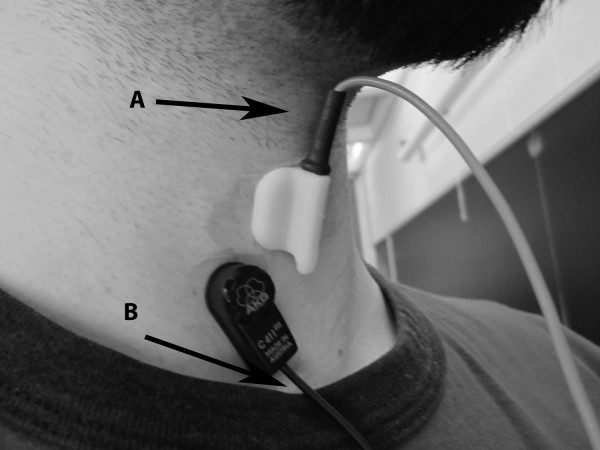
- Analog Devices ADXL322: Small and Thin 2g Accelerometer Data Sheet 2005 Norwood, MA Analog Devices
- AKG Acoustics MicroMic, The Original: C411 1991 Wien, AT AKG Acoustics
Cited by
Lee, K., Ni, X., Lee, J. Y., Arafa, H., Pe, D. J., Xu, S., Avila, R., Irie, M., Lee, J. H., Easterlin, R. L., et al. (2019) · Nature Biomedical Engineering · doi:10.1038/s41551-019-0480-6 · Cited by 349
Dudik, J. M., Coyle, J. L., & Sejdic, E. (2015) · IEEE Transactions on Human-Machine Systems · doi:10.1109/thms.2015.2408615 · Cited by 86
“maintain a “pure” signal [21], [49], [51], [65], [66], [83], [86], [90], others place it as high as 30 Hz or more in order to eliminate motion artifacts and other low-frequency noise [39], [42], [44],”
InfluentialSelf-citationDudik, J. M., Kurosu, A., Coyle, J. L., & Sejdić, E. (2015) · Computers in Biology and Medicine · doi:10.1016/j.compbiomed.2015.01.007 · Cited by 76
“A third technique which strikes a balance between computation requirements and accuracy and has been used to automatically segment swallowing vibrations successfully is the k-means clustering technique [36,37,18,19].”
BackgroundMethodResultInfluentialSelf-citationAutomatic hyoid bone detection in fluoroscopic images using deep learning
Zhang, Z., Coyle, J. L., & Sejdić, E. (2018) · Scientific Reports · doi:10.1038/s41598-018-30182-6 · Cited by 64
Self-citationDysphagia and its effects on swallowing sounds and vibrations in adults
Dudik, J. M., Kurosu, A., Coyle, J. L., & Sejdić, E. (2018) · BioMedical Engineering OnLine · doi:10.1186/s12938-018-0501-9 · Cited by 58
“The age of the subjects was not utilized as a variable for any of our statistical tests since previous work has shown little significant effect of age on cervical auscultation signals even for large age differences [41].”
Self-citationShin, B., Lee, S. H., Kwon, K., Lee, Y. J., Crispe, N., Ahn, S., Shelly, S., Sundholm, N., Tkaczuk, A. T., Yeo, M., et al. (2024) · Advanced Science · doi:10.1002/advs.202404211 · Cited by 56
Khalifa, Y., Donohue, C., Coyle, J. L., & Sejdic, E. (2021) · IEEE Journal of Biomedical and Health Informatics · doi:10.1109/jbhi.2020.3000057 · Cited by 49
Self-citationDeep learning for classification of normal swallows in adults
Dudik, J. M., Coyle, J. L., El-Jaroudi, A., Mao, Z.-H., Sun, M., & Sejdić, E. (2018) · Neurocomputing · doi:10.1016/j.neucom.2017.12.059 · Cited by 42
“utilized by other published studies [19, 18, 20] and the methods used to collect it have been published previously, but will be summarized here for convenience.”
InfluentialSelf-citationDonohue, C., Mao, S., Sejdić, E., & Coyle, J. L. (2021) · Dysphagia · doi:10.1007/s00455-020-10124-z · Cited by 45
“Our previously published research findings have demonstrated that HRCA signals are strongly associated with a variety of VFSS kinematic measurements [22, 23, 27, 28], as well as the feasibility of machine learning in characterizing hyoid bone displacement [28–31].”
BackgroundSelf-citationSano, M. B., Fesmire, C. C., DeWitt, M. R., & Xing, L. (2018) · Physics in Medicine and Biology · doi:10.1088/1361-6560/aacb62 · Cited by 46
A statistical analysis of cervical auscultation signals from adults with unsafe airway protection
Dudik, J. M., Kurosu, A., Coyle, J. L., & Sejdić, E. (2016) · Journal of NeuroEngineering and Rehabilitation · doi:10.1186/s12984-015-0110-9 · Cited by 42
“Past studies have also demonstrated how the patient’s sex and the viscosity of the bolus affect cervical auscultation signals, so the independent effects of these variables were also analyzed in this study to determine if their effects remained constant [27, 28].”
BackgroundMethodResultInfluentialSelf-citationRoldán-Vasco, S., Restrepo-Agudelo, S., Valencia-Martinez, Y., & Orozco‐Duque, A. (2018) · Journal of Electromyography and Kinesiology · doi:10.1016/j.jelekin.2018.10.004 · Cited by 43
Donohue, C., Khalifa, Y., Perera, S., Sejdić, E., & Coyle, J. L. (2021) · Dysphagia · doi:10.1007/s00455-020-10177-0 · Cited by 41
Self-citationDenzi, A., Camera, F., Merla, C., Benassi, B., Consales, C., Paffi, A., Apollonio, F., & Liberti, M. (2016) · The Journal of Membrane Biology · doi:10.1007/s00232-016-9912-3 · Cited by 41
Wearable, epidermal devices for assessment of swallowing function
Rafeedi, T., Abdal, A., Polat, B., Hutcheson, K. A., Shinn, E. H., & Lipomi, D. J. (2023) · npj Flexible Electronics · doi:10.1038/s41528-023-00286-9 · Cited by 44
“Thus, wearable devices featuring MEMS accelerometers and acoustic sensors have the potential to advance traditional diagnostic methods based on auscultation (listening) 159,160 .”
BackgroundO’Brien, M. K., Botonis, O. K., Larkin, E., Carpenter, J., Martin-Harris, B., Maronati, R., Lee, K., Cherney, L. R., Hutchison, B., Xu, S., et al. (2021) · Digital Biomarkers · doi:10.1159/000517144 · Cited by 37
Rebrion, C., Zhang, Z., Khalifa, Y., Ramadan, M., Kurosu, A., Coyle, J. L., Perera, S., & Sejdic, E. (2019) · IEEE Journal of Translational Engineering in Health and Medicine · doi:10.1109/jtehm.2018.2881468 · Cited by 34
“The signals have been segmented in the same manner as in prior publications [16], [41], [46]–[48].”
BackgroundResultInfluentialSelf-citationAnatomical Directional Dissimilarities in Tri-axial Swallowing Accelerometry Signals
Movahedi, F., Kurosu, A., Coyle, J. L., Perera, S., & Sejdic, E. (2017) · IEEE Transactions on Neural Systems and Rehabilitation Engineering · doi:10.1109/tnsre.2016.2577882 · Cited by 32
“research was on healthy subjects [22], [36]–[38], rather than unhealthy subjects who suffering from dysphagia, even though”
InfluentialSelf-citationA comparison between swallowing sounds and vibrations in patients with dysphagia
Movahedi, F., Kurosu, A., Coyle, J. L., Perera, S., & Sejdić, E. (2017) · Computer Methods and Programs in Biomedicine · doi:10.1016/j.cmpb.2017.03.009 · Cited by 28
Self-citationNon-invasive quantification of human swallowing using a simple motion tracking system
Hashimoto, H., Hirata, M., Takahashi, K., Kameda, S., Katsuta, Y., Yoshida, F., Hattori, N., Yanagisawa, T., Palmer, J. A., Oshino, S., et al. (2018) · Scientific Reports · doi:10.1038/s41598-018-23486-0 · Cited by 29
High-resolution cervical auscultation and data science: new tools to address an old problem
Coyle, J. L., & Sejdić, E. (2020) · American Journal of Speech-Language Pathology · doi:10.1044/2020_ajslp-19-00155 · Cited by 28
“A number of different algorithms have been proposed over the years to segment swallowing signals into individual swallows (Damouras et al., 2010; Dudik, Jestrovi ć , et al., 2015; Sejdi ć et al., 2009).”
BackgroundMethodSelf-citationClassifying Dysphagic Swallowing Sounds with Support Vector Machines
Miyagi, S., Sugiyama, S., Kozawa, K., Moritani, S., Sakamoto, S., & Sakai, O. (2020) · Healthcare · doi:10.3390/healthcare8020103 · Cited by 32
Donohue, C., Khalifa, Y., Perera, S., Sejdić, E., & Coyle, J. L. (2021) · Dysphagia · doi:10.1007/s00455-020-10191-2 · Cited by 23
Self-citationParashar, P., Shen, L., Lee, Y., Sharma, M. K., Nahak, B. K., Kaswan, K., Kao, F., Hu, J. J., & Lin, Z. (2025) · Small · doi:10.1002/smll.202503969 · Cited by 25
Automated Bolus Detection in Videofluoroscopic Images of Swallowing Using Mask-RCNN
Caliskan, H., Mahoney, A. S., Coyle, J. L., & Sejdic, E. (2020) · 2020 42nd Annual International Conference of the IEEE Engineering in Medicine & Biology Society (EMBC) · doi:10.1109/embc44109.2020.9176664 · Cited by 19
“A variety of factors can lead to OPD including structural abnormalities, head-neck cancer, though mostly neurological causes, such as a stroke, neurodegenerative diseases or brain trauma [1][2].”
BackgroundSelf-citationCharacteristics of Dry Chin-Tuck Swallowing Vibrations and Sounds
Dudik, J. M., Jestrović, I., Luan, B., Coyle, J. L., & Sejdić, E. (2015) · IEEE Transactions on Biomedical Engineering · doi:10.1109/tbme.2015.2431999 · Cited by 23
“Another 25 tests were run to compare the data gathered in this study to that gathered in [22] in order to charac-”
BackgroundMethodResultSelf-citationShu, K., Mao, S., Coyle, J. L., & Sejdić, E. (2021) · IEEE Journal of Biomedical and Health Informatics · doi:10.1109/jbhi.2021.3106565 · Cited by 22
Self-citationKhalifa, Y., Donohue, C., Coyle, J. L., & Sejdić, E. (2022) · IEEE Journal of Biomedical and Health Informatics · doi:10.1109/jbhi.2022.3224323 · Cited by 19
“HRCA has demonstrated potential as a dysphagia screening method by classifying swallows into safe and unsafe based on the penetration-aspiration scale [10], [11], [12], [13], [14], [15].”
MethodSelf-citationA matched dual-tree wavelet denoising for tri-axial swallowing vibrations
Dudik, J. M., Coyle, J. L., El-Jaroudi, A., Sun, M., & Sejdić, E. (2016) · Biomedical Signal Processing and Control · doi:10.1016/j.bspc.2016.01.012 · Cited by 18
Self-citationDonohue, C., Khalifa, Y., Mao, S., Perera, S., Sejdić, E., & Coyle, J. L. (2021) · Journal of Speech, Language, and Hearing Research · doi:10.1044/2021_jslhr-21-00134 · Cited by 15
Self-citationRoldán-Vasco, S., Pérez-Giraldo, E., & Andres, O.-D. (2020) · Computer Methods and Programs in Biomedicine · doi:10.1016/j.cmpb.2020.105480 · Cited by 18
Donohue, C., Khalifa, Y., Perera, S., Sejdić, E., & Coyle, J. L. (2021) · Dysphagia · doi:10.1007/s00455-021-10368-3 · Cited by 14
Self-citationShu, K., Coyle, J. L., Perera, S., Khalifa, Y., Sabry, A., & Sejdić, E. (2021) · Physiological Measurement · doi:10.1088/1361-6579/abe7cb · Cited by 14
Self-citationDonohue, C., Khalifa, Y., Mao, S., Perera, S., Sejdić, E., & Coyle, J. L. (2022) · Dysphagia · doi:10.1007/s00455-021-10317-0 · Cited by 12
“While our lab always obtains both acoustic and vibratory signals from the contact microphone and tri-axial accelerometer during data collection because they have been shown to contribute different and complementary information, we do not always use both acoustic and vibratory signals for analyses [33].”
BackgroundSelf-citationPilot Study: Magnetic Motion Analysis for Swallowing Detection Using MEMS Cantilever Actuators
Hoffmann, J., Roldán-Vasco, S., Krüger, K., Niekiel, F., Hansen, C., Maetzler, W., Orozco‐Arroyave, J. R., & Schmidt, G. U. (2023) · Sensors · doi:10.3390/s23073594 · Cited by 12
Validation of the optimal site in the neck region for detecting swallowing sounds
Pan, Q., Maeda, N., Manda, Y., Kodama, N., & Minagi, S. (2016) · Journal of Oral Rehabilitation · doi:10.1111/joor.12440 · Cited by 12
Roldán-Vasco, S., Orozco‐Duque, A., & Orozco‐Arroyave, J. R. (2024) · Biomedical Signal Processing and Control · doi:10.1016/j.bspc.2024.107030 · Cited by 12
In Vitro Acid Resistance of Pathogenic Candida Species in Simulated Gastric Fluid
Ikeda, E., Yamaguchi, M., Ono, M., & Kawabata, S. (2024) · Gastro Hep Advances · doi:10.1016/j.gastha.2024.100591 · Cited by 10
Continuous Estimation of Swallowing Motion With EMG and MMG Signals
Guo, Z., Wang, Z., Wang, Y., Huo, W., & Han, J. (2025) · IEEE Transactions on Neural Systems and Rehabilitation Engineering · doi:10.1109/tnsre.2025.3540842 · Cited by 10
Frakking, T. T., Chang, A. B., David, M., Orbell‐Smith, J., & Weir, K. A. (2019) · Clinical Otolaryngology · doi:10.1111/coa.13402 · Cited by 11
Anwar, A., Khalifa, Y., Lucatorto, E., Coyle, J. L., & Sejdić, E. (2024) · Artificial Intelligence in Medicine · doi:10.1016/j.artmed.2024.102921 · Cited by 10
Self-citationNg, M. L., & Ki, A. (2022) · International Journal of Language & Communication Disorders · doi:10.1111/1460-6984.12706 · Cited by 9
Assessment of cough in head and neck cancer patients at risk for dysphagia—An overview
Mootassim‐Billah, S., Nuffelen, G. V., Schoentgen, J., Bodt, M. S. D., Dragan, T., Digonnet, A., Roper, N., & Gestel, D. V. (2021) · Cancer Reports · doi:10.1002/cnr2.1395 · Cited by 9
The Swallowing Intelligent Assessment System Based on Tongue Strength and Surface EMG
Vaitheeshwari, R., Yeh, S., Wu, E. H., & Lin, F.-A. (2023) · IEEE Sensors Journal · doi:10.1109/jsen.2023.3277825 · Cited by 8
“(EMG) [5], accelerometer [3], electroglottographs (EGG) [6],”
BackgroundA review on intelligent aid diagnosis for dysphagia using swallowing sounds
Li, D., Wu, J., Jin, X., Li, Y., Tong, B., Zeng, W., Liu, P., Wang, W., & Shang, S. (2023) · Interdisciplinary Nursing Research · doi:10.1097/nr9.0000000000000040 · Cited by 8
“Researchers have chosen various features from which to characterize the complexity of swallowing sound signals, including Rumpel-Ziff complexity 20,48,57,59 – 61 , Shannon entropy 48,59,60 , or waveform fractal dimension 24,52 .”
BackgroundRayneau, P., Bouteloup, R., Rouf, C.-É., Makris, P., & Morinière, S. (2021) · Dysphagia · doi:10.1007/s00455-020-10225-9 · Cited by 7
“Some authors have reported vari‐ ous techniques for analyzing swallowing sounds [17, 18], sometimes automatically [19–21].”
BackgroundA Novel Approach for Swallow Detection by Fusing Throat Acceleration and PPG Signal
Li, W., Pan, Y., Zhong, Y., & Huan, R. (2018) · Annual International Conference of the IEEE Engineering in Medicine and Biology Society (EMBC) · doi:10.1109/embc.2018.8513380 · Cited by 6
“In [4], both acceleration (ACC) and sounds were sampled during swallow.”
BackgroundToward a robust swallowing detection for an implantable active artificial larynx: a survey
Mialland, A., Atallah, I., & Bonvilain, A. (2023) · Medical & Biological Engineering & Computing · doi:10.1007/s11517-023-02772-8 · Cited by 6
Sánchez-Cardona, Y. (2018) · Revista Mexicana de Ingeniería Biomédica · doi:10.17488/rmib.39.2.6 · Cited by 6
Classification of normal and dysphagia in patients with GERD using swallowing sound analysis
Basiri, B., Vali, M., & Agah, S. (2017) · CSI International Symposium on Artificial Intelligence and Signal Processing · doi:10.1109/aisp.2017.8324095 · Cited by 6
“Dudik et al [21] presents a comparative analysis of SSS and swallowing accelerometry during saliva swallows.”
BackgroundScrew inserting in different phase of cement affect the pull-out strength of cement augmented screws
Iamthanaporn, K., Aonsong, W., Tuntarattanapong, P., & Yuenyongviwat, V. (2021) · Orthopaedics & Traumatology Surgery & Research · doi:10.1016/j.otsr.2021.103060 · Cited by 5
Review of monitoring devices for food intake
TAMURA, T., & Kimura, Y. (2016) · doi:10.11546/cicsj.34.73 · Cited by 5
Detection of Pharyngolaryngeal Activities in Real-World Settings Using Wearable Sensors
Gravellier, L., Coz, M. L., Farinas, J., & Pinquier, J. (2024) · Annual International Conference of the IEEE Engineering in Medicine and Biology Society (EMBC) · doi:10.1109/embc53108.2024.10782007 · Cited by 4
Cassel, S. G., & McIlvaine, J. A. (2017) · Surgery and Rehabilitation · doi:10.15761/srj.1000126 · Cited by 4
Hattori, S., Nozue, S., Ihara, Y., & Takahashi, K. (2022) · Scientific Reports · doi:10.1038/s41598-021-04624-7 · Cited by 3
Kamiyanagi, A., Sumita, Y. I., Chikai, M., Kimura, K., Seki, Y., Ino, S., & Taniguchi, H. (2017) · Journal of Advanced Computational Intelligence and Intelligent Informatics · doi:10.20965/jaciii.2017.p0573 · Cited by 3
Barbalho, I. M. P., Silva, P. D. A., Fernandes, F. R. D. S., Neto, F. M., & Leite, C. R. M. (2018) · Euro American Conference on Telematics and Information Systems · doi:10.1145/3293614.3293627 · Cited by 3
“Como exemplo, os resultados gerados pela análise dos sinais de mastigação expõem resultados diferentes em relação aos resultados gerados pela análise dos sinais sonoros [6].”
BackgroundHamdy, S., & Adeel, H. (2024) · Elsevier eBooks · doi:10.1016/b978-0-443-19063-6.00002-6 · Cited by 6
Li, Y., Wu, Y., Tang, Q., Lin, H., Fu, J., Yang, Y., & Zhang, F. (2025) · Biomedizinische Technik/Biomedical Engineering · doi:10.1515/bmt-2025-0028 · Cited by 2
Classification of Swallowing Foods Using Machine Learning Algorithms
Lim, J. H., Djurić, P. M., & Stanaćević, M. (2021) · International Conference on Electrical, Computer and Energy Technologies (ICECET) · doi:10.1109/icecet52533.2021.9698484 · Cited by 2
Anwar, A., Li, W., Mahoney, A. S., Khalifa, Y., Coyle, J. L., & Sejdić, E. (2025) · Journal of Healthcare Informatics Research · doi:10.1007/s41666-025-00201-z · Cited by 1
“These steps include down-sampling the signals from 20 to 4 kHz by applying an anti-aliasing low-pass filter and selecting individual samples to match the new rate [28, 33, 34].”
Self-citationGalanis, C., Tsipianitis, D., & Michou, E. (2025) · International Conference on Information, Intelligence, Systems & Applications (IISA) · doi:10.1109/iisa66859.2025.11311258 · Cited by 1
“This method was first introduced in the context of swallowing accelerometry by Sejdic et al. [2], [9] and has since been widely adopted [4], [5], [8], [17]-[22], [24], [25].”
Mammal: Supporting Breastfeeding Monitoring Through Computational Garments with Inter-Body Sensing
Zhao, Y., Geck, M., Fernandez, K., Jones, M. N., Zhou, X., Ridgway, J. L., & Wu, T.-Y. (2026) · Proceedings of the ACM on Interactive Mobile Wearable and Ubiquitous Technologies · doi:10.1145/3831965 · Cited by 1
“To enable robust event detection, we adopt a feature-driven online fuzzy clustering pipeline [23].”
Arcopinto, M. D. F., Tosi, J., Formica, D., & Taffoni, F. (2018) · Annual International Conference of the IEEE Engineering in Medicine and Biology Society (EMBC) · doi:10.1109/embc.2018.8513381 · Cited by 1
“Dudik in his work [13] investigated how to merge accelerometer and audio signals to develop a non-invasive technique enabling the swallowing detection.”
BackgroundChikai, M., Kamiyanagi, A., Kimura, K., Seki, Y., Endô, H., Sumita, Y. I., Taniguchi, H., & Ino, S. (2017) · Journal of Advanced Computational Intelligence and Intelligent Informatics · doi:10.20965/jaciii.2017.p0293 · Cited by 1
Characterizing oropharyngeal swallowing following single lung transplantation in adults
Pomfret, S. (2016) · D-Scholarship@Pitt (University of Pittsburgh)
Effects of Liquid Viscosity and Food Texture on Swallowing Sounds
Feng, C. (2020) · DigitalCommons@UNMC · Cited by 1
Mohammadi, H. (2017) · TSpace (University of Toronto)
Rengifo, J. P. B., Restrepo-Uribe, J. P., Pérez-Giraldo, E., & Orozco‐Duque, A. (2022) · Revista EIA · doi:10.24050/reia.v19i38.1579
Gallois, Y., Souche, J., Lemaire, Y., Gravellier, L., Barone, P., Nicolini, L., Farinas, J., Gaillard, P., & Woisard, V. (2025) · Brain Organoid and Systems Neuroscience Journal · doi:10.1016/j.bosn.2025.04.002
Anwar, A., Khalifa, Y., Lucatorto, E., Coyle, J. L., & Sejdić, E. (2025) · Computers in Biology and Medicine · doi:10.1016/j.compbiomed.2025.110887
Self-citationAcoustic Parameters of Swallowing in Adults and Older Adults: A Cross-Sectional Study
Vieira, D. P., Olsen, V. D. R., Schiavon, D. E. B., Araújo, M. C., & Rech, R. S. (2025) · Dysphagia · doi:10.1007/s00455-025-10881-9
Lam, W. Y. S., Kwong, E., Leung, R. C. K., Lee, C. H., Sanjaya, R. A. I., & Lui, L. K. (2025) · Sensors · doi:10.3390/s25237396
“Their difference has been evidenced and discussed by the recent findings from high-resolution cervical auscultation (HRCA) (e.g., [7–9]), where both CA and SA were used simultaneously.”
Neveu, F., Baqué, J., Ghio, A., Farinas, J., Vérin, É., Cugy, E., Morinière, S., & Woisard, V. (2024) · HAL · Cited by 1
Donohue, C. (2021) · D-Scholarship@Pitt (University of Pittsburgh) · Cited by 2
Mialland, A. (2023) · theses.fr (ABES) · doi:10.70675/48639f96z6728z4af0zb33az44056b515b5f
Gravellier, L. (2024) · theses.fr (ABES) · doi:10.70675/2f70927azd193z4a39z980dzf634365bf934
Intelligent integrated system for dysphagia rehabilitation and assessment
Zhang, P., Tang, Y., Chen, J. C., Fang, F., & Shi, P. (2026) · Biomedical Physics & Engineering Express · doi:10.1088/2057-1976/ae7d32
“Some studies have employed high-resolution cervical auscultation (HRCA), utilizing accelerometers and microphones to record swallowing vibrations and sounds, aiming to provide an objective basis for classifying normal and abnormal swallowing [12].”
Wang, L., Cui, N., Li, X. X., Qiao, J., Wei, Z., Dou, Z., Liu, Y., & Wei, X. (2026) · Digital Health · doi:10.1177/20552076261465164 · Cited by 1
“11,12 However, relying on the signals captured by a single sensor for dysphagia assessment may not be sufficient because swallowing is a complex physiological activity.”
Metadata
- Authors
- Dudik, J. M., Jestrović, I., Luan, B., Coyle, J. L., & Sejdić, E.
- Affiliations
- University of Pittsburgh (US)
- Corresponding author
- Sejdić, Ervin
- Venue
- BioMedical Engineering OnLine
- Published
- 2015-01-12
- Volume
- 14
- Issue
- 1
- Pages
- 3-3
- ISSN
- 1475-925X (ISSN-L)
- PMC
- PMC4361156
- OpenAlex
- W2143014063
- Cited by
- 72
- References
- 52
- Citations by year
- 2026: 1 · 2025: 9 · 2024: 6 · 2023: 5 · 2022: 4 · 2021: 10 · 2020: 8 · 2019: 2 · 2018: 11 · 2017: 6 · 2016: 7 · 2015: 3
- FWCI
- 19.74
- Type
- journal article
- Language
- en
- Open access
- gold
- doi.org
- Licence
- cc-by
- Locations
- BioMedical Engineering OnLine (publishedVersion, cc-by)
- Europe PMC (PubMed Central) (publishedVersion, cc-by)
- PubMed Central (publishedVersion, cc-by)
- PubMed (publishedVersion)
- D-Scholarship@Pitt (University of Pittsburgh) (acceptedVersion)
- Funders
- University of Pittsburgh (UL1TR000005, UL1RR024153, RR024153)
- National Institutes of Health (UL1TR000005, RR024153, TR000005)
- National Center for Research Resources (UL1RR024153)
- National Center for Advancing Translational Sciences
- Eunice Kennedy Shriver National Institute of Child Health and Human Development (R01HD074819)
- Topics
- Health Sciences › Health Professions › Speech and Hearing › Dysphagia Assessment and Management
- Health Sciences › Health Professions › Speech and Hearing › Voice and Speech Disorders
- Health Sciences › Medicine › Pulmonary and Respiratory Medicine › Phonocardiography and Auscultation Techniques
- Keywords
- swallowing, accelerometry, swallowing sounds, auscultation, time-frequency features, sex differences, wavelet denoising
- MeSH terms
- Adolescent, Adult, Aged, Aging, Algorithms, Deglutition, Female, Humans, Male, Middle Aged, Saliva, Sex Characteristics, Signal Processing, Computer-Assisted, Sound, Transducers, Young Adult, Accelerometry
About these checks
Registry, retraction, Cites and statistics results are computed, not judged, with one exception: a printed reference that no index lists is read once by a model before it counts as a citation error. Claims are extracted by a model and kept only when their quote appears verbatim in the text; each cited source is then checked, with a model’s help, for whether it says what the claim relies on. Those verdicts can be wrong — read the claim’s quote and the cited source before relying on one.
Statistics and arithmetic are recomputed, not judged.
Confidence bands are shown only for fields calibrated on our annotated test set. None is calibrated yet, so no band is shown.
What counts as a claim ›How we measure confidence ›How we check this ›
Are you an author, or do you see a problem with this page? Request a review
Data sources
Bibliographic data: Semantic Scholar, OpenAlex, Crossref.
Contains information from the Semantic Scholar Academic Graph Datasets, made available under the ODC Attribution License (ODC-BY 1.0).
Semantic Scholar’s data is described in: Kinney, R., et al. (2023). The Semantic Scholar Open Data Platform. arXiv:2301.10140.
