

Influence of mhealth interventions on gender relations in developing countries: a systematic literature review
Open accessThe DOI matches its Crossref record; 34 of the 35 references it cites were found in a registry or an index.
Abstract
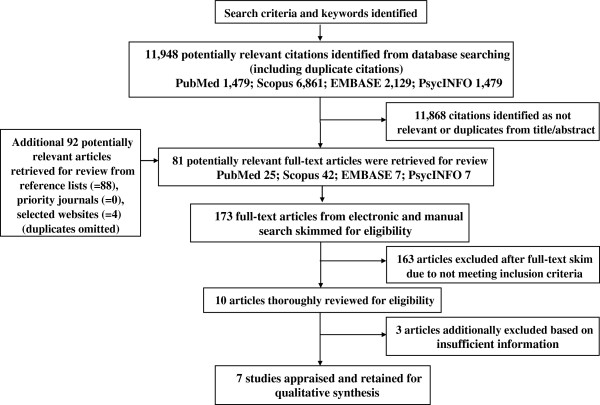
INTRODUCTION: Research has shown that mHealth initiatives, or health programs enhanced by mobile phone technologies, can foster women's empowerment. Yet, there is growing concern that mobile-based programs geared towards women may exacerbate gender inequalities. METHODS: A systematic literature review was conducted to examine the empirical evidence of changes in men and women's interactions as a result of mHealth interventions. To be eligible, studies had to have been published in English from 2002 to 2012, conducted in a developing country, included an evaluation of a mobile health intervention, and presented findings on resultant dynamics between women and men. The search strategy comprised four electronic bibliographic databases in addition to a manual review of the reference lists of relevant articles and a review of organizational websites and journals with recent mHealth publications. The methodological rigor of selected studies was appraised by two independent reviewers who also abstracted data on the study's characteristics. Iterative thematic analyses were used to synthesize findings relating to gender-transformative and non-transformative experiences. RESULTS: Out of the 173 articles retrieved for review, seven articles met the inclusion criteria and were retained in the final analysis. Most mHealth interventions were SMS-based and conducted in sub-Saharan Africa on topics relating to HIV/AIDS, sexual and reproductive health, health-based microenterprise, and non-communicable diseases. Several methodological limitations were identified among eligible quantitative and qualitative studies. The current literature suggests that mobile phone programs can influence gender relations in meaningfully positive ways by providing new modes for couple's health communication and cooperation and by enabling greater male participation in health areas typically targeted towards women. MHealth initiatives also increased women's decision-making, social status, and access to health resources. However, programmatic experiences by design may inadvertently reinforce the digital divide, and perpetuate existing gender-based power imbalances. Domestic disputes and lack of spousal approval additionally hampered women's participation. CONCLUSION: Efforts to scale-up health interventions enhanced by mobile technologies should consider the implementation and evaluation imperative of ensuring that mHealth programs transform rather than reinforce gender inequalities. The evidence base on the effect of mHealth interventions on gender relations is weak, and rigorous research is urgently needed.
Overview
The claims and statistics of this paper haven’t been checked yet.
Free: it reads the open-access text and checks the first 5 claims that cite a source we can check. Create a free account to check every claim.
Integrity signals
Registry
Cites
Statistics
Figures
Verification
Claims the paper makes
The claims and statistics of this paper haven’t been checked yet.
Free: it reads the open-access text and checks the first 5 claims that cite a source we can check. Create a free account to check every claim.
Claims other papers make about this one
Each is checked against this paper’s own text: does it say what the citing paper says it does?
The source backs part of the claim, not all of it — or backs it for a different population, condition or comparison.
In the citing paper
“Some studies found that mobile health interventions can exacerbate treatment disparities”
From Inequities in Health Care Services Caused by the Adoption of Digital Health Technologies: Scoping Review (2022) · cites this paper as [23]
Experimental — accuracy not yet measuredThe source backs part of the claim, not all of it — or backs it for a different population, condition or comparison.
In the citing paper
“In this context, women were less likely to own a mobile phone, so were less likely to directly benefit from SMS education (40, 41, 77).”
From Assessing the impact of mHealth interventions in low- and middle-income countries – what has been shown to work? (2014) · cites this paper as [77]
Experimental — accuracy not yet measuredThe cited source says what the claim attributes to it.
In the citing paper
“Nevertheless, as noted in some of the reviewed papers, attention has to be given to equity issues if mHealth strategies assume the availability of mobile phones, with the attendant risks of further marginalising already vulnerable groups (41, 77).”
From Assessing the impact of mHealth interventions in low- and middle-income countries – what has been shown to work? (2014) · cites this paper as [77]
Self-check
Percentages, sums and reported differences re-computed from the paper’s own numbers.
The self-check needs the paper’s full text.
Citations
Cites
(2014) · Medical Entomology and Zoology · Cited by 17,633
Qualitative Analysis for Social Scientists
Strauss, A. L. (1987) · doi:10.1017/cbo9780511557842 · Cited by 12,277 · cited 1×
“Similar to the analysis of textual data, the process of synthesizing findings among selected articles comprised an initial round of article memoing in which the reviewers independently documented analytical interpretations of findings to capture emerging themes [31,32].”
MethodQualitative research in health care: Assessing quality in qualitative research
Mays, N. (2000) · BMJ · doi:10.1136/bmj.320.7226.50 · Cited by 3,742
Synthesising qualitative and quantitative evidence: A review of possible methods
Dixon-Woods, M., Agarwal, S., Jones, D., Young, B., & Sutton, A. (2005) · Journal of Health Services Research & Policy · doi:10.1177/135581960501000110 · Cited by 2,132 · cited 1×
“This is commonly used to summarize themes identified in systematic literature reviews of qualitative and quantitative studies [28-30].”
MethodStandard Quality Assessment Criteria for Evaluating Primary Research Papers from a Variety of Fields
Kmet, L. M., Cook, L. S., & Lee, R. C. (2004) · University of Alberta Library · doi:10.7939/r37m04f16 · Cited by 1,682
Cummings, G. G., MacGregor, T., Davey, M., Lee, H., Wong, C. A., Lo, E., Muise, M., & Stafford, E. (2010) · International Journal of Nursing Studies · doi:10.1016/j.ijnurstu.2009.08.006 · Cited by 1,104 · cited 1×
“Inclusion of items for the quality assessments was informed by published guidelines and indexes for examining the quality of quantitative [20-24] and qualitative studies [24-27].”
Method(2003) · Routledge eBooks · doi:10.4324/9780203401491 · Cited by 963
Lucas, P. J., Baird, J., Arai, L., Law, C., & Roberts, H. M. (2007) · BMC Medical Research Methodology · doi:10.1186/1471-2288-7-4 · Cited by 553
Information and communication technologies and the moral economy of the household
(2003) · Consuming Technologies · doi:10.4324/9780203401491-9 · Cited by 450
Evaluating Shared Access: social equality and the circulation of mobile phones in rural Uganda
Burrell, J. (2010) · Journal of Computer-Mediated Communication · doi:10.1111/j.1083-6101.2010.01518.x · Cited by 221
Research works printed but not linked: 1
- Akinfaderin-Agarau F Chirtau M Ekponimo S Power S Opportunities and limitations for using new media and mobile phones to expand access to sexual and reproductive health information and services for adolescent girls and young women in six Nigerian states Afr J Reprod Health 2012 12 2 219 230 22916554
Cited by
Yao, R., Zhang, W., Evans, R., Cao, G., Rui, T., & Shen, L. (2022) · Journal of Medical Internet Research · doi:10.2196/34144 · Cited by 451
“Some studies found that mobile health interventions can exacerbate treatment disparities [23,24].”
BackgroundWhy sex and gender matter in implementation research
Tannenbaum, C., Greaves, L., & Graham, I. D. (2016) · BMC Medical Research Methodology · doi:10.1186/s12874-016-0247-7 · Cited by 386
Hall, C. S., Fottrell, E., Wilkinson, S., & Byass, P. (2014) · Global Health Action · doi:10.3402/gha.v7.25606 · Cited by 384
“In this context, women were less likely to own a mobile phone, so were less likely to directly benefit from SMS education (40, 41, 77).”
BackgroundPatients’ Perceptions of mHealth Apps: Meta-Ethnographic Review of Qualitative Studies
Vo, V., Auroy, L., & Sarradon-Eck, A. (2019) · JMIR mHealth and uHealth · doi:10.2196/13817 · Cited by 294
“mHealth integration may have considerable implications in developing countries [76].”
BackgroundHow to do (or not to do)… gender analysis in health systems research
Morgan, R., George, A., Ssali, S., Hawkins, K., Molyneux, S., & Theobald, S. (2016) · Health Policy and Planning · doi:10.1093/heapol/czw037 · Cited by 286
“In certain contexts, by not addressing gender power relations, increased domestic violence, abuse, or partner control was an unintended consequence of mHealth interventions because they improved women’s access to information and resources, without taking into consideration men’s control over these elements (Deshmukh a…”
BackgroundBrinkel, J., Krämer, A., Krumkamp, R., May, J., & Fobil, J. (2014) · International Journal of Environmental Research and Public Health · doi:10.3390/ijerph111111559 · Cited by 161
“After reviewing the remaining n = 154 publications [15–169] a further n = 145 were excluded because they did not meet the inclusion criteria listed in Table 1.”
Tiffin, N., George, A. S., & LeFevre, A. E. (2019) · BMJ Global Health · doi:10.1136/bmjgh-2019-001395 · Cited by 150
“Delivery of these messages, including those pertaining to family planning, on shared phones may result in family misunderstandings and conflict.(5) Understanding the representativeness of the population for whom digital data are being collected is vital in ensuring its responsible use.”
Mobile phones, gender, and female empowerment in sub-Saharan Africa: studies with African youth
Porter, G., Hampshire, K., Abane, A., Munthali, A., Robson, E., Lannoy, A. D., Tanle, A., & Owusu, S. A. (2019) · Information Technology for Development · doi:10.1080/02681102.2019.1622500 · Cited by 141
“…is a backlash with harmful consequences for women within conjugal relationships as a result of women’s mobile-enhanced autonomy and decision-making ability (Jennings & Gagliardi, 2013) or if the information accessed is misleading, inappropriate, even potentially dangerous (Hampshire et al., 2015).”
BackgroundLeon, N., Surender, R., Bobrow, K., Muller, J., & Farmer, A. (2015) · BMC Family Practice · doi:10.1186/s12875-015-0289-7 · Cited by 126
“There was also no gender difference as reported elsewhere [20], with men and women both having unrestricted access to mobile phones.”
BackgroundAcceptance of COVID-19 vaccine in Pakistan among health care workers
Malik, A. A., Malik, J., & Ishaq, U. (2021) · PLoS ONE · doi:10.1371/journal.pone.0257237 · Cited by 125
“This is also indicative of the various healthcare disparities that exist in a developing country like Pakistan, where minority groups may be at the lower end of health resource allocation and utilization by the government, worsening distrust of vaccines and healthcare workers in these regions [18, 33].”
BackgroundImpact of financial inclusion in low- and middle-income countries: A systematic review of reviews
Duvendack, M., & Mader, P. (2019) · Campbell Systematic Reviews · doi:10.4073/csr.2019.2 · Cited by 138
“…views (e.g. Brody et al. 2015; Peters et al. 2016) and barriers or enablers of uptake and effectiveness (e.g. Panda et al. 2016) including innovations in information and communications technology (e.g. Gurman et al. 2012, Jennings and Gagliardi 2013, Sondaal et al. 2015, Lee et al. 2016).”
Does women’s mobile phone ownership matter for health? Evidence from 15 countries
LeFevre, A. E., Shah, N., Bashingwa, J. J. H., George, A. S., & Mohan, D. (2020) · BMJ Global Health · doi:10.1136/bmjgh-2020-002524 · Cited by 93
Remme, M., Narasimhan, M., Wilson, D. P., Ali, M., Vijayasingham, L., Ghani, F., & Allotey, P. A. (2019) · BMJ · doi:10.1136/bmj.l1228 · Cited by 83
Rich, E., Miah, A., & Lewis, S. (2019) · Sociology of Health & Illness · doi:10.1111/1467-9566.12980 · Cited by 70
“For example, the use of mobile health apps and other mobile technologies to improve women’s access to health resources has not shown clearly positive effects (Jennings and Gagliardi 2013).”
BackgroundSzinay, D., Forbes, C. C., Busse, H., DeSmet, A., Smit, E. S., & König, L. M. (2023) · Obesity Reviews · doi:10.1111/obr.13542 · Cited by 71
“Certain groups of the population are known to have a lower adoption of health behaviors and to experience lower access to health care and/or higher morbidity, including people from ethnic minorities,(29) from economically disadvantaged backgrounds,(29) from sexual minorities,(30) people with lower health literacy leve…”
BackgroundSu, Y., Lee, D. K. L., Xiao, X., Li, W., & Shu, W. (2021) · Computers in Human Behavior · doi:10.1016/j.chb.2021.106760 · Cited by 86
Mohan, D., Bashingwa, J. J. H., Tiffin, N., Dhar, D., Mulder, N., George, A. S., & LeFevre, A. E. (2020) · PLoS ONE · doi:10.1371/journal.pone.0236078 · Cited by 81
“[11,14] Assumptions have been made that mobile phones, by themselves, may increase access to utilization of healthcare, thereby improving health outcomes.”
BackgroundInformal mhealth at scale in Africa: Opportunities and challenges
Hampshire, K., Mwase‐Vuma, T., Alemu, K., Abane, A., Munthali, A., Awoke, T., Mariwah, S., Chamdimba, E., Owusu, S. A., Robson, E., et al. (2021) · World Development · doi:10.1016/j.worlddev.2020.105257 · Cited by 76
Bacchus, L., Reiss, K., Church, K., Colombini, M., Pearson, E., Naved, R. T., Smith, C., Andersen, K. L., & Free, C. (2019) · Global Health Science and Practice · doi:10.9745/ghsp-d-19-00239 · Cited by 74
“Yet adverse event measurement is often limited to clinical research studies and remains rare and inconsistent in social and behavioral intervention evaluation.(32,33,44,45) Despite the known association between SRH or SRH service use and stigma, blame, discrimination, new or escalating verbal or physical violence from…”
BackgroundFeletto, M., & Sharkey, A. (2019) · BMJ Global Health · doi:10.1136/bmjgh-2019-001711 · Cited by 63
“47 Understanding the structural complexity of gender relations in any given context is critical to reduce gender-related disadvantages in access to health services, quality of services and health outcomes, and to prevent potential unintended consequences and ensure implemented interventions promote…”
BackgroundExtending the framework for mobile health information systems Research: A content analysis
Miah, S. J., Gammack, J. G., & Hasan, N. (2017) · Information Systems · doi:10.1016/j.is.2017.04.001 · Cited by 76
Krah, E. F., & de Kruijf, J. G. (2016) · DIGITAL HEALTH · doi:10.1177/2055207616679264 · Cited by 56
“Jennings and Gagliardi ‘13 Gender Evidence base is weak, more research needed designers do in practice and what the governments consider priorities.98 One study100 argues that, in this respect, a ‘national ownership’ of mHealth cannot be overemphasized.”
BackgroundDigital health, gender and health equity: invisible imperatives
Sinha, C., & Schryer-Roy, A.-M. (2018) · Journal of public health · doi:10.1093/pubmed/fdy171 · Cited by 35
George, A. S., Morgan, R., Larson, E., & LeFevre, A. E. (2018) · Journal of Public Health · doi:10.1093/pubmed/fdy180 · Cited by 48
Aamir, J., Ali, S. M., Boulos, M. N. K., Anjum, N., & Ishaq, M. (2017) · Health Policy and Technology · doi:10.1016/j.hlpt.2017.11.005 · Cited by 52
Jack, S. M., Munro‐Kramer, M. L., Williams, J. R., Schminkey, D. L., Tomlinson, E., Mayo‐Wilson, L. J., Bradbury‐Jones, C., & Campbell, J. C. (2020) · Journal of Clinical Nursing · doi:10.1111/jocn.15554 · Cited by 55
Mobile phones, women's physical mobility, and contraceptive use in India
Rajkhowa, P., & Qaim, M. (2022) · Social Science & Medicine · doi:10.1016/j.socscimed.2022.115074 · Cited by 47
Hartmann, M., Khosla, R., Krishnan, S., George, A. S., Gruskin, S., & Amin, A. (2016) · PLoS ONE · doi:10.1371/journal.pone.0167542 · Cited by 44
Stangl, A. L., Singh, D., Windle, M. T., Sievwright, K. M., Footer, K. H. A., Iovita, A., Mukasa, S. N., & Baral, S. (2019) · BMC Infectious Diseases · doi:10.1186/s12879-019-3692-1 · Cited by 42
Pimmer, C., & Tulenko, K. (2015) · Mobile Media & Communication · doi:10.1177/2050157915622657 · Cited by 48
“Jennings and Gagliardi (2013) suggested that mitigating gender inequalities requires a more vigilant project preparation and the identification of potential gender implications, such as women’s potential dependence on men for approval and for technical or financial support.”
Hunt, X., Tomlinson, M., Sikander, S., Skeen, S., Marlow, M., Toit, S. D., & Eisner, M. (2020) · Frontiers in Artificial Intelligence · doi:10.3389/frai.2020.543305 · Cited by 45
George, A. S., LeFevre, A. E., Jacobs, T., Kinney, M. V., Buse, K., Chopra, M., Daelmans, B. M. E. G., Haakenstad, A., Huicho, L., Khosla, R., et al. (2019) · BMJ Global Health · doi:10.1136/bmjgh-2018-001316 · Cited by 35
From opportunity to inequality: how the rural digital economy shapes intra-rural income distribution
Wang, H., Leng, H., & Yuan, M. (2025) · Humanities and Social Sciences Communications · doi:10.1057/s41599-025-04848-2 · Cited by 49
“In fact, they could exacerbate human capital inequality and further widen income disparity (Jennings and Gagliardi, 2013).”
Male Partner Engagement in Family Planning SMS Conversations at Kenyan Health Clinics
Perrier, T., Harrington, E. K., Ronen, K., Matemo, D. N., Kinuthia, J., John-Stewart, G. C., Anderson, R., & Unger, J. A. (2018) · ACM SIGCAS Conference on Computing and Sustainable Societies (COMPASS) · doi:10.1145/3209811.3209857 · Cited by 34
Reiss, K., Andersen, K. L., Pearson, E., Biswas, K. K., Taleb, F., Ngo, T. D., Hossain, A., Barnard, S., Smith, C., Carpenter, J. R., et al. (2019) · Global Health Science and Practice · doi:10.9745/ghsp-d-19-00015 · Cited by 33
“With respect to phone interventions, a systematic review published in 2013 investigated the effect of mHealth on gender relations and highlighted cases of resulting domestic dispute; however, the authors reported that data were very limited, noting their suspicion that this outcome is not routinely being measured.(31)…”
InfluentialHackett, K. M., Kazemi, M., & Sellen, D. (2018) · Social Science & Medicine · doi:10.1016/j.socscimed.2018.06.014 · Cited by 33
What’s Past is Prologue: A Scoping Review of Recent Public and Global Health Informatics Literature
Dixon, B. E., Pina, J., Kharrazi, H. H. K., Gharghabi, F., & Richards, J. (2015) · Online Journal of Public Health Informatics · doi:10.5210/ojphi.v7i2.5931 · Cited by 32
“As mobile technologies have proliferated throughout LMICs, their use in a variety of healthrelated activities has been studied [61-72].”
BackgroundYepes, M., Maurer, J., Viswanathan, B., Gédéon, J., & Bovet, P. (2016) · Journal of Medical Internet Research · doi:10.2196/jmir.5592 · Cited by 30
“In addition to a social digital divide, numerous studies have also suggested a sex divide in mobile technology adoption, with greater mobile access among men than among women in most developing countries [33,43,44].”
BackgroundKirkwood, E. K., Clymer, C., Imbulana, K., Mozumder, S., Dibley, M. J., & Alam, A. (2022) · JMIR Human Factors · doi:10.2196/32330 · Cited by 28
“The review highlighted that women face multiple barriers to participating in mHealth interventions, including social, financial, and digital literacy and the need for spousal approval [16].”
BackgroundMethodInfluentialWirtz, A. L., Logie, C. H., & Mbuagbaw, L. C. E. (2022) · Epidemiologic Reviews · doi:10.1093/epirev/mxac008 · Cited by 27
Steege, R., Waldman, L., Datiko, D. G., Kea, A. Z., Taegtmeyer, M., & Theobald, S. (2018) · Journal of Public Health · doi:10.1093/pubmed/fdy199 · Cited by 26
Telemedicine in an Academic Movement Disorders Center during COVID-19
Esper, C. D., Scorr, L., Papazian, S., Bartholomew, D., Esper, G. J., & Factor, S. A. (2021) · Journal of Movement Disorders · doi:10.14802/jmd.20099 · Cited by 27
“14 Further studies on gender disparities in telemedicine in developing countries would be of interest.”
BackgroundMobile phone-based interventions for improving contraception use
Perinpanathan, T., Maiya, S., van Velthoven, M. H., Nguyen, A. T., Free, C., & Smith, C. (2023) · Cochrane Database of Systematic Reviews · doi:10.1002/14651858.cd011159.pub3 · Cited by 27
Razzaq, A., Raynes‐Greenow, C. H., & Alam, A. (2021) · Australian and New Zealand Journal of Obstetrics and Gynaecology · doi:10.1111/ajo.13430 · Cited by 27
Sexual and reproductive health and rights and mHealth in policy and practice in South Africa
Waldman, L., & Stevens, M. (2015) · Reproductive Health Matters · doi:10.1016/j.rhm.2015.06.009 · Cited by 30
“Rather, a transformative approach with dedicated programmes is needed.(38,39) South Africa’s policy framework for mHealth can be seen as comprising two dimensions: on the one hand, there are health policies which recognise sexual and reproductive health but have little conceptualisation of rights and no reference to m…”
BackgroundEvaluations of Structural Interventions for HIV Prevention: A Review of Approaches and Methods
Iskarpatyoti, B. S., Lebov, J., Hart, L., Thomas, J., & Mandal, M. (2017) · AIDS and Behavior · doi:10.1007/s10461-017-1997-x · Cited by 23
“To systematically compare the studies reported in the articles, the rigor of each evaluation was assessed using a checklist informed by published systematic reviews examining the quality of studies [24, 25].”
MethodAmpt, F. H., L’Engle, K. L., Lim, M. S. C., Plourde, K. F., Mangone, E., Mudogo, C. M., Gichangi, P., Manguro, G., Hellard, M. E., Stoove, M. A., et al. (2020) · JMIR mhealth and uhealth · doi:10.2196/15096 · Cited by 24
“However, few studies report on the potential harms from women’s participation in SRHR digital health programs, and this is an important area for further research [61,62].”
Application of mHealth to improve service delivery and health outcomes: Opportunities and challenges
Vesel, L., Hipgrave, D. B., Dowden, J., & Kariuki, W. (2015) · African Population Studies · doi:10.11564/29-1-718 · Cited by 26
“In their systematic review, Jennings and Gagliardi (2013) identified several ways in which mHealth can reduce barriers to gender and social equity.”
BackgroundUdenigwe, O., Okonofua, F. E., Ntoimo, L. F. C., & Yaya, S. (2022) · Frontiers in Global Women s Health · doi:10.3389/fgwh.2022.1002970 · Cited by 21
“Evidence from a systematic review on mHealth interventions and gender relations affirms this study by showing that women’s risk of experiencing domestic disputes increases during their participation in mHealth programs (60).”
BackgroundAsi, Y., & Williams, C. (2020) · Journal of Social Issues · doi:10.1111/josi.12394 · Cited by 23
Huchko, M. J., Ibrahim, S., Blat, C., Oketch, S. Y., & Bukusi, E. A. (2019) · Journal of Global Oncology · doi:10.1200/jgo.18.00264 · Cited by 20
“Although mHealth has filled gaps in health care access in certain settings, some studies have found that mHealth interventions might not reach women who have low health literacy and that many women, especially in rural areas, may be dependent on male partners for cell phone access, limiting their access to and comfort…”
BackgroundMistry, S. K., Akter, F., Yadav, U. N., Hossain, M. B., Sichel, A., Labrique, A. B., & Storisteanu, D. M. L. (2021) · BMJ Open · doi:10.1136/bmjopen-2020-043933 · Cited by 22
Gender-responsive monitoring and evaluation for health systems
Morgan, R., Kalbarczyk, A., Decker, M. R., Elnakib, S., Igusa, T., Luo, A., Oladimeji, A. T., Nakatabira, M., Peters, D. H., Prihartono, I., et al. (2024) · Health Policy and Planning · doi:10.1093/heapol/czae073 · Cited by 19
“…the safety and well-being of participants while limiting or addressing potential negative unintended consequences, such as how women’s participation in research can sometimes lead to increased workloads, or in more extreme cases, experiences of gender-based violence (Jennings and Gagliardi, 2013).”
BackgroundTimilsina, A., Bhandari, B., Johns, A., & Thapa, S. (2024) · PLoS ONE · doi:10.1371/journal.pone.0303958 · Cited by 21
Bensch, G., Sievert, M., RWI-LIER, Langbein, J., RWI-LIER, Kneppel, N., & RWI-LIER (2016) · doi:10.23846/sr51232 · Cited by 25
Cash-based approaches in humanitarian emergencies
Doocy, S., & Tappis, H. (2016) · doi:10.23846/sr0028 · Cited by 17
Gendered access to digital capital and mobile phone ownership among young people in Rakai, Uganda
Basmajian, A., Kreniske, P., Moore, E. V., Spindler, E., Nalugoda, F. K., Nakyanjo, N., Ddaaki, W. G., Santelli, J. S., & Hirsch, J. S. (2022) · Culture Health & Sexuality · doi:10.1080/13691058.2022.2085808 · Cited by 17
“Scholars have highlighted the problematic nature of inequitable access to mobile phones (Jennings and Gagliardi 2013; Khatun et al. 2017) and the unintended consequences of mhealth programs that do not account for localised understandings of gender (Hackett, Kazemi and Sellen 2018; Schneidermann…”
BackgroundRawat, S. M., Wilkerson, J. M., Lawler, S. M., Patankar, P., Rosser, B. R. S., Shukla, K., Butame, S. A., & Ekstrand, M. L. (2018) · JMIR Public Health and Surveillance · doi:10.2196/publichealth.9088 · Cited by 17
“Preferred content often includes information about HIV and sexually transmitted infections (STIs), proper condom use, behavioral risk reduction strategies, and partner communication strategies [20,21].”
BackgroundEconomic self-help group programmes for improving women’s empowerment
Brody, C., de Hoop, T., Vojtkova, M., International Initiative for Impact Evaluation, (., Warnock, R., Dunbar, M. S., Murthy, P., & Dworkin, S. L. (2016) · doi:10.23846/sr41049 · Cited by 21
Higginson, A., Benier, K. H., Shenderovich, Y., Bedford, L., MAZEROLLE, L. G., & Murray, J. (2016) · doi:10.23846/sr51117b · Cited by 26
Domestic Violence against Women in India: Does Empowerment Matter?
Paul, T., & Karmakar, S. (2022) · Journal of Asian and African Studies · doi:10.1177/00219096221143123 · Cited by 15
“These are important observations given the fact that the immense potential of mobile phones as a tool for empowering women and promoting their overall well-being has been highlighted by several recent studies (Belalcázar, 2015; Jennings and Gagliardi, 2013; Nakafeero et al., 2009).”
Kirkwood, E. K., Khan, J., Hasan, M. M., Iqbal, A., Tahsina, T., Huda, T. M., Hoddinott, J. F., Laba, T., Muthayya, S., Goodwin, N. S., et al. (2024) · PLOS Global Public Health · doi:10.1371/journal.pgph.0002907 · Cited by 14
Green hospitals: maximizing health and climate benefits globally
Rojas‐Rueda, D. (2025) · The Science of The Total Environment · doi:10.1016/j.scitotenv.2025.179692 · Cited by 18
Mayo‐Wilson, L. J., Kang, B., Mathai, M., Mak’anyengo, M. O., & Ssewamala, F. M. (2022) · International Journal of Medical Informatics · doi:10.1016/j.ijmedinf.2022.104728 · Cited by 16
Spinean, A., Mladin, O. A., Carniciu, S., Stănescu, A. M. A., & Serafinceanu, C. (2025) · Nutrients · doi:10.3390/nu17091506 · Cited by 13
“A recent review by Hartley et al. (2021) also noted this gap and recommended strategies to address it [17].”
Manfaat Penggunaan Mobile Health (m-Health) Dalam Pencatatan dan Pelaporan Kesehatan Ibu
Permatasari, A. D., Trihandini, I., BaharuddinNur, R., & Kurniawan, R. (2021) · Jurnal Biostatistik Kependudukan dan Informatika Kesehatan · doi:10.51181/bikfokes.v1i2.4810 · Cited by 13
Biswas, K. K., Hossain, A., Chowdhury, R., Andersen, K. L., Sultana, S., Shahidullah, S. M., & Pearson, E. (2017) · JMIR Formative Research · doi:10.2196/formative.5151 · Cited by 13
“Studies have shown that mHealth interventions can lead to improved communication about sexual and reproductive health among partners and to positively influence gender dynamics through increased male cooperation and involvement in health areas that are normally the domain of the woman [21].”
BackgroundMomberg, M., Harries, J., & Constant, D. (2016) · Reproductive Health · doi:10.1186/s12978-016-0160-x · Cited by 15
Mobile phones and patient referral in Thai rural healthcare: a structuration view
Ling, R., Poorisat, T., & Chib, A. I. (2018) · Information Communication & Society · doi:10.1080/1369118x.2018.1503698 · Cited by 13
“Giddens, echoing notion of frames (Goffman, 1974), notes that interactions become institutionalized through mechanisms such as tradition, routine, custom, and habit.”
BackgroundYé, M. (2016) · Journal of Healthcare Communications · doi:10.4172/2472-1654.100017 · Cited by 13
Belay, E. G., & McCrickard, D. S. (2015) · International Conference on Collaboration Technologies and Systems (CTS) · doi:10.1109/cts.2015.7210460 · Cited by 11
“The third phase, searching for themes in thematic analysis is equivalent to identifying list of possible claims concepts.”
BackgroundIemmi, V., Gibson, L., LSHTM, Blanchet, K., Kumar, K. S., LSHTM, Rath, S., Hartley, S. D., Murthy, G. V. S., Patel, V., et al. (2016) · doi:10.23846/sr31143 · Cited by 10
Panda, P. K., Dror, I., Koehlmoos, T. P., Hossain, S., icddr, B., John, D., People's Open Access Education Initiative, I., Khan, J. A. M., & Dror, D. M. (2016) · doi:10.23846/sr41009 · Cited by 13
Peterson, S. K., Mayo‐Wilson, L. J., Spigel, L., Morgan, I. A., & Parker, A. (2025) · Frontiers in Reproductive Health · doi:10.3389/frph.2025.1490917 · Cited by 9
Abrejo, F. G., Iqbal, R., & Saleem, S. (2022) · BMC Women s Health · doi:10.1186/s12905-022-02086-1 · Cited by 9
“Using mHealth to increase knowledge and uptake of modern contraceptives has been considered one of the cost-effective interventions in the world [4], especially for LMICs, where modern contraceptives change behaviour and increase uptake [5].”
BackgroundInfluentialDuvendack, M., & Mader, P. (2018) · Campbell Systematic Reviews · doi:10.1002/cl2.211 · Cited by 11
Belmonte, I. A., Jiménez-Lozano, A., Collado, C. S., Chaves, V. F., Majada, A. C., & Gómez, R. G.-G. (2025) · Atención Primaria · doi:10.1016/j.aprim.2025.103311 · Cited by 9
A toolkit for decolonizing global emergency medicine education
Dozois, A., Marqués, C. G., Thilakasiri, K., Adeyeye, A. A., Leanza, J., Rybarczyk, M. M., Depp, T., Wieland, T., Karim, N., Muchatuta, M., et al. (2023) · Frontiers in Education · doi:10.3389/feduc.2023.1214904 · Cited by 8
“Limited access to mobile devices, particularly among gender minorities (Jennings and Gagliardi, 2013), as well as high-speed internet may also drive decreased FOAMed utilization in LMICs (Burkholder et al., 2018), as a result creators should ensure content is available to be viewed offline and…”
Samii, C., Lisiecki, M., Kulkarni, P., Paler, L., & Chavis, L. (2016) · doi:10.23846/sr41073b · Cited by 9
The Digital Gender Gap in HealthCare: Progress, Challenges, and Policy Implications
Musizvingoza, R., & Handforth, C. (2021) · UNU Collections (United Nations University) · doi:10.37941/rr/2021/4 · Cited by 8
Angwenyi, V., Fletcher, R. J., Mwangi, P. M., Kabue, M. N., Odhiambo, R., Mulupi, S., Obulemire, E. K., Njoroge, E., Ombech, E., Mokaya, M. M., et al. (2024) · BMC Public Health · doi:10.1186/s12889-024-21057-9 · Cited by 7
“An important contribution of this intervention is the demonstration of a low-cost intervention, which can engage fathers across the perinatal period relying on positive messaging to change gendered behaviour [47].”
Digitalizing Community Health Work: A Struggle over the Values of Global Health Policy
Hanrieder, T., & Montt-Maray, E. (2021) · EconStor Open Access Articles and Book Chapters · doi:10.12759/hsr.46.2021.1.136-159 · Cited by 13
Understanding Health Information Seeking from an Actor-Centric Perspective
Batchelor, S. J., Waldman, L., Bloom, G., Rasheed, S., Scott, N., Ahmed, T., Khan, N. U. Z., & Sharmin, T. (2015) · International Journal of Environmental Research and Public Health · doi:10.3390/ijerph120708103 · Cited by 11
“This is partly being driven by advances in ICTs and rapid developments in mobile phone markets [19,20].”
BackgroundKirkwood, E. K., Dibley, M. J., Hoddinott, J. F., Huda, T. M., Laba, T., Tahsina, T., Hasan, M. M., Iqbal, A., Khan, J., Ali, N. B., et al. (2021) · BMJ Open · doi:10.1136/bmjopen-2020-044263 · Cited by 6
Intersectoral action to transform health equity for women and girls globally
Sarri, G., Gabarró, M. S., Cheng, R.-F. J., & Jhutti-Johal, J. (2025) · Communications Medicine · doi:10.1038/s43856-025-01290-y · Cited by 5
Parkinson’s disease patients’ perspective on telephone visits during the COVID-19 pandemic
Magriço, M., Serôdio, M., Ventura, R., & Bugalho, P. (2023) · Journal of Neural Transmission · doi:10.1007/s00702-023-02697-4 · Cited by 5
“It has been previously described that women may still face significant social barriers that may influence their participation in telemedicine (George et al. 2018; Jennings and Laina 2013).”
BackgroundFemale sex workers' use of mobile phones in India: Lessons in effective engagement
Panchanadeswaran, S., Manasi, A., Chacko, S., Brazda, M., Wilson, N. B., & Kuruppu, S. (2019) · Human Technology · doi:10.17011/ht/urn.201902201609 · Cited by 6
“…community dialogues (Sengupta, Long, Singhal & ShefnerRogers, 2007) and emphasized that independent access to mobile phone technology has enabled women’s entrepreneurial endeavors while reducing the gender divide (Jacobsen, 2011; Jennings & Gagliardi, 2013; Zainudeen, Iqbal, & Samarajiva, 2010).”
BackgroundInfluentialGeschlechtersensible Gestaltung digitaler Gesundheitsförderung
Urban, M. (2020) · Prävention und Gesundheitsförderung · doi:10.1007/s11553-020-00798-6 · Cited by 6
Han, Y., Pelletier, D. L., Kim, J., & Hoddinott, J. F. (2025) · Maternal and Child Nutrition · doi:10.1111/mcn.70088 · Cited by 4
“In some cases, providing men with direct access to health information increased their involvement in family health decisions but led to uni-lateral decision ‐ making rather than joint deliberation, which generated tension between couples (Jennings and Gagliardi 2013).”
Kalbarczyk, A., Saksena, K., Carras, M. C., Gomes, I., Zon, J., Zhou, X., & Agarwal, S. (2025) · BMC Digital Health · doi:10.1186/s44247-025-00231-y · Cited by 5
“These include exacerbating the digital gender divide, increasing gender-based violence, and reinforcing existing gender inequities in healthcare access [16, 45, 46].”
Shamsujjoha, M., Grundy, J., Lu, Q., Khalajzadeh, H., & Li, L. (2025) · ACM Transactions on Software Engineering and Methodology · doi:10.1145/3721429 · Cited by 4
“This involves personalizing the user experience, supplying pertinent health resources, nurturing support and recognizing diverse gender identities within user communities [56, 58].”
Stauber, C., Brown, J. M., Bourgeois, A. G., Palma, F. A. G., Spears, C. A., White, C., & Costa, F. (2022) · American Journal of Tropical Medicine and Hygiene · doi:10.4269/ajtmh.21-1040 · Cited by 4
Abesamis, L. E. A. (2023) · Social Science & Medicine · doi:10.1016/j.socscimed.2023.116284 · Cited by 4
The Utilization of MHealth for Assessing Child Safety Education Is A Necessity
Widowati, E., Husodo, A. H., Istiono, W., & Lazuardi, M. L. (2019) · International Conference on Physical Education, Sport, and Health (ACPES) · doi:10.2991/acpes-19.2019.61 · Cited by 4
“In general, MHealth is currently used in aspects related to HIV/AIDS, sexual and reproductive health, health-based microenterprise, non-communicable diseases, support emergency medical services, online help-seeking, maternal and child healthcare, medical and health education, service delivery and health outcomes[9]–[1…”
BackgroundEwuoso, C. (2025) · Cogent Social Sciences · doi:10.1080/23311886.2025.2527965 · Cited by 5
“Jennings and Gagliardi (2013) have also found that lack of spousal approval sometimes undermines women’s capacity to effectively participate in (that is, from within) digital society. this is especially true of cultural contexts—within africa and other low and middle-income countries—where women…”
Hope, M., McCloskey, J., NicBhloscaidh, M., Crowley, D., & Hunt, D. (2019) · Environment and Planning E Nature and Space · doi:10.1177/2514848619894878 · Cited by 3
“Where an unexpected consequence of this was that local women embraced the mobile phone app project and citizen-science process, and this cascaded into a range of other citizen-science projects around health and education (e.g. Chib, 2010; Jennings and Gagliandi, 2013).”
BackgroundHope, M., McCloskey, J., Hunt, D., Crowley, D., & NicBhloscaidh, M. (2018) · Journal of Extreme Events · doi:10.1142/s2345737618500100 · Cited by 5
(2017) · doi:10.30923/5896-8 · Cited by 4
Fivian, E., Parida, M., Fry, H. A. H., Mohanty, S., Padhan, S., Pradhan, R., Das, P., Odhiambo, G., Prost, A., Roopnaraine, T., et al. (2024) · PLOS Global Public Health · doi:10.1371/journal.pgph.0003206 · Cited by 2
Higgins‐Steele, A., Noordam, A. C., Crawford, J., & Fotso, J. C. (2015) · African Population Studies · doi:10.11564/29-1-715 · Cited by 4
“Previous studies have highlighted ways in which mHealth and health promotion can be successful in improving healthy behaviors, positively influencing timely care-seeking (Chib, van Velthoven and Car 2014; Jennings and Gagliardi 2013).”
Background
Metadata
- Authors
- Jennings, L., & Gagliardi, L.
- Affiliations
- Johns Hopkins University (US)
- Venue
- International Journal for Equity in Health
- Published
- 2013
- Volume
- 12
- Issue
- 1
- Pages
- 85
- ISSN
- 1475-9276 (ISSN-L)
- PMC
- PMC4015705
- OpenAlex
- W2165506697
- Cited by
- 117
- References
- 35
- Citations by year
- 2026: 6 · 2025: 11 · 2024: 8 · 2023: 5 · 2022: 12 · 2021: 10 · 2020: 7 · 2019: 16 · 2018: 9 · 2017: 6 · 2016: 17 · 2015: 8 · 2014: 2
- FWCI
- 1.08
- Type
- journal article
- Language
- en
- Open access
- gold
- doi.org
- Licence
- cc-by
- Locations
- International Journal for Equity in Health (publishedVersion, cc-by)
- Europe PMC (PubMed Central) (publishedVersion, cc-by)
- PubMed Central (publishedVersion, cc-by)
- PubMed (publishedVersion)
- Topics
- Health Sciences › Health Professions › General Health Professions › Mobile Health and mHealth Applications
- Physical Sciences › Computer Science › Information Systems › ICT in Developing Communities
- Social Sciences › Sociology and Political Science › Gender, Health, and Social Inequality
- Keywords
- mobile health, mobile health intervention, gender relations, gender inequality, women's empowerment, women's decision-making, digital divide, spousal approval, HIV/AIDS, sexual and reproductive health, non-communicable diseases, sub-Saharan Africa, developing countries
- MeSH terms
- Community Health Services, Developing Countries, Female, Humans, Interpersonal Relations, Male, Sexual Partners, Telemedicine, Empirical Research, Cell Phone, Health Information Systems
About these checks
Registry, retraction, Cites and statistics results are computed, not judged, with one exception: a printed reference that no index lists is read once by a model before it counts as a citation error. Claims are extracted by a model and kept only when their quote appears verbatim in the text; each cited source is then checked, with a model’s help, for whether it says what the claim relies on. Those verdicts can be wrong — read the claim’s quote and the cited source before relying on one.
Statistics and arithmetic are recomputed, not judged.
Confidence bands are shown only for fields calibrated on our annotated test set. None is calibrated yet, so no band is shown.
What counts as a claim ›How we measure confidence ›How we check this ›
Are you an author, or do you see a problem with this page? Request a review
Data sources
Bibliographic data: Semantic Scholar, OpenAlex, Crossref.
Contains information from the Semantic Scholar Academic Graph Datasets, made available under the ODC Attribution License (ODC-BY 1.0).
Semantic Scholar’s data is described in: Kinney, R., et al. (2023). The Semantic Scholar Open Data Platform. arXiv:2301.10140.
