

Polybrominated diphenyl ethers in relation to autism and developmental delay: a case-control study
Open accessThe DOI matches its Crossref record; 47 of the 47 references it cites were found in a registry or an index.
Abstract
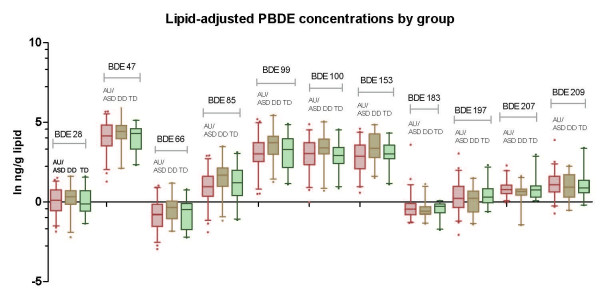
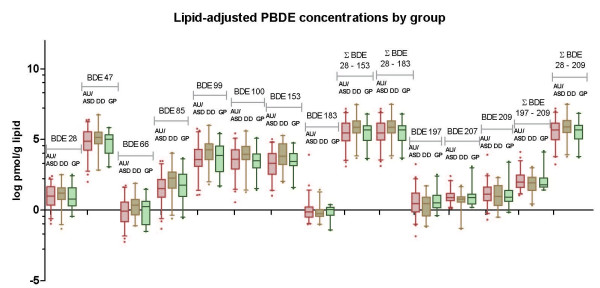
BACKGROUND: Polybrominated diphenyl ethers (PBDEs) are flame retardants used widely and in increasing amounts in the U.S. over the last few decades. PBDEs and their metabolites cross the placenta and studies in rodents demonstrate neurodevelopmental toxicity from prenatal exposures. PBDE exposures occur both via breastfeeding and hand-to-mouth activities in small children. METHODS: Participants were 100 children from the CHARGE (CHildhood Autism Risk from Genetics and the Environment) Study, a case-control epidemiologic investigation of children with autism/autism spectrum disorder, with developmental delay and from the general population. Diagnoses of autism were confirmed by the Autism Diagnostic Observation Schedule and Autism Diagnostic Inventory-Revised, and of developmental delay using the Mullen's Scales of Early Learning and the Vineland Adaptive Behavior Scales. Typically developing controls were those with no evidence of delay, autism, or autism spectrum disorder. Eleven PBDE congeners were measured by gas chromatography/mass spectrometry from serum specimens collected after children were assessed. Logistic regression was used to evaluate the association between plasma PBDEs and autism. RESULTS: Children with autism/autism spectrum disorder and developmental delay were similar to typically developing controls for all PBDE congeners, but levels were high for all three groups. CONCLUSIONS: Plasma samples collected post-diagnosis in this study may not represent early life exposures due to changes in diet and introduction of new household products containing PBDEs. Studies with direct measurements of prenatal or infant exposures are needed to assess the possible causal role for these compounds in autism spectrum disorders.
Overview
The claims and statistics of this paper haven’t been checked yet.
Free: it reads the open-access text and checks the first 5 claims that cite a source we can check. Create a free account to check every claim.
Integrity signals
Registry
Cites
Statistics
Figures
Verification
Claims the paper makes
The claims and statistics of this paper haven’t been checked yet.
Free: it reads the open-access text and checks the first 5 claims that cite a source we can check. Create a free account to check every claim.
Claims other papers make about this one
Each is checked against this paper’s own text: does it say what the citing paper says it does?
In the citing paper
“the CHARGE study reported no differences in plasma PBDE levels in autism and typical control cases [216].”
From The contribution of environmental exposure to the etiology of autism spectrum disorder (2019) · cites this paper as [216]
Self-check
Percentages, sums and reported differences re-computed from the paper’s own numbers.
The self-check needs the paper’s full text.
Citations
Cites
Sick individuals and sick populations
Rose, G. (2001) · International Journal of Epidemiology · doi:10.1093/ije/30.3.427 · Cited by 3,736 · cited 1×
“It has previously been noted [44] that when exposure is high and ubiquitous, no study will be able to detect the effect of that exposure; within such populations, diseases will instead appear to have only genetic influences.”
BackgroundSick individuals and sick populations
ROSE, G. (1985) · International Journal of Epidemiology · doi:10.1093/ije/14.1.32 · Cited by 2,701
Neuroglial activation and neuroinflammation in the brain of patients with autism
Vargas, D. L., Nascimbene, C., Krishnan, C., Zimmerman, A. W., & Pardo, C. A. (2005) · Annals of Neurology · doi:10.1002/ana.20315 · Cited by 2,149 · cited 1×
“Meanwhile, increasing research suggests neuroimmune pathways could contribute to autism [20,21].”
BackgroundBrominated flame retardants: cause for concern?
Birnbaum, L. S., & Staskal, D. F. (2004) · Environmental Health Perspectives · doi:10.1289/ehp.6559 · Cited by 1,702 · cited 1×
“The foam products have contained primarily penta-BDEs; plastic casings on small appliances and computers have been primarily octaBDEs; and television sets, electrical wiring, and backings on draperies have generally been deca-BDEs [1].”
BackgroundPolybrominated Diphenyl Ethers in the Environment and in People: A Meta-Analysis of Concentrations
Hites, R. A. (2004) · Environmental Science & Technology · doi:10.1021/es035082g · Cited by 1,503 · cited 3×
“Concentrations reported in human blood are consistently higher in the U.S. than in Europe [3,4] and recent reports suggest that body burdens in California are among the highest worldwide [5-7].”
BackgroundOrganohalogen compounds: Conference volumes from “Dioxin ’95” and backlist
(1995) · Environmental Science and Pollution Research · doi:10.1007/bf02986737 · Cited by 1,115
A Neuroligin-3 Mutation Implicated in Autism Increases Inhibitory Synaptic Transmission in Mice
Tabuchi, K., Blundell, J., Etherton, M. R., Hammer, R. E., Liu, X., Powell, C. M., & Südhof, T. C. (2007) · Science · doi:10.1126/science.1146221 · Cited by 997 · cited 2×
“remain high; data from animals [11,14] and humans [35] have shown neurodevelopmental effects following prenatal exposures; and experimental research suggests several relevant mechanisms of toxicity [15,22-25].”
BackgroundChlorinated hydrocarbon levels in human serum: Effects of fasting and feeding
Phillips, D. L., Pirkle, J. L., Burse, V. W., Bernert, J. T., Henderson, L. O., & Needham, L. L. (1989) · Archives of Environmental Contamination and Toxicology · doi:10.1007/bf01055015 · Cited by 884 · cited 1×
“Serum triglycerides and cholesterols were measured at the UC Davis clinical chemistry laboratory and total serum lipids were estimated [31].”
MethodPrenatal Exposure to PBDEs and Neurodevelopment
Herbstman, J. B., Sjödin, A., Kurzon, M., Lederman, S. A., Jones, R. S., Rauh, V., Needham, L. L., Tang, D., Niedzwiecki, M., Wang, R. Y., et al. (2010) · Environmental Health Perspectives · doi:10.1289/ehp.0901340 · Cited by 689 · cited 3×
“remain high; data from animals [11,14] and humans [35] have shown neurodevelopmental effects following prenatal exposures; and experimental research suggests several relevant mechanisms of toxicity [15,22-25].”
BackgroundResultComponents of plastic: experimental studies in animals and relevance for human health
Talsness, C. E., Andrade, A. J. M., Kuriyama, S. N., Taylor, J. A., & vom Saal, F. S. (2009) · Philosophical Transactions of the Royal Society B: Biological Sciences · doi:10.1098/rstb.2008.0281 · Cited by 633 · cited 1×
“Possible mechanisms relevant to neurodevelopmental toxicity include disruption of thyroid hormone or sex steroid homeostasis during the prenatal period [ 15-18 ], a period in which these systems play critical roles in fetal development, particularly in the formation of the external granule cell layer of the cerebellum…”
Background
Cited by
The contribution of environmental exposure to the etiology of autism spectrum disorder
Bölte, S., Girdler, S., & Marschik, P. B. (2019) · Cellular and Molecular Life Sciences · doi:10.1007/s00018-018-2988-4 · Cited by 509
Braun, J. M., Kalkbrenner, A. E., Just, A. C., Yolton, K., Calafat, A. M., Sjödin, A., Hauser, R., Webster, G. M., Chen, A., & Lanphear, B. P. (2014) · Environmental Health Perspectives · doi:10.1289/ehp.1307261 · Cited by 328
Kalkbrenner, A. E., Schmidt, R. J., & Penlesky, A. C. (2014) · Current Problems in Pediatric and Adolescent Health Care · doi:10.1016/j.cppeds.2014.06.001 · Cited by 268
Therapeutic effect of forest bathing on human hypertension in the elderly
Mao, G.-X., Cao, Y.-B., Lan, X.-G., He, Z.-H., Chen, Z.-M., Wang, Y.-Z., Hu, X.-L., Lv, Y.-D., Wang, G.-F., & Yan, J. (2012) · Journal of Cardiology · doi:10.1016/j.jjcc.2012.08.003 · Cited by 235
Health consequences of exposure to brominated flame retardants: A systematic review
Kim, Y. R., Harden, F. A., Toms, L.-M. L., & Norman, R. E. (2014) · Chemosphere · doi:10.1016/j.chemosphere.2013.12.064 · Cited by 202
“Neurobehavioral and developmental disorders Four studies explored neurobehavioral and developmental disorders, such as alteration in neurodevelopment, autism, and alteration in neuropsychological status with inconsistent outcomes reported (Herbstman et al., 2010; Fitzgerald et al., 2011; Gascon et al., 2011; Hertz-Pic…”
BackgroundInfluentialBourdon, J. A., Saber, A. T., Jacobsen, N. R., Jensen, K. A., Madsen, A. M., Lamson, J. S., Wallin, H., Møller, P., Loft, S., Yauk, C. L., et al. (2012) · Particle and Fibre Toxicology · doi:10.1186/1743-8977-9-5 · Cited by 191
Air pollution exposure prediction approaches used in air pollution epidemiology studies
Özkaynak, H., Baxter, L. K., Dionisio, K. L., & Burke, J. (2013) · Journal of Exposure Science & Environmental Epidemiology · doi:10.1038/jes.2013.15 · Cited by 182
Elemental hair analysis: A review of procedures and applications
Pozebon, D., Scheffler, G. L., & Dressler, V. L. (2017) · Analytica Chimica Acta · doi:10.1016/j.aca.2017.09.017 · Cited by 160
Mitchell, M. M., Woods, R., Chi, L., Schmidt, R. J., Pessah, I. N., Kostyniak, P. J., & LaSalle, J. M. (2012) · Environmental and Molecular Mutagenesis · doi:10.1002/em.21722 · Cited by 164
“, 2010], and increasing PBDE body burdens are a growing concern for human exposures [Messer, 2010; Hertz-Picciotto et al., 2011].”
InfluentialSelf-citationRisk of post-fire metal mobilization into surface water resources: A review
Abraham, J., Dowling, K., & Florentine, S. (2017) · Science of The Total Environment · doi:10.1016/j.scitotenv.2017.05.096 · Cited by 156
Grova, N., Schroeder, H., Olivier, J. L., & Turner, J. D. (2019) · International Journal of Genomics · doi:10.1155/2019/2085496 · Cited by 160
“This phenotype includes hyperactive spontaneous behaviours, deficiencies in memory and learning, and decreased stimulus-responsive capability [76].”
BackgroundThe association of environmental toxicants and autism spectrum disorders in children
Ye, B. S., Leung, A. O. W., & Wong, M. H. (2017) · Environmental Pollution · doi:10.1016/j.envpol.2017.04.039 · Cited by 152
Developmental neurotoxicity of persistent organic pollutants: an update on childhood outcome
Berghuis, S. A., Bos, A. F., Sauer, P. J. J., & Roze, E. (2015) · Archives of Toxicology · doi:10.1007/s00204-015-1463-3 · Cited by 143
Vuong, A. M., Yolton, K. A., Dietrich, K. N., Braun, J. M., Lanphear, B. P., & Chen, A. (2017) · Hormones and Behavior · doi:10.1016/j.yhbeh.2017.11.008 · Cited by 138
“Additional studies are needed to determine whether PBDEs are associated with internalizing problems, adaptive skills, and social behaviors/ASD in children.”
BackgroundInfluentialCarter, C., & Blizard, R. (2016) · Neurochemistry International · doi:10.1016/j.neuint.2016.10.011 · Cited by 124
Baxter, L. K., Dionisio, K. L., Burke, J. M., Sarnat, S. E., Sarnat, J. A., Hodas, N., Rich, D. Q., Turpin, B. J., Jones, R. R., Mannshardt, E., et al. (2013) · Journal of Exposure Science & Environmental Epidemiology · doi:10.1038/jes.2013.62 · Cited by 115
Extreme temperatures and paediatric emergency department admissions
Xu, Z., Hu, W., Su, H., Turner, L., Ye, X., Wang, J., & Tong, S. (2013) · Journal of Epidemiology & Community Health · doi:10.1136/jech-2013-202725 · Cited by 110
Long-lived epigenetic interactions between perinatal PBDE exposure and Mecp2308 mutation
Woods, R., Vallero, R. O., Golub, M. S., Suarez, J. K., Ta, T. A., Yasui, D. H., Chi, L.-H., Kostyniak, P. J., Pessah, I. N., Berman, R. F., et al. (2012) · Human Molecular Genetics · doi:10.1093/hmg/dds046 · Cited by 109
Self-citationPolybrominated diphenyl ethers in the environmental systems: a review
Ohoro, C. R., Adeniji, A. O., Okoh, A. I., & Okoh, O. O. (2021) · Journal of Environmental Health Science and Engineering · doi:10.1007/s40201-021-00656-3 · Cited by 113
“Some low brominated congeners might result in developmental impacts in children [5, 160, 161].”
BackgroundAbraham, J., Dowling, K., & Florentine, S. K. (2017) · Chemosphere · doi:10.1016/j.chemosphere.2017.10.150 · Cited by 104
Ferguson, K. K., Meeker, J. D., Cantonwine, D. E., Chen, Y., Mukherjee, B., & McElrath, T. F. (2016) · Environment International · doi:10.1016/j.envint.2016.06.013 · Cited by 96
Giri, S., Singh, A. K., & Mahato, M. K. (2017) · Journal of Earth System Science · doi:10.1007/s12040-017-0833-z · Cited by 93
Huang, Y.-F., Pan, W., Tsai, Y.-A., Chang, C.-H., Chen, P.-J., Shao, Y.-S., Tsai, M., Hou, J., Lu, C. A., & Chen, M.-L. (2017) · The Science of The Total Environment · doi:10.1016/j.scitotenv.2017.07.092 · Cited by 91
Swaringen, B. F., Gawlik, E., Kamenov, G. D., McTigue, N. E., Cornwell, D. A., & Bonzongo, J. J. (2021) · Environmental Research · doi:10.1016/j.envres.2021.112025 · Cited by 94
Urban pollution and road infrastructure: A case study of China
Luo, Z., Wan, G., Wang, C., & Zhang, X. (2017) · China Economic Review · doi:10.1016/j.chieco.2017.04.008 · Cited by 85
Jiménez-Díaz, I., Vela-Soria, F., Rodríguez-Gómez, R., Zafra‐Gómez, A., Ballesteros, O., & Navalón, A. (2015) · Analytica Chimica Acta · doi:10.1016/j.aca.2015.08.008 · Cited by 84
Papoutsis, A. J., Selmin, O. I., Borg, J. L., & Romagnolo, D. F. (2015) · Molecular Carcinogenesis · doi:10.1002/mc.22095 · Cited by 79
Pesticide poisoning in Chitwan, Nepal: a descriptive epidemiological study
Gyenwali, D., Vaidya, A., Tiwari, S., Khatiwada, P., Lamsal, D. R., & Giri, S. (2017) · BMC Public Health · doi:10.1186/s12889-017-4542-y · Cited by 86
The unquantified risk of post-fire metal concentration in soil: A review
Abraham, J., Dowling, K., & Florentine, S. (2017) · Water, Air, & Soil Pollution · doi:10.1007/s11270-017-3338-0 · Cited by 48
Wang, G., Peng, J., Yang, D., Zhang, D., & Li, X. (2015) · Marine Pollution Bulletin · doi:10.1016/j.marpolbul.2015.11.028 · Cited by 67
Weldon, R. H., Barr, D. B., Trujillo, C., Bradman, A., Holland, N., & Eskenazi, B. (2011) · Journal of Environmental Monitoring · doi:10.1039/c1em10469a · Cited by 66
Quality of Life and Its Predictors Among Children and Adolescents With Cancer
Pan, H., Wu, L., & Wen, S. (2016) · Cancer Nursing · doi:10.1097/ncc.0000000000000433 · Cited by 64
Rapid and sensitive detection of bisphenol a from serum matrix
Lin, X., Cheng, C., Terry, P., Chen, J., Cui, H., & Wu, J. J. (2016) · Biosensors and Bioelectronics · doi:10.1016/j.bios.2016.12.024 · Cited by 64
Shin, H.-M., Bennett, D. H., Calafat, A. M., Tancredi, D., & Hertz-Picciotto, I. (2020) · Environmental Research · doi:10.1016/j.envres.2020.109514 · Cited by 61
“These could result in different exposures to the target compounds postnatally as opposed to exposures during the fetal and infant periods [93].”
BackgroundSelf-citationUsing Kriging incorporated with wind direction to investigate ground-level PM2.5 concentration
Zhang, H., Zhan, Y., Li, J., Chao, C., Liu, Q., Wang, C., Jia, S., Ma, L., & Biswas, P. (2020) · The Science of The Total Environment · doi:10.1016/j.scitotenv.2020.141813 · Cited by 64
Exposure to airborne formaldehyde: Sampling and analytical methods—A review
Dugheri, S., Massi, D., Mucci, N., Marrubini, G., Cappelli, G., Speltini, A., Bonferoni, M. C., & Arcangeli, G. (2021) · Trends in Environmental Analytical Chemistry · doi:10.1016/j.teac.2021.e00116 · Cited by 65
Lee, K., Kim, K., Ahn, Y. D., Choi, Y., Cho, J., Jang, Y., Lim, Y.-H., Kim, J. I., Shin, C. H., Lee, Y. A., et al. (2021) · Environment International · doi:10.1016/j.envint.2021.106798 · Cited by 58
Napoli, E., Hung, C., Wong, S., & Giulivi, C. (2013) · Toxicological Sciences · doi:10.1093/toxsci/kfs339 · Cited by 55
“These concentrations of BDE-49 that altered mitochondrial outcomes could be regarded as biologically relevant for they could be easily reached with the reported plasma concentrations of BDE-47 of children living in Mexico and California (0.07–1.8 nM; Eskenazi et al., 2011; Hertz-Picciotto et al., 2011) and considering…”
BackgroundInfluentialMartin, E. M., Horta, C. G., Rager, J. E., Bailey, K. A., Sánchez‐Ramírez, B., Ballinas‐Casarrubias, L., Ishida, M. C., Gutiérrez‐Torres, D. S., Cerón, R. H., Morales, D. V., et al. (2015) · Toxicological Sciences · doi:10.1093/toxsci/kfu318 · Cited by 56
Update of the risk assessment of polybrominated diphenyl ethers (PBDEs) in food
(CONTAM), E. P. O. C. I. T. F. C., Schrenk, D., Bignami, M., Bodin, L., Chipman, J. K., del Mazo, J., Grasl‐Kraupp, B., Högstrand, C., Hoogenboom, L. A. P., Leblanc, J., et al. (2024) · EFSA Journal · doi:10.2903/j.efsa.2024.8497 · Cited by 74
Self-citationMolecular Advances Leading to Treatment Implications for Fragile X Premutation Carriers
Hagerman, R. (2014) · Brain Disorders & Therapy · doi:10.4172/2168-975x.1000119 · Cited by 53
“Work in autism has implicated a broad group of toxins including insecticides, pesticides, polychlorinated biphenyls (PCBs), fire retardants, mercury and others [127-132].”
BackgroundWang, G., Peng, J., Zhang, D., & Li, X. (2016) · Environmental Pollution · doi:10.1016/j.envpol.2016.02.054 · Cited by 53
Construction safety and health problems of ethnic minority workers in Hong Kong
Chan, A. P. C., Wong, F., Hon, C. K. H., Javed, A. A., & Lyu, S. (2017) · Engineering Construction & Architectural Management · doi:10.1108/ecam-09-2015-0143 · Cited by 57
Roth, N., & Wilks, M. F. (2014) · Toxicology Letters · doi:10.1016/j.toxlet.2014.02.015 · Cited by 53
Association of climate variability and childhood diarrhoeal disease in rural Bangladesh, 2000–2006
Wu, J., Yunus, M., Streatfield, P. K., & Emch, M. (2013) · Epidemiology and Infection · doi:10.1017/s095026881300277x · Cited by 58
The role of secondhand smoke in sinusitis: a systematic review
Hur, K., Liang, J. Z., & Lin, S. Y. (2013) · International Forum of Allergy & Rhinology · doi:10.1002/alr.21232 · Cited by 55
Kristiansson, E., Coria, J., Gunnarsson, L. M., & Gustavsson, M. B. (2021) · Environmental Science & Policy · doi:10.1016/j.envsci.2021.09.007 · Cited by 57
A bibliometric analysis of global forest ecology research during 2002–2011
Song, Y., & Zhao, T. (2013) · SpringerPlus · doi:10.1186/2193-1801-2-204 · Cited by 49
Li, T., Wang, W., Pan, Y.-W., Xu, L., & Xia, Z. (2013) · Toxicological Sciences · doi:10.1093/toxsci/kft083 · Cited by 51
“For example, PBDE exposure may be a risk factor for autism (Hertz-Picciotto et al., 2011; Messer, 2010; Mitchell et al., 2012; Napoli et al., 2013; Woods et al., 2012).”
BackgroundSchuhmacher, M., Kiviranta, H., Ruokojärvi, P. H., Nadal, M., & Domingo, J. L. (2013) · Chemosphere · doi:10.1016/j.chemosphere.2013.07.071 · Cited by 52
Mahmoudi, A., Ghorbel, H., bouallegui, Z., Marrekchi, R., Isoda, H., & Sayadi, S. (2015) · Experimental and Toxicologic Pathology · doi:10.1016/j.etp.2015.04.007 · Cited by 50
Lin, Y.-P., Pessah, I. N., & Puschner, B. (2013) · Talanta · doi:10.1016/j.talanta.2013.04.001 · Cited by 45
Self-citationDanilevičiūtė, A., Gražulevičienė, R., Venclovienė, J., Paulauskas, A., & Nieuwenhuijsen, M. J. (2012) · International Journal of Environmental Research and Public Health · doi:10.3390/ijerph9124470 · Cited by 47
Chen, H., Zhang, Y., Lin-lin, M., Liu, F., Zheng, W., Shen, Q., Zhang, H., Wei, X., Tian, D., He, G., et al. (2012) · BMC Public Health · doi:10.1186/1471-2458-12-450 · Cited by 44
Szkola, A., Campbell, K., Elliott, C. T., Nießner, R., & Seidel, M. (2013) · Analytica Chimica Acta · doi:10.1016/j.aca.2013.05.028 · Cited by 44
Two-sample rank tests under complex sampling
Lumley, T., & Scott, A. J. (2013) · Biometrika · doi:10.1093/biomet/ast027 · Cited by 52
Isotopic analyses by ICP-MS in clinical samples
Rodushkin, I., Engström, E., & Baxter, D. C. (2012) · Analytical and Bioanalytical Chemistry · doi:10.1007/s00216-012-6457-x · Cited by 43
Predictive Modeling for Public Health: Preventing Childhood Lead Poisoning
Potash, E., Brew, J., Loewi, A., Majumdar, S., Reece, A., Walsh, J., Rozier, E., Jorgenson, E., Mansour, R., & Ghani, R. (2015) · Proceedings of the 21th ACM SIGKDD International Conference on Knowledge Discovery and Data Mining · doi:10.1145/2783258.2788629 · Cited by 37
Human Excretion of Polybrominated Diphenyl Ether Flame Retardants: Blood, Urine, and Sweat Study
Genuis, S. K., Birkholz, D., & Genuis, S. J. (2017) · BioMed Research International · doi:10.1155/2017/3676089 · Cited by 44
Mashau, F., Ncube, E. J., & Voyi, K. V. V. (2018) · Journal of Water and Health · doi:10.2166/wh.2018.167 · Cited by 43
Subiza‐Pérez, M., Marina, L. S., Irizar, A., Gallastegi, M., Anabitarte, A., Urbieta, N., Babarro, I., Molinuevo, A., Vozmediano, L., & Ibarluzea, J. M. (2020) · Environmental Pollution · doi:10.1016/j.envpol.2020.114504 · Cited by 46
Longo, V., Forleo, A., Giampetruzzi, L., Siciliano, P. A., & Capone, S. (2021) · International Journal of Environmental Research and Public Health · doi:10.3390/ijerph181910236 · Cited by 45
Kanlayaprasit, S., Thongkorn, S., Panjabud, P., Jindatip, D., Hu, V. W., Kikkawa, T., Osumi, N., & Sarachana, T. (2021) · International Journal of Molecular Sciences · doi:10.3390/ijms222413201 · Cited by 43
The importance of open science for biological assessment of aquatic environments
Beck, M. W., O’Hara, C. C., Lowndes, J. S., Mazor, R. D., Theroux, S. M., Gillett, D. J., Lane, B., & Gearheart, G. (2020) · PeerJ · doi:10.7717/peerj.9539 · Cited by 48
Schwartzer, J. J., Koenig, C. M., & Berman, R. F. (2013) · Neurotoxicology and Teratology · doi:10.1016/j.ntt.2012.08.007 · Cited by 39
Goyal, D. K., & Miyan, J. A. (2014) · Frontiers in Endocrinology · doi:10.3389/fendo.2014.00029 · Cited by 43
2Loud?: Community mapping of exposure to traffic noise with mobile phones
Leao, S. Z., Ong, K., & Krezel, A. (2014) · Environmental Monitoring and Assessment · doi:10.1007/s10661-014-3848-9 · Cited by 41
Gene × environment interactions in autism spectrum disorders
Keil, K. P., & Lein, P. J. (2022) · Current topics in developmental biology/Current Topics in Developmental Biology · doi:10.1016/bs.ctdb.2022.11.001 · Cited by 44
Overview and Introduction to Autism Spectrum Disorder (ASD)
Al-Dewik, N. I. E., Al‐Jurf, R., Styles, M., Tahtamouni, S., Al‐Sharshani, D., Alsharshani, M., Ahmad, A. I., Khattab, A., Rifai, H. A., & Qoronfleh, M. W. (2020) · Advances in neurobiology · doi:10.1007/978-3-030-30402-7_1 · Cited by 45
Papa, M., Pedrazzani, R., & Bertanza, G. (2013) · Water Research · doi:10.1016/j.watres.2013.04.015 · Cited by 37
Lyall, K., Croen, L., Weiss, L. A., Kharrazi, M., Traglia, M., DeLorenze, G. N., & Windham, G. C. (2017) · Environmental Health Perspectives · doi:10.1289/ehp1079 · Cited by 44
“Developmental exposure to BFRs, and EDCs in general, has emerged as a suspected risk factor for ASD (Hertz-Picciotto et al. 2011; Grandjean and Landrigan 2014; Lyall et al. 2014) given known influences of hormone disruptions on brain development (de Escobar et al. 2004; Morreale de Escobar et al.…”
BackgroundMass spectrometry as a tool for studying autism spectrum disorder
Woods, A. G., Wetie, A. G. N., Sokolowska, I., Russell, S., Ryan, J. P., Michel, T. M., Thome, J., & Darie, C. C. (2013) · Journal of Molecular Psychiatry · doi:10.1186/2049-9256-1-6 · Cited by 37
“No differences were observed in the plasma levels of PBDEs in children with autism or ASDs/developmental delay in this study [83].”
Oh, J., Kim, K., Kannan, K., Parsons, P. J., Mlodnicka, A., Schmidt, R. J., Schweitzer, J. B., Hertz‐Picciotto, I., & Bennett, D. H. (2024) · Environmental Health · doi:10.1186/s12940-024-01065-3 · Cited by 38
Self-citationIsotopic ratio based source apportionment of children's blood lead around coking plant area
Cao, S., Duan, X., Zhao, X., Wang, B., Ma, J., Fan, D., Sun, C., He, B., Wei, F., & Jiang, G. (2014) · Environment International · doi:10.1016/j.envint.2014.07.015 · Cited by 36
Home risk factors for childhood pneumonia in Nanjing, China
Zheng, X., Qian, H., Zhao, Y., Shen, H., Zhao, Z., Sun, Y., & Sundell, J. (2013) · Chinese Science Bulletin · doi:10.1007/s11434-013-5686-5 · Cited by 35
Dionisio, K. L., Isakov, V., Baxter, L. K., Sarnat, J. A., Sarnat, S. E., Burke, J. M., Rosenbaum, A. S., Graham, S. E., Cook, R., Mulholland, J. A., et al. (2013) · Journal of Exposure Science & Environmental Epidemiology · doi:10.1038/jes.2013.59 · Cited by 35
Approaches to integrated monitoring for environmental health impact assessment
Liu, H.-Y., Bartoňová, A., Pascal, M., Smolders, R., Skjetne, E., & Dušinská, M. (2012) · Environmental Health · doi:10.1186/1476-069x-11-88 · Cited by 41
Chen, H., Streifel, K. M., Singh, V., Yang, D., Mangini, L., Wulff, H., & Lein, P. J. (2016) · Toxicological Sciences · doi:10.1093/toxsci/kfw259 · Cited by 32
Moksnes, M. R., Hansen, A. F., Wolford, B. N., Thomas, L. F., Rasheed, H., Simić, A., Bhatta, L., Brantsæter, A. L., Surakka, I. L., Zhou, W., et al. (2024) · Communications Biology · doi:10.1038/s42003-024-06101-z · Cited by 32
Wang, G., Jiang, N., Liu, Y., Wang, X., Liu, Y., Jiao, D., & Wang, H. (2021) · Journal of Hazardous Materials · doi:10.1016/j.jhazmat.2021.125233 · Cited by 31
Quach, P., Sherif, R. E., Gomes, J., & Krewksi, D. (2016) · NeuroToxicology · doi:10.1016/j.neuro.2016.05.009 · Cited by 34
Schantz, S. L., Eskenazi, B., Buckley, J. P., Braun, J. M., Sprowles, J. L. N., Bennett, D. H., Cordero, J. F., Frazier, J. A., Lewis, J. L., Hertz‐Picciotto, I., et al. (2020) · Environmental Research · doi:10.1016/j.envres.2020.109709 · Cited by 30
Self-citationPrince, L. M., Korbas, M., Davidson, P. W., Bröberg, K., & Rand, M. D. (2014) · Toxicological Sciences · doi:10.1093/toxsci/kfu095 · Cited by 32
Dhoble, R. M., Maddigapu, P. R., Bhole, A. G., & Rayalu, S. S. (2018) · Environmental Science and Pollution Research · doi:10.1007/s11356-018-1792-x · Cited by 31
Urban grey spaces are associated with increased allergy in the general population
Maio, S., Baldacci, S., Tagliaferro, S., Angino, A., Parmes, E., Pärkkä, J., Pesce, G., Maesano, C. N., Annesi‐Maesano, I., & Viegi, G. (2021) · Environmental Research · doi:10.1016/j.envres.2021.112428 · Cited by 27
Nkomo, P., Mathee, A., Naicker, N., Galpin, J. S., Richter, L., & Norris, S. A. (2017) · Environment International · doi:10.1016/j.envint.2017.09.004 · Cited by 28
Deen, L., Hougaard, K. S., Clark, A., Meyer, H. W., Frederiksen, M., Gunnarsen, L., Andersen, H. V., Hougaard, T., Petersen, K. K. U., Ebbehøj, N. E., et al. (2022) · Environmental Health Perspectives · doi:10.1289/ehp10605 · Cited by 26
Environmental Factors in the Onset of Autism Spectrum Disorder
Persico, A. M., & Merelli, S. (2014) · Current Developmental Disorders Reports · doi:10.1007/s40474-013-0002-2 · Cited by 29
Liu, L., Li, H., Wang, Z., Liu, R., Zhang, Y., & Lin, K. (2014) · Chemosphere · doi:10.1016/j.chemosphere.2014.12.022 · Cited by 26
Tobacco smoke exposure among women in Turkey and determinants
Alkan, Ö., & Ünver, Ş. (2021) · Journal of Substance Use · doi:10.1080/14659891.2021.1885518 · Cited by 26
Vitamin C supplementation rescued meiotic arrest of spermatocytes in Balb/c mice exposed to BDE-209
Zhang, T., He, H., Yu, W., Geng, W., & Zhai, J. (2022) · Ecotoxicology and Environmental Safety · doi:10.1016/j.ecoenv.2022.113846 · Cited by 26
Health effects of air pollution: a Southern European perspective
Viegi, G., Baldacci, S., Maio, S., Fasola, S., Annesi‐Maesano, I., Pistelli, F., Carrozzi, L., Grutta, S. L., & Forastiere, F. (2020) · Chinese Medical Journal · doi:10.1097/cm9.0000000000000869 · Cited by 25
Gatti, M. G., Bechtold, P., Campo, L., Barbieri, G., Quattrini, G., Ranzi, A., Sucato, S., Olgiati, L., Polledri, E., Romolo, M., et al. (2017) · Chemosphere · doi:10.1016/j.chemosphere.2017.07.122 · Cited by 24
Jones, W., Gibb, A., & Chow, V. (2021) · Journal of Engineering Design and Technology · doi:10.1108/jedt-11-2020-0473 · Cited by 28
Harvey, P. J., Taylor, M. P., Kristensen, L. J., Grant-Vest, S., Rouillon, M., Wu, L., & Handley, H. (2015) · Environmental Geochemistry and Health · doi:10.1007/s10653-015-9779-8 · Cited by 25
Spatial Analysis of Regional Factors and Lung Cancer Mortality in China, 1973–2013
Shen, X., Wang, L., & Zhu, L. (2017) · Cancer Epidemiology Biomarkers & Prevention · doi:10.1158/1055-9965.epi-16-0922 · Cited by 22
Panahi, H. K. S., Dehhaghi, M., Lam, S. S., Peng, W., Aghbashlo, M., Tabatabaei, M., & Guillemin, G. J. (2021) · Seminars in Cancer Biology · doi:10.1016/j.semcancer.2021.05.013 · Cited by 22
Bach, M. A., Samms‐Vaughan, M. E., Hessabi, M., Bressler, J., Lee, M., Zhang, J., Shakespeare-Pellington, S., Grove, M. L., Loveland, K. A., & Rahbar, M. H. (2020) · Research in Autism · doi:10.1016/j.rasd.2020.101587 · Cited by 24
Phenome-Wide Association Studies: Embracing Complexity for Discovery
Pendergrass, S. A., Verma, A., Okula, A., Hall, M. A., Crawford, D. C., & Ritchie, M. D. (2015) · Human Heredity · doi:10.1159/000381851 · Cited by 21
Redox responsive albumin autogenic nanoparticles for the delivery of cancer drugs
Raja, S. T. K., Prakash, T., & Gnanamani, A. (2017) · Colloids and Surfaces B Biointerfaces · doi:10.1016/j.colsurfb.2017.01.044 · Cited by 20
Metadata
- Authors
- Hertz-Picciotto, I., Bergman, Å., Fängström, B., Rose, M., Krakowiak, P., Pessah, I., Hansen, R., & Bennett, D. H.
- Affiliations
- Stockholm University (SE)
- University of California, Davis (US)
- Venue
- Environmental Health
- Published
- 2011-01-05
- Volume
- 10
- Issue
- 1
- Pages
- 1-1
- ISSN
- 1476-069X (ISSN-L)
- PMC
- PMC3029221
- OpenAlex
- W2145402394
- Cited by
- 167
- References
- 47
- Citations by year
- 2026: 1 · 2025: 6 · 2024: 6 · 2023: 6 · 2022: 7 · 2021: 20 · 2020: 13 · 2019: 4 · 2018: 3 · 2017: 18 · 2016: 14 · 2015: 13 · 2014: 19 · 2013: 21 · 2012: 13
- FWCI
- 12.95
- Type
- journal article
- Language
- en
- Open access
- gold
- doi.org
- Licence
- Locations
- Environmental Health (publishedVersion, cc-by)
- PubMed Central (publishedVersion, cc-by)
- PubMed (publishedVersion)
- DOAJ (DOAJ: Directory of Open Access Journals) (submittedVersion)
- eScholarship (California Digital Library) (submittedVersion)
- Funders
- Autism Speaks (R01-ES015359)
- National Institute of Environmental Health Sciences (P01-ES-11269, ES015359, R01ES015359, P01ES011269, ES11269, R833292)
- Topics
- Physical Sciences › Environmental Science › Health, Toxicology and Mutagenesis › Toxic Organic Pollutants Impact
- Life Sciences › Neuroscience › Cognitive Neuroscience › Autism Spectrum Disorder Research
- Physical Sciences › Environmental Science › Health, Toxicology and Mutagenesis › Effects and risks of endocrine disrupting chemicals
- Keywords
- polybrominated diphenyl ethers, flame retardants, autism spectrum disorder, developmental delay, prenatal exposure, developmental neurotoxicity, children, CHARGE study
- MeSH terms
- Autistic Disorder, California, Developmental Disabilities, Child, Preschool, Environmental Exposure, Female, Humans, Male, Logistic Models, Case-Control Studies, Halogenated Diphenyl Ethers
About these checks
Registry, retraction, Cites and statistics results are computed, not judged, with one exception: a printed reference that no index lists is read once by a model before it counts as a citation error. Claims are extracted by a model and kept only when their quote appears verbatim in the text; each cited source is then checked, with a model’s help, for whether it says what the claim relies on. Those verdicts can be wrong — read the claim’s quote and the cited source before relying on one.
Statistics and arithmetic are recomputed, not judged.
Confidence bands are shown only for fields calibrated on our annotated test set. None is calibrated yet, so no band is shown.
What counts as a claim ›How we measure confidence ›How we check this ›
Are you an author, or do you see a problem with this page? Request a review
Data sources
Bibliographic data: Semantic Scholar, OpenAlex, Crossref.
Contains information from the Semantic Scholar Academic Graph Datasets, made available under the ODC Attribution License (ODC-BY 1.0).
Semantic Scholar’s data is described in: Kinney, R., et al. (2023). The Semantic Scholar Open Data Platform. arXiv:2301.10140.
