

The DOI matches its Crossref record; 29 of the 29 references it cites were found in a registry or an index.
Antibacterial activity against β- lactamase producing Methicillin and Ampicillin-resistants Staphylococcus aureus: fractional Inhibitory Concentration Index (FICI) determination
Open accessAbstract
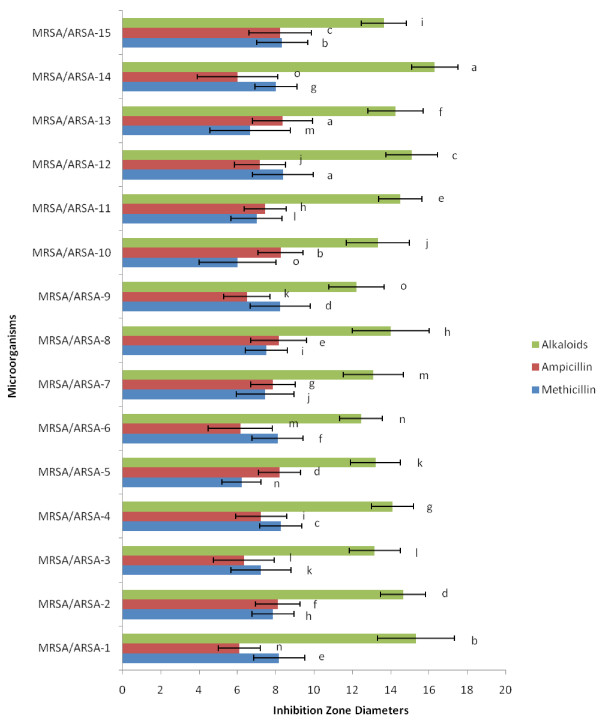
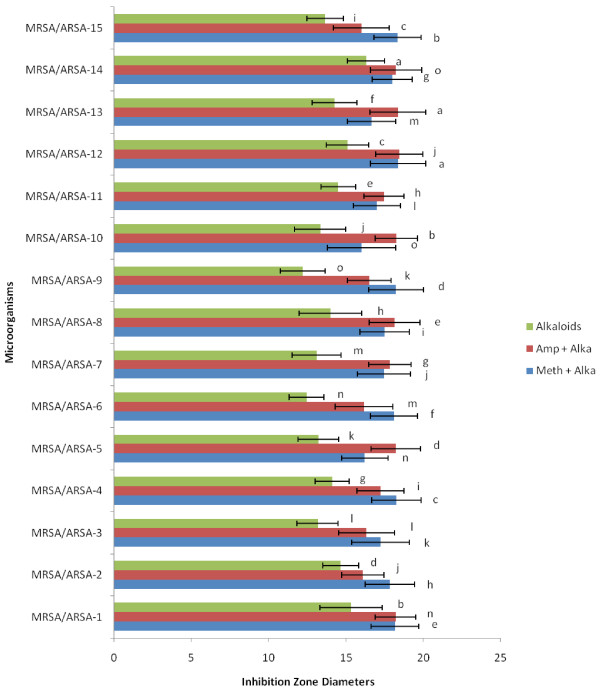
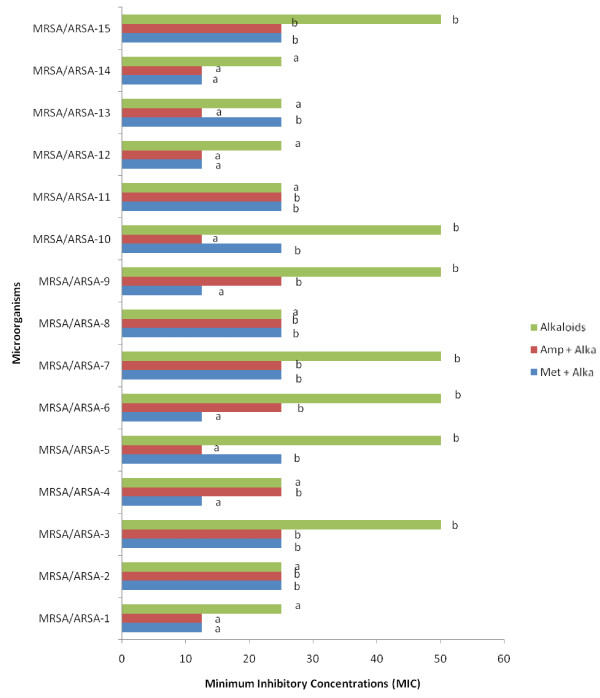
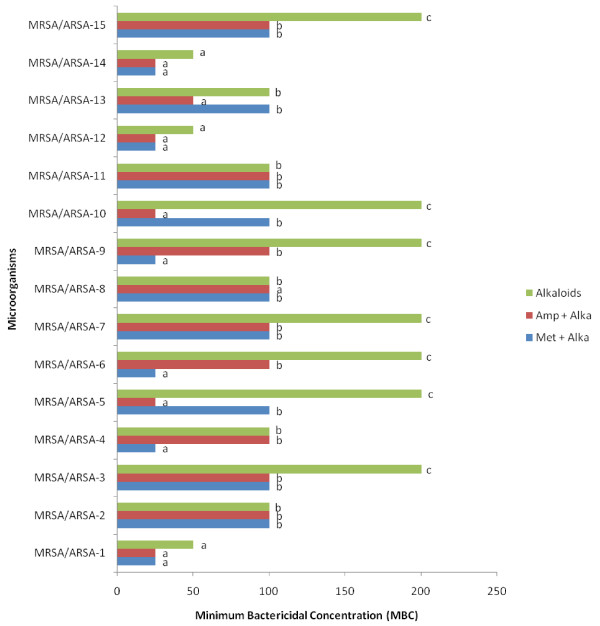
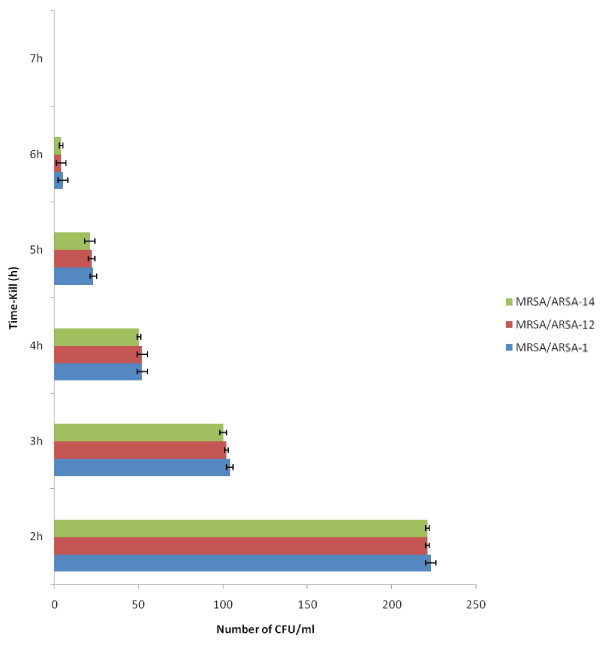
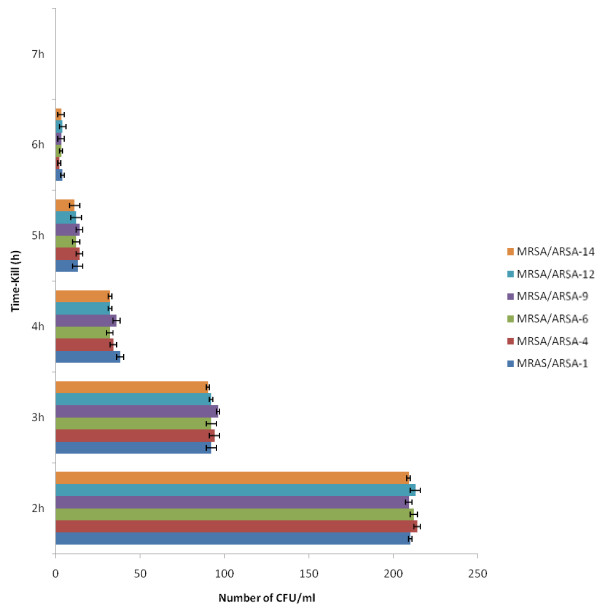
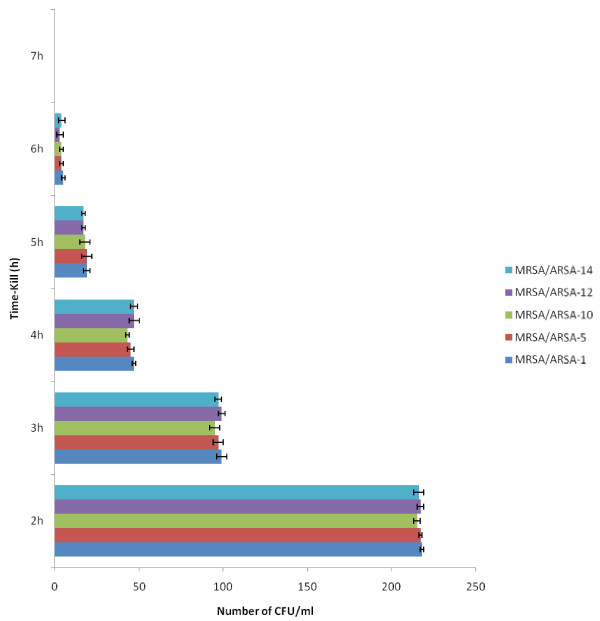
BACKGROUND: The present study reports the antibacterial capacity of alkaloid compounds in combination with Methicillin and Ampicillin-resistants bacteria isolated from clinical samples. The resistance of different bacteria strains to the current antibacterial agents, their toxicity and the cost of the treatment have led to the development of natural products against the bacteria resistant infections when applied in combination with conventional antimicrobial drugs. METHOD: The antibacterial assays in this study were performed by using inhibition zone diameters, MIC, MBC methods, the time-kill assay and the Fractional Inhibitory Concentration Index (FICI) determination. On the whole, fifteen Gram-positive bacterial strains (MRSA/ARSA) were used. Negative control was prepared using discs impregnated with 10 % DMSO in water and commercially available Methicillin and Ampicillin from Alkom Laboratories LTD were used as positive reference standards for all bacterial strains. RESULTS: We noticed that the highest activities were founded with the combination of alkaloid compounds and conventional antibiotics against all bacteria strains. Then, results showed that after 7 h exposition there was no viable microorganism in the initial inoculums. CONCLUSION: The results of this study showed that alkaloid compounds in combination with conventional antibiotics (Methicillin, Ampicillin) exhibited antimicrobial effects against microorganisms tested. These results validate the ethno-botanical use of Cienfuegosia digitata Cav. (Malvaceae) in Burkina Faso. Moreover, this study demonstrates the potential of this herbaceous as a source of antibacterial agent that could be effectively used for future health care purposes.
Overview
The claims and statistics of this paper haven’t been checked yet.
Run the check — free, no account needed. It reads the open-access text and checks the sources it cites.
Integrity signals
Registry
Cites
Statistics
Figures
Verification
Claims the paper makes
The claims and statistics of this paper haven’t been checked yet.
Run the check — free, no account needed. It reads the open-access text and checks the sources it cites.
Claims other papers make about this one
Each is checked against this paper’s own text: does it say what the citing paper says it does?
The source backs part of the claim, not all of it — or backs it for a different population, condition or comparison.
In the citing paper
“The above-mentioned advantages of this method, mainly simplicity and low cost, have contributed to its common use for the antimicrobial screening of plant extracts, essential oils and other drugs [20], [21], [22], [23].”
From Methods for in vitro evaluating antimicrobial activity: A review (2016) · cites this paper as [21]
Experimental — accuracy not yet measuredThe cited source says what the claim attributes to it.
In the citing paper
“Generally, the bactericidal effect is obtained with a lethality percentage of 90% for 6 h, which is equivalent to 99.9% of lethality for 24 h [21].”
From Methods for in vitro evaluating antimicrobial activity: A review (2016) · cites this paper as [21]
Self-check
Percentages, sums and reported differences re-computed from the paper’s own numbers.
The self-check needs the paper’s full text.
Citations
Cites
Plant Products as Antimicrobial Agents
Cowan, M. M. (1999) · Clinical Microbiology Reviews · doi:10.1128/cmr.12.4.564 · Cited by 9,043
Methicillin-resistant Staphylococcus aureus clinical strain with reduced vancomycin susceptibility
Hiramatsu, K. (1997) · Journal of Antimicrobial Chemotherapy · doi:10.1093/jac/40.1.135 · Cited by 1,984
Antibiotic assay by agar-well diffusion method
Pérez, C. (1990) · Medical Entomology and Zoology · Cited by 1,240
Eloff, J. N. (1998) · Journal of Ethnopharmacology · doi:10.1016/s0378-8741(97)00123-2 · Cited by 1,111
Synergy and other interactions in phytomedicines
WILLIAMSON, E. (2001) · Phytomedicine · doi:10.1078/0944-7113-00060 · Cited by 1,027
Extraction methods and bioautography for evaluation of medicinal plant antimicrobial activity
Nostro, A., Germanò, M. P., D’Angelo, V., Marino, A., & Cannatelli, M. A. (2000) · Letters in Applied Microbiology · doi:10.1046/j.1472-765x.2000.00731.x · Cited by 863
White, R. L., Burgess, D. S., Manduru, M., & Bosso, J. A. (1996) · Antimicrobial Agents and Chemotherapy · doi:10.1128/aac.40.8.1914 · Cited by 721
Emerging Mechanisms of Fluoroquinolone Resistance
Hooper, D. C. (2001) · Emerging infectious diseases · doi:10.3201/eid0702.010239 · Cited by 631
Factors influencing methicillin resistance in staphylococci
Berger‐Bächi, B., & Rohrer, S. (2002) · Archives of Microbiology · doi:10.1007/s00203-002-0436-0 · Cited by 299
Should we be concerned about herbal remedies
Elvin-Lewis, M. P. F. (2001) · Journal of Ethnopharmacology · doi:10.1016/s0378-8741(00)00394-9 · Cited by 294
Research works printed but not linked: 2
- 10.1016/S0378-8741(97)00123-2 · DOI · Paper page
- 10.1007/s00203-002-0436-0 · DOI
Cited by
Sorted by citations
Methods for in vitro evaluating antimicrobial activity: A review
Balouiri, M., Sadiki, M., & Ibnsouda, S. K. (2016) · Journal of Pharmaceutical Analysis · doi:10.1016/j.jpha.2015.11.005 · Cited by 8,044
Hossain, M. L., Lim, L. Y., Hammer, K. A., Hettiarachchi, D. S., & Locher, C. (2022) · Antibiotics · doi:10.3390/antibiotics11070975 · Cited by 166
Cardozo, V. F., de Oliveira, A. G., Nishio, E. K., Perugini, M. R. E., Andrade, C. G. T. J., da Silveira, W. D., Durán, N., Andrade, G., Kobayashi, R. K. T., & Nakazato, G. (2013) · Annals of Clinical Microbiology and Antimicrobials · doi:10.1186/1476-0711-12-12 · Cited by 122
Gadisa, E., Weldearegay, G. M., Desta, K., Tsegaye, G., Sityehu, H., Jote, K., & Takele, A. (2019) · BMC Complementary and Alternative Medicine · doi:10.1186/s12906-019-2429-4 · Cited by 94
dos Santos, A. F. A. B., Brotto, D. D. F., Favarin, L. R. V., Cabeza, N. A., de Andrade, G. R., Batistote, M., Cavalheiro, A. A., Neves, A., Rodrigues, D. C. M., & dos Anjos, A. (2014) · Revista Brasileira de Farmacognosia · doi:10.1016/j.bjp.2014.07.008 · Cited by 91
Diaconu, D., Antoci, V., Mangalagiu, V., Amăriucăi-Mantu, D., & Mangalagiu, I. I. (2022) · Scientific Reports · doi:10.1038/s41598-022-21435-6 · Cited by 84
Rather, L. J., Zhou, Q., Ali, A., Haque, Q. M. R., & Li, Q. (2021) · ACS Food Science & Technology · doi:10.1021/acsfoodscitech.1c00005 · Cited by 79
Luzala, M. M., Muanga, C.-J. K., Kyana, J., Safari, J. B., Zola, E. N., Vihembo, G. M., Nuapia, Y. B., Iyamba, J.-M. L., Nkanga, C. I., Krause, R. W. M., et al. (2022) · Nanomaterials · doi:10.3390/nano12111841 · Cited by 75
Verma, A. K., Ahmed, S. F., Hossain, M. S., Bhojiya, A. A., Mathur, A., Upadhyay, S. K., Srivastava, A. K., Vishvakarma, N. K., Barik, M., Rahaman, M. M., et al. (2021) · Journal of Biomolecular Structure and Dynamics · doi:10.1080/07391102.2021.1944911 · Cited by 67
Fan, Y., Pauer, A. C., Gonzales, A. A., & Fenniri, H. (2019) · International Journal of Nanomedicine · doi:10.2147/ijn.s209756 · Cited by 58
El-Demerdash, A. S., Alfaraj, R., Farid, F. A., Yassin, M. H., Saleh, A. M., & Dawwam, G. E. (2024) · Frontiers in Microbiology · doi:10.3389/fmicb.2024.1467460 · Cited by 55
Dias, F. R. F., Novais, J. S., Devillart, T. A. D. N. S., da Silva, W. A., Ferreira, M. O., Loureiro, R. D. S., Campos, V. R., Ferreira, V. F., de Souza, M. C. B. V., Castro, H. C., et al. (2018) · European Journal of Medicinal Chemistry · doi:10.1016/j.ejmech.2018.06.050 · Cited by 52
Tourabi, M., Faiz, K., Ezzouggari, R., Louasté, B., Merzouki, M., Dauelbait, M., Bourhia, M., Almaary, K. S., Siddique, F., Lyoussi, B., et al. (2025) · Bioresources and Bioprocessing · doi:10.1186/s40643-025-00859-8 · Cited by 51
Carcamo-Noriega, E. N., Sathyamoorthi, S., Banerjee, S., Gnanamani, E., Mendoza-Trujillo, M., Mata‐Espinosa, D., Hernández‐Pando, R., Veytia‐Bucheli, J. I., Possani, L. D., & Zare, R. N. (2019) · Proceedings of the National Academy of Sciences · doi:10.1073/pnas.1812334116 · Cited by 51
Kang, J., & Song, K. B. (2019) · Food Microbiology · doi:10.1016/j.fm.2019.103260 · Cited by 51
Cherian, T., Maity, D., Kumar, R. T. R., Balasubramani, G., Ragavendran, C., Yalla, S. K., Mohanraju, R., & Peijnenburg, W. J. G. M. (2022) · Nanomaterials · doi:10.3390/nano12172940 · Cited by 52
Patel, Y. S., Soni, V., Rhee, K. Y., & Helmann, J. D. (2023) · mBio · doi:10.1128/mbio.03168-22 · Cited by 49
In vitro and in vivo protocols of antimicrobial bioassay of medicinal herbal extracts: A review
Ullah, N., Parveen, A., Bano, R., Zulfiqar, I., Maryam, M., Jabeen, S., Liaqat, A., & Ahmad, S. (2016) · Asian Pacific Journal of Tropical Disease · doi:10.1016/s2222-1808(16)61106-4 · Cited by 45
Thakur, A., Pereira, G., Patel, C., Chauhan, V., Dhaked, R. K., & Sharma, A. (2020) · Journal of Molecular Structure · doi:10.1016/j.molstruc.2020.127686 · Cited by 45
Antoci, V., Oniciuc, L., Amăriucăi-Mantu, D., Moldoveanu, C. C., Mangalagiu, V., Amarandei, A. M., Lungu, C. N., Dunca, S. I., Mangalagiu, I. I., & Zbancioc, G. N. (2021) · Pharmaceuticals · doi:10.3390/ph14040335 · Cited by 46
(2024) · International Journal of Agriculture and Biosciences · doi:10.47278/journal.ijab/2024.187 · Cited by 45
Luke‐Marshall, N. R., Hansen, L. A., Shafirstein, G., & Campagnari, A. A. (2020) · mSphere · doi:10.1128/msphere.00492-20 · Cited by 42
Manosalva, L., Mutis, A., Urzúa, A., Fajardo, V., & Quiróz, A. (2016) · Molecules · doi:10.3390/molecules21010076 · Cited by 40
Ibrahim, M. K., Mattar, Z. A., Abdel-Khalek, H. H., & Azzam, Y. M. (2016) · Journal of Radiation Research and Applied Sciences · doi:10.1016/j.jrras.2016.11.002 · Cited by 39
Peptide Extract from Olivancillaria hiatula Exhibits Broad-Spectrum Antibacterial Activity
Gasu, E. N., Ahor, H. S., & Borquaye, L. S. (2018) · BioMed Research International · doi:10.1155/2018/6010572 · Cited by 39
Dark Antibacterial Activity of Rose Bengal
Nakonechny, F., Barel, M., David, A., Koretz, S., Litvak, B., Ragozin, E., Etinger, A., Livne, O., Pinhasi, Y., Gellerman, G., et al. (2019) · International Journal of Molecular Sciences · doi:10.3390/ijms20133196 · Cited by 39
Important insights from the antimicrobial activity of Calotropis procera
Amini, M. H., Ashraf, K., Salim, F., Lim, S. M., Ramasamy, K., Manshoor, N., Sultan, S., & Ahmad, W. (2021) · Arabian Journal of Chemistry · doi:10.1016/j.arabjc.2021.103181 · Cited by 39
Nanomotion Detection-Based Rapid Antibiotic Susceptibility Testing
Kasas, S., Malovichko, A., Villalba, M. I., Vela, M. E., Yantorno, O. M., & Willaert, R. (2021) · Antibiotics · doi:10.3390/antibiotics10030287 · Cited by 39
Chanda, W., Joseph, T. P., Padhiar, A. A., Guo, X., Min, L., Wang, W., Lolokote, S., Ning, A., Cao, J., Huang, M., et al. (2017) · Experimental and Therapeutic Medicine · doi:10.3892/etm.2017.5110 · Cited by 37
Deblais, L., Helmy, Y. A., Kathayat, D., Huang, H., Miller, S. A., & Rajashekara, G. (2018) · Scientific Reports · doi:10.1038/s41598-018-31249-0 · Cited by 36
Zhou, Q., Rather, L. J., Mir, S. S., Ali, A., Haque, Q. M. R., & Li, Q. (2021) · Sustainable Chemistry and Pharmacy · doi:10.1016/j.scp.2021.100585 · Cited by 35
“Attacking–Attacking” Anti-biofouling Strategy Enabled by Cellulose Nanocrystals–Silver Materials
Noronha, V. T., Jackson, J. C., Camargos, C. H. M., de Paula, A. J., de Rezende, C. A., & de Faria, A. F. (2022) · ACS Applied Bio Materials · doi:10.1021/acsabm.1c00929 · Cited by 34
Anti-Staphylococcal and cytotoxic activities of the short anti-microbial peptide PVP
Memariani, H., Memariani, M., ROBATI, R. M., Nasiri, S., Abdollahimajd, F., Baseri, Z., & Moravvej, H. (2020) · World Journal of Microbiology and Biotechnology · doi:10.1007/s11274-020-02948-6 · Cited by 31
Novais, J. S., Campos, V. R., Silva, A. C. J. A., de Souza, M. C. B. V., Ferreira, V. F., Keller, V. G. L., Ferreira, M. O., Dias, F. R. F., Vitorino, M. I., Sathler, P. C., et al. (2017) · RSC Advances · doi:10.1039/c7ra00825b · Cited by 31
Karamchandani, B. M., Maurya, P. A., Dalvi, S. G., Waghmode, S., Sharma, D., Rahman, P. K. S. M., Ghormade, V., & Satpute, S. (2022) · Frontiers in Bioengineering and Biotechnology · doi:10.3389/fbioe.2022.917105 · Cited by 31
El-Gohary, F. A., Abdel‐Hafez, L. J. M., Zakaria, A. I., Shata, R. R., Tahoun, A. A. E., El‐Mleeh, A., Elfadl, E. A. A., & Elmahallawy, E. K. (2020) · Infection and Drug Resistance · doi:10.2147/idr.s271261 · Cited by 30
Sultana, R., Ali, A., Twala, C., Mehandi, R., Rana, M., Yameen, D., Abid, M., & Uddin, R. (2023) · Journal of Biomolecular Structure and Dynamics · doi:10.1080/07391102.2023.2179541 · Cited by 29
Evaluation of the antimicrobial activity and safety of Rhus vulgaris (Anacardiaceae) extracts
Mutuku, A. M., Mwamburi, L. A., Keter, L., Ondicho, J. M., Korir, R. K., Kuria, J., Chemweno, T., & Mwitari, P. (2020) · BMC Complementary Medicine and Therapies · doi:10.1186/s12906-020-03063-7 · Cited by 28
Memariani, H., Memariani, M., & Pourmand, M. R. (2018) · Microbial Pathogenesis · doi:10.1016/j.micpath.2018.04.008 · Cited by 28
Ilizirov, Y., Formanovsky, A. A., Mikhura, I. V., Paitan, Y., Nakonechny, F., & Nisnevitch, M. (2018) · Molecules · doi:10.3390/molecules23123152 · Cited by 27
Foletto, V. S., Serafin, M. B., Bottega, A., da Rosa, T. F., Machado, C. D. S., Coelho, S. S., & Hörner, R. (2020) · Medicinal Chemistry Research · doi:10.1007/s00044-020-02507-6 · Cited by 27
Biobased polymer resources and essential oils: a green combination for antibacterial applications
Elian, C., Andaloussi, S. A., Moilleron, R., Decousser, J., Boyer, C. A., & Versace, D. (2022) · Journal of Materials Chemistry B · doi:10.1039/d2tb01544g · Cited by 26
Devasvaran, K., Alallam, B., Yunus, M. A., Dewi, F. R. P., Kamal, N. N. S. N. M., & Lim, V. (2023) · Journal of Drug Delivery Science and Technology · doi:10.1016/j.jddst.2023.104688 · Cited by 25
Maekawa, L. E., Rossoni, R. D., Barbosa, J. O., Jorge, A. O. C., Junqueira, J. C., & Valera, M. C. (2015) · Brazilian Dental Journal · doi:10.1590/0103-6440201300199 · Cited by 25
Foletto, V. S., da Rosa, T. F., Serafin, M. B., Bottega, A., Franco, L. N., de Paula, B. R., & Hörner, R. (2021) · World Journal of Microbiology and Biotechnology · doi:10.1007/s11274-021-03016-3 · Cited by 22
Zin, N. M., Al-shaibani, M. M., Jalil, J., Sidik, N. M., & Edrada‐Ebel, R. (2016) · Drug Design Development and Therapy · doi:10.2147/dddt.s101212 · Cited by 22
Paswan, S., Jaiswal, N., Urvashi, Nath, A., Kumar, M., Mishra, D., & Yadav, N. (2026) · RSC Advances · doi:10.1039/d5ra08181e · Cited by 19
Handayani, D., Aminah, I., Putra, P. P., Putra, A. E., Аrbаin, D., Satriawan, H., Efdi, M., Çeli̇k, İ., & Tallei, T. E. (2023) · Saudi Pharmaceutical Journal · doi:10.1016/j.jsps.2023.101744 · Cited by 19
Antimicrobial activity of Persicaria pensylvanica extract against Staphylococcus aureus
Abdi, R. D., & Dego, O. K. (2019) · European Journal of Integrative Medicine · doi:10.1016/j.eujim.2019.05.007 · Cited by 19
Kim, C., Kim, J.-G., & Kim, K.-Y. (2023) · Journal of Fungi · doi:10.3390/jof9010098 · Cited by 18
da Rosa, T. F., Machado, C. D. S., Serafin, M. B., Bottega, A., Coelho, S. S., Foletto, V. S., Rampelotto, R. F., Lorenzoni, V. V., Mainardi, A., & Hörner, R. (2021) · Canadian Journal of Microbiology · doi:10.1139/cjm-2020-0546 · Cited by 18
Donkor, A.-M., Ahenkorah, B., Wallah, T. A., & Yakubu, A. (2023) · Heliyon · doi:10.1016/j.heliyon.2023.e19316 · Cited by 17
Lee, C., Woo, H., Kang, J., & Song, K. B. (2021) · Food and Bioprocess Technology · doi:10.1007/s11947-021-02608-z · Cited by 17
Yousuf, M., Ali, A., Κhan, P., Anjum, F., Elasbali, A. M., Islam, A., Yadav, D. K., Shafie, A., Haque, Q. M. R., & Hassan, M. I. (2022) · Microorganisms · doi:10.3390/microorganisms10030597 · Cited by 17
Systematic review of disulfiram as an antibacterial agent: what is the evidence?
Meneguello, J. E., Murase, L. S., de Souza, J. V. P., de Oliveira, C. G., Ghiraldi‐Lopes, L. D., Teixeira, J. J. V., Scodro, R. B. D. L., Caleffi-Ferracioli, K. R., Siqueira, V. L. D., Campanerut‐Sá, P. A. Z., et al. (2022) · International Journal of Antimicrobial Agents · doi:10.1016/j.ijantimicag.2022.106578 · Cited by 17
Susceptibility of microorganism to selected medicinal plants in Bangladesh
Rana, S. M. M., Billah, M. M., Hossain, M. S., Saifuddin, A. K. M., Islam, S., Banik, S., Naim, Z., & Raju, G. S. (2014) · Asian Pacific Journal of Tropical Biomedicine · doi:10.12980/apjtb.4.201414b362 · Cited by 17
Abo-Elghiet, F., Rushdi, A., Ibrahim, M. H., Mahmoud, S. H., Rabeh, M. A., Alshehri, S. A., & Menofy, N. G. E. (2023) · Molecules · doi:10.3390/molecules28104184 · Cited by 16
Badger-Emeka, L. I., Emeka, P. M., & Ibrahim, H.-I. M. (2021) · Applied Sciences · doi:10.3390/app11073206 · Cited by 16
Principal Metabolites in Extracts of Different Plants Responsible for Antibacterial Effects
Félix, G., Soto-Robles, C. A., Nava, E., & Lugo‐Medina, E. (2021) · Chemical Research in Toxicology · doi:10.1021/acs.chemrestox.1c00161 · Cited by 17
Liu, H., Liu, X., Cao, Y.-Q., Liu, M., Han, M., & Ji, S. (2022) · Chinese Journal of Polymer Science · doi:10.1007/s10118-022-2859-1 · Cited by 15
Cheypratub, P., Leeanansaksiri, W., & Eumkeb, G. (2018) · Evidence-based Complementary and Alternative Medicine · doi:10.1155/2018/3438453 · Cited by 15
Serafin, M. B., Bottega, A., Foletto, V. S., da Rosa, T. F., Rampelotto, R. F., Carvalho, F. A., & Hörner, R. (2020) · Brazilian Journal of Pharmaceutical Sciences · doi:10.1590/s2175-97902019000418089 · Cited by 15
Zai, M. J. Y., Cock, I. E., & Cheesman, M. J. (2025) · International Journal of Molecular Sciences · doi:10.3390/ijms26125550 · Cited by 14
Toader, G., Diacon, A., Rotariu, T., Alexandru, M., Rusen, E., Ginghină, R. E., Alexe, F., Oncioiu, R. E., Zorilă, F. L., Podaru, A. I., et al. (2021) · Polymers · doi:10.3390/polym13223999 · Cited by 14
Murshed, M., Al‐Quraishy, S., & Qasem, M. A. (2022) · Open Chemistry · doi:10.1515/chem-2022-0208 · Cited by 14
Li, X., Cai, Y., Xia, Q., Liao, Y., & Qin, R. (2023) · Frontiers in Pharmacology · doi:10.3389/fphar.2023.1118793 · Cited by 13
Unlocking the Potential of Brazilian Plant Terpenes to Combat Antimicrobial Resistance
Bardají, D. K. R., Silva, N. B. S., Miranda, R. R., Martins, C. H. G., Savka, M. A., & Hudson, A. O. (2025) · ACS Bio & Med Chem Au · doi:10.1021/acsbiomedchemau.5c00069 · Cited by 13
Machado, C. D. S., da Rosa, T. F., Serafin, M. B., Bottega, A., Coelho, S. S., Foletto, V. S., Rampelotto, R. F., Lorenzoni, V. V., Marion, S., & Hörner, R. (2019) · Medicinal Chemistry Research · doi:10.1007/s00044-019-02470-x · Cited by 13
Ginghină, R. E., Toader, G., Purica, M., Bratu, A. E., Lăzăroaie, C., Țigănescu, T.-V., Oncioiu, R. E., Iorga, G.-O., Zorilă, F. L., Constantin, M., et al. (2022) · Pharmaceuticals · doi:10.3390/ph15010097 · Cited by 13
Antibacterial Activity of Rose Bengal Entrapped in Organically Modified Silica Matrices
Gurianov, Y., Meistelman, M., Albo, Y., Nisnevitch, M., & Nakonechny, F. (2022) · International Journal of Molecular Sciences · doi:10.3390/ijms23073716 · Cited by 13
Rampelotto, R. F., Lorenzoni, V. V., Silva, D. D. C., Moraes, G. A. D., Serafin, M. B., Tizotti, M. K., Coelho, S. S., Zambiazi, P. J., Hörner, M., & Hörner, R. (2018) · Brazilian Journal of Pharmaceutical Sciences · doi:10.1590/s2175-97902018000217369 · Cited by 13
Khodavandi, P., Hosseini, A., Khodavandi, A., Alizadeh, F., Azizi, A., & Gerami, M. (2023) · Photodiagnosis and Photodynamic Therapy · doi:10.1016/j.pdpdt.2023.103822 · Cited by 12
Salpadoru, T., Pinks, K. E., Lieberman, J. A., Cotton, K., Wozniak, K. L., Gerasimchuk, N., & Patrauchan, M. A. (2024) · Microbiology Spectrum · doi:10.1128/spectrum.04234-23 · Cited by 12
Sow, I., Gelbcke, M., Meyer, F., Vandeput, M., Marloye, M., Basov, S., Bael, M. J. V., Berger, G., Robeyns, K., Hermans, S., et al. (2023) · Journal of Coordination Chemistry · doi:10.1080/00958972.2023.2166407 · Cited by 12
Xia, F., Tao, X., Wang, H., Shui, J., Min, C., Xia, Y., Li, J., Tang, M., Liu, Z., Hu, Y., et al. (2023) · International Journal of Nanomedicine · doi:10.2147/ijn.s410314 · Cited by 12
Polymer-Based Antimicrobial Coatings as Potential Biomaterials
Singh, A., Tiwari, A. K., Bajpai, J., & Bajpai, A. K. (2017) · Elsevier eBooks · doi:10.1016/b978-0-12-811982-2.00003-2 · Cited by 12
Cerdeira, C. D., da Silva, J. J., Netto, M. F. R., Boriollo, M. F. G., Moraes, G. O. I., Santos, G. B., dos Reis, L. F. C., & Brigagão, M. R. P. L. (2020) · Revista Colombiana de Ciencias Químico Farmacéuticas · doi:10.15446/rcciquifa.v49n2.89704 · Cited by 11
Akakpo, A. Y., Kaboré, D., Somda, M. K., Sawadogo, A., Mihin, H. B., Semdé, Z., & OUATTARA, A. S. (2022) · Scientific African · doi:10.1016/j.sciaf.2022.e01497 · Cited by 10
Farhan, N., Al‐Maleki, A. R., Ataei, S., Sarih, N. M., & Yahya, R. B. (2023) · Bioorganic Chemistry · doi:10.1016/j.bioorg.2023.106511 · Cited by 10
Sattari-Maraji, A., Nikchi, M., Shahmiri, M., Ahadi, E. M., Firoozpour, L., Moazeni, E., Jabalameli, F., Pourmand, M. R., & Kharrazi, S. (2024) · Journal of Drug Delivery Science and Technology · doi:10.1016/j.jddst.2024.106218 · Cited by 10
Antibacterial Evaluation of Ethnomedicinal Plants Used Against Diarrhea in Niger, Western Africa
Manzo, L. M., Idrissa, M., & Ikhiri, K. (2017) · International Journal of Enteric Pathogens · doi:10.15171/ijep.2017.13 · Cited by 10
Jamwal, V., Palmo, T., Sharma, M., Patel, S. K., Moorthy, N. S. H. N., Karthikeyan, C., & Singh, K. (2026) · Bioorganic Chemistry · doi:10.1016/j.bioorg.2026.109676 · Cited by 8
Anti-virulence strategy of diaryl chalcogenide compounds against Candida albicans infection
Song, S., Zhao, S., Sun, X., Meng, L., Wang, Z., Tan, H., Liu, J., Zhang, M., & Deng, Y. (2023) · Virulence · doi:10.1080/21505594.2023.2265012 · Cited by 8
Tudose, M., Anghel, E. M., Hristea, E., Voicescu, M., Şomǎcescu, S., Culita, D. C., Musuc, A. M., Dumitraşcu, F., Hanganu, A., Kuncser, A. C., et al. (2021) · Materials Science and Engineering C · doi:10.1016/j.msec.2021.112028 · Cited by 8
Amrani, S. E., Lairini, S., zoubi, Y. E., Evrendilek, G. A., Fadil, M., Hicham, K., Bouslamti, R., & Lalami, A. E. O. (2021) · Vegetos · doi:10.1007/s42535-021-00276-0 · Cited by 8
Tsukuda, Y., Mizuhara, N., Usuki, Y., Yamaguchi, Y., Ogita, A., Tanaka, T., & Fujita, K. (2021) · Letters in Applied Microbiology · doi:10.1111/lam.13613 · Cited by 8
Widodo, A. H. B., Huang, H., Dewi, N. R., Chen, B.-Y., Wu, Y., Hu, Y., & Nan, F. (2024) · Animals · doi:10.3390/ani14202990 · Cited by 7
Handayani, L., Faridah, D. N., & Kusumaningrum, H. D. (2014) · Journal of Food Protection · doi:10.4315/0362-028x.jfp-13-483 · Cited by 7
Samoilova, N. A., Krayukhina, M. A., Попов, Д. А., & Anuchina, N. (2019) · Monatshefte für Chemie - Chemical Monthly · doi:10.1007/s00706-019-02523-2 · Cited by 7
El-Sheshtawy, H. S., Hefni, H. H. H., Aboutaleb, W. A., Elaasser, M. M., Mady, M. F., & El-Shiekh, H. H. (2021) · Iranian Journal of Science and Technology Transactions A Science · doi:10.1007/s40995-021-01147-8 · Cited by 7
Lou, S., Jin, W., He, M., Dai, C., Zhu, Z., Li, P., Han, J., Chen, X., Wu, M., Fan, X., et al. (2025) · International Journal of Medical Microbiology · doi:10.1016/j.ijmm.2025.151696 · Cited by 6
da Rosa, T. F., Serafin, M. B., Foletto, V. S., Franco, L. N., de Paula, B. R., Fuchs, L. B., Calegari, L. F., & Hörner, R. (2023) · Current Microbiology · doi:10.1007/s00284-023-03242-y · Cited by 6
Chen, G., Liu, X., Liu, H., Liang, S., Sun, S., Han, M., & Ji, S. (2024) · ACS Applied Bio Materials · doi:10.1021/acsabm.4c01056 · Cited by 6
Mayma, N., Duraisamy, S., & Ravi, K. (2023) · APOS Trends in Orthodontics · doi:10.25259/apos_110_2022 · Cited by 6
Leite, T. O. C., Novais, J. S., Carvalho, B. L. C. D., Ferreira, V. F., Miceli, L. A., Fraga, L., Abrahim-Vieira, B. D. A., Rodrigues, C. R., Figueiredo, A. M. S., Castro, H. C., et al. (2019) · Current Topics in Medicinal Chemistry · doi:10.2174/1568026620666191223110518 · Cited by 6
Omeiri, M., Meouche, W., Alawady, Z., Yusef, H., & Rahman, S. A. (2025) · Scientific Reports · doi:10.1038/s41598-025-19992-7 · Cited by 5
Yamano, S., Tsukuda, Y., Mizuhara, N., Yamaguchi, Y., Ogita, A., & Fujita, K. (2023) · Letters in Applied Microbiology · doi:10.1093/lambio/ovad040 · Cited by 5
Ju, X., Zhu, M., Han, J., Lu, Z., Zhao, H., & Bie, X. (2018) · Microbial Drug Resistance · doi:10.1089/mdr.2017.0367 · Cited by 5
Elfarnini, M., Abdel-Hamid, A. A., Achir, M., Jamaleddine, J., & Blaghen, M. (2018) · GSC Biological and Pharmaceutical Sciences · doi:10.30574/gscbps.2018.3.1.0024 · Cited by 5
Reticulated mesoporous TiO2 scaffold for self-cleaning surfaces
Beşleagă, C., Tomulescu, A. G., Zgura, I., Stepanova, A., Galca, A. C., Laafar, S., Zorilă, F. L., Alexandru, M., Pintilie, I., & Iliescu, M. (2024) · Ceramics International · doi:10.1016/j.ceramint.2024.08.072 · Cited by 5
Metadata
- Authors
- Konaté, K., Mavoungou, J., Lepengué, A., Aworet-Samseny, R. R., Hilou, A., Souza, A., Dicko, M. H., & M’Batchi, B.
- Affiliations
- Université Joseph Ki-Zerbo (BF)
- Université des Sciences et Techniques de Masuku (GA)
- Corresponding author
- Konaté, Kiessoun
- Venue
- Annals of Clinical Microbiology and Antimicrobials
- Published
- 2012
- Volume
- 11
- Issue
- 1
- Pages
- 18
- ISSN
- 1476-0711 (ISSN-L)
- PMC
- PMC3464800
- OpenAlex
- W2142832600
- Cited by
- 155
- References
- 29
- Citations by year
- 2026: 11 · 2025: 18 · 2024: 16 · 2023: 21 · 2022: 17 · 2021: 20 · 2020: 12 · 2019: 10 · 2018: 10 · 2017: 4 · 2016: 5 · 2015: 2 · 2014: 5 · 2013: 4
- FWCI
- 5.41
- Type
- journal article
- Language
- en
- Open access
- gold
- doi.org
- Licence
- cc-by
- Locations
- Annals of Clinical Microbiology and Antimicrobials (publishedVersion, cc-by)
- Europe PMC (PubMed Central) (publishedVersion, cc-by)
- PubMed Central (publishedVersion, cc-by)
- PubMed (publishedVersion)
- DOAJ (DOAJ: Directory of Open Access Journals) (submittedVersion, cc-by-sa)
- Topics
- Life Sciences › Agricultural and Biological Sciences › Food Science › Essential Oils and Antimicrobial Activity
- Health Sciences › Medicine › Infectious Diseases › Antimicrobial Resistance in Staphylococcus
- Health Sciences › Medicine › Microbiology (medical) › Antibiotic Resistance in Bacteria
- Keywords
- Staphylococcus aureus, methicillin resistance, ampicillin resistance, beta-lactamase, fractional inhibitory concentration index, combination antibiotic therapy, Malvaceae, antibacterial activity, time-kill assay, ethnobotany, Burkina Faso
- MeSH terms
- Alkaloids, Ampicillin, Ampicillin Resistance, Anti-Bacterial Agents, Bacterial Proteins, beta-Lactamases, Biological Assay, Drug Synergism, Methicillin, Microbial Sensitivity Tests, Plant Extracts, Methicillin Resistance, Malvaceae, Methicillin-Resistant Staphylococcus aureus, beta-Lactamase Inhibitors
About these checks
Registry, retraction, Cites and statistics results are computed, not judged, with one exception: a printed reference that no index lists is read once by a model before it counts as a citation error. Claims are extracted by a model and kept only when their quote appears verbatim in the text; each cited source is then checked, with a model’s help, for whether it says what the claim relies on. Those verdicts can be wrong — read the claim’s quote and the cited source before relying on one.
Statistics and arithmetic are recomputed, not judged.
Confidence bands are shown only for fields calibrated on our annotated test set. None is calibrated yet, so no band is shown.
What counts as a claim ›How we measure confidence ›How we check this ›
Are you an author, or do you see a problem with this page? Request a review
