

Combined use of anti-ErbB monoclonal antibodies and erlotinib enhances antibody-dependent cellular cytotoxicity of wild-type erlotinib-sensitive NSCLC cell lines
Open accessThe DOI matches its Crossref record; 36 of the 36 references it cites were found in a registry or an index.
Abstract
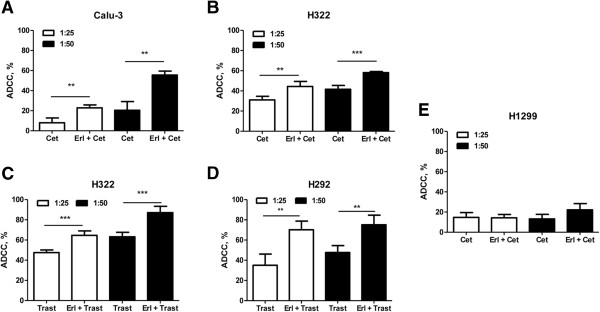
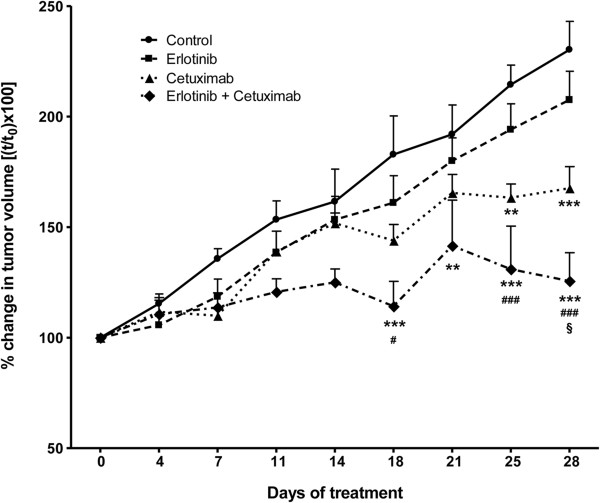
BACKGROUND: The epidermal growth factor receptor (EGFR) is an established target for anti-cancer treatment in different tumour types. Two different strategies have been explored to inhibit this pivotal molecule in epithelial cancer development: small molecules TKIs and monoclonal antibodies. ErbB/HER-targeting by monoclonal antibodies such as cetuximab and trastuzumab or tyrosine-kinase inhibitors as gefitinib or erlotinib has been proven effective in the treatment of advanced NSCLC. RESULTS: In this study we explored the potential of combining either erlotinib with cetuximab or trastuzumab to improve the efficacy of EGFR targeted therapy in EGFR wild-type NSCLC cell lines. Erlotinib treatment was observed to increase EGFR and/or HER2 expression at the plasma membrane level only in NSCLC cell lines sensitive to the drug inducing protein stabilization. The combined treatment had marginal effect on cell proliferation but markedly increased antibody-dependent, NK mediated, cytotoxicity in vitro. Moreover, in the Calu-3 xenograft model, the combination significantly inhibited tumour growth when compared with erlotinib and cetuximab alone. CONCLUSION: Our results indicate that erlotinib increases surface expression of EGFR and/or HER2 only in EGFR-TKI sensitive NSCLC cell lines and, in turns, leads to increased susceptibility to ADCC both in vitro and in a xenograft models. The combination of erlotinib with monoclonal antibodies represents a potential strategy to improve the treatment of wild-type EGFR NSCLC patients sensitive to erlotinib.
Overview
The claims and statistics of this paper haven’t been checked yet.
Free: it reads the open-access text and checks the first 5 claims that cite a source we can check. Create a free account to check every claim.
Integrity signals
Registry
Cites
Statistics
Figures
Verification
Claims the paper makes
The claims and statistics of this paper haven’t been checked yet.
Free: it reads the open-access text and checks the first 5 claims that cite a source we can check. Create a free account to check every claim.
Claims other papers make about this one
Each is checked against this paper’s own text: does it say what the citing paper says it does?
The source backs part of the claim, not all of it — or backs it for a different population, condition or comparison.
In the citing paper
“induction of NK-cell-mediated ADCC of ovarian cancer and NSCLC cells”
From Immunomodulation by targeted anticancer agents (2021) · cites this paper as Cavazzoni et al., 2012
Experimental — accuracy not yet measuredIn the citing paper
“Not only EGFR-specific mAbs (Roberti et al., 2011) but also EGFR-targeting TKIs such as erlotinib (in the presence of a tumor-targeting mAb) (Cavazzoni et al., 2012; Mallmann-Gottschalk et al., 2019) promote ADCC by NK cells, which, in the case of TKIs, originates from the upregulation of the mAb target (e.g., EGFR, HER2) by malignant cells (Cavazzoni et al., 2012; Mallmann-Gottschalk et al., 2019”
From Immunomodulation by targeted anticancer agents (2021) · cites this paper as Cavazzoni et al., 2012
Self-check
Percentages, sums and reported differences re-computed from the paper’s own numbers.
The self-check needs the paper’s full text.
Citations
Cites
Erlotinib in Previously Treated Non–Small-Cell Lung Cancer
Shepherd, F. A., Rodrigues Pereira, J., Ciuleanu, T., Tan, E. H., Hirsh, V., Thongprasert, S., Campos, D., Maoleekoonpiroj, S., Smylie, M., Martins, R., et al. (2005) · New England Journal of Medicine · doi:10.1056/nejmoa050753 · Cited by 5,419 · cited 2×
“Although mutations in EGFR are useful predictors for the activity of EGFR-TKI, they cannot be used as the only criterion to determine who should receive antiEGFR therapy and it is becoming increasingly clear that even patients with EGFR wild-type can benefit from EGFR-TKI [5,7,8].”
BackgroundMET Amplification Leads to Gefitinib Resistance in Lung Cancer by Activating ERBB3 Signaling
Engelman, J. A., Zejnullahu, K., Mitsudomi, T., Song, Y., Hyland, C., Park, J. O., Lindeman, N., Gale, C.-M., Zhao, X., Christensen, J., et al. (2007) · Science · doi:10.1126/science.1141478 · Cited by 4,496 · cited 1×
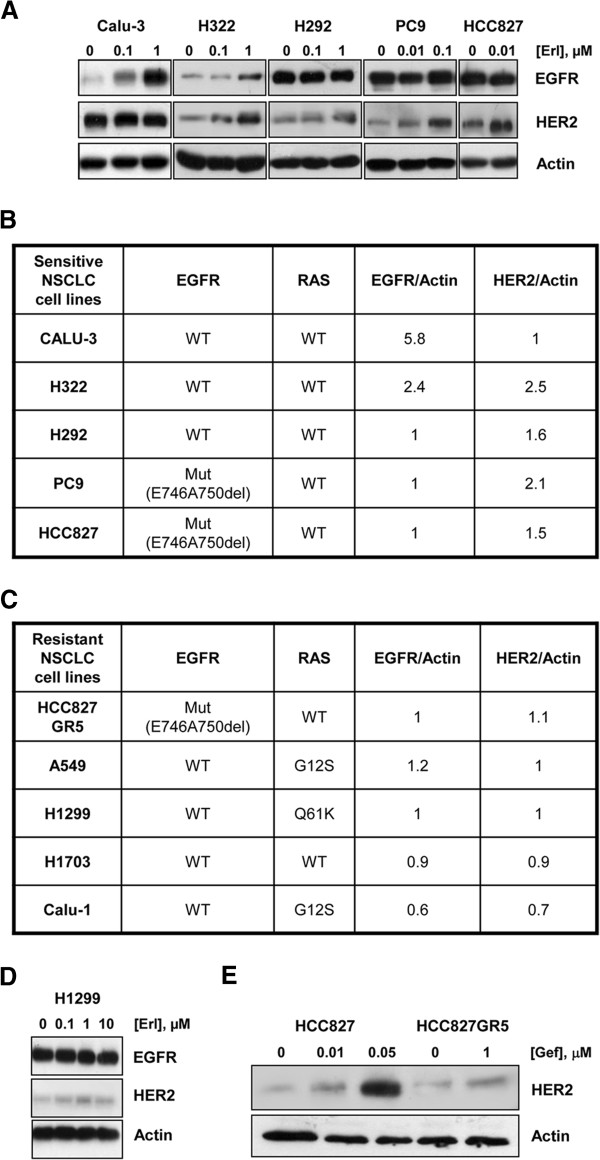
“Firstly, we evaluated the effect of erlotinib on total EGFR and HER2 protein levels in sensitive NSCLC cell lines (Calu-3, H322 and H292 cell lines carrying wild-type EGFR; PC9 and HCC827 carrying EGFR E746-A750del mutation) and in resistant cell lines (A549, H1299, H1703 and Calu-1 intrinsically resistant carrying wi…”
BackgroundEpidermal growth factor receptor (EGFR) signaling in cancer
Normanno, N., De Luca, A., Bianco, C., Strizzi, L., Mancino, M., Maiello, M. R., Carotenuto, A., De Feo, G., Caponigro, F., & Salomon, D. S. (2006) · Gene · doi:10.1016/j.gene.2005.10.018 · Cited by 2,038 · cited 1×
“and differentiation [2].”
Hirsch, F. R., Varella-Garcia, M., Bunn, P. A., Di Maria, M. V., Veve, R., Bremnes, R. M., Barón, A. E., Zeng, C., & Franklin, W. A. (2003) · Journal of Clinical Oncology · doi:10.1200/jco.2003.11.069 · Cited by 1,477 · cited 1×
“non-small cell lung cancer (NSCLC) patients and their overexpression has been frequently correlated with a poor prognosis [3,4].”
BackgroundPirker, R., Pereira, J. R., Szczesna, A., von Pawel, J., Krzakowski, M., Ramlau, R., Vynnychenko, I., Park, K., Yu, C.-T., Ganul, V., et al. (2009) · The Lancet · doi:10.1016/s0140-6736(09)60569-9 · Cited by 1,351 · cited 1×
“Two randomized phase III trials in NSCLC patients, evaluating cetuximab in addition to first-line chemotherapy, showed a small benefit in overall survival for the experimental treatment, which was considered insufficient by the EMA for marketing approval [10,11].”
BackgroundStatus of Epidermal Growth Factor Receptor Antagonists in the Biology and Treatment of Cancer
Mendelsohn, J., & Baselga, J. (2003) · Journal of Clinical Oncology · doi:10.1200/jco.2003.01.504 · Cited by 1,255 · cited 1×
“Cetuximab is a chimeric IgG1 monoclonal antibody (mAb) that blocks ligand binding to EGFR, leading to a decrease in receptor dimerization, autophosphorylation, and activation of signaling pathways [9].”
BackgroundCappuzzo, F., Ciuleanu, T., Stelmakh, L., Cicenas, S., Szczésna, A., Juhász, E., Esteban, E., Molinier, O., Brugger, W., Melezínek, I., et al. (2010) · The Lancet Oncology · doi:10.1016/s1470-2045(10)70112-1 · Cited by 1,186 · cited 1×
“Although mutations in EGFR are useful predictors for the activity of EGFR-TKI, they cannot be used as the only criterion to determine who should receive antiEGFR therapy and it is becoming increasingly clear that even patients with EGFR wild-type can benefit from EGFR-TKI [5,7,8].”
BackgroundLigand-Induced, Receptor-Mediated Dimerization and Activation of EGF Receptor
Schlessinger, J. (2002) · Cell · doi:10.1016/s0092-8674(02)00966-2 · Cited by 993 · cited 1×
“The ErbB receptors share a similar protein structure, consisting of an extracellular ligand binding domain, a single transmembrane domain and an intracellular C-terminal domain with tyrosine kinase activity [1].”
BackgroundEngelman, J. A., & Jänne, P. A. (2008) · Clinical Cancer Research · doi:10.1158/1078-0432.ccr-07-2248 · Cited by 703 · cited 1×
“recognized mechanism of resistance against reversible EGFR-TKIs [29].”
BackgroundLey, R., Balmanno, K., Hadfield, K., Weston, C., & Cook, S. J. (2003) · Journal of Biological Chemistry · doi:10.1074/jbc.m301010200 · Cited by 608
Pirker, R., Pereira, J. R., von Pawel, J., Krzakowski, M., Ramlau, R., Park, K., de Marinis, F., Eberhardt, W. E., Paz-Ares, L., Störkel, S., et al. (2012) · The Lancet Oncology · doi:10.1016/s1470-2045(11)70318-7 · Cited by 576 · cited 2×
“However, a subgroup analysis of the FLEX phase III trial recently demonstrated a larger survival benefit from the experimental treatment in patients with high immunohistochemical EGFR expression [12].”
BackgroundDouillard, J.-Y., Shepherd, F. A., Hirsh, V., Mok, T., Socinski, M. A., Gervais, R., Liao, M.-L., Bischoff, H., Reck, M., Sellers, M. V., et al. (2010) · Journal of Clinical Oncology · doi:10.1200/jco.2009.24.3030 · Cited by 492 · cited 1×
“Although mutations in EGFR are useful predictors for the activity of EGFR-TKI, they cannot be used as the only criterion to determine who should receive antiEGFR therapy and it is becoming increasingly clear that even patients with EGFR wild-type can benefit from EGFR-TKI [5,7,8].”
BackgroundLynch, T. J., Patel, T., Dreisbach, L., McCleod, M., Heim, W. J., Hermann, R. C., Paschold, E., Iannotti, N. O., Dakhil, S., Gorton, S., et al. (2010) · Journal of Clinical Oncology · doi:10.1200/jco.2009.21.9618 · Cited by 447 · cited 1×
“Two randomized phase III trials in NSCLC patients, evaluating cetuximab in addition to first-line chemotherapy, showed a small benefit in overall survival for the experimental treatment, which was considered insufficient by the EMA for marketing approval [10,11].”
BackgroundScaltriti, M., Verma, C., Guzman, M., Jimenez, J., Parra, J. L., Pedersen, K., Smith, D. J., Landolfi, S., Ramon y Cajal, S., Arribas, J., et al. (2009) · Oncogene · doi:10.1038/onc.2008.432 · Cited by 439 · cited 12×
“Moreover, unlike EGFR-TKIs, cetuximab can induce antibody dependent cellular cytotoxicity (ADCC) activity, an important immunologic antitumour effect.”
BackgroundInfluentialTreatment of Non–Small-Cell Lung Cancer with Erlotinib or Gefitinib
Cataldo, V. D., Gibbons, D. L., Pérez-Soler, R., & Quintás-Cardama, A. (2011) · New England Journal of Medicine · doi:10.1056/nejmct0807960 · Cited by 418 · cited 1×
“Gefitinib has been registered for the therapy of advanced NSCLC harbouring activating EGFR mutations in the tyrosine kinase domain, the most frequent being L858R in exon 21 and Del (746–750) in exon 19 [6].”
BackgroundGatzemeier, U., Groth, G., Butts, C., Van Zandwijk, N., Shepherd, F., Ardizzoni, A., Barton, C., Ghahramani, P., & Hirsh, V. (2004) · Annals of Oncology · doi:10.1093/annonc/mdh031 · Cited by 388 · cited 1×
“These trials have not yet produced any convincing evidence of an improved antitumour activity by adding trastuzumab to standard chemotherapy in NSCLC [13,14].”
BackgroundSelf-citationRegales, L., Gong, Y., Shen, R., de Stanchina, E., Vivanco, I., Goel, A., Koutcher, J. A., Spassova, M., Ouerfelli, O., Mellinghoff, I. K., et al. (2009) · Journal of Clinical Investigation · doi:10.1172/jci38746 · Cited by 368 · cited 1×
“Furthermore, the association of cetuximab with afatinib has been shown to be effective to overcome T790M-mediated drug resistance [22].”
BackgroundDual-Agent Molecular Targeting of the Epidermal Growth Factor Receptor (EGFR)
Huang, S., Armstrong, E. A., Benavente, S., Chinnaiyan, P., & Harari, P. M. (2004) · Cancer Research · doi:10.1158/0008-5472.can-04-0562 · Cited by 366 · cited 2×
“In EGFR wild-type H292 and A549 NSCLC cell lines, the combination of either gefitinib or erlotinib with cetuximab was reported to enhance growth inhibition in comparison to single treatment, particularly in the H292 gefitinib sensitive cell line [17].”
BackgroundResultKimura, H., Sakai, K., Arao, T., Shimoyama, T., Tamura, T., & Nishio, K. (2007) · Cancer Science · doi:10.1111/j.1349-7006.2007.00510.x · Cited by 277
Matar, P., Rojo, F., Cassia, R., Moreno-Bueno, G., Di Cosimo, S., Tabernero, J., Guzmán, M., Rodriguez, S., Arribas, J., Palacios, J., et al. (2004) · Clinical Cancer Research · doi:10.1158/1078-0432.ccr-04-0870 · Cited by 277 · cited 2×
“The efficacy of the association between an EGFR/ HER2 mAbs with TKIs has been documented in preclinical studies in several cell lines originating from different tumour types [15].”
BackgroundLanger, C. J., Stephenson, P., Thor, A., Vangel, M., & Johnson, D. H. (2004) · Journal of Clinical Oncology · doi:10.1200/jco.2004.04.105 · Cited by 224 · cited 1×
“These trials have not yet produced any convincing evidence of an improved antitumour activity by adding trastuzumab to standard chemotherapy in NSCLC [13,14].”
BackgroundNeurodevelopmental Outcomes of Premature Infants Treated with Inhaled Nitric Oxide
Mestan, K. K. L., Marks, J. D., Hecox, K., Huo, D., & Schreiber, M. D. (2005) · New England Journal of Medicine · doi:10.1056/nejmoa043514 · Cited by 204
Liu, L., Shao, X., Gao, W., Bai, J., Wang, R., Huang, P., Yin, Y., Liu, P., & Shu, Y. (2010) · Journal of Thoracic Oncology · doi:10.1097/jto.0b013e3181f26266 · Cited by 146 · cited 1×
“non-small cell lung cancer (NSCLC) patients and their overexpression has been frequently correlated with a poor prognosis [3,4].”
BackgroundRoda, J. M., Joshi, T., Butchar, J. P., McAlees, J. W., Lehman, A., Tridandapani, S., & Carson, W. E. (2007) · Clinical Cancer Research · doi:10.1158/1078-0432.ccr-07-0865 · Cited by 146
Janjigian, Y. Y., Azzoli, C. G., Krug, L. M., Pereira, L. K., Rizvi, N. A., Pietanza, M. C., Kris, M. G., Ginsberg, M. S., Pao, W., Miller, V. A., et al. (2011) · Clinical Cancer Research · doi:10.1158/1078-0432.ccr-10-2662 · Cited by 122 · cited 2×
“Although the addition of cetuximab to erlotinib is insufficient to overcome erlotinib resistance in EGFR-driven lung adenocarcinoma [23], the clinical potential of dualagent molecular targeting of the EGFR in patients with EGFR wild-type tumours remains to be elucidated and may represents an interesting research area…”
BackgroundSteiner, P., Joynes, C., Bassi, R., Wang, S., Tonra, J. R., Hadari, Y. R., & Hicklin, D. J. (2007) · Clinical Cancer Research · doi:10.1158/1078-0432.ccr-06-1887 · Cited by 115 · cited 1×
“Dosages of drugs were chosen halving the one used in a previous study in NSCLC-xenograft models, in order to avoid the complete inhibition of tumour growth by the single agent treatment and to better highlight the effect of erlotinib-cetuximab combination [19,34].”
MethodFriess, T., Scheuer, W., & Hasmann, M. (2005) · Clinical Cancer Research · doi:10.1158/1078-0432.ccr-04-2642 · Cited by 102 · cited 2×
“In Calu-3 xenograft models, the combined treatment of erlotinib and pertuzumab showed an enhanced antitumour activity [19].”
BackgroundMethodEverolimus restores gefitinib sensitivity in resistant non-small cell lung cancer cell lines
Monica, S. L., Galetti, M., Alfieri, R. R., Cavazzoni, A., Ardizzoni, A., Tiseo, M., Capelletti, M., Goldoni, M., Tagliaferri, S., Mutti, A., et al. (2009) · Biochemical Pharmacology · doi:10.1016/j.bcp.2009.04.033 · Cited by 88 · cited 1×
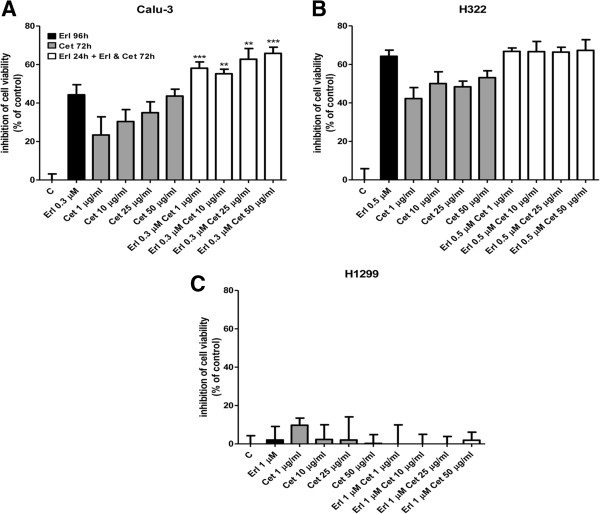
“As previously reported [31] cells showing by proliferation assays IC50 for erlotinib < 1 μM were considered sensitive (H322, H292, Calu-3, PC9, HCC827) while cell lines with IC50 > 5 μM (H1299, A549, H1703, Calu-1, HCC827GR5) were considered resistant.”
BackgroundSelf-citationHsu, Y.-F., Ajona, D., Corrales, L., Lopez-Picazo, J. M., Gurpide, A., Montuenga, L. M., & Pio, R. (2010) · Molecular Cancer · doi:10.1186/1476-4598-9-139 · Cited by 84 · cited 1×
“Moreover, cetuximab serves as a potent stimulus for NK functions including INF-gamma production [27] and is also associated with a complement –mediated immune response [28].”
BackgroundDual mechanisms of action of the 5-benzylidene-hydantoin UPR1024 on lung cancer cell lines
Cavazzoni, A., Alfieri, R. R., Carmi, C., Zuliani, V., Galetti, M., Fumarola, C., Frazzi, R., Bonelli, M. A., Bordi, F., Lodola, A., et al. (2008) · Molecular Cancer Therapeutics · doi:10.1158/1535-7163.mct-07-0477 · Cited by 84 · cited 1×
“Procedures for protein extraction, solubilization, and protein analysis by 1-D PAGE are described elsewhere [32,33].”
MethodSelf-citationMimura, K., Kono, K., Maruyama, T., Watanabe, M., Izawa, S., Shiba, S., Mizukami, Y., Kawaguchi, Y., Inoue, M., Kono, T., et al. (2011) · International Journal of Cancer · doi:10.1002/ijc.25896 · Cited by 70 · cited 15×
“ADCC, one of the killing mechanism of the immune system mediated by Natural Killer cells, plays a pivotal role in the anti-cancer effects exerted by mAbs.”
BackgroundInfluentialEGFR inhibitors enhanced the susceptibility to NK cell-mediated lysis of lung cancer cells
Kim, H., Kim, S.-H., Kim, M.-J., Kim, S.-J., Park, S.-J., Chung, J.-S., Bae, J.-H., & Kang, C.-D. (2011) · Journal of Immunotherapy · doi:10.1097/cji.0b013e31821b724a · Cited by 63 · cited 1×
“It has been recently demonstrated that the EGFR inhibitors gefitinib and erlotinib enhance the susceptibility to NK cell mediated lysis of A549, NCI-H23 and SW900 lung cancer cell lines [26] by the induction of ULBP1 (a ligand of the NK cell activation receptor NKG2D).”
BackgroundCombined lapatinib and cetuximab enhance cytotoxicity against gefitinib-resistant lung cancer cells
Kim, H., Han, S., Kim, S.-H., Im, S., Oh, D., Bang, Y., & Kim, T. (2008) · Molecular Cancer Therapeutics · doi:10.1158/1535-7163.mct-07-2068 · Cited by 57 · cited 1×
“Kim and colleagues demonstrated that the combination of lapatinib with cetuximab overcame gefitinib resistance due to the secondary T790M mutation in NSCLC by inducing enhanced cytotoxicity both in vitro and in vivo [21].”
BackgroundAlfieri, R. R., Galetti, M., Tramonti, S., Andreoli, R., Mozzoni, P., Cavazzoni, A., Bonelli, M. A., Fumarola, C., Monica, S. L., Galvani, E., et al. (2011) · Molecular Cancer · doi:10.1186/1476-4598-10-143 · Cited by 53 · cited 2×
“Quantitative real-time PCR Total RNA was isolated by the TRIzol reagent (Invitrogen, Carlsbad, CA, USA) and reverse transcribed as previously described [33].”
MethodSelf-citationSynergistic activity of letrozole and sorafenib on breast cancer cells
Bonelli, M. A., Fumarola, C., Alfieri, R. R., Monica, S. L., Cavazzoni, A., Galetti, M., Gatti, R., Belletti, S., Harris, A. L., Fox, S. B., et al. (2010) · Breast Cancer Research and Treatment · doi:10.1007/s10549-009-0714-5 · Cited by 40
Self-citationNakamura, H., Takamori, S., Fujii, T., Ono, M., Yamana, H., Kuwano, M., & Shirouzu, K. (2005) · Cancer Letters · doi:10.1016/j.canlet.2004.12.020 · Cited by 37 · cited 1×
“In the A549 cell line, expressing both EGFR and HER2, the combination of gefitinib with trastuzumab significantly inhibited cell growth and proliferation [18].”
Background
Cited by
Targeting the ERBB family in cancer: couples therapy
Tebbutt, N., Pedersen, M. W., & Johns, T. G. (2013) · Nature Reviews Cancer · doi:10.1038/nrc3559 · Cited by 466
Tumor-Specific Activation of an EGFR-Targeting Probody Enhances Therapeutic Index
Desnoyers, L. R., Vasiljeva, O., Richardson, J. H., Yang, A., Menendez, E. E. M., Liang, T. W., Wong, C., Bessette, P. H., Kamath, K., Moore, S. J., et al. (2013) · Science Translational Medicine · doi:10.1126/scitranslmed.3006682 · Cited by 281
Immunomodulation by targeted anticancer agents
Petroni, G., Buqué, A., Zitvogel, L., Kroemer, G., & Galluzzi, L. (2021) · Cancer Cell · doi:10.1016/j.ccell.2020.11.009 · Cited by 212
Targeting oncogene and non-oncogene addiction to inflame the tumour microenvironment
Petroni, G., Buqué, A., Coussens, L. M., & Galluzzi, L. (2022) · Nature Reviews Drug Discovery · doi:10.1038/s41573-022-00415-5 · Cited by 160
Yang, Z., & Tam, K. Y. (2018) · International Journal of Biological Sciences · doi:10.7150/ijbs.22955 · Cited by 117
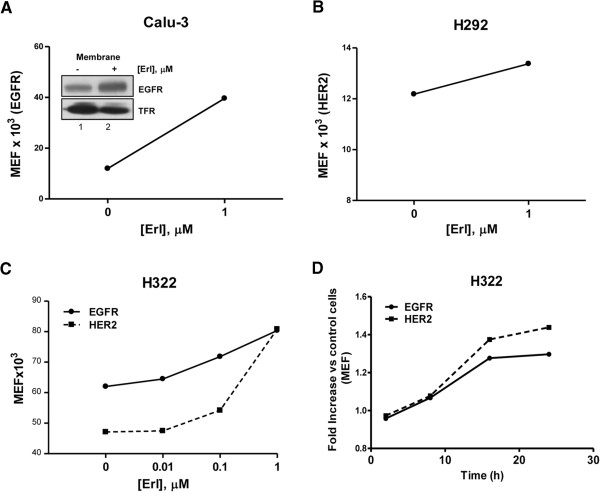
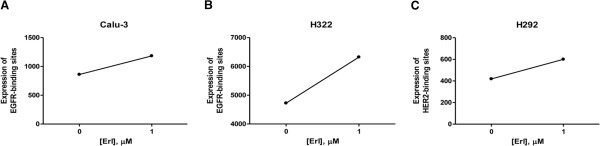
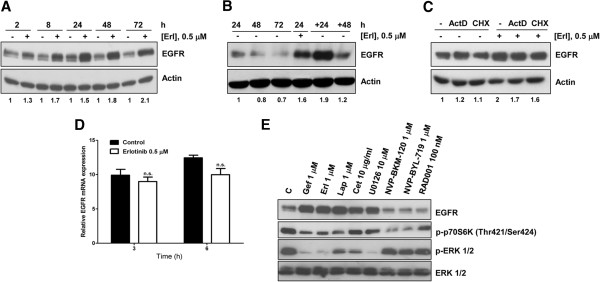
“[76] studied the combination of cetuximab, the first developed anti-EGFR monoclonal antibody, and erlotinib, and found that the application of erlotinib could induce the accumulation of EGFR protein via protein stabilisation and could increase the binding sites of NSCLC tumour cells to cetuximab, which potentiated the…”
Background
Metadata
- Authors
- Cavazzoni, A., Alfieri, R. R., Cretella, D., Saccani, F., Ampollini, L., Galetti, M., Quaini, F., Graiani, G., Madeddu, D., Mozzoni, P., Galvani, E., La Monica, S., Bonelli, M., Fumarola, C., Mutti, A., Carbognani, P., Tiseo, M., Barocelli, E., Petronini, P. G., & Ardizzoni, A.
- Affiliations
- University of Parma (IT)
- Ospedale di Parma (IT)
- Corresponding author
- Alfieri, Roberta R
- ORCID
- Venue
- Molecular Cancer
- Published
- 2012-12
- Volume
- 11
- Issue
- 1
- Pages
- 91-91
- ISSN
- 1476-4598 (ISSN-L)
- PMC
- PMC3577499
- OpenAlex
- W2103124714
- Cited by
- 44
- References
- 36
- Citations by year
- 2025: 4 · 2024: 1 · 2023: 5 · 2022: 3 · 2021: 4 · 2020: 3 · 2019: 4 · 2018: 2 · 2017: 6 · 2016: 3 · 2015: 4 · 2014: 2 · 2013: 3
- FWCI
- 2.32
- Type
- journal article
- Language
- en
- Open access
- gold
- doi.org
- Licence
- cc-by
- Locations
- Molecular Cancer (publishedVersion, cc-by)
- Europe PMC (PubMed Central) (publishedVersion, cc-by)
- PubMed Central (publishedVersion, cc-by)
- PubMed (publishedVersion)
- Archivio istituzionale della ricerca (Alma Mater Studiorum Università di Bologna) (submittedVersion)
- DOAJ (DOAJ: Directory of Open Access Journals) (submittedVersion)
- Funders
- Associazione Italiana per la Ricerca sul Cancro
- Topics
- Health Sciences › Medicine › Pulmonary and Respiratory Medicine › Lung Cancer Treatments and Mutations
- Health Sciences › Medicine › Oncology › HER2/EGFR in Cancer Research
- Health Sciences › Medicine › Oncology › Lung Cancer Research Studies
- Keywords
- erlotinib, anti-EGFR monoclonal antibody, cetuximab, trastuzumab, non-small cell lung cancer, antibody-dependent cellular cytotoxicity, NK cell cytotoxicity, EGFR, HER2, tyrosine kinase inhibitors, combination therapy, tumor growth inhibition
- MeSH terms
- Cetuximab, Trastuzumab, Erlotinib Hydrochloride, Analysis of Variance, Animals, Antibody-Dependent Cell Cytotoxicity, Antineoplastic Combined Chemotherapy Protocols, Binding Sites, Carcinoma, Non-Small-Cell Lung, Cell Membrane, Cell Survival, Drug Synergism, Female, Humans, Lung Neoplasms, Mice, Inbred BALB C, Mice, Nude, Quinazolines, Gene Expression Regulation, Neoplastic, Receptor, ErbB-2, Erb-b2 Receptor Tyrosine Kinases, Xenograft Model Antitumor Assays, Cell Line, Tumor, Mice, Protein Stability, Antibodies, Monoclonal, Humanized, ErbB Receptors
About these checks
Registry, retraction, Cites and statistics results are computed, not judged, with one exception: a printed reference that no index lists is read once by a model before it counts as a citation error. Claims are extracted by a model and kept only when their quote appears verbatim in the text; each cited source is then checked, with a model’s help, for whether it says what the claim relies on. Those verdicts can be wrong — read the claim’s quote and the cited source before relying on one.
Statistics and arithmetic are recomputed, not judged.
Confidence bands are shown only for fields calibrated on our annotated test set. None is calibrated yet, so no band is shown.
What counts as a claim ›How we measure confidence ›How we check this ›
Are you an author, or do you see a problem with this page? Request a review
Data sources
Bibliographic data: Semantic Scholar, OpenAlex, Crossref.
Contains information from the Semantic Scholar Academic Graph Datasets, made available under the ODC Attribution License (ODC-BY 1.0).
Semantic Scholar’s data is described in: Kinney, R., et al. (2023). The Semantic Scholar Open Data Platform. arXiv:2301.10140.
