

The DOI matches its Crossref record; 286 of the 287 references it cites were found in a registry or an index; none of the 98 sources its claims cite is checked for support yet.
Brain microRNAs and insights into biological functions and therapeutic potential of brain enriched miRNA-128
Open accessAbstract
MicroRNAs, the non-coding single-stranded RNA of 19-25 nucleotides are emerging as robust players of gene regulation. Plethora of evidences support that the ability of microRNAs to regulate several genes of a pathway or even multiple cross talking pathways have significant impact on a complex regulatory network and ultimately the physiological processes and diseases. Brain being a complex organ with several cell types, expresses more distinct miRNAs than any other tissues. This review aims to discuss about the microRNAs in brain development, function and their dysfunction in brain tumors. We also provide a comprehensive summary of targets of brain specific and brain enriched miRNAs that contribute to the diversity and plasticity of the brain. In particular, we uncover recent findings on miRNA-128, a brain-enriched microRNA that is induced during neuronal differentiation and whose aberrant expression has been reported in several cancers. This review describes the wide spectrum of targets of miRNA-128 that have been identified till date with potential roles in apoptosis, angiogenesis, proliferation, cholesterol metabolism, self renewal, invasion and cancer progression and how this knowledge might be exploited for the development of future miRNA-128 based therapies for the treatment of cancer as well as metabolic diseases.
Overview
AI snapshot
Written from the paper’s full text.
TL;DR
This review summarizes brain microRNAs, with a focus on brain-enriched miRNA-128 in neuronal differentiation, brain tumors, apoptosis, angiogenesis, and cholesterol metabolism. It compiles validated targets and bioinformatic analyses suggesting conserved miRNA-128 targets and enriched signaling pathways relevant to cancer and metabolic disease.
Key findings
- The brain expresses more distinct miRNAs than any other vertebrate tissue; 70% of known miRNAs are expressed in the brain, though only a handful are brain-specific or brain-enriched. Sempere et al. identified 17 miRNAs expressed in mouse and human brain, including miR-128.
- miRNA-128 is transcribed by two genes: miRNA-128-1 in R3HDM1 on chromosome 2q21.3 and miRNA-128-2 in ARPP21 on chromosome 3p22.3. It is induced during neuronal differentiation and is downregulated in glioblastoma, medulloblastoma, and neuroblastoma, and deregulated in autism, prion-induced neurodegeneration, Huntington disease, Parkinson disease, and Alzheimer disease.
- Validated miRNA-128 targets/effects include Bmi-1, E2F3a, EGFR, PDGFRα, Reelin, DCX, SNAP25, SIRT1, Bax, and ABCA1/ABCG1/RXRα. Depending on cell type, miRNA-128 can be pro-apoptotic or anti-apoptotic, and it regulates proliferation, self-renewal, invasion, angiogenesis, and cholesterol homeostasis.
- Bioinformatic analysis identified 90 miRNA-128 targets conserved among 9 species. PANTHER and GeneCodis enrichment showed insulin/IGF-MAPK, TGF-beta, angiogenesis, PI3K, and Wnt pathways among the most enriched; insulin and chemokine signaling were enriched in both analyses (p < 0.05), and metabolic process was the highest-rated biological process by PANTHER.
Methods
- Literature review of brain microRNAs and miRNA-128, with tables summarizing brain-enriched and brain-specific miRNAs, their validated targets, functions, and disease associations.
- Bioinformatics: predicted miRNA-128 targets from TargetScan 5 for nine species (human, mouse, chimpanzee, rhesus, cow, chicken, frog, rat, opossum), filtered to 90 targets conserved across all nine species, then pathway enrichment using PANTHER and GeneCodis.
- No primary wet-lab experiments are reported in this review; it synthesizes prior studies, including the authors’ own published work.
Limitations
- The authors state that high-throughput target validation methods are lacking, many cellular functions and pathways affected by miRNA-128 remain undiscovered, and regulation of Wnt and chemokine signaling by miRNA-128 needs further validation.
- The authors state that their in vitro cholesterol results require in vivo validation, that the role of miRNA-128a in HIV-1 encephalopathy needs to be determined, and that it is not known whether miRNA-128 changes in cancer are a cause or effect of disease.
- Evident from the text: as a review, conclusions depend on cited studies; miRNA-128 shows context-dependent pro-apoptotic and anti-apoptotic roles and both up- and down-regulation across diseases, limiting simple therapeutic generalization.
Model-written summary. Check it against the paper before relying on it.
Integrity signals
Registry
Cites
Statistics
Figures
Verification
Claims the paper makes
67 Sources not found · 10 Own result · 9 Own interpretation · 1 Not checked yet
A result the paper reports from its own data — it cites no other source for it, so there is none to check. The quote shows it is in the paper.
In the paper
“we also demonstrated that miRNA-128 augments the antitumor effects of compounds (Etoposide and Cisplatin).”
§ Brain microRNAs and insights into biological functions and therapeutic potential of brain enriched miRNA-128 > Introduction > Pro-neural miRNA-128 as regulator of apoptosis
boosteddirect- Asserted: passes — The authors put it forward as true.
- Checkable: passes — It can be checked against evidence.
- Load-bearing: passes — The paper’s conclusions depend on it.
- Based: passes — The paper gives a reason why it holds.
In the paper
“We provided the first evidence of miRNA-128-2 to be a new regulator of cholesterol homeostasis [277].”
§ Brain microRNAs and insights into biological functions and therapeutic potential of brain enriched miRNA-128 > Introduction > Insights into regulation of cholesterol metabolism by miRNA-128: a new key player in cholesterol related disorders
What the sources say
- Not matchedcites [277]
Couldn’t be matched to a paper in Crossref, so it can’t be checked.
boosteddirect- Asserted: passes — The authors put it forward as true.
- Checkable: passes — It can be checked against evidence.
- Load-bearing: passes — The paper’s conclusions depend on it.
- Based: passes — The paper gives a reason why it holds.
- Not matched
A result the paper reports from its own data — it cites no other source for it, so there is none to check. The quote shows it is in the paper.
In the paper
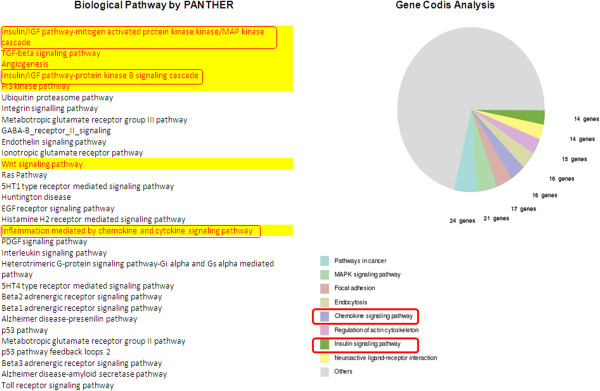
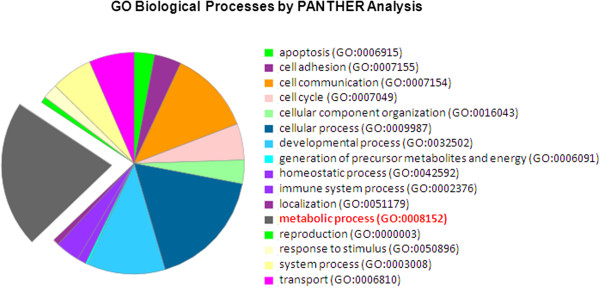
“metabolic process came out to be the highest rated biological process with maximum number of genes during PANTHER Analysis (Figure 5).”
§ Brain microRNAs and insights into biological functions and therapeutic potential of brain enriched miRNA-128 > Introduction > Biological relevance of miRNA-128 as revealed by bioinformatic analysis
plain- Asserted: passes — The authors put it forward as true.
- Checkable: passes — It can be checked against evidence.
- Load-bearing: unclear — It is unclear whether the paper’s conclusions depend on it.
- Based: passes — The paper gives a reason why it holds.
A result the paper reports from its own data — it cites no other source for it, so there is none to check. The quote shows it is in the paper.
In the paper
“insilico analysis of transcription factor binding sites of these two genes reveals almost similar pattern of transcription factors (unpublised data).”
§ Brain microRNAs and insights into biological functions and therapeutic potential of brain enriched miRNA-128 > Introduction > Future directions/conclusions
plaincorrelational- Asserted: passes — The authors put it forward as true.
- Checkable: passes — It can be checked against evidence.
- Load-bearing: unclear — It is unclear whether the paper’s conclusions depend on it.
- Based: passes — The paper gives a reason why it holds.
In the paper
“over expression of miRNA-128 in HEK293T cells led to an increase in reactive oxygen species [57].”
§ Brain microRNAs and insights into biological functions and therapeutic potential of brain enriched miRNA-128 > Introduction > Role of miRNA-128 in cell motility, angiogenesis and senescence
What the sources say
- Not matchedcites [57]
Couldn’t be matched to a paper in Crossref, so it can’t be checked.
plaindirect- Asserted: passes — The authors put it forward as true.
- Checkable: passes — It can be checked against evidence.
- Load-bearing: passes — The paper’s conclusions depend on it.
- Based: passes — The paper gives a reason why it holds.
- Not matched
A result the paper reports from its own data — it cites no other source for it, so there is none to check. The quote shows it is in the paper.
In the paper
“miRNA-128 also regulates cholesterol metabolism and fatty acid biosynthesis pathways.”
§ Brain microRNAs and insights into biological functions and therapeutic potential of brain enriched miRNA-128 > Introduction > Insights into regulation of cholesterol metabolism by miRNA-128: a new key player in cholesterol related disorders
plaindirect- Asserted: passes — The authors put it forward as true.
- Checkable: passes — It can be checked against evidence.
- Load-bearing: passes — The paper’s conclusions depend on it.
- Based: passes — The paper gives a reason why it holds.
A result the paper reports from its own data — it cites no other source for it, so there is none to check. The quote shows it is in the paper.
In the paper
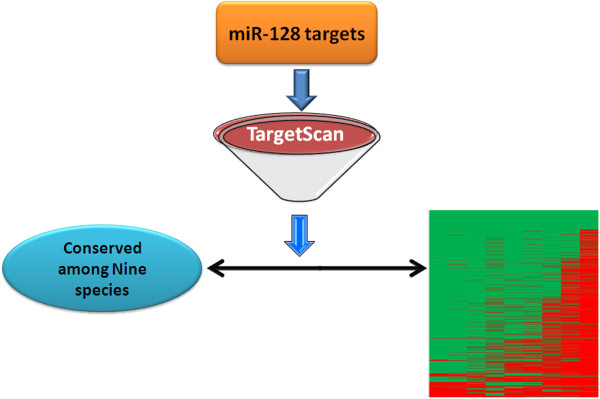
“we discovered that 90 targets of miRNA-128 were conserved among 9 species (Human, Mouse, Chimpanzee, Rhesus, Cow, Chicken, Frog, Rat, Opossum)”
§ Brain microRNAs and insights into biological functions and therapeutic potential of brain enriched miRNA-128 > Introduction > Biological relevance of miRNA-128 as revealed by bioinformatic analysis
plain- Asserted: passes — The authors put it forward as true.
- Checkable: passes — It can be checked against evidence.
- Load-bearing: passes — The paper’s conclusions depend on it.
- Based: passes — The paper gives a reason why it holds.
In the paper
“we recently observed that miRNA-128 overexpression induced apoptosis by down regulation of Bax and up regulation of p53 and Bak [57].”
§ Brain microRNAs and insights into biological functions and therapeutic potential of brain enriched miRNA-128 > Introduction > Pro-neural miRNA-128 as regulator of apoptosis
What the sources say
- Not matchedcites [57]
Couldn’t be matched to a paper in Crossref, so it can’t be checked.
plaindirect- Asserted: passes — The authors put it forward as true.
- Checkable: passes — It can be checked against evidence.
- Load-bearing: unclear — It is unclear whether the paper’s conclusions depend on it.
- Based: passes — The paper gives a reason why it holds.
- Not matched
A result the paper reports from its own data — it cites no other source for it, so there is none to check. The quote shows it is in the paper.
In the paper
“we observed that the Insulin signaling pathway and chemokine signaling pathway were the enriched categories (p-value < 0.05) in both PANTHER and GeneCodis analysis.”
§ Brain microRNAs and insights into biological functions and therapeutic potential of brain enriched miRNA-128 > Introduction > Biological relevance of miRNA-128 as revealed by bioinformatic analysis
plaincorrelational- Asserted: passes — The authors put it forward as true.
- Checkable: passes — It can be checked against evidence.
- Load-bearing: passes — The paper’s conclusions depend on it.
- Based: passes — The paper gives a reason why it holds.
A result the paper reports from its own data — it cites no other source for it, so there is none to check. The quote shows it is in the paper.
In the paper
“Insulin/IGF pathway-mitogen activated protein kinase kinase/MAP kinase cascade, TGF-beta signaling pathway, Angiogenesis, Insulin/IGF pathway-protein kinase B signaling cascade, PI3 kinase pathway, Wnt signaling pathway were found to be the most enriched biological pathways as revealed by the PANTHER analysis (Figure 4).”
§ Brain microRNAs and insights into biological functions and therapeutic potential of brain enriched miRNA-128 > Introduction > Biological relevance of miRNA-128 as revealed by bioinformatic analysis
plaincorrelational- Asserted: passes — The authors put it forward as true.
- Checkable: passes — It can be checked against evidence.
- Load-bearing: passes — The paper’s conclusions depend on it.
- Based: passes — The paper gives a reason why it holds.
- It may state two separate claims as one. 18
- Probably not a substantial claim. 18
A result the paper reports from its own data — it cites no other source for it, so there is none to check. The quote shows it is in the paper.
In the paper
“miRNA-128 up-regulated cholesterol synthesis genes and down regulated fatty acid biosynthesis genes.”
§ Brain microRNAs and insights into biological functions and therapeutic potential of brain enriched miRNA-128 > Introduction > Insights into regulation of cholesterol metabolism by miRNA-128: a new key player in cholesterol related disorders
plaindirect- Asserted: passes — The authors put it forward as true.
- Checkable: passes — It can be checked against evidence.
- Load-bearing: passes — The paper’s conclusions depend on it.
- Based: passes — The paper gives a reason why it holds.
It may state two separate claims as one.
In the paper
“we found that miRNA-128 induces apoptosis in wild type (WT) p53 as well as in mutant p53-expressing cells in a p53-dependent and -independent manner via induction of PUMA in MCF7, MDA-MB-231, HCT116 p53 +/+ and HCT116 p53 -/- cells respectively [264].”
§ Brain microRNAs and insights into biological functions and therapeutic potential of brain enriched miRNA-128 > Introduction > Pro-neural miRNA-128 as regulator of apoptosis
What the sources say
- Not matchedcites [264]
Couldn’t be matched to a paper in Crossref, so it can’t be checked.
plaindirect- Asserted: passes — The authors put it forward as true.
- Checkable: passes — It can be checked against evidence.
- Load-bearing: passes — The paper’s conclusions depend on it.
- Based: passes — The paper gives a reason why it holds.
It may state two separate claims as one.
- Not matched
In the paper
“Similar to miR-124, miRNA-128 is induced during brain development and in differentiating neuronal cells”
- Also stated in: § Abstract · plain
“In particular, we uncover recent findings on miRNA-128, a brain-enriched microRNA that is induced during neuronal differentiation and whose aberrant expression has been reported in several cancers.”
§ Brain microRNAs and insights into biological functions and therapeutic potential of brain enriched miRNA-128 > Introduction > MicroRNAs in brain development and function
What the sources say
- Not matchedcites [56]
Couldn’t be matched to a paper in Crossref, so it can’t be checked.
plaincorrelational- Asserted: passes — The authors put it forward as true.
- Checkable: passes — It can be checked against evidence.
- Load-bearing: unclear — It is unclear whether the paper’s conclusions depend on it.
- Based: passes — The paper gives a reason why it holds.
It may state two separate claims as one.
- Also stated in: § Abstract · plain
In the paper
“Godlewski et al., reported that overexpression of miRNA-128 reduces glioma cell proliferation by downregulating Bmi-1 (B lymphoma mouse Moloney leukemia virus insertion region 1), decrease in histone methylation (H3K27me3) and Akt phosphorylation and up-regulation of p21CIP1 levels [60].”
§ Brain microRNAs and insights into biological functions and therapeutic potential of brain enriched miRNA-128 > Introduction > Role of pro-neural miRNA-128 in brain related disorders
What the sources say
- Not matchedcites [60]
Couldn’t be matched to a paper in Crossref, so it can’t be checked.
plaindirect- Asserted: passes — The authors put it forward as true.
- Checkable: passes — It can be checked against evidence.
- Load-bearing: passes — The paper’s conclusions depend on it.
- Based: passes — The paper gives a reason why it holds.
It may state two separate claims as one.
- Not matched
In the paper
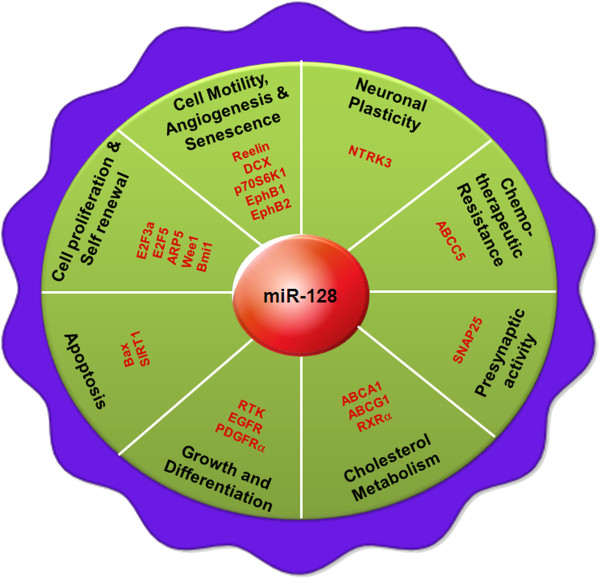
“Papagiannakopoulos et al. recently showed that miRNA-128 represses growth and enhances neuronal differentiation of glioma-initiating neural stem cells (giNSCs) by downregulating oncogenic receptor tyrosine kinases (RTKs), epithelial growth factor receptor (EGFR) and platelet-derived growth factor receptor-α (PDGFRα) (Figure 2) [59].”
§ Brain microRNAs and insights into biological functions and therapeutic potential of brain enriched miRNA-128 > Introduction > Role of pro-neural miRNA-128 in brain related disorders
What the sources say
- Not matchedcites [59]
Couldn’t be matched to a paper in Crossref, so it can’t be checked.
plaindirect- Asserted: passes — The authors put it forward as true.
- Checkable: passes — It can be checked against evidence.
- Load-bearing: passes — The paper’s conclusions depend on it.
- Based: passes — The paper gives a reason why it holds.
It may state two separate claims as one.
- Not matched
In the paper
“Literature reveals that a single miRNA can target several mRNAs together, and a single mRNA can be targeted by different miRNAs in a concerted manner.”
§ Brain microRNAs and insights into biological functions and therapeutic potential of brain enriched miRNA-128 > Introduction
What the sources say
- Not matchedcites [25]
Couldn’t be matched to a paper in Crossref, so it can’t be checked.
plaindirect- Asserted: passes — The authors put it forward as true.
- Checkable: passes — It can be checked against evidence.
- Load-bearing: fails — The paper’s conclusions may not depend on it.
- Based: passes — The paper gives a reason why it holds.
Probably not a substantial claim. The paper’s conclusions may not depend on it. It may state two separate claims as one.
- Not matched
In the paper
“overexpression of miRNA-128 inhibited cellular proliferation through negatively regulating E2F3a, which is highly expressed in glioma and important for cell cycle progression (Figure 2) [58].”
§ Brain microRNAs and insights into biological functions and therapeutic potential of brain enriched miRNA-128 > Introduction > Role of pro-neural miRNA-128 in brain related disorders
What the sources say
- Not matchedcites [58]
Couldn’t be matched to a paper in Crossref, so it can’t be checked.
plaindirect- Asserted: passes — The authors put it forward as true.
- Checkable: passes — It can be checked against evidence.
- Load-bearing: passes — The paper’s conclusions depend on it.
- Based: passes — The paper gives a reason why it holds.
It may state two separate claims as one.
- Not matched
In the paper
“leading to repressed NMD (Nonsense-mediated decay) and the consequent upregulation of batteries of mRNAs encoding proteins important for neuron differentiation and function [56].”
§ Brain microRNAs and insights into biological functions and therapeutic potential of brain enriched miRNA-128 > Introduction > MicroRNAs in brain development and function
What the sources say
- Not matchedcites [56]
Couldn’t be matched to a paper in Crossref, so it can’t be checked.
plaindirect- Asserted: passes — The authors put it forward as true.
- Checkable: passes — It can be checked against evidence.
- Load-bearing: unclear — It is unclear whether the paper’s conclusions depend on it.
- Based: passes — The paper gives a reason why it holds.
It may state two separate claims as one.
- Not matched
In the paper
“MiRNA-128-1 is embedded in the R3HDM1 (R3H domain containing 1) gene on chromosome 2q21.3”
§ Brain microRNAs and insights into biological functions and therapeutic potential of brain enriched miRNA-128 > Introduction > Role of pro-neural miRNA-128 in brain related disorders
What the sources say
- Not matchedcites [57]
Couldn’t be matched to a paper in Crossref, so it can’t be checked.
plain- Asserted: passes — The authors put it forward as true.
- Checkable: passes — It can be checked against evidence.
- Load-bearing: fails — The paper’s conclusions may not depend on it.
- Based: passes — The paper gives a reason why it holds.
Probably not a substantial claim. The paper’s conclusions may not depend on it.
- Not matched
In the paper
“As Bmi-1 is also known to promote the stem cell renewal, a process that is important in glioma”
§ Brain microRNAs and insights into biological functions and therapeutic potential of brain enriched miRNA-128 > Introduction > Role of pro-neural miRNA-128 in brain related disorders
What the sources say
- Not matchedcites [237]
Couldn’t be matched to a paper in Crossref, so it can’t be checked.
boosteddirect- Asserted: passes — The authors put it forward as true.
- Checkable: passes — It can be checked against evidence.
- Load-bearing: passes — The paper’s conclusions depend on it.
- Based: passes — The paper gives a reason why it holds.
It may state two separate claims as one.
- Not matched
In the paper
“Literature reveals that 70% of known miRNAs are expressed in the brain [50].”
§ Brain microRNAs and insights into biological functions and therapeutic potential of brain enriched miRNA-128 > Introduction > MicroRNAs in brain development and function
What the sources say
- Not matchedcites [50]
Couldn’t be matched to a paper in Crossref, so it can’t be checked.
plain- Asserted: passes — The authors put it forward as true.
- Checkable: passes — It can be checked against evidence.
- Load-bearing: fails — The paper’s conclusions may not depend on it.
- Based: passes — The paper gives a reason why it holds.
Probably not a substantial claim. The paper’s conclusions may not depend on it.
- Not matched
None of the sources cited for this claim could be matched to a paper in Crossref, so there is nothing to check it against.
In the paper
“There are a few reports which have talked about the involvement of miRNA-128 in TGF-β signaling [282] and PI3 kinase pathway [60].”
§ Brain microRNAs and insights into biological functions and therapeutic potential of brain enriched miRNA-128 > Introduction > Biological relevance of miRNA-128 as revealed by bioinformatic analysis
What the sources say
- Not matchedcites [282]
Couldn’t be matched to a paper in Crossref, so it can’t be checked.
- Not matchedcites [60]
Couldn’t be matched to a paper in Crossref, so it can’t be checked.
plaincorrelational- Asserted: passes — The authors put it forward as true.
- Checkable: passes — It can be checked against evidence.
- Load-bearing: fails — The paper’s conclusions may not depend on it.
- Based: passes — The paper gives a reason why it holds.
Probably not a substantial claim. The paper’s conclusions may not depend on it.
- Not matched
In the paper
“Up regulation of miRNA-128 not only suppressed the colony formation ability and invasiveness of pituitary tumor cells but also suppressed pituitary GH3 tumor growth in xenografts via, Bmi-1.”
§ Brain microRNAs and insights into biological functions and therapeutic potential of brain enriched miRNA-128 > Introduction > Expression of pro-neural miRNA-128 in cancers other than brain
What the sources say
- Not matchedcites [62]
Couldn’t be matched to a paper in Crossref, so it can’t be checked.
plaindirect- Asserted: passes — The authors put it forward as true.
- Checkable: passes — It can be checked against evidence.
- Load-bearing: unclear — It is unclear whether the paper’s conclusions depend on it.
- Based: passes — The paper gives a reason why it holds.
It may state two separate claims as one.
- Not matched
In the paper
“over expression of miRNA-128 attenuated invasion in prostate cancer cells while its knockdown induced invasion in benign prostate epithelial cells as revealed by matrigel invasion assay [258].”
§ Brain microRNAs and insights into biological functions and therapeutic potential of brain enriched miRNA-128 > Introduction > Role of miRNA-128 in cell motility, angiogenesis and senescence
What the sources say
- Not matchedcites [258]
Couldn’t be matched to a paper in Crossref, so it can’t be checked.
plaindirect- Asserted: passes — The authors put it forward as true.
- Checkable: passes — It can be checked against evidence.
- Load-bearing: passes — The paper’s conclusions depend on it.
- Based: passes — The paper gives a reason why it holds.
It may state two separate claims as one.
- Not matched
In the paper
“as well as in acute lymphoblastic leukemia (ALL) [244]”
§ Brain microRNAs and insights into biological functions and therapeutic potential of brain enriched miRNA-128 > Introduction > Expression of pro-neural miRNA-128 in cancers other than brain
What the sources say
- Not matchedcites [244]
Couldn’t be matched to a paper in Crossref, so it can’t be checked.
boostedcorrelational- Asserted: passes — The authors put it forward as true.
- Checkable: passes — It can be checked against evidence.
- Load-bearing: fails — The paper’s conclusions may not depend on it.
- Based: passes — The paper gives a reason why it holds.
Probably not a substantial claim. The paper’s conclusions may not depend on it.
- Not matched
None of the sources cited for this claim could be matched to a paper in Crossref, so there is nothing to check it against.
In the paper
“is overexpressed in retinoblastoma and esophageal carcinoma and its expression is directly correlated with tumor aggressiveness [271,272].”
§ Brain microRNAs and insights into biological functions and therapeutic potential of brain enriched miRNA-128 > Introduction > Role of miRNA-128 in cell motility, angiogenesis and senescence
What the sources say
- Not matchedcites [271]
Couldn’t be matched to a paper in Crossref, so it can’t be checked.
- Not matchedcites [272]
Couldn’t be matched to a paper in Crossref, so it can’t be checked.
plaincorrelational- Asserted: passes — The authors put it forward as true.
- Checkable: passes — It can be checked against evidence.
- Load-bearing: fails — The paper’s conclusions may not depend on it.
- Based: passes — The paper gives a reason why it holds.
Probably not a substantial claim. The paper’s conclusions may not depend on it. It may state two separate claims as one.
- Not matched
In the paper
“Yolanda’s group has shown that ectopic expression of miRNA-128 downregulated genes that induce apoptosis and upregulated genes implicated in cell survival [63].”
§ Brain microRNAs and insights into biological functions and therapeutic potential of brain enriched miRNA-128 > Introduction > Pro-neural miRNA-128 as regulator of apoptosis
What the sources say
- Not matchedcites [63]
Couldn’t be matched to a paper in Crossref, so it can’t be checked.
plaindirect- Asserted: passes — The authors put it forward as true.
- Checkable: passes — It can be checked against evidence.
- Load-bearing: fails — The paper’s conclusions may not depend on it.
- Based: passes — The paper gives a reason why it holds.
Probably not a substantial claim. The paper’s conclusions may not depend on it. It may state two separate claims as one.
- Not matched
A conclusion the paper draws from its own results — it cites no other source for it, so there is none to check. The quote shows it is in the paper.
In the paper
“These findings suggest that miRNA-128 reduces cell motility and invasiveness of tumor cells and thus prevents angiogenesis.”
§ Brain microRNAs and insights into biological functions and therapeutic potential of brain enriched miRNA-128 > Introduction > Role of miRNA-128 in cell motility, angiogenesis and senescence
hedgeddirect- Asserted: passes — The authors put it forward as true.
- Checkable: passes — It can be checked against evidence.
- Load-bearing: passes — The paper’s conclusions depend on it.
- Based: passes — The paper gives a reason why it holds.
It may state two separate claims as one.
In the paper
“Donzelli et al. observed that miRNA-128-2 expression in lung cancer cells inhibits apoptosis and confers increased resistance to cisplatin, doxorubicin and 5-Fluorouracyl treatment via E2F5 (Figure 2) [266].”
§ Brain microRNAs and insights into biological functions and therapeutic potential of brain enriched miRNA-128 > Introduction > Pro-neural miRNA-128 as regulator of apoptosis
What the sources say
- Not matchedcites [266]
Couldn’t be matched to a paper in Crossref, so it can’t be checked.
plaindirect- Asserted: passes — The authors put it forward as true.
- Checkable: passes — It can be checked against evidence.
- Load-bearing: fails — The paper’s conclusions may not depend on it.
- Based: passes — The paper gives a reason why it holds.
Probably not a substantial claim. The paper’s conclusions may not depend on it. It may state two separate claims as one.
- Not matched
None of the sources cited for this claim could be matched to a paper in Crossref, so there is nothing to check it against.
In the paper
“Synaptogenesis; reduces neuroblastoma cell motility and invasiveness; suppressor of PRC activity; renders glioma stemlike cells less radioresistant; suppressor of the colony formation ability and invasiveness of pituitary tumor cells; suppressor of growth and mediates differentiation; regulates Nonsense-mediated decay; regulates apoptosis, inhibits proliferation and self-renewal,”
§ Brain microRNAs and insights into biological functions and therapeutic potential of brain enriched miRNA-128 > Introduction > MicroRNAs in brain development and function
What the sources say
- Not matchedcites [55]
Couldn’t be matched to a paper in Crossref, so it can’t be checked.
- Not matchedcites [56]
Couldn’t be matched to a paper in Crossref, so it can’t be checked.
- Not matchedcites [57]
Couldn’t be matched to a paper in Crossref, so it can’t be checked.
- Not matchedcites [58]
Couldn’t be matched to a paper in Crossref, so it can’t be checked.
- Not matchedcites [59]
Couldn’t be matched to a paper in Crossref, so it can’t be checked.
- Not matchedcites [60]
Couldn’t be matched to a paper in Crossref, so it can’t be checked.
- Not matchedcites [61]
Couldn’t be matched to a paper in Crossref, so it can’t be checked.
- Not matchedcites [62]
Couldn’t be matched to a paper in Crossref, so it can’t be checked.
- Not matchedcites [63]
Couldn’t be matched to a paper in Crossref, so it can’t be checked.
- Not matchedcites [64]
Couldn’t be matched to a paper in Crossref, so it can’t be checked.
plaindirect- Asserted: passes — The authors put it forward as true.
- Checkable: passes — It can be checked against evidence.
- Load-bearing: passes — The paper’s conclusions depend on it.
- Based: passes — The paper gives a reason why it holds.
It may state two separate claims as one.
- Not matched
In the paper
“DCX is a microtubule-associated protein required for neuroblastic migration during cerebral cortex development [267]”
§ Brain microRNAs and insights into biological functions and therapeutic potential of brain enriched miRNA-128 > Introduction > Role of miRNA-128 in cell motility, angiogenesis and senescence
What the sources say
- Not matchedcites [267]
Couldn’t be matched to a paper in Crossref, so it can’t be checked.
plaindirect- Asserted: passes — The authors put it forward as true.
- Checkable: passes — It can be checked against evidence.
- Load-bearing: fails — The paper’s conclusions may not depend on it.
- Based: passes — The paper gives a reason why it holds.
Probably not a substantial claim. The paper’s conclusions may not depend on it.
- Not matched
A conclusion the paper draws from its own results — it cites no other source for it, so there is none to check. The quote shows it is in the paper.
In the paper
“raise the possibility of exploiting miRNA-128 for therapeutic intervention and development of novel therapies.”
§ Brain microRNAs and insights into biological functions and therapeutic potential of brain enriched miRNA-128 > Introduction > Future directions/conclusions
hedgedconditional- Asserted: passes — The authors put it forward as true.
- Checkable: fails — It may be too vague to check against evidence.
- Load-bearing: passes — The paper’s conclusions depend on it.
- Based: passes — The paper gives a reason why it holds.
Probably not a substantial claim. It may be too vague to check against evidence.
In the paper
“Reelin is a high-molecular-weight secreted glycoprotein, which is thought to play its role as a guide for migratory neurons [268].”
§ Brain microRNAs and insights into biological functions and therapeutic potential of brain enriched miRNA-128 > Introduction > Role of miRNA-128 in cell motility, angiogenesis and senescence
What the sources say
- Not matchedcites [268]
Couldn’t be matched to a paper in Crossref, so it can’t be checked.
hedgedconditional- Asserted: passes — The authors put it forward as true.
- Checkable: passes — It can be checked against evidence.
- Load-bearing: fails — The paper’s conclusions may not depend on it.
- Based: passes — The paper gives a reason why it holds.
Probably not a substantial claim. The paper’s conclusions may not depend on it. It may state two separate claims as one.
- Not matched
In the paper
“Monteys et al. have recently suggested dual regulation of miRNA-128-2 by both intronic (pol III) and host gene (Pol II) promoters in acute lymphoblastic leukemia [283].”
§ Brain microRNAs and insights into biological functions and therapeutic potential of brain enriched miRNA-128 > Introduction > Future directions/conclusions
What the sources say
- Not matchedcites [283]
Couldn’t be matched to a paper in Crossref, so it can’t be checked.
hedgeddirect- Asserted: passes — The authors put it forward as true.
- Checkable: passes — It can be checked against evidence.
- Load-bearing: fails — The paper’s conclusions may not depend on it.
- Based: passes — The paper gives a reason why it holds.
Probably not a substantial claim. The paper’s conclusions may not depend on it.
- Not matched
None of the sources cited for this claim could be matched to a paper in Crossref, so there is nothing to check it against.
In the paper
“alterations in miRNA expression may play a critical role in the cancer initiation and progression [255,256].”
§ Brain microRNAs and insights into biological functions and therapeutic potential of brain enriched miRNA-128 > Introduction > Expression of pro-neural miRNA-128 in cancers other than brain
What the sources say
- Not matchedcites [255]
Couldn’t be matched to a paper in Crossref, so it can’t be checked.
- Not matchedcites [256]
Couldn’t be matched to a paper in Crossref, so it can’t be checked.
hedgedconditional- Asserted: passes — The authors put it forward as true.
- Checkable: passes — It can be checked against evidence.
- Load-bearing: fails — The paper’s conclusions may not depend on it.
- Based: passes — The paper gives a reason why it holds.
Probably not a substantial claim. The paper’s conclusions may not depend on it.
- Not matched
In the paper
“MiRNA expression can be correlated with cancer type, stage, and other clinical variables which may be useful for the classification, diagnosis, or prognosis of some human malignancies [257].”
§ Brain microRNAs and insights into biological functions and therapeutic potential of brain enriched miRNA-128 > Introduction > Expression of pro-neural miRNA-128 in cancers other than brain
What the sources say
- Not matchedcites [257]
Couldn’t be matched to a paper in Crossref, so it can’t be checked.
plaincorrelational- Asserted: passes — The authors put it forward as true.
- Checkable: passes — It can be checked against evidence.
- Load-bearing: fails — The paper’s conclusions may not depend on it.
- Based: passes — The paper gives a reason why it holds.
Probably not a substantial claim. The paper’s conclusions may not depend on it.
- Not matched
In the paper
“Alterations in susceptibility to apoptosis is a key factor for the survival of a malignant cell [261]”
§ Brain microRNAs and insights into biological functions and therapeutic potential of brain enriched miRNA-128 > Introduction > Pro-neural miRNA-128 as regulator of apoptosis
What the sources say
- Not matchedcites [261]
Couldn’t be matched to a paper in Crossref, so it can’t be checked.
plaindirect- Asserted: passes — The authors put it forward as true.
- Checkable: passes — It can be checked against evidence.
- Load-bearing: fails — The paper’s conclusions may not depend on it.
- Based: passes — The paper gives a reason why it holds.
Probably not a substantial claim. The paper’s conclusions may not depend on it.
- Not matched
In the paper
“Reelin has been shown to be a positive marker for prostate carcinoma aggressiveness [270]”
§ Brain microRNAs and insights into biological functions and therapeutic potential of brain enriched miRNA-128 > Introduction > Role of miRNA-128 in cell motility, angiogenesis and senescence
What the sources say
- Not matchedcites [270]
Couldn’t be matched to a paper in Crossref, so it can’t be checked.
plaincorrelational- Asserted: passes — The authors put it forward as true.
- Checkable: passes — It can be checked against evidence.
- Load-bearing: fails — The paper’s conclusions may not depend on it.
- Based: passes — The paper gives a reason why it holds.
Probably not a substantial claim. The paper’s conclusions may not depend on it.
- Not matched
None of the sources cited for this claim could be matched to a paper in Crossref, so there is nothing to check it against.
In the paper
“recent evidence indicates that miRNAs may function as tumor suppressors (by binding to oncogenes and suppressing them) or oncogenes (by binding to tumor suppressor genes and suppressing them)”
§ Brain microRNAs and insights into biological functions and therapeutic potential of brain enriched miRNA-128 > Introduction > Expression of pro-neural miRNA-128 in cancers other than brain
What the sources say
- Not matchedcites [255]
Couldn’t be matched to a paper in Crossref, so it can’t be checked.
- Not matchedcites [256]
Couldn’t be matched to a paper in Crossref, so it can’t be checked.
hedgedconditional- Asserted: passes — The authors put it forward as true.
- Checkable: passes — It can be checked against evidence.
- Load-bearing: fails — The paper’s conclusions may not depend on it.
- Based: passes — The paper gives a reason why it holds.
Probably not a substantial claim. The paper’s conclusions may not depend on it.
- Not matched
A conclusion the paper draws from its own results — it cites no other source for it, so there is none to check. The quote shows it is in the paper.
In the paper
“The fact that miRNA-128 plays multiple roles - a pro-apoptotic molecule, a anti-apoptotic molecule as well as a regulator of cholesterol homeostasis”
§ Brain microRNAs and insights into biological functions and therapeutic potential of brain enriched miRNA-128 > Introduction > Future directions/conclusions
plaindirect- Asserted: passes — The authors put it forward as true.
- Checkable: passes — It can be checked against evidence.
- Load-bearing: passes — The paper’s conclusions depend on it.
- Based: fails — The paper may give no reason why it holds.
Probably not a substantial claim. The paper may give no reason why it holds. It may state two separate claims as one.
The paper relies on this without support.
miRNA-128 is the most abundant brain-enriched miRNA.
“before delving into specific example of miRNA-128, the most abundant brain-enriched miRNA”
The paper relies on this without support.
miRNA-128 has tissue-specific and developmental-specific expression patterns.
“Evidences in the literature reveal that miRNA-128 has tissue specific and developmental specific expression patterns.”
The paper relies on this without support.
Apart from brain, miRNA-128 is found in skeletal muscle and thymus and is highly expressed during neuronal differentiation.
“Apart from brain, miRNA-128 has also been found in the skeletal muscle and thymus and is highly expressed during neuronal differentiation.”
The paper relies on this without support.
miRNAs normally negatively regulate their transcript targets.
“miRNAs normally negatively regulate their transcript targets”
The paper relies on this without support.
Cancer occurs due to accumulation of several genomic alterations and is characterized by unrestricted proliferation, invasion, and metastasis.
“Cancer occurs due to accumulation of several genomic alterations and is characterized by unrestricted proliferation, invasion, and metastasis.”
The paper relies on this without support.
MiRNA-128 is encoded by two distinct genes, R3HDM1 and ARPP21.
“MiRNA-128 is encoded by two distinct genes, viz., R3HDM1 and ARPP21.”
The paper relies on this without support.
The overall cellular functions and pathways affected by miRNA-128 remain undiscovered due to lack of high throughput target validation methods.
“The overall cellular functions and pathways affected by this miRNA remains still undiscovered due to lack of high throughput target validation methods.”
The paper relies on this without support.
Ability to migrate and disseminate to distal sites is one of the key characteristics of tumor cells, which is also responsible for the relative aggressiveness of the tumor.
“Ability to migrate and eventually disseminate to distal sites is one of the key characteristic of tumor cells, which is also responsible for the relative aggressiveness of the tumor.”
The paper relies on this without support.
Aberrant regulation of cholesterol homeostasis is associated with obesity as well as multiple types of cancer.
“Aberrant regulation of cholesterol homeostasis is associated with obesity as well as multiple types of cancer.”
The paper relies on this without support.
DCX expression is detectable in some tumors of the nervous system, such as GBM and neuroblastoma.
“DCX expression is also detectable in some tumors of the nervous system, such as GBM and neuroblastoma.”
The paper relies on this without support.
Overexpression of miRNA-128 leads to increased methylation of histone 3 lysine 9 (H3K9me2).
“Observation by Venkatraman’s group of increased methylation of histone 3 lysine 9 (H3K9me2) (a mark of repressed gene expression mediated by the Bmi-1 polycomb repressor complex) after overexpression of miRNA-128”
The paper relies on this without support.
Overexpression of miRNA-128a in medulloblastoma alters the intracellular redox state of the tumor cells.
“overexpression of miRNA-128a in medulloblastoma alters the intracellular redox state of the tumor cells.”
Self-check
Percentages, sums and reported differences re-computed from the paper’s own numbers.
Each contradiction between two passages listed here was confirmed by an independent check.
Rated minor: it would not touch a result — a value no result rests on, a p-value that stays on the same side of the significance level, or a conflict that is clerical, resolved elsewhere in the paper, or outside its own findings.
In the paper
§ Brain microRNAs and insights into biological functions and therapeutic potential of brain enriched miRNA-128 > Introduction > Role of pro-neural miRNA-128 in brain related disorders
“| hsa-miRNA-128 | Glioma | d | [58] | 2008 |”
§ Brain microRNAs and insights into biological functions and therapeutic potential of brain enriched miRNA-128 > References
“58. Zhang Y Chao T Li R Liu W Chen Y Yan X Gong Y Yin B Qiang B Zhao J Yuan J Peng X MicroRNA-128 inhibits glioma cells proliferation by targeting transcription factor E2F3a J Mol Med (Berl) 2009 87 43 51”
Rated minor: it would not touch a result — a value no result rests on, a p-value that stays on the same side of the significance level, or a conflict that is clerical, resolved elsewhere in the paper, or outside its own findings.
In the paper
§ Brain microRNAs and insights into biological functions and therapeutic potential of brain enriched miRNA-128 > Introduction > Role of pro-neural miRNA-128 in brain related disorders
“| hsa-miRNA-128 | Huntington’s disease | d | [241] | 2010 |”
§ Brain microRNAs and insights into biological functions and therapeutic potential of brain enriched miRNA-128 > References
“241. Lee ST Chu K Im WS Yoon HJ Im JY Park JE Park KH Jung KH Lee SK Kim M Roh JK Altered microRNA regulation in Huntington’s disease models Exp Neurol 2011 227 172 179”
Rated minor: it would not touch a result — a value no result rests on, a p-value that stays on the same side of the significance level, or a conflict that is clerical, resolved elsewhere in the paper, or outside its own findings.
In the paper
§ Brain microRNAs and insights into biological functions and therapeutic potential of brain enriched miRNA-128 > Introduction
“MicroRNAs (miRNAs) interfere with target gene expression by binding to the 3′ UTRs of their target mRNAs and act primarily at the level of translation.”
§ Brain microRNAs and insights into biological functions and therapeutic potential of brain enriched miRNA-128 > Introduction > MiRNA biogenesis and mechanism of action
“However, it is now believed that miRNA regulate gene expression in majority of cases by mRNA decay rather than translational repression [47].”
Cited works that were retracted
Works this paper cites that were later retracted, from the retraction notices publishers deposit. Major when the notice came out before this paper was published.
A note, not an issue: for example, a cited work that was retracted only after this paper was published, which its authors could not have known.
In the paper
“Chen Z Li D Cheng Q Ma Z Jiang B Peng R Chen R Cao Y Wan X MicroRNA-203 inhibits the proliferation and invasion of U251 glioblastoma cells by directly targeting PLD2 Mol Med Rep 2014 9 503 508 24270883”
Cited work 10.3892/mmr.2013.1814 · retracted 2023-12-27 · notice 10.3892/mmr.2023.13154 · this paper published 2014
A note, not an issue: for example, a cited work that was retracted only after this paper was published, which its authors could not have known.
In the paper
“10.1371/journal.pone.0055008”
Cited work 10.1371/journal.pone.0055008 · retracted 2020-01-23 · notice 10.1371/journal.pone.0228340 · this paper published 2014
A note, not an issue: for example, a cited work that was retracted only after this paper was published, which its authors could not have known.
In the paper
“10.1016/j.stem.2007.04.001”
Cited work 10.1016/j.stem.2007.04.001 · retracted 2023-06-01 · notice 10.1016/j.stem.2023.05.009 · this paper published 2014
A note, not an issue: for example, a cited work that was retracted only after this paper was published, which its authors could not have known.
Cited work 10.1111/cas.12351 · retracted 2024-07-22 · notice 10.1111/cas.16269 · this paper published 2014
Citations
Cites
4 retracted
Fasano, C. A., Dimos, J. T., Ivanova, N. B., Lowry, N. A., Lemischka, I. R., & Temple, S. (2007) · Cell stem cell · doi:10.1016/j.stem.2007.04.001 · Cited by 308
RetractedYang, T., Lu, X., Wu, T., Ding, D.-D., Zhao, Z., Chen, G., Xie, X., Li, B., Wei, Y., Guo, L., et al. (2014) · Cancer Science · doi:10.1111/cas.12351 · Cited by 130
RetractedMiR-30a-5p Antisense Oligonucleotide Suppresses Glioma Cell Growth by Targeting SEPT7
Jia, Z., Wang, K., Wang, G., Zhang, A., & Pu, P. (2013) · PLoS ONE · doi:10.1371/journal.pone.0055008 · Cited by 68
RetractedChen, Z., LI, D., Cheng, Q., Ma, Z., Jiang, B., Peng, R., Chen, R., Cao, Y., & Wan, X. H. (2013) · Molecular Medicine Reports · doi:10.3892/mmr.2013.1814 · Cited by 56
RetractedMicroRNAs: Target Recognition and Regulatory Functions
Bartel, D. P. (2009) · Cell · doi:10.1016/j.cell.2009.01.002 · Cited by 20,068
The 2007 WHO Classification of Tumours of the Central Nervous System
Louis, D. N., Ohgaki, H., Wiestler, O. D., Cavenee, W. K., Burger, P. C., Jouvet, A., Scheithauer, B. W., & Kleihues, P. (2007) · Acta Neuropathologica · doi:10.1007/s00401-007-0243-4 · Cited by 15,675
The C. elegans heterochronic gene lin-4 encodes small RNAs with antisense complementarity to lin-14
Lee, R. C., Feinbaum, R. L., & Ambros, V. (1993) · Cell · doi:10.1016/0092-8674(93)90529-y · Cited by 12,948
Green, D. R., & Reed, J. C. (1998) · Science · doi:10.1126/science.281.5381.1309 · Cited by 9,051
A ceRNA Hypothesis: The Rosetta Stone of a Hidden RNA Language?
Salmena, L., Poliseno, L., Tay, Y., Kats, L., & Pandolfi, P. P. (2011) · Cell · doi:10.1016/j.cell.2011.07.014 · Cited by 7,262
Oncomirs—MicroRNAs with a role in cancer
Esquela-Kerscher, A., & Slack, F. J. (2006) · Nature Reviews Cancer · doi:10.1038/nrc1840 · Cited by 5,884
Cited by
Sorted by citations
Items 101–200 of 213
Discovery and characterization of the feline miRNAome
Laganà, A., Dirksen, W. P., Supsavhad, W., Yilmaz, A. S., Özer, H. G., Feller, J. D., Vala, K. A., Croce, C. M., & Rosol, T. J. (2017) · Scientific Reports · doi:10.1038/s41598-017-10164-w · Cited by 21
Chen, L., Yuan, L., Wang, G., Cao, R., Peng, J., Shu, B., Qian, G., Wang, X., & Xiao, Y. (2017) · Molecular Medicine Reports · doi:10.3892/mmr.2017.7726 · Cited by 19
Possible role of miR-204 in optic nerve injury through the regulation of GAP-43
Wang, N., Yang, W., Xiao, T., Miao, Z., Luo, W., You, Z., & Li, G. (2017) · Molecular Medicine Reports · doi:10.3892/mmr.2017.8341 · Cited by 19
Exploring the Role of microRNAs in Glioma Progression, Prognosis, and Therapeutic Strategies
Tluli, O., Al-Maadhadi, M., Al-Khulaifi, A. A., Akomolafe, A. F., Al-Kuwari, S. Y., Al-Khayarin, R. S., Maccalli, C., & Pedersen, S. (2023) · Cancers · doi:10.3390/cancers15174213 · Cited by 18
Giordano, C., Accattatis, F. M., Gelsomino, L., Console, P. D., Győrffy, B., Giuliano, M., Veneziani, B. M., Arpino, G., Angelis, C. D., Placido, P. D., et al. (2023) · International Journal of Molecular Sciences · doi:10.3390/ijms242115695 · Cited by 18
MicroRNAs and nervous system diseases: network insights and computational challenges
Wang, J., Cao, Y., Lu, X., Wang, T., Li, S., Kong, X., Bo, C., Li, J., Wang, X., Ma, H., et al. (2019) · Briefings in Bioinformatics · doi:10.1093/bib/bbz032 · Cited by 18
LncRNA UCA1 Accelerates the Progression of Ulcerative Colitis via Mediating the miR-331-3p/BRD4 Axis
Rao, J., Shao, L., Lin, M., Huang, J., & Li, F. (2021) · International Journal of General Medicine · doi:10.2147/ijgm.s304837 · Cited by 18
Changes in circulating microRNAs following head impacts in soccer
Sandmo, S. B., Matyasova, K., Filipčík, P., Cente, M., Koerte, I. K., Pasternak, O., Andersen, T. E., Straume-Næsheim, T. M., Bahr, R., & Jurišica, I. (2022) · Brain Injury · doi:10.1080/02699052.2022.2034042 · Cited by 18
Zhong, X., Tang, J., Li, H., Shi, X., Wu, Y., Xia, D., Zhang, H., Ye, J., & Wu, H. (2019) · FEBS Letters · doi:10.1002/1873-3468.13698 · Cited by 17
Wang, L., Zhang, Z., & Wang, H. (2021) · NeuroReport · doi:10.1097/wnr.0000000000001730 · Cited by 18
Stevanović, M. J., Ninković, D. S., Mojsin, M. M., Drakulić, D., & Schwirtlich, M. (2022) · Neural Regeneration Research · doi:10.4103/1673-5374.338990 · Cited by 20
Chen, Y., Zhao, J., Luo, Y., Wang, Y., & Jiang, Y. (2016) · Oncology Reports · doi:10.3892/or.2016.5047 · Cited by 17
Consalvo, F., Padovano, M., Scopetti, M., Morena, D., Cipolloni, L., Fineschi, V., & Santurro, A. (2024) · International Journal of Molecular Sciences · doi:10.3390/ijms25179539 · Cited by 16
Li, F., & Zang, W. (2019) · World Journal of Gastroenterology · doi:10.3748/wjg.v25.i42.6299 · Cited by 16
LncRNA-ATB Promotes the Tumorigenesis of Ovarian Cancer via Targeting miR-204-3p
Yuan, D., Qian, H., Guo, T., Ye, J., Jin, C., Liu, X., Jiang, L., Wang, X., Lin, M., & Yu, H. (2020) · OncoTargets and Therapy · doi:10.2147/ott.s230552 · Cited by 16
microRNAs in Autism Spectrum Disorders
Vasu, M. M., Sumitha, P. S., Parakkal, R., Thanseem, I., & Anitha, A. (2019) · Current Pharmaceutical Design · doi:10.2174/1381612825666191105120901 · Cited by 15
miR-100 inhibits cell proliferation in mantle cell lymphoma by targeting mTOR
Lin, L., Huang, Y., Zhuang, W., Lin, P., & Ma, X. (2020) · Experimental Hematology and Oncology · doi:10.1186/s40164-020-00182-2 · Cited by 15
lncRNA SNHG16 promotes the occurrence of osteoarthritis by sponging miR‑373‑3p
Fan, H., Ding, L., & Yang, Y. (2020) · Molecular Medicine Reports · doi:10.3892/mmr.2020.11756 · Cited by 15
POLQ suppresses genome instability and alterations in DNA repeat tract lengths
Liddiard, K., Aston, A. N., Cleal, K., Hendrickson, E. A., & Baird, D. M. (2022) · NAR Cancer · doi:10.1093/narcan/zcac020 · Cited by 15
Song, W., Tavitian, A., Cressatti, M., Galindez, C., Liberman, A., & Schipper, H. M. (2017) · Free Radical Biology and Medicine · doi:10.1016/j.freeradbiomed.2017.05.025 · Cited by 17
MicroRNA as biomarkers of mitochondrial toxicity
Baumgart, B. R., Gray, K. L., Woicke, J., Bunch, R. T., Sanderson, T. P., & Vleet, T. R. V. (2015) · Toxicology and Applied Pharmacology · doi:10.1016/j.taap.2015.10.007 · Cited by 14
Cariaga-Martínez, A. E., Gutiérrez, K. J., & Alelú‐Paz, R. (2018) · International Journal of Molecular Sciences · doi:10.3390/ijms19051333 · Cited by 14
LncRNA LINC00689 Promotes the Tumorigenesis of Glioma via Mediation of miR-526b-3p/IGF2BP1 Axis
Zhan, W.-L., Gao, N., Tu, G., Tang, H., Gao, L., & Xia, Y. (2021) · NeuroMolecular Medicine · doi:10.1007/s12017-020-08635-x · Cited by 14
Enhanced Cognition and Neurogenesis in miR-146b Deficient Mice
Chithanathan, K., Somelar, K., Jürgenson, M., Žarkovskaja, T., Periyasamy, K., Yan, L., Magilnick, N., Boldin, M., Rebane, A., Tian, L., et al. (2022) · Cells · doi:10.3390/cells11132002 · Cited by 18
Valenčić, L., Alić, V. K., Biberić, M., Zrna, S., Jagoić, T., Tarčuković, J., & Grabušić, K. (2023) · International Journal of Molecular Sciences · doi:10.3390/ijms24054751 · Cited by 14
Piscopo, P., Grasso, M., Manzini, V., Zeni, A., Castelluzzo, M., Fontana, F., Talarico, G., Castellano, A. E., Rivabene, R., Crestini, A., et al. (2023) · Frontiers in Molecular Neuroscience · doi:10.3389/fnmol.2023.1127163 · Cited by 15
MicroRNA-219-5p Inhibits Morphine-Induced Apoptosis by Targeting Key Cell Cycle Regulator WEE1
Lou, W., Zhang, X., Hu, X.-Y., & Hu, A. (2016) · Medical Science Monitor · doi:10.12659/msm.895439 · Cited by 14
Slota, J. A., Medina, S. J., Klassen, M., Gorski, D., Mesa, C., Robertson, C., Mitchell, G. B., Coulthart, M. B., Pritzkow, S., Soto, C. A., et al. (2019) · Scientific Reports · doi:10.1038/s41598-019-56249-6 · Cited by 14
Clausen, A. R., Durand, S., Petersen, R. L., Staunstrup, N. H., & Qvist, P. (2022) · Genes · doi:10.3390/genes13061038 · Cited by 14
Sintakova, K., & Romanyuk, N. (2024) · Frontiers in Neuroscience · doi:10.3389/fnins.2024.1400413 · Cited by 13
Biomarker identification in bipolar disorder
Martella, F., Caporali, A., Macellaro, M., Cafaro, R., de Pasquale, F., Dell’Osso, B. M., & D’Addario, C. (2025) · Pharmacology & Therapeutics · doi:10.1016/j.pharmthera.2025.108823 · Cited by 13
Sagar, V., Pilakka‐Kanthikeel, S., Martinez, P. C., Atluri, V. S. R., & Nair, M. (2017) · PLoS ONE · doi:10.1371/journal.pone.0181642 · Cited by 13
Zhang, N., Wang, D., Yang, X., & Hou, D. (2020) · Neuroreport · doi:10.1097/wnr.0000000000001430 · Cited by 13
MicroRNAs regulating autophagy: opportunities in treating neurodegenerative diseases
Mohseni, M., Behzad, G., Farhadi, A., Behroozi, J., Mohseni, H., & Valipour, B. (2024) · Frontiers in Neuroscience · doi:10.3389/fnins.2024.1397106 · Cited by 12
Rao, A. U. K., Manyam, G. C., Rao, G., & Jain, R. (2016) · Cancer Informatics · doi:10.4137/cin.s33014 · Cited by 12
Synergistic regulatory effects of microRNAs on brain glioma cells
Zhao, Y., Cui, X., Zhu, W., Chen, X., Shen, C., Liu, Z., Yang, G., Liu, Y., & Zhao, S. (2017) · Molecular Medicine Reports · doi:10.3892/mmr.2017.6709 · Cited by 12
Environmental influences on the female epigenome and behavior
Keller, S. M., & Roth, T. L. (2016) · Current Zoology · doi:10.1093/eep/dvw007 · Cited by 12
Cabrera, G. T., Meijboom, K. E., Abdallah, A., Tran, H., Foster, Z. W., Weiss, A., Wightman, N., Stock, R. E., Gendron, T. F., Gruntman, A. M., et al. (2023) · Gene Therapy · doi:10.1038/s41434-023-00418-w · Cited by 11
Tajik, M., & Noseworthy, M. D. (2022) · Brain Disorders · doi:10.1016/j.dscb.2022.100058 · Cited by 11
Song, Z., Xue, Z., Wang, Y., Imran, M., Assiri, M. A., & Fahad, S. (2024) · Biochimica et Biophysica Acta (BBA) - General Subjects · doi:10.1016/j.bbagen.2024.130567 · Cited by 11
Tian, Y., Zhao, R., Li, X., Zhou, J., Zhan, D., Wang, Y., He, Y., Zhang, J., & Yuan, H. (2022) · EXPERIMENTAL ANIMALS · doi:10.1538/expanim.21-0148 · Cited by 10
Prodromidou, K., & Matsas, R. (2021) · Cellular and Molecular Life Sciences · doi:10.1007/s00018-021-04063-7 · Cited by 11
Overview of the role and action mechanism of microRNA-128 in viral infections
Alshahrani, S. H., Alameri, A. A., Kahar, F., Ramírez‐Coronel, A. A., Obaid, R. F., Alsaikhan, F., Zabibah, R. S., Qasim, Q. A., Altalbawy, F. M. A., Mustafa, Y. F., et al. (2023) · Microbial Pathogenesis · doi:10.1016/j.micpath.2023.106020 · Cited by 10
He, Z., Jiao, L., Jinliang, W., Zhi-qiang, S., Cong, Y., & Li, S. (2021) · Biological Trace Element Research · doi:10.1007/s12011-021-02583-8 · Cited by 9
Margiana, R., Kzar, H. H., Hussam, F., Hameed, N. M., Al‐qaim, Z. H., Al-Gazally, M. E., Kandee, M., Saleh, M. M., Toshbekov, B. B. U., Tursunbaev, F., et al. (2023) · Pathology - Research and Practice · doi:10.1016/j.prp.2023.154705 · Cited by 9
Tran, T. H., & Montano, M. A. (2016) · Elsevier eBooks · doi:10.1016/b978-0-12-800553-8.00001-9 · Cited by 9
Kavoosi, S., Shahraki, A., & Sheervalilou, R. (2024) · Journal of Alzheimer s Disease · doi:10.3233/jad-230966 · Cited by 8
Huang, H., Qing, X., Zhou, Q., Li, H., & Hu, Z. (2020) · The Kaohsiung Journal of Medical Sciences · doi:10.1002/kjm2.12292 · Cited by 8
MicroRNA-7a overexpression in VMH restores the sympathoadrenal response to hypoglycemia
Agrawal, R., DURUPT, G. T., Verma, D., Montgomery, M., de Abreu, A. V., Taylor, C., Swaminathan, S., & Fisher, S. J. (2019) · JCI Insight · doi:10.1172/jci.insight.130521 · Cited by 8
Lee, Y., Boschian, C., & Ko, K. (2025) · RNA Biology · doi:10.1080/15476286.2025.2558631 · Cited by 7
Wisłowska-Stanek, A., Lehner, M., Tomczuk, F., Gawryluk, A., Kołosowska, K., Sułek, A., Krząśnik, P., Sobolewska, A., Wawer, A., Płaźnik, A., et al. (2022) · Pharmacological Reports · doi:10.1007/s43440-022-00430-8 · Cited by 8
Brain microRNAs differentially expressed in age-related cerebral pathologies
Luo, T., Vattathil, S. M., Lori, A., Schneider, J. A., Bennett, D. A., Wingo, T. S., & Wingo, A. P. (2025) · Neurobiology of Aging · doi:10.1016/j.neurobiolaging.2025.03.014 · Cited by 6
Hong, S., Kwon, J., Hiep, N. T., Sim, S. J., Kim, N., Kim, K. H., Lee, D., & Mar, W. (2017) · Journal of Functional Foods · doi:10.1016/j.jff.2017.12.011 · Cited by 6
Reséndiz-Castillo, L. J., Minjarez, B. D., Reza-Zaldívar, E. E., Hernández-Sapiéns, M. A., Gutiérrez-Mercado, Y. K., & Canales-Aguirre, A. A. (2021) · Neurología (English Edition) · doi:10.1016/j.nrleng.2019.07.009 · Cited by 6
The emerging role of miR-653 in human cancer
Omorou, M., Huang, Y., Liu, N., Bafei, S. E. C., Gao, M., Mu, C., Zhang, L., & Hui, X. (2022) · Cancer Epidemiology · doi:10.1016/j.canep.2022.102208 · Cited by 6
Tsamou, M., Carpi, D., Pistollato, F., & Roggen, E. (2022) · Journal of Alzheimer s Disease · doi:10.3233/jad-215434 · Cited by 6
Wei, C., Benzow, K., Koob, M. D., Gomez, C. M., & Du, X. (2022) · The Cerebellum · doi:10.1007/s12311-022-01431-2 · Cited by 5
Study on the Role of Mitophagy Receptor PHB2 in Doubly Uniparental Inheritance of Hyriopsis cumingii
Wang, Y., Zhu, X., Gu, Y., Liu, Z., Mao, Y., Liu, X., Bai, Z., Wang, G., & Li, J. (2023) · Marine Biotechnology · doi:10.1007/s10126-023-10240-5 · Cited by 5
Rahnama, M., Abdul-Tehrani, H., Mohammadi, M. R., Mirzaie, M., Jahandideh, P., & Memari, A. H. (2024) · Journal of Neurorestoratology · doi:10.1016/j.jnrt.2024.100096 · Cited by 5
Stem Cell-Derived Exosomal MicroRNAs as Novel Potential Approach for Multiple Sclerosis Treatment
Tahmasebi, F., Asl, E. R., Vahidinia, Z., & Barati, S. (2024) · Cellular and Molecular Neurobiology · doi:10.1007/s10571-024-01478-1 · Cited by 6
Natural compounds as regulators of miRNAs: exploring a new avenue for treating brain cancer
Doghish, A. S., El‐Dakroury, W. A., Abulsoud, A. I., Abdelmaksoud, N. M., Aly, S. H., Elbadry, A. M. M., Mohammed, O. A., Abdel‐Reheim, M. A., Zaki, M. B., Rizk, N. I., et al. (2025) · Naunyn-Schmiedeberg s Archives of Pharmacology · doi:10.1007/s00210-025-03934-1 · Cited by 5
Effect of Exercise on Regulating miRNA Expression in Brain Health and Diseases
Zhang, J., Gu, F., & Thirupathi, A. (2025) · Biology · doi:10.3390/biology14060729 · Cited by 6
Wang, J., Liu, Y., Xia, Q., Liang, J. F., Wang, J., & Li, J. (2023) · International Journal of Biological Sciences · doi:10.7150/ijbs.81518 · Cited by 6
HISTORY, EPIDEMIOLOGY, AND PUTATIVE MOLECULAR BASIS OF AUTISM SPECTRUM DISORDER
Alharbi, M. G. (2023) · Applied Ecology and Environmental Research · doi:10.15666/aeer/2101_805821 · Cited by 4
MicroRNA frontiers: Illuminating early detection paths in multiple sclerosis
Mohseni, M., Behzad, G., Farhadi, A., Behroozi, J., Mohseni, H., & Valipour, B. (2024) · Multiple Sclerosis and Related Disorders · doi:10.1016/j.msard.2024.106237 · Cited by 4
Expression of microRNAs associated with oxidative stress in the hippocampus of piglets
Yang, B., Mei, H., Zuo, F., & Gan, L. (2017) · Genes & Genomics · doi:10.1007/s13258-017-0537-4 · Cited by 4
Radhakrishna, U., Nath, S. K., Uppala, L. V., Veerappa, A. M., Forray, A., Muvvala, S. B., Metpally, R. P. R., Crist, R. C., Berrettini, W. H., Mausi, L. M., et al. (2023) · Frontiers in Genetics · doi:10.3389/fgene.2023.1215472 · Cited by 4
Ling, X., Mei, W., Xiao, Z., Luo, Z., Zhuang, J., Li, Q., Du, S., Zheng, S., & Zhu, P. (2020) · Annals of Palliative Medicine · doi:10.21037/apm.2020.03.20 · Cited by 4
Molecular exploration of paediatric intracranial germinomas from multi-ethnic Singapore
Low, S. Y. Y., He, C., Zou, R., Ng, L. P., Kuick, C. H., Sulaiman, N. B. S., Chang, K. T. E., Low, D. C. Y., Zhou, L., & Seow, W. T. (2020) · BMC Neurology · doi:10.1186/s12883-020-01981-0 · Cited by 4
Ma, W., Yang, J., Zhang, J., He, R., Luo, Y., Li, C., Zhao, F., Tao, F., Fan, J., Yin, L., et al. (2023) · Brain Research · doi:10.1016/j.brainres.2023.148685 · Cited by 4
Azam, H. M. H., Mumtaz, M., Rödiger, S., Schierack, P., Hussain, N., & Ambreen, A. (2025) · Neurological Sciences · doi:10.1007/s10072-025-08419-w · Cited by 4
Interplay between brain-specific microRNAs and Alzheimer’s disease
Tinu, N., Sharma, B., Rodarte, D., Lakshmanaswamy, R., & Kumar, S. (2025) · Neural Regeneration Research · doi:10.4103/nrr.nrr-d-25-00190 · Cited by 2
Dypås, L. B., Gützkow, K. B., Olsen, A.-K. H., & Duale, N. (2020) · Medical Research Archives · doi:10.18103/mra.v8i9.2214 · Cited by 3
Tak, H., Anirudh, J., Chattopadhyay, A., & Banavath, H. N. (2024) · Molecular Diversity · doi:10.1007/s11030-024-10855-3 · Cited by 3
Monteleone, E., Corrieri, P., Provero, P., Viavattene, D., Pulvirenti, L., Raggi, L., Carbognin, E., Bianchi, M. E., Martello, G., Oliviero, S., et al. (2023) · Briefings in Functional Genomics · doi:10.1093/bfgp/elad045 · Cited by 2
Dahal, S., Kakulavarapu, V. R., Heyburn, L., Wilder, D. M., Kumar, R., Dimitrov, G. I., Gautam, A., Hammameih, R., Long, J. B., & Sajja, V. S. S. S. (2024) · Journal of Neurotrauma · doi:10.1089/neu.2024.0269 · Cited by 2
Akhgari, H., Ahmadi, A., Rezaei, A., Mohammadi, A., & Safaralizadeh, R. (2025) · Neurological Research · doi:10.1080/01616412.2025.2481443 · Cited by 2
Fluid biomarkers for Alzheimer's disease in Down syndrome: Current status and novel trends
Iulita, M. F., Granholm, A., Carmona‐Iragui, M., Hamlett, E. D., Fortea, J., & Ledreux, A. (2021) · Elsevier eBooks · doi:10.1016/b978-0-12-818845-3.00010-4 · Cited by 2
Study of miR-143 expression in stomach cancer
Huang, S., Zhu, Y., Liu, Z., Li, Q., Li, Z., & Fu, W.-R. (2018) · Oncology Letters · doi:10.3892/ol.2018.9173 · Cited by 2
RetractedWang, J., Zhu, X., Qin, X., Jiang, H., Gao, Y.-C., & Gao, J. (2020) · PubMed Central · doi:10.12122/j.issn.1673-4254.2020.11.06 · Cited by 2
MicroRNAs and synaptic dysfunction in Parkinson’s disease
Ogwo, M. N., Sharma, B., Goyal, G., Lakshmanaswamy, R., & Kumar, S. (2025) · Molecular Therapy — Nucleic Acids · doi:10.1016/j.omtn.2025.102673 · Cited by 1
Beh-Pajooh, A. (2026) · Journal of Alzheimer s Disease · doi:10.1177/13872877261452277 · Cited by 1
Crosstalk between microRNAs and epigenetics during brain development and neurological diseases
Swaroop, S., & Adlakha, Y. K. (2023) · Elsevier eBooks · doi:10.1016/b978-0-323-99521-4.00009-x · Cited by 1
Self-citationShamsuzzama, S., Kumar, L., Haque, R., & Nazir, A. (2018) · Springer eBooks · doi:10.1007/978-981-13-1699-9_2 · Cited by 1
Reséndiz-Castillo, L. J., Minjarez-Vega, B., Reza-Zaldívar, E. E., Hernández-Sapiéns, M. A., Gutiérrez-Mercado, Y. K., & Canales-Aguirre, A. A. (2020) · Neurología · doi:10.1016/j.nrl.2019.07.005 · Cited by 1
Levallet, G., Dubois, F., Leclerc, A., Petit, E., Bekaert, L., Faisant, M., Créveuil, C., Emery, É., Zalcman, G., & Lechapt, E. (2022) · International Journal of Molecular Sciences · doi:10.3390/ijms23116042 · Cited by 1
Aşçıbaşı, K., Deveci, A., Özyılmaz, B., Erdoğan, K. M., & Çakıroğlu, E. (2023) · Journal of Substance Use · doi:10.1080/14659891.2023.2217267 · Cited by 1
Molecular evolution of microRNAs in bilaterian animals revealed by large-scale genomic analysis(本文)
池田, 香. (2014) · Institutional Repositories DataBase (IRDB)
Hyperglycemia in Experimental Cerebral Ischemia
Molnár, M. (2015) · Uppsala University Publications (Uppsala University)
Neurological effects and mechanisms of blast overpressure injury
Pitt, J. E. (2020) · Elsevier eBooks · doi:10.1016/b978-0-12-819090-6.00045-3
microRNAs in Normal Brain Physiology
Rajanikant, G. K., Gressèns, P., Nampoothiri, S. S., Surendran, G., & Bokobza, C. (2020) · Springer eBooks · doi:10.1007/978-981-15-4798-0_1
Enggy, L. E., Gunawan, R. R., & Makkaraka, M. A. G. (2020) · Al-Iqra Medical Journal Jurnal Berkala Ilmiah Kedokteran · doi:10.26618/aimj.v3i1.4153
MiRNA as Biomarkers of Mitochondrial Toxicity
Vleet, T. R. V., & Mahalingaiah, P. K. S. (2018) · Wiley eBooks · doi:10.1002/9781119329725.ch22
Xie, L., Weng, Q., Zhu, Y., Li, S., & Liu, N. (2023) · Research Square · doi:10.21203/rs.3.rs-2577548/v1
Tak, H., Chattopadhyay, A., & Banavath, H. N. (2023) · Irish Journal of Medical Science (1971 -) · doi:10.1007/s11845-023-03469-5
Health Implications of Hydraulic Fracturing of WaterPreprint
Bhatia, A. (2024) · ChemRxiv · doi:10.26434/chemrxiv-2024-l063v-v2
Health Implications of Hydraulic Fracturing of WaterPreprint
Bhatia, A. (2024) · ChemRxiv · doi:10.26434/chemrxiv-2024-l063v
Recent Advances in RNA Research in Alcohol Use Disorder and Related Diseases
诸, 葛. (2025) · Advances in Clinical Medicine · doi:10.12677/acm.2025.15103037
N-Formylmethionine Is a Biologically Active Diagnostic Marker of Mild Traumatic Brain Injury
Dash, P. K., Moore, A. N., Underwood, E. L., Gusdon, A. M., Badjatia, N., Choi, H. A., Hergenroeder, G. W., Kobori, N., & Redell, J. B. (2025) · Journal of Neurotrauma · doi:10.1177/08977151251394021
Synergistic interaction between tuberculosis and depression: Changes in miRNA expression
Elçi, K., Canacankatan, N., Yalaza, C., Çalıkoğlu, M. E., Erdoğan, S., & Aslan, G. (2025) · Microbial Pathogenesis · doi:10.1016/j.micpath.2025.108211
Metadata
- Authors
- Adlakha, Y. K., & Saini, N.
- Affiliations
- Institute of Genomics and Integrative Biology (IN)
- Corresponding author
- Saini, Neeru
- Venue
- Molecular Cancer
- Published
- 2014
- Volume
- 13
- Issue
- 1
- Pages
- 33
- ISSN
- 1476-4598 (ISSN-L)
- PMC
- PMC3936914
- OpenAlex
- W2151668353
- Semantic Scholar
- 5e2e0380167b8a7d1673392477a8315e67cd3687
- Cited by
- 213
- References
- 287
- Citations by year
- 2026: 7 · 2025: 14 · 2024: 14 · 2023: 23 · 2022: 23 · 2021: 13 · 2020: 31 · 2019: 20 · 2018: 14 · 2017: 23 · 2016: 21 · 2015: 9 · 2014: 1
- FWCI
- 1.90
- Type
- journal article
- Language
- en
- Open access
- gold
- doi.org
- Licence
- cc-by
- Locations
- Molecular Cancer (publishedVersion, cc-by)
- Europe PMC (PubMed Central) (publishedVersion, cc-by)
- PubMed Central (publishedVersion, cc-by)
- PubMed (publishedVersion)
- Funders
- Council of Scientific and Industrial Research, India (BSC 0123)
- Topics
- Life Sciences › Biochemistry, Genetics and Molecular Biology › Cancer Research › MicroRNA in disease regulation
- Life Sciences › Biochemistry, Genetics and Molecular Biology › Cancer Research › Cancer-related molecular mechanisms research
- Life Sciences › Agricultural and Biological Sciences › Plant Science › Plant Molecular Biology Research
- Keywords
- microRNA, brain development, brain tumors, neuronal differentiation, miRNA target genes, apoptosis, angiogenesis, tumor progression, cholesterol metabolism, self-renewal, tumor invasion, miRNA-based therapy, metabolic disorders
- MeSH terms
- Animals, Brain, Gene Expression Regulation, Humans, Neoplasms, Apoptosis, MicroRNAs
About these checks
Registry, retraction, Cites and statistics results are computed, not judged, with one exception: a printed reference that no index lists is read once by a model before it counts as a citation error. Claims are extracted by a model and kept only when their quote appears verbatim in the text; each cited source is then checked, with a model’s help, for whether it says what the claim relies on. Those verdicts can be wrong — read the claim’s quote and the cited source before relying on one.
A language model drew the claims from the paper on 2026-11-10, under version 3 of the claim definition (model deepseek-v4.1-flash, prompt extract-v3).
A second model labelled each claim on 2026-11-10 (model jev-1.13-20260917, definition revision gold-guideline-v0.2).
Statistics and arithmetic are recomputed, not judged.
Confidence bands are shown only for fields calibrated on our annotated test set. None is calibrated yet, so no band is shown.
What counts as a claim ›How we measure confidence ›How we check this ›
Are you an author, or do you see a problem with this page? Request a review
