

The DOI matches its Crossref record; 47 of the 48 references it cites were found in a registry or an index.
Conjugated linoleic acid or omega 3 fatty acids increase mitochondrial biosynthesis and metabolism in skeletal muscle cells
Open accessAbstract
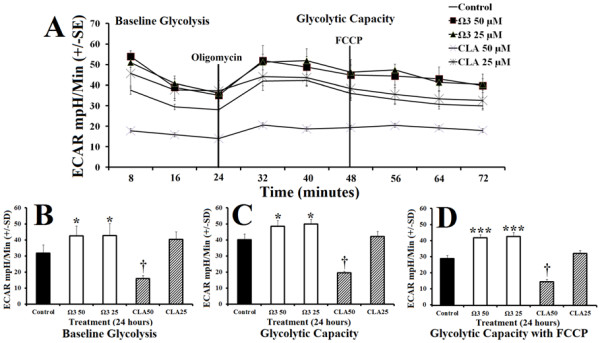
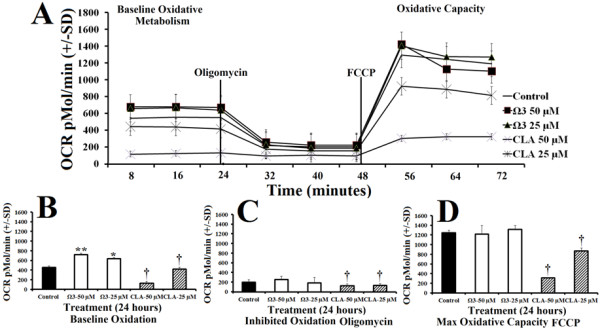
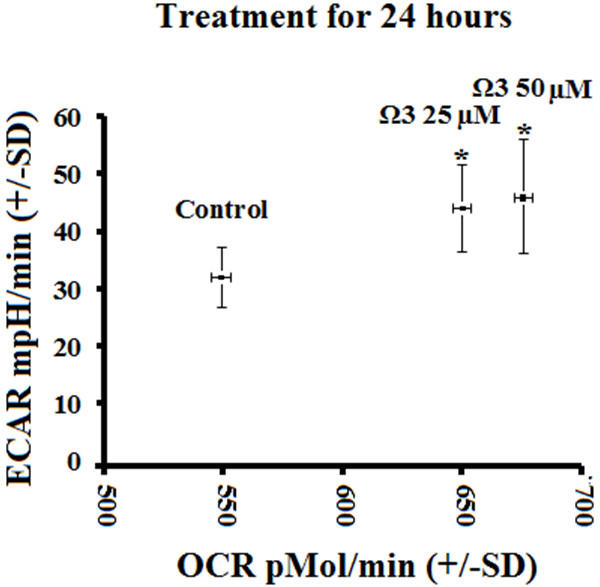
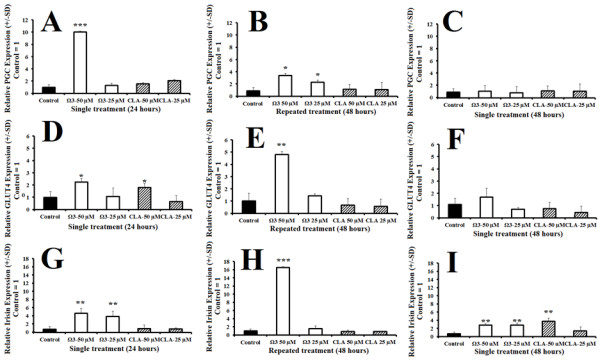
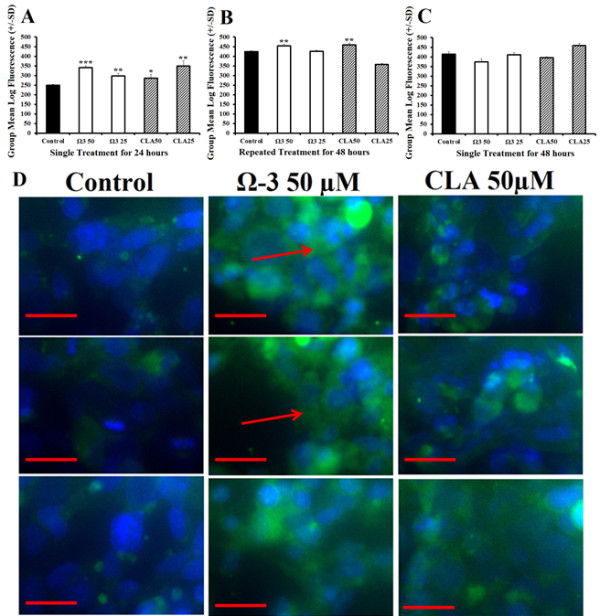
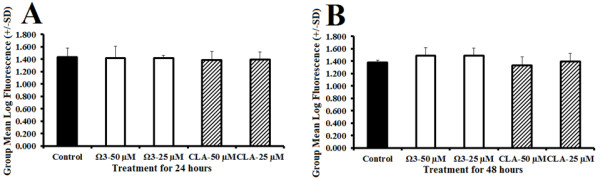
BACKGROUND: Polyunsaturated fatty acids are popular dietary supplements advertised to contribute to weight loss by increasing fat metabolism in liver, but the effects on overall muscle metabolism are less established. We evaluated the effects of conjugated linoleic acid (CLA) or combination omega 3 on metabolic characteristics in muscle cells. METHODS: Human rhabdomyosarcoma cells were treated with either DMSO control, or CLA or combination omega 3 for 24 or 48 hours. RNA was determined using quantitative reverse transcriptase polymerase chain reaction (qRT-PCR). Mitochondrial content was determined using flow cytometry and immunohistochemistry. Metabolism was quantified by measuring extracellular acidification and oxygen consumption rates. RESULTS: Omega 3 significantly induced metabolic genes as well as oxidative metabolism (oxygen consumption), glycolytic capacity (extracellular acidification), and metabolic rate compared with control. Both treatments significantly increased mitochondrial content. CONCLUSION: Omega 3 fatty acids appear to enhance glycolytic, oxidative, and total metabolism. Moreover, both omega 3 and CLA treatment significantly increase mitochondrial content compared with control.
Overview
The claims and statistics of this paper haven’t been checked yet.
Run the check — free, no account needed. It reads the open-access text and checks the sources it cites.
Integrity signals
Registry
Cites
Statistics
Figures
Verification
Claims the paper makes
The claims and statistics of this paper haven’t been checked yet.
Run the check — free, no account needed. It reads the open-access text and checks the sources it cites.
Claims other papers make about this one
Each is checked against this paper’s own text: does it say what the citing paper says it does?
In the citing paper
“Similarly, a human cell line study also reported that omega-3 treatment significantly induced both glycolytic and oxidative metabolism and increased mitochondrial content [92].”
From Mitochondrial Adaptation in Skeletal Muscle: Impact of Obesity, Caloric Restriction, and Dietary Compounds (2024) · cites this paper as [92]
In the citing paper
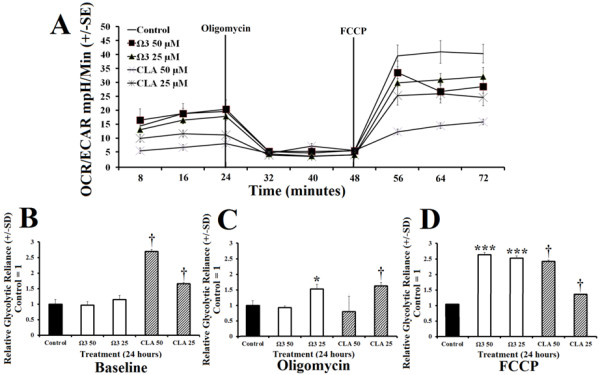
“Furthermore, a combination of EPA and DHA in rhabdomyosarcoma cells reduced the ratio between the oxygen consumption rate: extracellular acidification rate indicating a shift towards an increase on glycolytic reliance [94].”
From Omega-3 Fatty Acids and Skeletal Muscle Health (2015) · cites this paper as [94]
In the citing paper
“Multiple studies have observed an increase in GLUT4 expression [93,94]”
From Omega-3 Fatty Acids and Skeletal Muscle Health (2015) · cites this paper as [94]
Self-check
Percentages, sums and reported differences re-computed from the paper’s own numbers.
The self-check needs the paper’s full text.
Citations
Cites
A new mathematical model for relative quantification in real-time RT-PCR
Pfaffl, M. W. (2001) · Nucleic Acids Research · doi:10.1093/nar/29.9.e45 · Cited by 34,610
A PGC1-α-dependent myokine that drives brown-fat-like development of white fat and thermogenesis
Boström, P., Wu, J., Jedrychowski, M. P., Korde, A., Ye, L., Lo, J. C., Rasbach, K. A., Boström, E. A., Choi, J. H., Long, J. Z., et al. (2012) · Nature · doi:10.1038/nature10777 · Cited by 4,810
Wu, Z., Puigserver, P., Andersson, U., Zhang, C., Adelmant, G., Mootha, V., Troy, A., Cinti, S., Lowell, B., Scarpulla, R. C., et al. (1999) · Cell · doi:10.1016/s0092-8674(00)80611-x · Cited by 4,139
Patti, M. E., Butte, A. J., Crunkhorn, S., Cusi, K., Berria, R., Kashyap, S., Miyazaki, Y., Kohane, I., Costello, M., Saccone, R., et al. (2003) · Proceedings of the National Academy of Sciences · doi:10.1073/pnas.1032913100 · Cited by 1,952
Control of hepatic gluconeogenesis through the transcriptional coactivator PGC-1
Yoon, J. C., Puigserver, P., Chen, G., Donovan, J., Wu, Z., Rhee, J., Adelmant, G., Stafford, J., Kahn, C. R., Granner, D. K., et al. (2001) · Nature · doi:10.1038/35093050 · Cited by 1,821
Insulin-regulated hepatic gluconeogenesis through FOXO1–PGC-1α interaction
Puigserver, P., Rhee, J., Donovan, J., Walkey, C. J., Yoon, J. C., Oriente, F., Kitamura, Y., Altomonte, J., Dong, H., Accili, D., et al. (2003) · Nature · doi:10.1038/nature01667 · Cited by 1,487
Vega, R. B., Huss, J. M., & Kelly, D. P. (2000) · Molecular and Cellular Biology · doi:10.1128/mcb.20.5.1868-1876.2000 · Cited by 1,195
Omega-3 Fatty Acids and Inflammatory Processes
Calder, P. C. (2010) · Nutrients · doi:10.3390/nu2030355 · Cited by 1,116
Mootha, V. K., Handschin, C., Arlow, D., Xie, X., St. Pierre, J., Sihag, S., Yang, W., Altshuler, D., Puigserver, P., Patterson, N., et al. (2004) · Proceedings of the National Academy of Sciences · doi:10.1073/pnas.0401401101 · Cited by 688
Regulation of mitochondrial biogenesis in skeletal muscle by CaMK
Wu, H., Kanatous, S. B., Thurmond, F. A., Gallardo, T., Isotani, E., Bassel-Duby, R., & Williams, R. S. (2002) · Science · doi:10.1126/science.1071163 · Cited by 684
Research works printed but not linked: 1
- Duda MK, Xu WH, Tintinu A, O'Shea KM, Stanley WC: Eicosapentaenoic Acid (EPA) and Docosahexaenoic Acid (DHA) Supplementation, but not alpha-Linolenic Acid, Elevates Plasma Adiponectin Concentration and Prevents Pressure Overload Induced Ventricular Dysfunction and Remodeling. Circulation. 2008, 118: S542-S542.
Cited by
Sorted by citations
Fish oil–derived n−3 PUFA therapy increases muscle mass and function in healthy older adults
Smith, G. I., Julliand, S., Reeds, D. N., Sinacore, D. R., Klein, S., & Mittendorfer, B. (2015) · The American Journal of Clinical Nutrition · doi:10.3945/ajcn.114.105833 · Cited by 507
Omega-3 Polyunsaturated Fatty Acids: Benefits and Endpoints in Sport
Gammone, M. A., Riccioni, G., Parrinello, G., & D’Orazio, N. (2018) · Nutrients · doi:10.3390/nu11010046 · Cited by 326
Conjugated Linoleic Acid: Potential Health Benefits as a Functional Food Ingredient
Kim, J. H., Kim, Y., Kim, Y. J., & Park, Y. (2016) · Annual Review of Food Science and Technology · doi:10.1146/annurev-food-041715-033028 · Cited by 244
Omega-3 Fatty Acids and Skeletal Muscle Health
Jeromson, S., Gallagher, I., Galloway, S., & Hamilton, D. (2015) · Marine Drugs · doi:10.3390/md13116977 · Cited by 203
Lehnen, T. E., da Silva, M. R., Camacho, A., Marcadenti, A., & Lehnen, A. M. (2015) · Journal of the International Society of Sports Nutrition · doi:10.1186/s12970-015-0097-4 · Cited by 167
Metadata
- Authors
- Vaughan, R. A., Garcia-Smith, R., Bisoffi, M., Conn, C. A., & Trujillo, K. A.
- Affiliations
- University of New Mexico (US)
- Corresponding author
- Vaughan, Roger A
- Venue
- Lipids in Health and Disease
- Published
- 2012-10-30
- Volume
- 11
- Issue
- 1
- Pages
- 142-142
- ISSN
- 1476-511X (ISSN-L)
- PMC
- PMC3515476
- OpenAlex
- W2117258334
- Cited by
- 112
- References
- 48
- Citations by year
- 2026: 1 · 2025: 7 · 2024: 4 · 2023: 9 · 2022: 8 · 2021: 6 · 2020: 11 · 2019: 5 · 2018: 9 · 2017: 10 · 2016: 13 · 2015: 12 · 2014: 10 · 2013: 6 · 2012: 1
- FWCI
- 8.66
- Type
- journal article
- Language
- en
- Open access
- gold
- doi.org
- Licence
- Locations
- Lipids in Health and Disease (publishedVersion, cc-by)
- PubMed Central (publishedVersion, cc-by)
- PubMed (publishedVersion)
- DOAJ (DOAJ: Directory of Open Access Journals) (submittedVersion)
- Topics
- Health Sciences › Nursing › Nutrition and Dietetics › Fatty Acid Research and Health
- Health Sciences › Medicine › Physiology (medical) › Adipose Tissue and Metabolism
- Life Sciences › Biochemistry, Genetics and Molecular Biology › Molecular Biology › Mitochondrial Function and Pathology
- Keywords
- conjugated linoleic acid, omega-3 fatty acids, mitochondrial biogenesis, skeletal muscle metabolism, rhabdomyosarcoma cells, glycolysis, oxidative metabolism, extracellular acidification, oxygen consumption, polyunsaturated fatty acids, dietary supplements
- MeSH terms
- Peroxisome Proliferator-Activated Receptor Gamma Coactivator 1-alpha, Base Sequence, DNA, Fibronectins, Glycolysis, Heat-Shock Proteins, Humans, Mitochondria, Muscle, Oxygen Consumption, Transcription Factors, Tumor Cells, Cultured, Fatty Acids, Omega-3, Gene Expression, Muscle Fibers, Skeletal, Dietary Supplements, Linoleic Acids, Conjugated, Glucose Transporter Type 4
About these checks
Registry, retraction, Cites and statistics results are computed, not judged, with one exception: a printed reference that no index lists is read once by a model before it counts as a citation error. Claims are extracted by a model and kept only when their quote appears verbatim in the text; each cited source is then checked, with a model’s help, for whether it says what the claim relies on. Those verdicts can be wrong — read the claim’s quote and the cited source before relying on one.
Statistics and arithmetic are recomputed, not judged.
Confidence bands are shown only for fields calibrated on our annotated test set. None is calibrated yet, so no band is shown.
What counts as a claim ›How we measure confidence ›How we check this ›
Are you an author, or do you see a problem with this page? Request a review
