

Omega-3 fatty acids as treatments for mental illness: which disorder and which fatty acid?
Open accessThe DOI matches its Crossref record; 130 of the 132 references it cites were found in a registry or an index.
Abstract
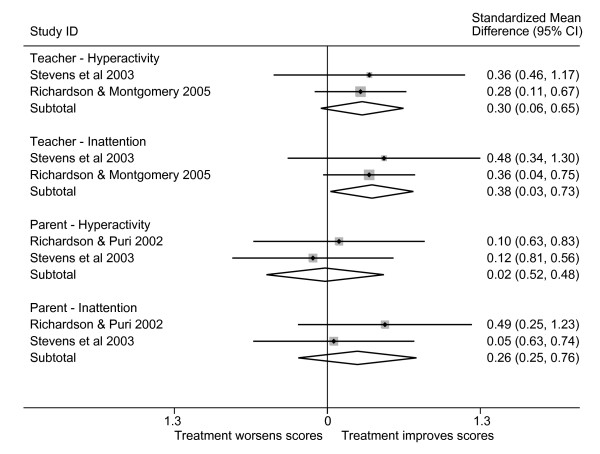
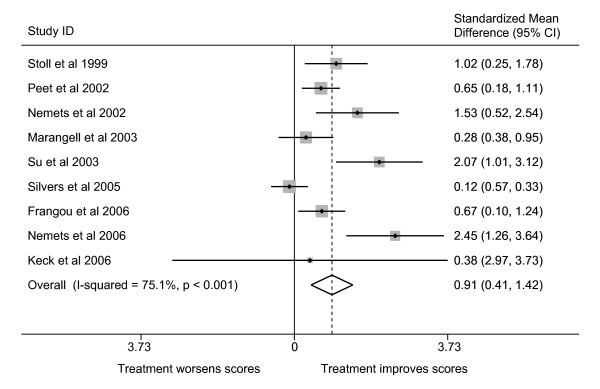
BACKGROUND: A growing number of observational and epidemiological studies have suggested that mental illness, in particular mood disorders, is associated with reduced dietary intake and/or cellular abundance of omega-3 polyunsaturated fatty acids (PUFA). This has prompted researchers to test the efficacy of omega-3 PUFA in a range of different psychiatric disorders. We have critically reviewed the double blind placebo controlled clinical trials published prior to April 2007 to determine whether omega-3 PUFA are likely to be efficacious in these disorders. RESULTS: Most trials involved a small number of participants but were largely well designed. Omega-3 PUFA were well tolerated by both children and adults with mild gastrointestinal effects being the only consistently reported adverse event. For schizophrenia and borderline personality disorder we found little evidence of a robust clinically relevant effect. In the case of attention deficit hyperactivity disorder and related disorders, most trials showed at most small benefits over placebo. A limited meta-analysis of these trials suggested that benefits of omega-3 PUFA supplementation may be greater in a classroom setting than at home. Some evidence indicates that omega-3 PUFA may reduce symptoms of anxiety although the data is preliminary and inconclusive. The most convincing evidence for beneficial effects of omega-3 PUFA is to be found in mood disorders. A meta-analysis of trials involving patients with major depressive disorder and bipolar disorder provided evidence that omega-3 PUFA supplementation reduces symptoms of depression. Furthermore, meta-regression analysis suggests that supplementation with eicosapentaenoic acid may be more beneficial in mood disorders than with docosahexaenoic acid, although several confounding factors prevented a definitive conclusion being made regarding which species of omega-3 PUFA is most beneficial. The mechanisms underlying the apparent efficacy of omega-3 PUFA in mood disorders compared to schizophrenia are discussed as is a rational for the possibly greater efficacy of EPA compared to DHA. CONCLUSION: While it is not currently possible to recommend omega-3 PUFA as either a mono- or adjunctive-therapy in any mental illness, the available evidence is strong enough to justify continued study, especially with regard to attentional, anxiety and mood disorders.
Overview
The claims and statistics of this paper haven’t been checked yet.
Free: it reads the open-access text and checks the first 5 claims that cite a source we can check. Create a free account to check every claim.
Integrity signals
Registry
Cites
Statistics
Figures
Verification
Claims the paper makes
The claims and statistics of this paper haven’t been checked yet.
Free: it reads the open-access text and checks the first 5 claims that cite a source we can check. Create a free account to check every claim.
Claims other papers make about this one
Each is checked against this paper’s own text: does it say what the citing paper says it does?
The cited source says what the claim attributes to it.
In the citing paper
“Finally, there is no consistent evidence from randomised control trials for the use of food supplements, such as omega-3 fatty acids ADHD [305].”
From European consensus statement on diagnosis and treatment of adult ADHD: The European Network Adult ADHD (2010) · cites this paper as [305]
Self-check
Percentages, sums and reported differences re-computed from the paper’s own numbers.
The self-check needs the paper’s full text.
Citations
Cites
Diagnostic and Statistical Manual of Mental Disorders
Williams, J. B. W., & First, M. (2013) · Encyclopedia of Social Work · doi:10.1093/acrefore/9780199975839.013.104 · Cited by 109,519
An inventory for measuring depression
BECK, A. T. (1961) · Archives of General Psychiatry · doi:10.1001/archpsyc.1961.01710120031004 · Cited by 38,032
Hamilton, M. (1960) · Journal of Neurology, Neurosurgery & Psychiatry · doi:10.1136/jnnp.23.1.56 · Cited by 32,817
The Positive and Negative Syndrome Scale (PANSS) for schizophrenia.
Kay, S. R., Fiszbein, A., & Opler, L. A. (1987) · Schizophrenia Bulletin · doi:10.1093/schbul/13.2.261 · Cited by 21,378
Assessing the quality of reports of randomized clinical trials: Is blinding necessary?
Jadad, A. R., Moore, R. A., Carroll, D., Jenkinson, C., Reynolds, D. J. M., Gavaghan, D. J., & McQuay, H. J. (1996) · Controlled Clinical Trials · doi:10.1016/0197-2456(95)00134-4 · Cited by 17,582
A new depression scale designed to be sensitive to change
Montgomery, S. A., & Åsberg, M. (1979) · British Journal of Psychiatry · doi:10.1192/bjp.134.4.382 · Cited by 13,962
Zhang, Q., Wang, C., Zheng, M., Li, Y., Li, J., Zhang, L., Shang, X., & Yan, C. (2015) · Cerebrovascular Diseases · doi:10.1159/000369778 · Cited by 11,533
(1976) · Medical Entomology and Zoology · Cited by 8,899
A Rating Scale for Mania: Reliability, Validity and Sensitivity
Young, R. C., Biggs, J. T., Ziegler, V. E., & Meyer, D. A. (1978) · British Journal of Psychiatry · doi:10.1192/bjp.133.5.429 · Cited by 8,744
The Yale-Brown Obsessive Compulsive Scale: I. Development, Use, and Reliability
Goodman, W. K. (1989) · Archives of General Psychiatry · doi:10.1001/archpsyc.1989.01810110048007 · Cited by 7,712
Cited by
Items 101–200 of 275
Plasma estradiol levels and antidepressant effects of omega-3 fatty acids in pregnant women
Nishi, D., Su, K., Usuda, K., Chang, J. P., Hamazaki, K., Ishima, T., Sano, Y., Ito, H., Isaka, K., Tachibana, Y., et al. (2019) · Brain Behavior and Immunity · doi:10.1016/j.bbi.2019.02.014 · Cited by 35
Laugero, K. D., Smilowitz, J. T., German, J. B., Jarcho, M. R., Mendoza, S. P., & Bales, K. L. (2011) · Prostaglandins Leukotrienes and Essential Fatty Acids · doi:10.1016/j.plefa.2010.12.003 · Cited by 36
Sublette, M. E., Daray, F. M., Ganança, L., & Shaikh, S. R. (2023) · Molecular Psychiatry · doi:10.1038/s41380-023-02322-6 · Cited by 37
Zararsız, İ., Meydan, S., Sarsılmaz, M., Songür, A., Özen, O. A., & Söğüt, S. (2011) · Toxicology and Industrial Health · doi:10.1177/0748233710389852 · Cited by 31
N-3 (Omega-3) Fatty Acids in Postpartum Depression: Implications for Prevention and Treatment
Levant, B. (2010) · Depression Research and Treatment · doi:10.1155/2011/467349 · Cited by 47
Essential fatty acid status in teenage girls with eating disorders and weight loss
Swenne, I., Rosling, A., Tengblad, S., & Vessby, B. (2011) · Acta Paediatrica · doi:10.1111/j.1651-2227.2011.02153.x · Cited by 30
The role of n-3 polyunsaturated fatty acids (n-3PUFAs) in affective disorders
Ciappolino, V., Delvecchio, G., Agostoni, C. V., Mazzocchi, A., Altamura, A. C., & Brambilla, P. (2016) · Journal of Affective Disorders · doi:10.1016/j.jad.2016.12.034 · Cited by 31
Metabolic Engineering of an Oleaginous Yeast for the Production of Omega-3 Fatty Acids
Zhu, Q., Xue, Z., Yadav, N., Damude, H. G., Pollak, D. W., Rupert, R., Seip, J. E., Hollerbach, D. H., Macool, D., Zhang, H., et al. (2010) · Elsevier eBooks · doi:10.1016/b978-1-893997-73-8.50007-4 · Cited by 28
Swenne, I., & Rosling, A. (2012) · Acta Paediatrica · doi:10.1111/j.1651-2227.2012.02684.x · Cited by 33
Plant Products for Pharmacology: Application of Enzymes in Their Transformations
Zarevúcká, M., & Wimmer, Z. (2008) · International Journal of Molecular Sciences · doi:10.3390/ijms9122447 · Cited by 27
Heterogeneity in major depressive disorder: The need for biomarker-based personalized treatments
Suseelan, S., & Pinna, G. (2022) · Advances in clinical chemistry · doi:10.1016/bs.acc.2022.09.001 · Cited by 33
Magnússon, C. D., Gudmundsdottir, A. V., & Haraldsson, G. G. (2011) · Tetrahedron · doi:10.1016/j.tet.2011.01.032 · Cited by 26
Role of Omega-3 PUFAs in Neurobiological Health
Grant, R., & Guest, J. (2016) · Advances in neurobiology · doi:10.1007/978-3-319-28383-8_13 · Cited by 29
Costa, A., Riça, L., van de Bilt, M., Zandonadi, F., Gattaz, W., Talib, L., & Sussulini, A. (2023) · Metabolites · doi:10.3390/metabo13050600 · Cited by 25
A clinical trials agenda for testing interventions in earlier stages of psychotic disorders
McGorry, P. D., Yung, A. R., Pantelis, C., & Hickie, I. B. (2009) · The Medical Journal of Australia · doi:10.5694/j.1326-5377.2009.tb02372.x · Cited by 24
Reis, R. S., Bernardi, J. R., Steiner, M. S., Meaney, M. J., Levitan, R. D., & Silveira, P. P. (2015) · Prostaglandins Leukotrienes and Essential Fatty Acids · doi:10.1016/j.plefa.2015.03.004 · Cited by 32
Ganança, L., Galfalvy, H., Oquendo, M. A., Hezghia, A., Cooper, T. B., Mann, J. J., & Sublette, M. E. (2017) · Prostaglandins Leukotrienes and Essential Fatty Acids · doi:10.1016/j.plefa.2017.03.004 · Cited by 27
Pascoe, M. C., Crewther, S. G., Carey, L. M., & Crewther, D. P. (2011) · Clinical Nutrition · doi:10.1016/j.clnu.2011.03.013 · Cited by 38
The mothers, Omega-3 and mental health study
Mozurkewich, E., Chilimigras, J. L., Klemens, C., Keeton, K., Allbaugh, L. J., Hamilton, S., Berman, D. R., Vázquez, D. M., Marcus, S. M., Djurić, Z., et al. (2011) · BMC Pregnancy and Childbirth · doi:10.1186/1471-2393-11-46 · Cited by 32
Ibrahim, F. A. S., Ghebremeskel, K., Abdel‐Rahman, M. E., Ahmed, A. A. M., Mohmed, I. M., Osman, G., Elseed, M. A., Hamed, A. A., Rabinowicz, A. L., Salih, M. A. M., et al. (2018) · Epilepsy & Behavior · doi:10.1016/j.yebeh.2018.08.016 · Cited by 25
A review of nutrient treatments for paediatric depression
Lopresti, A. L. (2015) · Journal of Affective Disorders · doi:10.1016/j.jad.2015.04.014 · Cited by 25
Controversies about a common etiology for eating and mood disorders
Rossetti, C., Halfon, O., & Boutrel, B. (2014) · Frontiers in Psychology · doi:10.3389/fpsyg.2014.01205 · Cited by 30
Magnússon, C. D., & Haraldsson, G. G. (2012) · Chemistry and Physics of Lipids · doi:10.1016/j.chemphyslip.2012.07.005 · Cited by 21
Santos-Soto, I. J., Chorna, N., Carballeira, N. M., Vélez-Bartolomei, J. G., Méndez-Merced, A. T., Chornyy, A. P., & de Ortíz, S. P. (2013) · PLoS ONE · doi:10.1371/journal.pone.0081459 · Cited by 28
Emerging drugs for schizophrenia
Biedermann, F., & Fleischhacker, W. W. (2011) · Expert Opinion on Emerging Drugs · doi:10.1517/14728214.2011.556112 · Cited by 26
Lipids, Fatty Acids, Glycolipids, and Phospholipids
Wielgosz‐Collin, G., Kendel, M., & Couzinet‐Mossion, A. (2016) · Elsevier eBooks · doi:10.1016/b978-0-12-802772-1.00007-5 · Cited by 24
Komplementäre Ansätze zur Behandlung von depressiven Störungen bei Kindern und Jugendlichen
Dolle, K., & Schulte‐Körne, G. (2014) · Praxis der Kinderpsychologie und Kinderpsychiatrie · doi:10.13109/prkk.2014.63.3.237 · Cited by 21
Laino, C. H., Garcia, P., Podestá, M. F., Höcht, C., Slobodianik, N., & Reinés, A. G. (2014) · Journal of Pharmaceutical Sciences · doi:10.1002/jps.24123 · Cited by 21
Matsuoka, Y., Nishi, D., Yonemoto, N., Hamazaki, K., Matsumura, K., Noguchi, H., Hashimoto, K., & Hamazaki, T. (2013) · BMC Psychiatry · doi:10.1186/1471-244x-13-8 · Cited by 26
Park, S., Lee, D., Kim, B., Na, K., Lee, C.-H., Son, Y., & Lee, H. (2020) · Nutrients · doi:10.3390/nu12082191 · Cited by 22
Fish Consumption and Heart Rate Variability: Preliminary Results
Hansen, A. L., Dahl, L., Bakke, L., Frøyland, L., & Thayer, J. F. (2010) · Journal of Psychophysiology · doi:10.1027/0269-8803/a000005 · Cited by 23
Chronic consumption of trans fat can facilitate the development of hyperactive behavior in rats
Pase, C. S., Roversi, K., Trevizol, F., Kuhn, F. T., Dias, V. T., Roversi, K., Vey, L. T., Antoniazzi, C. T. D. D., Barcelos, R. C. S., & Bürger, M. E. (2014) · Physiology & Behavior · doi:10.1016/j.physbeh.2014.11.059 · Cited by 21
Marine omega‐3 fatty acids and mood disorders – linking the sea and the soul: ‘Food for Thought’ I
Hegarty, B. D., & Parker, G. B. (2011) · Acta Psychiatrica Scandinavica · doi:10.1111/j.1600-0447.2011.01703.x · Cited by 24
Involvement of omega-3 fatty acids in emotional responses and hyperactive symptoms
Lavialle, M., Denis, I., Guesnet, P., & Vancassel, S. (2010) · The Journal of Nutritional Biochemistry · doi:10.1016/j.jnutbio.2009.12.005 · Cited by 26
Fatty Acid Facts, Part I. Essential Fatty Acids as Treatment for Depression, or Food for Mood?*
Pawels, E. K. J., & Volterrani, D. (2008) · Drug News & Perspectives · doi:10.1358/dnp.2008.21.8.1272136 · Cited by 23
Yang, Y., Wang, X., Chen, L., Wang, S., Han, J., Wang, Z., & Wen, M. (2023) · Marine Drugs · doi:10.3390/md21090464 · Cited by 20
Nutritional Cues Tie Living Organisms to Their Environment and Its Sustainability
Adams, M. S., Adams, R. B., Wessman, C. A., & Demmig‐Adams, B. (2016) · Frontiers in Nutrition · doi:10.3389/fnut.2016.00028 · Cited by 23
Oshima, Y., Watanabe, T., Endo, S., Hata, S., Watanabe, T., Osada, K., & Takenaka, A. (2017) · Bioscience Biotechnology and Biochemistry · doi:10.1080/09168451.2017.1403888 · Cited by 20
Ciappolino, V., Mazzocchi, A., Enrico, P., Syrén, M., Delvecchio, G., Agostoni, C. V., & Brambilla, P. (2018) · International Journal of Molecular Sciences · doi:10.3390/ijms19071849 · Cited by 23
McNamara, R. K. (2009) · Cardiovascular Psychiatry and Neurology · doi:10.1155/2009/362795 · Cited by 19
Aspectos nutricionales en el trastorno por déficit de atención/hiperactividad
del Álamo, J. Q. G., Rodríguez-Quirós, J., Correas-Lauffer, J., & de Guevara, J. P.-T. L. (2009) · Revista de Neurología · doi:10.33588/rn.4906.2009209 · Cited by 27
Hakimian, J. K., Minasyan, A., Zhe-Ying, L., Loureiro, M., Beltrand, A., Johnston, C. R., Vorperian, A., Romaneschi, N., Atallah, W., Gómez‐Pinilla, F., et al. (2017) · PLoS ONE · doi:10.1371/journal.pone.0175090 · Cited by 17
Kuipers, R. S., Luxwolda, M. F., Dijck-Brouwer, J., & Muskiet, F. A. J. (2011) · Prostaglandins Leukotrienes and Essential Fatty Acids · doi:10.1016/j.plefa.2011.04.015 · Cited by 19
N-3 polyunsaturated fatty acids in psychiatric diseases: mechanisms and clinical data.
Zeman, M., Jirák, R., Vecka, M., Raboch, J., & Žák, A. (2012) · PubMed · Cited by 17
Michael-Titus, A. T. (2009) · Clinical Lipidology · doi:10.2217/clp.09.19 · Cited by 16
Fogaça, M. N., Galduróz, J. C. F., Eserian, J. K., & Galduróz, J. C. F. (2011) · BMC Clinical Pharmacology · doi:10.1186/1472-6904-11-10 · Cited by 18
Bhattacharya, S., Chattopadhyaya, B., Koduru, L., Das, N., & Maiti, M. K. (2014) · Plant Cell Tissue and Organ Culture (PCTOC) · doi:10.1007/s11240-014-0518-0 · Cited by 14
Application of fatty acid and lipid measurements in neuropsychiatry
Grela, A., Rachel, W., Cole, M., Zyss, T., Zięba, A., & Piekoszewski, W. (2015) · Clinical Chemistry and Laboratory Medicine (CCLM) · doi:10.1515/cclm-2015-0394 · Cited by 15
New Approaches to the Pharmacological Management of Major Depressive Disorder
Witkin, J. M., & Li, X. (2009) · Advances in pharmacology · doi:10.1016/s1054-3589(08)57009-8 · Cited by 15
Dietary omega-3 polyunsaturated fatty acid supplementation in an animal model of anxiety
Ross, B. M., Malik, I., & Babay, S. (2016) · Prostaglandins Leukotrienes and Essential Fatty Acids · doi:10.1016/j.plefa.2016.09.004 · Cited by 14
Self-citationNutritional supplementation in the treatment of violent and aggressive behavior: A systematic review
Qureshi, F., Kunaratnam, N., Kolla, N. J., & Thege, B. K. (2021) · Aggressive Behavior · doi:10.1002/ab.21953 · Cited by 17
Jašarević, E., Hecht, P. M., Fritsche, K. L., Beversdorf, D. Q., & Geary, D. C. (2014) · Neurobiology of Learning and Memory · doi:10.1016/j.nlm.2014.08.009 · Cited by 14
Kim, Q., Conus, P., & Cuénod, M. (2010) · Lifestyle Genomics · doi:10.1159/000324366 · Cited by 16
Miao, L., Remø, S. C., Espe, M., Prabhu, P. A. J., Hamre, K., Fjelldal, P., Skjærven, K. H., Holen, E., Vikeså, V., & Sissener, N. H. (2022) · Fish & Shellfish Immunology · doi:10.1016/j.fsi.2022.02.049 · Cited by 13
Callicrate, T., Siewerdt, F., Koutsos, E. A., & Estévez, I. (2011) · Applied Animal Behaviour Science · doi:10.1016/j.applanim.2010.11.014 · Cited by 14
Nishi, D., Su, K., Usuda, K., Chiang, Y. J., Guu, T., Hamazaki, K., Nakaya, N., Sone, T., Sano, Y., Tachibana, Y., et al. (2016) · BMC Psychiatry · doi:10.1186/s12888-016-1031-2 · Cited by 12
Ouyang, W., Sun, G., & Hsu, M. (2019) · Aggression and Violent Behavior · doi:10.1016/j.avb.2019.101347 · Cited by 13
Rincón‐Cervera, M. Á., Bravo, R., Freitas, R. A. M. S., López‐Arana, S., & de Camargo, A. C. (2021) · Elsevier eBooks · doi:10.1016/b978-0-12-823569-0.00005-9 · Cited by 17
Depressive symptoms in chronic hepatitis C are associated with plasma apolipoprotein E deficiency
Sheridan, D. A., Bridge, S. H., Crossey, M. M. E., Felmlee, D. J., Thomas, H. C., Neely, R. D. G., Taylor-Robinson, S. D., & Bassendine, M. F. (2014) · Metabolic Brain Disease · doi:10.1007/s11011-014-9520-9 · Cited by 14
Woo, J., Couturier, J. L., Pindiprolu, B., Picard, L., Maertens, C., Leclerc, A., Findlay, S. M., Johnson, N., Grant, C., & Kimber, M. (2016) · Eating Disorders · doi:10.1080/10640266.2016.1260379 · Cited by 11
Jacenik, D., Bagüés, A., López‐Gómez, L., López‐Tofiño, Y., Iriondo‐DeHond, A., Serra, C., Banovcanová, L., Gálvez-Robleño, C., Fichna, J., del Castillo, M. D., et al. (2021) · Nutrients · doi:10.3390/nu13061864 · Cited by 12
Lessons from Shore‐based Hunter‐Gatherer Diets in East Africa
Muskiet, F. A. J., & Kuipers, R. S. (2010) · Wiley eBooks · doi:10.1002/9780470609880.ch5 · Cited by 14
Metabolic Insights into Neuropsychiatric Illnesses and Ketogenic Therapies: A Transcriptomic View
Sahay, S., Pulvender, P., Reddy, M. V. S. R. R., McCullumsmith, R. E., & O'Donovan, S. M. (2024) · International Journal of Molecular Sciences · doi:10.3390/ijms25158266 · Cited by 12
Mi-mba, M.-F. O. M., Lebbadi, M., Alata, W., Julien, C., Émond, V., Tremblay, C., Fortin, S., Barrow, C. J., Bilodeau, J., & Calon, F. (2024) · Journal of Lipid Research · doi:10.1016/j.jlr.2024.100682 · Cited by 15
Body Composition of Young Women and the Consumption of Selected Nutrients
Karpińska, E., Moskwa, J., Puścion‐Jakubik, A., Naliwajko, S. K., Soroczyńska, J., Markiewicz‐Żukowska, R., & Socha, K. (2022) · Nutrients · doi:10.3390/nu15010129 · Cited by 14
Rheims, S., Herbillon, V., Gaillard, S., Mercier, C., Villeuve, N., Villega, F., Cancés, C., Castelnau, P., Napuri, S., Martin, A. D. S., et al. (2024) · Epilepsia Open · doi:10.1002/epi4.12892 · Cited by 11
Anti-Inflammatory Therapy as a Promising Target in Neuropsychiatric Disorders
Ballaz, S., & Bourin, M. (2023) · Advances in experimental medicine and biology · doi:10.1007/978-981-19-7376-5_20 · Cited by 17
Laugero, K. D., Adkins, Y. C., Mackey, B. E., & Kelley, D. S. (2017) · Nutrients · doi:10.3390/nu9090993 · Cited by 10
The role of pharmacotherapy in the management of self-regulation difficulties in young children.
Reebye, P. N., & Elbe, D. (2009) · Europe PMC (PubMed Central) · Cited by 12
Anxiolytic‐Like Actions of Fatty Acids Identified in Human Amniotic Fluid
García-Ríos, R. I., Rodríguez‐Landa, J. F., & Contreras, C. M. (2013) · The Scientific World JOURNAL · doi:10.1155/2013/823289 · Cited by 9
Manteghiy, A., Shakeri, M. T., Koohestani, L., & Salari, E. (2008) · Cited by 13
Linking Omega-3 Fatty Acids and Depression
Godos, J., Castellano, S., Galvano, F., & Grosso, G. (2019) · Elsevier eBooks · doi:10.1016/b978-0-12-815238-6.00013-4 · Cited by 14
Metabolomics: A Global Biochemical Approach to the Discovery of Biomarkers for Psychiatric Disorders
Kaddurah‐Daouk, R., Soares, J. C., & Quinones, M. P. (2008) · Springer eBooks · doi:10.1007/978-0-387-79251-4_6 · Cited by 11
Schizophrenia and Related Psychoses
(2021) · Wiley eBooks · doi:10.1002/9781119870203.mpg001 · Cited by 9
N-3 Fatty Acids for Hypertriglyceridemia in Patients Taking Second-Generation Antipsychotics
Fetter, J. C., Brunette, M., & Green, A. I. (2013) · Clinical Schizophrenia & Related Psychoses · doi:10.3371/csrp.febr.012513 · Cited by 7
Omega-3 fatty acids and health of auditory and vestibular systems: a comprehensive review
Rahimi, V., Tavanai, E., Falahzadeh, S., Ranjbar, A. R., & Farahani, S. (2024) · European Journal of Nutrition · doi:10.1007/s00394-024-03369-z · Cited by 9
Hunter New England Mental Health Neuropsychiatry Service, A., Miles, L., Simpson, M., Butler, T. G., Wood, L. G., Knight, L., Greenberg, D. A., Justice Health & Forensic Mental Health Network, A., Schofield, P. W., & Hunter New England Mental Health Neuropsychiatry Service, A. (2018) · Journal of Psychiatry and Behavioral Sciences · doi:10.33582/2637-8027/1002 · Cited by 7
Agah, S., Shidfar, F., Khandouzi, N., Baghestani, A. R., & Hosseini, S. (2014) · Iranian Red Crescent Medical Journal · doi:10.5812/ircmj.17652 · Cited by 8
Nishi, D., Su, K., Usuda, K., Chang, J. P., Chiang, Y. J., Guu, T., Hamazaki, K., Nakaya, N., Sone, T., Hashimoto, K., et al. (2017) · Nutritional Neuroscience · doi:10.1080/1028415x.2017.1354540 · Cited by 8
Production and Nutraceutical Properties of Breads Fortified with DHA- and Omega-3-Containing Oils
Serna-Saldivar, S. O., & Abril, R. (2011) · Elsevier eBooks · doi:10.1016/b978-0-12-380886-8.10029-7 · Cited by 10
Essential fatty acids and Barratt impulsivity in gambling disorder
Sánchez-Páez, P., Pérez-Templado, J., Sáiz-Ruiz, J., Pastor, Ó., & Ibáñez, Á. (2020) · BMC Psychiatry · doi:10.1186/s12888-020-02496-1 · Cited by 7
Grung, B., Hansen, A. L., Berg, M. K., ̧en-Knudseth, M. P. M., Olson, G., Thornton, D. M., Dahl, L., & Thayer, J. F. (2015) · Frontiers in Psychology · doi:10.3389/fpsyg.2015.00135 · Cited by 6
You are what you eat: of fish, fat and folate in late-life psychiatric disorders
Bhat, R. S. (2009) · Current Opinion in Psychiatry · doi:10.1097/yco.0b013e3283308e3a · Cited by 7
Relationships among skin conditions, mood, and polyunsaturated fatty acids of RBCs in healthy women.
Hamazaki-Fujita, N., Itomura, M., Hamazaki, K., Tohno, H., Yomoda, S., Terashima, Y., & Hamazaki, T. (2012) · PubMed · Cited by 6
McNamara, R. K. (2009) · Clinical Lipidology · doi:10.2217/clp.09.62 · Cited by 7
Khandouzi, N., Shidfar, F., Agah, S., Hosseini, A. F., & Dehnad, A. (2015) · PubMed Central · Cited by 8
EFSA Panel on Dietetic Products, N. A. A. (. (2011) · EFSA Journal · doi:10.2903/j.efsa.2011.2050 · Cited by 7
Attention deficit hyperactivity disorder (ADHD)
(2011) · Elsevier eBooks · doi:10.1016/b978-0-7295-3908-1.10006-5 · Cited by 6
Ross, B. M. (2008) · Lipid Insights · doi:10.4137/lpi.s1013 · Cited by 6
Self-citationRababah, T., Flieh, S. M., Alu'datt, M. H., Gammoh, S., Magableh, G. M., Ajouly, T., Almajwal, A. M., & Al-Rayyan, N. (2024) · Research in Autism · doi:10.1016/j.rasd.2024.102386 · Cited by 6
REVIEW ON THERAPEUTIC EFFECTS MEDIATED BY OMEGA-3 FATTY ACIDS IN ALZHEIMER’S DISEASE
Sati, A., & Priyanka, B. (2018) · Asian Journal of Pharmaceutical and Clinical Research · doi:10.22159/ajpcr.2018.v11i2.22435 · Cited by 7
Fleig, K., Haslinger, L., Dawczynski, C., & Kolassa, I. (2026) · Frontiers in Nutrition · doi:10.3389/fnut.2026.1748196 · Cited by 6
Pinto, B., Domingues, I., Ferreira, H. B., Melo, T., & Domingues, M. R. (2025) · Journal of Nutrition · doi:10.1016/j.tjnut.2025.08.003 · Cited by 4
Immunomodulation as Therapeutic Approach in Schizophrenia and Depression: State of the Art
Müller, N. (2015) · Current topics in neurotoxicity · doi:10.1007/978-3-319-13602-8_17 · Cited by 5
Ginter, E., & Simko, M. D. (2010) · Bratislavské lekárske listy/Bratislava medical journal · doi:10.1007/bf03657475 · Cited by 4
Martins, J. G. (2011) · Oléagineux Corps gras Lipides · doi:10.1684/ocl.2011.0402 · Cited by 6
Serum cholesterol and depression: An update
Rathi, M., Singh, S., Yadav, S., Mittra, P., & Budania, S. (2014) · Medical Journal of Dr D Y Patil University · doi:10.4103/0975-2870.140361 · Cited by 4
Antioxidant Interventions in Neuropsychiatric Disorders
Pillai, A., & Yao, J. K. (2014) · Oxidative stress in applied basic research and clinical practice · doi:10.1007/978-1-4939-0440-2_25 · Cited by 4
Puri, B., Tsaluchidu, S., & Treasaden, I. (2009) · World Review of Nutrition and Dietetics · doi:10.1159/000192993 · Cited by 3
Klemens, C., Salari, K., & Mozurkewich, E. (2012) · Clinical Lipidology · doi:10.2217/clp.12.1 · Cited by 5
Metadata
- Authors
- Ross, B. M., Seguin, J., & Sieswerda, L. E.
- Affiliations
- Lakehead University (CA)
- Thunder Bay District Health Unit (CA)
- Corresponding author
- Ross, Brian M
- Venue
- Lipids in Health and Disease
- Published
- 2007
- Volume
- 6
- Issue
- 1
- Pages
- 21
- ISSN
- 1476-511X (ISSN-L)
- PMC
- PMC2071911
- OpenAlex
- W2117752152
- Cited by
- 275
- References
- 132
- Citations by year
- 2026: 7 · 2025: 6 · 2024: 8 · 2023: 7 · 2022: 5 · 2021: 12 · 2020: 4 · 2019: 6 · 2018: 12 · 2017: 12 · 2016: 22 · 2015: 19 · 2014: 22 · 2013: 19 · 2012: 22
- FWCI
- 17.65
- Type
- journal article
- Language
- en
- Open access
- gold
- doi.org
- Licence
- cc-by
- Locations
- Lipids in Health and Disease (publishedVersion, cc-by)
- PubMed Central (publishedVersion, cc-by)
- PubMed (publishedVersion)
- DOAJ (DOAJ: Directory of Open Access Journals) (submittedVersion, cc-by-sa)
- Funders
- Lakehead University
- Topics
- Health Sciences › Nursing › Nutrition and Dietetics › Fatty Acid Research and Health
- Life Sciences › Neuroscience › Biological Psychiatry › Tryptophan and brain disorders
- Health Sciences › Medicine › Pharmacology (medical) › Treatment of Major Depression
- Keywords
- omega-3 polyunsaturated fatty acids, dietary supplementation, mental illness, mood disorders, major depressive disorder, bipolar disorder, schizophrenia, borderline personality disorder, attention deficit hyperactivity disorder, anxiety, eicosapentaenoic acid, docosahexaenoic acid, meta-regression
- MeSH terms
- Animals, Mental Disorders, Humans, Personality, Meta-Analysis as Topic, Fatty Acids, Omega-3, Randomized Controlled Trials as Topic
About these checks
Registry, retraction, Cites and statistics results are computed, not judged, with one exception: a printed reference that no index lists is read once by a model before it counts as a citation error. Claims are extracted by a model and kept only when their quote appears verbatim in the text; each cited source is then checked, with a model’s help, for whether it says what the claim relies on. Those verdicts can be wrong — read the claim’s quote and the cited source before relying on one.
Statistics and arithmetic are recomputed, not judged.
Confidence bands are shown only for fields calibrated on our annotated test set. None is calibrated yet, so no band is shown.
What counts as a claim ›How we measure confidence ›How we check this ›
Are you an author, or do you see a problem with this page? Request a review
Data sources
Bibliographic data: Semantic Scholar, OpenAlex, Crossref.
Contains information from the Semantic Scholar Academic Graph Datasets, made available under the ODC Attribution License (ODC-BY 1.0).
Semantic Scholar’s data is described in: Kinney, R., et al. (2023). The Semantic Scholar Open Data Platform. arXiv:2301.10140.
