

Predictors of quality of life in a longitudinal study of users with severe mental disorders
Open accessThe DOI matches its Crossref record; 94 of the 94 references it cites were found in a registry or an index.
Abstract
BACKGROUND: Since the end of the 20th century, quality of life has become a key outcome indicator in planning and evaluation of health services. From a sample of 297 users with severe mental disorders from Montreal (Canada), this study aimed to identify the key predictors of subjective quality of life (SQOL). METHODS: Users were recruited and interviewed from December 2008 to September 2010 and re-interviewed approximately 18 months later. A comprehensive framework including socio-demographic data, clinical, needs and functionality variables, negative life events, social support and healthcare service use, and appreciation data were considered as predictors. Clinical records and eight standardized instruments were used. RESULTS: Lower severity of needs, schizophrenia, better social integration, better reassurance of worth, fewer drug abuse problems, and living in supervised housing are predictors of SQOL. With regard to needs, absence or lower severity of needs in the areas of company, daytime activities, social exclusion, safety to self, and benefits are linked to SQOL. CONCLUSION: Reducing the severity of needs is especially beneficial to ensure a higher SQOL for users with severe mental disorders. To improve SQOL, priority must be given to programs and interventions that promote the development of a stimulating and supportive social network, and maintain a plurality of residential services matching the functional abilities of users.
Overview
The claims and statistics of this paper haven’t been checked yet.
Free: it reads the open-access text and checks the first 5 claims that cite a source we can check. Create a free account to check every claim.
Integrity signals
Registry
Cites
Statistics
Figures
Verification
Claims the paper makes
The claims and statistics of this paper haven’t been checked yet.
Free: it reads the open-access text and checks the first 5 claims that cite a source we can check. Create a free account to check every claim.
Claims other papers make about this one
Each is checked against this paper’s own text: does it say what the citing paper says it does?
The cited source says what the claim attributes to it.
In the citing paper
“They reported that greater perceived social support was significantly predictive of higher subjective quality of life at 18 months (beta 0.136 to 0.196, 95% CI 0.255 to 3.410).”
From Associations between loneliness and perceived social support and outcomes of mental health problems: a systematic review (2018) · cites this paper as [67]
Self-check
Percentages, sums and reported differences re-computed from the paper’s own numbers.
The self-check needs the paper’s full text.
Citations
Cites
Diagnostic and Statistical Manual of Mental Disorders, 5th Edition
(2013) · American Psychiatric Association Publishing eBooks · doi:10.1176/appi.books.9780890425596.893619 · Cited by 4,383
Recovery from mental illness: the guiding vision of the mental health service system in the 1990s
Anthony, W. A. (1993) · Psychosocial Rehabilitation Journal · doi:10.1037/h0095655 · Cited by 3,700
Bohn, M. J., Babor, T. F., & Kranzler, H. R. (1995) · Journal of Studies on Alcohol · doi:10.15288/jsa.1995.56.423 · Cited by 1,356
Chronic mental patients: the quality of life issue
(1982) · American Journal of Psychiatry · doi:10.1176/ajp.139.10.1271 · Cited by 466 · cited 4×
“The first mental health studies of QOL [6,7] occurred at a time when it became necessary to expand community services for users discharged from psychiatric hospitals.”
BackgroundInfluentialQuality of life in the evaluation of community support systems
Baker, F., & Intagliata, J. (1982) · Evaluation and Program Planning · doi:10.1016/0149-7189(82)90059-3 · Cited by 409 · cited 9×
“Satisfaction with Life Domains Scale (SLDS) [6] Assesses satisfaction in 20 life domains; seven-point Likert scale, questions; Cronbach alpha: 0.”
BackgroundMethodInfluentialSocial support and adaptation to stress by the elderly
Cutrona, C., Russell, D., & Rose, J. (1986) · Psychology and Aging · doi:10.1037/0882-7974.1.1.47 · Cited by 337 · cited 9×
“Abbreviations ACSS-MH: Alberta Continuity of Services Scale for Mental Health; AUDIT: Alcohol use disorders identification test; CAN: Camberwell assessment of need; CCHS: Canadian community health survey; DAST20: Drug abuse screening test-20; HSSC: Health and social services centers; MANQ: Montreal assessment of needs…”
BackgroundMethodInfluentialPsychometric properties of the Drug Abuse Screening Test in psychiatric outpatients.
Cocco, K. M., & Carey, K. B. (1998) · Psychological Assessment · doi:10.1037//1040-3590.10.4.408 · Cited by 336 · cited 7×
“The six other standardized instruments used for this study both at T0 and TI are described in detail in Table 1: the Social Provisions Scale (SPS), the Multnomah Community Ability Scale (MCAS), the Alcohol Use Disorders Identification Test (AUDIT), the Drug Abuse Screening Test-20 (DAST-20), the Alberta Continuity of…”
BackgroundInfluentialThe Canadian Community Health Survey: Mental Health and Well-Being
Gravel, R., & Béland, Y. (2005) · The Canadian Journal of Psychiatry · doi:10.1177/070674370505001002 · Cited by 302 · cited 3×
“Service Utilization Questionnaire (SUQ) [68] Derived from the Canadian Health Survey Questionnaire (CCHS) Evaluates types and frequency of professionals and services used Visit to any healthcare professional or services”
MethodSubjective and objective quality of life in schizophrenia
Narvaez, J. M., Twamley, E. W., McKibbin, C. L., Heaton, R. K., & Patterson, T. L. (2008) · Schizophrenia Research · doi:10.1016/j.schres.2007.09.001 · Cited by 269
Becker, M., Diamond, R., & Sainfort, F. (1993) · Quality of Life Research · doi:10.1007/bf00434796 · Cited by 260 · cited 1×
“The SLDS is among the scales that were included in their entirety in the Wisconsin Quality of Life index, a multidimensional instrument containing 113 items [71,72].”
Quality of life in schizophrenia: contributions of anxiety and depression
Huppert, J. D., Weiss, K. A., Lim, R., Pratt, S., & Smith, T. E. (2001) · Schizophrenia Research · doi:10.1016/s0920-9964(99)00151-6 · Cited by 254
Comparison of Quality of Life with Standard of Living in Schizophrenic Out-patients
Skantze, K., Malm, U., Dencker, S. J., May, P. R. A., & Corrigan, P. (1992) · British Journal of Psychiatry · doi:10.1192/bjp.161.6.797 · Cited by 218 · cited 1×
“SQOL is thus independent of the standard of living (Objective QOL) among users with schizophrenia [85].”
BackgroundThrasher, F. M. (1930) · Religious Education · doi:10.1080/0034408300250503 · Cited by 207
Kyle, T., & Dunn, J. R. (2007) · Health & Social Care in the Community · doi:10.1111/j.1365-2524.2007.00723.x · Cited by 196
Bengtsson-Tops, A., & Hansson, L. (2001) · International Journal of Social Psychiatry · doi:10.1177/002076400104700307 · Cited by 196 · cited 1×
“with less severe psychiatric symptoms [1,34] and better cognitive performance [20] presented a higher SQOL.”
BackgroundPatient-rated mental health needs and quality of life improvement
Slade, M., Leese, M., Cahill, S., Thornicroft, G., & Kuipers, E. (2005) · British Journal of Psychiatry · doi:10.1192/bjp.187.3.256 · Cited by 191 · cited 5×
“Unmet basic and functioning needs are also associated with lower SQOL [25].”
BackgroundInfluentialYanos, P. T., Rosenfield, S., & Horwitz, A. V. (2001) · Community Mental Health Journal · doi:10.1023/a:1017528029127 · Cited by 180 · cited 1×
“Stigma and self-stigma are social variables negatively associated with SQOL [39,40].”
BackgroundAge, Gender and Quality of Life
Mercier, C., Péladeau, N., & Tempier, R. (1998) · Community Mental Health Journal · doi:10.1023/a:1018790429573 · Cited by 167 · cited 3×
“Women show a higher SQOL than men [44]; the same is true for older versus younger users [45].”
BackgroundDoes Meeting Needs Improve Quality of Life?
Slade, M., Leese, M., Ruggeri, M., Kuipers, E., Tansella, M., & Thornicroft, G. (2004) · Psychotherapy and Psychosomatics · doi:10.1159/000076456 · Cited by 167 · cited 5×
“Studies concerning perceived needs have found that quality of life improves when the number of serious needs decreases [24-26,29,30,38].”
BackgroundInfluentialArnold, L. M., Witzeman, K. A., Swank, M. L., McElroy, S. L., & Keck, P. E. (2000) · Journal of Affective Disorders · doi:10.1016/s0165-0327(99)00042-7 · Cited by 158 · cited 2×
“Those studies found that SQOL is strongly associated with clinical variables [3,4,16-20] and perceived needs [21-30].”
BackgroundSocial outcomes in schizophrenia
Priebe, S. (2007) · British Journal of Psychiatry · doi:10.1192/bjp.191.50.s15 · Cited by 152 · cited 6×
“Users with chronic schizophrenia can be satisfied with their SQOL despite living conditions that would be considered unpleasant to clinicians or the general population [86].”
BackgroundInfluentialBengtsson‐Tops, A., & Hansson, L. I. (1999) · Social Psychiatry and Psychiatric Epidemiology · doi:10.1007/s001270050169 · Cited by 143 · cited 1×
“This result compares with previous studies, which found that unmet needs (serious problems) [24,78-80] had a highly negative impact on SQOL.”
ResultOccupation, social support and quality of life in persons with schizophrenic or affective disorders
Rüesch, P., Graf, J., Meyer, P. C., Wulf Rössler, A., & Hell, D. (2004) · Social Psychiatry and Psychiatric Epidemiology · doi:10.1007/s00127-004-0812-y · Cited by 142
Slade, M., Leese, M., Taylor, R., & Thornicroft, G. (1999) · Acta Psychiatrica Scandinavica · doi:10.1111/j.1600-0447.1999.tb10836.x · Cited by 134 · cited 1×
“Findings using the CAN as the needs instrument made a distinction between serious problems, moderate problems and absence of needs [24,47,81,82].”
MethodSubjective well-being, hope, and needs of individuals with serious mental illness
Werner, S. (2012) · Psychiatry Research · doi:10.1016/j.psychres.2011.10.012 · Cited by 132 · cited 1×
“This result compares with previous studies, which found that unmet needs (serious problems) [24,78-80] had a highly negative impact on SQOL.”
ResultBarry, M. M., & Zissi, A. (1997) · Social Psychiatry and Psychiatric Epidemiology · doi:10.1007/bf00800666 · Cited by 127
Correlates of Improvement in Quality of Life Among Homeless Persons With Serious Mental Illness
Lam, J. A., & Rosenheck, R. A. (2000) · Psychiatric Services · doi:10.1176/ps.51.1.116 · Cited by 126 · cited 6×
“Other studies have noted that SQOL rises when symptom severity is reduced and functional ability is improved [11,12,24,28,33,35,41,54,56,58].”
BackgroundResultInfluentialQuality of life in first-admitted schizophrenia patients: a follow-up study
PRIEBE, S., ROEDER-WANNER, U.-U., & KAISER, W. (2000) · Psychological Medicine · doi:10.1017/s0033291798008253 · Cited by 126 · cited 3×
“A higher number of needs (met or unmet) is associated with a poorer SQOL [24,35].”
BackgroundEklund, M., Hansson, L., & Bejerholm, U. (2001) · Social Psychiatry and Psychiatric Epidemiology · doi:10.1007/s001270050293 · Cited by 125 · cited 1×
“However, SQOL is usually higher among users having a higher income [37] or a job [42,43].”
BackgroundListening to patients' needs to improve their subjective quality of life
LASALVIA, A., BONETTO, C., MALCHIODI, F., SALVI, G., PARABIAGHI, A., TANSELLA, M., & RUGGERI, M. (2005) · Psychological Medicine · doi:10.1017/s0033291705005611 · Cited by 122 · cited 8×
“Other studies have noted that SQOL rises when symptom severity is reduced and functional ability is improved [11,12,24,28,33,35,41,54,56,58].”
BackgroundResultInfluentialLangeland, E., & Wahl, A. K. (2009) · International Journal of Nursing Studies · doi:10.1016/j.ijnurstu.2008.12.017 · Cited by 120 · cited 1×
“Social integration indicates that the individual shares common interests and activities with a network of friends [66,84], and is less likely to experience loneliness or social isolation [84].”
BackgroundNordt, C., Müller, B., Wulf Rössler, A., & Lauber, C. (2007) · Social Science & Medicine · doi:10.1016/j.socscimed.2007.05.024 · Cited by 115 · cited 1×
“However, SQOL is usually higher among users having a higher income [37] or a job [42,43].”
BackgroundRuggeri, M., Gater, R., Bisoffi, G., Barbui, C., & Tansella, M. (2002) · Acta Psychiatrica Scandinavica · doi:10.1034/j.1600-0447.2002.01293.x · Cited by 108
Hansson, L. I., Sandlund, M., Bengtsson‐Tops, A., Bjarnason, Ó., Karlsson, H., Mackeprang, T., Merinder, L. B., Nilsson, L.-L., Sørgaard, K. W., Vinding, H. R., et al. (2003) · Nordic Journal of Psychiatry · doi:10.1080/08039480310000194 · Cited by 107 · cited 2×
“Findings using the CAN as the needs instrument made a distinction between serious problems, moderate problems and absence of needs [24,47,81,82].”
MethodResultRuggeri, M., Nosè, M., Bonetto, C., Cristofalo, D., Lasalvia, A., Salvi, G., Stefani, B., Malchiodi, F., & Tansella, M. (2005) · British Journal of Psychiatry · doi:10.1192/bjp.187.2.121 · Cited by 107 · cited 5×
“Regarding users with schizophrenia, a lower SQOL was associated with the presence of a second diagnosis such as major depression [3,4,17-20,31,32], and anxiety [4,18,19,33].”
BackgroundInfluentialAre needs and satisfaction of care associated with quality of life?
Wiersma, D., & van Busschbach, J. T. (2001) · European Archives of Psychiatry and Clinical Neuroscience · doi:10.1007/s004060170033 · Cited by 102 · cited 6×
“As noted in previous studies, company is the area of need most strongly associated with a poorer SQOL [24,26,82].”
BackgroundResultInfluentialPREDICTING CHANGES IN DOMAIN-SPECIFIC QUALITY OF LIFE OF SCHIZOPHRENIA PATIENTS
RITSNER, M. (2003) · The Journal of Nervous and Mental Disease · doi:10.1097/01.nmd.0000066150.38204.f6 · Cited by 98 · cited 3×
“A reduction in stress-related factors [56] or in substance abuse [12] also improves SQOL.”
BackgroundCaron, J., Tempier, R., Mercier, C., & Léouffre, P. (1998) · Community Mental Health Journal · doi:10.1023/a:1018786228664 · Cited by 97 · cited 7×
“However, SQOL is usually higher among users having a higher income [37] or a job [42,43].”
BackgroundInfluentialSelf-citationCaron, J., Mercier, C., Díaz, P., & Martin, A. (2005) · Psychiatry Research · doi:10.1016/j.psychres.2005.07.002 · Cited by 96 · cited 3×
“Background Since the end of the 20th century, quality of life (QOL) has become a key outcome indicator in planning and evaluation of health services in general [1-4], and primarily for chronic disorders, such as severe mental disorders, which require treatment over a long period [5].”
BackgroundSelf-citationA prospective study of Quality of life in schizophrenia in three European countries
Heider, D., Angermeyer, M. C., Winkler, I., Schomerus, G., Bebbington, P., Brugha, T. S., Azorin, J., & Toumi, M. (2007) · Schizophrenia Research · doi:10.1016/j.schres.2007.03.005 · Cited by 95 · cited 3×
“Other studies have noted that SQOL rises when symptom severity is reduced and functional ability is improved [11,12,24,28,33,35,41,54,56,58].”
BackgroundHUPPERT, J. D., & SMITH, T. E. (2001) · The Journal of Nervous and Mental Disease · doi:10.1097/00005053-200110000-00003 · Cited by 94 · cited 4×
“Regarding users with schizophrenia, a lower SQOL was associated with the presence of a second diagnosis such as major depression [3,4,17-20,31,32], and anxiety [4,18,19,33].”
BackgroundMethodInfluentialSocial support and quality of life of community support clients
Baker, F., Jodrey, D., & Intagliata, J. (1992) · Community Mental Health Journal · doi:10.1007/bf00761058 · Cited by 93 · cited 3×
“Relationships between SQOL and social support have also been the subject of several studies [36-38].”
BackgroundSingh, J., Mattoo, S. K., Sharan, P., & Basu, D. (2005) · Bipolar Disorders · doi:10.1111/j.1399-5618.2004.00173.x · Cited by 92 · cited 1×
“Users with a dual diagnosis have a poorer SQOL than those who have only a single diagnosis of either severe mental disorder or substance abuse [27,88].”
BackgroundFahy, T., Kent, A., Tattan, T., Van Horn, E., & White, I. (1999) · British Journal of Psychiatry · doi:10.1192/bjp.175.5.426 · Cited by 92
Determinants of Changes in Perceived Quality of Life in the Course of Schizophrenia
Ritsner, M. S., Gibel, A., & Ratner, Y. (2006) · Quality of Life Research · doi:10.1007/s11136-005-2808-9 · Cited by 88 · cited 1×
“Several longitudinal studies have investigated predictors of SQOL in users with severe mental disorders [4,7,11,12,19,24-33,35,38,41,51-58], primarily schizophrenia [11,19,24,28,31-33,35,38,41,52,54-58].”
BackgroundQuality of Life in Schizophrenia
Bobes, J. (1997) · European Psychiatry · doi:10.1016/s0924-9338(97)80281-7 · Cited by 84
Piat, M., Sabetti, J., & Bloom, D. (2010) · International Journal of Social Psychiatry · doi:10.1177/0020764008100801 · Cited by 80
A Review of Comorbidity: Major Mental Illness and Problematic Substance Use
Siegfried, N. (1998) · Australian & New Zealand Journal of Psychiatry · doi:10.3109/00048679809113127 · Cited by 79 · cited 1×
“Dual diagnoses usually result in poorer outcomes [87].”
BackgroundTsai, J., Bond, G. R., Salyers, M. P., Godfrey, J. L., & Davis, K. E. (2010) · Community Mental Health Journal · doi:10.1007/s10597-009-9268-6 · Cited by 73 · cited 2×
“Supervised housing, however, is satisfactory for a substantial proportion of users [21,49,50].”
BackgroundQuality of life after psychiatric rehabilitation: the clients’ perspective
Pinkney, A. A., Gerber, G. J., & Lafave, H. G. (1991) · Acta Psychiatrica Scandinavica · doi:10.1111/j.1600-0447.1991.tb07371.x · Cited by 72
Staring, A. B. P., Mulder, C. L., Duivenvoorden, H. J., de Haan, L., & van der Gaag, M. (2009) · Schizophrenia Research · doi:10.1016/j.schres.2009.05.022 · Cited by 71 · cited 2×
“Those studies found that SQOL is strongly associated with clinical variables [3,4,16-20] and perceived needs [21-30].”
BackgroundQuality of Life of Seriously Mentally Ill Persons in Mississippi
Sullivan, G., Wells, K. B., & LEAKE, B. D. (1991) · Psychiatric Services · doi:10.1176/ps.42.7.752 · Cited by 71
Durbin, J., Goering, P. N., Streiner, D. L., & Pink, G. H. (2004) · The Journal of Behavioral Health Services & Research · doi:10.1007/bf02287291 · Cited by 69 · cited 3×
“The six other standardized instruments used for this study both at T0 and TI are described in detail in Table 1: the Social Provisions Scale (SPS), the Multnomah Community Ability Scale (MCAS), the Alcohol Use Disorders Identification Test (AUDIT), the Drug Abuse Screening Test-20 (DAST-20), the Alberta Continuity of…”
MethodRitsner, M. S., Arbitman, M., Lisker, A., & Ponizovsky, A. M. (2011) · Quality of Life Research · doi:10.1007/s11136-011-0015-4 · Cited by 68 · cited 2×
“Other studies have noted that SQOL rises when symptom severity is reduced and functional ability is improved [11,12,24,28,33,35,41,54,56,58].”
BackgroundXiang, Y., Weng, Y., Leung, C. M., Tang, W. K., & Ungvari, G. S. (2007) · Quality of Life Research · doi:10.1007/s11136-007-9285-2 · Cited by 63
Margolese, H. C., Negrete, J. C., Tempier, R., & Gill, K. J. (2006) · Schizophrenia Research · doi:10.1016/j.schres.2005.11.019 · Cited by 63 · cited 4×
“Those studies found that SQOL is strongly associated with clinical variables [3,4,16-20] and perceived needs [21-30].”
BackgroundInfluentialFactor structure in the Camberwell Assessment of Need
Wennström, E., Sörbom, D., & Wiesel, F. (2004) · The British Journal of Psychiatry · doi:10.1192/bjp.185.6.505 · Cited by 62 · cited 1×
“in the same need factor [90,91].”
Hansson, L. I., & Björkman, T. (2006) · Quality of Life Research · doi:10.1007/s11136-006-9119-7 · Cited by 62 · cited 4×
“A stronger social network is also a significant predictor of a higher SQOL in these longitudinal studies [12,28,38].”
BackgroundResultInfluentialA longitudinal study of patient- and observer-rated quality of life in schizophrenia
Fitzgerald, P. B., de Castella, A. R., Filia, K., Collins, J., Brewer, K., Williams, C. L., Davey, P., & Kulkarni, J. (2003) · Psychiatry Research · doi:10.1016/s0165-1781(03)00099-4 · Cited by 60 · cited 3×
“Other predictors of change in SQOL longitudinal studies are service use [12] and satisfaction with services [4,58].”
BackgroundQuality of life in schizophrenia and dysthymia
Gupta, S., Kulhara, P., & VERMA, S. K. (1998) · Acta Psychiatrica Scandinavica · doi:10.1111/j.1600-0447.1998.tb10002.x · Cited by 59
Bengtsson‐Tops, A., Hansson, L. I., Sandlund, M., Bjarnason, Ó., Korkeila, J. A., Merinder, L. B., Nilsson, L.-L., Sørgaard, K. W., Vinding, H. R., & Middelboe, T. (2005) · Quality of Life Research · doi:10.1007/s11136-004-3926-5 · Cited by 56 · cited 2×
“with less severe psychiatric symptoms [1,34] and better cognitive performance [20] presented a higher SQOL.”
BackgroundDoes Quality of Life Differ in Schizophrenic Women and Men? An Empirical Study
Röder-Wanner, U.-U., Oliver, J. P. J., & Priebe, S. (1997) · International Journal of Social Psychiatry · doi:10.1177/002076409704300206 · Cited by 54 · cited 1×
“Women show a higher SQOL than men [44]; the same is true for older versus younger users [45].”
BackgroundUne validation québécoise du Satisfaction with Life Domains Scale
Caron, J., Mercier, C., & Tempier, R. (2007) · Santé mentale au Québec · doi:10.7202/032422ar · Cited by 53 · cited 2×
“92 [60] Subjective quality of life”
Self-citationA Test of the Reliability and Validity of the Multnomah Community Ability Scale
HENDRYX, M. S., Dyck, D. G., McBride, D., & Whitbeck, J. (2001) · Community Mental Health Journal · doi:10.1023/a:1002713816110 · Cited by 51 · cited 7×
“Abbreviations ACSS-MH: Alberta Continuity of Services Scale for Mental Health; AUDIT: Alcohol use disorders identification test; CAN: Camberwell assessment of need; CCHS: Canadian community health survey; DAST20: Drug abuse screening test-20; HSSC: Health and social services centers; MANQ: Montreal assessment of needs…”
MethodInfluentialQuality of life outcome in a randomized controlled trial of case management
Huxley, P. J., Evans, S., Burns, T., Fahy, T., & Green, J. (2001) · Social Psychiatry and Psychiatric Epidemiology · doi:10.1007/s001270170056 · Cited by 51 · cited 1×
“Several longitudinal studies have investigated predictors of SQOL in users with severe mental disorders [4,7,11,12,19,24-33,35,38,41,51-58], primarily schizophrenia [11,19,24,28,31-33,35,38,41,52,54-58].”
BackgroundWong, Y.-L. I., Filoromo, M., & Tennille, J. A. (2006) · Administration and Policy in Mental Health and Mental Health Services Research · doi:10.1007/s10488-006-0058-y · Cited by 50 · cited 2×
“Indeed, according to the residential continuum model, users are matched with the type of residential services corresponding to their service needs and psychiatric impairment, and are transferred progressively into more autonomous housing situations if and when their condition improves [48,50].”
BackgroundPredictors of Quality of Life in Economically Disadvantaged Populations in Montreal
Caron, J. (2011) · Social Indicators Research · doi:10.1007/s11205-011-9855-0 · Cited by 47 · cited 1×
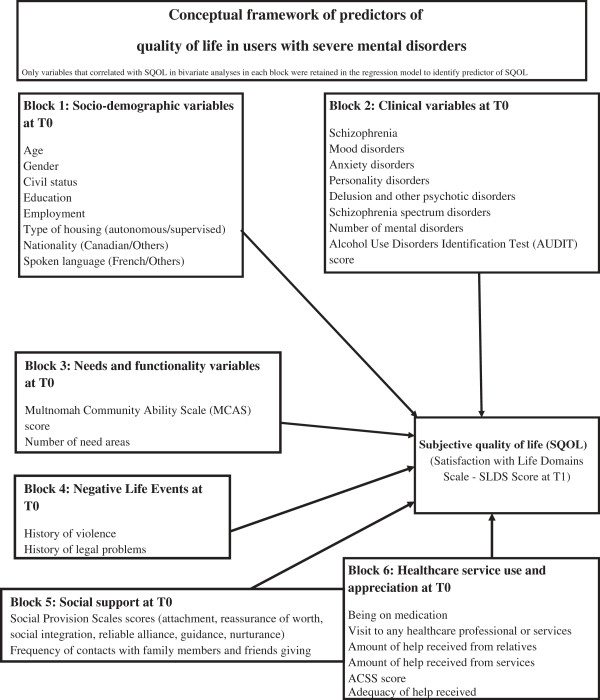
“Analyses followed the conceptual framework displayed on Figure 1, based on previous research and especially on Caron’s SQOL framework [73].”
MethodSelf-citationTaylor, R. E., Leese, M. N., Clarkson, P., Holloway, F. A., & Thornicroft, G. (1998) · The British Journal of Psychiatry · doi:10.1192/bjp.173.5.416 · Cited by 46
Holloway, F., & Carson, J. (1999) · International Journal of Social Psychiatry · doi:10.1177/002076409904500404 · Cited by 45 · cited 2×
“SQOL is also linked with greater satisfaction with mental healthcare [23].”
BackgroundSkantze, K. (1998) · Acta Psychiatrica Scandinavica · doi:10.1111/j.1600-0447.1998.tb10104.x · Cited by 44 · cited 1×
“Several longitudinal studies have investigated predictors of SQOL in users with severe mental disorders [4,7,11,12,19,24-33,35,38,41,51-58], primarily schizophrenia [11,19,24,28,31-33,35,38,41,52,54-58].”
BackgroundMeasuring the impact of housing on people with schizophrenia
Browne, G., & Courtney, M. (2004) · Nursing & Health Sciences · doi:10.1111/j.1442-2018.2003.00172.x · Cited by 42 · cited 4×
“According to the literature, autonomous accommodations are the best type of housing for users with severe mental disorders [47].”
BackgroundMethodResultInfluentialRitsner, M. S., Lisker, A., & Arbitman, M. (2011) · Quality of Life Research · doi:10.1007/s11136-011-9988-2 · Cited by 42 · cited 3×
“Other studies have noted that SQOL rises when symptom severity is reduced and functional ability is improved [11,12,24,28,33,35,41,54,56,58].”
BackgroundXiang, Y., Wang, C., Wang, Y., Chiu, H. F. K., Zhao, J., Chen, Q., Chan, S. S. M., Lee, E. H. M., & Ungvari, G. S. (2010) · Quality of Life Research · doi:10.1007/s11136-010-9593-9 · Cited by 38 · cited 2×
“Regarding users with schizophrenia, a lower SQOL was associated with the presence of a second diagnosis such as major depression [3,4,17-20,31,32], and anxiety [4,18,19,33].”
BackgroundA housing support programme for the mentally ill: need profile and satisfaction among users
Middelboe, T., Mackeprang, T., Thalsgaard, A., & Christiansen, P. B. (1998) · Acta Psychiatrica Scandinavica · doi:10.1111/j.1600-0447.1998.tb10091.x · Cited by 37 · cited 2×
“Supervised housing, however, is satisfactory for a substantial proportion of users [21,49,50].”
BackgroundMood disorders and quality of life. A community study
Cramer, V., Torgersen, S., & Kringlen, E. (2010) · Nordic Journal of Psychiatry · doi:10.3109/08039480903287565 · Cited by 37 · cited 3×
“Regarding users with schizophrenia, a lower SQOL was associated with the presence of a second diagnosis such as major depression [3,4,17-20,31,32], and anxiety [4,18,19,33].”
BackgroundBjörkman, T., & Hansson, L. (2002) · European Psychiatry · doi:10.1016/s0924-9338(02)00621-1 · Cited by 37 · cited 6×
“Other studies have noted that SQOL rises when symptom severity is reduced and functional ability is improved [11,12,24,28,33,35,41,54,56,58].”
BackgroundResultInfluentialLasalvia, A., Bonetto, C., Salvi, G. E., Bissoli, S., Tansella, M., & Ruggeri, M. (2007) · Acta Psychiatrica Scandinavica · doi:10.1111/j.1600-0447.2007.01091.x · Cited by 37 · cited 4×
“Most studies have found a strong correlation between unmet needs (serious problems) and poorer SQOL [24,25,28-30].”
BackgroundInfluentialSchizophrenia and quality of life: a one-year follow-up in four EU countries
Kovess–Masféty, V., Xavier, M., Moreno‐Küstner, B., Suchocka, A., Sevilla‐Dedieu, C., Dubuis, J., Lacalmontie, E., Pellet, J., Roelandt, J.-L., & Walsh, D. (2006) · BMC Psychiatry · doi:10.1186/1471-244x-6-39 · Cited by 33 · cited 1×
“Users had to choose among seven stylized faces ranging from 1 to 7, from the happiest face (score 7) to the saddest one (score 1) that corresponded to their emotional state [36,69,70].”
BackgroundRitsner, M. S., Lisker, A., Arbitman, M., & Grinshpoon, A. (2012) · Psychiatry and Clinical Neurosciences · doi:10.1111/j.1440-1819.2012.02383.x · Cited by 30 · cited 1×
“Several longitudinal studies have investigated predictors of SQOL in users with severe mental disorders [4,7,11,12,19,24-33,35,38,41,51-58], primarily schizophrenia [11,19,24,28,31-33,35,38,41,52,54-58].”
BackgroundLeiße, M., & Kallert, T. W. (2000) · European Psychiatry · doi:10.1016/s0924-9338(00)00521-6 · Cited by 29 · cited 5×
“Some previous studies, however, have reported that supervised housing positively influences SQOL [21,49].”
BackgroundInfluentialKondrat, D. C., & Early, T. J. (2010) · Community Mental Health Journal · doi:10.1007/s10597-010-9330-4 · Cited by 27
A Comparison of the Quality of Life of Severely Mentally Ill People in Uk & German Samples
Evans, S., Huxley, P., & Priebe, S. (2000) · International Journal of Social Psychiatry · doi:10.1177/002076400004600106 · Cited by 24 · cited 5×
“Regarding users with schizophrenia, a lower SQOL was associated with the presence of a second diagnosis such as major depression [3,4,17-20,31,32], and anxiety [4,18,19,33].”
BackgroundResultInfluentialAdequacy of Help Received Among Individuals With Severe Mental Disorders
Fleury, M., Grenier, G., Bamvita, J., Piat, M., & Tremblay, J. (2013) · Administration and Policy in Mental Health and Mental Health Services Research · doi:10.1007/s10488-013-0466-8 · Cited by 23
Self-citationFactors Associated with Needs of Users with Severe Mental Disorders
Fleury, M., Grenier, G., Bamvita, J., & Tremblay, J. (2012) · Psychiatric Quarterly · doi:10.1007/s11126-012-9252-0 · Cited by 22
Self-citationThe interrelation of needs and quality of life in first-episode schizophrenia
Landolt, K., Rössler, W., Burns, T., Ajdacic‐Gross, V., Galderisi, S., Libiger, J., Naber, D., Derks, E. M., Kahn, R. S., & Fleischhacker, W. W. (2011) · European Archives of Psychiatry and Clinical Neuroscience · doi:10.1007/s00406-011-0275-6 · Cited by 20
Caron, J., Mercier, C., Martin, A., & Stip, É. (2006) · Santé mentale au Québec · doi:10.7202/012144ar · Cited by 20
Self-citationCedereke, M., & Öjehagen, A. (2002) · Social Psychiatry and Psychiatric Epidemiology · doi:10.1007/s00127-002-0562-7 · Cited by 19 · cited 1×
“Safety to self is one of the most common needs among users with a history of suicide attempts [89].”
BackgroundBarbato, A., Monzani, E., & Schiavi, T. (2004) · Quality of Life Research · doi:10.1023/b:qure.0000025601.05350.7c · Cited by 17 · cited 1×
“Users had to choose among seven stylized faces ranging from 1 to 7, from the happiest face (score 7) to the saddest one (score 1) that corresponded to their emotional state [36,69,70].”
BackgroundCaron, J., Corbière, M., Mercier, C., Díaz, P., Ricard, N., & LESAGE, A. D. (2003) · International Journal of Methods in Psychiatric Research · doi:10.1002/mpr.149 · Cited by 16 · cited 1×
“The SLDS is among the scales that were included in their entirety in the Wisconsin Quality of Life index, a multidimensional instrument containing 113 items [71,72].”
Self-citationComponents Associated with Adequacy of Help for Consumers with Severe Mental Disorders
Fleury, M., Piat, M., Grenier, G., Bamvita, J., Boyer, R., LESAGE, A. D., & Tremblay, J. (2010) · Administration and Policy in Mental Health and Mental Health Services Research · doi:10.1007/s10488-010-0292-1 · Cited by 14
Self-citationLa validation d'une version française du questionnnaire A.U.D.I.T. "Alcohol Use Identification Test"
Accietto, C. (2003) · Archive ouverte UNIGE (University of Geneva) · doi:10.13097/archive-ouverte/unige:174 · Cited by 13
Typology of persons with severe mental disorders
Fleury, M., Grenier, G., Bamvita, J., & Tremblay, J. (2013) · BMC Psychiatry · doi:10.1186/1471-244x-13-137 · Cited by 12 · cited 7×
“Abbreviations ACSS-MH: Alberta Continuity of Services Scale for Mental Health; AUDIT: Alcohol use disorders identification test; CAN: Camberwell assessment of need; CCHS: Canadian community health survey; DAST20: Drug abuse screening test-20; HSSC: Health and social services centers; MANQ: Montreal assessment of needs…”
MethodInfluentialSelf-citationHelp received from relatives and services to satisfy needs of adults with severe mental disorders
Fleury, M., Grenier, G., & Bamvita, J. (2013) · Health · doi:10.4236/health.2013.52028 · Cited by 6 · cited 1×
“The characteristics of the users recruited at T0 were described in a previous study [74-76].”
BackgroundSelf-citationDOES QUALITY OF LIFE DIFFER IN SCHIZOPHRENIC WOMEN AND MEN? AN EMPIRICAL STUDY
Priebe, U.-U. R. (2010) · Cited by 5
Research works printed but not linked: 2
- Kirby MJL Out of the shadows at last The Standing Senate Committe on Social Affairs 2006 SaT ed Ottawa: The Senate of Canada 28 pp. 281
- APA Diagnostic and Statistic Manual of Mental Disorders, 4th edition 1994 Washington, DC: American Psychiatric Association
Cited by
Wang, J., Mann, F., Lloyd-Evans, B., Ma, R., & Johnson, S. (2018) · BMC Psychiatry · doi:10.1186/s12888-018-1736-5 · Cited by 1,494
“(2013) [67] Perceived social support Subjective quality of life ++ Social support variables at baseline accounted for 7.”
BackgroundZhou, Y., Cao, Z., Yang, M., Xi, X., Guo, Y., Fang, M., Cheng, L., & Du, Y. (2017) · Scientific Reports · doi:10.1038/srep40511 · Cited by 152
Iorfino, F., Cross, S. P., Davenport, T., Carpenter, J. S., Scott, E., Shiran, S., & Hickie, I. B. (2019) · Frontiers in Psychiatry · doi:10.3389/fpsyt.2019.00595 · Cited by 125
“A higher severity of needs tends to be associated with poorer outcomes over time, and so strategies that address these problems may be able to improve long-term outcomes (61).”
BackgroundMuller, A. E., Skurtveit, S. O., & Clausen, T. (2016) · Health and Quality of Life Outcomes · doi:10.1186/s12955-016-0439-1 · Cited by 127
Defar, S., Abraham, Y., Reta, Y., Deribe, B., Jisso, M., Yeheyis, T. Y., Mengistu, K., Beyene, B., & Ayalew, M. (2023) · Frontiers in Public Health · doi:10.3389/fpubh.2023.1134032 · Cited by 115
Metadata
- Authors
- Fleury, M.-J., Grenier, G., Bamvita, J.-M., Tremblay, J., Schmitz, N., & Caron, J.
- Affiliations
- Douglas Mental Health University Institute (CA)
- Corresponding author
- Fleury, Marie-Josée
- Venue
- Health and Quality of Life Outcomes
- Published
- 2013
- Volume
- 11
- Issue
- 1
- Pages
- 92
- ISSN
- 1477-7525 (ISSN-L)
- PMC
- PMC3681595
- OpenAlex
- W2144910706
- Cited by
- 73
- References
- 94
- Citations by year
- 2026: 1 · 2025: 4 · 2024: 1 · 2023: 6 · 2022: 4 · 2021: 5 · 2020: 7 · 2019: 10 · 2018: 2 · 2017: 8 · 2016: 10 · 2015: 9 · 2014: 5 · 2013: 1
- FWCI
- 5.90
- Type
- journal article
- Language
- en
- Open access
- gold
- doi.org
- Licence
- cc-by
- Locations
- Health and Quality of Life Outcomes (publishedVersion, cc-by)
- Europe PMC (PubMed Central) (publishedVersion, cc-by)
- PubMed Central (publishedVersion, cc-by)
- PubMed (publishedVersion)
- Funders
- Canadian Institutes of Health Research (CIHR-MOP-84512, MOP-84512)
- Topics
- Health Sciences › Medicine › Psychiatry and Mental health › Schizophrenia research and treatment
- Social Sciences › Psychology › Clinical Psychology › Psychiatric care and mental health services
- Health Sciences › Health Professions › General Health Professions › Mental Health and Patient Involvement
- Keywords
- quality of life, severe mental illness, subjective quality of life, predictive factors, schizophrenia, social integration, social support, needs assessment, supervised housing, drug abuse, social exclusion, self-worth, residential services
- MeSH terms
- Adolescent, Adult, Mental Disorders, Canada, Community Mental Health Services, Female, Humans, Interpersonal Relations, Interviews as Topic, Longitudinal Studies, Male, Middle Aged, Quality of Life, Regression Analysis, Severity of Illness Index, Social Support, Socioeconomic Factors, Cohort Studies, Outcome Assessment, Health Care, Quality Indicators, Health Care, Needs Assessment, Diagnostic and Statistical Manual of Mental Disorders, Young Adult
About these checks
Registry, retraction, Cites and statistics results are computed, not judged, with one exception: a printed reference that no index lists is read once by a model before it counts as a citation error. Claims are extracted by a model and kept only when their quote appears verbatim in the text; each cited source is then checked, with a model’s help, for whether it says what the claim relies on. Those verdicts can be wrong — read the claim’s quote and the cited source before relying on one.
Statistics and arithmetic are recomputed, not judged.
Confidence bands are shown only for fields calibrated on our annotated test set. None is calibrated yet, so no band is shown.
What counts as a claim ›How we measure confidence ›How we check this ›
Are you an author, or do you see a problem with this page? Request a review
Data sources
Bibliographic data: Semantic Scholar, OpenAlex, Crossref.
Contains information from the Semantic Scholar Academic Graph Datasets, made available under the ODC Attribution License (ODC-BY 1.0).
Semantic Scholar’s data is described in: Kinney, R., et al. (2023). The Semantic Scholar Open Data Platform. arXiv:2301.10140.
