

The DOI matches its Crossref record; 25 of the 25 references it cites were found in a registry or an index.
The promise of competency-based education in the health professions for improving global health
Open accessAbstract
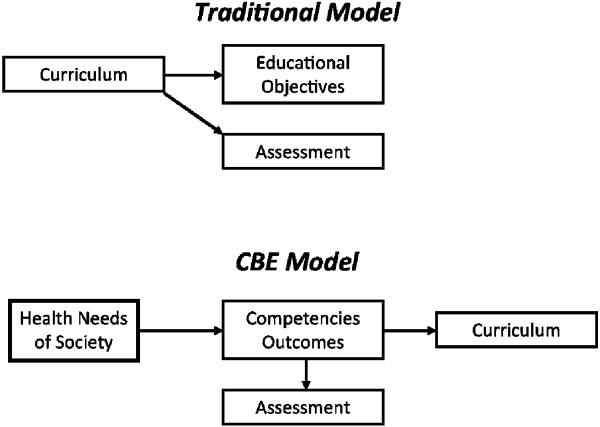
Competency-based education (CBE) provides a useful alternative to time-based models for preparing health professionals and constructing educational programs. We describe the concept of 'competence' and 'competencies' as well as the critical curricular implications that derive from a focus on 'competence' rather than 'time'. These implications include: defining educational outcomes, developing individualized learning pathways, setting standards, and the centrality of valid assessment so as to reflect stakeholder priorities. We also highlight four challenges to implementing CBE: identifying the health needs of the community, defining competencies, developing self-regulated and flexible learning options, and assessing learners for competence. While CBE has been a prominent focus of educational reform in resource-rich countries, we believe it has even more potential to align educational programs with health system priorities in more resource-limited settings. Because CBE begins with a careful consideration of the competencies desired in the health professional workforce to address health care priorities, it provides a vehicle for integrating the health needs of the country with the values of the profession.
Overview
The claims and statistics of this paper haven’t been checked yet.
Run the check — free, no account needed. It reads the open-access text and checks the sources it cites.
Integrity signals
Registry
Cites
Statistics
Figures
Verification
Claims the paper makes
The claims and statistics of this paper haven’t been checked yet.
Run the check — free, no account needed. It reads the open-access text and checks the sources it cites.
Claims other papers make about this one
Each is checked against this paper’s own text: does it say what the citing paper says it does?
The cited source says what the claim attributes to it.
In the citing paper
“The implementation of OSCE-style assessment demonstrates strong alignment with competency-based education (CBE) frameworks, which emphasise demonstration of specific, measurable skills rather than written articulation [29,30].”
From Clinical assessment meets laboratory science: adapting OSCE methodology for authentic biosciences evaluation in the age of generative AI (2025) · cites this paper as [30]
Self-check
Percentages, sums and reported differences re-computed from the paper’s own numbers.
The self-check needs the paper’s full text.
Citations
Cites
Frenk, J., Chen, L., Bhutta, Z. A., Cohen, J., Crisp, N., Evans, T., Fineberg, H., Garcia, P., Ke, Y., Kelley, P., et al. (2010) · The Lancet · doi:10.1016/s0140-6736(10)61854-5 · Cited by 5,960
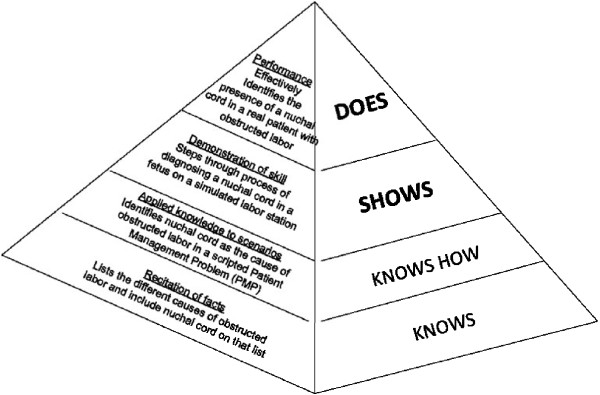
The assessment of clinical skills/competence/performance
Miller, G. E. (1990) · Academic Medicine · doi:10.1097/00001888-199009000-00045 · Cited by 4,883
Defining and Assessing Professional Competence
Epstein, R. M. (2002) · JAMA · doi:10.1001/jama.287.2.226 · Cited by 3,114
Assessment in medical education
Epstein, R. M. (2007) · New England Journal of Medicine · doi:10.1056/nejmra054784 · Cited by 1,872
ten Cate, O., & Scheele, F. (2007) · Academic Medicine · doi:10.1097/acm.0b013e31805559c7 · Cited by 1,162
Workplace-based assessment as an educational tool: AMEE Guide No. 31
Norcini, J., & Burch, V. (2007) · Medical Teacher · doi:10.1080/01421590701775453 · Cited by 984
The effectiveness of self‐directed learning in health professions education: a systematic review
Murad, M. H., Yglesias, F. C., Varkey, P., Prokop, L. J., & Murad, A. L. (2010) · Medical Education · doi:10.1111/j.1365-2923.2010.03750.x · Cited by 454
The relationship between competence and performance: implications for assessing practice performance
Rethans, J.-J., Norcini, J. J., Maldonado, M. B., Blackmore, D. E., Jolly, B. C., LaDuca, T., Lew, S. R., Page, G. G., & Southgate, L. J. (2002) · Medical Education · doi:10.1046/j.1365-2923.2002.01316.x · Cited by 405
Setting standards on educational tests
Norcini, J. J. (2003) · Medical Education · doi:10.1046/j.1365-2923.2003.01495.x · Cited by 315
Defining characteristics of educational competencies
Albanese, M. A., Mejicano, G. C., Mullan, P. B., Kokotailo, P. K., & Gruppen, L. D. (2008) · Medical Education · doi:10.1111/j.1365-2923.2007.02996.x · Cited by 300
Self-citation
Cited by
Sorted by citations
Core Competencies for Pain Management: Results of an Interprofessional Consensus Summit
Fishman, S. M., Young, H. M., Arwood, E. L., Chou, R., Herr, K., Murinson, B. B., Watt‐Watson, J., Carr, D. B., Gordon, D. B., Stevens, B., et al. (2013) · Pain Medicine · doi:10.1111/pme.12107 · Cited by 333
Competency‐based education: programme design and challenges to implementation
Gruppen, L. D., Burkhardt, J., Fitzgerald, J. T., Funnell, M. M., Haftel, H. M., Lypson, M. L., Mullan, P. B., Santen, S. A., Sheets, K. J., Stalburg, C. M., et al. (2016) · Medical Education · doi:10.1111/medu.12977 · Cited by 185
Self-citationHavercamp, S. M., Barnhart, W. R., Robinson, A. C., & Smith, C. N. W. (2020) · Disability and health journal · doi:10.1016/j.dhjo.2020.100989 · Cited by 157
Reflections on Competency-Based Education and Training for Surgical Residents
Sonnadara, R., Mui, C., McQueen, S. A., Mironova, P., Nousiainen, M. T., Safir, O. A., Kraemer, W. J., Ferguson, P. C., Alman, B. A., & Reznick, R. K. (2013) · Journal of surgical education · doi:10.1016/j.jsurg.2013.06.020 · Cited by 135
Shipton, E. E., Bate, F., Garrick, R., Steketee, C., Shipton, E. A., & Visser, E. (2018) · Pain and Therapy · doi:10.1007/s40122-018-0103-z · Cited by 137
Metadata
- Authors
- Gruppen, L. D., Mangrulkar, R. S., & Kolars, J. C.
- Affiliations
- University of Michigan (US)
- Corresponding author
- Gruppen, Larry D
- Venue
- Human Resources for Health
- Published
- 2012-11-16
- Volume
- 10
- Issue
- 1
- Pages
- 43-43
- ISSN
- 1478-4491 (ISSN-L)
- PMC
- PMC3543172
- OpenAlex
- W2150618433
- Cited by
- 356
- References
- 25
- Citations by year
- 2026: 40 · 2025: 32 · 2024: 46 · 2023: 31 · 2022: 23 · 2021: 32 · 2020: 30 · 2019: 20 · 2018: 31 · 2017: 15 · 2016: 15 · 2015: 15 · 2014: 12 · 2013: 14
- FWCI
- 12.67
- Type
- journal article
- Language
- en
- Open access
- gold
- doi.org
- Licence
- Locations
- Human Resources for Health (publishedVersion, cc-by)
- PubMed Central (publishedVersion, cc-by)
- PubMed (publishedVersion)
- Deep Blue (University of Michigan) (submittedVersion)
- DOAJ (DOAJ: Directory of Open Access Journals) (submittedVersion)
- Topics
- Social Sciences › Education › Innovations in Medical Education
- Health Sciences › Health Professions › General Health Professions › Health and Medical Education
- Social Sciences › Business, Management and Accounting › Organizational Behavior and Human Resource Management › Competency Development and Evaluation
- Keywords
- competency-based education, health professions education, global health, competency definition, curriculum development, educational outcomes, competency assessment, student self-regulation, resource-limited settings, health workforce development, educational reform
About these checks
Registry, retraction, Cites and statistics results are computed, not judged, with one exception: a printed reference that no index lists is read once by a model before it counts as a citation error. Claims are extracted by a model and kept only when their quote appears verbatim in the text; each cited source is then checked, with a model’s help, for whether it says what the claim relies on. Those verdicts can be wrong — read the claim’s quote and the cited source before relying on one.
Statistics and arithmetic are recomputed, not judged.
Confidence bands are shown only for fields calibrated on our annotated test set. None is calibrated yet, so no band is shown.
What counts as a claim ›How we measure confidence ›How we check this ›
Are you an author, or do you see a problem with this page? Request a review
