

Correlates of physician burnout across regions and specialties: a meta-analysis
Open accessThe DOI matches its Crossref record; 87 of the 87 references it cites were found in a registry or an index.
Abstract
BACKGROUND: Health care organizations globally realize the need to address physician burnout due to its close linkages with quality of care, retention and migration. The many functions of health human resources include identifying and managing burnout risk factors for health professionals, while also promoting effective coping. Our study of physician burnout aims to show: (1) which correlates are most strongly associated with emotional exhaustion (EE) and depersonalization (DP), and (2) whether the associations vary across regions and specialties. METHODS: Meta-analysis allowed us to examine a diverse range of correlates. Our search yielded 65 samples of physicians from various regions and specialties. RESULTS: EE was negatively associated with autonomy, positive work attitudes, and quality and safety culture. It was positively associated with workload, constraining organizational structure, incivility/conflicts/violence, low quality and safety standards, negative work attitudes, work-life conflict, and contributors to poor mental health. We found a similar but weaker pattern of associations for DP.Physicians in the Americas experienced lower EE levels than physicians in Europe when quality and safety culture and career development opportunities were both strong, and when they used problem-focused coping. The former experienced higher EE levels when work-life conflict was strong and they used ineffective coping. Physicians in Europe experienced lower EE levels than physicians in the Americas with positive work attitudes. We found a similar but weaker pattern of associations for DP.Outpatient specialties experienced higher EE levels than inpatient specialties when organization structures were constraining and contributors to poor mental health were present. The former experienced lower EE levels when autonomy was present. Inpatient specialties experienced lower EE levels than outpatient specialties with positive work attitudes. As above, we found a similar but weaker pattern of associations for DP. CONCLUSIONS: Although we could not infer causality, our findings suggest: (1) that EE represents the core burnout dimension; (2) that certain individual and organizational-level correlates are associated with reduced physician burnout; (3) the benefits of directing resources where they are most needed to physicians of different regions and specialties; and (4) a call for research to link physician burnout with performance.
Overview
The claims and statistics of this paper haven’t been checked yet.
Free: it reads the open-access text and checks the first 5 claims that cite a source we can check. Create a free account to check every claim.
Integrity signals
Registry
Cites
Statistics
Figures
Verification
Claims the paper makes
The claims and statistics of this paper haven’t been checked yet.
Free: it reads the open-access text and checks the first 5 claims that cite a source we can check. Create a free account to check every claim.
Claims other papers make about this one
Each is checked against this paper’s own text: does it say what the citing paper says it does?
The source backs part of the claim, not all of it — or backs it for a different population, condition or comparison.
In the citing paper
“This disparity was expected given that the burnout experience is understood to be significantly varied across different economies, geographical regions [19], culture, and ethnicity [20].”
From Burnout among neurology residents during the COVID-19 pandemic: a national cross-sectional study (2022) · cites this paper as [19]
Experimental — accuracy not yet measuredThe source backs part of the claim, not all of it — or backs it for a different population, condition or comparison.
In the citing paper
“Contrary to the findings of the previous studies [19, 25] which showed significant direct correlation between the number of working hours and burnout scores in the DP subscale, our study revealed that participants who had 0–2 on-duty days in a week had significantly higher DP scores than those who had 3–4 on-duty days per week.”
From Burnout among neurology residents during the COVID-19 pandemic: a national cross-sectional study (2022) · cites this paper as [19]
Experimental — accuracy not yet measured
Self-check
Percentages, sums and reported differences re-computed from the paper’s own numbers.
The self-check needs the paper’s full text.
Citations
Cites
Preferred Reporting Items for Systematic Reviews and Meta-Analyses: the PRISMA statement
Moher, D., Liberati, A., Tetzlaff, J., Altman, D. G., & for the PRISMA Group (2009) · BMJ · doi:10.1136/bmj.b2535 · Cited by 83,823
Preferred reporting items for systematic reviews and meta-analyses: the PRISMA Statement.
(2009) · PubMed Central · Cited by 44,859
Preferred Reporting Items for Systematic Reviews and Meta-Analyses: The PRISMA Statement
Moher, D., Liberati, A., Tetzlaff, J., & Altman, D. G. (2009) · Journal of Clinical Epidemiology · doi:10.1016/j.jclinepi.2009.06.005 · Cited by 19,575
The file drawer problem and tolerance for null results.
Rosenthal, R. (1979) · Psychological Bulletin · doi:10.1037/0033-2909.86.3.638 · Cited by 9,068 · cited 1×
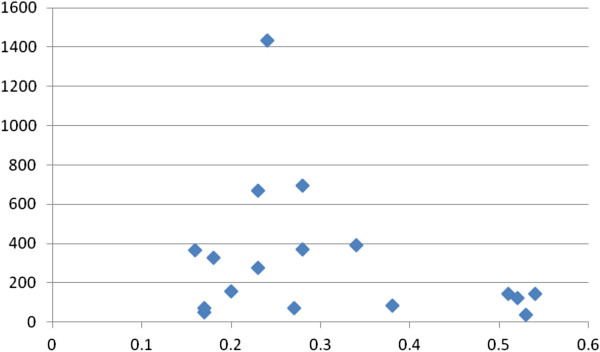
“05 (that is, fail-safe k or kfs) for each correlate [20], and (2) examining the funnel plots of correlates with k ≥15.”
BackgroundEssentials of Behavioral Research: Methods and Data Analysis
Rosenthal, R., & Rosnow, R. L. (1984) · Cited by 3,925
Field Theory in Social Science: Selected Theoretical Papers.
Price, D. O., Lewin, K., & Cartwright, D. (1951) · American Sociological Review · doi:10.2307/2087618 · Cited by 3,501
The World Health report 2006 1 : Working together for health 2
Guilbert, J.-J. (2006) · Education for Health: Change in Learning & Practice · doi:10.1080/13576280600937911 · Cited by 2,654
Burnout and self-reported patient care in an internal medicine residency program
Shanafelt, T. D., Bradley, K. A., Wipf, J. E., & Back, A. L. (2002) · Annals of Internal Medicine · doi:10.7326/0003-4819-136-5-200203050-00008 · Cited by 2,165
Burnout and Medical Errors Among American Surgeons
Shanafelt, T. D., Balch, C. M., Bechamps, G., Russell, T., Dyrbye, L., Satele, D., Collicott, P., Novotny, P. J., Sloan, J., & Freischlag, J. (2010) · Annals of Surgery · doi:10.1097/sla.0b013e3181bfdab3 · Cited by 2,099
Prentice, T. (2013) · Res Medica · doi:10.2218/resmedica.v21i1.510 · Cited by 1,707
Krasner, M. S. (2009) · JAMA · doi:10.1001/jama.2009.1384 · Cited by 1,650
Field Theory in Social Science: Selected Theoretical Papers
Lewin, K., & Cartwright, D. (1975) · Medical Entomology and Zoology · Cited by 1,417
High Level of Burnout in Intensivists: Prevalence and Associated Factors
Embriaco, N., Azoulay, E., Barrau, K., Kentish, N., Pochard, F., Loundou, A., & Papazian, L. (2007) · American Journal of Respiratory and Critical Care Medicine · doi:10.1164/rccm.200608-1184oc · Cited by 712
Sterne, J. A. C., & Harbord, R. M. (2004) · The Stata Journal: Promoting communications on statistics and Stata · doi:10.1177/1536867x0400400204 · Cited by 708 · cited 1×
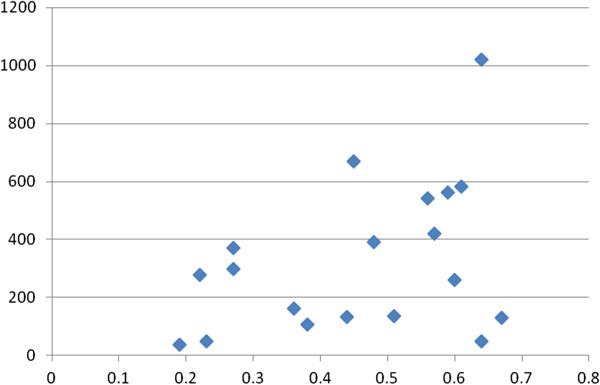
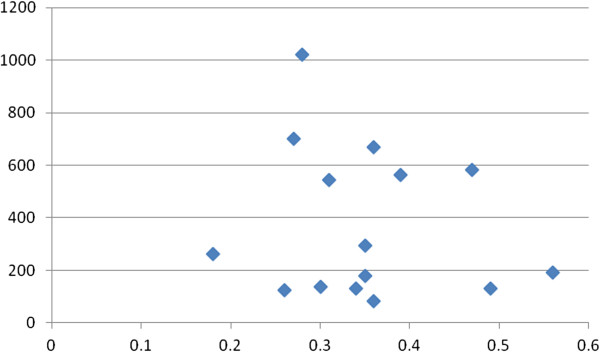
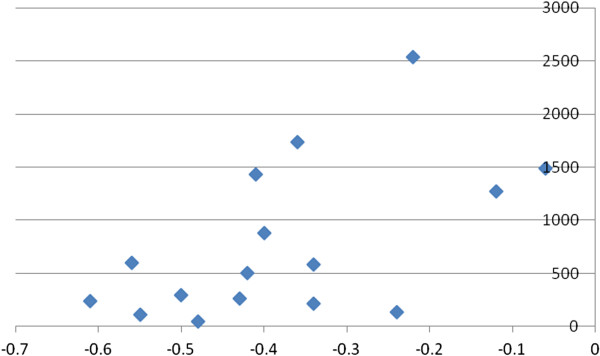
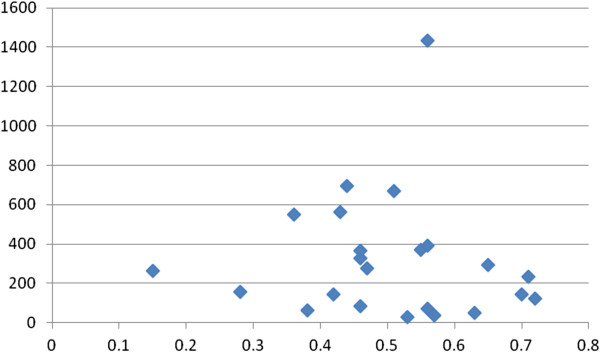
“This and other types of publication bias are evident when the funnel plot (r by n) is asymmetrical or skewed [19].”
BackgroundBurnout and psychiatric disorder among cancer clinicians
Ramirez, A., Graham, J., Richards, M., Cull, A., Gregory, W., Leaning, M., Snashall, D., & Timothy, A. (1995) · British Journal of Cancer · doi:10.1038/bjc.1995.244 · Cited by 620
Career Fit and Burnout Among Academic Faculty
Shanafelt, T. D., West, C. P., Sloan, J. A., Novotny, P. J., Poland, G. A., Menaker, R., Rummans, T. A., & Dyrbye, L. N. (2009) · Archives of Internal Medicine · doi:10.1001/archinternmed.2009.70 · Cited by 617
Brand, J. L. (1997) · Digital Commons - Andrews University (Andrews University) · Cited by 537
Halbesleben, J. R. B., & Rathert, C. (2008) · Health Care Management Review · doi:10.1097/01.hmr.0000304493.87898.72 · Cited by 519 · cited 1×
“A US study found that physician DP was associated with diminished patient satisfaction and longer post-discharge recovery time [24].”
BackgroundNon-communicable diseases must have greater priority, says WHO
Zarocostas, J. (2009) · BMJ · doi:10.1136/bmj.b2857 · Cited by 517
Confusion of confidence intervals and credibility intervals in meta-analysis.
Whitener, E. M. (1990) · Journal of Applied Psychology · doi:10.1037/0021-9010.75.3.315 · Cited by 432 · cited 2×
“and for heterogeneous k, the SE ρc formula is [18]: ( )1/2 2 2 cheterogeneous c res SE {[(1 ) / n – k ] ( / k)}, ρ ρ σ = − + (6)”
Burnout among American surgeons
Campbell, D. A., Sonnad, S. S., Eckhauser, F. E., Campbell, K. K., & Greenfield, L. J. (2001) · Surgery · doi:10.1067/msy.2001.116676 · Cited by 432
Bakker, A. B., Schaufeli, W. B., Sixma, H. J., Bosveld, W., & Van Dierendonck, D. (2000) · Journal of Organizational Behavior · doi:10.1002/(sici)1099-1379(200006)21:4<425::aid-job21>3.0.co;2-# · Cited by 384
The causal links between stress and burnout in a longitudinal study of UK doctors
McManus, I., Winder, B., & Gordon, D. (2002) · The Lancet · doi:10.1016/s0140-6736(02)08915-8 · Cited by 376
What have we learned about burnout and health?
Maslach, C. (2001) · Psychology & Health · doi:10.1080/08870440108405530 · Cited by 346 · cited 1×
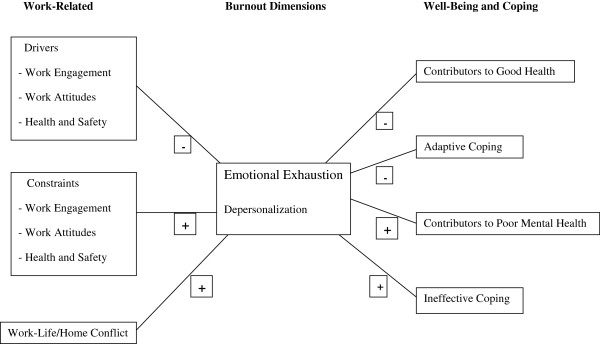
“EE’s stronger ties with the environmental drivers and constraints support Maslach’s contention that it represents the core aspect of burnout [22].”
BackgroundKuerer, H. M., Eberlein, T. J., Pollock, R. E., Huschka, M., Baile, W. F., Morrow, M., Michelassi, F., Singletary, S. E., Novotny, P., Sloan, J., et al. (2007) · Annals of Surgical Oncology · doi:10.1245/s10434-007-9579-1 · Cited by 304
Burnout and Its Correlates in Emergency Physicians: Four Years' Experience with a Wellness Booth
Goldberg, R., Boss, R. W., Chan, L., Goldberg, J., Mallon, W. K., Moradzadeh, D., Goodman, E. A., & McConkie, M. L. (1996) · Academic Emergency Medicine · doi:10.1111/j.1553-2712.1996.tb03379.x · Cited by 251
Burnout in chairs of obstetrics and gynecology: Diagnosis, treatment, and prevention
Gabbe, S. G., Melville, J., Mandel, L., & Walker, E. (2002) · American Journal of Obstetrics and Gynecology · doi:10.1067/mob.2002.122391 · Cited by 220
Predictors of burnout and job satisfaction among Turkish physicians
Ozyurt, A. (2006) · QJM · doi:10.1093/qjmed/hcl019 · Cited by 219
Sharma, A., Sharp, D. M., Walker, L. G., & Monson, J. R. T. (2008) · Psycho-Oncology · doi:10.1002/pon.1269 · Cited by 200
Grassi, L., & Magnani, K. (2000) · Psychotherapy and Psychosomatics · doi:10.1159/000012416 · Cited by 192
Demands, values, and burnout: relevance for physicians.
Leiter, M. P., Frank, E., & Matheson, T. J. (2009) · Canadian Family Physician · Cited by 186
Tolerance for Uncertainty, Burnout, and Satisfaction With the Career of Emergency Medicine
Kuhn, G., Goldberg, R., & Compton, S. (2009) · Annals of Emergency Medicine · doi:10.1016/j.annemergmed.2008.12.019 · Cited by 182
Asai, M., Morita, T., Akechi, T., Sugawara, Y., Fujimori, M., Akizuki, N., Nakano, T., & Uchitomi, Y. (2007) · Psycho-Oncology · doi:10.1002/pon.1066 · Cited by 176
Prevalence and Associated Factors of Burnout among Doctors in Yemen
Al‐Dubai, S. A. R., & Rampal, K. G. (2010) · Journal of Occupational Health · doi:10.1539/joh.o8030 · Cited by 173
Lee, F. J., Stewart, M., & Brown, J. B. (2008) · PubMed · Cited by 159
Strategic management of the health workforce in developing countries: what have we learned?
Fritzen, S. A. (2007) · Human Resources for Health · doi:10.1186/1478-4491-5-4 · Cited by 157
Physician Burnout and Patient-Physician Communication During Primary Care Encounters
Ratanawongsa, N., ROTER, D. L., Beach, M. C., Laird, S. L., Larson, S. M., Carson, K. A., & Cooper, L. A. (2008) · Journal of General Internal Medicine · doi:10.1007/s11606-008-0702-1 · Cited by 142
Peisah, C., Latif, E., Wilhelm, K., & Williams, B. (2009) · Aging & Mental Health · doi:10.1080/13607860802459831 · Cited by 142
Field theory in social science :: selected theoretical papers
Lewin, & Kurt (2014) · Cited by 142
When staff is underpaid: dealing with the individual coping strategies of health personnel.
Lerberghe, W. V., Conceição, C., Damme, W. V., & Ferrinho, P. D. L. G. M. (2002) · Europe PMC (PubMed Central) · Cited by 140
Burnout in physicians: a case for peer‐support
Bruce, S. M., Conaglen, H. M., & Conaglen, J. V. (2005) · Internal Medicine Journal · doi:10.1111/j.1445-5994.2005.00782.x · Cited by 130
Personality and Stress in Consultant Psychiatrists
Deary, I. J., Agius, R. M., & Sadler, A. (1996) · International Journal of Social Psychiatry · doi:10.1177/002076409604200205 · Cited by 130
A National Study of Burnout Among American Transplant Surgeons
Bertges-Yost, W., Eshelman, A. K., Raoufi, M., & Abouljoud, M. S. (2005) · Transplantation Proceedings · doi:10.1016/j.transproceed.2005.01.055 · Cited by 127
Lemaire, J. B., & Wallace, J. E. (2010) · BMC Health Services Research · doi:10.1186/1472-6963-10-208 · Cited by 123
Work–family interference as a mediator between job demands and job burnout among doctors
Montgomery, A. J., Panagopolou, E., & Benos, A. (2006) · Stress and Health · doi:10.1002/smi.1104 · Cited by 109
Physician Burnout in Hungary: A Potential Role for Work—Family Conflict
Ádám, S., Györffy, Z., & Susánszky, É. (2008) · Journal of Health Psychology · doi:10.1177/1359105308095055 · Cited by 107
How to create attractive and supportive work environment for health professionals
Wiskow, C., Albreht, T., & Pietro, C. D. (2010) · SUPSI ARIS · doi:10.71910/supsi.5566 · Cited by 105
Arigoni, F., BOVIER, P. A., Mermillod, B., Waltz, P., & Sappino, A. (2008) · Supportive Care in Cancer · doi:10.1007/s00520-008-0465-6 · Cited by 105
Transforming odds ratios into correlations for meta-analytic research.
Bonett, D. G. (2007) · American Psychologist · doi:10.1037/0003-066x.62.3.254 · Cited by 105 · cited 2×
“To convert the OR to r, we used the formula [13]:”
BackgroundMethodTravado, L., Grassi, L., Gil, F., Ventura, C., Martins, C., & The Southern European Psycho-Oncology Study (SEPOS) Group (2005) · Psycho-Oncology · doi:10.1002/pon.890 · Cited by 98
Stress and burnout among Portuguese anaesthesiologists
Morais, A., Maia, P., Azevedo, A., Amaral, C., & Tavares, J. (2006) · European Journal of Anaesthesiology · doi:10.1017/s0265021505001882 · Cited by 94
Burnout and Job Satisfaction in New Zealand Psychiatrists: a National Study
Kumar, S., Fischer, J., Robinson, E., Hatcher, S., & Bhagat, R. N. (2007) · International Journal of Social Psychiatry · doi:10.1177/0020764006074534 · Cited by 90
Barros, D. D. S., Tironi, M. O. S., Sobrinho, C. L. N., Neves, F. S., Bitencourt, A. G. V., Almeida, A. D. M., de Souza, Y. G., Teles, M. S., Feitosa, A. I. R., Mota, I. C. C., et al. (2008) · Revista Brasileira de Terapia Intensiva · doi:10.1590/s0103-507x2008000300005 · Cited by 84
Critical incidents and chronic stressors at work: Their impact on forensic doctors.
van der Ploeg, E., Dorresteijn, S. M., & Kleber, R. J. (2003) · Journal of Occupational Health Psychology · doi:10.1037/1076-8998.8.2.157 · Cited by 82
Lee, R. T., Lovell, B. L., & Brotheridge, C. M. (2010) · Journal of Applied Social Psychology · doi:10.1111/j.1559-1816.2010.00658.x · Cited by 81 · cited 2×
“Burnout is a specific pattern of response to chronic work-related str ss that is a serious issue for many physicians [6].”
BackgroundSelf-citationTOKUDA, Y., HAYANO, K., OZAKI, M., BITO, S., YANAI, H., & KOIZUMI, S. (2009) · Industrial Health · doi:10.2486/indhealth.47.166 · Cited by 81
Korkeila, J. A., Töyry, S., Kumpulainen, K., Toivola, J.-M., Räsänen, K., & Kalimo, R. (2003) · Scandinavian Journal of Public Health · doi:10.1080/14034940210133880 · Cited by 80
Burnout in Academic Chairs of Otolaryngology: Head and Neck Surgery
Johns, M. M., & Ossoff, R. H. (2005) · The Laryngoscope · doi:10.1097/01.mlg.0000181492.36179.8b · Cited by 79
Burnout and career-choice regret among family practice physicians in early practice.
Lemkau, J. P., Rafferty, J. P., & Gordon, R. (1994) · PubMed · Cited by 79
Relationship between job burnout and occupational stress among doctors in China
Wu, S., Zhu, W., Li, H., Wang, Z., & Wang, M. (2008) · Stress and Health · doi:10.1002/smi.1169 · Cited by 76
Deckard, G. J., Hicks, L. L., & Hamory, B. H. (1992) · The Journal of Infectious Diseases · doi:10.1093/infdis/165.2.224 · Cited by 75
Houkes, I., Winants, Y. H. W. M., & Twellaar, M. (2008) · Journal of Occupational and Organizational Psychology · doi:10.1348/096317907x218197 · Cited by 74
Burnout, psychological distress, and overwork: the case of Quebec's ophthalmologists
Viviers, S., Lachance, L., Maranda, M.-F., & Ménard, C. (2008) · Canadian Journal of Ophthalmology · doi:10.3129/i08-132 · Cited by 68
Relation between immune variables and burnout in a sample of physicians
Bargellini, A., Barbieri, A., Rovesti, S., Vivoli, R., Roncaglia, R., & Borella, P. (2000) · Occupational and Environmental Medicine · doi:10.1136/oem.57.7.453 · Cited by 66
Shamian, J., & El‐Jardali, F. (2007) · A Nudge Too Far? A Nudge at All? On Paying People to Be Healthy · doi:10.12927/hcpap.2007.18668 · Cited by 66
Attitudes Toward Euthanasia and Physician-Assisted Suicide Among Italian Primary Care Physicians
Grassi, L. G., Magnani, K., & Ercolani, M. (1999) · Journal of Pain and Symptom Management · doi:10.1016/s0885-3924(98)00155-9 · Cited by 63
Job Stress in General Practice: Practitioner Age, Sex and Attitudes as Predictors
WINEFIELD, H. R., & ANSTEY, T. J. (1991) · Family Practice · doi:10.1093/fampra/8.2.140 · Cited by 60
Communication Skills Training for Japanese Oncologists on How to Break Bad News
Fujimori, M., Oba, A., Makiko, K., Okamura, M., Akizuki, N., Kamiya, M., Akechi, T., Sakano, Y., & Uchitomi, Y. (2003) · Journal of Cancer Education · doi:10.1207/s15430154jce1804_6 · Cited by 59
Frumkin, H., Lundberg, A., & Weiss, B. (1998) · Cited by 58
The Environment and Mental Health: A Guide for Clinicians
Lacy, T. J. (1999) · Psychiatric Services · doi:10.1176/ps.50.10.1366-a · Cited by 56
Randolph, J., & Edmondson, R. S. (2020) · ScholarWorks@UMassAmherst (University of Massachusetts Amherst) · doi:10.7275/zqwr-mx46 · Cited by 54 · cited 2×
“30 between a work constraint and burnout could mean that 66% of physicians in restrictive environments have high EE levels, and 6 6% of those in supportive environments have low EE levels [17].”
BackgroundPerceived Inequity: Does It Explain Burnout Among Medical Specialists?1
Smets, E. M. A., Visser, M. R. M., Oort, F. J., Schaufeli, W. B., & de Haes, J. C. J. M. (2004) · Journal of Applied Social Psychology · doi:10.1111/j.1559-1816.2004.tb02592.x · Cited by 50
Buchan, J. (2008) · Queen Margaret University Publications Repository (Queen Margaret University) · Cited by 45
Lim, R., & Pinto, C. (2009) · Journal of Medical Imaging and Radiation Oncology · doi:10.1111/j.1754-9485.2009.02063.x · Cited by 45
Burnout and stress amongst old age psychiatrists
Benbow, S. M., & Jolley, D. J. (2002) · International Journal of Geriatric Psychiatry · doi:10.1002/gps.647 · Cited by 44
Mental health and occupational wellbeing of Australian gynaecologic oncologists
Stafford, L., & Judd, F. K. (2009) · Gynecologic Oncology · doi:10.1016/j.ygyno.2009.10.080 · Cited by 39
Professional burnout and stress among Polish physicians explained by the Hobfoll resources theory.
Głębocka, A., & Lisowska, E. (2007) · PubMed · Cited by 36
Role of a Pediatric Department Chair: Factors Leading to Satisfaction and Burnout
McPhillips, H. A., STANTON, B. F., ZUCKERMAN, B. S., & Stapleton, F. B. (2007) · The Journal of Pediatrics · doi:10.1016/j.jpeds.2007.03.016 · Cited by 36
Psychological stress among hospital doctors caring for HIV patients in the late nineties
Lert, F., Chastang, J., & Castaño, I. (2001) · AIDS Care · doi:10.1080/09540120120076922 · Cited by 33
Burnout in hospital-based medical consultants in the New Zealand public health system.
Surgenor, L. J., Spearing, R. L., Horn, J., Beautrais, A. L., Mulder, R., & Chen, P. (2009) · PubMed · Cited by 32
Lovell, B. L., Lee, R. T., & Frank, E. (2009) · BMC Family Practice · doi:10.1186/1471-2296-10-18 · Cited by 26
Self-citationThe Environment and Mental Health: A Guide for Clinicians
Dembe, A. E., & Lundberg, A. (2000) · Journal of Public Health Policy · doi:10.2307/3343288 · Cited by 24
Burnout syndrome among mexican primary care physicians
Bannack, M. E. D., Salinas, C. G., Ortega, M. A. F., Palomeque, R. P., Quintanilla, E. G., & Hernández-Vargas, I. (2007) · LA Referencia (Red Federada de Repositorios Institucionales de Publicaciones Científicas) · Cited by 21
Jiménez, B. M., Rodríguez‐Carvajal, R., Garrosa, E., & Benadero, M. E. M. (2008) · Salud Mental · Cited by 17
Leiter, M. P., Frank, E., & Matheson, T. J. (2009) · Canadian Family Physician · Cited by 16
Using Common Work Environment Metrics to Improve Performance in Healthcare Organizations
Lowe, G., & Chan, B. (2010) · A Nudge Too Far? A Nudge at All? On Paying People to Be Healthy · doi:10.12927/hcpap.2010.21863 · Cited by 12 · cited 1×
“For the correlates, the classification of variables as either environmental drivers or constraints were informed by Lewin’s field theory [14], which posits that behavior is the function of the person and the environment, and Lowe and Chan’s classification of healthy work environment indicators [15].”
MethodCareer Orientation and Burnout in French General Practitioners
Truchot, D. (2008) · Psychological Reports · doi:10.2466/pr0.103.3.875-881 · Cited by 8
Research works printed but not linked: 16
- 1. Embriaco N, Azoulay E, Barrau K, Kentish N, Pochard F, Loundou A, Papazian L: High level of burn- out in intensivists. Am J Respir Crit Care Med 2007; 175:686-692.
- 6. Visser MRM, Smets EMA, Oort FJ, de Haes HCJM: Stress, satisfaction, and burnout among Dutch medical specialists. CMAJ 2003; 168:271-275.
- 8. Deckard GJ, Hicks LL, Hamory BH: The occurrence and distribution of burnout among infectious diseases physicians. J Infect Dis 1992; 165:224-228.
- 18. Lee FJ, Stewart M, Brown JB: Stress, burnout, and strategies for reducing them. Can Fam Physician 2008; 54:234-235.
- 70. Lee RT, Lovell BL, Brotheridge CM: Tenderness and steadiness: Relating job and interpersonal demands and resources with burnout and physical symptoms of stress in Canadian physicians. J Appl Soc Psychol 2010, 40:2319-2342.
- 44. Ramirez AJ, Graham J, Richards MA, Cull A, Gregory WM: Satisfaction at work. Lancet 1996; 347:724-728.
- 46. Barros D, Tironi M, Sobrinho C, Neves F, Bitencourt A, Almeida A, de Souza Y, Teles M, Feitosa A, Mota I, França J, Borges L, Lordão M, Trindade M, Almeida M, Filho E, José E, dos Reis: Intensive care unit physicians: socio-demographic profile, working conditions, and factors associated to the burnout syndrome. Rev Bras Ter Intensiva 2008; 20:235-240.
- 56. Bakker AB, Schaufeli WB, Sixma HJ, Bosveld W, Van Dierendonck D: Patient demands, lack of reciprocity, and burnout: longitudinal study among general practi- tioners. J Organ Beh 2000; 21:425-441.
- 60. Esquivel-Molina C, Buendia-Cano F, Martinez-Garcia O. Martinez-Mendoza J, Martinez-Ordaz V, Velasco-Rodr íguez V: Burnout syndrome in medical staff affiliated to a tertiary care hospital (article in Spanish). Rev Med Inst Mex Seguro Soc 2007; 45:427-436.
- 61. López-León E, Rodriguez-Moctezuma J, López- Carmona J, Peralta-Pedrero M, Munguía-Miranda C: Professional burnout in family physicians and its asso- ciation with social demographic and labor factors (article in Spanish). Rev Med Inst Mex Seguro Soc 2007; 45:13-19.
- 62. Escribà-Agüir V, Artazcoz L, Pérez-Hoyos S: Effect of psychosocial work environment and job satisfaction on burnout syndrome among specialist physicians (art- icle in Spanish). Gac Sanit 2008; 22:300-308.
- 63. Santos M, Abalo J: Burnout syndrome in medical staff working in neonatal intensive care units (article in Spanish). Psicologia y Salud 2005; 15:25-32.
- 30. Halbesleben JRB, Rathert C: Linking physician burn- out and patient outcomes: exploring the dyadic relationship between physicians and patients. Health Care Manage Rev 2008; 33:29-39.
- 73. Kuhn K: Challenge of modern working life to mental well-being and social inclusion, workplace-related mental health problems, risks and prevention. In Mental Health and Well-being at the Workplace: Protection and Inclusion in Challenging Times. Edited by Baumann A, Muijen M, Gaebel W. Copenhagen: WHO; 2010:13-17.
- 79. Hunter JE, Schmidt FL: Methods of Meta-analysis: Correcting Error and Bias. Newbury Park, CA: Sage; 1990.
- 84. Schwarzer R: Meta: Meta-analysis Programs Version 5.3. National Collegiate Software Clearinghouse: Raleigh, NC; 1989.
Cited by
Factors related to physician burnout and its consequences: a review
Patel, R. S., Bachu, R., Adikey, A., Malik, M., & Shah, M. (2018) · Behavioral Sciences · doi:10.3390/bs8110098 · Cited by 896
“US physicians experience lower emotional exhaustion compared to European physicians due to safe culture, excellent career opportunities, and the problem facing coping methods [18].”
BackgroundThe relationship between professional burnout and quality and safety in healthcare: a meta-analysis
Salyers, M. P., Bonfils, K. A., Luther, L., Firmin, R. L., White, D. A., Adams, E. L., & Rollins, A. L. (2017) · Journal of General Internal Medicine · doi:10.1007/s11606-016-3886-9 · Cited by 843
“Within healthcare, Lee and colleagues 26 studied correlates of burnout, but the sample was restricted to physicians, and few studies assessed quality.”
BackgroundBurnout and Doctors: Prevalence, Prevention and Intervention
Kumar, S. (2016) · Healthcare · doi:10.3390/healthcare4030037 · Cited by 560
“A recent meta-analysis [21] found doctors in the USA experienced lower levels of Emotional Exhaustion (EE) than their counterparts in Europe where quality, safety culture and career development opportunities were strong.”
BackgroundInfluentialDewa, C. S., Loong, D., Bonato, S., & Trojanowski, L. (2017) · BMJ Open · doi:10.1136/bmjopen-2016-015141 · Cited by 526
“16 21 22 Thus, this systematic review of the literature extends our knowledge about the dimensions of quality of care that reflect physician interactions with patients and a dimension of well-being that is affected by the work environment.”
BackgroundAssociations between job burnout and self-efficacy: a meta-analysis
Shoji, K., Cieslak, R., Smoktunowicz, E., Rogala, A., Benight, C. C., & Luszczynska, A. (2016) · Anxiety, Stress, & Coping · doi:10.1080/10615806.2015.1058369 · Cited by 417
“risk factors (Lee et al., 2013) and the associations between burnout and other mental health out-”
Background
Metadata
- Authors
- Lee, R. T., Seo, B., Hladkyj, S., Lovell, B. L., & Schwartzmann, L.
- Affiliations
- University of Manitoba (CA)
- University of the Fraser Valley (CA)
- Universidad de la República de Uruguay (UY)
- Corresponding author
- Lee, Raymond T
- Venue
- Human Resources for Health
- Published
- 2013-09-28
- Volume
- 11
- Issue
- 1
- Pages
- 48-48
- ISSN
- 1478-4491 (ISSN-L)
- PMC
- PMC3849515
- OpenAlex
- W2171184561
- Cited by
- 274
- References
- 87
- Citations by year
- 2026: 6 · 2025: 36 · 2024: 16 · 2023: 18 · 2022: 22 · 2021: 40 · 2020: 26 · 2019: 24 · 2018: 27 · 2017: 24 · 2016: 13 · 2015: 15 · 2014: 7
- FWCI
- 1.40
- Type
- journal article
- Language
- en
- Open access
- gold
- doi.org
- Licence
- cc-by
- creativecommons.org/licenses/by/2.0 (tdm)
- Locations
- Human Resources for Health (publishedVersion, cc-by)
- Europe PMC (PubMed Central) (publishedVersion, cc-by)
- PubMed Central (publishedVersion, cc-by)
- PubMed (publishedVersion)
- Mspace (University of Manitoba) (submittedVersion)
- Topics
- Health Sciences › Health Professions › General Health Professions › Healthcare professionals’ stress and burnout
- Health Sciences › Medicine › Public Health, Environmental and Occupational Health › Occupational Health and Burnout
- Social Sciences › Psychology › Social Psychology › Stress and Burnout Research
- Keywords
- physician burnout, emotional exhaustion, depersonalization, employee autonomy, work attitudes, workload, work-life conflict, workplace violence, coping strategies, regional variation, specialty differences, physician mental health
- MeSH terms
- Adult, Americas, Asia, Australia, Burnout, Professional, Depersonalization, Europe, Female, Humans, Male, Middle Aged, Physicians, Risk Factors, Specialization, Stress, Psychological, Workload, Workplace
About these checks
Registry, retraction, Cites and statistics results are computed, not judged, with one exception: a printed reference that no index lists is read once by a model before it counts as a citation error. Claims are extracted by a model and kept only when their quote appears verbatim in the text; each cited source is then checked, with a model’s help, for whether it says what the claim relies on. Those verdicts can be wrong — read the claim’s quote and the cited source before relying on one.
Statistics and arithmetic are recomputed, not judged.
Confidence bands are shown only for fields calibrated on our annotated test set. None is calibrated yet, so no band is shown.
What counts as a claim ›How we measure confidence ›How we check this ›
Are you an author, or do you see a problem with this page? Request a review
Data sources
Bibliographic data: Semantic Scholar, OpenAlex, Crossref.
Contains information from the Semantic Scholar Academic Graph Datasets, made available under the ODC Attribution License (ODC-BY 1.0).
Semantic Scholar’s data is described in: Kinney, R., et al. (2023). The Semantic Scholar Open Data Platform. arXiv:2301.10140.
