

The DOI matches its Crossref record; 26 of the 26 references it cites were found in a registry or an index.
Patterns of GPS measured time outdoors after school and objective physical activity in English children: the PEACH project
Open accessAbstract
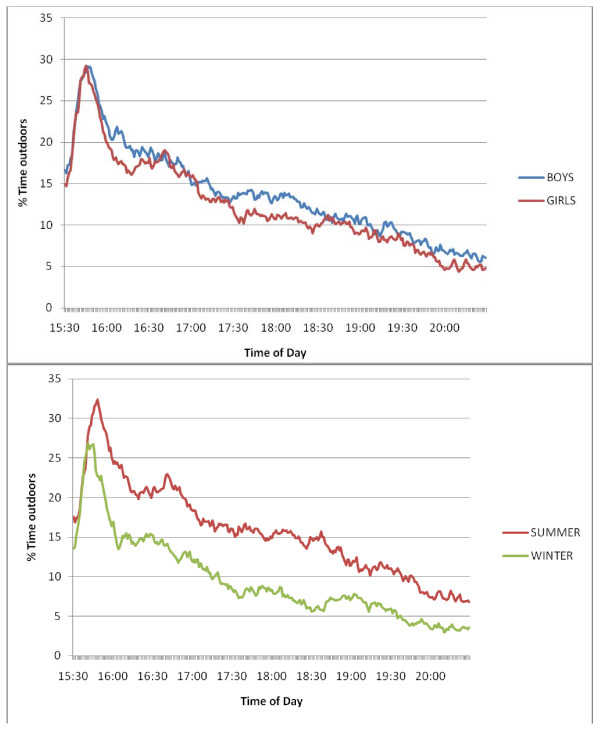
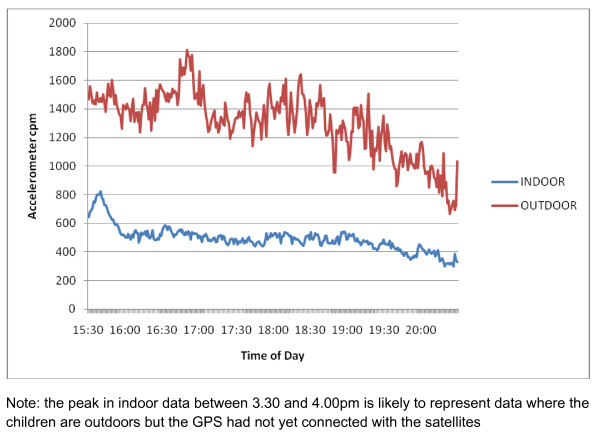
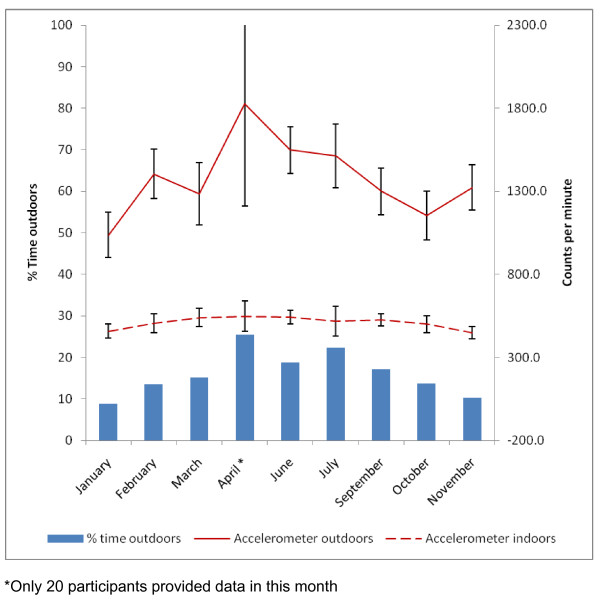
BACKGROUND: Observational studies have shown a positive association between time outdoors and physical activity in children. Time outdoors may be a feasible intervention target to increase the physical activity of youth, but methods are required to accurately measure time spent outdoors in a range of locations and over a sustained period. The Global Positioning System (GPS) provides precise location data and can be used to identify when an individual is outdoors. The aim of this study was to investigate whether GPS data recorded outdoors were associated with objectively measured physical activity. METHODS: Participants were 1010 children (11.0 +/- 0.4 years) recruited from 23 urban primary schools in South West England, measured between September 2006 and July 2008. Physical activity was measured by accelerometry (Actigraph GT1M) and children wore a GPS receiver (Garmin Foretrex 201) after school on four weekdays to record time outdoors. Accelerometer and GPS data were recorded at 10 second epochs and were combined to describe patterns of physical activity when both a GPS and accelerometer record were present (outdoors) and when there was accelerometer data only (indoors). ANOVA was used to investigate gender and seasonal differences in the patterns of outdoor and indoor physical activity, and linear regression was used to examine the cross-sectional associations between GPS-measured time outdoors and physical activity. RESULTS: GPS-measured time outdoors was a significant independent predictor of children's physical activity after adjustment for potential confounding factors. Physical activity was more than 2.5 fold higher outdoors than indoors (1345.8 +/- 907.3 vs 508.9 +/- 282.9 counts per minute; F = 783.2, p < .001). Overall, children recorded 41.7 +/- 46.1 minutes outdoors between 3.30 pm and 8.30 pm, with more time spent outdoors in the summer months (p < .001). There was no gender difference in time spent outdoors. Physical activity outdoors was higher in the summer than the winter (p < .001), whilst there was no seasonal variation in physical activity indoors. CONCLUSIONS: Duration of GPS recording is positively associated with objectively measured physical activity and is sensitive to seasonal differences. Minute by minute patterning of GPS and physical activity data is feasible and may be a useful tool to investigate environmental influences on children's physical activity and to identify opportunities for intervention.
Overview
The claims and statistics of this paper haven’t been checked yet.
Run the check — free, no account needed. It reads the open-access text and checks the sources it cites.
Integrity signals
Registry
Cites
Statistics
Figures
Verification
Claims the paper makes
The claims and statistics of this paper haven’t been checked yet.
Run the check — free, no account needed. It reads the open-access text and checks the sources it cites.
Claims other papers make about this one
Each is checked against this paper’s own text: does it say what the citing paper says it does?
The source backs part of the claim, not all of it — or backs it for a different population, condition or comparison.
In the citing paper
“For instance, self-reported duration is likely to be less accurate than measures obtained from geo-tracking individuals during specific visits39, or over several days40, and individuals may have been unsure about, or reluctant to discuss, certain issues which were included as covariates (e.g. long standing illness/disability).”
From Spending at least 120 minutes a week in nature is associated with good health and wellbeing (2019) · cites this paper as [40]
Experimental — accuracy not yet measured
Self-check
Percentages, sums and reported differences re-computed from the paper’s own numbers.
The self-check needs the paper’s full text.
Citations
Cites
Establishing a standard definition for child overweight and obesity worldwide: international survey
Cole, T. J. (2000) · BMJ · doi:10.1136/bmj.320.7244.1240 · Cited by 16,588
A review of correlates of physical activity of children and adolescents
SALLIS, J. F., PROCHASKA, J. J., & TAYLOR, W. C. (2000) · Medicine & Science in Sports & Exercise · doi:10.1097/00005768-200005000-00014 · Cited by 4,421
Evidence Based Physical Activity for School-age Youth
Strong, W. B., Malina, R. M., Blimkie, C. J. R., Daniels, S. R., Dishman, R. K., Gutin, B., Hergenroeder, A. C., Must, A., Nixon, P. A., Pivarnik, J. M., et al. (2005) · The Journal of Pediatrics · doi:10.1016/j.jpeds.2005.01.055 · Cited by 4,222
A self‐report measure of pubertal status: Reliability, validity and initial norms
Petersen, A. C., Crockett, L., Richards, M., & Boxer, A. (1988) · Journal of Youth and Adolescence · doi:10.1007/bf01537962 · Cited by 3,129
Andersen, L. B., Harro, M., Sardinha, L. B., Froberg, K., Ekelund, U., Brage, S., & Anderssen, S. A. (2006) · The Lancet · doi:10.1016/s0140-6736(06)69075-2 · Cited by 1,518
Environmental correlates of physical activity in youth – a review and update
Ferreira, I., Van Der Horst, K., Wendel‐Vos, W., Kremers, S., Van Lenthe, F. J., & Brug, J. (2007) · Obesity Reviews · doi:10.1111/j.1467-789x.2006.00264.x · Cited by 993 · cited 1×
“Time outdoors has been found to be a correlate of children's physical activity in most studies [5,6] and has been associated with higher objectively measured physical activity [7,8], with lower prevalence of overweight [8] and with higher independent mobility [9].”
BackgroundDavison, K. K., & Lawson, C. T. (2006) · International Journal of Behavioral Nutrition and Physical Activity · doi:10.1186/1479-5868-3-19 · Cited by 966
Veitch, J., Bagley, S., Ball, K., & Salmon, J. (2005) · Health & Place · doi:10.1016/j.healthplace.2005.02.009 · Cited by 632
Neighborhood Greenness and 2-Year Changes in Body Mass Index of Children and Youth
Bell, J. F., Wilson, J. S., & Liu, G. C. (2008) · American Journal of Preventive Medicine · doi:10.1016/j.amepre.2008.07.006 · Cited by 441
Cooper, A. R., Page, A. S., Foster, L. J., & Qahwaji, D. M. (2003) · American Journal of Preventive Medicine · doi:10.1016/s0749-3797(03)00205-8 · Cited by 435
Self-citation
Cited by
Sorted by citations
Molecular Mechanisms of Depression: Perspectives on New Treatment Strategies
Lang, U. E., & Borgwardt, S. (2013) · Cellular Physiology and Biochemistry · doi:10.1159/000350094 · Cited by 8,526
Spending at least 120 minutes a week in nature is associated with good health and wellbeing
White, M. P., Alcock, I., Grellier, J., Wheeler, B. W., Hartig, T., Warber, S. L., Bone, A., Depledge, M. H., & Fleming, L. E. (2019) · Scientific Reports · doi:10.1038/s41598-019-44097-3 · Cited by 1,125
Self-citationPosition Statement on Active Outdoor Play
Tremblay, M. S., Gray, C. E., Babcock, S., Barnes, J. D., Costas-Bradstreet, C., Carr, D., Chabot, G., Choquette, L., Chorney, D. W., Collyer, C., et al. (2015) · International Journal of Environmental Research and Public Health · doi:10.3390/ijerph120606475 · Cited by 552
Gray, C. E., Gibbons, R., Larouche, R., Sandseter, E. B. H., Bienenstock, A., BRUSSONI, M. J., Chabot, G., Herrington, S., Janssen, I., Pickett, W., et al. (2015) · International Journal of Environmental Research and Public Health · doi:10.3390/ijerph120606455 · Cited by 552
Tremblay, M. S., Barnes, J. D., González, S. A., Katzmarzyk, P. T., Onywera, V. O., Reilly, J. J., Tomkinson, G. R., & _, _. (2016) · Journal of Physical Activity and Health · doi:10.1123/jpah.2016-0594 · Cited by 451
Guggenheim, J. A., Northstone, K., McMahon, G., Ness, A., Deere, K. C., Mattocks, C., Pourcain, B. S., & Williams, C. (2012) · Investigative Ophthalmology & Visual Science · doi:10.1167/iovs.11-9091 · Cited by 428
Almanza, E., Jerrett, M., Dunton, G. F., Seto, E., & Pentz, M. A. (2011) · Health & Place · doi:10.1016/j.healthplace.2011.09.003 · Cited by 361
Outdoor Time, Screen Time, and Connection to Nature: Troubling Trends Among Rural Youth?
Larson, L. R., Szczytko, R., Bowers, E. P., Stephens, L. E., Stevenson, K. T., & Floyd, M. F. (2018) · Environment and Behavior · doi:10.1177/0013916518806686 · Cited by 331
Using Global Positioning Systems in Health Research
Kerr, J., Duncan, S., & Schipperijn, J. (2011) · American Journal of Preventive Medicine · doi:10.1016/j.amepre.2011.07.017 · Cited by 242
Greenspace and children's physical activity: A GPS/GIS analysis of the PEACH project
Wheeler, B. W., Cooper, A. R., Page, A. S., & Jago, R. (2010) · Preventive Medicine · doi:10.1016/j.ypmed.2010.06.001 · Cited by 247
Self-citationMcGrath, L. J., Hopkins, W. G., & Hinckson, E. A. (2015) · Sports Medicine · doi:10.1007/s40279-015-0301-3 · Cited by 232
Seasons, weather, and device-measured movement behaviors: a scoping review from 2006 to 2020
Turrisi, T. B., Bittel, K. M., West, A. B., Hojjatinia, S., Hojjatinia, S., Mama, S. K., Lagoa, C. M., & Conroy, D. E. (2021) · International Journal of Behavioral Nutrition and Physical Activity · doi:10.1186/s12966-021-01091-1 · Cited by 208
Spatial Classification of Youth Physical Activity Patterns
Rainham, D. G. C., Bates, C. J., Blanchard, C. M., Dummer, T., Kirk, S., & Shearer, C. L. (2012) · American Journal of Preventive Medicine · doi:10.1016/j.amepre.2012.02.011 · Cited by 190
IMI – Clinical Myopia Control Trials and Instrumentation Report
Wolffsohn, J. S., Kollbaum, P. S., Berntsen, D. A., Atchison, D. A., Benavente-Pérez, A., Bradley, A., Buckhurst, H. D., Collins, M. J., Fujikado, T., Hiraoka, T., et al. (2019) · Investigative Ophthalmology & Visual Science · doi:10.1167/iovs.18-25955 · Cited by 191
Guerrero, M., Vanderloo, L. M., Rhodes, R. E., Faulkner, G., Moore, S. A., & Tremblay, M. S. (2020) · Journal of sport and health science/Journal of Sport and Health Science · doi:10.1016/j.jshs.2020.06.005 · Cited by 186
Systematic review of the correlates of outdoor play and time among children aged 3-12 years
Lee, E., Bains, A., Hunter, S., Ament, A., Brazo‐Sayavera, J., Carson, V., Hakimi, S., Huang, Y., Janssen, I., Lee, M., et al. (2021) · International Journal of Behavioral Nutrition and Physical Activity · doi:10.1186/s12966-021-01097-9 · Cited by 172
Rodrı́guez, D. A., Cho, G.-H., Evenson, K. R., Conway, T. L., Cohen, D. A., Ghosh‐Dastidar, B., Pickrel, J. L., Veblen‐Mortenson, S., & Lytle, L. A. (2011) · Health & Place · doi:10.1016/j.healthplace.2011.08.020 · Cited by 159
Longitudinal changes in sedentary time and physical activity during adolescence
Harding, S. K., Page, A. S., Falconer, C., & Cooper, A. R. (2015) · International Journal of Behavioral Nutrition and Physical Activity · doi:10.1186/s12966-015-0204-6 · Cited by 133
Self-citationRaustorp, A., Pagels, P., Boldemann, C., Cosco, N., Söderström, M., & Mårtensson, F. (2012) · Journal of Physical Activity and Health · doi:10.1123/jpah.9.6.801 · Cited by 133
Klinker, C. D., Schipperijn, J., Kerr, J., Ersbøll, A. K., & Troelsen, J. (2014) · Frontiers in Public Health · doi:10.3389/fpubh.2014.00020 · Cited by 112
Oliver, M., Mavoa, S., Badland, H. M., Parker, K., Donovan, P., KEARNS, R. A., Lin, E.-Y. J., & Witten, K. (2015) · Health & Place · doi:10.1016/j.healthplace.2015.09.005 · Cited by 107
Stone, M. R., & Faulkner, G. E. J. (2014) · Preventive Medicine · doi:10.1016/j.ypmed.2014.05.008 · Cited by 106
Boruff, B. J., Nathan, A., & Nijënstein, S. (2012) · International Journal of Health Geographics · doi:10.1186/1476-072x-11-22 · Cited by 114
Contribution of the School Journey to Daily Physical Activity in Children Aged 11–12 Years
Southward, E. F., Page, A. S., Wheeler, B. W., & Cooper, A. R. (2012) · American Journal of Preventive Medicine · doi:10.1016/j.amepre.2012.04.015 · Cited by 108
Self-citation5-Year Changes in Afterschool Physical Activity and Sedentary Behavior
Arundell, L., Ridgers, N. D., Veitch, J., Salmon, J., Hinkley, T., & Timperio, A. F. (2013) · American Journal of Preventive Medicine · doi:10.1016/j.amepre.2013.01.029 · Cited by 96
Special issue: child-friendly cities
Brown, C., Lannoy, A. D., McCracken, D., Gill, T., Grant, M., Wright, H., & Williams, S. (2019) · Cities & Health · doi:10.1080/23748834.2019.1682836 · Cited by 112
Waters, E., Gibbs, L., Tadic, M., Ukoumunne, O. C., Magarey, A., Okely, A. D., de Silva, A., Armit, C., Green, J., O’Connor, T., et al. (2018) · BMC Public Health · doi:10.1186/s12889-017-4625-9 · Cited by 94
Parental attitudes to myopia: a key agent of change for myopia control?
McCrann, S., Flitcroft, I., Lalor, K., Butler, J. S., Bush, A., & Loughman, J. (2018) · Ophthalmic and Physiological Optics · doi:10.1111/opo.12455 · Cited by 93
Schaefer, L., Plotnikoff, R. C., Majumdar, S. R., Mollard, R. C., Woo, M., Sadman, R., Rinaldi, R. L., Boulé, N. G., Torrance, B. D., Ball, G. D. C., et al. (2014) · The Journal of Pediatrics · doi:10.1016/j.jpeds.2014.05.029 · Cited by 89
Association between physical activity and vitamin D: A narrative literature review
Fernandes, M. R., & Barreto, W. D. R. (2017) · Revista da Associação Médica Brasileira · doi:10.1590/1806-9282.63.06.550 · Cited by 91
Buck, C., Tkaczick, T., Pitsiladis, Y. P., Bourdehaudhuij, I. D., Reisch, L. A., Ahrens, W., & Pigeot, I. (2014) · Journal of Urban Health · doi:10.1007/s11524-014-9915-2 · Cited by 86
Johnstone, A., Hughes, A. R., Martin, A., & Reilly, J. J. (2018) · BMC Public Health · doi:10.1186/s12889-018-5687-z · Cited by 87
Activity compensation and activity synergy in British 8–13year olds
Goodman, A., Mackett, R. L., & Paskins, J. (2011) · Preventive Medicine · doi:10.1016/j.ypmed.2011.07.019 · Cited by 83
Pearce, M., Page, A. S., Griffin, T. P., & Cooper, A. R. (2014) · International Journal of Behavioral Nutrition and Physical Activity · doi:10.1186/1479-5868-11-45 · Cited by 80
Self-citationIntegrating Social Capital Into a Park-Use and Active-Living Framework
Broyles, S. T., Mowen, A. J., Theall, K. P., Gustat, J., & Rung, A. L. (2011) · American Journal of Preventive Medicine · doi:10.1016/j.amepre.2010.12.028 · Cited by 80
Friends and Physical Activity during the Transition from Primary to Secondary School
JAGO, R., PAGE, A. S., & COOPER, A. R. (2012) · Medicine & Science in Sports & Exercise · doi:10.1249/mss.0b013e318229df6e · Cited by 78
Self-citationCoombes, E. G., van Sluijs, E. M. F., & Jones, A. (2013) · Health & Place · doi:10.1016/j.healthplace.2012.11.008 · Cited by 74
Perchoux, C., Kestens, Y., Brondeel, R., & Chaix, B. (2015) · Preventive Medicine · doi:10.1016/j.ypmed.2015.08.010 · Cited by 74
Goodman, A., Paskins, J., & Mackett, R. L. (2012) · Journal of Physical Activity and Health · doi:10.1123/jpah.9.8.1105 · Cited by 72
Objectively measured differences in physical activity in five types of schoolyard area
Andersen, H. B., Klinker, C. D., Toftager, M., Pawlowski, C. S., & Schipperijn, J. (2014) · Landscape and Urban Planning · doi:10.1016/j.landurbplan.2014.10.005 · Cited by 84
Urban Form Relationships with Youth Physical Activity
van Loon, J., & Frank, L. D. (2011) · Journal of Planning Literature · doi:10.1177/0885412211400978 · Cited by 72
Adolescents’ use of the built environment for physical activity
Oreskovic, N. M., Perrin, J. M., Robinson, A. I., Locascio, J. J., Blossom, J., Chen, M. L., Winickoff, J. P., Field, A. E., Green, C., & Goodman, E. (2015) · BMC Public Health · doi:10.1186/s12889-015-1596-6 · Cited by 71
Loveday, A., Sherar, L. B., Sanders, J. P., Sanderson, P. W., & Esliger, D. W. (2015) · Journal of Medical Internet Research · doi:10.2196/jmir.4761 · Cited by 70
Arundell, L., Hinkley, T., Veitch, J., & Salmon, J. (2015) · PLoS ONE · doi:10.1371/journal.pone.0140132 · Cited by 72
Measures of outdoor play and independent mobility in children and youth: A methodological review
Bates, B., & Stone, M. R. (2014) · Journal of science and medicine in sport · doi:10.1016/j.jsams.2014.07.006 · Cited by 70
Physical activity mediates the relationship between outdoor time and mental health
Bélanger, M. F., Gallant, F., Doré, I., O’Loughlin, J. L., Sylvestre, M., Nader, P. A., Larouche, R., Gunnell, K. E., & Sabiston, C. M. (2019) · Preventive Medicine Reports · doi:10.1016/j.pmedr.2019.101006 · Cited by 76
Johnstone, A., Hughes, A. R., Janssen, X., & Reilly, J. J. (2017) · Preventive Medicine Reports · doi:10.1016/j.pmedr.2017.05.002 · Cited by 68
Miller, N. C., Kumar, S., Pearce, K. L., & Baldock, K. L. (2021) · Environmental Education Research · doi:10.1080/13504622.2021.1921117 · Cited by 98
Harrison, F., Jones, A., Bentham, G., van Sluijs, E. M. F., Cassidy, A., & Griffin, S. J. (2011) · International Journal of Behavioral Nutrition and Physical Activity · doi:10.1186/1479-5868-8-47 · Cited by 65
Oreskovic, N. M., Blossom, J., Field, A. E., Chiang, S. R., Winickoff, J. P., & Kleinman, R. E. (2012) · Geospatial health · doi:10.4081/gh.2012.144 · Cited by 64
Ferrer, H. B., Cooper, A. R., & Audrey, S. (2018) · Journal of Transport & Health · doi:10.1016/j.jth.2018.01.009 · Cited by 64
Self-citationPrins, R., Mohnen, S. M., van Lenthe, F. J., Brug, J., & Oenema, A. (2012) · International Journal of Behavioral Nutrition and Physical Activity · doi:10.1186/1479-5868-9-90 · Cited by 62
Campos-Garzón, P., Sevil‐Serrano, J., García‐Hermoso, A., Chillón, P., & Barranco-Ruíz, Y. (2023) · Scandinavian Journal of Medicine and Science in Sports · doi:10.1111/sms.14450 · Cited by 69
Collaborators, I. C. A. D. (., Goodman, A., Page, A. S., & Cooper, A. R. (2014) · International Journal of Behavioral Nutrition and Physical Activity · doi:10.1186/1479-5868-11-84 · Cited by 59
Self-citationAggio, D., Smith, L., Fisher, A., & Hamer, M. (2014) · Preventive Medicine · doi:10.1016/j.ypmed.2014.11.018 · Cited by 56
Hordacre, B. G., Barr, C., & Crotty, M. (2014) · Sensors · doi:10.3390/s140405845 · Cited by 56
Smith, L., Gardner, B., Aggio, D., & Hamer, M. (2015) · Preventive Medicine · doi:10.1016/j.ypmed.2015.02.004 · Cited by 56
Factors associated with the physical activity level of children who have the Fontan procedure
Longmuir, P. E., Russell, J. L., Corey, M. L., Faulkner, G., & McCrindle, B. W. (2011) · American Heart Journal · doi:10.1016/j.ahj.2010.11.019 · Cited by 56
Jephcote, C., & Chen, H. (2011) · The Science of The Total Environment · doi:10.1016/j.scitotenv.2011.11.040 · Cited by 56
Remmers, T., van Kann, D., Kremers, S., Ettema, D., de Vries, S. I., Vos, S. B., & Thijs, C. T. (2020) · International Journal of Behavioral Nutrition and Physical Activity · doi:10.1186/s12966-020-00962-3 · Cited by 55
Bristol Girls Dance Project Feasibility Trial: outcome and process evaluation results
Jago, R., Sebire, S. J., Cooper, A. R., Haase, A. M., Powell, J. E., Davis, L., McNeill, J., & Montgomery, A. A. (2012) · International Journal of Behavioral Nutrition and Physical Activity · doi:10.1186/1479-5868-9-83 · Cited by 54
Self-citationCollins, P., Al‐Nakeeb, Y., Nevill, A. M., & Lyons, M. (2012) · International Journal of Environmental Research and Public Health · doi:10.3390/ijerph9093030 · Cited by 54
Using Twitter to investigate seasonal variation in physical activity in urban green space
Roberts, H., Sadler, J. P., & Chapman, L. (2017) · Geo Geography and Environment · doi:10.1002/geo2.41 · Cited by 53
The Safety of the Neighborhood Environment and Physical Activity in Czech and Polish Adolescents
Mitáš, J., Sas-Nowosielski, K., Groffik, D., & Frömel, K. (2018) · International Journal of Environmental Research and Public Health · doi:10.3390/ijerph15010126 · Cited by 49
Aggio, D., Gardner, B., Roberts, J., Johnstone, J., Stubbs, B., Williams, G., Sánchez, G. F. L., & Smith, L. (2017) · Preventive Medicine Reports · doi:10.1016/j.pmedr.2017.07.007 · Cited by 46
Jago, R., Sebire, S. J., Davies, B. R., Wood, L., Edwards, M. J., Banfield, K., Fox, K. R., Thompson, J. L., Powell, J. E., & Montgomery, A. A. (2014) · International Journal of Behavioral Nutrition and Physical Activity · doi:10.1186/s12966-014-0114-z · Cited by 44
Self-citationViciana, J., Mayorga-Vega, D., & Baena, A. C. M. (2016) · Journal of Physical Activity and Health · doi:10.1123/jpah.2015-0537 · Cited by 44
Johnstone, A., Hughes, A. R., Bonnar, L., Booth, J. N., & Reilly, J. J. (2019) · Pilot and Feasibility Studies · doi:10.1186/s40814-019-0427-4 · Cited by 43
Nowhere to Go: Parents' Descriptions of Children's Physical Activity During a Global Pandemic
Perez, D., Thalken, J., Ughelu, N. E., Knight, C. J., & Massey, W. V. (2021) · Frontiers in Public Health · doi:10.3389/fpubh.2021.642932 · Cited by 52
Socioeconomic position and childhood sedentary time: evidence from the PEACH project
Pulsford, R. M., Griew, P., Page, A. S., Cooper, A. R., & Hillsdon, M. M. (2013) · International Journal of Behavioral Nutrition and Physical Activity · doi:10.1186/1479-5868-10-105 · Cited by 42
Self-citationJansen, M., Ettema, D., Pierik, F. H., & Dijst, M. (2016) · International Journal of Environmental Research and Public Health · doi:10.3390/ijerph13030287 · Cited by 47
Smart Growth Community Design and Physical Activity in Children
Jerrett, M., Almanza, E., Davies, M., Wolch, J. R., Dunton, G. F., Spruijt‐Metz, D., & Pentz, M. A. (2013) · American Journal of Preventive Medicine · doi:10.1016/j.amepre.2013.05.010 · Cited by 41
Razani, N., Kohn, M. A., Wells, N. M., Thompson, D., Hamilton Flores, H., & Rutherford, G. W. (2016) · Contemporary Clinical Trials · doi:10.1016/j.cct.2016.09.007 · Cited by 39
Smith, L., Sahlqvist, S., Ogilvie, D., Jones, A., Griffin, S. J., & van Sluijs, E. M. F. (2012) · Preventive Medicine · doi:10.1016/j.ypmed.2012.01.006 · Cited by 37
Katapally, T. R., Bhawra, J., & Patel, P. (2020) · Health & Place · doi:10.1016/j.healthplace.2020.102453 · Cited by 38
Time Spent Outdoors, Depressive Symptoms, and Variation by Race and Ethnicity
Beyer, K. M. M., Szabó, A., & Nattinger, A. B. (2016) · American Journal of Preventive Medicine · doi:10.1016/j.amepre.2016.05.004 · Cited by 40
Increases in Use and Activity Due to Urban Renewal: Effect of a Natural Experiment
Andersen, H. B., Christiansen, L. B., Klinker, C. D., Ersbøll, A. K., Troelsen, J., Kerr, J., & Schipperijn, J. (2017) · American Journal of Preventive Medicine · doi:10.1016/j.amepre.2017.03.010 · Cited by 35
Oh, R. R. Y., Fielding, K. S., Chang, C., Nghiem, L. T. P., Tan, C. L. Y., Quazi, S. A., Shanahan, D. F., Gaston, K. J., Carrasco, L. R., & Fuller, R. A. (2021) · International Journal of Environmental Research and Public Health · doi:10.3390/ijerph181910149 · Cited by 40
Cortínez-O’Ryan, A., Albagli, A., Sadarangani, K. P., & Aguilar-Farías, N. (2017) · PLoS ONE · doi:10.1371/journal.pone.0180172 · Cited by 35
Harrison, F., van Sluijs, E. M., Corder, K., Ekelund, U., & Jones, A. (2015) · International Journal of Behavioral Nutrition and Physical Activity · doi:10.1186/s12966-015-0202-8 · Cited by 35
Wilkie, H. J., Standage, M., Gillison, F., Cumming, S. P., & Katzmarzyk, P. T. (2018) · BMJ Open · doi:10.1136/bmjopen-2017-018373 · Cited by 38
McGrath, L. J., Hinckson, E. A., Hopkins, W. G., Mavoa, S., Witten, K., & Schofield, G. (2016) · Sports Medicine · doi:10.1007/s40279-016-0533-x · Cited by 34
Remmers, T., Thijs, C. T., Ettema, D., de Vries, S. I., Slingerland, M., & Kremers, S. (2019) · International Journal of Environmental Research and Public Health · doi:10.3390/ijerph16173116 · Cited by 36
Association between physical activity and blood pressure in prepubertal children
Gopinath, B., Hardy, L. L., Teber, E., & Mitchell, P. (2011) · Hypertension Research · doi:10.1038/hr.2011.46 · Cited by 33
Wu, J. Y., Jiang, C., Jaimes, G., Bartell, S. M., Dang, A., Baker, D. B., & Delfino, R. J. (2013) · Environmental Health · doi:10.1186/1476-069x-12-86 · Cited by 33
Meester, F. D., Bourdeaudhuij, I. D., Deforche, B. I., Ottevaere, C., & Cardon, G. (2011) · Public Health Nutrition · doi:10.1017/s1368980011001868 · Cited by 32
Solomon-Moore, E., Sebire, S. J., Thompson, J. L., Zahra, J., Lawlor, D. A., & Jago, R. (2017) · BMJ Open Sport & Exercise Medicine · doi:10.1136/bmjsem-2016-000137 · Cited by 32
Self-citationExploring children’s seasonal play to promote active lifestyles in Auckland, New Zealand
Ergler, C. R., KEARNS, R. A., & Witten, K. (2016) · Health & Place · doi:10.1016/j.healthplace.2016.07.001 · Cited by 32
The effect of reminders in a web-based intervention study
Svensson, M., Svensson, T., Hansen, A. W., & Lagerros, Y. T. (2012) · European Journal of Epidemiology · doi:10.1007/s10654-012-9687-5 · Cited by 31
2025 Position statement on active outdoor play
Lee, E.-Y., de Lannoy, L., Kim, Y.-B., Rathod, A., James, M. E., Lopes, O., Nasrallah, B., Thankarajah, A., Adjei-Boadi, D., de Barros, M. I. A., et al. (2025) · International Journal of Behavioral Nutrition and Physical Activity · doi:10.1186/s12966-025-01813-9 · Cited by 32
How Do They Do It: Working Women Meeting Physical Activity Recommendations
Gell, N., & Wadsworth, D. D. (2013) · American Journal of Health Behavior · doi:10.5993/ajhb.38.2.6 · Cited by 32
Wilkie, H. J., Standage, M., Gillison, F., Cumming, S. P., & Katzmarzyk, P. T. (2018) · BMC Public Health · doi:10.1186/s12889-018-5382-0 · Cited by 31
Adolescent offenders' current whereabouts predict locations of their future crimes
Bernasco, W. (2019) · PLoS ONE · doi:10.1371/journal.pone.0210733 · Cited by 30
Pasek, M., Szark-Eckardt, M., Wilk, B., Zuzda, J. G., Żukowska, H., Opanowska, M., Kuska, M., Dróżdź, R., Kuśmierczyk, M., Sakłak, W., et al. (2020) · International Journal of Environmental Research and Public Health · doi:10.3390/ijerph17010309 · Cited by 30
Ye, B., Liu, K., Cao, S., Sankaridurg, P. R., Li, W., Luan, M., Zhang, B., Zhu, J., Zou, H., Xu, X., et al. (2019) · Journal of Translational Medicine · doi:10.1186/s12967-019-2057-2 · Cited by 26
Kwon, S., Tandon, P. S., O’Neill, M. E., & Becker, A. (2022) · BMC Public Health · doi:10.1186/s12889-022-13239-0 · Cited by 26
Lee, C., & Li, L. (2013) · American Journal of Health Promotion · doi:10.4278/ajhp.130430-quan-211 · Cited by 26
Astell‐Burt, T., Navakatikyan, M., & Feng, X. (2024) · Environmental Research · doi:10.1016/j.envres.2024.120016 · Cited by 26
Pearce, M., Saunders, D. H., Allison, P., & Turner, A. P. (2017) · Journal of Physical Activity and Health · doi:10.1123/jpah.2016-0638 · Cited by 25
Ginja, S., Arnott, B., Araújo‐Soares, V., Namdeo, A. K., & McColl, E. (2017) · Pilot and Feasibility Studies · doi:10.1186/s40814-017-0197-9 · Cited by 22
Metadata
- Authors
- Cooper, A. R., Page, A. S., Wheeler, B. W., Hillsdon, M., Griew, P., & Jago, R.
- Affiliations
- University of Bristol (GB)
- Royal Cornwall Hospital (GB)
- University of Exeter (GB)
- Corresponding author
- Cooper, Ashley R
- Venue
- International Journal of Behavioral Nutrition and Physical Activity
- Published
- 2010
- Volume
- 7
- Issue
- 1
- Pages
- 31
- ISSN
- 1479-5868 (ISSN-L)
- PMC
- PMC2867989
- OpenAlex
- W2131894970
- Cited by
- 189
- References
- 26
- Citations by year
- 2026: 2 · 2025: 5 · 2024: 2 · 2023: 5 · 2022: 11 · 2021: 11 · 2020: 9 · 2019: 13 · 2018: 10 · 2017: 17 · 2016: 19 · 2015: 16 · 2014: 22 · 2013: 17 · 2012: 15
- FWCI
- 10.18
- Type
- journal article
- Language
- en
- Open access
- gold
- doi.org
- Licence
- cc-by
- Locations
- International Journal of Behavioral Nutrition and Physical Activity (publishedVersion, cc-by)
- Europe PMC (PubMed Central) (publishedVersion, cc-by)
- PubMed Central (publishedVersion, cc-by)
- PubMed (publishedVersion)
- DOAJ (DOAJ: Directory of Open Access Journals) (submittedVersion, cc-by-sa)
- Figshare (submittedVersion)
- Open Research Exeter (University of Exeter) (submittedVersion, cc-by)
- Explore Bristol Research (submittedVersion)
- Bristol Research (University of Bristol) (submittedVersion)
- Funders
- World Cancer Research Fund
- Topics
- Health Sciences › Medicine › Public Health, Environmental and Occupational Health › Physical Activity and Health
- Social Sciences › Urban Studies › Urban Green Space and Health
- Health Sciences › Medicine › Public Health, Environmental and Occupational Health › Obesity, Physical Activity, Diet
- Keywords
- outdoor time, children's physical activity, GPS tracking, accelerometry, seasonal variation, gender differences, elementary school students
About these checks
Registry, retraction, Cites and statistics results are computed, not judged, with one exception: a printed reference that no index lists is read once by a model before it counts as a citation error. Claims are extracted by a model and kept only when their quote appears verbatim in the text; each cited source is then checked, with a model’s help, for whether it says what the claim relies on. Those verdicts can be wrong — read the claim’s quote and the cited source before relying on one.
Statistics and arithmetic are recomputed, not judged.
Confidence bands are shown only for fields calibrated on our annotated test set. None is calibrated yet, so no band is shown.
What counts as a claim ›How we measure confidence ›How we check this ›
Are you an author, or do you see a problem with this page? Request a review
