

Systematic review of sedentary behaviour and health indicators in school-aged children and youth.
Open accessThe DOI matches its Crossref record; 276 of the 276 references it cites were found in a registry or an index.
Abstract
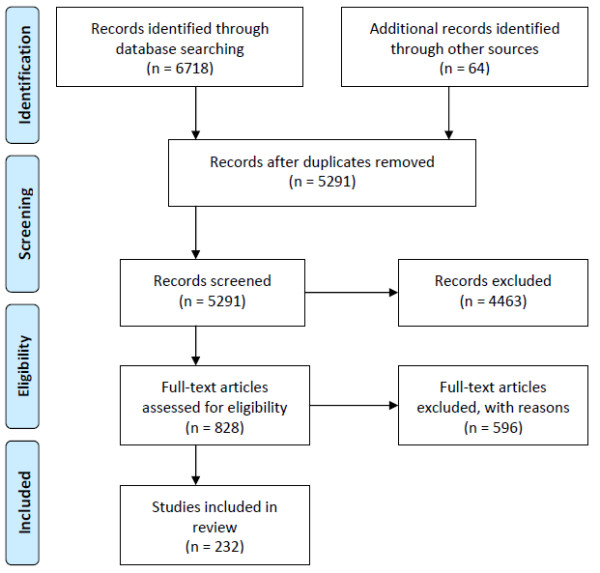
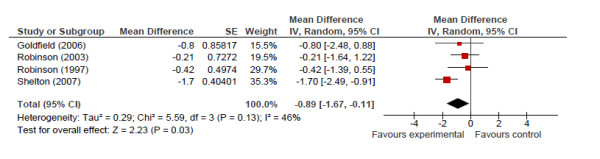
Accumulating evidence suggests that, independent of physical activity levels, sedentary behaviours are associated with increased risk of cardio-metabolic disease, all-cause mortality, and a variety of physiological and psychological problems. Therefore, the purpose of this systematic review is to determine the relationship between sedentary behaviour and health indicators in school-aged children and youth aged 5-17 years. Online databases (MEDLINE, EMBASE and PsycINFO), personal libraries and government documents were searched for relevant studies examining time spent engaging in sedentary behaviours and six specific health indicators (body composition, fitness, metabolic syndrome and cardiovascular disease, self-esteem, pro-social behaviour and academic achievement). 232 studies including 983,840 participants met inclusion criteria and were included in the review. Television (TV) watching was the most common measure of sedentary behaviour and body composition was the most common outcome measure. Qualitative analysis of all studies revealed a dose-response relation between increased sedentary behaviour and unfavourable health outcomes. Watching TV for more than 2 hours per day was associated with unfavourable body composition, decreased fitness, lowered scores for self-esteem and pro-social behaviour and decreased academic achievement. Meta-analysis was completed for randomized controlled studies that aimed to reduce sedentary time and reported change in body mass index (BMI) as their primary outcome. In this regard, a meta-analysis revealed an overall significant effect of -0.81 (95% CI of -1.44 to -0.17, p = 0.01) indicating an overall decrease in mean BMI associated with the interventions. There is a large body of evidence from all study designs which suggests that decreasing any type of sedentary time is associated with lower health risk in youth aged 5-17 years. In particular, the evidence suggests that daily TV viewing in excess of 2 hours is associated with reduced physical and psychosocial health, and that lowering sedentary time leads to reductions in BMI.
Overview
The claims and statistics of this paper haven’t been checked yet.
Free: it reads the open-access text and checks the first 5 claims that cite a source we can check. Create a free account to check every claim.
Integrity signals
Registry
Cites
Statistics
Figures
Verification
Claims the paper makes
The claims and statistics of this paper haven’t been checked yet.
Free: it reads the open-access text and checks the first 5 claims that cite a source we can check. Create a free account to check every claim.
Claims other papers make about this one
Each is checked against this paper’s own text: does it say what the citing paper says it does?
The source backs part of the claim, not all of it — or backs it for a different population, condition or comparison.
In the citing paper
“More than 2 hours per day of television viewing has been associated with lower academic performance in children and adolescents.14”
From Association Between Screen Media Use and Academic Performance Among Children and Adolescents: A Systematic Review and Meta-analysis (2019) · cites this paper as [14]
Experimental — accuracy not yet measuredThe cited source says what the claim attributes to it.
In the citing paper
“Previous systematic reviews in children and adolescents have focused on the association of television viewing and video game playing with academic performance, showing a negative association. 14,15”
From Association Between Screen Media Use and Academic Performance Among Children and Adolescents: A Systematic Review and Meta-analysis (2019) · cites this paper as [14]
In the citing paper
“In view of emerging evidence that sedentary behaviour may have independent health effects in young people 79”
From The school environment and adolescent physical activity and sedentary behaviour: a mixed-studies systematic review (2016) · cites this paper as [79]
Self-check
Percentages, sums and reported differences re-computed from the paper’s own numbers.
The self-check needs the paper’s full text.
Citations
Cites
Items 201–276 of 276
Dumais, S. A. (2008) · Sociological Spectrum · doi:10.1080/02732170802480543 · Cited by 54 · cited 2×
“The majority of cross sectional studies (75%) reported that children and youth who watched higher levels of TV tended to spend less time doing homework, studying, and reading for leisure which may lead to a decrease in academic achievement [42,181,239-255].”
BackgroundBellisle, F., & Rolland‐Cachera, M. (2007) · Journal of Human Nutrition and Dietetics · doi:10.1111/j.1365-277x.2007.00789.x · Cited by 52
Adolescent health behavior, contentment in school, and academic achievement.
Kristjnsson, L. (2009) · American Journal of Health Behavior · doi:10.5993/ajhb.33.1.7 · Cited by 52 · cited 2×
“The majority of cross sectional studies (75%) reported that children and youth who watched higher levels of TV tended to spend less time doing homework, studying, and reading for leisure which may lead to a decrease in academic achievement [42,181,239-255].”
BackgroundPatterns of Overweight, Inactivity, and Snacking in Chinese Children
Waller, C. E., Du, S., & Popkin, B. M. (2003) · Obesity Research · doi:10.1038/oby.2003.132 · Cited by 51 · cited 1×
“Waller CE [202] 2003 China 6-11 9 880 hour week TV BC”
BackgroundKosti, R. I., Panagiotakos, D. B., Mihas, C. C., Alevizos, A., Zampelas, A., Mariolis, A. D., & Tountas, Y. (2007) · PubMed · Cited by 50
Katzmarzyk, P. T., & Tremblay, M. S. (2007) · Applied Physiology, Nutrition, and Metabolism · doi:10.1139/h07-113 · Cited by 49
Self-citationTsai, H.-J., Tsai, A. C., Nriagu, J., Ghosh, D., Gong, M., & Sandretto, A. (2007) · Journal of Asthma · doi:10.1080/02770900701364304 · Cited by 48
Toschke, A. M., Rückinger, S., Böhler, E., & Von Kries, R. (2007) · Public Health Nutrition · doi:10.1017/s136898000725846x · Cited by 43
Relación entre hábitos de vida y calificaciones escolares en adolescentes
Kovacs, F. M., del Real, M. T. G., Gestoso, M., López, J., Mufraggi, N., & Palou, P. (2008) · Apunts Sports Medicine · doi:10.1016/s1886-6581(08)70097-5 · Cited by 43
Alves, J. G. B., Patriota, P., & Figueirôa, J. N. (2009) · Jornal de Pediatria · doi:10.2223/jped.1862 · Cited by 43 · cited 1×
“Alves JG [191] 2009 Brazil 7-10 733 407 326 hour day TV BC”
Lajunen, H., Keski‐Rahkonen, A., Pulkkinen, L., Rose, R. J., Rissanen, A., & Kaprio, J. (2009) · Journal of Adolescence · doi:10.1016/j.adolescence.2009.03.006 · Cited by 42 · cited 1×
“While nine-teen longitudinal studies reported that children who watched greater amounts of TV at baseline saw steeper increases in BMI, body weight and fat mass over time [64-82], nine longitudinal studies reported no significant relationship between time spent sedentary and weight status or fat mass [61-63,83-89].”
BackgroundEffects of Overweight and Leisure-Time Activities on Aerobic Fitness in Urban and Rural Adolescents
Albarwani, S., Al-Hashmi, K., Al-Abri, M., Jaju, D., & Hassan, M. O. (2009) · Metabolic Syndrome and Related Disorders · doi:10.1089/met.2008.0052 · Cited by 41 · cited 2×
“Albarwani S [207] 2009 Oman 15-16 529 245 284 hour week TV, COMP FIT”
BackgroundTelevision viewing and snacking behaviors of fourth- and eighth-grade schoolchildren in Texas.
Vader, A. M., Walters, S. T., Harris, T. R., & Hoelscher, D. M. (2009) · PubMed Central · Cited by 41
The relation of children’s television viewing to school achievement and I.Q.
Ridley -Johnson, R., Cooper, H., & Chance, J. (1983) · The Journal of Educational Research · doi:10.1080/00220671.1983.10885469 · Cited by 40 · cited 2×
“The majority of cross sectional studies (75%) reported that children and youth who watched higher levels of TV tended to spend less time doing homework, studying, and reading for leisure which may lead to a decrease in academic achievement [42,181,239-255].”
BackgroundScreen time and adiposity in adolescents in Mexico
Lajous, M., Chavarro, J. E., Peterson, K. E., Hernández, B., Cruz-Valdéz, A., Hernández‐Ávila, M., & Lazcano-Ponce, E. C. (2009) · Public Health Nutrition · doi:10.1017/s1368980009004881 · Cited by 40 · cited 2×
“Risk for obesity increased in a dose response manner with increased time spent engaging in sedentary behaviours [92,106,110,128, 156,178].”
BackgroundElectronic Game Play and School Performance of Adolescents in Southern Thailand
Jaruratanasirikul, S., Wongwaitaweewong, K., & Sangsupawanich, P. (2009) · CyberPsychology & Behavior · doi:10.1089/cpb.2009.0035 · Cited by 39 · cited 2×
“Jaruratanasirikul S [241] 2009 Thailand 7-12 15.”
BackgroundOverweight and lifestyle behaviors of low socioeconomic elementary school children in Buenos Aires
Hirschler, V., Buzzano, K., Erviti, A., Ismael, N., Silva, S., & Dalamón, R. (2009) · BMC Pediatrics · doi:10.1186/1471-2431-9-17 · Cited by 38 · cited 2×
“Of the 119 cross sectional studies, 94 reported that increased sedentary time was associated with one or more of increased fat mass, increased BMI, increased weight status and increased risk for being overweight [28,90-182].”
BackgroundPhysical activity as an important determinant in developing childhood obesity
Bukara-Radujković, G., & Zdravković, D. (2009) · Medicinski pregled · doi:10.2298/mpns0904107b · Cited by 38 · cited 2×
“Of the 119 cross sectional studies, 94 reported that increased sedentary time was associated with one or more of increased fat mass, increased BMI, increased weight status and increased risk for being overweight [28,90-182].”
BackgroundPhysical activity and overweight in children and adolescents using intensified insulin treatment
Øverby, N. C., Margeirsdottir, H. D., Brunborg, C., Anderssen, S. A., Andersen, L. F., Dahl‐Jørgensen, K., & Norwegian Study Group for Childhood Diabetes (2008) · Pediatric Diabetes · doi:10.1111/j.1399-5448.2008.00454.x · Cited by 38
Body mass index, physical activity and dietary behaviours among adolescents in the Kingdom of Tonga
Smith, B., Phongsavan, P., Havea, D., Halavatau, V, Chey, T., & and Members of the Health Behaviour and Lifestyle of Pacific Youth Survey Collaborating Group and Tonga Core Survey Team (2007) · Public Health Nutrition · doi:10.1017/s1368980007226060 · Cited by 37 · cited 2×
“Of the 119 cross sectional studies, 94 reported that increased sedentary time was associated with one or more of increased fat mass, increased BMI, increased weight status and increased risk for being overweight [28,90-182].”
BackgroundDose-response associations between screen time and overweight among youth
Hume, C., Singh, A., Brug, J., Mechelen, W. V., & Chinapaw, M. (2009) · International Journal of Pediatric Obesity · doi:10.1080/17477160802199992 · Cited by 36 · cited 1×
“Hume C [190] 2009 Netherlands 13 580 277 303 hour day SCREEN BC”
BackgroundNutrient Intake, Physical Activity, and CVD Risk Factors in Children
Day, R. S., Fulton, J. E., Dai, S., Mihalopoulos, N. L., & Barradas, D. T. (2009) · American Journal of Preventive Medicine · doi:10.1016/j.amepre.2009.04.006 · Cited by 35
Type of kindergarten and other potential determinants of overweight in pre-school children
Rapp, K., Schick, K., Bode, H., & Weiland, S. K. (2005) · Public Health Nutrition · doi:10.1079/phn2005722 · Cited by 35 · cited 1×
“Of the 119 cross sectional studies, 94 reported that increased sedentary time was associated with one or more of increased fat mass, increased BMI, increased weight status and increased risk for being overweight [28,90-182].”
BackgroundTelevision and the behaviour of adolescents: Does socio-economic status moderate the link?
Chowhan, J., & Stewart, J. M. (2007) · Social Science & Medicine · doi:10.1016/j.socscimed.2007.05.019 · Cited by 34 · cited 2×
“Chowhan J [232] 2007 Canada 12-15 2666 hour day TV PRO”
BackgroundTovar, G., Poveda, J., Ibáñez‐Pinilla, M., & Lobelo, F. (2008) · PubMed · Cited by 34
Pratt, C., Webber, L. S., Baggett, C. D., Ward, D., Pate, R. R., Murray, D., Lohman, T., Lytle, L., & Elder, J. P. (2008) · Research Quarterly for Exercise and Sport · doi:10.1080/02701367.2008.10599512 · Cited by 34
Violante, R., Navarro, B. E. D. R., Berber, A. C., Chanona, N. R., Bacab, M. B., & Monge, J. J. L. S. (2005) · PubMed · Cited by 34
Relationships between five after-school activities and academic achievement.
Cooper, H., Valentine, J. C., Nye, B. A., & Lindsay, J. J. (1999) · Journal of Educational Psychology · doi:10.1037//0022-0663.91.2.369 · Cited by 34
Gibson, S., Lambert, J., & Neate, D. (2004) · Nutrition Bulletin · doi:10.1111/j.1467-3010.2004.00445.x · Cited by 33 · cited 3×
“Risk for obesity increased in a dose response manner with increased time spent engaging in sedentary behaviours [92,106,110,128, 156,178].”
BackgroundREADING AND TELEVISION: Predictors of Reading Achievement at Different Age Levels
ROBERTS, D. F., BACHEN, C. M., HORNBY, M. C., & HERNANDEZ-RAMOS, P. (1984) · Communication Research · doi:10.1177/009365084011001002 · Cited by 33
Correlates of childhood obesity in Athens, Greece
Lagiou, A., & Parava, M. (2008) · Public Health Nutrition · doi:10.1017/s1368980008002462 · Cited by 33 · cited 2×
“Of the 119 cross sectional studies, 94 reported that increased sedentary time was associated with one or more of increased fat mass, increased BMI, increased weight status and increased risk for being overweight [28,90-182].”
BackgroundToschke, A. M., von Kries, R., Beyerlein, A., & Rückinger, S. (2008) · BMC Public Health · doi:10.1186/1471-2458-8-115 · Cited by 32 · cited 2×
“Of the 119 cross sectional studies, 94 reported that increased sedentary time was associated with one or more of increased fat mass, increased BMI, increased weight status and increased risk for being overweight [28,90-182].”
BackgroundAnastasea‐Vlachou, K., Fryssira-Kanioura, H., Papathanasiou-Klontza, D., Xipolita-Zachariadi, A., & Matsaniotis, N. (1996) · European Journal of Pediatrics · doi:10.1007/bf02532531 · Cited by 32
Predictors of body mass index change in Australian primary school children
Hesketh*, K., Hesketh*, K., Carlin, J., Wake, M., & Crawford, D. (2009) · International Journal of Pediatric Obesity · doi:10.1080/17477160802191122 · Cited by 32 · cited 2×
“While nine-teen longitudinal studies reported that children who watched greater amounts of TV at baseline saw steeper increases in BMI, body weight and fat mass over time [64-82], nine longitudinal studies reported no significant relationship between time spent sedentary and weight status or fat mass [61-63,83-89].”
BackgroundTracking of Activity and Sedentary Behaviors in Childhood: The Iowa Bone Development Study
Rowland, T. P. (2006) · Yearbook of Sports Medicine · doi:10.1016/s0162-0908(08)70429-x · Cited by 32
Television, teenagers, and health
Tucker, L. A. (1987) · Journal of Youth and Adolescence · doi:10.1007/bf02202938 · Cited by 29 · cited 2×
“Eight of 12 cross sectional studies showed that greater than 2 hours of screen time per day was associated with decreased VO2max, lower cardiorespiratory fitness, and lower aerobic fitness [95,206-212].”
BackgroundThe association between television viewing and childhood obesity: a national survey in Thailand.
Ruangdaraganon, N., Kotchabhakdi, N. J., Udomsubpayakul, U., Kunanusont, C., & Suriyawongpaisal, P. (2002) · PubMed · Cited by 28
Borradaile, K. E., Foster, G. D., May, H., Karpyn, A. E., Sherman, S., Grundy, K. M., Nachmani, J., Veur, S. S. V., & Boruch, R. F. (2008) · American Journal of Clinical Nutrition · doi:10.1093/ajcn/87.6.1650 · Cited by 28
Lobelo, F., Dowda, M., Pfeiffer, K. A., & Pate, R. R. (2009) · Journal of Physical Activity and Health · doi:10.1123/jpah.6.2.137 · Cited by 27
Delva, J., O’Malley, P. M., & Johnston, L. D. (2007) · Revista Panamericana de Salud Pública · doi:10.1590/s1020-49892007000100002 · Cited by 26 · cited 2×
“Of the 119 cross sectional studies, 94 reported that increased sedentary time was associated with one or more of increased fat mass, increased BMI, increased weight status and increased risk for being overweight [28,90-182].”
BackgroundCardiac Risk Evaluation for Elementary School Children
Purath, J., Lansinger, T., & Ragheb, C. (1995) · Public Health Nursing · doi:10.1111/j.1525-1446.1995.tb00008.x · Cited by 24 · cited 2×
“Purath J [185] 1995 US 3-5 365 189 176 hour day TV BC, MS”
BackgroundSelf-Esteem, Earned Grades, and Television Viewing Habits of Students.
Wiggins, J. D. (1987) · The School counselor · Cited by 23
Christoforidis, A., Papadopoulou, E., Dimitriadou, M., Stilpnopoulou, D., Gkogka, C., Katzos, G. S., & Athanassiou‐Metaxa, M. (2009) · Journal of Clinical Densitometry · doi:10.1016/j.jocd.2009.03.097 · Cited by 23 · cited 3×
“Of the 119 cross sectional studies, 94 reported that increased sedentary time was associated with one or more of increased fat mass, increased BMI, increased weight status and increased risk for being overweight [28,90-182].”
BackgroundPredicting elementary science learning using national assessment data
Welch, W. W., Walberg, H. J., & Fraser, B. J. (1986) · Journal of Research in Science Teaching · doi:10.1002/tea.3660230805 · Cited by 23 · cited 3×
“Welch WW [248] 1986 Australia 3-4 9 9 1960 TV AA”
BackgroundThompson, A. M., Thompson, A. M., Campagna, P. D., Durant, M. A., Murphy, R. J. L., Rehman, L. A., & Wadsworth, L. A. (2009) · International Journal of Pediatric Obesity · doi:10.1080/17477160802170050 · Cited by 21 · cited 1×
“Thompson AM [189] 2009 Canada 3, 7, 11 1777 795 982 min day TV BC”
Overweight/obesity and factors associated with body mass index during adolescence: the VYRONAS study
Mihas, C. C., Mariolis, A. D., Μanios, Y., Naska, A., Panagiotakos, D. B., Arapaki, A., Alevizos, A., Mariolis-Sapsakos, T. D., & Tountas, Y. (2008) · Acta Paediatrica · doi:10.1111/j.1651-2227.2008.01129.x · Cited by 21 · cited 2×
“Mihas C [193] 2009 Greece 12-17 14.”
Identification and Correlates of Weight Loss in Adolescents in a National Sample
Boutelle, K. N., Hannan, P. J., Neumark‐Sztainer, D., & Himes, J. H. (2007) · Obesity · doi:10.1038/oby.2007.501 · Cited by 21 · cited 2×
“Of the 119 cross sectional studies, 94 reported that increased sedentary time was associated with one or more of increased fat mass, increased BMI, increased weight status and increased risk for being overweight [28,90-182].”
BackgroundKho, M. E., Eva, K. W., Cook, D. J., & Brouwers, M. C. (2008) · Journal of Clinical Epidemiology · doi:10.1016/j.jclinepi.2008.01.007 · Cited by 21 · cited 1×
“the quality of reporting in conference abstracts [267,268].”
BackgroundSelf-citationHealthy active living for children and youth.
(2002) · PubMed · Cited by 20
Predictors of Increased Body Mass Index in Chinese Children
Chen, J., Wall, D., Kennedy, C., Unnithan, V. B., & Yeh, C. (2007) · Progress in Cardiovascular Nursing · doi:10.1111/j.0889-7204.2007.05668.x · Cited by 18 · cited 1×
“While nine-teen longitudinal studies reported that children who watched greater amounts of TV at baseline saw steeper increases in BMI, body weight and fat mass over time [64-82], nine longitudinal studies reported no significant relationship between time spent sedentary and weight status or fat mass [61-63,83-89].”
BackgroundDel-Rio-Navarro, B. E., Berber, A. C., & Sienra-Monge, J. J. L. (2005) · Journal of Allergy and Clinical Immunology · doi:10.1016/j.jaci.2004.12.541 · Cited by 18
Investigation of Factors Contributing to Diabetes Risk in American Indian/Alaska Native Youth
Islam-Zwart (2007) · American Indian and Alaska Native Mental Health Research · doi:10.5820/aian.1403.2007.49 · Cited by 17
Chen, M.-Y., Liou, Y.-M., & Wu, J.-Y. (2008) · Journal of Nursing Research · doi:10.1097/01.jnr.0000387292.99300.92 · Cited by 17 · cited 3×
“Of the 119 cross sectional studies, 94 reported that increased sedentary time was associated with one or more of increased fat mass, increased BMI, increased weight status and increased risk for being overweight [28,90-182].”
BackgroundBasaldúa, N., & Chiquete, E. (2008) · Annals of Nutrition and Metabolism · doi:10.1159/000140514 · Cited by 16 · cited 1×
“Of the 119 cross sectional studies, 94 reported that increased sedentary time was associated with one or more of increased fat mass, increased BMI, increased weight status and increased risk for being overweight [28,90-182].”
BackgroundTsai, H., & Tsai, A. C.-H. (2009) · Journal of Asthma · doi:10.1080/02770900802444229 · Cited by 15 · cited 2×
“Tsai H [145] 2009 Taiwan 11-12 1329 615 672 hour day SB, TV BC”
BackgroundNogueira, J. A. D., & da Costa, T. H. M. (2009) · Journal of Physical Activity and Health · doi:10.1123/jpah.6.1.93 · Cited by 15 · cited 2×
“There were 14 studies [24,27,28,39-49] that directly measured sedentary behaviour with accelerometers and one that directly measured television viewing through a monitoring device [50].”
BackgroundBarlow, S. E., & Chang, J. (2007) · Acta Paediatrica · doi:10.1111/j.1651-2227.2007.00435.x · Cited by 15 · cited 1×
“Of the 119 cross sectional studies, 94 reported that increased sedentary time was associated with one or more of increased fat mass, increased BMI, increased weight status and increased risk for being overweight [28,90-182].”
BackgroundThe Influence of Television on Measured Cognitive Abilities
Lonner, W. J., Thorndike, R. M., Forbes, N., & Ashworth, C. D. (1985) · Journal of Cross-Cultural Psychology · doi:10.1177/0022002185016003006 · Cited by 15 · cited 2×
“Ten of the cross sectional studies found no significant relationship [57,226,227,238,256-261].”
BackgroundAucote, H. M., & Cooper, A. J. (2009) · Australian Journal of Rural Health · doi:10.1111/j.1440-1584.2009.01058.x · Cited by 13 · cited 1×
“Of the 119 cross sectional studies, 94 reported that increased sedentary time was associated with one or more of increased fat mass, increased BMI, increased weight status and increased risk for being overweight [28,90-182].”
BackgroundDollman, J., & Ridley, K. (2006) · Journal of Physical Activity and Health · doi:10.1123/jpah.3.2.191 · Cited by 13 · cited 2×
“Eight of 12 cross sectional studies showed that greater than 2 hours of screen time per day was associated with decreased VO2max, lower cardiorespiratory fitness, and lower aerobic fitness [95,206-212].”
BackgroundThe Production of Achievement and Attitude in High School Social Studies
Walberg, H. J., & Weinstein, T. (1982) · The Journal of Educational Research · doi:10.1080/00220671.1982.10885396 · Cited by 12 · cited 2×
“The majority of cross sectional studies (75%) reported that children and youth who watched higher levels of TV tended to spend less time doing homework, studying, and reading for leisure which may lead to a decrease in academic achievement [42,181,239-255].”
BackgroundAssociations of Various Family Characteristics and Time Use With Children's Body Mass Index
Forshee, R. A., Anderson, P. A., & Storey, M. L. (2009) · Journal of Community Health Nursing · doi:10.1080/07370010902805130 · Cited by 11 · cited 1×
“Forshee RA [188] 2009 US 5-18 1459 734 725 hour week SCREEN BC”
Relationships between Elementary School Children and Television
Scott, L. F. (1958) · The Journal of Educational Research · doi:10.1080/00220671.1958.10882553 · Cited by 11 · cited 2×
“Scott LF [254] 1958 US 6-7 407 hour TV AA”
BackgroundBLACK AND WHITE TV: RAC, TELEVISION VIEWING, AND ACADEMIC ACHIEVEMENT
Caldas, S. J. (1999) · Sociological Spectrum · doi:10.1080/027321799280299 · Cited by 9
Asante, P. A., Cox, J. E., Sonneville, K. R., Samuels, R. C., & Taveras, E. M. (2009) · Clinical Pediatrics · doi:10.1177/0009922809339347 · Cited by 8 · cited 2×
“Asante PA [183] 2009 US 3-13 8.”
Shejwal, B. R., & Purayidathil, J. (2006) · Psychology and Developing Societies · doi:10.1177/097133360601800203 · Cited by 7
Television Viewing and Muscular Fitness of Children
Tucker, L. A., & Hager, R. L. (1996) · Perceptual and Motor Skills · doi:10.2466/pms.1996.82.3c.1316 · Cited by 7 · cited 1×
“Two studies showed no consistent association between television viewing and aerobic and musculoskeletal fitness [184,214].”
BackgroundErnährung und Bewegung von Schülern
Neumann, H., & Neumann, P. S. (2007) · DMW - Deutsche Medizinische Wochenschrift · doi:10.1055/s-2007-993128 · Cited by 7
Vaughan, C. M., Kilkkinen, A., Heistaro, S., Laatikainen, T. K., & Dunbar, J. (2007) · Australian Journal of Primary Health · doi:10.1071/py07011 · Cited by 6 · cited 1×
“Vaughan C [198] 2007 Australia 11-18 14 443 189 254 hour day SCREEN BC”
Anastassea-Vlachou, K., Fryssira-Kanioura, H., Papathanasiou-Klontza, D., et al. (1996) · European Journal of Pediatrics · doi:10.1007/s004310050534 · Cited by 5
A 3-year longitudinal analysis of changes in fitness, physical activity, fatness and screen time
Rowland, T. (2010) · Yearbook of Sports Medicine · doi:10.1016/s0162-0908(10)79675-6 · Cited by 3
Tovar, G., Poveda, J., Ibáñez‐Pinilla, M., & Lobelo, F. (2008) · instname:Universidad del Rosario · Cited by 3
PRATT, C. A. (2008) · Research Quarterly for Exercise and Sport · doi:10.5641/193250308x13086832906517 · Cited by 3
Page, R. M., & Zarco, E. P. (2001) · Psychological Reports · doi:10.2466/pr0.2001.89.2.366 · Cited by 2 · cited 1×
“Those who watched less TV were more emotionally stable, sensitive, imaginative, outgoing, self-controlled, intelligent, moralistic, college bound, and less likely to be aggressive or to engage in risky behaviour [42,115,230-235].”
Background仁宇, 吳. (2008) · Journal of Nursing Research · Cited by 2
Page, R. M. (2001) · Psychological Reports · doi:10.2466/pr0.89.6.366-368 · Cited by 1
Research works printed but not linked: 5
- World Health Organization Global recommendations on physical activity for health 2010 Geneva, Switzerland; World Health Organization 26180873
- Bull FC Expert Working Groups Physical activity guidelines in the U.K.: Review and recommendations 2010 Leicestershire, UK: School of Sport, Exercise, and Health Sciences. Loughborough University
- Kirk SFL Penney TL Langille JJ The relationship between screen time, physical activity, dietary intake and healthy weights in children and youth: literature review and recommendations for intervention 2009 Halifax: Halifax Regional Physical Activity and the IWK Health Centre. Nova Scotia Department of Health Promotion and Protection
- LeBlanc AG Saunders TJ Larouche R Colley RC Goldfield G Tremblay MS Relation between sedentary behaviours and health outcomes in children and youth Joint Meeting of the North American Society for Pediatric Exercise Medicine and the European Group for Pediatric Work Physiology Annual General Meeting 2010 Sep 22-26, 2010; Niagara-on-the-Lake, ON. (abstract)
- Dasgupta K Sex differences in the development of higher systolic blood pressure during adolescence Cardiology Review 2008 25 5 54 7
Cited by
Sedentary Behavior Research Network (SBRN)—Terminology Consensus Project process and outcome
on behalf of SBRN Terminology Consensus Project Participants, Tremblay, M. S., Aubert, S., Barnes, J. D., Saunders, T. J., Carson, V., Latimer-Cheung, A. E., Chastin, S. F. M., Altenburg, T. M., & Chinapaw, M. J. M. (2017) · International Journal of Behavioral Nutrition and Physical Activity · doi:10.1186/s12966-017-0525-8 · Cited by 3,793
Self-citationEime, R. M., Young, J. A., Harvey, J. T., Charity, M. J., & Payne, W. R. (2013) · International Journal of Behavioral Nutrition and Physical Activity · doi:10.1186/1479-5868-10-98 · Cited by 2,366
“other systematic reviews within the physical activity and health field [33,34].”
BackgroundTremblay, M. S., Carson, V., Chaput, J.-P., Connor Gorber, S., Dinh, T., Duggan, M., Faulkner, G., Gray, C. E., Gruber, R., Janson, K., et al. (2016) · Applied Physiology, Nutrition, and Metabolism · doi:10.1139/apnm-2016-0151 · Cited by 2,024
Self-citationStockwell, S., Trott, M., Tully, M., Shin, J., Barnett, Y., Butler, L., McDermott, D., Schuch, F., & Smith, L. (2021) · BMJ Open Sport & Exercise Medicine · doi:10.1136/bmjsem-2020-000960 · Cited by 1,463
Carson, V., Hunter, S., Kuzik, N., Gray, C. E., Poitras, V. J., Chaput, J.-P., Saunders, T. J., Katzmarzyk, P. T., Okely, A. D., Connor Gorber, S., et al. (2016) · Applied Physiology, Nutrition, and Metabolism · doi:10.1139/apnm-2015-0630 · Cited by 1,380
Self-citation
Metadata
- Authors
- Tremblay, M. S., LeBlanc, A. G., Kho, M. E., Saunders, T. J., Larouche, R., Colley, R. C., Goldfield, G., & Gorber, S.
- Affiliations
- Children's Hospital of Eastern Ontario (CA)
- Johns Hopkins University (US)
- Public Health Agency of Canada (CA)
- Corresponding author
- Tremblay, Mark S
- ORCID
- Venue
- International Journal of Behavioral Nutrition and Physical Activity
- Published
- 2011
- Volume
- 8
- Issue
- 1
- Pages
- 98
- ISSN
- 1479-5868 (ISSN-L)
- PMC
- PMC3186735
- OpenAlex
- W2136823874
- Cited by
- 2,085
- References
- 276
- Citations by year
- 2026: 72 · 2025: 103 · 2024: 99 · 2023: 114 · 2022: 164 · 2021: 167 · 2020: 173 · 2019: 189 · 2018: 152 · 2017: 179 · 2016: 185 · 2015: 186 · 2014: 144 · 2013: 104 · 2012: 50
- FWCI
- 10.31
- Type
- journal article
- Language
- en
- Open access
- gold
- doi.org
- Licence
- cc-by
- Locations
- International Journal of Behavioral Nutrition and Physical Activity (publishedVersion, cc-by)
- Europe PMC (PubMed Central) (publishedVersion, cc-by)
- PubMed Central (publishedVersion, cc-by)
- PubMed (publishedVersion)
- uO Research (University of Ottawa) (submittedVersion, public-domain)
- DOAJ (DOAJ: Directory of Open Access Journals) (submittedVersion, cc-by-sa)
- Funders
- Public Health Agency of Canada
- Public Health Agency
- Canadian Institutes of Health Research
- Topics
- Health Sciences › Medicine › Public Health, Environmental and Occupational Health › Physical Activity and Health
- Health Sciences › Medicine › Public Health, Environmental and Occupational Health › Obesity, Physical Activity, Diet
- Health Sciences › Medicine › Public Health, Environmental and Occupational Health › School Health and Nursing Education
- Keywords
- sedentary behavior, television viewing, body composition, body mass index, physical fitness, metabolic syndrome, cardiovascular disease, self-esteem, prosocial behavior, academic performance, cardiometabolic risk
- MeSH terms
- Adolescent, Adolescent Behavior, Body Composition, Cardiovascular Diseases, Child, Child Behavior, Educational Status, Health Status, Health Status Indicators, Humans, Interpersonal Relations, Mortality, Obesity, Physical Fitness, Risk Factors, Self Concept, Television, Health Behavior, Body Mass Index, Metabolic Syndrome, Qualitative Research, Sedentary Behavior
About these checks
Registry, retraction, Cites and statistics results are computed, not judged, with one exception: a printed reference that no index lists is read once by a model before it counts as a citation error. Claims are extracted by a model and kept only when their quote appears verbatim in the text; each cited source is then checked, with a model’s help, for whether it says what the claim relies on. Those verdicts can be wrong — read the claim’s quote and the cited source before relying on one.
Statistics and arithmetic are recomputed, not judged.
Confidence bands are shown only for fields calibrated on our annotated test set. None is calibrated yet, so no band is shown.
What counts as a claim ›How we measure confidence ›How we check this ›
Are you an author, or do you see a problem with this page? Request a review
Data sources
Bibliographic data: Semantic Scholar, OpenAlex, Crossref.
Contains information from the Semantic Scholar Academic Graph Datasets, made available under the ODC Attribution License (ODC-BY 1.0).
Semantic Scholar’s data is described in: Kinney, R., et al. (2023). The Semantic Scholar Open Data Platform. arXiv:2301.10140.
