

The DOI matches its Crossref record; 47 of the 48 references it cites were found in a registry or an index; none of the 24 sources its claims cite is checked for support yet.
Levels of physical activity and sedentary time among 10- to 12-year-old boys and girls across 5 European countries using accelerometers: an observational study within the ENERGY-project
Open accessAbstract
BACKGROUND: The study aim was to objectively assess levels of sedentary time, light, moderate and vigorous physical activity (PA) among 10-12 year olds across five European countries and to examine differences in sedentary time and PA according to gender and country. METHODS: 686 children (mean age = 11.6 ± 0.8 years, 53% girls, mean BMI = 19.0 ± 3.4 kg/m(2)) from Belgium, Greece, Hungary, the Netherlands and Switzerland wore Actigraph accelerometers and had at least 2 weekdays with minimum 10 h-wearing time and 1 weekend day with minimum 8 h-wearing time. Data were analyzed using multivariate analyses of covariance. RESULTS: Girls spent significantly more time sedentary (500 minutes/day) than boys (474 minutes/day) and significantly less time in light (267 minutes/day) and moderate-to-vigorous PA (32 minutes/day) than boys (284 minutes/day; 43 minutes/day respectively; p < 0.001). 4.6% of the girls and 16.8% of the boys met moderate-to-vigorous PA recommendations of at least 60 minutes/day. Greek boys were more sedentary (510 minutes/day; all at p < 0.05) than other boys. Dutch girls were less sedentary (457 minutes/day; all at p < 0.05) than other girls. Swiss girls displayed more moderate-to-vigorous PA (43 minutes/day; at p < 0.05) than other girls. CONCLUSIONS: Large proportions of children across different European countries did not meet PA recommendations and spent a lot of time sedentary. Mean time spent in moderate-to-vigorous PA was significantly lower than the recommended 60 minutes. Obesity prevention programmes focusing on both decreasing sedentary time and increasing light, moderate and vigorous PA are needed for European children, particularly girls.
Overview
AI snapshot
Written from the paper’s full text.
TL;DR
This cross-European observational study objectively measured sedentary time and physical activity in 10- to 12-year-olds using accelerometers. It found that most children did not meet MVPA recommendations, with girls more sedentary and less active than boys.
Key findings
- Girls spent significantly more time sedentary (500 min/day) than boys (474 min/day) and significantly less time in light PA (267 vs. 284 min/day) and MVPA (32 vs. 43 min/day; all p < 0.001).
- Only 4.6% of girls and 16.8% of boys met the MVPA recommendation of at least 60 min/day.
- Greek boys were more sedentary (510 min/day) than other boys, Dutch girls were less sedentary (457 min/day) than other girls, and Swiss girls had more MVPA (43 min/day) than other girls (all at p < 0.05).
- No significant differences were found in LPA between the five countries.
Methods
- Cross-sectional observational study within the ENERGY-project; 686 children (mean age 11.6 ± 0.8 years, 53% girls, mean BMI 19.0 ± 3.4 kg/m²) from Belgium, Greece, Hungary, the Netherlands, and Switzerland.
- Children wore Actigraph accelerometers and were included with at least 2 weekdays of ≥10 h wearing time and 1 weekend day of ≥8 h wearing time; sedentary, LPA, MPA, and VPA were estimated using Treuth cut-points.
- Multivariate analyses of covariance examined differences by gender and country, adjusted for age, month of wearing, accelerometer model, and language spoken at home.
Limitations
- The paper states that accelerometers do not measure arm movement or swimming, do not distinguish lying, sitting, and standing still, and underestimate cycling and some other activities.
- The paper reports a relatively large drop-out of accelerometer data due to insufficient valid days, and notes that dropouts may have been less active or, conversely, more active and inconvenienced by wearing the device.
- The paper notes use of three Actigraph models (GT1M, GT3X, Actitrainer) and that reduced sensitivity in low-count ranges in the GT1M may make it somewhat less suited for monitoring sedentary time and LPA; the cross-sectional design also makes causal inference impossible (evident from the text).
Model-written summary. Check it against the paper before relying on it.
Integrity signals
Registry
Cites
Statistics
Figures
Verification
Claims the paper makes
16 Own result · 13 Not checked yet · 8 Own method · 6 Own interpretation · 3 No basis given
A result the paper reports from its own data — it cites no other source for it, so there is none to check. The quote shows it is in the paper.
In the paper
“For Belgian, Hungarian and Dutch girls, the percentage of girls meeting MVPA recommendations ranged from 1.5 to 2.1%”
§ Levels of physical activity and sedentary time among 10- to 12-year-old boys and girls across 5 European countries using accelerometers: an observational study within the ENERGY-project > Results > MVPA recommendations
plain- Asserted: passes — The authors put it forward as true.
- Checkable: passes — It can be checked against evidence.
- Load-bearing: unclear — It is unclear whether the paper’s conclusions depend on it.
- Based: passes — The paper gives a reason why it holds.
A result the paper reports from its own data — it cites no other source for it, so there is none to check. The quote shows it is in the paper.
In the paper
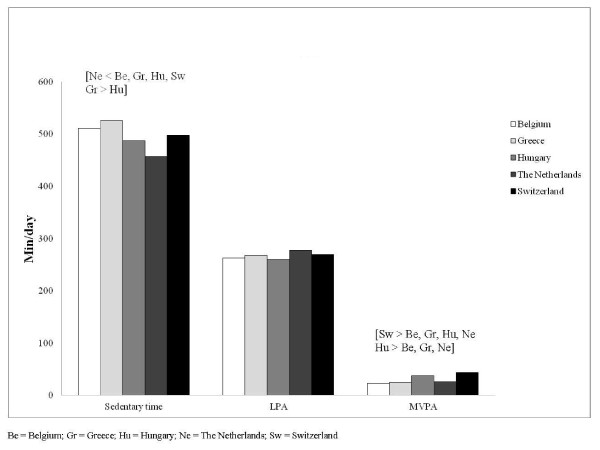
“Dutch girls were less sedentary (457 minutes/day; all at p < 0.05) than other girls.”
- Also stated in: § Country differences · plain
“Dutch girls were less sedentary than all other girls with an average of 457 minutes per day (all at p < 0.05).”
§ Levels of physical activity and sedentary time among 10- to 12-year-old boys and girls across 5 European countries using accelerometers: an observational study within the ENERGY-project > Abstract > Results
plain- Asserted: passes — The authors put it forward as true.
- Checkable: passes — It can be checked against evidence.
- Load-bearing: unclear — It is unclear whether the paper’s conclusions depend on it.
- Based: passes — The paper gives a reason why it holds.
- Also stated in: § Country differences · plain
A result the paper reports from its own data — it cites no other source for it, so there is none to check. The quote shows it is in the paper.
In the paper
“Swiss girls displayed more moderate-to-vigorous PA (43 minutes/day; at p < 0.05) than other girls.”
- Also stated in: § Country differences · plain
“Swiss girls spent more time in MVPA than all other girls with 43 minutes per day (all at p < 0.05).”
§ Levels of physical activity and sedentary time among 10- to 12-year-old boys and girls across 5 European countries using accelerometers: an observational study within the ENERGY-project > Abstract > Results
plain- Asserted: passes — The authors put it forward as true.
- Checkable: passes — It can be checked against evidence.
- Load-bearing: unclear — It is unclear whether the paper’s conclusions depend on it.
- Based: passes — The paper gives a reason why it holds.
- Also stated in: § Country differences · plain
A result the paper reports from its own data — it cites no other source for it, so there is none to check. The quote shows it is in the paper.
In the paper
“whereas this was 12.5% in Swiss girls.”
§ Levels of physical activity and sedentary time among 10- to 12-year-old boys and girls across 5 European countries using accelerometers: an observational study within the ENERGY-project > Results > MVPA recommendations
plain- Asserted: passes — The authors put it forward as true.
- Checkable: passes — It can be checked against evidence.
- Load-bearing: unclear — It is unclear whether the paper’s conclusions depend on it.
- Based: passes — The paper gives a reason why it holds.
A result the paper reports from its own data — it cites no other source for it, so there is none to check. The quote shows it is in the paper.
In the paper
“compared to 16.8% of the boys (see Table 2)”
- Also stated in: § Results · plain
“4.6% of the girls and 16.8% of the boys met moderate-to-vigorous PA recommendations of at least 60 minutes/day.”
§ Levels of physical activity and sedentary time among 10- to 12-year-old boys and girls across 5 European countries using accelerometers: an observational study within the ENERGY-project > Results > MVPA recommendations
plain- Asserted: passes — The authors put it forward as true.
- Checkable: passes — It can be checked against evidence.
- Load-bearing: unclear — It is unclear whether the paper’s conclusions depend on it.
- Based: passes — The paper gives a reason why it holds.
- Also stated in: § Results · plain
A result the paper reports from its own data — it cites no other source for it, so there is none to check. The quote shows it is in the paper.
In the paper
“and significantly less time in light (267 minutes/day) and moderate-to-vigorous PA (32 minutes/day) than boys (284 minutes/day; 43 minutes/day respectively; p < 0.001).”
§ Levels of physical activity and sedentary time among 10- to 12-year-old boys and girls across 5 European countries using accelerometers: an observational study within the ENERGY-project > Abstract > Results
plain- Asserted: passes — The authors put it forward as true.
- Checkable: passes — It can be checked against evidence.
- Load-bearing: passes — The paper’s conclusions depend on it.
- Based: passes — The paper gives a reason why it holds.
A result the paper reports from its own data — it cites no other source for it, so there is none to check. The quote shows it is in the paper.
In the paper
“In boys, approximately one fourth of the Swiss boys met MVPA recommendations (27.8%).”
§ Levels of physical activity and sedentary time among 10- to 12-year-old boys and girls across 5 European countries using accelerometers: an observational study within the ENERGY-project > Results > MVPA recommendations
hedged- Asserted: passes — The authors put it forward as true.
- Checkable: passes — It can be checked against evidence.
- Load-bearing: unclear — It is unclear whether the paper’s conclusions depend on it.
- Based: passes — The paper gives a reason why it holds.
A result the paper reports from its own data — it cites no other source for it, so there is none to check. The quote shows it is in the paper.
In the paper
“The lowest percentage of boys meeting MVPA recommendations was found in Greece: 9.5%.”
§ Levels of physical activity and sedentary time among 10- to 12-year-old boys and girls across 5 European countries using accelerometers: an observational study within the ENERGY-project > Results > MVPA recommendations
plain- Asserted: passes — The authors put it forward as true.
- Checkable: passes — It can be checked against evidence.
- Load-bearing: unclear — It is unclear whether the paper’s conclusions depend on it.
- Based: passes — The paper gives a reason why it holds.
A result the paper reports from its own data — it cites no other source for it, so there is none to check. The quote shows it is in the paper.
In the paper
“and significantly less time in light (267 minutes/day) and moderate-to-vigorous PA (32 minutes/day) than boys (284 minutes/day; 43 minutes/day respectively; p < 0.001).”
§ Levels of physical activity and sedentary time among 10- to 12-year-old boys and girls across 5 European countries using accelerometers: an observational study within the ENERGY-project > Abstract > Results
plaincorrelational- Asserted: passes — The authors put it forward as true.
- Checkable: passes — It can be checked against evidence.
- Load-bearing: passes — The paper’s conclusions depend on it.
- Based: passes — The paper gives a reason why it holds.
A result the paper reports from its own data — it cites no other source for it, so there is none to check. The quote shows it is in the paper.
In the paper
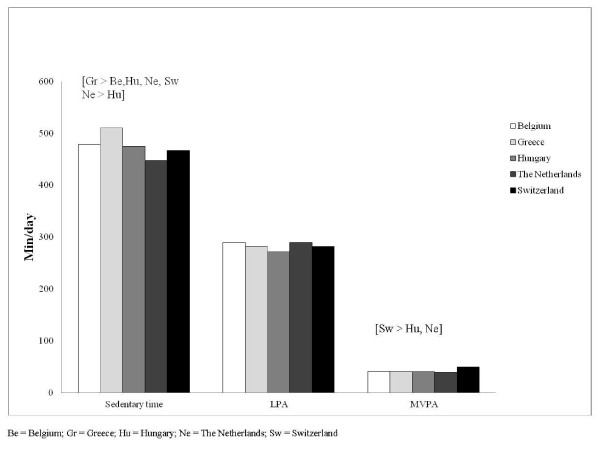
“No significant differences were found in LPA between the five countries.”
§ Levels of physical activity and sedentary time among 10- to 12-year-old boys and girls across 5 European countries using accelerometers: an observational study within the ENERGY-project > Results > Country differences
plain- Asserted: passes — The authors put it forward as true.
- Checkable: passes — It can be checked against evidence.
- Load-bearing: unclear — It is unclear whether the paper’s conclusions depend on it.
- Based: passes — The paper gives a reason why it holds.
- The quote only partly states this claim. 1
- It may state two separate claims as one. 11
- Probably not a substantial claim. 10
A result the paper reports from its own data — it cites no other source for it, so there is none to check. The quote shows it is in the paper.
In the paper
“Girls spent significantly more time sedentary (500 minutes/day) than boys (474 minutes/day)”
- Also stated in: § Gender differences · plain
“After adjusting for age, girls spent significantly more time sedentary and less time in all PA intensities than boys (all at p < 0.001).”
§ Levels of physical activity and sedentary time among 10- to 12-year-old boys and girls across 5 European countries using accelerometers: an observational study within the ENERGY-project > Abstract > Results
plaincorrelational- Asserted: passes — The authors put it forward as true.
- Checkable: passes — It can be checked against evidence.
- Load-bearing: passes — The paper’s conclusions depend on it.
- Based: passes — The paper gives a reason why it holds.
The quote only partly states this claim.
- Also stated in: § Gender differences · plain
A result the paper reports from its own data — it cites no other source for it, so there is none to check. The quote shows it is in the paper.
In the paper
“Greek girls spent the most time sedentary (526 minutes per day), although they did not significantly differ from Belgian (511 minutes per day) and Swiss girls (498 minutes per day).”
§ Levels of physical activity and sedentary time among 10- to 12-year-old boys and girls across 5 European countries using accelerometers: an observational study within the ENERGY-project > Results > Country differences
plain- Asserted: passes — The authors put it forward as true.
- Checkable: passes — It can be checked against evidence.
- Load-bearing: unclear — It is unclear whether the paper’s conclusions depend on it.
- Based: passes — The paper gives a reason why it holds.
It may state two separate claims as one.
A result the paper reports from its own data — it cites no other source for it, so there is none to check. The quote shows it is in the paper.
In the paper
“Swiss boys spent the most minutes in MVPA (50 minutes per day), although they did not significantly differ from Belgian (42 minutes per day) and Greek boys (41 minutes per day).”
§ Levels of physical activity and sedentary time among 10- to 12-year-old boys and girls across 5 European countries using accelerometers: an observational study within the ENERGY-project > Results > Country differences
plain- Asserted: passes — The authors put it forward as true.
- Checkable: passes — It can be checked against evidence.
- Load-bearing: unclear — It is unclear whether the paper’s conclusions depend on it.
- Based: passes — The paper gives a reason why it holds.
It may state two separate claims as one.
A conclusion the paper draws from its own results — it cites no other source for it, so there is none to check. The quote shows it is in the paper.
In the paper
“the current study disclosed some cross-European differences in the levels of sedentary time and PA, possibly due to political and environmental differences.”
§ Levels of physical activity and sedentary time among 10- to 12-year-old boys and girls across 5 European countries using accelerometers: an observational study within the ENERGY-project > Discussion
hedgedconditional- Asserted: passes — The authors put it forward as true.
- Checkable: passes — It can be checked against evidence.
- Load-bearing: passes — The paper’s conclusions depend on it.
- Based: passes — The paper gives a reason why it holds.
It may state two separate claims as one.
- Rests on an assumption: Hungarian and Swiss schools provide three hours of physical education per week, whereas Belgian, Greek and Dutch schools provide two hours per week.
A conclusion the paper draws from its own results — it cites no other source for it, so there is none to check. The quote shows it is in the paper.
In the paper
“Boys did somewhat better than girls, and rather large differences between countries were observed.”
§ Levels of physical activity and sedentary time among 10- to 12-year-old boys and girls across 5 European countries using accelerometers: an observational study within the ENERGY-project > Discussion
plaincorrelational- Asserted: passes — The authors put it forward as true.
- Checkable: passes — It can be checked against evidence.
- Load-bearing: unclear — It is unclear whether the paper’s conclusions depend on it.
- Based: passes — The paper gives a reason why it holds.
It may state two separate claims as one.
A conclusion the paper draws from its own results — it cites no other source for it, so there is none to check. The quote shows it is in the paper.
In the paper
“In conclusion, the present study shows low levels of PA and high sedentary time in schoolchildren in five countries across Europe.”
§ Levels of physical activity and sedentary time among 10- to 12-year-old boys and girls across 5 European countries using accelerometers: an observational study within the ENERGY-project > Conclusion
plain- Asserted: passes — The authors put it forward as true.
- Checkable: passes — It can be checked against evidence.
- Load-bearing: passes — The paper’s conclusions depend on it.
- Based: passes — The paper gives a reason why it holds.
It may state two separate claims as one.
- Rests on an assumption: The sample of children from the selected cities and schools is representative of 10- to 12-year-old children in the five European countries.
- Rests on an assumption: Children who dropped out of the accelerometer data collection did not differ systematically in PA or sedentary time from those included.
None of the sources cited for this claim have been checked yet.
In the paper
“Comparable to previous studies [37-39], the current study established gender differences in both sedentary time and PA across all countries.”
§ Levels of physical activity and sedentary time among 10- to 12-year-old boys and girls across 5 European countries using accelerometers: an observational study within the ENERGY-project > Discussion
What the sources say
- Not checked yetcites [37]
- Not checked yetcites [38]
- Not checked yetcites [39]
plaincorrelational- Asserted: passes — The authors put it forward as true.
- Checkable: passes — It can be checked against evidence.
- Load-bearing: passes — The paper’s conclusions depend on it.
- Based: passes — The paper gives a reason why it holds.
It may state two separate claims as one.
In the paper
“Accelerometry enables distinguishing between different levels of PA (light, moderate, vigorous) and between light PA (LPA) and sedentary time [16].”
§ Levels of physical activity and sedentary time among 10- to 12-year-old boys and girls across 5 European countries using accelerometers: an observational study within the ENERGY-project > Introduction
What the sources say
- Not checked yetcites [16]
plaindirect- Asserted: passes — The authors put it forward as true.
- Checkable: passes — It can be checked against evidence.
- Load-bearing: passes — The paper’s conclusions depend on it.
- Based: passes — The paper gives a reason why it holds.
It may state two separate claims as one.
In the paper
“In general, Actigraph accelerometers have shown adequate reproducibility, validity and feasibility in children and adolescents [23].”
§ Levels of physical activity and sedentary time among 10- to 12-year-old boys and girls across 5 European countries using accelerometers: an observational study within the ENERGY-project > Methods > Measurement
What the sources say
- Not checked yetcites [23]
plain- Asserted: passes — The authors put it forward as true.
- Checkable: passes — It can be checked against evidence.
- Load-bearing: passes — The paper’s conclusions depend on it.
- Based: passes — The paper gives a reason why it holds.
Probably not a substantial claim.
What the paper did — it cites no source for this, so there is none to check. The quote shows it is in the paper.
In the paper
“accelerometers do not measure arm movement or swimming activities, do not distinguish between lying, sitting and standing still and underestimate the intensity of cycling and some other activities.”
§ Levels of physical activity and sedentary time among 10- to 12-year-old boys and girls across 5 European countries using accelerometers: an observational study within the ENERGY-project > Discussion
plain- Asserted: passes — The authors put it forward as true.
- Checkable: passes — It can be checked against evidence.
- Load-bearing: passes — The paper’s conclusions depend on it.
- Based: fails — The paper may give no reason why it holds.
Probably not a substantial claim. The paper may give no reason why it holds. It may state two separate claims as one.
What the paper did — it cites no source for this, so there is none to check. The quote shows it is in the paper.
In the paper
“Researchers responsible for the accelerometer data collection were trained to work according to a standardized accelerometer protocol.”
§ Levels of physical activity and sedentary time among 10- to 12-year-old boys and girls across 5 European countries using accelerometers: an observational study within the ENERGY-project > Methods > Measurement
plain- Asserted: passes — The authors put it forward as true.
- Checkable: passes — It can be checked against evidence.
- Load-bearing: fails — The paper’s conclusions may not depend on it.
- Based: passes — The paper gives a reason why it holds.
Probably not a substantial claim. The paper’s conclusions may not depend on it.
What the paper did — it cites no source for this, so there is none to check. The quote shows it is in the paper.
In the paper
“A final possible limitation is the use of three different models of Actigraph accelerometers (GT1M, GT3X and Actitrainer).”
§ Levels of physical activity and sedentary time among 10- to 12-year-old boys and girls across 5 European countries using accelerometers: an observational study within the ENERGY-project > Discussion
hedged- Asserted: passes — The authors put it forward as true.
- Checkable: passes — It can be checked against evidence.
- Load-bearing: fails — The paper’s conclusions may not depend on it.
- Based: passes — The paper gives a reason why it holds.
Probably not a substantial claim. The paper’s conclusions may not depend on it.
None of the sources cited for this claim have been checked yet.
In the paper
“Moreover, recent studies showed that both behaviours independently contribute to the development of chronic diseases and overweight and obesity [9-12].”
§ Levels of physical activity and sedentary time among 10- to 12-year-old boys and girls across 5 European countries using accelerometers: an observational study within the ENERGY-project > Introduction
What the sources say
- Not checked yetcites [9]
- Not checked yetcites [10]
- Not checked yetcites [11]
- Not checked yetcites [12]
plaindirect- Asserted: passes — The authors put it forward as true.
- Checkable: passes — It can be checked against evidence.
- Load-bearing: passes — The paper’s conclusions depend on it.
- Based: passes — The paper gives a reason why it holds.
It may state two separate claims as one.
What the paper did — it cites no source for this, so there is none to check. The quote shows it is in the paper.
In the paper
“Four covariates were included: (a) age, (b) month of wearing the accelerometer (since Switzerland has started somewhat later with the accelerometer data collection), (c) accelerometer model (since different accelerometer models were used across countries) and (d) language spoken at home (native vs. non-native) as an indicator of ethnicity.”
§ Levels of physical activity and sedentary time among 10- to 12-year-old boys and girls across 5 European countries using accelerometers: an observational study within the ENERGY-project > Methods > Statistical analyses
plain- Asserted: passes — The authors put it forward as true.
- Checkable: passes — It can be checked against evidence.
- Load-bearing: passes — The paper’s conclusions depend on it.
- Based: passes — The paper gives a reason why it holds.
Probably not a substantial claim.
What the paper did — it cites no source for this, so there is none to check. The quote shows it is in the paper.
In the paper
“Children were included in the study if they had at least 2 weekdays with minimum 10 h-wearing time and 1 weekend day with minimum 8 h-wearing time.”
§ Levels of physical activity and sedentary time among 10- to 12-year-old boys and girls across 5 European countries using accelerometers: an observational study within the ENERGY-project > Methods > Measurement
plain- Asserted: passes — The authors put it forward as true.
- Checkable: passes — It can be checked against evidence.
- Load-bearing: passes — The paper’s conclusions depend on it.
- Based: passes — The paper gives a reason why it holds.
Probably not a substantial claim.
None of the sources cited for this claim have been checked yet.
In the paper
“Physical activity (PA) is important for physical and mental health, and is acknowledged as an important target in obesity prevention [1-3].”
§ Levels of physical activity and sedentary time among 10- to 12-year-old boys and girls across 5 European countries using accelerometers: an observational study within the ENERGY-project > Introduction
What the sources say
- Not checked yetcites [1]
- Not checked yetcites [2]
- Not checked yetcites [3]
plain- Asserted: passes — The authors put it forward as true.
- Checkable: fails — It may be too vague to check against evidence.
- Load-bearing: fails — The paper’s conclusions may not depend on it.
- Based: passes — The paper gives a reason why it holds.
Probably not a substantial claim. It may be too vague to check against evidence. The paper’s conclusions may not depend on it. It may state two separate claims as one.
None of the sources cited for this claim have been checked yet.
In the paper
“Accelerometers are considered valid and reliable instruments and feasible to use in large-scale observational and intervention studies [14,15].”
§ Levels of physical activity and sedentary time among 10- to 12-year-old boys and girls across 5 European countries using accelerometers: an observational study within the ENERGY-project > Introduction
What the sources say
- Not checked yetcites [14]
- Not checked yetcites [15]
plain- Asserted: passes — The authors put it forward as true.
- Checkable: passes — It can be checked against evidence.
- Load-bearing: passes — The paper’s conclusions depend on it.
- Based: passes — The paper gives a reason why it holds.
It may state two separate claims as one.
None of the sources cited for this claim have been checked yet.
In the paper
“According to this evidence, it has been recommended for children to participate in at least 60 minutes per day moderate-to-vigorous intensity PA (MVPA) [4-6].”
§ Levels of physical activity and sedentary time among 10- to 12-year-old boys and girls across 5 European countries using accelerometers: an observational study within the ENERGY-project > Introduction
What the sources say
- Not checked yetcites [4]
- Not checked yetcites [5]
- Not checked yetcites [6]
plain- Asserted: passes — The authors put it forward as true.
- Checkable: passes — It can be checked against evidence.
- Load-bearing: passes — The paper’s conclusions depend on it.
- Based: passes — The paper gives a reason why it holds.
Probably not a substantial claim.
In the paper
“A recent study of Trost et al. [30] stated that the cut-point of 100 cpm for sedentary time exhibited good to excellent classification accuracy.”
§ Levels of physical activity and sedentary time among 10- to 12-year-old boys and girls across 5 European countries using accelerometers: an observational study within the ENERGY-project > Methods > Measurement
What the sources say
- Not checked yetcites [30]
plain- Asserted: passes — The authors put it forward as true.
- Checkable: passes — It can be checked against evidence.
- Load-bearing: fails — The paper’s conclusions may not depend on it.
- Based: passes — The paper gives a reason why it holds.
Probably not a substantial claim. The paper’s conclusions may not depend on it.
In the paper
“Reilly et al. [29] suggested that the most appropriate cut-point for MPA lies in the range 3000-3600 cpm.”
§ Levels of physical activity and sedentary time among 10- to 12-year-old boys and girls across 5 European countries using accelerometers: an observational study within the ENERGY-project > Methods > Measurement
What the sources say
- Not checked yetcites [29]
hedged- Asserted: fails — The authors may not put it forward as true.
- Checkable: passes — It can be checked against evidence.
- Load-bearing: fails — The paper’s conclusions may not depend on it.
- Based: passes — The paper gives a reason why it holds.
Probably not a substantial claim. The authors may not put it forward as true. The paper’s conclusions may not depend on it.
The paper relies on this without support.
The sample of children from the selected cities and schools is representative of 10- to 12-year-old children in the five European countries.
“representative samples of 10- to 12-year-old children across five countries in Europe”
The paper relies on this without support.
Children who dropped out of the accelerometer data collection did not differ systematically in PA or sedentary time from those included.
“It is possible that the children who dropped out were less physically active and not interested in wearing an accelerometer or conversely, were more active and experienced the accelerometer as an inconvenience during exercise.”
The paper relies on this without support.
There are no policy measures in the European countries with regard to sedentary time.
“To our knowledge, there are no policy measures in the European countries with regard to sedentary time.”
The paper relies on this without support.
Hungarian and Swiss schools provide three hours of physical education per week, whereas Belgian, Greek and Dutch schools provide two hours per week.
“e.g. Hungarian and Swiss schools provide three hours of physical education per week, whereas Belgian, Greek and Dutch schools provide two hours per week.”
Claims other papers make about this one
Each is checked against this paper’s own text: does it say what the citing paper says it does?
In the citing paper
“some studies indicate that most children spend a large proportion of their awake time being active at low levels of intensity [39–41], especially girls [40].”
From Proportion of children meeting recommendations for 24-hour movement guidelines and associations with adiposity in a 12-country study (2016) · cites this paper as [41]
In the citing paper
“suggesting that sex and age differences that are typically observed in sitting time [33, 34] may be exacerbated during the COVID-19 pandemic”
From Early effects of the COVID-19 pandemic on physical activity and sedentary behavior in children living in the U.S. (2020) · cites this paper as [34]
Self-check
Percentages, sums and reported differences re-computed from the paper’s own numbers.
Each contradiction between two passages listed here was confirmed by an independent check.
Rated minor: it would not touch a result — a value no result rests on, a p-value that stays on the same side of the significance level, or a conflict that is clerical, resolved elsewhere in the paper, or outside its own findings.
In the paper
§ Levels of physical activity and sedentary time among 10- to 12-year-old boys and girls across 5 European countries using accelerometers: an observational study within the ENERGY-project > Methods > Measurement
“| Total sample (n = 687) | 33% | 43% | 24% |”
§ Levels of physical activity and sedentary time among 10- to 12-year-old boys and girls across 5 European countries using accelerometers: an observational study within the ENERGY-project > Methods > Measurement
“| Belgium (n = 109) | 0% | 96% | 4% | | Greece (n = 142) | 0% | 0% | 100% | | Hungary (n = 140) | 67% | 0% | 33% | | The Netherlands (n = 104) | 0% | 0% | 100% | | Switzerland (n = 192) | 37% | 63% | 0% |”
Citations
Cites
Physical Activity in the United States Measured by Accelerometer
TROIANO, R. P., BERRIGAN, D., DODD, K. W., MÂSSE, L. C., TILERT, T., & MCDOWELL, M. (2008) · Medicine & Science in Sports & Exercise · doi:10.1249/mss.0b013e31815a51b3 · Cited by 7,638 · cited 1×
“We specifically focused on 10- to 12-year-old children since the transition from childhood to adolescence represents a critical period for declining PA levels and increasing sedentary time [18,19].”
BackgroundJanssen, I., & LeBlanc, A. G. (2010) · International Journal of Behavioral Nutrition and Physical Activity · doi:10.1186/1479-5868-7-40 · Cited by 4,829 · cited 1×
“According to this evidence, it has been recommended for children to participate in at least 60 minutes per day moderate-to-vigorous intensity PA (MVPA) [4-6].”
BackgroundEvidence Based Physical Activity for School-age Youth
Strong, W. B., Malina, R. M., Blimkie, C. J. R., Daniels, S. R., Dishman, R. K., Gutin, B., Hergenroeder, A. C., Must, A., Nixon, P. A., Pivarnik, J. M., et al. (2005) · The Journal of Pediatrics · doi:10.1016/j.jpeds.2005.01.055 · Cited by 4,222 · cited 1×
“According to this evidence, it has been recommended for children to participate in at least 60 minutes per day moderate-to-vigorous intensity PA (MVPA) [4-6].”
BackgroundAndersen, L. B., Harro, M., Sardinha, L. B., Froberg, K., Ekelund, U., Brage, S., & Anderssen, S. A. (2006) · The Lancet · doi:10.1016/s0140-6736(06)69075-2 · Cited by 1,518 · cited 1×
“Physical activity (PA) is important for physical and mental health, and is acknowledged as an important target in obesity prevention [1-3].”
BackgroundAge and gender differences in objectively measured physical activity in youth
Trost, S. G., PATE, R. R., Sallis, J. F., Freedson, P., Taylor, W. C., Dowda, M. C., & Sirard, J. R. (2002) · Medicine & Science in Sports & Exercise · doi:10.1097/00005768-200202000-00025 · Cited by 1,451 · cited 1×
“Comparable to previous studies [37-39], the current study established gender differences in both sedentary time and PA across all countries.”
ResultComparison of Accelerometer Cut Points for Predicting Activity Intensity in Youth
TROST, S. G., LOPRINZI, P. D., MOORE, R., & PFEIFFER, K. A. (2011) · Medicine & Science in Sports & Exercise · doi:10.1249/mss.0b013e318206476e · Cited by 1,360 · cited 1×
“[30] stated that the cut-point of 100 cpm for sedentary time exhibited good to excellent classification accuracy.”
BackgroundThe evolving definition of “sedentary.”
Pate, R. R., O'Neill, J. R., & Lobelo, F. (2008) · Exercise and Sport Sciences Reviews · doi:10.1097/jes.0b013e3181877d1a · Cited by 1,280 · cited 2×
“Accelerometry enables distinguishing between different levels of PA (light, moderate, vigorous) and between light PA (LPA) and sedentary time [16].”
BackgroundJanssen, I., Katzmarzyk, P. T., Boyce, W. F., Vereecken, C., Mulvihill, C., Roberts, C., Currie, C., Pickett, W., & The Health Behaviour in School‐Aged Children Obesity Working Group (2005) · Obesity Reviews · doi:10.1111/j.1467-789x.2005.00176.x · Cited by 1,169
The level and tempo of children???s physical activities: an observational study
Bailey, R. C., Olson, J., Pepper, S. L., Pórszász, J., Barstow, T. J., & Cooper, D. M. (1995) · Medicine & Science in Sports & Exercise · doi:10.1249/00005768-199507000-00012 · Cited by 978 · cited 1×
“A 15-sec recording epoch was selected in order to capture short duration PA of high intensity [25,26].”
MethodPhysical activity levels and patterns of 9- and 15-yr-old European children
RIDDOCH, C. J., BO ANDERSEN, L., WEDDERKOPP, N., HARRO, M., KLASSON-HEGGEBØ, L., SARDINHA, L. B., COOPER, A. R., & EKELUND, U. (2004) · Medicine & Science in Sports & Exercise · doi:10.1249/01.mss.0000106174.43932.92 · Cited by 900 · cited 2×
“One previous study, as part of the European Youth Heart Study, has compared MVPA levels of children across four European countries using accelerometers [17].”
Background
Cited by
Sorted by citations
Items 101–200 of 254
López‐Gil, J. F., Brazo‐Sayavera, J., de Campos, W., & Lucas, J. L. Y. (2020) · Children · doi:10.3390/children7120263 · Cited by 22
Rietsch, K., Зиновьевна, Г. Е., & Scheffler, C. (2013) · PLoS ONE · doi:10.1371/journal.pone.0068195 · Cited by 23
“Swiss children are more physically active than their contemporaries from the other countries [5].”
BackgroundHerzig, M., Dössegger, A., Mäder, U., Kriemler, S., Wunderlin, T., Grize, L., Brug, J., Μanios, Y., Braun‐Fahrländer, C., & Bringolf‐Isler, B. (2012) · International Journal of Behavioral Nutrition and Physical Activity · doi:10.1186/1479-5868-9-139 · Cited by 21
“These results are supported by the recently published accelerometer measurements of the ENERGY project [26] indicating that Swiss children spent significantly more minutes in moderate to vigorous physical activity than children from the other European countries.”
ResultSelf-citationThe SOPHYA Study Group, Bringolf‐Isler, B., Schindler, C., et al. (2019) · International Journal of Public Health · doi:10.1007/s00038-019-01206-3 · Cited by 21
Self-citationA systematic review on self‐determination theory in physical education
SAUGY, J. J., Drouet, O., Millet, G. P., & Lentillon‐Kaestner, V. (2019) · Translational Sports Medicine · doi:10.1002/tsm2.121 · Cited by 34
Sun, J., & Liu, Y. (2020) · JMIR mhealth and uhealth · doi:10.2196/17699 · Cited by 21
“In China and some European countries, only 20% of children and adolescents achieve the recommended 60 minutes of MVPA daily [3-7].”
BackgroundFairclough, S. J., Hurter, L., Dumuid, D., Gába, A., Rowlands, A. V., Cruz, B. D. P., Cox, A., Crotti, M., Foweather, L., Graves, L., et al. (2022) · International Journal of Environmental Research and Public Health · doi:10.3390/ijerph19148778 · Cited by 22
Hoye, A. V., Fenton, S. A. M., Κrommidas, C., Heuzé, J.-P., Quested, E., Papaioannou, A. G., & Duda, J. L. (2013) · International Journal of Sport and Exercise Psychology · doi:10.1080/1612197x.2013.830432 · Cited by 20
“A MANCOVAwhich included years of experience in football as a covariate was performed to determine differences in PA intensities (i.e. ST, LPA, and MVPA) across the three countries and revealed a significant result, Wilks’ λ = 0.91, F(6, 592) = 4.88, p 0.001, η2 = 0.05.”
BackgroundMethodResultInfluentialFrom Total Volume to Sequence Maps: Sophisticated Accelerometer Data Analysis
Chinapaw, M. J. M., Wang, X., Andersen, L. B., & Altenburg, T. M. (2018) · Medicine & Science in Sports & Exercise · doi:10.1249/mss.0000000000001849 · Cited by 20
“Given that the large majority of children do not meet PA recommendations while they spend more than half their waking hours sedentary (23), the elucidation of the potential health effects of specific behavioral patterns in this age-group is of great importance.”
BackgroundSelf-citationAlturki, H. A., Brookes, D. S. K., & Davies, P. S. W. (2020) · Saudi Medical Journal · doi:10.15537/smj.2020.1.24786 · Cited by 20
“32 These findings are similar to those found in our analysis.”
Ávila‐García, M., Esojo-Rivas, M., Villa‐González, E., Tercedor, P., & Huertas‐Delgado, F. J. (2021) · International Journal of Environmental Research and Public Health · doi:10.3390/ijerph18052702 · Cited by 23
“Similarly, other studies in children reported higher MVPA in males, showing significant differences by sex of between 11 min [36] and 8 min [37].”
ResultGhekiere, A., Cauwenberg, J. V., Carver, A., Mertens, L., de Geus, B., Clarys, P., Cardon, G., Bourdeaudhuij, I. D., & Deforche, B. I. (2016) · Preventive Medicine · doi:10.1016/j.ypmed.2016.03.001 · Cited by 20
“Parents' educational attainment was defined as low if neither parents had a college or university degree, and high if at least one parent had a college or university degree (D'Haese et al., 2015; De Meester et al., 2014; Verloigne et al., 2012).”
BackgroundSelf-citationOh, J., Kim, M., Rhee, S. Y., Rahmati, M., Koyanagi, A., Smith, L., Kim, M. S., Fond, G. B., Boyer, L., Kim, S. Y., et al. (2023) · Journal of Adolescent Health · doi:10.1016/j.jadohealth.2023.10.021 · Cited by 20
Bergmann, J., Langdon, P., Mayagoitia, R. E., & Howard, N. (2014) · PLoS ONE · doi:10.1371/journal.pone.0088080 · Cited by 19
“Moreover, human behavior has also been widely tracked using sensors [38,39].”
BackgroundVariability and Stability in Daily Moderate-to-Vigorous Physical Activity among 10 Year Old Children
Pereira, S., Gomes, T. N., Borges, A., Santos, D., de Souza, M. C., dos Santos, F., de Chaves, R. N., Katzmarzyk, P. T., & Maia, J. A. R. (2015) · International Journal of Environmental Research and Public Health · doi:10.3390/ijerph120809248 · Cited by 18
“[11], using accelerometry data from five European countries (Belgium, Greece, Hungary, The Netherlands and Switzerland), showed that only 4.”
Frömel, K., Groffik, D., Chmelík, F., Cocca, A., & Skalik, K. (2018) · Central European Journal of Public Health · doi:10.21101/cejph.a4521 · Cited by 19
Schroeder, K., Kubik, M., Lee, J., Sirard, J. R., & Fulkerson, J. A. (2019) · Journal of Physical Activity and Health · doi:10.1123/jpah.2019-0108 · Cited by 20
de Jonge, M., Slot-Heijs, J. J., Prins, R., & Singh, A. S. (2020) · International Journal of Environmental Research and Public Health · doi:10.3390/ijerph17072198 · Cited by 18
“However, parents may overestimate, as accelerometer data show that just 2% of Dutch girls and 16% of Dutch boys, aged 10–12 years old, meet the MVPA guidelines [6].”
BackgroundBürgi, R., & de Bruin, E. D. (2016) · Sports · doi:10.3390/sports4030036 · Cited by 18
“However, only a small percentage of school-aged children achieve these recommendations [7,8].”
BackgroundPhysical Activity in 15–17-Year-Old Adolescents as Compensation for Sedentary Behavior in School
Jakubec, L., Frömel, K., Chmelík, F., & Groffik, D. (2020) · International Journal of Environmental Research and Public Health · doi:10.3390/ijerph17093281 · Cited by 22
“Research studies confirm less sitting time on schooldays and higher PA in boys as opposed to girls [55,56].”
Backgroundten Velde, G., Plasqui, G., Willeboordse, M., Winkens, B., & Vreugdenhil, A. C. E. (2021) · PLoS ONE · doi:10.1371/journal.pone.0256448 · Cited by 18
Lu, Y., Yu, K., & Gan, X. (2022) · International Journal of Environmental Research and Public Health · doi:10.3390/ijerph19137715 · Cited by 17
“8% of boys, meet the recommended amount [5].”
BackgroundAtividade física e tempo de tela em jovens de uma cidade de médio porte do Sul do Brasil
Greca, J. P. D. A., Silva, D. A. S., & Loch, M. R. (2016) · Revista Paulista de Pediatria · doi:10.1016/j.rpped.2015.11.001 · Cited by 18
Children’s Leisure Activities and Subjective Well-Being: A Comparative Analysis of 16 Countries
Rees, G. (2018) · International handbooks of quality-of-life · doi:10.1007/978-3-319-75529-8_3 · Cited by 18
Physical activity levels during a Sport Education season of games from around the world
Puente-Maxera, F., Mendez‐Giménez, A., & de Ojeda, D. M. (2020) · European Physical Education Review · doi:10.1177/1356336x20939591 · Cited by 17
van Wely, L., Dallmeijer, A. J., Balemans, A. C. J., et al. (2014) · Disability and Rehabilitation · doi:10.3109/09638288.2014.892639 · Cited by 17
“Although between-country differences in physical activity have not yet been studied in children with CP, activity levels of children who are developing typically show large discrepancies between countries [19,20].”
BackgroundLópez, E. J. M., Ruiz‐Ariza, A., la Torre‐Cruz, M. J. D., & Suárez-Manzano, S. (2020) · Psicologí a Educativa · doi:10.5093/psed2020a16 · Cited by 21
“Boys are generally more active than girls (Verloigne et al., 2012) and therefore the activation achieved from the lower PA levels may not be enough to cause the same effect based on sex and age.”
BackgroundSanmarchi, F., Esposito, F., Marini, S., Masini, A., Scrimaglia, S., Capodici, A., Arrichiello, F., Ferretti, F., Rangone, M., Celenza, F., et al. (2022) · International Journal of Environmental Research and Public Health · doi:10.3390/ijerph19010460 · Cited by 20
Tessier, D. P., Sarrazin, P. G., Niçaise, V., & Dupont, J.-P. (2014) · Psychology and Health · doi:10.1080/08870446.2014.996564 · Cited by 18
“Although low-active adolescents do less than 1 h/day of MVPA, they evaluate PA behaviour positively.”
BackgroundInfluentialMall, C., Schmidt, S., Neuberger, E. W. I., Kirsch, P., Simon, P. D., & Dettweiler, U. (2019) · Frontiers in Public Health · doi:10.3389/fpubh.2019.00026 · Cited by 17
Early Effects of the COVID-19 Pandemic on Physical Activity and Sedentary Behavior in U.S. ChildrenPreprint
Dunton, G. F., Do, B., & Wang, S. D. (2020) · doi:10.33774/coe-2020-q6pz0 · Cited by 16
Factors Associated with Sustained Exergaming: Longitudinal Investigation
O’Loughlin, E. K., Barnett, T. A., McGrath, J. J., Consalvo, M., & Kakinami, L. (2019) · JMIR Serious Games · doi:10.2196/13335 · Cited by 15
“Effective programs and public health policy are needed to address these issues because co-occurrence of low PA and high sedentary time contributes to childhood obesity and its numerous, deleterious health sequelae [6-9].”
Rajala, K., Kankaanpää, A., Laine, K., Itkonen, H., Goodman, E., & Tammelin, T. (2018) · Journal of Sports Sciences · doi:10.1080/02640414.2018.1485227 · Cited by 15
“A large proportion of adolescents are not physically active enough to experience health benefits (Hallal et al., 2012; Verloigne et al., 2012), and spend a lot of time sedentary (Pate, Mitchell, Byun, & Dowda, 2011).”
BackgroundInfluentialKatona, Z. B., Takács, J., Kerner, L., Alföldi, Z., Soós, I., Gyömörei, T., Podstawski, R., & Ihász, F. (2021) · International Journal of Environmental Research and Public Health · doi:10.3390/ijerph182413024 · Cited by 15
“Girls and their older boy peers tended to spend more time in sedentary activities than their younger peers [35].”
BackgroundGeneralization From Physical Education to Recess During an Elementary Sport Education Season
Cheng, S., Coolkens, R., Ward, P., & Iserbyt, P. (2021) · Journal of Teaching in Physical Education · doi:10.1123/jtpe.2020-0166 · Cited by 15
Moreira, N. F., da Veiga, G. V., Santaliestra-Pasías, A. M., Androutsos, O., Cuenca‐García, M., de Oliveira, A. S. D., Pereira, R. A., de Moraes, A. B. D. V., den Bussche, K. V., Censi, L., et al. (2017) · Appetite · doi:10.1016/j.appet.2017.10.008 · Cited by 14
Self-citationFarmer, O., Duffy, D., Cahill, K. M., Lester, D., Belton, S., & O’Brien, W. (2018) · Women in Sport and Physical Activity Journal · doi:10.1123/wspaj.2017-0046 · Cited by 16
Schnider, L., Schilling, R., Cody, R., Kreppke, J.-N., & Gerber, M. (2021) · International Journal of Sport and Exercise Psychology · doi:10.1080/1612197x.2021.1877329 · Cited by 14
“studies show that a majority older children (Verloigne et al., 2012), adolescents (Armstrong”
BackgroundNiveles de actividad física y acelerometría: recomendaciones y patrones de movimiento en escolares
Cañada, F. C., Torres‐Luque, G., Fernández, I. L., & Carnero, E. Á. (2014) · Cuadernos de Psicología del Deporte · doi:10.4321/s1578-84232014000300014 · Cited by 17
“A pesar de ello, los resultados de la mayoría de las investigaciones sugieren la necesidad de reforzar los programas de intervención que fomenten la AF en chicas (Verloigne et al., 2012).”
BackgroundInfluentialvan den Berg, V., Vos, E., de Groot, R. H. M., Singh, A. S., & Chinapaw, M. J. M. (2018) · International Journal of Environmental Research and Public Health · doi:10.3390/ijerph15122713 · Cited by 20
Self-citationSitzendes Verhalten als Risikofaktor im Kindes- und Jugendalter
Bucksch, J., & Dreger, S. (2013) · Prävention und Gesundheitsförderung · doi:10.1007/s11553-013-0413-2 · Cited by 12
Mintjens, S., Gemke, R. J. B. J., van Poppel, M. N. M., Vrijkotte, T. G. M., Roseboom, T. J., & van Deutekom, A. W. (2018) · Childhood Obesity · doi:10.1089/chi.2018.0171 · Cited by 13
“37 Furthermore, by de-sign, children with a low birthweight were overrepresented in the sample, since the initial aim of the study was to assess the association of low birthweight with childhood fitness.”
Physical Activity Time and Intensity in Physical Education During the COVID-19 Pandemic
Lourenço, J., Rodrigues, C., Flôres, F. S., & Soares, D. P. (2022) · Perceptual and Motor Skills · doi:10.1177/00315125221093906 · Cited by 14
“Thus, while girls’ lower levels of PA generally are a widespread concern (Verloigne et al., 2012), PA within PE classes, especially singlegender classes, and perhaps especially in Portugal, may be a setting in which sex differences in MVPA reverse such that girls show greater amounts of more…”
BackgroundChildren’s perceptions of factors related to physical activity in schools
Eskola, S., Tossavainen, K., Bessems, K. M. H. H., & Sormunen, M. (2018) · Educational Research · doi:10.1080/00131881.2018.1530948 · Cited by 13
“However, many children across European countries do not meet these recommendations (Verloigne et al. 2012).”
BackgroundLatomme, J., Morgan, P. J., Craemer, M. D., Brondeel, R., Verloigne, M., & Cardon, G. (2021) · International Journal of Environmental Research and Public Health · doi:10.3390/ijerph18041830 · Cited by 12
“8% of the European primary school-aged children (10–12 years old) does not meet the international recommendation of at least 60 min of moderate-to-vigorous PA per day [1].”
BackgroundSelf-citationApplying the COM-B model to understand wearable activity tracker use in children and adolescents
Creaser, A. V., Clemes, S. A., Bingham, D. D., & Costa, S. (2022) · Journal of Public Health · doi:10.1007/s10389-022-01763-7 · Cited by 12
“Typically, males are more active than females (Crespo et al. 2013; Ruiz et al. 2011; Verloigne et al. 2012), and this finding provides insights into the potential acceptability of using wearables for increasing girls’ PA levels.”
BackgroundDifferences in the Physical Activity, Sedentary Time, and BMI of Finnish Grade 5 Students
Salin, K., Huhtiniemi, M., Watt, A. P., Hakonen, H., & Jaakkola, T. T. (2019) · Journal of Physical Activity and Health · doi:10.1123/jpah.2018-0622 · Cited by 14
López, I. R., Martín‐Matillas, M., Delgado‐Fernández, M., Delgado‐Rico, E., Folgoso, C. C., & Verdejo‐García, A. (2021) · SPORT TK-Revista EuroAmericana de Ciencias del Deporte · doi:10.6018/sportk.461551 · Cited by 13
Zornoza, M. G., Rodríguez‐Martin, B., Martínez-Andrés, M., et al. (2013) · Gaceta Sanitaria · doi:10.1016/j.gaceta.2013.04.011 · Cited by 12
Prenatal, birth and early life predictors of sedentary behavior in young people: a systematic review
Hildebrand, M., Øglund, G. P., Wells, J. C. K., & Ekelund, U. (2016) · International Journal of Behavioral Nutrition and Physical Activity · doi:10.1186/s12966-016-0389-3 · Cited by 13
“5 METs [1], is highly prevalent in contemporary youth [2–4].”
BackgroundGourlan, M., Boiché, J. C. S., Takito, M. Y., et al. (2018) · Research Quarterly for Exercise and Sport · doi:10.1080/02701367.2018.1517236 · Cited by 12
“Population surveys, however, have indicated that less than 20% of young individuals are active enough to meet the international guidelines in terms of PA (i.e., 60 min of moderate-to-vigorous PA per day; Verloigne et al., 2012).”
BackgroundDrouet, O., Lentillon‐Kaestner, V., Roure, C., & Margas, N. (2022) · Journal of Teaching in Physical Education · doi:10.1123/jtpe.2021-0223 · Cited by 13
Appropriateness of the definition of ‘sedentary’ in young children: Whole-room calorimetry study
Reilly, J. J., Janssen, X., Cliff, D. P., & Okely, A. D. (2014) · Journal of science and medicine in sport · doi:10.1016/j.jsams.2014.07.013 · Cited by 11
García‐Cervantes, L., Rodríguez‐Romo, G., Esteban‐Cornejo, I., Cabanas‐Sánchez, V., Delgado-Alfonso, Á., Castro‐Piñero, J., Veiga, Ó. L., & UP & DOWN Study Group (2015) · Journal of Sports Sciences · doi:10.1080/02640414.2015.1116708 · Cited by 11
Nie, M., Fan, C., Sun, R.-Z., Wang, J., Feng, Q., Zhang, Y., Yao, Z., & Wang, M. (2019) · International Journal of Environmental Research and Public Health · doi:10.3390/ijerph16050686 · Cited by 12
“Globally, boys generally have higher PA than girls, which has been observed using self-reports and objective measurements [14,68,69].”
BackgroundLudyga, S., Gerber, M., Herold, F., Schwarz, A., Looser, V. N., & Hanke, M. (2024) · International Journal of Clinical and Health Psychology · doi:10.1016/j.ijchp.2024.100438 · Cited by 10
“The MVPA cut-offs were chosen to differentiate between preadolescents that are clearly below and above average MVPA (43 to 50 min/d) reported for Swiss preadolescents (Verloigne et al., 2012).”
BackgroundSorenson, A. R., Kattelmann, K. K., Meendering, J. R., et al. (2015) · Topics in Clinical Nutrition · doi:10.1097/tin.0000000000000032 · Cited by 10
Psychosocial and Environmental Correlates of Sedentary Behaviors in Spanish Children
Aznar, S., Lara, M. T., Queralt, A., & Molina‐García, J. (2017) · BioMed Research International · doi:10.1155/2017/4728924 · Cited by 10
“In a current study with accelerometry [13], high proportions of children from different European countries did not meet moderate-to-vigorous physical activity (MVPA) recommendations of at least 60 minutes/day and showed Hindawi BioMed Research International Volume 2017, Article ID 4728924, 6 pages https://doi.”
BackgroundGubelmann, C., Marques-Vidal, P. M., Bringolf‐Isler, B., Suggs, L. S., Vollenweider, P., & Kayser, B. (2017) · Preventive Medicine Reports · doi:10.1016/j.pmedr.2017.12.004 · Cited by 10
“However, in industrialized countries, a significant proportion of youth fail to reach these recommendations (Verloigne et al., 2012), and while interventions to increase their PA levels are often not effective (van Sluijs et al., 2011a).”
BackgroundSelf-citationCHARACTERISTICS OF PHYSICAL ACTIVITY AMONG HEALTHY SERBIAN ADOLESCENTS
Nikolić, M., Jovanović, R., & Stanković, A. (2020) · Revista Brasileira de Medicina do Esporte · doi:10.1590/1517-869220202601187598 · Cited by 10
D’Haese, S., Timperio, A. F., Veitch, J., Cardon, G., Dyck, D. V., & Salmon, J. (2013) · Health & Place · doi:10.1016/j.healthplace.2013.09.012 · Cited by 9
Marković, L., Trbojević, J., Horvatin-Fučkar, M., Pekas, D., & Trajković, N. (2022) · Healthcare · doi:10.3390/healthcare10040660 · Cited by 9
“8% of boys complied with the 60 min/day of moderateto vigorous-intensity physical activity daily [4,5].”
BackgroundMartin, R., McMullen, J. M., & Murtagh, E. (2021) · Irish Educational Studies · doi:10.1080/03323315.2021.1899023 · Cited by 9
“The finding that boys accumulated significantly more MVPA during the school day and during class time pre- and post-intervention is consistent with previous international research with device-measured PA levels of boys and girls (Fairclough et al. 2012; Verloigne et al. 2012).”
BackgroundResultA Count Model to Study the Correlates of 60 Min of Daily Physical Activity in Portuguese Children
Borges, A., Gomes, T. N., Santos, D., Pereira, S., dos Santos, F., de Chaves, R. N., Katzmarzyk, P. T., & Maia, J. A. R. (2015) · International Journal of Environmental Research and Public Health · doi:10.3390/ijerph120302557 · Cited by 8
“8% of the boys met the recommendations [45].”
BackgroundBreslin, G., Shannon, S., Fitzpatrick, B., Hanna, D., Belton, S., & Brennan, D. (2017) · Child Care in Practice · doi:10.1080/13575279.2017.1299108 · Cited by 14
Assessment of Hand Function Through the Coordination of Contact Forces in Manipulation Tasks
Jarić, S., & Uygur, M. (2013) · Journal of Human Kinetics · doi:10.2478/hukin-2013-0001 · Cited by 8
“Fewer than 20% of children meet the recommendations for health enhancing physical activity: at least 60 minutes of moderate to vigorous intensity physical activity, preferably on every day of the week (Verloigne et al., 2012).”
BackgroundPhysical activity and overweight/obesity among academic stressed adolescents
Li, C., Yuan, Z., Clements-Nolle, K. D., Fu, Y., Deadmond, M., & Yang, W. (2018) · Biostatistics and Epidemiology International Journal · doi:10.30881/beij.00011 · Cited by 8
“The survey consisted of 84 questions in eight categories: (1) Demographic characteristics; (2) Harm behavior; (3) Smoking behavior; (4) Drinking behavior; (5) Eating behavior and body weight; (6) Physical activity; (7) Sexual behavior and other health-related behaviors; (8) Academic stress.”
BackgroundCortical Structures Associated With Sports Participation in Children: A Population-Based Study
López-Vicente, M., Tiemeier, H. W., Wildeboer, A., Muetzel, R. L., Verhulst, F. C., Jaddoe, V. W. V., Sunyer, J., & White, T. J. H. (2017) · Developmental Neuropsychology · doi:10.1080/87565641.2017.1309654 · Cited by 8
Monteiro, D., Machado, S. E. D. C., Moutão, J. M. R. P., Bento, T., Vitorino, A., Alves, S., Rodrigues, F. F., Lima, J. L., Teixeira, D., Murillo‐Rodríguez, E., et al. (2019) · ESPIRAL CUADERNOS DEL PROFESORADO · doi:10.25115/ecp.v12i25.2420 · Cited by 10
Kharlova, I., Fredriksen, M. V., Mamen, A., & Fredriksen, P. M. (2020) · Sports · doi:10.3390/sports8110150 · Cited by 7
“In the present study children obtained, on average, more than the recommended 60 min of PA per day [30].”
BackgroundResultKawalec, A., & Pawlas, K. (2021) · International Journal of Environmental Research and Public Health · doi:10.3390/ijerph18073704 · Cited by 7
“This is in line with observations that the majority of children do not meet recommendations for either daily physical activity levels [10,12] or limiting daily screen time [10,25].”
BackgroundActive and sedentary behaviors in youth (6–14 years old): Data from the IAN-AF survey (2015–2016)
Pizarro, A. I. N., Correia, D. M., Lopes, C. M. M., Teixeira, P. J., & Mota, J. A. P. S. (2022) · Porto Biomedical Journal · doi:10.1097/j.pbj.0000000000000161 · Cited by 7
Kalma, M., Mägi, K., Mäestu, E., Mooses, K., & Kull, M. (2022) · Sustainability · doi:10.3390/su14095484 · Cited by 7
A Focus on Motor Competence as Alternative Strategy for Weight Management
Drenowatz, C. J. (2017) · Journal of Obesity and Chronic Diseases · doi:10.17756/jocd.2017-006 · Cited by 7
“In youth these changes have promoted indoor activities and high media utilization [26], which resulted in a majority of youth not meeting current PA recommendations of 60 minutes of moderate to vigorous PA [27-29].”
BackgroundLien, N., Vik, F. N., Berntsen, S., Brug, J., Bourdeaudhuij, I. D., Chinapaw, M. J. M., Grillenberger, M., Kovacs, E. M. R., Maes, L., Μanios, Y., et al. (2014) · NORA - Norwegian Open Research Archives · Cited by 7
Self-citationHanke, M., Looser, V. N., Bruggisser, F., Leuenberger, R., Gerber, M., & Ludyga, S. (2023) · Journal of science and medicine in sport · doi:10.1016/j.jsams.2023.07.010 · Cited by 6
Brady, S. M., Salway, R., Mariapun, J., Millard, L. A. C., Ramadas, A., Rizal, H., Skinner, A., Stone, C., Johnson, L., Su, T. T., et al. (2024) · PLoS ONE · doi:10.1371/journal.pone.0297102 · Cited by 6
Mostafavi, F., Moradi, G., Azadi, N. A., Esmaeilnasab, N., & Roshani, D. (2019) · International Journal of Preventive Medicine · doi:10.4103/ijpvm.ijpvm_222_17 · Cited by 5
“[27] They suggested boys prefer to watch sports on television or online more than girls which could motivate them to perform more PA.”
InfluentialDiaz, E. C., Williams, D. K., Howie, E. K., et al. (2024) · International Journal of Obesity · doi:10.1038/s41366-023-01446-7 · Cited by 5
Does Physical Activity Could Moderate Perceived Wellness of Health Providers?
Ostovarfar, J., Kaveh, M. H., Ghahramani, L., et al. (2017) · Shiraz E-Medical Journal · doi:10.5812/semj.14961 · Cited by 5
Sedentary and dynamic activities of adolescents as predictions of postural status
Laštro, D., & Spasojević, O. P. (2017) · Medicinski casopis · doi:10.5937/mckg51-16251 · Cited by 5
van Ekris, E., Chinapaw, M. J. M., Rotteveel, J., & Altenburg, T. M. (2018) · International Journal of Environmental Research and Public Health · doi:10.3390/ijerph15051009 · Cited by 5
“Children and adolescents spend a large proportion of their day sedentary [1,2] with screen-based activities as the most popular sedentary activities [3,4].”
BackgroundSelf-citationÁlvarez, E. F., & López, J. C. (2018) · Ágora/Ágora para la educación física y el deporte · doi:10.24197/aefd.2-3.2018.235-255 · Cited by 5
Lu, Y., Yu, K., Zhai, M., et al. (2023) · Frontiers in Pediatrics · doi:10.3389/fped.2023.1202427 · Cited by 5
Mármol, A. G., Martínez, B. J. S.-Á., & Belmonte, M. J. B. (2017) · Sportis Scientific Journal of School Sport Physical Education and Psychomotricity · doi:10.17979/sportis.2017.3.3.1829 · Cited by 5
“Con respecto al género y el nivel educativo, la prevalencia de la inactividad física respecto aumenta de Primaria a Secundaria y en chicas respecto a chicos, siguiendo la línea de Aznar et al., (2011), Calahorro, Torres, López y Carnero (2015) y Verloigne et al. (2012).”
BackgroundSedentary Behaviour at the Community Level: Correlates, Theories, and Interventions
Mullane, S. L., Pereira, M. A., & Buman, M. P. (2017) · Springer series on epidemiology and public health · doi:10.1007/978-3-319-61552-3_23 · Cited by 5
Riso, E., & Jürimäe, J. (2018) · International handbooks of quality-of-life · doi:10.1007/978-3-319-75529-8_21 · Cited by 5
Øglund, G. P., Stensrud, T., & Ekelund, U. (2014) · Norsk Epidemiologi · doi:10.5324/nje.v24i1-2.1820 · Cited by 5
“Children and youth from Norway, England and European countries spent between 376 and 576 minutes sedentary per day, when measured by accelerometry (39,44-46).”
BackgroundSchool nurses' health dialogues with pupils about physical activity
Golsäter, M., Fast, A., Bergman-Lind, S., & Enskär, K. (2015) · British Journal of School Nursing · doi:10.12968/bjsn.2015.10.7.330 · Cited by 5
Children's segment specific light physical activity across two years of school-based program
Gråstén, A. (2015) · Journal of Physical Education and Sport · doi:10.7752/jpes.2015.01015 · Cited by 5
“In contrast, girls spent less time in LPA in a sample of 10 to 12-years-old children from Belgium, Hungary, Greece, the Netherlands, and Switzerland (Verloigne et al., 2012).”
BackgroundResultInfluentialHeeb, L., Fritschi, N., Marten, A., et al. (2024) · Infection · doi:10.1007/s15010-024-02387-7 · Cited by 4
“In addition, it has been documented that Swiss children spend more time in nature than their counterparts in four other European countries [22], which could also have influenced the higher seroprevalence.”
Gomes, T. N., Hedeker, D., dos Santos, F. K., Pereira, S., Katzmarzyk, P. T., & Maia, J. A. R. (2015) · PLoS ONE · doi:10.1371/journal.pone.0132192 · Cited by 4
“Sex differences on average levels of both physical activity and sedentariness have been previously reported showing that girls usually tend to be more sedentary [10,34], which can be related to their options for sedentary activities during their leisure time (such as reading, listening to music, socializing with frien…”
BackgroundLebacq, T., Ost, C., Bel, S., Brocatus, L., Teppers, E., Cuypers, K. F., Tafforeau, J., & Ridder, K. A. A. D. (2016) · Archives of Public Health · doi:10.1186/s13690-016-0156-6 · Cited by 6
“Children and adolescents with at least 2 valid weekdays and 1 valid weekend day were retained for further analyses [33, 36].”
BackgroundMethodZorrilla‐Revilla, G., Rodrigues, D., Machado‐Rodrigues, A. M., Mateos, A., Rodrı́guez, J., & Padez, C. M. P. (2021) · American Journal of Human Biology · doi:10.1002/ajhb.23626 · Cited by 4
Tessier, D. P., Niçaise, V., & Sarrazin, P. G. (2022) · Frontiers in Psychology · doi:10.3389/fpsyg.2022.950107 · Cited by 4
NIKOLOVA, M., Hilendarski", P., Mladenova, S., et al. (2019) · Anthropological Researches and Studies · doi:10.26758/9.1.4 · Cited by 4
No differences in physical activity between children with overweight and children of normal-weight
van Leeuwen, J., Koes, B. W., Paulis, W. D., Bindels, P., & van Middelkoop, M. (2020) · BMC Pediatrics · doi:10.1186/s12887-020-02327-y · Cited by 4
Brown, E. C., Buchan, D. S., Cavana, J., Baker, J. S., Wyatt, F., & Kilgore, J. L. (2016) · International Journal of Health Promotion and Education · doi:10.1080/14635240.2016.1157511 · Cited by 5
“Girls tend to be less active than boys (Verloigne et al. 2012), and PA decreases with age prior to adolescence (Basterfield et al. 2011).”
BackgroundGroffik, D., Frömel, K., Vorlíček, M., & Polechoński, J. (2020) · Annals of Agricultural and Environmental Medicine · doi:10.26444/aaem/126062 · Cited by 4
“The inconsistency in PA recommendations and the low compatibility of the results of monitoring of adolescents’ PA is also supported by the fact that only 35 European studies (out of 131) confirmed the achievements of daily PA recommendations for young people [61].”
BackgroundInfluentialAssessing the impact of parents’ digital and health literacy on children’s participation in sport
Güven, A. G., Dönmez, Y. N., İncedere, F., & Taşar, M. A. (2025) · Health Promotion International · doi:10.1093/heapro/daaf038 · Cited by 5
“It was reported that girls spent significantly more time sedentary and less time in all physical activity intensities than boys (Verloigne et al .”
Metadata
- Authors
- Verloigne, M., Van Lippevelde, W., Maes, L., Yildirim, M., Chinapaw, M., Manios, Y., Androutsos, O., Kovacs, E., Bringolf-Isler, B., Brug, J., & De Bourdeaudhuij, I.
- Affiliations
- Ghent University (BE)
- Amsterdam Public Health (NL)
- Harokopio University of Athens (GR)
- University of Pecs (HU)
- Venue
- International Journal of Behavioral Nutrition and Physical Activity
- Published
- 2012
- Volume
- 9
- Issue
- 1
- Pages
- 34
- ISSN
- 1479-5868 (ISSN-L)
- PMC
- PMC3359200
- OpenAlex
- W2137633832
- Semantic Scholar
- e6c957695ff0b20f020e7cdaba54ac13cdfc7708
- Cited by
- 258
- References
- 48
- Citations by year
- 2026: 2 · 2025: 3 · 2024: 11 · 2023: 7 · 2022: 17 · 2021: 20 · 2020: 27 · 2019: 15 · 2018: 26 · 2017: 28 · 2016: 27 · 2015: 24 · 2014: 27 · 2013: 22 · 2012: 2
- FWCI
- 16.08
- Type
- journal article
- Language
- en
- Open access
- gold
- doi.org
- Licence
- cc-by
- Locations
- International Journal of Behavioral Nutrition and Physical Activity (publishedVersion, cc-by)
- Europe PMC (PubMed Central) (publishedVersion, cc-by)
- PubMed Central (publishedVersion, cc-by)
- PubMed (publishedVersion)
- Pure Amsterdam UMC (publishedVersion, other-oa)
- Amsterdam UMC (VU Amsterdam) - Institutional Repository (publishedVersion, other-oa)
- edoc (University of Basel) (acceptedVersion)
- Data Archiving and Networked Services (DANS) (submittedVersion, other-oa)
- Ghent University Academic Bibliography (Ghent University) (submittedVersion, other-oa)
- Digital Academic REpository of VU University Amsterdam (Vrije Universiteit Amsterdam) (submittedVersion)
- DOAJ (DOAJ: Directory of Open Access Journals) (submittedVersion, cc-by-sa)
- Open access LMU (Ludwid Maxmilian's Universitat Munchen) (submittedVersion)
- edoc (University of Basel)
- Funders
- European Commission (FP7-HEALTH-2007-B, 223254)
- Bundesamt für Gesundheit
- Bundesamt für Sport
- World Cancer Research Fund
- FP7 Health
- Topics
- Health Sciences › Medicine › Public Health, Environmental and Occupational Health › Physical Activity and Health
- Health Sciences › Medicine › Public Health, Environmental and Occupational Health › Obesity, Physical Activity, Diet
- Social Sciences › Life-span and Life-course Studies › Recreational Sport and Physical Activity
- Keywords
- physical activity, sedentary time, children, moderate-to-vigorous physical activity, light physical activity, sex differences, cross-national comparison, accelerometer-measured activity, physical activity guidelines, obesity prevention, energy projects
- MeSH terms
- Anthropometry, Belgium, Child, Cross-Sectional Studies, Female, Greece, Humans, Hungary, Male, Motor Activity, Netherlands, Obesity, Sex Factors, Switzerland, Multivariate Analysis, Sedentary Behavior
About these checks
Registry, retraction, Cites and statistics results are computed, not judged, with one exception: a printed reference that no index lists is read once by a model before it counts as a citation error. Claims are extracted by a model and kept only when their quote appears verbatim in the text; each cited source is then checked, with a model’s help, for whether it says what the claim relies on. Those verdicts can be wrong — read the claim’s quote and the cited source before relying on one.
A language model drew the claims from the paper on 2026-10-10, under version 3 of the claim definition (model deepseek-v4.1-flash, prompt extract-v3).
A second model labelled each claim on 2026-10-10 (model jev-1.13-20260917, definition revision gold-guideline-v0.2).
Statistics and arithmetic are recomputed, not judged.
Confidence bands are shown only for fields calibrated on our annotated test set. None is calibrated yet, so no band is shown.
What counts as a claim ›How we measure confidence ›How we check this ›
Are you an author, or do you see a problem with this page? Request a review
