

The DOI matches its Crossref record; 47 of the 48 references it cites were found in a registry or an index; none of the 24 sources its claims cite is checked for support yet.
Levels of physical activity and sedentary time among 10- to 12-year-old boys and girls across 5 European countries using accelerometers: an observational study within the ENERGY-project
Open accessAbstract
BACKGROUND: The study aim was to objectively assess levels of sedentary time, light, moderate and vigorous physical activity (PA) among 10-12 year olds across five European countries and to examine differences in sedentary time and PA according to gender and country. METHODS: 686 children (mean age = 11.6 ± 0.8 years, 53% girls, mean BMI = 19.0 ± 3.4 kg/m(2)) from Belgium, Greece, Hungary, the Netherlands and Switzerland wore Actigraph accelerometers and had at least 2 weekdays with minimum 10 h-wearing time and 1 weekend day with minimum 8 h-wearing time. Data were analyzed using multivariate analyses of covariance. RESULTS: Girls spent significantly more time sedentary (500 minutes/day) than boys (474 minutes/day) and significantly less time in light (267 minutes/day) and moderate-to-vigorous PA (32 minutes/day) than boys (284 minutes/day; 43 minutes/day respectively; p < 0.001). 4.6% of the girls and 16.8% of the boys met moderate-to-vigorous PA recommendations of at least 60 minutes/day. Greek boys were more sedentary (510 minutes/day; all at p < 0.05) than other boys. Dutch girls were less sedentary (457 minutes/day; all at p < 0.05) than other girls. Swiss girls displayed more moderate-to-vigorous PA (43 minutes/day; at p < 0.05) than other girls. CONCLUSIONS: Large proportions of children across different European countries did not meet PA recommendations and spent a lot of time sedentary. Mean time spent in moderate-to-vigorous PA was significantly lower than the recommended 60 minutes. Obesity prevention programmes focusing on both decreasing sedentary time and increasing light, moderate and vigorous PA are needed for European children, particularly girls.
Overview
AI snapshot
Written from the paper’s full text.
TL;DR
This cross-European observational study objectively measured sedentary time and physical activity in 10- to 12-year-olds using accelerometers. It found that most children did not meet MVPA recommendations, with girls more sedentary and less active than boys.
Key findings
- Girls spent significantly more time sedentary (500 min/day) than boys (474 min/day) and significantly less time in light PA (267 vs. 284 min/day) and MVPA (32 vs. 43 min/day; all p < 0.001).
- Only 4.6% of girls and 16.8% of boys met the MVPA recommendation of at least 60 min/day.
- Greek boys were more sedentary (510 min/day) than other boys, Dutch girls were less sedentary (457 min/day) than other girls, and Swiss girls had more MVPA (43 min/day) than other girls (all at p < 0.05).
- No significant differences were found in LPA between the five countries.
Methods
- Cross-sectional observational study within the ENERGY-project; 686 children (mean age 11.6 ± 0.8 years, 53% girls, mean BMI 19.0 ± 3.4 kg/m²) from Belgium, Greece, Hungary, the Netherlands, and Switzerland.
- Children wore Actigraph accelerometers and were included with at least 2 weekdays of ≥10 h wearing time and 1 weekend day of ≥8 h wearing time; sedentary, LPA, MPA, and VPA were estimated using Treuth cut-points.
- Multivariate analyses of covariance examined differences by gender and country, adjusted for age, month of wearing, accelerometer model, and language spoken at home.
Limitations
- The paper states that accelerometers do not measure arm movement or swimming, do not distinguish lying, sitting, and standing still, and underestimate cycling and some other activities.
- The paper reports a relatively large drop-out of accelerometer data due to insufficient valid days, and notes that dropouts may have been less active or, conversely, more active and inconvenienced by wearing the device.
- The paper notes use of three Actigraph models (GT1M, GT3X, Actitrainer) and that reduced sensitivity in low-count ranges in the GT1M may make it somewhat less suited for monitoring sedentary time and LPA; the cross-sectional design also makes causal inference impossible (evident from the text).
Model-written summary. Check it against the paper before relying on it.
Integrity signals
Registry
Cites
Statistics
Figures
Verification
Claims the paper makes
16 Own result · 13 Not checked yet · 8 Own method · 6 Own interpretation · 3 No basis given
A result the paper reports from its own data — it cites no other source for it, so there is none to check. The quote shows it is in the paper.
In the paper
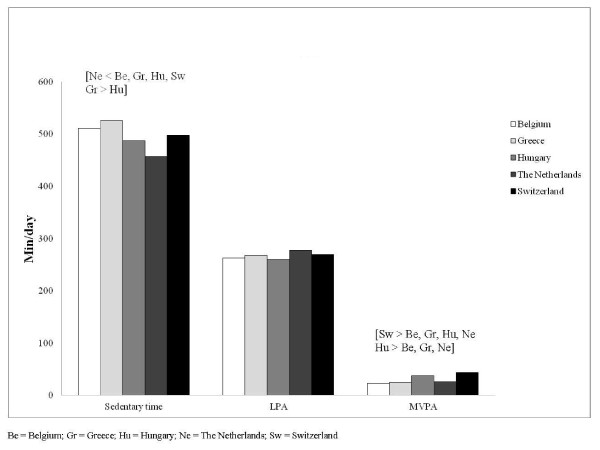
“For Belgian, Hungarian and Dutch girls, the percentage of girls meeting MVPA recommendations ranged from 1.5 to 2.1%”
§ Levels of physical activity and sedentary time among 10- to 12-year-old boys and girls across 5 European countries using accelerometers: an observational study within the ENERGY-project > Results > MVPA recommendations
plain- Asserted: passes — The authors put it forward as true.
- Checkable: passes — It can be checked against evidence.
- Load-bearing: unclear — It is unclear whether the paper’s conclusions depend on it.
- Based: passes — The paper gives a reason why it holds.
A result the paper reports from its own data — it cites no other source for it, so there is none to check. The quote shows it is in the paper.
In the paper
“Dutch girls were less sedentary (457 minutes/day; all at p < 0.05) than other girls.”
- Also stated in: § Country differences · plain
“Dutch girls were less sedentary than all other girls with an average of 457 minutes per day (all at p < 0.05).”
§ Levels of physical activity and sedentary time among 10- to 12-year-old boys and girls across 5 European countries using accelerometers: an observational study within the ENERGY-project > Abstract > Results
plain- Asserted: passes — The authors put it forward as true.
- Checkable: passes — It can be checked against evidence.
- Load-bearing: unclear — It is unclear whether the paper’s conclusions depend on it.
- Based: passes — The paper gives a reason why it holds.
- Also stated in: § Country differences · plain
A result the paper reports from its own data — it cites no other source for it, so there is none to check. The quote shows it is in the paper.
In the paper
“Swiss girls displayed more moderate-to-vigorous PA (43 minutes/day; at p < 0.05) than other girls.”
- Also stated in: § Country differences · plain
“Swiss girls spent more time in MVPA than all other girls with 43 minutes per day (all at p < 0.05).”
§ Levels of physical activity and sedentary time among 10- to 12-year-old boys and girls across 5 European countries using accelerometers: an observational study within the ENERGY-project > Abstract > Results
plain- Asserted: passes — The authors put it forward as true.
- Checkable: passes — It can be checked against evidence.
- Load-bearing: unclear — It is unclear whether the paper’s conclusions depend on it.
- Based: passes — The paper gives a reason why it holds.
- Also stated in: § Country differences · plain
A result the paper reports from its own data — it cites no other source for it, so there is none to check. The quote shows it is in the paper.
In the paper
“whereas this was 12.5% in Swiss girls.”
§ Levels of physical activity and sedentary time among 10- to 12-year-old boys and girls across 5 European countries using accelerometers: an observational study within the ENERGY-project > Results > MVPA recommendations
plain- Asserted: passes — The authors put it forward as true.
- Checkable: passes — It can be checked against evidence.
- Load-bearing: unclear — It is unclear whether the paper’s conclusions depend on it.
- Based: passes — The paper gives a reason why it holds.
A result the paper reports from its own data — it cites no other source for it, so there is none to check. The quote shows it is in the paper.
In the paper
“compared to 16.8% of the boys (see Table 2)”
- Also stated in: § Results · plain
“4.6% of the girls and 16.8% of the boys met moderate-to-vigorous PA recommendations of at least 60 minutes/day.”
§ Levels of physical activity and sedentary time among 10- to 12-year-old boys and girls across 5 European countries using accelerometers: an observational study within the ENERGY-project > Results > MVPA recommendations
plain- Asserted: passes — The authors put it forward as true.
- Checkable: passes — It can be checked against evidence.
- Load-bearing: unclear — It is unclear whether the paper’s conclusions depend on it.
- Based: passes — The paper gives a reason why it holds.
- Also stated in: § Results · plain
A result the paper reports from its own data — it cites no other source for it, so there is none to check. The quote shows it is in the paper.
In the paper
“and significantly less time in light (267 minutes/day) and moderate-to-vigorous PA (32 minutes/day) than boys (284 minutes/day; 43 minutes/day respectively; p < 0.001).”
§ Levels of physical activity and sedentary time among 10- to 12-year-old boys and girls across 5 European countries using accelerometers: an observational study within the ENERGY-project > Abstract > Results
plain- Asserted: passes — The authors put it forward as true.
- Checkable: passes — It can be checked against evidence.
- Load-bearing: passes — The paper’s conclusions depend on it.
- Based: passes — The paper gives a reason why it holds.
A result the paper reports from its own data — it cites no other source for it, so there is none to check. The quote shows it is in the paper.
In the paper
“In boys, approximately one fourth of the Swiss boys met MVPA recommendations (27.8%).”
§ Levels of physical activity and sedentary time among 10- to 12-year-old boys and girls across 5 European countries using accelerometers: an observational study within the ENERGY-project > Results > MVPA recommendations
hedged- Asserted: passes — The authors put it forward as true.
- Checkable: passes — It can be checked against evidence.
- Load-bearing: unclear — It is unclear whether the paper’s conclusions depend on it.
- Based: passes — The paper gives a reason why it holds.
A result the paper reports from its own data — it cites no other source for it, so there is none to check. The quote shows it is in the paper.
In the paper
“The lowest percentage of boys meeting MVPA recommendations was found in Greece: 9.5%.”
§ Levels of physical activity and sedentary time among 10- to 12-year-old boys and girls across 5 European countries using accelerometers: an observational study within the ENERGY-project > Results > MVPA recommendations
plain- Asserted: passes — The authors put it forward as true.
- Checkable: passes — It can be checked against evidence.
- Load-bearing: unclear — It is unclear whether the paper’s conclusions depend on it.
- Based: passes — The paper gives a reason why it holds.
A result the paper reports from its own data — it cites no other source for it, so there is none to check. The quote shows it is in the paper.
In the paper
“and significantly less time in light (267 minutes/day) and moderate-to-vigorous PA (32 minutes/day) than boys (284 minutes/day; 43 minutes/day respectively; p < 0.001).”
§ Levels of physical activity and sedentary time among 10- to 12-year-old boys and girls across 5 European countries using accelerometers: an observational study within the ENERGY-project > Abstract > Results
plaincorrelational- Asserted: passes — The authors put it forward as true.
- Checkable: passes — It can be checked against evidence.
- Load-bearing: passes — The paper’s conclusions depend on it.
- Based: passes — The paper gives a reason why it holds.
A result the paper reports from its own data — it cites no other source for it, so there is none to check. The quote shows it is in the paper.
In the paper
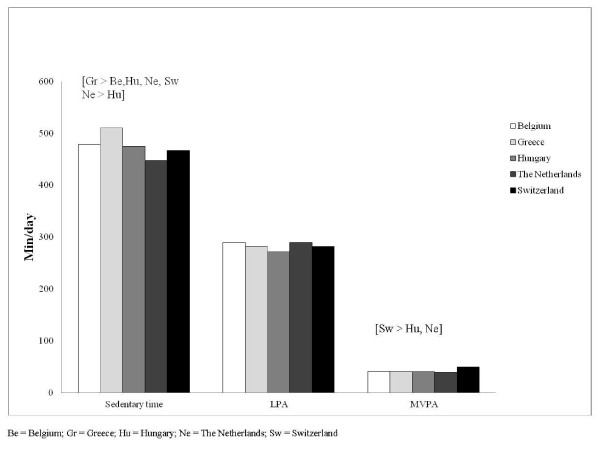
“No significant differences were found in LPA between the five countries.”
§ Levels of physical activity and sedentary time among 10- to 12-year-old boys and girls across 5 European countries using accelerometers: an observational study within the ENERGY-project > Results > Country differences
plain- Asserted: passes — The authors put it forward as true.
- Checkable: passes — It can be checked against evidence.
- Load-bearing: unclear — It is unclear whether the paper’s conclusions depend on it.
- Based: passes — The paper gives a reason why it holds.
- The quote only partly states this claim. 1
- It may state two separate claims as one. 11
- Probably not a substantial claim. 10
A result the paper reports from its own data — it cites no other source for it, so there is none to check. The quote shows it is in the paper.
In the paper
“Girls spent significantly more time sedentary (500 minutes/day) than boys (474 minutes/day)”
- Also stated in: § Gender differences · plain
“After adjusting for age, girls spent significantly more time sedentary and less time in all PA intensities than boys (all at p < 0.001).”
§ Levels of physical activity and sedentary time among 10- to 12-year-old boys and girls across 5 European countries using accelerometers: an observational study within the ENERGY-project > Abstract > Results
plaincorrelational- Asserted: passes — The authors put it forward as true.
- Checkable: passes — It can be checked against evidence.
- Load-bearing: passes — The paper’s conclusions depend on it.
- Based: passes — The paper gives a reason why it holds.
The quote only partly states this claim.
- Also stated in: § Gender differences · plain
A result the paper reports from its own data — it cites no other source for it, so there is none to check. The quote shows it is in the paper.
In the paper
“Greek girls spent the most time sedentary (526 minutes per day), although they did not significantly differ from Belgian (511 minutes per day) and Swiss girls (498 minutes per day).”
§ Levels of physical activity and sedentary time among 10- to 12-year-old boys and girls across 5 European countries using accelerometers: an observational study within the ENERGY-project > Results > Country differences
plain- Asserted: passes — The authors put it forward as true.
- Checkable: passes — It can be checked against evidence.
- Load-bearing: unclear — It is unclear whether the paper’s conclusions depend on it.
- Based: passes — The paper gives a reason why it holds.
It may state two separate claims as one.
A result the paper reports from its own data — it cites no other source for it, so there is none to check. The quote shows it is in the paper.
In the paper
“Swiss boys spent the most minutes in MVPA (50 minutes per day), although they did not significantly differ from Belgian (42 minutes per day) and Greek boys (41 minutes per day).”
§ Levels of physical activity and sedentary time among 10- to 12-year-old boys and girls across 5 European countries using accelerometers: an observational study within the ENERGY-project > Results > Country differences
plain- Asserted: passes — The authors put it forward as true.
- Checkable: passes — It can be checked against evidence.
- Load-bearing: unclear — It is unclear whether the paper’s conclusions depend on it.
- Based: passes — The paper gives a reason why it holds.
It may state two separate claims as one.
A conclusion the paper draws from its own results — it cites no other source for it, so there is none to check. The quote shows it is in the paper.
In the paper
“the current study disclosed some cross-European differences in the levels of sedentary time and PA, possibly due to political and environmental differences.”
§ Levels of physical activity and sedentary time among 10- to 12-year-old boys and girls across 5 European countries using accelerometers: an observational study within the ENERGY-project > Discussion
hedgedconditional- Asserted: passes — The authors put it forward as true.
- Checkable: passes — It can be checked against evidence.
- Load-bearing: passes — The paper’s conclusions depend on it.
- Based: passes — The paper gives a reason why it holds.
It may state two separate claims as one.
- Rests on an assumption: Hungarian and Swiss schools provide three hours of physical education per week, whereas Belgian, Greek and Dutch schools provide two hours per week.
A conclusion the paper draws from its own results — it cites no other source for it, so there is none to check. The quote shows it is in the paper.
In the paper
“Boys did somewhat better than girls, and rather large differences between countries were observed.”
§ Levels of physical activity and sedentary time among 10- to 12-year-old boys and girls across 5 European countries using accelerometers: an observational study within the ENERGY-project > Discussion
plaincorrelational- Asserted: passes — The authors put it forward as true.
- Checkable: passes — It can be checked against evidence.
- Load-bearing: unclear — It is unclear whether the paper’s conclusions depend on it.
- Based: passes — The paper gives a reason why it holds.
It may state two separate claims as one.
A conclusion the paper draws from its own results — it cites no other source for it, so there is none to check. The quote shows it is in the paper.
In the paper
“In conclusion, the present study shows low levels of PA and high sedentary time in schoolchildren in five countries across Europe.”
§ Levels of physical activity and sedentary time among 10- to 12-year-old boys and girls across 5 European countries using accelerometers: an observational study within the ENERGY-project > Conclusion
plain- Asserted: passes — The authors put it forward as true.
- Checkable: passes — It can be checked against evidence.
- Load-bearing: passes — The paper’s conclusions depend on it.
- Based: passes — The paper gives a reason why it holds.
It may state two separate claims as one.
- Rests on an assumption: The sample of children from the selected cities and schools is representative of 10- to 12-year-old children in the five European countries.
- Rests on an assumption: Children who dropped out of the accelerometer data collection did not differ systematically in PA or sedentary time from those included.
None of the sources cited for this claim have been checked yet.
In the paper
“Comparable to previous studies [37-39], the current study established gender differences in both sedentary time and PA across all countries.”
§ Levels of physical activity and sedentary time among 10- to 12-year-old boys and girls across 5 European countries using accelerometers: an observational study within the ENERGY-project > Discussion
What the sources say
- Not checked yetcites [37]
- Not checked yetcites [38]
- Not checked yetcites [39]
plaincorrelational- Asserted: passes — The authors put it forward as true.
- Checkable: passes — It can be checked against evidence.
- Load-bearing: passes — The paper’s conclusions depend on it.
- Based: passes — The paper gives a reason why it holds.
It may state two separate claims as one.
In the paper
“Accelerometry enables distinguishing between different levels of PA (light, moderate, vigorous) and between light PA (LPA) and sedentary time [16].”
§ Levels of physical activity and sedentary time among 10- to 12-year-old boys and girls across 5 European countries using accelerometers: an observational study within the ENERGY-project > Introduction
What the sources say
- Not checked yetcites [16]
plaindirect- Asserted: passes — The authors put it forward as true.
- Checkable: passes — It can be checked against evidence.
- Load-bearing: passes — The paper’s conclusions depend on it.
- Based: passes — The paper gives a reason why it holds.
It may state two separate claims as one.
In the paper
“In general, Actigraph accelerometers have shown adequate reproducibility, validity and feasibility in children and adolescents [23].”
§ Levels of physical activity and sedentary time among 10- to 12-year-old boys and girls across 5 European countries using accelerometers: an observational study within the ENERGY-project > Methods > Measurement
What the sources say
- Not checked yetcites [23]
plain- Asserted: passes — The authors put it forward as true.
- Checkable: passes — It can be checked against evidence.
- Load-bearing: passes — The paper’s conclusions depend on it.
- Based: passes — The paper gives a reason why it holds.
Probably not a substantial claim.
What the paper did — it cites no source for this, so there is none to check. The quote shows it is in the paper.
In the paper
“accelerometers do not measure arm movement or swimming activities, do not distinguish between lying, sitting and standing still and underestimate the intensity of cycling and some other activities.”
§ Levels of physical activity and sedentary time among 10- to 12-year-old boys and girls across 5 European countries using accelerometers: an observational study within the ENERGY-project > Discussion
plain- Asserted: passes — The authors put it forward as true.
- Checkable: passes — It can be checked against evidence.
- Load-bearing: passes — The paper’s conclusions depend on it.
- Based: fails — The paper may give no reason why it holds.
Probably not a substantial claim. The paper may give no reason why it holds. It may state two separate claims as one.
What the paper did — it cites no source for this, so there is none to check. The quote shows it is in the paper.
In the paper
“Researchers responsible for the accelerometer data collection were trained to work according to a standardized accelerometer protocol.”
§ Levels of physical activity and sedentary time among 10- to 12-year-old boys and girls across 5 European countries using accelerometers: an observational study within the ENERGY-project > Methods > Measurement
plain- Asserted: passes — The authors put it forward as true.
- Checkable: passes — It can be checked against evidence.
- Load-bearing: fails — The paper’s conclusions may not depend on it.
- Based: passes — The paper gives a reason why it holds.
Probably not a substantial claim. The paper’s conclusions may not depend on it.
What the paper did — it cites no source for this, so there is none to check. The quote shows it is in the paper.
In the paper
“A final possible limitation is the use of three different models of Actigraph accelerometers (GT1M, GT3X and Actitrainer).”
§ Levels of physical activity and sedentary time among 10- to 12-year-old boys and girls across 5 European countries using accelerometers: an observational study within the ENERGY-project > Discussion
hedged- Asserted: passes — The authors put it forward as true.
- Checkable: passes — It can be checked against evidence.
- Load-bearing: fails — The paper’s conclusions may not depend on it.
- Based: passes — The paper gives a reason why it holds.
Probably not a substantial claim. The paper’s conclusions may not depend on it.
None of the sources cited for this claim have been checked yet.
In the paper
“Moreover, recent studies showed that both behaviours independently contribute to the development of chronic diseases and overweight and obesity [9-12].”
§ Levels of physical activity and sedentary time among 10- to 12-year-old boys and girls across 5 European countries using accelerometers: an observational study within the ENERGY-project > Introduction
What the sources say
- Not checked yetcites [9]
- Not checked yetcites [10]
- Not checked yetcites [11]
- Not checked yetcites [12]
plaindirect- Asserted: passes — The authors put it forward as true.
- Checkable: passes — It can be checked against evidence.
- Load-bearing: passes — The paper’s conclusions depend on it.
- Based: passes — The paper gives a reason why it holds.
It may state two separate claims as one.
What the paper did — it cites no source for this, so there is none to check. The quote shows it is in the paper.
In the paper
“Four covariates were included: (a) age, (b) month of wearing the accelerometer (since Switzerland has started somewhat later with the accelerometer data collection), (c) accelerometer model (since different accelerometer models were used across countries) and (d) language spoken at home (native vs. non-native) as an indicator of ethnicity.”
§ Levels of physical activity and sedentary time among 10- to 12-year-old boys and girls across 5 European countries using accelerometers: an observational study within the ENERGY-project > Methods > Statistical analyses
plain- Asserted: passes — The authors put it forward as true.
- Checkable: passes — It can be checked against evidence.
- Load-bearing: passes — The paper’s conclusions depend on it.
- Based: passes — The paper gives a reason why it holds.
Probably not a substantial claim.
What the paper did — it cites no source for this, so there is none to check. The quote shows it is in the paper.
In the paper
“Children were included in the study if they had at least 2 weekdays with minimum 10 h-wearing time and 1 weekend day with minimum 8 h-wearing time.”
§ Levels of physical activity and sedentary time among 10- to 12-year-old boys and girls across 5 European countries using accelerometers: an observational study within the ENERGY-project > Methods > Measurement
plain- Asserted: passes — The authors put it forward as true.
- Checkable: passes — It can be checked against evidence.
- Load-bearing: passes — The paper’s conclusions depend on it.
- Based: passes — The paper gives a reason why it holds.
Probably not a substantial claim.
None of the sources cited for this claim have been checked yet.
In the paper
“Physical activity (PA) is important for physical and mental health, and is acknowledged as an important target in obesity prevention [1-3].”
§ Levels of physical activity and sedentary time among 10- to 12-year-old boys and girls across 5 European countries using accelerometers: an observational study within the ENERGY-project > Introduction
What the sources say
- Not checked yetcites [1]
- Not checked yetcites [2]
- Not checked yetcites [3]
plain- Asserted: passes — The authors put it forward as true.
- Checkable: fails — It may be too vague to check against evidence.
- Load-bearing: fails — The paper’s conclusions may not depend on it.
- Based: passes — The paper gives a reason why it holds.
Probably not a substantial claim. It may be too vague to check against evidence. The paper’s conclusions may not depend on it. It may state two separate claims as one.
None of the sources cited for this claim have been checked yet.
In the paper
“Accelerometers are considered valid and reliable instruments and feasible to use in large-scale observational and intervention studies [14,15].”
§ Levels of physical activity and sedentary time among 10- to 12-year-old boys and girls across 5 European countries using accelerometers: an observational study within the ENERGY-project > Introduction
What the sources say
- Not checked yetcites [14]
- Not checked yetcites [15]
plain- Asserted: passes — The authors put it forward as true.
- Checkable: passes — It can be checked against evidence.
- Load-bearing: passes — The paper’s conclusions depend on it.
- Based: passes — The paper gives a reason why it holds.
It may state two separate claims as one.
None of the sources cited for this claim have been checked yet.
In the paper
“According to this evidence, it has been recommended for children to participate in at least 60 minutes per day moderate-to-vigorous intensity PA (MVPA) [4-6].”
§ Levels of physical activity and sedentary time among 10- to 12-year-old boys and girls across 5 European countries using accelerometers: an observational study within the ENERGY-project > Introduction
What the sources say
- Not checked yetcites [4]
- Not checked yetcites [5]
- Not checked yetcites [6]
plain- Asserted: passes — The authors put it forward as true.
- Checkable: passes — It can be checked against evidence.
- Load-bearing: passes — The paper’s conclusions depend on it.
- Based: passes — The paper gives a reason why it holds.
Probably not a substantial claim.
In the paper
“A recent study of Trost et al. [30] stated that the cut-point of 100 cpm for sedentary time exhibited good to excellent classification accuracy.”
§ Levels of physical activity and sedentary time among 10- to 12-year-old boys and girls across 5 European countries using accelerometers: an observational study within the ENERGY-project > Methods > Measurement
What the sources say
- Not checked yetcites [30]
plain- Asserted: passes — The authors put it forward as true.
- Checkable: passes — It can be checked against evidence.
- Load-bearing: fails — The paper’s conclusions may not depend on it.
- Based: passes — The paper gives a reason why it holds.
Probably not a substantial claim. The paper’s conclusions may not depend on it.
In the paper
“Reilly et al. [29] suggested that the most appropriate cut-point for MPA lies in the range 3000-3600 cpm.”
§ Levels of physical activity and sedentary time among 10- to 12-year-old boys and girls across 5 European countries using accelerometers: an observational study within the ENERGY-project > Methods > Measurement
What the sources say
- Not checked yetcites [29]
hedged- Asserted: fails — The authors may not put it forward as true.
- Checkable: passes — It can be checked against evidence.
- Load-bearing: fails — The paper’s conclusions may not depend on it.
- Based: passes — The paper gives a reason why it holds.
Probably not a substantial claim. The authors may not put it forward as true. The paper’s conclusions may not depend on it.
The paper relies on this without support.
The sample of children from the selected cities and schools is representative of 10- to 12-year-old children in the five European countries.
“representative samples of 10- to 12-year-old children across five countries in Europe”
The paper relies on this without support.
Children who dropped out of the accelerometer data collection did not differ systematically in PA or sedentary time from those included.
“It is possible that the children who dropped out were less physically active and not interested in wearing an accelerometer or conversely, were more active and experienced the accelerometer as an inconvenience during exercise.”
The paper relies on this without support.
There are no policy measures in the European countries with regard to sedentary time.
“To our knowledge, there are no policy measures in the European countries with regard to sedentary time.”
The paper relies on this without support.
Hungarian and Swiss schools provide three hours of physical education per week, whereas Belgian, Greek and Dutch schools provide two hours per week.
“e.g. Hungarian and Swiss schools provide three hours of physical education per week, whereas Belgian, Greek and Dutch schools provide two hours per week.”
Claims other papers make about this one
Each is checked against this paper’s own text: does it say what the citing paper says it does?
In the citing paper
“some studies indicate that most children spend a large proportion of their awake time being active at low levels of intensity [39–41], especially girls [40].”
From Proportion of children meeting recommendations for 24-hour movement guidelines and associations with adiposity in a 12-country study (2016) · cites this paper as [41]
In the citing paper
“suggesting that sex and age differences that are typically observed in sitting time [33, 34] may be exacerbated during the COVID-19 pandemic”
From Early effects of the COVID-19 pandemic on physical activity and sedentary behavior in children living in the U.S. (2020) · cites this paper as [34]
Self-check
Percentages, sums and reported differences re-computed from the paper’s own numbers.
Each contradiction between two passages listed here was confirmed by an independent check.
Rated minor: it would not touch a result — a value no result rests on, a p-value that stays on the same side of the significance level, or a conflict that is clerical, resolved elsewhere in the paper, or outside its own findings.
In the paper
§ Levels of physical activity and sedentary time among 10- to 12-year-old boys and girls across 5 European countries using accelerometers: an observational study within the ENERGY-project > Methods > Measurement
“| Total sample (n = 687) | 33% | 43% | 24% |”
§ Levels of physical activity and sedentary time among 10- to 12-year-old boys and girls across 5 European countries using accelerometers: an observational study within the ENERGY-project > Methods > Measurement
“| Belgium (n = 109) | 0% | 96% | 4% | | Greece (n = 142) | 0% | 0% | 100% | | Hungary (n = 140) | 67% | 0% | 33% | | The Netherlands (n = 104) | 0% | 0% | 100% | | Switzerland (n = 192) | 37% | 63% | 0% |”
Citations
Cites
Physical Activity in the United States Measured by Accelerometer
TROIANO, R. P., BERRIGAN, D., DODD, K. W., MÂSSE, L. C., TILERT, T., & MCDOWELL, M. (2008) · Medicine & Science in Sports & Exercise · doi:10.1249/mss.0b013e31815a51b3 · Cited by 7,638 · cited 1×
“We specifically focused on 10- to 12-year-old children since the transition from childhood to adolescence represents a critical period for declining PA levels and increasing sedentary time [18,19].”
BackgroundJanssen, I., & LeBlanc, A. G. (2010) · International Journal of Behavioral Nutrition and Physical Activity · doi:10.1186/1479-5868-7-40 · Cited by 4,829 · cited 1×
“According to this evidence, it has been recommended for children to participate in at least 60 minutes per day moderate-to-vigorous intensity PA (MVPA) [4-6].”
BackgroundEvidence Based Physical Activity for School-age Youth
Strong, W. B., Malina, R. M., Blimkie, C. J. R., Daniels, S. R., Dishman, R. K., Gutin, B., Hergenroeder, A. C., Must, A., Nixon, P. A., Pivarnik, J. M., et al. (2005) · The Journal of Pediatrics · doi:10.1016/j.jpeds.2005.01.055 · Cited by 4,222 · cited 1×
“According to this evidence, it has been recommended for children to participate in at least 60 minutes per day moderate-to-vigorous intensity PA (MVPA) [4-6].”
BackgroundAndersen, L. B., Harro, M., Sardinha, L. B., Froberg, K., Ekelund, U., Brage, S., & Anderssen, S. A. (2006) · The Lancet · doi:10.1016/s0140-6736(06)69075-2 · Cited by 1,518 · cited 1×
“Physical activity (PA) is important for physical and mental health, and is acknowledged as an important target in obesity prevention [1-3].”
BackgroundAge and gender differences in objectively measured physical activity in youth
Trost, S. G., PATE, R. R., Sallis, J. F., Freedson, P., Taylor, W. C., Dowda, M. C., & Sirard, J. R. (2002) · Medicine & Science in Sports & Exercise · doi:10.1097/00005768-200202000-00025 · Cited by 1,451 · cited 1×
“Comparable to previous studies [37-39], the current study established gender differences in both sedentary time and PA across all countries.”
ResultComparison of Accelerometer Cut Points for Predicting Activity Intensity in Youth
TROST, S. G., LOPRINZI, P. D., MOORE, R., & PFEIFFER, K. A. (2011) · Medicine & Science in Sports & Exercise · doi:10.1249/mss.0b013e318206476e · Cited by 1,360 · cited 1×
“[30] stated that the cut-point of 100 cpm for sedentary time exhibited good to excellent classification accuracy.”
BackgroundThe evolving definition of “sedentary.”
Pate, R. R., O'Neill, J. R., & Lobelo, F. (2008) · Exercise and Sport Sciences Reviews · doi:10.1097/jes.0b013e3181877d1a · Cited by 1,280 · cited 2×
“Accelerometry enables distinguishing between different levels of PA (light, moderate, vigorous) and between light PA (LPA) and sedentary time [16].”
BackgroundJanssen, I., Katzmarzyk, P. T., Boyce, W. F., Vereecken, C., Mulvihill, C., Roberts, C., Currie, C., Pickett, W., & The Health Behaviour in School‐Aged Children Obesity Working Group (2005) · Obesity Reviews · doi:10.1111/j.1467-789x.2005.00176.x · Cited by 1,169
The level and tempo of children???s physical activities: an observational study
Bailey, R. C., Olson, J., Pepper, S. L., Pórszász, J., Barstow, T. J., & Cooper, D. M. (1995) · Medicine & Science in Sports & Exercise · doi:10.1249/00005768-199507000-00012 · Cited by 978 · cited 1×
“A 15-sec recording epoch was selected in order to capture short duration PA of high intensity [25,26].”
MethodPhysical activity levels and patterns of 9- and 15-yr-old European children
RIDDOCH, C. J., BO ANDERSEN, L., WEDDERKOPP, N., HARRO, M., KLASSON-HEGGEBØ, L., SARDINHA, L. B., COOPER, A. R., & EKELUND, U. (2004) · Medicine & Science in Sports & Exercise · doi:10.1249/01.mss.0000106174.43932.92 · Cited by 900 · cited 2×
“One previous study, as part of the European Youth Heart Study, has compared MVPA levels of children across four European countries using accelerometers [17].”
Background
Cited by
Sorted by citations
Age Group Comparability of Raw Accelerometer Output from Wrist- and Hip-Worn Monitors
HILDEBRAND, M., VAN HEES, V. T., HANSEN, B. H., & EKELUND, U. (2014) · Medicine & Science in Sports & Exercise · doi:10.1249/mss.0000000000000289 · Cited by 1,043
“Furthermore, both children and adults spend most of their time being sedentary (11,31,39) and a strength of the current study is that the protocol included sedentary activities like lying and sitting.”
BackgroundDunton, G. F., Do, B., & Wang, S. D. (2020) · BMC Public Health · doi:10.1186/s12889-020-09429-3 · Cited by 916
Cooper, A. R., Goodman, A., Page, A. S., Sherar, L. B., Esliger, D. W., van Sluijs, E. M., Andersen, L. B., Anderssen, S., Cardon, G., Davey, R., et al. (2015) · International Journal of Behavioral Nutrition and Physical Activity · doi:10.1186/s12966-015-0274-5 · Cited by 828
Evaluation of raw acceleration sedentary thresholds in children and adults
Hildebrand, M., Hansen, B. H., van Hees, V. T., & Ekelund, U. (2017) · Scandinavian Journal of Medicine & Science in Sports · doi:10.1111/sms.12795 · Cited by 425
“Both young people and adults spend a considerable amount of their waking day sedentary (Mitchell et al., 2012; Verloigne et al., 2012; Downing et al., 2015), and until recently, the health risks associated with a sedentary lifestyle were thought to be a result of not performing enough moderate to…”
Backgroundfor the ISCOLE Research Group, Roman-Viñas, B., Chaput, J.-P., Katzmarzyk, P. T., Fogelholm, M., Lambert, E. V., Maher, C., Maia, J., Olds, T., Onywera, V., et al. (2016) · International Journal of Behavioral Nutrition and Physical Activity · doi:10.1186/s12966-016-0449-8 · Cited by 368
Paterson, D. C., Ramage, K., Moore, S. A., Riazi, N. A., Tremblay, M. S., & Faulkner, G. (2021) · Journal of sport and health science/Journal of Sport and Health Science · doi:10.1016/j.jshs.2021.07.001 · Cited by 363
“…has been greater for girls than boys and has possibly exacerbated the gender disparity in movement behaviors (particularly sedentary/screen time and PA) that already existed among children and youth pre-pandemic, 176,177 which may be due, in part, to the influence of cultural and family factors.”
Mall, C., Lauterbach, G., Spengler, S., Dettweiler, U., & Mess, F. (2017) · International Journal of Environmental Research and Public Health · doi:10.3390/ijerph14050485 · Cited by 353
“…to further examine these first indications of the effects of regular outdoor classes on students’ PA, mental health and action regulation behaviour, especially when considering an increasing inactivity [39], as well as a rising number of diagnosed mental health disorders in school children [40].”
BackgroundLai, S. K., Costigan, S. A., Morgan, P. J., Lubans, D. R., Stodden, D. F., Salmon, J., & Barnett, L. M. (2014) · Sports Medicine · doi:10.1007/s40279-013-0099-9 · Cited by 291
“A recent study of 10- to 12-year-old European children also reported that 83 % of boys and 95 % of girls did not meet recommended PA guidelines (60 min/day) [4].”
BackgroundHynynen, S.-T., van Stralen, M. M., Sniehotta, F. F., Araújo-Soares, V., Hardeman, W., Chinapaw, M. J. M., Vasankari, T., & Hankonen, N. (2016) · International Review of Sport and Exercise Psychology · doi:10.1080/1750984x.2015.1081706 · Cited by 253
“de Barros et al. (2009) nclear nclear igh ow nclea r igh ow ow BayneSmith et al.”
BackgroundSelf-citationHaapala, E. A. (2013) · Journal of Human Kinetics · doi:10.2478/hukin-2013-0006 · Cited by 252
van Ekris, E., Altenburg, T. M., Singh, A. S., Proper, K. I., Heymans, M. W., & Chinapaw, M. J. M. (2016) · Obesity Reviews · doi:10.1111/obr.12426 · Cited by 191
Self-citationon behalf of the DEDIPAC consortium, Van Hecke, L., Loyen, A., Verloigne, M., van der Ploeg, H. P., Lakerveld, J., Brug, J., De Bourdeaudhuij, I., Ekelund, U., Donnelly, A., et al. (2016) · International Journal of Behavioral Nutrition and Physical Activity · doi:10.1186/s12966-016-0396-4 · Cited by 173
“…MVPA (>1680 CPM) 1 IDEFICS [49] MVPA (>2000 CPM) 1 EYHS [35] VPA (>3000) 1 EYHS [35] % of participants meeting recommendations 15 [27], ENERGY [29, 30], EPAPA [32], HBSC [39 – 46], IDEFICS [50, 51], TOYBOX [53] ≥ 60 min on ≥ 5 days 4 HBSC [39 – 41, ≥ 180 min on ≥ 7 days 1 TOYBOX [53] physical…”
InfluentialSelf-citationVerloigne, M., Loyen, A., Hecke, L. V., Lakerveld, J., Hendriksen, I. J. M., Bourdheaudhuij, I. D., Deforche, B. I., Donnelly, A., Ekelund, U., Brug, J., et al. (2016) · International Journal of Behavioral Nutrition and Physical Activity · doi:10.1186/s12966-016-0395-5 · Cited by 182
“19.0 kg/m2 ActiGraph accelerometer min/school-time sedentary time + percentage of total school-time spent in sedentary activities Verloigne et al. (2012) [32] ENERGY CS 0.95 5 687 10-12y 53 % n.r. 19.0 kg/m2 ActiGraph accelerometer min/day sedentary time Verloigne et al.InternationalJournalof…”
InfluentialSelf-citationGuinhouya, B. C., Samouda, H., & de Beaufort, C. (2013) · Public Health · doi:10.1016/j.puhe.2013.01.020 · Cited by 151
“Only one study also considered another model of accelerometer.(73) Using the same model of accelerometer may be perceived as facilitating the comparisonbetween thestudies, but theselectedcut-off points”
Backgroundvan Stralen, M. M., Yıldırım, M., Wulp, A., te Velde, S. J., Verloigne, M., Doessegger, A., Androutsos, O., Kovács, É., Brug, J., & Chinapaw, M. J. M. (2014) · Journal of Science and Medicine in Sport · doi:10.1016/j.jsams.2013.04.019 · Cited by 144
Self-citationRuiz-Ariza, A., Grao-Cruces, A., de Loureiro, N. E. M., & Martínez-López, E. J. (2017) · International Review of Sport and Exercise Psychology · doi:10.1080/1750984x.2016.1184699 · Cited by 140
“This trend favouring girls could be explained by the dose-response effect (Martínez-Gómez et al., 2011) — that is, boys are more active than girls (Verloigne et al., 2012) and, therefore, the achieved stimulus, due to lower levels of PA, may not be suf fi cient to produce the same effect on CP in…”
Backgroundvan der Niet, A. G., Smith, J., Scherder, E. J. A., Oosterlaan, J., Hartman, E., & Visscher, C. (2015) · Journal of Science and Medicine in Sport · doi:10.1016/j.jsams.2014.09.006 · Cited by 125
Ishii, K., Shibata, A., Adachi, M., Nonoue, K., & Oka, K. (2015) · BMC Public Health · doi:10.1186/s12889-015-2607-3 · Cited by 125
“However, a study in Europe found that more than 90 % of children attained the guidelines [43], while other studies in England [35], China [25], and European countries [50] found guideline attainment under 10 %.”
BackgroundAssociations of Motor and Cardiovascular Performance with Academic Skills in Children
Haapala, E. A., Poikkeus, A., Tompuri, T., Kukkonen-Harjula, K. T., Leppänen, P. H. T., Lindi, V., & Lakka, T. A. (2013) · Medicine & Science in Sports & Exercise · doi:10.1249/mss.0000000000000186 · Cited by 131
Boulley, G. E., Tessier, D. P., Ntoumanis, N., & Sarrazin, P. G. (2018) · Sport Exercise and Performance Psychology · doi:10.1037/spy0000119 · Cited by 117
Suárez-Manzano, S., Ruiz‐Ariza, A., la Torre‐Cruz, M. J. D., & López, E. J. M. (2018) · Research in Developmental Disabilities · doi:10.1016/j.ridd.2018.03.015 · Cited by 111
Longitudinal patterns of physical activity in children aged 8 to 12 years: the LOOK study
Telford, R. M., Telford, R. D., Cunningham, R. B., Cochrane, T., Davey, R., & Waddington, G. S. (2013) · International Journal of Behavioral Nutrition and Physical Activity · doi:10.1186/1479-5868-10-81 · Cited by 95
“This finding suggests that the girls did not respond to opportunities to be active during school hours as well as boys and supports the premise that different intervention strategies may be required for boys and girls in the school setting [33,34].”
BackgroundCardiorespiratory fitness and physical activity in children with cancer
Braam, K. I., van Dijk‐Lokkart, E. M., Kaspers, G. J. L., Takken, T., Huisman, J., Bierings, M., Merks, J. H. M., van den Heuvel‐Eibrink, M. M., Broeder, E. V. D., & Veening, M. A. (2015) · Supportive Care in Cancer · doi:10.1007/s00520-015-2993-1 · Cited by 100
“The current study showed that 20 % of the boys and 7 % of the girls, during or shortly after childhood cancer treatment, met the activity recommendations, which, however, is in line with the worrisome results of the normal Dutch population [42].”
Meijer, A., Königs, M., Vermeulen, G. T., Visscher, C., Bosker, R. J., Hartman, E., & Oosterlaan, J. (2020) · Developmental Cognitive Neuroscience · doi:10.1016/j.dcn.2020.100828 · Cited by 93
Altenburg, T. M., Holthe, J. K.-V., & Chinapaw, M. J. M. (2016) · International Journal of Behavioral Nutrition and Physical Activity · doi:10.1186/s12966-016-0387-5 · Cited by 88
Self-citationMeester, F. D., Dyck, D. V., Bourdeaudhuij, I. D., & Cardon, G. (2014) · BMC Public Health · doi:10.1186/1471-2458-14-631 · Cited by 95
Self-citationWang, C., Chen, P., & Zhuang, J. (2013) · Research Quarterly for Exercise and Sport · doi:10.1080/02701367.2013.850993 · Cited by 88
“For example, European girls spent significantly more time in SB and significantly less time in LPA and MVPA compared with European boys (Verloigne et al., 2012).”
BackgroundInfluentialUsing Personal Sensors to Assess the Exposome and Acute Health Effects
Nieuwenhuijsen, M. J., Donaire-González, D., Foraster, M., Martinez, D. R., & Cisneros, A. (2014) · International Journal of Environmental Research and Public Health · doi:10.3390/ijerph110807805 · Cited by 82
“Recent publications showed the use of smartphones to obtain information on mobility to estimate inhaled air pollution doses [29] and physical activity [30], accelerometers to obtain physical activity [31], while others have used GPS and small sensors to measure mobility, air pollution and noise [32–37].”
BackgroundMeester, F. D., Dyck, D. V., Bourdeaudhuij, I. D., Deforche, B. I., & Cardon, G. (2014) · BMC Public Health · doi:10.1186/1471-2458-14-261 · Cited by 80
Self-citationTerrón-Pérez, M., Molina‐García, J., Martinez-Bello, V. E., & Queralt, A. (2021) · Current Environmental Health Reports · doi:10.1007/s40572-021-00318-4 · Cited by 77
Haapala, E. A., Poikkeus, A.-M., Kukkonen-Harjula, K., Tompuri, T., Lintu, N., Väistö, J., Leppänen, P. H. T., Laaksonen, D. E., Lindi, V., & Lakka, T. A. (2014) · PLoS ONE · doi:10.1371/journal.pone.0107031 · Cited by 71
“Physical activity (PA), particularly physically active transportation, is decreasing, whereas sedentary behaviors, especially watching TV, sitting at the computer and playing video games, are increasing among children in developed countries [1–4].”
D’Haese, S., Dyck, D. V., Bourdeaudhuij, I. D., Deforche, B. I., & Cardon, G. (2014) · International Journal of Behavioral Nutrition and Physical Activity · doi:10.1186/s12966-014-0104-1 · Cited by 71
“Background Although physical activity (PA) is associated with health benefits [1], many children do not meet the PA guidelines of 60 minutes of daily moderate- to vigorous-intensity physical activity (MVPA) [2].”
BackgroundSelf-citationHorta, B. L., Schaan, B. D., Bielemann, R. M., Vianna, C. Á., Gigante, D. P., Barros, F. C., Ekelund, U., & Hallal, P. C. (2015) · Atherosclerosis · doi:10.1016/j.atherosclerosis.2015.09.005 · Cited by 72
D’Haese, S., Dyck, D. V., Bourdeaudhuij, I. D., Deforche, B. I., & Cardon, G. (2015) · International Journal of Behavioral Nutrition and Physical Activity · doi:10.1186/s12966-015-0171-y · Cited by 66
Self-citationBMI and recommended levels of physical activity in school children
Schwarzfischer, P., Weber, M., Gruszfeld, D., Socha, P., Luque, V., Escribano, J., Xhonneux, A., Verduci, E., Mariani, B., Koletzko, B. V., et al. (2017) · BMC Public Health · doi:10.1186/s12889-017-4492-4 · Cited by 64
“In addition to regional differences, the differences in adherence and volume of PA by gender [30, 32, 33] Table 3 Cut-off points for min·day in physical activity/sedentary to differentiate between normal weight and overweight/obese children”
BackgroundDecelis, A., Jago, R., & Fox, K. R. (2014) · BMC Public Health · doi:10.1186/1471-2458-14-664 · Cited by 62
“attributed these gender differences to the social context at particular time-periods [31].”
BackgroundMutz, M., & Albrecht, P. (2017) · Journal of Child and Family Studies · doi:10.1007/s10826-017-0808-3 · Cited by 71
Objectively determined physical activity levels of primary school children in south-west Germany
Kettner, S., Kobel, S., Fischbach, N., Drenowatz, C. J., Dreyhaupt, J., Wirt, T., Koch, B., & Steinacker, J. M. (2013) · BMC Public Health · doi:10.1186/1471-2458-13-895 · Cited by 59
Álvarez, E. F., & López, J. C. (2017) · Journal of Human Kinetics · doi:10.1515/hukin-2017-0143 · Cited by 60
“However, the amount of time physical activity is practiced rarely reaches the general recommendations for these groups, and an important drop in physical activity levels during adolescence has been observed in recent years (Verloigne et al., 2012).”
BackgroundLópez-Vicente, M., García‐Aymerich, J., Torrent-Pallicer, J., Forns, J., Ibarluzea, J. M., Lertxundi, N., González, L., Valera‐Gran, D., Torrent, M., Dadvand, P., et al. (2017) · The Journal of Pediatrics · doi:10.1016/j.jpeds.2017.05.079 · Cited by 56
“The confounders included in our models were sex, age, and maternal education, because previous literature has indicated that these variables could be associated with both lifestyle habits and cognitive performance.(12,19) Final models were adjusted additionally for subcohort in the pooled analyses.”
Correlates of compliance with recommended levels of physical activity in children
Gomes, T. N., Katzmarzyk, P. T., Hedeker, D., Fogelholm, M., Standage, M., Onywera, V., Lambert, E. V., Tremblay, M. S., Chaput, J.-P., Tudor-Locke, C., et al. (2017) · Scientific Reports · doi:10.1038/s41598-017-16525-9 · Cited by 55
“Individual (level-1) covariates included sex (girls were the reference category), BMI (reference was normal weight), maturity offset (as a continuous variable), diet, screen time, and sleep; school (level-2) predictors included school size, number of school breaks (with less than 30 minutes, and with 30 or more minute…”
BackgroundThe Role of Physical Education Lessons and Recesses in School Lifestyle of Adolescents
Frömel, K., Svozil, Z., Chmelík, F., Jakubec, L., & Groffik, D. (2016) · Journal of School Health · doi:10.1111/josh.12362 · Cited by 54
Lind, R. R., Geertsen, S. S., Ørntoft, C., Madsen, M. F., Larsen, M. N., Dvořák, J., Ritz, C., & Krustrup, P. (2017) · European Journal of Sport Science · doi:10.1080/17461391.2017.1394369 · Cited by 52
“Furthermore, as recent evidence indicates, children do not meet the physical activity recommendations (Kolle, Andersen, & Anderssen, 2010; Verloigne et al., 2012), which not only has a negative health effect (Klakk et al., 2014) but might also influence children’s cognitive health negatively…”
BackgroundAl-Hazzaa, H. M., Al‐Nakeeb, Y., Duncan, M. J., Alsobayel, H., Abahussain, N. A., Musaiger, A. O., Lyons, M., Collins, P., & Nevill, A. M. (2013) · International Journal of Environmental Research and Public Health · doi:10.3390/ijerph10126701 · Cited by 55
“The gender differences in physical activity were found to be greatest during strenuous physical activities [42].”
Rodenburg, G., Oenema, A., Kremers, S., & van de Mheen, D. (2013) · International Journal of Behavioral Nutrition and Physical Activity · doi:10.1186/1479-5868-10-36 · Cited by 48
A systematic review of school-based physical activity interventions on children’s wellbeing
Rafferty, R., Breslin, G., Brennan, D., & Hassan, D. (2016) · International Review of Sport and Exercise Psychology · doi:10.1080/1750984x.2016.1164228 · Cited by 50
“Data from five European countries reported that only 4.6% of girls and 16.8% of boys aged 10–12 years met the moderate to vigorous intensity physical activity (MVPA) guidelines for health (Verloigne et al., 2012).”
BackgroundInfluentialHaapala, H. L., Hirvensalo, M. H., Kulmala, J., Hakonen, H., Kankaanpää, A., Laine, K., Laakso, L., & Tammelin, T. (2016) · Scandinavian Journal of Medicine and Science in Sports · doi:10.1111/sms.12790 · Cited by 48
“However, many children do not meet the daily recommendation of at least 60 min of moderate-tovigorous-intensity physical activity (MVPA) and spend a lot of time in sedentary activities (Verloigne et al., 2012).”
BackgroundLepeleere, S. D., Bourdeaudhuij, I. D., Cardon, G., & Verloigne, M. (2017) · BMC Public Health · doi:10.1186/s12889-017-4264-1 · Cited by 47
“4% of girls do not achieve the guidelines of at least 60 min of moderate to vigorous physical activity (PA) on most days of the week [8].”
BackgroundSelf-citationΜanios, Y., Androutsos, O., Katsarou, C., et al. (2018) · Nutrition · doi:10.1016/j.nut.2018.05.007 · Cited by 47
Self-citationD’Haese, S., Dyck, D. V., Bourdeaudhuij, I. D., & Cardon, G. (2013) · BMC Public Health · doi:10.1186/1471-2458-13-1154 · Cited by 46
Self-citationCaro, H., Altenburg, T. M., Dedding, C. W. M., & Chinapaw, M. J. M. (2016) · International Journal of Environmental Research and Public Health · doi:10.3390/ijerph13060526 · Cited by 46
“However, a recent European study using accelerometer-based PA levels in 10–12 years old children showed that only 5% of the girls and 17% of the boys meet the PA recommendation for 5–17 years old children of at least 60 min of daily moderate-to-vigorous physical activity (MVPA) [1–3].”
BackgroundSelf-citationWhy Do Children Engage in Sedentary Behavior? Child- and Parent-Perceived Determinants
Hidding, L. M., Altenburg, T. M., van Ekris, E., & Chinapaw, M. J. M. (2017) · International Journal of Environmental Research and Public Health · doi:10.3390/ijerph14070671 · Cited by 45
“Studies in Europe and the United States, show that children spend approximately 8 h per day sedentary [6,7].”
BackgroundSelf-citationActive Commuting to School, Weight Status, and Cardiometabolic Risk in Children From Rural Areas
Zornoza, M. G., Sánchez‐López, M., García‐Hermoso, A., González‐García, A., Chillón, P., & Martínez‐Vizcaíno, V. (2014) · Health Education & Behavior · doi:10.1177/1090198114549373 · Cited by 44
Adank, A. M., van Kann, D., Hoeboer, J., de Vries, S. I., Kremers, S., & Vos, S. B. (2018) · International Journal of Environmental Research and Public Health · doi:10.3390/ijerph15112470 · Cited by 43
“There were, in line with previous studies [23,27,48], quite strong significant gender differences in sedentary time and time spent in LPA and MVPA.”
ResultRiso, E.-M., Kull, M., Mooses, K., Hannus, A., & Jürimäe, J. (2016) · BMC Public Health · doi:10.1186/s12889-016-3000-6 · Cited by 43
“Typically, it is often found that girls are more sedentary than boys [8, 9, 15].”
BackgroundLona, G., Hauser, C., Köchli, S., Infanger, D., Endes, K., Schmidt‐Trucksäss, A., & Hanssen, H. (2021) · Pediatric Research · doi:10.1038/s41390-020-01278-5 · Cited by 43
Meijer, A., Königs, M., van der Fels, I. M. J., Visscher, C., Bosker, R., Hartman, E., & Oosterlaan, J. (2020) · Journal of Sport and Exercise Psychology · doi:10.1123/jsep.2020-0034 · Cited by 45
Herbst, A., Kapellen, T. M., Schober, E., Graf, C., Meissner, T., Holl, R. W., & DPV-Science-Initiative, F. T. (2014) · Pediatric Diabetes · doi:10.1111/pedi.12144 · Cited by 42
“Further more this finding is in line with the results of a multicenter study on healthy 10–12-yr-old youths of different European countries: girls spent significantly less time in light and moderate-to-vigorous physical activity than boys (22).”
ResultHaga, M., Tortella, P., Ασωνίτου, Κ., Charitou, S., Koutsouki, D., Fumagalli, G. F., & Sigmundsson, H. (2018) · SAGE Open · doi:10.1177/2158244018768381 · Cited by 41
“Approximately 9.5% of the Greek boys and none of the Greek girls met the recommended PA guidelines of 60 min of moderate to vigorous intensity per day (Verloigne et al., 2012).”
BackgroundInfluentialPaduano, S., Greco, A., Borsari, L., Salvia, C., Tancredi, S., Pinca, J., Midili, S., Tripodi, A., Borella, P., & Marchesi, I. (2021) · International Journal of Environmental Research and Public Health · doi:10.3390/ijerph18063221 · Cited by 52
Clustering of food and activity preferences in primary school children
Rodenburg, G., Oenema, A., Pasma, M., Kremers, S., & van de Mheen, D. (2012) · Appetite · doi:10.1016/j.appet.2012.10.007 · Cited by 39
Verloigne, M., Ridgers, N. D., Bourdeaudhuij, I. D., & Cardon, G. (2018) · International Journal of Behavioral Nutrition and Physical Activity · doi:10.1186/s12966-018-0726-9 · Cited by 42
Self-citationCoimbra, M., Cody, R., Kreppke, J.-N., & Gerber, M. (2020) · Physical Education and Sport Pedagogy · doi:10.1080/17408989.2020.1799966 · Cited by 54
Lepeleere, S. D., Bourdeaudhuij, I. D., Cardon, G., & Verloigne, M. (2015) · BMJ Open · doi:10.1136/bmjopen-2014-007209 · Cited by 38
“4% of the girls were not sufficiently physically active.(9) For sedentary behaviours, Tremblay et al conducted a systematic review which presented available evidence for minimal and optimal thresholds for daily sedentary time in children and youth.”
BackgroundSelf-citationZhang, Z., Li, H. J., Slapšinskaitė, A., Zhang, T., Zhang, L., & Gui, C. Y. (2020) · Public Health · doi:10.1016/j.puhe.2020.07.001 · Cited by 41
Personal assessment of the external exposome during pregnancy and childhood in Europe.
Donaire-González, D., Curto, A., Valentín, A., Andrušaitytė, S., Basagaña, X., Casas, M., Chatzi, L., de Bont, J., de Castro, M., Dėdelė, A., et al. (2019) · Environmental Research · doi:10.1016/j.envres.2019.04.015 · Cited by 38
Cañada, F. C., Torres‐Luque, G., Fernández, I. L., Santos‐Lozano, A., Garatachea, N., & Carnero, E. Á. (2014) · PubMed · doi:10.3305/nh.2015.31.1.7450 · Cited by 36
Bürgi, R., Tomatis, L., Murer, K., & de Bruin, E. D. (2016) · BMC Public Health · doi:10.1186/s12889-016-2954-8 · Cited by 34
“log(minutes of MVPA) ~ location + sex + wear time + district + temperature + precipitation + (1 | id) + location:district Chi.sq Chi.”
BackgroundInfluentialCorrelates of sedentary time in children: a multilevel modelling approach
Gomes, T. N., dos Santos, F. K., Santos, D., Pereira, S., de Chaves, R. N., Katzmarzyk, P. T., & Maia, J. A. R. (2014) · BMC Public Health · doi:10.1186/1471-2458-14-890 · Cited by 36
Hildebrand, M., Kolle, E., Hansen, B. H., Collings, P. J., Wijndaele, K., Kordas, K., Cooper, A. R., Sherar, L. B., Andersen, L. B., Sardinha, L. B., et al. (2015) · American Journal of Clinical Nutrition · doi:10.3945/ajcn.114.103648 · Cited by 34
de Greeff, J. W., Hartman, E. E., Mullender-Wijnsma, M., Bosker, R., Doolaard, S., & Visscher, C. (2016) · Journal of School Health · doi:10.1111/josh.12384 · Cited by 41
Calahorro-Cañada, F., Torres‐Luque, G., López‐Fernández, I., & Carnero, E. Á. (2016) · Scandinavian Journal of Medicine and Science in Sports · doi:10.1111/sms.12740 · Cited by 34
Taylor, I. M., Spray, C. M., & Pearson, N. (2014) · Journal of Sport and Exercise Psychology · doi:10.1123/jsep.2014-0038 · Cited by 46
“…psychological need support, motivation 40 41 42 43 44 45 46 47 48 49 activity across the primary-secondary school transition 51 Evidence continues to accumulate that children and adolescents are insufficiently active 52 to accrue physical and mental health benefits (e.g., Verloigne et al., 2012).”
BackgroundResults From Belgium’s 2016 Report Card on Physical Activity for Children and Youth
Wijtzes, A. I., Verloigne, M., Mouton, A., Cloes, M., Ridder, K. A. A. D., Cardon, G., & Seghers, J. (2016) · Journal of Physical Activity and Health · doi:10.1123/jpah.2016-0306 · Cited by 37
Self-citationThe Association between Parents and Children Meeting Physical Activity Guidelines
Dozier, S. G. H., Schroeder, K., Lee, J., Fulkerson, J. A., & Kubik, M. (2020) · Journal of Pediatric Nursing · doi:10.1016/j.pedn.2020.03.007 · Cited by 35
“While this study was an exploratory secondary analysis, the results are consistent with existing literature reporting differences between boys and girls in both PA behaviors and influences on PA (Cooper et al., 2015; Craggs et al., 2011; Fuemmeler et al., 2011; Hallal et al., 2012; Jago et al., 2010; Telford et al., 2…”
MethodResultCompensation for Adolescents’ School Mental Load by Physical Activity on Weekend Days
Kudláček, M., Frömel, K., Jakubec, L., & Groffik, D. (2016) · International Journal of Environmental Research and Public Health · doi:10.3390/ijerph13030308 · Cited by 30
D’Haese, S., Gheysen, F., Bourdeaudhuij, I. D., Deforche, B. I., Dyck, D. V., & Cardon, G. (2016) · International Journal of Behavioral Nutrition and Physical Activity · doi:10.1186/s12966-016-0452-0 · Cited by 30
Self-citationMooses, K., Vihalemm, T., Uibu, M., Mägi, K., Korp, L., Kalma, M., Mäestu, E., & Kull, M. (2021) · BMC Public Health · doi:10.1186/s12889-020-10111-x · Cited by 32
Moschonis, G., Siopis, G., Anastasiou, C. A., Iotova, V., Stefanova, T., Dimova, R. B., Rurik, I., Radó, A. S., Cardon, G., Craemer, M. D., et al. (2022) · Nutrients · doi:10.3390/nu14091830 · Cited by 28
Self-citationAre associations between electronic media use and BMI different across levels of physical activity?
Melkevik, O., Haug, E., Rasmussen, M., Fismen, A., Wold, B., Borraccino, A., Sigmund, E., Balázsi, R., Bucksch, J., Inchley, J., et al. (2015) · BMC Public Health · doi:10.1186/s12889-015-1810-6 · Cited by 30
“This is plausible as a number of studies have found boys to perform more vigorous physical activity than girls [48,49].”
BackgroundFitness, Stress, and Body Composition in Primary Schoolchildren
Gerber, M., Endes, K., Herrmann, C., Colledge, F., Brand, S., Donath, L., Faude, O., Pühse, U., Hanssen, H., & Zahner, L. (2016) · Medicine & Science in Sports & Exercise · doi:10.1249/mss.0000000000001123 · Cited by 30
Bringolf‐Isler, B., Mäder, U., Dössegger, A., Hofmann, H., Puder, J. J., Braun‐Fahrländer, C., & Kriemler, S. (2015) · International Journal of Public Health · doi:10.1007/s00038-014-0645-8 · Cited by 27
Self-citationRodríguez-Fernández, J. E., Rico-Díaz, J., Neira-Martín, P. J., & Navarro-Patón, R. (2020) · Retos · doi:10.47197/retos.v0i39.77252 · Cited by 36
Recent Trends in Sedentary Time: A Systematic Literature Review
Fang, H., Jing, Y., Chen, J., Wu, Y., & Wan, Y. (2021) · Healthcare · doi:10.3390/healthcare9080969 · Cited by 31
Jussila, A.-M., Husu, P., Vähä‐Ypyä, H., Tokola, K., Kokko, S. P., Sievänen, H. T., & Vasankari, T. J. (2022) · International Journal of Environmental Research and Public Health · doi:10.3390/ijerph19116950 · Cited by 37
“[29] reported the amount of 10–12-year-old children’s LPA being 4–5 h in five European countries.”
BackgroundGreca, J. P. D. A., Silva, D. A. S., & Loch, M. R. (2016) · Revista Paulista de Pediatria (English Edition) · doi:10.1016/j.rppede.2016.01.001 · Cited by 26
Smith, M. P., Berdel, D., Nowak, D., Heinrich, J., & Schulz, H. (2015) · PLoS ONE · doi:10.1371/journal.pone.0135630 · Cited by 27
Bürgi, R., Tomatis, L., Murer, K., & de Bruin, E. D. (2015) · PLoS ONE · doi:10.1371/journal.pone.0142223 · Cited by 25
“Studies reported that very few children across Europe met the recommendations of 60 minutes in moderate-vigorous physical activity (MVPA) per day [6, 8].”
BackgroundTayyem, R., Hazzaa, H. M. A., AbuMweis, S. S., Bawadi, H. A., Hammad, S. S., & Musaiger, A. O. (2014) · Eastern Mediterranean Health Journal · doi:10.26719/2014.20.7.416 · Cited by 25
“The lower level of physical activity in females has generally been acknowledged across different cultures (6,22,23).”
BackgroundÁlvarez, E. F., López, J. C., Martínez, H. A., et al. (2016) · Suma Psicológica · doi:10.1016/j.sumpsi.2016.07.001 · Cited by 25
“…(e.g., Fogel, Miltenberger, Graves & Koelher, 2010), numerosos estudios han mostrado en los últimos años que los niveles de AF de niños y adolescentes son con frecuencia insuficientes para percibir dichos efectos positivos (e.g., Currie, Gabhainn & Godeau, 2008; Verloigne et al., 2012).”
BackgroundComportamento sedentário e competência motora em crianças e adolescentes: revisão
dos Santos, G., Guerra, P. H., Milani, S. A., Santos, A. B. D., Cattuzzo, M. T., & Ré, A. H. N. (2021) · Revista de Saúde Pública · doi:10.11606/s1518-8787.2021055002917 · Cited by 24
van Deutekom, A. W., Chinapaw, M. J. M., Vrijkotte, T. G. M., & Gemke, R. J. B. J. (2013) · BMC Pediatrics · doi:10.1186/1471-2431-13-102 · Cited by 23
“Physical activity (PA) and sedentary behavior are components of energy expenditure that vary considerably between persons as well as for a given person over time [23,24].”
BackgroundSelf-citationRelationship between the objectively-assessed neighborhood area and activity behavior in Swiss youth
Bringolf‐Isler, B., Kriemler, S., Mäder, U., Dössegger, A., Hofmann, H., Puder, J. J., & Braun‐Fahrländer, C. (2014) · Preventive Medicine Reports · doi:10.1016/j.pmedr.2014.09.001 · Cited by 24
“An international comparison showed that significantly more Swiss than Belgian adolescents accumulated 60 min MVPA per day (Verloigne et al., 2012).”
BackgroundSelf-citationSigmundsson, H., Englund, K. T., & Haga, M. (2017) · SAGE Open · doi:10.1177/2158244017712769 · Cited by 30
“Despite the known benefits to health outcomes (Janssen & LeBlanc, 2010; Timmons et al., 2012), evidence suggests that many children do not meet the recommended amount of daily physical activity (Kolle, SteeneJohannessen, Andersen, & Anderssen, 2010; Verloigne et al., 2012).”
BackgroundMartin‐Diener, E., Wanner, M., Kriemler, S., & Martin, B. W. (2013) · BMJ Open · doi:10.1136/bmjopen-2013-003086 · Cited by 23
Verloigne, M., Ridgers, N. D., Chinapaw, M. J. M., Altenburg, T. M., Bere, E. T., Berntsen, S., Cardon, G., Brug, J., Bourdeaudhuij, I. D., Lippevelde, W. V., et al. (2014) · Pediatric Exercise Science · doi:10.1123/pes.2014-0039 · Cited by 23
Self-citationKonijnenberg, C., & Fredriksen, P. M. (2018) · Scandinavian Journal of Public Health · doi:10.1177/1403494818767823 · Cited by 23
“There is a growing concern that children are less physically active and more sedentary than recommended [1-3].”
Backgroundde Brito, J. N., Loth, K. A., Tate, A. D., & Berge, J. M. (2020) · JMIR mhealth and uhealth · doi:10.2196/15458 · Cited by 23
“In addition, our results noting sex differences for the association between parent EMA-report of SB and accelerometer-measured ST and LPA are aligned with numerous other studies [23,33,40,41].”
Resultde Bruijn, A. G. M., de Greeff, J. W., Temlali, T. Y., Oosterlaan, J., Smith, J., & Hartman, E. (2022) · British Journal of Educational Psychology · doi:10.1111/bjep.12527 · Cited by 41
Recognition and reporting of outdoor learning in primary schools in England
Prince, H., & Diggory, O. (2023) · Journal of Adventure Education & Outdoor Learning · doi:10.1080/14729679.2023.2166544 · Cited by 23
“In the UK as in other countries, levels of physical activity amongst students show a decline after primary school (Hyndman et al., 2012; Verloigne et al., 2012) concomitant with more limited opportunities for, and a lower prioritisation of outdoor learning in secondary schools, which sometimes…”
Metadata
- Authors
- Verloigne, M., Van Lippevelde, W., Maes, L., Yildirim, M., Chinapaw, M., Manios, Y., Androutsos, O., Kovacs, E., Bringolf-Isler, B., Brug, J., & De Bourdeaudhuij, I.
- Affiliations
- Ghent University (BE)
- Amsterdam Public Health (NL)
- Harokopio University of Athens (GR)
- University of Pecs (HU)
- Venue
- International Journal of Behavioral Nutrition and Physical Activity
- Published
- 2012
- Volume
- 9
- Issue
- 1
- Pages
- 34
- ISSN
- 1479-5868 (ISSN-L)
- PMC
- PMC3359200
- OpenAlex
- W2137633832
- Semantic Scholar
- e6c957695ff0b20f020e7cdaba54ac13cdfc7708
- Cited by
- 258
- References
- 48
- Citations by year
- 2026: 2 · 2025: 3 · 2024: 11 · 2023: 7 · 2022: 17 · 2021: 20 · 2020: 27 · 2019: 15 · 2018: 26 · 2017: 28 · 2016: 27 · 2015: 24 · 2014: 27 · 2013: 22 · 2012: 2
- FWCI
- 16.08
- Type
- journal article
- Language
- en
- Open access
- gold
- doi.org
- Licence
- cc-by
- Locations
- International Journal of Behavioral Nutrition and Physical Activity (publishedVersion, cc-by)
- Europe PMC (PubMed Central) (publishedVersion, cc-by)
- PubMed Central (publishedVersion, cc-by)
- PubMed (publishedVersion)
- Pure Amsterdam UMC (publishedVersion, other-oa)
- Amsterdam UMC (VU Amsterdam) - Institutional Repository (publishedVersion, other-oa)
- edoc (University of Basel) (acceptedVersion)
- Data Archiving and Networked Services (DANS) (submittedVersion, other-oa)
- Ghent University Academic Bibliography (Ghent University) (submittedVersion, other-oa)
- Digital Academic REpository of VU University Amsterdam (Vrije Universiteit Amsterdam) (submittedVersion)
- DOAJ (DOAJ: Directory of Open Access Journals) (submittedVersion, cc-by-sa)
- Open access LMU (Ludwid Maxmilian's Universitat Munchen) (submittedVersion)
- edoc (University of Basel)
- Funders
- European Commission (FP7-HEALTH-2007-B, 223254)
- Bundesamt für Gesundheit
- Bundesamt für Sport
- World Cancer Research Fund
- FP7 Health
- Topics
- Health Sciences › Medicine › Public Health, Environmental and Occupational Health › Physical Activity and Health
- Health Sciences › Medicine › Public Health, Environmental and Occupational Health › Obesity, Physical Activity, Diet
- Social Sciences › Life-span and Life-course Studies › Recreational Sport and Physical Activity
- Keywords
- physical activity, sedentary time, children, moderate-to-vigorous physical activity, light physical activity, sex differences, cross-national comparison, accelerometer-measured activity, physical activity guidelines, obesity prevention, energy projects
- MeSH terms
- Anthropometry, Belgium, Child, Cross-Sectional Studies, Female, Greece, Humans, Hungary, Male, Motor Activity, Netherlands, Obesity, Sex Factors, Switzerland, Multivariate Analysis, Sedentary Behavior
About these checks
Registry, retraction, Cites and statistics results are computed, not judged, with one exception: a printed reference that no index lists is read once by a model before it counts as a citation error. Claims are extracted by a model and kept only when their quote appears verbatim in the text; each cited source is then checked, with a model’s help, for whether it says what the claim relies on. Those verdicts can be wrong — read the claim’s quote and the cited source before relying on one.
A language model drew the claims from the paper on 2026-10-10, under version 3 of the claim definition (model deepseek-v4.1-flash, prompt extract-v3).
A second model labelled each claim on 2026-10-10 (model jev-1.13-20260917, definition revision gold-guideline-v0.2).
Statistics and arithmetic are recomputed, not judged.
Confidence bands are shown only for fields calibrated on our annotated test set. None is calibrated yet, so no band is shown.
What counts as a claim ›How we measure confidence ›How we check this ›
Are you an author, or do you see a problem with this page? Request a review
