

Exercise, physical activity, and self-determination theory: A systematic review
Open accessThe DOI matches its Crossref record; 108 of the 110 references it cites were found in a registry or an index; 6 of the 97 sources its claims cite were checked for support.
Abstract
Systematic review of 66 empirical studies on self-determination theory constructs and exercise outcomes.
Overview
CoChat Summary
## TL;DR
This systematic review synthesized 66 empirical studies on self-determination theory (SDT) and exercise/physical activity published up to June 2011. It found the most consistent support for autonomous motivation—especially identified and intrinsic regulation—and for competence satisfaction and intrinsic motives as positive predictors of exercise participation.
## Key findings
- Across 66 studies comprising 72 independent samples, the review found consistent positive associations between more autonomous forms of motivation and exercise; for example, 37 of 42 cross-sectional studies, 10 prospective studies, 7 experimental studies, and 2 mixed designs were represented among the regulation studies.
- Identified regulation showed positive associations with exercise in 28 samples (74%) in multivariate analyses and 22 samples (85%) in bivariate analyses; intrinsic motivation was positively associated in 23 or 22 samples (62% or 92%) depending on analysis type, and no study reported negative associations for intrinsic motivation.
- Competence satisfaction was the most frequently assessed basic need and was positively associated with physical activity in 56% of independent samples in multivariate analysis and 92% in correlational analysis; relatedness showed no positive multivariate association with exercise (K = 4, 100% no association).
- In SDT-based interventions, 7 interventions were identified and 6 (86%) found significant differences favoring the SDT group for perceived autonomy support, need satisfaction, autonomous and introjected regulations, and self-reported exercise; in the longest trial, only autonomous regulations mediated long-term exercise effects.
## Methods
- Systematic review of empirical SDT–exercise studies published up to June 2011; searches were run in PsycINFO and SportDiscus for studies from 1960 to June 2011, limited to English-language, peer-reviewed journal articles on adult, non-athletic samples.
- Included 66 studies / 72 independent samples with experimental, cross-sectional, prospective, and mixed designs; outcomes included actual or self-reported exercise/physical activity, attendance, relapse, dropout, and stages of change.
- Evidence was summarized quantitatively by counting independent samples showing significant positive, negative, or null associations; the unit of analysis was the independent sample, and significance was set at 0.05.
## Limitations
- The paper states that it was limited to English-language, peer-reviewed articles and excluded gray literature, unpublished studies, non-English publications, non-adult samples, adolescents/children, and competitive athletic samples.
- The authors state that classifying and quantifying results was “somewhat arbitrary,” that only direct paths were evaluated, and that lumping together self-report and direct measures, attendance, and stages of change is “clearly not without reproach.”
- Evident from the text: most included studies were descriptive/non-experimental and many samples were mixed, so causal inference and subgroup-specific conclusions are limited.
Model-written summary. Check it against the paper before relying on it.
Integrity signals
Registry
Cites
Statistics
Figures
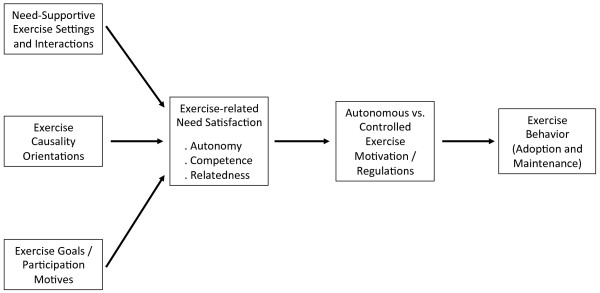
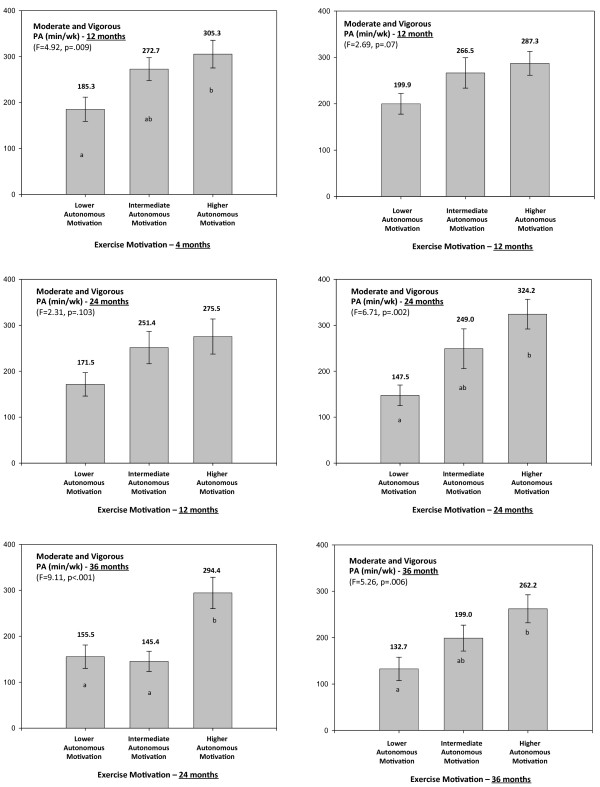
Verification
Claims the paper makes
3 Valid · 5 Not valid · 58 Not checked · 143 Own results and interpretations
The cited sources support only part of this claim — read each source’s verdict below.
In the paper
“Satisfaction of these basic needs results in increased feelings of vitality and well-being [15].”
§ Exercise, physical activity, and self-determination theory: A systematic review > Introduction
What the sources say
- Partly supportedcites [15] matched to “Testing a self‐determination theory‐based teaching style intervention in the exercise domain” (2008) sourceExperimental — accuracy not yet measured
The discussion of basic psychological need satisfaction (p. 5) says that satisfying needs, together with more autonomous motivation, is expected to produce adaptive affective responses. The findings (p. 24) link competence need satisfaction to less negative affect. Neither passage establishes that need satisfaction results in increased vitality or well-being specifically, and the claim states the relationship more definitively than the paper does. (LLM, conf=0.84)
plainstates a cause- Asserted: passes — The authors put it forward as true.
- Checkable: passes — It can be checked against evidence.
- Load-bearing: passes — The paper’s conclusions depend on it.
- Based: passes — The paper gives a reason why it holds.
- Partly supported
The cited sources support only part of this claim — read each source’s verdict below.
In the paper
“Relations from perceived autonomy support to exercise behavior, via psychological needs and regulatory styles have been tested (in part or all) in several studies and in general these confirm the proposed sequences [17,44,43,77,76,38,33].”
§ Exercise, physical activity, and self-determination theory: A systematic review > Discussion > Need satisfaction and exercise
What the sources say
- Supportedcites [17] matched to “Exercise motivation: a cross-sectional analysis examining its relationships with frequency, intensity, and duration of exercise” (2010) source
The Background (page unavailable) says the study tested relationships between behavioral regulations and exercise frequency, intensity, and duration—one part of the proposed sequence. The Results (page unavailable) report that all three exercise indices correlated more strongly with autonomous than controlling regulations, broadly supporting the sequence. The citing sentence expressly allows studies to have tested it only “in part.” (LLM, conf=0.87)
- Partly supportedcites [44] matched to “Mediators of physical activity behaviour change among adult non-clinical populations: a review update” (2010) sourceExperimental — accuracy not yet measured
The Results section (‘Evidence of Mediation by Theory’; page not provided) reports support in one study for a link between autonomy support and physical activity. But the other self-determination-theory study found no changes in its constructs or behavior, and neither established the proposed sequence through psychological needs and regulatory styles. The review therefore does not support saying that the studies generally confirmed that sequence. (LLM, conf=0.88)
- Not checked — no full text of the sourcecites [43] matched to “The Independent Effects of Goal Contents and Motives on Well-Being: It’s Both What You Pursue and Why You Pursue It” (2004) source
- Not matchedcites [77]
The reference list we hold has no entry [77].
- Not matchedcites [76]
The reference list we hold has no entry [76].
- Not checked — no full text of the sourcecites [38] matched to “Body image and body shape ideals in magazines: exposure, awareness, and internalization” (1997) source
- Not checked — no full text of the sourcecites [33] matched to “Go Figure? Body-Shape Motives are Associated with Decreased Physical Activity Participation Among Midlife Women” (2006) source
plainstates an association- Asserted: passes — The authors put it forward as true.
- Checkable: passes — It can be checked against evidence.
- Load-bearing: passes — The paper’s conclusions depend on it.
- Based: passes — The paper gives a reason why it holds.
- Supported
A result the paper reports from its own data — it cites no other source for it, so there is none to check. The quote shows it is in the paper.
In the paper
“The literature is also consistent in that competence satisfaction and more intrinsic motives positively predict exercise participation across a range of samples and settings.”
§ Exercise, physical activity, and self-determination theory: A systematic review > Abstract > Results
boostedstates an association- Asserted: passes — The authors put it forward as true.
- Checkable: passes — It can be checked against evidence.
- Load-bearing: passes — The paper’s conclusions depend on it.
- Based: passes — The paper gives a reason why it holds.
A result the paper reports from its own data — it cites no other source for it, so there is none to check. The quote shows it is in the paper.
In the paper
“and intrinsic motivation being more predictive of long-term exercise adherence”
§ Exercise, physical activity, and self-determination theory: A systematic review > Abstract > Results
plainstates an association- Asserted: passes — The authors put it forward as true.
- Checkable: passes — It can be checked against evidence.
- Load-bearing: passes — The paper’s conclusions depend on it.
- Based: passes — The paper gives a reason why it holds.
A result the paper states — it cites no source for it, so there is none to check. The quote shows it is in the paper.
In the paper
“but similar results are found across cross-sectional, prospective, and experimental designs”
§ Exercise, physical activity, and self-determination theory: A systematic review > Abstract > Results
plain- Asserted: passes — The authors put it forward as true.
- Checkable: passes — It can be checked against evidence.
- Load-bearing: passes — The paper’s conclusions depend on it.
- Based: passes — The paper gives a reason why it holds.
99 more claims
Create a free account to see all 209 claims and to verify the 2 references still open.
- It may state two separate claims as one. 74
- Probably not a substantial claim. 39
Claims other papers make about this one
Each is checked against this paper’s own text: does it say what the citing paper says it does?
The source backs part of the claim, not all of it — or backs it for a different population, condition or comparison.
In the citing paper
“As of today, merely one systematic review in the exercise context (Teixeira et al., 2012), having SDT as theoretical background, has analyzed the satisfaction (although not frustration) of basic psychological needs, the motivational regulation, and the way these can predict different physiological outcomes (i.e., energy expenditure, body mass index).”
From Can Interpersonal behavior influence the persistence and adherence to physical exercise practice in adults? A systematic review (2018) · cites this paper as Teixeira et al., 2012
Experimental — accuracy not yet measuredThe source backs part of the claim, not all of it — or backs it for a different population, condition or comparison.
In the citing paper
“which might be justified by the fact that most of them so far cannot yet distinguish this regulation from identified regulation, given that both share the same principles”
From Can Interpersonal behavior influence the persistence and adherence to physical exercise practice in adults? A systematic review (2018) · cites this paper as Teixeira et al., 2012
Experimental — accuracy not yet measuredThe source backs part of the claim, not all of it — or backs it for a different population, condition or comparison.
In the citing paper
“Conversely, structured exercise programs foster intrinsic motivation (65), self-regulation, and a positive relationship with the body, promoting sustained engagement even after pharmacotherapy discontinuation.”
From GLP-1 agonists and exercise: the future of lifestyle prioritization (2025) · cites this paper as [65]
Experimental — accuracy not yet measuredThe source backs part of the claim, not all of it — or backs it for a different population, condition or comparison.
In the citing paper
“a study by Teixeira et al. [31] highlights that exercise not only improves physical health but also promotes a positive self-image and resilience”
From Sociodemographic influences on Student Mental Health and their association with activation-regulating functional impairments (2026) · cites this paper as [31]
Experimental — accuracy not yet measuredThe cited source says what the claim attributes to it.
In the citing paper
“The instruments described herein have been used in various contexts, for example to assess to what extent a medical professional (Williams et al., 2009), healthcare intervention (Williams et al., 2011; Teixeira et al., 2012) or a procedure (Ng et al., 2012) supports autonomy.”
From Designing for Motivation, Engagement and Wellbeing in Digital Experience (2018) · cites this paper as Teixeira et al., 2012
9 more claims about this paper
Create a free account to see every claim other papers make about this one.
Self-check
Percentages, sums and reported differences re-computed from the paper’s own numbers.
Rated minor: it would not touch a result — a value no result rests on, a p-value that stays on the same side of the significance level, or a conflict that is clerical, resolved elsewhere in the paper, or outside its own findings.
In the paper
“A total of 57 samples (53 studies) analyzed associations between regulations and exercise behavior. Of these, 37 were used in cross-sectional designs, 10 in prospective designs, 7 in experimental studies, and 2 in mixed designs.”
§ Exercise, physical activity, and self-determination theory: A systematic review > Results > Motivational predictors of exercise-related outcomes
Reported 57 · recomputed 56
Citations
Cites
Ryan, R. M., & Deci, E. L. (2000) · American Psychologist · doi:10.1037//0003-066x.55.1.68 · Cited by 54,599
Self-citationThe "what" and "why" of goal pursuits: Human needs and the self-determination of behavior
Deci, E. L., & Ryan, R. M. (2000) · Psychological Inquiry · doi:10.1207/s15327965pli1104_01 · Cited by 34,210 · cited 5×
“determination and volition with respect to the target behavior [12].”
BackgroundInfluentialSelf-citationIntrinsic Motivation and Self-Determination in Human Behavior
Deci, E. L., & Ryan, R. M. (1985) · doi:10.1007/978-1-4899-2271-7 · Cited by 26,772
Self-citationIntrinsic Motivation and Self-Determination in Human Behavior
Miller, K. A., Deci, E. L., & Ryan, R. M. (1988) · Contemporary Sociology · doi:10.2307/2070638 · Cited by 15,312
Self-citationMediation in experimental and nonexperimental studies: New procedures and recommendations.
Shrout, P. E., & Bolger, N. (2002) · Psychological Methods · doi:10.1037/1082-989x.7.4.422 · Cited by 11,335 · cited 1×
“, mediated) effects between them [75].”
Garber, C. E., Blissmer, B., Deschenes, M. R., Franklin, B. A., Lamonte, M. J., Lee, I.-M., Nieman, D. C., & Swain, D. P. (2011) · Medicine & Science in Sports & Exercise · doi:10.1249/mss.0b013e318213fefb · Cited by 9,319
A simple method to assess exercise behavior in the community.
Godin, G., & Shephard, R. J. (1985) · PubMed · Cited by 4,760
Moral Identity and Developmental Theory
Lapsley, D. (2015) · Human Development · doi:10.1159/000435926 · Cited by 3,819
Perceived locus of causality and internalization: Examining reasons for acting in two domains.
Ryan, R. M., & Connell, J. P. (1989) · Journal of Personality and Social Psychology · doi:10.1037/0022-3514.57.5.749 · Cited by 3,311 · cited 2×
“Autonomous motivation includes the identified regulation and intrinsic motivation subscales of the Exercise Self-Regulation Questionnaire [84].”
Self-citation(2002) · Cited by 3,047
Self-citation
Research works printed but not linked: 1
- Koestner R Losier GF In Handbook of self-determination research Distinguishing three ways of being internally motivated: a closer look at introjection, identification, and intrinsic motivation 2002 Edited by Deci EL, Ryan RM, Rochester, NY: University of Rochester Press 101 121
Cited by
Items 1,401–1,500 of 2,926
Factors associated with physical activity in African Americans with hypertension
Bolin, L. P., Crane, P. B., Powell, J. R., Horne, C. E., & Floegel, T. A. (2018) · Applied Nursing Research · doi:10.1016/j.apnr.2018.04.003 · Cited by 9
Won, M. H., & Kim, O. (2019) · Korean Journal of Adult Nursing · doi:10.7475/kjan.2019.31.1.78 · Cited by 7
Concept Analysis of Relatedness in Physical Activity Among Adolescents
Alali, M. A., Robbins, L. B., Ling, J., Kao, T. A., & Smith, A. L. (2020) · Journal of Pediatric Nursing · doi:10.1016/j.pedn.2020.06.005 · Cited by 9
Body Shame, Body Compassion and Physical Activity
Beadle, E. S. (2020) · University of Hertfordshire Research Archive (University of Hertfordshire) · doi:10.18745/th.22613 · Cited by 14
Skrade, M. A. B. (2013) · Iowa State University Digital Repository (Iowa State University) · doi:10.31274/etd-180810-3458 · Cited by 11
Latent profile analysis of physical activity motivation during behavioral weight loss treatment
Hagerman, C. J., Miller, N. A., & Butryn, M. L. (2022) · Psychology of sport and exercise · doi:10.1016/j.psychsport.2022.102376 · Cited by 11
Reiner, S. L., D’Abundo, M. L., Cappaert, T. A., & Miller, M. G. (2023) · Physical Activity and Health · doi:10.5334/paah.218 · Cited by 8
McGowan, H., Gutenberg, J., Leitner, V., Mühlhauser, K., Breda, A., Fischer, M. J., Globits, S., Grote, V., Kiesl, D., Mayr, K., et al. (2024) · PLoS ONE · doi:10.1371/journal.pone.0302226 · Cited by 12
Akaida, S., Shiratsuchi, D., Tateishi, M., Kuratsu, R., & Makizako, H. (2024) · British Journal of Occupational Therapy · doi:10.1177/03080226241253110 · Cited by 10
“People experience a high sense of well-being and can activate their behavior when their basic psychological needs are met (Porat et al., 2020; Teixeira et al., 2012).”
Jia, Y., Xiao, Y., Chen, H., Gebel, K., Li, C., Sun, S., Yang, Q., Wang, S., Zhang, L., Wang, J., et al. (2025) · International Journal of Behavioral Nutrition and Physical Activity · doi:10.1186/s12966-025-01707-w · Cited by 7
He, M.-H., Zhao, T.-Y., Zhu, W., Lou, H., Zhang, D. P., Mu, F.-Z., Zhang, X., Li, Y., Zhang, W., Liu, Q., et al. (2025) · Frontiers in Psychology · doi:10.3389/fpsyg.2025.1604916 · Cited by 14
“Teixeira et al. (2012) demonstrated that physical activity that fulfills these basic psychological needs significantly improves individuals’ participation and adherence to exercise.”
The relationship between grit, resilience and physical activity: a systematic review
Martin, J. R., Hromyak, A., van der Weyden, M. S., Weinstein, A. A., & Boolani, A. (2025) · Frontiers in Sports and Active Living · doi:10.3389/fspor.2025.1563382 · Cited by 9
Huang, D., Tang, H., Jing, L., Lei, H., Li, X., & Koh, D. (2025) · SAGE Open · doi:10.1177/21582440251355777 · Cited by 8
Cid, L., Monteiro, D., Bento, T., Jacinto, M., Vitorino, A., Teixeira, D. S., Duarte‐Mendes, P., Bastos, V., & Couto, N. (2025) · Healthcare · doi:10.3390/healthcare13151879 · Cited by 10
“Furthermore, BPN satisfaction has been shown to mediate the relationship between motivational climate and autonomous forms of motivation, which in turn are robust predictors of pleasure, well-being, and sustained engagement in exercise and sport contexts [29,33,34].”
InfluentialSeçer, E., Kaçay, Z., Yıldız, N. O., Talaghir, L.-G., Cosoreanu, D. M., & Benţea, C. C. (2025) · Frontiers in Psychology · doi:10.3389/fpsyg.2025.1682469 · Cited by 13
Akıl, M. (2025) · BMC Psychology · doi:10.1186/s40359-025-03789-4 · Cited by 15
“Within this framework, autonomous forms of motivation have been shown to enhance physical activity participation, whereas controlled or extrinsic motivation tends to be limited to short-term engagement [15].”
Determinants and interrelations of exercise effects on sleep quality: A multimethod meta-analysis
Zhide, L., Zhao, S., Tian, S., Wang, C., Zhang, M., Xu, K., Yin, M., Ng, S., & Ning, Z. (2026) · Sleep Medicine Reviews · doi:10.1016/j.smrv.2026.102239 · Cited by 10
Liang, X., & Wang, Z. (2026) · PLoS ONE · doi:10.1371/journal.pone.0345759 · Cited by 7
“Applied to physical education and exercise behavior, SDT research has repeatedly linked more self-determined motivation to greater exercise adherence, sustained effort, and longer-term participation [11,12].”
Predictors and correlates of physical activity and sedentary behavior
Paoli, A. G. D. (2021) · Society for Transparency, Openness, and Replication in Kinesiology eBooks · doi:10.51224/b1005 · Cited by 7
Janssen, S. M., Connelly, D. M., Shields, C. A., & Landry, M. (2022) · Physiotherapy Theory and Practice · doi:10.1080/09593985.2022.2097968 · Cited by 7
Davis, N. M., Pringle, A., Kay, A. D., Blazevich, A. J., Teskey, D., Faghy, M. A., & Mina, M. A. (2022) · International Journal of Environmental Research and Public Health · doi:10.3390/ijerph191710907 · Cited by 8
Brunet, J., Price, J., Srikanthan, A., Gillison, F., Standage, M., Taljaard, M., Beauchamp, M. R., Reed, J. L., & Wurz, A. J. (2022) · PLoS ONE · doi:10.1371/journal.pone.0273045 · Cited by 8
Gjestvang, C., Tangen, E. M., Arntzen, M. B., & Haakstad, L. A. H. (2023) · Journal of Sports Science and Medicine · doi:10.52082/jssm.2023.235 · Cited by 23
“The self-determination theory (Ryan and Deci, 2000, Standage and Ryan, 2012, Teixeira et al., 2012), propose that autonomous and controlled motivation and amotivation lie along a continuum of different degrees of autonomy (Ingledew et al., 2009, Standage and Ryan, 2012).”
BackgroundInitial Construction of the Exercise Maintenance Motivation Scale: A Mixed-Method Study
Nam, T. T., Dadras, O., Le, C. N., Phu, D. H., Tin, P. T., An, T. D., Dat, N. T., Du, T. N., Hiền, N. T. T., Châu, T. T. T., et al. (2023) · Journal of Human Earth and Future · doi:10.28991/hef-2023-04-04-06 · Cited by 7
“The SDT provides a framework for analyzing and grasping the numerous motivational styles in exercise behavior adoption and maintenance [13].”
BackgroundMethodMateo‐Orcajada, A., Abenza‐Cano, L., & Vaquero‐Cristóbal, R. (2024) · International Journal of Adolescence and Youth · doi:10.1080/02673843.2024.2389310 · Cited by 9
“…et al., 2022; Kim et al., 2015); e) achieving a high level of motivation towards the intervention is key for adolescents to use the app, not only for the duration of the programme, but also to generate a healthy habit and maintain the practice of physical activity over time (Teixeira et al., 2012).”
InfluentialCheng, Z., Taylor, A., Stults‐Kolehmainen, M., Gerber, M., Herold, F., Ross, M. D., Ash, G. I., Kramer, A. F., & Zhao, M. (2024) · Frontiers in Psychology · doi:10.3389/fpsyg.2024.1467949 · Cited by 7
“Traditionally, motivation related to PA (including structured forms such as physical exercise) and SB has been viewed as a relatively stable trait, primarily within the framework of self-determination theory (Frijda, 2010; Teixeira et al., 2012; Wilson et al., 2008; Zenko and Ekkekakis, 2019).”
BackgroundDoğusan, S. N., & Koçak, F. (2024) · Pamukkale Journal of Sport Sciences · doi:10.54141/psbd.1530278 · Cited by 9
Collazo‐Castiñeira, P., Rodríguez‐Rey, R., Delfino, G. I., Cruz-Jentoft, A. J., Topinková, E., Weijs, P. J. M., Schoufour, J. D., & Sánchez‐Izquierdo, M. (2025) · BMC Public Health · doi:10.1186/s12889-025-21377-4 · Cited by 11
“This is consistent with previous literature; a systematic review found that the different types of motivation relate differently to the initiation and maintenance of a behavior [12].”
InfluentialSong, C., Ge, S., & Zhang, W. (2025) · Frontiers in Psychology · doi:10.3389/fpsyg.2025.1501720 · Cited by 10
“Secondly, self-control, as a psychological capability, was found to influence adolescents’ abilities to cope with stress and regulate emotions (Moffitt et al., 2011; Teixeira et al., 2012).”
Ocampo-Mascaró, J., Silva-Salazar, V., & da Costa-Bullón, A. D. (2015) · Medwave · doi:10.5867/medwave.2015.11.6329 · Cited by 6
Carrón, M. I. A., Muñoz, S. L., Román, M. L., Batista, M., & Castuera, R. J. (2016) · Retos · doi:10.47197/retos.v0i30.40619 · Cited by 33
Mehrtash, S., & İnce, M. L. (2018) · Montenegrin Journal of Sports Science and Medicine · doi:10.26773/mjssm.180306 · Cited by 9
Historical and Social Considerations of Strength Training for Female Athletes
Shurley, J. P., Felkar, V., Greviskes, L. E., & Todd, J. (2019) · Strength and conditioning journal · doi:10.1519/ssc.0000000000000478 · Cited by 12
Motivation for professional studies in psychology: An exploratory study
Booysen, D., & Nel, L. (2019) · Journal of Psychology in Africa · doi:10.1080/14330237.2019.1667152 · Cited by 9
Burgueño, R., Morales-Ortíz, E., Macarro-Moreno, J., Medina-Casaubón, J., & Cueto-Martín, B. (2020) · Sustainability · doi:10.3390/su12187477 · Cited by 8
Lillis, J., Schumacher, L. M., & Bond, D. S. (2021) · International Journal of Behavioral Medicine · doi:10.1007/s12529-021-09965-1 · Cited by 8
Wheatley, C., Głogowska, M., Stathi, A., Sexton, C. E., Johansen‐Berg, H., & Mackay, C. E. (2021) · Mental health and physical activity · doi:10.1016/j.mhpa.2021.100429 · Cited by 9
Sammut, M., Haracz, K., English, C., Shakespeare, D. T., Crowfoot, G., Nilsson, M., & Janssen, H. (2021) · International Journal of Environmental Research and Public Health · doi:10.3390/ijerph182111448 · Cited by 6
Burns, R. D., Byun, W., Fu, Y., & Mihalopoulos, N. L. (2021) · Journal of LGBT Youth · doi:10.1080/19361653.2021.2010157 · Cited by 6
Simonton, A. J., Young, C. C., García, A. A., Bartholomew, J. B., & Brown, R. A. (2022) · Mental health and physical activity · doi:10.1016/j.mhpa.2022.100444 · Cited by 6
Tsirigkakis, S., Koutedakis, Y., Mastorakos, G. P., Stavrinou, P. S., Mougios, V., & Bogdanis, G. C. (2022) · Journal of Exercise Science & Fitness · doi:10.1016/j.jesf.2022.04.002 · Cited by 12
Erickson, C. M., Clark, L. R., Umucu, E., Vo, N. H., Volgman, A. S., Chin, N. A., Ketchum, F. B., Jones, C. H., Gleason, C. E., & Aggarwal, N. T. (2022) · Journal of Genetic Counseling · doi:10.1002/jgc4.1573 · Cited by 6
The Role of Theory in the Prevention of Sexual Violence in Sport
Kaufman, K. L., Lee, D. S., Milroy, J. J., Yore, J. B., Sitney, M. H., Lipman, A., Glace, A. M., Kyler-Yano, J. Z., & Raj, A. (2022) · Journal of Interpersonal Violence · doi:10.1177/08862605221095787 · Cited by 12
Pan, H.-W., Huang, W.-Y., & Wu, C.-E. R. (2022) · SAGE Open · doi:10.1177/21582440221097895 · Cited by 9
Signorini, G., Scurati, R., D’Angelo, C., Rigon, M., & Invernizzi, P. L. (2022) · Frontiers in Psychology · doi:10.3389/fpsyg.2022.1006876 · Cited by 9
Boldina, A., Hanel, P. H. P., & Steemers, K. (2022) · Landscape Research · doi:10.1080/01426397.2022.2142204 · Cited by 9
Chen, X., Jiang, W., Salazar, M., Zhu, H., Wen, Z., Chen, X., & Lundborg, C. S. (2023) · Frontiers in Cardiovascular Medicine · doi:10.3389/fcvm.2022.1049036 · Cited by 10
Psychosocial factors of physical activity among people with disabilities: Prospective cohort study.
Brandenbarg, P., Krops, L. A., Seves, B. L., Hoekstra, T., Hettinga, F. J., Twisk, J. W. R., van der Woude, L. H. V., Dekker, R., & Hoekstra, F. (2023) · Rehabilitation Psychology · doi:10.1037/rep0000488 · Cited by 10
da Costa, B. G. G., da Costa, R. M., de Mello, G. T., Bandeira, A. D. S., Chaput, J., & da Silva, K. S. (2023) · Quality of Life Research · doi:10.1007/s11136-023-03379-0 · Cited by 8
Ruiz-Cortés, M., Múzquiz-Barberá, P., Herrero, R., Vara, M. D., Escrivá‐Martínez, T., Carcelén, R., Rodilla, E., Baños, R., & Lisón, J. F. (2023) · Nutrients · doi:10.3390/nu15071624 · Cited by 7
Gąsior, J. S., Młyńczak, M., Williams, C. A., Popłonyk, A., Kowalska, D., Giezek, P., & Werner, B. (2023) · Frontiers in Cardiovascular Medicine · doi:10.3389/fcvm.2023.1247122 · Cited by 6
“The scale measures eight types of motivation — enjoyment and mastery factors, signi fi cantly higher in group of sport participants in our study, can be considered as intrinsic motivation, while the other six factors describe extrinsic motivation based on the self-determination theory (50).”
BackgroundKraemer, K. M., Kilgore, K., Litrownik, D., Jean-Laurent, B., Wayne, P. M., Richardson, C. R., Moy, M. L., & Yeh, G. Y. (2023) · Global Advances in Integrative Medicine and Health · doi:10.1177/27536130231212169 · Cited by 6
Rice, P. E., Pate, G. A., Hill, R. D., DeVita, P., & Messier, S. P. (2024) · Clinical Biomechanics · doi:10.1016/j.clinbiomech.2024.106228 · Cited by 6
Guo, T., Liu, L., Yang, Y., Shang, Y., & Chen, S.-P. (2024) · Behavioral Sciences · doi:10.3390/bs14040266 · Cited by 8
“The self-determination theory is one of the most successful theoretical models for understanding and predicting exercise behavior [21–23].”
BackgroundComoutos, N., Hatzigeorgiadis, A., Tsiami, A., Tzatzaki, T., Georgakouli, K., Manthou, E., Γούδας, Μ., Jamurtas, A. Z., Hatzoglou, C., Chatzisarantis, N. L. D., et al. (2016) · Cogent Medicine · doi:10.1080/2331205x.2016.1149043 · Cited by 6
Høydal, K. L. (2017) · Sport Sciences for Health · doi:10.1007/s11332-017-0367-4 · Cited by 11
Gray, S. M., Higgins, J., & Rhodes, R. E. (2017) · Journal of Aging and Physical Activity · doi:10.1123/japa.2017-0066 · Cited by 10
Motivation and self-efficacy among winter outdoor exercise enthusiasts
Ednie, A. J., & Stibor, M. D. (2017) · Leisure/Loisir · doi:10.1080/14927713.2017.1399816 · Cited by 7
Self-Care Posters Serve as a Low-Cost Option for Physical Activity Promotion of Hospital Nurses
Raney, M. A., & Zanten, E. V. (2018) · Health Promotion Practice · doi:10.1177/1524839918763585 · Cited by 9
Pereira, S., Katzmarzyk, P. T., Gomes, T. N., Elston, R. C., & Maia, J. A. R. (2018) · Twin Research and Human Genetics · doi:10.1017/thg.2018.47 · Cited by 7
Ingels, J. S., Hansell, A. H., & Zizzi, S. (2018) · SAGE Open Medicine · doi:10.1177/2050312118807618 · Cited by 9
Who provides physical activity support in the workplace? Implications for peer led interventions
Edmunds, S., Sitch, M., & Lowry, R. (2019) · Health Education Journal · doi:10.1177/0017896919872230 · Cited by 8
Sundar, T. K. B., Løndal, K., Riiser, K., Lagerløv, P., Glavin, K., & Helseth, S. (2019) · SAGE Open Nursing · doi:10.1177/2377960819884786 · Cited by 10
Eskilsson, T., Fjellman‐Wiklund, A., Malmer, E. E., Neely, A. S., Gavelin, H. M., Järvholm, L. S., Boraxbekk, C., & Nordin, M. (2020) · Scandinavian Journal of Psychology · doi:10.1111/sjop.12623 · Cited by 6
Lennefer, T., Reis, D., Lopper, E., & Hoppe, A. (2020) · European Journal of Work and Organizational Psychology · doi:10.1080/1359432x.2020.1760247 · Cited by 8
González‐Cutre, D., Jiménez-Loaisa, A., Alcaraz‐Ibáñez, M., Romero-Elias, M., Santos, I., & Beltrán‐Carrillo, V. J. (2020) · Psychology of sport and exercise · doi:10.1016/j.psychsport.2020.101795 · Cited by 8
Muller, J., Siefken, K., Parfitt, G., & Dollman, J. (2020) · Health Promotion Journal of Australia · doi:10.1002/hpja.423 · Cited by 7
Mehra, S., van den Helder, J., Kröse, B., Engelbert, R., Weijs, P. J. M., & Visser, B. (2020) · Springer eBooks · doi:10.1007/978-981-15-6968-5_7 · Cited by 6
Learmonth, Y. C., & Heritage, B. (2020) · Archives of Physical Medicine and Rehabilitation · doi:10.1016/j.apmr.2020.10.138 · Cited by 6
Understanding Vocational Students’ Motivation for Dietary and Physical Activity Behaviors
Kuipers, A., Kloek, G. C., & de Vries, S. I. (2021) · International Journal of Environmental Research and Public Health · doi:10.3390/ijerph18041381 · Cited by 12
Mendoza-Muñoz, M., García, C. L., Franco-García, J. M., Calzada-Rodríguez, J. I., Denche-Zamorano, Á. M., & Carlos‐Vivas, J. (2020) · e-Motion Revista de Educación Motricidad e Investigación · doi:10.33776/remo.v0i15.4900 · Cited by 6
Cederström, N., Granér, S., Nilsson, G., Dahan, R., & Ageberg, E. (2021) · Trials · doi:10.1186/s13063-021-05713-8 · Cited by 10
Petrosyan, T., Mkrtchyan, H. H., & Martirosyan, N. (2021) · Health Problems of Civilization · doi:10.5114/hpc.2021.110112 · Cited by 8
Mazéas, A., Chalabaëv, A., Blond, M., Pereira, B., & Duclos, M. (2022) · BMJ Open · doi:10.1136/bmjopen-2021-058015 · Cited by 8
Differential correlates for aerobic physical activity and resistance training: a systematic review
Kompf, J. M., & Rhodes, R. E. (2022) · Psychology Health & Medicine · doi:10.1080/13548506.2022.2142617 · Cited by 7
Dwyer, L. A., Patel, M. R., Nebeling, L. C., & Oh, A. (2018) · Journal of Physical Activity and Health · doi:10.1123/jpah.2017-0202 · Cited by 7
Teixeira, D., Monteiro, D., Carraça, E. V., & Palmeira, A. L. (2018) · Motriz Revista de Educação Física · doi:10.1590/s1980-6574201800020007 · Cited by 18
Self-citationCavallini, M. F., Noti, L. M., Gomes, T. G., & Dyck, D. J. (2020) · Journal of Physical Activity Research · doi:10.12691/jpar-5-1-4 · Cited by 6
Pelletier, L. G., Guertin, C., & Rocchi, M. (2017) · Emerald Group Publishing Limited eBooks · doi:10.1108/978-1-64113-004-220251007 · Cited by 11
Lifestyle Approach for Increasing Physical Activity in Youth
Johnston, C. A., & Παπαϊωάννου, Μ. Α. (2013) · American Journal of Lifestyle Medicine · doi:10.1177/1559827613492087 · Cited by 6
Aagaard‐Hansen, J. (2014) · Journal of Diabetes & Metabolism · doi:10.4172/2155-6156.1000375 · Cited by 5
Holter monitoring in the prognosis of sudden cardiac death.
Erdoğan, O. (2007) · PubMed · Cited by 8
Parry, W. (2015) · UCL Discovery (University College London) · doi:10.13140/rg.2.1.2468.5200 · Cited by 9
Meuwissen, I., Vanderstraeten, R., Roussel, N. A., Meeus, M., Eetvelde, J. V., Meus, T., Timmermans, A. A. A., & Verbrugghe, J. (2025) · Journal of Clinical Medicine · doi:10.3390/jcm14176251 · Cited by 9
“Higher levels of self-efficacy and self-confidence may promote more autonomous execution of exercises [94].”
Consistent Exercise Timing as a Strategy to Increase Physical Activity: A Feasibility Study
Schumacher, L. M., Kalala, S., Thomas, J. G., Raynor, H. A., Rhodes, R. E., & Bond, D. S. (2023) · Translational Journal of the American College of Sports Medicine · doi:10.1249/tjx.0000000000000227 · Cited by 5
“This finding adds to evidence suggesting that choice may not be as important for adherence as some theories suggest (28,29).”
BackgroundResultOngoh, M., Abekah‐Carter, K., A-iyeh, E., & Agyemang‐Duah, W. (2024) · Journal of Health Population and Nutrition · doi:10.1186/s41043-024-00655-8 · Cited by 6
“Exercise can be defined as regular, structured activity aimed at achieving suitable fitness outcomes, such as improving over-all health and physical abilities [15, 16].”
BackgroundEriksson, L., & Linde, S. (2024) · Frontiers in Psychology · doi:10.3389/fpsyg.2024.1397320 · Cited by 6
Fradejas, B. A.-C., Lafuente-Ureta, R., Calvo, S., Fernández‐Gorgojo, M., Poveda-López, J. L., & Jiménez‐Sánchez, C. (2025) · Frontiers in Public Health · doi:10.3389/fpubh.2024.1509016 · Cited by 7
Preferences of patients with depression for exercises: a discrete choice experiment
Li, H., Xie, P. P., Hou, Y., Jiang, W., Gong, S., & Jin, S. (2025) · BMC Public Health · doi:10.1186/s12889-025-22404-0 · Cited by 5
“Preferences are crucial for enhancing individual motivation and thus promoting behavior change and maintenance [48].”
Self-determination theory interventions in self-care of cardiovascular disease: A systematic review
Saeedian, Y., Agarwal, A., Jansons, P., Fuller‐Tyszkiewicz, M., & Maddison, R. (2025) · Patient Education and Counseling · doi:10.1016/j.pec.2025.108794 · Cited by 6
Xu, K., Jiang, H., & Wang, H. (2025) · Frontiers in Public Health · doi:10.3389/fpubh.2025.1589820 · Cited by 10
Jiang, Z., Zhou, Q., Shu, H., & Jiang, L. (2025) · Frontiers in Public Health · doi:10.3389/fpubh.2025.1604185 · Cited by 8
Gavin, J. P., Holt, L. C., Muckelt, P. E., Sadler, E., McDonough, S., & Barker, M. E. (2025) · International Journal of Behavioral Nutrition and Physical Activity · doi:10.1186/s12966-025-01802-y · Cited by 9
“…goal setting can support these [21, 22] in maintaining behavior change [12, 20], as they promote flexibility to tailor physical activity to LTCs allowing choice/volition (autonomy), experience of mastery (competence), and opportunity for social connection (relatedness) which motivate behavior [23].”
Prieto-González, P., Rivera-Villafuerte, A., & Canlı, U. (2025) · BMC Public Health · doi:10.1186/s12889-025-23781-2 · Cited by 14
“Different motivation types can coexist within individuals [4].”
InfluentialBourvellec, M. L., Bois, J. E., Solana, A. A., Bosquet, L., Delpech, N., & Enéa, C. (2025) · Lifestyle Medicine · doi:10.1002/lim2.70037 · Cited by 6
Liu, L., Li, T., Long, J., Hwang, J. Y., & Ahn, J. W. (2025) · Frontiers in Psychology · doi:10.3389/fpsyg.2025.1662714 · Cited by 11
“This study demonstrates that parental expectations, by satisfying adolescents’ needs for autonomy, competence, and relatedness, subsequently promote the development of adaptive exercise motivation, aligning with findings by Teixeira et al. (2012).”
Chai, J., Liang, Y., Zhang, X., & Lu, Y. (2025) · Aslib Journal of Information Management · doi:10.1108/ajim-11-2024-0928 · Cited by 7
Zhang, D.-Y., Lou, H., Liu, J., & Li, B. (2026) · Frontiers in Psychology · doi:10.3389/fpsyg.2025.1723996 · Cited by 4
“Within the framework of self-determination theory, exercise motivation is a key factor determining whether an individual can sustain long-term exercise habits (Teixeira et al., 2012; Wilson et al., 2008).”
Martín-Martínez, C., García-González, M., Mijarra-Murillo, J.-J., & Delfa-de-la-Morena, J. M. (2026) · Frontiers in Public Health · doi:10.3389/fpubh.2025.1725783 · Cited by 5
“Among these determinants, preferences for physical activity, defined as individuals’ affective and cognitive inclinations toward specific types, intensities, and contexts of exercise (3), have emerged as a key factor influencing adherence and long-term engagement (4).”
Gustafsson, H., Madigan, D. J., & Lundkvist, E. (2016) · Springer eBooks · doi:10.1007/978-3-662-49411-0_24-1 · Cited by 9
Metadata
- Authors
- Teixeira, P. J., Carraça, E. V., Markland, D., Silva, M. N., & Ryan, R. M.
- Affiliations
- Universidade Técnica de Lisboa (PT)
- Bangor University (GB)
- University of Rochester (US)
- Corresponding author
- Teixeira, Pedro J
- Venue
- International Journal of Behavioral Nutrition and Physical Activity
- Published
- 2012
- Volume
- 9
- Issue
- 1
- Pages
- 78
- ISSN
- 1479-5868 (ISSN-L)
- PMC
- PMC3441783
- OpenAlex
- W2120612383
- Semantic Scholar
- 91c1a302b1ba3d78f18d769090d5c285c36d9567
- Cited by
- 2,963
- References
- 110
- Citations by year
- 2026: 399 · 2025: 332 · 2024: 260 · 2023: 244 · 2022: 242 · 2021: 279 · 2020: 256 · 2019: 215 · 2018: 202 · 2017: 162 · 2016: 141 · 2015: 100 · 2014: 66 · 2013: 59 · 2012: 3
- FWCI
- 10.23
- Type
- journal article
- Language
- en
- Open access
- gold
- doi.org
- Licence
- cc-by
- Locations
- International Journal of Behavioral Nutrition and Physical Activity (publishedVersion, cc-by)
- Europe PMC (PubMed Central) (publishedVersion, cc-by)
- PubMed Central (publishedVersion, cc-by)
- PubMed (publishedVersion)
- DOAJ (DOAJ: Directory of Open Access Journals) (submittedVersion)
- Topics
- Social Sciences › Psychology › Social Psychology › Motivation and Self-Concept in Sports
- Social Sciences › Psychology › Applied Psychology › Behavioral Health and Interventions
- Health Sciences › Medicine › Public Health, Environmental and Occupational Health › Physical Activity and Health
- Keywords
- self-determination theory, exercise motivation, physical activity, autonomous motivation, intrinsic motivation, identified regulation, introjected regulation, competence satisfaction, need satisfaction, exercise adherence, exercise self-regulation, exercise intervention, exercise behavior
- MeSH terms
- Health Promotion, Humans, Motor Activity, Personal Satisfaction, Health Behavior, Exercise, Databases, Factual, Personal Autonomy, Empirical Research
About these checks
Registry, retraction, Cites and statistics results are computed, not judged, with one exception: a printed reference that no index lists is read once by a model before it counts as a citation error. Claims are extracted by a model and kept only when their quote appears verbatim in the text; each cited source is then checked, with a model’s help, for whether it says what the claim relies on. Those verdicts can be wrong — read the claim’s quote and the cited source before relying on one.
The claim verdicts this report counts are experimental: their accuracy is not yet measured.
A language model drew the claims from the paper on 2026-10-10, under version 3 of the claim definition (model deepseek-v4.1-flash, prompt extract-v3).
A second model labelled each claim on 2026-10-10 (model jev-1.13-20260917, definition revision gold-guideline-v0.2).
Cited sources are checked with a language model’s help (gpt-6-sol).
Statistics and arithmetic are recomputed, not judged.
Confidence bands are shown only for fields calibrated on our annotated test set. None is calibrated yet, so no band is shown.
What counts as a claim ›How we measure confidence ›How we check this ›
Are you an author, or do you see a problem with this page? Request a review
Data sources
Bibliographic data: Semantic Scholar, OpenAlex, Crossref.
Contains information from the Semantic Scholar Academic Graph Datasets, made available under the ODC Attribution License (ODC-BY 1.0).
Semantic Scholar’s data is described in: Kinney, R., et al. (2023). The Semantic Scholar Open Data Platform. arXiv:2301.10140.
