

Exercise, physical activity, and self-determination theory: A systematic review
Open accessThe DOI matches its Crossref record; 108 of the 110 references it cites were found in a registry or an index; 6 of the 97 sources its claims cite were checked for support.
Abstract
Systematic review of 66 empirical studies on self-determination theory constructs and exercise outcomes.
Overview
CoChat Summary
## TL;DR
This systematic review synthesized 66 empirical studies on self-determination theory (SDT) and exercise/physical activity published up to June 2011. It found the most consistent support for autonomous motivation—especially identified and intrinsic regulation—and for competence satisfaction and intrinsic motives as positive predictors of exercise participation.
## Key findings
- Across 66 studies comprising 72 independent samples, the review found consistent positive associations between more autonomous forms of motivation and exercise; for example, 37 of 42 cross-sectional studies, 10 prospective studies, 7 experimental studies, and 2 mixed designs were represented among the regulation studies.
- Identified regulation showed positive associations with exercise in 28 samples (74%) in multivariate analyses and 22 samples (85%) in bivariate analyses; intrinsic motivation was positively associated in 23 or 22 samples (62% or 92%) depending on analysis type, and no study reported negative associations for intrinsic motivation.
- Competence satisfaction was the most frequently assessed basic need and was positively associated with physical activity in 56% of independent samples in multivariate analysis and 92% in correlational analysis; relatedness showed no positive multivariate association with exercise (K = 4, 100% no association).
- In SDT-based interventions, 7 interventions were identified and 6 (86%) found significant differences favoring the SDT group for perceived autonomy support, need satisfaction, autonomous and introjected regulations, and self-reported exercise; in the longest trial, only autonomous regulations mediated long-term exercise effects.
## Methods
- Systematic review of empirical SDT–exercise studies published up to June 2011; searches were run in PsycINFO and SportDiscus for studies from 1960 to June 2011, limited to English-language, peer-reviewed journal articles on adult, non-athletic samples.
- Included 66 studies / 72 independent samples with experimental, cross-sectional, prospective, and mixed designs; outcomes included actual or self-reported exercise/physical activity, attendance, relapse, dropout, and stages of change.
- Evidence was summarized quantitatively by counting independent samples showing significant positive, negative, or null associations; the unit of analysis was the independent sample, and significance was set at 0.05.
## Limitations
- The paper states that it was limited to English-language, peer-reviewed articles and excluded gray literature, unpublished studies, non-English publications, non-adult samples, adolescents/children, and competitive athletic samples.
- The authors state that classifying and quantifying results was “somewhat arbitrary,” that only direct paths were evaluated, and that lumping together self-report and direct measures, attendance, and stages of change is “clearly not without reproach.”
- Evident from the text: most included studies were descriptive/non-experimental and many samples were mixed, so causal inference and subgroup-specific conclusions are limited.
Model-written summary. Check it against the paper before relying on it.
Integrity signals
Registry
Cites
Statistics
Figures
Verification
Claims the paper makes
3 Valid · 5 Not valid · 58 Not checked · 143 Own results and interpretations
The cited sources support only part of this claim — read each source’s verdict below.
In the paper
“Satisfaction of these basic needs results in increased feelings of vitality and well-being [15].”
§ Exercise, physical activity, and self-determination theory: A systematic review > Introduction
What the sources say
- Partly supportedcites [15] matched to “Testing a self‐determination theory‐based teaching style intervention in the exercise domain” (2008) sourceExperimental — accuracy not yet measured
The discussion of basic psychological need satisfaction (p. 5) says that satisfying needs, together with more autonomous motivation, is expected to produce adaptive affective responses. The findings (p. 24) link competence need satisfaction to less negative affect. Neither passage establishes that need satisfaction results in increased vitality or well-being specifically, and the claim states the relationship more definitively than the paper does. (LLM, conf=0.84)
plainstates a cause- Asserted: passes — The authors put it forward as true.
- Checkable: passes — It can be checked against evidence.
- Load-bearing: passes — The paper’s conclusions depend on it.
- Based: passes — The paper gives a reason why it holds.
- Partly supported
The cited sources support only part of this claim — read each source’s verdict below.
In the paper
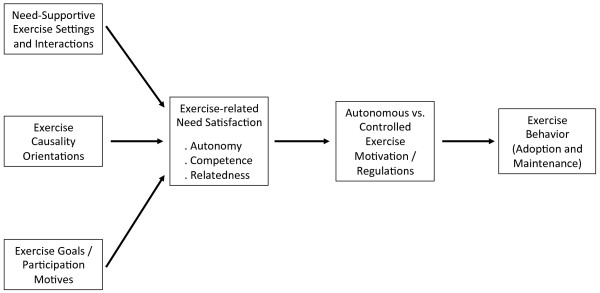
“Relations from perceived autonomy support to exercise behavior, via psychological needs and regulatory styles have been tested (in part or all) in several studies and in general these confirm the proposed sequences [17,44,43,77,76,38,33].”
§ Exercise, physical activity, and self-determination theory: A systematic review > Discussion > Need satisfaction and exercise
What the sources say
- Supportedcites [17] matched to “Exercise motivation: a cross-sectional analysis examining its relationships with frequency, intensity, and duration of exercise” (2010) source
The Background (page unavailable) says the study tested relationships between behavioral regulations and exercise frequency, intensity, and duration—one part of the proposed sequence. The Results (page unavailable) report that all three exercise indices correlated more strongly with autonomous than controlling regulations, broadly supporting the sequence. The citing sentence expressly allows studies to have tested it only “in part.” (LLM, conf=0.87)
- Partly supportedcites [44] matched to “Mediators of physical activity behaviour change among adult non-clinical populations: a review update” (2010) sourceExperimental — accuracy not yet measured
The Results section (‘Evidence of Mediation by Theory’; page not provided) reports support in one study for a link between autonomy support and physical activity. But the other self-determination-theory study found no changes in its constructs or behavior, and neither established the proposed sequence through psychological needs and regulatory styles. The review therefore does not support saying that the studies generally confirmed that sequence. (LLM, conf=0.88)
- Not checked — no full text of the sourcecites [43] matched to “The Independent Effects of Goal Contents and Motives on Well-Being: It’s Both What You Pursue and Why You Pursue It” (2004) source
- Not matchedcites [77]
The reference list we hold has no entry [77].
- Not matchedcites [76]
The reference list we hold has no entry [76].
- Not checked — no full text of the sourcecites [38] matched to “Body image and body shape ideals in magazines: exposure, awareness, and internalization” (1997) source
- Not checked — no full text of the sourcecites [33] matched to “Go Figure? Body-Shape Motives are Associated with Decreased Physical Activity Participation Among Midlife Women” (2006) source
plainstates an association- Asserted: passes — The authors put it forward as true.
- Checkable: passes — It can be checked against evidence.
- Load-bearing: passes — The paper’s conclusions depend on it.
- Based: passes — The paper gives a reason why it holds.
- Supported
A result the paper reports from its own data — it cites no other source for it, so there is none to check. The quote shows it is in the paper.
In the paper
“The literature is also consistent in that competence satisfaction and more intrinsic motives positively predict exercise participation across a range of samples and settings.”
§ Exercise, physical activity, and self-determination theory: A systematic review > Abstract > Results
boostedstates an association- Asserted: passes — The authors put it forward as true.
- Checkable: passes — It can be checked against evidence.
- Load-bearing: passes — The paper’s conclusions depend on it.
- Based: passes — The paper gives a reason why it holds.
A result the paper reports from its own data — it cites no other source for it, so there is none to check. The quote shows it is in the paper.
In the paper
“and intrinsic motivation being more predictive of long-term exercise adherence”
§ Exercise, physical activity, and self-determination theory: A systematic review > Abstract > Results
plainstates an association- Asserted: passes — The authors put it forward as true.
- Checkable: passes — It can be checked against evidence.
- Load-bearing: passes — The paper’s conclusions depend on it.
- Based: passes — The paper gives a reason why it holds.
A result the paper states — it cites no source for it, so there is none to check. The quote shows it is in the paper.
In the paper
“but similar results are found across cross-sectional, prospective, and experimental designs”
§ Exercise, physical activity, and self-determination theory: A systematic review > Abstract > Results
plain- Asserted: passes — The authors put it forward as true.
- Checkable: passes — It can be checked against evidence.
- Load-bearing: passes — The paper’s conclusions depend on it.
- Based: passes — The paper gives a reason why it holds.
99 more claims
Create a free account to see all 209 claims and to verify the 2 references still open.
- It may state two separate claims as one. 74
- Probably not a substantial claim. 39
Claims other papers make about this one
Each is checked against this paper’s own text: does it say what the citing paper says it does?
The source backs part of the claim, not all of it — or backs it for a different population, condition or comparison.
In the citing paper
“As of today, merely one systematic review in the exercise context (Teixeira et al., 2012), having SDT as theoretical background, has analyzed the satisfaction (although not frustration) of basic psychological needs, the motivational regulation, and the way these can predict different physiological outcomes (i.e., energy expenditure, body mass index).”
From Can Interpersonal behavior influence the persistence and adherence to physical exercise practice in adults? A systematic review (2018) · cites this paper as Teixeira et al., 2012
Experimental — accuracy not yet measuredThe source backs part of the claim, not all of it — or backs it for a different population, condition or comparison.
In the citing paper
“which might be justified by the fact that most of them so far cannot yet distinguish this regulation from identified regulation, given that both share the same principles”
From Can Interpersonal behavior influence the persistence and adherence to physical exercise practice in adults? A systematic review (2018) · cites this paper as Teixeira et al., 2012
Experimental — accuracy not yet measuredThe source backs part of the claim, not all of it — or backs it for a different population, condition or comparison.
In the citing paper
“Conversely, structured exercise programs foster intrinsic motivation (65), self-regulation, and a positive relationship with the body, promoting sustained engagement even after pharmacotherapy discontinuation.”
From GLP-1 agonists and exercise: the future of lifestyle prioritization (2025) · cites this paper as [65]
Experimental — accuracy not yet measuredThe source backs part of the claim, not all of it — or backs it for a different population, condition or comparison.
In the citing paper
“a study by Teixeira et al. [31] highlights that exercise not only improves physical health but also promotes a positive self-image and resilience”
From Sociodemographic influences on Student Mental Health and their association with activation-regulating functional impairments (2026) · cites this paper as [31]
Experimental — accuracy not yet measuredThe cited source says what the claim attributes to it.
In the citing paper
“The instruments described herein have been used in various contexts, for example to assess to what extent a medical professional (Williams et al., 2009), healthcare intervention (Williams et al., 2011; Teixeira et al., 2012) or a procedure (Ng et al., 2012) supports autonomy.”
From Designing for Motivation, Engagement and Wellbeing in Digital Experience (2018) · cites this paper as Teixeira et al., 2012
9 more claims about this paper
Create a free account to see every claim other papers make about this one.
Self-check
Percentages, sums and reported differences re-computed from the paper’s own numbers.
Rated minor: it would not touch a result — a value no result rests on, a p-value that stays on the same side of the significance level, or a conflict that is clerical, resolved elsewhere in the paper, or outside its own findings.
In the paper
“A total of 57 samples (53 studies) analyzed associations between regulations and exercise behavior. Of these, 37 were used in cross-sectional designs, 10 in prospective designs, 7 in experimental studies, and 2 in mixed designs.”
§ Exercise, physical activity, and self-determination theory: A systematic review > Results > Motivational predictors of exercise-related outcomes
Reported 57 · recomputed 56
Citations
Cites
Ryan, R. M., & Deci, E. L. (2000) · American Psychologist · doi:10.1037//0003-066x.55.1.68 · Cited by 54,599
Self-citationThe "what" and "why" of goal pursuits: Human needs and the self-determination of behavior
Deci, E. L., & Ryan, R. M. (2000) · Psychological Inquiry · doi:10.1207/s15327965pli1104_01 · Cited by 34,210 · cited 5×
“determination and volition with respect to the target behavior [12].”
BackgroundInfluentialSelf-citationIntrinsic Motivation and Self-Determination in Human Behavior
Deci, E. L., & Ryan, R. M. (1985) · doi:10.1007/978-1-4899-2271-7 · Cited by 26,772
Self-citationIntrinsic Motivation and Self-Determination in Human Behavior
Miller, K. A., Deci, E. L., & Ryan, R. M. (1988) · Contemporary Sociology · doi:10.2307/2070638 · Cited by 15,312
Self-citationMediation in experimental and nonexperimental studies: New procedures and recommendations.
Shrout, P. E., & Bolger, N. (2002) · Psychological Methods · doi:10.1037/1082-989x.7.4.422 · Cited by 11,335 · cited 1×
“, mediated) effects between them [75].”
Garber, C. E., Blissmer, B., Deschenes, M. R., Franklin, B. A., Lamonte, M. J., Lee, I.-M., Nieman, D. C., & Swain, D. P. (2011) · Medicine & Science in Sports & Exercise · doi:10.1249/mss.0b013e318213fefb · Cited by 9,319
A simple method to assess exercise behavior in the community.
Godin, G., & Shephard, R. J. (1985) · PubMed · Cited by 3,824
Moral Identity and Developmental Theory
Lapsley, D. (2015) · Human Development · doi:10.1159/000435926 · Cited by 3,819
Perceived locus of causality and internalization: Examining reasons for acting in two domains.
Ryan, R. M., & Connell, J. P. (1989) · Journal of Personality and Social Psychology · doi:10.1037/0022-3514.57.5.749 · Cited by 3,311 · cited 2×
“Autonomous motivation includes the identified regulation and intrinsic motivation subscales of the Exercise Self-Regulation Questionnaire [84].”
Self-citation(2002) · Cited by 3,047
Self-citationFurther Examining the American Dream: Differential Correlates of Intrinsic and Extrinsic Goals
Kasser, T., & Ryan, R. M. (1996) · Personality and Social Psychology Bulletin · doi:10.1177/0146167296223006 · Cited by 2,745 · cited 1×
“Since these motives are associated with intrinsic motivation [22,34], it may be especially important”
BackgroundSelf-citationMcAuley, E., Duncan, T., & Tammen, V. V. (1989) · Research Quarterly for Exercise and Sport · doi:10.1080/02701367.1989.10607413 · Cited by 2,694 · cited 6×
“Exercise motives and related measures Ingledew et al., 2009 [79] Cross-sectional 251 (52) University Students (Mean 19.5 yr) UK Exercise motives (EMI-2) MV: Intrinsic motives: Stress management (+), Affiliation (+), Challenge (+); Extrinsic: Health/ fitness (+); body-related (n.s.) Self-reported exercise (measure anal…”
MethodInfluentialMotivational predictors of weight loss and weight-loss maintenance.
Williams, G. C., Grow, V. M., Freedman, Z. R., Ryan, R. M., & Deci, E. L. (1996) · Journal of Personality and Social Psychology · doi:10.1037/0022-3514.70.1.115 · Cited by 1,609
Self-citationVallerand, R. J., Fortier, M. S., & Guay, F. (1997) · Journal of Personality and Social Psychology · doi:10.1037/0022-3514.72.5.1161 · Cited by 1,549 · cited 1×
“Nonetheless, the periodic finding of a positive relation between introjection and adaptive behavioral outcomes in both exercise and other behavioral domains has been attributed to the partial internalization of external pressures from, for example, health promotion messages [52] or parental expectations [71].”
BackgroundMarkland, D., & Tobin, V. (2004) · Journal of Sport and Exercise Psychology · doi:10.1123/jsep.26.2.191 · Cited by 1,444 · cited 1×
“Regulations were assessed with different instruments (53% with the Behavioural Regulation in Exercise Questionnaire (BREQ) and with Markland and Tobin’s revised version (BREQ-2) [37] and reported results in several ways: Relative autonomy was evaluated as a composite score (e.”
MethodSelf-citationColley, R. C., Garriguet, D., Janssen, I., Craig, C. L., Clarke, J., & Tremblay, M. S. (2011) · PubMed · Cited by 1,265
BLAIR, S. N., HASKELL, W. L., HO, P., PAFFENBARGER, R. S., VRANIZAN, K. M., FARQUHAR, J. W., & WOOD, P. D. (1985) · American Journal of Epidemiology · doi:10.1093/oxfordjournals.aje.a114163 · Cited by 1,104 · cited 2×
“, 7-day Physical Activity Recall (PAR) [25], Godin Leisure-Time Exercise Questionnaire (LTEQ) [26]) in a total of 55 independent samples (78%).”
BackgroundSheldon, K. M., Ryan, R. M., Deci, E. L., & Kasser, T. (2004) · Personality and Social Psychology Bulletin · doi:10.1177/0146167203261883 · Cited by 981 · cited 1×
“Thus, although intrinsic goals tend to be pursued for autonomous reasons and extrinsic goals tend to be pursued for controlled reasons [81], the content of, and reasons for pursuing aspirations can be empirically crossed.”
BackgroundSelf-citationIntrinsic motivation and exercise adherence.
Ryan, R. M., Frederick, C. M., Lepes, D., Rubio, N., & Sheldon, K. M. (1997) · International journal of sport psychology · Cited by 976
Self-citationShephard, R. J. (2011) · Yearbook of Sports Medicine · doi:10.1016/j.yspm.2011.03.006 · Cited by 877
Vansteenkiste, M., Niemiec, C. P., & Soenens, B. (2010) · Advances in Motivation and Achievement · doi:10.1108/s0749-7423(2010)000016a007 · Cited by 864
Physical activity and all-cause mortality: what is the dose–response relation?
LEE, I.-M., & SKERRETT, P. J. (2001) · Medicine and Science in Sports and Exercise · doi:10.1097/00005768-200106001-00016 · Cited by 786
The Structure of Goal Contents Across 15 Cultures.
Grouzet, F. M. E., Kasser, T., Ahuvia, A., Dols, J. M. F., Kim, Y., Lau, S., Ryan, R. M., Saunders, S., Schmuck, P., & Sheldon, K. M. (2005) · Journal of Personality and Social Psychology · doi:10.1037/0022-3514.89.5.800 · Cited by 714
Self-citationVlachopoulos, S. P., & Michailidou, S. (2006) · Measurement in Physical Education and Exercise Science · doi:10.1207/s15327841mpee1003_4 · Cited by 661 · cited 1×
“…Perceived competence (PCS) MV: Competence (n.s.) Exercise frequency and duration Bivariate correlations; SEM/Mediation analysis BIV: Competence (+) Vlachopoulos & Michailidou, 2006 [103] Cross-sectional 508 (50) Greek adults (Mean 30 yr) Greece Psychological needs satisfaction in exercise…”
Body image and body shape ideals in magazines: exposure, awareness, and internalization
Cusumano, D. L., & Thompson, J. K. (1997) · Sex Roles · doi:10.1007/bf02936336 · Cited by 540 · cited 1×
“Given the pervasive societal and media pressures on women to have a slim and toned physique [74], this is perhaps not surprising.”
BackgroundFrederick, C. M., & Ryan, R. M. (1993) · Journal of sport behavior · Cited by 495
Self-citationA test of self-determination theory in the exercise domain
Edmunds, J., Ntoumanis, N., & Duda, J. L. (2006) · Journal of Applied Social Psychology · doi:10.1111/j.0021-9029.2006.00102.x · Cited by 482 · cited 9×
“, 2006 [44] Cross-sectional 369 (52) Healthy individuals (Mean 31.”
BackgroundMethodInfluential“It's Who I Am … Really!’ The Importance of Integrated Regulation in Exercise Contexts1
Wilson, P. M., Rodgers, W. M., Loitz, C. C., & Scime, G. (2006) · Journal of Applied Biobehavioral Research · doi:10.1111/j.1751-9861.2006.tb00021.x · Cited by 457
The Psychological Need Satisfaction in Exercise Scale
Wilson, P. M., Rogers, W. T., Rodgers, W. M., & Wild, T. C. (2006) · Journal of Sport and Exercise Psychology · doi:10.1123/jsep.28.3.231 · Cited by 452 · cited 12×
“No associations with moderately intense PA. Teixeira et al.InternationalJournalof BehavioralN utrition and PhysicalA ctivity 2012,9:78 Page 6 of 30 http://w w w .ijbnpa.org/content/9/1/78 Table 1 Description of reviewed studies (Continued) Moreno et al., 2007 [89] Cross-sectional 561 (53) Healthy adults (Mean 31.8 yr)…”
BackgroundMethodInfluentialSilva, M. N., Vieira, P. N., Coutinho, S. R., Minderico, C. S., Matos, M. G., Sardinha, L. B., & Teixeira, P. J. (2010) · Journal of Behavioral Medicine · doi:10.1007/s10865-009-9239-y · Cited by 448 · cited 14×
“…exercise: MVPA * (7-day PAR); lifestyle PA index Bivariate correlations; PLS analysis; Mediation analysis BIV: IM (+), ID (+), INTR (+), EXT (n.s.) Silva et al., 2010 [32] Experimental (1 yr + 2y follow-up); RCT 221 F OW/Obese women (Mean 38 yr); SDT-treatment vs controls Portugal Exercise…”
BackgroundMethodInfluentialSelf-citationRyan, R. M., Williams, G. C., Patrick, H., & Deci, E. L. (2009) · Research Bank (Australian Catholic University) · Cited by 436
Self-citationMarkland, D., & Ingledew, D. K. (1997) · British Journal of Health Psychology · doi:10.1111/j.2044-8287.1997.tb00549.x · Cited by 431
Self-citationThøgersen-Ntoumani, C., & Ntoumanis, N. (2006) · Journal of Sports Sciences · doi:10.1080/02640410500131670 · Cited by 396
The role of motives in exercise participation
Ingledew, D. K., & Markland, D. (2008) · Psychology & Health · doi:10.1080/08870440701405704 · Cited by 375 · cited 10×
“Ingledew & Markland, 2008 [46] Cross-sectional 252 (48) Office workers (Mean 40 yr) UK Exercise self-regulations (BREQ-2) MV: IM (n.”
BackgroundInfluentialSelf-citationTesting a self‐determination theory‐based teaching style intervention in the exercise domain
Edmunds, J., Ntoumanis, N., & Duda, J. L. (2008) · European Journal of Social Psychology · doi:10.1002/ejsp.463 · Cited by 336 · cited 1×
“…(−), and Impersonal O. (n.s.) Self-reported exercise (online diary) Bivariate correlations VI. SDT-based Interventions and other SDT-related measures Edmunds et al., 2008 [39] Experimental (10wk) 55 F Exercisers (Mean 21 yr) UK Exercise self-regulations (BREQ-2); Need support (PESS); Basic needs…”
BackgroundPrevalence of Regular Physical Activity Among Adults—United States, 2001 and 2005
(2008) · JAMA · doi:10.1001/jama.299.1.30 · Cited by 313
Self-determination theory and the psychology of exercise
Hagger, M., & Chatzisarantis, N. (2008) · International Review of Sport and Exercise Psychology · doi:10.1080/17509840701827437 · Cited by 305 · cited 1×
“Previous review papers of the topic of SDT and physical activity have primarily focused on describing the rationale for the application of this particular theoretical framework to physical activity behaviors, reviewing illustrative studies [7,23,24].”
BackgroundExamining Intrinsic versus Extrinsic Exercise Goals: Cognitive, Affective, and Behavioral Outcomes
Sebire, S. J., Standage, M., & Vansteenkiste, M. (2009) · Journal of Sport and Exercise Psychology · doi:10.1123/jsep.31.2.189 · Cited by 299 · cited 3×
“…Intrinsic motives (except choice) (+); Extrinsic motives (except tangible rewards) (+) Exercise stages of change Anovas and profile analysis Sebire et al., 2009 [19] Cross-sectional 400 (73) Exercisers (Mean 41.4 yr) UK Exercise goal content (GCEQ) MV: Intrinsic motives (+) Self-reported…”
BackgroundInfluentialExercise Autonomous Motivation Predicts 3-yr Weight Loss in Women
SILVA, M. N., MARKLAND, D., CARRAÇA, E. V., VIEIRA, P. N., COUTINHO, S. R., MINDERICO, C. S., MATOS, M. G., SARDINHA, L. B., & TEIXEIRA, P. J. (2011) · Medicine & Science in Sports & Exercise · doi:10.1249/mss.0b013e3181f3818f · Cited by 296 · cited 3×
“Gender differences Kwan et al., 2011[53] Prospective (4 wk) 104 (58) Undergraduate students; active (Mean 18.2 yr) USA Exercise causality orientations (ECOS) BIV: Autonomy O. (+), Controlling O. (−), and Impersonal O. (n.s.) Self-reported exercise (online diary) Bivariate correlations VI. SDT-based Interventions and o…”
InfluentialSelf-citationAssor, A., Vansteenkiste, M., & Kaplan, A. (2009) · Journal of Educational Psychology · doi:10.1037/a0014236 · Cited by 285 · cited 1×
“than introjected approach regulation [73].”
Hagger, M. S., Chatzisarantis, N. L. D., & Harris, J. (2006) · Personality and Social Psychology Bulletin · doi:10.1177/0146167205279905 · Cited by 282 · cited 6×
“On the other hand, 7 studies were published using data from three original samples ([18,33,32]; [35,34]; [17,36]).”
BackgroundMethodInfluentialRhodes, R. E., & Pfaeffli, L. A. (2010) · International Journal of Behavioral Nutrition and Physical Activity · doi:10.1186/1479-5868-7-37 · Cited by 277
Korkiakangas, E. E., Alahuhta, M. A., & Laitinen, J. H. (2009) · Health Promotion International · doi:10.1093/heapro/dap031 · Cited by 276 · cited 1×
“enough or skilled enough to exercise, or they may have health limitations that present a barrier to activity [8].”
BackgroundEdmunds, J., Ntoumanis, N., & Duda, J. L. (2007) · Psychology of Sport and Exercise · doi:10.1016/j.psychsport.2006.07.006 · Cited by 275 · cited 11×
“…(HCCQ) MV: Need support (+) a, c Exercise adherence: a clinical, b home-based; c attendance Bivariate correlations; Manovas BIV: Need support (+) a, c Edmunds et al., 2007 [38] Uncontrolled Prospective (3mo) 49 (84) OW/Obese patients (BMI: 38.75; Mean 45 yr) on an exercise scheme UK Perceived need…”
BackgroundMethodResultInfluentialDuncan, L. R., Hall, C. R., Wilson, P. M., & O, J. (2010) · International Journal of Behavioral Nutrition and Physical Activity · doi:10.1186/1479-5868-7-7 · Cited by 274 · cited 1×
“…CtMot (n.s.) BIV: IM (+), ID (+), INTR (n.s.), EXT (n.s), AutMot (+), CtMot (n.s.) Accelerometry Bivariate correlations; Sequential regression analysis Duncan et al., 2010 [41] Cross-sectional 1079 (57) Regular exercisers (Mean 24.2 yr) Canada Exercise self-regulations (BREQ-2) + Integrated reg.…”
InfluentialFortier, M. S., Sweet, S. N., O’Sullivan, T. L., & Williams, G. C. (2007) · Psychology of Sport and Exercise · doi:10.1016/j.psychsport.2006.10.006 · Cited by 271 · cited 13×
“[17] tested an autonomy-promoting counseling protocol for promoting physical activity in sedentary primary care patients in a 13-week RCT.”
BackgroundMethodInfluentialHaughton McNeill, L., Wyrwich, K. W., Brownson, R. C., Clark, E. M., & Kreuter, M. W. (2006) · Annals of Behavioral Medicine · doi:10.1207/s15324796abm3101_7 · Cited by 259 · cited 1×
“…IM (+), ID (+), INTR (+), EXT (n.s.) AMOT (−); Self-determined profile (+) Exercise stages of change Bivariate correlations and cluster analysis McNeill et al., 2006 [97] Cross-sectional 910 (80) Healthy individuals (Mean 33 yr) USA Intrinsic and extrinsic motivations (MPA) MV:…”
BackgroundWilson, P. M., Rodgers, W. M., Blanchard, C. M., & Gessell, J. (2003) · Journal of Applied Social Psychology · doi:10.1111/j.1559-1816.2003.tb01890.x · Cited by 249 · cited 2×
“BIV: ID (+), INTR (−) Wilson et al., 2003 [58] Experimental (12wk) 53 (83) Adults (Mean 41.8 yr; BMI: 19.9 ± 3.0 kg/m2) Canada Exercise self-regulations (BREQ) MV: IM (+), ID (+) Self-reported exercise (LTEQ) Bivariate correlations; Multiple regression analysis.”
InfluentialExercise Motives and Stages of Change
Ingledew, D. K., Markland, D., & Medley, A. R. (1998) · Journal of Health Psychology · doi:10.1177/135910539800300403 · Cited by 247 · cited 2×
“, 1998 [107] Prospective (3mo) 425 (34) Government employees (Mean 40 yr) UK Exercise motives (EMI-2) MV: Intrinsic motives: enjoyment (+); Extrinsic: body-related (+ action; maintenance); health pressures (+ preparation; - action/ maintenance) Exercise stages of change Discriminant function analysis”
BackgroundSelf-citationUnderstanding motivation for exercise: A self-determination theory perspective.
Wilson, P. M., Mack, D. E., & Grattan, K. P. (2008) · Canadian Psychology / Psychologie canadienne · doi:10.1037/a0012762 · Cited by 243 · cited 2×
“In the majority (67%) of independent samples perceived need support was assessed using the Health Care Climate Questionnaire [66].”
MethodVariations in Self-Determination Across the Stages of Change for Exercise in Adults
Mullan, E., & Markland, D. (1997) · Motivation and Emotion · doi:10.1023/a:1024436423492 · Cited by 240 · cited 4×
“It should be noted that only two studies reported associations for men: one showed a positive association in the action stage and negative in the maintenance stage [55] and another study showed a tendency towards a positive association in the action/maintenance stage [57].”
BackgroundResultInfluentialSelf-citationMurcia, J. A. M., Gimeno, E. M. C., & Camacho, A. M. (2007) · PubMed · Cited by 211
Markland, D., & Tobin, V. J. (2010) · Psychology of Sport and Exercise · doi:10.1016/j.psychsport.2009.07.001 · Cited by 207 · cited 13×
“No associations with moderately intense PA. Teixeira et al.InternationalJournalof BehavioralN utrition and PhysicalA ctivity 2012,9:78 Page 6 of 30 http://w w w .ijbnpa.org/content/9/1/78 Table 1 Description of reviewed studies (Continued) Moreno et al., 2007 [89] Cross-sectional 561 (53) Healthy adults (Mean 31.8 yr)…”
BackgroundMethodInfluentialSelf-citationSilva, M. N., Markland, D., Minderico, C. S., Vieira, P. N., Castro, M. M., Coutinho, S. R., Santos, T. C., Matos, M. G., Sardinha, L. B., & Teixeira, P. J. (2008) · BMC Public Health · doi:10.1186/1471-2458-8-234 · Cited by 207 · cited 4×
“By contrast, one intervention provided substantially more contact time, (thirty 2-hour group sessions for about 1 year [18,67]).”
InfluentialSelf-citationPrevalence of regular physical activity among adults--United States, 2001 and 2005.
(2007) · PubMed · Cited by 206
Standage, M., Sebire, S. J., & Loney, T. (2008) · Journal of Sport and Exercise Psychology · doi:10.1123/jsep.30.4.337 · Cited by 204 · cited 9×
“Perceived need support Peddle et al., 2008 [43] Cross-sectional 413 (46) Colorectal cancer survivors (Mean 60 yr) Canada Perceived need support (PAS, based on HCCQ-short) BIV: Need support (+) Self-reported exercise (LTEQ) Bivariate correlations Milne et al., 2008 [87] Cross-sectional 558 F Breast cancer survivors (Me…”
BackgroundInfluentialWhy Do Women Exercise? Factor Analysis and Further Validation of the Reasons for Exercise Inventory
Cash, T. F., Now, P. L., & Grant, J. R. (1994) · Perceptual and Motor Skills · doi:10.2466/pms.1994.78.2.539 · Cited by 197
McDonough, M. H., & Crocker, P. R. E. (2007) · Journal of Sport and Exercise Psychology · doi:10.1123/jsep.29.5.645 · Cited by 196 · cited 3×
“, 2007 [50] Cross-sectional 558 (72) Exercise self-regulations (BREQ) MV: RAI (+) Self-reported exercise (LTEQ) Bivariate correlations; SEM; Mediation analysis.”
BackgroundRelationships between Exercise Regulations and Motivational Consequences in University Students
Wilson, P. M., Rodgers, W. M., Fraser, S. N., & Murray, T. C. (2004) · Research Quarterly for Exercise and Sport · doi:10.1080/02701367.2004.10609136 · Cited by 183 · cited 1×
“…ID (++), INTR (+); EXT (− M); AMOT (− F) Exercise stages of change; Physical activity status (from inactive to active) Discriminant function analysis Wilson et al., 2004 [45] Cross-sectional 276 (64) Undergraduate students (20.5 yr) Canada Exercise self-regulations (BREQ-2) MV: IM (n.s.); ID (+),…”
BackgroundInfluentialSilva, M. N., Markland, D. A., Vieira, P. N., Coutinho, S. R., Carraça, E. V., Palmeira, A. L., Minderico, C. S., de Matos, M. G., Sardinha, L. B., & Teixeira, P. J. (2010) · Psychology of sport and exercise · doi:10.1016/j.psychsport.2010.06.011 · Cited by 174 · cited 15×
“…exercise: MVPA * (7-day PAR); lifestyle PA index Bivariate correlations; PLS analysis; Mediation analysis BIV: IM (+), ID (+), INTR (+), EXT (n.s.) Silva et al., 2010 [32] Experimental (1 yr + 2y follow-up); RCT 221 F OW/Obese women (Mean 38 yr); SDT-treatment vs controls Portugal Exercise…”
BackgroundMethodInfluentialSelf-citationBuckworth, J., Lee, R. E., Regan, G., Schneider, L. K., & DiClemente, C. C. (2007) · Psychology of Sport and Exercise · doi:10.1016/j.psychsport.2006.06.007 · Cited by 172 · cited 5×
“, 2007 [30] b Experimental (10wk) 142 (66) College Students (Mean 21.”
BackgroundInfluentialDevelopment and Validation of the Goal Content for Exercise Questionnaire
Sebire, S. J., Standage, M., & Vansteenkiste, M. (2008) · Journal of Sport and Exercise Psychology · doi:10.1123/jsep.30.4.353 · Cited by 163 · cited 9×
“For instance, a recent study [63] highlights the existence of different patterns of motivation between long-term exercisers versus beginners.”
BackgroundMethodInfluential(2007) · doi:10.1007/978-1-137-06127-0 · Cited by 159
International prevalence of physical activity in youth and adults
Sisson, S. B., & Katzmarzyk, P. T. (2008) · Obesity Reviews · doi:10.1111/j.1467-789x.2008.00506.x · Cited by 157
Examining the Psychometric Properties of the Behavioral Regulation in Exercise Questionnaire
Wilson, P. M., Rodgers, W. M., & Fraser, S. N. (2002) · Measurement in Physical Education and Exercise Science · doi:10.1207/s15327841mpee0601_1 · Cited by 154 · cited 2×
“…54.5 yr) UK Exercise self-regulations (BREQ-2) BIV: IM (+), ID (+), INTR (n.s.), EXT (n.s.), AMOT (n.s.) Self-reported exercise (LTEQ) Bivariate correlations Wilson et al., 2002 [49] Cross-sectional 500 (81) Aerobic exercisers (Mean 34 yr) Canada Exercise self-regulations (BREQ) BIV: IM (+), ID…”
BackgroundInfluentialHagger, M. S., Chatzisarantis, N. L. D., & Harris, J. M. (2006) · Motivation and Emotion · doi:10.1007/s11031-006-9046-5 · Cited by 153 · cited 3×
“…yr) Canada Exercise need satisfaction (PNSES) BIV: Autonomy (+), Competence (+), Relatedness (+) Self-reported exercise (LTEQ) Bivariate correlations Hagger et al., 2006 [34] Prospective (4 wk) 261 (64) Exercise sample of university students (Mean 24.9 yr) UK Psychological need satisfaction BIV:…”
BackgroundMethodInfluentialThree Levels of Exercise Motivation
Ingledew, D. K., Markland, D., & Ferguson, E. (2009) · Applied Psychology: Health and Well-Being · doi:10.1111/j.1758-0854.2009.01015.x · Cited by 144 · cited 11×
“Perceived need support Peddle et al., 2008 [43] Cross-sectional 413 (46) Colorectal cancer survivors (Mean 60 yr) Canada Perceived need support (PAS, based on HCCQ-short) BIV: Need support (+) Self-reported exercise (LTEQ) Bivariate correlations Milne et al., 2008 [87] Cross-sectional 558 F Breast cancer survivors (Me…”
BackgroundInfluentialSelf-citationSelf-Determination Theory and Physical Activity among Breast Cancer Survivors
Milne, H. M., Wallman, K. E., Guilfoyle, A., Gordon, S., & Courneya, K. S. (2008) · Journal of Sport and Exercise Psychology · doi:10.1123/jsep.30.1.23 · Cited by 138
Daley, A. J., & Duda, J. L. (2006) · European Journal of Sport Science · doi:10.1080/17461390601012637 · Cited by 129 · cited 13×
“It should be noted that only two studies reported associations for men: one showed a positive association in the action stage and negative in the maintenance stage [55] and another study showed a tendency towards a positive association in the action/maintenance stage [57].”
BackgroundResultInfluentialType of Physical Activity Goal Influences Participation in Healthy Midlife Women
Segar, M., Eccles, J. S., & Richardson, C. R. (2008) · Women s Health Issues · doi:10.1016/j.whi.2008.02.003 · Cited by 123 · cited 1×
“…motives: enjoyment (+), competence/ challenge (+); Extrinsic: appearance (−); Fitness (n.s.) Total number of steps in 3wk Multiple regression analysis Segar et al., 2008 [65] Prospective 156 F Healthy women (Mean 49.3 yr) USA Extrinsic and Intrinsic goals (based on a list of goals and on cluster…”
BackgroundInfluentialRussell, K. L., & Bray, S. R. (2010) · Rehabilitation Psychology · doi:10.1037/a0018416 · Cited by 116 · cited 3×
“Russel & Bray, 2010 [99] Cross-sectional and prospective (14wk) 53 M Exercise cardiac rehabilitation patients (Mean 62.”
BackgroundMethodInfluentialMotivational Profiles and Stages of Exercise Behavior Change
Matsumoto, H., & Takenaka, K. (2004) · International Journal of Sport and Health Science · doi:10.5432/ijshs.2.89 · Cited by 101 · cited 2×
“Matsumoto & Takenaka, 2004 [96] Cross-sectional 486 (53) Healthy individuals (Mean 45 yr) Japan Exercise self-regulations (SDMS); profiles of self-determination BIV: IM (+), ID (+), INTR (+), EXT (n.”
MethodMotivation to Participate, Exercise Affect, and Outcome Behaviors toward Physical Activity
Frederick, C. M., Morrison, C., & Manning, T. (1996) · Perceptual and Motor Skills · doi:10.2466/pms.1996.82.2.691 · Cited by 99 · cited 11×
“Perceived need support Peddle et al., 2008 [43] Cross-sectional 413 (46) Colorectal cancer survivors (Mean 60 yr) Canada Perceived need support (PAS, based on HCCQ-short) BIV: Need support (+) Self-reported exercise (LTEQ) Bivariate correlations Milne et al., 2008 [87] Cross-sectional 558 F Breast cancer survivors (Me…”
InfluentialA Path‐Analytic Model of Self‐Determination Theory in a Physical Activity Context
Barbeau, A., Sweet, S. N., & Fortier, M. (2009) · Journal of Applied Biobehavioral Research · doi:10.1111/j.1751-9861.2009.00043.x · Cited by 99
Peddle‐McIntyre, C. J., Plotnikoff, R. C., Wild, T. C., Au, H., & Courneya, K. S. (2007) · Supportive Care in Cancer · doi:10.1007/s00520-007-0272-5 · Cited by 96 · cited 15×
“Perceived need support Peddle et al., 2008 [43] Cross-sectional 413 (46) Colorectal cancer survivors (Mean 60 yr) Canada Perceived need support (PAS, based on HCCQ-short) BIV: Need support (+) Self-reported exercise (LTEQ) Bivariate correlations Milne et al., 2008 [87] Cross-sectional 558 F Breast…”
BackgroundInfluentialPUENTE, R., & ANSHEL, M. H. (2010) · Scandinavian Journal of Psychology · doi:10.1111/j.1467-9450.2009.00723.x · Cited by 91 · cited 5×
“Exercise-related psychological need satisfaction Puente & Anshel, 2010 [77] Cross-sectional 238 (57) College students (Mean 20.4 yr) USA Basic Psychological Needs Scale (BPNS); Perceived Competence Scale (PCS) MV: Competence (+) Exercise frequency Bivariate correlations; SEM; Relatedness not…”
BackgroundInfluentialWilson, P. M., Blanchard, C. M., Nehl, E., & Baker, F. (2006) · Psycho-Oncology · doi:10.1002/pon.990 · Cited by 90 · cited 10×
“No associations with moderately intense PA. Teixeira et al.InternationalJournalof BehavioralN utrition and PhysicalA ctivity 2012,9:78 Page 6 of 30 http://w w w .ijbnpa.org/content/9/1/78 Table 1 Description of reviewed studies (Continued) Moreno et al., 2007 [89] Cross-sectional 561 (53) Healthy adults (Mean 31.8 yr)…”
BackgroundInfluentialMotivation as a determinant of physical activity in patients with rheumatoid arthritis
Hurkmans, E. J., Maes, S., de Gucht, V., Knittle, K., Peeters, A. J., Ronday, H. K., & Vlieland, T. P. M. V. (2010) · Arthritis Care & Research · doi:10.1002/acr.20106 · Cited by 83 · cited 4×
“, 2010 [92] Cross-sectional 271 (66) Patients with Rheumatoid Arthritis (Mean 62 yr) Netherlands Exercise self-regulations (TSRQ-PA).”
BackgroundMethodInfluentialFortier, M., Wiseman, E., Sweet, S. N., O’Sullivan, T. L., Blanchard, C. M., Sigal, R. J., & Hogg, W. (2010) · Psychology of sport and exercise · doi:10.1016/j.psychsport.2010.08.001 · Cited by 80 · cited 3×
“Gender differences Kwan et al., 2011[53] Prospective (4 wk) 104 (58) Undergraduate students; active (Mean 18.2 yr) USA Exercise causality orientations (ECOS) BIV: Autonomy O. (+), Controlling O. (−), and Impersonal O. (n.s.) Self-reported exercise (online diary) Bivariate correlations VI. SDT-based Interventions and o…”
BackgroundInfluentialLewis, M., & Sutton, A. (2011) · Journal of sport behavior · Cited by 79
Motives for and barriers to physical activity participation in middle-aged Chinese women
Sit, C. H. P., Kerr, J. H., & Wong, I. T. F. (2008) · Psychology of Sport and Exercise · doi:10.1016/j.psychsport.2007.04.006 · Cited by 77 · cited 2×
“, 2008 [105] Cross-sectional 360 F Chinese adults (30–59 yr) China Exercise motives (MPAM-r) MV: Intrinsic motives : competence/challenge (+), interest/enjoyment (+); Extrinsic: fitness/health (+); appearance (n.”
Examining Exercise Dependence Symptomatology from a Self-determination Perspective
Edmunds, J., Ntoumanis, N., & Duda, J. L. (2006) · Journal of Health Psychology · doi:10.1177/1359105306069091 · Cited by 76 · cited 7×
“…IM (n.s.), ID (+), INTR (n.s.), EXT (n.s) Self-reported exercise (LTEQ) Multiple regression analysis BIV: IM (+), ID (+), INTR (+), EXT (n.s) Edmunds et al., 2006 [51] Cross-sectional 339 (53) Symptomatic vs asymptomatic for exercise dependence (Mean 32.1 yr) UK Exercise self-regulations…”
BackgroundMethodInfluentialTsorbatzoudis, H., Alexandres, K., Zahariadis, P., & Grouios, G. (2006) · Perceptual and Motor Skills · doi:10.2466/pms.103.2.363-374 · Cited by 76 · cited 3×
“MV: RAI (+) Self-reported exercise (LTEQ) Bivariate correlation; Preacher & Hayes mediation analysisBIV: RAI (+) Teixeira et al.InternationalJournalof BehavioralN utrition and PhysicalA ctivity 2012,9:78 Page 7 of 30 http://w w w .ijbnpa.org/content/9/1/78 Table 1 Description of reviewed studies (Continued) Wininger,…”
BackgroundRose, E. A., Parfitt, G., & Williams, S. (2004) · Psychology of sport and exercise · doi:10.1016/j.psychsport.2004.07.002 · Cited by 75 · cited 15×
“Perceived need support Peddle et al., 2008 [43] Cross-sectional 413 (46) Colorectal cancer survivors (Mean 60 yr) Canada Perceived need support (PAS, based on HCCQ-short) BIV: Need support (+) Self-reported exercise (LTEQ) Bivariate correlations Milne et al., 2008 [87] Cross-sectional 558 F Breast cancer survivors (Me…”
BackgroundInfluentialExercise Participation Motives: A Self-Determination Theory Perspective
Markland, D., & Ingledew, D. K. (2007) · Intrinsic Motivation and Self-Determination in Exercise and Sport · doi:10.5040/9781718206632.ch-001 · Cited by 74
Self-citationAfrican American Women’s Self-Determination across the Stages of Change for Exercise
Landry, J. B., & Solmon, M. A. (2004) · Journal of Sport and Exercise Psychology · doi:10.1123/jsep.26.3.457 · Cited by 73 · cited 11×
“Landry & Solmon, 2004 [86] Cross-sectional 105 F African-American (Mean 56 yr) USA Exercise self-regulations (BREQ) MV: IM (+), ID (+), INTR (−), EXT (n.”
InfluentialBecoming a regular exerciser: examining change in behavioural regulations among exercise initiates
Rodgers, W. M., Hall, C. R., Duncan, L. R., Pearson, E., & Milne, M. I. (2010) · Psychology of Sport and Exercise · doi:10.1016/j.psychsport.2010.04.007 · Cited by 72 · cited 7×
“showed that both identified and intrinsic motivation increased overtime and that, compared to regular exercisers, initiates’ levels of identified and intrinsic motivations remained below regular exercisers’ levels even after 6 months of physical activity [31].”
BackgroundInfluentialSegar, M., Spruijt-Metz, D., & Nolen-Hoeksema, S. (2006) · Sex Roles · doi:10.1007/s11199-006-9336-5 · Cited by 71 · cited 3×
“, 2006 [64] Cross-sectional 59 F Healthy adults (Mean 45.”
BackgroundInfluentialSweet, S. N., Fortier, M. S., Guérin, E., Tulloch, H., Sigal, R. J., Kenny, G. P., & Reid, R. D. (2009) · Psychology, Health & Medicine · doi:10.1080/13548500903111806 · Cited by 70 · cited 1×
“IM and ID increased from preto post-exercise program BIV: IM (+), ID (+), INTR (n.s.), EXT (n.s.) Sweet et al., 2009 [102] Experimental (12mo) 234 (38) Inactive with type 2 diabetes (Mean 53 yr) on an exercise program Canada Exercise self-regulations (BREQ) MV: AutMot (+) Amount of PA…”
MethodMarkland, D. A. (2009) · Cited by 68
Self-citationLutz, R. S., Karoly, P., & Okun, M. A. (2007) · Psychology of sport and exercise · doi:10.1016/j.psychsport.2007.07.006 · Cited by 66 · cited 1×
“MV: RAI (+) Self-reported exercise (SQUASH) Bivariate correlations; Multiple regression analysisBIV: RAI (+) Lutz et al., 2008 [93] Cross-sectional 535 (60) University students (Mean 20 yr) USA Exercise self-regulations (EMS).”
Russell, K. L., & Bray, S. R. (2009) · Rehabilitation Psychology · doi:10.1037/a0015595 · Cited by 64 · cited 3×
“Russell & Bray, 2009 [98] Cross-sectional and prospective (6 + 6wk) 68 (13) Cardiac rehabilitation outpatients (Mean 64.”
BackgroundInfluentialBrickell, T. A., & Chatzisarantis, N. L. D. (2007) · Psychology of Sport and Exercise · doi:10.1016/j.psychsport.2006.11.001 · Cited by 62 · cited 3×
“…Exercise self-regulations (BREQ) MV: RAI (+) Self-reported exercise (LTEQ) Bivariate correlations; Hierarchical regression analysisBIV: RAI (+) Brickell & Chatzisarantis, 2007 [42] Cross-sectional 252 (61) College students (Mean 23.2 yr) Canada Exercise self-regulations (BREQ) MV: IM (n.s.),…”
BackgroundInfluentialSørensen, M. (2006) · Scandinavian Journal of Medicine & Science in Sports · doi:10.1111/j.1600-0838.2005.00514.x · Cited by 62 · cited 2×
“2006 [54] cross-sectional 109 (59) Psychiatric patients (Mean age group 31–49 yr) Norway Exercise regulations (based on BREQ) MV: IM (+), ID (n.”
BackgroundHalvari, H., Ulstad, S. O., Bagøien, T. E., & Skjesol, K. (2009) · Scandinavian Journal of Educational Research · doi:10.1080/00313830903302059 · Cited by 59 · cited 2×
“Relations from perceived autonomy support to exercise behavior, via psychological needs and regulatory styles have been tested (in part or all) in several studies and in general these confirm the proposed sequences [17,44,43,77,76,38,33].”
BackgroundJolly, K. B., Duda, J. L., Daley, A., Eves, F. F., Mutrie, N., Ntoumanis, N., Rouse, P. C., Lodhia, R., & Williams, G. C. (2009) · BMC Public Health · doi:10.1186/1471-2458-9-176 · Cited by 54
Fortier, M., Kowal, J., Lemyre, L., & Orpana, H. (2009) · International Journal of Sport and Exercise Psychology · doi:10.1080/1612197x.2009.9671892 · Cited by 51 · cited 1×
“…(+) Exercise frequency; duration (+); volume (+) – 7Day-PAR Bivariate correlations; Hierarchical regression analysisBIV: AutMot (+), CtMot (n.s.) Fortier et al., 2009 [100] Prospective (6mo) 149 F Healthy adults (Mean 51.8 yr) Canada Exercise self-regulations (TSRQ-adapted) MV: AutMot (n.s.)…”
BackgroundInfluentialA longitudinal diary study of the effects of causalityorientations on exercise-related affect
Kwan, B. M., Hooper, A. E. C., Magnan, R. E., & Bryan, A. D. (2011) · Self and Identity · doi:10.1080/15298868.2010.534238 · Cited by 49 · cited 4×
“Gender differences Kwan et al., 2011[53] Prospective (4 wk) 104 (58) Undergraduate students; active (Mean 18.2 yr) USA Exercise causality orientations (ECOS) BIV: Autonomy O. (+), Controlling O. (−), and Impersonal O. (n.s.) Self-reported exercise (online diary) Bivariate correlations VI. SDT-based…”
BackgroundInfluentialWininger, S. R. (2007) · Journal of Applied Sport Psychology · doi:10.1080/10413200701601466 · Cited by 49 · cited 4×
“…utrition and PhysicalA ctivity 2012,9:78 Page 7 of 30 http://w w w .ijbnpa.org/content/9/1/78 Table 1 Description of reviewed studies (Continued) Wininger, 2007 [28] Cross-sectional 143; 58 (76) Undergraduates (Mean 21–22 yr) USA Exercise self-regulations (EMS) MV *: IM (+), INTEG (+), ID (+),…”
BackgroundResultInfluentialEffects of a Self-Determination Theory–Based Mail-Mediated Intervention on Adults' Exercise Behavior
Levy, S. S., & Cardinal, B. J. (2004) · American Journal of Health Promotion · doi:10.4278/0890-1171-18.5.345 · Cited by 49 · cited 8×
“…exercise Groups: autonomy supportive vs. standard rehab No significant differences No significant differences Anovas with repeated measures Levy & Cardinal, 2004 [40] Experimental (2mo); RCT 185 (68) Adults (Mean 46.8 yr); SDT-based mail intervention vs. controls USA Exercise…”
BackgroundInfluentialLevy, A. R., Polman, R. C. J., & Borkoles, E. (2008) · Rehabilitation Psychology · doi:10.1037/0090-5550.53.2.224 · Cited by 49 · cited 2×
“, 2008 [108] Prospective (8-10wk) 70 (37) Injured exercisers in rehabilitation (Mean 33 yr; 69% recreational) UK Perceived need support (HCCQ) MV: Need support (+) a, c Exercise adherence: a clinical, b home-based; c attendance Bivariate correlations; Manovas BIV: Need support (+) a, c”
BackgroundMildestvedt, T., Meland, E., & Eide, G. E. (2008) · Scandinavian Journal of Public Health · doi:10.1177/1403494808090633 · Cited by 42 · cited 4×
“Gender differences Kwan et al., 2011[53] Prospective (4 wk) 104 (58) Undergraduate students; active (Mean 18.2 yr) USA Exercise causality orientations (ECOS) BIV: Autonomy O. (+), Controlling O. (−), and Impersonal O. (n.s.) Self-reported exercise (online diary) Bivariate correlations VI. SDT-based Interventions and o…”
BackgroundMethodInfluentialPredictors of Psychological Well-Being during Behavioral Obesity Treatment in Women
Vieira, P. N., Mata, J., Silva, M. N., Coutinho, S. R., Santos, T. C., Minderico, C. S., Sardinha, L. B., & Teixeira, P. J. (2011) · Journal of Obesity · doi:10.1155/2011/936153 · Cited by 42 · cited 1×
“By contrast, recent evidence in overweight women showed that a summary measure of controlled exercise regulation (including introjected and external regulation items) was unrelated to psychological well-being, although controlled motivation to participate in obesity treatment predicted lower quality of life and self-e…”
ResultSelf-citationImagery Use and Self‐Determined Motivations in a Community Sample of Exercisers and Non‐Exercisers1
Hall, C. R., Rodgers, W. M., Wilson, P. M., & Norman, P. (2010) · Journal of Applied Social Psychology · doi:10.1111/j.1559-1816.2009.00566.x · Cited by 28 · cited 10×
“Perceived need support Peddle et al., 2008 [43] Cross-sectional 413 (46) Colorectal cancer survivors (Mean 60 yr) Canada Perceived need support (PAS, based on HCCQ-short) BIV: Need support (+) Self-reported exercise (LTEQ) Bivariate correlations Milne et al., 2008 [87] Cross-sectional 558 F Breast cancer survivors (Me…”
InfluentialAdult Participation Motives: Empirical Evidence from a Workplace Exercise Programme
Davey, J., Fitzpatrick, M., Garland, R., & Kilgour, M. (2009) · European Sport Management Quarterly · doi:10.1080/16184740802571427 · Cited by 28 · cited 10×
“Perceived need support Peddle et al., 2008 [43] Cross-sectional 413 (46) Colorectal cancer survivors (Mean 60 yr) Canada Perceived need support (PAS, based on HCCQ-short) BIV: Need support (+) Self-reported exercise (LTEQ) Bivariate correlations Milne et al., 2008 [87] Cross-sectional 558 F Breast cancer survivors (Me…”
InfluentialCraike, M. J. (2008) · World Leisure Journal · doi:10.1080/04419057.2008.9674527 · Cited by 25
EXTRINSIC AND INTRINSIC MOTIVATION
Lee, R. E., & DiClemente, C. C. (2001) · Medicine & Science in Sports & Exercise · doi:10.1097/00005768-200105001-00633 · Cited by 8
Chatzisarantis, N. L. D., & Biddle, S. J. H. (1998) · European Journal of Social Psychology · doi:10.1002/(sici)1099-0992(199805/06)28:3<303::aid-ejsp853>3.0.co;2-6
Research works printed but not linked: 1
- Koestner R Losier GF In Handbook of self-determination research Distinguishing three ways of being internally motivated: a closer look at introjection, identification, and intrinsic motivation 2002 Edited by Deci EL, Ryan RM, Rochester, NY: University of Rochester Press 101 121
Cited by
Designing for Motivation, Engagement and Wellbeing in Digital Experience
Peters, D., Calvo, R. A., & Ryan, R. M. (2018) · Frontiers in Psychology · doi:10.3389/fpsyg.2018.00797 · Cited by 888
Self-citationSamdal, G. B., Eide, G. E., Barth, T., Williams, G., & Meland, E. (2017) · International Journal of Behavioral Nutrition and Physical Activity · doi:10.1186/s12966-017-0494-y · Cited by 788
“If counselling is performed in a person centred and autonomous supporting manner, the participants’ self-regulatory strength may be renewed by developing a genuine appreciation of healthy food, and development of autonomy (sense of choice, feeling volitionally), and internalization of the new behaviour into the person…”
BackgroundThe Impact of COVID-19 on Physical Activity Behavior and Well-Being of Canadians
Lesser, I. A., & Nienhuis, C. P. (2020) · International Journal of Environmental Research and Public Health · doi:10.3390/ijerph17113899 · Cited by 783
“Individual psychological factors include such factors as confidence and perceived competence [4], while the social environment is inclusive of emotional and logistical support from the home, and lastly the physical environment is inclusive of access to low cost recreational opportunities and outdoor physical activity…”
BackgroundRhodes, R. E., & Kates, A. (2015) · Annals of Behavioral Medicine · doi:10.1007/s12160-015-9704-5 · Cited by 753
Teixeira, P. J., Carraça, E. V., Marques, M. M., Rutter, H., Oppert, J.-M., De Bourdeaudhuij, I., Lakerveld, J., & Brug, J. (2015) · BMC Medicine · doi:10.1186/s12916-015-0323-6 · Cited by 711
“A recent meta-analysis [90] and other reviews provide empirical support for both the SDT motivation model and the association of autonomous motivation with health behavior change in different areas [91].”
ResultSelf-citation
Metadata
- Authors
- Teixeira, P. J., Carraça, E. V., Markland, D., Silva, M. N., & Ryan, R. M.
- Affiliations
- Universidade Técnica de Lisboa (PT)
- Bangor University (GB)
- University of Rochester (US)
- Corresponding author
- Teixeira, Pedro J
- Venue
- International Journal of Behavioral Nutrition and Physical Activity
- Published
- 2012
- Volume
- 9
- Issue
- 1
- Pages
- 78
- ISSN
- 1479-5868 (ISSN-L)
- PMC
- PMC3441783
- OpenAlex
- W2120612383
- Semantic Scholar
- 91c1a302b1ba3d78f18d769090d5c285c36d9567
- Cited by
- 2,963
- References
- 110
- Citations by year
- 2026: 399 · 2025: 332 · 2024: 260 · 2023: 244 · 2022: 242 · 2021: 279 · 2020: 256 · 2019: 215 · 2018: 202 · 2017: 162 · 2016: 141 · 2015: 100 · 2014: 66 · 2013: 59 · 2012: 3
- FWCI
- 10.23
- Type
- journal article
- Language
- en
- Open access
- gold
- doi.org
- Licence
- cc-by
- Locations
- International Journal of Behavioral Nutrition and Physical Activity (publishedVersion, cc-by)
- Europe PMC (PubMed Central) (publishedVersion, cc-by)
- PubMed Central (publishedVersion, cc-by)
- PubMed (publishedVersion)
- DOAJ (DOAJ: Directory of Open Access Journals) (submittedVersion)
- Topics
- Social Sciences › Psychology › Social Psychology › Motivation and Self-Concept in Sports
- Social Sciences › Psychology › Applied Psychology › Behavioral Health and Interventions
- Health Sciences › Medicine › Public Health, Environmental and Occupational Health › Physical Activity and Health
- Keywords
- self-determination theory, exercise motivation, physical activity, autonomous motivation, intrinsic motivation, identified regulation, introjected regulation, competence satisfaction, need satisfaction, exercise adherence, exercise self-regulation, exercise intervention, exercise behavior
- MeSH terms
- Health Promotion, Humans, Motor Activity, Personal Satisfaction, Health Behavior, Exercise, Databases, Factual, Personal Autonomy, Empirical Research
About these checks
Registry, retraction, Cites and statistics results are computed, not judged, with one exception: a printed reference that no index lists is read once by a model before it counts as a citation error. Claims are extracted by a model and kept only when their quote appears verbatim in the text; each cited source is then checked, with a model’s help, for whether it says what the claim relies on. Those verdicts can be wrong — read the claim’s quote and the cited source before relying on one.
The claim verdicts this report counts are experimental: their accuracy is not yet measured.
A language model drew the claims from the paper on 2026-10-10, under version 3 of the claim definition (model deepseek-v4.1-flash, prompt extract-v3).
A second model labelled each claim on 2026-10-10 (model jev-1.13-20260917, definition revision gold-guideline-v0.2).
Cited sources are checked with a language model’s help (gpt-6-sol).
Statistics and arithmetic are recomputed, not judged.
Confidence bands are shown only for fields calibrated on our annotated test set. None is calibrated yet, so no band is shown.
What counts as a claim ›How we measure confidence ›How we check this ›
Are you an author, or do you see a problem with this page? Request a review
Data sources
Bibliographic data: Semantic Scholar, OpenAlex, Crossref.
Contains information from the Semantic Scholar Academic Graph Datasets, made available under the ODC Attribution License (ODC-BY 1.0).
Semantic Scholar’s data is described in: Kinney, R., et al. (2023). The Semantic Scholar Open Data Platform. arXiv:2301.10140.
