

Exercise, physical activity, and self-determination theory: A systematic review
Open accessThe DOI matches its Crossref record; 108 of the 110 references it cites were found in a registry or an index; 6 of the 97 sources its claims cite were checked for support.
Abstract
Systematic review of 66 empirical studies on self-determination theory constructs and exercise outcomes.
Overview
CoChat Summary
## TL;DR
This systematic review synthesized 66 empirical studies on self-determination theory (SDT) and exercise/physical activity published up to June 2011. It found the most consistent support for autonomous motivation—especially identified and intrinsic regulation—and for competence satisfaction and intrinsic motives as positive predictors of exercise participation.
## Key findings
- Across 66 studies comprising 72 independent samples, the review found consistent positive associations between more autonomous forms of motivation and exercise; for example, 37 of 42 cross-sectional studies, 10 prospective studies, 7 experimental studies, and 2 mixed designs were represented among the regulation studies.
- Identified regulation showed positive associations with exercise in 28 samples (74%) in multivariate analyses and 22 samples (85%) in bivariate analyses; intrinsic motivation was positively associated in 23 or 22 samples (62% or 92%) depending on analysis type, and no study reported negative associations for intrinsic motivation.
- Competence satisfaction was the most frequently assessed basic need and was positively associated with physical activity in 56% of independent samples in multivariate analysis and 92% in correlational analysis; relatedness showed no positive multivariate association with exercise (K = 4, 100% no association).
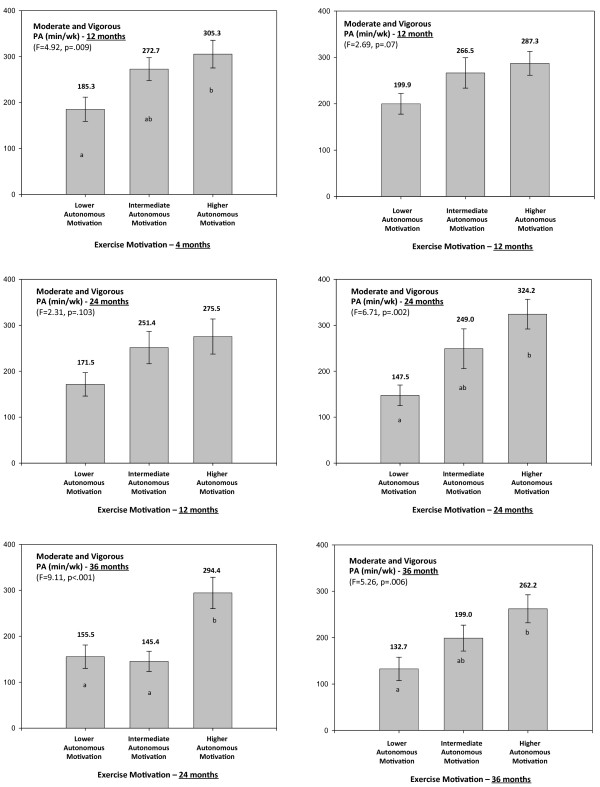
- In SDT-based interventions, 7 interventions were identified and 6 (86%) found significant differences favoring the SDT group for perceived autonomy support, need satisfaction, autonomous and introjected regulations, and self-reported exercise; in the longest trial, only autonomous regulations mediated long-term exercise effects.
## Methods
- Systematic review of empirical SDT–exercise studies published up to June 2011; searches were run in PsycINFO and SportDiscus for studies from 1960 to June 2011, limited to English-language, peer-reviewed journal articles on adult, non-athletic samples.
- Included 66 studies / 72 independent samples with experimental, cross-sectional, prospective, and mixed designs; outcomes included actual or self-reported exercise/physical activity, attendance, relapse, dropout, and stages of change.
- Evidence was summarized quantitatively by counting independent samples showing significant positive, negative, or null associations; the unit of analysis was the independent sample, and significance was set at 0.05.
## Limitations
- The paper states that it was limited to English-language, peer-reviewed articles and excluded gray literature, unpublished studies, non-English publications, non-adult samples, adolescents/children, and competitive athletic samples.
- The authors state that classifying and quantifying results was “somewhat arbitrary,” that only direct paths were evaluated, and that lumping together self-report and direct measures, attendance, and stages of change is “clearly not without reproach.”
- Evident from the text: most included studies were descriptive/non-experimental and many samples were mixed, so causal inference and subgroup-specific conclusions are limited.
Model-written summary. Check it against the paper before relying on it.
Integrity signals
Registry
Cites
Statistics
Figures
Verification
Claims the paper makes
3 Valid · 5 Not valid · 58 Not checked · 143 Own results and interpretations
The cited sources support only part of this claim — read each source’s verdict below.
In the paper
“Satisfaction of these basic needs results in increased feelings of vitality and well-being [15].”
§ Exercise, physical activity, and self-determination theory: A systematic review > Introduction
What the sources say
- Partly supportedcites [15] matched to “Testing a self‐determination theory‐based teaching style intervention in the exercise domain” (2008) sourceExperimental — accuracy not yet measured
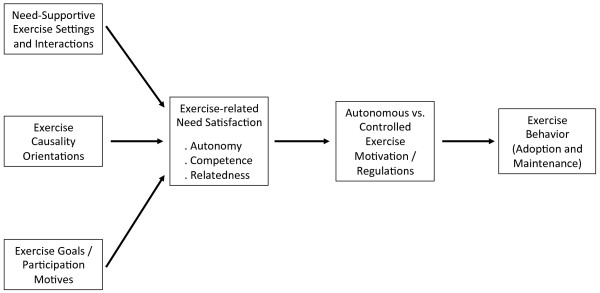
The discussion of basic psychological need satisfaction (p. 5) says that satisfying needs, together with more autonomous motivation, is expected to produce adaptive affective responses. The findings (p. 24) link competence need satisfaction to less negative affect. Neither passage establishes that need satisfaction results in increased vitality or well-being specifically, and the claim states the relationship more definitively than the paper does. (LLM, conf=0.84)
plainstates a cause- Asserted: passes — The authors put it forward as true.
- Checkable: passes — It can be checked against evidence.
- Load-bearing: passes — The paper’s conclusions depend on it.
- Based: passes — The paper gives a reason why it holds.
- Partly supported
The cited sources support only part of this claim — read each source’s verdict below.
In the paper
“Relations from perceived autonomy support to exercise behavior, via psychological needs and regulatory styles have been tested (in part or all) in several studies and in general these confirm the proposed sequences [17,44,43,77,76,38,33].”
§ Exercise, physical activity, and self-determination theory: A systematic review > Discussion > Need satisfaction and exercise
What the sources say
- Supportedcites [17] matched to “Exercise motivation: a cross-sectional analysis examining its relationships with frequency, intensity, and duration of exercise” (2010) source
The Background (page unavailable) says the study tested relationships between behavioral regulations and exercise frequency, intensity, and duration—one part of the proposed sequence. The Results (page unavailable) report that all three exercise indices correlated more strongly with autonomous than controlling regulations, broadly supporting the sequence. The citing sentence expressly allows studies to have tested it only “in part.” (LLM, conf=0.87)
- Partly supportedcites [44] matched to “Mediators of physical activity behaviour change among adult non-clinical populations: a review update” (2010) sourceExperimental — accuracy not yet measured
The Results section (‘Evidence of Mediation by Theory’; page not provided) reports support in one study for a link between autonomy support and physical activity. But the other self-determination-theory study found no changes in its constructs or behavior, and neither established the proposed sequence through psychological needs and regulatory styles. The review therefore does not support saying that the studies generally confirmed that sequence. (LLM, conf=0.88)
- Not checked — no full text of the sourcecites [43] matched to “The Independent Effects of Goal Contents and Motives on Well-Being: It’s Both What You Pursue and Why You Pursue It” (2004) source
- Not matchedcites [77]
The reference list we hold has no entry [77].
- Not matchedcites [76]
The reference list we hold has no entry [76].
- Not checked — no full text of the sourcecites [38] matched to “Body image and body shape ideals in magazines: exposure, awareness, and internalization” (1997) source
- Not checked — no full text of the sourcecites [33] matched to “Go Figure? Body-Shape Motives are Associated with Decreased Physical Activity Participation Among Midlife Women” (2006) source
plainstates an association- Asserted: passes — The authors put it forward as true.
- Checkable: passes — It can be checked against evidence.
- Load-bearing: passes — The paper’s conclusions depend on it.
- Based: passes — The paper gives a reason why it holds.
- Supported
A result the paper reports from its own data — it cites no other source for it, so there is none to check. The quote shows it is in the paper.
In the paper
“The literature is also consistent in that competence satisfaction and more intrinsic motives positively predict exercise participation across a range of samples and settings.”
§ Exercise, physical activity, and self-determination theory: A systematic review > Abstract > Results
boostedstates an association- Asserted: passes — The authors put it forward as true.
- Checkable: passes — It can be checked against evidence.
- Load-bearing: passes — The paper’s conclusions depend on it.
- Based: passes — The paper gives a reason why it holds.
A result the paper reports from its own data — it cites no other source for it, so there is none to check. The quote shows it is in the paper.
In the paper
“and intrinsic motivation being more predictive of long-term exercise adherence”
§ Exercise, physical activity, and self-determination theory: A systematic review > Abstract > Results
plainstates an association- Asserted: passes — The authors put it forward as true.
- Checkable: passes — It can be checked against evidence.
- Load-bearing: passes — The paper’s conclusions depend on it.
- Based: passes — The paper gives a reason why it holds.
A result the paper states — it cites no source for it, so there is none to check. The quote shows it is in the paper.
In the paper
“but similar results are found across cross-sectional, prospective, and experimental designs”
§ Exercise, physical activity, and self-determination theory: A systematic review > Abstract > Results
plain- Asserted: passes — The authors put it forward as true.
- Checkable: passes — It can be checked against evidence.
- Load-bearing: passes — The paper’s conclusions depend on it.
- Based: passes — The paper gives a reason why it holds.
99 more claims
Create a free account to see all 209 claims and to verify the 2 references still open.
- It may state two separate claims as one. 74
- Probably not a substantial claim. 39
Claims other papers make about this one
Each is checked against this paper’s own text: does it say what the citing paper says it does?
The source backs part of the claim, not all of it — or backs it for a different population, condition or comparison.
In the citing paper
“As of today, merely one systematic review in the exercise context (Teixeira et al., 2012), having SDT as theoretical background, has analyzed the satisfaction (although not frustration) of basic psychological needs, the motivational regulation, and the way these can predict different physiological outcomes (i.e., energy expenditure, body mass index).”
From Can Interpersonal behavior influence the persistence and adherence to physical exercise practice in adults? A systematic review (2018) · cites this paper as Teixeira et al., 2012
Experimental — accuracy not yet measuredThe source backs part of the claim, not all of it — or backs it for a different population, condition or comparison.
In the citing paper
“which might be justified by the fact that most of them so far cannot yet distinguish this regulation from identified regulation, given that both share the same principles”
From Can Interpersonal behavior influence the persistence and adherence to physical exercise practice in adults? A systematic review (2018) · cites this paper as Teixeira et al., 2012
Experimental — accuracy not yet measuredThe source backs part of the claim, not all of it — or backs it for a different population, condition or comparison.
In the citing paper
“Conversely, structured exercise programs foster intrinsic motivation (65), self-regulation, and a positive relationship with the body, promoting sustained engagement even after pharmacotherapy discontinuation.”
From GLP-1 agonists and exercise: the future of lifestyle prioritization (2025) · cites this paper as [65]
Experimental — accuracy not yet measuredThe source backs part of the claim, not all of it — or backs it for a different population, condition or comparison.
In the citing paper
“a study by Teixeira et al. [31] highlights that exercise not only improves physical health but also promotes a positive self-image and resilience”
From Sociodemographic influences on Student Mental Health and their association with activation-regulating functional impairments (2026) · cites this paper as [31]
Experimental — accuracy not yet measuredThe cited source says what the claim attributes to it.
In the citing paper
“The instruments described herein have been used in various contexts, for example to assess to what extent a medical professional (Williams et al., 2009), healthcare intervention (Williams et al., 2011; Teixeira et al., 2012) or a procedure (Ng et al., 2012) supports autonomy.”
From Designing for Motivation, Engagement and Wellbeing in Digital Experience (2018) · cites this paper as Teixeira et al., 2012
9 more claims about this paper
Create a free account to see every claim other papers make about this one.
Self-check
Percentages, sums and reported differences re-computed from the paper’s own numbers.
Rated minor: it would not touch a result — a value no result rests on, a p-value that stays on the same side of the significance level, or a conflict that is clerical, resolved elsewhere in the paper, or outside its own findings.
In the paper
“A total of 57 samples (53 studies) analyzed associations between regulations and exercise behavior. Of these, 37 were used in cross-sectional designs, 10 in prospective designs, 7 in experimental studies, and 2 in mixed designs.”
§ Exercise, physical activity, and self-determination theory: A systematic review > Results > Motivational predictors of exercise-related outcomes
Reported 57 · recomputed 56
Citations
Cites
Ryan, R. M., & Deci, E. L. (2000) · American Psychologist · doi:10.1037//0003-066x.55.1.68 · Cited by 54,599
Self-citationThe "what" and "why" of goal pursuits: Human needs and the self-determination of behavior
Deci, E. L., & Ryan, R. M. (2000) · Psychological Inquiry · doi:10.1207/s15327965pli1104_01 · Cited by 34,210 · cited 5×
“determination and volition with respect to the target behavior [12].”
BackgroundInfluentialSelf-citationIntrinsic Motivation and Self-Determination in Human Behavior
Deci, E. L., & Ryan, R. M. (1985) · doi:10.1007/978-1-4899-2271-7 · Cited by 26,772
Self-citationIntrinsic Motivation and Self-Determination in Human Behavior
Miller, K. A., Deci, E. L., & Ryan, R. M. (1988) · Contemporary Sociology · doi:10.2307/2070638 · Cited by 15,312
Self-citationMediation in experimental and nonexperimental studies: New procedures and recommendations.
Shrout, P. E., & Bolger, N. (2002) · Psychological Methods · doi:10.1037/1082-989x.7.4.422 · Cited by 11,335 · cited 1×
“, mediated) effects between them [75].”
Garber, C. E., Blissmer, B., Deschenes, M. R., Franklin, B. A., Lamonte, M. J., Lee, I.-M., Nieman, D. C., & Swain, D. P. (2011) · Medicine & Science in Sports & Exercise · doi:10.1249/mss.0b013e318213fefb · Cited by 9,319
A simple method to assess exercise behavior in the community.
Godin, G., & Shephard, R. J. (1985) · PubMed · Cited by 4,760
Moral Identity and Developmental Theory
Lapsley, D. (2015) · Human Development · doi:10.1159/000435926 · Cited by 3,819
Perceived locus of causality and internalization: Examining reasons for acting in two domains.
Ryan, R. M., & Connell, J. P. (1989) · Journal of Personality and Social Psychology · doi:10.1037/0022-3514.57.5.749 · Cited by 3,311 · cited 2×
“Autonomous motivation includes the identified regulation and intrinsic motivation subscales of the Exercise Self-Regulation Questionnaire [84].”
Self-citation(2002) · Cited by 3,047
Self-citation
Research works printed but not linked: 1
- Koestner R Losier GF In Handbook of self-determination research Distinguishing three ways of being internally motivated: a closer look at introjection, identification, and intrinsic motivation 2002 Edited by Deci EL, Ryan RM, Rochester, NY: University of Rochester Press 101 121
Cited by
Items 201–300 of 2,926
Halperin, I., Chapman, D. W., Martin, D. T., Abbiss, C. R., & Wulf, G. (2016) · Psychology of sport and exercise · doi:10.1016/j.psychsport.2016.04.003 · Cited by 70
Motivation and Behavioral Regulation of Physical Activity in Middle School Students
Dishman, R. K., McIver, K. L., Dowda, M. C., Saunders, R. P., & Pate, R. R. (2015) · Medicine & Science in Sports & Exercise · doi:10.1249/mss.0000000000000616 · Cited by 83
Thomson, R. L., Buckley, J. D., & Brinkworth, G. D. (2016) · BMC Women's Health · doi:10.1186/s12905-016-0292-8 · Cited by 60
How does frustration make you feel? A motivational analysis in exercise context
Teixeira, D. S., Silva, M. N., & Palmeira, A. L. (2018) · Motivation and Emotion · doi:10.1007/s11031-018-9690-6 · Cited by 60
Self-citationDonnachie, C., Wyke, S., Mutrie, N., & Hunt, K. (2017) · International Journal of Behavioral Nutrition and Physical Activity · doi:10.1186/s12966-017-0505-z · Cited by 78
Thomas, J., Thirlaway, K., Bowes, N., & Meyers, R. W. (2020) · Journal of Affective Disorders · doi:10.1016/j.jad.2020.01.070 · Cited by 79
Martin‐Niedecken, A. L., Mahrer, A., Rogers, K., de Bruin, E. D., & Schättin, A. (2020) · Frontiers in Computer Science · doi:10.3389/fcomp.2020.00033 · Cited by 70
First test of the theory of reasoned goal pursuit: predicting physical activity
Hamilton, K., Phipps, D. J., Schmidt, P., Bamberg, S., & Ajzen, I. (2022) · Psychology and Health · doi:10.1080/08870446.2022.2026946 · Cited by 78
Physical Education and Physical Activity Promotion: Lifestyle Sports as Meaningful Experiences
Wintle, J. (2022) · Education Sciences · doi:10.3390/educsci12030181 · Cited by 110
Curran, F., Davis, M. E., Murphy, K., Tersigni, N., King, A., Ngo, N., & O’Donoghue, G. (2023) · Obesity Reviews · doi:10.1111/obr.13615 · Cited by 86
Li, X., Wang, J., Yu, H., Liu, Y., Xu, X., Lin, J., & Yang, N. (2024) · PeerJ · doi:10.7717/peerj.17059 · Cited by 86
“One possible explanation is that physical activity provides individuals with a sense of autonomy or control over their bodies and their lives ( Teixeira et al., 2012 ).”
BackgroundBarrett, S., Begg, S. J., O’Halloran, P., & Kingsley, M. (2018) · BMC Public Health · doi:10.1186/s12889-018-6064-7 · Cited by 65
Trigueros, R., Aguilar-Parra, J. M., López‐Liria, R., & Pérez, P. R. (2019) · International Journal of Environmental Research and Public Health · doi:10.3390/ijerph16224444 · Cited by 87
Phillips, L. A., Chamberland, P.-É., Hekler, E. B., Abrams, J., & Eisenberg, M. H. (2016) · Sport Exercise and Performance Psychology · doi:10.1037/spy0000071 · Cited by 71
Motivation States for Physical Activity and Sedentary Behavior: Desire, Urge, Wanting, and Craving
Stults‐Kolehmainen, M., Blacutt, M. E., Bartholomew, J. B., Gilson, T. A., Ash, G. I., McKee, P. C., & Sinha, R. (2020) · Frontiers in Psychology · doi:10.3389/fpsyg.2020.568390 · Cited by 78
Tan, C. L. Y., Chang, C., Nghiem, L. T. P., Zhang, Y., Oh, R. R. Y., Shanahan, D. F., Lin, B. B., Gaston, K. J., Fuller, R. A., & Carrasco, L. R. (2020) · Urban forestry & urban greening · doi:10.1016/j.ufug.2020.126947 · Cited by 64
Comparison of Physical Activity Levels in Youths before and during a Pandemic Lockdown
Bronikowska, M., Krzysztoszek, J., Łopatka, M., Ludwiczak, M., & Pluta, B. (2021) · International Journal of Environmental Research and Public Health · doi:10.3390/ijerph18105139 · Cited by 65
Rawstorn, J. C., Gant, N., Meads, A., Warren, I., & Maddison, R. (2016) · JMIR mhealth and uhealth · doi:10.2196/mhealth.5501 · Cited by 66
Wilke, J., Kaiser, S., Niederer, D., Kalo, K., Engeroff, T., Morath, C. P., Vogt, L., & Banzer, W. B. (2018) · Scandinavian Journal of Medicine and Science in Sports · doi:10.1111/sms.13313 · Cited by 80
Duberg, A., Jutengren, G., Hagberg, L., & Möller, M. (2020) · Journal of International Medical Research · doi:10.1177/0300060520902610 · Cited by 96
The reciprocal effects of physical activity and happiness in adolescents
van Woudenberg, T. J., Bevelander, K. E., Burk, W. J., & Buijzen, M. (2020) · International Journal of Behavioral Nutrition and Physical Activity · doi:10.1186/s12966-020-01058-8 · Cited by 69
The role of parents in the motivation of young athletes: a systematic review
Gao, Z., Chee, C. S., Wazir, M. R. W. N., Wang, J., Zheng, X., & Wang, T. (2024) · Frontiers in Psychology · doi:10.3389/fpsyg.2023.1291711 · Cited by 130
“In summary, motivation plays a crucial role in shaping the attitudes, behaviors, and perseverance of young athletes in their participation in sports (Teixeira et al., 2012; Martins et al., 2017; Mallia et al., 2019).”
BackgroundMotivations for participation in physical activity across the lifespan
Gavin, J. F., Keough, M. T., Abravanel, M., Moudrakovski, T., & Mcbrearty, M. (2014) · International Journal of Wellbeing · doi:10.5502/ijw.v4i1.3 · Cited by 81
Bjørnarå, H. B., Berntsen, S., Velde, S. J. T., Fyhri, A., Deforche, B. I., Andersen, L. B., & Bere, E. T. (2019) · PLoS ONE · doi:10.1371/journal.pone.0219304 · Cited by 76
Rodrigues, F. F., Teixeira, D., Neiva, H. P., Cid, L., & Monteiro, D. (2020) · Brain Sciences · doi:10.3390/brainsci10020098 · Cited by 104
Evaluating the potential roles of body dissatisfaction in exercise avoidance
More, K. R., Phillips, L. A., & Eisenberg, M. H. (2019) · Body Image · doi:10.1016/j.bodyim.2019.01.003 · Cited by 71
Daily meaning salience and physical activity in previously inactive exercise initiates.
Hooker, S. A., & Masters, K. S. (2018) · Health Psychology · doi:10.1037/hea0000599 · Cited by 63
Friederichs, S. A. H., Oenema, A., Bolman, C. A. W., Guyaux, J., van Keulen, H. M., & Lechner, L. (2014) · BMC Public Health · doi:10.1186/1471-2458-14-212 · Cited by 76
Monteiro, D., Teixeira, D., Travassos, B. F. R., Duarte‐Mendes, P., Moutão, J. M. R. P., Machado, S. E. D. C., & Cid, L. (2018) · Frontiers in Psychology · doi:10.3389/fpsyg.2018.01575 · Cited by 84
Michael, A., & Lutteroth, C. (2020) · CHI Conference on Human Factors in Computing Systems · doi:10.1145/3313831.3376256 · Cited by 65
Motivation for Physical Activity among U.S. Adolescents: A Self-Determination Theory Perspective
Nogg, K. A., Vaughn, A. A., Levy, S. S., & Blashill, A. J. (2020) · Annals of Behavioral Medicine · doi:10.1093/abm/kaaa037 · Cited by 80
Prescribing Pleasure and Meaning
Segar, M., & Richardson, C. R. (2014) · American Journal of Preventive Medicine · doi:10.1016/j.amepre.2014.07.001 · Cited by 72
Gray, S. I., Robertson, J., Manches, A., & Rajendran, G. (2018) · International Journal of Human-Computer Studies · doi:10.1016/j.ijhcs.2018.08.004 · Cited by 72
Coupe, N., Peters, S., Rhodes, S., & Cotterill, S. (2019) · BMC Public Health · doi:10.1186/s12889-019-7185-3 · Cited by 65
Kerner, C., Burrows, A., & McGrane, B. (2019) · International Journal of Health Promotion and Education · doi:10.1080/14635240.2019.1581641 · Cited by 60
Mahaboob, P. K. (2014) · ADVANCED SCIENCES INDEX · Cited by 53
González‐Cutre, D., Sierra, A. C., Beltrán‐Carrillo, V. J., Pelaez-Perez, M. A., & Cervelló, E. M. (2016) · The Journal of Educational Research · doi:10.1080/00220671.2016.1255871 · Cited by 92
Owen, M. B., Kerner, C., Taylor, S. L., Noonan, R. J., Newson, L., Kosteli, M., Curry, W. B., & Fairclough, S. J. (2018) · Children · doi:10.3390/children5060067 · Cited by 63
Baretta, D., Perski, O., & Steca, P. (2019) · JMIR mHealth and uHealth · doi:10.2196/11636 · Cited by 52
“Although intrinsic exercise motives, relative to more controlled ones (eg, body-related motives), have been shown to be positively associated with PA [36], some forms of less autonomous regulation (eg, identification with the outcomes of PA) are expected to regulate short-term behavior [37] and constitute an important…”
BackgroundUnderstanding the motivations of serious leisure participation: a self-determination approach
Lee, K., & Ewert, A. (2018) · Annals of Leisure Research · doi:10.1080/11745398.2018.1469420 · Cited by 64
Employee Physical Activity: A Multidisciplinary Integrative Review
Calderwood, C. C., ten Brummelhuis, L. L., Patel, A. S., Watkins, T., Gabriel, A. S., & Rosen, C. C. (2020) · Journal of Management · doi:10.1177/0149206320940413 · Cited by 80
Motevalli, M. S., Drenowatz, C. J., Tanous, D., Khan, N. A., & Wirnitzer, K. (2021) · Nutrients · doi:10.3390/nu13041200 · Cited by 69
Niermann, C. Y. N., Kremers, S., Renner, B., & Wöll, A. (2015) · PLoS ONE · doi:10.1371/journal.pone.0143599 · Cited by 68
Koponen, A. M., Simonsen, N., & Suominen, S. (2017) · Psychology, Health & Medicine · doi:10.1080/13548506.2016.1154179 · Cited by 52
Stragier, J., Abeele, M. V., & Marez, L. D. (2018) · Behaviour and Information Technology · doi:10.1080/0144929x.2018.1484516 · Cited by 60
Rodrigues, F. F., Hair, J. F., Neiva, H. P., Teixeira, D., Cid, L., & Monteiro, D. (2019) · Perceptual and Motor Skills · doi:10.1177/0031512519863188 · Cited by 71
Tao, K., Liu, W., Xiong, S., Lodewyk, K. R., Zeng, N., Peng, Q., Yan, X., Wang, J., Wu, Y., Lei, M., et al. (2019) · International Journal of Environmental Research and Public Health · doi:10.3390/ijerph16162941 · Cited by 73
Willmott, T. J., & Rundle-Thiele, S. R. (2021) · BMC Public Health · doi:10.1186/s12889-021-10541-1 · Cited by 56
Mota, J., Martins, J., & Onofre, M. (2021) · BMC Public Health · doi:10.1186/s12889-021-12230-5 · Cited by 75
Associations between children’s physical literacy and well-being: is physical activity a mediator?
Melby, P. S., Nielsen, G., Brønd, J. C., Tremblay, M. S., Bentsen, P., & Elsborg, P. (2022) · BMC Public Health · doi:10.1186/s12889-022-13517-x · Cited by 76
Choosing to exercise more: Small choices increase exercise engagement
Wulf, G., Freitas, H. E., & Tandy, R. D. (2014) · Psychology of sport and exercise · doi:10.1016/j.psychsport.2014.01.007 · Cited by 65
Lyons, E., Baranowski, T., Basen‐Engquist, K., Lewis, Z. H., Swartz, M. C., Jennings, K., & Volpi, E. (2016) · BMC Cancer · doi:10.1186/s12885-016-2244-y · Cited by 61
Blom, V., Drake, E., Kallings, L., Ekblom, M., & Nooijen, C. F. J. (2021) · BMC Public Health · doi:10.1186/s12889-021-11083-2 · Cited by 70
Lim, C., & Rhodes, R. E. (2016) · Psychology of sport and exercise · doi:10.1016/j.psychsport.2016.01.004 · Cited by 62
Brunet, J., Gunnell, K. E., Teixeira, P., Sabiston, C. M., & Bélanger, M. (2016) · Journal of Sport and Exercise Psychology · doi:10.1123/jsep.2016-0256 · Cited by 50
“Many have also provided evidence that perceptions of competence, autonomy, and relatedness are associated with physical activity–related outcomes in bivariate analyses (see Teixeira, Carraça, Markland, Silva, & Ryan, 2012 for review).”
BackgroundSelf-citationSweeney, A. M., & Culcea, I. C. (2017) · Appetite · doi:10.1016/j.appet.2017.02.006 · Cited by 64
Zhang, Y., Cole, S. T., Ricci, P., & Gao, J. (2017) · Journal of Travel Research · doi:10.1177/0047287517741004 · Cited by 52
Corepal, R., Best, P., O’Neill, R., Tully, M. A., Edwards, M., Jago, R., Miller, S. J., Kee, F., & Hunter, R. F. (2018) · BMJ Open · doi:10.1136/bmjopen-2017-019663 · Cited by 58
Landon, L. B., Douglas, G. L., Downs, M. E., Greene, M. R., Whitmire, A. M., Zwart, S. R., & Roma, P. G. (2019) · Frontiers in Psychology · doi:10.3389/fpsyg.2019.02571 · Cited by 61
Meyer, S., Grob, A., & Gerber, M. (2021) · Psychology of sport and exercise · doi:10.1016/j.psychsport.2021.102004 · Cited by 75
Gustafsson, H., Madigan, D. J., & Lundkvist, E. (2017) · Springer eBooks · doi:10.1007/978-3-662-49322-9_24 · Cited by 84
Using features of meaningful experiences to guide primary physical education practice
Beni, S., Fletcher, T., & Chróinín, D. N. (2018) · European Physical Education Review · doi:10.1177/1356336x18755050 · Cited by 74
Autonomy: A Missing Ingredient of a Successful Program?
Halperin, I., Wulf, G., Vigotsky, A. D., Schoenfeld, B. J., & Behm, D. G. (2018) · Strength and conditioning journal · doi:10.1519/ssc.0000000000000383 · Cited by 60
Cavarretta, D. J., Hall, E. E., & Bixby, W. R. (2018) · International Review of Sport and Exercise Psychology · doi:10.1080/1750984x.2018.1474941 · Cited by 65
Gerber, M., Minghetti, A., Beck, J., Zahner, L., & Donath, L. (2018) · Frontiers in Psychiatry · doi:10.3389/fpsyt.2018.00694 · Cited by 53
Kang, S., Lee, K., & Kwon, S. (2019) · Psychology and Health · doi:10.1080/08870446.2019.1699089 · Cited by 66
Ramírez-Granizo, I. A., Zafra, M. S., Ortega, F. Z., Puertas-Molero, P., González-Valero, G., & Ubago-Jiménez, J. L. (2020) · International Journal of Environmental Research and Public Health · doi:10.3390/ijerph17020534 · Cited by 80
Lee, J., Zhang, T., Chu, T. L., & Gu, X. (2020) · Children · doi:10.3390/children7030021 · Cited by 67
Systematic Review of Psychological and Behavioral Correlates of Recreational Running
Pereira, H. V., Palmeira, A. L., Encantado, J., Marques, M. M., Santos, I., Carraça, E. V., & Teixeira, P. J. (2021) · Frontiers in Psychology · doi:10.3389/fpsyg.2021.624783 · Cited by 87
Self-citationIntervention Markers of Physical Activity Maintenance in Older Adults
Floegel, T. A., Giacobbi, P. R., Dzierzewski, J. M., Aiken‐Morgan, A. T., Roberts, B. L., McCrae, C. S., Marsiske, M., & Buman, M. P. (2015) · American Journal of Health Behavior · doi:10.5993/ajhb.39.4.5 · Cited by 52
Wannheden, C., Stenfors, T., Stenling, A., & Schwarz, U. V. T. (2021) · Frontiers in Public Health · doi:10.3389/fpubh.2020.623773 · Cited by 63
Melby, P. S., Elsborg, P., Bentsen, P., & Nielsen, G. (2023) · Frontiers in Public Health · doi:10.3389/fpubh.2022.1054482 · Cited by 69
Vella, S. A., Sutcliffe, J., Fernandez, D. K., Liddelow, C., Aidman, E., Teychenne, M. J., Smith, J. J., Swann, C., Rosenbaum, S., White, R. L., et al. (2023) · Mental health and physical activity · doi:10.1016/j.mhpa.2023.100520 · Cited by 79
Weight gain in healthy pregnant women in relation to pre-pregnancy BMI, diet and physical activity
Merkx, A., Ausems, M., Budé, L. M., Vries, R. G. D., & Nieuwenhuijze, M. J. (2015) · Midwifery · doi:10.1016/j.midw.2015.04.008 · Cited by 56
Piecing the puzzle together: case studies of international research in health-promoting sports clubs
Kokko, S. P., Donaldson, A., Geidne, S., Seghers, J., Scheerder, J., Meganck, J., Lane, A., Kelly, B., Casey, M. M., Eime, R., et al. (2016) · Global Health Promotion · doi:10.1177/1757975915601615 · Cited by 48
Lee, S. T., & Lin, J. (2016) · Journal of Health Communication · doi:10.1080/10810730.2016.1157651 · Cited by 57
Texting to Increase Adolescent Physical Activity: Feasibility Assessment
Thompson, D., Cantu, D., Ramirez, B., Cullen, K. W., Baranowski, T., Mendoza, J., Anderson, B., Jago, R., Rodgers, W., & Liu, Y. (2016) · American Journal of Health Behavior · doi:10.5993/ajhb.40.4.9 · Cited by 48
Dyck, D. V., Cardon, G., Bourdeaudhuij, I. D., Ridder, L. D., & Willem, A. (2017) · International Journal of Environmental Research and Public Health · doi:10.3390/ijerph14111315 · Cited by 70
Rinne, T. E., Haybatollahi, M., & Kyttä, M. (2018) · International Journal of Environmental Research and Public Health · doi:10.3390/ijerph16010058 · Cited by 67
Understanding low adherence to an exercise program for adolescents with obesity: the HEARTY trial
Alberga, A. S., Sigal, R. J., Sweet, S. N., Doucette, S. P., Russell‐Mayhew, S., Tulloch, H. E., Kenny, G. P., Prud’homme, D., Hadjiyannakis, S., & Goldfield, G. S. (2019) · Obesity Science & Practice · doi:10.1002/osp4.357 · Cited by 52
Have you been exercising lately? Testing the role of past behavior on exercise adherence
Rodrigues, F. F., Teixeira, D., Cid, L., & Monteiro, D. (2019) · Journal of Health Psychology · doi:10.1177/1359105319878243 · Cited by 68
Bremer, E., Graham, J. D., & Cairney, J. (2020) · International Journal of Environmental Research and Public Health · doi:10.3390/ijerph17093129 · Cited by 69
Uptake of an Incentive-Based mHealth App: Process Evaluation of the Carrot Rewards App
Mitchell, M., White, L., Oh, P., Alter, D., Leahey, T., Kwan, M., & Faulkner, G. (2017) · JMIR mHealth and uHealth · doi:10.2196/mhealth.7323 · Cited by 47
“…behaviors on a population-scale; this intervention aspect might actually protect against the often-cited risk of incentive intervention, which is that they undermine intrinsic motives, particularly when targeting health behaviors, rather than just “stepping stone” ones (eg, education) [34-36].”
Davies, M., Coleman, L., & Stellino, M. B. (2016) · Scholarly Commons (University of the Pacific) · Cited by 81
Rosli, M. S., Saleh, N. S., Ali, A. M., & Bakar, S. A. (2022) · Sustainability · doi:10.3390/su142114655 · Cited by 78
Examining the impacts of fitness app features on user well-being
Hu, J., He, W., Zhang, J., & Song, J. (2023) · Information & Management · doi:10.1016/j.im.2023.103796 · Cited by 68
Small choices can enhance balance learning
Wulf, G., & Adams, N. G. (2014) · Human Movement Science · doi:10.1016/j.humov.2014.10.007 · Cited by 58
Sweet, S. N., Fortier, M., Strachan, S. M., Blanchard, C. M., & Boulay, P. (2014) · Health Psychology Research · doi:10.4081/hpr.2014.1008 · Cited by 60
Sylvester, B. D., Standage, M., Ark, T. K., Sweet, S. N., Crocker, P. R. E., Zumbo, B. D., & Beauchamp, M. R. (2014) · Journal of Sport and Exercise Psychology · doi:10.1123/jsep.2014-0102 · Cited by 47
James, T. L., Deane, J. K., & Wallace, L. G. (2019) · Information Systems Journal · doi:10.1111/isj.12233 · Cited by 68
Steffens, N. K., Slade, E. L., Stevens, M. R., Haslam, S. A., & Rees, T. (2019) · Psychology of sport and exercise · doi:10.1016/j.psychsport.2019.101544 · Cited by 55
Farholm, A., & Sørensen, M. (2016) · International Journal of Mental Health Nursing · doi:10.1111/inm.12217 · Cited by 64
Obesity education for front-line healthcare providers
Sanchez‐Ramirez, D. C., Long, H., Mowat, S., & Hein, C. (2018) · BMC Medical Education · doi:10.1186/s12909-018-1380-2 · Cited by 51
Sheng, J., Ariffin, I. A., & Tham, J. (2025) · Scientific Reports · doi:10.1038/s41598-025-95704-5 · Cited by 76
“The possible mechanism is that when individuals feel that the three psychological needs of autonomy, ability and relationships are met, they are more likely to generate intrinsic motivation and actively participate in physical exercise 82 .”
Ntoumanis, N., & Moller, A. C. (2025) · Psychology of sport and exercise · doi:10.1016/j.psychsport.2025.102879 · Cited by 111
Ferriz, R., González‐Cutre, D., Sicilia, Á., & Hagger, M. S. (2015) · Scandinavian Journal of Medicine and Science in Sports · doi:10.1111/sms.12470 · Cited by 73
van Rinsum, C. E., Gerards, S. M. P. L., Rutten, G. M., Philippens, N., Janssen, E., Winkens, B., van de Goor, I., & Kremers, S. (2018) · International Journal of Environmental Research and Public Health · doi:10.3390/ijerph15040680 · Cited by 54
Youth sports clubs’ potential as health-promoting setting: Profiles, motives and barriers
Meganck, J., Scheerder, J., Thibaut, E., & Seghers, J. (2014) · Health Education Journal · doi:10.1177/0017896914549486 · Cited by 65
Chow, E. J., Doody, D. R., Di, C., Armenian, S. H., Baker, K. S., Bricker, J. B., Gopal, A. K., Hagen, A. M., Ketterl, T. G., Lee, S. J., et al. (2021) · Journal of Cancer Survivorship · doi:10.1007/s11764-020-00949-w · Cited by 45
Au, W. W., Recchia, F., Fong, D., Wong, S. H., Chan, D. K. C., Capio, C. M., Yu, C. C.-W., Wong, S. W. S., Sit, C. H. P., Ip, P., et al. (2024) · The Lancet Digital Health · doi:10.1016/s2589-7500(24)00139-0 · Cited by 100
Metadata
- Authors
- Teixeira, P. J., Carraça, E. V., Markland, D., Silva, M. N., & Ryan, R. M.
- Affiliations
- Universidade Técnica de Lisboa (PT)
- Bangor University (GB)
- University of Rochester (US)
- Corresponding author
- Teixeira, Pedro J
- Venue
- International Journal of Behavioral Nutrition and Physical Activity
- Published
- 2012
- Volume
- 9
- Issue
- 1
- Pages
- 78
- ISSN
- 1479-5868 (ISSN-L)
- PMC
- PMC3441783
- OpenAlex
- W2120612383
- Semantic Scholar
- 91c1a302b1ba3d78f18d769090d5c285c36d9567
- Cited by
- 2,963
- References
- 110
- Citations by year
- 2026: 399 · 2025: 332 · 2024: 260 · 2023: 244 · 2022: 242 · 2021: 279 · 2020: 256 · 2019: 215 · 2018: 202 · 2017: 162 · 2016: 141 · 2015: 100 · 2014: 66 · 2013: 59 · 2012: 3
- FWCI
- 10.23
- Type
- journal article
- Language
- en
- Open access
- gold
- doi.org
- Licence
- cc-by
- Locations
- International Journal of Behavioral Nutrition and Physical Activity (publishedVersion, cc-by)
- Europe PMC (PubMed Central) (publishedVersion, cc-by)
- PubMed Central (publishedVersion, cc-by)
- PubMed (publishedVersion)
- DOAJ (DOAJ: Directory of Open Access Journals) (submittedVersion)
- Topics
- Social Sciences › Psychology › Social Psychology › Motivation and Self-Concept in Sports
- Social Sciences › Psychology › Applied Psychology › Behavioral Health and Interventions
- Health Sciences › Medicine › Public Health, Environmental and Occupational Health › Physical Activity and Health
- Keywords
- self-determination theory, exercise motivation, physical activity, autonomous motivation, intrinsic motivation, identified regulation, introjected regulation, competence satisfaction, need satisfaction, exercise adherence, exercise self-regulation, exercise intervention, exercise behavior
- MeSH terms
- Health Promotion, Humans, Motor Activity, Personal Satisfaction, Health Behavior, Exercise, Databases, Factual, Personal Autonomy, Empirical Research
About these checks
Registry, retraction, Cites and statistics results are computed, not judged, with one exception: a printed reference that no index lists is read once by a model before it counts as a citation error. Claims are extracted by a model and kept only when their quote appears verbatim in the text; each cited source is then checked, with a model’s help, for whether it says what the claim relies on. Those verdicts can be wrong — read the claim’s quote and the cited source before relying on one.
The claim verdicts this report counts are experimental: their accuracy is not yet measured.
A language model drew the claims from the paper on 2026-10-10, under version 3 of the claim definition (model deepseek-v4.1-flash, prompt extract-v3).
A second model labelled each claim on 2026-10-10 (model jev-1.13-20260917, definition revision gold-guideline-v0.2).
Cited sources are checked with a language model’s help (gpt-6-sol).
Statistics and arithmetic are recomputed, not judged.
Confidence bands are shown only for fields calibrated on our annotated test set. None is calibrated yet, so no band is shown.
What counts as a claim ›How we measure confidence ›How we check this ›
Are you an author, or do you see a problem with this page? Request a review
Data sources
Bibliographic data: Semantic Scholar, OpenAlex, Crossref.
Contains information from the Semantic Scholar Academic Graph Datasets, made available under the ODC Attribution License (ODC-BY 1.0).
Semantic Scholar’s data is described in: Kinney, R., et al. (2023). The Semantic Scholar Open Data Platform. arXiv:2301.10140.
