

Exercise, physical activity, and self-determination theory: A systematic review
Open accessThe DOI matches its Crossref record; 108 of the 110 references it cites were found in a registry or an index; 6 of the 97 sources its claims cite were checked for support.
Abstract
Systematic review of 66 empirical studies on self-determination theory constructs and exercise outcomes.
Overview
CoChat Summary
## TL;DR
This systematic review synthesized 66 empirical studies on self-determination theory (SDT) and exercise/physical activity published up to June 2011. It found the most consistent support for autonomous motivation—especially identified and intrinsic regulation—and for competence satisfaction and intrinsic motives as positive predictors of exercise participation.
## Key findings
- Across 66 studies comprising 72 independent samples, the review found consistent positive associations between more autonomous forms of motivation and exercise; for example, 37 of 42 cross-sectional studies, 10 prospective studies, 7 experimental studies, and 2 mixed designs were represented among the regulation studies.
- Identified regulation showed positive associations with exercise in 28 samples (74%) in multivariate analyses and 22 samples (85%) in bivariate analyses; intrinsic motivation was positively associated in 23 or 22 samples (62% or 92%) depending on analysis type, and no study reported negative associations for intrinsic motivation.
- Competence satisfaction was the most frequently assessed basic need and was positively associated with physical activity in 56% of independent samples in multivariate analysis and 92% in correlational analysis; relatedness showed no positive multivariate association with exercise (K = 4, 100% no association).
- In SDT-based interventions, 7 interventions were identified and 6 (86%) found significant differences favoring the SDT group for perceived autonomy support, need satisfaction, autonomous and introjected regulations, and self-reported exercise; in the longest trial, only autonomous regulations mediated long-term exercise effects.
## Methods
- Systematic review of empirical SDT–exercise studies published up to June 2011; searches were run in PsycINFO and SportDiscus for studies from 1960 to June 2011, limited to English-language, peer-reviewed journal articles on adult, non-athletic samples.
- Included 66 studies / 72 independent samples with experimental, cross-sectional, prospective, and mixed designs; outcomes included actual or self-reported exercise/physical activity, attendance, relapse, dropout, and stages of change.
- Evidence was summarized quantitatively by counting independent samples showing significant positive, negative, or null associations; the unit of analysis was the independent sample, and significance was set at 0.05.
## Limitations
- The paper states that it was limited to English-language, peer-reviewed articles and excluded gray literature, unpublished studies, non-English publications, non-adult samples, adolescents/children, and competitive athletic samples.
- The authors state that classifying and quantifying results was “somewhat arbitrary,” that only direct paths were evaluated, and that lumping together self-report and direct measures, attendance, and stages of change is “clearly not without reproach.”
- Evident from the text: most included studies were descriptive/non-experimental and many samples were mixed, so causal inference and subgroup-specific conclusions are limited.
Model-written summary. Check it against the paper before relying on it.
Integrity signals
Registry
Cites
Statistics
Figures
Verification
Claims the paper makes
3 Valid · 5 Not valid · 58 Not checked · 143 Own results and interpretations
The cited sources support only part of this claim — read each source’s verdict below.
In the paper
“Satisfaction of these basic needs results in increased feelings of vitality and well-being [15].”
§ Exercise, physical activity, and self-determination theory: A systematic review > Introduction
What the sources say
- Partly supportedcites [15] matched to “Testing a self‐determination theory‐based teaching style intervention in the exercise domain” (2008) sourceExperimental — accuracy not yet measured
The discussion of basic psychological need satisfaction (p. 5) says that satisfying needs, together with more autonomous motivation, is expected to produce adaptive affective responses. The findings (p. 24) link competence need satisfaction to less negative affect. Neither passage establishes that need satisfaction results in increased vitality or well-being specifically, and the claim states the relationship more definitively than the paper does. (LLM, conf=0.84)
plainstates a cause- Asserted: passes — The authors put it forward as true.
- Checkable: passes — It can be checked against evidence.
- Load-bearing: passes — The paper’s conclusions depend on it.
- Based: passes — The paper gives a reason why it holds.
- Partly supported
The cited sources support only part of this claim — read each source’s verdict below.
In the paper
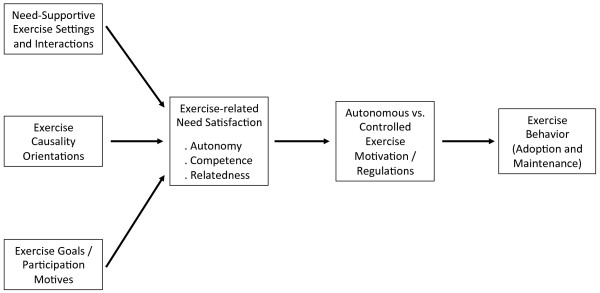
“Relations from perceived autonomy support to exercise behavior, via psychological needs and regulatory styles have been tested (in part or all) in several studies and in general these confirm the proposed sequences [17,44,43,77,76,38,33].”
§ Exercise, physical activity, and self-determination theory: A systematic review > Discussion > Need satisfaction and exercise
What the sources say
- Supportedcites [17] matched to “Exercise motivation: a cross-sectional analysis examining its relationships with frequency, intensity, and duration of exercise” (2010) source
The Background (page unavailable) says the study tested relationships between behavioral regulations and exercise frequency, intensity, and duration—one part of the proposed sequence. The Results (page unavailable) report that all three exercise indices correlated more strongly with autonomous than controlling regulations, broadly supporting the sequence. The citing sentence expressly allows studies to have tested it only “in part.” (LLM, conf=0.87)
- Partly supportedcites [44] matched to “Mediators of physical activity behaviour change among adult non-clinical populations: a review update” (2010) sourceExperimental — accuracy not yet measured
The Results section (‘Evidence of Mediation by Theory’; page not provided) reports support in one study for a link between autonomy support and physical activity. But the other self-determination-theory study found no changes in its constructs or behavior, and neither established the proposed sequence through psychological needs and regulatory styles. The review therefore does not support saying that the studies generally confirmed that sequence. (LLM, conf=0.88)
- Not checked — no full text of the sourcecites [43] matched to “The Independent Effects of Goal Contents and Motives on Well-Being: It’s Both What You Pursue and Why You Pursue It” (2004) source
- Not matchedcites [77]
The reference list we hold has no entry [77].
- Not matchedcites [76]
The reference list we hold has no entry [76].
- Not checked — no full text of the sourcecites [38] matched to “Body image and body shape ideals in magazines: exposure, awareness, and internalization” (1997) source
- Not checked — no full text of the sourcecites [33] matched to “Go Figure? Body-Shape Motives are Associated with Decreased Physical Activity Participation Among Midlife Women” (2006) source
plainstates an association- Asserted: passes — The authors put it forward as true.
- Checkable: passes — It can be checked against evidence.
- Load-bearing: passes — The paper’s conclusions depend on it.
- Based: passes — The paper gives a reason why it holds.
- Supported
A result the paper reports from its own data — it cites no other source for it, so there is none to check. The quote shows it is in the paper.
In the paper
“The literature is also consistent in that competence satisfaction and more intrinsic motives positively predict exercise participation across a range of samples and settings.”
§ Exercise, physical activity, and self-determination theory: A systematic review > Abstract > Results
boostedstates an association- Asserted: passes — The authors put it forward as true.
- Checkable: passes — It can be checked against evidence.
- Load-bearing: passes — The paper’s conclusions depend on it.
- Based: passes — The paper gives a reason why it holds.
A result the paper reports from its own data — it cites no other source for it, so there is none to check. The quote shows it is in the paper.
In the paper
“and intrinsic motivation being more predictive of long-term exercise adherence”
§ Exercise, physical activity, and self-determination theory: A systematic review > Abstract > Results
plainstates an association- Asserted: passes — The authors put it forward as true.
- Checkable: passes — It can be checked against evidence.
- Load-bearing: passes — The paper’s conclusions depend on it.
- Based: passes — The paper gives a reason why it holds.
A result the paper states — it cites no source for it, so there is none to check. The quote shows it is in the paper.
In the paper
“but similar results are found across cross-sectional, prospective, and experimental designs”
§ Exercise, physical activity, and self-determination theory: A systematic review > Abstract > Results
plain- Asserted: passes — The authors put it forward as true.
- Checkable: passes — It can be checked against evidence.
- Load-bearing: passes — The paper’s conclusions depend on it.
- Based: passes — The paper gives a reason why it holds.
99 more claims
Create a free account to see all 209 claims and to verify the 2 references still open.
- It may state two separate claims as one. 74
- Probably not a substantial claim. 39
Claims other papers make about this one
Each is checked against this paper’s own text: does it say what the citing paper says it does?
The source backs part of the claim, not all of it — or backs it for a different population, condition or comparison.
In the citing paper
“As of today, merely one systematic review in the exercise context (Teixeira et al., 2012), having SDT as theoretical background, has analyzed the satisfaction (although not frustration) of basic psychological needs, the motivational regulation, and the way these can predict different physiological outcomes (i.e., energy expenditure, body mass index).”
From Can Interpersonal behavior influence the persistence and adherence to physical exercise practice in adults? A systematic review (2018) · cites this paper as Teixeira et al., 2012
Experimental — accuracy not yet measuredThe source backs part of the claim, not all of it — or backs it for a different population, condition or comparison.
In the citing paper
“which might be justified by the fact that most of them so far cannot yet distinguish this regulation from identified regulation, given that both share the same principles”
From Can Interpersonal behavior influence the persistence and adherence to physical exercise practice in adults? A systematic review (2018) · cites this paper as Teixeira et al., 2012
Experimental — accuracy not yet measuredThe source backs part of the claim, not all of it — or backs it for a different population, condition or comparison.
In the citing paper
“Conversely, structured exercise programs foster intrinsic motivation (65), self-regulation, and a positive relationship with the body, promoting sustained engagement even after pharmacotherapy discontinuation.”
From GLP-1 agonists and exercise: the future of lifestyle prioritization (2025) · cites this paper as [65]
Experimental — accuracy not yet measuredThe source backs part of the claim, not all of it — or backs it for a different population, condition or comparison.
In the citing paper
“a study by Teixeira et al. [31] highlights that exercise not only improves physical health but also promotes a positive self-image and resilience”
From Sociodemographic influences on Student Mental Health and their association with activation-regulating functional impairments (2026) · cites this paper as [31]
Experimental — accuracy not yet measuredThe cited source says what the claim attributes to it.
In the citing paper
“The instruments described herein have been used in various contexts, for example to assess to what extent a medical professional (Williams et al., 2009), healthcare intervention (Williams et al., 2011; Teixeira et al., 2012) or a procedure (Ng et al., 2012) supports autonomy.”
From Designing for Motivation, Engagement and Wellbeing in Digital Experience (2018) · cites this paper as Teixeira et al., 2012
9 more claims about this paper
Create a free account to see every claim other papers make about this one.
Self-check
Percentages, sums and reported differences re-computed from the paper’s own numbers.
Rated minor: it would not touch a result — a value no result rests on, a p-value that stays on the same side of the significance level, or a conflict that is clerical, resolved elsewhere in the paper, or outside its own findings.
In the paper
“A total of 57 samples (53 studies) analyzed associations between regulations and exercise behavior. Of these, 37 were used in cross-sectional designs, 10 in prospective designs, 7 in experimental studies, and 2 in mixed designs.”
§ Exercise, physical activity, and self-determination theory: A systematic review > Results > Motivational predictors of exercise-related outcomes
Reported 57 · recomputed 56
Citations
Cites
Ryan, R. M., & Deci, E. L. (2000) · American Psychologist · doi:10.1037//0003-066x.55.1.68 · Cited by 54,599
Self-citationThe "what" and "why" of goal pursuits: Human needs and the self-determination of behavior
Deci, E. L., & Ryan, R. M. (2000) · Psychological Inquiry · doi:10.1207/s15327965pli1104_01 · Cited by 34,210 · cited 5×
“determination and volition with respect to the target behavior [12].”
BackgroundInfluentialSelf-citationIntrinsic Motivation and Self-Determination in Human Behavior
Deci, E. L., & Ryan, R. M. (1985) · doi:10.1007/978-1-4899-2271-7 · Cited by 26,772
Self-citationIntrinsic Motivation and Self-Determination in Human Behavior
Miller, K. A., Deci, E. L., & Ryan, R. M. (1988) · Contemporary Sociology · doi:10.2307/2070638 · Cited by 15,312
Self-citationMediation in experimental and nonexperimental studies: New procedures and recommendations.
Shrout, P. E., & Bolger, N. (2002) · Psychological Methods · doi:10.1037/1082-989x.7.4.422 · Cited by 11,335 · cited 1×
“, mediated) effects between them [75].”
Garber, C. E., Blissmer, B., Deschenes, M. R., Franklin, B. A., Lamonte, M. J., Lee, I.-M., Nieman, D. C., & Swain, D. P. (2011) · Medicine & Science in Sports & Exercise · doi:10.1249/mss.0b013e318213fefb · Cited by 9,319
A simple method to assess exercise behavior in the community.
Godin, G., & Shephard, R. J. (1985) · PubMed · Cited by 4,760
Moral Identity and Developmental Theory
Lapsley, D. (2015) · Human Development · doi:10.1159/000435926 · Cited by 3,819
Perceived locus of causality and internalization: Examining reasons for acting in two domains.
Ryan, R. M., & Connell, J. P. (1989) · Journal of Personality and Social Psychology · doi:10.1037/0022-3514.57.5.749 · Cited by 3,311 · cited 2×
“Autonomous motivation includes the identified regulation and intrinsic motivation subscales of the Exercise Self-Regulation Questionnaire [84].”
Self-citation(2002) · Cited by 3,047
Self-citation
Research works printed but not linked: 1
- Koestner R Losier GF In Handbook of self-determination research Distinguishing three ways of being internally motivated: a closer look at introjection, identification, and intrinsic motivation 2002 Edited by Deci EL, Ryan RM, Rochester, NY: University of Rochester Press 101 121
Cited by
Items 101–200 of 2,926
Geidl, W., Semrau, J., & Pfeifer, K. (2014) · Disability and Rehabilitation · doi:10.3109/09638288.2014.891056 · Cited by 117
Enhancing physical function in HIV-infected older adults: A randomized controlled clinical trial.
Shah, K. N., Majeed, Z., Yoruk, Y. B., Yang, H., Hilton, T. N., McMahon, J. M., Hall, W. J., Walck, D., Luque, A. E., & Ryan, R. M. (2016) · Health Psychology · doi:10.1037/hea0000311 · Cited by 107
Self-citationCalogiuri, G., & Elliott, L. (2017) · International Journal of Environmental Research and Public Health · doi:10.3390/ijerph14040377 · Cited by 99
“Since systematic reviews have previously demonstrated consistent positive relationships between autonomous forms of motivation and exercise participation [47], clustering motives based on a psychological theory such as self-determination theory may have been a useful avenue for investigating whether green exercise is…”
BackgroundNurmi, J., Knittle, K., Ginchev, T., Khattak, F., Helf, C., Zwickl, P., Castellano-Tejedor, C., Lusilla-Palacios, P., Costa-Requena, J., Ravaja, N., et al. (2020) · JMIR mHealth and uHealth · doi:10.2196/12884 · Cited by 97
Health Behavior Change for Obesity Management
Teixeira, P. J., & Marques, M. M. (2017) · Obesity Facts · doi:10.1159/000484933 · Cited by 97
Self-citationReid, H., Ridout, A. J., Tomaz, S. A., Kelly, P., & Jones, N. (2022) · British Journal of Sports Medicine · doi:10.1136/bjsports-2021-104281 · Cited by 97
Designing Affordances for Health-Enhancing Physical Activity and Exercise in Sedentary Individuals
Davids, K., Araújo, D., & Brymer, E. (2016) · Sports Medicine · doi:10.1007/s40279-016-0511-3 · Cited by 99
Rejeski, W. J., & Fanning, J. T. (2019) · Clinical Interventions in Aging · doi:10.2147/cia.s206974 · Cited by 137
McDonough, D. J., Helgeson, M. A., Liu, W., & Gao, Z. (2021) · Journal of sport and health science/Journal of Sport and Health Science · doi:10.1016/j.jshs.2021.07.009 · Cited by 117
Deelen, I., Janssen, M., Vos, S. B., Kamphuis, C. B. M., & Ettema, D. (2019) · BMC Public Health · doi:10.1186/s12889-019-6676-6 · Cited by 124
Conesa, P. J., Onandia‐Hinchado, I., Duñabeitia, J. A., & Moreno, M. Á. (2022) · Learning and Motivation · doi:10.1016/j.lmot.2022.101819 · Cited by 163
Jaakkola, T. T., Yli-Piipari, S. R., Barkoukis, V., & Liukkonen, J. (2015) · International Journal of Sport and Exercise Psychology · doi:10.1080/1612197x.2015.1100209 · Cited by 149
Nunes, P. M., Proença, T., & Todaro, M. E. C. (2023) · Personnel Review · doi:10.1108/pr-11-2021-0812 · Cited by 159
Sebire, S. J., Toumpakari, Z., Turner, K. M., Cooper, A. R., Page, A. S., Malpass, A., & Andrews, R. C. (2018) · BMC Public Health · doi:10.1186/s12889-018-5114-5 · Cited by 94
Fletcher, T., Chróinín, D. N., & O’Sullivan, M. (2016) · Studying Teacher Education · doi:10.1080/17425964.2016.1228049 · Cited by 117
Cox, A. E., Ullrich-French, S. C., Cole, A. N., & D'Hondt-Taylor, M. (2015) · Psychology of sport and exercise · doi:10.1016/j.psychsport.2015.10.001 · Cited by 117
School-based physical activity interventions and physical activity enjoyment: A meta-analysis
Burns, R. D., Fu, Y., & Podlog, L. W. (2017) · Preventive Medicine · doi:10.1016/j.ypmed.2017.08.011 · Cited by 127
Lidegaard, L. P., Schwennesen, N., Willaing, I., & Færch, K. (2016) · Diabetic Medicine · doi:10.1111/dme.13167 · Cited by 92
Effects of exercise motivations on body image and eating habits/behaviours: A systematic review
Panão, I., & Carraça, E. V. (2019) · Nutrition & Dietetics · doi:10.1111/1747-0080.12575 · Cited by 131
Self-citationBrunet, J., Gunnell, K. E., Gaudreau, P., & Sabiston, C. M. (2015) · Personality and Individual Differences · doi:10.1016/j.paid.2015.02.034 · Cited by 122
Motives for physical activity among active and inactive persons in their mid‐30s
Aaltonen, S., Rottensteiner, M., Kaprio, J. A., & Kujala, U. M. (2013) · Scandinavian Journal of Medicine and Science in Sports · doi:10.1111/sms.12040 · Cited by 103
Rhodes, R. E., Saelens, B. E., & Sauvage-Mar, C. (2018) · Sports Medicine · doi:10.1007/s40279-018-0934-0 · Cited by 103
Sebire, S. J., Jago, R., Banfield, K., Edwards, M. J., Campbell, R., Kipping, R., Blair, P. S., Kadir, B., Garfield, K., Matthews, J., et al. (2018) · International Journal of Behavioral Nutrition and Physical Activity · doi:10.1186/s12966-018-0682-4 · Cited by 89
“Briefly, trainers were educated about core SDT principles such as developing girls’ autonomous versus controlled motivation, and peer-supporter training tasks targeted developing participants’ autonomy, competence and/or relatedness and in turn using these principles to support their friends’ physical activity.”
MethodInfluentialFenton, S. A. M., Duda, J. L., Quested, E., & Barrett, T. G. (2014) · Psychology of sport and exercise · doi:10.1016/j.psychsport.2014.04.005 · Cited by 132
Streber, R., Peters, S., & Pfeifer, K. (2016) · Archives of Physical Medicine and Rehabilitation · doi:10.1016/j.apmr.2015.11.020 · Cited by 104
Psychedelics and health behaviour change
Teixeira, P. J., Johnson, M. W., Timmermann, C., Watts, R., Erritzoe, D., Douglass, H., Kettner, H., & Carhart-Harris, R. L. (2022) · Journal of Psychopharmacology · doi:10.1177/02698811211008554 · Cited by 87
Self-citationKramer, J.-N., Künzler, F., Mishra, V., Smith, S. N., Kotz, D., Scholz, U., Fleisch, E., & Kowatsch, T. (2020) · Annals of Behavioral Medicine · doi:10.1093/abm/kaaa002 · Cited by 84
Ashdown‐Franks, G., Williams, J., Vancampfort, D., Firth, J., Schuch, F. B., Hubbard, K., Craig, T., Gaughran, F., & Stubbs, B. (2018) · Schizophrenia Research · doi:10.1016/j.schres.2018.06.058 · Cited by 105
Thorup, C., Hansen, J., Grønkjær, M., Andreasen, J. J., Nielsen, G., Sørensen, E. E., & Dinesen, B. I. (2016) · Journal of Medical Internet Research · doi:10.2196/jmir.5191 · Cited by 86
Gjestvang, C., Abrahamsen, F., Stensrud, T., & Haakstad, L. A. H. (2020) · Scandinavian Journal of Medicine and Science in Sports · doi:10.1111/sms.13736 · Cited by 114
Physical activity and mental health; it is more than just a prescription
Rebar, A. L., & Taylor, A. H. (2017) · Mental health and physical activity · doi:10.1016/j.mhpa.2017.10.004 · Cited by 116
Vilafranca Cartagena, M., Tort-Nasarre, G., & Rubinat Arnaldo, E. (2021) · International Journal of Environmental Research and Public Health · doi:10.3390/ijerph18105359 · Cited by 84
Ng, J. Y. Y., Ntoumanis, N., Thøgersen‐Ntoumani, C., Stott, K., & Hindle, L. (2013) · Applied Psychology: Health and Well-Being · doi:10.1111/aphw.12011 · Cited by 83
Tsai, T.-H., Chang, Y., Chang, H.-T., & Lin, Y. (2020) · Computers in Human Behavior · doi:10.1016/j.chb.2020.106523 · Cited by 89
Burnet, K., Kelsch, E. A., Zieff, G. H., Moore, J. B., & Stoner, L. R. (2018) · Physiology & Behavior · doi:10.1016/j.physbeh.2018.11.007 · Cited by 96
Lauderdale, M. E., Yli-Piipari, S. R., Irwin, C. C., & Layne, T. E. (2015) · The Physical Educator · doi:10.18666/tpe-2015-v72-i5-4682 · Cited by 145
Mehra, S., Dadema, T., Kröse, B., Visser, B., Engelbert, R., van den Helder, J., & Weijs, P. J. M. (2016) · Frontiers in Psychology · doi:10.3389/fpsyg.2016.01827 · Cited by 92
Hargreaves, E. A., Lee, C., Jenkins, M., Calverley, J. R., Hodge, K. P., & Mackenzie, S. H. (2021) · Frontiers in Psychology · doi:10.3389/fpsyg.2021.642954 · Cited by 86
Virtual Performance Augmentation in an Immersive Jump & Run Exergame
Ioannou, C., Archard, P., O'Neill, E. J., & Lutteroth, C. (2019) · CHI Conference on Human Factors in Computing Systems · doi:10.1145/3290605.3300388 · Cited by 94
Psychological variables of CrossFit participants: a systematic review
Dominski, F. H., Serafim, T. T., Siqueira, T. C., & Andrade, A. (2020) · Sport Sciences for Health · doi:10.1007/s11332-020-00685-9 · Cited by 111
Boiché, J., Gourlan, M., Trouilloud, D. O., & Sarrazin, P. G. (2016) · Journal of Health Psychology · doi:10.1177/1359105316676626 · Cited by 92
School-based Physical Activity Interventions in Children and Adolescents: A Systematic Review
Vaquero-Solís, M., Gallego, D. I., Tapia-Serrano, M. Á., Pulido, J. J., & Sánchez-Miguel, P. A. (2020) · International Journal of Environmental Research and Public Health · doi:10.3390/ijerph17030999 · Cited by 78
The effect of need supportive text messages on motivation and physical activity behaviour
Kinnafick, F., Thøgersen‐Ntoumani, C., & Duda, J. L. (2016) · Journal of Behavioral Medicine · doi:10.1007/s10865-016-9722-1 · Cited by 94
Choices enhance punching performance of competitive kickboxers
Halperin, I., Chapman, D. W., Martin, D. T., Lewthwaite, R., & Wulf, G. (2016) · Psychological Research · doi:10.1007/s00426-016-0790-1 · Cited by 87
Christiansen, L. B., Lund-Cramer, P., Brondeel, R., Smedegaard, S., Holt, A.-D., & Skovgaard, T. (2017) · Mental health and physical activity · doi:10.1016/j.mhpa.2017.12.005 · Cited by 89
Quinn, L., Macpherson, C. E., Long, K., & Shah, H. (2020) · Physical Therapy · doi:10.1093/ptj/pzaa128 · Cited by 80
Høeg, E. R., Povlsen, T. M., Bruun‐Pedersen, J. R., Lange, B. S., Nilsson, N. C., Haugaard, K. B., Faber, S. M., Hansen, S. W., Kimby, C. K., & Serafin, S. (2021) · Frontiers in Virtual Reality · doi:10.3389/frvir.2021.647993 · Cited by 92
Raabe, J. J., Schmidt, K., Carl, J., & Höner, O. (2019) · Journal of Sport and Exercise Psychology · doi:10.1123/jsep.2019-0026 · Cited by 115
Variety support and exercise adherence behavior: experimental and mediating effects
Sylvester, B. D., Standage, M., McEwan, D., Wolf, S. A., Lubans, D. R., Eather, N., Kaulius, M., Ruissen, G. R., Crocker, P. R. E., Zumbo, B. D., et al. (2016) · Journal of Behavioral Medicine · doi:10.1007/s10865-015-9688-4 · Cited by 75
Tulloch, H., Sweet, S. N., Fortier, M., Capstick, G., Kenny, G. P., & Sigal, R. J. (2013) · Canadian Journal of Diabetes · doi:10.1016/j.jcjd.2013.09.002 · Cited by 74
Stacey, F. G., James, E. L., Chapman, K., & Lubans, D. R. (2016) · International Journal of Behavioral Nutrition and Physical Activity · doi:10.1186/s12966-016-0372-z · Cited by 74
“As this was a highly motivated sample, it would be interesting to assess other constructs which may have been important, such as motivation, habit, or PA planning [32, 67, 68].”
BackgroundFriederichs, S. A. H., Oenema, A., Bolman, C. A. W., & Lechner, L. (2015) · International Journal of Behavioral Nutrition and Physical Activity · doi:10.1186/s12966-015-0262-9 · Cited by 95
Hancox, J. E., Quested, E., Ntoumanis, N., & Thøgersen‐Ntoumani, C. (2017) · Qualitative Research in Sport Exercise and Health · doi:10.1080/2159676x.2017.1354059 · Cited by 97
Nuss, K. J., Moore, K., Nelson, T., & Li, K. (2020) · American Journal of Health Promotion · doi:10.1177/0890117120939030 · Cited by 95
South Asian Working Action Group on SARCOpenia (SWAG-SARCO) – A consensus document
Dhar, M., Kapoor, N., Suastika, K., Khamseh, M. E., Selim, S., Kumar, V., Raza, S. A., Azmat, U., Pathania, M., Mahadeb, Y., et al. (2022) · Osteoporosis and Sarcopenia · doi:10.1016/j.afos.2022.04.001 · Cited by 84
Body-Related Self-Conscious Emotions Relate to Physical Activity Motivation and Behavior in Men
Castonguay, A. L., Pila, E., Wrosch, C., & Sabiston, C. M. (2014) · American Journal of Men s Health · doi:10.1177/1557988314537517 · Cited by 92
Experiencing student learning and tourism training in a 3D virtual world: An exploratory study
Huang, Y., Backman, S. J., Chang, L.-L., Backman, K. F., & McGuire, F. A. (2013) · Journal of Hospitality Leisure Sport & Tourism Education · doi:10.1016/j.jhlste.2013.09.007 · Cited by 92
Huyghebaert‐Zouaghi, T., Gillet, N., Fernet, C., Lahiani, F.-J., & Fouquereau, E. (2018) · Journal of Vocational Behavior · doi:10.1016/j.jvb.2018.03.010 · Cited by 104
Rizzello, C. G., Coda, R., Wang, Y., Verni, M., Kajala, I., Katina, K., & Laitila, A. (2018) · International Journal of Food Microbiology · doi:10.1016/j.ijfoodmicro.2018.08.014 · Cited by 84
Box, A. G., Feito, Y., Brown, C., & Petruzzello, S. J. (2019) · Heliyon · doi:10.1016/j.heliyon.2019.e01459 · Cited by 98
Make Fitness Fun: Could Novelty Be the Key Determinant for Physical Activity Adherence?
Lakičević, N., Gentile, A., Mehrabi, S., Cassar, S., Parker, K. E., Roklicer, R., Bianco, A., & Drid, P. (2020) · Frontiers in Psychology · doi:10.3389/fpsyg.2020.577522 · Cited by 89
Sáez, I., Solabarrieta, J., & Florido, I. R. (2021) · Sustainability · doi:10.3390/su13063183 · Cited by 129
Mobile Health Physical Activity Intervention Preferences in Cancer Survivors: A Qualitative Study
Robertson, M. C., Tsai, E., Lyons, E. J., Srinivasan, S., Swartz, M. C., Baum, M. L., & Basen-Engquist, K. M. (2017) · JMIR mHealth and uHealth · doi:10.2196/mhealth.6970 · Cited by 72
Acute Effects of Immersive Virtual Reality Exercise on Young Adults’ Situational Motivation
Liu, W., Zeng, N., Pope, Z. C., McDonough, D. J., & Gao, Z. (2019) · Journal of Clinical Medicine · doi:10.3390/jcm8111947 · Cited by 71
Moeijes, J., van Busschbach, J. T., Bosscher, R. J., & Twisk, J. W. R. (2019) · Quality of Life Research · doi:10.1007/s11136-019-02219-4 · Cited by 92
Ryu, J.-K., Jung, J. H., Kim, J., Kim, C., Lee, H.-B., Kim, D., Lee, S., Shin, J., & Roh, D. D. (2019) · Journal of Psychiatric Research · doi:10.1016/j.jpsychires.2019.10.015 · Cited by 92
Mateos, M. E., Romero‐Parra, N., Bores‐García, D., & Delfa-de-la-Morena, J. M. (2023) · Education Sciences · doi:10.3390/educsci13040340 · Cited by 106
Campbell, R., Tobback, E., Delesie, L., Vogelaers, D., Mariman, A., & Vansteenkiste, M. (2017) · Stress and Health · doi:10.1002/smi.2751 · Cited by 69
“ronment (Teixeira et al., 2012) and, indirectly, by helping individuals identify ways in which they can achieve more need satisfaction within their home environment (Weinstein et al.”
Niven, A. G., & Markland, D. A. (2015) · Psychology of sport and exercise · doi:10.1016/j.psychsport.2015.11.004 · Cited by 86
Self-citationValidity Evidence for the State Mindfulness Scale for Physical Activity
Cox, A. E., Ullrich-French, S. C., & French, B. F. (2015) · Measurement in Physical Education and Exercise Science · doi:10.1080/1091367x.2015.1089404 · Cited by 90
Declining Physical Activity and Motivation from Middle School to High School
Dishman, R. K., McIver, K. L., Dowda, M. C., & Pate, R. R. (2018) · Medicine & Science in Sports & Exercise · doi:10.1249/mss.0000000000001542 · Cited by 78
Meyns, P., de Mettelinge, T. R., van der Spank, J., Coussens, M., & Waelvelde, H. V. (2017) · Developmental Neurorehabilitation · doi:10.1080/17518423.2017.1295286 · Cited by 87
A focus on the how of meaningful physical education in primary schools
Beni, S., Chróinín, D. N., & Fletcher, T. (2019) · Sport Education and Society · doi:10.1080/13573322.2019.1612349 · Cited by 90
Li, J., Zhang, C., Li, X., & Zhang, C. (2020) · International Journal of Information Management · doi:10.1016/j.ijinfomgt.2019.102054 · Cited by 68
A conceptual model describing mechanisms for how yoga practice may support positive embodiment
Cox, A. E., & Tylka, T. L. (2020) · Eating Disorders · doi:10.1080/10640266.2020.1740911 · Cited by 67
Motivation as a Measurable Outcome in Stroke Rehabilitation: A Systematic Review of the Literature
Verrienti, G., Raccagni, C., Lombardozzi, G., Bartolo, D. D., & Iosa, M. (2023) · International Journal of Environmental Research and Public Health · doi:10.3390/ijerph20054187 · Cited by 86
Stubbs, R. J., Morris, L., Pallister, C., Horgan, G., & Lavin, J. H. (2015) · BMC Public Health · doi:10.1186/s12889-015-2225-0 · Cited by 66
Using memories to motivate future behaviour: An experimental exercise intervention
Biondolillo, M. J., & Pillemer, D. B. (2014) · Memory · doi:10.1080/09658211.2014.889709 · Cited by 86
Hartmann, C., Dohle, S., & Siegrist, M. (2015) · Psychology and Health · doi:10.1080/08870446.2015.1006223 · Cited by 83
Vazou, S., & Skrade, M. A. B. (2017) · International Journal of Sport and Exercise Psychology · doi:10.1080/1612197x.2016.1164226 · Cited by 65
Rocchi, M., Routhier, F., Latimer‐Cheung, A. E., Ginis, K. A. M., Noreau, L., & Sweet, S. N. (2017) · Spinal Cord · doi:10.1038/sc.2016.181 · Cited by 85
Sylvester, B. D., Curran, T., Standage, M., Sabiston, C. M., & Beauchamp, M. R. (2018) · Psychology of Sport and Exercise · doi:10.1016/j.psychsport.2018.01.004 · Cited by 67
Guérin, E., Bales, E., Sweet, S. N., & Fortier, M. (2012) · Canadian Psychology/Psychologie canadienne · doi:10.1037/a0030215 · Cited by 89
Vancampfort, D., Madou, T., Moens, H., Backer, T. D., Vanhalst, P., Helon, C., Naert, P., Rosenbaum, S., Stubbs, B., & Probst, M. (2015) · Psychiatry Research · doi:10.1016/j.psychres.2015.04.021 · Cited by 83
Predictors of stationary cycling exergame use among inactive children in the family home
Rhodes, R. E., Beauchamp, M. R., Blanchard, C. M., Bredin, S. S. D., Warburton, D. E. R., & Maddison, R. (2018) · Psychology of sport and exercise · doi:10.1016/j.psychsport.2018.03.009 · Cited by 67
Flourishing in the forest: looking at Forest School through a self-determination theory lens
Barrable, A., & Arvanitis, A. (2018) · Journal of Outdoor and Environmental Education · doi:10.1007/s42322-018-0018-5 · Cited by 106
The Role of Behavioral Science in Personalized Multimodal Prehabilitation in Cancer
Grimmett, C., Bradbury, K. J., Dalton, S. O., Fecher‐Jones, I., Hoedjes, M., Varkonyi-Sepp, J., & Short, C. E. (2021) · Frontiers in Psychology · doi:10.3389/fpsyg.2021.634223 · Cited by 75
Beliefs, Barriers and Facilitators to Physical Activity in Bariatric Surgery Candidates
Zabatiero, J. G., Hill, K., Gucciardi, D. F., Hamdorf, J. M., Taylor, S., Hagger, M. S., & Smith, A. J. (2015) · Obesity Surgery · doi:10.1007/s11695-015-1867-4 · Cited by 72
Creel, D. B., Schuh, L. M., Reed, C. A., Gomez, A. R., Hurst, L. A., Stote, J., & Cacucci, B. M. (2016) · Obesity · doi:10.1002/oby.21548 · Cited by 64
Hoekman, R., Breedveld, K., & Kraaykamp, G. (2016) · Leisure Studies · doi:10.1080/02614367.2016.1182201 · Cited by 105
Prescott, S., & Logan, A. (2016) · International Journal of Environmental Research and Public Health · doi:10.3390/ijerph13111075 · Cited by 64
Segar, M., Taber, J. M., Patrick, H., Thai, C. L., & Oh, A. (2017) · BMC Public Health · doi:10.1186/s12889-017-4361-1 · Cited by 79
The Role of Physical Exercise and Omega-3 Fatty Acids in Depressive Illness in the Elderly
Vecchioli, S. F., Sacchetti, S., di Robilant, N. V., & Cutuli, D. (2018) · Current Neuropharmacology · doi:10.2174/1570159x15666170912113852 · Cited by 77
Buddy biking: a user study on social collaboration in a virtual reality exergame for rehabilitation
Høeg, E. R., Bruun‐Pedersen, J. R., Cheary, S., Andersen, L. K., Paisa, R., Serafin, S., & Lange, B. S. (2021) · Virtual Reality · doi:10.1007/s10055-021-00544-z · Cited by 80
Nurmi, J., Hagger, M. S., Haukkala, A., Araújo‐Soares, V., & Hankonen, N. E. (2016) · Journal of Sport and Exercise Psychology · doi:10.1123/jsep.2015-0222 · Cited by 84
Fernández-Espínola, C., Almagro, B. J., Tamayo-Fajardo, J. A., & Buñuel, P. S.-L. (2020) · Frontiers in Psychology · doi:10.3389/fpsyg.2020.01535 · Cited by 108
Supporting Sustainable Health Behavior Change: The Whole Is Greater Than the Sum of Its Parts
Matthews, J. A., Matthews, S., Faries, M. D., & Wolever, R. Q. (2024) · Mayo Clinic Proceedings: Innovations, Quality & Outcomes · doi:10.1016/j.mayocpiqo.2023.10.002 · Cited by 64
“30 Similarly, Ryan and Deci 44 found that more autonomous forms of motivation led to increased engagement and learning among students.”
BackgroundMeis, J. J. M., Bosma, C. B., Spruit, M. A., Franssen, F. M. E., Janssen, D. J. A., Teixeira, P. J., Augustin, I. M. L., Wouters, E. F. �., de Vries, N. K., Schols, A. M. W. J., et al. (2013) · Respiratory Medicine · doi:10.1016/j.rmed.2013.11.001 · Cited by 70
Self-citationOptimising physical activity engagement during youth sport: a self-determination theory approach
Fenton, S. A. M., Duda, J. L., & Barrett, T. G. (2016) · Journal of Sports Sciences · doi:10.1080/02640414.2016.1142104 · Cited by 93
“In the Sport I Am Here”: Therapeutic Processes and Health Effects of Sport and Exercise on PTSD
Ley, C., Barrio, M. R., & Koch, A. (2017) · Qualitative Health Research · doi:10.1177/1049732317744533 · Cited by 81
Metadata
- Authors
- Teixeira, P. J., Carraça, E. V., Markland, D., Silva, M. N., & Ryan, R. M.
- Affiliations
- Universidade Técnica de Lisboa (PT)
- Bangor University (GB)
- University of Rochester (US)
- Corresponding author
- Teixeira, Pedro J
- Venue
- International Journal of Behavioral Nutrition and Physical Activity
- Published
- 2012
- Volume
- 9
- Issue
- 1
- Pages
- 78
- ISSN
- 1479-5868 (ISSN-L)
- PMC
- PMC3441783
- OpenAlex
- W2120612383
- Semantic Scholar
- 91c1a302b1ba3d78f18d769090d5c285c36d9567
- Cited by
- 2,963
- References
- 110
- Citations by year
- 2026: 399 · 2025: 332 · 2024: 260 · 2023: 244 · 2022: 242 · 2021: 279 · 2020: 256 · 2019: 215 · 2018: 202 · 2017: 162 · 2016: 141 · 2015: 100 · 2014: 66 · 2013: 59 · 2012: 3
- FWCI
- 10.23
- Type
- journal article
- Language
- en
- Open access
- gold
- doi.org
- Licence
- cc-by
- Locations
- International Journal of Behavioral Nutrition and Physical Activity (publishedVersion, cc-by)
- Europe PMC (PubMed Central) (publishedVersion, cc-by)
- PubMed Central (publishedVersion, cc-by)
- PubMed (publishedVersion)
- DOAJ (DOAJ: Directory of Open Access Journals) (submittedVersion)
- Topics
- Social Sciences › Psychology › Social Psychology › Motivation and Self-Concept in Sports
- Social Sciences › Psychology › Applied Psychology › Behavioral Health and Interventions
- Health Sciences › Medicine › Public Health, Environmental and Occupational Health › Physical Activity and Health
- Keywords
- self-determination theory, exercise motivation, physical activity, autonomous motivation, intrinsic motivation, identified regulation, introjected regulation, competence satisfaction, need satisfaction, exercise adherence, exercise self-regulation, exercise intervention, exercise behavior
- MeSH terms
- Health Promotion, Humans, Motor Activity, Personal Satisfaction, Health Behavior, Exercise, Databases, Factual, Personal Autonomy, Empirical Research
About these checks
Registry, retraction, Cites and statistics results are computed, not judged, with one exception: a printed reference that no index lists is read once by a model before it counts as a citation error. Claims are extracted by a model and kept only when their quote appears verbatim in the text; each cited source is then checked, with a model’s help, for whether it says what the claim relies on. Those verdicts can be wrong — read the claim’s quote and the cited source before relying on one.
The claim verdicts this report counts are experimental: their accuracy is not yet measured.
A language model drew the claims from the paper on 2026-10-10, under version 3 of the claim definition (model deepseek-v4.1-flash, prompt extract-v3).
A second model labelled each claim on 2026-10-10 (model jev-1.13-20260917, definition revision gold-guideline-v0.2).
Cited sources are checked with a language model’s help (gpt-6-sol).
Statistics and arithmetic are recomputed, not judged.
Confidence bands are shown only for fields calibrated on our annotated test set. None is calibrated yet, so no band is shown.
What counts as a claim ›How we measure confidence ›How we check this ›
Are you an author, or do you see a problem with this page? Request a review
Data sources
Bibliographic data: Semantic Scholar, OpenAlex, Crossref.
Contains information from the Semantic Scholar Academic Graph Datasets, made available under the ODC Attribution License (ODC-BY 1.0).
Semantic Scholar’s data is described in: Kinney, R., et al. (2023). The Semantic Scholar Open Data Platform. arXiv:2301.10140.
