

Exercise, physical activity, and self-determination theory: A systematic review
Open accessThe DOI matches its Crossref record; 108 of the 110 references it cites were found in a registry or an index; 6 of the 97 sources its claims cite were checked for support.
Abstract
Systematic review of 66 empirical studies on self-determination theory constructs and exercise outcomes.
Overview
CoChat Summary
## TL;DR
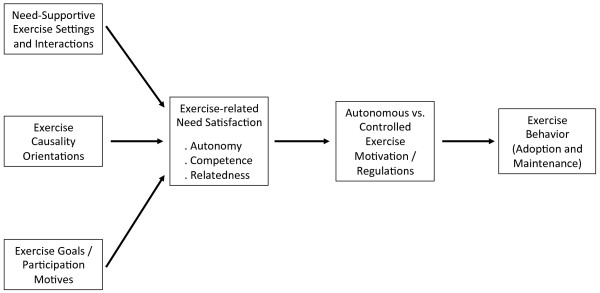
This systematic review synthesized 66 empirical studies on self-determination theory (SDT) and exercise/physical activity published up to June 2011. It found the most consistent support for autonomous motivation—especially identified and intrinsic regulation—and for competence satisfaction and intrinsic motives as positive predictors of exercise participation.
## Key findings
- Across 66 studies comprising 72 independent samples, the review found consistent positive associations between more autonomous forms of motivation and exercise; for example, 37 of 42 cross-sectional studies, 10 prospective studies, 7 experimental studies, and 2 mixed designs were represented among the regulation studies.
- Identified regulation showed positive associations with exercise in 28 samples (74%) in multivariate analyses and 22 samples (85%) in bivariate analyses; intrinsic motivation was positively associated in 23 or 22 samples (62% or 92%) depending on analysis type, and no study reported negative associations for intrinsic motivation.
- Competence satisfaction was the most frequently assessed basic need and was positively associated with physical activity in 56% of independent samples in multivariate analysis and 92% in correlational analysis; relatedness showed no positive multivariate association with exercise (K = 4, 100% no association).
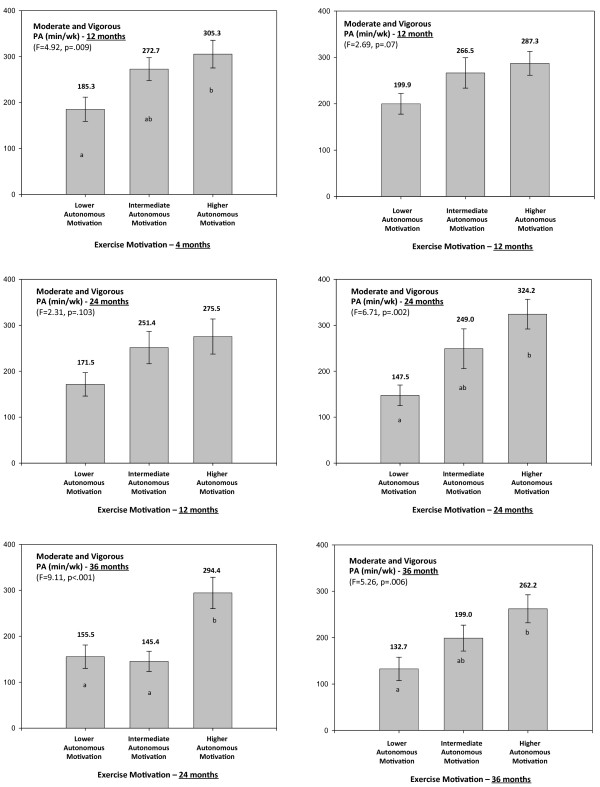
- In SDT-based interventions, 7 interventions were identified and 6 (86%) found significant differences favoring the SDT group for perceived autonomy support, need satisfaction, autonomous and introjected regulations, and self-reported exercise; in the longest trial, only autonomous regulations mediated long-term exercise effects.
## Methods
- Systematic review of empirical SDT–exercise studies published up to June 2011; searches were run in PsycINFO and SportDiscus for studies from 1960 to June 2011, limited to English-language, peer-reviewed journal articles on adult, non-athletic samples.
- Included 66 studies / 72 independent samples with experimental, cross-sectional, prospective, and mixed designs; outcomes included actual or self-reported exercise/physical activity, attendance, relapse, dropout, and stages of change.
- Evidence was summarized quantitatively by counting independent samples showing significant positive, negative, or null associations; the unit of analysis was the independent sample, and significance was set at 0.05.
## Limitations
- The paper states that it was limited to English-language, peer-reviewed articles and excluded gray literature, unpublished studies, non-English publications, non-adult samples, adolescents/children, and competitive athletic samples.
- The authors state that classifying and quantifying results was “somewhat arbitrary,” that only direct paths were evaluated, and that lumping together self-report and direct measures, attendance, and stages of change is “clearly not without reproach.”
- Evident from the text: most included studies were descriptive/non-experimental and many samples were mixed, so causal inference and subgroup-specific conclusions are limited.
Model-written summary. Check it against the paper before relying on it.
Integrity signals
Registry
Cites
Statistics
Figures
Verification
Claims the paper makes
3 Valid · 5 Not valid · 58 Not checked · 143 Own results and interpretations
The cited sources support only part of this claim — read each source’s verdict below.
In the paper
“Satisfaction of these basic needs results in increased feelings of vitality and well-being [15].”
§ Exercise, physical activity, and self-determination theory: A systematic review > Introduction
What the sources say
- Partly supportedcites [15] matched to “Testing a self‐determination theory‐based teaching style intervention in the exercise domain” (2008) sourceExperimental — accuracy not yet measured
The discussion of basic psychological need satisfaction (p. 5) says that satisfying needs, together with more autonomous motivation, is expected to produce adaptive affective responses. The findings (p. 24) link competence need satisfaction to less negative affect. Neither passage establishes that need satisfaction results in increased vitality or well-being specifically, and the claim states the relationship more definitively than the paper does. (LLM, conf=0.84)
plainstates a cause- Asserted: passes — The authors put it forward as true.
- Checkable: passes — It can be checked against evidence.
- Load-bearing: passes — The paper’s conclusions depend on it.
- Based: passes — The paper gives a reason why it holds.
- Partly supported
The cited sources support only part of this claim — read each source’s verdict below.
In the paper
“Relations from perceived autonomy support to exercise behavior, via psychological needs and regulatory styles have been tested (in part or all) in several studies and in general these confirm the proposed sequences [17,44,43,77,76,38,33].”
§ Exercise, physical activity, and self-determination theory: A systematic review > Discussion > Need satisfaction and exercise
What the sources say
- Supportedcites [17] matched to “Exercise motivation: a cross-sectional analysis examining its relationships with frequency, intensity, and duration of exercise” (2010) source
The Background (page unavailable) says the study tested relationships between behavioral regulations and exercise frequency, intensity, and duration—one part of the proposed sequence. The Results (page unavailable) report that all three exercise indices correlated more strongly with autonomous than controlling regulations, broadly supporting the sequence. The citing sentence expressly allows studies to have tested it only “in part.” (LLM, conf=0.87)
- Partly supportedcites [44] matched to “Mediators of physical activity behaviour change among adult non-clinical populations: a review update” (2010) sourceExperimental — accuracy not yet measured
The Results section (‘Evidence of Mediation by Theory’; page not provided) reports support in one study for a link between autonomy support and physical activity. But the other self-determination-theory study found no changes in its constructs or behavior, and neither established the proposed sequence through psychological needs and regulatory styles. The review therefore does not support saying that the studies generally confirmed that sequence. (LLM, conf=0.88)
- Not checked — no full text of the sourcecites [43] matched to “The Independent Effects of Goal Contents and Motives on Well-Being: It’s Both What You Pursue and Why You Pursue It” (2004) source
- Not matchedcites [77]
The reference list we hold has no entry [77].
- Not matchedcites [76]
The reference list we hold has no entry [76].
- Not checked — no full text of the sourcecites [38] matched to “Body image and body shape ideals in magazines: exposure, awareness, and internalization” (1997) source
- Not checked — no full text of the sourcecites [33] matched to “Go Figure? Body-Shape Motives are Associated with Decreased Physical Activity Participation Among Midlife Women” (2006) source
plainstates an association- Asserted: passes — The authors put it forward as true.
- Checkable: passes — It can be checked against evidence.
- Load-bearing: passes — The paper’s conclusions depend on it.
- Based: passes — The paper gives a reason why it holds.
- Supported
A result the paper reports from its own data — it cites no other source for it, so there is none to check. The quote shows it is in the paper.
In the paper
“The literature is also consistent in that competence satisfaction and more intrinsic motives positively predict exercise participation across a range of samples and settings.”
§ Exercise, physical activity, and self-determination theory: A systematic review > Abstract > Results
boostedstates an association- Asserted: passes — The authors put it forward as true.
- Checkable: passes — It can be checked against evidence.
- Load-bearing: passes — The paper’s conclusions depend on it.
- Based: passes — The paper gives a reason why it holds.
A result the paper reports from its own data — it cites no other source for it, so there is none to check. The quote shows it is in the paper.
In the paper
“and intrinsic motivation being more predictive of long-term exercise adherence”
§ Exercise, physical activity, and self-determination theory: A systematic review > Abstract > Results
plainstates an association- Asserted: passes — The authors put it forward as true.
- Checkable: passes — It can be checked against evidence.
- Load-bearing: passes — The paper’s conclusions depend on it.
- Based: passes — The paper gives a reason why it holds.
A result the paper states — it cites no source for it, so there is none to check. The quote shows it is in the paper.
In the paper
“but similar results are found across cross-sectional, prospective, and experimental designs”
§ Exercise, physical activity, and self-determination theory: A systematic review > Abstract > Results
plain- Asserted: passes — The authors put it forward as true.
- Checkable: passes — It can be checked against evidence.
- Load-bearing: passes — The paper’s conclusions depend on it.
- Based: passes — The paper gives a reason why it holds.
99 more claims
Create a free account to see all 209 claims and to verify the 2 references still open.
- It may state two separate claims as one. 74
- Probably not a substantial claim. 39
Claims other papers make about this one
Each is checked against this paper’s own text: does it say what the citing paper says it does?
The source backs part of the claim, not all of it — or backs it for a different population, condition or comparison.
In the citing paper
“As of today, merely one systematic review in the exercise context (Teixeira et al., 2012), having SDT as theoretical background, has analyzed the satisfaction (although not frustration) of basic psychological needs, the motivational regulation, and the way these can predict different physiological outcomes (i.e., energy expenditure, body mass index).”
From Can Interpersonal behavior influence the persistence and adherence to physical exercise practice in adults? A systematic review (2018) · cites this paper as Teixeira et al., 2012
Experimental — accuracy not yet measuredThe source backs part of the claim, not all of it — or backs it for a different population, condition or comparison.
In the citing paper
“which might be justified by the fact that most of them so far cannot yet distinguish this regulation from identified regulation, given that both share the same principles”
From Can Interpersonal behavior influence the persistence and adherence to physical exercise practice in adults? A systematic review (2018) · cites this paper as Teixeira et al., 2012
Experimental — accuracy not yet measuredThe source backs part of the claim, not all of it — or backs it for a different population, condition or comparison.
In the citing paper
“Conversely, structured exercise programs foster intrinsic motivation (65), self-regulation, and a positive relationship with the body, promoting sustained engagement even after pharmacotherapy discontinuation.”
From GLP-1 agonists and exercise: the future of lifestyle prioritization (2025) · cites this paper as [65]
Experimental — accuracy not yet measuredThe source backs part of the claim, not all of it — or backs it for a different population, condition or comparison.
In the citing paper
“a study by Teixeira et al. [31] highlights that exercise not only improves physical health but also promotes a positive self-image and resilience”
From Sociodemographic influences on Student Mental Health and their association with activation-regulating functional impairments (2026) · cites this paper as [31]
Experimental — accuracy not yet measuredThe cited source says what the claim attributes to it.
In the citing paper
“The instruments described herein have been used in various contexts, for example to assess to what extent a medical professional (Williams et al., 2009), healthcare intervention (Williams et al., 2011; Teixeira et al., 2012) or a procedure (Ng et al., 2012) supports autonomy.”
From Designing for Motivation, Engagement and Wellbeing in Digital Experience (2018) · cites this paper as Teixeira et al., 2012
9 more claims about this paper
Create a free account to see every claim other papers make about this one.
Self-check
Percentages, sums and reported differences re-computed from the paper’s own numbers.
Rated minor: it would not touch a result — a value no result rests on, a p-value that stays on the same side of the significance level, or a conflict that is clerical, resolved elsewhere in the paper, or outside its own findings.
In the paper
“A total of 57 samples (53 studies) analyzed associations between regulations and exercise behavior. Of these, 37 were used in cross-sectional designs, 10 in prospective designs, 7 in experimental studies, and 2 in mixed designs.”
§ Exercise, physical activity, and self-determination theory: A systematic review > Results > Motivational predictors of exercise-related outcomes
Reported 57 · recomputed 56
Citations
Cites
Ryan, R. M., & Deci, E. L. (2000) · American Psychologist · doi:10.1037//0003-066x.55.1.68 · Cited by 54,599
Self-citationThe "what" and "why" of goal pursuits: Human needs and the self-determination of behavior
Deci, E. L., & Ryan, R. M. (2000) · Psychological Inquiry · doi:10.1207/s15327965pli1104_01 · Cited by 34,210 · cited 5×
“determination and volition with respect to the target behavior [12].”
BackgroundInfluentialSelf-citationIntrinsic Motivation and Self-Determination in Human Behavior
Deci, E. L., & Ryan, R. M. (1985) · doi:10.1007/978-1-4899-2271-7 · Cited by 26,772
Self-citationIntrinsic Motivation and Self-Determination in Human Behavior
Miller, K. A., Deci, E. L., & Ryan, R. M. (1988) · Contemporary Sociology · doi:10.2307/2070638 · Cited by 15,312
Self-citationMediation in experimental and nonexperimental studies: New procedures and recommendations.
Shrout, P. E., & Bolger, N. (2002) · Psychological Methods · doi:10.1037/1082-989x.7.4.422 · Cited by 11,335 · cited 1×
“, mediated) effects between them [75].”
Garber, C. E., Blissmer, B., Deschenes, M. R., Franklin, B. A., Lamonte, M. J., Lee, I.-M., Nieman, D. C., & Swain, D. P. (2011) · Medicine & Science in Sports & Exercise · doi:10.1249/mss.0b013e318213fefb · Cited by 9,319
A simple method to assess exercise behavior in the community.
Godin, G., & Shephard, R. J. (1985) · PubMed · Cited by 4,760
Moral Identity and Developmental Theory
Lapsley, D. (2015) · Human Development · doi:10.1159/000435926 · Cited by 3,819
Perceived locus of causality and internalization: Examining reasons for acting in two domains.
Ryan, R. M., & Connell, J. P. (1989) · Journal of Personality and Social Psychology · doi:10.1037/0022-3514.57.5.749 · Cited by 3,311 · cited 2×
“Autonomous motivation includes the identified regulation and intrinsic motivation subscales of the Exercise Self-Regulation Questionnaire [84].”
Self-citation(2002) · Cited by 3,047
Self-citation
Research works printed but not linked: 1
- Koestner R Losier GF In Handbook of self-determination research Distinguishing three ways of being internally motivated: a closer look at introjection, identification, and intrinsic motivation 2002 Edited by Deci EL, Ryan RM, Rochester, NY: University of Rochester Press 101 121
Cited by
Items 301–400 of 2,926
Hsu, Y.-T., Buckworth, J., Focht, B. C., & O'Connell, A. A. (2012) · Psychology of sport and exercise · doi:10.1016/j.psychsport.2012.11.007 · Cited by 66
Gunnell, K. E., & Gaudreau, P. (2015) · Personality and Individual Differences · doi:10.1016/j.paid.2014.12.059 · Cited by 57
Self-Compassion and the Self-Regulation of Exercise: Reactions to Recalled Exercise Setbacks
Semenchuk, B. N., Strachan, S. M., & Fortier, M. (2018) · Journal of Sport and Exercise Psychology · doi:10.1123/jsep.2017-0242 · Cited by 55
Molina, M. D., & Myrick, J. G. (2020) · Sport in Society · doi:10.1080/17430437.2020.1744570 · Cited by 56
Making exercise count: Considerations for the role of exercise in back pain treatment
Cashin, A. G., Booth, J., McAuley, J. H., Jones, M. D., Hübscher, M., Traeger, A. C., Fried, K., & Moseley, G. L. (2021) · Musculoskeletal Care · doi:10.1002/msc.1597 · Cited by 48
Cavicchiolo, E., Sibilio, M., Lucidi, F., Cozzolino, M., Chirico, A., Girelli, L., Manganelli, S., Giancamilli, F., Galli, F., Diotaiuti, P., et al. (2022) · International Journal of Environmental Research and Public Health · doi:10.3390/ijerph19041937 · Cited by 60
Application of Exercise Snacks across Youth, Adult and Clinical Populations: A Scoping Review
Weston, K. L., Little, J. P., Weston, M., McCreary, S., Kitchin, V., Gill, A. J., Niven, A. G., McNarry, M. A., & Mackintosh, K. A. (2025) · Sports Medicine - Open · doi:10.1186/s40798-025-00829-6 · Cited by 61
“In recognition of the important role that choice, variety and autonomy play in the psychological and behavioral impact of exercise behaviors [109, 110] we do not advocate for the creation of standardized definition/prescription of exercise snacks, which would not allow for flexibility in exercise…”
Self-determination and stage of readiness to change physical activity behaviour in schizophrenia
Vancampfort, D., Vansteenkiste, M., Binder, M. D., Herdt, A. D., Soundy, A., Stubbs, B., Buys, R., & Probst, M. (2014) · Mental health and physical activity · doi:10.1016/j.mhpa.2014.06.003 · Cited by 55
From a Vital Sign to Vitality: Selling Exercise So Patients Want to Buy It
Segar, M., Guérin, E., Phillips, E. M., & Fortier, M. (2016) · Current Sports Medicine Reports · doi:10.1249/jsr.0000000000000284 · Cited by 56
Psychosocial Pretreatment Predictors of Weight Control: A Systematic Review Update
Carraça, E. V., Santos, I., Mata, J., & Teixeira, P. J. (2018) · Obesity Facts · doi:10.1159/000485838 · Cited by 57
Self-citationPsychologically informed physical fitness practice in schools: A field experiment
Vazou, S., Mischo, A. B., Ladwig, M. A., Ekkekakis, P., & Welk, G. J. (2018) · Psychology of sport and exercise · doi:10.1016/j.psychsport.2018.10.008 · Cited by 57
Hawkins, J. L., Charles, J. M., Edwards, A., Hallingberg, B., McConnon, L., Edwards, R. T., Jago, R., Kelson, M. J., Morgan, K., Murphy, S., et al. (2019) · Journal of Medical Internet Research · doi:10.2196/12374 · Cited by 50
Lock, M., Post, D., Dollman, J., & Parfitt, G. (2020) · Health Psychology Review · doi:10.1080/17437199.2020.1718528 · Cited by 44
Sevild, C. H., Niemiec, C. P., Bru, L. E., Dyrstad, S. M., & Husebø, A. M. L. (2020) · BMC Public Health · doi:10.1186/s12889-020-09111-8 · Cited by 62
The Norwegian Healthy Life Centre Study: A pragmatic RCT of physical activity in primary care
Samdal, G. B., Meland, E., Eide, G. E., Berntsen, S., Abildsnes, E., Stea, T. H., & Mildestvedt, T. (2018) · Scandinavian Journal of Public Health · doi:10.1177/1403494818785260 · Cited by 49
Pettersson, B., Janols, R., Wiklund, M., Lundin‐Olsson, L., & Sandlund, M. (2021) · Journal of Medical Internet Research · doi:10.2196/26235 · Cited by 61
Ke, Y., Shi, L., Peng, L., Chen, S., Hong, J., & Liu, Y. (2022) · Frontiers in Psychology · doi:10.3389/fpsyg.2022.904506 · Cited by 73
Social-Cognitive Theories to Explain Physical Activity
Rodrigues, F. F., Figueiredo, N., Jacinto, M., Monteiro, D., & Morouço, P. (2023) · Education Sciences · doi:10.3390/educsci13020122 · Cited by 67
Dishman, R. K., Saunders, R. P., McIver, K. L., Dowda, M. C., & Pate, R. R. (2013) · Journal of Pediatric Psychology · doi:10.1093/jpepsy/jst013 · Cited by 52
Van Hoecke, A.-S., Delecluse, C., Bogaerts, A., & Boen, F. (2014) · Journal of Aging and Physical Activity · doi:10.1123/japa.2012-0261 · Cited by 43
Arrogi, A., Schotte, A., Bogaerts, A., Boen, F., & Seghers, J. (2017) · BMC Public Health · doi:10.1186/s12889-016-3965-1 · Cited by 50
Häusser, J. A., & Mojzisch, A. (2017) · Work & Stress · doi:10.1080/02678373.2017.1303759 · Cited by 57
Peach, T., Pollock, K., van der Wardt, V., das Nair, R., Logan, P., & Harwood, R. (2017) · PLoS ONE · doi:10.1371/journal.pone.0177530 · Cited by 50
Mahony, R., Blake, C. M., Matthews, J. J., Donoghue, G. O., & Cunningham, C. (2018) · Physiotherapy Theory and Practice · doi:10.1080/09593985.2018.1457112 · Cited by 60
Zhang, L., Zhang, Y. E., Dallas, M., Xu, S., & Hu, J. (2018) · The International Journal of Human Resource Management · doi:10.1080/09585192.2018.1479874 · Cited by 53
Moeijes, J., van Busschbach, J. T., Wieringa, T. H., Kone, J., Bosscher, R. J., & Twisk, J. W. R. (2019) · Health and Quality of Life Outcomes · doi:10.1186/s12955-019-1124-y · Cited by 62
Intrinsic motivation in two exercise interventions: associations with fitness and body composition
Thøgersen-Ntoumani, C., Shepherd, S. O., Ntoumanis, N., Wagenmakers, A. J. M., & Shaw, C. S. (2016) · Health Psychology · doi:10.1037/hea0000260 · Cited by 42
Body-related self-conscious emotions and reasons for exercise: A latent class analysis
Huellemann, K. L., Pila, E., Gilchrist, J. D., Nesbitt, A. E., & Sabiston, C. M. (2021) · Body Image · doi:10.1016/j.bodyim.2021.03.016 · Cited by 51
Kinnafick, F., Thøgersen‐Ntoumani, C., Duda, J. L., & Taylor, I. M. (2013) · Psychology of sport and exercise · doi:10.1016/j.psychsport.2013.10.009 · Cited by 65
Scarapicchia, T., Sabiston, C. M., O’Loughlin, E. K., Brunet, J., Chaiton, M., & O’Loughlin, J. L. (2014) · Preventive Medicine · doi:10.1016/j.ypmed.2014.05.017 · Cited by 48
Bélanger, M. F., Caissie, I., Beauchamp, J., O’Loughlin, J. L., Sabiston, C. M., & Mancuso, M. (2013) · BMC Public Health · doi:10.1186/1471-2458-13-649 · Cited by 50
Ensrud-Skraastad, O. K., & Haga, M. (2020) · Sports · doi:10.3390/sports8090120 · Cited by 63
Hutmacher, D., Eckelt, M., Bund, A., & Steffgen, G. (2020) · International Journal of Environmental Research and Public Health · doi:10.3390/ijerph17197258 · Cited by 59
Physical activity for health and wellbeing: the role of motives for participation
Morris, T., & Roychowdhury, D. (2020) · Health Psychology Report · doi:10.5114/hpr.2020.100111 · Cited by 55
Participation Motives of Sport and Exercise Maintainers: Influences of Age and Gender
Ley, C. (2020) · International Journal of Environmental Research and Public Health · doi:10.3390/ijerph17217830 · Cited by 63
Moreau, M., Gagnon, M.-P., & Boudreau, F. (2015) · JMIR Research Protocols · doi:10.2196/resprot.4099 · Cited by 41
“As controlled forms of motivation are expected to sometimes motivate short-term PA behavior but not to sustain its maintenance [51], autonomous motivation is more strongly correlated to PA behavior adoption and maintenance over a long period of time [51,64].”
InfluentialCárcamo-Oyarzún, J., Herrmann, C., Gerlach, E., Salvo-Garrido, S. I., & Estevan, I. (2023) · Physical Education and Sport Pedagogy · doi:10.1080/17408989.2023.2265399 · Cited by 95
“The most autonomous levels of motivation (i.e. intrinsic motivation, identified regulation and integrated regulation) are positively associated with PA during childhood (Sebire et al. 2013), adolescence (Kalaja et al. 2010; Markland and Ingledew 2007) and adulthood (Teixeira et al. 2012).”
Gerber, M., Cheval, B., Cody, R., Colledge, F., Hohberg, V., Klimentidis, Y. C., Lang, C., Looser, V. N., Ludyga, S., Stults‐Kolehmainen, M., et al. (2025) · Physiological Reviews · doi:10.1152/physrev.00021.2024 · Cited by 73
Bryan, A. D., Jakicic, J. M., Hunter, C. M., Evans, M. E., Yanovski, S. Z., & Epstein, L. H. (2017) · Obesity · doi:10.1002/oby.21924 · Cited by 47
Cox, A. E., Roberts, M. A., Cates, H. L., & McMahon, A. K. (2018) · International journal of exercise science · doi:10.70252/aevj8865 · Cited by 54
Motivation in rehabilitation and acquired brain injury: can theory help us understand it?
Kusec, A., Velikonja, D., DeMatteo, C. A., & Harris, J. E. (2018) · Disability and Rehabilitation · doi:10.1080/09638288.2018.1467504 · Cited by 53
Motivation and Physical Activity: Differences Between High School and University Students in Spain
Sevil‐Serrano, J., Miguel, P. A. S., González, J. J. P., Práxedes, A., & Sánchez‐Oliva, D. (2018) · Perceptual and Motor Skills · doi:10.1177/0031512518788743 · Cited by 62
Seah, M. L. C., & Koh, K. T. (2020) · European Physical Education Review · doi:10.1177/1356336x20930741 · Cited by 43
Jenkins, M., Mackenzie, S. H., Hodge, K. P., Hargreaves, E. A., Calverley, J. R., & Lee, C. (2021) · Frontiers in Sports and Active Living · doi:10.3389/fspor.2021.637576 · Cited by 46
Ester, M., Eisele, M., Wurz, A. J., McDonough, M. H., McNeely, M. L., & Culos-Reed, S. N. (2021) · JMIR Cancer · doi:10.2196/28852 · Cited by 44
Kinnafick, F.-E., Thøgersen-Ntoumani, C., Shepherd, S. O., Wilson, O. J., Wagenmakers, A. J. M., & Shaw, C. S. (2018) · Journal of Sport and Exercise Psychology · doi:10.1123/jsep.2017-0306 · Cited by 40
Strategies to encourage physical activity in patients with hemophilia to improve quality of life
Goto, M., Takedani, H., Yokota, K., & Haga, N. (2016) · Journal of Blood Medicine · doi:10.2147/jbm.s84848 · Cited by 51
Exercise and environment: New qualitative work to link popular practice and public health
Hitchings, R., & Latham, A. (2017) · Health & Place · doi:10.1016/j.healthplace.2017.04.009 · Cited by 43
Social and Environmental Influences on Physical Activity Behaviours
Dollman, J. (2018) · International Journal of Environmental Research and Public Health · doi:10.3390/ijerph15010169 · Cited by 41
Making a move in exercise referral: co-development of a physical activity referral scheme
Buckley, B. J. R., Thijssen, D. H. J., Murphy, R. C., Graves, L., Whyte, G. P., Gillison, F., Crone, D., Wilson, P. M., & Watson, P. M. (2018) · Journal of Public Health · doi:10.1093/pubmed/fdy072 · Cited by 49
Motivation toward Physical Activity and Healthy Habits of Adolescents: A Systematic Review
Zagalaz, J. C., Carrasco-Venturelli, H., Zafra, M. S., & Sánchez, M. L. Z. (2023) · Children · doi:10.3390/children10040659 · Cited by 86
Baghbani, S. M. G., Arabshahi, M., & Saatchian, V. (2023) · European Journal of Integrative Medicine · doi:10.1016/j.eujim.2023.102281 · Cited by 57
Diet and physical activity behaviour in nurses: a qualitative study
Torquati, L., Kolbe-Alexander, T. L., Pavey, T., Persson, C., & LEVERITT, M. D. (2016) · International Journal of Health Promotion and Education · doi:10.1080/14635240.2016.1169943 · Cited by 45
Mouton, A., Gillet, N., Mouton, F., van Kann, D., Bruyère, O., Cloes, M., & Buckinx, F. (2017) · Clinical Interventions in Aging · doi:10.2147/cia.s134760 · Cited by 47
Karlsson, L., Gerdle, B. U. C., Takala, E., Andersson, G., & Larsson, B. K. (2018) · Journal of Pain Research · doi:10.2147/jpr.s149826 · Cited by 48
Morgan, K., Godwin, J. V., Darwent, K., & Fildes, A. (2019) · BMC Public Health · doi:10.1186/s12889-019-6741-1 · Cited by 47
Factors explaining physical activity level in Parkinson´s disease: A gender focus
Urell, C., Zetterberg, L., Hellström, K., & Anens, E. (2019) · Physiotherapy Theory and Practice · doi:10.1080/09593985.2019.1630875 · Cited by 49
Haque, M. S., Kangas, M., & Jämsä, T. (2019) · JMIR Formative Research · doi:10.2196/15083 · Cited by 39
Barakou, I., Hackett, K. L., Finch, T. L., & Hettinga, F. J. (2023) · Annals of Medicine · doi:10.1080/07853890.2023.2270688 · Cited by 52
“In fact, insufficient self-regulatory skills have been linked to low adherence to health-related exercise [149,150].”
BackgroundCocker, K. A. D., Bourdeaudhuij, I. D., Cardon, G., & Vandelanotte, C. (2015) · BMC Public Health · doi:10.1186/s12889-015-2288-y · Cited by 48
Elucidating the roles of motives and gains in exercise participation.
Ingledew, D. K., Markland, D. A., & Strömmer, S. (2013) · Sport Exercise and Performance Psychology · doi:10.1037/spy0000004 · Cited by 52
Self-citationViewing exercise goal content through a person-oriented lens: A self-determination perspective
Lindwall, M., Josefsson, K. W., Sebire, S. J., & Standage, M. (2016) · Psychology of sport and exercise · doi:10.1016/j.psychsport.2016.06.011 · Cited by 45
Caldwell, K. L., Bergman, S. M., Collier, S. R., Triplett, N. T., Quin, R., Bergquist, J., & Pieper, C. F. (2016) · Nature and Science of Sleep · doi:10.2147/nss.s117392 · Cited by 41
Busse, M. E., Quinn, L., Drew, C. J. G., Kelson, M. J., Trubey, R., McEwan, K., Jones, C., Townson, J. K., Dawes, H., Edwards, R. T., et al. (2017) · Physical Therapy · doi:10.1093/ptj/pzx031 · Cited by 44
Solana, A. A., Abós, Á., García‐González, L., González‐Cutre, D., & Sevil‐Serrano, J. (2021) · European Physical Education Review · doi:10.1177/1356336x21992791 · Cited by 55
Fierro-Suero, S., Ozcorta, E. J. F., & Buñuel, P. S.-L. (2022) · International Journal of Environmental Research and Public Health · doi:10.3390/ijerph19159539 · Cited by 66
Autonomy‐supportive intervention: an evolutionary concept analysis
Kayser, J. W., Cossette, S., & Alderson, M. (2013) · Journal of Advanced Nursing · doi:10.1111/jan.12292 · Cited by 47
Quaresma, A. M. M., Palmeira, A. L., Martins, S., Minderico, C. S., & Sardinha, L. B. (2014) · Health Education Research · doi:10.1093/her/cyu056 · Cited by 53
Influence and interpretation of intrinsic and extrinsic exercise motives
Ednie, A. J., & Stibor, M. D. (2017) · Journal of Human Sport and Exercise · doi:10.14198/jhse.2017.122.18 · Cited by 48
Gerber, M., Minghetti, A., Beck, J., Zahner, L., & Donath, L. (2019) · Journal of Psychiatric Research · doi:10.1016/j.jpsychires.2019.03.011 · Cited by 41
Rhodes, R. E., Zhang, R., & Zhang, C. (2020) · Annals of Behavioral Medicine · doi:10.1093/abm/kaz068 · Cited by 46
Schneider, J., Polet, J., Hassandra, M., Lintunen, T., Laukkanen, A., Hankonen, N. E., Hirvensalo, M. H., Tammelin, T., Törmäkangas, T., & Hagger, M. S. (2020) · BMC Public Health · doi:10.1186/s12889-020-09518-3 · Cited by 54
Segar, M., Marques, M. M., Palmeira, A. L., & Okely, A. D. (2020) · International Journal of Behavioral Nutrition and Physical Activity · doi:10.1186/s12966-020-01048-w · Cited by 45
Sutin, A. R., Luchetti, M., Stéphan, Y., & Terracciano, A. (2021) · Journal of Health Psychology · doi:10.1177/13591053211021661 · Cited by 48
Manser, P., & de Bruin, E. D. (2021) · Frontiers in Aging Neuroscience · doi:10.3389/fnagi.2021.734012 · Cited by 41
Manser, P., Adcock, M., & de Bruin, E. D. (2023) · JMIR Serious Games · doi:10.2196/37616 · Cited by 47
Body-Related Shame and Guilt Predict Physical Activity in Breast Cancer Survivors Over Time
Castonguay, A. L., Wrosch, C., Pila, E., & Sabiston, C. M. (2017) · Oncology nursing forum · doi:10.1188/17.onf.465-475 · Cited by 49
Bentsen, P., Mygind, L., Elsborg, P., Nielsen, G., & Mygind, E. (2021) · Scandinavian Journal of Public Health · doi:10.1177/1403494821993715 · Cited by 57
van Olmen, J. (2022) · International Journal of Environmental Research and Public Health · doi:10.3390/ijerph19031360 · Cited by 44
Donaghue, N., & Allen, M. (2015) · International Journal of Sport and Exercise Psychology · doi:10.1080/1612197x.2015.1016086 · Cited by 51
Motivational interviewing in a web-based physical activity intervention: questions and reflections
Friederichs, S. A. H., Oenema, A., Bolman, C., Guyaux, J., Van Keulen, H. M., & Lechner, L. (2015) · Health Promotion International · doi:10.1093/heapro/dat069 · Cited by 36
Hamilton, K., Fleig, L., Henderson, J., & Hagger, M. S. (2018) · Women & Health · doi:10.1080/03630242.2018.1452835 · Cited by 46
Li, B., Han, S., Meng, S., Lee, J., Cheng, J., & Liu, Y. (2022) · BMC Public Health · doi:10.1186/s12889-022-13159-z · Cited by 51
Stewart, K. F. J., Meis, J. J. M., van de Bool, C., Janssen, D. J. A., Kremers, S., & Schols, A. M. W. J. (2014) · Journal of the American Medical Directors Association · doi:10.1016/j.jamda.2014.05.003 · Cited by 41
Johnson, P. T., Fallon, E. A., Harris, B. S., & Burton, B. J. (2013) · Body Image · doi:10.1016/j.bodyim.2012.12.002 · Cited by 43
Liu, Y., Zhai, X., Zhang, Y., Jiang, C., Zeng, J., Yang, M., Xie, X., Zhou, F., & Xiang, B. (2023) · BMC Public Health · doi:10.1186/s12889-023-17154-w · Cited by 61
“…SDT consist of intrinsic motivation (intrinsic motivation is defined as doing an activity because of its inherent satisfactions) and extrinsic motivation (extrinsic motivation refers to doing an activity for instrumental reasons, or to obtain some outcome separable from the activity) [13].”
BackgroundThompson, D., Cantu, D., Bhatt, R., Baranowski, T., Rodgers, W., Jago, R., Anderson, B., Liu, Y., Mendoza, J. A., Tapia, R., et al. (2014) · JMIR Research Protocols · doi:10.2196/resprot.3074 · Cited by 35
Christensen, J., Valentiner, L. S., Petersen, R. J., & Langberg, H. (2016) · Telemedicine and e-Health · doi:10.1089/tmj.2015.0165 · Cited by 35
Arnautovska, U., Fleig, L., O’Callaghan, F., & Hamilton, K. (2018) · Australian Psychologist · doi:10.1111/ap.12346 · Cited by 43
Active lifestyles in older adults: an integrated predictive model of physical activity and exercise
Galli, F., Chirico, A., Mallia, L., Girelli, L., Laurentiis, M. D., Lucidi, F., Giordano, A., & Botti, G. (2018) · Oncotarget · doi:10.18632/oncotarget.25352 · Cited by 36
Teixeira, D., Marques, M. M., & Palmeira, A. L. (2018) · Revista iberoamericana de psicología del ejercicio y el deporte · Cited by 63
Thøgersen‐Ntoumani, C., Quested, E., Biddle, S., Kritz, M., Olson, J. L., Burton, E., Cerin, E., Hill, K., McVeigh, J. A., & Ntoumanis, N. (2019) · Health Psychology and Behavioral Medicine · doi:10.1080/21642850.2019.1629934 · Cited by 35
Plangger, K. A., Campbell, C., Robson, K., & Montecchi, M. (2019) · Information & Management · doi:10.1016/j.im.2019.103216 · Cited by 44
Polet, J., Lintunen, T., Schneider, J., & Hagger, M. S. (2020) · Journal of Applied Social Psychology · doi:10.1111/jasp.12691 · Cited by 40
Brealey, S., Northgraves, M. J., Kottam, L., Keding, A., Corbacho, B., Goodchild, L. M., Srikesavan, C. S., Rex, S., Charalambous, C. P., Hanchard, N. C. A., et al. (2020) · Health Technology Assessment · doi:10.3310/hta24710 · Cited by 39
Nuss, K. J., & Li, K. (2021) · Computers in Human Behavior · doi:10.1016/j.chb.2021.106798 · Cited by 46
Steele, J., Androulakis‐Korakakis, P., Carlson, L., Williams, D. M., Phillips, S. M., Smith, D., Schoenfeld, B. J., Loenneke, J. P., Winett, R. A., Abe, T., et al. (2021) · Sports Medicine · doi:10.1007/s40279-021-01438-5 · Cited by 43
Family Status and Motivations to Run: A Qualitative Study of Marathon Runners
Goodsell, T. L., Harris, B. D., & Bailey, B. W. (2013) · Leisure Sciences · doi:10.1080/01490400.2013.797326 · Cited by 44
Littlecott, H. J., Moore, G. F., Moore, L., & Murphy, S. (2014) · International Journal of Behavioral Nutrition and Physical Activity · doi:10.1186/s12966-014-0109-9 · Cited by 36
Motivational and evolutionary aspects of a physical exercise training program: a longitudinal study
Rosa, J. P. P., de Souza, A. A. L., de Lima, G. H. O., Rodrigues, D. F., de Aquino Lemos, V., da Silva Alves, E., Tufik, S., & de Mello, M. T. (2015) · Frontiers in Psychology · doi:10.3389/fpsyg.2015.00648 · Cited by 34
Metadata
- Authors
- Teixeira, P. J., Carraça, E. V., Markland, D., Silva, M. N., & Ryan, R. M.
- Affiliations
- Universidade Técnica de Lisboa (PT)
- Bangor University (GB)
- University of Rochester (US)
- Corresponding author
- Teixeira, Pedro J
- Venue
- International Journal of Behavioral Nutrition and Physical Activity
- Published
- 2012
- Volume
- 9
- Issue
- 1
- Pages
- 78
- ISSN
- 1479-5868 (ISSN-L)
- PMC
- PMC3441783
- OpenAlex
- W2120612383
- Semantic Scholar
- 91c1a302b1ba3d78f18d769090d5c285c36d9567
- Cited by
- 2,963
- References
- 110
- Citations by year
- 2026: 399 · 2025: 332 · 2024: 260 · 2023: 244 · 2022: 242 · 2021: 279 · 2020: 256 · 2019: 215 · 2018: 202 · 2017: 162 · 2016: 141 · 2015: 100 · 2014: 66 · 2013: 59 · 2012: 3
- FWCI
- 10.23
- Type
- journal article
- Language
- en
- Open access
- gold
- doi.org
- Licence
- cc-by
- Locations
- International Journal of Behavioral Nutrition and Physical Activity (publishedVersion, cc-by)
- Europe PMC (PubMed Central) (publishedVersion, cc-by)
- PubMed Central (publishedVersion, cc-by)
- PubMed (publishedVersion)
- DOAJ (DOAJ: Directory of Open Access Journals) (submittedVersion)
- Topics
- Social Sciences › Psychology › Social Psychology › Motivation and Self-Concept in Sports
- Social Sciences › Psychology › Applied Psychology › Behavioral Health and Interventions
- Health Sciences › Medicine › Public Health, Environmental and Occupational Health › Physical Activity and Health
- Keywords
- self-determination theory, exercise motivation, physical activity, autonomous motivation, intrinsic motivation, identified regulation, introjected regulation, competence satisfaction, need satisfaction, exercise adherence, exercise self-regulation, exercise intervention, exercise behavior
- MeSH terms
- Health Promotion, Humans, Motor Activity, Personal Satisfaction, Health Behavior, Exercise, Databases, Factual, Personal Autonomy, Empirical Research
About these checks
Registry, retraction, Cites and statistics results are computed, not judged, with one exception: a printed reference that no index lists is read once by a model before it counts as a citation error. Claims are extracted by a model and kept only when their quote appears verbatim in the text; each cited source is then checked, with a model’s help, for whether it says what the claim relies on. Those verdicts can be wrong — read the claim’s quote and the cited source before relying on one.
The claim verdicts this report counts are experimental: their accuracy is not yet measured.
A language model drew the claims from the paper on 2026-10-10, under version 3 of the claim definition (model deepseek-v4.1-flash, prompt extract-v3).
A second model labelled each claim on 2026-10-10 (model jev-1.13-20260917, definition revision gold-guideline-v0.2).
Cited sources are checked with a language model’s help (gpt-6-sol).
Statistics and arithmetic are recomputed, not judged.
Confidence bands are shown only for fields calibrated on our annotated test set. None is calibrated yet, so no band is shown.
What counts as a claim ›How we measure confidence ›How we check this ›
Are you an author, or do you see a problem with this page? Request a review
Data sources
Bibliographic data: Semantic Scholar, OpenAlex, Crossref.
Contains information from the Semantic Scholar Academic Graph Datasets, made available under the ODC Attribution License (ODC-BY 1.0).
Semantic Scholar’s data is described in: Kinney, R., et al. (2023). The Semantic Scholar Open Data Platform. arXiv:2301.10140.
