

Role of the vector genome and underlying factor IX mutation in immune responses to AAV gene therapy for hemophilia B
Open accessThe DOI matches its Crossref record; 61 of the 62 references it cites were found in a registry or an index.
Abstract
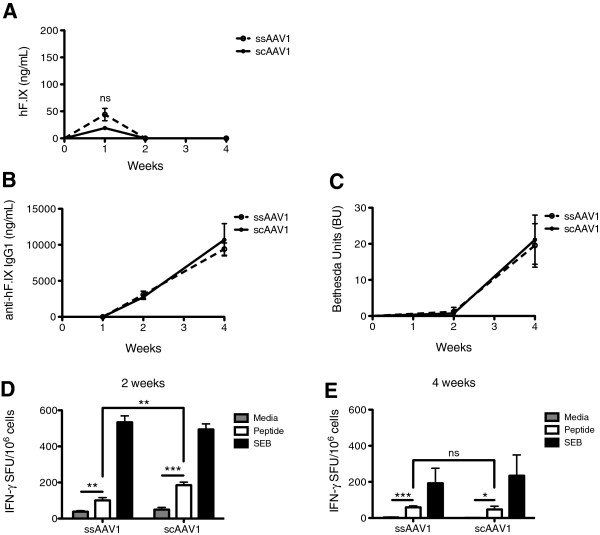
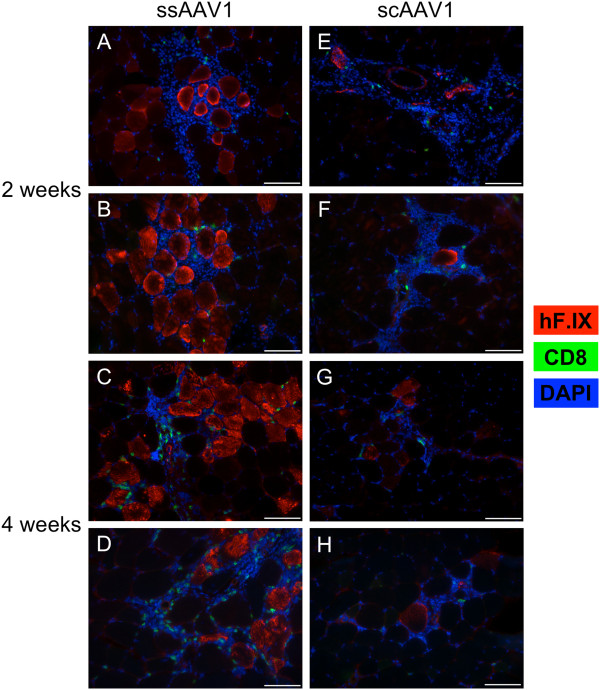
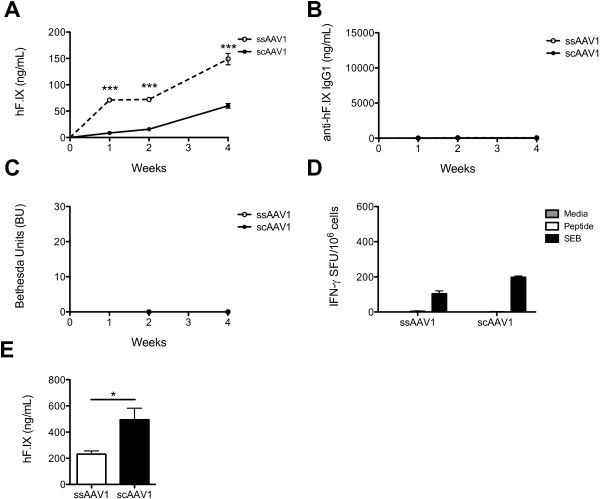
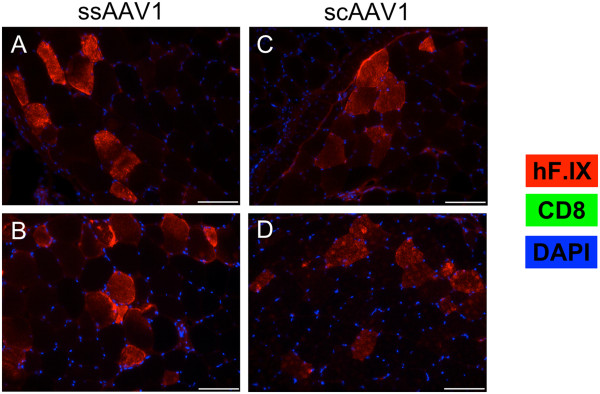
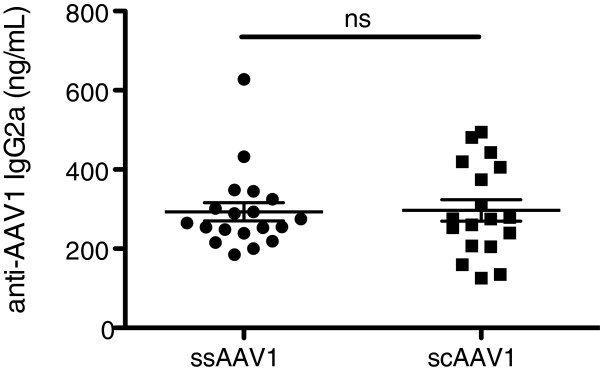
BACKGROUND: Self-complementary adeno-associated virus (scAAV) vectors have become a desirable vector for therapeutic gene transfer due to their ability to produce greater levels of transgene than single-stranded AAV (ssAAV). However, recent reports have suggested that scAAV vectors are more immunogenic than ssAAV. In this study, we investigated the effects of a self-complementary genome during gene therapy with a therapeutic protein, human factor IX (hF.IX). METHODS: Hemophilia B mice were injected intramuscularly with ss or scAAV1 vectors expressing hF.IX. The outcome of gene transfer was assessed, including transgene expression as well as antibody and CD8⁺ T cell responses to hF.IX. RESULTS: Self-complementary AAV1 vectors induced similar antibody responses (which eliminated systemic hF.IX expression) but stronger CD8⁺ T cell responses to hF.IX relative to ssAAV1 in mice with F9 gene deletion. As a result, hF.IX-expressing muscle fibers were effectively eliminated in scAAV-treated mice. In contrast, mice with F9 nonsense mutation (late stop codon) lacked antibody or T cell responses, thus showing long-term expression regardless of the vector genome. CONCLUSIONS: The nature of the AAV genome can impact the CD8⁺ T cell response to the therapeutic transgene product. In mice with endogenous hF.IX expression, however, this enhanced immunogenicity did not break tolerance to hF.IX, suggesting that the underlying mutation is a more important risk factor for transgene-specific immunity than the molecular form of the AAV genome.
Overview
The claims and statistics of this paper haven’t been checked yet.
Free: it reads the open-access text and checks the first 5 claims that cite a source we can check. Create a free account to check every claim.
Integrity signals
Registry
Cites
Statistics
Figures
Verification
Claims the paper makes
The claims and statistics of this paper haven’t been checked yet.
Free: it reads the open-access text and checks the first 5 claims that cite a source we can check. Create a free account to check every claim.
Claims other papers make about this one
Each is checked against this paper’s own text: does it say what the citing paper says it does?
The source backs part of the claim, not all of it — or backs it for a different population, condition or comparison.
In the citing paper
“Importantly, TLR9 sensing of AAV vector genomes has been shown to be required for anti-capsid CD8+ T cell responses (9–14).”
From Effect of CpG Depletion of Vector Genome on CD8+ T Cell Responses in AAV Gene Therapy (2021) · cites this paper as [13]
Experimental — accuracy not yet measuredThe source backs part of the claim, not all of it — or backs it for a different population, condition or comparison.
In the citing paper
“Despite evidence for various innate responses to AAV, the existence of other pathways leading to antigen-specific T cell responses has been unknown.24,25,43,44,45”
From TLR9-independent CD8+ T cell responses in hepatic AAV gene transfer through IL-1R1-MyD88 signaling (2024) · cites this paper as [43]
Experimental — accuracy not yet measuredThe cited source says what the claim attributes to it.
In the citing paper
“This is also the case in AAV-hFIX gene transfer to hemophilia B mice, while use of self-complementary AAV (scAAV) results in a more destructive CD8+ T cell response that rapidly eliminates of hFIX expressing muscles fibers (13).”
From Effect of CpG Depletion of Vector Genome on CD8+ T Cell Responses in AAV Gene Therapy (2021) · cites this paper as [13]
The check wasn’t confident either way, so it gives no verdict — never disputed.
In the citing paper
“Early successes in this field were initially dampened by reports of patients who developed vector insertion-related leukemias directly linked to the viral platform used for transgene delivery11–18.”
From Clonal selection of hematopoietic stem cells after gene therapy for sickle cell disease (2023) · cites this paper as [15]
Experimental — accuracy not yet measuredIn the citing paper
“We know from prior experiments, that CD8+ T cell infiltrating AAV-hFIX transduced muscle are directed against hFIX in this strain of mouse, since hemophilic C3H/HeJ mice transgenically expressing non-functional forms of hFIX do not show this response (13, 26).”
From Effect of CpG Depletion of Vector Genome on CD8+ T Cell Responses in AAV Gene Therapy (2021) · cites this paper as [13]
1 more claim about this paper
Create a free account to see every claim other papers make about this one.
Self-check
Percentages, sums and reported differences re-computed from the paper’s own numbers.
The self-check needs the paper’s full text.
Citations
Cites
1 retracted
Jayandharan, G. R., Aslanidi, G., Martino, A. T., Jahn, S. C., Perrin, G. Q., Herzog, R. W., & Srivastava, A. (2011) · Proceedings of the National Academy of Sciences · doi:10.1073/pnas.1012753108 · Cited by 72 · cited 1×
“Nonetheless, we previously found that scAAV enhanced TLR9-dependent innate immune responses, resulting in stronger NF-κB dependent inflammation of tissue and expression of IFN I [13,43].”
BackgroundSelf-citationRetractedToll-like receptors and their crosstalk with other innate receptors in infection and immunity
Kawai, T., & Akira, S. (2011) · Immunity · doi:10.1016/j.immuni.2011.05.006 · Cited by 3,658 · cited 1×
“Consistent with prior studies by others, hepatic innate immune responses to AAV vectors were dependent on TLR9, an endosomal receptor that recognizes unmethylated CpG DNA motifs [13-15].”
ResultAdenovirus-Associated Virus Vector–Mediated Gene Transfer in Hemophilia B
Nathwani, A. C., Tuddenham, E. G. D., Rangarajan, S., Rosales, C., McIntosh, J., Linch, D. C., Chowdary, P., Riddell, A., Pie, A. J., Harrington, C., et al. (2011) · New England Journal of Medicine · doi:10.1056/nejmoa1108046 · Cited by 1,864
Kay, M. A., Manno, C. S., Ragni, M. V., Larson, P. J., Couto, L. B., McClelland, A., Glader, B., Chew, A. J., J Tai, S., Herzog, R. W., et al. (2000) · Nature Genetics · doi:10.1038/73464 · Cited by 1,022 · cited 1×
“IX gene transfer utilized intramuscular injections at multiple skeletal muscle sites as the route of vector administration [16-19].”
BackgroundSelf-citationTherapeutic in vivo gene transfer for genetic disease using AAV: Progress and challenges
Mingozzi, F., & High, K. A. (2011) · Nature Reviews Genetics · doi:10.1038/nrg2988 · Cited by 893
AAV-mediated factor IX gene transfer to skeletal muscle in patients with severe hemophilia B
Manno, C. S., Chew, A. J., Hutchison, S., Larson, P. J., Herzog, R. W., Arruda, V. R., Tai, S. J., Ragni, M. V., Thompson, A., Ozelo, M., et al. (2003) · Blood · doi:10.1182/blood-2002-10-3296 · Cited by 749
Self-citationHerzog, R. W., Yang, E. Y., Couto, L. B., Hagstrom, J. N., Elwell, D., Fields, P. A., Burton, M., Bellinger, D. A., Read, M. S., Brinkhous, K. M., et al. (1999) · Nature Medicine · doi:10.1038/4743 · Cited by 554 · cited 2×
“IX mutation on the risk of B and T cell responses to the transgene product in gene therapy for hemophilia B [3,17,23,33].”
BackgroundSelf-citationMcCarty, D. M., Fu, H., Monahan, P. E., Toulson, C. E., Naik, P., & Samulski, R. J. (2003) · Gene Therapy · doi:10.1038/sj.gt.3302134 · Cited by 547
Induction of Immune Tolerance to Coagulation Factor IX Antigen by In Vivo Hepatic Gene Transfer
Mingozzi, F., Liu, Y.-L., Dobrzynski, E., Kaufhold, A., Liu, J. H., Wang, Y., Arruda, V. R., High, K. A., & Herzog, R. W. (2003) · Journal of Clinical Investigation · doi:10.1172/jci16887 · Cited by 466 · cited 4×
“Hemophilia B mice with targeted deletion of murine F9 (‘HB’) had been bred on C3H/HeJ background for >10 generations [21].”
BackgroundMethodSelf-citationNathwani, A. C., Rosales, C., McIntosh, J., Rastegarlari, G., Nathwani, D., Raj, D., Nawathe, S., Waddington, S. N., Bronson, R., Jackson, S., et al. (2011) · Molecular Therapy · doi:10.1038/mt.2010.274 · Cited by 345 · cited 3×
“IX gene expression and have gathered growing enthusiasm because of the potential for improved gene transfer and expression [11,39,40].”
BackgroundMount, J. D., Herzog, R. W., Tillson, D. M., Goodman, S. A., Robinson, N., McCleland, M. L., Bellinger, D., Nichols, T. C., Arruda, V. R., Lothrop, C. D., et al. (2002) · Blood · doi:10.1182/blood.v99.8.2670 · Cited by 339
Self-citationFlotte, T. R., Trapnell, B. C., Humphries, M., Carey, B., Calcedo, R., Rouhani, F., Campbell-Thompson, M., Yachnis, A. T., Sandhaus, R. A., McElvaney, N. G., et al. (2011) · Human Gene Therapy · doi:10.1089/hum.2011.053 · Cited by 335
Zhu, J., Huang, X., & Yang, Y. (2009) · Journal of Clinical Investigation · doi:10.1172/jci37607 · Cited by 330 · cited 2×
“Innate immune sensing of AAV vectors depends on TLR9 and is increased with scAAV due to increased TLR9 signaling from these vectors [13,15].”
BackgroundResultQin, L., Ding, Y., Pahud, D. R., Chang, E., Imperiale, M. J., & Bromberg, J. S. (1997) · Human Gene Therapy · doi:10.1089/hum.1997.8.17-2019 · Cited by 315 · cited 1×
“It is known that the activity of the CMV enhancer/promoter used in these vectors can be inhibited by inflammatory cytokines [58,59].”
BackgroundNiemeyer, G. P., Herzog, R. W., Mount, J., Arruda, V. R., Tillson, D. M., Hathcock, J., van Ginkel, F. W., High, K. A., & Lothrop, C. D. (2009) · Blood · doi:10.1182/blood-2008-10-181479 · Cited by 276
Self-citationCpG-depleted adeno-associated virus vectors evade immune detection
Faust, S. M., Bell, P., Cutler, B. J., Ashley, S. N., Zhu, Y., Rabinowitz, J. E., & Wilson, J. M. (2013) · Journal of Clinical Investigation · doi:10.1172/jci68205 · Cited by 254 · cited 3×
“This may be explained by a greater dependence of CD8 T cell responses than of antibody responses on TLR9 activation by AAV vectors [47,53].”
BackgroundMartino, A. T., Suzuki, M., Markusic, D. M., Zolotukhin, I., Ryals, R. C., Moghimi, B., Ertl, H. C. J., Muruve, D. A., Lee, B., & Herzog, R. W. (2011) · Blood · doi:10.1182/blood-2010-10-314518 · Cited by 246
Self-citationBreous, E., Somanathan, S., Vandenberghe, L. H., & Wilson, J. M. (2009) · Hepatology · doi:10.1002/hep.23043 · Cited by 237 · cited 1×
“Hepatic transgene expression occurs in an environment characterized by active downregulation of immune responses, thereby favoring induction of regulatory T cells and establishment of immune tolerance [8,44-49].”
BackgroundBuchlis, G., Podsakoff, G. M., Radu, A., Hawk, S. M., Flake, A. W., Mingozzi, F., & High, K. A. (2012) · Blood · doi:10.1182/blood-2011-09-382317 · Cited by 221
Cao, O., Dobrzynski, E., Wang, L., Nayak, S., Mingle, B., Terhorst, C., & Herzog, R. W. (2007) · Blood · doi:10.1182/blood-2007-02-073304 · Cited by 220
Self-citationChirmule, N., Xiao, W., Truneh, A., Schnell, M. A., Hughes, J. V., Zoltick, P., & Wilson, J. M. (2000) · Journal of Virology · doi:10.1128/jvi.74.5.2420-2425.2000 · Cited by 198 · cited 9×
“Plasma from HB or LS mice injected i.m. with 1011 vg of ss (n = 19) or scAAV1 (n = 18) was analyzed for the formation of anti-AAV1 IgG2a by ELISA 4 weeks post-injection.”
MethodInfluentialInnate Immune Responses to AAV Vectors
Rogers, G. L., Martino, A. T., Aslanidi, G. V., Jayandharan, G. R., Srivastava, A., & Herzog, R. W. (2011) · Frontiers in Microbiology · doi:10.3389/fmicb.2011.00194 · Cited by 178 · cited 1×
“Innate immune responses to AAV vectors are typically weak and transient, resulting in limited inflammatory signals [13,41,42].”
BackgroundSelf-citationHerzog, R. W., Mount, J. D., Arruda, V. R., High, K. A., & Lothrop, C. D. (2001) · Molecular Therapy · doi:10.1006/mthe.2001.0442 · Cited by 176 · cited 1×
“IX mutation on the risk of B and T cell responses to the transgene product in gene therapy for hemophilia B [3,17,23,33].”
BackgroundSelf-citationMueller, C., Chulay, J. D., Trapnell, B. C., Humphries, M., Carey, B., Sandhaus, R. A., McElvaney, N. G., Messina, L., Tang, Q., Rouhani, F. N., et al. (2013) · Journal of Clinical Investigation · doi:10.1172/jci70314 · Cited by 169
Wu, Z., Sun, J., Zhang, T., Yin, C., Yin, F., Van Dyke, T., Samulski, R. J., & Monahan, P. E. (2008) · Molecular Therapy · doi:10.1038/sj.mt.6300355 · Cited by 153 · cited 1×
“IX gene expression and have gathered growing enthusiasm because of the potential for improved gene transfer and expression [11,39,40].”
BackgroundArruda, V. R., Schuettrumpf, J., Herzog, R. W., Nichols, T. C., Robinson, N., Lotfi, Y., Mingozzi, F., Xiao, W., Couto, L. B., & High, K. A. (2004) · Blood · doi:10.1182/blood-2003-05-1446 · Cited by 150
Self-citationHerzog, R. W., Fields, P. A., Arruda, V. R., Brubaker, J. O., Armstrong, E., McClintock, D., Bellinger, D. A., Couto, L. B., Nichols, T. C., & High, K. A. (2002) · Human Gene Therapy · doi:10.1089/104303402760128513 · Cited by 147
Self-citationVerma, D., Moghimi, B., LoDuca, P. A., Singh, H. D., Hoffman, B. E., Herzog, R. W., & Daniell, H. (2010) · Proceedings of the National Academy of Sciences · doi:10.1073/pnas.0912181107 · Cited by 146 · cited 1×
“IX protein [4,55].”
Self-citationMátrai, J., Cantore, A., Bartholomae, C. C., Annoni, A., Wang, W., Acosta-Sanchez, A., Samara-Kuko, E., De Waele, L., Ma, L., Genovese, P., et al. (2011) · Hepatology · doi:10.1002/hep.24230 · Cited by 139
Ferreira, V., Twisk, J., Kwikkers, K., Aronica, E., Brisson, D., Methot, J., Petry, H., & Gaudet, D. (2014) · Human Gene Therapy · doi:10.1089/hum.2013.169 · Cited by 137
Markusic, D. M., Herzog, R. W., Aslanidi, G. V., Hoffman, B. E., Li, B., Li, M., Jayandharan, G. R., Ling, C., Zolotukhin, I., Ma, W., et al. (2010) · Molecular Therapy · doi:10.1038/mt.2010.172 · Cited by 131
Self-citationFields, P. A., Kowalczyk, D. W., Arruda, V. R., Armstrong, E., McCleland, M. L., Hagstrom, J. N., Pasi, K. J., Ertl, H. C. J., Herzog, R. W., & High, K. A. (2000) · Molecular Therapy · doi:10.1006/mthe.2000.0032 · Cited by 129 · cited 1×
“Among others, these include the choice and design of the vector, dose, and route of administration [4,21,34-38].”
BackgroundSelf-citationFields, P. A., Arruda, V. R., Armstrong, E., Chu, K., Mingozzi, F., Hagstrom, J. N., Herzog, R. W., & High, K. A. (2001) · Molecular Therapy · doi:10.1006/mthe.2001.0441 · Cited by 127
Self-citationCharacterization of Tissue Tropism Determinants of Adeno-Associated Virus Type 1
Hauck, B., & Xiao, W. (2003) · Journal of Virology · doi:10.1128/jvi.77.4.2768-2774.2003 · Cited by 124 · cited 1×
“Here, we used serotype 1 vector, because it is superior for muscle gene transfer and is hence in clinical trial/use for muscle gene transfer for α1-antitrypsin deficiency and for lipoprotein lipase deficiency [26-29].”
MethodArruda, V. R., Stedman, H. H., Haurigot, V., Buchlis, G., Baila, S., Favaro, P., Chen, Y., Franck, H. G., Zhou, S., Wright, J. F., et al. (2010) · Blood · doi:10.1182/blood-2009-12-261156 · Cited by 117
Effective gene therapy for haemophilic mice with pathogenic factor IX antibodies
Markusic, D. M., Hoffman, B. E., Perrin, G. Q., Nayak, S., Wang, X., LoDuca, P. A., High, K. A., & Herzog, R. W. (2013) · EMBO Molecular Medicine · doi:10.1002/emmm.201302859 · Cited by 116 · cited 3×
“IX in this strain despite the gene deletion mutation [4,56,57].”
BackgroundSelf-citationPosttranslational modifications of recombinant myotube-synthesized human factor IX
Arruda, V. R., Hagstrom, J. N., Deitch, J., Heiman-Patterson, T., Camire, R. M., Chu, K., Fields, P. A., Herzog, R. W., Couto, L. B., Larson, P. J., et al. (2001) · Blood · doi:10.1182/blood.v97.1.130 · Cited by 116
Self-citationHepatic Gene Transfer as a Means of Tolerance Induction to Transgene Products
LoDuca, P., Hoffman, B., & Herzog, R. (2009) · Current Gene Therapy · doi:10.2174/156652309787909490 · Cited by 114 · cited 1×
“Hepatic transgene expression occurs in an environment characterized by active downregulation of immune responses, thereby favoring induction of regulatory T cells and establishment of immune tolerance [8,44-49].”
BackgroundSelf-citationLiao, G., Nayak, S., Regueiro, J. R., Berger, S. B., Detre, C., Romero, X., de Waal Malefyt, R., Chatila, T. A., Herzog, R. W., & Terhorst, C. (2010) · International Immunology · doi:10.1093/intimm/dxq001 · Cited by 100 · cited 1×
“and suboptimal hepatic gene transfer [3,30,31,54].”
Self-citationMajor role of local immune responses in antibody formation to factor IX in AAV gene transfer
Wang, L., Cao, O., Swalm, B., Dobrzynski, E., Mingozzi, F., & Herzog, R. W. (2005) · Gene Therapy · doi:10.1038/sj.gt.3302539 · Cited by 98 · cited 2×
“IX expression, reduce the risk for immune responses [3-6].”
BackgroundResultSelf-citationSystemic protein delivery by muscle-gene transfer is limited by a local immune response
Wang, L., Dobrzynski, E., Schlachterman, A., Cao, O., & Herzog, R. W. (2005) · Blood · doi:10.1182/blood-2004-03-0848 · Cited by 94 · cited 1×
“IX expression, reduce the risk for immune responses [3-6].”
BackgroundSelf-citationCao, O., Hoffman, B. E., Moghimi, B., Nayak, S., Cooper, M., Zhou, S., Ertl, H. C., High, K. A., & Herzog, R. W. (2009) · Molecular Therapy · doi:10.1038/mt.2009.159 · Cited by 92
Self-citationImproved Induction of Immune Tolerance to Factor IX by Hepatic AAV-8 Gene Transfer
Cooper, M., Nayak, S., Hoffman, B. E., Terhorst, C., Cao, O., & Herzog, R. W. (2009) · Human Gene Therapy · doi:10.1089/hum.2008.161 · Cited by 90 · cited 1×
“IX in this strain despite the gene deletion mutation [4,56,57].”
BackgroundSelf-citationLin, S.-W., Hensley, S. E., Tatsis, N., Lasaro, M. O., & Ertl, H. C. J. (2007) · Journal of Clinical Investigation · doi:10.1172/jci33138 · Cited by 88
Self-citationHoffman, B. E., Martino, A. T., Sack, B. K., Cao, O., Liao, G., Terhorst, C., & Herzog, R. W. (2011) · Molecular Therapy · doi:10.1038/mt.2011.33 · Cited by 72 · cited 1×
“Hepatic transgene expression occurs in an environment characterized by active downregulation of immune responses, thereby favoring induction of regulatory T cells and establishment of immune tolerance [8,44-49].”
BackgroundSelf-citationNAYAK, S., CAO, O., HOFFMAN, B. E., COOPER, M., ZHOU, S., ATKINSON, M. A., & HERZOG, R. W. (2009) · Journal of Thrombosis and Haemostasis · doi:10.1111/j.1538-7836.2009.03548.x · Cited by 66 · cited 2×
“and suboptimal hepatic gene transfer [3,30,31,54].”
ResultSelf-citationWu, T., Töpfer, K., Lin, S.-W., Li, H., Bian, A., Zhou, X. Y., High, K. A., & Ertl, H. C. (2012) · Molecular Therapy · doi:10.1038/mt.2011.280 · Cited by 66
Self-citationMyD88 Signaling in B Cells Regulates the Production of Th1-dependent Antibodies to AAV
Sudres, M., Ciré, S., Vasseur, V., Brault, L., Da Rocha, S., Boisgérault, F., Le Bec, C., Gross, D. A., Blouin, V., Ryffel, B., et al. (2012) · Molecular Therapy · doi:10.1038/mt.2012.101 · Cited by 59 · cited 1×
“This may be explained by a greater dependence of CD8 T cell responses than of antibody responses on TLR9 activation by AAV vectors [47,53].”
BackgroundAnnoni, A., Cantore, A., Della Valle, P., Goudy, K., Akbarpour, M., Russo, F., Bartolaccini, S., D'Angelo, A., Roncarolo, M. G., & Naldini, L. (2013) · EMBO Molecular Medicine · doi:10.1002/emmm.201302857 · Cited by 58 · cited 1×
“Hepatic transgene expression occurs in an environment characterized by active downregulation of immune responses, thereby favoring induction of regulatory T cells and establishment of immune tolerance [8,44-49].”
BackgroundThe gene therapy journey for hemophilia: are we there yet?
High, K. A. (2012) · Blood · doi:10.1182/blood-2012-05-423210 · Cited by 55
Somanathan, S., Breous, E., Bell, P., & Wilson, J. M. (2010) · Molecular Therapy · doi:10.1038/mt.2010.40 · Cited by 54 · cited 1×
“Innate immune responses to AAV vectors are typically weak and transient, resulting in limited inflammatory signals [13,41,42].”
BackgroundMartino, A. T., Nayak, S., Hoffman, B. E., Cooper, M., Liao, G., Markusic, D. M., Byrne, B. J., Terhorst, C., & Herzog, R. W. (2009) · PLoS ONE · doi:10.1371/journal.pone.0006376 · Cited by 54
Self-citationSuzuki, M., Bertin, T. K., Rogers, G. L., Cela, R. G., Zolotukhin, I., Palmer, D. J., Ng, P., Herzog, R. W., & Lee, B. (2013) · Molecular Therapy · doi:10.1038/mt.2012.277 · Cited by 49 · cited 1×
“Although we previously found that IFN I induced by recombinant adenovirus but not by scAAV caused transgene silencing, a transthyretin rather than a CMV promoter was used in the scAAV vectors in that study [61].”
Self-citationGribaudo, G., Ravaglia, S., Gaboli, M. P., Gariglio, M., Cavallo, R., & Landolfo, S. (1995) · Virology · doi:10.1006/viro.1995.1398 · Cited by 48 · cited 1×
“It is known that the activity of the CMV enhancer/promoter used in these vectors can be inhibited by inflammatory cytokines [58,59].”
BackgroundVelazquez, V. M., Bowen, D. G., & Walker, C. M. (2009) · Blood · doi:10.1182/blood-2008-01-131375 · Cited by 46 · cited 1×
“CD8 T cells induced by ssAAV have reduced cytotoxic and proliferative capacity that cannot be rescued by secondary immunization, most likely due to T cell exhaustion and apoptosis [50-52].”
BackgroundPrevention and Reversal of Antibody Responses Against Factor IX in Gene Therapy for Hemophilia B
Nayak, S., Sarkar, D., Perrin, G. Q., Moghimi, B., Hoffman, B. E., Zhou, S., Byrne, B. J., & Herzog, R. W. (2011) · Frontiers in Microbiology · doi:10.3389/fmicb.2011.00244 · Cited by 40
Self-citationMeasuring Immune Responses to Recombinant AAV Gene Transfer
Martino, A. T., Herzog, R. W., Anegon, I., & Adjali, O. (2012) · Methods in Molecular Biology · doi:10.1007/978-1-61779-370-7_11 · Cited by 36 · cited 1×
“IX-specific CD8 T cells in mouse spleens, as previously described [3,24].”
BackgroundSelf-citationNovel hemophilia B mouse models exhibiting a range of mutations in the Factor IX gene
Sabatino, D. E., Armstrong, E., Edmonson, S., Liu, Y.-L., Pleimes, M., Schuettrumpf, J., Fitzgerald, J., Herzog, R. W., Arruda, V. R., & High, K. A. (2004) · Blood · doi:10.1182/blood-2004-03-1028 · Cited by 32 · cited 1×
“3-kb portion of intron I expressed from liver‐specific transthyretin promoter) were as published [22].”
BackgroundSelf-citationRaj, D., Davidoff, A. M., & Nathwani, A. C. (2011) · Expert Review of Hematology · doi:10.1586/ehm.11.48 · Cited by 27 · cited 1×
“IX gene expression and have gathered growing enthusiasm because of the potential for improved gene transfer and expression [11,39,40].”
BackgroundGil-Fariña, I., Scala, M. D., Vanrell, L., Olagüe, C., Vales, Á., High, K. A., Prìeto, J., Mingozzi, F., & González‐Aseguinolaza, G. (2013) · PLoS ONE · doi:10.1371/journal.pone.0067748 · Cited by 26 · cited 1×
“IL-12-mediated inflammation at the time of gene transfer has also been shown to inhibit transgene production [60].”
BackgroundL. Rogers, G., & E. Hoffman, B. (2013) · Journal of Genetic Syndromes & Gene Therapy · doi:10.4172/2157-7412.s1-012 · Cited by 16 · cited 1×
“Immunohistochemistry was performed using fluorescent antibodies on frozen and cryosectioned tissue, as previously described [25].”
MethodSelf-citation
Cited by
Dunbar, C. E., High, K. A., Joung, J. K., Kohn, D. B., Ozawa, K., & Sadelain, M. (2018) · Science · doi:10.1126/science.aan4672 · Cited by 1,410
Immune Responses to Viral Gene Therapy Vectors
Shirley, J. L., de Jong, Y. P., Terhorst, C., & Herzog, R. W. (2020) · Molecular Therapy · doi:10.1016/j.ymthe.2020.01.001 · Cited by 788
“Self-complementary vectors (which can be generated by elimination of a nicking site in one of the inverted terminal repeats [ITRs]), however, elicit more functional responses, possibly because of enhanced TLR9 signaling and/or different kinetics of transgene expression.(64,87,88) These vectors do not require second-st…”
BackgroundSelf-citationMingozzi, F., & High, K. A. (2017) · Annual Review of Virology · doi:10.1146/annurev-virology-101416-041936 · Cited by 206
Viral vectors for therapy of neurologic diseases
Choudhury, S. R., Hudry, E., Maguire, C. A., Sena-Esteves, M., Breakefield, X. O., & Grandi, P. (2017) · Neuropharmacology · doi:10.1016/j.neuropharm.2016.02.013 · Cited by 190
“In some recessively inherited conditions, a stable mutant form of the protein may not be made, so the normal protein equivalent will be seen as foreign (Rogers et al., 2014).”
BackgroundEmerging trends in IoT and big data analytics for biomedical and health care technologies
Banerjee, A., Chakraborty, C., Kumar, A., & Biswas, D. (2020) · Handbook of Data Science Approaches for Biomedical Engineering · doi:10.1016/b978-0-12-818318-2.00005-2 · Cited by 148
Metadata
- Authors
- Rogers, G. L., Martino, A. T., Zolotukhin, I., Ertl, H. C., & Herzog, R. W.
- Affiliations
- University of Florida Health (US)
- The Wistar Institute (US)
- Corresponding author
- Herzog, Roland W
- Venue
- Journal of Translational Medicine
- Published
- 2014-01-25
- Volume
- 12
- Issue
- 1
- Pages
- 25-25
- ISSN
- 1479-5876 (ISSN-L)
- PMC
- PMC3904690
- OpenAlex
- W2131782840
- Cited by
- 45
- References
- 62
- Citations by year
- 2026: 3 · 2025: 1 · 2024: 3 · 2023: 5 · 2021: 8 · 2020: 2 · 2019: 4 · 2018: 2 · 2017: 6 · 2016: 4 · 2015: 4 · 2014: 3
- FWCI
- 3.71
- Type
- journal article
- Language
- en
- Open access
- gold
- doi.org
- Licence
- cc-by
- Locations
- Journal of Translational Medicine (publishedVersion, cc-by)
- Europe PMC (PubMed Central) (publishedVersion, cc-by)
- PubMed Central (publishedVersion, cc-by)
- PubMed (publishedVersion)
- University of Florida Digital Collections (University of Florida) (submittedVersion)
- Funders
- University of Florida
- National Institutes of Health
- National Heart, Lung, and Blood Institute (P01HL078810)
- National Cancer Institute (P30CA010815)
- National Institute of Allergy and Infectious Diseases (R01AI051390, R01 AI51390)
- Eunice Kennedy Shriver National Institute of Child Health and Human Development (P01 HD078810)
- Topics
- Life Sciences › Biochemistry, Genetics and Molecular Biology › Genetics › Virus-based gene therapy research
- Health Sciences › Medicine › Hematology › Hemophilia Treatment and Research
- Life Sciences › Biochemistry, Genetics and Molecular Biology › Molecular Biology › RNA Interference and Gene Delivery
- Keywords
- self-complementary AAV, adeno-associated virus vectors, hemophilia B, factor IX, CD8+ T cell responses, antibody response, vector immunogenicity, gene therapy
- MeSH terms
- Dependovirus, Animals, Antibodies, Viral, Capsid, Hemophilia B, Factor IX, Genetic Vectors, Humans, Immunity, Genetic Therapy, Genome, Gene Transfer Techniques, Codon, Nonsense, CD8-Positive T-Lymphocytes, Mice
About these checks
Registry, retraction, Cites and statistics results are computed, not judged, with one exception: a printed reference that no index lists is read once by a model before it counts as a citation error. Claims are extracted by a model and kept only when their quote appears verbatim in the text; each cited source is then checked, with a model’s help, for whether it says what the claim relies on. Those verdicts can be wrong — read the claim’s quote and the cited source before relying on one.
Statistics and arithmetic are recomputed, not judged.
Confidence bands are shown only for fields calibrated on our annotated test set. None is calibrated yet, so no band is shown.
What counts as a claim ›How we measure confidence ›How we check this ›
Are you an author, or do you see a problem with this page? Request a review
Data sources
Bibliographic data: Semantic Scholar, OpenAlex, Crossref.
Contains information from the Semantic Scholar Academic Graph Datasets, made available under the ODC Attribution License (ODC-BY 1.0).
Semantic Scholar’s data is described in: Kinney, R., et al. (2023). The Semantic Scholar Open Data Platform. arXiv:2301.10140.
