

Role of the vector genome and underlying factor IX mutation in immune responses to AAV gene therapy for hemophilia B
Open accessThe DOI matches its Crossref record; 61 of the 62 references it cites were found in a registry or an index.
Abstract
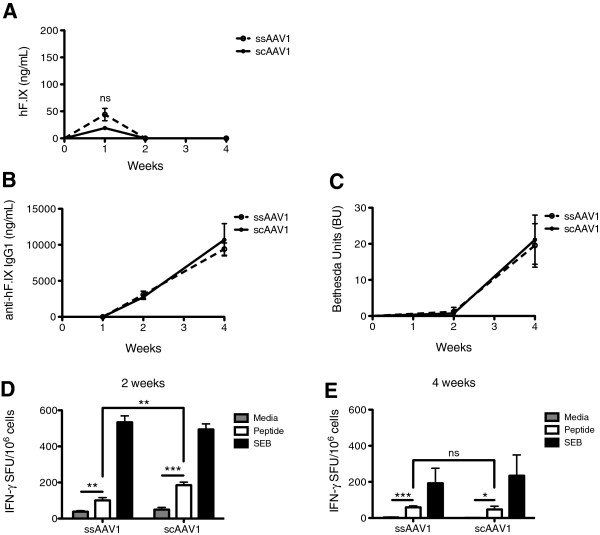
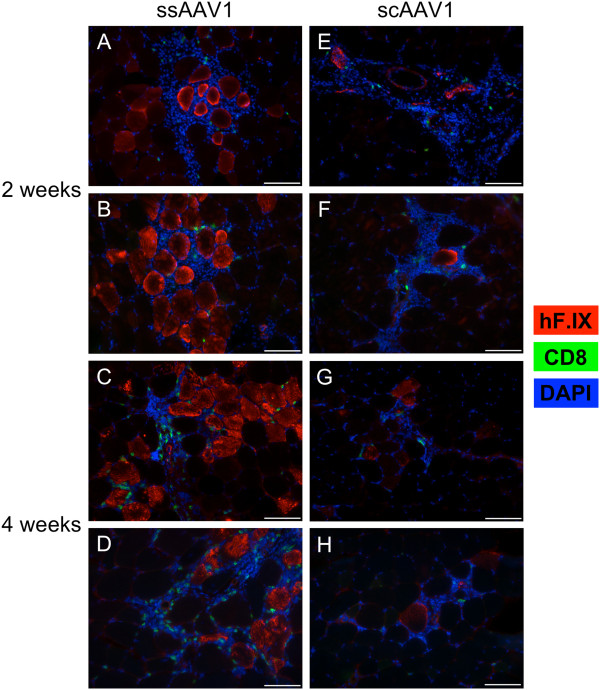
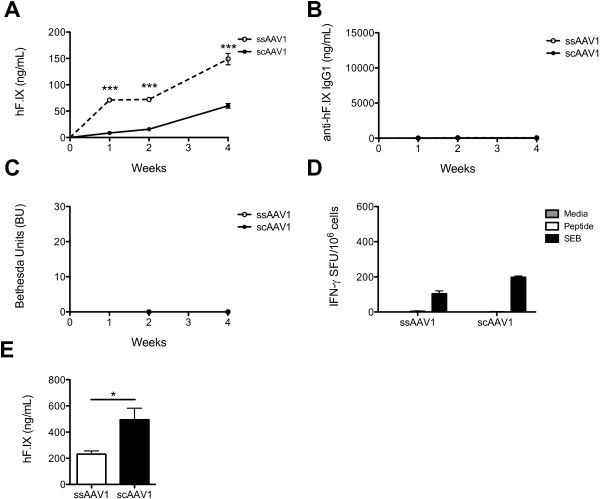
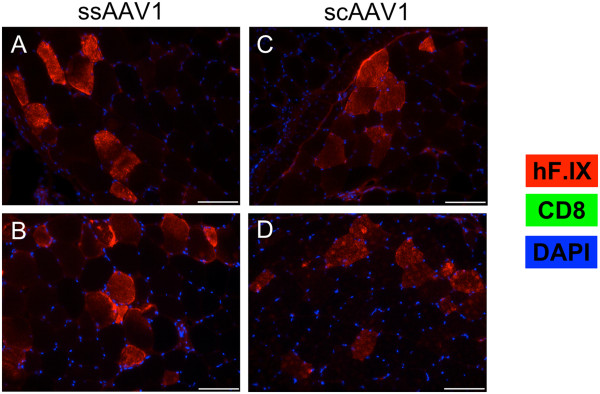
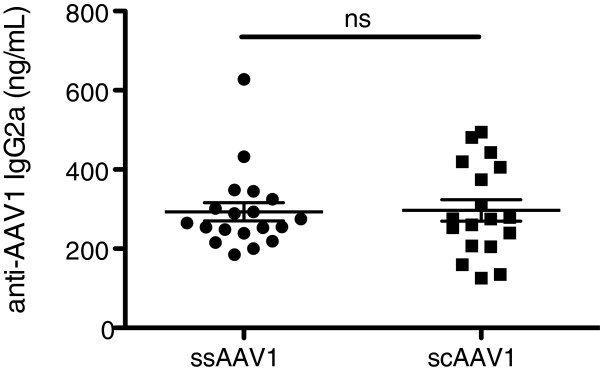
BACKGROUND: Self-complementary adeno-associated virus (scAAV) vectors have become a desirable vector for therapeutic gene transfer due to their ability to produce greater levels of transgene than single-stranded AAV (ssAAV). However, recent reports have suggested that scAAV vectors are more immunogenic than ssAAV. In this study, we investigated the effects of a self-complementary genome during gene therapy with a therapeutic protein, human factor IX (hF.IX). METHODS: Hemophilia B mice were injected intramuscularly with ss or scAAV1 vectors expressing hF.IX. The outcome of gene transfer was assessed, including transgene expression as well as antibody and CD8⁺ T cell responses to hF.IX. RESULTS: Self-complementary AAV1 vectors induced similar antibody responses (which eliminated systemic hF.IX expression) but stronger CD8⁺ T cell responses to hF.IX relative to ssAAV1 in mice with F9 gene deletion. As a result, hF.IX-expressing muscle fibers were effectively eliminated in scAAV-treated mice. In contrast, mice with F9 nonsense mutation (late stop codon) lacked antibody or T cell responses, thus showing long-term expression regardless of the vector genome. CONCLUSIONS: The nature of the AAV genome can impact the CD8⁺ T cell response to the therapeutic transgene product. In mice with endogenous hF.IX expression, however, this enhanced immunogenicity did not break tolerance to hF.IX, suggesting that the underlying mutation is a more important risk factor for transgene-specific immunity than the molecular form of the AAV genome.
Overview
The claims and statistics of this paper haven’t been checked yet.
Free: it reads the open-access text and checks the first 5 claims that cite a source we can check. Create a free account to check every claim.
Integrity signals
Registry
Cites
Statistics
Figures
Verification
Claims the paper makes
The claims and statistics of this paper haven’t been checked yet.
Free: it reads the open-access text and checks the first 5 claims that cite a source we can check. Create a free account to check every claim.
Claims other papers make about this one
Each is checked against this paper’s own text: does it say what the citing paper says it does?
The source backs part of the claim, not all of it — or backs it for a different population, condition or comparison.
In the citing paper
“Importantly, TLR9 sensing of AAV vector genomes has been shown to be required for anti-capsid CD8+ T cell responses (9–14).”
From Effect of CpG Depletion of Vector Genome on CD8+ T Cell Responses in AAV Gene Therapy (2021) · cites this paper as [13]
Experimental — accuracy not yet measuredThe source backs part of the claim, not all of it — or backs it for a different population, condition or comparison.
In the citing paper
“Despite evidence for various innate responses to AAV, the existence of other pathways leading to antigen-specific T cell responses has been unknown.24,25,43,44,45”
From TLR9-independent CD8+ T cell responses in hepatic AAV gene transfer through IL-1R1-MyD88 signaling (2024) · cites this paper as [43]
Experimental — accuracy not yet measuredThe cited source says what the claim attributes to it.
In the citing paper
“This is also the case in AAV-hFIX gene transfer to hemophilia B mice, while use of self-complementary AAV (scAAV) results in a more destructive CD8+ T cell response that rapidly eliminates of hFIX expressing muscles fibers (13).”
From Effect of CpG Depletion of Vector Genome on CD8+ T Cell Responses in AAV Gene Therapy (2021) · cites this paper as [13]
The check wasn’t confident either way, so it gives no verdict — never disputed.
In the citing paper
“Early successes in this field were initially dampened by reports of patients who developed vector insertion-related leukemias directly linked to the viral platform used for transgene delivery11–18.”
From Clonal selection of hematopoietic stem cells after gene therapy for sickle cell disease (2023) · cites this paper as [15]
Experimental — accuracy not yet measuredIn the citing paper
“We know from prior experiments, that CD8+ T cell infiltrating AAV-hFIX transduced muscle are directed against hFIX in this strain of mouse, since hemophilic C3H/HeJ mice transgenically expressing non-functional forms of hFIX do not show this response (13, 26).”
From Effect of CpG Depletion of Vector Genome on CD8+ T Cell Responses in AAV Gene Therapy (2021) · cites this paper as [13]
1 more claim about this paper
Create a free account to see every claim other papers make about this one.
Self-check
Percentages, sums and reported differences re-computed from the paper’s own numbers.
The self-check needs the paper’s full text.
Citations
Cites
1 retracted
Jayandharan, G. R., Aslanidi, G., Martino, A. T., Jahn, S. C., Perrin, G. Q., Herzog, R. W., & Srivastava, A. (2011) · Proceedings of the National Academy of Sciences · doi:10.1073/pnas.1012753108 · Cited by 72 · cited 1×
“Nonetheless, we previously found that scAAV enhanced TLR9-dependent innate immune responses, resulting in stronger NF-κB dependent inflammation of tissue and expression of IFN I [13,43].”
BackgroundSelf-citationRetractedToll-like receptors and their crosstalk with other innate receptors in infection and immunity
Kawai, T., & Akira, S. (2011) · Immunity · doi:10.1016/j.immuni.2011.05.006 · Cited by 3,658 · cited 1×
“Consistent with prior studies by others, hepatic innate immune responses to AAV vectors were dependent on TLR9, an endosomal receptor that recognizes unmethylated CpG DNA motifs [13-15].”
ResultAdenovirus-Associated Virus Vector–Mediated Gene Transfer in Hemophilia B
Nathwani, A. C., Tuddenham, E. G. D., Rangarajan, S., Rosales, C., McIntosh, J., Linch, D. C., Chowdary, P., Riddell, A., Pie, A. J., Harrington, C., et al. (2011) · New England Journal of Medicine · doi:10.1056/nejmoa1108046 · Cited by 1,864
Kay, M. A., Manno, C. S., Ragni, M. V., Larson, P. J., Couto, L. B., McClelland, A., Glader, B., Chew, A. J., J Tai, S., Herzog, R. W., et al. (2000) · Nature Genetics · doi:10.1038/73464 · Cited by 1,022 · cited 1×
“IX gene transfer utilized intramuscular injections at multiple skeletal muscle sites as the route of vector administration [16-19].”
BackgroundSelf-citationTherapeutic in vivo gene transfer for genetic disease using AAV: Progress and challenges
Mingozzi, F., & High, K. A. (2011) · Nature Reviews Genetics · doi:10.1038/nrg2988 · Cited by 893
AAV-mediated factor IX gene transfer to skeletal muscle in patients with severe hemophilia B
Manno, C. S., Chew, A. J., Hutchison, S., Larson, P. J., Herzog, R. W., Arruda, V. R., Tai, S. J., Ragni, M. V., Thompson, A., Ozelo, M., et al. (2003) · Blood · doi:10.1182/blood-2002-10-3296 · Cited by 749
Self-citationHerzog, R. W., Yang, E. Y., Couto, L. B., Hagstrom, J. N., Elwell, D., Fields, P. A., Burton, M., Bellinger, D. A., Read, M. S., Brinkhous, K. M., et al. (1999) · Nature Medicine · doi:10.1038/4743 · Cited by 554 · cited 2×
“IX mutation on the risk of B and T cell responses to the transgene product in gene therapy for hemophilia B [3,17,23,33].”
BackgroundSelf-citationMcCarty, D. M., Fu, H., Monahan, P. E., Toulson, C. E., Naik, P., & Samulski, R. J. (2003) · Gene Therapy · doi:10.1038/sj.gt.3302134 · Cited by 547
Induction of Immune Tolerance to Coagulation Factor IX Antigen by In Vivo Hepatic Gene Transfer
Mingozzi, F., Liu, Y.-L., Dobrzynski, E., Kaufhold, A., Liu, J. H., Wang, Y., Arruda, V. R., High, K. A., & Herzog, R. W. (2003) · Journal of Clinical Investigation · doi:10.1172/jci16887 · Cited by 466 · cited 4×
“Hemophilia B mice with targeted deletion of murine F9 (‘HB’) had been bred on C3H/HeJ background for >10 generations [21].”
BackgroundMethodSelf-citationNathwani, A. C., Rosales, C., McIntosh, J., Rastegarlari, G., Nathwani, D., Raj, D., Nawathe, S., Waddington, S. N., Bronson, R., Jackson, S., et al. (2011) · Molecular Therapy · doi:10.1038/mt.2010.274 · Cited by 345 · cited 3×
“IX gene expression and have gathered growing enthusiasm because of the potential for improved gene transfer and expression [11,39,40].”
Background
Cited by
Dunbar, C. E., High, K. A., Joung, J. K., Kohn, D. B., Ozawa, K., & Sadelain, M. (2018) · Science · doi:10.1126/science.aan4672 · Cited by 1,410
Immune Responses to Viral Gene Therapy Vectors
Shirley, J. L., de Jong, Y. P., Terhorst, C., & Herzog, R. W. (2020) · Molecular Therapy · doi:10.1016/j.ymthe.2020.01.001 · Cited by 788
“Self-complementary vectors (which can be generated by elimination of a nicking site in one of the inverted terminal repeats [ITRs]), however, elicit more functional responses, possibly because of enhanced TLR9 signaling and/or different kinetics of transgene expression.(64,87,88) These vectors do not require second-st…”
BackgroundSelf-citationMingozzi, F., & High, K. A. (2017) · Annual Review of Virology · doi:10.1146/annurev-virology-101416-041936 · Cited by 206
Viral vectors for therapy of neurologic diseases
Choudhury, S. R., Hudry, E., Maguire, C. A., Sena-Esteves, M., Breakefield, X. O., & Grandi, P. (2017) · Neuropharmacology · doi:10.1016/j.neuropharm.2016.02.013 · Cited by 190
“In some recessively inherited conditions, a stable mutant form of the protein may not be made, so the normal protein equivalent will be seen as foreign (Rogers et al., 2014).”
BackgroundEmerging trends in IoT and big data analytics for biomedical and health care technologies
Banerjee, A., Chakraborty, C., Kumar, A., & Biswas, D. (2020) · Handbook of Data Science Approaches for Biomedical Engineering · doi:10.1016/b978-0-12-818318-2.00005-2 · Cited by 148
Rogers, G. L., Shirley, J. L., Zolotukhin, I., Kumar, S. R. P., Sherman, A., Perrin, G. Q., Hoffman, B. E., Srivastava, A., Basner-Tschakarjan, E., Wallet, M. A., et al. (2017) · Blood · doi:10.1182/blood-2016-11-751040 · Cited by 131
“4 TLR9 signaling is enhanced for AAV vectors modified to package self-complementary genomes (scAAV); these vectors induce enhanced CD8 T cell responses to their gene products.(15,16) Other studies have implicated TLR2 in sensing the AAV capsid.”
Self-citationSuperior In vivo Transduction of Human Hepatocytes Using Engineered AAV3 Capsid
Vercauteren, K., Hoffman, B. E., Zolotukhin, I., Keeler, G. D., Xiao, J. W., Basner-Tschakarjan, E., High, K. A., Ertl, H. C., Rice, C. M., Srivastava, A., et al. (2016) · Molecular Therapy · doi:10.1038/mt.2016.61 · Cited by 114
Self-citationImmune Response Mechanisms against AAV Vectors in Animal Models
Martino, A. T., & Markusic, D. M. (2020) · Molecular Therapy - Methods & Clinical Development · doi:10.1016/j.omtm.2019.12.008 · Cited by 97
“However, a F9 missense mutation superseded the enhanced TLR9 activation of the scAAV1-F9 vector, resulting in ablation of FIX CD8 T cell immunity.(104)”
BackgroundSelf-citationCell-Mediated Immunity to AAV Vectors, Evolving Concepts and Potential Solutions
Basner-Tschakarjan, E., & Mingozzi, F. (2014) · Frontiers in Immunology · doi:10.3389/fimmu.2014.00350 · Cited by 95
Rogers, G. L., Suzuki, M., Zolotukhin, I., Markusic, D. M., Morel, L. M., Lee, B., Ertl, H. C. J., & Herzog, R. W. (2015) · Journal of Innate Immunity · doi:10.1159/000369273 · Cited by 85
Self-citationEffect of CpG Depletion of Vector Genome on CD8+ T Cell Responses in AAV Gene Therapy
Bertolini, T. B., Shirley, J. L., Zolotukhin, I., Li, X., Kaisho, T., Xiao, W., Kumar, S. R. P., & Herzog, R. W. (2021) · Frontiers in Immunology · doi:10.3389/fimmu.2021.672449 · Cited by 80
“Our prior study in mice showed a substantial reduction in CD8 T cell responses against a transgene product encoded by scAAV vector in TLR9-deficient mice (13).”
BackgroundResultSelf-citationShirley, J. L., Keeler, G. D., Sherman, A., Zolotukhin, I., Markusic, D. M., Hoffman, B. E., Morel, L. M., Wallet, M. A., Terhorst, C., & Herzog, R. W. (2020) · Molecular Therapy · doi:10.1016/j.ymthe.2019.11.011 · Cited by 79
Self-citationBiswas, M., Sarkar, D., Kumar, S. R. P., Nayak, S., Rogers, G. L., Markusic, D. M., Liao, G., Terhorst, C., & Herzog, R. W. (2015) · Blood · doi:10.1182/blood-2014-09-599266 · Cited by 70
Self-citationTLR9 signaling mediates adaptive immunity following systemic AAV gene therapy
Ashley, S. N., Somanathan, S., Giles, A. R., & Wilson, J. M. (2019) · Cellular Immunology · doi:10.1016/j.cellimm.2019.103997 · Cited by 67
“These factors can dramatically affect the likelihood that a given therapy will induce an inflammatory environment, elicit an adaptive anti-transgene response, and lead to an ineffective treatment [6,19,33].”
BackgroundClonal selection of hematopoietic stem cells after gene therapy for sickle cell disease
Spencer Chapman, M., Cull, A. H., Ciuculescu, M. F., Esrick, E. B., Mitchell, E., Jung, H., O’Neill, L., Roberts, K., Fabre, M. A., Williams, N., et al. (2023) · Nature Medicine · doi:10.1038/s41591-023-02636-6 · Cited by 67
Ex Vivo Expanded Autologous Polyclonal Regulatory T Cells Suppress Inhibitor Formation in Hemophilia
Sarkar, D., Biswas, M., Liao, G., Seay, H. R., Perrin, G. Q., Markusic, D. M., Hoffman, B. E., Brusko, T. M., Terhorst, C., & Herzog, R. W. (2014) · Molecular Therapy - Methods & Clinical Development · doi:10.1038/mtm.2014.30 · Cited by 62
Self-citationFuchs, S. P., & Desrosiers, R. C. (2016) · Molecular Therapy - Methods & Clinical Development · doi:10.1038/mtm.2016.68 · Cited by 61
Complexity of immune responses to AAV transgene products – Example of factor IX
Herzog, R. W. (2019) · Cellular Immunology · doi:10.1016/j.cellimm.2017.05.006 · Cited by 60
“heightened antibody responses when using scAAV vectors [30, 37].”
BackgroundSelf-citationHerzog, R. W. (2015) · Frontiers in Bioscience · doi:10.2741/4324 · Cited by 55
“following intramuscular gene transfer (71).”
Self-citationBoisgerault, F., & Mingozzi, F. (2015) · Current Gene Therapy · doi:10.2174/1566523215666150630121750 · Cited by 54
Exploiting Single-Cell Tools in Gene and Cell Therapy
Bode, D., Cull, A. H., Rubio-Lara, J. A., & Kent, D. G. (2021) · Frontiers in Immunology · doi:10.3389/fimmu.2021.702636 · Cited by 46
Understanding and Tackling Immune Responses to Adeno-Associated Viral Vectors
Verdera, H. C., Unzu, C., Valeri, E., Adriouch, S., González‐Aseguinolaza, G., Mingozzi, F., & Kajaste‐Rudnitski, A. (2023) · Human Gene Therapy · doi:10.1089/hum.2023.119 · Cited by 47
“19 Regarding the different impact of modulating TLR9 signaling on the regulation of cellular and humoral responses, different roles have been attributed to TLR9 and MyD88 in the establishment of adaptive responses to the capsid and transgene product.”
Herzog, R. W., Cooper, M., Perrin, G. Q., Biswas, M., Martino, A. T., Morel, L., Terhorst, C., & Hoffman, B. E. (2019) · Cellular Immunology · doi:10.1016/j.cellimm.2017.07.012 · Cited by 39
“Single-stranded AAV serotype 1 vector expressing human F9 cDNA under the control of the cytomegalovirus immediate early enhance/promoter (AAV1-CMV-FIX) was as described [7, 21].”
Self-citationButterfield, J. S. S., Biswas, M., Shirley, J. L., Kumar, S. R. P., Sherman, A., Terhorst, C., Ling, C., & Herzog, R. W. (2019) · Human Gene Therapy Methods · doi:10.1089/hgtb.2019.013 · Cited by 35
Self-citationTLR9-independent CD8+ T cell responses in hepatic AAV gene transfer through IL-1R1-MyD88 signaling
Kumar, S. R. P., Biswas, M., Cao, D., Arisa, S., Muñoz-Melero, M., Lam, A. K., Piñeros, A. R., Kapur, R., Kaisho, T., Kaufman, R. J., et al. (2024) · Molecular Therapy · doi:10.1016/j.ymthe.2023.11.029 · Cited by 31
Self-citationGernoux, G., Guilbaud, M., Dubreil, L., Larcher, T., Babarit, C., Ledevin, M., Jaulin, N., Planel, P., Moullier, P., & Adjali, O. (2014) · Human Gene Therapy · doi:10.1089/hum.2014.070 · Cited by 23
“14 In addition to these factors, the route of vector delivery is definitely a critical factor, even able to shift the balance from an immunogenic to a tolerogenic response toward the trans-gene product as shown following intrahepatic rAAV administration.”
Kumar, S. R. P., Xie, J., Hu, S., Ko, J., Huang, Q., Brown, H. C., Srivastava, A., Markusic, D. M., Doering, C. B., Spencer, H. T., et al. (2021) · Molecular Therapy — Methods & Clinical Development · doi:10.1016/j.omtm.2021.08.001 · Cited by 16
Self-citationRedundancy in Innate Immune Pathways That Promote CD8+ T-Cell Responses in AAV1 Muscle Gene Transfer
Li, N., Kumar, S. R. P., Cao, D., Muñoz-Melero, M., Arisa, S., Brian, B. A., Greenwood, C. M., Yamada, K., Duan, D., & Herzog, R. W. (2024) · Viruses · doi:10.3390/v16101507 · Cited by 14
“…vector administration while TLR9 − / − mice had a substantially lower (~2% of total CD8 + T cells) response and MyD88 − / − mice failed to mount a CD8 + T-cell response against the transgene product (Figure 1A) [19,22,29,35,58]. failed to against the transgene product (Figure 1A) [19,22,29,35,58].”
BackgroundSelf-citationGernoux, G., Guilbaud, M., Devaux, M., Journou, M., Pichard, V., Jaulin, N., Léger, A., Duff, J. L., Deschamps, J., Guiner, C. L., et al. (2021) · Molecular Therapy — Methods & Clinical Development · doi:10.1016/j.omtm.2021.02.003 · Cited by 14
“We chose to work with a higher dose (7e12 vg/kg) of a self-complementary (sc) instead of a single-stranded (ss) rAAV8 vector, a setting described to be more immunogenic.(32,33)The sc rAAV8vectorused encodes for the greenfluorescent protein (GFP) reported to be highly immunogenic in large animalmodels.”
BackgroundLiu, X., Yang, S., Wang, L., Wu, X., Wang, X., Ou, C., Yang, J. P., Song, L., Zhou, S., Wu, Q., et al. (2023) · Theranostics · doi:10.7150/thno.81776 · Cited by 15
“Currently, due to their long-term expression, high infection efficiency and wide hosts variety, viral vectors are powerful weapons for gene therapy and oncolytic viral therapy [29-31].”
BackgroundFlexible Bayesian longitudinal models for cost‐effectiveness analyses with informative missing data
Mason, A. J., Gomes, M., Carpenter, J. R., & Grieve, R. (2021) · Health Economics · doi:10.1002/hec.4408 · Cited by 7
Araujo, A. E., Bentler, M., Garmendia, X. P., Kaleem, A., Fabian, C., Morgan, M. A., Hacker, U. T., & Büning, H. (2024) · Human Gene Therapy · doi:10.1089/hum.2024.114 · Cited by 7
“25 Already early on, it became clear that innate immune responses are also invoked in a MyD88-dependent, but TLR9-independent manner.”
Journou, M., Devaux, M., Jaulin, N., Pichard, V., Segovia, M., Moreau, A., Duff, J. L., Cuturi, M. C., Guilbaud, M., & Adjali, O. (2025) · Molecular Therapy — Methods & Clinical Development · doi:10.1016/j.omtm.2025.101409 · Cited by 8
AAV Vector-Based Gene Therapy, Progress and Current Challenges
Kuranda, K., & Mingozzi, F. (2017) · Springer eBooks · doi:10.1007/978-3-319-53457-2_5 · Cited by 5
Human‐Machine Interaction in Leveraging the Concept of Telemedicine
Israni, D. K., & Chawla, N. S. (2023) · Wiley eBooks · doi:10.1002/9781394200344.ch8 · Cited by 9
ROSENBERG, E. B. (2021) · The microbiomes of humans, animals, plants, and the environment · doi:10.1007/978-3-030-65317-0_3 · Cited by 3
Martinet, J., Bourdenet, G., Meliani, A., Jean, L., Adriouch, S., Cohen, J. L., Mingozzi, F., & Boyer, O. (2016) · Frontiers in Immunology · doi:10.3389/fimmu.2016.00360 · Cited by 1
“In particular, while factor IX (FIX) gene therapy using adeno-associated or lentiviral (LV) vectors in vivo is a promising treatment option for hemophilia B (9, 10), humoral and cell-mediated immune responses triggered by the transgene may result in lack of therapeutic efficacy (11, 12).”
Ashley, S. N., Somanathan, S., Hinderer, C. J., Arias, M., McMenamin, D., Draper, C., & Wilson, J. M. (2017) · The Journal of Immunology · doi:10.4049/jimmunol.1601131 · Cited by 1
Detection of Humoral Response to Transgene Protein and Gene Editing Reagents
Buchlis, G., & Gorovits, B. (2024) · Wiley eBooks · doi:10.1002/9781119852810.ch12 · Cited by 1
Mingozzi, F., & Junge, N. (2021) · Elsevier eBooks · doi:10.1016/b978-0-323-63671-1.00033-1
Adeno-associated virus-induced neurotoxicity is prevented by CpG depletion
Dunn, C. E., Carvajal, B. V., Ma, J., Castaneda-Hernandez, G., Nguyen, A. V., Jung, C., Suriano, C. M., & Boulanger, L. M. (2026) · Molecular Therapy Advances · doi:10.1016/j.omta.2026.201703 · Cited by 1
“83,84 It will be important to determine whether the CpG depletion approach used here can mitigate TLR9-mediated responses to scAAVs.”
Journou, M. (2021) · theses.fr (ABES) · doi:10.70675/9a618ac2za0a4z4e90zbdb3ze14482ffa655
Advances in Gene Therapy for Chronic Granulomatous Disease
Siow, K. M., Tsapogas, P., Pastukhov, O., & Reichenbach, J. (2026) · Springer eBooks · doi:10.1007/978-3-032-21135-4_19
Knapman, F. L., Shklovskaya, E., Swain, R., Turner, A. J., Lovell, N. H., Lisowski, L., Cistulli, P. A., Burke, P. G. R., & Bilston, L. E. (2026) · Research Square · doi:10.21203/rs.3.rs-10146411/v1
Metadata
- Authors
- Rogers, G. L., Martino, A. T., Zolotukhin, I., Ertl, H. C., & Herzog, R. W.
- Affiliations
- University of Florida Health (US)
- The Wistar Institute (US)
- Corresponding author
- Herzog, Roland W
- Venue
- Journal of Translational Medicine
- Published
- 2014-01-25
- Volume
- 12
- Issue
- 1
- Pages
- 25-25
- ISSN
- 1479-5876 (ISSN-L)
- PMC
- PMC3904690
- OpenAlex
- W2131782840
- Cited by
- 45
- References
- 62
- Citations by year
- 2026: 3 · 2025: 1 · 2024: 3 · 2023: 5 · 2021: 8 · 2020: 2 · 2019: 4 · 2018: 2 · 2017: 6 · 2016: 4 · 2015: 4 · 2014: 3
- FWCI
- 3.71
- Type
- journal article
- Language
- en
- Open access
- gold
- doi.org
- Licence
- cc-by
- Locations
- Journal of Translational Medicine (publishedVersion, cc-by)
- Europe PMC (PubMed Central) (publishedVersion, cc-by)
- PubMed Central (publishedVersion, cc-by)
- PubMed (publishedVersion)
- University of Florida Digital Collections (University of Florida) (submittedVersion)
- Funders
- University of Florida
- National Institutes of Health
- National Heart, Lung, and Blood Institute (P01HL078810)
- National Cancer Institute (P30CA010815)
- National Institute of Allergy and Infectious Diseases (R01AI051390, R01 AI51390)
- Eunice Kennedy Shriver National Institute of Child Health and Human Development (P01 HD078810)
- Topics
- Life Sciences › Biochemistry, Genetics and Molecular Biology › Genetics › Virus-based gene therapy research
- Health Sciences › Medicine › Hematology › Hemophilia Treatment and Research
- Life Sciences › Biochemistry, Genetics and Molecular Biology › Molecular Biology › RNA Interference and Gene Delivery
- Keywords
- self-complementary AAV, adeno-associated virus vectors, hemophilia B, factor IX, CD8+ T cell responses, antibody response, vector immunogenicity, gene therapy
- MeSH terms
- Dependovirus, Animals, Antibodies, Viral, Capsid, Hemophilia B, Factor IX, Genetic Vectors, Humans, Immunity, Genetic Therapy, Genome, Gene Transfer Techniques, Codon, Nonsense, CD8-Positive T-Lymphocytes, Mice
About these checks
Registry, retraction, Cites and statistics results are computed, not judged, with one exception: a printed reference that no index lists is read once by a model before it counts as a citation error. Claims are extracted by a model and kept only when their quote appears verbatim in the text; each cited source is then checked, with a model’s help, for whether it says what the claim relies on. Those verdicts can be wrong — read the claim’s quote and the cited source before relying on one.
Statistics and arithmetic are recomputed, not judged.
Confidence bands are shown only for fields calibrated on our annotated test set. None is calibrated yet, so no band is shown.
What counts as a claim ›How we measure confidence ›How we check this ›
Are you an author, or do you see a problem with this page? Request a review
Data sources
Bibliographic data: Semantic Scholar, OpenAlex, Crossref.
Contains information from the Semantic Scholar Academic Graph Datasets, made available under the ODC Attribution License (ODC-BY 1.0).
Semantic Scholar’s data is described in: Kinney, R., et al. (2023). The Semantic Scholar Open Data Platform. arXiv:2301.10140.
