

Anti-angiogenic effect of high doses of ascorbic acid
Open accessThe DOI matches its Crossref record; 45 of the 45 references it cites were found in a registry or an index.
Abstract
Pharmaceutical doses of ascorbic acid (AA, vitamin C, or its salts) have been reported to exert anticancer activity in vitro and in vivo. One proposed mechanism involves direct cytotoxicity mediated by accumulation of ascorbic acid radicals and hydrogen peroxide in the extracellular environment of tumor cells. However, therapeutic effects have been reported at concentrations insufficient to induce direct tumor cell death. We hypothesized that AA may exert anti-angiogenic effects. To test this, we expanded endothelial progenitor cells (EPCs) from peripheral blood and assessed, whether or not high dose AA would inhibit EPC ability to migrate, change energy metabolism, and tube formation ability. We also evaluated the effects of high dose AA on angiogenic activities of HUVECs (human umbilical vein endothelial cells) and HUAECs (human umbilical arterial endothelial cells). According to our data, concentrations of AA higher than 100 mg/dl suppressed capillary-like tube formation on Matrigel for all cells tested and the effect was more pronounced for progenitor cells in comparison with mature cells. Co-culture of differentiated endothelial cells with progenitor cells showed that there was incorporation of EPCs in vessels formed by HUVECs and HUAECs. Cell migration was assessed using an in vitro wound healing model. The results of these experiments showed an inverse correlation between AA concentrations relative to both cell migration and gap filling capacity. Suppression of NO (nitric oxide) generation appeared to be one of the mechanisms by which AA mediated angiostatic effects. This study supports further investigation into non-cytotoxic antitumor activities of AA.
Overview
The claims and statistics of this paper haven’t been checked yet.
Free: it reads the open-access text and checks the first 5 claims that cite a source we can check. Create a free account to check every claim.
Integrity signals
Registry
Cites
Statistics
Figures
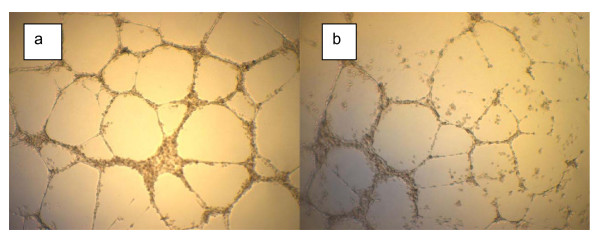
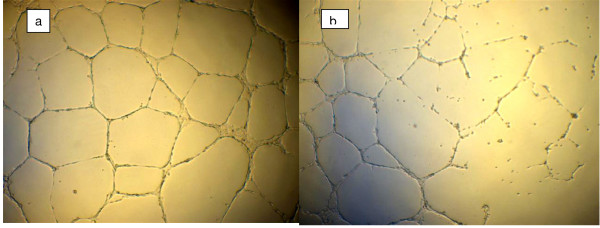
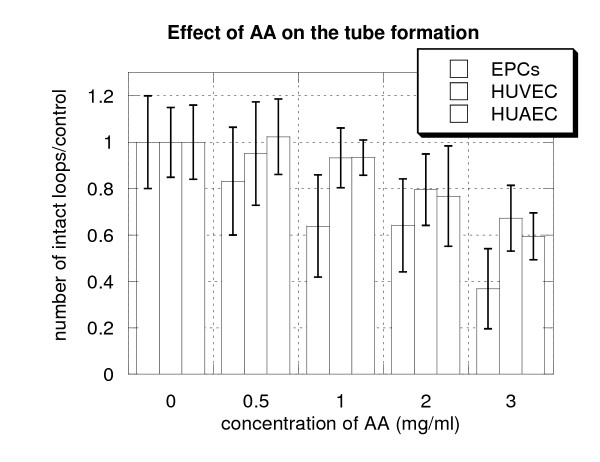
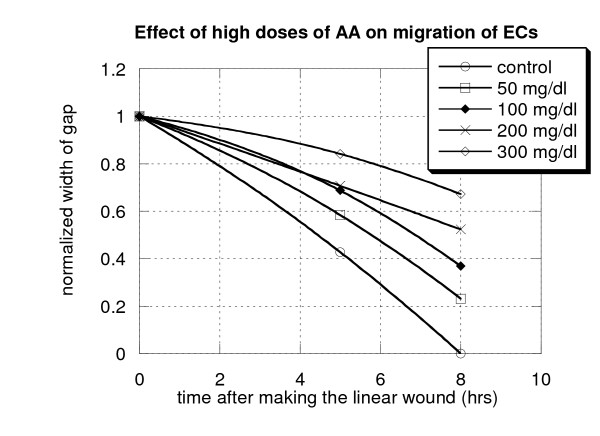
Verification
Claims the paper makes
The claims and statistics of this paper haven’t been checked yet.
Free: it reads the open-access text and checks the first 5 claims that cite a source we can check. Create a free account to check every claim.
Self-check
Percentages, sums and reported differences re-computed from the paper’s own numbers.
The self-check needs the paper’s full text.
Citations
Cites
A JOURNAL OF PHARMACOLOGY AND EXPERIMENTAL THERAPEUTICS
(1909) · Journal of the American Medical Association · doi:10.1001/jama.1909.02550020033007 · Cited by 7,866
Orimo, A., Gupta, P. B., Sgroi, D. C., Arenzana-Seisdedos, F., Delaunay, T., Naeem, R., Carey, V. J., Richardson, A. L., & Weinberg, R. A. (2005) · Cell · doi:10.1016/j.cell.2005.02.034 · Cited by 3,759
Asahara, T., Masuda, H., Takahashi, T., Kalka, C., Pastore, C., Silver, M., Kearne, M., Magner, M., & Isner, J. M. (1999) · Circulation Research · doi:10.1161/01.res.85.3.221 · Cited by 3,253
Peichev, M., Naiyer, A. J., Pereira, D., Zhu, Z., Lane, W. J., Williams, M., Oz, M. C., Hicklin, D. J., Witte, L., Moore, M. A. S., et al. (2000) · Blood · doi:10.1182/blood.v95.3.952.003k27_952_958 · Cited by 2,277
Lyden, D., Hattori, K., Dias, S., Costa, C., Blaikie, P., Butros, L., Chadburn, A., Heissig, B., Marks, W., Witte, L., et al. (2001) · Nature Medicine · doi:10.1038/nm1101-1194 · Cited by 1,860
Origins of circulating endothelial cells and endothelial outgrowth from blood
Lin, Y., Weisdorf, D. J., Solovey, A., & Hebbel, R. P. (2000) · Journal of Clinical Investigation · doi:10.1172/jci8071 · Cited by 1,531
Yang, L., DeBusk, L. M., Fukuda, K., Fingleton, B., Green-Jarvis, B., Shyr, Y., Matrisian, L. M., Carbone, D. P., & Lin, P. C. (2004) · Cancer Cell · doi:10.1016/j.ccr.2004.08.031 · Cited by 1,140
Chen, Q., Espey, M. G., Krishna, M. C., Mitchell, J. B., Corpe, C. P., Buettner, G. R., Shacter, E., & Levine, M. (2005) · Proceedings of the National Academy of Sciences · doi:10.1073/pnas.0506390102 · Cited by 1,075
Gill, M., Dias, S., Hattori, K., Rivera, M. L., Hicklin, D., Witte, L., Girardi, L., Yurt, R., Himel, H., & Rafii, S. (2001) · Circulation Research · doi:10.1161/01.res.88.2.167 · Cited by 798
Roles of nitric oxide in tumor growth.
Jenkins, D. C., Charles, I. G., Thomsen, L. L., Moss, D. W., Holmes, L. S., Baylis, S. A., Rhodes, P., Westmore, K., Emson, P. C., & Moncada, S. (1995) · Proceedings of the National Academy of Sciences · doi:10.1073/pnas.92.10.4392 · Cited by 780
Grant, M. B., May, W. S., Caballero, S., Brown, G. A. J., Guthrie, S. M., Mames, R. N., Byrne, B. J., Vaught, T., Spoerri, P. E., Peck, A. B., et al. (2002) · Nature Medicine · doi:10.1038/nm0602-607 · Cited by 665
De Palma, M., Venneri, M. A., Roca, C., & Naldini, L. (2003) · Nature Medicine · doi:10.1038/nm871 · Cited by 549
Bone marrow contribution to tumor-associated myofibroblasts and fibroblasts
Direkze, N. C., Hodivala-Dilke, K., Jeffery, R., Hunt, T., Poulsom, R., Oukrif, D., Alison, M. R., & Wright, N. A. (2004) · Cancer Research · doi:10.1158/0008-5472.can-04-1708 · Cited by 530
Diverse Origin and Function of Cells With Endothelial Phenotype Obtained From Adult Human Blood
Gulati, R., Jevremovic, D., Peterson, T. E., Chatterjee, S., Shah, V., Vile, R. G., & Simari, R. D. (2003) · Circulation Research · doi:10.1161/01.res.0000105569.77539.21 · Cited by 449
Conejo-Garcia, J. R., Benencia, F., Courreges, M.-C., Kang, E., Mohamed-Hadley, A., Buckanovich, R. J., Holtz, D. O., Jenkins, A., Na, H., Zhang, L., et al. (2004) · Nature Medicine · doi:10.1038/nm1097 · Cited by 437
Role of nitric oxide in angiogenesis and tumor progression in head and neck cancer
Gallo, O., Fini-Storchi, I., Vergari, W. A., Masini, E., Morbidelli, L., Ziche, M., & Franchi, A. (1998) · JNCI Journal of the National Cancer Institute · doi:10.1093/jnci/90.8.587 · Cited by 427
Rajantie, I., Ilmonen, M., Alminaite, A., Ozerdem, U., Alitalo, K., & Salven, P. (2004) · Blood · doi:10.1182/blood-2004-01-0336 · Cited by 390
Impaired wound healing and angiogenesis in eNOS-deficient mice
Lee, P. C., Salyapongse, A. N., Bragdon, G. A., Shears, L. L., Watkins, S. C., Edington, H. D. J., & Billiar, T. R. (1999) · American Journal of Physiology-Heart and Circulatory Physiology · doi:10.1152/ajpheart.1999.277.4.h1600 · Cited by 369
Dulak, J., Józkowicz, A., Dembinska-Kiec, A., Guevara, I., Zdzienicka, A., Zmudzinska-Grochot, D., Florek, I., Wójtowicz, A., Szuba, A., & Cooke, J. P. (2000) · Arteriosclerosis, Thrombosis, and Vascular Biology · doi:10.1161/01.atv.20.3.659 · Cited by 329
Bompais, H., Chagraoui, J., Canron, X., Crisan, M., Liu, X. H., Anjo, A., Tolla-Le Port, C., Leboeuf, M., Charbord, P., Bikfalvi, A., et al. (2004) · Blood · doi:10.1182/blood-2003-08-2770 · Cited by 274
Intravenously administered vitamin C as cancer therapy: three cases
Padayatty, S. J. (2006) · Canadian Medical Association Journal · doi:10.1503/cmaj.050346 · Cited by 252
Role of eNOS in neovascularization: NO for endothelial progenitor cells
Duda, D. G., Fukumura, D., & Jain, R. K. (2004) · Trends in Molecular Medicine · doi:10.1016/j.molmed.2004.02.001 · Cited by 240
Gratton, J.-P., Lin, M. I., Yu, J., Weiss, E. D., Jiang, Z. L., Fairchild, T. A., Iwakiri, Y., Groszmann, R., Claffey, K. P., Cheng, Y.-C., et al. (2003) · Cancer Cell · doi:10.1016/s1535-6108(03)00168-5 · Cited by 238
Clément, M.-V., Ramalingam, J., Long, L. H., & Halliwell, B. (2001) · Antioxidants & Redox Signaling · doi:10.1089/152308601750100687 · Cited by 230
Jadeski, L. C., & Lala, P. K. (1999) · The American Journal of Pathology · doi:10.1016/s0002-9440(10)65240-6 · Cited by 174
Yeom, C. H., Jung, G. C., & Song, K. J. (2007) · Journal of Korean Medical Science · doi:10.3346/jkms.2007.22.1.7 · Cited by 149
Bagley, R. G., Walter-Yohrling, J., Cao, X., Weber, W. D., Simons, B., Cook, B. P., Chartrand, S., Wang, C., Madden, S. L., & Teicher, B. A. (2003) · PubMed · Cited by 143
Orthomolecular Oncology Review: Ascorbic Acid and Cancer 25 Years Later
González, M. J., Miranda-Massari, J. R., Mora, E. M., Guzmán, A., Riordan, N. H., Riordan, H. D., Casciari, J. J., Jackson, J. A., & Román-Franco, A. (2005) · Integrative Cancer Therapies · doi:10.1177/1534735404273861 · Cited by 135
Peterkofsky, B., & Prather, W. (1977) · Journal of Cellular Physiology · doi:10.1002/jcp.1040900109 · Cited by 134
Grossniklaus, H. E. (2002) · American Journal of Ophthalmology · doi:10.1016/s0002-9394(02)01714-2 · Cited by 131
Therapeutic efficacy of high-dose vitamin C on acute pancreatitis and its potential mechanisms
Du, W.-D., Yuan, Z.-R., Sun, J., Tang, J.-X., Cheng, A.-Q., Shen, D.-M., Huang, C.-J., Song, X.-H., Yu, X.-F., & Zheng, S.-B. (2003) · World Journal of Gastroenterology · doi:10.3748/wjg.v9.i11.2565 · Cited by 123
Pharmacokinetics of vitamin C: insights into the oral and intravenous administration of ascorbate.
Duconge-Soler, J., Miranda-Massari, J. R., González, M. J., Jackson, J. A., Warnock, W., & Riordan, N. H. (2008) · PubMed · Cited by 117
Thalidomide attenuates nitric oxide mediated angiogenesis by blocking migration of endothelial cells
Tamilarasan, K., Kolluru, G. K., Rajaram, M., Indhumathy, M., Saranya, R., & Chatterjee, S. (2006) · BMC Cell Biology · doi:10.1186/1471-2121-7-17 · Cited by 108
Pericytes and Endothelial Precursor Cells: Cellular Interactions and Contributions to Malignancy
Bagley, R. G., Weber, W., Rouleau, C., & Teicher, B. A. (2005) · Cancer Research · doi:10.1158/0008-5472.can-04-4337 · Cited by 104
Cytotoxicity of ascorbate, lipoic acid, and other antioxidants in hollow fibre in vitro tumours
Casciari, J. J., Riordan, N. H., Schmidt, T. L., Meng, X. L., Jackson, J. A., & Riordan, H. D. (2001) · British Journal of Cancer · doi:10.1054/bjoc.2001.1814 · Cited by 96
Ascorbic acid-independent synthesis of collagen in mice
Parsons, K. K., Maeda, N., Yamauchi, M., Banes, A. J., & Koller, B. H. (2006) · American Journal of Physiology-Endocrinology and Metabolism · doi:10.1152/ajpendo.00339.2005 · Cited by 69
Depletion of Ascorbic Acid Restricts Angiogenesis and Retards Tumor Growth in a Mouse Model
Telang, S., Clem, A. L., Eaton, J. W., & Chesney, J. (2007) · Neoplasia · doi:10.1593/neo.06664 · Cited by 65
Intravenous vitamin C as a chemotherapy agent: a report on clinical cases.
Riordan, H. D., Riordan, N. H., Jackson, J. A., Casciari, J. J., Hunninghake, R., González, M. J., Mora, E., Miranda-Massari, J. R., Rosario, N., & Rivera, A. (2004) · PubMed · Cited by 55
Sestili, P., Brandi, G., Brambilla, L., Cattabeni, F., & Cantoni, O. (1996) · The Journal of Pharmacology and Experimental Therapeutics · doi:10.1016/s0022-3565(25)13128-5 · Cited by 55
Ascorbic Acid Is Cytotoxic to Dividing Human Tenon's Capsule Fibroblasts
JAMPEL, H. D. (1990) · Archives of Ophthalmology · doi:10.1001/archopht.1990.01070110139038 · Cited by 53
Clinical and Experimental Experiences with Intravenous Vitamin C
Riordan, N. H., Riordan, H. D., Casciari, P., & Casciari, J. J. (2000) · Cited by 46
Inhibition of corneal angiogenesis by ascorbic acid in the rat model
Peyman, G. A., Kivilcim, M., Morales, A. M., DELLACROCE, J. T., & Conway, M. D. (2007) · Graefe s Archive for Clinical and Experimental Ophthalmology · doi:10.1007/s00417-007-0542-4 · Cited by 37
Role of Hydrogen Peroxide in the Inhibitory Effect of Ascorbate on Cell Growth.
ARAKAWA, N., Nemoto, S., SUZUKI, E., & OTSUKA, M. (1994) · Journal of Nutritional Science and Vitaminology · doi:10.3177/jnsv.40.219 · Cited by 33
Riordan, H. D., Jackson, J. A., Riordan, N. H., & Schultz, M. (1998) · Journal of orthomolecular medicine · Cited by 29
[Role of nitric oxide in tumor growth].
Запорожан, В. М., Гоженко, А. І., Korneenko, T. V., & Дубініна, В. Г. (2004) · PubMed · Cited by 22
Research works printed but not linked: 4
- Mikirova NA Jackson JA Riordan NH The effect of high dose IV vitamin C on plasma antioxidant capacity and level of oxidative stress in cancer patients and healthy volunteers JOM 2007 22 153 160
- Jackson JA Riordan HD Hunninghake RE Riordan NH High-dose intravenous vitamin C and long-time survival of patients with cancer of the head and pancreas J Orthomol Med 1995 10 87 8
- Riordan NH Jackson JA Riordan HD Intravenous vitamin C in a terminal cancer patient J Orthomol Med 1996 11 80 2
- Gratton J Lin M Yu J Weiss E Jiang ZL Fairchild TA Iwakiri Y Groszmann R Claffey KP Cheng YC Sessa WC Selective inhibition of tumor microvascular permeability by cavtratin blocks tumor progression in mice Cancer cell 2003 4 31 39 12892711 10.1016/S1535-6108(03)00168-5 · DOI · Paper page
Cited by
Ascorbic acid: Chemistry, biology and the treatment of cancer
Du, J., Cullen, J. J., & Buettner, G. R. (2012) · Biochimica et Biophysica Acta (BBA) - Reviews on Cancer · doi:10.1016/j.bbcan.2012.06.003 · Cited by 1,070
The Roles of Vitamin C in Skin Health.
Pullar, J., Carr, A., & Vissers, M. (2017) · Nutrients · doi:10.3390/nu9080866 · Cited by 756
Effect of high-dose intravenous vitamin C on inflammation in cancer patients
Mikirova, N., Casciari, J., Rogers, A., & Taylor, P. (2012) · Journal of Translational Medicine · doi:10.1186/1479-5876-10-189 · Cited by 193
Natural approaches in metabolic syndrome management
Patti, A. M., Al-Rasadi, K., Giglio, R. V., Nikolic, D., Mannina, C., Castellino, G., Chianetta, R., Banach, M., Cicero, A. F., Lippi, G., et al. (2018) · Archives of Medical Science · doi:10.5114/aoms.2017.68717 · Cited by 139
Parenteral Ascorbate As a Cancer Therapeutic: A Reassessment Based on Pharmacokinetics
Parrow, N. L., Leshin, J. A., & Levine, M. (2013) · Antioxidants & Redox Signaling · doi:10.1089/ars.2013.5372 · Cited by 98
Metadata
- Authors
- Mikirova, N. A., Ichim, T. E., & Riordan, N. H.
- Affiliations
- Riordan Clinic (US)
- Corresponding author
- Mikirova, Nina A
- ORCID
- Ichim, Thomas E
- Venue
- Journal of Translational Medicine
- Published
- 2008-09-12
- Volume
- 6
- Issue
- 1
- Pages
- 50-50
- ISSN
- 1479-5876 (ISSN-L)
- PMC
- PMC2562367
- OpenAlex
- W2163987083
- Cited by
- 78
- References
- 45
- Citations by year
- 2026: 3 · 2024: 6 · 2023: 3 · 2022: 5 · 2021: 12 · 2020: 7 · 2019: 1 · 2018: 4 · 2017: 6 · 2016: 5 · 2015: 5 · 2013: 6 · 2012: 6
- FWCI
- 1.24
- Type
- journal article
- Language
- en
- Open access
- gold
- doi.org
- Licence
- cc-by
- creativecommons.org/licenses/by/2.0 (tdm)
- Locations
- Journal of Translational Medicine (publishedVersion, cc-by)
- PubMed Central (publishedVersion, cc-by)
- PubMed (publishedVersion)
- DOAJ (DOAJ: Directory of Open Access Journals) (submittedVersion)
- Topics
- Life Sciences › Biochemistry, Genetics and Molecular Biology › Molecular Biology › Angiogenesis and VEGF in Cancer
- Health Sciences › Nursing › Nutrition and Dietetics › Vitamin C and Antioxidants Research
- Health Sciences › Medicine › Pharmacology (medical) › Flavonoids in Medical Research
- Keywords
- vitamin C, angiogenesis inhibition, endothelial progenitor cells, endothelial cell migration, tube formation, nitric oxide, wound healing, energy metabolism, high-dose ascorbic acid
- MeSH terms
- Antineoplastic Agents, Ascorbic Acid, Cell Movement, Cell Separation, Cells, Cultured, Collagen, Dose-Response Relationship, Drug, Drug Combinations, Humans, Laminin, Nitric Oxide, Proteoglycans, Stem Cells, Umbilical Cord, Neovascularization, Physiologic, NG-Nitroarginine Methyl Ester, Angiogenesis Inhibitors, Endothelial Cells
About these checks
Registry, retraction, Cites and statistics results are computed, not judged, with one exception: a printed reference that no index lists is read once by a model before it counts as a citation error. Claims are extracted by a model and kept only when their quote appears verbatim in the text; each cited source is then checked, with a model’s help, for whether it says what the claim relies on. Those verdicts can be wrong — read the claim’s quote and the cited source before relying on one.
Statistics and arithmetic are recomputed, not judged.
Confidence bands are shown only for fields calibrated on our annotated test set. None is calibrated yet, so no band is shown.
What counts as a claim ›How we measure confidence ›How we check this ›
Are you an author, or do you see a problem with this page? Request a review
Data sources
Bibliographic data: Semantic Scholar, OpenAlex, Crossref.
Contains information from the Semantic Scholar Academic Graph Datasets, made available under the ODC Attribution License (ODC-BY 1.0).
Semantic Scholar’s data is described in: Kinney, R., et al. (2023). The Semantic Scholar Open Data Platform. arXiv:2301.10140.
