

The DOI matches its Crossref record; 44 of the 44 references it cites were found in a registry or an index.
Complement component C5a Promotes Expression of IL-22 and IL-17 from Human T cells and its Implication in Age-related Macular Degeneration
Open accessAbstract
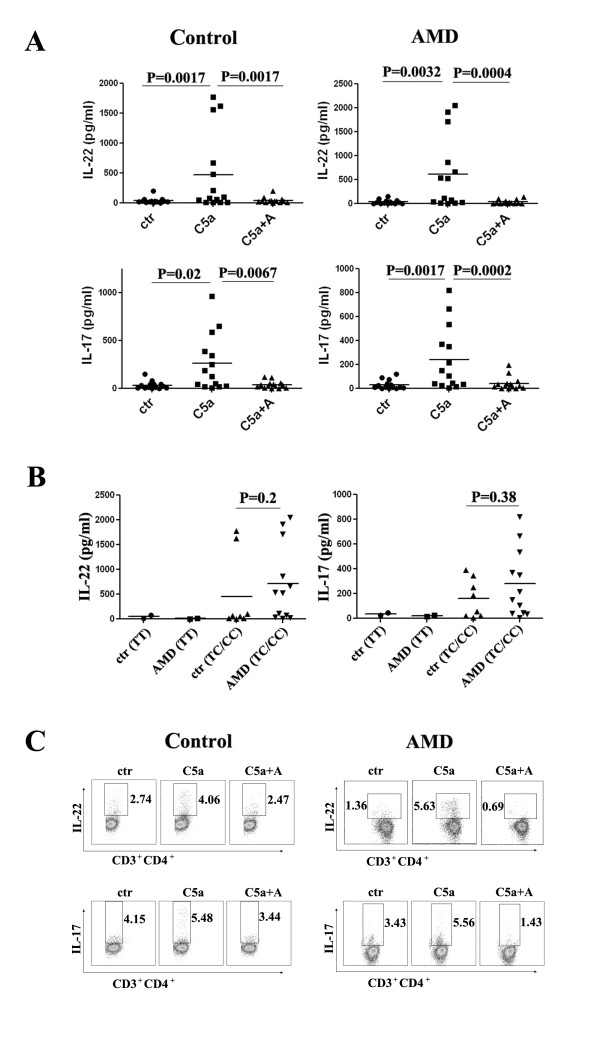
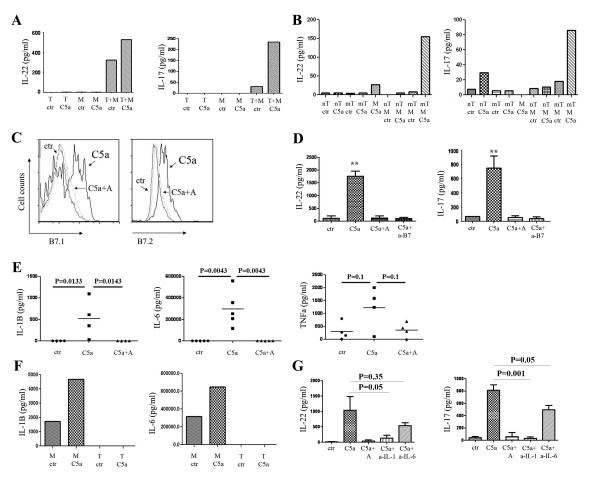
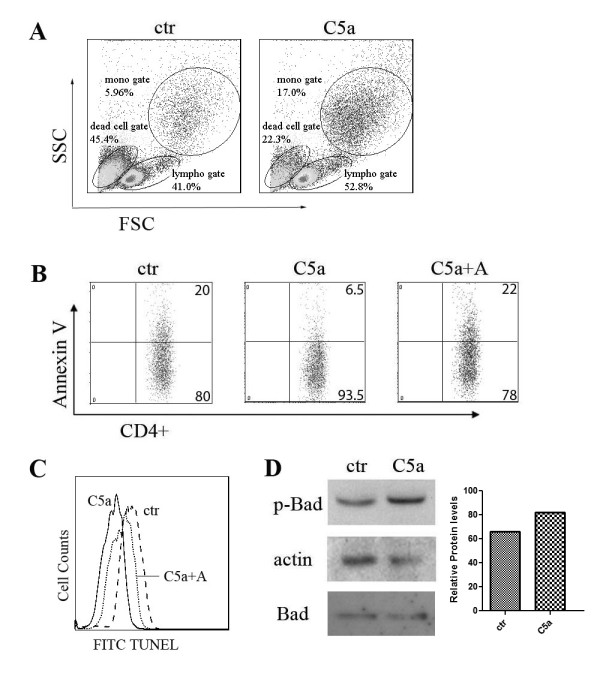
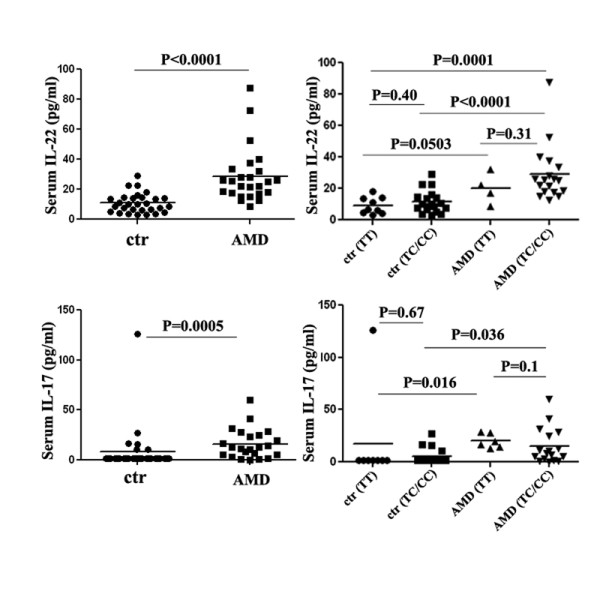
Background: Age related macular degeneration (AMD) is the leading cause of irreversible blindness in elderly populations worldwide. Inflammation, among many factors, has been suggested to play an important role in AMD pathogenesis. Recent studies have demonstrated a strong genetic association between AMD and complement factor H (CFH), the down-regulatory factor of complement activation. Elevated levels of complement activating molecules including complement component 5a (C5a) have been found in the serum of AMD patients. Our aim is to study whether C5a can impact human T cells and its implication in AMD. Methods: Human peripheral blood mononuclear cells (PBMCs) were isolated from the blood of exudative form of AMD patients using a Ficoll gradient centrifugation protocol. Intracellular staining and enzyme-linked immunosorbent assays were used to measure protein expression. Apoptotic cells were detected by staining of cells with the annexin-V and TUNEL technology and analyzed by a FACS Caliber flow cytometer. SNP genotyping was analyzed by TaqMan genotyping assay using the Real-time PCR system 7500. Results: We show that C5a promotes interleukin (IL)-22 and IL-17 expression by human CD4 + T cells. This effect is dependent on B7, IL-1β and IL-6 expression from monocytes. We have also found that C5a could protect human CD4 + cells from undergoing apoptosis. Importantly, consistent with a role of C5a in promoting IL-22 and IL-17 expression, significant elevation in IL-22 and IL-17 levels was found in AMD patients as compared to non-AMD controls. Conclusions: Our results support the notion that C5a may be one of the factors contributing to the elevated serum IL-22 and IL-17 levels in AMD patients. The possible involvement of IL-22 and IL-17 in the inflammation that contributes to AMD may herald a new approach to treat AMD.
Overview
The claims and statistics of this paper haven’t been checked yet.
Run the check — free, no account needed. It reads the open-access text and checks the sources it cites.
Integrity signals
Registry
Cites
Statistics
Figures
Verification
Claims the paper makes
The claims and statistics of this paper haven’t been checked yet.
Run the check — free, no account needed. It reads the open-access text and checks the sources it cites.
Claims other papers make about this one
Each is checked against this paper’s own text: does it say what the citing paper says it does?
In the citing paper
“Elevated levels of effector T cell IL22 and IL17 cytokines were reported in AMD patients [64,65], suggesting an activation of cellular-mediated immunity.”
From Risk mitigation of immunogenicity: a key to personalized retinal gene therapy (2021) · cites this paper as [64]
Self-check
Percentages, sums and reported differences re-computed from the paper’s own numbers.
The self-check needs the paper’s full text.
Citations
Cites
Complement factor H polymorphism in age-related macular degeneration
Klein, R. J., Zeiss, C., Chew, E. Y., Tsai, J.-Y., Sackler, R. S., Haynes, C., Henning, A. K., SanGiovanni, J. P., Mane, S. M., Mayne, S. T., et al. (2005) · Science · doi:10.1126/science.1109557 · Cited by 4,492
Self-citationRanibizumab and bevacizumab for neovascular age-related macular degeneration
(2011) · New England Journal of Medicine · doi:10.1056/nejmoa1102673 · Cited by 2,669
Complement factor H polymorphism and age-related macular degeneration
Edwards, A. O., Ritter, R., Abel, K. J., Manning, A., Panhuysen, C., & Farrer, L. A. (2005) · Science · doi:10.1126/science.1110189 · Cited by 2,449
Development, cytokine profile and function of human interleukin 17-producing helper T cells
Wilson, N. J., Boniface, K., Chan, J. R., McKenzie, B. S., Blumenschein, W. M., Mattson, J. D., Basham, B., Smith, K., Chen, T., Morel, F., et al. (2007) · Nature Immunology · doi:10.1038/ni1497 · Cited by 2,035
Hageman, G. S., Anderson, D. H., Johnson, L. V., Hancox, L. S., Taiber, A. J., Hardisty, L. I., Hageman, J. L., Stockman, H. A., Borchardt, J. D., Gehrs, K. M., et al. (2005) · Proceedings of the National Academy of Sciences · doi:10.1073/pnas.0501536102 · Cited by 1,961
Interleukin-22, a TH17 cytokine, mediates IL-23-induced dermal inflammation and acanthosis
Zheng, Y., Danilenko, D. M., Valdez, P. A., Kasman, I. M., Eastham‐Anderson, J., Wu, J., & Ouyang, W. (2006) · Nature · doi:10.1038/nature05505 · Cited by 1,888
Acosta-Rodriguez, E. V., Napolitani, G., Lanzavecchia, A., & Sallusto, F. (2007) · Nature Immunology · doi:10.1038/ni1496 · Cited by 1,857
IL-17 family cytokines and the expanding diversity of effector T cell lineages
Weaver, C. T., Hatton, R. D., Mangan, P. R., & Harrington, L. E. (2007) · Annual Review of Immunology · doi:10.1146/annurev.immunol.25.022106.141557 · Cited by 1,842
Manel, N., Unutmaz, D., & Littman, D. R. (2008) · Nature Immunology · doi:10.1038/ni.1610 · Cited by 1,328
Drusen proteome analysis: an approach to the etiology of age-related macular degeneration
Crabb, J. W., Miyagi, M., Gu, X., Shadrach, K., West, K. A., Sakaguchi, H., Kamei, M., Hasan, A., Yan, L., Rayborn, M. E., et al. (2002) · Proceedings of the National Academy of Sciences · doi:10.1073/pnas.222551899 · Cited by 1,208
Cited by
Sorted by citations
Inflammation and its role in age-related macular degeneration
Kauppinen, A., Paterno, J. J., Błasiak, J., Salminen, A., & Kaarniranta, K. (2016) · Cellular and Molecular Life Sciences · doi:10.1007/s00018-016-2147-8 · Cited by 683
Current understanding of periodontal disease pathogenesis and targets for host‐modulation therapy
Hajishengallis, G., Chavakis, T., & Lambris, J. D. (2020) · Periodontology 2000 · doi:10.1111/prd.12331 · Cited by 558
Basic biology and role of interleukin‐17 in immunity and inflammation
Zenobia, C., & Hajishengallis, G. (2015) · Periodontology 2000 · doi:10.1111/prd.12083 · Cited by 507
Parainflammation, Chronic Inflammation and Age-Related Macular Degeneration
Chen, M., & Xu, H. (2015) · Journal of Leukocyte Biology · doi:10.1189/jlb.3ri0615-239r · Cited by 381
Lutein: More than just a filter for blue light
Kijlstra, A., Tian, Y., Kelly, E. R., & Berendschot, T. T. J. M. (2012) · Progress in Retinal and Eye Research · doi:10.1016/j.preteyeres.2012.03.002 · Cited by 349
The Role of Inflammation in Age-Related Macular Degeneration
Tan, W., Zou, J., Yoshida, S., Jiang, B., & Zhou, Y. (2020) · International Journal of Biological Sciences · doi:10.7150/ijbs.49890 · Cited by 311
Klos, A., Wende, E., Wareham, K., & Monk, P. N. (2013) · Pharmacological Reviews · doi:10.1124/pr.111.005223 · Cited by 268
Aging is not a disease: Distinguishing age-related macular degeneration from aging
Ardeljan, D., & Chan, C. (2013) · Progress in Retinal and Eye Research · doi:10.1016/j.preteyeres.2013.07.003 · Cited by 250
Self-citationWhitmore, S. S., Sohn, E. H., Chirco, K. R., Drack, A. V., Stone, E. M., Tucker, B. A., & Mullins, R. F. (2014) · Progress in Retinal and Eye Research · doi:10.1016/j.preteyeres.2014.11.005 · Cited by 223
Immune mechanisms in inflammatory and degenerative eye disease
Perez, V. L., & Caspi, R. R. (2015) · Trends in Immunology · doi:10.1016/j.it.2015.04.003 · Cited by 192
Age-related macular degeneration: A two-level model hypothesis
Rozing, M. P., Durhuus, J. A., Nielsen, M. K., Subhi, Y., Kirkwood, T. B. L., Westendorp, R. G., & Sørensen, T. L. (2019) · Progress in Retinal and Eye Research · doi:10.1016/j.preteyeres.2019.100825 · Cited by 188
Nature and nurture- genes and environment- predict onset and progression of macular degeneration
Sobrin, L., & Seddon, J. M. (2014) · Progress in Retinal and Eye Research · doi:10.1016/j.preteyeres.2013.12.004 · Cited by 183
The role of the adaptive immune system and T cell dysfunction in neurodegenerative diseases
DeMaio, A., Mehrotra, S., Sambamurti, K., & Husain, S. (2022) · Journal of Neuroinflammation · doi:10.1186/s12974-022-02605-9 · Cited by 192
Hypomethylation of the IL17RC Promoter Associates with Age-Related Macular Degeneration
Wei, L., Liu, B., Tuo, J., Shen, D., Chen, P., Li, Z., Liu, X., Ni, J., Dagur, P., Sen, H. N., et al. (2012) · Cell Reports · doi:10.1016/j.celrep.2012.10.013 · Cited by 167
Self-citationHasegawa, M., Yada, S., Liu, M. Z., Kamada, N., Muñoz-Planillo, R., Do, N., Núñez, G., & Inohara, N. (2014) · Immunity · doi:10.1016/j.immuni.2014.09.010 · Cited by 151
Lee, K. S., Lin, S., Copland, D. A., Dick, A. D., & Liu, J. (2021) · Journal of Neuroinflammation · doi:10.1186/s12974-021-02088-0 · Cited by 150
Complement‐mediated chronic inflammation is associated with diabetic microvascular complication
Fujita, T., Hemmi, S., Kajiwara, M., Yabuki, M., Fuke, Y., Satomura, A., & Soma, M. (2012) · Diabetes/Metabolism Research and Reviews · doi:10.1002/dmrr.2380 · Cited by 136
Seeing through VEGF: innate and adaptive immunity in pathological angiogenesis in the eye
Sène, A., Chin-Yee, D., & Apte, R. S. (2014) · Trends in Molecular Medicine · doi:10.1016/j.molmed.2014.10.005 · Cited by 130
Maekawa, T., Abe, T., Hajishengallis, E., Hosur, K. B., DeAngelis, R. A., Ricklin, D., Lambris, J. D., & Hajishengallis, G. (2014) · The Journal of Immunology · doi:10.4049/jimmunol.1400569 · Cited by 115
Interrelationship Between Periapical Lesion and Systemic Metabolic Disorders
Sasaki, H., Hirai, K., Martins, C. M., Furusho, H., Battaglino, R. A., & Hashimoto, K. (2016) · Current Pharmaceutical Design · doi:10.2174/1381612822666160216145107 · Cited by 140
Lechner, J., Chen, M., Hogg, R. E., Tóth, L., Silvestri, G., Chakravarthy, U., & Xu, H. (2016) · Immunity & Ageing · doi:10.1186/s12979-016-0060-5 · Cited by 114
The Role of the Immune Response in Age-Related Macular Degeneration
Whitcup, S. M., Sodhi, A., Atkinson, J. P., Holers, V. M., Sinha, D., Rohrer, B., & Dick, A. D. (2013) · International Journal of Inflammation · doi:10.1155/2013/348092 · Cited by 103
Inflammatory Mechanisms of Age-related Macular Degeneration
Knickelbein, J. E., Chan, C., Sen, H. N., Ferris, F. L., & Nussenblatt, R. B. (2015) · International Ophthalmology Clinics · doi:10.1097/iio.0000000000000073 · Cited by 98
Self-citationThe eye: A window to the soul of the immune system
Perez, V. L., Saeed, A. M., Tan, Y. C. R. S., Urbieta, M., & Cruz‐Guilloty, F. (2013) · Journal of Autoimmunity · doi:10.1016/j.jaut.2013.06.011 · Cited by 93
Hasegawa, E., Sonoda, K., Shichita, T., Morita, R., Sekiya, T., Kimura, A., Oshima, Y., Takeda, A., Yoshimura, T., Yoshida, S., et al. (2013) · The Journal of Immunology · doi:10.4049/jimmunol.1202495 · Cited by 87
Cao, S., Ko, A., Partanen, M., Pakzad-Vaezi, K. L., Merkur, A. B., Albiani, D. A., Kirker, A. W., Wang, A., Cui, J. Z., Forooghian, F., et al. (2013) · American Journal of Ophthalmology · doi:10.1016/j.ajo.2013.08.003 · Cited by 89
Next-generation nanomaterials: advancing ocular anti-inflammatory drug therapy
Wei, J., Mu, J., Tang, Y., Qin, D., Duan, J., & Wu, A. (2023) · Journal of Nanobiotechnology · doi:10.1186/s12951-023-01974-4 · Cited by 89
Nussenblatt, R. B., Lee, R., Chew, E. Y., Wei, L., Liu, B., Sen, H. N., Dick, A. D., & Ferris, F. L. (2014) · American Journal of Ophthalmology · doi:10.1016/j.ajo.2014.03.014 · Cited by 75
Self-citationCamelo, S. (2014) · Autoimmune Diseases · doi:10.1155/2014/532487 · Cited by 72
A Perspective of AMD Through the Eyes of Immunology
Copland, D. A., Theodoropoulou, S., Liu, J., & Dick, A. D. (2018) · Investigative Opthalmology & Visual Science · doi:10.1167/iovs.18-23893 · Cited by 66
Cruz‐Guilloty, F., Saeed, A. M., Duffort, S., Cano, M., Ebrahimi, K. B., Ballmick, A., Tan, Y., Wang, H., Laird, J. M., Salomon, R. G., et al. (2014) · PLoS ONE · doi:10.1371/journal.pone.0088201 · Cited by 68
Coughlin, B., Schnabolk, G., Joseph, K., Raikwar, H., Kunchithapautham, K., Johnson, K., Moore, K., Wang, Y., & Rohrer, B. (2016) · Scientific Reports · doi:10.1038/srep23794 · Cited by 65
Vitamin D and Age-Related Macular Degeneration
García‐Layana, A., Minnella, A. M., Garhöfer, G., Aslam, T. M., Holz, F. G., LEYS, A. M., da Silva, R. M., Delcourt, C., Souied, E. H., & Seddon, J. M. (2017) · Nutrients · doi:10.3390/nu9101120 · Cited by 66
Antibody therapies and their challenges in the treatment of age-related macular degeneration
Volz, C., & Pauly, D. (2015) · European Journal of Pharmaceutics and Biopharmaceutics · doi:10.1016/j.ejpb.2015.02.020 · Cited by 65
Zhu, Y., Tan, W., Demetriades, A. M., Cai, Y., Gao, Y., Sui, A., Lü, Q., Shen, X. P., Jiang, C., Xie, B., et al. (2015) · Immunology · doi:10.1111/imm.12571 · Cited by 64
Faber, C., Singh, A., Falk, M. K., Juel, H. B., Sørensen, T. L., & Nissen, M. H. (2013) · Ophthalmology · doi:10.1016/j.ophtha.2013.04.014 · Cited by 58
Interleukin-17A Induces IL-1β Secretion From RPE Cells Via the NLRP3 Inflammasome
Zhang, S., Yu, N., Zhang, R., Zhang, S., & Wu, J. (2016) · Investigative Ophthalmology & Visual Science · doi:10.1167/iovs.15-17578 · Cited by 56
Alterations in Circulating Immune Cells in Neovascular Age-Related Macular Degeneration
Lechner, J., Chen, M., Hogg, R. E., Tóth, L., Silvestri, G., Chakravarthy, U., & Xu, H. (2015) · Scientific Reports · doi:10.1038/srep16754 · Cited by 55
Horellou, P., Wang, M., Keo, V., Chrétien, P., Serguera, C., Waters, P. J., & Deiva, K. (2015) · Journal of Neuroimmunology · doi:10.1016/j.jneuroim.2015.10.002 · Cited by 56
Anaphylatoxins coordinate innate and adaptive immune responses in allergic asthma
Schmudde, I., Laumonnier, Y., & Köhl, J. (2013) · Seminars in Immunology · doi:10.1016/j.smim.2013.04.009 · Cited by 54
Wang, Y., Subramanian, P., Shen, D., Tuo, J., Becerra, S. P., & Chan, C. (2013) · ASN NEURO · doi:10.1042/an20130028 · Cited by 54
Self-citationThe role of lymphocytes and phagocytes in age-related macular degeneration (AMD)
Behnke, V., Wolf, A., & Langmann, T. (2020) · Cellular and Molecular Life Sciences · doi:10.1007/s00018-019-03419-4 · Cited by 55
Takeuchi, M., Sato, T., Sakurai, Y., Taguchi, M., Harimoto, K., Karasawa, Y., & Ito, M. (2017) · PLoS ONE · doi:10.1371/journal.pone.0178230 · Cited by 51
Interleukin-17: The Role for Pathological Angiogenesis in Ocular Neovascular Diseases
Li, Y., & Zhou, Y. (2019) · The Tohoku Journal of Experimental Medicine · doi:10.1620/tjem.247.87 · Cited by 53
Kim, E. J., Grant, G. R., Bowman, A. S., Haider, N., Gudiseva, H. V., & Chavali, V. R. M. (2018) · Scientific Reports · doi:10.1038/s41598-018-21104-7 · Cited by 53
Bora, N. S., Matta, B., Lyzogubov, V. V., & Bora, P. S. (2014) · Molecular Immunology · doi:10.1016/j.molimm.2014.07.012 · Cited by 49
Ardeljan, D., Wang, Y., Park, S., Shen, D., Chu, X. K., Yu, C., Abu-Asab, M. S., Tuo, J., Eberhart, C. G., Olsen, T. W., et al. (2014) · PLoS ONE · doi:10.1371/journal.pone.0095900 · Cited by 50
Self-citationArdeljan, C., Ardeljan, D., Abu-Asab, M. S., & Chan, C. (2014) · Journal of Clinical Medicine · doi:10.3390/jcm3041542 · Cited by 53
Self-citationIL-17A Damages the Blood–Retinal Barrier through Activating the Janus Kinase 1 Pathway
Byrne, E. M., Llorián‐Salvador, M., Tang, M., Margariti, A., Chen, M., & Xu, H. (2021) · Biomedicines · doi:10.3390/biomedicines9070831 · Cited by 46
Shivshankar, P., Li, Y., Mueller‐Ortiz, S. L., & Wetsel, R. A. (2020) · The FASEB Journal · doi:10.1096/fj.201902397r · Cited by 45
Singh, A., Subhi, Y., Nielsen, M. K., Falk, M. K., Matzen, S. M. H., Sellebjerg, F. T., & Sørensen, T. L. (2017) · Scientific Reports · doi:10.1038/s41598-017-00741-4 · Cited by 44
Edwards, G., Olson, C. G., Euritt, C. P., & Koulen, P. (2022) · Frontiers in Neuroscience · doi:10.3389/fnins.2022.890021 · Cited by 49
Interleukin-17 Induces Angiogenesis in Human Choroidal Endothelial Cells In Vitro
Chen, Y., Zhong, M., Liang, L., Gu, F., & Peng, H. (2014) · Investigative Ophthalmology & Visual Science · doi:10.1167/iovs.14-15029 · Cited by 41
Molecular Pathology of Macrophages and Interleukin-17 in Age-Related Macular Degeneration
Chan, C., & Ardeljan, D. (2014) · Advances in experimental medicine and biology · doi:10.1007/978-1-4614-3209-8_25 · Cited by 41
Self-citationPrevalence of anti-retinal autoantibodies in different stages of Age-related macular degeneration
Adamus, G., Chew, E. Y., Ferris, F. L., & Klein, M. L. (2014) · BMC Ophthalmology · doi:10.1186/1471-2415-14-154 · Cited by 42
Self-citationAkt-Dependent Enhanced Migratory Capacity of Th17 Cells from Children with Lupus Nephritis
Kshirsagar, S., Riedl, M., Billing, H., Tönshoff, B., Thangavadivel, S., Steuber, C., Staude, H., Wechselberger, G., & Edelbauer, M. (2014) · The Journal of Immunology · doi:10.4049/jimmunol.1400044 · Cited by 38
Schmudde, I., Ströver, H. A., Vollbrandt, T., König, P., Karsten, C. M., Laumonnier, Y., & Köhl, J. (2012) · Mucosal Immunology · doi:10.1038/mi.2012.119 · Cited by 37
Tuo, J., Cao, X., Shen, D., Wang, Y., Zhang, J., Oh, J. Y., Prockop, D. J., & Chan, C. (2012) · Journal of Neuroinflammation · doi:10.1186/1742-2094-9-59 · Cited by 37
Self-citationComplement pathway biomarkers and age-related macular degeneration
Gemenetzi, M. K., & Lotery, A. J. (2015) · Eye · doi:10.1038/eye.2015.203 · Cited by 39
Regulatory effects of C5a on IL-17A, IL-17F, and IL-23
Grailer, J. J., Bosmann, M., & Ward, P. A. (2013) · Frontiers in Immunology · doi:10.3389/fimmu.2012.00387 · Cited by 35
Tzoumas, N., Hallam, D., Harris, C. L., Lako, M., Kavanagh, D., & Steel, D. H. W. (2021) · Survey of Ophthalmology · doi:10.1016/j.survophthal.2020.10.008 · Cited by 33
Nagai, N., Kawashima, H., Toda, E., Homma, K., Osada, H., Mendoza, N. A. G., Shibata, S., Uchiyama, Y., Okano, H., Tsubota, K., et al. (2020) · Communications Biology · doi:10.1038/s42003-020-01483-2 · Cited by 32
Khan, A. H., Chowers, I., & Lotery, A. J. (2023) · Cells · doi:10.3390/cells12131708 · Cited by 31
Is Age-Related Macular Degeneration a Microvascular Disease?
Mullins, R. F., Khanna, A., Schoo, D. P., Tucker, B. A., Sohn, E. H., Drack, A. V., & Stone, E. M. (2014) · Advances in experimental medicine and biology · doi:10.1007/978-1-4614-3209-8_36 · Cited by 30
Liang, X. Y., Chen, L. J., Ng, T. K., Tuo, J., Gao, J.-L., Tam, P., Lai, T. Y. Y., Chan, C.-C., & Pang, C. (2014) · Eye · doi:10.1038/eye.2014.226 · Cited by 31
Self-citationYin, H., Fang, X., Ma, J., Chen, M., Yang, Y., Guo, S., Chen, Z., Su, Z., Feng, L., Ye, P., et al. (2016) · Scientific Reports · doi:10.1038/srep31880 · Cited by 29
Immuno-modulatory Effect of IFN-gamma in AMD and its Role as a Possible Target for Therapy
Cui, S. C. J. Z. (2011) · Journal of Clinical & Experimental Ophthalmology · doi:10.4172/2155-9570-s2-007 · Cited by 29
The Immunological Basis of Degenerative Diseases of the Eye
Nussenblatt, R. B., Liu, B., Wei, L., & Sen, H. N. (2013) · International Reviews of Immunology · doi:10.3109/08830185.2012.740536 · Cited by 31
Self-citationArrigo, A., Aragona, E., & Bandello, F. M. (2023) · Asia-Pacific Journal of Ophthalmology · doi:10.1097/apo.0000000000000570 · Cited by 33
Animal models of age-related macular degeneration and their translatability into the clinic
Chen, S., Popp, N. A., & Chan, C. (2014) · Expert Review of Ophthalmology · doi:10.1586/17469899.2014.939171 · Cited by 30
Self-citationAdamus, G. (2017) · Autoimmunity Reviews · doi:10.1016/j.autrev.2017.01.005 · Cited by 28
Effect of Humanin G (HNG) on inflammation in age-related macular degeneration (AMD)
Nashine, S., Cohen, P., Wan, J., & Kenney, M. C. (2022) · Aging · doi:10.18632/aging.204074 · Cited by 28
Ocular immune‐related diseases: molecular mechanisms and therapy
Wang, Y., Gao, S., Cao, F., Yang, H., Lei, F., & Hou, S. (2024) · MedComm · doi:10.1002/mco2.70021 · Cited by 27
A complex auxiliary: IL-17/Th17 signaling during type 1 diabetes progression
Zheng, Z., & Zheng, F. (2018) · Molecular Immunology · doi:10.1016/j.molimm.2018.11.007 · Cited by 27
Wang, J. C. C., Cao, S., Wang, A., To, E. C., Law, G., Gao, J., Zhang, D., Cui, J. Z., & Matsubara, J. A. (2015) · Europe PMC (PubMed Central) · Cited by 25
Devarajan, G., Niven, J., Forrester, J. V., & Crane, I. J. (2016) · Current Eye Research · doi:10.3109/02713683.2015.1109129 · Cited by 26
Wang, V. M., Rosen, R. B., MEYERLE, C. B., Kurup, S. K., Ardeljan, D., Agrón, E., Tai, K. W., Pomykala, M., Chew, E. Y., Chan, C., et al. (2012) · Europe PMC (PubMed Central) · Cited by 24
Self-citationComplement Component C5a Permits the Coexistence of Pathogenic Th17 Cells and Type I IFN in Lupus
Pawaria, S., Ramani, K., Maers, K., Liu, Y., Kane, L., Levesque, M. C., & Biswas, P. S. (2014) · The Journal of Immunology · doi:10.4049/jimmunol.1401322 · Cited by 25
Immunological Aspects of Age-Related Macular Degeneration
Allingham, M. J., Loksztejn, A., Cousins, S. W., & Mettu, P. S. (2021) · Advances in experimental medicine and biology · doi:10.1007/978-3-030-66014-7_6 · Cited by 25
Innate immune biology in age-related macular degeneration
Ascunce, K., Dhodapkar, R. M., Huang, D., & Hafler, B. P. (2023) · Frontiers in Cell and Developmental Biology · doi:10.3389/fcell.2023.1118524 · Cited by 25
Zhang, S., Liu, Y., Lu, S., & Cai, X. (2014) · Inflammation · doi:10.1007/s10753-014-9973-3 · Cited by 24
Debnath, M., Nagappa, M., Murari, G., & Taly, A. B. (2018) · Cytokine · doi:10.1016/j.cyto.2017.12.029 · Cited by 23
Camelo, S., Lavelette, S., Guillonneau, X., Raoul, W., & Sennlaub, F. (2016) · Ophthalmologica · doi:10.1159/000446587 · Cited by 20
Contribution of Interleukin-17A to Retinal Degenerative Diseases
Zhong, H., & Sun, X. (2022) · Frontiers in Immunology · doi:10.3389/fimmu.2022.847937 · Cited by 22
Li, C., Zhou, L., Sun, H., & Yang, M. S. (2024) · Clinical Interventions in Aging · doi:10.2147/cia.s463297 · Cited by 21
Toomey, C. B., Landowski, M., Klingeborn, M., Kelly, U., Deans, J. R., Dong, H., Harrabi, O., Blarcom, T. J. V., Yeung, Y. A., Grishanin, R. N., et al. (2018) · Investigative Ophthalmology & Visual Science · doi:10.1167/iovs.17-23134 · Cited by 20
Recent theranostic paradigms for the management of Age-related macular degeneration
Suri, R., Neupane, Y. R., Jain, G. K., & Kohli, K. (2020) · European Journal of Pharmaceutical Sciences · doi:10.1016/j.ejps.2020.105489 · Cited by 21
Risk mitigation of immunogenicity: a key to personalized retinal gene therapy
Varin, J., Morival, C., Maillard, N., Adjali, O., & Cronin, T. (2021) · International Journal of Molecular Sciences · doi:10.3390/ijms222312818 · Cited by 19
Th17 Response in Uveitis: A Double-Edged Sword in Ocular Inflammation and Immune Regulation
Zong, Y., Tong, X., & Chong, W. P. (2025) · Clinical Reviews in Allergy & Immunology · doi:10.1007/s12016-025-09038-1 · Cited by 19
Moschos, M. M., Nitoda, E., Chatziralli, I., & Demopoulos, C. A. (2014) · Journal of Chemistry · doi:10.1155/2014/317536 · Cited by 19
Potilinski, M. C., Tate, P. S., Lorenc, V. E., & Gallo, J. E. (2021) · Neuropharmacology · doi:10.1016/j.neuropharm.2021.108513 · Cited by 19
Schnabolk, G., Stauffer, K. M., O’Quinn, E. C., Coughlin, B. A., Kunchithapautham, K., & Rohrer, B. (2014) · Experimental Eye Research · doi:10.1016/j.exer.2014.10.005 · Cited by 19
A role for IL-17 in age-related macular degeneration
Shin, J. I., & Bayry, J. (2013) · Nature reviews. Immunology · doi:10.1038/nri3459-c1 · Cited by 18
A comparative study of circulating tumor cell isolation and enumeration technologies in lung cancer
Saini, V. M., Öner, E., Ward, M. P., Hurley, S. M., Henderson, B. D., Lewis, F., Finn, S. P., Fitzmaurice, G. J., O’Leary, J. J., O’Toole, S. A., et al. (2024) · Molecular Oncology · doi:10.1002/1878-0261.13705 · Cited by 17
Chang, Y.-H., Hsing, C., Chiu, C.-J., Wu, Y., Hsu, S., & Hsu, Y. (2023) · Journal of Neuroinflammation · doi:10.1186/s12974-023-02952-1 · Cited by 16
Subhi, Y., Nielsen, M. K., Molbech, C. R., Oishi, A., Singh, A., Nissen, M. H., & Sørensen, T. L. (2019) · Investigative Ophthalmology & Visual Science · doi:10.1167/iovs.19-26882 · Cited by 17
Traversing the epigenetic landscape: DNA methylation from retina to brain in development and disease
Xu, C., Fu, X., Qin, H., & Yao, K. (2024) · Frontiers in Cellular Neuroscience · doi:10.3389/fncel.2024.1499719 · Cited by 17
Popp, N. A., Yu, D., Green, B., Chew, E. Y., Ning, B., Chan, C., & Tuo, J. (2015) · Environmental and Molecular Mutagenesis · doi:10.1002/em.21982 · Cited by 16
Self-citationLing, D., Liu, B., Jawad, S., Thompson, I., Nagineni, C. N., Dailey, J., Chien, J. L., Sredni, B., & Nussenblatt, R. B. (2013) · British Journal of Ophthalmology · doi:10.1136/bjophthalmol-2012-301962 · Cited by 16
Self-citationShi, Q., Wang, Q., Li, J., Zhou, X., Fan, H., Wang, F., Liu, H., Sun, X., & Sun, X. (2015) · Investigative Ophthalmology & Visual Science · doi:10.1167/iovs.15-17677 · Cited by 16
Metadata
- Authors
- Liu, B., Wei, L., Meyerle, C., Tuo, J., Sen, H. N., Li, Z., Chakrabarty, S., Agron, E., Chan, C.-C., Klein, M. L., Chew, E., Ferris, F., & Nussenblatt, R. B.
- Affiliations
- National Institutes of Health (US)
- Oregon Health & Science University (US)
- Corresponding author
- Nussenblatt, Robert B
- ORCID
- Venue
- Journal of Translational Medicine
- Published
- 2011-07-15
- Volume
- 9
- Issue
- 1
- Pages
- 1-12
- ISSN
- 1479-5876 (ISSN-L)
- PMC
- PMC3154861
- OpenAlex
- W2132154261
- Cited by
- 164
- References
- 44
- Citations by year
- 2026: 4 · 2025: 7 · 2024: 13 · 2023: 10 · 2022: 11 · 2021: 8 · 2020: 9 · 2019: 4 · 2018: 8 · 2017: 8 · 2016: 14 · 2015: 16 · 2014: 22 · 2013: 20 · 2012: 9
- FWCI
- 7.38
- Type
- journal article
- Language
- en
- Open access
- gold
- doi.org
- Licence
- cc-by
- Locations
- Journal of Translational Medicine (publishedVersion, cc-by)
- Europe PMC (PubMed Central) (publishedVersion, cc-by)
- PubMed Central (publishedVersion, cc-by)
- PubMed (publishedVersion)
- DOAJ (DOAJ: Directory of Open Access Journals) (submittedVersion)
- Funders
- National Institutes of Health
- Topics
- Life Sciences › Immunology and Microbiology › Immunology › Complement system in diseases
- Health Sciences › Medicine › Ophthalmology › Retinal Diseases and Treatments
- Health Sciences › Medicine › Ophthalmology › Ocular Diseases and Behçet’s Syndrome
- Keywords
- age-related macular degeneration, IL-22, IL-17, CD4+ T cells, complement activation, complement factor H, B7, IL-1β, interleukin-6, T cell apoptosis, exudative AMD, inflammation
- MeSH terms
- Interleukin-22, Aged, Aged, 80 and over, Female, Humans, Interleukins, Macular Degeneration, Male, Middle Aged, Monocytes, T-Lymphocytes, Interleukin-6, Complement C5a, Apoptosis, Cytoprotection, Interleukin-17, Interleukin-1beta
About these checks
Registry, retraction, Cites and statistics results are computed, not judged, with one exception: a printed reference that no index lists is read once by a model before it counts as a citation error. Claims are extracted by a model and kept only when their quote appears verbatim in the text; each cited source is then checked, with a model’s help, for whether it says what the claim relies on. Those verdicts can be wrong — read the claim’s quote and the cited source before relying on one.
Statistics and arithmetic are recomputed, not judged.
Confidence bands are shown only for fields calibrated on our annotated test set. None is calibrated yet, so no band is shown.
What counts as a claim ›How we measure confidence ›How we check this ›
Are you an author, or do you see a problem with this page? Request a review
