

The effects of creatine and glycerol hyperhydration on running economy in well trained endurance runners
Open accessThe DOI matches its Crossref record; 44 of the 46 references it cites were found in a registry or an index.
Abstract
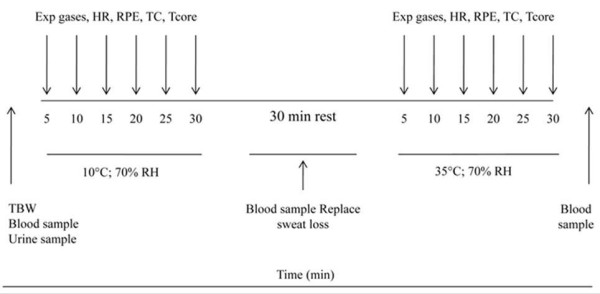
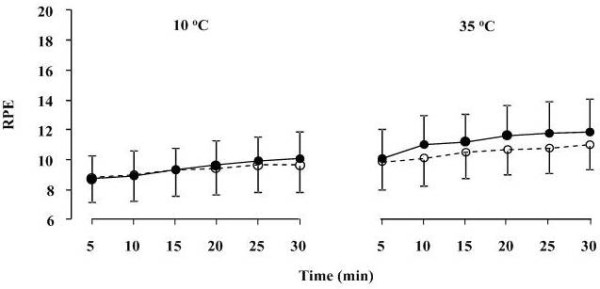
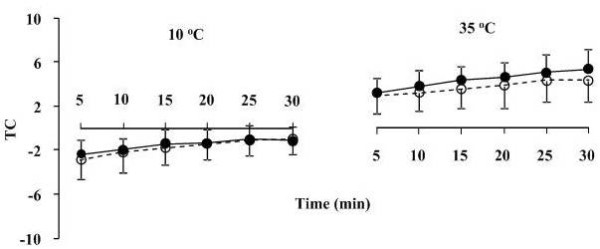
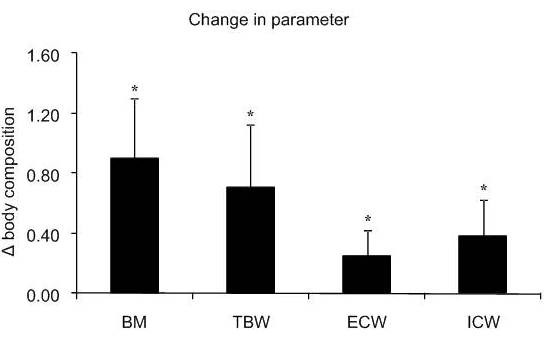
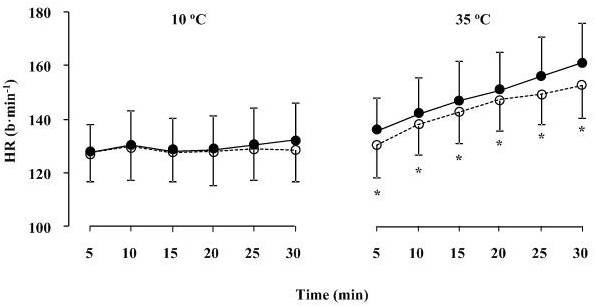
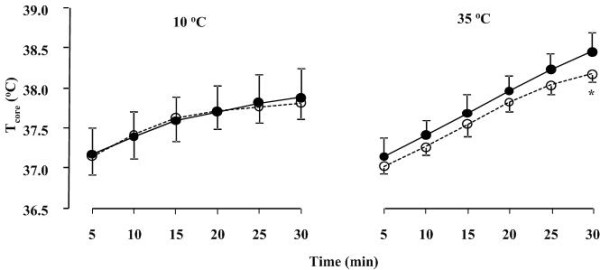
BACKGROUND: Ingestion of creatine (Cr) and glycerol (Gly) has been reported to be an effective method in expanding water compartments within the human body, attenuating the rise in heart rate (HR) and core temperature (Tcore) during exercise in the heat. Despite these positive effects, a substantial water retention could potentially impair endurance performance through increasing body mass (BM) and consequently impacting negatively on running economy (RE). The objective of the present study was to investigate the effects of a combined Cr and Gly supplementation on thermoregulatory and cardiovascular responses and RE during running for 30 min at speed corresponding to 60% of maximal oxygen uptake (V˙O2max) in hot and cool conditions. METHODS: Cr·H2O (11.4 g), Gly (1 g·kg-1 BM) and Glucose polymer (75 g) were administered twice daily to 15 male endurance runners during a 7-day period. Exercise trials were conducted pre- and post-supplementation at 10 and 35°C and 70% relative humidity. RESULTS: BM and total body water increased by 0.90 ± 0.40 kg (P < 0.01; mean ± SD) and 0.71 ± 0.42 L (P < 0.01), respectively following supplementation. Despite the significant increase in BM, supplementation had no effect on V˙O2 and therefore RE. Both HR and Tcore were attenuated significantly after supplementation (P < 0.05, for both). Nevertheless, thermal comfort and rating of perceived exertion was not significantly different between pre- and post-supplementation. Similarly, no significant differences were found in sweat loss, serum osmolality, blood lactate and in plasma volume changes between pre- and post-supplementation. CONCLUSIONS: Combining Cr and Gly is effective in reducing thermal and cardiovascular strain during exercise in the heat without negatively impacting on RE.
Overview
The claims and statistics of this paper haven’t been checked yet.
Free: it reads the open-access text and checks the first 5 claims that cite a source we can check. Create a free account to check every claim.
Integrity signals
Registry
Cites
Statistics
Figures
Verification
Claims the paper makes
The claims and statistics of this paper haven’t been checked yet.
Free: it reads the open-access text and checks the first 5 claims that cite a source we can check. Create a free account to check every claim.
Claims other papers make about this one
Each is checked against this paper’s own text: does it say what the citing paper says it does?
The cited source says what the claim attributes to it.
In the citing paper
“creatine supplementation (with or without glycerol) has been reported to help athletes hyper-hydrate and thereby enhance tolerance to exercise in the heat [28, 37, 131–145].”
From Common questions and misconceptions about creatine supplementation: what does the scientific evidence really show? (2021) · cites this paper as [138]
Self-check
Percentages, sums and reported differences re-computed from the paper’s own numbers.
The self-check needs the paper’s full text.
Citations
Cites
Psychophysical bases of perceived exertion
BORG, G. A. V. (1982) · Medicine & Science in Sports & Exercise · doi:10.1249/00005768-198205000-00012 · Cited by 16,580
American College of Sports Medicine position stand
Otis, C. L. (1997) · Medical Entomology and Zoology · Cited by 4,407
Calculation of percentage changes in volumes of blood, plasma, and red cells in dehydration.
Dill, D. B., & Costill, D. L. (1974) · Journal of Applied Physiology · doi:10.1152/jappl.1974.37.2.247 · Cited by 3,384
Limiting factors for maximum oxygen uptake and determinants of endurance performance
BASSETT, D. R. (2000) · Medicine & Science in Sports & Exercise · doi:10.1097/00005768-200001000-00012 · Cited by 2,410 · cited 1×
“maximal oxygen consumption (V̇O2) at a given running velocity, is an important physiological parameter as superior RE is essential for successful endurance running performance [1,2].”
BackgroundACSM Position Stand: Exercise and Fluid Replacement
Convertino, V. A., Armstrong, L. E., Coyle, E. F., Mack, G. W., Sawka, M. N., Senay, L. C., & Sherman, W. M. (1996) · Medicine & Science in Sports & Exercise · doi:10.1097/00005768-199610000-00045 · Cited by 1,965
Exercise and Fluid Replacement
(2007) · Medicine & Science in Sports & Exercise · doi:10.1249/mss.0b013e31802ca597 · Cited by 1,497 · cited 3×
“Nevertheless, this theoretical paradigm contradicts the prevailing view of a body water deficit in excess of 2-3% BM constituting the level of dehydration that can adversely affect performance [5].”
InfluentialElevation of creatine in resting and exercised muscle of normal subjects by creatine supplementation
Harris, R. C., Söderlund, K., & Hultman, E. (1992) · Clinical Science · doi:10.1042/cs0830367 · Cited by 1,168 · cited 1×
“This protocol has been shown to increase resting muscle-phosphocreatine levels within 5 days [24].”
Factors affecting running economy in trained distance runners
Saunders, P. U., Pyne, D. B., Telford, R. D., & Hawley, J. A. (2004) · Sports Medicine · doi:10.2165/00007256-200434070-00005 · Cited by 975 · cited 2×
“RE appears to be influenced by many physiological factors [1] including hydration status.”
BackgroundMcCance, R. A., & Widdowson, E. M. (1960) · Biblioteca Digital (Real Academia Nacional de Medicina) · Cited by 971
Nielsen, B., Hales, J. R., Strange, S., Christensen, N. J., Warberg, J., & Saltin, B. (1993) · The Journal of Physiology · doi:10.1113/jphysiol.1993.sp019482 · Cited by 715
Fluid and fuel intake during exercise
Coyle, E. F. (2004) · Journal of Sports Sciences · doi:10.1080/0264041031000140545 · Cited by 423
Effect of hydration state of circulatory and thermal regulations
Nadel, E. R., Fortney, S. M., & Wenger, C. B. (1980) · Journal of Applied Physiology · doi:10.1152/jappl.1980.49.4.715 · Cited by 382
Green, A. L., Hultman, E., Macdonald, I. A., Sewell, D. A., & Greenhaff, P. L. (1996) · American Journal of Physiology-Endocrinology and Metabolism · doi:10.1152/ajpendo.1996.271.5.e821 · Cited by 294
Maughan, R. J. (1982) · Clinica Chimica Acta · doi:10.1016/0009-8981(82)90282-0 · Cited by 282
Effects of metabolic hyperthermia on performance during heavy prolonged exercise
MacDougall, J. D., Reddan, W. G., Layton, C. R., & Dempsey, J. A. (1974) · Journal of Applied Physiology · doi:10.1152/jappl.1974.36.5.538 · Cited by 254
Gonzalez-Alonso, J., Mora-Rodriguez, R., Below, P. R., & Coyle, E. F. (1995) · Journal of Applied Physiology · doi:10.1152/jappl.1995.79.5.1487 · Cited by 215
Hydration effects on thermoregulation and performance in the heat
Sawka, M. N., Montain, S. J., & Latzka, W. A. (2001) · Comparative Biochemistry and Physiology Part A: Molecular & Integrative Physiology · doi:10.1016/s1095-6433(01)00274-4 · Cited by 213
Shift in body fluid compartments after dehydration in humans
Nose, H., Mack, G. W., Shi, X. R., & Nadel, E. R. (1988) · Journal of Applied Physiology · doi:10.1152/jappl.1988.65.1.318 · Cited by 210
Caffeine counteracts the ergogenic action of muscle creatine loading
Vandenberghe, K., Gillis, N., Van Leemputte, M., Van Hecke, P., Vanstapel, F., & Hespel, P. (1996) · Journal of Applied Physiology · doi:10.1152/jappl.1996.80.2.452 · Cited by 197
Bioelectrical Impedance to Estimate Changes in Hydration Status
O'Brien, C., Young, A. J., & Sawka, M. N. (2002) · International Journal of Sports Medicine · doi:10.1055/s-2002-33145 · Cited by 181
Physiology of Marathon Running
Costill, D. L. (1972) · JAMA: The Journal of the American Medical Association · doi:10.1001/jama.1972.03200220058013 · Cited by 144
LYONS, T. P., RIEDESEL, M. L., MEULI, L. E., & CHICK, T. W. (1990) · Medicine & Science in Sports & Exercise · doi:10.1249/00005768-199008000-00010 · Cited by 142
Hyperhydration: tolerance and cardiovascular effects during uncompensable exercise-heat stress
Latzka, W. A., Sawka, M. N., Montain, S. J., Skrinar, G. S., Fielding, R. A., Matott, R. P., & Pandolf, K. B. (1998) · Journal of Applied Physiology · doi:10.1152/jappl.1998.84.6.1858 · Cited by 138
Protein- and carbohydrate-induced augmentation of whole body creatine retention in humans
Steenge, G. R., Simpson, E. J., & Greenhaff, P. L. (2000) · Journal of Applied Physiology · doi:10.1152/jappl.2000.89.3.1165 · Cited by 132 · cited 1×
“Although the mechanism by which CHO enhances Cr uptake is not completely understood, consumption of 100 g per 5 g of Cr has been recommended for the effective improvement of Cr uptake [15].”
BackgroundGuidelines for Glycerol Use in Hyperhydration and Rehydration Associated with Exercise
van Rosendal, S. P., Osborne, M. A., Fassett, R. G., & Coombes, J. S. (2010) · Sports Medicine · doi:10.2165/11530760-000000000-00000 · Cited by 125
Sawka, M. N. (2007) · Medicine & Science in Sports & Exercise · doi:10.1249/01.mss.0000272779.34140.3b · Cited by 121
Fudge, B. W., Westerterp, K. R., Kiplamai, F. K., Onywera, V. O., Boit, M. K., Kayser, B., & Pitsiladis, Y. P. (2006) · British Journal Of Nutrition · doi:10.1079/bjn20051608 · Cited by 114 · cited 1×
“The reduction of the energy cost of movement at a sub-maximal velocity by way of reducing BM to improve running performance is well known [20].”
BackgroundSelf-citationHyperhydration with glycerol solutions
Riedesel, M. L., Allen, D. Y., Peake, G. T., & Al-Qattan, K. (1987) · Journal of Applied Physiology · doi:10.1152/jappl.1987.63.6.2262 · Cited by 108
Estimation of Oxygen Uptake during Fast Running Using Accelerometry and Heart Rate
FUDGE, B. W., WILSON, J., EASTON, C., IRWIN, L., CLARK, J., HADDOW, O., KAYSER, B., & PITSILADIS, Y. P. (2007) · Medicine & Science in Sports & Exercise · doi:10.1249/01.mss.0000235884.71487.21 · Cited by 103
Self-citationZouhal, H., Groussard, C., Minter, G., Vincent, S., Cretual, A., Gratas-Delamarche, A., Delamarche, P., & Noakes, T. D. (2011) · British Journal of Sports Medicine · doi:10.1136/bjsm.2010.074641 · Cited by 102
Comparison of Glycerol and Water Hydration Regimens on Tennis-Related Performance
MAGAL, M., WEBSTER, M. J., SISTRUNK, L. E., WHITEHEAD, M. T., EVANS, R. K., & BOYD, J. C. (2003) · Medicine & Science in Sports & Exercise · doi:10.1097/00005768-200301000-00023 · Cited by 99 · cited 2×
“More recent approaches aimed at expanding body water compartments using hydrating agents such as creatine (Cr) and glycerol (Gly) have successfully attenuated the rise in Tcore and HR during exercise in heat [10,11].”
BackgroundCirculatory and respiratory adaptation during prolonged exercise.
Ekelund, L. G. (1967) · PubMed · Cited by 95
Green, H. J., McKee, N. H., Carvalho, A. J., & Dossett-Mercer, J. C. (1996) · American Journal of Physiology-Cell Physiology · doi:10.1152/ajpcell.1996.271.6.c1942 · Cited by 86
Rectal, telemetry pill and tympanic membrane thermometry during exercise heat stress
Easton, C., Fudge, B. W., & Pitsiladis, Y. P. (2006) · Journal of Thermal Biology · doi:10.1016/j.jtherbio.2006.10.004 · Cited by 79
Self-citationHuman intestinal water absorption: direct vs. indirect measurements
Gisolfi, C. V., Summers, R. W., Schedl, H. P., Bleiler, T. L., & Oppliger, R. A. (1990) · American Journal of Physiology-Gastrointestinal and Liver Physiology · doi:10.1152/ajpgi.1990.258.2.g216 · Cited by 71
Kilduff, L. P., Georgiades, E., James, N., Minnion, R. H., Mitchell, M., Kingsmore, D., Hadjicharalambous, M., & Pitsiladis, Y. P. (2004) · International Journal of Sport Nutrition and Exercise Metabolism · doi:10.1123/ijsnem.14.4.443 · Cited by 68 · cited 22×
“Following TBW determination, the subject lay in a supine position for 5 min further and a 7 mL blood sample was taken from a 21G cannula which was introduced into a superficial vein of the anticubital fossa of the right arm.”
BackgroundMethodResultInfluentialSelf-citationCreatine and Glycerol Hyperhydration in Trained Subjects before Exercise in the Heat
Easton, C., Turner, S., & Pitsiladis, Y. P. (2007) · International Journal of Sport Nutrition and Exercise Metabolism · doi:10.1123/ijsnem.17.1.70 · Cited by 65 · cited 12×
“Similar results have been reported in several other studies using Cr as the hyperhydrating agent [13] as well as during constant load exercise in the study by Easton et al. (2007) where hyperhydration was induced by Cr and Gly [19].”
BackgroundResultInfluentialSelf-citationExploring the Potential Ergogenic Effects of Glycerol Hyperhydration
Nelson, J., & Robergs, R. A. (2007) · Sports Medicine · doi:10.2165/00007256-200737110-00005 · Cited by 64
Physiological responses to glycerol ingestion during exercise
Murray, R., Eddy, D. E., Paul, G. L., Seifert, J. G., & Halaby, G. A. (1991) · Journal of Applied Physiology · doi:10.1152/jappl.1991.71.1.144 · Cited by 58
Effect of exercise hemoconcentration and hyperosmolality on exercise responses
Fortney, S. M., Vroman, N. B., Beckett, W. S., Permutt, S., & LaFrance, N. D. (1988) · Journal of Applied Physiology · doi:10.1152/jappl.1988.65.2.519 · Cited by 46
Effect of acute plasma volume expansion on thermoregulation and exercise performance in the heat
WATT, M. J., GARNHAM, A. P., FEBBRAIO, M. A., & HARGREAVES, M. (2000) · Medicine & Science in Sports & Exercise · doi:10.1097/00005768-200005000-00013 · Cited by 36
Grant, S., Green, H. J., Phillips, S. M., & Sutton, J. R. (1997) · European Journal of Applied Physiology · doi:10.1007/s004210050261 · Cited by 25
Kilduff, L. P., Pitsiladis, Y. P., Tasker, L., Attwood, J., Hyslop, P., Dailly, A., Dickson, I., & Grant, S. (2003) · International Journal of Sport Nutrition and Exercise Metabolism · doi:10.1123/ijsnem.13.4.504 · Cited by 25
Self-citationBeis, L. Y., Mohammad, Y., Easton, C., & Pitsiladis, Y. P. (2011) · International Journal of Sport Nutrition and Exercise Metabolism · doi:10.1123/ijsnem.21.1.33 · Cited by 10
Self-citation
Research works printed but not linked: 2
- Kern M Podewils LJ Vukovich M MJ B Physiological response to exercise in the heat following creatine supplementation JEPonline 2001 4 18 27
- Douglas CG A method for determining the total respiratory exchange in man J Physiol 1911 42 17 18
Cited by
Kreider, R. B., Kalman, D. S., Antonio, J., Ziegenfuss, T. N., Wildman, R., Collins, R., Candow, D. G., Kleiner, S. M., Almada, A. L., & Lopez, H. L. (2017) · Journal of the International Society of Sports Nutrition · doi:10.1186/s12970-017-0173-z · Cited by 1,057
Périard, J. D., Eijsvogels, T. M. H., & Daanen, H. A. M. (2021) · Physiological Reviews · doi:10.1152/physrev.00038.2020 · Cited by 647
Antonio, J., Candow, D. G., Forbes, S. C., Gualano, B., Jagim, A. R., Kreider, R. B., Rawson, E. S., Smith-Ryan, A. E., VanDusseldorp, T. A., Willoughby, D. S., et al. (2021) · Journal of the International Society of Sports Nutrition · doi:10.1186/s12970-021-00412-w · Cited by 345
Strategies to Improve Running Economy
Barnes, K. R., & Kilding, A. E. (2015) · Sports Medicine · doi:10.1007/s40279-014-0246-y · Cited by 245
“Combined creatine and glycerol ingestion has been shown to be an effective means in reducing thermal and cardiovascular strain during exercise in the heat, without negatively impacting on RE [51].”
BackgroundTwycross-Lewis, R., Kilduff, L. P., Wang, G., & Pitsiladis, Y. P. (2016) · Amino Acids · doi:10.1007/s00726-016-2237-9 · Cited by 36
Self-citation
Metadata
- Authors
- Beis, L. Y., Polyviou, T., Malkova, D., & Pitsiladis, Y. P.
- Affiliations
- University of Glasgow (GB)
- Department of Human NutritionQueen Mother Hospital Tower Block G3 8SJ Glasgow UK
- Corresponding author
- Pitsiladis, Yannis P
- Venue
- Journal of the International Society of Sports Nutrition
- Publisher
- Informa UK Limited
- Published
- 2011-02-04
- Volume
- 8
- Issue
- 1
- Pages
- 24-24
- ISSN
- 1550-2783 (ISSN-L)
- PMC
- PMC3283512
- OpenAlex
- W2121397227
- Cited by
- 36
- References
- 46
- Citations by year
- 2026: 1 · 2025: 5 · 2024: 3 · 2023: 1 · 2021: 3 · 2020: 3 · 2019: 1 · 2018: 2 · 2017: 1 · 2016: 2 · 2015: 2 · 2014: 6 · 2013: 1 · 2012: 5
- FWCI
- 2.62
- Type
- journal article
- Language
- en
- Open access
- gold
- doi.org
- Licence
- Locations
- Journal of the International Society of Sports Nutrition (publishedVersion, cc-by)
- PubMed Central (publishedVersion, cc-by)
- PubMed (publishedVersion)
- University of Brighton Repository (University of Brighton) (submittedVersion)
- DOAJ (DOAJ: Directory of Open Access Journals) (submittedVersion, cc-by-sa)
- University of Brighton Repository (University of Brighton) (submittedVersion, cc-by)
- Topics
- Health Sciences › Medicine › Physiology (medical) › Thermoregulation and physiological responses
- Health Sciences › Nursing › Nutrition and Dietetics › Muscle metabolism and nutrition
- Health Sciences › Medicine › Orthopedics and Sports Medicine › Sports Performance and Training
- Keywords
- creatine supplementation, glycerol supplementation, fluid overload, running economy, endurance runners, heat stress, thermoregulation, cardiovascular response, heart rate, core body temperature, body mass, total body water, thermal comfort, rating of perceived exertion, sweat loss, serum osmolality, blood lactate, plasma volume
About these checks
Registry, retraction, Cites and statistics results are computed, not judged, with one exception: a printed reference that no index lists is read once by a model before it counts as a citation error. Claims are extracted by a model and kept only when their quote appears verbatim in the text; each cited source is then checked, with a model’s help, for whether it says what the claim relies on. Those verdicts can be wrong — read the claim’s quote and the cited source before relying on one.
Statistics and arithmetic are recomputed, not judged.
Confidence bands are shown only for fields calibrated on our annotated test set. None is calibrated yet, so no band is shown.
What counts as a claim ›How we measure confidence ›How we check this ›
Are you an author, or do you see a problem with this page? Request a review
Data sources
Bibliographic data: Semantic Scholar, OpenAlex, Crossref.
Contains information from the Semantic Scholar Academic Graph Datasets, made available under the ODC Attribution License (ODC-BY 1.0).
Semantic Scholar’s data is described in: Kinney, R., et al. (2023). The Semantic Scholar Open Data Platform. arXiv:2301.10140.
