

Intensive language training enhances brain plasticity in chronic aphasia
Open accessThe DOI matches its Crossref record; 33 of the 36 references it cites were found in a registry or an index.
Abstract
Background: Focal clusters of slow wave activity in the delta frequency range (1–4 Hz), as measured by magnetencephalography (MEG), are usually located in the vicinity of structural damage in the brain. Such oscillations are usually considered pathological and indicative of areas incapable of normal functioning owing to deafferentation from relevant input sources. In the present study we investigated the change in Delta Dipole Density in 28 patients with chronic aphasia (>12 months post onset) following cerebrovascular stroke of the left hemisphere before and after intensive speech and language therapy (3 hours/day over 2 weeks). Results: Neuropsychologically assessed language functions improved significantly after training. Perilesional delta activity decreased after therapy in 16 of the 28 patients, while an increase was evident in 12 patients. The magnitude of change of delta activity in these areas correlated with the amount of change in language functions as measured by standardized language tests. Conclusions: These results emphasize the significance of perilesional areas in the rehabilitation of aphasia even years after the stroke, and might reflect reorganisation of the language network that provides the basis for improved language functions after intensive training.
Overview
The claims and statistics of this paper haven’t been checked yet.
Free: it reads the open-access text and checks the first 5 claims that cite a source we can check. Create a free account to check every claim.
Integrity signals
Registry
Cites
Statistics
Figures
Verification
Claims the paper makes
The claims and statistics of this paper haven’t been checked yet.
Free: it reads the open-access text and checks the first 5 claims that cite a source we can check. Create a free account to check every claim.
Claims other papers make about this one
Each is checked against this paper’s own text: does it say what the citing paper says it does?
The cited source says what the claim attributes to it.
In the citing paper
“Thus, these results replicate other findings indicating that even in chronic aphasia, language improvements can be achieved through intensive therapy [60, 61] which makes use of a pragmatic approach, such as conversational therapy [12–16].”
From Conversational Therapy through Semi-Immersive Virtual Reality Environments for Language Recovery and Psychological Well-Being in Post Stroke Aphasia (2020) · cites this paper as [60]
Self-check
Percentages, sums and reported differences re-computed from the paper’s own numbers.
The self-check needs the paper’s full text.
Citations
Cites
The assessment and analysis of handedness: The Edinburgh inventory
Oldfield, R. C. (1971) · Neuropsychologia · doi:10.1016/0028-3932(71)90067-4 · Cited by 35,900
AFNI: Software for analysis and visualization of functional magnetic resonance neuroimages
Cox, R. W. (1996) · Computers and Biomedical Research · doi:10.1006/cbmr.1996.0014 · Cited by 10,913
Treatment-Induced Cortical Reorganization After Stroke in Humans
Liepert, J., Bauder, H., Miltner, W. H. R., Taub, E., & Weiller, C. (2000) · Stroke · doi:10.1161/01.str.31.6.1210 · Cited by 1,404
Aphasia in acute stroke: Incidence, determinants, and recovery
Pedersen, P. M., Stig Jørgensen, H., Nakayama, H., Raaschou, H. O., & Olsen, T. S. (1995) · Annals of Neurology · doi:10.1002/ana.410380416 · Cited by 820
Intensity of Aphasia Therapy, Impact on Recovery
Bhogal, S. K., Teasell, R., & Speechley, M. (2003) · Stroke · doi:10.1161/01.str.0000062343.64383.d0 · Cited by 719 · cited 1×
“In accordance with recent progress in neurorehabilitation, which takes into account evidence of the brain's capacity for reorganization [5-7], intensive language training (several hours per week) seems to be the premise for substantial improvement of language functions in the chronic stage [8].”
Motor cortex plasticity during constraint-induced movement therapy in stroke patients
Liepert, J., Miltner, W. H. R., Bauder, H., Sommer, M., Dettmers, C., Taub, E., & Weiller, C. (1998) · Neuroscience Letters · doi:10.1016/s0304-3940(98)00386-3 · Cited by 693
Constraint-Induced Therapy of Chronic Aphasia After Stroke
Pulvermüller, F., Neininger, B., Elbert, T., Mohr, B., Rockstroh, B., Koebbel, P., & Taub, E. (2001) · Stroke · doi:10.1161/01.str.32.7.1621 · Cited by 683 · cited 5×
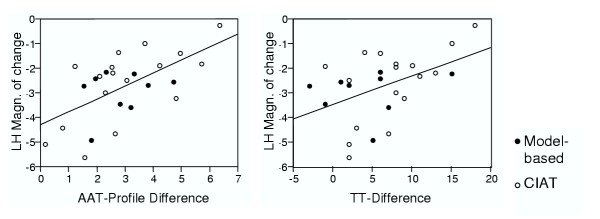
“CIAT refers to patients treated according to the principles of Constrained-Induced aphasia therapy, MB refers to patients treated according to the principles of model-based aphasia therapy.”
InfluentialSelf-citationNew treatments in neurorehabiliation founded on basic research
Taub, E., Uswatte, G., & Elbert, T. (2002) · Nature Reviews Neuroscience · doi:10.1038/nrn754 · Cited by 641
Self-citationA meta-analysis of clinical outcomes in the treatment of aphasia
Robey, R. R. (1998) · Journal of Speech, Language, and Hearing Research · doi:10.1044/jslhr.4101.172 · Cited by 506 · cited 1×
“Additional rehabilitation efforts have produced beneficial effects, as reported for speech and language therapy on the basis of different performance indices [3,4].”
Therapy for naming disorders: Revisiting, revising, and reviewing
Nickels, L. (2002) · Aphasiology · doi:10.1080/02687030244000563 · Cited by 459
Research works printed but not linked: 1
- Huber H Poeck K Weniger D Willmes K Aachener Aphasie Test (AAT) – Handanweisung 1983 Göttingen: Hogrefe
Cited by
Items 101–200 of 221
The Impact of Intensity of Aphasia Therapy on Recovery
Marshall, R. C. (2007) · Stroke · doi:10.1161/strokeaha.107.504068 · Cited by 14
Navigating the Complexity of Bilingual Aphasia: Current Insights and Future Directions
Russell-Meill, M., Marte, M. J., Carpenter, E., & Kiran, S. (2025) · Brain Sciences · doi:10.3390/brainsci15090989 · Cited by 13
Chupina, I., Sierpowska, J., Zheng, X., Dewenter, A., Piastra, M. C., & Piai, V. (2022) · European Journal of Neuroscience · doi:10.1111/ejn.15813 · Cited by 13
Constraint-Induced Aphasia Therapy
Pulvermüller, F., Mohr, B., & Taub, E. (2015) · Elsevier eBooks · doi:10.1016/b978-0-12-407794-2.00082-1 · Cited by 13
Malá, H., Castro, M. R., Pearce, H. L., Kingod, S. C., Nedergaard, S., Scharff, Z., Zandersen, M., & Mogensen, J. (2012) · Brain Research · doi:10.1016/j.brainres.2012.01.035 · Cited by 12
Language Disorders, Treatment and Remediation of
Kasselimis, D. S., & Potagas, C. M. (2015) · Elsevier eBooks · doi:10.1016/b978-0-08-097086-8.54045-8 · Cited by 12
Computer-aided therapy in aphasia therapy: evaluation of assignment criteria
Schröder, C., Schupp, W., Seewald, B., & Haase, I. (2007) · International Journal of Rehabilitation Research · doi:10.1097/mrr.0b013e3282f144da · Cited by 11
A Case Study Using a Multimodal Approach to Melodic Intonation Therapy
Slavin, D., & Fabus, R. (2018) · American Journal of Speech-Language Pathology · doi:10.1044/2018_ajslp-17-0030 · Cited by 11
EEG in Inflammatory Disorders, Cerebrovascular Diseases, Trauma, and Migraine
Galovic, M., Schmitz, B., & Tettenborn, B. (2017) · Oxford University Press eBooks · doi:10.1093/med/9780190228484.003.0015 · Cited by 11
Tinnitus and treatment-resistant depression
Langguth, B., Shiao, A., Lai, J., Chi, T.-S., Weber, F. C., Schecklmann, M., & Li, L. P. (2023) · Progress in brain research · doi:10.1016/bs.pbr.2023.01.001 · Cited by 10
Wolthuis, N., Bosma, I., Bastiaanse, R., Cherian, P. J., Smits, M., Veenstra, W. S., Wagemakers, M., Vincent, A. J. P. E., & Satoer, D. (2022) · Frontiers in Human Neuroscience · doi:10.3389/fnhum.2022.748128 · Cited by 10
Wilmskoetter, J., Del Gaizo, J., Phillip, L., Behroozmand, R., Gleichgerrcht, E., Fridriksson, J., Riley, E., & Bonilha, L. (2019) · Clinical Neurophysiology · doi:10.1016/j.clinph.2019.08.011 · Cited by 9
The impact of group therapy on word retrieval in people with chronic aphasia
Nickels, L., McDonald, B., & Mason, C. (2016) · Neurorehabilitation · doi:10.3233/nre-161340 · Cited by 9
Peñaloza, C., Rodríguez‐Fornells, A., Rubio, F. J., de Miquel, M. Á., & Juncadella, M. (2014) · Journal of Neurolinguistics · doi:10.1016/j.jneuroling.2014.08.001 · Cited by 8
Chapter 54 Imaging functional recovery from stroke
Cramer, S. C., & Seitz, R. J. (2008) · Handbook of clinical neurology · doi:10.1016/s0072-9752(08)94054-9 · Cited by 8
Pharmakologische Zusatzbehandlung in der Aphasietherapie: Status quo und Perspektiven
Korsukewitz, C., Breitenstein, C., Schomacher, M., & Knecht, S. (2005) · Der Nervenarzt · doi:10.1007/s00115-005-2006-6 · Cited by 8
Kavian, S., Khatoonabadi, A. R., Ansari, N. N., Saadati, M., & Shaygannejad, V. (2014) · PubMed Central · Cited by 8
Aberrant Cortical Functionality and Somatosensory Deficits After Stroke
Castillo, E. M., Boake, C., Breier, J. I., Men, D., Garza, H. J. M., Passaro, A., & Papanicolaou, A. C. (2008) · Journal of Clinical Neurophysiology · doi:10.1097/wnp.0b013e318176c0d4 · Cited by 8
Stress and language recovery in individuals with aphasia: constraint induced aphasia therapy
Sharp, B. J., Shaughnessy, P., Berk, L., & Daher, N. S. (2013) · Physical therapy rehabilitation science · doi:10.14474/ptrs.2013.2.2.92 · Cited by 7
Dresang, H. C., Harvey, D. Y., Vnenchak, L., Parchure, S., Cason, S., Twigg, P., Faseyitan, O. K., Maher, L. M., Hamilton, R. H., & Coslett, H. B. (2025) · Neurobiology of Language · doi:10.1162/nol_a_00160 · Cited by 7
Intensive sound production treatment for severe, chronic apraxia of speech
Mozeiko, J. L., Abolafia, V. M., Garneau, A., & COELHO, C. A. (2019) · Aphasiology · doi:10.1080/02687038.2019.1654083 · Cited by 7
Neuroplasticity Associated with Treated Aphasia Recovery
Fridriksson, J., & Smith, K. (2015) · Elsevier eBooks · doi:10.1016/b978-0-12-407794-2.00080-8 · Cited by 7
Transcranial doppler monitoring during language tasks in stroke patients with aphasia
Treger, I., Luzki, L., Gil, M., & Ring, H. (2007) · Disability and Rehabilitation · doi:10.1080/09638280600999493 · Cited by 7
EEG study of visual reactivity in aphasic patients
Stojanovic, B., Djurasic, L., Jović, S., & Dalibor, P. (2013) · Acta chirurgica iugoslavica · doi:10.2298/aci1303045s · Cited by 7
Kirmess, M. (2011) · NORA - Norwegian Open Research Archives · Cited by 6
Becker, F. (2008) · NVA (Nasjonalt vitenarkiv) · Cited by 6
Os efeitos da estimulação elétrica funcional na assimetria cortical inter-hemisférica
Ecard, L., da Silva, A. P. S., Neto, M. P., Veiga, H., Cagy, M., Piedade, R. A. M., & Ribeiro, P. F. M. (2007) · Arquivos de Neuro-Psiquiatria · doi:10.1590/s0004-282x2007000400019 · Cited by 6
Leirer, V. M., Glöckner, F., Elbert, T. R., & Kolassa, I. (2009) · International Conference on PErvasive Technologies Related to Assistive Environments (PETRA) · doi:10.1145/1579114.1579168 · Cited by 6
Self-citationVerbal language spontaneous recovery after ischemic stroke
Remesso, G. C., Chiappetta, A. L. D. M. L., Aguiar, A. S., Fukujima, M. M., & do Prado, G. F. (2009) · Arquivos de Neuro-Psiquiatria · doi:10.1590/s0004-282x2009000500014 · Cited by 6
fMRI of Language Systems: Methods and Applications
Binder, J. R. (2023) · Springer eBooks · doi:10.1007/978-3-031-10909-6_26 · Cited by 5
Alsaedi, N. (2023) · Theory and Practice in Language Studies · doi:10.17507/tpls.1312.12 · Cited by 6
Adaptive Cognitive Rehabilitation
Wilms, I. L. (2014) · Studies in computational intelligence · doi:10.1007/978-3-642-45432-5_5 · Cited by 5
An Investigation into the Ability of Adults with Post-Stroke Aphasia to Learn New Vocabulary
McGrane, H. (2006) · Queen Margaret University eTheses Repository · Cited by 5
Meinzer, M., Paul, I., Wienbruch, C., Djundja, D., & Rockstroh, B. S. (2009) · PubMed · Cited by 5
Self-citationMesnildrey, Q., Aksenov, A., D’ambra, M. R., Hartwigsen, G., Volpert, V. A., & Beuter, A. C. (2023) · bioRxiv (Cold Spring Harbor Laboratory) · doi:10.1101/2023.04.27.538530 · Cited by 4
Translational Neuroscience of Aphasia and Adult Language Rehabilitation
Kasselimis, D. S., Papageorgiou, G., Angelopoulou, G., Tsolakopoulos, D., & Potagas, C. M. (2020) · Contemporary clinical neuroscience · doi:10.1007/978-3-030-35687-3_2 · Cited by 4
Electrophysiologic evidence of reorganization in poststroke aphasia
Johnson, L. P., & Fridriksson, J. (2022) · Handbook of clinical neurology · doi:10.1016/b978-0-12-823384-9.00020-7 · Cited by 4
Virion, C. R. (2008) · University Libraries (University of Maryland) · Cited by 4
Carpal tunnel syndrome. Diagnosis and treatment.
Flondell, M. (2021) · Lund University Publications (Lund University) · Cited by 4
Tsuyuguchi, N. (2016) · Springer eBooks · doi:10.1007/978-4-431-55729-6_11 · Cited by 4
Fitzgerald-DeJean, D. (2008) · Louisiana State University · doi:10.31390/gradschool_dissertations.383 · Cited by 3
Unveiling the hemispheric specialization of language: Organization and neuroplasticity
Banjac, S., & Baciu, M. (2025) · Handbook of clinical neurology · doi:10.1016/b978-0-443-15646-5.00008-7 · Cited by 3
Aberrant neural oscillations in poststroke aphasia
Lu, Y., Mao, L., Wang, P., Wang, C., Hartwigsen, G., & Zhang, Y. (2024) · Psychophysiology · doi:10.1111/psyp.14655 · Cited by 3
Longer term rehabilitation for patients following stroke: A literature review
McIntyre, M. L., & Mitchell, E. A. (2009) · British Journal of Neuroscience Nursing · doi:10.12968/bjnn.2009.5.1.37812 · Cited by 3
Exploring post-rehabilitation plasticity with intra-cerebral recordings on anomic profiles
Trébuchon, A., Fasola, A., Sabadell, V., Dubarry, A., Carron, R., Bartoloméi, F., & Alario, F. ‐. (2025) · Frontiers in Language Sciences · doi:10.3389/flang.2024.1434420 · Cited by 2
Stroke and stroke rehabilitation
Albaret, G., & Domergue, H. (2022) · Wiley eBooks · doi:10.1002/9781119484288.ch48 · Cited by 2
Music and Social Interaction in the Treatment of Post-Stroke Aphasia
Stahl, B. (2021) · doi:10.25368/2021.69 · Cited by 2
Cortical Adaptation in the Delta Band in People with Post-Stroke Aphasia during Picture NamingPreprint
D’ambra, M. R., Aksenov, A., Mesnildrey, Q., Hartwigsen, G., Volpert, V. A., & Beuter, A. C. (2023) · bioRxiv (Cold Spring Harbor Laboratory) · doi:10.1101/2023.07.04.544349 · Cited by 2
Biddau, F., Brisotto, C., Innocenti, T., Ranaldi, S., Meneghello, F., D’Imperio, D., & Nordio, S. (2023) · American Journal of Speech-Language Pathology · doi:10.1044/2022_ajslp-22-00042 · Cited by 2
Miller, S., Kühn, D., & Ptok, M. (2012) · HNO · doi:10.1007/s00106-012-2571-5 · Cited by 2
Low Usage of Intelligent Technologies by the Aged: New Initiatives to Bridge the Digital Divide
Heng, J., & Banerji, S. (2010) · IGI Global eBooks · doi:10.4018/978-1-61520-825-8.ch012 · Cited by 2
Sharp, B. J. (2013) · The Scholars Repository - LLU (Loma Linda University) · Cited by 2
Inner speech in post-stroke aphasia : a behavioural and imaging study
Geva, S. (2010) · Apollo (University of Cambridge) · doi:10.17863/cam.13946 · Cited by 2
Localisation of eloquent cortex using magnetoencephalography and its clinical implications
Mishra, R., Mariyappa, N., Malla, B. R., Arivazhagan, A., Mishra, B., Gautham, B., Mundlamuri, R. C., Velmurugan, J., Kenchaiah, R., Asranna, A., et al. (2023) · International Journal of Neuroscience · doi:10.1080/00207454.2023.2270684 · Cited by 2
Predictors of Post-stroke Aphasia Recovery
Simić, T. (2019) · TSpace (University of Toronto) · Cited by 1
Individual differences in neuroplastic recovery
Kiran, S., Varkanitsa, M., Billot, A., Carpenter, E., & Falconer, I. (2024) · Elsevier eBooks · doi:10.1016/b978-0-12-820480-1.00206-0 · Cited by 1
Repetition Priming and Anomia: An Investigation of Stimulus Dosage
Off, C. A. (2008) · The Aphasiology Archive (University of Pittsburgh) · Cited by 1
Electroencephalographic Phase Synchrony Index as a Biomarker of Post-Stroke Aphasia Recovery
Kawano, T., Hattori, N., Uno, Y., Hatakenaka, M., Yagura, H., Fujimoto, H., Kitajo, K., & Miyai, I. (2025) · Neurorehabilitation and neural repair · doi:10.1177/15459683251347629 · Cited by 1
Neural Substrates of Phonological Processing in Chronic Aphasia from Stroke
DeMarco, A. T. (2016) · UA Campus Repository (The University of Arizona) · Cited by 1
Hayashi, H., Okada, E., Shibata, Y., Nakamura, M., & Ojima, T. (2017) · Rehabilitation Research and Practice · doi:10.1155/2017/7459483 · Cited by 1
Vegetative and autonomic dysfunctions
Selzer, M. E., Clarke, S., Cohen, L. G., Kwakkel, G., & Miller, R. H. (2014) · Cambridge University Press eBooks · doi:10.1017/cbo9780511995590.035 · Cited by 1
The effect of constraint-induced aphasia therapy on naming and discourse in individuals with aphasia
Richardson, J. D. (2009) · Cited by 1
Gilardone, G., Viganò, M., Monti, A., Valeria, Z., Cecchetto, C., & Papagno, C. (2026) · Neuropsychologia · doi:10.1016/j.neuropsychologia.2026.109537 · Cited by 1
Stroke and Stroke Rehabilitation
Kalra, L. (2012) · Wiley eBooks · doi:10.1002/9781119952930.ch58 · Cited by 1
Miller, S., Kühn, D., & Ptok, M. (2013) · HNO · Cited by 1
Low Usage of Intelligent Technologies by the Aged: New Initiatives to Bridge the Digital Divide
Heng, J., & Banerji, S. (2013) · IGI Global eBooks · doi:10.4018/978-1-4666-1852-7.ch008 · Cited by 1
Neuroplasticity and Aphasia: Lessons from Constraint-Induced Language Therapy
Raymer, A. M., Maher, L. M., Patterson, J. P., & Cherney, L. R. (2007) · Perspectives on Neurophysiology and Neurogenic Speech and Language Disorders · doi:10.1044/nnsld17.2.12 · Cited by 1
Norquist, C. (2021) · Lincoln (University of Nebraska) · Cited by 1
Post-Stroke Language Remediation through Constraint-Induced Aphasia Therapy
Griffith, J. (2014) · OhioLink ETD Center (Ohio Library and Information Network) · Cited by 1
Problemas de eficacia comunicativa descripción, detección, rehabilitación
Alegre, E. N. S. (2005) · Repository of Digital Objects for Teaching Research and Culture (University of Valencia) · Cited by 1
Aerts, A. (2014) · Ghent University Academic Bibliography (Ghent University) · Cited by 1
Cuidados de enfermagem de reabilitação à pessoa com AVC em situação de afasia
Ramos, A. L. B. (2014) · Portuguese National Funding Agency for Science, Research and Technology (RCAAP Project by FCT) · Cited by 1
fMRI of Language Systems: Methods and Applications
Binder, J. R. (2014) · Springer eBooks · doi:10.1007/978-1-4939-1995-6_9
From Right to Left: Interhemispheric Interactions while Seeing Words and Hearing Sentences
Chu, R. (2018) · TSpace (University of Toronto)
Exogenous induction of neuroplasticity: Non-invasive neurostimulation
Pape, T., Barrington, N. M., Webber, E. K., & Stutzmann, G. E. (2024) · Elsevier eBooks · doi:10.1016/b978-0-12-820480-1.00217-5
Neurophysiology of Language Pathologies
Verga, L., Schwartze, M., & Kotz, S. A. (2023) · Neuromethods · doi:10.1007/978-1-0716-3263-5_24
Fasola, A. (2020) · theses.fr (ABES) · doi:10.70675/2a738259z76f0z4c12zb5a8zfa0e50b4ca7c
Neuromagnetic correlates of aging - evidence from resting state and event-related analyses
Leirer, V. M. (2010) · KOPS (University of Konstanz)
ASSESSING CANDIDACY FOR INTENSIVE LANGUAGE THERAPY: A PRELIMINARY STUDY
Bellamy, J. N. (2014) · UKnowledge (University of Kentucky)
Neurobehavioral response to increased treatment dosage in chronic, severe aphasia
Mozeiko, J. L., Myers, E. B., & Carl, C. (2014) · Frontiers in Psychology · doi:10.3389/conf.fpsyg.2014.64.00029
An Investigation of Neural Mechanisms Underlying Verb Morphology Deficits in Aphasia
Pifer, M., Brodbeck, C., & Faroqi-Shah, Y. (2021) · bioRxiv · doi:10.1101/2021.05.28.445987
Marshall, A. C. (2016) · Open Access at Essex (University of Essex)
Patient Perspectives of an Intensive Comprehensive Aphasia Program for Stroke Survivors
Leyhe, A. A. (2019) · ScholarWorks at University of Montana
Constraint-Induced Aphasia Therapy (CIAT) : effekt på en grupp individer med kronisk afasi
Hartelius, E., & Mattsson, L. (2008) · DiVA (Linkoping University)
Nuevas líneas de tratamiento logopédico de las afasias: la terapia intensiva
García, E. S., & Rubio, P. M. (2021) · Revista de Logopedia Foniatría y Audiología · doi:10.1016/j.rlfa.2021.03.009
Lundeen, K. (2011) · OhioLink ETD Center (Ohio Library and Information Network)
Behandling av kognitiv dysfunktion efter stroke. En litteraturstudie.
Ivarsson, K., & Karlsson, P. (2010) · Lund University Publications Student Papers (Lund University)
Een stoornisgerichte therapie met functioneel resultaat
Zomerdijk, M. J. T. C., Mishre, A. D. R., & Arendzen, J. H. (2011) · Stem- Spraak- en Taalpathologie
Efficacy of constraint-induced language therapy for treating acquired apraxia of speech
Swinson, R. E. (2011) · Texas ScholarWorks (Texas Digital Library)
The Emerging Potential of Neurorehabilitation
Gonzalez‐Rothi, L. J. (2004) · ASHA Leader · doi:10.1044/leader.ftr4.09222004.29
Upton, E. (2023) · UCL Discovery (University College London)
Chen, S.-H. K. (2016) · D-Scholarship@Pitt (University of Pittsburgh)
Ertsås, K. (2016) · NVA (Nasjonalt vitenarkiv)
Kümmerer, D. (2013) · KOPS (University of Konstanz)
Neuromagnetic Correlates of language processing in patients with chronic aphasia
Djundja, D. (2009) · KOPS (University of Konstanz)
Self-citationLiu, H., Li, Y., Wang, Y., Wang, X., An, X., Wang, S., Chen, L., Liu, G., & Yang, Y. (2015) · Figshare · doi:10.6084/m9.figshare.c.3643427_d1
Patient factors that predict response to intensive phonomotor treatment
Elliott, K. (2015) · ResearchWorks at the University of Washington (University of Washington)
Slapin, A. (2005) · KOPS (University of Konstanz)
Benning, C. C. (2013) · Texas ScholarWorks (Texas Digital Library)
Metadata
- Authors
- Meinzer, M., Elbert, T., Wienbruch, C., Djundja, D., Barthel, G., & Rockstroh, B.
- Affiliations
- University of Konstanz (DE)
- Corresponding author
- Meinzer, Marcus
- Venue
- BMC Biology
- Published
- 2004-08-25
- Volume
- 2
- Issue
- 1
- Pages
- 20-20
- ISSN
- 1741-7007 (ISSN-L)
- PMC
- PMC515310
- OpenAlex
- W2111736252
- Cited by
- 179
- References
- 36
- Citations by year
- 2026: 1 · 2025: 4 · 2024: 5 · 2023: 9 · 2022: 6 · 2021: 5 · 2020: 6 · 2019: 5 · 2018: 4 · 2017: 4 · 2016: 11 · 2015: 15 · 2014: 12 · 2013: 8 · 2012: 10
- FWCI
- 4.52
- Type
- journal article
- Language
- en
- Open access
- gold
- doi.org
- Licence
- cc-by
- Locations
- BMC Biology (publishedVersion, cc-by)
- Europe PMC (PubMed Central) (publishedVersion)
- PubMed Central (publishedVersion)
- PubMed (publishedVersion)
- KOPS (University of Konstanz) (submittedVersion)
- DOAJ (DOAJ: Directory of Open Access Journals) (submittedVersion)
- Funders
- Deutsche Forschungsgemeinschaft
- Topics
- Life Sciences › Neuroscience › Cognitive Neuroscience › Neurobiology of Language and Bilingualism
- Health Sciences › Medicine › Rehabilitation › Stroke Rehabilitation and Recovery
- Health Sciences › Medicine › Clinical Neurology › Traumatic Brain Injury Research
- Keywords
- chronic aphasia, neuroplasticity, stroke, language rehabilitation
- MeSH terms
- Adult, Aged, Aged, 80 and over, Aphasia, Brain, Female, Humans, Language Therapy, Male, Middle Aged, Neuronal Plasticity, Recovery of Function
About these checks
Registry, retraction, Cites and statistics results are computed, not judged, with one exception: a printed reference that no index lists is read once by a model before it counts as a citation error. Claims are extracted by a model and kept only when their quote appears verbatim in the text; each cited source is then checked, with a model’s help, for whether it says what the claim relies on. Those verdicts can be wrong — read the claim’s quote and the cited source before relying on one.
Statistics and arithmetic are recomputed, not judged.
Confidence bands are shown only for fields calibrated on our annotated test set. None is calibrated yet, so no band is shown.
What counts as a claim ›How we measure confidence ›How we check this ›
Are you an author, or do you see a problem with this page? Request a review
Data sources
Bibliographic data: Semantic Scholar, OpenAlex, Crossref.
Contains information from the Semantic Scholar Academic Graph Datasets, made available under the ODC Attribution License (ODC-BY 1.0).
Semantic Scholar’s data is described in: Kinney, R., et al. (2023). The Semantic Scholar Open Data Platform. arXiv:2301.10140.
