

Intensive language training enhances brain plasticity in chronic aphasia
Open accessThe DOI matches its Crossref record; 33 of the 36 references it cites were found in a registry or an index.
Abstract
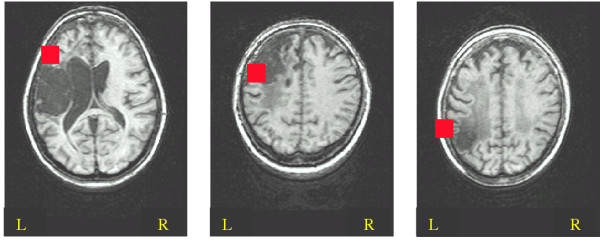
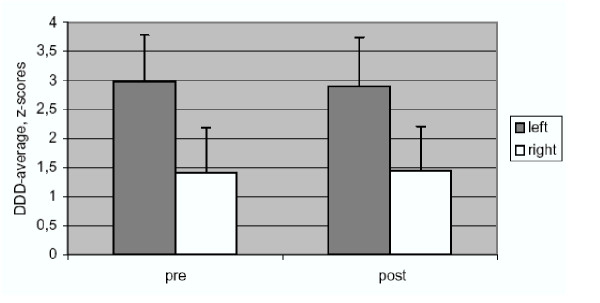
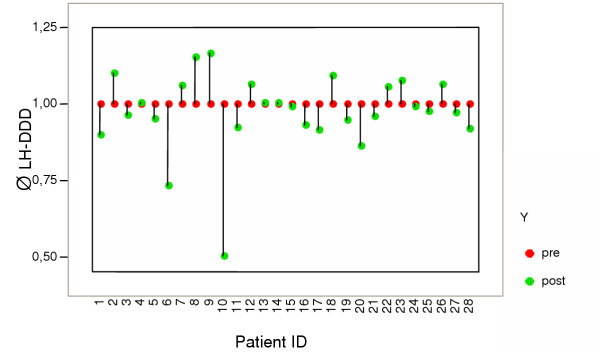
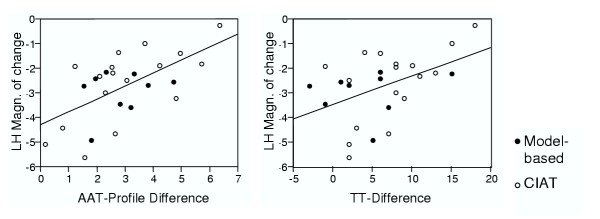
Background: Focal clusters of slow wave activity in the delta frequency range (1–4 Hz), as measured by magnetencephalography (MEG), are usually located in the vicinity of structural damage in the brain. Such oscillations are usually considered pathological and indicative of areas incapable of normal functioning owing to deafferentation from relevant input sources. In the present study we investigated the change in Delta Dipole Density in 28 patients with chronic aphasia (>12 months post onset) following cerebrovascular stroke of the left hemisphere before and after intensive speech and language therapy (3 hours/day over 2 weeks). Results: Neuropsychologically assessed language functions improved significantly after training. Perilesional delta activity decreased after therapy in 16 of the 28 patients, while an increase was evident in 12 patients. The magnitude of change of delta activity in these areas correlated with the amount of change in language functions as measured by standardized language tests. Conclusions: These results emphasize the significance of perilesional areas in the rehabilitation of aphasia even years after the stroke, and might reflect reorganisation of the language network that provides the basis for improved language functions after intensive training.
Overview
The claims and statistics of this paper haven’t been checked yet.
Free: it reads the open-access text and checks the first 5 claims that cite a source we can check. Create a free account to check every claim.
Integrity signals
Registry
Cites
Statistics
Figures
Verification
Claims the paper makes
The claims and statistics of this paper haven’t been checked yet.
Free: it reads the open-access text and checks the first 5 claims that cite a source we can check. Create a free account to check every claim.
Claims other papers make about this one
Each is checked against this paper’s own text: does it say what the citing paper says it does?
The cited source says what the claim attributes to it.
In the citing paper
“Thus, these results replicate other findings indicating that even in chronic aphasia, language improvements can be achieved through intensive therapy [60, 61] which makes use of a pragmatic approach, such as conversational therapy [12–16].”
From Conversational Therapy through Semi-Immersive Virtual Reality Environments for Language Recovery and Psychological Well-Being in Post Stroke Aphasia (2020) · cites this paper as [60]
Self-check
Percentages, sums and reported differences re-computed from the paper’s own numbers.
The self-check needs the paper’s full text.
Citations
Cites
The assessment and analysis of handedness: The Edinburgh inventory
Oldfield, R. C. (1971) · Neuropsychologia · doi:10.1016/0028-3932(71)90067-4 · Cited by 35,900
AFNI: Software for analysis and visualization of functional magnetic resonance neuroimages
Cox, R. W. (1996) · Computers and Biomedical Research · doi:10.1006/cbmr.1996.0014 · Cited by 10,913
Treatment-Induced Cortical Reorganization After Stroke in Humans
Liepert, J., Bauder, H., Miltner, W. H. R., Taub, E., & Weiller, C. (2000) · Stroke · doi:10.1161/01.str.31.6.1210 · Cited by 1,404
Aphasia in acute stroke: Incidence, determinants, and recovery
Pedersen, P. M., Stig Jørgensen, H., Nakayama, H., Raaschou, H. O., & Olsen, T. S. (1995) · Annals of Neurology · doi:10.1002/ana.410380416 · Cited by 820
Intensity of Aphasia Therapy, Impact on Recovery
Bhogal, S. K., Teasell, R., & Speechley, M. (2003) · Stroke · doi:10.1161/01.str.0000062343.64383.d0 · Cited by 719 · cited 1×
“In accordance with recent progress in neurorehabilitation, which takes into account evidence of the brain's capacity for reorganization [5-7], intensive language training (several hours per week) seems to be the premise for substantial improvement of language functions in the chronic stage [8].”
Motor cortex plasticity during constraint-induced movement therapy in stroke patients
Liepert, J., Miltner, W. H. R., Bauder, H., Sommer, M., Dettmers, C., Taub, E., & Weiller, C. (1998) · Neuroscience Letters · doi:10.1016/s0304-3940(98)00386-3 · Cited by 693
Constraint-Induced Therapy of Chronic Aphasia After Stroke
Pulvermüller, F., Neininger, B., Elbert, T., Mohr, B., Rockstroh, B., Koebbel, P., & Taub, E. (2001) · Stroke · doi:10.1161/01.str.32.7.1621 · Cited by 683 · cited 5×
“CIAT refers to patients treated according to the principles of Constrained-Induced aphasia therapy, MB refers to patients treated according to the principles of model-based aphasia therapy.”
InfluentialSelf-citationNew treatments in neurorehabiliation founded on basic research
Taub, E., Uswatte, G., & Elbert, T. (2002) · Nature Reviews Neuroscience · doi:10.1038/nrn754 · Cited by 641
Self-citationA meta-analysis of clinical outcomes in the treatment of aphasia
Robey, R. R. (1998) · Journal of Speech, Language, and Hearing Research · doi:10.1044/jslhr.4101.172 · Cited by 506 · cited 1×
“Additional rehabilitation efforts have produced beneficial effects, as reported for speech and language therapy on the basis of different performance indices [3,4].”
Therapy for naming disorders: Revisiting, revising, and reviewing
Nickels, L. (2002) · Aphasiology · doi:10.1080/02687030244000563 · Cited by 459
Research works printed but not linked: 1
- Huber H Poeck K Weniger D Willmes K Aachener Aphasie Test (AAT) – Handanweisung 1983 Göttingen: Hogrefe
Cited by
Weisz, N., Moratti, S., Meinzer, M., Dohrmann, K., & Elbert, T. (2005) · PLoS Medicine · doi:10.1371/journal.pmed.0020153 · Cited by 416
Self-citationThe Neural Code of Auditory Phantom Perception
Weisz, N., Müller, S., Schlee, W., Dohrmann, K., Hartmann, T., & Elbert, T. (2007) · The Journal of Neuroscience · doi:10.1523/jneurosci.3711-06.2007 · Cited by 394
Self-citationCherney, L. R., Patterson, J. P., Raymer, A., Frymark, T., & Schooling, T. (2008) · Journal of Speech, Language, and Hearing Research · doi:10.1044/1092-4388(2008/07-0206 · Cited by 278
Hartwigsen, G., & Saur, D. (2019) · NeuroImage · doi:10.1016/j.neuroimage.2017.11.056 · Cited by 272
Meinzer, M., Djundja, D., Barthel, G., Elbert, T., & Rockstroh, B. (2005) · Stroke · doi:10.1161/01.str.0000169941.29831.2a · Cited by 235
Self-citationClinical neurophysiology of language: The MEG approach
Salmelin, R. (2007) · Clinical Neurophysiology · doi:10.1016/j.clinph.2006.07.316 · Cited by 234
Functional re-recruitment of dysfunctional brain areas predicts language recovery in chronic aphasia
Meinzer, M., Flaisch, T., Breitenstein, C., Wienbruch, C., Elbert, T., & Rockstroh, B. (2008) · NeuroImage · doi:10.1016/j.neuroimage.2007.10.008 · Cited by 200
“In a previous MEG study of our group (Meinzer et al., 2004), improved language function was associated with decreased slow wave activity in the majority of patients.”
BackgroundInfluentialSelf-citationFunctional imaging and related techniques: An introduction for rehabilitation researchers
Crosson, B., Ford, A., McGregor, K. M., Meinzer, M., Cheshkov, S., Li, X., Walker-Batson, D., & Briggs, R. W. (2010) · The Journal of Rehabilitation Research and Development · doi:10.1682/jrrd.2010.02.0017 · Cited by 199
Self-citationNeuroscience insights improve neurorehabilitation of poststroke aphasia
Berthier, M. L., & Pulvermüller, F. (2011) · Nature Reviews Neurology · doi:10.1038/nrneurol.2010.201 · Cited by 177
A pilot study of use-dependent learning in the context of Constraint Induced Language Therapy
MAHER, L. M., KENDALL, D., SWEARENGIN, J. A., RODRIGUEZ, A., LEON, S. A., PINGEL, K., HOLLAND, A., & ROTHI, L. J. G. (2006) · Journal of the International Neuropsychological Society · doi:10.1017/s1355617706061029 · Cited by 159
Therapy-related reorganization of language in both hemispheres of patients with chronic aphasia
Pulvermüller, F., Hauk, O., Zohsel, K., Neininger, B., & Mohr, B. (2005) · NeuroImage · doi:10.1016/j.neuroimage.2005.06.038 · Cited by 154
Handbook of Communication Competence
Dean, M., & Street, R. L. (2008) · doi:10.1515/9783110199000 · Cited by 148
Wirth, M., Rahman, R. A., Kuenecke, J., Koenig, T. W., Horn, H., Sommer, W., & Dierks, T. (2011) · Neuropsychologia · doi:10.1016/j.neuropsychologia.2011.10.015 · Cited by 147
Neurobiology of Language Recovery After Stroke: Lessons From Neuroimaging Studies
Saur, D., & Hartwigsen, G. (2011) · Archives of Physical Medicine and Rehabilitation · doi:10.1016/j.apmr.2011.03.036 · Cited by 142
Can tDCS enhance treatment of aphasia after stroke?
Holland, R., & Crinion, J. (2012) · Aphasiology · doi:10.1080/02687038.2011.616925 · Cited by 138
Very Early Poststroke Aphasia Therapy: A Pilot Randomized Controlled Efficacy Trial
Godecke, E., Hird, K., Lalor, E. E., Rai, T., & Phillips, M. R. (2012) · International Journal of Stroke · doi:10.1111/j.1747-4949.2011.00631.x · Cited by 126
Intensity of Aphasia Therapy: Evidence and Efficacy
Cherney, L. R., Patterson, J. P., & Raymer, A. M. (2011) · Current Neurology and Neuroscience Reports · doi:10.1007/s11910-011-0227-6 · Cited by 121
What’s New in Stroke Rehabilitation
Teasell, R. W., & Kalra, L. (2004) · Stroke · doi:10.1161/01.str.0000115937.94104.76 · Cited by 115
Meinzer, M., Obleser, J., Flaisch, T., Eulitz, C., & Rockstroh, B. (2007) · Neuropsychologia · doi:10.1016/j.neuropsychologia.2006.10.003 · Cited by 107
Self-citationNeuroimaging and recovery of language in aphasia
Thompson, C. K., & den Ouden, D.-B. (2008) · Current Neurology and Neuroscience Reports · doi:10.1007/s11910-008-0076-0 · Cited by 106
Szaflarski, J. P., Ball, A. L., Grether, S. M., Alfwaress, F., Griffith, N. M., Neils‐Strunjas, J., Newmeyer, A. J. M., & Reichhardt, R. (2008) · PubMed · Cited by 104
Brain plasticity in recovery from stroke: An MEG assessment
Tecchio, F., Zappasodi, F., Tombini, M., Oliviero, A., Pasqualetti, P., Vernieri, F., Ercolani, M., Pizzella, V., & Rossini, P. M. (2006) · NeuroImage · doi:10.1016/j.neuroimage.2006.05.004 · Cited by 103
Brain-Mapping Techniques for Evaluating Poststroke Recovery and Rehabilitation: A Review
Eliassen, J. C., Boespflug, E. L., Lamy, M., Allendorfer, J. B., Chu, W., & Szaflarski, J. P. (2008) · Topics in Stroke Rehabilitation · doi:10.1310/tsr1505-427 · Cited by 100
Intensive language-action therapy (ILAT): The methods
Difrancesco, S., Pulvermüller, F., & Mohr, B. (2012) · Aphasiology · doi:10.1080/02687038.2012.705815 · Cited by 95
Taub, E. (2012) · The Behavior Analyst · doi:10.1007/bf03392276 · Cited by 96
Transient reduction of tinnitus intensity is marked by concomitant reductions of delta band power
Kahlbrock, N., & Weisz, N. (2008) · BMC Biology · doi:10.1186/1741-7007-6-4 · Cited by 91
Rose, M. L. (2013) · American Journal of Speech-Language Pathology · doi:10.1044/1058-0360(2012/12-0091 · Cited by 84
Kielar, A., Deschamps, T., Chu, R., Jokel, R., Khatamian, Y. B., Chen, J. J., & Meltzer, J. A. (2016) · Frontiers in Aging Neuroscience · doi:10.3389/fnagi.2016.00040 · Cited by 81
Adjamian, P. (2014) · Frontiers in Neurology · doi:10.3389/fneur.2014.00228 · Cited by 80
What’s New in Stroke Rehabilitation: Back to Basics
Teasell, R. W., & Kalra, L. (2005) · Stroke · doi:10.1161/01.str.0000153061.02375.04 · Cited by 78
EEG delta band as a marker of brain damage in aphasic patients after recovery of language
Spironelli, C., & Angrilli, A. (2008) · Neuropsychologia · doi:10.1016/j.neuropsychologia.2008.10.019 · Cited by 74
The functional significance of cortical reorganization and the parallel development of CI therapy
Taub, E., Uswatte, G., & Mark, V. W. (2014) · Frontiers in Human Neuroscience · doi:10.3389/fnhum.2014.00396 · Cited by 72
Breier, J. I., Randle, S., Maher, L. M., & Papanicolaou, A. C. (2009) · Journal of Clinical and Experimental Neuropsychology · doi:10.1080/13803390903029293 · Cited by 72
Functional imaging studies of treatment‐induced recovery in chronic aphasia
Meinzer, M., & Breitenstein, C. (2008) · Aphasiology · doi:10.1080/02687030802367998 · Cited by 71
Self-citationFirst Decade of Research on Constrained-Induced Treatment Approaches for Aphasia Rehabilitation
Meinzer, M., Rodriguez, A. D., & Gonzalez Rothi, L. J. (2012) · Archives of Physical Medicine and Rehabilitation · doi:10.1016/j.apmr.2011.06.040 · Cited by 70
Self-citationNeural changes after phonological treatment for anomia: An fMRI study
Rochon, E. A., Léonard, C., Burianová, H., Laird, L., Sörös, P., Graham, S. J., & Grady, C. L. (2010) · Brain and Language · doi:10.1016/j.bandl.2010.05.005 · Cited by 70
Adaptive Plasticity in the Healthy Language Network: Implications for Language Recovery after Stroke
Hartwigsen, G. (2016) · Neural Plasticity · doi:10.1155/2016/9674790 · Cited by 69
Recovery Potential After Acute Stroke
Seitz, R. J., & Donnan, G. A. (2015) · Frontiers in Neurology · doi:10.3389/fneur.2015.00238 · Cited by 65
Breier, J. I., Maher, L. M., Novak, B., & Papanicolaou, A. C. (2006) · Neurocase · doi:10.1080/13554790601126054 · Cited by 59
Giachero, A., Calati, M., Pia, L., La Vista, L., Molo, M., Rugiero, C., Fornaro, C., & Marangolo, P. (2020) · Behavioural Neurology · doi:10.1155/2020/2846046 · Cited by 58
“Thus, these results replicate other findings indicating that even in chronic aphasia, language improvements can be achieved through intensive therapy [60, 61] which makes use of a pragmatic approach, such as conversational therapy [12–16].”
ResultSzaflarski, J. P., Ball, A. L., Vannest, J. J., Dietz, A. R., Allendorfer, J. B., Martin, A. N., Hart, K. W., & Lindsell, C. J. (2015) · Medical Science Monitor · doi:10.12659/msm.894291 · Cited by 58
Neuroimaging in Blast-Related Mild Traumatic Brain Injury
Mu, W., Catenaccio, E., & Lipton, M. L. (2016) · Journal of Head Trauma Rehabilitation · doi:10.1097/htr.0000000000000213 · Cited by 58
Stahl, B., Mohr, B., Dreyer, F. R., Lucchese, G., & Pulvermüller, F. (2016) · Cortex · doi:10.1016/j.cortex.2016.09.021 · Cited by 55
An Enhanced Protocol for Constraint-Induced Aphasia Therapy II: A Case Series
Johnson, M. L., Taub, E., Harper, L. H., Wade, J. T., Bowman, M. H., Bishop-McKay, S., Haddad, M. M., Mark, V. W., & Uswatte, G. (2014) · American Journal of Speech-Language Pathology · doi:10.1044/1058-0360(2013/12-0168 · Cited by 55
Altered oscillatory brain dynamics after repeated traumatic stress
Kolassa, I.-T., Wienbruch, C., Neuner, F., Schauer, M., Ruf, M., Odenwald, M., & Elbert, T. (2007) · BMC Psychiatry · doi:10.1186/1471-244x-7-56 · Cited by 54
Self-citationDelta EEG Band as a Marker of Left Hypofrontality for Language in Schizophrenia Patients
Spironelli, C., Angrilli, A., Calogero, A., & Stegagno, L. (2009) · Schizophrenia Bulletin · doi:10.1093/schbul/sbp145 · Cited by 54
New word learning in people with aphasia
Kelly, H., & Armstrong, L. (2009) · Aphasiology · doi:10.1080/02687030802289200 · Cited by 53
Tsapkini, K., Vindiola, M. M., & Rapp, B. C. (2010) · NeuroImage · doi:10.1016/j.neuroimage.2010.12.024 · Cited by 51
Dignam, J. K., Rodriguez, A. D., & Copland, D. A. (2016) · PM&R · doi:10.1016/j.pmrj.2015.06.010 · Cited by 51
Supine posture inhibits cortical activity: Evidence from Delta and Alpha EEG bands
Spironelli, C., Busenello, J., & Angrilli, A. (2016) · Neuropsychologia · doi:10.1016/j.neuropsychologia.2016.06.015 · Cited by 51
Attard, M. C., Rose, M. L., & Lanyon, L. (2012) · Aphasiology · doi:10.1080/02687038.2012.725242 · Cited by 50
Shah‐Basak, P. P., Sivaratnam, G., Teti, S. D., Francois-Nienaber, A., Yossofzai, M., Armstrong, S. E. M., Nayar, S., Jokel, R., & Meltzer, J. A. (2020) · Scientific Reports · doi:10.1038/s41598-020-76533-0 · Cited by 49
Changes in cortical slow wave activity in healthy aging
Leirer, V. M., Wienbruch, C., Kolassa, S., Schlee, W., Elbert, T. R., & Kolassa, I. (2011) · Brain Imaging and Behavior · doi:10.1007/s11682-011-9126-3 · Cited by 50
Self-citationTreatment dose in post-stroke aphasia: A systematic scoping review
Harvey, S. R., Carragher, M., Dickey, M. W., Pierce, J. E., & Rose, M. L. (2021) · Neuropsychological Rehabilitation · doi:10.1080/09602011.2020.1786412 · Cited by 47
ERP Correlates of Word Production before and after Stroke in an Aphasic Patient
Laganaro, M., Morand, S. M., Michel, C. M., Spinelli, L., & Schnider, A. (2011) · Journal of Cognitive Neuroscience · doi:10.1162/jocn.2010.21412 · Cited by 47
Brain network topology influences response to intensive comprehensive aphasia treatment
Baliki, M. N., Babbitt, E. M., & Cherney, L. R. (2018) · Neurorehabilitation · doi:10.3233/nre-182428 · Cited by 47
Rockstroh, B. S., Wienbruch, C., Ray, W. J., & Elbert, T. R. (2007) · BMC Psychiatry · doi:10.1186/1471-244x-7-44 · Cited by 47
Self-citationUse of fMRI in the Study of Chronic Aphasia Recovery After Therapy: A Case Study
Harnish, S. M., Neils‐Strunjas, J., Lamy, M., & Eliassen, J. C. (2008) · Topics in Stroke Rehabilitation · doi:10.1310/tsr1505-468 · Cited by 45
Barwood, C. H. S., Murdoch, B. E., Whelan, B., Lloyd, D. A., Riek, S. P., O’Sullivan, J. D., Coulthard, A., & Wong, A. A. (2010) · Brain and Language · doi:10.1016/j.bandl.2010.07.004 · Cited by 43
Long‐term effects of stroke on neuronal rest activity in rolandic cortical areas
Tecchio, F., Zappasodi, F., Pasqualetti, P., Tombini, M., Caulo, M., Ercolani, M., & Rossini, P. M. (2006) · Journal of Neuroscience Research · doi:10.1002/jnr.20796 · Cited by 41
Kimberley, T. J., & Lewis, S. M. (2007) · Physical Therapy · doi:10.2522/ptj.20060149 · Cited by 40
Language Recovery after Brain Injury: A Structural Network Control Theory Study
Wilmskoetter, J., He, X., Caciagli, L., Jensen, J. H., Marebwa, B., Davis, K. A., Fridriksson, J., Basilakos, A., Johnson, L. P., Rorden, C., et al. (2021) · Journal of Neuroscience · doi:10.1523/jneurosci.1096-21.2021 · Cited by 40
Roberts, L. E., Bosnyak, D. J., Bruce, I. C., Gander, P. E., & Paul, B. T. (2015) · Hearing Research · doi:10.1016/j.heares.2015.04.011 · Cited by 40
Ulanov, M., & Юрьевич, Ш. Ю. (2022) · Frontiers in Human Neuroscience · doi:10.3389/fnhum.2022.940845 · Cited by 39
Laganaro, M., Morand, S. M., Schwitter, V., Zimmermann, C., & Schnider, A. (2008) · Neuropsychologia · doi:10.1016/j.neuropsychologia.2008.02.013 · Cited by 38
MEG-based detection and localization of perilesional dysfunction in chronic stroke
Chu, R., Braun, A. R., & Meltzer, J. A. (2015) · NeuroImage Clinical · doi:10.1016/j.nicl.2015.03.019 · Cited by 37
Spironelli, C., Manfredi, M., & Angrilli, A. (2013) · Cortex · doi:10.1016/j.cortex.2013.05.003 · Cited by 37
The role of intensity in constraint-induced language therapy for people with chronic aphasia
Mozeiko, J. L., COELHO, C. A., & Myers, E. B. (2015) · Aphasiology · doi:10.1080/02687038.2015.1070949 · Cited by 36
Feasibility and Efficacy of Intensive Cognitive Training in Early-Stage Alzheimer’s Disease
Kanaan, S. F., McDowd, J. M., Colgrove, Y., Burns, J. M., Gajewski, B. J., & Pohl, P. S. (2014) · American Journal of Alzheimer s Disease & Other Dementias® · doi:10.1177/1533317513506775 · Cited by 36
Cerebral language reorganization in the chronic stage of recovery: A longitudinal fMRI study
Elkana, O., Frost, R., Kramer, U., Bashat, D. B., & Schweiger, A. (2011) · Cortex · doi:10.1016/j.cortex.2011.09.001 · Cited by 34
Tapping into neural resources of communication: formulaic language in aphasia therapy
Stahl, B., & Sidtis, D. V. L. (2015) · Frontiers in Psychology · doi:10.3389/fpsyg.2015.01526 · Cited by 35
Ambient Experience in Restitutive Treatment of Aphasia
McClung, J. S., Rothi, L. J. G., & Nadeau, S. E. (2010) · Frontiers in Human Neuroscience · doi:10.3389/fnhum.2010.00183 · Cited by 32
Amidzic, O., Riehle, H. J., & Elbert, T. R. (2006) · Journal of Psychophysiology · doi:10.1027/0269-8803.20.4.253 · Cited by 32
Self-citationIntensive multimodal communication treatment for people with chronic aphasia
Purdy, M., & Wallace, S. E. (2015) · Aphasiology · doi:10.1080/02687038.2015.1102855 · Cited by 31
Preliminary framework for Familiar Auditory Sensory Training (FAST) provided during coma recovery
Pape, T., Rosenow, J. M., Harton, B., Patil, V. K., Guernon, A., Parrish, T. B., Froehlich, K., Burress, C., McNamee, S., Herrold, A. A., et al. (2012) · The Journal of Rehabilitation Research and Development · doi:10.1682/jrrd.2011.08.0154 · Cited by 33
Kalra, L. (2012) · Wiley eBooks · doi:10.1002/9781118451786.ch12 · Cited by 30
Insights into early language recovery: from basic principles to practical applications
Stockert, A., Kümmerer, D., & Saur, D. (2015) · Aphasiology · doi:10.1080/02687038.2015.1119796 · Cited by 29
Neuroimaging in aphasia treatment research: Standards for establishing the effects of treatment
Kiran, S., Ansaldo, A. I., Bastiaanse, R., Cherney, L. R., Howard, D., Faroqi‐Shah, Y., Meinzer, M., & Thompson, C. K. (2012) · NeuroImage · doi:10.1016/j.neuroimage.2012.10.011 · Cited by 29
Self-citationSpoken language production as outcome measurement following constraint induced language therapy
Kirmess, M., & Lind, M. (2011) · Aphasiology · doi:10.1080/02687038.2011.589986 · Cited by 28
Language impairments and resting-state EEG in brain tumour patients: Revealing connections
Wolthuis, N. (2021) · University of Groningen research database (University of Groningen / Centre for Information Technology) · doi:10.33612/diss.159333388 · Cited by 26
Baumgaertner, A., Grewe, T., Ziegler, W., Flöel, A., Springer, L., Martus, P., & Breitenstein, C. (2013) · Trials · doi:10.1186/1745-6215-14-308 · Cited by 25
Nenert, R. E., Allendorfer, J. B., Martin, A. M., Banks, C., Ball, A. L., Vannest, J. J., Dietz, A. R., & Szaflarski, J. P. (2017) · Medical Science Monitor · doi:10.12659/msm.902301 · Cited by 25
Aerts, A., Batens, K., Santens, P., van Mierlo, P., Huysman, E., Hartsuiker, R. J., Hemelsoet, D., Duyck, W., Raedt, R., Roost, D. V., et al. (2015) · Aphasiology · doi:10.1080/02687038.2014.996520 · Cited by 25
A Review of the Application of Distributed Practice Principles to Naming Treatment in Aphasia
Middleton, E. L., Schuchard, J., & Rawson, K. A. (2020) · Topics in Language Disorders · doi:10.1097/tld.0000000000000202 · Cited by 24
LANGUAGE REORGANIZATION IN APHASICS: AN ELECTRICAL STIMULATION MAPPING INVESTIGATION
Lucas, T. H., Drane, D. L., Dodrill, C. B., & Ojemann, G. A. (2008) · Neurosurgery · doi:10.1227/01.neu.0000324725.84854.04 · Cited by 23
Indirect versus direct feedback in computer-based Prism Adaptation Therapy
Wilms, I. L., & Rytter, H. M. (2010) · Neuropsychological Rehabilitation · doi:10.1080/09602011.2010.492711 · Cited by 23
A review of Constraint-Induced Therapy applied to aphasia rehabilitation in stroke patients
Balardin, J. B., & Miotto, E. C. (2009) · Dementia & Neuropsychologia · doi:10.1590/s1980-57642009dn30400003 · Cited by 22
fMRI of Language Systems: Methods and Applications
Binder, J. R. (2011) · Springer eBooks · doi:10.1007/978-1-4419-0345-7_23 · Cited by 20
Electrophysiological Changes in Patients with Post-stroke Aphasia: A Systematic Review
Arheix-Parras, S., Glize, B., Guehl, D., & Python, G. (2023) · Brain Topography · doi:10.1007/s10548-023-00941-4 · Cited by 19
The distinct role of NR2B subunit in the enhancement of visual plasticity in adulthood
Liu, H., Li, Y., Wang, Y., Wang, X., An, X., Wang, S., Chen, L., Liu, G., & Yang, Y. (2015) · Molecular Brain · doi:10.1186/s13041-015-0141-y · Cited by 19
Implications of CI therapy for visual deficit training
Taub, E., Mark, V. W., & Uswatte, G. (2014) · Frontiers in Integrative Neuroscience · doi:10.3389/fnint.2014.00078 · Cited by 18
Pompon, R. H., Bislick, L., Elliott, K., Madden, E. B., Minkina, I., Oelke, M., & Kendall, D. L. (2017) · American Journal of Speech-Language Pathology · doi:10.1044/2017_ajslp-16-0175 · Cited by 17
Stroke Recovery and Its Imaging
Takahashi, C. D., Der-Yeghiaian, L., & Cramer, S. C. (2005) · Neuroimaging Clinics of North America · doi:10.1016/j.nic.2005.08.006 · Cited by 17
Spironelli, C., & Angrilli, A. (2015) · Scientific Reports · doi:10.1038/srep12541 · Cited by 17
A new era of systems neuroscience in aphasia?
Ulm, L., Copland, D. A., & Meinzer, M. (2016) · Aphasiology · doi:10.1080/02687038.2016.1227425 · Cited by 16
Self-citationSecondary thalamic dysfunction underlies abnormal large-scale neural dynamics in chronic stroke
Johnston, P. R., Griffiths, J. D., Rokos, L., McIntosh, A. R., & Meltzer, J. A. (2024) · Proceedings of the National Academy of Sciences · doi:10.1073/pnas.2409345121 · Cited by 16
Improved word comprehension in Global aphasia using a modified semantic feature analysis treatment
Munro, P., & Siyambalapitiya, S. (2016) · Clinical Linguistics & Phonetics · doi:10.1080/02699206.2016.1198927 · Cited by 15
Pros and cons in tinnitus brain: Enhancement of global connectivity for alpha and delta waves
Li, Y.-H., Chi, T.-S., Shiao, A., Li, L. P., & Hsieh, J. (2021) · Progress in Neuro-Psychopharmacology and Biological Psychiatry · doi:10.1016/j.pnpbp.2021.110497 · Cited by 14
Wienbruch, C. (2007) · Journal of Neuroscience Methods · doi:10.1016/j.jneumeth.2007.02.018 · Cited by 14
Self-citationPower Spectral Density Analysis of Long-Term Motor Recovery in Patients With Subacute Stroke
Min, Y.-S., Park, J. W., Jang, K. E., Lee, H. J., Lee, J., Lee, Y., Jung, T., & Chang, Y. (2018) · Neurorehabilitation and neural repair · doi:10.1177/1545968318818900 · Cited by 14
Metadata
- Authors
- Meinzer, M., Elbert, T., Wienbruch, C., Djundja, D., Barthel, G., & Rockstroh, B.
- Affiliations
- University of Konstanz (DE)
- Corresponding author
- Meinzer, Marcus
- Venue
- BMC Biology
- Published
- 2004-08-25
- Volume
- 2
- Issue
- 1
- Pages
- 20-20
- ISSN
- 1741-7007 (ISSN-L)
- PMC
- PMC515310
- OpenAlex
- W2111736252
- Cited by
- 179
- References
- 36
- Citations by year
- 2026: 1 · 2025: 4 · 2024: 5 · 2023: 9 · 2022: 6 · 2021: 5 · 2020: 6 · 2019: 5 · 2018: 4 · 2017: 4 · 2016: 11 · 2015: 15 · 2014: 12 · 2013: 8 · 2012: 10
- FWCI
- 4.52
- Type
- journal article
- Language
- en
- Open access
- gold
- doi.org
- Licence
- cc-by
- Locations
- BMC Biology (publishedVersion, cc-by)
- Europe PMC (PubMed Central) (publishedVersion)
- PubMed Central (publishedVersion)
- PubMed (publishedVersion)
- KOPS (University of Konstanz) (submittedVersion)
- DOAJ (DOAJ: Directory of Open Access Journals) (submittedVersion)
- Funders
- Deutsche Forschungsgemeinschaft
- Topics
- Life Sciences › Neuroscience › Cognitive Neuroscience › Neurobiology of Language and Bilingualism
- Health Sciences › Medicine › Rehabilitation › Stroke Rehabilitation and Recovery
- Health Sciences › Medicine › Clinical Neurology › Traumatic Brain Injury Research
- Keywords
- chronic aphasia, neuroplasticity, stroke, language rehabilitation
- MeSH terms
- Adult, Aged, Aged, 80 and over, Aphasia, Brain, Female, Humans, Language Therapy, Male, Middle Aged, Neuronal Plasticity, Recovery of Function
About these checks
Registry, retraction, Cites and statistics results are computed, not judged, with one exception: a printed reference that no index lists is read once by a model before it counts as a citation error. Claims are extracted by a model and kept only when their quote appears verbatim in the text; each cited source is then checked, with a model’s help, for whether it says what the claim relies on. Those verdicts can be wrong — read the claim’s quote and the cited source before relying on one.
Statistics and arithmetic are recomputed, not judged.
Confidence bands are shown only for fields calibrated on our annotated test set. None is calibrated yet, so no band is shown.
What counts as a claim ›How we measure confidence ›How we check this ›
Are you an author, or do you see a problem with this page? Request a review
Data sources
Bibliographic data: Semantic Scholar, OpenAlex, Crossref.
Contains information from the Semantic Scholar Academic Graph Datasets, made available under the ODC Attribution License (ODC-BY 1.0).
Semantic Scholar’s data is described in: Kinney, R., et al. (2023). The Semantic Scholar Open Data Platform. arXiv:2301.10140.
