

Sequential super-stereotypy of an instinctive fixed action pattern in hyper-dopaminergic mutant mice: a model of obsessive compulsive disorder and Tourette’s
Open accessThe DOI matches its Crossref record; 96 of the 96 references it cites were found in a registry or an index.
Abstract
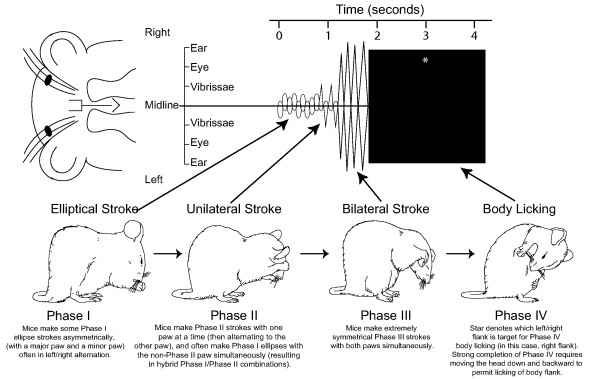
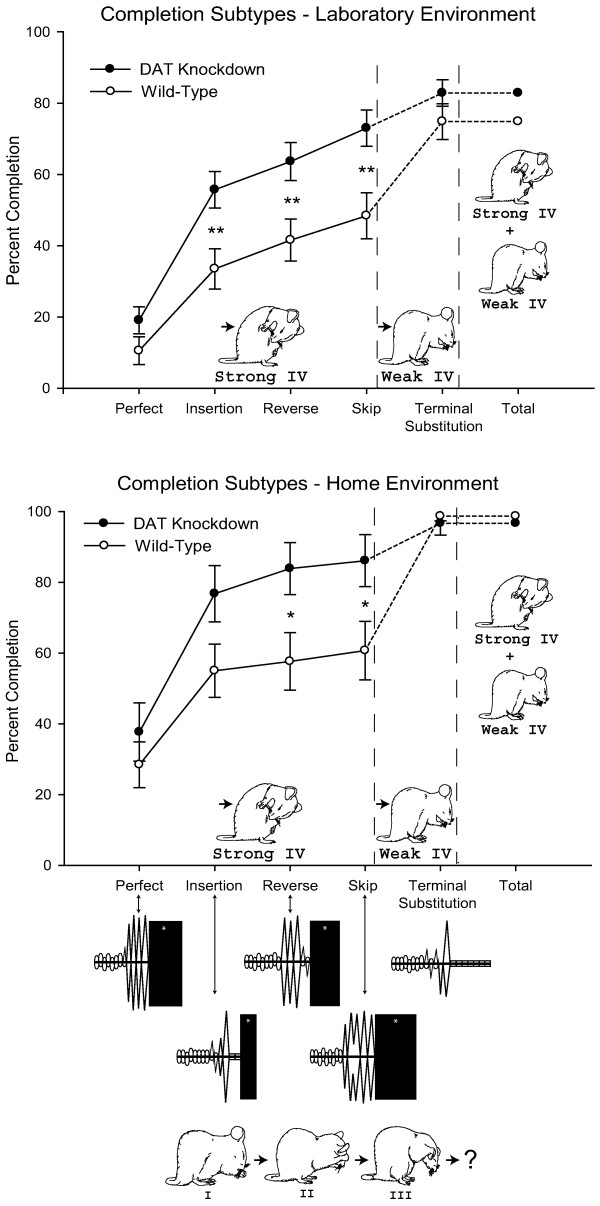
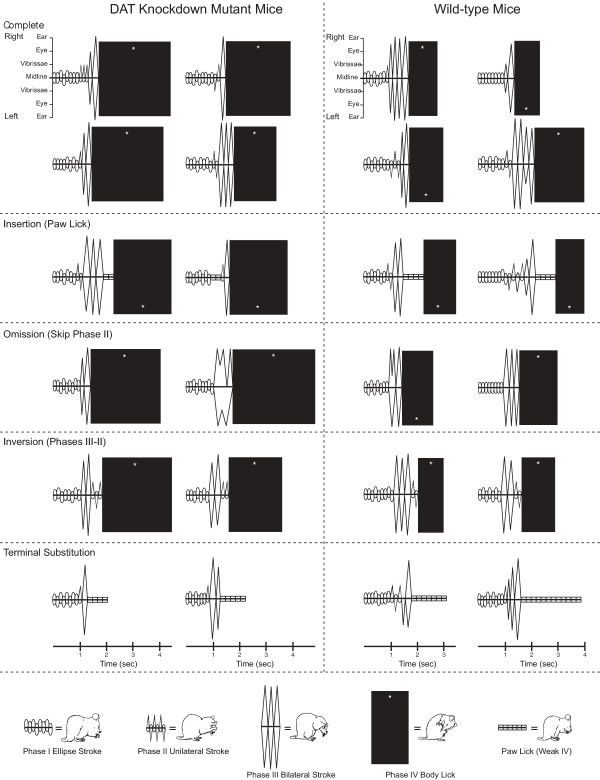
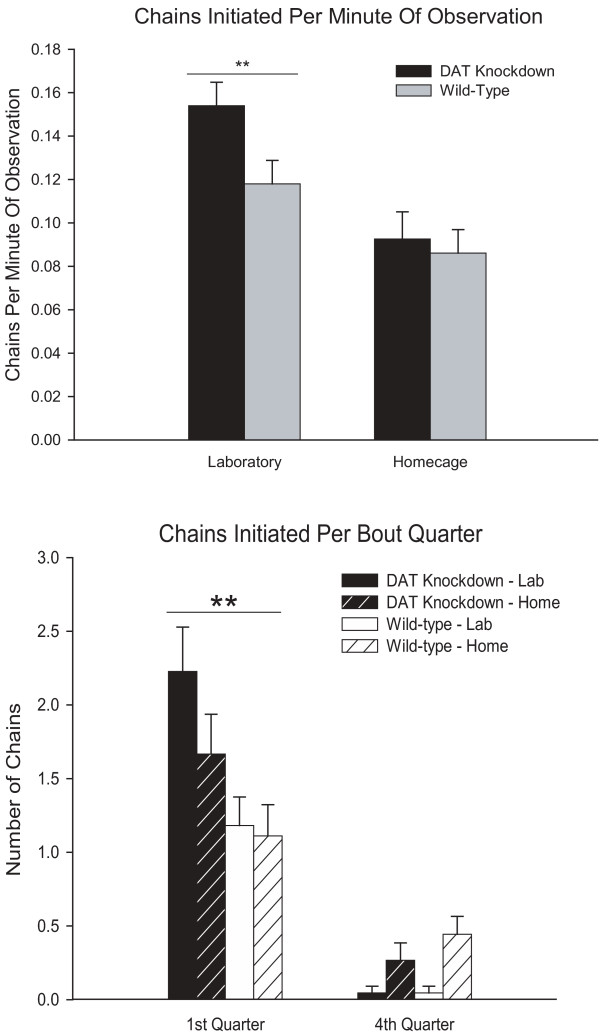
Background: Excessive sequential stereotypy of behavioral patterns (sequential super-stereotypy) in Tourette's syndrome and obsessive compulsive disorder (OCD) is thought to involve dysfunction in nigrostriatal dopamine systems. In sequential super-stereotypy, patients become trapped in overly rigid sequential patterns of action, language, or thought. Some instinctive behavioral patterns of animals, such as the syntactic grooming chain pattern of rodents, have sufficiently complex and stereotyped serial structure to detect potential production of overly-rigid sequential patterns. A syntactic grooming chain is a fixed action pattern that serially links up to 25 grooming movements into 4 predictable phases that follow 1 syntactic rule. New mutant mouse models allow gene-based manipulation of brain function relevant to sequential patterns, but no current animal model of spontaneous OCD-like behaviors has so far been reported to exhibit sequential super-stereotypy in the sense of a whole complex serial pattern that becomes stronger and excessively rigid. Here we used a hyper-dopaminergic mutant mouse to examine whether an OCD-like behavioral sequence in animals shows sequential super-stereotypy. Knockdown mutation of the dopamine transporter gene (DAT) causes extracellular dopamine levels in the neostriatum of these adult mutant mice to rise to 170% of wild-type control levels. Results: We found that the serial pattern of this instinctive behavioral sequence becomes strengthened as an entire entity in hyper-dopaminergic mutants, and more resistant to interruption. Hyper-dopaminergic mutant mice have stronger and more rigid syntactic grooming chain patterns than wild-type control mice. Mutants showed sequential super-stereotypy in the sense of having more stereotyped and predictable syntactic grooming sequences, and were also more likely to resist disruption of the pattern en route, by returning after a disruption to complete the pattern from the appropriate point in the sequence. By contrast, wild-type mice exhibited weaker forms of the fixed action pattern, and often failed to complete the full sequence. Conclusions: Sequential super-stereotypy occurs in the complex fixed action patterns of hyper-dopaminergic mutant mice. Elucidation of the basis for sequential super-stereotypy of instinctive behavior in DAT knockdown mutant mice may offer insights into neural mechanisms of overly-rigid sequences of action or thought in human patients with disorders such as Tourette's or OCD.
Overview
The claims and statistics of this paper haven’t been checked yet.
Free: it reads the open-access text and checks the first 5 claims that cite a source we can check. Create a free account to check every claim.
Integrity signals
Registry
Cites
Statistics
Figures
Verification
Claims the paper makes
The claims and statistics of this paper haven’t been checked yet.
Free: it reads the open-access text and checks the first 5 claims that cite a source we can check. Create a free account to check every claim.
Claims other papers make about this one
Each is checked against this paper’s own text: does it say what the citing paper says it does?
The source backs part of the claim, not all of it — or backs it for a different population, condition or comparison.
In the citing paper
“DAT knockout mice exhibit complex restricted patterns of stereotyped movements similar to the sequential super-stereotypy seen in TA [508].”
From Reward circuitry dysfunction in psychiatric and neurodevelopmental disorders and genetic syndromes: animal models and clinical findings (2012) · cites this paper as [508]
Experimental — accuracy not yet measuredIn the citing paper
“Knockdown of the dopamine transporter leads to excessive grooming in rodents (Berridge et al., 2005)”
From A framework for understanding the emerging role of corticolimbic-ventral striatal networks in OCD-associated repetitive behaviors (2015) · cites this paper as Berridge et al., 2005
In the citing paper
“The DAT knockout mice also have stronger and more rigid self-grooming patterns, with mutants displaying sequential super-stereotypy, evidenced by having more stereotyped and predictable self-grooming sequences [508].”
From Reward circuitry dysfunction in psychiatric and neurodevelopmental disorders and genetic syndromes: animal models and clinical findings (2012) · cites this paper as [508]
Self-check
Percentages, sums and reported differences re-computed from the paper’s own numbers.
The self-check needs the paper’s full text.
Citations
Cites
The faculty of language: what is it, who has it, and how did it evolve?
Hauser, M. D., Chomsky, N., & Fitch, W. T. (2002) · Science · doi:10.1126/science.298.5598.1569 · Cited by 5,189
The problem of serial order in behavior
Lashley, K. S. (1951) · MPG.PuRe (Max Planck Society) · Cited by 2,734
A neostriatal habit learning system in humans
Knowlton, B. J., Mangels, J. A., & Squire, L. R. (1996) · Science · doi:10.1126/science.273.5280.1399 · Cited by 1,777
Learning and Memory Functions of the Basal Ganglia
Packard, M. G., & Knowlton, B. J. (2002) · Annual Review of Neuroscience · doi:10.1146/annurev.neuro.25.112701.142937 · Cited by 1,717 · cited 1×
“Nigrostriatal mechanisms for sequencing instinctive action may have been co-opted in subsequent mammalian and human evolution into use in sequencing learned and cognitive psychological elements [67-69].”
BackgroundThe Basal Ganglia and Chunking of Action Repertoires
Graybiel, A. M. (1998) · Neurobiology of Learning and Memory · doi:10.1006/nlme.1998.3843 · Cited by 1,042 · cited 1×
“In that way, the same basal ganglia mechanisms used for movement syntax may participate in sequential habits that result from learning [20,29,70-72].”
BackgroundCerebral mechanisms in behavior.
indicated, N. A. (1952) · Journal of Consulting Psychology · doi:10.1037/h0051344 · Cited by 913
Toward a neurobiology of obsessive-compulsive disorder
Graybiel, A. M., & Rauch, S. L. (2000) · Neuron · doi:10.1016/s0896-6273(00)00113-6 · Cited by 864 · cited 3×
“They represent precisely the sort of sequencing function that ancestral basal ganglia systems might originally have evolved to perform [2, 9 ,14,15,24,29-31].”
BackgroundInfluentialAnimal Behaviour: A Synthesis of Ethology and Comparative Psychology
Cullen, J. M., & Hinde, R. A. (1968) · The Journal of Animal Ecology · doi:10.2307/3093 · Cited by 843
Decreased expression of striatal signaling genes in a mouse model of Huntington's disease
Luthi-Carter, R. (2000) · Human Molecular Genetics · doi:10.1093/hmg/9.9.1259 · Cited by 720 · cited 1×
“Basal ganglia are believed to be involved in generating such pathologically-strong and complex sequential stereotypies [1,2,8,9,74,78-85].”
BackgroundThe representation of temporal information in perception and motor control
Ivry, R. B. (1996) · Current Opinion in Neurobiology · doi:10.1016/s0959-4388(96)80037-7 · Cited by 635 · cited 2×
“For example, Marsden proposed that "The sequencing of motor action and the sequencing of thought could be a uniform function carried out by the basal ganglia" [15], and a variety of computational models have been proposed to carry out the general sequencing functions of basal ganglia [16-19].”
BackgroundResult
Research works printed but not linked: 1
- Rapoport JL Le "spectre obsessionnel-compulsif": Un concept utile? Encephale 1994 20 Spec No 4 677 680 7895635
Cited by
Items 201–300 of 308
Psychomotor functions at various weeks of chronic renal failure in rats
Chandanathil, M., Upadhya, S., Upadhya, S., & Bhat, G. (2014) · Cognitive Neurodynamics · doi:10.1007/s11571-014-9315-z · Cited by 8
Role of Serotonin in Obsessive–Compulsive Disorder
van Dijk, A., Klompmakers, A. A., & Denys, D. A. J. P. (2008) · Future Neurology · doi:10.2217/14796708.3.5.589 · Cited by 10
Casarrubea, M., Faulisi, F., Raso, G., Aiello, S., & Crescimanno, G. (2020) · Behavioural Brain Research · doi:10.1016/j.bbr.2020.112609 · Cited by 11
Behavioral phenotyping of mouse grooming and barbering
Canavello, P. R., Cachat, J., Hart, P. C., Murphy, D. L., & Kalueff, A. V. (2013) · Cambridge University Press eBooks · doi:10.1017/cbo9781139541022.021 · Cited by 14
Sagheddu, C., Cancedda, E., Bagheri, F., Kalaba, P., Muntoni, A. L., Lubec, J., Lübec, G., Sanna, F., & Pistis, M. (2023) · The International Journal of Neuropsychopharmacology · doi:10.1093/ijnp/pyad056 · Cited by 7
“…grooming is considered a putative sign of stereotyped and compulsive behavior (Berridge et al., 2005; Feusner et al., 2009) when associated with conditions of chronically elevated dopamine activity (Berridge et al., 2005; Taylor et al., 2010), even related to DAT dysfunctions (Sanna et al., 2020).”
BackgroundDunn, J. T., Guidotti, A., & Grayson, D. R. (2024) · eNeuro · doi:10.1523/eneuro.0186-23.2024 · Cited by 10
“Grooming was de fi ned in accordance with the four phases described by Berridge et al. (2005).”
MethodCannabinoids and obsessive-compulsive disorder
Casarotto, P. C., Gomes, F. V., & Guimarães, F. S. (2015) · Elsevier eBooks · doi:10.1016/b978-0-12-417041-4.00015-1 · Cited by 9
The Serotonergic System in Obsessive-Compulsive Disorder
van Dijk, A., Klompmakers, A. A., & Denys, D. A. J. P. (2010) · Handbook of behavioral neuroscience · doi:10.1016/s1569-7339(10)70100-4 · Cited by 9
Animal models for studying obsessive-compulsive and related disorders
Hoffman, K. L. (2015) · Elsevier eBooks · doi:10.1016/b978-0-08-100099-1.00004-2 · Cited by 11
Hunting for evidence of cognitive planning: Archaeological signatures versus psychological realities
Rogers, N., Killcross, S., & Curnoe, D. (2015) · Journal of Archaeological Science Reports · doi:10.1016/j.jasrep.2015.11.002 · Cited by 6
Optogenetic investigation into the role of the subthalamic nucleus in motor controlPreprint
Guillaumin, A., Serra, G. P., Georges, F. E., & Wallén‐Mackenzie, Å. (2020) · bioRxiv (Cold Spring Harbor Laboratory) · doi:10.1101/2020.07.08.193359 · Cited by 6
“In rodents, grooming is an innate behavior which follows a distinct pattern, referred to as the cephalo-caudal rule, covering the extent of the body but starting in the face region (Berridge et al., 2005; Fentress, 1988).”
BackgroundLSD’s effects are differentially modulated in arrestin knockout micePreprint
Rodriguiz, R. M., Nadkarni, V., Means, C. R., Chiu, Y.-T., Roth, B. L., & Wetsel, W. C. (2021) · bioRxiv (Cold Spring Harbor Laboratory) · doi:10.1101/2021.02.04.429772 · Cited by 6
Barbering in Laboratory Rodents: Problems and Prospects
Kotova, M. M., Riga, V. D., & Kalueff, A. V. (2024) · Journal of Evolutionary Biochemistry and Physiology · doi:10.1134/s0022093024030207 · Cited by 5
Rodrigues, T., Bressan, G. N., Krum, B. N., Soares, F. A. A., & Fachinetto, R. (2023) · Pharmacology Biochemistry and Behavior · doi:10.1016/j.pbb.2023.173658 · Cited by 8
Animal Models of Obsessive-Compulsive Disorder: Strain Differences
Maio, T. P., Filgueiras, G. B., Cunha, D. C., & Estanislau, C. R. (2014) · World Journal of Neuroscience · doi:10.4236/wjns.2014.43027 · Cited by 7
“they can appear or not (or can be even opposite), depending of the test situation (see, for example [43] [48]).”
BackgroundDeficit in Social Relationships and Reduced Field of Interest in Mice
Roubertoux, P. L., Carlier, M., & Tordjman, S. (2014) · Neuromethods · doi:10.1007/978-1-4939-2250-5_14 · Cited by 5
Roth, A. D., Krochmal, A. R., & Roth, T. C. (2021) · Behaviour · doi:10.1163/1568539x-bja10093 · Cited by 5
Phasic Dopamine Signaling in Action Selection and Reinforcement Learning
Redgrave, P., Vautrelle, N., Overton, P. G., & Reynolds, J. N. J. (2016) · Handbook of behavioral neuroscience · doi:10.1016/b978-0-12-802206-1.00034-9 · Cited by 7
El-Tarras, A. E. (2012) · AFRICAN JOURNAL OF BIOTECHNOLOGY · doi:10.5897/ajb12.168 · Cited by 8
Giné, E., Echeverry‐Alzate, V., López‐Moreno, J. A., de Fonseca, F. R., Pérez‐Castillo, A., & Santos, Á. (2016) · Neuropharmacology · doi:10.1016/j.neuropharm.2016.12.018 · Cited by 4
“Grooming analysis included paw licking, nose/face grooming, head washing, body grooming/scratching, leg licking and tail/genitals grooming (Berridge et al., 2005; Kalueff and Tuohimaa, 2005).”
Modeling OCD Endophenotypes in Zebrafish
Parker, M. O. (2017) · Springer eBooks · doi:10.1007/978-3-319-33774-6_6 · Cited by 5
Bergner, C., Smolinsky, A. N., Dufour, B. D., LaPorte, J. L., Hart, P. C., Egan, R. J., & Kalueff, A. V. (2010) · Cambridge University Press eBooks · doi:10.1017/cbo9780511676109.004 · Cited by 4
Is Ondansetron Augmentation Effective in Obsessive-Compulsive Disorder?
Kalyani, B. G., Hegde, A., Arumugham, S. S., Narayanaswamy, J. C., Math, S. B., & Reddy, Y. C. J. (2017) · Journal of Clinical Psychopharmacology · doi:10.1097/jcp.0000000000000704 · Cited by 4
Marroni, S. S., Santos, V. R., Castro, O. W., Tejada, J., Santos, J., de Oliveira, J. A. D., & Garcia-Cairasco, N. (2019) · bioRxiv · doi:10.1101/638452 · Cited by 2
Dorantes-Nieto, Á., Cortés, C. M. A. C., Ugarte, A., Trujillo, A., Carrasco, Á., Cepeda-Freyre, H. A., & Eguibar, J. R. (2020) · Frontiers in Behavioral Neuroscience · doi:10.3389/fnbeh.2020.00020 · Cited by 3
Andronikashvili, G., Gurashvili, T., Dondoladze, K., Nikolaishvili, M., & Makashvili, M. (2024) · Journal of Biosciences and Medicines · doi:10.4236/jbm.2024.124025 · Cited by 5
“The direct output circuits of the basal ganglia are particularly significant in compulsive behavioral patterns characterized by serial perseveration and rigidity [26] [30] [31] [32] [33] [34].”
InfluentialAn active inference account of stuttering behavior
Usler, E. R. (2025) · Frontiers in Human Neuroscience · doi:10.3389/fnhum.2025.1498423 · Cited by 7
Chen, J., Kaitsuka, T., Fujino, R., Araki, K., Tomizawa, K., & Yamamoto, T. (2016) · Neuroscience Letters · doi:10.1016/j.neulet.2016.07.022 · Cited by 3
Pharmacotherapy of trichotillomania (hair pulling disorder): an updated systematic review
Rothbart, R., & Stein, D. J. (2014) · Expert Opinion on Pharmacotherapy · doi:10.1517/14656566.2015.972936 · Cited by 3
Grooming, sequencing, and beyond: how it all began
Stilwell, M. F., & Fentress, J. C. (2010) · Cambridge University Press eBooks · doi:10.1017/cbo9780511676109.002 · Cited by 3
Haloperidol ameliorates androgen-induced behavioral deficits in developing male rats
Qi, C., Ji, X., Zhang, G., Kang, Y., Huang, Y., Cui, R., Li, S., Cui, H., & Shi, G. (2018) · Journal of Endocrinology · doi:10.1530/joe-17-0642 · Cited by 4
The Neurobiology of Tic Disorders and Obsessive-Compulsive Disorder: Animal and Human Studies
Pittenger, C. (2017) · Oxford University Press eBooks · doi:10.1093/med/9780190681425.003.0065 · Cited by 10
Chadderdon, G. L. (2009) · IUScholarWorks (Indiana University) · Cited by 3
Scholl, C., Baladron, J., Vitay, J., & Hamker, F. H. (2021) · bioRxiv (Cold Spring Harbor Laboratory) · doi:10.1101/2021.02.08.430235 · Cited by 3
“Mice with excessive striatal dopamine show frequent rigid and complex action patterns and serve as an animal model of the Tourette syndrome (Berridge et al., 2005).”
BackgroundThe measurements and mechanisms of restricted and repetitive behaviors in autism spectrum disorders
Li, T., Hu, Y., Song, C., Lu, H., & Yi, L. (2018) · Chinese Science Bulletin (Chinese Version) · doi:10.1360/n972017-01249 · Cited by 2
Evolution of and Concepts of Behavioral Stereotypes
Reznikova, Z. I., Panteleeva, S. N., Novikovskaya, A. A., & Levenets, J. V. (2022) · Biology Bulletin Reviews · doi:10.1134/s2079086422010066 · Cited by 2
“For instance, face washing in rodents includes up to 25 movements of forelimbs, neck, and head in precise “syntactic” order (which comprise hierarchically arranged elements) (Berridge, 1990; Berridge et al., 2005).”
BackgroundGenetic, epigenetic, and environmental factors in serotonin-associated disease condition
Friedel, E., & Heinz, A. (2020) · Handbook of behavioral neuroscience · doi:10.1016/b978-0-444-64125-0.00047-5 · Cited by 4
Animal Models of Tic Disorders
Bortolato, M., & Cadeddu, R. (2022) · Oxford University Press eBooks · doi:10.1093/med/9780197543214.003.0017 · Cited by 2
The Phenomenology of Obsessive–Compulsive Symptoms in Tourette Syndrome
Ferrão, Y. A., de Alvarenga, P. G., Hounie, A. G., de Mathis, M. A., Farhat, L. C., do Rosário, M. C., & Miguel, E. C. (2022) · Oxford University Press eBooks · doi:10.1093/med/9780197543214.003.0004 · Cited by 3
Genetic, Epigenetic and Environmental Factors in Serotonin Associated Disease Condition
Friedel, E., & Heinz, A. (2010) · Handbook of behavioral neuroscience · doi:10.1016/s1569-7339(10)70108-9 · Cited by 3
Kallman, M. J. (2015) · Springer eBooks · doi:10.1007/978-3-319-05392-9_31 · Cited by 2
Neurobiology of Tic Disorders and Obsessive–Compulsive Disorder: Animal and Human Studies
Pittenger, C. (2025) · Oxford University Press eBooks · doi:10.1093/med/9780197640654.003.0065 · Cited by 1
Hettinger, J. A. (2009) · QSpace (Queen's University Library) · Cited by 2
Marroni, S. S., Santos, V. R., de Castro, O. W., Tejada, J., dos Santos, J. C., de Oliveira, J. A. C., & Garcia‐Cairasco, N. (2025) · Epilepsy & Behavior · doi:10.1016/j.yebeh.2025.110273 · Cited by 5
Zai, G. C., Zai, C. C. H., Burroughs, E., Arnold, P. D., Kennedy, J. L., & Richter, M. A. (2025) · Progress in Neuro-Psychopharmacology and Biological Psychiatry · doi:10.1016/j.pnpbp.2025.111428 · Cited by 3
Real-time rodent behavior classifier using color-based body segmentation (R2C2)
Jo, J., Park, T., Hwang, S., Lee, S., Min, J., Park, G., Song, M., Kwag, J., Kim, H., Lee, C., et al. (2025) · Lab Animal · doi:10.1038/s41684-025-01634-0 · Cited by 1
Fuochi, S., Bienboire‐Frosini, C., Descout, E., Marcet‐Rius, M., Pageat, P., & Cozzi, A. (2025) · Animals · doi:10.3390/ani15223278
“The EPM test is a widely established and extensively published method for assessing anxiety and the effects of anxiety-reducing treatments, as well as evaluating behavioral changes in response to stress [16–22].”
Stereotyped behaviors: behavioral markers of brain dysfunction and welfare impairment in animals
Zhang, J., Cui, W., Zhao, S., & Yin, G. (2026) · Frontiers in Veterinary Science · doi:10.3389/fvets.2026.1797422 · Cited by 1
Modulatory effects of estrogens on grooming and related behaviors
Hill, R., & Boon, W. C. (2010) · Cambridge University Press eBooks · doi:10.1017/cbo9780511676109.007 · Cited by 1
Autonomous and motor behaviors
Crusio, W. E., Sluyter, F., Gerlai, R. T., & Pietropaolo, S. (2013) · Cambridge University Press eBooks · doi:10.1017/cbo9781139541022.011 · Cited by 1
The Utility of Genetically Modified Animals in Modeling OCD-Spectrum Disorders
Smolinsky, A. N., Bergner, C., Hart, P. C., Egan, R. J., Dufour, B. D., LaPorte, J. L., & Kalueff, A. V. (2009) · Neuromethods · doi:10.1007/978-1-60761-474-6_7 · Cited by 2
Bolivar, V. J. (2014) · Cambridge University Press eBooks · doi:10.1017/cbo9781107360556.012 · Cited by 1
Sirotin, B. Z., & Жмеренецкий, К. В. (2003) · PubMed · Cited by 2
Obesity and Stress: The Melanocortin Connection
Singhal, S., & Hill, J. W. (2018) · Springer eBooks · doi:10.1007/978-3-319-89506-2_11 · Cited by 2
Kallman, M. J. (2016) · Springer eBooks · doi:10.1007/978-3-642-27728-3_31-2 · Cited by 1
Central Tenets of the Frame/Content Theory of Evolution and Acquisition of Speech Production
MacNeilage, P. F. (2015) · Wiley eBooks · doi:10.1002/9781118584156.ch16 · Cited by 1
Schwartz, C. P., Bartell, P. A., Cassone, V. M., & Smotherman, M. S. (2009) · Brain Behavior and Evolution · doi:10.1159/000202987 · Cited by 1
Relações filogenéticas de rodentia: uma abordagem comportamental
Marques, J. M. (2009) · Digital Library of Theses and Dissertations (Universidade de São Paulo) · doi:10.11606/d.47.2009.tde-26082009-144630 · Cited by 1
The Role of Social Reasoning in the Development of Self and Social Regulation
Stone, J. E. (2013) · Summit (Simon Fraser University) · Cited by 1
Tics et syndrome de Gilles de la Tourette
Hartmann, A., van Meerbeeck, P., Deniau, E., Béhar, C., Czernecki, V., Depienne, C., & Worbe, Y. (2011) · Encyclopédie médico-chirurgicale. Neurologie · doi:10.1016/s0246-0378(11)53655-3 · Cited by 2
La aventura de los ríos de España
Ridruejo, C. S. (2003) · Revista de Obras Públicas: Organo profesional de los ingenieros de caminos, canales y puertos · Cited by 1
The effects of apomorphine in pigeons: Some supplementary notes
Delius, J. D., & Acerbo, A. M. (2016) · KOPS (University of Konstanz) · doi:10.13140/rg.2.1.4497.1129 · Cited by 1
The Sapap3-knockout mouse model manifests a spectrum of repetitive behavioursPreprint
Lamothe, H., Schreiweis, C., Mallet, L., & Burguière, E. (2021) · HAL · doi:10.1101/2020.01.22.915215 · Cited by 1
Tiermodelle für Zwangsstörungen
Winter, C. (2011) · Springer eBooks · doi:10.1007/978-3-642-19844-1_26
Visser, T. (2010) · Utrecht University Repository (Utrecht University)
Brain systems for action sequences
Aldridge, J. W., & Berridge, K. C. (2014)
Self-citationMolecular Genetics of Tourette Syndrome
Valenti, A. M., & Grados, M. A. (2012) · Wiley eBooks · doi:10.1002/9780470015902.a0022494
The threatened brain : magnetic resonance imaging studies into fear and panic
Goossens, L. (2009) · Research Publications (Maastricht University) · doi:10.26481/dis.20090605lg · Cited by 1
Crib-biting in Horses: A Physiological and Genetic Study of Candidate Causative Factors
Hemmann, K. (2014) · Helda - University of Helsinki Institutional Repository · doi:10.13140/2.1.1227.8566 · Cited by 1
Tic e sindrome di Gilles de la Tourette
Hartmann, A., Bahadori, S., Bahout, M., Czernecki, V., Delorme, C., Depienne, C., Moulin, J., & Nilles, C. (2011) · EMC - Neurologia · doi:10.1016/s1634-7072(11)70624-9
Social dysfunction and mental retardation
Pietropaolo, S., Sluyter, F., & Crusio, W. E. (2014) · Cambridge University Press eBooks · doi:10.1017/cbo9781107360556.010 · Cited by 1
Obsessive–compulsive disorder and Gilles de la Tourette syndrome
Woehrle, N. S., & Dulawa, S. C. (2014) · Cambridge University Press eBooks · doi:10.1017/cbo9781107360556.016
Striatal Dopamine and Glutamate in Action: The Generation and Modification of Adaptive Behavior
Yin, H. H., & Costa, R. M. (2011) · Frontiers in neuroscience · doi:10.1201/b11284-10
Lam, E. (2012) · TSpace (University of Toronto) · Cited by 1
Cell Therapy in Parkinson's Disease
Steece‐Collier, K., & Collier, T. J. (2016) · Handbook of behavioral neuroscience · doi:10.1016/b978-0-12-802206-1.00044-1
The Electromagnetic Field Changes on Emotional-motivated Behavior in Genetically Epilepsy-prone Rats
Bukia, N., Kekelia, G., Butskhrikidze, M., Machavariani, L., & Svanidze, M. (2017) · The International Annals of Medicine · doi:10.24087/iam.2017.1.1.16
“Regulation of grooming behavior is mediated by multiple brain regions (especially the basal ganglia and hypothalamus) ((3,15)), as well as by various endogenous agents neuromodulators ((17)).”
BackgroundComparison Between PCB Exposure and Hypothyroidism: Behavioral Development in Sprague-Dawley Rats
Toth, C. L. (2009) · OhioLink ETD Center (Ohio Library and Information Network) · Cited by 2
Obsessive-Compulsive Tendencies and Action Sequence Complexity: An Information Theory Analysis
Zeki, M., Balcı, F., Öztel, T., & Moustafa, A. A. (2019) · Springer series in cognitive and neural systems · doi:10.1007/978-3-030-18830-6_7
Pollon, S. (2019) · Summit (Simon Fraser University)
Gilles de la Tourette Syndrome: From Genes to Animal Models
BK21 FOUR Project, Kim, H. S., Kim, H. J., & Lee, J. H. (2020) · 대한구강악안면병리학회지 · doi:10.17779/kaomp.2020.44.6.001
40. Tics et syndrome de gilles de la tourette
Delorme, R., Deniau, E., & Hartmann, A. (2012) · Time to knit · doi:10.1016/s0246-0378(17)79782-5
Burton, N. J., Borne, L., & Manning, E. E. (2021) · Lab Animal · doi:10.1038/s41684-021-00830-y · Cited by 1
Kallman, M. J. (2015) · Springer eBooks · doi:10.1007/978-3-642-27728-3_31-1
Tic e sindrome di Gilles de la Tourette
Hartmann, A., Deniau, E., Czernecki, V., Negovanska, V., d’Harcourt, S., Depienne, C., Klein, Y., & Worbe, Y. (2018) · EMC - Neurologia · doi:10.1016/s1634-7072(18)89402-8
Studying the pathophysiology of tic disorders in animal models
Pittenger, C. (2022) · International review of movement disorders · doi:10.1016/bs.irmvd.2022.06.001
Szalisznyó, K., & Silverstein, D. N. (2023) · Cognitive Neurodynamics · doi:10.1007/s11571-022-09865-4
“In rats, pharmacological boosting by dopamine D 1 agonists produces sequential super-stereotypy of syntactic grooming chains (Berridge et al. 2005).”
BackgroundAnimal models of Obsessive-Compulsive Disorder (OCD)
Nabizadeh, M., & Ahmadi, F. (2022) · Journal of Neurodevelopmental Cognition · doi:10.52547/jncog.2022.103445
“and at the moment, five OCD mouse models are included in genetic animal models as: the D1CT-7 transgenic mouse model of comorbid OCD and TS (Tourette’s syndrome), the mutant mouse Hoxb8 model of trichotillomania, the SAP90/PSD95-associated protein 3 (SAPAP3), the 5-HT2C receptor knockout mouse model of OCD and the DAT…”
FREITAS, T. D. S. C. D. (2024) · doi:10.17771/pucrio.acad.66817 · Cited by 1
Barbering in Laboratory Rodents: Problems and Prospects
Kotova, M. M., Riga, V. D., & Kalueff, A. V. (2024) · Российский физиологический журнал им И М Сеченова · doi:10.31857/s0869813924060011
Hatfield, T., & Johnson, S. (2025) · Journal of Visualized Experiments · doi:10.3791/67708
Santos‐García, I., Rodríguez‐Cueto, C., Villegas, P., Piscitelli, F., Lauritano, A., Shen, C.-K. J., Marzo, V. D., Fernández‐Ruíz, J., & de Lago, E. (2024) · Figshare · doi:10.6084/m9.figshare.26587602
Santos‐García, I., Rodríguez‐Cueto, C., Villegas, P., Piscitelli, F., Lauritano, A., Shen, C.-K. J., Marzo, V. D., Fernández‐Ruíz, J., & de Lago, E. (2024) · Figshare · doi:10.6084/m9.figshare.26587587
Santos‐García, I., Rodríguez‐Cueto, C., Villegas, P., Piscitelli, F., Lauritano, A., Shen, C.-K. J., Marzo, V. D., Fernández‐Ruíz, J., & de Lago, E. (2024) · Figshare · doi:10.6084/m9.figshare.26587584
Santos‐García, I., Rodríguez‐Cueto, C., Villegas, P., Piscitelli, F., Lauritano, A., Shen, C.-K. J., Marzo, V. D., Fernández‐Ruíz, J., & de Lago, E. (2024) · Figshare · doi:10.6084/m9.figshare.26587596
Santos‐García, I., Rodríguez‐Cueto, C., Villegas, P., Piscitelli, F., Lauritano, A., Shen, C.-K. J., Marzo, V. D., Fernández‐Ruíz, J., & de Lago, E. (2024) · Figshare · doi:10.6084/m9.figshare.26587590
Santos‐García, I., Rodríguez‐Cueto, C., Villegas, P., Piscitelli, F., Lauritano, A., Shen, C.-K. J., Marzo, V. D., Fernández‐Ruíz, J., & de Lago, E. (2024) · Figshare · doi:10.6084/m9.figshare.26587605
Santos‐García, I., Rodríguez‐Cueto, C., Villegas, P., Piscitelli, F., Lauritano, A., Shen, C.-K. J., Marzo, V. D., Fernández‐Ruíz, J., & de Lago, E. (2024) · Figshare · doi:10.6084/m9.figshare.26587599
Santos‐García, I., Rodríguez‐Cueto, C., Villegas, P., Piscitelli, F., Lauritano, A., Shen, C.-K. J., Marzo, V. D., Fernández‐Ruíz, J., & de Lago, E. (2024) · Figshare · doi:10.6084/m9.figshare.26587608
Santos‐García, I., Rodríguez‐Cueto, C., Villegas, P., Piscitelli, F., Lauritano, A., Shen, C.-K. J., Marzo, V. D., Fernández‐Ruíz, J., & de Lago, E. (2024) · Figshare · doi:10.6084/m9.figshare.26587593
Animal models of Gilles de la Tourette Syndrome and other tic disorders
Loewenstern, Y., Tahary, O., Bar‐Gad, I., & Belelovsky, K. (2026) · Handbook of clinical neurology · doi:10.1016/b978-0-443-13554-5.00015-8
Metadata
- Authors
- Berridge, K. C., Aldridge, J. W., Houchard, K. R., & Zhuang, X.
- Affiliations
- University of Michigan (US)
- Wayne State University (US)
- University of Chicago (US)
- Corresponding author
- Berridge, Kent C
- Venue
- BMC Biology
- Published
- 2005-02-14
- Volume
- 3
- Issue
- 1
- Pages
- 4-4
- ISSN
- 1741-7007 (ISSN-L)
- PMC
- PMC552313
- OpenAlex
- W1882556075
- Cited by
- 309
- References
- 96
- Citations by year
- 2026: 8 · 2025: 8 · 2024: 22 · 2023: 14 · 2022: 12 · 2021: 16 · 2020: 13 · 2019: 13 · 2018: 9 · 2017: 16 · 2016: 19 · 2015: 16 · 2014: 21 · 2013: 13 · 2012: 14
- FWCI
- 16.20
- Type
- journal article
- Language
- en
- Open access
- gold
- doi.org
- Licence
- cc-by
- creativecommons.org/licenses/by/2.0/ (tdm)
- creativecommons.org/licenses/by/2.0/ (vor)
- Locations
- BMC Biology (publishedVersion, cc-by)
- PubMed Central (publishedVersion, cc-by)
- PubMed (publishedVersion)
- Human Biology (submittedVersion)
- Deep Blue (University of Michigan) (submittedVersion)
- DOAJ (DOAJ: Directory of Open Access Journals) (submittedVersion, cc-by-sa)
- Funders
- National Science Foundation (0091661)
- National Alliance for Research on Schizophrenia and Depression
- National Institutes of Health
- National Institute of Mental Health (MH-63649, R01MH063649)
- National Institute on Drug Abuse (DA015188, R01DA015188)
- Topics
- Social Sciences › Psychology › Clinical Psychology › Obsessive-Compulsive Spectrum Disorders
- Life Sciences › Neuroscience › Cellular and Molecular Neuroscience › Neurotransmitter Receptor Influence on Behavior
- Life Sciences › Neuroscience › Endocrine and Autonomic Systems › Neuroendocrine regulation and behavior
- Keywords
- fixed action patterns, obsessive-compulsive disorder, Tourette syndrome, nigrostriatal dopamine system, innate behavior, behavioral rigidity
- MeSH terms
- Animals, Disease Models, Animal, Tourette Syndrome, Male, Mice, Neurologic Mutants, Obsessive-Compulsive Disorder, Stereotyped Behavior, Dopamine Plasma Membrane Transport Proteins, Mice
About these checks
Registry, retraction, Cites and statistics results are computed, not judged, with one exception: a printed reference that no index lists is read once by a model before it counts as a citation error. Claims are extracted by a model and kept only when their quote appears verbatim in the text; each cited source is then checked, with a model’s help, for whether it says what the claim relies on. Those verdicts can be wrong — read the claim’s quote and the cited source before relying on one.
Statistics and arithmetic are recomputed, not judged.
Confidence bands are shown only for fields calibrated on our annotated test set. None is calibrated yet, so no band is shown.
What counts as a claim ›How we measure confidence ›How we check this ›
Are you an author, or do you see a problem with this page? Request a review
Data sources
Bibliographic data: Semantic Scholar, OpenAlex, Crossref.
Contains information from the Semantic Scholar Academic Graph Datasets, made available under the ODC Attribution License (ODC-BY 1.0).
Semantic Scholar’s data is described in: Kinney, R., et al. (2023). The Semantic Scholar Open Data Platform. arXiv:2301.10140.
