

Sequential super-stereotypy of an instinctive fixed action pattern in hyper-dopaminergic mutant mice: a model of obsessive compulsive disorder and Tourette’s
Open accessThe DOI matches its Crossref record; 96 of the 96 references it cites were found in a registry or an index.
Abstract
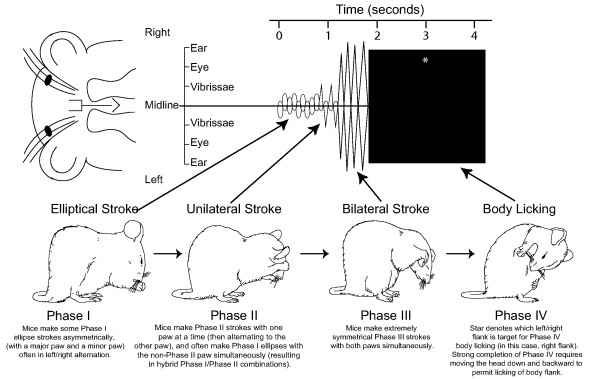
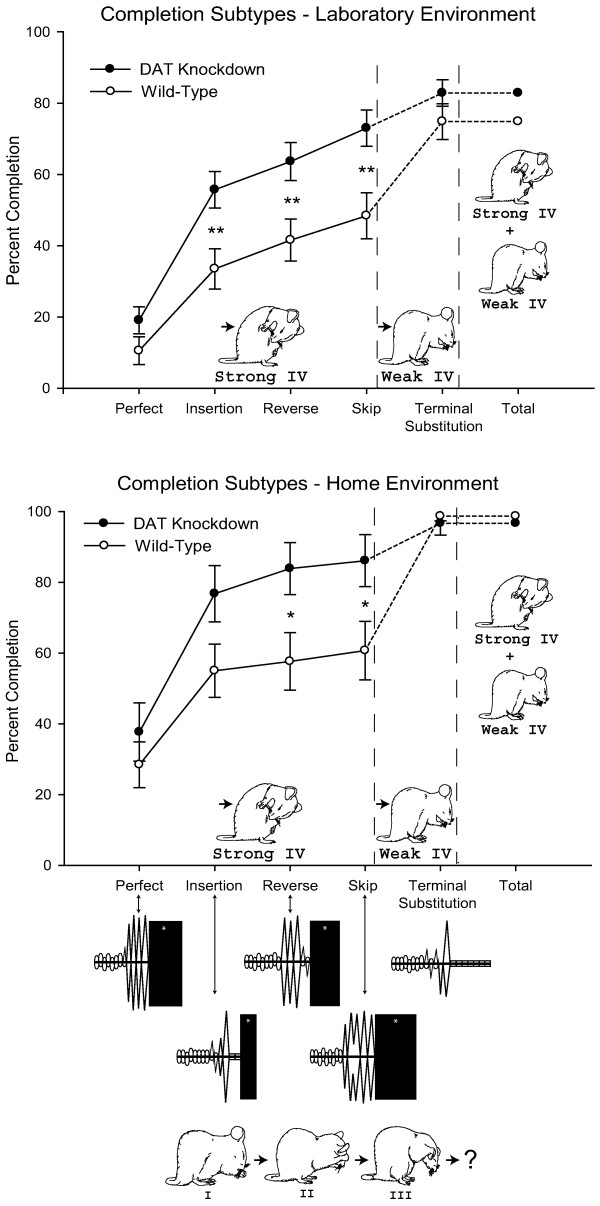
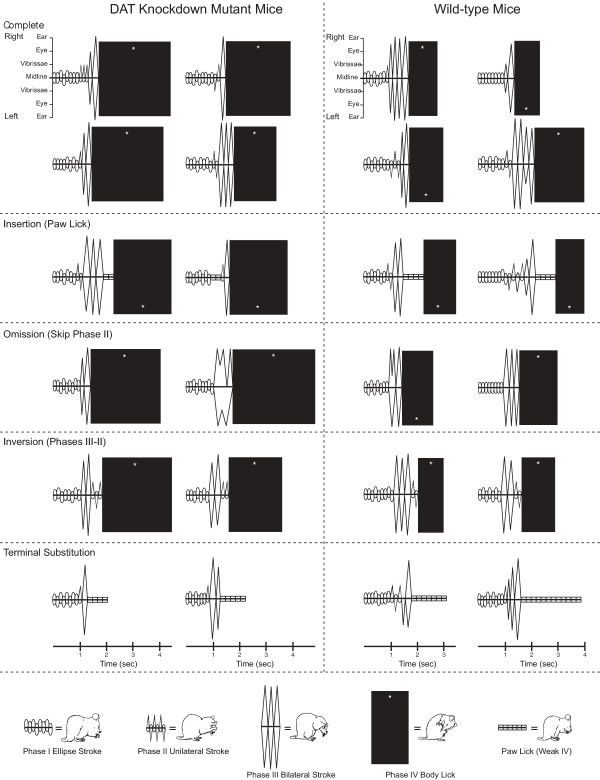
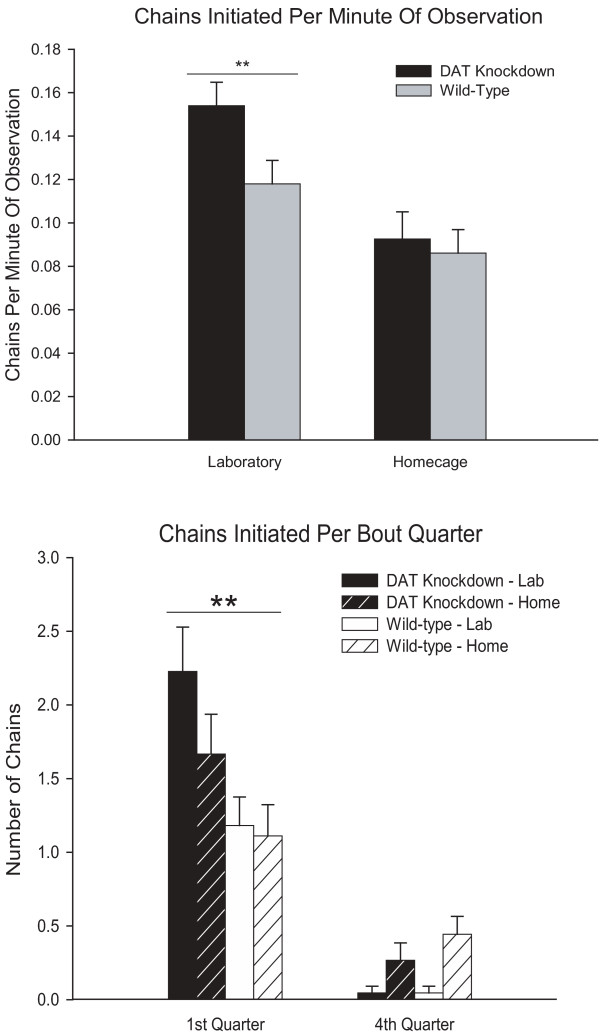
Background: Excessive sequential stereotypy of behavioral patterns (sequential super-stereotypy) in Tourette's syndrome and obsessive compulsive disorder (OCD) is thought to involve dysfunction in nigrostriatal dopamine systems. In sequential super-stereotypy, patients become trapped in overly rigid sequential patterns of action, language, or thought. Some instinctive behavioral patterns of animals, such as the syntactic grooming chain pattern of rodents, have sufficiently complex and stereotyped serial structure to detect potential production of overly-rigid sequential patterns. A syntactic grooming chain is a fixed action pattern that serially links up to 25 grooming movements into 4 predictable phases that follow 1 syntactic rule. New mutant mouse models allow gene-based manipulation of brain function relevant to sequential patterns, but no current animal model of spontaneous OCD-like behaviors has so far been reported to exhibit sequential super-stereotypy in the sense of a whole complex serial pattern that becomes stronger and excessively rigid. Here we used a hyper-dopaminergic mutant mouse to examine whether an OCD-like behavioral sequence in animals shows sequential super-stereotypy. Knockdown mutation of the dopamine transporter gene (DAT) causes extracellular dopamine levels in the neostriatum of these adult mutant mice to rise to 170% of wild-type control levels. Results: We found that the serial pattern of this instinctive behavioral sequence becomes strengthened as an entire entity in hyper-dopaminergic mutants, and more resistant to interruption. Hyper-dopaminergic mutant mice have stronger and more rigid syntactic grooming chain patterns than wild-type control mice. Mutants showed sequential super-stereotypy in the sense of having more stereotyped and predictable syntactic grooming sequences, and were also more likely to resist disruption of the pattern en route, by returning after a disruption to complete the pattern from the appropriate point in the sequence. By contrast, wild-type mice exhibited weaker forms of the fixed action pattern, and often failed to complete the full sequence. Conclusions: Sequential super-stereotypy occurs in the complex fixed action patterns of hyper-dopaminergic mutant mice. Elucidation of the basis for sequential super-stereotypy of instinctive behavior in DAT knockdown mutant mice may offer insights into neural mechanisms of overly-rigid sequences of action or thought in human patients with disorders such as Tourette's or OCD.
Overview
The claims and statistics of this paper haven’t been checked yet.
Free: it reads the open-access text and checks the first 5 claims that cite a source we can check. Create a free account to check every claim.
Integrity signals
Registry
Cites
Statistics
Figures
Verification
Claims the paper makes
The claims and statistics of this paper haven’t been checked yet.
Free: it reads the open-access text and checks the first 5 claims that cite a source we can check. Create a free account to check every claim.
Claims other papers make about this one
Each is checked against this paper’s own text: does it say what the citing paper says it does?
The source backs part of the claim, not all of it — or backs it for a different population, condition or comparison.
In the citing paper
“DAT knockout mice exhibit complex restricted patterns of stereotyped movements similar to the sequential super-stereotypy seen in TA [508].”
From Reward circuitry dysfunction in psychiatric and neurodevelopmental disorders and genetic syndromes: animal models and clinical findings (2012) · cites this paper as [508]
Experimental — accuracy not yet measuredIn the citing paper
“Knockdown of the dopamine transporter leads to excessive grooming in rodents (Berridge et al., 2005)”
From A framework for understanding the emerging role of corticolimbic-ventral striatal networks in OCD-associated repetitive behaviors (2015) · cites this paper as Berridge et al., 2005
In the citing paper
“The DAT knockout mice also have stronger and more rigid self-grooming patterns, with mutants displaying sequential super-stereotypy, evidenced by having more stereotyped and predictable self-grooming sequences [508].”
From Reward circuitry dysfunction in psychiatric and neurodevelopmental disorders and genetic syndromes: animal models and clinical findings (2012) · cites this paper as [508]
Self-check
Percentages, sums and reported differences re-computed from the paper’s own numbers.
The self-check needs the paper’s full text.
Citations
Cites
The faculty of language: what is it, who has it, and how did it evolve?
Hauser, M. D., Chomsky, N., & Fitch, W. T. (2002) · Science · doi:10.1126/science.298.5598.1569 · Cited by 5,189
The problem of serial order in behavior
Lashley, K. S. (1951) · MPG.PuRe (Max Planck Society) · Cited by 2,734
A neostriatal habit learning system in humans
Knowlton, B. J., Mangels, J. A., & Squire, L. R. (1996) · Science · doi:10.1126/science.273.5280.1399 · Cited by 1,777
Learning and Memory Functions of the Basal Ganglia
Packard, M. G., & Knowlton, B. J. (2002) · Annual Review of Neuroscience · doi:10.1146/annurev.neuro.25.112701.142937 · Cited by 1,717 · cited 1×
“Nigrostriatal mechanisms for sequencing instinctive action may have been co-opted in subsequent mammalian and human evolution into use in sequencing learned and cognitive psychological elements [67-69].”
BackgroundThe Basal Ganglia and Chunking of Action Repertoires
Graybiel, A. M. (1998) · Neurobiology of Learning and Memory · doi:10.1006/nlme.1998.3843 · Cited by 1,042 · cited 1×
“In that way, the same basal ganglia mechanisms used for movement syntax may participate in sequential habits that result from learning [20,29,70-72].”
BackgroundCerebral mechanisms in behavior.
indicated, N. A. (1952) · Journal of Consulting Psychology · doi:10.1037/h0051344 · Cited by 913
Toward a neurobiology of obsessive-compulsive disorder
Graybiel, A. M., & Rauch, S. L. (2000) · Neuron · doi:10.1016/s0896-6273(00)00113-6 · Cited by 864 · cited 3×
“They represent precisely the sort of sequencing function that ancestral basal ganglia systems might originally have evolved to perform [2, 9 ,14,15,24,29-31].”
BackgroundInfluentialAnimal Behaviour: A Synthesis of Ethology and Comparative Psychology
Cullen, J. M., & Hinde, R. A. (1968) · The Journal of Animal Ecology · doi:10.2307/3093 · Cited by 843
Decreased expression of striatal signaling genes in a mouse model of Huntington's disease
Luthi-Carter, R. (2000) · Human Molecular Genetics · doi:10.1093/hmg/9.9.1259 · Cited by 720 · cited 1×
“Basal ganglia are believed to be involved in generating such pathologically-strong and complex sequential stereotypies [1,2,8,9,74,78-85].”
BackgroundThe representation of temporal information in perception and motor control
Ivry, R. B. (1996) · Current Opinion in Neurobiology · doi:10.1016/s0959-4388(96)80037-7 · Cited by 635 · cited 2×
“For example, Marsden proposed that "The sequencing of motor action and the sequencing of thought could be a uniform function carried out by the basal ganglia" [15], and a variety of computational models have been proposed to carry out the general sequencing functions of basal ganglia [16-19].”
BackgroundResult
Research works printed but not linked: 1
- Rapoport JL Le "spectre obsessionnel-compulsif": Un concept utile? Encephale 1994 20 Spec No 4 677 680 7895635
Cited by
The debate over dopamine’s role in reward: the case for incentive salience
Berridge, K. C. (2007) · Psychopharmacology · doi:10.1007/s00213-006-0578-x · Cited by 2,347
“Dopamine agonists and antagonists also modulate the strength of instinctive chains of 25 or so grooming movements that all rodents show, apparently by acting on dorsolateral striatum (Berridge et al. 2005; Cromwell and Berridge 1996; Deveney and Waddington 1997).”
BackgroundSelf-citationHabits, Rituals, and the Evaluative Brain
Graybiel, A. M. (2008) · Annual Review of Neuroscience · doi:10.1146/annurev.neuro.29.051605.112851 · Cited by 1,697
Oxytocin: The Great Facilitator of Life
Lee, H.-J., Macbeth, A. H., Pagani, J., & Young, W. S. (2009) · Progress in Neurobiology · doi:10.1016/j.pneurobio.2009.04.001 · Cited by 1,037
“Recently, an Oxt-induced hypergrooming model of OCD was developed by Oxt administration to the CeA (Marroni et al., 2007).”
InfluentialNeurobiology of rodent self-grooming and its value for translational neuroscience
Kalueff, A. V., Stewart, A. M., Song, C., Berridge, K. C., Graybiel, A. M., & Fentress, J. C. (2016) · Nature Reviews Neuroscience · doi:10.1038/nrn.2015.8 · Cited by 852
Self-citationRecent advances in Tourette syndrome research
Albin, R. L., & Mink, J. W. (2006) · Trends in Neurosciences · doi:10.1016/j.tins.2006.01.001 · Cited by 478
Walia, H., Wilson, C., Condamine, P., Liu, X., Ismail, A. M., Zeng, L., Wanamaker, S. I., Mandal, J., Xu, J., Cui, X., et al. (2005) · Plant Physiology · doi:10.1104/pp.105.065961 · Cited by 474
Social context-induced song variation affects female behavior and gene expression
Woolley, S. C., & Doupe, A. J. (2008) · PLoS Biology · doi:10.1371/journal.pbio.0060062 · Cited by 303
“plasticity versus stereotypy [33–36].”
B-SOiD, an open-source unsupervised algorithm for identification and fast prediction of behaviors
Hsu, A. I., & Yttri, E. A. (2021) · Nature Communications · doi:10.1038/s41467-021-25420-x · Cited by 298
Dichter, G. S., Damiano, C. A., & Allen, J. A. (2012) · Journal of Neurodevelopmental Disorders · doi:10.1186/1866-1955-4-19 · Cited by 299
“The DAT knockout mice also have stronger and more rigid self-grooming patterns, with mutants displaying sequential super-stereotypy, evidenced by having more stereotyped and predictable self-grooming sequences [508].”
BackgroundKotz, S. A., Schwartze, M., & Schmidt-Kassow, M. (2009) · Cortex · doi:10.1016/j.cortex.2009.02.010 · Cited by 297
What's wrong with my mouse model?
Kalueff, A. V., Wheaton, M., & Murphy, D. L. (2007) · Behavioural Brain Research · doi:10.1016/j.bbr.2007.01.023 · Cited by 285
Frontal lobe seizures: From clinical semiology to localization
Bonini, F., McGonigal, A., Trébuchon, A., Gavaret, M., Bartolomei, F., Giusiano, B., & Chauvel, P. (2014) · Epilepsia · doi:10.1111/epi.12490 · Cited by 275
“The notion of “syntactic sequence” has previously been used to help characterize motor behavior in neuroethologic and neurobiologic studies (Lashley, 1951; Berridge et al., 2005).”
MethodWhat is reinforced by phasic dopamine signals?
Redgrave, P., Gurney, K., & Reynolds, J. (2008) · Brain Research Reviews · doi:10.1016/j.brainresrev.2007.10.007 · Cited by 261
Analyzing grooming microstructure in neurobehavioral experiments
Kalueff, A. V., Aldridge, J. W., LaPorte, J. L., Murphy, D. L., & Tuohimaa, P. (2007) · Nature Protocols · doi:10.1038/nprot.2007.367 · Cited by 251
Self-citationThe pathophysiology of restricted repetitive behavior
Lewis, M., & Kim, S.-J. (2009) · Journal of Neurodevelopmental Disorders · doi:10.1007/s11689-009-9019-6 · Cited by 234
Animal models of attention-deficit hyperactivity disorder
Russell, V. A., Sagvolden, T., & Johansen, E. B. (2005) · Behavioral and Brain Functions · doi:10.1186/1744-9081-1-9 · Cited by 234
Neurobiology of Tourette Syndrome: Current Status and Need for Further Investigation: Table 1.
Felling, R. J., & Singer, H. S. (2011) · The Journal of Neuroscience · doi:10.1523/jneurosci.0150-11.2011 · Cited by 227
“…stereotypies, sequential super-stereotypy, repetitive grooming, circling, and self injurious behaviors) (Dodman et al., 1994; Campbell et al., 2000; Berridge et al., 2005; Löscher, 2010; Taylor et al., 2010); or (2) construct validity, i.e., the animal model has a pathophysiological or…”
BackgroundThe neurobiology of repetitive behavior: Of mice…
Langen, M., Kas, M. J. H., Staal, W. G., van Engeland, H., & Durston, S. (2011) · Neuroscience & Biobehavioral Reviews · doi:10.1016/j.neubiorev.2010.02.004 · Cited by 224
“First, it results in hyperdopaminergia, increases in extracellular dopamine levels in neostriatum of up to 170% (Berridge et al., 2005).”
BackgroundDopaminergic control of cognitive flexibility in humans and animals
Klanker, M., Feenstra, M., & Denys, D. (2013) · Frontiers in Neuroscience · doi:10.3389/fnins.2013.00201 · Cited by 209
Striatal microcircuitry and movement disorders
Gittis, A. H., & Kreitzer, A. C. (2012) · Trends in Neurosciences · doi:10.1016/j.tins.2012.06.008 · Cited by 191
Redgrave, P., Vautrelle, N., & Reynolds, J. N. J. (2011) · Neuroscience · doi:10.1016/j.neuroscience.2011.07.060 · Cited by 183
Striatopallidal dysfunction underlies repetitive behavior in Shank3-deficient model of autism
Wang, W., Li, C., Chen, Q., van der Goes, M.-S., Hawrot, J., Yao, A. Y., Gao, X., Lu, C., Zang, Y., Zhang, Q., et al. (2017) · Journal of Clinical Investigation · doi:10.1172/jci87997 · Cited by 182
Overview of Animal Models of Attention Deficit Hyperactivity Disorder (ADHD)
Russell, V. A. (2011) · Current Protocols in Neuroscience · doi:10.1002/0471142301.ns0935s54 · Cited by 175
Dopamine imbalance in Huntington's disease: a mechanism for the lack of behavioral flexibility
Chen, J. Y., Wang, E. A., Cepeda, C., & Levine, M. S. (2013) · Frontiers in Neuroscience · doi:10.3389/fnins.2013.00114 · Cited by 174
Motor and cognitive stereotypies in the BTBR T+tf/J mouse model of autism
Pearson, B. L., Pobbe, R. L. H., Defensor, E. B., Oasay, L., Bolivar, V. J., Blanchard, D. C., & Blanchard, R. J. (2011) · Genes, Brain and Behavior · doi:10.1111/j.1601-183x.2010.00659.x · Cited by 171
“the stereotyped behaviors of human psychiatric disorders (Berridge et al. 2005; Eilam et al. 2006; Garner & Mason 2002; Hart et al. 2010).”
BackgroundCurrent animal models of obsessive compulsive disorder: a critical review
Joel, D. (2006) · Progress in Neuro-Psychopharmacology and Biological Psychiatry · doi:10.1016/j.pnpbp.2005.11.006 · Cited by 168
Aida, T., Yoshida, J., Nomura, M., Tanimura, A., Iino, Y., Soma, M., Bai, N., Ito, Y., Cui, W., Aizawa, H., et al. (2015) · Neuropsychopharmacology · doi:10.1038/npp.2015.26 · Cited by 148
“The syntactic complex grooming chain patterns (Berridge et al, 2005) are proposed to resemble sequential super-stereotypy due to the overly rigid sequential patterns of action that are observed in OCD (Wang et al, 2009).”
Neurobiology of animal models of attention-deficit hyperactivity disorder
Russell, V. A. (2006) · Journal of Neuroscience Methods · doi:10.1016/j.jneumeth.2006.12.005 · Cited by 163
Analysis of Grooming Behavior and Its Utility in Studying Animal Stress, Anxiety, and Depression
Smolinsky, A. N., Bergner, C., LaPorte, J. L., & Kalueff, A. V. (2009) · Neuromethods · doi:10.1007/978-1-60761-303-9_2 · Cited by 192
Dopaminergic Disturbances in Tourette Syndrome: An Integrative Account
Maia, T. V., & Conceição, V. A. (2018) · Biological Psychiatry · doi:10.1016/j.biopsych.2018.02.1172 · Cited by 152
“Notably, reducing DAT function, rather than increasing DAT function, causes stereotypies (31).”
BackgroundLong-term exposure to intranasal oxytocin in a mouse autism model
Bales, K. L., Solomon, M., Jacob, S., Crawley, J. N., Silverman, J. L., Larke, R. H., Sahagun, E., Puhger, K. R., Pride, M. C., & Mendoza, S. P. (2014) · Translational Psychiatry · doi:10.1038/tp.2014.117 · Cited by 131
Event-related Brain Potentials Suggest a Late Interaction of Meter and Syntax in the P600
Schmidt‐Kassow, M., & Kotz, S. A. (2009) · Journal of Cognitive Neuroscience · doi:10.1162/jocn.2008.21153 · Cited by 154
“In line with others (eg, Mueller, Bahlmann, & Friederici, 2008 ; Chang, Dell, & Bock, 2006 ; Berridge, Aldridge, Houchard, & Zhuang, 2005 ; Hoen & Dominey, 2000 ), we argue that syntactic processing is a form of sequencing.”
Trichotillomania: neurobiology and treatment
Chamberlain, S. R., Odlaug, B. L., Boulougouris, V., Fineberg, N. A., & Grant, J. E. (2009) · Neuroscience & Biobehavioral Reviews · doi:10.1016/j.neubiorev.2009.02.002 · Cited by 126
“…not spontaneous , for example resulting from pharmacological or genetic manipulations (Yadin et al., 1991; Ichimaru et al., 1995; Szechtman et al., 1998; Campbell et al., 1999a,b; Joel and Avisar, 2001; Greer and Capecchi, 2002; Chou-Green et al., 2003; Berridge et al., 2005; Tsaltas et al., 2005).”
BackgroundGlutamatergic Synaptic Dysfunction and Obsessive-Compulsive Disorder
Ting, J. T., & Feng, G. (2008) · Current Chemical Genomics · doi:10.2174/1875397300802010062 · Cited by 125
Schaun Korff, A., & Harvey, B. H. (2006) · Psychiatric Clinics of North America · doi:10.1016/j.psc.2006.02.007 · Cited by 135
Qualls-Creekmore, E., Yu, S., Francois, M., Hoang, J., Huesing, C., Bruce-Keller, A., Burk, D., Berthoud, H.-R., Morrison, C. D., & Münzberg, H. (2017) · The Journal of Neuroscience · doi:10.1523/jneurosci.0155-17.2017 · Cited by 121
“This hypothesis is further supported by numerous publications linking increased dopamine release in the nucleus accumbens to obsessive– compulsive and repetitive behavior as well as overall locomotor activity (Molloy and Waddington, 1987; White et al., 1988; Colle and Wise, 1991; Berridge et al., 2005; Aliane et al.,…”
BackgroundNeurobiology of rodent self-grooming and its value for translational neuroscience
Kalueff, A. V., Stewart, A., Song, C., Berridge, K. C., Fentress, J. C., & Graybiel, A. M. (2017) · DSpace@MIT (Massachusetts Institute of Technology) · Cited by 114
Self-citationEstrogen Deficient Male Mice Develop Compulsive Behavior
Hill, R., McInnes, K. J., Gong, E. C. H., Jones, M. E. E., Simpson, E. R., & Boon, W. C. (2006) · Biological Psychiatry · doi:10.1016/j.biopsych.2006.01.012 · Cited by 114
Social Modulation of Sequence and Syllable Variability in Adult Birdsong
Sakata, J. T., Hampton, C. M., & Brainard, M. S. (2008) · Journal of Neurophysiology · doi:10.1152/jn.01296.2007 · Cited by 128
“…are reports that elevated dopamine levels, particularly in nigrostriatal circuits, can increase the stereotypy and repetitiveness of motor expression in rodents and primates (Berridge and Aldridge 2000; Berridge et al. 2005; Cromwell et al. 1998; reviewed in Ridley 1994; Saka et al. 2004).”
BackgroundMurphy, D. L., Moya, P. R., Fox, M. A., Rubenstein, L. M., Wendland, J. R., & Timpano, K. R. (2013) · Philosophical Transactions of the Royal Society B: Biological Sciences · doi:10.1098/rstb.2012.0435 · Cited by 106
The effects of chronic social defeat stress on mouse self-grooming behavior and its patterning
Denmark, A., Tien, D. H., Wong, K., Chung, A., Cachat, J., Goodspeed, J., Grimes, C., Elegante, M. F., Suciu, C., Elkhayat, S. I., et al. (2010) · Behavioural Brain Research · doi:10.1016/j.bbr.2009.12.041 · Cited by 124
Schneier, F. R., Martinez, D., Abi-Dargham, A., Zea-Ponce, Y., Simpson, H. B., Liebowitz, M. R., & Laruelle, M. (2008) · Depression and Anxiety · doi:10.1002/da.20268 · Cited by 100
“Additionally, increasing dopamine transmission in animals by administration of dopamine agonists or by knockdown mutation of the dopamine transporter gene provokes stereotypical behaviors that have been proposed as a model of OCD [Berridge et al., 2005; Szechtman et al., 1998].”
BackgroundDiagnosis, Evaluation, and Management of Trichotillomania
Woods, D. W., & Houghton, D. C. (2014) · Psychiatric Clinics of North America · doi:10.1016/j.psc.2014.05.005 · Cited by 106
“There is evidence in animal models that the dopamine system plays a significant role in stereotypic and grooming behaviors (Berridge et al., 2005; Cooper & Dourish, 1990; Iglauer & Rasim, 1993; Korff et al., 2008), and stereotypic behaviors, such as hair pulling, have been shown to increase after a dosage of dopaminer…”
BackgroundLSD-stimulated behaviors in mice require β-arrestin 2 but not β-arrestin 1
Rodriguiz, R. M., Nadkarni, V., Means, C. R., Pogorelov, V. M., Chiu, Y.-T., Roth, B. L., & Wetsel, W. C. (2021) · Scientific Reports · doi:10.1038/s41598-021-96736-3 · Cited by 94
Neural Mechanisms Underlying Repetitive Behaviors in Rodent Models of Autism Spectrum Disorders
Gandhi, T., & Lee, C. C. (2021) · Frontiers in Cellular Neuroscience · doi:10.3389/fncel.2020.592710 · Cited by 88
Investigating habits: strategies, technologies and models
Smith, K. S., & Graybiel, A. M. (2014) · Frontiers in Behavioral Neuroscience · doi:10.3389/fnbeh.2014.00039 · Cited by 92
Pathological glutamatergic neurotransmission in Gilles de la Tourette syndrome
Kanaan, A. S., Gerasch, S., García‐García, I., Lampe, L., Pampel, A., Anwander, A., Near, J., Möller, H. E., & Müller‐Vahl, K. (2016) · Brain · doi:10.1093/brain/aww285 · Cited by 102
“Previous work has demonstrated that striatal neurons code the serial order of syntactic natural behaviour (Aldridge and Berridge, 1998), and that the integrity of dopaminergic receptors, transporters and the neurons innervating them are necessary for instinctive sequential stereotypy (Cromwell and Berridge, 1996; Berr…”
BackgroundMartiros, N., Burgess, A. A., & Graybiel, A. M. (2018) · Current Biology · doi:10.1016/j.cub.2018.01.031 · Cited by 87
Wood, J., & Ahmari, S. E. (2015) · Frontiers in Systems Neuroscience · doi:10.3389/fnsys.2015.00171 · Cited by 85
“Knockdown of the dopamine transporter leads to excessive grooming in rodents (Berridge et al., 2005), and D1 agonists and partial agonists also produce a similar effect (Molloy and Waddington, 1987; White et al.”
BackgroundAnimal models of obsessive–compulsive disorder: utility and limitations
Alonso, P., López‐Solà, C., Real, E., Segalàs, C., & Menchón, J. M. (2015) · Neuropsychiatric Disease and Treatment · doi:10.2147/ndt.s62785 · Cited by 101
“Dopamine transporter knockdown mouse The dopamine transporter knockdown mouse (DAT-KD) is a mutant mouse with a genetic knockdown of the presynaptic dopamine transporter (DAT), which shows 10% normal DAT expression in dopamine neurons.(58) This reduced expression impairs synaptic reuptake of dopamine, resulting in ele…”
The current status of association studies in obsessive-compulsive disorder
Hemmings, S. M. J., & Stein, D. J. (2006) · Psychiatric Clinics of North America · doi:10.1016/j.psc.2006.02.011 · Cited by 83
Dopamine transporter mutant animals: a translational perspective
Efimova, E. V., Gainetdinov, R. R., Budygin, E. A., & Sotnikova, T. D. (2016) · Journal of Neurogenetics · doi:10.3109/01677063.2016.1144751 · Cited by 94
“DAT-KD mice have increased stereotypy and an instinctive behavioral sequence, such as grooming chain patterns that are stronger and more resistant to interruption (Berridge et al. 2005).”
BackgroundHomberg, J. R., Kyzar, E. J., Nguyen, M., Norton, W. H., Pittman, J., Poudel, M. K., Gaikwad, S., Nakamura, S., Koshiba, M., Yamanouchi, H., et al. (2016) · Neuroscience & Biobehavioral Reviews · doi:10.1016/j.neubiorev.2016.03.013 · Cited by 82
Current animal models of obsessive compulsive disorder: an update
Albelda, N., & Joel, D. (2011) · Neuroscience · doi:10.1016/j.neuroscience.2011.08.070 · Cited by 92
“, 2003), dopamine transporter knockdown mice (Berridge et al., 2005), aromatase knockout mice (Hill et al.”
BackgroundTranslational approaches to obsessive‐compulsive disorder: from animal models to clinical treatment
Fineberg, N., Chamberlain, Sr., Hollander, E., Boulougouris, V, & Robbins, T. (2011) · British Journal of Pharmacology · doi:10.1111/j.1476-5381.2011.01422.x · Cited by 82
Taylor, J. L., Rajbhandari, A. K., Berridge, K. C., & Aldridge, J. W. (2010) · Brain Research · doi:10.1016/j.brainres.2010.01.052 · Cited by 80
“…of dopamine D1 receptors, led to the notion that sequential super-stereotypy could potentially be used as a model to study the brain mechanisms that underlie serially-patterned tics and related behavioral pathologies (Albin and Mink, 2006; Berridge and Aldridge, 2000a; Berridge et al., 2005).”
Self-citationLearning From Animal Models of Obsessive-Compulsive Disorder
Monteiro, P., & Feng, G. (2016) · Biological Psychiatry · doi:10.1016/j.biopsych.2015.04.020 · Cited by 78
Effects of stress on parental care are sexually dimorphic in prairie voles
Bales, K. L., Kramer, K. M., Lewis-Reese, A. D., & Carter, C. S. (2006) · Physiology & Behavior · doi:10.1016/j.physbeh.2005.11.002 · Cited by 78
“In order to dry off, voles subjected to a swim stressor spend significant time autogrooming, which may induce hormonal changes potentially including changes in both oxytocin [35–37] and dopamine [38] systems.”
Lara, D. R., & Akiskal, H. H. (2006) · Journal of Affective Disorders · doi:10.1016/j.jad.2006.03.021 · Cited by 94
“Specifically regarding OCD, it should be noted that repetitive behavior due to stereotypes (with a hyperdopaminergic substrate in the basal ganglia), along with high salience perception (with a hyperdopaminergic substrate in the nucleus accumbens) may resemble obsessive–compulsive symptoms and should be treated with h…”
BackgroundReimold, M., Smolka, M. N., Zimmer, A., Batra, A., Knobel, A., Solbach, C., Mundt, A. P., Smoltczyk, H., Goldman, D. A., Mann, K. F., et al. (2007) · Journal of Neural Transmission · doi:10.1007/s00702-007-0785-6 · Cited by 86
The signal attenuation rat model of obsessive–compulsive disorder: a review
Joel, D. (2006) · Psychopharmacology · doi:10.1007/s00213-006-0387-2 · Cited by 86
“OCD and Tourette’s syndrome (Berridge et al. 2004).”
Estanislau, C. R., Veloso, A. W. N., Filgueiras, G. B., Maio, T. P., Dal-Cól, M. L. C., Cunha, D. C., Klein, R. M., Carmona, L. F., & Fernández‐Teruel, A. (2019) · Physiology & Behavior · doi:10.1016/j.physbeh.2019.112585 · Cited by 83
Classical and novel approaches to the preclinical testing of anxiolytics: A critical evaluation
Haller, J., Aliczki, M., & Gyimesi-Pelczer, K. (2012) · Neuroscience & Biobehavioral Reviews · doi:10.1016/j.neubiorev.2012.09.001 · Cited by 74
Animal models of obsessive-compulsive spectrum disorders
Camilla d'Angelo, L.-S., Eagle, D. M., Grant, J. E., Fineberg, N. A., Robbins, T. W., & Chamberlain, S. R. (2014) · CNS Spectrums · doi:10.1017/s1092852913000564 · Cited by 67
“DAT knockdown mice display excessively stereotyped and predictable grooming sequences, termed ‘‘sequential super stereotypy,’’ that superficially resemble the overly rigid sequential patterns of action, language, or thought displayed by patients with OCD and Tourette syndrome.(38) 5HT2c knockout mice exhibit a range o…”
BackgroundHaynes, W. I. A., & Mallet, L. (2010) · European Journal of Neuroscience · doi:10.1111/j.1460-9568.2010.07418.x · Cited by 69
“, 2009), and dopamine transporter knockout mice develop ‘superstereotyped’ behaviours (Berridge et al., 2005).”
BackgroundEstanislau, C. R., Díaz-Morán, S., Cañete, T., Blázquez, G., Tobeña, A., & Fernández‐Teruel, A. (2013) · Neuroscience Research · doi:10.1016/j.neures.2013.09.012 · Cited by 63
Garner, J. P., Thogerson, C. M., Dufour, B. D., Würbel, H., Murray, J. D., & Mench, J. A. (2011) · Behavioural Brain Research · doi:10.1016/j.bbr.2011.01.002 · Cited by 63
McBride, S. D., & Parker, M. O. (2014) · Behavioural Brain Research · doi:10.1016/j.bbr.2014.05.057 · Cited by 72
Abdallah, L. E., Bonasera, S. J., Hopf, F. W., O'Dell, L., Giorgetti, M., Jongsma, M., Carra, S., Pierucci, M., Giovanni, G. D., Esposito, E., et al. (2009) · Journal of Neuroscience · doi:10.1523/jneurosci.3905-08.2009 · Cited by 62
“Increases in total grooming have previously been observed following treatment with dopamine D1 receptor agonists (Berridge and Aldridge, 2000) and in mice expressing a hypoactive dopamine reuptake transporter (Berridge et al., 2005).”
Lissemore, J. I., Sookman, D., Gravel, P., Berney, A., Barsoum, A., Diksic, M., Nordahl, T. E., Pinard, G., Sibon, I., Cottraux, J., et al. (2018) · Translational Psychiatry · doi:10.1038/s41398-018-0128-4 · Cited by 60
Meanings of self-grooming depend on an inverted U-shaped function with aversiveness
Fernández‐Teruel, A., & Estanislau, C. R. (2016) · Nature reviews. Neuroscience · doi:10.1038/nrn.2016.102 · Cited by 64
Lin, Z., Canales, J. J., Björgvinsson, Þ., Thomsen, M., Qu, H., Liu, Q., Torres, G. E., & Caine, S. B. (2011) · Progress in molecular biology and translational science · doi:10.1016/b978-0-12-385506-0.00001-6 · Cited by 65
“DATkd (knock-down) mice expressing 10% of wild-type DAT levels displayed similar effects including hyperactivity with delayed habituation and increased stereotypy, and deficits in response inhibition, but not prepulse inhibition of startle (201-204).”
Quantifying the buildup in extent and complexity of free exploration in mice
Benjamini, Y., Fonio, E., Galili, T., Havkin, G. Z., & Golani, I. (2011) · Proceedings of the National Academy of Sciences · doi:10.1073/pnas.1014837108 · Cited by 57
Hutter-Saunders, J. A. L., Gendelman, H. E., & Mosley, R. L. (2011) · Journal of Neuroimmune Pharmacology · doi:10.1007/s11481-011-9269-4 · Cited by 64
“…implementation of repetitive movements, such as sequential grooming , as demonstrated by impaired loss of these behaviors with ablation of dopaminergic neurons and interruption of the dopamine circuitry (Berridge 1989; Cromwell and Berridge 1996; Aldridge and Berridge 1998; Berridge et al. 2005).”
Wolmarans, D. W., Stein, D. J., & Harvey, B. H. (2016) · Cognitive Affective & Behavioral Neuroscience · doi:10.3758/s13415-016-0413-8 · Cited by 63
Marroni, S. S., Nakano, F., Gati, C. D. C., Oliveira, J. A. C., Antunes‐Rodrigues, J., & Garcia‐Cairasco, N. (2007) · Molecular Psychiatry · doi:10.1038/sj.mp.4002015 · Cited by 61
An Open Source Unsupervised Algorithm for Identification and Fast Prediction of BehaviorsPreprint
Hsu, A. I., & Yttri, E. A. (2019) · bioRxiv (Cold Spring Harbor Laboratory) · doi:10.1101/770271 · Cited by 57
Animal models of tic disorders: A translational perspective
Godar, S. C., Mosher, L. J., Giovanni, G. D., & Bortolato, M. (2014) · Journal of Neuroscience Methods · doi:10.1016/j.jneumeth.2014.09.008 · Cited by 55
“…line with this evidence, DAT KO mice mimic some of the biochemical abnormalities in TS and showTS-like behaviors, including perseverative behaviors, hyperlocomotion and attentional alterations (Giros et al., 1996; Ralph et al., 2001; Zhuang et al., 2001; Berridge et al., 2005; Fox et al., 2013).”
BackgroundHistamine modulation of the basal ganglia circuitry in the development of pathological grooming
Rapanelli, M., Frick, L. R., Bito, H., & Pittenger, C. (2017) · Proceedings of the National Academy of Sciences · doi:10.1073/pnas.1704547114 · Cited by 57
“Striatal overactivation has previously been associated with elevated grooming and alterations in grooming syntax (46, 62), and optogenetic stimulation of afferents to the striatum can bidirectionally modulate grooming (29, 63).”
BackgroundSun, J., Yuan, Y., Wu, X., Liu, A., Wang, J., Yang, S., Liu, B., Kong, Y., Wang, L., Zhang, K., et al. (2022) · Neuron · doi:10.1016/j.neuron.2022.08.010 · Cited by 59
Baldassarre, G., Mannella, F., Fiore, V. G., Redgrave, P., GURNEY, K. N., & Mirolli, M. (2012) · Neural Networks · doi:10.1016/j.neunet.2012.09.015 · Cited by 60
Sanna, F., Bratzu, J., Serra, M. P., Leo, D., Quartu, M., Boi, M., Espinoza, S., Gainetdinov, R. R., Melis, M. R., & Argiolas, A. (2020) · Frontiers in Behavioral Neuroscience · doi:10.3389/fnbeh.2020.00058 · Cited by 55
Assessing the validity of current mouse genetic models of obsessive-compulsive disorder
Wang, L., Simpson, H. B., & Dulawa, S. C. (2009) · Behavioural Pharmacology · doi:10.1097/fbp.0b013e32832a80ad · Cited by 50
“in the dorsolateral neostriatum increase firing by 116% during syntactic grooming chains in the rat (Berridge et al., 2005), and neuronal activity during spatial planning in primates suggests that the caudate nucleus”
BackgroundRangel‐Barajas, C., & Rebec, G. V. (2016) · Journal of Huntington s Disease · doi:10.3233/jhd-160221 · Cited by 55
“chomotor stimulants [278], and D1 receptor agonists administered systemically or directly in the ventri-”
BackgroundKesner, A. J., Shin, R. S., Calva, C. B., Don, R. F., Junn, S., Potter, C. T., Ramsey, L. A., Abouelnaga, A., Cover, C. G., Wang, D. V., et al. (2021) · Nature Communications · doi:10.1038/s41467-021-23040-z · Cited by 49
Cross-species models of OCD spectrum disorders
Boulougouris, V., Chamberlain, S. R., & Robbins, T. W. (2009) · Psychiatry Research · doi:10.1016/j.psychres.2008.07.016 · Cited by 50
“Knock-downof the dopamine transporter (DAT) produces ‘sequential super-stereotypy' in mice, named DAT KD mice, with the perseverative performance of quite complex chains of grooming behavior (Berridge et al., 2005).”
Lamothe, H., Schreiweis, C., Mondragón-González, S. L., Rebbah, S., Lavielle, O., Mallet, L., & Burguière, E. (2023) · Translational Psychiatry · doi:10.1038/s41398-023-02323-7 · Cited by 53
“, composed of a syntactic chain of different, well-defined grooming phases [9, 62, 67].”
BackgroundModeling tics in rodents: Conceptual challenges and paths forward
Bortolato, M., & Pittenger, C. (2017) · Journal of Neuroscience Methods · doi:10.1016/j.jneumeth.2017.02.007 · Cited by 49
Guillaumin, A., Serra, G. P., Georges, F. E., & Wallén‐Mackenzie, Å. (2020) · Brain Research · doi:10.1016/j.brainres.2020.147226 · Cited by 60
The role of nicotinic cholinergic neurotransmission in delusional thinking
Caton, M., Ochoa, E. L. M., & Barrantes, F. J. (2020) · Schizophrenia · doi:10.1038/s41537-020-0105-9 · Cited by 49
Ferrari, M., Termine, C., Franciotta, D. M., Castiglioni, E., Pagani, A., Lanzi, G., Marino, F., Lecchini, S., Cosentino, M., & Balottin, U. (2008) · Journal of Psychiatric Research · doi:10.1016/j.jpsychires.2008.01.014 · Cited by 48
Yeh, C.-B., Lee, C.-S., Ma, K.-H., Lee, M.-S., Chang, C.-J., & Huang, W.-S. (2007) · Psychiatry Research: Neuroimaging · doi:10.1016/j.pscychresns.2007.01.003 · Cited by 41
Wood, J., LaPalombara, Z., & Ahmari, S. E. (2018) · Philosophical Transactions of the Royal Society B: Biological Sciences · doi:10.1098/rstb.2017.0023 · Cited by 41
The Psychopharmacology of Obsessive-Compulsive Disorder: A Preclinical Roadmap
Szechtman, H., Harvey, B. H., Woody, E. Z., & Hoffman, K. L. (2019) · Pharmacological Reviews · doi:10.1124/pr.119.017772 · Cited by 41
Test- and behavior-specific genetic factors affect WKY hypoactivity in tests of emotionality
Baum, A. E., Solberg, L. C., Churchill, G. A., Ahmadiyeh, N., Takahashi, J. S., & Redei, E. E. (2006) · Behavioural Brain Research · doi:10.1016/j.bbr.2006.01.007 · Cited by 42
“Ours is the first study to genetically analyze grooming as a phenotype in two different behavioral contexts, despite the fact that this automatic behavior can be evoked by disparate situations (animals groom both in a safe environment and to soothe themselves in response to stress [21]), and the behavior’s well-docume…”
Maren, S. (2007) · Science · doi:10.1126/science.1147797 · Cited by 38
Mouse Models of Neurodevelopmental Disease of the Basal Ganglia and Associated Circuits
Pappas, S. S., Leventhal, D., Albin, R. L., & Dauer, W. T. (2014) · Current topics in developmental biology/Current Topics in Developmental Biology · doi:10.1016/b978-0-12-397920-9.00001-9 · Cited by 41
Social Context Rapidly Modulates the Influence of Auditory Feedback on Avian Vocal Motor Control
Sakata, J. T., & Brainard, M. S. (2009) · Journal of Neurophysiology · doi:10.1152/jn.00340.2009 · Cited by 46
“Furthermore, increased dopaminergic input has been found to increase the stereotypy and resistance to disruption of some motor behaviors (Berridge 1989; Berridge and Aldridge 2000; Berridge et al. 2005; Cromwell et al. 1998).”
BackgroundNutritional up-regulation of serotonin paradoxically induces compulsive behavior
Dufour, B. D., Adeola, O., Cheng, H. W., Donkin, S. S., Klein, J., Pajor, E. A., & Garner, J. P. (2010) · Nutritional Neuroscience · doi:10.1179/147683010x12611460764688 · Cited by 38
Lopachev, A. V., Volnova, A. B., Евдокименко, А. Н., Абаимов, Д. А., Timoshina, Y. A., Kazanskaya, R. B., Lopacheva, O. M., Deal, A. L., Budygin, E. A., Федорова, Т. Н., et al. (2019) · Scientific Reports · doi:10.1038/s41598-019-52058-z · Cited by 38
Metadata
- Authors
- Berridge, K. C., Aldridge, J. W., Houchard, K. R., & Zhuang, X.
- Affiliations
- University of Michigan (US)
- Wayne State University (US)
- University of Chicago (US)
- Corresponding author
- Berridge, Kent C
- Venue
- BMC Biology
- Published
- 2005-02-14
- Volume
- 3
- Issue
- 1
- Pages
- 4-4
- ISSN
- 1741-7007 (ISSN-L)
- PMC
- PMC552313
- OpenAlex
- W1882556075
- Cited by
- 309
- References
- 96
- Citations by year
- 2026: 8 · 2025: 8 · 2024: 22 · 2023: 14 · 2022: 12 · 2021: 16 · 2020: 13 · 2019: 13 · 2018: 9 · 2017: 16 · 2016: 19 · 2015: 16 · 2014: 21 · 2013: 13 · 2012: 14
- FWCI
- 16.20
- Type
- journal article
- Language
- en
- Open access
- gold
- doi.org
- Licence
- cc-by
- creativecommons.org/licenses/by/2.0/ (tdm)
- creativecommons.org/licenses/by/2.0/ (vor)
- Locations
- BMC Biology (publishedVersion, cc-by)
- PubMed Central (publishedVersion, cc-by)
- PubMed (publishedVersion)
- Human Biology (submittedVersion)
- Deep Blue (University of Michigan) (submittedVersion)
- DOAJ (DOAJ: Directory of Open Access Journals) (submittedVersion, cc-by-sa)
- Funders
- National Science Foundation (0091661)
- National Alliance for Research on Schizophrenia and Depression
- National Institutes of Health
- National Institute of Mental Health (MH-63649, R01MH063649)
- National Institute on Drug Abuse (DA015188, R01DA015188)
- Topics
- Social Sciences › Psychology › Clinical Psychology › Obsessive-Compulsive Spectrum Disorders
- Life Sciences › Neuroscience › Cellular and Molecular Neuroscience › Neurotransmitter Receptor Influence on Behavior
- Life Sciences › Neuroscience › Endocrine and Autonomic Systems › Neuroendocrine regulation and behavior
- Keywords
- fixed action patterns, obsessive-compulsive disorder, Tourette syndrome, nigrostriatal dopamine system, innate behavior, behavioral rigidity
- MeSH terms
- Animals, Disease Models, Animal, Tourette Syndrome, Male, Mice, Neurologic Mutants, Obsessive-Compulsive Disorder, Stereotyped Behavior, Dopamine Plasma Membrane Transport Proteins, Mice
About these checks
Registry, retraction, Cites and statistics results are computed, not judged, with one exception: a printed reference that no index lists is read once by a model before it counts as a citation error. Claims are extracted by a model and kept only when their quote appears verbatim in the text; each cited source is then checked, with a model’s help, for whether it says what the claim relies on. Those verdicts can be wrong — read the claim’s quote and the cited source before relying on one.
Statistics and arithmetic are recomputed, not judged.
Confidence bands are shown only for fields calibrated on our annotated test set. None is calibrated yet, so no band is shown.
What counts as a claim ›How we measure confidence ›How we check this ›
Are you an author, or do you see a problem with this page? Request a review
Data sources
Bibliographic data: Semantic Scholar, OpenAlex, Crossref.
Contains information from the Semantic Scholar Academic Graph Datasets, made available under the ODC Attribution License (ODC-BY 1.0).
Semantic Scholar’s data is described in: Kinney, R., et al. (2023). The Semantic Scholar Open Data Platform. arXiv:2301.10140.
