

Maternal caffeine intake during pregnancy is associated with birth weight but not with gestational length: results from a large prospective observational cohort study
Open accessThe DOI matches its Crossref record; 66 of the 67 references it cites were found in a registry or an index.
Abstract
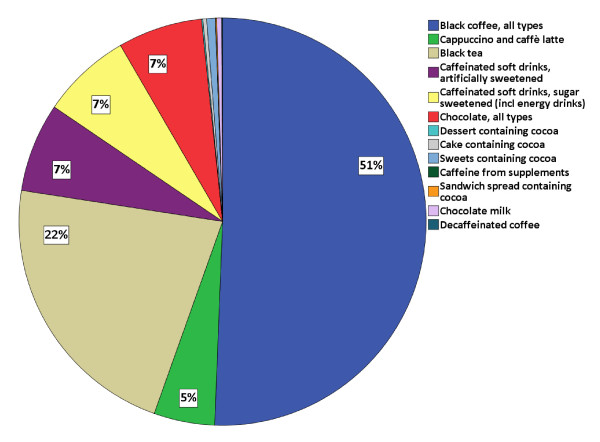
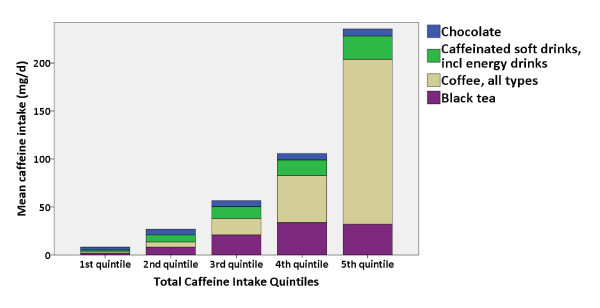
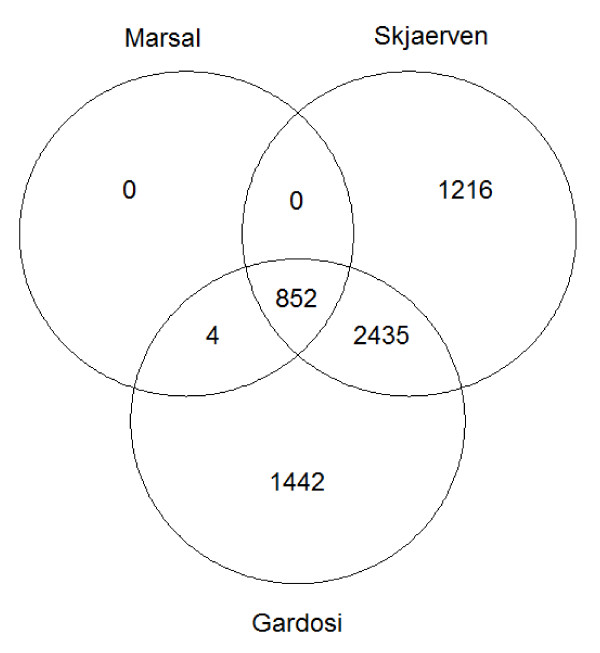
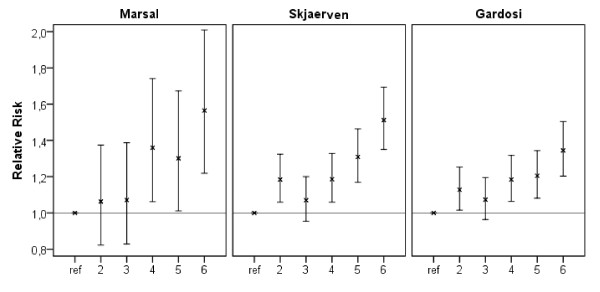
BACKGROUND: Pregnant women consume caffeine daily. The aim of this study was to examine the association between maternal caffeine intake from different sources and (a) gestational length, particularly the risk for spontaneous preterm delivery (PTD), and (b) birth weight (BW) and the baby being small for gestational age (SGA). METHODS: This study is based on the Norwegian Mother and Child Cohort Study conducted by the Norwegian Institute of Public Health. A total of 59,123 women with uncomplicated pregnancies giving birth to a live singleton were identified. Caffeine intake from different sources was self-reported at gestational weeks 17, 22 and 30. Spontaneous PTD was defined as spontaneous onset of delivery between 22+0 and 36+6 weeks (n = 1,451). As there is no consensus, SGA was defined according to ultrasound-based (Marsal, n = 856), population-based (Skjaerven, n = 4,503) and customized (Gardosi, n = 4,733) growth curves. RESULTS: The main caffeine source was coffee, but tea and chocolate were the main sources in women with low caffeine intake. Median pre-pregnancy caffeine intake was 126 mg/day (IQR 40 to 254), 44 mg/day (13 to 104) at gestational week 17 and 62 mg/day (21 to 130) at gestational week 30. Coffee caffeine, but not caffeine from other sources, was associated with prolonged gestation (8 h/100 mg/day, P <10-7). Neither total nor coffee caffeine was associated with spontaneous PTD risk. Caffeine intake from different sources, measured repeatedly during pregnancy, was associated with lower BW (Marsal-28 g, Skjaerven-25 g, Gardosi-21 g per 100 mg/day additional total caffeine for a baby with expected BW 3,600 g, P <10-25). Caffeine intake of 200 to 300 mg/day increased the odds for SGA (OR Marsal 1.62, Skjaerven 1.44, Gardosi 1.27, P <0.05), compared to 0 to 50 mg/day. CONCLUSIONS: Coffee, but not caffeine, consumption was associated with marginally increased gestational length but not with spontaneous PTD risk. Caffeine intake was consistently associated with decreased BW and increased odds of SGA. The association was strengthened by concordant results for caffeine sources, time of survey and different SGA definitions. This might have clinical implications as even caffeine consumption below the recommended maximum (200 mg/day in the Nordic countries and USA, 300 mg/day according to the World Health Organization (WHO)) was associated with increased risk for SGA.
Overview
The claims and statistics of this paper haven’t been checked yet.
Free: it reads the open-access text and checks the first 5 claims that cite a source we can check. Create a free account to check every claim.
Integrity signals
Registry
Cites
Statistics
Figures
Verification
Claims the paper makes
The claims and statistics of this paper haven’t been checked yet.
Free: it reads the open-access text and checks the first 5 claims that cite a source we can check. Create a free account to check every claim.
Claims other papers make about this one
Each is checked against this paper’s own text: does it say what the citing paper says it does?
The source backs part of the claim, not all of it — or backs it for a different population, condition or comparison.
In the citing paper
“This conclusion is based on two prospective cohort studies (CARE Study Group, 2008;Sengpiel et al., 2013) showing a dose-dependent positive association between caffeine intakes during pregnancy and the risk of adverse birth weight-related outcomes (i.e.FGR, SGA).”
From Scientific Opinion on the safety of caffeine (2015) · cites this paper as Sengpiel et al., 2013
Experimental — accuracy not yet measuredThe cited source says what the claim attributes to it.
In the citing paper
“total caffeine and coffee caffeine were significantly associated with increased gestational length.”
From Scientific Opinion on the safety of caffeine (2015) · cites this paper as Sengpiel et al., 2013
In the citing paper
“Total and coffee caffeine intakes were significantly associated with higher odds for SGA in all three SGA models, and with soft drink and black tea caffeine in two SGA models.”
From Scientific Opinion on the safety of caffeine (2015) · cites this paper as Sengpiel et al., 2013
In the citing paper
“black tea caffeine was associated with increased risk of early spontaneous pre-term delivery (OR 1.61, 95 % CI = 1.10-2.35,p = 0.01).”
From Scientific Opinion on the safety of caffeine (2015) · cites this paper as Sengpiel et al., 2013
In the citing paper
“An additional 100 mg total caffeine per day was associated with a 21-to 28-g birth weight decrease, depending on the growth curve.”
From Scientific Opinion on the safety of caffeine (2015) · cites this paper as Sengpiel et al., 2013
3 more claims about this paper
Create a free account to see every claim other papers make about this one.
Self-check
Percentages, sums and reported differences re-computed from the paper’s own numbers.
The self-check needs the paper’s full text.
Citations
Cites
The World Health Report 2002 - Reducing Risks, Promoting Healthy Life
Not Available, N. A. (2003) · Education for Health: Change in Learning & Practice · doi:10.1080/1357628031000116808 · Cited by 6,046
An overview of mortality and sequelae of preterm birth from infancy to adulthood
Saigal, S., & Doyle, L. W. (2008) · The Lancet · doi:10.1016/s0140-6736(08)60136-1 · Cited by 2,818 · cited 1×
“PTD and small for gestational age (SGA) at birth are the pregnancy outcomes accounting for most of all neonatal mortality, as well as short-term and long-term morbidity [24-27].”
BackgroundThe fetal and infant origins of adult disease.
Barker, D. J. (1990) · BMJ · doi:10.1136/bmj.301.6761.1111 · Cited by 2,768
Intrauterine growth curves based on ultrasonically estimated foetal weights
Maršál, K., Persson, P., Larsen, T., Lilja, H., Selbing, A., & Sultan, B. (1996) · Acta Paediatrica · doi:10.1111/j.1651-2227.1996.tb14164.x · Cited by 1,865 · cited 10×
“As there is still no consensus on standard growth curves, data were analyzed according to three standards based on Northern European populations: ultrasound-based growth curves according to Marsal [36], population-based growth curves according to Skjaerven [37] and customized growth curves according to Gardosi [38].”
MethodInfluentialLong-Term Medical and Social Consequences of Preterm Birth
Moster, D., Lie, R. T., & Markestad, T. (2008) · New England Journal of Medicine · doi:10.1056/nejmoa0706475 · Cited by 1,402
Effects of caffeine on human health
Nawrot, P., Jordan, S., Eastwood, J., Rotstein, J., Hugenholtz, A., & Feeley, M. (2003) · Food Additives and Contaminants · doi:10.1080/0265203021000007840 · Cited by 1,199 · cited 1×
“Human studies on adverse effects of caffeine have investigated spontaneous abortion, preterm delivery (PTD), fetal death, congenital malformations and fetal growth restriction, with conflicting results for all outcomes [12-23].”
Cohort profile: The Norwegian Mother and Child Cohort Study (MoBa)
Magnus, P., Irgens, L. M., Haug, K., Nystad, W., Skjærven, R., & Stoltenberg, C. (2006) · International Journal of Epidemiology · doi:10.1093/ije/dyl170 · Cited by 1,027 · cited 3×
“7% in the MBRN), the differences are minor and the subgroup composition is similar to that in the total population, with spontaneous PTD accounting for 42% of all PTD [28].”
InfluentialBirth Weight and Risk of Type 2 Diabetes: A Systematic Review
(2008) · JAMA · doi:10.1001/jama.2008.886 · Cited by 941 · cited 1×
“There is increasing epidemiological evidence that maternal nutrition influences the course of pregnancy as well as fetal growth and development and the risk of disease later in life [1-3].”
BackgroundThe Medical Birth Registry of Norway. Epidemiological research and surveillance throughout 30 years
IRGENS, L. M. (2000) · Acta Obstetricia et Gynecologica Scandinavica · doi:10.1034/j.1600-0412.2000.079006435.x · Cited by 855 · cited 1×
“Pregnancy and birth records from the Medical Birth Registry of Norway (MBRN) are linked to the MoBa database [34].”
MethodCustomised antenatal growth charts
Gardosi, J., Chang, A., Kalyan, B., Sahota, D., & Symonds, E. M. (1992) · The Lancet · doi:10.1016/0140-6736(92)91342-6 · Cited by 843 · cited 12×
“When studied exclusively in non-smokers (n = 54,136), these associations remained significant, again with the exception of chocolate caffeine in the Gardosi model.”
MethodInfluential
Cited by
Items 101–191 of 191
James, J. E. (2018) · Journal of Psychopharmacology · doi:10.1177/0269881118771780 · Cited by 11
Effects of excessive tea consumption on pregnancy weight gain and neonatal birth weight
Jasim, S. K., Al-Momen, H. H., & Alqurishi, A. K. (2020) · Obstetrics & Gynecology Science · doi:10.5468/ogs.20157 · Cited by 21
“The World Health Organization has indicated a cut-off value of 300 mg/day of caffeine during pregnancy as an etiological risk for SGA [35].”
Backgroundde Medeiros, T. S., Bernardi, J. R., de Brito, M. L., Bosa, V. L., Goldani, M. Z., & da Silva, C. H. (2017) · Maternal and Child Health Journal · doi:10.1007/s10995-016-2230-7 · Cited by 14
Martin, C. J. H. (2013) · Evidence-Based Nursing · doi:10.1136/eb-2013-101683 · Cited by 9
Risk score to stratify miscarriage risk levels in preconception women
Choo, X. H., Ku, C. W., Cheung, Y. B., Godfrey, K. M., Chong, Y. S., Shek, L. P., Tan, K. H., Tan, T. C., Nadarajah, S., Yap, F. K. P., et al. (2021) · Scientific Reports · doi:10.1038/s41598-021-91567-8 · Cited by 13
Askari, M., Bazshahi, E., Payande, N., Mobaderi, T., Fahimfar, N., & Azadbakht, L. (2023) · Critical Reviews in Food Science and Nutrition · doi:10.1080/10408398.2023.2177606 · Cited by 10
“There is a lot of epidemiological evidence that maternal lifestyle affects pregnancy as well as Adverse birth outcomes, fetal development, which is effective even in later life (Sengpiel et al. 2013).”
PERINATAL OUTCOMES OF PREMATURITY AND BIRTH WEIGHT ACCORDING TO MATERNAL CAFFEINE CONSUMPTION.
Castillo, N. D., Jiménez‐Moleón, J. J., Olmedo‐Requena, R., Martínez‐Ruiz, V., Bueno‐Cavanillas, A., & Mozas, J. (2015) · PubMed · doi:10.3305/nh.2015.32.6.9846 · Cited by 15
Qualitative and quantitative analysis of caffeine in some commercial brands of tea consumed in India
Pradhan, D., Biswasroy, P., Kapil, Kajol, Jatin, Pradhan, R. C., & LKR Ayurvedic Mahavidyalaya, G. (2017) · Journal of Ayurvedic and Herbal Medicine · doi:10.31254/jahm.2017.3406 · Cited by 9
“Pregnant women who consume high amounts of caffeine have increased risk of miscarriage, difficult birth and delivery of lowweight babies [17].”
BackgroundZebrafish embryos as a teratogenicity screening tool to reduce potential birth defects
Miao, Z., Yang, J., Cai, L., Huang, Z., Yan, E., Peng, J., Chen, X., & Cheng, J. (2025) · Reproductive Toxicology · doi:10.1016/j.reprotox.2025.108895 · Cited by 9
Karimi, T., Eini‐Zinab, H., Rezazadeh, A., & Moslemi, Z. (2022) · BMC Pediatrics · doi:10.1186/s12887-021-03102-3 · Cited by 14
Coffee Consumption During Pregnancy and Birth Weight: Does Smoking Modify the Association?
Bech, B. H., Frydenberg, M., Henriksen, T. B., Obel, C., & Olsen, J. (2015) · Journal of Caffeine Research · doi:10.1089/jcr.2015.0001 · Cited by 13
Wierzejska, R. E., Gielecińska, I., Hallmann, E., & Wojda, B. K. (2024) · Molecules · doi:10.3390/molecules29102231 · Cited by 7
Beverage Consumption During Pregnancy and Birth Weight: A Systematic Review
Mayer‐Davis, E. J., Leidy, H. J., Mattes, R. D., Naimi, T. S., Novotny, R., Schneeman, B. O., Kingshipp, B., Spill, M. K., Cole, N. C., Bahnfleth, C., et al. (2020) · doi:10.52570/nesr.dgac2020.sr0402 · Cited by 8
Biomarkers of toxicity in human placenta
Vähäkangas, K., Loikkanen, J. J., Sahlman, H., Karttunen, V., Repo, J. K., Sieppi, E., Kummu, M., Huuskonen, P., Myöhänen, K., Storvik, M., et al. (2014) · Elsevier eBooks · doi:10.1016/b978-0-12-404630-6.00020-8 · Cited by 10
Tollånes, M. C., Strandberg‐Larsen, K., Eichelberger, K. Y., Moster, D., Lie, R. T., Brantsæter, A. L., Meltzer, H. M., Stoltenberg, C., & Wilcox, A. J. (2016) · Journal of Nutrition · doi:10.3945/jn.116.232272 · Cited by 15
“Using previously published data on mean caffeine content in various beverages (24), we calculated an estimated total daily caffeine intake from caffeinated beverages in milligrams.”
BackgroundMethodInfluentialSelf-citationLiu, H., Hou, L., Chen, T., Qu, W., Liu, S., Yan, H.-Y., Wen, X., & Ping, J. (2017) · Reproductive Toxicology · doi:10.1016/j.reprotox.2017.10.006 · Cited by 7
“studies and other groups showed that prenatal caffeine ingestion (PCI) could cause intrauterine growth retardation (IUGR) in rats, and the IUGR offspring exhibited inhibited weight growth and abnormal development of multiple organs [6, 10, 11].”
BackgroundCaffeine Intake During Pregnancy and Risk of Childhood Obesity: A Systematic Review
Frayer, N. C., & Kim, Y. S. (2020) · International Journal of Maternal and Child Health and AIDS · doi:10.21106/ijma.387 · Cited by 10
Wang, T., Zhang, S., Luo, M., Lu, M., Wei, L., Zhou, X., Wang, H., & Xu, D. (2023) · Ecotoxicology and Environmental Safety · doi:10.1016/j.ecoenv.2023.115797 · Cited by 9
Updating an Overview of Teratology
Calado, A. M., Seixas, F., & Pires, M. A. (2024) · Methods in molecular biology · doi:10.1007/978-1-0716-3625-1_1 · Cited by 8
Kukkonen, A., Hantunen, S., Voutilainen, A., Ruusunen, A. A., Uusitalo, L., Backman, K., Voutilainen, R., Pasanen, M., Kirjavainen, P. V., & Keski‐Nisula, L. (2024) · Primary care diabetes · doi:10.1016/j.pcd.2024.02.005 · Cited by 8
Li, N., Shi, R., Tang, J., Zhang, W., Liu, B., Chen, X., Gao, Q., Li, X., Sun, M., & Xu, Z. (2019) · Journal of Hypertension · doi:10.1097/hjh.0000000000002303 · Cited by 5
“In both animals and humans, in-utero exposure to Caf is associated with developmental anomalies in the offspring, such as impaired cardiac functions, altered cardiac morphology [8,9], reduced birth weight, and behavioral abnormalities [10,11], indicating that in-utero Caf could be associated with embryotoxicity [9,12].”
BackgroundThe Impact of Nutrient Intake on Pregnancy Outcomes: Narrative Review
Yadak, A., Al-Kuran, O., Allehdan, S., Badran, E., & Tayyem, R. (2025) · Current Research in Nutrition and Food Science Journal · doi:10.12944/crnfsj.13.2.4 · Cited by 7
EVALUATION OF CAFFEINE CONSUMPTION AND EFFECT DURING PREGNANCY AMONG WOMEN IN THE UAE
Alomar, M. J. (2016) · International Journal of Pharmacy and Pharmaceutical Sciences · Cited by 7
Xia, X., Chen, Y., Qu, H., Cao, J., & Wang, H. (2023) · Food & Function · doi:10.1039/d3fo03561a · Cited by 5
Development of suitable formula for ready-to-drink healthy mixture of chicory and coffee
Charoenphun, N., & Puttha, R. (2021) · Coffee Science · doi:10.25186/.v16i.1785 · Cited by 5
Hunde, A. D., Demissie, D. B., Sime, T., Kushi, E. N., Feyisa, J. W., & Kitila, K. M. (2023) · International Journal of Africa Nursing Sciences · doi:10.1016/j.ijans.2023.100559 · Cited by 6
Coffee Consumption and Its Impact on Health
Cavalli, L., & Tavani, A. (2016) · Springer eBooks · doi:10.1007/978-3-319-23672-8_3 · Cited by 7
Mendes, F. C., Severo, M., Paciência, I., Lopes, C. M. M., Santos, A. C., Barros, H., Moreira, A., & Moreira, P. A. M. (2025) · Pediatric Allergy and Immunology · doi:10.1111/pai.70024 · Cited by 5
“30 Studies from Norway and the UK report average intakes below the 200 mg/day recommended limit, with Norwegian women consuming between 44 and 58 mg/day, 31,32 and British women around 128.6 mg/ day.”
InfluentialOlopade, F. E., & Shokunbi, M. T. (2017) · Journal of Caffeine and Adenosine Research · doi:10.1089/caff.2017.0010 · Cited by 4
“4 In addition, the fetus lacks enzymes necessary for caffeine metabolism, 5 so that the half-life of caffeine in fetuses is more than four-fold that in adults; thus a given in utero caffeine dosage may affect fetuses more than adults.”
Herbal Therapy in Pregnancy-What to Expect when you Expect?
Bjelica, A., Ćetković, N. B., Milić, N., & Milosevic, N. P. (2017) · Natural Product Communications · doi:10.1177/1934578x1701201236 · Cited by 7
“Although some studies indicated that reducing caffeine consumption did not affect birth weight [140], other studies suggested that during pregnancy both caffeine overconsumption [141] and caffeine intake below the recommended maximum [142], was associated with a smaller size of the baby for gestational age.”
Schellhas, L., Monasso, G. S., Felix, J. F., Jaddoe, V. W. V., Huang, P., Fernández‐Barrés, S., Vrijheid, M., Pesce, G., Annesi‐Maesano, I., Page, C. M., et al. (2023) · Epigenomics · doi:10.2217/epi-2023-0263 · Cited by 5
Self-citationJames, J. E. (2021) · Archives of Community Medicine and Public Health · doi:10.17352/2455-5479.000148 · Cited by 2
“Here, much benefi t would accrue were gre ater standardisation achieved in relation to the use of reliable and validated measurement protocols for assessing caffeine exposure, such as has been in use for some time in the Norwegian Mother and Child Cohort Study [70,71].”
MethodStephens, S., & Yates, L. M. (2014) · Elsevier eBooks · doi:10.1016/b978-0-12-408078-2.00022-6 · Cited by 2
Dietary Caffeine and Pregnancy Outcomes
James, M. J. E., Sengpiel, V., & Brantsæter, A. L. (2013) · Journal of Caffeine Research · doi:10.1089/jcr.2013.1229 · Cited by 2
Self-citationEating habits and nutritional status of pregnant women and the course and outcomes of pregnancy
Suliga, E. (2015) · Medical Studies · doi:10.5114/ms.2015.49955 · Cited by 3
“In another study, an increased risk of SGA was observed already with the consumption of caffeine 200–300 mg/daily, compared to 0–50 mg/daily [38].”
BackgroundThe Caffeine Consumption among Turkish Pregnant Women
Gür, E. Y., Çil, M. A., & Apay, S. E. (2022) · Nigerian Journal of Clinical Practice · doi:10.4103/njcp.njcp_1983_21 · Cited by 3
Coffee Consumption and Its Impact on Health
Guercio, V. (2022) · Nutrition and health · doi:10.1007/978-3-030-82515-7_27 · Cited by 2
Alcorta-García, M. R., López-Villaseñor, C. N., Sánchez-Ferrer, G., Flores-Mendoza, H., Castorena‐Torres, F., Aguilar-Torres, M. A., Sepúlveda-Treviño, C. M., Hernández-Hernández, J. A., López-Sánchez, R. C., & Díaz, V. J. L. (2020) · Molecular and Cellular Pediatrics · doi:10.1186/s40348-020-00096-3 · Cited by 1
Dietary Modifications during Pregnancy through Decades
Bhatt, Y., & Kulshrestha, K. (2021) · International Journal of Nutrology · doi:10.1055/s-0041-1733836 · Cited by 1
Eating Habits During Pregnancy
Cetin, I., Bianchi, C. L., & Laoreti, A. (2023) · Springer eBooks · doi:10.1007/978-3-031-16691-4_4 · Cited by 1
Dai, G., Luo, M., Dai, S., Zhou, X., Zhu, S., Lu, M., Han, X., Yang, F., Yu, Y., Wang, H., et al. (2025) · Metabolism · doi:10.1016/j.metabol.2025.156454 · Cited by 4
Maternal Caffeine Consumption and Pregnancy Outcomes
James, J. E. (2026) · Advances in experimental medicine and biology · doi:10.1007/978-3-032-12741-9_10 · Cited by 4
Relación entre el consumo de mate en el embarazo con el peso al nacer
Moraes, M., Sosa, C., González, G., Umpiérrez, E., Berta, S. L., & Borbonet, D. (2014) · Americanae (AECID Library) · Cited by 1
Bracken, M. B. (2014) · BMJ Evidence-Based Medicine · doi:10.1136/ebmed-2014-110116 · Cited by 2
“Among Norwegian mothers, total daily caffeine consumption was 54 mg among neversmokers, 109 mg in occasional smokers and 143 mg in daily smokers.(4) The negative influence of maternal smoking on BW is well documented.”
BackgroundEffect of caffeine on foetal morphometric parameters of embryonic Wistar rat ( Rattus norvegicus )
Owolabi, L., & Shokunbi, M. (2016) · Nigerian Journal of Basic and Clinical Sciences. · doi:10.4103/0331-8540.187362 · Cited by 2
Gesundheitsschädigende Wirkungen von Koffein
Beiglböck, W. (2016) · Springer eBooks · doi:10.1007/978-3-662-49564-3_4 · Cited by 1
Maternal Lifestyle Factors and Placentation
Duttaroy, A. K., & Basak, S. (2016) · Springer eBooks · doi:10.1007/978-3-319-38804-5_8 · Cited by 1
Foetal Developmental Origins of Adult Onset Non-Insulin Dependent Diabetes Mellitus (NIDDM)
Stephenson, S., & Cunliffe, A. (2018) · Journal of Nutrition & Food Sciences · doi:10.4172/2155-9600.1000733 · Cited by 1
“It may be more prudent to focus on developing public health campaigns which focus on combating all cause NIDDM rather than that stemming from physiological changes occurring during foetal development [45-47].”
BackgroundCaffeine, Bronchopulmonary Dysplasia and Neurodevelopmental Outcomes in Premature Infants
Kumar, V. (2018) · Pediatrics and Neonatal Nursing - Open Journal · doi:10.17140/pnnoj-5-130 · Cited by 1
THE EFFECT OF CAFFEINE INTAKE LEVELS DURING PREGNANCY ON NEWBORN HEALTH
Kaya, Y., Tokgöz, V. Y., Dalyan, E., & Tanir, H. M. (2024) · Eskisehir Medical Journal Eskisehir City Hospital · doi:10.48176/esmj.2024.158
Feeding Method, Nicotine Exposure, and Growth during Infancy
Shenassa, E. D., Botteri, E., & Stensheim, H. (2024) · The Journal of Pediatrics Clinical Practice · doi:10.1016/j.jpedcp.2024.200127 · Cited by 2
Coffee Consumption and Neglected Risk-Benefits on Health and Disease
Alonzo, E., Trovato, F. M., Catalano, D., & Trovato, G. M. (2014) · Elsevier eBooks · doi:10.1016/b978-0-12-409517-5.00054-1 · Cited by 1
Antibacterial Activity of Hypericum Erectum
TANIGAWA, Y., ARIMOTO, T., Takamatsu, S., Kuwata, H., & Soejima, K. (2014) · The Showa University Journal of Medical Sciences · doi:10.15369/sujms.26.283 · Cited by 1
Maternal antenatal methylxanthine (including caffeine) treatment for improving preterm outcomes
Roehr, C. C., Banerjee, R., Alarcón, A., & Dempsey, E. M. (2019) · Cochrane Database of Systematic Reviews · doi:10.1002/14651858.cd013275 · Cited by 1
RetractedBiomarkers of Toxicity in Human Placenta
Vähäkangas, K., Loikkanen, J. J., Sahlman, H., Karttunen, V., Repo, J. K., Sieppi, E., Kummu, M., Huuskonen, P., Myöhänen, K., Storvik, M., et al. (2019) · Elsevier eBooks · doi:10.1016/b978-0-12-814655-2.00018-9 · Cited by 6
Román‐Gálvez, M. R., Hernández-Martínez, L., Amezcua‐Prieto, C., Ibáñez, N. C., Olmedo‐Requena, R., Martínez‐Galiano, J. M., & Bueno‐Cavanillas, A. (2021) · Preprints.org · doi:10.20944/preprints202104.0527.v1
“Mean daily caffeine intake in European pregnant women reveals an intake lower than the recommendations; for example, 44 mg/day at 17 gestational week (GW) in Norwegian women [28], or a median value of 58 mg at 22 GW, also in Norwegian women [13].”
BackgroundResultInfluentialVerhelst, S., Puyvelde, B. V., Willems, S., Daled, S., Cornelis, S., Corveleyn, L., Willems, E., Deforce, D. L. D., Clerck, L. D., & Dhaenens, M. (2021) · Research Square · doi:10.21203/rs.3.rs-620816/v1 · Cited by 1
Bioavailability and Potential Impact on Human Health of Caffeine, Theobromine, and Trigonelline
Ashihara, H., Ludwig, I. A., & Crozier, A. (2020) · Wiley eBooks · doi:10.1002/9781119476139.ch24 · Cited by 1
Diet and Lifestyle During Pregnancy. Pregnant Women’s Stories
Agberotimi, V. F. (2014) · eSource (Dublin Business School)
Chen, L., Neelakantan, N., Chong, M. F., Pan, A., & van Dam, R. M. (2014)
Caffeine is modestly associated with lower birth weight and fetal growth
Triche, E. W., & Lundsberg, L. S. (2013) · BMJ Evidence-Based Medicine · doi:10.1136/eb-2013-101315
Caffeine and the Developing Brain
Atik, A., Harding, R., Matteo, R. M. D., & Tolcos, M. (2016) · Elsevier eBooks · doi:10.1016/b978-0-12-800634-4.00075-5
Husøy, T., Mathisen, G. H., Bruzell, E. M., Granum, B. B., Hetland, R. B., Rohloff, J., Wicklund, T., & Steffensen, I. (2015) · BIBSYS Brage (BIBSYS (Norway))
The Effects of Maternal Caffeine Intake on a Fetus
Kahan, J. (2018) · Touro Scholar (Touro College)
Harada, R., & Shiraishi, M. (2019) · Journal of Japan Academy of Midwifery · doi:10.3418/jjam.jjam-2019-0016
Buko, G., Tadesse, M., Shikur, B., Hagos, S., Getinet, Y., Haile, D., & Kenenisa, E. (2026) · Hospital and Clinical Management · doi:10.58489/2836-2292/014
Preconception and Pregnancy Health
Scott, M. L., & Stuart, L. (2020) · Elsevier eBooks · doi:10.1016/b978-0-323-43044-9.00211-9
Hussen, L., & Dessu, B. K. (2020) · Research Square · doi:10.21203/rs.3.rs-113435/v1
“Page 9/14 Table 3, Bivariate and multivariate logistic regression analysis of factors associated LBW among term newborn in Wolaita zone hospitals, south Ethiopia, July 2019(n=395) ors Birth weight N (”
BackgroundInfluentialNematollahi, S., Mansournia, M. A., Rahimiforoushani, A., Mouseli, A., Shabkhiz, H., & Holakouie-Naieni, K. (2021) · Research Square · doi:10.21203/rs.3.rs-871198/v1
Nematollahi, S., Mansournia, M. A., Rahimiforoushani, A., Mouseli, A., Shabkhiz, H., & Holakouie-Naieni, K. (2020) · doi:10.21203/rs.3.rs-116692/v1
“Our study showed that consumption of more than 100 mg/day caffeine signi cantly increased the risk of LBW, which was consistent with the results of previous studies(10, 26).”
Result(2013) · CME · doi:10.1007/s11298-013-0225-x
Olopade, F. E., & Shokunbi, M. T. (2017) · Journal of Caffeine Research · doi:10.1089/jcr.2017.0010
Koffein in der Schwangerschaft nur in Maßen!
(2013) · MMW - Fortschritte der Medizin · doi:10.1007/s15006-013-0309-2
(2013) · Journal of Caffeine Research · doi:10.1089/jcr.2013.1227
O consumo de cafeína por mulheres grávidas e as interações fetais: uma revisão bibliométrica
Serejo, A. H. H. (2022) · Revista Científica Multidisciplinar Núcleo do Conhecimento · doi:10.32749/nucleodoconhecimento.com.br/nutricao/consumo-de-cafeina
Eating Habits During Pregnancy
Cetin, I., Bianchi, C. L., & Laoreti, A. (2022) · Springer eBooks · doi:10.1007/978-3-030-67929-3_4-1
Patel, P. H., & Burow, C. A. (2023) · Undergraduate Research in Natural and Clinical Science and Technology (URNCST) Journal · doi:10.26685/urncst.480
Abdelrahman, E., majeed, S. A., & Gharib, H. S. (2023) · Alexandria Dental Journal · doi:10.21608/adjalexu.2022.140607.1282
“As known, coffee passes through the placenta (6,7).”
BackgroundInfluentialFeeding Method, Nicotine Exposure, and Optimal Growth During InfancyPreprint
Shenassa, E. D., Botteri, E., & Stensheim, H. (2024) · SSRN Electronic Journal · doi:10.2139/ssrn.4777047
Mohamed, M. M., Khafaga, D. S. R., DABOUN, H. A., El‐Rahman, H. A. A., & El-Desouky, M. A. (2025) · Scientific Reports · doi:10.1038/s41598-025-16338-1
Coffee: Threats and Recommendations During Pregnancy
Bytyçi, I., Surma, S., & Banach, M. (2025) · Springer eBooks · doi:10.1007/978-3-031-93459-9_41
Arafa, A., Said, A. S. A., Elkady, E., Ali, T. A. Y., & Khalil, D. M. (2025) · International Journal of Environmental Research and Public Health · doi:10.3390/ijerph22121808 · Cited by 1
“For instance, the Norwegian MoBa study showed that caffeine consumption within safe limits was associated with an increased risk of SGA births [40].”
Lee, J., Ryu, K.-Y., Keum, J., & Roh, J. (2025) · Reproductive Toxicology · doi:10.1016/j.reprotox.2025.109157 · Cited by 1
Castro, F. G. (2017) · theses.fr (ABES) · doi:10.70675/b2431e98z12ecz49baz8692z44cb7b3fb5ed
Cao, X., Jiang, P., Yu, L., Fang, M., Jin, X., & Wang, H. (2026) · Chemico-Biological Interactions · doi:10.1016/j.cbi.2026.112257
Caffeine, Neurodevelopmental Outcomes in Premature Infants, and Bronchopulmonary Dysplasia
Kumar, V. (2025) · Pediatrics and Neonatal Nursing - Open Journal · doi:10.17140/pnnoj.2025.v11.i01.pp01-08.2227
BindingDB Entry 50006976: The Medicinal Chemistry of Caffeine.
BindingDB (2024) · UC San Diego · doi:10.7270/q2xs60kt
Sheriffdeen, M. M. (2014) · Summit (Simon Fraser University)
Carvalho, A. S. (2014) · Portuguese National Funding Agency for Science, Research and Technology (RCAAP Project by FCT)
Metadata
- Authors
- Sengpiel, V., Elind, E., Bacelis, J., Nilsson, S., Grove, J., Myhre, R., Haugen, M., Meltzer, H. M., Alexander, J., Jacobsson, B., & Brantsæter, A.-L.
- Affiliations
- Sahlgrenska University Hospital (SE)
- Norwegian Institute of Public Health (NO)
- Chalmers University of Technology (SE)
- Aarhus University (DK)
- Corresponding author
- Sengpiel, Verena
- ORCID
- Venue
- BMC Medicine
- Published
- 2013-02-19
- Volume
- 11
- Issue
- 1
- Pages
- 42-42
- ISSN
- 1741-7015 (ISSN-L)
- PMC
- PMC3606471
- OpenAlex
- W2096726007
- Cited by
- 190
- References
- 67
- Citations by year
- 2026: 3 · 2025: 10 · 2024: 11 · 2023: 9 · 2022: 11 · 2021: 16 · 2020: 21 · 2019: 15 · 2018: 17 · 2017: 14 · 2016: 15 · 2015: 16 · 2014: 21 · 2013: 11
- FWCI
- 15.42
- Type
- journal article
- Language
- en
- Open access
- gold
- doi.org
- Licence
- Locations
- BMC Medicine (publishedVersion, cc-by)
- Europe PMC (PubMed Central) (publishedVersion, cc-by)
- PubMed Central (publishedVersion, cc-by)
- PubMed (publishedVersion)
- Chalmers Publication Library (Chalmers University of Technology) (submittedVersion)
- Chalmers Research (Chalmers University of Technology) (submittedVersion)
- Funders
- European Commission
- Norges Forskningsråd (151918/S10)
- Svenska Läkaresällskapet (SLS 2008-21198)
- Utdannings- og forskningsdepartementet
- National Institutes of Health (n01es75558-11-0-1, N01-ES-75558)
- National Institute of Neurological Disorders and Stroke (UO1-NS-047537, 047537-01, UO1 NS 047537–01, U01NS047537, 047537-06A1, 1 UO1 NS 047537‐01, 2 UOI NS 047537-06A1)
- National Institute of Environmental Health Sciences (N01-ES, UO1 NS 047537-01, N01ES75558, 1 UO1 NS 047537-01)
- Topics
- Health Sciences › Medicine › Pharmacology (medical) › Coffee research and impacts
- Health Sciences › Medicine › Pediatrics, Perinatology and Child Health › Prenatal Substance Exposure Effects
- Health Sciences › Medicine › Pediatrics, Perinatology and Child Health › Maternal and Neonatal Healthcare
- Keywords
- maternal caffeine intake, pregnancy, birth weight, gestation length, preterm birth, small for gestational age, coffee consumption, caffeine sources, gestational age at delivery, fetal growth, Norwegian Mother and Child Cohort Study
- MeSH terms
- Adult, Birth Weight, Caffeine, Diet, Female, Humans, Norway, Pregnancy, Cohort Studies, Premature Birth, Young Adult
About these checks
Registry, retraction, Cites and statistics results are computed, not judged, with one exception: a printed reference that no index lists is read once by a model before it counts as a citation error. Claims are extracted by a model and kept only when their quote appears verbatim in the text; each cited source is then checked, with a model’s help, for whether it says what the claim relies on. Those verdicts can be wrong — read the claim’s quote and the cited source before relying on one.
Statistics and arithmetic are recomputed, not judged.
Confidence bands are shown only for fields calibrated on our annotated test set. None is calibrated yet, so no band is shown.
What counts as a claim ›How we measure confidence ›How we check this ›
Are you an author, or do you see a problem with this page? Request a review
Data sources
Bibliographic data: Semantic Scholar, OpenAlex, Crossref.
Contains information from the Semantic Scholar Academic Graph Datasets, made available under the ODC Attribution License (ODC-BY 1.0).
Semantic Scholar’s data is described in: Kinney, R., et al. (2023). The Semantic Scholar Open Data Platform. arXiv:2301.10140.
