

Plasma cytokine profiling in sibling pairs discordant for autism spectrum disorder
Open accessThe DOI matches its Crossref record; 78 of the 78 references it cites were found in a registry or an index.
Abstract
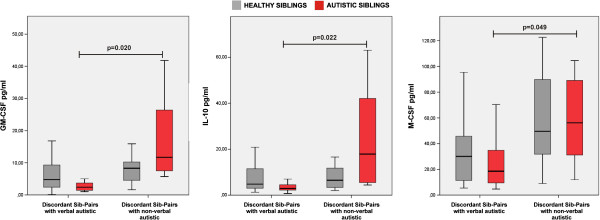
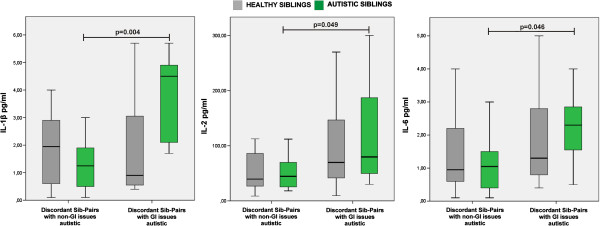
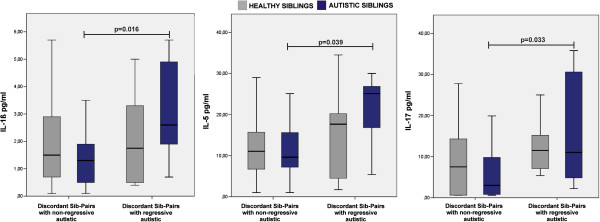
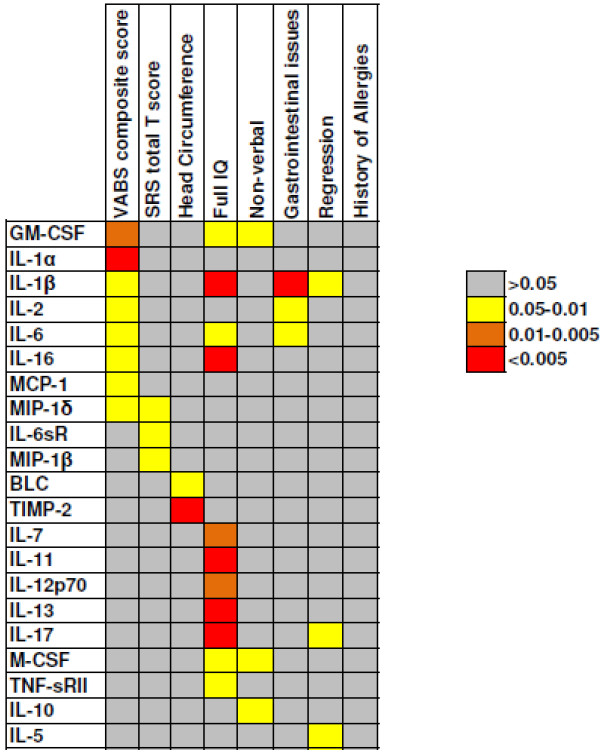
OBJECTIVE: Converging lines of evidence point to the existence of immune dysfunction in autism spectrum disorder (ASD), which could directly affect several key neurodevelopmental processes. Previous studies have shown higher cytokine levels in patients with autism compared with matched controls or subjects with other developmental disorders. In the current study, we used plasma-cytokine profiling for 25 discordant sibling pairs to evaluate whether these alterations occur within families with ASD. METHODS: Plasma-cytokine profiling was conducted using an array-based multiplex sandwich ELISA for simultaneous quantitative measurement of 40 unique targets. We also analyzed the correlations between cytokine levels and clinically relevant quantitative traits (Vineland Adaptive Behavior Scale in Autism (VABS) composite score, Social Responsiveness Scale (SRS) total T score, head circumference, and full intelligence quotient (IQ)). In addition, because of the high phenotypic heterogeneity of ASD, we defined four subgroups of subjects (those who were non-verbal, those with gastrointestinal issues, those with regressive autism, and those with a history of allergies), which encompass common and/or recurrent endophenotypes in ASD, and tested the cytokine levels in each group. RESULTS: None of the measured parameters showed significant differences between children with ASD and their related typically developing siblings. However, specific target levels did correlate with quantitative clinical traits, and these were significantly different when the ASD subgroups were analyzed. It is notable that these differences seem to be attributable to a predisposing immunogenetic background, as no other significant differences were noticed between discordant sibling pairs. Interleukin-1β appears to be the cytokine most involved in quantitative traits and clinical subgroups of ASD. CONCLUSIONS: In the present study, we found a lack of significant differences in plasma-cytokine levels between children with ASD and in their related non-autistic siblings. Thus, our results support the evidence that the immune profiles of children with autism do not differ from their typically developing siblings. However, the significant association of cytokine levels with the quantitative traits and the clinical subgroups analyzed suggests that altered immune responses may affect core feature of ASD.
Overview
The claims and statistics of this paper haven’t been checked yet.
Free: it reads the open-access text and checks the first 5 claims that cite a source we can check. Create a free account to check every claim.
Integrity signals
Registry
Cites
Statistics
Figures
Verification
Claims the paper makes
The claims and statistics of this paper haven’t been checked yet.
Free: it reads the open-access text and checks the first 5 claims that cite a source we can check. Create a free account to check every claim.
Claims other papers make about this one
Each is checked against this paper’s own text: does it say what the citing paper says it does?
The source backs part of the claim, not all of it — or backs it for a different population, condition or comparison.
In the citing paper
“Furthermore, evidence suggests that children with ASD have elevated levels of pro-inflammatory cytokines including, interleukin 6 (IL–6), tumour necrosis factor alpha (TNF–α), and interferon gamma (IFN-γ) in different tissues [3,4,5,6,7].”
From Vitamin D and Autism Spectrum Disorder: A Literature Review (2016) · cites this paper as [6]
Experimental — accuracy not yet measuredIn the citing paper
“Natural killer (NK) cells from individuals with ASD are defective in their normal function of lysing infected cells when challenged123,124.”
From Immune mediators in the brain and peripheral tissues in autism spectrum disorder (2015) · cites this paper as [123]
Self-check
Percentages, sums and reported differences re-computed from the paper’s own numbers.
The self-check needs the paper’s full text.
Citations
Cites
Diagnostic and Statistical Manual of Mental Disorders
Williams, J. B. W., & First, M. (2013) · Encyclopedia of Social Work · doi:10.1093/acrefore/9780199975839.013.104 · Cited by 109,519
Diagnostic and Statistical Manual of Mental Disorders.
Widiger, T. A. (2000) · Encyclopedia of Psychology, Vol. 3. · doi:10.1037/10518-009 · Cited by 19,744
Lord, C., Rutter, M., & Le Couteur, A. (1994) · Journal of Autism and Developmental Disorders · doi:10.1007/bf02172145 · Cited by 9,065 · cited 1×
“To further characterize the disorder in each proband, the Autism Diagnostic Observation Schedule (ADOS) [31] and the Autism Diagnostic Interview-Revised (ADI-R) [32] were used by research reliable raters.”
MethodLord, C., Risi, S., Lambrecht, L., Cook, E. H., Leventhal, B. L., DiLavore, P. C., Pickles, A., & Rutter, M. (2000) · Journal of Autism and Developmental Disorders · doi:10.1023/a:1005592401947 · Cited by 7,520 · cited 1×
“To further characterize the disorder in each proband, the Autism Diagnostic Observation Schedule (ADOS) [31] and the Autism Diagnostic Interview-Revised (ADI-R) [32] were used by research reliable raters.”
MethodNo adjustments are needed for multiple comparisons.
Rothman, K. J. (1990) · Epidemiology · doi:10.1097/00001648-199001000-00010 · Cited by 5,965 · cited 1×
“levels were non-independent variables and, under similar conditions, correction for multiple testing remains controversial [34,35].”
MethodWhat's wrong with Bonferroni adjustments
Perneger, T. V. (1998) · BMJ · doi:10.1136/bmj.316.7139.1236 · Cited by 5,900
Neuroglial activation and neuroinflammation in the brain of patients with autism
Vargas, D. L., Nascimbene, C., Krishnan, C., Zimmerman, A. W., & Pardo, C. A. (2005) · Annals of Neurology · doi:10.1002/ana.20315 · Cited by 2,149 · cited 2×
“The level of MCP-1 was found to be increased in astrocytes in the anterior cingulate gyrus, and also in the cerebellum and in brain tissue homogenates in patients with ASD [58].”
BackgroundResultGenetic Heritability and Shared Environmental Factors Among Twin Pairs With Autism
Hallmayer, J. (2011) · Archives of General Psychiatry · doi:10.1001/archgenpsychiatry.2011.76 · Cited by 1,970 · cited 1×
“Recent studies also described ASD as the quantitative extreme of a neurodevelopmental continuum in the general population [45], with moderate genetic heritability and a substantial shared twin environmental component [46].”
BackgroundAdvances in autism genetics: on the threshold of a new neurobiology
Abrahams, B. S., & Geschwind, D. H. (2008) · Nature Reviews Genetics · doi:10.1038/nrg2346 · Cited by 1,866 · cited 1×
“This is probably attributable to the large phenotypic and genetic heterogeneity of ASD [37].”
BackgroundConstantino, J. N., Davis, S. A., Todd, R. D., Schindler, M. K., Gross, M. M., Brophy, S. L., Metzger, L. M., Shoushtari, C. S., Splinter, R., & Reich, W. (2003) · Journal of Autism and Developmental Disorders · doi:10.1023/a:1025014929212 · Cited by 1,611 · cited 6×
“IL-6sR, MIP1β, and MIP-1δ were inversely correlated with the SRS total score, suggesting a positive beneficial role for higher levels of these cytokines in autism-related social behavior.”
MethodInfluential
Cited by
Immune mediators in the brain and peripheral tissues in autism spectrum disorder
Estes, M. L., & McAllister, A. K. (2015) · Nature Reviews Neuroscience · doi:10.1038/nrn3978 · Cited by 514
Cytokine aberrations in autism spectrum disorder: a systematic review and meta-analysis
Masi, A., Quintana, D. S., Glozier, N., Lloyd, A. R., Hickie, I. B., & Guastella, A. J. (2015) · Molecular Psychiatry · doi:10.1038/mp.2014.59 · Cited by 466
The influence of neuroinflammation in Autism Spectrum Disorder
Matta, S. M., Hill-Yardin, E. L., & Crack, P. J. (2019) · Brain, Behavior, and Immunity · doi:10.1016/j.bbi.2019.04.037 · Cited by 416
Saghazadeh, A., Ataeinia, B., Keynejad, K., Abdolalizadeh, A., Hirbod-Mobarakeh, A., & Rezaei, N. (2019) · Journal of Psychiatric Research · doi:10.1016/j.jpsychires.2019.05.019 · Cited by 235
Tsilioni, I., Taliou, A., Francis, K., & Theoharides, T. C. (2015) · Translational Psychiatry · doi:10.1038/tp.2015.142 · Cited by 199
Immune Dysregulation in Autism Spectrum Disorder: What Do We Know about It?
Robinson-Agramonte, M. D. L. A., Noris García, E., Fraga Guerra, J., Vega Hurtado, Y., Antonucci, N., Semprún-Hernández, N., Schultz, S., & Siniscalco, D. (2022) · International Journal of Molecular Sciences · doi:10.3390/ijms23063033 · Cited by 176
“Some of these studies analyzed the correlation of behavioral profiles with immune abnormalities, ASD severity, and cytokine or chemokine abnormalities: an increased concentration of IL-1β, IL-6, IL-12p70, and TNF-α has been found [7,55,71,81].”
BackgroundMazahery, H., Stonehouse, W., Delshad, M., Kruger, M., Conlon, C., Beck, K., & Von Hurst, P. (2017) · Nutrients · doi:10.3390/nu9020155 · Cited by 144
Immune Abnormalities in Autism Spectrum Disorder—Could They Hold Promise for Causative Treatment?
Gładysz, D., Krzywdzińska, A., & Hozyasz, K. K. (2018) · Molecular Neurobiology · doi:10.1007/s12035-017-0822-x · Cited by 127
“The investigators found that IL-1β, IL-1RA, IL-5, IL-8, IL-12p70, IL-13, IL-17, and growthregulated oncogene-α were significantly elevated (1.5–2.5- fold) in comparison to matched controls; however, no correlation between clinical profile and laboratory results was observed.”
BackgroundResultInfluentialIn Search of Biomarkers to Guide Interventions in Autism Spectrum Disorder: A Systematic Review
Parellada, M., Andreu-Bernabeu, Á., Burdeus-Olavarrieta, M., Cáceres, A. S. J., Urbiola, E., Carpenter, L. L., Kraguljac, N. V., McDonald, W. M., Nemeroff, C. B., Rodríguez, C. I., et al. (2022) · American Journal of Psychiatry · doi:10.1176/appi.ajp.21100992 · Cited by 151
“Eight did not report any IL-6 association, while the remaining six report an IL-6 increase (pro-inflammatory state), which was correlated with the severity of ASD symptoms (stereotypies or social impairment), especially in those with regressive ASD (21) or with gastrointestinal disorders (22).”
BackgroundMasi, A., Breen, E. J., Alvares, G. A., Glozier, N., Hickie, I. B., Hunt, A., Hui, J., Beilby, J., Ravine, D., Wray, J., et al. (2017) · Molecular Autism · doi:10.1186/s13229-017-0176-2 · Cited by 111
Vitamin D and Autism Spectrum Disorder: A Literature Review
Mazahery, H., Camargo, C., Conlon, C., Beck, K., Kruger, M., & Von Hurst, P. (2016) · Nutrients · doi:10.3390/nu8040236 · Cited by 110
“Furthermore, evidence suggests that children with ASD have elevated levels of pro-inflammatory cytokines including, interleukin 6 (IL–6), tumour necrosis factor alpha (TNF–α), and interferon gamma (IFN-γ) in different tissues [3–7].”
BackgroundAssociation of Peripheral Blood Levels of Cytokines With Autism Spectrum Disorder: A Meta-Analysis
Zhao, H., Zhang, H., Liu, S., Luo, W., Jiang, Y., & Gao, J. (2021) · Frontiers in Psychiatry · doi:10.3389/fpsyt.2021.670200 · Cited by 109
Peripheral Inflammatory Markers Contributing to Comorbidities in Autism
Inga Jácome, M., Morales Chacòn, L., Vera Cuesta, H., Maragoto Rizo, C., Whilby Santiesteban, M., Ramos Hernandez, L., Noris García, E., González Fraguela, M., Fernandez Verdecia, C., Vegas Hurtado, Y., et al. (2016) · Behavioral Sciences · doi:10.3390/bs6040029 · Cited by 93
“Differences have been reported by other studies, like those published by Saresella and Napoleoni [62,63], which referred to the influence of environmental stimulus acting to induce neurotoxicity.”
BackgroundResultAutism spectrum disorder: pathogenesis, biomarker, and intervention therapy
Zhuang, H., Liang, Z., Ma, G., Qureshi, A., Ran, X., Feng, C., Liu, X., Yan, X., & Shen, L. (2024) · MedComm · doi:10.1002/mco2.497 · Cited by 140
“246 249 For example, IL-6 has been extensively studied and its levels are elevated in ASD and correlate with severity.”
Immune Dysregulation in Autism Spectrum Disorder
Hsiao, E. Y. (2013) · International Review of Neurobiology · doi:10.1016/b978-0-12-418700-9.00009-5 · Cited by 87
Pardo, C. A., Farmer, C. A., Thurm, A., Shebl, F. M., Ilieva, J., Kalra, S., & Swedo, S. (2017) · Molecular Autism · doi:10.1186/s13229-016-0115-7 · Cited by 80
Tan, C. L. H., Frewer, V., Cox, G., Williams, K. J., & Ure, A. M. (2021) · Autism Research · doi:10.1002/aur.2463 · Cited by 95
Anti-inflammatory cytokines in autism spectrum disorders: A systematic review and meta-analysis
Saghazadeh, A., Ataeinia, B., Keynejad, K., Abdolalizadeh, A., Hirbod‐Mobarakeh, A., & Rezaei, N. (2019) · Cytokine · doi:10.1016/j.cyto.2019.154740 · Cited by 93
Immunological Dysfunction in Autism Spectrum Disorder: A Potential Target for Therapy
Marchezan, J., Winkler dos Santos, E. G. A., Deckmann, I., & Riesgo, R. D. S. (2018) · Neuroimmunomodulation · doi:10.1159/000492225 · Cited by 70
Postmortem Studies of Neuroinflammation in Autism Spectrum Disorder: a Systematic Review
Liao, X., Liu, Y., Fu, X. B., & Li, Y. (2020) · Molecular Neurobiology · doi:10.1007/s12035-020-01976-5 · Cited by 73
Cytokine Profile in Autism Spectrum Disorders in Children
Bryn, V., Aass, H. C. D., Skjeldal, O. H., Isaksen, J., Saugstad, O. D., & Ormstad, H. (2016) · Journal of Molecular Neuroscience · doi:10.1007/s12031-016-0847-z · Cited by 70
“Biobank has been implemented.”
CIFASD, A. T., Bodnar, T. S., Raineki, C., Wertelecki, W., Yevtushok, L., Plotka, L., Granovska, I. V., Zymak‐Zakutnya, N., Pashtepa, A. O., Wells, A., et al. (2020) · Journal of Neuroinflammation · doi:10.1186/s12974-020-1717-8 · Cited by 69
Gómez-Fernández, A., de la Torre‐Aguilar, M. J., Gil‐Campos, M., Flores‐Rojas, K., Cruz-Rico, M. D., Martín-Borreguero, P., & Pérez-Navero, J. L. (2018) · Frontiers in Pediatrics · doi:10.3389/fped.2018.00264 · Cited by 59
“(33) observed no increase in cytokines in a batch of up to 40 inflammatory parameters in the peripheral blood of children with ASD aged 6–8, and evidence that the immune profiles of children with ASD did not differ from those of their typically-developing siblings.”
BackgroundRobson, M. J., Quinlan, M. A., Margolis, K. G., Gajewski-Kurdziel, P. A., Veenstra-VanderWeele, J. M., Gershon, M. D., Watterson, D. M., & Blakely, R. (2018) · Proceedings of the National Academy of Sciences · doi:10.1073/pnas.1809137115 · Cited by 62
“Aberrations in immune system function have repeatedly been detected in ASD cohorts (110, 111) (including increases in IL-1β, a proinflammatory cytokine which activates p38 MAPK signaling) (112), and in various environmental and genetic rodent models for ASD (113–115).”
BackgroundStudy on the Association among Mycotoxins and other Variables in Children with Autism
Santis, B. D., Raggi, M. E., Moretti, G., Facchiano, F., Mezzelani, A., Villa, L. M., Bonfanti, A., Campioni, A., Rossi, S., Camposeo, S., et al. (2017) · Toxins · doi:10.3390/toxins9070203 · Cited by 70
“Alterations of plasmatic levels of some of the cytokines reported in this study were also described in other studies [35,36].”
ResultAltered plasma levels of chemokines in autism and their association with social behaviors
Shen, Y., Ou, J., Liu, M., Shi, L., Li, Y., Xiao, L., Dong, H., Zhang, F., Xia, K., & Zhao, J. (2016) · Psychiatry Research · doi:10.1016/j.psychres.2016.07.057 · Cited by 52
“However, our results also revealed some differences from other studies with respect to specific chemokines (Abdallah et al., 2013; Manzardo et al., 2012; Napolioni et al., 2013; Suzuki et al., 2011; Zerbo et al., 2014).”
BackgroundResultInfluentialSerum thyroid-stimulating hormone and interleukin-8 levels in boys with autism spectrum disorder
Singh, S., Yazdani, U., Gadad, B. S., Zaman, S., Hynan, L. S., Roatch, N., Schutte, C., Marti, C. N., Hewitson, L. C., & German, D. C. (2017) · Journal of Neuroinflammation · doi:10.1186/s12974-017-0888-4 · Cited by 48
“ASD, we further sub-characterized ASD subjects into three groups [16]: (i) those who were nonverbal, (ii) those with gastrointestinal (GI) concerns, and (iii) those with regressive autism.”
Abruzzo, P. M., Mattè, A., Bolotta, A., Federti, E., Ghezzo, A., Guarnieri, T., Marini, M., Posar, A., Siciliano, A., Franceschi, L. D., et al. (2019) · Journal of Translational Medicine · doi:10.1186/s12967-019-2076-z · Cited by 52
Immune regulation of neurodevelopment at the mother–foetus interface: the case of autism
Sotgiu, S., Manca, S., Gagliano, A., Minutolo, A., Melis, M. C., Pisuttu, G., Scoppola, C., Bolognesi, E., Clerici, M., Guerini, F. R., et al. (2020) · Clinical & Translational Immunology · doi:10.1002/cti2.1211 · Cited by 44
“In the last few decades, a strong consensus has developed around the immune aetiology of autism spectrum disorder (ASD), particularly after the description of a chronic microglial activation in brains of individuals with ASD.1 From then on, an increasing amount of studies have described the association and causative l…”
BackgroundResultInfluentialInflammatory Biomarkers are Correlated with Some Forms of Regressive Autism Spectrum Disorder
Prosperi, M., Guiducci, L., Peroni, D. G., Narducci, C., Gaggini, M., Calderoni, S., Tancredi, R., Morales, M. A., Gastaldelli, A., Muratori, F., et al. (2019) · Brain Sciences · doi:10.3390/brainsci9120366 · Cited by 45
“Conversely, TNF-α has a critical role in regulating synaptic strength and plasticity [18], and his levels have been positively correlated with ASD severity [19].”
ResultInfluentialCarpita, B., Marazziti, D., Palego, L., Giannaccini, G., Betti, L., & Dell’Osso, L. (2019) · Current Medicinal Chemistry · doi:10.2174/0929867326666190328151539 · Cited by 60
Nour‐Eldine, W., Ltaief, S. M., Manaph, N. P. A., & Al‐Shammari, A. R. (2022) · Frontiers in Immunology · doi:10.3389/fimmu.2022.950275 · Cited by 46
Mazahery, H., Conlon, C. A., Beck, K. L., Mugridge, O., Kruger, M. C., Stonehouse, W., Camargo, C. A., Meyer, B. J., Tsang, B., & von Hurst, P. R. (2020) · Nutrients · doi:10.3390/nu12030661 · Cited by 46
Nuclear Factor Kappa B in Autism Spectrum Disorder: A Systematic Review
Liao, X., & Li, Y. (2020) · Pharmacological Research · doi:10.1016/j.phrs.2020.104918 · Cited by 43
Research Progress on the Role of Vitamin D in Autism Spectrum Disorder
Wang, J., Huang, H., Liu, C., Zhang, Y., Wang, W., Zou, Z., Yang, L. F., He, X., Wu, J.-T., Ma, J., et al. (2022) · Frontiers in Behavioral Neuroscience · doi:10.3389/fnbeh.2022.859151 · Cited by 52
Potential Cytokine Biomarkers in Autism Spectrum Disorders
Rose, D. R., & Ashwood, P. (2014) · Biomarkers in Medicine · doi:10.2217/bmm.14.39 · Cited by 40
Neuroinflammation in Autism Spectrum Disorders: Role of High Mobility Group Box 1 Protein.
Dipasquale, V., Cutrupi, M. C., Colavita, L., Manti, S., Cuppari, C., & Salpietro, C. D. (2017) · PubMed Central · doi:10.22088/acadpub.bums.6.3.148 · Cited by 37
Alzghoul, L., Abdelhamid, S. S., Yanis, A., Qwaider, Y. Z., Aldahabi, M., & Albdour, S. (2019) · TURKISH JOURNAL OF MEDICAL SCIENCES · doi:10.3906/sag-1812-167 · Cited by 32
“However, a similar study found no significant difference between autistic children and their siblings [31].”
ResultAltered inflammatory response in FMRP-deficient microglia
Parrott, J. M., Oster, T., & Lee, H. Y. (2021) · iScience · doi:10.1016/j.isci.2021.103293 · Cited by 33
HLA Polymorphism in Regressive and Non‐Regressive Autism: A Preliminary Study
Tamouza, R., Fernell, E., Eriksson, M. A., Anderlid, B., Manier, C., Mariaselvam, C. M., Boukouaci, W., Leboyer, M., & Gillberg, C. (2019) · Autism Research · doi:10.1002/aur.2217 · Cited by 23
“…which has been suggested to trigger the onset of regression, and (c) auto-antibodies against fetal brain in mothers of patients with regressive autism [Napolioni et al., 2013; Ashwood et al., 2011; Plioplys, Greaves, & Yoshida, 1989; Braunschweig et al., 2008; Hughes, Mills, Rose, & Ashwood, 2018].”
BackgroundStrekalova, T. V., Svirin, E. P., Veniaminova, E. A., Kopeikina, E., Veremeyko, T., Yung, A. W. Y., Proshin, A. T., Walitza, S., Anthony, D. C., Lim, L. W., et al. (2021) · Brain Behavior & Immunity - Health · doi:10.1016/j.bbih.2021.100306 · Cited by 26
“Clinical studies suggest a pivotal role of altered immunity and response to systemic inflammation in the behavioural/cognitive signs of ASD (Ashwood et al., 2011; Jyonouchi et al., 2012; Napolioni et al., 2013).”
BackgroundYamauchi, T., Makinodan, M., Toritsuka, M., Okumura, K., Kayashima, Y., Ishida, R., Kishimoto, N., Takahashi, M., Komori, T., Yamaguchi, Y., et al. (2021) · Autism Research · doi:10.1002/aur.2585 · Cited by 23
“, 2013) and no difference in TNF-α between ASD patients and TD individuals (Napolioni et al., 2013; Suzuki et al., 2011; Sweeten et al., 2004; Tostes et al., 2012).”
BackgroundTherapeutic properties of mesenchymal stem cells for autism spectrum disorders
Gesundheit, B., Ashwood, P., Keating, A., Naor, D., Melamed, M., & Rosenzweig, J. P. (2014) · Medical Hypotheses · doi:10.1016/j.mehy.2014.12.016 · Cited by 22
“With many of these studies showing that as immune activation increases there is a correlation to more impaired behavior [29,30].”
BackgroundAltered cytokine levels in the cerebrospinal fluid of adult patients with autism spectrum disorder
Runge, K., Fiebich, B. L., Kuzior, H., Rausch, J., Maier, S. J., Dersch, R. S., Nickel, K., Domschke, K., van Elst, L. T., & Endres, D. (2022) · Journal of Psychiatric Research · doi:10.1016/j.jpsychires.2022.12.032 · Cited by 21
Long, J., Dang, H., Su, W., Moneruzzaman, M., & Zhang, H. (2024) · Frontiers in Immunology · doi:10.3389/fimmu.2024.1370276 · Cited by 16
What does immunology have to do with brain development and neuropsychiatric disorders?
Leckman, J. F., de Alvarenga, P. G., Salto, A. B. R., & Johnson, I. N. S. (2019) · Revista de Medicina · doi:10.11606/issn.1679-9836.v98i4p241-253 · Cited by 23
Dhulkifle, H., Agouni, A., Zeidan, A., Al-Kuwari, M. B. S., Parray, A., Tolefat, M., & Korashy, H. M. (2021) · International Journal of Molecular Sciences · doi:10.3390/ijms22179258 · Cited by 19
GC1f Vitamin D Binding Protein Isoform as a Marker of Severity in Autism Spectrum Disorders
Bolognesi, E., Guerini, F. R., Sotgiu, S., Chiappedi, M. A., Carta, A., Mensi, M. M., Agliardi, C., Zanzottera, M., & Clerici, M. (2022) · Nutrients · doi:10.3390/nu14235153 · Cited by 15
Carpita, B., Massoni, L., Battaglini, S., Palego, L., Cremone, I. M., Massimetti, G., Betti, L., Giannaccini, G., & Dell’Osso, L. (2023) · CNS Spectrums · doi:10.1017/s1092852923000019 · Cited by 17
Svirin, E. P., de Munter, J., Umriukhin, A., Sheveleva, E., Kalueff, A. V., Svistunov, A. A., Morozov, S., Walitza, S., & Strekalova, T. V. (2022) · Biomolecules · doi:10.3390/biom12101434 · Cited by 13
Alterations in Plasma Cytokine Levels in Korean Children with Autism Spectrum Disorder
Shim, S., Ha, S., Choi, J. H., Kwon, H., & Cheon, K.-A. A. (2024) · Yonsei Medical Journal · doi:10.3349/ymj.2023.0362 · Cited by 13
“Indeed, Napolioni, et al. 40 showed a lack of significant differences in plasma cytokine profiles between children with ASD and their non-autistic siblings.”
BackgroundPlasma cytokine concentrations of children with autism spectrum disorder and neurotypical siblings
Belica, I., Janšáková, K., Celušáková, H., Kopčíková, M., Polónyiová, K., Rašková, B., Vidošovičová, M., Ostatníková, D., & Babinská, K. (2023) · Cytokine · doi:10.1016/j.cyto.2023.156333 · Cited by 12
Liu, Z., Wang, L., Yu, L., Zhao, Y., Zhu, M., Wang, Y., & Cao, A. (2025) · Scientific Reports · doi:10.1038/s41598-025-98020-0 · Cited by 9
“Also, IL-2 and IL-7 levels were negatively correlated with stereotypic behaviors 57 and intellectual scores in ASD 58 .”
AlOlaby, R. R., Jiraanont, P., Durbin-Johnson, B. P., Jasoliya, M., Tang, H.-T., Hagerman, R. J., & Tassone, F. (2020) · Frontiers in Genetics · doi:10.3389/fgene.2020.00308 · Cited by 9
The relationship between neurodevelopmental disorders (NDDs) and NLRP3 inflammasome
Shahi, A., Firoozi, Z., Al‐Awsi, G. R. L., Mirzaei, E., Shahbazi, H., Rezaee, Z., Mohammadisoleimani, E., Mansoori, Y., & Moravej, A. (2025) · Inflammation Research · doi:10.1007/s00011-025-02052-1 · Cited by 7
A study of serum interleukin-12 in a sample of autistic children in Egypt
Ibrahim, S., El-Waleely, T., Zakaria, N. H., & Ismail, R. S. (2015) · Egyptian Journal of Psychiatry · doi:10.4103/1110-1105.158115 · Cited by 5
The Role of Inflammation in Autism Spectrum Disorder
Ferretti, C. J., & Hollander, E. (2015) · Current topics in neurotoxicity · doi:10.1007/978-3-319-13602-8_14 · Cited by 7
Vitamin D and Autism Spectrum Disorder: An Intriguing Association
Siddiqui, R. W., Siddiqui, T. W., & Siddiqui, S. W. (2024) · Annals of Child Neurology · doi:10.26815/acn.2023.00353 · Cited by 4
“Pro-inflammatory Pro-inflammatory cytokines like interferon-γ, tumour necrosis factor-α (TNF-α), and interleukin-6 (IL-6) are found in higher concentrations in children with ASD and are associated with cognitive impairment [79,80].”
BackgroundChen, Q., Sun, Y., Pan, N., Long, Y., Cao, Y., Luo, Y., Xin, K., Chen, P., Wang, Y., Shu, M., et al. (2026) · European Child & Adolescent Psychiatry · doi:10.1007/s00787-026-03068-6 · Cited by 7
Neuroinflammation and autism: what have we learned so far?
Aytulun, A., & Ünal, D. (2024) · International Journal of Developmental Disabilities · doi:10.1080/20473869.2024.2366722 · Cited by 6
Burmistrova, A. L., & Filippova, Y. Y. (2020) · Medical Immunology (Russia) · doi:10.15789/1563-0625-cap-1968 · Cited by 4
The mast cells - Cytokines axis in Autism Spectrum Disorder
Kovacheva, E., Gevezova, M., Maes, M. H. J., & Sarafian, V. S. (2024) · Neuropharmacology · doi:10.1016/j.neuropharm.2024.109890 · Cited by 5
Exploring the Potential Role of Inflammation as an Etiological Process in ASD
Elias, R., Sullivan, J. B., Lee, Y. W., & White, S. W. (2015) · Review Journal of Autism and Developmental Disorders · doi:10.1007/s40489-015-0051-z · Cited by 3
“While several classes of cytokines have been identified in ASD, there appears to be nonsignificant differences between plasmacytokine levels in children with ASD and their typically developing siblings (Napolioni et al. 2013).”
BackgroundInfluentialTerhune, T. D., Ghafourian, T., & Deth, R. C. (2024) · Preprints.org · doi:10.20944/preprints202401.0192.v1 · Cited by 2
Bairwa, S. C., Shaw, C., Kuo, M., Yoo, J., Tomljenovic, L., & Eidi, H. (2021) · Brain Behavior & Immunity - Health · doi:10.1016/j.bbih.2021.100267 · Cited by 2
Natroshvili, I., Gakharia, T., Bakhtadze, S., Natsvlishvili, T., & Khachapuridze, N. (2025) · Children · doi:10.3390/children12111488 · Cited by 1
Autism and hormones: A perspective from the immune system and the gut microbiome
Veilleux, C., Erenben, E. D., & Ismail, N. (2025) · Hormones and Behavior · doi:10.1016/j.yhbeh.2025.105867 · Cited by 1
Weak Association between Autism Spectrum Disorder and Two Genes YBX3 and HSPA1A – A Meta-Analysis
Xu, C., Zhang, F., Amey, R. C., & Yao, Y. (2017) · Journal of Psychiatry and Brain Science · doi:10.20900/jpbs.20170013 · Cited by 1
“On the other hand, it has been suggested that increased cytokine can impact neural activity and mediate the behavioral symptoms of ASD ([25]), while YBX3 has been shown to directly bind the nuclear factor, κB-binding element, to repress the activation of several cytokines ([26]).”
BackgroundBiochemical Biomarkers for Autism Spectrum Disorder
Anderson, G. M. (2014) · Wiley eBooks · doi:10.1002/9781118911389.hautc19 · Cited by 1
Goodwin, G. R., Shamabadi, N. S., Pandey, P., McLean, E., & Bagasra, O. (2021) · Advances in Environmental and Engineering Research · doi:10.21926/aeer.2102011
Role of Gut Microbiota in the Developmental Regression of AutismPreprint
Cui, J. J., Li, H., Hu, C., Wu, D., Li, H., Luo, X., & Hao, Y. (2023) · SSRN Electronic Journal · doi:10.2139/ssrn.4627113
Prenatal Programming of Monocyte Chemotactic Protein-1 Signaling in Autism Susceptibility
Camacho‐Morales, A., & Cárdenas‐Tueme, M. (2024) · Molecular Neurobiology · doi:10.1007/s12035-024-03940-z
“…such as visual reception, fine motor skills, expressive language, and daily living skills [9] according to the Adaptive Behavior Scale in Autism [43] or to the Autism Diagnostic Observation Schedule-second edition (ADOS-2) [44], while a recent clinical report showed significant decrease of…”
Efficacy of Vitamin Supplements in Autism Spectrum Disorder
Adıgüzel, E. (2024) · Springer eBooks · doi:10.1007/978-3-031-40858-8_76-1 · Cited by 1
Advancing understanding of the mechanisms of autism spectrum disorder through perinatal risk factors
Jiang, X., Liang, Y., & Lu, J. (2026) · Journal of Neural Transmission · doi:10.1007/s00702-026-03123-1
Cho, Y. G., Tay, Z. M. Y., Khoo, N. K. H., Cheong, R. M. Y., Poh, S. L., Wong, J. J., Yaung, K. N., Wasser, M., Albani, S., Lam, J. C. M., et al. (2026) · Frontiers in Immunology · doi:10.3389/fimmu.2026.1738417
Beyer, N., Volk, T., Luksch, H., Ring, M., Vetter, N. C., Roesen-Wolff, A., Lee‐Kirsch, M. A., & Roessner, V. (2026) · Frontiers in Psychiatry · doi:10.3389/fpsyt.2026.1904470
Metadata
- Authors
- Napolioni, V., Ober-Reynolds, B., Szelinger, S., Corneveaux, J. J., Pawlowski, T., Ober-Reynolds, S., Kirwan, J., Persico, A. M., Melmed, R. D., Craig, D. W., Smith, C. J., & Huentelman, M. J.
- Affiliations
- Translational Genomics Research Institute (US)
- Southwest Autism Research & Resource Center (US)
- Università Campus Bio-Medico (IT)
- Corresponding author
- Napolioni, Valerio
- Huentelman, Matthew J
- ORCID
- Venue
- Journal of Neuroinflammation
- Published
- 2013-03-14
- Volume
- 10
- Issue
- 1
- Pages
- 38-38
- ISSN
- 1742-2094 (ISSN-L)
- PMC
- PMC3616926
- OpenAlex
- W2109066409
- Cited by
- 76
- References
- 78
- Citations by year
- 2026: 4 · 2025: 4 · 2024: 9 · 2023: 3 · 2022: 7 · 2021: 8 · 2020: 7 · 2019: 9 · 2018: 4 · 2017: 7 · 2016: 4 · 2015: 5 · 2014: 4 · 2013: 1
- FWCI
- 2.56
- Type
- journal article
- Language
- en
- Open access
- gold
- doi.org
- Locations
- Journal of Neuroinflammation (publishedVersion, cc-by)
- Europe PMC (PubMed Central) (publishedVersion, cc-by)
- PubMed Central (publishedVersion, cc-by)
- PubMed (publishedVersion)
- IRIS UNIMORE (University of Modena and Reggio Emilia) (submittedVersion, cc-by)
- Unicam Scientific Publications (University of Camerino) (submittedVersion)
- Funders
- Autism Speaks
- Autism Research Institute
- Ministero della Salute (RFPS-2007-5-640174)
- Topics
- Life Sciences › Neuroscience › Cognitive Neuroscience › Autism Spectrum Disorder Research
- Life Sciences › Neuroscience › Biological Psychiatry › Tryptophan and brain disorders
- Health Sciences › Medicine › Psychiatry and Mental health › Child Nutrition and Feeding Issues
- Keywords
- autism spectrum disorder, plasma cytokines, immune dysfunction, IL-1β, endophenotypes, regressive autism, gastrointestinal symptoms, allergy, adaptive behavior, social responsiveness, neuroinflammation
- MeSH terms
- Child, Child Development Disorders, Pervasive, Child, Preschool, Humans, Male, Biomarkers, Case-Control Studies, Cytokines, Gene Expression Profiling, Siblings, Quantitative Trait Loci
About these checks
Registry, retraction, Cites and statistics results are computed, not judged, with one exception: a printed reference that no index lists is read once by a model before it counts as a citation error. Claims are extracted by a model and kept only when their quote appears verbatim in the text; each cited source is then checked, with a model’s help, for whether it says what the claim relies on. Those verdicts can be wrong — read the claim’s quote and the cited source before relying on one.
Statistics and arithmetic are recomputed, not judged.
Confidence bands are shown only for fields calibrated on our annotated test set. None is calibrated yet, so no band is shown.
What counts as a claim ›How we measure confidence ›How we check this ›
Are you an author, or do you see a problem with this page? Request a review
Data sources
Bibliographic data: Semantic Scholar, OpenAlex, Crossref.
Contains information from the Semantic Scholar Academic Graph Datasets, made available under the ODC Attribution License (ODC-BY 1.0).
Semantic Scholar’s data is described in: Kinney, R., et al. (2023). The Semantic Scholar Open Data Platform. arXiv:2301.10140.
