

Plasma cytokine profiling in sibling pairs discordant for autism spectrum disorder
Open accessThe DOI matches its Crossref record; 78 of the 78 references it cites were found in a registry or an index.
Abstract
OBJECTIVE: Converging lines of evidence point to the existence of immune dysfunction in autism spectrum disorder (ASD), which could directly affect several key neurodevelopmental processes. Previous studies have shown higher cytokine levels in patients with autism compared with matched controls or subjects with other developmental disorders. In the current study, we used plasma-cytokine profiling for 25 discordant sibling pairs to evaluate whether these alterations occur within families with ASD. METHODS: Plasma-cytokine profiling was conducted using an array-based multiplex sandwich ELISA for simultaneous quantitative measurement of 40 unique targets. We also analyzed the correlations between cytokine levels and clinically relevant quantitative traits (Vineland Adaptive Behavior Scale in Autism (VABS) composite score, Social Responsiveness Scale (SRS) total T score, head circumference, and full intelligence quotient (IQ)). In addition, because of the high phenotypic heterogeneity of ASD, we defined four subgroups of subjects (those who were non-verbal, those with gastrointestinal issues, those with regressive autism, and those with a history of allergies), which encompass common and/or recurrent endophenotypes in ASD, and tested the cytokine levels in each group. RESULTS: None of the measured parameters showed significant differences between children with ASD and their related typically developing siblings. However, specific target levels did correlate with quantitative clinical traits, and these were significantly different when the ASD subgroups were analyzed. It is notable that these differences seem to be attributable to a predisposing immunogenetic background, as no other significant differences were noticed between discordant sibling pairs. Interleukin-1β appears to be the cytokine most involved in quantitative traits and clinical subgroups of ASD. CONCLUSIONS: In the present study, we found a lack of significant differences in plasma-cytokine levels between children with ASD and in their related non-autistic siblings. Thus, our results support the evidence that the immune profiles of children with autism do not differ from their typically developing siblings. However, the significant association of cytokine levels with the quantitative traits and the clinical subgroups analyzed suggests that altered immune responses may affect core feature of ASD.
Overview
The claims and statistics of this paper haven’t been checked yet.
Free: it reads the open-access text and checks the first 5 claims that cite a source we can check. Create a free account to check every claim.
Integrity signals
Registry
Cites
Statistics
Figures
Verification
Claims the paper makes
The claims and statistics of this paper haven’t been checked yet.
Free: it reads the open-access text and checks the first 5 claims that cite a source we can check. Create a free account to check every claim.
Claims other papers make about this one
Each is checked against this paper’s own text: does it say what the citing paper says it does?
The source backs part of the claim, not all of it — or backs it for a different population, condition or comparison.
In the citing paper
“Furthermore, evidence suggests that children with ASD have elevated levels of pro-inflammatory cytokines including, interleukin 6 (IL–6), tumour necrosis factor alpha (TNF–α), and interferon gamma (IFN-γ) in different tissues [3,4,5,6,7].”
From Vitamin D and Autism Spectrum Disorder: A Literature Review (2016) · cites this paper as [6]
Experimental — accuracy not yet measuredIn the citing paper
“Natural killer (NK) cells from individuals with ASD are defective in their normal function of lysing infected cells when challenged123,124.”
From Immune mediators in the brain and peripheral tissues in autism spectrum disorder (2015) · cites this paper as [123]
Self-check
Percentages, sums and reported differences re-computed from the paper’s own numbers.
The self-check needs the paper’s full text.
Citations
Cites
Diagnostic and Statistical Manual of Mental Disorders
Williams, J. B. W., & First, M. (2013) · Encyclopedia of Social Work · doi:10.1093/acrefore/9780199975839.013.104 · Cited by 109,519
Diagnostic and Statistical Manual of Mental Disorders.
Widiger, T. A. (2000) · Encyclopedia of Psychology, Vol. 3. · doi:10.1037/10518-009 · Cited by 19,744
Lord, C., Rutter, M., & Le Couteur, A. (1994) · Journal of Autism and Developmental Disorders · doi:10.1007/bf02172145 · Cited by 9,065 · cited 1×
“To further characterize the disorder in each proband, the Autism Diagnostic Observation Schedule (ADOS) [31] and the Autism Diagnostic Interview-Revised (ADI-R) [32] were used by research reliable raters.”
MethodLord, C., Risi, S., Lambrecht, L., Cook, E. H., Leventhal, B. L., DiLavore, P. C., Pickles, A., & Rutter, M. (2000) · Journal of Autism and Developmental Disorders · doi:10.1023/a:1005592401947 · Cited by 7,520 · cited 1×
“To further characterize the disorder in each proband, the Autism Diagnostic Observation Schedule (ADOS) [31] and the Autism Diagnostic Interview-Revised (ADI-R) [32] were used by research reliable raters.”
MethodNo adjustments are needed for multiple comparisons.
Rothman, K. J. (1990) · Epidemiology · doi:10.1097/00001648-199001000-00010 · Cited by 5,965 · cited 1×
“levels were non-independent variables and, under similar conditions, correction for multiple testing remains controversial [34,35].”
MethodWhat's wrong with Bonferroni adjustments
Perneger, T. V. (1998) · BMJ · doi:10.1136/bmj.316.7139.1236 · Cited by 5,900
Neuroglial activation and neuroinflammation in the brain of patients with autism
Vargas, D. L., Nascimbene, C., Krishnan, C., Zimmerman, A. W., & Pardo, C. A. (2005) · Annals of Neurology · doi:10.1002/ana.20315 · Cited by 2,149 · cited 2×
“The level of MCP-1 was found to be increased in astrocytes in the anterior cingulate gyrus, and also in the cerebellum and in brain tissue homogenates in patients with ASD [58].”
BackgroundResultGenetic Heritability and Shared Environmental Factors Among Twin Pairs With Autism
Hallmayer, J. (2011) · Archives of General Psychiatry · doi:10.1001/archgenpsychiatry.2011.76 · Cited by 1,970 · cited 1×
“Recent studies also described ASD as the quantitative extreme of a neurodevelopmental continuum in the general population [45], with moderate genetic heritability and a substantial shared twin environmental component [46].”
BackgroundAdvances in autism genetics: on the threshold of a new neurobiology
Abrahams, B. S., & Geschwind, D. H. (2008) · Nature Reviews Genetics · doi:10.1038/nrg2346 · Cited by 1,866 · cited 1×
“This is probably attributable to the large phenotypic and genetic heterogeneity of ASD [37].”
BackgroundConstantino, J. N., Davis, S. A., Todd, R. D., Schindler, M. K., Gross, M. M., Brophy, S. L., Metzger, L. M., Shoushtari, C. S., Splinter, R., & Reich, W. (2003) · Journal of Autism and Developmental Disorders · doi:10.1023/a:1025014929212 · Cited by 1,611 · cited 6×
“IL-6sR, MIP1β, and MIP-1δ were inversely correlated with the SRS total score, suggesting a positive beneficial role for higher levels of these cytokines in autism-related social behavior.”
MethodInfluentialMaternal Immune Activation Alters Fetal Brain Development through Interleukin-6
Smith, S. E. P., Li, J., Garbett, K., Mirnics, K., & Patterson, P. H. (2007) · The Journal of Neuroscience · doi:10.1523/jneurosci.2178-07.2007 · Cited by 1,605 · cited 1×
“Moreover, IL-6 exerts a striking negative effect through maternal immune activation on fetal brain development during pregnancy [61].”
BackgroundAshwood, P., Krakowiak, P., Hertz-Picciotto, I., Hansen, R., Pessah, I., & Van de Water, J. (2011) · Brain, Behavior, and Immunity · doi:10.1016/j.bbi.2010.08.003 · Cited by 940 · cited 9×
“[20] also showed that increased cytokine levels occurred predominantly in children who had a regressive form of ASD.”
BackgroundMethodResultInfluentialBuie, T., Campbell, D. B., Fuchs, G. J., Furuta, G. T., Levy, J., VandeWater, J., Whitaker, A. H., Atkins, D., Bauman, M. L., Beaudet, A. L., et al. (2010) · Pediatrics · doi:10.1542/peds.2009-1878c · Cited by 872 · cited 1×
“In addition, because of the high phenotypic heterogeneity of ASD, we divided the patients into four defined subgroups (those who were non-verbal, those with gastrointestinal (GI) issues, those with regressive autism, and those with a history of allergies), which encompass common and/or recurrent endophenotypes in ASD,…”
BackgroundHEAD CIRCUMFERENCE FROM BIRTH TO EIGHTEEN YEARS
Nellhaus, G. (1968) · Pediatrics · doi:10.1542/peds.41.1.106 · Cited by 743
The role of immune dysfunction in the pathophysiology of autism
Onore, C., Careaga, M., & Ashwood, P. (2012) · Brain, Behavior, and Immunity · doi:10.1016/j.bbi.2011.08.007 · Cited by 635 · cited 3×
“social interaction and communication [4].”
BackgroundMethodSearching for ways out of the autism maze: genetic, epigenetic and environmental clues
Persico, A. M., & Bourgeron, T. (2006) · Trends in Neurosciences · doi:10.1016/j.tins.2006.05.010 · Cited by 575 · cited 1×
“The clinical heterogeneity of ASD probably reflects the complexity of its genetic underpinnings, involving multiple contributing loci, genetic heterogeneity, epistasis, and gene-environment interactions [3].”
BackgroundSelf-citationIntergenerational transmission of subthreshold autistic traits in the general population
Constantino, J. N., & Todd, R. D. (2005) · Biological Psychiatry · doi:10.1016/j.biopsych.2004.12.014 · Cited by 519 · cited 1×
“impairment [40-43], and there is evidence of atypical social and communication development during infancy [44].”
BackgroundFamilial Clustering of Autoimmune Disorders and Evaluation of Medical Risk Factors in Autism
Comi, A. M., Zimmerman, A. W., Frye, V. H., Law, P. A., & Peeden, J. N. (1999) · Journal of Child Neurology · doi:10.1177/088307389901400608 · Cited by 387 · cited 1×
“ASDs [5], altered gene expression, resulting in dysfunctional natural killer (NK) cells [6], immune transcriptome alterations in the temporal cortex of”
BackgroundResearch Review: Structural language in autistic spectrum disorder – characteristics and causes
Boucher, J. (2012) · Journal of Child Psychology and Psychiatry · doi:10.1111/j.1469-7610.2011.02508.x · Cited by 382 · cited 2×
“Language impairment is a common feature of ASD, and some individuals with ASD never acquire language [27].”
BackgroundImmune transcriptome alterations in the temporal cortex of subjects with autism
Garbett, K., Ebert, P. J., Mitchell, A., Lintas, C., Manzi, B., Mirnics, K., & Persico, A. M. (2008) · Neurobiology of Disease · doi:10.1016/j.nbd.2008.01.012 · Cited by 375 · cited 1×
“subjects with autism [7], and the presence of autoantibodies to the cerebellum in children with autism [8].”
BackgroundSelf-citationGoines, P. E., Croen, L. A., Braunschweig, D., Yoshida, C. K., Grether, J., Hansen, R., Kharrazi, M., Ashwood, P., & Van de Water, J. (2011) · Molecular Autism · doi:10.1186/2040-2392-2-13 · Cited by 351 · cited 1×
“Notably, high levels of IL-5 in mid-gestation maternal serum samples were significantly associated with a 50% increased risk of ASD in the offspring, and especially of regressive autism [53].”
BackgroundWei, H., Zou, H., Sheikh, A. M., Malik, M., Dobkin, C., Brown, W. T., & Li, X. (2011) · Journal of Neuroinflammation · doi:10.1186/1742-2094-8-52 · Cited by 333
Robinson, E. B. (2011) · Archives of General Psychiatry · doi:10.1001/archgenpsychiatry.2011.119 · Cited by 322 · cited 1×
“Recent studies also described ASD as the quantitative extreme of a neurodevelopmental continuum in the general population [45], with moderate genetic heritability and a substantial shared twin environmental component [46].”
BackgroundActivation of the Inflammatory Response System in Autism
Croonenberghs, J., Bosmans, E., Deboutte, D., Kenis, G., & Maes, M. (2002) · Neuropsychobiology · doi:10.1159/000048665 · Cited by 322 · cited 2×
“Previous studies [14-25] have reported altered cytokine levels in subjects with autism with inconclusive results, perhaps attributable to different types of study design, but also probably reflecting the wide heterogeneity of ASD.”
BackgroundCytokine dysregulation in autism spectrum disorders (ASD): Possible role of the environment
Goines, P. E., & Ashwood, P. (2013) · Neurotoxicology and Teratology · doi:10.1016/j.ntt.2012.07.006 · Cited by 314 · cited 3×
“It has been shown that peripheral blood cells from subjects with ASD produced higher levels of IL-1β both at baseline and after stimulation with Tolllike receptor (TLR)2 or TLR4 [48].”
BackgroundCerebrospinal Fluid and Serum Markers of Inflammation in Autism
Zimmerman, A. W., Jyonouchi, H., Comi, A. M., Connors, S. L., Milstien, S., Varsou, A., & Heyes, M. P. (2005) · Pediatric Neurology · doi:10.1016/j.pediatrneurol.2005.03.014 · Cited by 300
Autistic social impairment in the siblings of children with pervasive developmental disorders
Constantino, J. N., Lajonchere, C., Lutz, M., Gray, T., Abbacchi, A., McKenna, K., Singh, D., & Todd, R. D. (2006) · American Journal of Psychiatry · doi:10.1176/appi.ajp.163.2.294 · Cited by 294 · cited 1×
“impairment [40-43], and there is evidence of atypical social and communication development during infancy [44].”
BackgroundAssociations of impaired behaviors with elevated plasma chemokines in autism spectrum disorders
Ashwood, P., Krakowiak, P., Hertz-Picciotto, I., Hansen, R., Pessah, I. N., & Van de Water, J. (2011) · Journal of Neuroimmunology · doi:10.1016/j.jneuroim.2010.10.025 · Cited by 279 · cited 2×
“Whereas previous studies on plasma/serum cytokine profiling in ASD used bead-based suspension arrays [17,20,25,26,57], we used a planar array.”
BackgroundMethodAutism: Maternally derived antibodies specific for fetal brain proteins
BRAUNSCHWEIG, D., ASHWOOD, P., KRAKOWIAK, P., HERTZPICCIOTTO, I., HANSEN, R., CROEN, L., PESSAH, I., & VANDEWATER, J. (2007) · NeuroToxicology · doi:10.1016/j.neuro.2007.10.010 · Cited by 273 · cited 1×
“The presence of maternal auto-antibodies specific for fetal brain proteins has also been shown to be strongly associated with regressive autism [56].”
BackgroundEnstrom, A. M., Lit, L., Onore, C. E., Gregg, J. P., Hansen, R. L., Pessah, I. N., Hertz-Picciotto, I., Van de Water, J. A., Sharp, F. R., & Ashwood, P. (2009) · Brain, Behavior, and Immunity · doi:10.1016/j.bbi.2008.08.001 · Cited by 257 · cited 1×
“ASDs [5], altered gene expression, resulting in dysfunctional natural killer (NK) cells [6], immune transcriptome alterations in the temporal cortex of”
BackgroundPlasma Cytokine Profiles in Subjects with High-Functioning Autism Spectrum Disorders
Suzuki, K., Matsuzaki, H., Iwata, K., Kameno, Y., Shimmura, C., Kawai, S., Yoshihara, Y., Wakuda, T., Takebayashi, K., Takagai, S., et al. (2011) · PLoS ONE · doi:10.1371/journal.pone.0020470 · Cited by 252 · cited 5×
“Previous studies [14-25] have reported altered cytokine levels in subjects with autism with inconclusive results, perhaps attributable to different types of study design, but also probably reflecting the wide heterogeneity of ASD.”
BackgroundMethodInfluentialOverlapping Roles of CXCL13, Interleukin 7 Receptor α, and CCR7 Ligands in Lymph Node Development
Luther, S. A., Ansel, K. M., & Cyster, J. G. (2003) · The Journal of Experimental Medicine · doi:10.1084/jem.20021294 · Cited by 252 · cited 1×
“The effect of BLC/CXCL13 on head circumference might result from its interaction with the IL-7 receptor pathway [63], which significantly affects neurite outgrowth [64,65].”
BackgroundSiblings of individuals with autism spectrum disorders across the life course
Orsmond, G. I., & Seltzer, M. M. (2007) · Mental Retardation and Developmental Disabilities Research Reviews · doi:10.1002/mrdd.20171 · Cited by 244 · cited 1×
“impairment [40-43], and there is evidence of atypical social and communication development during infancy [44].”
BackgroundFujita, E., Tanabe, Y., Shiota, A., Ueda, M., Suwa, K., Momoi, M. Y., & Momoi, T. (2008) · Proceedings of the National Academy of Sciences · doi:10.1073/pnas.0712298105 · Cited by 233 · cited 2×
“Studies conducted on the FOXP2 gene, which is related to the speech-language disorder, unveiled the crucial role of the cerebellum and Purkinje cells in the pathogenesis of speech-language disorders [66].”
BackgroundPlasma increase of interleukin-12 and interferon-gamma. Pathological significance in autism
Singh, V. K. (1996) · Journal of Neuroimmunology · doi:10.1016/0165-5728(96)00014-8 · Cited by 199 · cited 2×
“Previous studies [14-25] have reported altered cytokine levels in subjects with autism with inconclusive results, perhaps attributable to different types of study design, but also probably reflecting the wide heterogeneity of ASD.”
BackgroundCorbett, B. A., Kantor, A. B., Schulman, H., Walker, W. L., Lit, L., Ashwood, P., Rocke, D. M., & Sharp, F. R. (2007) · Molecular Psychiatry · doi:10.1038/sj.mp.4001943 · Cited by 197 · cited 2×
“Previous studies [14-25] have reported altered cytokine levels in subjects with autism with inconclusive results, perhaps attributable to different types of study design, but also probably reflecting the wide heterogeneity of ASD.”
BackgroundUrinary p-cresol in autism spectrum disorder
Persico, A. M., & Napolioni, V. (2013) · Neurotoxicology and Teratology · doi:10.1016/j.ntt.2012.09.002 · Cited by 189 · cited 1×
“The relatively high frequency and variable spectrum of GI symptoms, reported by many parents of autistic children, could conceivably stem from a complex combination of abnormal gut microbiome, excessive intestinal permeability, local immune dysreactivity, and possibly pleiotropic roles of autism genes in nervous and g…”
BackgroundSelf-citationAutistic phenotypes and genetic testing: state-of-the-art for the clinical geneticist
Lintas, C., & Persico, A. M. (2009) · Journal of Medical Genetics · doi:10.1136/jmg.2008.060871 · Cited by 178
Self-citationHigh nitric oxide production in autistic disorder: a possible role for interferon-γ
Sweeten, T. L., Posey, D. J., Shankar, S., & McDougle, C. J. (2004) · Biological Psychiatry · doi:10.1016/j.biopsych.2003.09.001 · Cited by 172 · cited 2×
“Previous studies [14-25] have reported altered cytokine levels in subjects with autism with inconclusive results, perhaps attributable to different types of study design, but also probably reflecting the wide heterogeneity of ASD.”
BackgroundSex-specific serum biomarker patterns in adults with Asperger's syndrome
Schwarz, E., Guest, P. C., Rahmoune, H., Wang, L., Levin, Y., Ingudomnukul, E., Ruta, L., Kent, L., Spain, M., Baron-Cohen, S., et al. (2011) · Molecular Psychiatry · doi:10.1038/mp.2010.102 · Cited by 171 · cited 4×
“Whereas previous studies on plasma/serum cytokine profiling in ASD used bead-based suspension arrays [17,20,25,26,57], we used a planar array.”
BackgroundMethodInfluentialBrynskov, J., Tvede, N., Andersen, C. B., & Vilien, M. (1992) · Gut · doi:10.1136/gut.33.1.55 · Cited by 164 · cited 1×
“reported in endoscopic mucosal biopsy specimens from patients with inflammatory bowel disease [72].”
BackgroundRegression in Autistic Spectrum Disorders
Stefanatos, G. A. (2008) · Neuropsychology Review · doi:10.1007/s11065-008-9073-y · Cited by 161 · cited 2×
“Regressive autism (when a child appears to develop typically but then starts to lose speech and social skills, typically between the ages of 15 and 30 months, and is subsequently diagnosed with autism [28]) was seen in 32% of the study group, while 20% had a history of allergies.”
BackgroundChapter 6 Interleukin 5 in the Link Between the Innate and Acquired Immune Response
Takatsu, K., Kouro, T., & Nagai, Y. (2009) · Advances in immunology · doi:10.1016/s0065-2776(08)01006-7 · Cited by 139 · cited 1×
“two predominant features: 1) a marked increase in B-1 cells, resulting in enhanced serum antibody levels, and 2) an expansion of eosinophil numbers in the blood and eosinophil infiltration into various tissues [55].”
BackgroundAntibody Arrays: Technical Considerations and Clinical Applications in Cancer
Sänchez‐Carbayo, M. (2006) · Clinical Chemistry · doi:10.1373/clinchem.2005.059592 · Cited by 135 · cited 1×
“Our planar array is based on sandwich ELISA-based technology, which achieves higher sensitivity and specificity, and is the method of choice for low-abundance proteins [76].”
MethodAutoantibodies to cerebellum in children with autism associate with behavior
Goines, P., Haapanen, L., Boyce, R., Duncanson, P., Braunschweig, D., Delwiche, L., Hansen, R., Hertz-Picciotto, I., Ashwood, P., & Van de Water, J. (2011) · Brain, Behavior, and Immunity · doi:10.1016/j.bbi.2010.11.017 · Cited by 134 · cited 1×
“subjects with autism [7], and the presence of autoantibodies to the cerebellum in children with autism [8].”
BackgroundAntibrain antibodies in children with autism and their unaffected siblings
Singer, H. S., Morris, C. M., Williams, P. N., Yoon, D. Y., Hong, J. J., & Zimmerman, A. W. (2006) · Journal of Neuroimmunology · doi:10.1016/j.jneuroim.2006.05.025 · Cited by 132 · cited 1×
“Moreover, anti-brain antibodies were found both in children with autism and in their unaffected siblings [39].”
BackgroundQuantitative genome scan and Ordered-Subsets Analysis of autism endophenotypes support language QTLs
Alarcón, M. G. C., Yonan, A. L., Gilliam, T. C., Cantor, R. M., & Geschwind, D. H. (2005) · Molecular Psychiatry · doi:10.1038/sj.mp.4001666 · Cited by 131 · cited 1×
“impairment [40-43], and there is evidence of atypical social and communication development during infancy [44].”
BackgroundIncreased serum albumin, γ globulin, immunoglobulin IgG, and IgG2 and IgG4 in autism
CROONENBERGHS, J., WAUTERS, A., DEVREESE, K., VERKERK, R., SCHARPE, S., BOSMANS, E., EGYED, B., DEBOUTTE, D., & MAES, M. (2002) · Psychological Medicine · doi:10.1017/s0033291702006037 · Cited by 128 · cited 2×
“Previous studies [14-25] have reported altered cytokine levels in subjects with autism with inconclusive results, perhaps attributable to different types of study design, but also probably reflecting the wide heterogeneity of ASD.”
BackgroundMast cell activation and autism
Theoharides, T. C., Angelidou, A., Alysandratos, K.-D., Zhang, B., Asadi, S., Francis, K., Toniato, E., & Kalogeromitros, D. (2012) · Biochimica et Biophysica Acta (BBA) - Molecular Basis of Disease · doi:10.1016/j.bbadis.2010.12.017 · Cited by 125 · cited 1×
“In addition, because of the high phenotypic heterogeneity of ASD, we divided the patients into four defined subgroups (those who were non-verbal, those with gastrointestinal (GI) issues, those with regressive autism, and those with a history of allergies), which encompass common and/or recurrent endophenotypes in ASD,…”
BackgroundPérez-Martínez, L., & Jaworski, D. M. (2005) · The Journal of Neuroscience · doi:10.1523/jneurosci.5066-04.2005 · Cited by 124 · cited 4×
“Cytokine analysis was conducted using an array-based multiplex sandwich ELISA system (QuantibodyW Human Inflammation Arrays; QAH-INF-3, RayBiotech, Inc. Norcross, GA, USA) for simultaneous quantitative measurement of 40 unique inflammatory cytokines/ chemokines (B-lymphocyte chemoattractant (BLC; also known as CXCL13)…”
BackgroundInfluentialClinical, Morphological, and Biochemical Correlates of Head Circumference in Autism
Sacco, R., Militerni, R., Frolli, A., Bravaccio, C., Gritti, A., Elia, M., Curatolo, P., Manzi, B., Trillo, S., Lenti, C., et al. (2007) · Biological Psychiatry · doi:10.1016/j.biopsych.2007.04.039 · Cited by 119 · cited 3×
“Excessive neurite outgrowth and reduced terminal pruning during infancy is believed to play a crucial role in the establishment of macrocephaly [36].”
BackgroundResultInfluentialSelf-citationMacrophage migration inhibitory factor and autism spectrum disorders
Grigorenko, E. L., Han, S. S., Yrigollen, C. M., Leng, L., Mizue, Y., Anderson, G. M., Mulder, E. J., de Bildt, A., Minderaa, R. B., Volkmar, F. R., et al. (2008) · PEDIATRICS · doi:10.1542/peds.2007-3604 · Cited by 118
Cytokine production in patients with inflammatory bowel disease.
Nakamura, M., Saito, H., Kasanuki, J., Tamura, Y., & Yoshida, S. (1992) · Gut · doi:10.1136/gut.33.7.933 · Cited by 116 · cited 1×
“cantly increased in active ulcerative colitis and is significantly correlated to its activity index [73].”
BackgroundSaresella, M., Marventano, I., Guerini, F. R., Mancuso, R., Ceresa, L., Zanzottera, M., Rusconi, B., Maggioni, E., Tinelli, C., & Clerici, M. (2009) · Biological Psychiatry · doi:10.1016/j.biopsych.2009.06.020 · Cited by 112 · cited 1×
“[38] which showed that the immune profiles of children with autism did not differ from their typically developing siblings.”
BackgroundBrief Report: Plasma Leptin Levels are Elevated in Autism: Association with Early Onset Phenotype?
Ashwood, P., Kwong, C., Hansen, R. L., Hertz‐Picciotto, I., Croen, L., Krakowiak, P., Walker, W. L., Pessah, I. N., & de Water, J. V. (2007) · Journal of Autism and Developmental Disorders · doi:10.1007/s10803-006-0353-1 · Cited by 105
Mitochondrial DNA and anti-mitochondrial antibodies in serum of autistic children
Zhang, B., Angelidou, A., Alysandratos, K.-D., Vasiadi, M., Francis, K., Asadi, S., Theoharides, A., Sideri, K., Lykouras, L., Kalogeromitros, D., et al. (2010) · Journal of Neuroinflammation · doi:10.1186/1742-2094-7-80 · Cited by 93 · cited 2×
“Clearly, further studies are warranted to confirm and extend the associations found in the present study, and should also include analysis of other relevant inflammatory molecules, such as auto-antibodies [9-13].”
BackgroundResultSingh, V. K., Warren, R. P., Odell, J. D., & Cole, P. (1991) · Clinical Immunology and Immunopathology · doi:10.1016/s0090-1229(05)80015-7 · Cited by 89 · cited 2×
“Previous studies [14-25] have reported altered cytokine levels in subjects with autism with inconclusive results, perhaps attributable to different types of study design, but also probably reflecting the wide heterogeneity of ASD.”
BackgroundMostafa, G. A., & AL-ayadhi, L. Y. (2011) · Journal of Neuroinflammation · doi:10.1186/1742-2094-8-39 · Cited by 85 · cited 2×
“Clearly, further studies are warranted to confirm and extend the associations found in the present study, and should also include analysis of other relevant inflammatory molecules, such as auto-antibodies [9-13].”
BackgroundResultThe Very Early Autism Phenotype
Yirmiya, N., & Ozonoff, S. J. (2007) · Journal of Autism and Developmental Disorders · doi:10.1007/s10803-006-0329-1 · Cited by 82 · cited 1×
“impairment [40-43], and there is evidence of atypical social and communication development during infancy [44].”
BackgroundInterleukin-7 Is Trophic for Embryonic Neurons and Is Expressed in Developing Brain
Michaelson, M. D., Mehler, M. F., Xu, H., Gross, R. E., & Kessler, J. A. (1996) · Developmental Biology · doi:10.1006/dbio.1996.0255 · Cited by 80 · cited 1×
“The effect of BLC/CXCL13 on head circumference might result from its interaction with the IL-7 receptor pathway [63], which significantly affects neurite outgrowth [64,65].”
BackgroundFatty acid compositions of red blood cell phospholipids in children with autism
Bu, B., Ashwood, P., Harvey, D., King, I. B., de Water, J. V., & Jin, L. W. (2006) · Prostaglandins Leukotrienes and Essential Fatty Acids · doi:10.1016/j.plefa.2006.02.001 · Cited by 74
Neurotensin is increased in serum of young children with autistic disorder
Angelidou, A., Francis, K., Vasiadi, M., Alysandratos, K.-D., Zhang, B., Theoharides, A., Lykouras, L., Sideri, K., Kalogeromitros, D., & Theoharides, T. C. (2010) · Journal of Neuroinflammation · doi:10.1186/1742-2094-7-48 · Cited by 73 · cited 2×
“Whereas previous studies on plasma/serum cytokine profiling in ASD used bead-based suspension arrays [17,20,25,26,57], we used a planar array.”
BackgroundMethodSpecific localized expression of cGMP PDEs in Purkinje neurons and macrophages
Bender, A. T., & Beavo, J. A. (2004) · Neurochemistry International · doi:10.1016/j.neuint.2004.03.015 · Cited by 70 · cited 10×
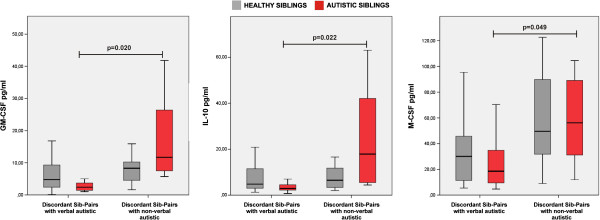
“Notably, GM-CSF significantly correlated with IL-10 (ρ = 0.782, P = 1.062 × 10⁻⁵) and M-CSF (ρ = 0.585, P = 0.002) levels, whereas IL-10 significantly correlated with M-CSF (ρ = 0.565, P = 0.005) levels.”
BackgroundInfluentialDecreased cellular IL-23 but not IL-17 production in children with autism spectrum disorders
Onore, C., Enstrom, A., Krakowiak, P., Hertz-Picciotto, I., Hansen, R., de Water, J. V., & Ashwood, P. (2009) · Journal of Neuroimmunology · doi:10.1016/j.jneuroim.2009.09.005 · Cited by 67 · cited 2×
“Previous studies [14-25] have reported altered cytokine levels in subjects with autism with inconclusive results, perhaps attributable to different types of study design, but also probably reflecting the wide heterogeneity of ASD.”
BackgroundMostafa, G. A., & Al-Ayadhi, L. Y. (2012) · European Journal of Paediatric Neurology · doi:10.1016/j.ejpn.2011.12.010 · Cited by 64 · cited 2×
“Clearly, further studies are warranted to confirm and extend the associations found in the present study, and should also include analysis of other relevant inflammatory molecules, such as auto-antibodies [9-13].”
BackgroundResultMostafa, G., & AL-Ayadhi, L. (2011) · Journal of Neuroinflammation · doi:10.1186/1742-2094-8-71 · Cited by 60
IL-2 induces IL-6 production in human monocytes
Musso, T., Espinoza‐Delgado, I., Pulkki, K. J., Gusella, G. L., Longo, D. L., & Varesio, L. (1992) · The Journal of Immunology · doi:10.4049/jimmunol.148.3.795 · Cited by 60 · cited 1×
“two cytokines that stimulate IL-6 expression in human monocytes by independent mechanisms [74].”
BackgroundCeramide inhibits LPS‐induced production of IL‐5, IL‐10, and IL‐13 from mast cells
Chiba, N., Masuda, A., Yoshikai, Y., & Matsuguchi, T. (2007) · Journal of Cellular Physiology · doi:10.1002/jcp.21101 · Cited by 59 · cited 1×
“produced by Th2 cells and mast cells [54].”
BackgroundSerum anti-myelin-associated glycoprotein antibodies in egyptian autistic children
Mostafa, G. A., Awad El-Sayed, Z., Mohamed Abd El-Aziz, M., & Farouk El-Sayed, M. (2008) · Journal of Child Neurology · doi:10.1177/0883073808319321 · Cited by 57 · cited 2×
“Clearly, further studies are warranted to confirm and extend the associations found in the present study, and should also include analysis of other relevant inflammatory molecules, such as auto-antibodies [9-13].”
BackgroundResultHashimoto, S., Komuro, I., Yamada, M., & Akagawa, K. S. (2001) · The Journal of Immunology · doi:10.4049/jimmunol.167.7.3619 · Cited by 57 · cited 10×
“Notably, GM-CSF significantly correlated with IL-10 (ρ = 0.782, P = 1.062 × 10⁻⁵) and M-CSF (ρ = 0.585, P = 0.002) levels, whereas IL-10 significantly correlated with M-CSF (ρ = 0.565, P = 0.005) levels.”
BackgroundInfluentialDetection of IL-17 and IL-23 in Plasma Samples of Children with Autism
Enstrom, A., Onore, C., Hertz-Picc, I., Hansen, R., Croen, L., Water, J. V. D., & Ashwood, P. (2008) · American Journal of Biochemistry and Biotechnology · doi:10.3844/ajbbsp.2008.114.120 · Cited by 51 · cited 1×
“All these findings are compatible with the established evidence that levels of immunomodulatory factors are altered in children with regressive ASD compared with children with non-regressive ASD [49-52].”
ResultDiagnostic challenges for multiplexed protein microarrays
Master, S. R., Bierl, C., & Kricka, L. J. (2006) · Drug Discovery Today · doi:10.1016/j.drudis.2006.09.010 · Cited by 45 · cited 2×
“The bead-microarray format comprises encoded microbeads (for example, each with a unique fluorescence signature), and each type of bead is coated with a different reagent [75].”
BackgroundKrieger, M., Both, M., Kranig, S. A., Pitzer, C., Klugmann, M., Vogt, G., Draguhn, A., & Schneider, A. (2012) · Scientific Reports · doi:10.1038/srep00697 · Cited by 43 · cited 1×
“Purkinje cells express receptors for both GM-CSF [67] and M-CSF [68], thus it is possible that altered levels of these two growth factors influence the maturation of the Purkinje cells, leading to language impairment.”
BackgroundEffects of interleukin-15 on neuronal differentiation of neural stem cells
Huang, Y., Cheng, S., Chueh, S., Tsai, Y.-L., Liou, N.-H., Guo, Y.-W., Liao, M.-H., Shen, L., Chen, C., Liu, J.-C., et al. (2009) · Brain Research · doi:10.1016/j.brainres.2009.09.009 · Cited by 34 · cited 1×
“The effect of BLC/CXCL13 on head circumference might result from its interaction with the IL-7 receptor pathway [63], which significantly affects neurite outgrowth [64,65].”
BackgroundInterleukin-1 exerts distinct actions on different cell types of the brain in vitro
Quan, N., An, & Chen, Q. (2011) · Journal of Inflammation Research · doi:10.2147/jir.s15357 · Cited by 32 · cited 1×
“Notably, it has also been shown that MCP-1 expression is induced by IL-1 [59].”
BackgroundEnstrom, A. M., Onore, C. E., Tarver, A., Hertz‐Picciotto, I., Hansen, R. L., Croen, L., de Water, J. V., & Ashwood, P. (2008) · American journal of biochemistry & biotechnology/American journal of biochemistry and biotechnology · doi:10.3844/ajbbsp.2008.121.129 · Cited by 32 · cited 1×
“All these findings are compatible with the established evidence that levels of immunomodulatory factors are altered in children with regressive ASD compared with children with non-regressive ASD [49-52].”
ResultCytokines as Potential Biomarkers for Parkinson’s Disease: A Multiplex Approach
Litteljohn, D., & Hayley, S. P. (2012) · Methods in molecular biology · doi:10.1007/978-1-62703-071-7_7 · Cited by 29 · cited 1×
“Overall, most studies to date have reported good correlation between beadbased and planar cytokine arrays and between multiplex assays and traditional ELISA (comparable relative changes), thus recommending the continued and expanded use of multiplexing systems in high-throughput screening applications [77].”
BackgroundTakasugi, K., Yamamura, M., Iwahashi, M., Otsuka, F., Yamana, J., Sunahori, K., Kawashima, M., Yamada, M., & Makino, H. (2006) · Arthritis Research & Therapy · doi:10.1186/ar2015 · Cited by 21 · cited 10×
“Notably, GM-CSF significantly correlated with IL-10 (ρ = 0.782, P = 1.062 × 10⁻⁵) and M-CSF (ρ = 0.585, P = 0.002) levels, whereas IL-10 significantly correlated with M-CSF (ρ = 0.565, P = 0.005) levels.”
BackgroundInfluential
Cited by
Immune mediators in the brain and peripheral tissues in autism spectrum disorder
Estes, M. L., & McAllister, A. K. (2015) · Nature Reviews Neuroscience · doi:10.1038/nrn3978 · Cited by 514
Cytokine aberrations in autism spectrum disorder: a systematic review and meta-analysis
Masi, A., Quintana, D. S., Glozier, N., Lloyd, A. R., Hickie, I. B., & Guastella, A. J. (2015) · Molecular Psychiatry · doi:10.1038/mp.2014.59 · Cited by 466
The influence of neuroinflammation in Autism Spectrum Disorder
Matta, S. M., Hill-Yardin, E. L., & Crack, P. J. (2019) · Brain, Behavior, and Immunity · doi:10.1016/j.bbi.2019.04.037 · Cited by 416
Saghazadeh, A., Ataeinia, B., Keynejad, K., Abdolalizadeh, A., Hirbod-Mobarakeh, A., & Rezaei, N. (2019) · Journal of Psychiatric Research · doi:10.1016/j.jpsychires.2019.05.019 · Cited by 235
Tsilioni, I., Taliou, A., Francis, K., & Theoharides, T. C. (2015) · Translational Psychiatry · doi:10.1038/tp.2015.142 · Cited by 199
Metadata
- Authors
- Napolioni, V., Ober-Reynolds, B., Szelinger, S., Corneveaux, J. J., Pawlowski, T., Ober-Reynolds, S., Kirwan, J., Persico, A. M., Melmed, R. D., Craig, D. W., Smith, C. J., & Huentelman, M. J.
- Affiliations
- Translational Genomics Research Institute (US)
- Southwest Autism Research & Resource Center (US)
- Università Campus Bio-Medico (IT)
- Corresponding author
- Napolioni, Valerio
- Huentelman, Matthew J
- ORCID
- Venue
- Journal of Neuroinflammation
- Published
- 2013-03-14
- Volume
- 10
- Issue
- 1
- Pages
- 38-38
- ISSN
- 1742-2094 (ISSN-L)
- PMC
- PMC3616926
- OpenAlex
- W2109066409
- Cited by
- 76
- References
- 78
- Citations by year
- 2026: 4 · 2025: 4 · 2024: 9 · 2023: 3 · 2022: 7 · 2021: 8 · 2020: 7 · 2019: 9 · 2018: 4 · 2017: 7 · 2016: 4 · 2015: 5 · 2014: 4 · 2013: 1
- FWCI
- 2.56
- Type
- journal article
- Language
- en
- Open access
- gold
- doi.org
- Locations
- Journal of Neuroinflammation (publishedVersion, cc-by)
- Europe PMC (PubMed Central) (publishedVersion, cc-by)
- PubMed Central (publishedVersion, cc-by)
- PubMed (publishedVersion)
- IRIS UNIMORE (University of Modena and Reggio Emilia) (submittedVersion, cc-by)
- Unicam Scientific Publications (University of Camerino) (submittedVersion)
- Funders
- Autism Speaks
- Autism Research Institute
- Ministero della Salute (RFPS-2007-5-640174)
- Topics
- Life Sciences › Neuroscience › Cognitive Neuroscience › Autism Spectrum Disorder Research
- Life Sciences › Neuroscience › Biological Psychiatry › Tryptophan and brain disorders
- Health Sciences › Medicine › Psychiatry and Mental health › Child Nutrition and Feeding Issues
- Keywords
- autism spectrum disorder, plasma cytokines, immune dysfunction, IL-1β, endophenotypes, regressive autism, gastrointestinal symptoms, allergy, adaptive behavior, social responsiveness, neuroinflammation
- MeSH terms
- Child, Child Development Disorders, Pervasive, Child, Preschool, Humans, Male, Biomarkers, Case-Control Studies, Cytokines, Gene Expression Profiling, Siblings, Quantitative Trait Loci
About these checks
Registry, retraction, Cites and statistics results are computed, not judged, with one exception: a printed reference that no index lists is read once by a model before it counts as a citation error. Claims are extracted by a model and kept only when their quote appears verbatim in the text; each cited source is then checked, with a model’s help, for whether it says what the claim relies on. Those verdicts can be wrong — read the claim’s quote and the cited source before relying on one.
Statistics and arithmetic are recomputed, not judged.
Confidence bands are shown only for fields calibrated on our annotated test set. None is calibrated yet, so no band is shown.
What counts as a claim ›How we measure confidence ›How we check this ›
Are you an author, or do you see a problem with this page? Request a review
Data sources
Bibliographic data: Semantic Scholar, OpenAlex, Crossref.
Contains information from the Semantic Scholar Academic Graph Datasets, made available under the ODC Attribution License (ODC-BY 1.0).
Semantic Scholar’s data is described in: Kinney, R., et al. (2023). The Semantic Scholar Open Data Platform. arXiv:2301.10140.
