

Maternal immune activation by poly(I:C) induces expression of cytokines IL-1β and IL-13, chemokine MCP-1 and colony stimulating factor VEGF in fetal mouse brain
Open accessThe DOI matches its Crossref record; 95 of the 96 references it cites were found in a registry or an index.
Abstract
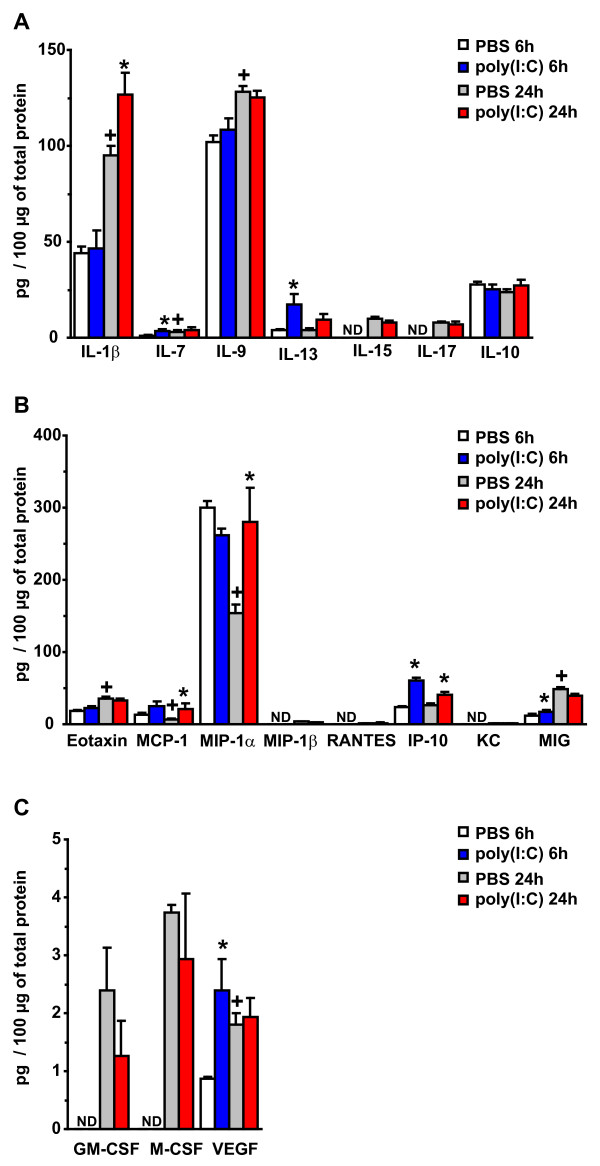
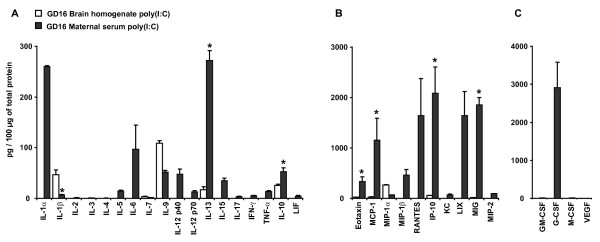
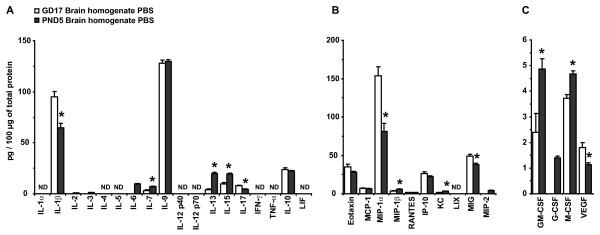
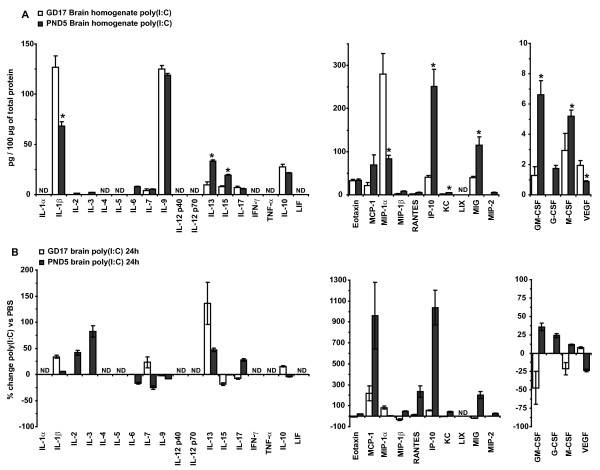
BACKGROUND: Maternal viral infection during pregnancy is associated with an increase in the incidence of psychiatric disorders with presumed neurodevelopmental origin, including autism spectrum disorders and schizophrenia. The enhanced risk for developing mental illness appears to be caused by deleterious effects of innate immune response-associated factors on the development of the central nervous system, which predispose the offspring to pathological behaviors in adolescence and adulthood. To identify the immune response-associated soluble factors that may affect central nervous system development, we examined the effect of innate immune response activation by polyriboinosinic-polyribocytidylic acid (poly(I:C)), a synthetic analogue of viral double-stranded RNA, on the expression levels of pro- and anti-inflammatory cytokines, chemokines and colony stimulating factors in fetal and postnatal mouse brain 6 h and 24 h after treatment. METHODS: C57BL/6J pregnant mice (gestational day 16) or newborn mice (postnatal day 4) received a single intraperitoneal injection of the synthetic analogue of viral double-stranded RNA poly(I:C) (20 mg/kg). Thirty-two immune response-associated soluble factors, including pro- and anti-inflammatory cytokines, chemokines and colony stimulating factors, were assayed 6 h and 24 h after poly(I:C) injection using multiplexed bead-based immunoassay (Milliplex Map) and processed in a Luminex 100 IS instrument. RESULTS: Maternal exposure to poly(I:C) at gestational day 16 induced a significant increase in cytokines interleukin (IL)-1β, IL-7 and IL-13; chemokines monocyte chemoattractant protein 1 (MCP-1), macrophage inflammatory protein (MIP)-1α, interferon gamma-induced protein (IP)-10 and monokine induced by IFN-gamma (MIG); and in the colony stimulating factor vascular endothelial growth factor (VEGF) in the fetal brain. IL-1β showed the highest concentration levels in fetal brains and was the only cytokine significantly up-regulated 24 h after maternal poly(I:C) injection, suggesting that IL-1β may have a deleterious impact on central nervous system development. In contrast, poly(I:C) treatment of postnatal day 4 pups induced a pronounced rise in chemokines and colony stimulating factors in their brains instead of the pro-inflammatory cytokine IL-1β. CONCLUSIONS: This study identified a significant increase in the concentration levels of the cytokines IL-1β and IL-13, the chemokine MCP-1 and the colony stimulating factor VEGF in the developing central nervous system during activation of an innate immune response, suggesting that these factors are mediators of the noxious effects of maternal immune activation on central nervous system development, with potential long-lasting effects on animal behavior.
Overview
The claims and statistics of this paper haven’t been checked yet.
Free: it reads the open-access text and checks the first 5 claims that cite a source we can check. Create a free account to check every claim.
Integrity signals
Registry
Cites
Statistics
Figures
Verification
Claims the paper makes
The claims and statistics of this paper haven’t been checked yet.
Free: it reads the open-access text and checks the first 5 claims that cite a source we can check. Create a free account to check every claim.
Claims other papers make about this one
Each is checked against this paper’s own text: does it say what the citing paper says it does?
In the citing paper
“A broad spectrum of cytokines are elevated in the fetal brain hours after poly(I:C) injection in pregnant mice142,143 and many of these cytokines remain chronically altered in the brains of offspring throughout postnatal development and into adulthood144.”
From Immune mediators in the brain and peripheral tissues in autism spectrum disorder (2015) · cites this paper as [143]
Self-check
Percentages, sums and reported differences re-computed from the paper’s own numbers.
The self-check needs the paper’s full text.
Citations
Cites
Akira, S., & Takeda, K. (2004) · Nature reviews. Immunology · doi:10.1038/nri1391 · Cited by 8,312 · cited 1×
“Binding of IL-1β to the IL-1R1 induces formation of a signaling complex with the IL-1 receptor accessory protein, which are both members of the Toll-like receptor family of proteins [73,74].”
Recognition of double-stranded RNA and activation of NF-κB by Toll-like receptor 3
Alexopoulou, L., Holt, A. C., Medzhitov, R., & Flavell, R. A. (2001) · Nature · doi:10.1038/35099560 · Cited by 6,129
Toll-like receptors and innate immunity
Medzhitov, R. (2001) · Nature Reviews Immunology · doi:10.1038/35100529 · Cited by 4,308
Rare Structural Variants Disrupt Multiple Genes in Neurodevelopmental Pathways in Schizophrenia
Walsh, T., McClellan, J. M., McCarthy, S. E., Addington, A. M., Pierce, S. B., Cooper, G. M., Nord, A. S., Kusenda, M., Malhotra, D., Bhandari, A., et al. (2008) · Science · doi:10.1126/science.1155174 · Cited by 1,800 · cited 1×
“However, epidemiological and genetic studies suggest that the interaction between genetic abnormalities and epigenetic factors perturb the formation of the central nervous system (CNS), resulting in the cognitive, sensorial and emotional dysfunctions observed in mental illness [1-5].”
Maternal Immune Activation Alters Fetal Brain Development through Interleukin-6
Smith, S. E. P., Li, J., Garbett, K., Mirnics, K., & Patterson, P. H. (2007) · The Journal of Neuroscience · doi:10.1523/jneurosci.2178-07.2007 · Cited by 1,605 · cited 4×
“Treatment of pregnant mice with poly(I:C) alters cytokine expression levels in the fetal brain and causes behavioral abnormalities in post-pubertal offspring [21,22,26-29].”
InfluentialVascular endothelial growth factor (VEGF) stimulates neurogenesis in vitro and in vivo
Jin, K., Zhu, Y., Sun, Y., Mao, X. O., Xie, L., & Greenberg, D. A. (2002) · Proceedings of the National Academy of Sciences · doi:10.1073/pnas.182296499 · Cited by 1,507 · cited 1×
“Finally, VEGF contributes to various mechanisms of CNS development including neuronal migration, differentiation and axonal growth and path-finding [90-94], indicating that deregulation of VEGF expression during critical periods of brain development may perturb neuronal migration and formation of neural circuits.”
Linked Regularities in the Development and Evolution of Mammalian Brains
Finlay, B. L., & Darlington, R. B. (1995) · Science · doi:10.1126/science.7777856 · Cited by 1,217 · cited 1×
“Postnatal day (PND) 4 was chosen because at this developmental stage formation of neural circuits is not completed [34-36] and, therefore, the CNS is vulnerable to epigenetic insults, including viral infections.”
Adult Schizophrenia Following Prenatal Exposure to an Influenza Epidemic
Mednick, S. A. (1988) · Archives of General Psychiatry · doi:10.1001/archpsyc.1988.01800260109013 · Cited by 1,193 · cited 1×
“One important epigenetic risk factor for autism and schizophrenia is the occurrence of maternal infection during pregnancy [2,6-12], suggesting that the increased risk for mental illness arises from the effect of the innate immune response (for example, cytokines) on CNS formation [2,13,14].”
Serologic Evidence of Prenatal Influenza in the Etiology of Schizophrenia
Brown, A. S., Begg, M. D., Gravenstein, S., Schaefer, C. A., Wyatt, R. J., Bresnahan, M., Babulas, V. P., & Susser, E. S. (2004) · Archives of General Psychiatry · doi:10.1001/archpsyc.61.8.774 · Cited by 1,053 · cited 2×
“We choose to mimic a viral infection instead of the most frequently used bacterial mimic agent lipopolysaccharide (LPS), because viral infections during pregnancy are common during the influenza season and appear to predispose the offspring to develop psychiatric illness [10,13].”
Maternal influenza infection causes marked behavioral and pharmacological changes in the offspring
Shi, L., Fatemi, S. H., Sidwell, R. W., & Patterson, P. H. (2003) · The Journal of Neuroscience · doi:10.1523/jneurosci.23-01-00297.2003 · Cited by 1,025 · cited 2×
“This dose of poly(I:C) causes long-lasting behavioral abnormalities in the progeny [33].”
Cited by
Immune mediators in the brain and peripheral tissues in autism spectrum disorder
Estes, M. L., & McAllister, A. K. (2015) · Nature Reviews Neuroscience · doi:10.1038/nrn3978 · Cited by 514
Garay, P. A., Hsiao, E. Y., Patterson, P. H., & McAllister, A. K. (2013) · Brain, Behavior, and Immunity · doi:10.1016/j.bbi.2012.07.008 · Cited by 366
“, 2008), with only IL-1b remaining elevated in the fetal brain 24 h following poly(I:C) injection (Arrode-Bruses and Bruses, 2012).”
Evidence for a Dysregulated Immune System in the Etiology of Psychiatric Disorders
Gibney, S. M., & Drexhage, H. A. (2013) · Journal of Neuroimmune Pharmacology · doi:10.1007/s11481-013-9462-8 · Cited by 234
Reisinger, S., Khan, D., Kong, E., Berger, A., Pollak, A., & Pollak, D. D. (2015) · Pharmacology & Therapeutics · doi:10.1016/j.pharmthera.2015.01.001 · Cited by 224
Inflammatory Cytokines: Potential Biomarkers of Immunologic Dysfunction in Autism Spectrum Disorders
Xu, N., Li, X., & Zhong, Y. (2015) · Mediators of Inflammation · doi:10.1155/2015/531518 · Cited by 220
Haddad, F. L., Patel, S. V., & Schmid, S. (2020) · Neuroscience & Biobehavioral Reviews · doi:10.1016/j.neubiorev.2020.04.012 · Cited by 191
Mattei, D., Djodari-Irani, A., Hadar, R., Pelz, A., de Cossío, L. F., Goetz, T., Matyash, M., Kettenmann, H., Winter, C., & Wolf, S. A. (2014) · Brain, Behavior, and Immunity · doi:10.1016/j.bbi.2014.01.019 · Cited by 186
“…is in line with other studies that reported an increased level of pro-inflammatory cytokines in the brain of the adult Poly I:C offspring (Garay et al., 2013) and in the brain of fetuses after a maternal immune activation (Arrode-Brusés and Brusés, 2012; Smith et al., 2007; Giovanoli et al., 2013).”
Profiling inflammatory signatures of schizophrenia: A cross-sectional and meta-analysis study
Frydecka, D., Krzystek-Korpacka, M., Lubeiro, A., Stramecki, F., Stańczykiewicz, B., Beszłej, J. A., Piotrowski, P., Kotowicz, K., Szewczuk-Bogusławska, M., Pawlak-Adamska, E., et al. (2018) · Brain, Behavior, and Immunity · doi:10.1016/j.bbi.2018.05.002 · Cited by 178
Maternal immune activation in neurodevelopmental disorders
Solek, C. M., Farooqi, N., Verly, M., Lim, T. K., & Ruthazer, E. S. (2018) · Developmental Dynamics · doi:10.1002/dvdy.24612 · Cited by 168
“In a study using Poly(I:C) treatment in mice at GD16, a very large panel of different cytokines and other signaling factors were shown to have highly dynamic expression levels when comparing maternal prenatal serum, prenatal, and postnatal brain homogenates (Arrode-Brus es and Brus es, 2012).”
BackgroundXie, J., Huang, L., Li, X., Li, H., Zhou, Y., Zhu, H., Pan, T., Kendrick, K. M., & Xu, W. (2017) · Oncotarget · doi:10.18632/oncotarget.19326 · Cited by 151
The role of microbes and autoimmunity in the pathogenesis of neuropsychiatric illness
Hornig, M. (2013) · Current Opinion in Rheumatology · doi:10.1097/bor.0b013e32836208de · Cited by 138
Wong, H., & Hoeffer, C. (2018) · Experimental Neurology · doi:10.1016/j.expneurol.2017.04.010 · Cited by 129
“…ASD-like alterations in cortical and cerebellar growth and function (Choi et al., 2016; De Miranda et al., 2010; Meyer et al., 2008; Shi et al., 2009) as well as in immune responses (Arrode-Bruses and Bruses, 2012; Garay et al., 2013; Hsiao et al., 2012; Meyer et al., 2006; Meyer et al., 2008).”
BackgroundGiovanoli, S., Notter, T., Richetto, J., Labouesse, M. A., Vuillermot, S., Riva, M. A., & Meyer, U. (2015) · Journal of Neuroinflammation · doi:10.1186/s12974-015-0437-y · Cited by 124
“As expected [26, 50], we found that the maternal immune challenge markedly increased maternal plasma levels of the pro-inflammatory cytokines IL-1β, IL-6, and TNF-α compared to control vehicle treatment (Fig.”
Inflammation and the developing brain: Consequences for hippocampal neurogenesis and behavior
Green, H. F., & Nolan, Y. M. (2014) · Neuroscience & Biobehavioral Reviews · doi:10.1016/j.neubiorev.2014.01.004 · Cited by 132
Maternal immune activation promotes hippocampal kindling epileptogenesis in mice
Pineda, E., Shin, D., You, S. J., Auvin, S., Sankar, R., & Mazarati, A. (2013) · Annals of Neurology · doi:10.1002/ana.23898 · Cited by 97
Zhang, Z., & van Praag, H. (2014) · Brain Behavior and Immunity · doi:10.1016/j.bbi.2014.10.010 · Cited by 109
Elmer, B. M., Estes, M. L., Barrow, S. L., & McAllister, A. K. (2013) · The Journal of Neuroscience · doi:10.1523/jneurosci.2366-13.2013 · Cited by 88
“Given that cytokines are potent regulators of MHCI in the immune system, we addressed this issue using a mouse model of MIA in which cytokines are elevated in the brains of offspring (Meyer et al., 2006, 2008b; Fatemi et al., 2008; Arrode-Brusés and Brusés, 2012; Garay et al., 2013).”
BackgroundGiollabhui, N. M., Breen, E. C., Murphy, S. K., Maxwell, S. D., Cohn, B. A., Krigbaum, N. Y., Cirillo, P. M., Perez, C. M., Alloy, L. B., Drabick, D. A. G., et al. (2019) · Journal of Psychiatric Research · doi:10.1016/j.jpsychires.2019.01.009 · Cited by 90
“In animals, exposure to IL-1β during pregnancy is associated with higher expression of IL-1β in the human placenta, amniotic fluid, newborn blood and neonatal brain, white matter abnormalities as well as motor dysfunction (Arrode-Brusés and Brusés, 2012; Cai et al., 2000).”
BackgroundImmune Dysregulation in Autism Spectrum Disorder
Hsiao, E. Y. (2013) · International Review of Neurobiology · doi:10.1016/b978-0-12-418700-9.00009-5 · Cited by 87
Woods, R. M., Lorusso, J. M., Fletcher, J., ElTaher, H., McEwan, F., Harris, I., Kowash, H. M., D'Souza, S. W., Harte, M., Hager, R., et al. (2023) · Neuronal Signaling · doi:10.1042/ns20220064 · Cited by 96
Maternal immune stimulation during pregnancy shapes the immunological phenotype of offspring
Mandal, M., Donnelly, R., Elkabes, S., Zhang, P., Davini, D., David, B. T., & Ponzio, N. M. (2013) · Brain, Behavior, and Immunity · doi:10.1016/j.bbi.2013.04.012 · Cited by 81
“The epidemiological and clinical evidence for a causal relationship between bacterial or viral infection of women during pregnancy and increased risk of neurodevelopmental disorders [such as Autism Spectrum Disorders (ASD) and schizophrenia] in their children is compelling (Brown, 2006; Brown and Derkits, 2010; Hagber…”
BackgroundAssociation of serum VEGF levels with prefrontal cortex volume in schizophrenia
Pillai, A., Howell, K. R., Ahmed, A. O., Weinberg, D., Allen, K. M., Bruggemann, J. M., Lenroot, R., Liu, D., Galletly, C. A., Weickert, C. S., et al. (2015) · Molecular Psychiatry · doi:10.1038/mp.2015.96 · Cited by 83
Inflammatory macrophage phenotype in BTBR T+tf/J mice
Onore, C. E., Careaga, M., Babineau, B. A., Schwartzer, J. J., Berman, R. F., & Ashwood, P. (2013) · Frontiers in Neuroscience · doi:10.3389/fnins.2013.00158 · Cited by 77
“Maternal immune activation (MIA) in C57 mice results in elevated expression of IL-6, IL-12(p40), IL-12(p70), IL-13, IL15, IFNγ, TNFα, and IL-10 in pregnant dams (Arrode-Bruses and Bruses, 2012), and leads to deficits in sociability in their offspring (Malkova et al., 2012).”
BackgroundWoods, R. M., Lorusso, J. M., Potter, H. G., Neill, J. C., Glazier, J. D., & Hager, R. (2021) · Neuroscience & Biobehavioral Reviews · doi:10.1016/j.neubiorev.2021.07.015 · Cited by 81
“…F – 3h ↓P / ↑P / NR M-PICE / M-PICL / M-PICEL M-PIC: Meyer et al., 2006*RP F – 4h NR M-LPSM M-LPS: O’Loughlin et al., 2017R F – 6h ↑R / NRP M-PICL / R-LPSML M-PICEL R-LPS: Gayle et al., 2004* R Simões et al., 2018P M-PIC: Meyer et al., 2006*RP Arrode-Brusés and Brusés, 2012*P F – 12h NRP…”
InfluentialBodnar, T. S., Raineki, C., Wertelecki, W., Yevtushok, L., Plotka, L., Zymak‐Zakutnya, N., Honerkamp‐Smith, G., Wells, A., Rolland, M., Woodward, T. S., et al. (2018) · Brain Behavior and Immunity · doi:10.1016/j.bbi.2018.05.004 · Cited by 87
“Notably, IL-15 was among a group of cytokines shown to be elevated in maternal sera in a rodent model of maternal viral infection (Arrode-Bruses and Bruses, 2012), with such models known to impact neurodevelopment in the offspring [reviewed in (Solek et al., 2018)].”
BackgroundBen-Yehuda, H., Matcovitch-Natan, O., Kertser, A., Spinrad, A., Prinz, M., Amit, I., & Schwartz, M. (2020) · Molecular Psychiatry · doi:10.1038/s41380-019-0604-0 · Cited by 71
Gestational diabetes exacerbates maternal immune activation effects in the developing brain
Money, K. M., Barke, T. L., Serezani, A. P. M., GANNON, M. A., Garbett, K. A., Aronoff, D. M., & Mirnics, K. (2017) · Molecular Psychiatry · doi:10.1038/mp.2017.191 · Cited by 75
Ballendine, S. A., Greba, Q., Dawicki, W., Zhang, X., Gordon, J., & Howland, J. G. (2014) · Progress in Neuro-Psychopharmacology and Biological Psychiatry · doi:10.1016/j.pnpbp.2014.11.002 · Cited by 78
“…of cytokines with chemotactic properties (Tran and Miller, 2003), and their associated G proteincoupled receptors are involved in brain development (Arrode-Bruses and Bruses, 2012; Brown et al., 2004; Cho and Miller, 2002; Deverman and Patterson, 2009; Garay et al., 2013; Ragozzino, 2002) and…”
BackgroundSimanek, A. M., & Meier, H. C. S. (2015) · Current problems in pediatric and adolescent health care · doi:10.1016/j.cppeds.2015.06.008 · Cited by 75
Upregulation of IL-9 and JAK-STAT signaling pathway in children with autism
Ahmad, S. F., Nadeem, A., Ansari, M. A., Bakheet, S. A., AL-Ayadhi, L. Y., & Attia, S. M. (2017) · Progress in Neuro-Psychopharmacology and Biological Psychiatry · doi:10.1016/j.pnpbp.2017.08.002 · Cited by 73
“IL-1β has been shown to play an important role in mediating severe neurodevelopmental anomalies and placental damage; this cytokine has also been observed at its highest levels in the fetal brain (Arrode-Brusés and Brusés, 2012).”
Boccazzi, M., Steenwinckel, J. V., Schang, A., Faivre, V., Charpentier, T. L., Bokobza, C., Csaba, Z., Verderio, C., Fumagalli, M., Mani, S., et al. (2021) · Cell Death and Disease · doi:10.1038/s41419-021-03446-9 · Cited by 73
Lins, B. R., Hurtubise, J. L., Roebuck, A. J., Marks, W. N., Zabder, N. K., Scott, G. A., Greba, Q., Dawicki, W., Zhang, X., Rudulier, C. D., et al. (2018) · eNeuro · doi:10.1523/eneuro.0249-18.2018 · Cited by 70
“…CXCL1-related signaling influences brain development by regulating neurogenesis, maturation, and survival (Ip, 1998; Nakashima et al., 1999; Cho and Miller, 2002; Ragozzino, 2002a; Gregg and Weiss, 2005; Deverman and Patterson, 2009; Arrode-Brusés and Brusés, 2012; Garay et al., 2013; Stolp, 2013).”
BackgroundInterleukin-1 Receptor Blockade in Perinatal Brain Injury
Rosenzweig, J. M., Lei, J., & Burd, I. D. (2014) · Frontiers in Pediatrics · doi:10.3389/fped.2014.00108 · Cited by 72
Robson, M. J., Quinlan, M. A., Margolis, K. G., Gajewski-Kurdziel, P. A., Veenstra-VanderWeele, J. M., Gershon, M. D., Watterson, D. M., & Blakely, R. (2018) · Proceedings of the National Academy of Sciences · doi:10.1073/pnas.1809137115 · Cited by 62
Venkatasubramanian, G., & Debnath, M. (2013) · Progress in Neuro-Psychopharmacology and Biological Psychiatry · doi:10.1016/j.pnpbp.2013.04.001 · Cited by 61
“…that maternal exposure to poly I:C and LPS during pregnancy is capable of increasing the levels of proinflammatory cytokines in the placenta, amniotic fluid and fetus, including the fetal brain through activation of TLR3 and TLR4 respectively (Arrode-Bruses and Bruses, 2012; Urakubo et al., 2001).”
BackgroundLuan, W., Hammond, L. A., Vuillermot, S., Meyer, U., & Eyles, D. W. (2018) · Scientific Reports · doi:10.1038/s41598-018-28090-w · Cited by 59
Careaga, M., Taylor, S. L., Chang, C., Chiang, A., Ku, K. M., Berman, R. F., de Water, J. V., & Bauman, M. D. (2018) · Journal of Neuroimmunology · doi:10.1016/j.jneuroim.2018.06.014 · Cited by 59
“…an experimental system to explore mechanistic links between changes in the maternal-fetal immune environment, altered fetal brain development and emergence of atypical offspring behavior (Carpentier et al., 2013; Lombardo et al., 2018; Arrode-Bruses and Bruses, 2012; O'Loughlin et al., 2017).”
BackgroundMatzner, P., Sorski, L., Shaashua, L., Elbaz, E., Lavon, H., Melamed, R., Rosenne, E., Gotlieb, N., Benbenishty, A., Reed, S. G., et al. (2015) · International Journal of Cancer · doi:10.1002/ijc.29885 · Cited by 57
Aavani, T., Rana, S. A., Hawkes, R. B., & Pittman, Q. J. (2015) · The Cerebellum · doi:10.1007/s12311-015-0669-5 · Cited by 60
Lin, M., Zhao, D., Hrabovsky, A., Pedrosa, E., Zheng, D., & Lachman, H. M. (2014) · PLoS ONE · doi:10.1371/journal.pone.0094968 · Cited by 53
Hameete, B. C., Fernández‐Calleja, J. M. S., de Groot, M. W. G. D. M., Oppewal, T. R., Tiemessen, M. M., Hogenkamp, A., de Vries, R. B. M., & Groenink, L. (2020) · Brain Behavior & Immunity - Health · doi:10.1016/j.bbih.2020.100192 · Cited by 54
Ratnayake, U., Quinn, T., LaRosa, D. A., Dickinson, H., & Walker, D. W. (2014) · Developmental Neuroscience · doi:10.1159/000362205 · Cited by 48
Szabó, D., Tod, P., Gölöncsér, F., Román, V., Lendvai, B., Otrokocsi, L., & Sperlágh, B. (2022) · Brain Behavior and Immunity · doi:10.1016/j.bbi.2022.01.015 · Cited by 51
Inflammatory cytokine network in schizophrenia
Zakharyan, R., & Boyajyan, A. (2014) · The World Journal of Biological Psychiatry · doi:10.3109/15622975.2013.830774 · Cited by 44
Chen, J., Lin, M., Hrabovsky, A., Pedrosa, E., Dean, J. T., Jain, S., Zheng, D., & Lachman, H. M. (2015) · PLoS ONE · doi:10.1371/journal.pone.0124597 · Cited by 49
Sequential perturbations to mouse corticogenesis following in utero maternal immune activation
Canales, C. P., Estes, M. L., Cichewicz, K., Angara, K., Aboubechara, J. P., Cameron, S., Prendergast, K., Su-Feher, L., Zdilar, I., Kreun, E. J., et al. (2021) · eLife · doi:10.7554/elife.60100 · Cited by 46
Elevated Viral Restriction Factor Levels in Cortical Blood Vessels in Schizophrenia
Siegel, B. I., Sengupta, E. J., Edelson, J. R., Lewis, D. A., & Volk, D. W. (2014) · Biological Psychiatry · doi:10.1016/j.biopsych.2013.09.019 · Cited by 41
Kleeman, E. A., Gubert, C., & Hannan, A. J. (2022) · Trends in Genetics · doi:10.1016/j.tig.2022.03.006 · Cited by 43
“It triggers the release of many proinflammatory cytokines, including IL-6, IL-1β, IFN-γ, and TNF-α.”
InfluentialAguirre, A., Maturana, C. J., Harcha, P. A., & Sáez, J. C. (2013) · Mediators of Inflammation · doi:10.1155/2013/893521 · Cited by 42
A distinct brain pathway links viral RNA exposure to sickness behavior
Zhu, X., Levasseur, P. R., Michaelis, K. A., Burfeind, K. G., & Marks, D. L. (2016) · Scientific Reports · doi:10.1038/srep29885 · Cited by 39
Openshaw, R. L., Kwon, J., McColl, A., Penninger, J. M., Cavanagh, J., Pratt, J. A., & Morris, B. (2019) · Journal of Neuroinflammation · doi:10.1186/s12974-019-1408-5 · Cited by 40
Giulivi, C., Napoli, E., Schwartzer, J. J., Careaga, M., & Ashwood, P. (2013) · Mediators of Inflammation · doi:10.1155/2013/609602 · Cited by 38
“Hindawi Publishing Corporation Mediators of Inflammation Volume 2013, Article ID 609602, 8 pages http://dx.doi.org/10.1155/2013/609602”
BackgroundInfluentialArad, M., Piontkewitz, Y., Albelda, N., Shaashua, L., & Weiner, I. (2017) · Brain Behavior and Immunity · doi:10.1016/j.bbi.2017.01.015 · Cited by 35
Anderson, G., & Maes, M. H. J. (2014) · Current Neuropharmacology · doi:10.2174/1570159x11666131120223757 · Cited by 34
Ahmad, S. F., Ansari, M. A., Nadeem, A., Bakheet, S. A., Alsanea, S., Alhosaini, K. A., Mahmood, H. M., Alzahrani, M. Z., & Attia, S. M. (2019) · NeuroToxicology · doi:10.1016/j.neuro.2019.12.003 · Cited by 31
Shi, Y., Shi, M., Xiao, L.-J., Li, L., Zou, L.-H., Li, C.-Y., Zhang, Q.-J., Zhou, L., Ji, X., Huang, H., et al. (2018) · Frontiers in Neuroscience · doi:10.3389/fnins.2018.00582 · Cited by 31
“Milliplex MAP Rat Cytokine Kit was used to measure the following pro-inflammatory cytokines: TNF-α, IL-1β, IL-18, IL6, and IFN-γ, according to manufacturer’s instructions and as previously described (Arrode-Bruses and Bruses, 2012; Codices et al., 2012).”
MethodRole of Maternal Immune Factors in Neuroimmunology of Brain Development
Mohebalizadeh, M., Babapour, G., Aghdam, M. M., Mohammadi, T., Jafari, R., & Shafiei‐Irannejad, V. (2023) · Molecular Neurobiology · doi:10.1007/s12035-023-03749-2 · Cited by 33
“[41], the chemokines, including MCP-1, MIP-1α, IP-10, and MIG, were activated in response to MIA.”
Tsukada, T., Shimada, H., Sakata‐Haga, H., Iizuka, H., & Hatta, T. (2019) · Congenital Anomalies · doi:10.1111/cga.12323 · Cited by 30
“IL-6, in addition to other pro-inflammatory cytokines, is reported to increase in response to MIA in the fetal as well as the postnatal brain.(26,33,34) A recent systematic review and meta-analysis showed that the concentrations of IL-1β, IL-6, IL-8, interferon-gamma, eotaxin, and monocyte chemotactic protein-1 in hum…”
BackgroundLoewen, S. M., Chavesa, A. M., Murray, C. J., Traetta, M. E., Burns, S. E., Pekarik, K. H., & Tremblay, M. (2023) · Developmental Neuroscience · doi:10.1159/000530185 · Cited by 28
Guo, J., Liu, C., Wang, Y., Feng, B., & Zhang, X. (2014) · Nordic Journal of Psychiatry · doi:10.3109/08039488.2014.986761 · Cited by 29
Konefal, S., & Stellwagen, D. (2017) · Philosophical Transactions of the Royal Society B Biological Sciences · doi:10.1098/rstb.2016.0160 · Cited by 29
The fetal programming effect of maternal immune activation (MIA) on the offspring’s immune system
Hofsink, N., Groenink, L., & Plösch, T. (2024) · Seminars in Immunopathology · doi:10.1007/s00281-024-01023-8 · Cited by 25
Delorme, T. C., Srivastava, L. K., & Cermakian, N. (2021) · Brain Behavior and Immunity · doi:10.1016/j.bbi.2020.12.030 · Cited by 29
Hollander, E., Uzunova, G., Taylor, B. P., Noone, R., Racine, E., Doernberg, E. A., Freeman, K. D., & Ferretti, C. J. (2018) · The World Journal of Biological Psychiatry · doi:10.1080/15622975.2018.1523561 · Cited by 24
Complex Neuroimmune Involvement in Neurodevelopment: A Mini-Review
Monet, M. C., & Quan, N. (2023) · Journal of Inflammation Research · doi:10.2147/jir.s410562 · Cited by 26
Brain in flames – animal models of psychosis: utility and limitations
Wolf, S. A., Mattei, D., & Schweibold, R. (2015) · Neuropsychiatric Disease and Treatment · doi:10.2147/ndt.s65564 · Cited by 31
“150–152 Microglia expresses the TLR3 to which PolyI:C binds, evoking an innate immune response in both rodents and humans, and besides being able to respond to PolyI:C, they are able to sense changes in cytokine levels.”
Henderson, K. A., Borders, R. B., Ross, J. B., Huwar, T. B., Travis, C. O., Wood, B. J., Ma, Z. J., Hong, S. P., Vinci, T. M., & Roche, B. M. (2013) · Journal of Pharmacological and Toxicological Methods · doi:10.1016/j.vascn.2013.04.009 · Cited by 26
Ali, A. A., Cui, X., Alexander, S., & Eyles, D. W. (2018) · The Journal of Steroid Biochemistry and Molecular Biology · doi:10.1016/j.jsbmb.2018.01.015 · Cited by 24
Physiological mediators of prenatal environmental influences in autism spectrum disorder
Frye, R. E., Cakir, J., Rose, S., Palmer, R. F., Austin, C. E., & Curtin, P. C. P. (2021) · BioEssays · doi:10.1002/bies.202000307 · Cited by 27
“Sulforaphane may be particularly helpful in modulating molecular mechanism associated with inflammation as it has been found to be therapeutic inASD in a controlled clinical trial[68] with biologicalmech- anism including upregulation of mRNA levels of NQO1 and HDP70 and decrease in mRNA levels for IL-1β, IL-6, and TNF…”
BackgroundInfluentialVeerasammy, S., Steenwinckel, J. V., Charpentier, T. L., Seo, J. H., Fleiss, B., Gressèns, P., & Levison, S. W. (2020) · Brain Behavior & Immunity - Health · doi:10.1016/j.bbih.2020.100106 · Cited by 27
Maternal Inflammatory Proteins in Pregnancy and Neurodevelopmental Disorders at Age 10 Years
Wang, T., Mohammadzadeh, P., Jepsen, J. R. M., Thorsen, J., Rosenberg, J. B., Lemvigh, C. K., Brustad, N., Chen, L., Ali, M., Vinding, R., et al. (2025) · JAMA Psychiatry · doi:10.1001/jamapsychiatry.2025.0122 · Cited by 24
Nakagawa, K., Yoshino, H., Ogawa, Y., Yamamuro, K., Kimoto, S., Noriyama, Y., Makinodan, M., Yamashita, M., Saito, Y., & Kishimoto, T. (2020) · Frontiers in Cellular Neuroscience · doi:10.3389/fncel.2020.00241 · Cited by 23
“Maternal immune activation has been shown to induce the expression of cytokines in the fetal brain (Arrode-Brusés and Brusés, 2012).”
BackgroundDiverse Interleukin-7 mRNA Transcripts in Chinese Tree Shrew (Tupaia belangeri chinensis)
Yu, D., Xu, L., Liu, X., Fan, Y., Lü, L., & Yao, Y. (2014) · PLoS ONE · doi:10.1371/journal.pone.0099859 · Cited by 22
Immune activation during pregnancy exacerbates ASD-related alterations in Shank3-deficient mice
Atanasova, E., Arévalo, A. P., Graf, I., Zhang, R., Bockmann, J., Lutz, A.-K., & Boeckers, T. M. (2023) · Molecular Autism · doi:10.1186/s13229-022-00532-3 · Cited by 22
“This synthetic dsRNA molecule interacts with toll-like receptor-3 (TLR-3) and increases the production of proinflammatory cytokines and chemokines in the embryonic brain [22, 23].”
BackgroundYin, P., Liu, J., Li, Z., Wang, Y., Qiao, N., Huang, S., Li, B., & Sun, R. (2013) · Brain Research · doi:10.1016/j.brainres.2013.04.047 · Cited by 22
“Recently, increasing evidence has indicated that maternally generated cytokines during acute phase of prenatal LPS challenge can enter the fetal circulation and increase cytokine levels in the fetal brain (Arrode-Brusés and Brusés, 2012; Beloosesky et al., 2009; Ghiani et al., 2011).”
Potential Neurocognitive Symptoms Due to Respiratory Syncytial Virus Infection
Andrade, C. A., Kalergis, A. M., & Böhmwald, K. (2021) · Pathogens · doi:10.3390/pathogens11010047 · Cited by 23
“On the other hand, MIA induced by Poly: IC increases cytokine levels that affect the neurodevelopment of the offspring [66,67].”
BackgroundMonteiro, V. R. D. S., de Andrade, C. B. V., Gomes, H. R., Reginatto, M. W., Império, G. E., Fontes, K. N., Spiess, D. A., Rangel-Junior, W. S., Nascimento, V. M. D. O., Lima, C. O. S., et al. (2022) · Scientific Reports · doi:10.1038/s41598-022-14248-0 · Cited by 24
Irwin, J. L., Yeates, A. J., Mulhern, M. S., McSorley, E. M., Strain, J., Watson, G. E., Grzesik, K., Thurston, S. W., Love, T., Smith, T. H., et al. (2018) · Molecular Neurobiology · doi:10.1007/s12035-018-1424-y · Cited by 22
Aberrant IL-17 Levels in Rodent Models of Autism Spectrum Disorder: A Systematic Review
Thawley, A., Veneziani, L. P., Rabelo‐da‐Ponte, F. D., Riederer, I., Mendes‐da‐Cruz, D. A., & Bambini-Júnior, V. (2022) · Frontiers in Immunology · doi:10.3389/fimmu.2022.874064 · Cited by 20
“Equivalent results were found with IL-17 concentrations significantly upregulated by MIA after poly(I:C) exposure at gestational day 17 followed by lower levels at postnatal day 5 in the study by Arrode-Brusés and Brusés (2012) (23).”
ResultGinsberg, Y., Khatib, N., Weiss, B., Arison, S., Ross, M. G., Weiner, Z., & Beloosesky, R. (2017) · Neuroscience · doi:10.1016/j.neuroscience.2017.03.046 · Cited by 19
The progress of chemokines and chemokine receptors in autism spectrum disorders
Ye, J.-R., Wang, H., Cui, L., Chu, S., & Chen, N. (2021) · Brain Research Bulletin · doi:10.1016/j.brainresbull.2021.05.024 · Cited by 21
The impact of HLA-G 3′ UTR variants and sHLA-G on risk and clinical correlates of schizophrenia
Rajasekaran, A., Shivakumar, V., Kalmady, S. V., Narayanaswamy, J. C., Subbanna, M., Venugopal, D., Amaresha, A. C., Venkatasubramanian, G., Berk, M., & Debnath, M. (2016) · Human Immunology · doi:10.1016/j.humimm.2016.08.013 · Cited by 20
Immune synaptopathies: how maternal immune activation impacts synaptic function during development
Matteoli, M., Pozzi, D., Fossati, M., & Menna, E. (2023) · The EMBO Journal · doi:10.15252/embj.2023113796 · Cited by 18
“Since IL-13 production also occurs in pregnant dams subjected to MIA (Arrode-Bruses & Bruses, 2012), the IL-13 – IL-33 axis may represent a key immune component for the consequences of MIA on the brain developmental trajectory in the offspring and should be further investigated.”
Counting the Toll of Inflammation on Schizophrenia—A Potential Role for Toll-like Receptors
Patlola, S. R., Donohoe, G. J., & McKernan, D. P. (2023) · Biomolecules · doi:10.3390/biom13081188 · Cited by 19
Inteurleukin-8 gene variations and the susceptibility to schizophrenia
Afia, A. B., Aflouk, Y., Saoud, H., Zaafrane, F., Gaha, L., & Jrad, B. B. H. (2020) · Psychiatry Research · doi:10.1016/j.psychres.2020.113421 · Cited by 17
Gillespie, B., Houghton, M. J., Ganio, K., McDevitt, C. A., Bennett, D., Dunn, A. L., Raju, S., Schroeder, A., Hill, R., & Cardoso, B. R. (2023) · Brain Behavior and Immunity · doi:10.1016/j.bbi.2023.12.024 · Cited by 17
“As such, differences in the cellular and spatial distribution of elements within the foetal brain in response to Se supplementation and/or MIA exposure could not be interrogated.”
BackgroundKhalil, O. S., Forrest, C. M., Pisar, M., Smith, R. A., Darlington, L. G., & Stone, T. W. (2013) · Immunopharmacology and Immunotoxicology · doi:10.3109/08923973.2013.828745 · Cited by 14
Yong, Q., Zhao, C., Xia, L., Zhu, T., & Xia, K. (2025) · Neuropsychiatric Disease and Treatment · doi:10.2147/ndt.s533813 · Cited by 19
Kılıç, K. D., Garipoğlu, G., Çakar, B., Uyanıkgil, Y., & Erbaş, O. (2025) · Journal of Neuroimmune Pharmacology · doi:10.1007/s11481-025-10190-w · Cited by 15
“The increase in BDNF levels following quercetin treatment suggests that quercetin may support neuroplasticity and cognitive function, which are crucial for alleviating ASD symptoms (Arroyo-Brusé and Brusés 2012).”
Zhang, Z., Zhuang, Z.-Q., Sun, S., Ge, H.-H., Wu, Y.-F., Cao, L., Xia, L., Yang, Q., Wang, F., & Chen, G.-H. (2020) · Frontiers in Aging Neuroscience · doi:10.3389/fnagi.2020.00157 · Cited by 14
“Increased inflammatory cytokine levels can stimulate glial cells, thereby causing lasting adverse effects on fetal growth, fetal development, and postnatal neurobehaviors, or lead to accelerated aging of progeny and AISLM (Guzowski et al., 2001; Arrode-Brusés and Brusés, 2012; Chang et al., 2018).”
BackgroundLi, Y., Luo, W., Zhang, J., Luo, Y., Han, W., Wang, H., Xia, H., Chen, Z., Yang, Y., Chen, Q., et al. (2022) · Oxidative Medicine and Cellular Longevity · doi:10.1155/2022/1571705 · Cited by 14
“Abundant evidence indicates that maternal LPS exposure promoted increased proin fl ammatory cytokines in the fetal brain [51, 52].”
Maternal Immunity in Autism Spectrum Disorders: Questions of Causality, Validity, and Specificity
Ji‐Xu, A., & Vincent, A. C. (2020) · Journal of Clinical Medicine · doi:10.3390/jcm9082590 · Cited by 17
“(2012) [69] Poly(I:C) (20 mg/kg, IP) Mouse E16 ↑ TNFα, IL-1α, IL-7, IL-13, MCP-1, MIP-1α”
Fetal brain inflammation may prime hyperexcitability and behavioral dysfunction later in life
Vezzani, A. (2013) · Annals of Neurology · doi:10.1002/ana.23930 · Cited by 14
Immunological Abnormalities in Autism Spectrum Disorders
Jyonouchi, H. (2013) · Advances in Neuroimmune Biology · doi:10.3233/nib-130061 · Cited by 12
Development of embryonic and adult leukemia mouse models driven by MLL-ENL translocation
Sinha, R., Porcheri, C., D’Altri, T., González, J., Ruiz‐Herguido, C., Rabbitts, T., Espinosa, L., & Bigas, A. (2020) · Experimental Hematology · doi:10.1016/j.exphem.2020.04.008 · Cited by 12
Martins, V. J. B., Neves, A. P. O., Franco, M. D. C., Clemente, A. P. G., & Sawaya, A. L. (2014) · British Journal Of Nutrition · doi:10.1017/s0007114514001743 · Cited by 11
Fialho, E. M. S., Veras, E. M., de Jesus, C. M., Gomes, L. N., Khouri, R., Sousa, P. S., Ribeiro, M. R. C., Batista, R. F. L., Costa, L. C., do Nascimento, F. R. F., et al. (2023) · Viruses · doi:10.3390/v15061320 · Cited by 10
“At the age of 4, the offspring continued with a high production of IL-1b but also showed production of Th2 cytokines, in this case, IL-4 and IL-13 [44].”
BackgroundZhang, J., Yao, P., Han, W., Luo, Y., Li, Y., Yang, Y., Xia, H., Chen, Z., Chen, Q., Wang, H., et al. (2022) · International Journal of Molecular Sciences · doi:10.3390/ijms23116142 · Cited by 10
“It is closely related to maternally generated cytokines during the acute phase of prenatal LPS-induced acute inflammation, and challenge can enter the fetal circulation and increase cytokine levels in the fetal brain [35].”
BackgroundBhat, A., Irizar, H., Couch, A. C. M., Raval, P., Duarte, R. R. R., Polit, L. D., Hanger, B., Powell, T. R., Deans, P. J. M., Shum, C., et al. (2022) · Brain Behavior and Immunity · doi:10.1016/j.bbi.2022.06.010 · Cited by 12
Fukuda, M., Ito, M., Yano, Y., Takahashi, H., Motoie, R., Yano, A., Suzuki, Y., & Ishii, E. (2015) · Metabolic Brain Disease · doi:10.1007/s11011-014-9648-7 · Cited by 10
Metadata
- Authors
- Arrode-Brusés, G., & Brusés, J. L.
- Affiliations
- University of Kansas (US)
- Corresponding author
- Brusés, Juan L
- ORCID
- Brusés, Juan L
- Venue
- Journal of Neuroinflammation
- Published
- 2012-04-30
- Volume
- 9
- Issue
- 1
- Pages
- 83-83
- ISSN
- 1742-2094 (ISSN-L)
- PMC
- PMC3413576
- OpenAlex
- W2116134868
- Cited by
- 146
- References
- 96
- Citations by year
- 2026: 11 · 2025: 7 · 2024: 5 · 2023: 11 · 2022: 11 · 2021: 7 · 2020: 12 · 2019: 8 · 2018: 13 · 2017: 9 · 2016: 3 · 2015: 16 · 2014: 12 · 2013: 19 · 2012: 2
- FWCI
- 4.80
- Type
- journal article
- Language
- en
- Open access
- gold
- doi.org
- Locations
- Journal of Neuroinflammation (publishedVersion, cc-by)
- Europe PMC (PubMed Central) (publishedVersion, cc-by)
- PubMed Central (publishedVersion, cc-by)
- PubMed (publishedVersion)
- DOAJ (DOAJ: Directory of Open Access Journals) (submittedVersion)
- Funders
- International Rett Syndrome Foundation
- Topics
- Life Sciences › Neuroscience › Biological Psychiatry › Tryptophan and brain disorders
- Life Sciences › Neuroscience › Neurology › Neuroinflammation and Neurodegeneration Mechanisms
- Life Sciences › Immunology and Microbiology › Immunology › Immunotoxicology and immune responses
- Keywords
- maternal immune activation, poly(I:C), maternal viral infection, fetal brain development, brain development, cytokines, IL-1β, IL-13, MCP-1, chemokines, vascular endothelial growth factor, colony-stimulating factors, innate immune response, autism spectrum disorder, schizophrenia, neuroinflammation, pregnancy, postnatal development, mouse model, maternal-fetal immune transfer
- MeSH terms
- Animals, Animals, Newborn, Brain, Colony-Stimulating Factors, Female, Immunity, Innate, Male, Mice, Inbred C57BL, Polynucleotides, Pregnancy, Prenatal Exposure Delayed Effects, Interleukin-7, Gene Expression Regulation, Developmental, Interleukin-13, Chemokine CCL2, Vascular Endothelial Growth Factor A, Mice, Interleukin-1beta
About these checks
Registry, retraction, Cites and statistics results are computed, not judged, with one exception: a printed reference that no index lists is read once by a model before it counts as a citation error. Claims are extracted by a model and kept only when their quote appears verbatim in the text; each cited source is then checked, with a model’s help, for whether it says what the claim relies on. Those verdicts can be wrong — read the claim’s quote and the cited source before relying on one.
Statistics and arithmetic are recomputed, not judged.
Confidence bands are shown only for fields calibrated on our annotated test set. None is calibrated yet, so no band is shown.
What counts as a claim ›How we measure confidence ›How we check this ›
Are you an author, or do you see a problem with this page? Request a review
Data sources
Bibliographic data: Semantic Scholar, OpenAlex, Crossref.
Contains information from the Semantic Scholar Academic Graph Datasets, made available under the ODC Attribution License (ODC-BY 1.0).
Semantic Scholar’s data is described in: Kinney, R., et al. (2023). The Semantic Scholar Open Data Platform. arXiv:2301.10140.
