

Maternal immune activation by poly(I:C) induces expression of cytokines IL-1β and IL-13, chemokine MCP-1 and colony stimulating factor VEGF in fetal mouse brain
Open accessThe DOI matches its Crossref record; 95 of the 96 references it cites were found in a registry or an index.
Abstract
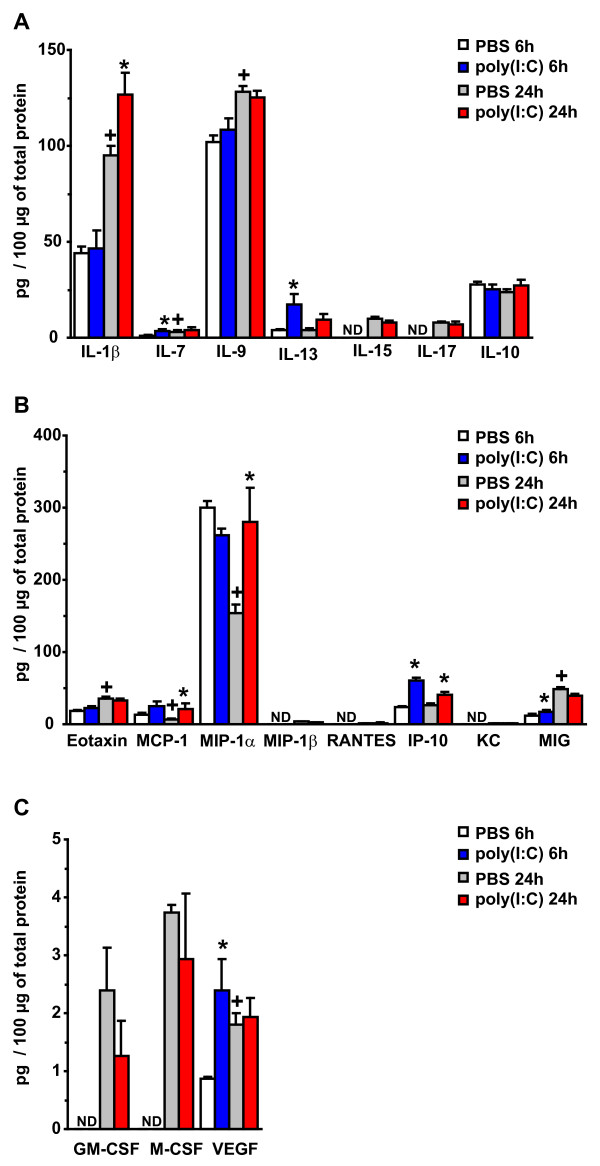
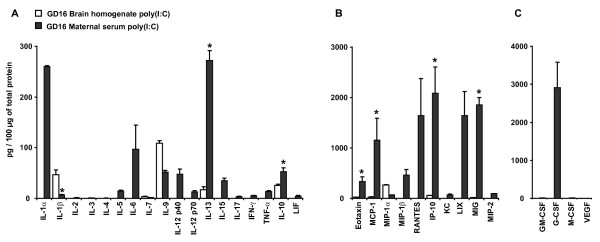
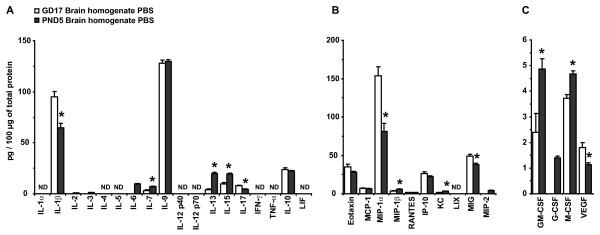
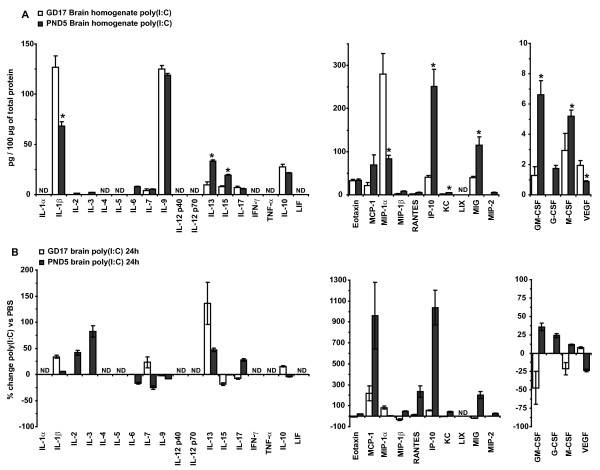
BACKGROUND: Maternal viral infection during pregnancy is associated with an increase in the incidence of psychiatric disorders with presumed neurodevelopmental origin, including autism spectrum disorders and schizophrenia. The enhanced risk for developing mental illness appears to be caused by deleterious effects of innate immune response-associated factors on the development of the central nervous system, which predispose the offspring to pathological behaviors in adolescence and adulthood. To identify the immune response-associated soluble factors that may affect central nervous system development, we examined the effect of innate immune response activation by polyriboinosinic-polyribocytidylic acid (poly(I:C)), a synthetic analogue of viral double-stranded RNA, on the expression levels of pro- and anti-inflammatory cytokines, chemokines and colony stimulating factors in fetal and postnatal mouse brain 6 h and 24 h after treatment. METHODS: C57BL/6J pregnant mice (gestational day 16) or newborn mice (postnatal day 4) received a single intraperitoneal injection of the synthetic analogue of viral double-stranded RNA poly(I:C) (20 mg/kg). Thirty-two immune response-associated soluble factors, including pro- and anti-inflammatory cytokines, chemokines and colony stimulating factors, were assayed 6 h and 24 h after poly(I:C) injection using multiplexed bead-based immunoassay (Milliplex Map) and processed in a Luminex 100 IS instrument. RESULTS: Maternal exposure to poly(I:C) at gestational day 16 induced a significant increase in cytokines interleukin (IL)-1β, IL-7 and IL-13; chemokines monocyte chemoattractant protein 1 (MCP-1), macrophage inflammatory protein (MIP)-1α, interferon gamma-induced protein (IP)-10 and monokine induced by IFN-gamma (MIG); and in the colony stimulating factor vascular endothelial growth factor (VEGF) in the fetal brain. IL-1β showed the highest concentration levels in fetal brains and was the only cytokine significantly up-regulated 24 h after maternal poly(I:C) injection, suggesting that IL-1β may have a deleterious impact on central nervous system development. In contrast, poly(I:C) treatment of postnatal day 4 pups induced a pronounced rise in chemokines and colony stimulating factors in their brains instead of the pro-inflammatory cytokine IL-1β. CONCLUSIONS: This study identified a significant increase in the concentration levels of the cytokines IL-1β and IL-13, the chemokine MCP-1 and the colony stimulating factor VEGF in the developing central nervous system during activation of an innate immune response, suggesting that these factors are mediators of the noxious effects of maternal immune activation on central nervous system development, with potential long-lasting effects on animal behavior.
Overview
The claims and statistics of this paper haven’t been checked yet.
Free: it reads the open-access text and checks the first 5 claims that cite a source we can check. Create a free account to check every claim.
Integrity signals
Registry
Cites
Statistics
Figures
Verification
Claims the paper makes
The claims and statistics of this paper haven’t been checked yet.
Free: it reads the open-access text and checks the first 5 claims that cite a source we can check. Create a free account to check every claim.
Claims other papers make about this one
Each is checked against this paper’s own text: does it say what the citing paper says it does?
In the citing paper
“A broad spectrum of cytokines are elevated in the fetal brain hours after poly(I:C) injection in pregnant mice142,143 and many of these cytokines remain chronically altered in the brains of offspring throughout postnatal development and into adulthood144.”
From Immune mediators in the brain and peripheral tissues in autism spectrum disorder (2015) · cites this paper as [143]
Self-check
Percentages, sums and reported differences re-computed from the paper’s own numbers.
The self-check needs the paper’s full text.
Citations
Cites
Akira, S., & Takeda, K. (2004) · Nature reviews. Immunology · doi:10.1038/nri1391 · Cited by 8,312 · cited 1×
“Binding of IL-1β to the IL-1R1 induces formation of a signaling complex with the IL-1 receptor accessory protein, which are both members of the Toll-like receptor family of proteins [73,74].”
Recognition of double-stranded RNA and activation of NF-κB by Toll-like receptor 3
Alexopoulou, L., Holt, A. C., Medzhitov, R., & Flavell, R. A. (2001) · Nature · doi:10.1038/35099560 · Cited by 6,129
Toll-like receptors and innate immunity
Medzhitov, R. (2001) · Nature Reviews Immunology · doi:10.1038/35100529 · Cited by 4,308
Rare Structural Variants Disrupt Multiple Genes in Neurodevelopmental Pathways in Schizophrenia
Walsh, T., McClellan, J. M., McCarthy, S. E., Addington, A. M., Pierce, S. B., Cooper, G. M., Nord, A. S., Kusenda, M., Malhotra, D., Bhandari, A., et al. (2008) · Science · doi:10.1126/science.1155174 · Cited by 1,800 · cited 1×
“However, epidemiological and genetic studies suggest that the interaction between genetic abnormalities and epigenetic factors perturb the formation of the central nervous system (CNS), resulting in the cognitive, sensorial and emotional dysfunctions observed in mental illness [1-5].”
Maternal Immune Activation Alters Fetal Brain Development through Interleukin-6
Smith, S. E. P., Li, J., Garbett, K., Mirnics, K., & Patterson, P. H. (2007) · The Journal of Neuroscience · doi:10.1523/jneurosci.2178-07.2007 · Cited by 1,605 · cited 4×
“Treatment of pregnant mice with poly(I:C) alters cytokine expression levels in the fetal brain and causes behavioral abnormalities in post-pubertal offspring [21,22,26-29].”
InfluentialVascular endothelial growth factor (VEGF) stimulates neurogenesis in vitro and in vivo
Jin, K., Zhu, Y., Sun, Y., Mao, X. O., Xie, L., & Greenberg, D. A. (2002) · Proceedings of the National Academy of Sciences · doi:10.1073/pnas.182296499 · Cited by 1,507 · cited 1×
“Finally, VEGF contributes to various mechanisms of CNS development including neuronal migration, differentiation and axonal growth and path-finding [90-94], indicating that deregulation of VEGF expression during critical periods of brain development may perturb neuronal migration and formation of neural circuits.”
Linked Regularities in the Development and Evolution of Mammalian Brains
Finlay, B. L., & Darlington, R. B. (1995) · Science · doi:10.1126/science.7777856 · Cited by 1,217 · cited 1×
“Postnatal day (PND) 4 was chosen because at this developmental stage formation of neural circuits is not completed [34-36] and, therefore, the CNS is vulnerable to epigenetic insults, including viral infections.”
Adult Schizophrenia Following Prenatal Exposure to an Influenza Epidemic
Mednick, S. A. (1988) · Archives of General Psychiatry · doi:10.1001/archpsyc.1988.01800260109013 · Cited by 1,193 · cited 1×
“One important epigenetic risk factor for autism and schizophrenia is the occurrence of maternal infection during pregnancy [2,6-12], suggesting that the increased risk for mental illness arises from the effect of the innate immune response (for example, cytokines) on CNS formation [2,13,14].”
Serologic Evidence of Prenatal Influenza in the Etiology of Schizophrenia
Brown, A. S., Begg, M. D., Gravenstein, S., Schaefer, C. A., Wyatt, R. J., Bresnahan, M., Babulas, V. P., & Susser, E. S. (2004) · Archives of General Psychiatry · doi:10.1001/archpsyc.61.8.774 · Cited by 1,053 · cited 2×
“We choose to mimic a viral infection instead of the most frequently used bacterial mimic agent lipopolysaccharide (LPS), because viral infections during pregnancy are common during the influenza season and appear to predispose the offspring to develop psychiatric illness [10,13].”
Maternal influenza infection causes marked behavioral and pharmacological changes in the offspring
Shi, L., Fatemi, S. H., Sidwell, R. W., & Patterson, P. H. (2003) · The Journal of Neuroscience · doi:10.1523/jneurosci.23-01-00297.2003 · Cited by 1,025 · cited 2×
“This dose of poly(I:C) causes long-lasting behavioral abnormalities in the progeny [33].”
Noncytolytic Control of Viral Infections by the Innate and Adaptive ImmuneResponse
Guidotti, L. G., & Chisari, F. V. (2001) · Annual Review of Immunology · doi:10.1146/annurev.immunol.19.1.65 · Cited by 996 · cited 1×
“The most pronounced increases in cytokine expression levels were observed in IL-6 (5935 %), IL-12(p40) (789 %), IL-12 (p70) (289 %), IL-13 (784 %), IL-15 (570 %), INF-γ (253 %), TNF-α (626 %) and IL-10 (1,210 %), many of which participate in the activation of the antiviral innate immune response [39].”
Interleukin-1 and neuronal injury
Allan, S. M., Tyrrell, P. J., & Rothwell, N. J. (2005) · Nature Reviews Immunology · doi:10.1038/nri1664 · Cited by 992 · cited 1×
“Expression of both IL-1β and its receptor IL-1R1 in the CNS is regulated in various pathological conditions, including brain injury, inflammation and neurodegeneration [62], suggesting that IL-1β contributes to pathological mechanisms observed in these disorders.”
Viviani, B., Bartesaghi, S., Gardoni, F., Vezzani, A., Behrens, M. M., Bartfai, T., Binaglia, M., Corsini, E., Di Luca, M., Galli, C. L., et al. (2003) · The Journal of Neuroscience · doi:10.1523/jneurosci.23-25-08692.2003 · Cited by 893
Deverman, B. E., & Patterson, P. H. (2009) · Neuron · doi:10.1016/j.neuron.2009.09.002 · Cited by 865 · cited 2×
“Immune response-associated secreted factors (IRSF) released during the activation of an innate immune response (cytokines, chemokines and colony stimulating factors (CSF)) modulate various aspects of neural development, including neuronal survival, differentiation and growth [15-20].”
The Neurodevelopmental Hypothesis of Schizophrenia, Revisited
Fatemi, S. H., & Folsom, T. D. (2009) · Schizophrenia Bulletin · doi:10.1093/schbul/sbn187 · Cited by 860
Extrapolating brain development from experimental species to humans
Clancy, B., Finlay, B. L., Darlington, R. B., & Anand, K. J. S. (2007) · NeuroToxicology · doi:10.1016/j.neuro.2007.01.014 · Cited by 812 · cited 1×
“Postnatal day (PND) 4 was chosen because at this developmental stage formation of neural circuits is not completed [34-36] and, therefore, the CNS is vulnerable to epigenetic insults, including viral infections.”
Meyer, U., Nyffeler, M., Engler, A., Urwyler, A., Schedlowski, M., Knuesel, I., Yee, B. K., & Feldon, J. (2006) · The Journal of Neuroscience · doi:10.1523/jneurosci.0099-06.2006 · Cited by 774 · cited 22×
“C S F V E G F E o ta xi n M C P -1 M IP -1 α M IP -1 β R A N T E S IP -1 0 K C L IX M IG M IP -2 L IF IL -4 * * * * * * * * GD17 Brain homogenate poly(I:C) PND5 Brain homogenate poly(I:C) 0 50 100 150 * * % c h an g e p o ly (I :C ) vs P B S B IL -1 α IL -1 β IL -2 IL -3 IL -5 IL -6 IL -7 IL -9 IL -1 2 p 40 IL -1 2 p…”
InfluentialImmune involvement in schizophrenia and autism: Etiology, pathology and animal models
Patterson, P. H. (2009) · Behavioural Brain Research · doi:10.1016/j.bbr.2008.12.016 · Cited by 766 · cited 3×
“These studies have established an experimental mouse model of mental disorders in which psychopathological conditions are triggered by maternal innate immune activation during pregnancy [2,30-32].”
Interleukin-1, Interleukin-1 Receptors and Interleukin-1 Receptor Antagonist
Dinarello, C. A. (1998) · International Reviews of Immunology · doi:10.3109/08830189809043005 · Cited by 761 · cited 1×
“Binding of IL-1β to the IL-1R1 induces formation of a signaling complex with the IL-1 receptor accessory protein, which are both members of the Toll-like receptor family of proteins [73,74].”
Cytokines and cognition–the case for a head-to-toe inflammatory paradigm.
Wilson, C. J., Finch, C. E., & Cohen, H. J. (2002) · Journal of the American Geriatrics Society · doi:10.1046/j.1532-5415.2002.50619.x · Cited by 637 · cited 1×
“However, physiological levels of IL-1β expression in the CNS of young animals appears to be necessary for learning and memory consolidation, while the increase in IL-1β observed in normal aging appears to impair these neurological functions [51,63].”
Boksa, P. (2010) · Brain, Behavior, and Immunity · doi:10.1016/j.bbi.2010.03.005 · Cited by 603 · cited 2×
“These studies have established an experimental mouse model of mental disorders in which psychopathological conditions are triggered by maternal innate immune activation during pregnancy [2,30-32].”
Li, Y., Liu, L., Barger, S. W., & Griffin, W. S. T. (2003) · The Journal of Neuroscience · doi:10.1523/jneurosci.23-05-01605.2003 · Cited by 563 · cited 1×
“In the CNS, activation of IL-1R1 by IL-1β activates signaling pathways that modulate intracellular calcium [16], expression of neurotransmitter receptors [16], activation of cAMP response element-binding (CREB) [75] and brain-derived neurotrophic factor (BDNF) expression [76].”
Prenatal Infection as a Risk Factor for Schizophrenia
Brown, A. S. (2006) · Schizophrenia Bulletin · doi:10.1093/schbul/sbj052 · Cited by 539 · cited 2×
“We choose to mimic a viral infection instead of the most frequently used bacterial mimic agent lipopolysaccharide (LPS), because viral infections during pregnancy are common during the influenza season and appear to predispose the offspring to develop psychiatric illness [10,13].”
Cai, Z., Pan, Z.-L., Pang, Y., Evans, O. B., & Rhodes, P. G. (2000) · Pediatric Research · doi:10.1203/00006450-200001000-00013 · Cited by 507 · cited 5×
“Immune response-associated secreted factors measurements and data analysis Sera and tissue homogenates were assayed for cytokines, chemokines and CSF using the multiplexed bead-based immunoassay Milliplex Map, MPXMCYTO70KPMX32 (Millipore, Billerica, MA, USA), which simultaneously detects mouse cytokines interleukin (I…”
InfluentialLee, S. W., Tsou, A. P., Chan, H., Thomas, J., Petrie, K., Eugui, E. M., & Allison, A. C. (1988) · Proceedings of the National Academy of Sciences · doi:10.1073/pnas.85.4.1204 · Cited by 506 · cited 1×
“Glucocorticoids suppress IL-1β transcription and mRNA stability [78], and the increase in pro-inflammatory cytokine mRNA levels in the brain after immune activation is enhanced in adrenalectomized animals [50,79].”
“Inflammatory” Cytokines: Neuromodulators in Normal Brain?
Vitkovic, L., Bockaert, J., & Jacque, C. (2000) · Journal of Neurochemistry · doi:10.1046/j.1471-4159.2000.740457.x · Cited by 506 · cited 1×
“Immune response-associated secreted factors (IRSF) released during the activation of an innate immune response (cytokines, chemokines and colony stimulating factors (CSF)) modulate various aspects of neural development, including neuronal survival, differentiation and growth [15-20].”
Layé, S., Parnet, P., Goujon, E., & Dantzer, R. (1994) · Molecular Brain Research · doi:10.1016/0169-328x(94)90197-x · Cited by 500 · cited 1×
“In adult rodents, both IL-1β and its receptor IL-1R1 are expressed in various brain regions, including the cerebral cortex, hippocampus and hypothalamus [46-51], and IL-1β expression levels are affected by innate immune activation [52-58].”
Toll-like Receptors and Innate Immunity
(2001) · Advances in Immunology · doi:10.1016/s0065-2776(01)78001-7 · Cited by 496
Ozawa, K., Hashimoto, K., Kishimoto, T., Shimizu, E., Ishikura, H., & Iyo, M. (2006) · Biological Psychiatry · doi:10.1016/j.biopsych.2005.07.031 · Cited by 467 · cited 1×
“In addition, an increase in anxiety and a decrease in pre-pulse inhibition have been observed in post-pubertal animals exposed to poly(I:C) during pregnancy, indicating that innate immune activation by poly(I: C) during the final period of the pregnancy affects CNS development and causes long-lasting impairments of an…”
Exposure to Acute Stress Induces Brain Interleukin-1β Protein in the Rat
Nguyen, K. T., Deak, T., Owens, S. M., Kohno, T., Fleshner, M., Watkins, L. R., & Maier, S. F. (1998) · The Journal of Neuroscience · doi:10.1523/jneurosci.18-06-02239.1998 · Cited by 460 · cited 3×
“Glucocorticoids suppress IL-1β transcription and mRNA stability [78], and the increase in pro-inflammatory cytokine mRNA levels in the brain after immune activation is enhanced in adrenalectomized animals [50,79].”
Visualization and characterization of interleukin 1 receptors in brain.
Farrar, W. L., Kilian, P. L., Ruff, M. R., Hill, J. M., & Pert, C. B. (1987) · The Journal of Immunology · doi:10.4049/jimmunol.139.2.459 · Cited by 458
Meyer, U., Nyffeler, M., Yee, B. K., Knuesel, I., & Feldon, J. (2008) · Brain, Behavior, and Immunity · doi:10.1016/j.bbi.2007.09.012 · Cited by 457 · cited 1×
“In addition, an increase in anxiety and a decrease in pre-pulse inhibition have been observed in post-pubertal animals exposed to poly(I:C) during pregnancy, indicating that innate immune activation by poly(I: C) during the final period of the pregnancy affects CNS development and causes long-lasting impairments of an…”
Infection, fever, and exogenous and endogenous pyrogens: some concepts have changed
Dinarello, C. A. (2004) · Journal of Endotoxin Research · doi:10.1179/096805104225006129 · Cited by 435 · cited 1×
“IL-1β mediates a variety of host acute responses to infection, including fever, loss of appetite and somnolence [59-61].”
The neuropoietic cytokine family in development, plasticity, disease and injury
Bauer, S., Kerr, B. J., & Patterson, P. H. (2007) · Nature Reviews Neuroscience · doi:10.1038/nrn2054 · Cited by 419 · cited 1×
“Immune response-associated secreted factors (IRSF) released during the activation of an innate immune response (cytokines, chemokines and colony stimulating factors (CSF)) modulate various aspects of neural development, including neuronal survival, differentiation and growth [15-20].”
Plata-Salamán, C. R., Oomura, Y., & Kai, Y. (1988) · Brain Research · doi:10.1016/0006-8993(88)91106-7 · Cited by 413 · cited 1×
“Indeed, administration of IL-1β to young adult rodents impairs learning and memory acquisition [64-66], fear conditioning [67], exploratory behavior [68,69], mating [70], sleep [71] and appetite [72], indicating that IL-1β has a number of cellular targets that regulate CNS function.”
Urakubo, A., Jarskog, L. F., Lieberman, J. A., & Gilmore, J. H. (2001) · Schizophrenia Research · doi:10.1016/s0920-9964(00)00032-3 · Cited by 405 · cited 1×
“Treatment of pregnant mice with poly(I:C) alters cytokine expression levels in the fetal brain and causes behavioral abnormalities in post-pubertal offspring [21,22,26-29].”
Meyer, U., Feldon, J., & Fatemi, S. H. (2009) · Neuroscience & Biobehavioral Reviews · doi:10.1016/j.neubiorev.2009.05.001 · Cited by 373 · cited 2×
“These studies have established an experimental mouse model of mental disorders in which psychopathological conditions are triggered by maternal innate immune activation during pregnancy [2,30-32].”
Kulka, M., Alexopoulou, L., Flavell, R. A., & Metcalfe, D. D. (2004) · Journal of Allergy and Clinical Immunology · doi:10.1016/j.jaci.2004.03.049 · Cited by 351
Recognition of viruses by innate immunity
Takeuchi, O., & Akira, S. (2007) · Immunological Reviews · doi:10.1111/j.1600-065x.2007.00562.x · Cited by 342 · cited 2×
“Poly(I:C) is recognized primarily by Tolllike receptor 3 (TLR3), a member of the family of innate immune-recognition receptors that recognize molecular patterns associated with viral pathogens and induce an antiviral innate immune response [23,24,38].”
Maternal Cytokine Levels during Pregnancy and Adult Psychosis
Buka, S. L., Tsuang, M. T., Torrey, E. F., Klebanoff, M. A., Wagner, R. L., & Yolken, R. H. (2001) · Brain, Behavior, and Immunity · doi:10.1006/brbi.2001.0644 · Cited by 321 · cited 1×
“One important epigenetic risk factor for autism and schizophrenia is the occurrence of maternal infection during pregnancy [2,6-12], suggesting that the increased risk for mental illness arises from the effect of the innate immune response (for example, cytokines) on CNS formation [2,13,14].”
Web-based method for translating neurodevelopment from laboratory species to humans
Clancy, B., Kersh, B., Hyde, J., Darlington, R. B., Anand, K. J. S., & Finlay, B. L. (2007) · Neuroinformatics · doi:10.1385/ni:5:1:79 · Cited by 315 · cited 2×
“Postnatal day (PND) 4 was chosen because at this developmental stage formation of neural circuits is not completed [34-36] and, therefore, the CNS is vulnerable to epigenetic insults, including viral infections.”
The immune system and memory consolidation: a role for the cytokine IL-1β
Rachal Pugh, C., Fleshner, M., Watkins, L. R., Maier, S. F., & Rudy, J. W. (2001) · Neuroscience & Biobehavioral Reviews · doi:10.1016/s0149-7634(00)00048-8 · Cited by 314 · cited 1×
“Indeed, administration of IL-1β to young adult rodents impairs learning and memory acquisition [64-66], fear conditioning [67], exploratory behavior [68,69], mating [70], sleep [71] and appetite [72], indicating that IL-1β has a number of cellular targets that regulate CNS function.”
Interleukin-1 Receptors in Mouse Brain:Characterization and Neuronal Localization
TAKAO, T., TRACEY, D. E., MITCHELL, W. M., & DE, E. B. S. (1990) · Endocrinology · doi:10.1210/endo-127-6-3070 · Cited by 290 · cited 1×
“In adult rodents, both IL-1β and its receptor IL-1R1 are expressed in various brain regions, including the cerebral cortex, hippocampus and hypothalamus [46-51], and IL-1β expression levels are affected by innate immune activation [52-58].”
Verdijk, R. M., Mutis, T., Esendam, B., Kamp, J., Melief, C. J. M., Brand, A., & Goulmy, E. (1999) · The Journal of Immunology · doi:10.4049/jimmunol.163.1.57 · Cited by 273 · cited 1×
“injection of the synthetic analogue of viral dsRNA poly(I:C) (20 mg/kg) in 100 μL of PBS [37] on GD16.”
Meyer, U., Feldon, J., Schedlowski, M., & Yee, B. K. (2006) · Brain, Behavior, and Immunity · doi:10.1016/j.bbi.2005.11.003 · Cited by 264 · cited 1×
“The effect of maternal poly(I:C) injection on the expression levels of pro- and anti-inflammatory cytokine IL-6, IL-10 and TNF-α in the fetal brain has been previously examined [85].”
Barrientos, R. M., Higgins, E. A., Sprunger, D. B., Watkins, L. R., Rudy, J. W., & Maier, S. F. (2002) · Behavioural Brain Research · doi:10.1016/s0166-4328(02)00043-8 · Cited by 257
Golan, H. M., Lev, V., Hallak, M., Sorokin, Y., & Huleihel, M. (2005) · Neuropharmacology · doi:10.1016/j.neuropharm.2004.12.023 · Cited by 253 · cited 1×
“In addition, an increase in anxiety and a decrease in pre-pulse inhibition have been observed in post-pubertal animals exposed to poly(I:C) during pregnancy, indicating that innate immune activation by poly(I: C) during the final period of the pregnancy affects CNS development and causes long-lasting impairments of an…”
Meyer, U., Murray, P. J., Urwyler, A., Yee, B. K., Schedlowski, M., & Feldon, J. (2008) · Molecular Psychiatry · doi:10.1038/sj.mp.4002042 · Cited by 252 · cited 2×
“Treatment of pregnant mice with poly(I:C) alters cytokine expression levels in the fetal brain and causes behavioral abnormalities in post-pubertal offspring [21,22,26-29].”
Gilmore, J. H., Fredrik Jarskog, L., Vadlamudi, S., & Lauder, J. M. (2004) · Neuropsychopharmacology · doi:10.1038/sj.npp.1300446 · Cited by 249 · cited 1×
“Immune response-associated secreted factors (IRSF) released during the activation of an innate immune response (cytokines, chemokines and colony stimulating factors (CSF)) modulate various aspects of neural development, including neuronal survival, differentiation and growth [15-20].”
Meyer, U., & Feldon, J. (2012) · Neuropharmacology · doi:10.1016/j.neuropharm.2011.01.009 · Cited by 248 · cited 2×
“These studies have established an experimental mouse model of mental disorders in which psychopathological conditions are triggered by maternal innate immune activation during pregnancy [2,30-32].”
Quan, N., Sundar, S. K., & Weiss, J. M. (1994) · Journal of Neuroimmunology · doi:10.1016/0165-5728(94)90188-0 · Cited by 230 · cited 1×
“In adult rodents, both IL-1β and its receptor IL-1R1 are expressed in various brain regions, including the cerebral cortex, hippocampus and hypothalamus [46-51], and IL-1β expression levels are affected by innate immune activation [52-58].”
Mast Cells Migrate from Blood to Brain
Silverman, A.-J., Sutherland, A. K., Wilhelm, M., & Silver, R. (2000) · The Journal of Neuroscience · doi:10.1523/jneurosci.20-01-00401.2000 · Cited by 228 · cited 1×
“Mast cells are of hematopoietic origin but they are able to enter the brain under normal and pathological conditions [81].”
Brain Interleukin-1 Is Involved in Spatial Memory and Passive Avoidance Conditioning
Yirmiya, R. (2002) · Neurobiology of Learning and Memory · doi:10.1006/nlme.2002.4072 · Cited by 221 · cited 1×
“Indeed, administration of IL-1β to young adult rodents impairs learning and memory acquisition [64-66], fear conditioning [67], exploratory behavior [68,69], mating [70], sleep [71] and appetite [72], indicating that IL-1β has a number of cellular targets that regulate CNS function.”
Brain interleukin 1 gene expression induced by peripheral lipopolysaccharide administration
BAN, E. (1992) · Cytokine · doi:10.1016/1043-4666(92)90036-q · Cited by 220 · cited 1×
“In adult rodents, both IL-1β and its receptor IL-1R1 are expressed in various brain regions, including the cerebral cortex, hippocampus and hypothalamus [46-51], and IL-1β expression levels are affected by innate immune activation [52-58].”
Girard, S., Tremblay, L., Lepage, M., & Sébire, G. (2010) · The Journal of Immunology · doi:10.4049/jimmunol.0903349 · Cited by 220 · cited 5×
“Immune response-associated secreted factors measurements and data analysis Sera and tissue homogenates were assayed for cytokines, chemokines and CSF using the multiplexed bead-based immunoassay Milliplex Map, MPXMCYTO70KPMX32 (Millipore, Billerica, MA, USA), which simultaneously detects mouse cytokines interleukin (I…”
InfluentialWatson, C. G. (1984) · Archives of General Psychiatry · doi:10.1001/archpsyc.1984.01790120089011 · Cited by 217 · cited 1×
“One important epigenetic risk factor for autism and schizophrenia is the occurrence of maternal infection during pregnancy [2,6-12], suggesting that the increased risk for mental illness arises from the effect of the innate immune response (for example, cytokines) on CNS formation [2,13,14].”
Exposure to infection and brain development: cytokines in the pathogenesis of schizophrenia
GILMORE, J., & FREDRIKJARSKOG, L. (1997) · Schizophrenia Research · doi:10.1016/s0920-9964(96)00123-5 · Cited by 209 · cited 1×
“One important epigenetic risk factor for autism and schizophrenia is the occurrence of maternal infection during pregnancy [2,6-12], suggesting that the increased risk for mental illness arises from the effect of the innate immune response (for example, cytokines) on CNS formation [2,13,14].”
VEGF is a chemoattractant for FGF-2–stimulated neural progenitors
Zhang, H., Vutskits, L., Pepper, M. S., & Kiss, J. Z. (2003) · The Journal of Cell Biology · doi:10.1083/jcb.200308040 · Cited by 200 · cited 1×
“Finally, VEGF contributes to various mechanisms of CNS development including neuronal migration, differentiation and axonal growth and path-finding [90-94], indicating that deregulation of VEGF expression during critical periods of brain development may perturb neuronal migration and formation of neural circuits.”
Sleep: A Physiologic Role for IL‐1β and TNF‐αa
KRUEGER, J. M., FANG, J., TAISHI, P., CHEN, Z., KUSHIKATA, T., & GARDI, J. (1998) · Annals of the New York Academy of Sciences · doi:10.1111/j.1749-6632.1998.tb08323.x · Cited by 198
Walsh, C. A., Morrow, E. M., & Rubenstein, J. L. R. (2008) · Cell · doi:10.1016/j.cell.2008.10.015 · Cited by 196 · cited 1×
“However, epidemiological and genetic studies suggest that the interaction between genetic abnormalities and epigenetic factors perturb the formation of the central nervous system (CNS), resulting in the cognitive, sensorial and emotional dysfunctions observed in mental illness [1-5].”
van Dam, A.-M., Bauer, J., Tilders, F. J. H., & Berkenbosch, F. (1995) · Neuroscience · doi:10.1016/0306-4522(94)00549-k · Cited by 190 · cited 1×
“In adult rodents, both IL-1β and its receptor IL-1R1 are expressed in various brain regions, including the cerebral cortex, hippocampus and hypothalamus [46-51], and IL-1β expression levels are affected by innate immune activation [52-58].”
Schizophrenic births and viral diseases in two states
Fuller Torrey, E., Rawlings, R., & Waldman, I. N. (1988) · Schizophrenia Research · doi:10.1016/0920-9964(88)90043-6 · Cited by 184 · cited 1×
“One important epigenetic risk factor for autism and schizophrenia is the occurrence of maternal infection during pregnancy [2,6-12], suggesting that the increased risk for mental illness arises from the effect of the innate immune response (for example, cytokines) on CNS formation [2,13,14].”
Neuronal Chemokines: Versatile Messengers In Central Nervous System Cell Interaction
de Haas, A. H., van Weering, H. R. J., de Jong, E. K., Boddeke, H. W. G. M., & Biber, K. P. H. (2007) · Molecular Neurobiology · doi:10.1007/s12035-007-0036-8 · Cited by 182 · cited 1×
“are constitutively expressed in various brain regions [87] and modulate neuronal physiology [88,89], suggesting that its up-regulation in the fetal brain can affect the formation of neuronal circuits.”
The Neurobiology of Infantile Autism
Ciaranello, A. L., & Ciaranello, R. D. (1995) · Annual Review of Neuroscience · doi:10.1146/annurev.ne.18.030195.000533 · Cited by 180
Maier, S. F., & Watkins, L. R. (1995) · Brain Research · doi:10.1016/0006-8993(95)00930-o · Cited by 178 · cited 1×
“Indeed, administration of IL-1β to young adult rodents impairs learning and memory acquisition [64-66], fear conditioning [67], exploratory behavior [68,69], mating [70], sleep [71] and appetite [72], indicating that IL-1β has a number of cellular targets that regulate CNS function.”
Gilmore, J. H., Jarskog, L. F., & Vadlamudi, S. (2005) · Journal of Neuroimmunology · doi:10.1016/j.jneuroim.2004.10.008 · Cited by 177 · cited 1×
“Treatment of pregnant mice with poly(I:C) alters cytokine expression levels in the fetal brain and causes behavioral abnormalities in post-pubertal offspring [21,22,26-29].”
Chemokines and neuromodulation
Mélik-Parsadaniantz, S., & Rostène, W. (2008) · Journal of Neuroimmunology · doi:10.1016/j.jneuroim.2008.04.022 · Cited by 162 · cited 1×
“are constitutively expressed in various brain regions [87] and modulate neuronal physiology [88,89], suggesting that its up-regulation in the fetal brain can affect the formation of neuronal circuits.”
Behavioural effects of peripherally injected interleukin-1: role of prostaglandins
Crestani, F., Séguy, F., & Dantzer, R. (1991) · Brain Research · doi:10.1016/0006-8993(91)91587-q · Cited by 155 · cited 1×
“Indeed, administration of IL-1β to young adult rodents impairs learning and memory acquisition [64-66], fear conditioning [67], exploratory behavior [68,69], mating [70], sleep [71] and appetite [72], indicating that IL-1β has a number of cellular targets that regulate CNS function.”
Miller, M. T., Strömland, K., Ventura, L., Johansson, M., Bandim, J. M., & Gillberg, C. (2005) · International Journal of Developmental Neuroscience · doi:10.1016/j.ijdevneu.2004.06.007 · Cited by 153 · cited 1×
“However, epidemiological and genetic studies suggest that the interaction between genetic abnormalities and epigenetic factors perturb the formation of the central nervous system (CNS), resulting in the cognitive, sensorial and emotional dysfunctions observed in mental illness [1-5].”
Cytokine effects on cortical neuron MAP-2 immunoreactivity: implications for schizophrenia
Marx, C. E., Jarskog, L. F., Lauder, J. M., Lieberman, J. A., & Gilmore, J. H. (2001) · Biological Psychiatry · doi:10.1016/s0006-3223(01)01209-4 · Cited by 147 · cited 1×
“Immune response-associated secreted factors (IRSF) released during the activation of an innate immune response (cytokines, chemokines and colony stimulating factors (CSF)) modulate various aspects of neural development, including neuronal survival, differentiation and growth [15-20].”
Diurnal variations of interleukin-1β mRNA and β-actin mRNA in rat brain
Taishi, P., Bredow, S., Guha‐Thakurta, N., Obál, F., & Krueger, J. M. (1997) · Journal of Neuroimmunology · doi:10.1016/s0165-5728(97)00002-7 · Cited by 147
VEGF Mediates Commissural Axon Chemoattraction through Its Receptor Flk1
Ruiz de Almodovar, C., Fabre, P. J., Knevels, E., Coulon, C., Segura, I., Haddick, P. C. G., Aerts, L., Delattin, N., Strasser, G., Oh, W.-J., et al. (2011) · Neuron · doi:10.1016/j.neuron.2011.04.014 · Cited by 139 · cited 1×
“Finally, VEGF contributes to various mechanisms of CNS development including neuronal migration, differentiation and axonal growth and path-finding [90-94], indicating that deregulation of VEGF expression during critical periods of brain development may perturb neuronal migration and formation of neural circuits.”
Conti, P., Pang, X., Boucher, W., Letourneau, R., Reale, M., Barbacane, R. C., Thibault, J., & Theoharides, T. C. (1997) · Blood · doi:10.1182/blood.v89.11.4120 · Cited by 138 · cited 1×
“In addition, the increased levels of MCP-1 detected in both fetal and postnatal brains may enhance the recruitment of mast cells [82].”
Banisadr, G., Gosselin, R., Mechighel, P., Rostène, W., Kitabgi, P., & Mélik Parsadaniantz, S. (2005) · Journal of Comparative Neurology · doi:10.1002/cne.20729 · Cited by 135 · cited 1×
“are constitutively expressed in various brain regions [87] and modulate neuronal physiology [88,89], suggesting that its up-regulation in the fetal brain can affect the formation of neuronal circuits.”
Zhou, Y., Tang, H., Liu, J., Dong, J., & Xiong, H. (2011) · Journal of Neurochemistry · doi:10.1111/j.1471-4159.2010.07121.x · Cited by 130 · cited 1×
“In addition, MCP-1 (also known as chemokine CC motif ligand 2) enhances neuronal excitability and synaptic transmission in hippocampal neurons [86].”
Goujon, E., Parnet, P., Layé, S., Combe, C., & Dantzer, R. (1996) · Molecular Brain Research · doi:10.1016/0169-328x(95)00242-k · Cited by 128 · cited 1×
“Glucocorticoids suppress IL-1β transcription and mRNA stability [78], and the increase in pro-inflammatory cytokine mRNA levels in the brain after immune activation is enhanced in adrenalectomized animals [50,79].”
Mast cell activation and autism
Theoharides, T. C., Angelidou, A., Alysandratos, K.-D., Zhang, B., Asadi, S., Francis, K., Toniato, E., & Kalogeromitros, D. (2012) · Biochimica et Biophysica Acta (BBA) - Molecular Basis of Disease · doi:10.1016/j.bbadis.2010.12.017 · Cited by 125 · cited 1×
“Whether higher expression levels of IL-13 correlates with a massive colonization of activated mast cells in the fetal brain remains to be determined; however, autistic patients often present ‘allergy-like’ symptoms in the absence of elevated serum IgE, suggesting that non-allergic mast cell activation commonly occurs…”
Cortese, G. P., Barrientos, R. M., Maier, S. F., & Patterson, S. L. (2011) · The Journal of Neuroscience · doi:10.1523/jneurosci.5818-10.2011 · Cited by 119 · cited 1×
“In the CNS, activation of IL-1R1 by IL-1β activates signaling pathways that modulate intracellular calcium [16], expression of neurotransmitter receptors [16], activation of cAMP response element-binding (CREB) [75] and brain-derived neurotrophic factor (BDNF) expression [76].”
Wittko, I. M., Schanzer, A., Kuzmichev, A., Schneider, F. T., Shibuya, M., Raab, S., & Plate, K. H. (2009) · Journal of Neuroscience · doi:10.1523/jneurosci.5527-08.2009 · Cited by 115 · cited 1×
“Finally, VEGF contributes to various mechanisms of CNS development including neuronal migration, differentiation and axonal growth and path-finding [90-94], indicating that deregulation of VEGF expression during critical periods of brain development may perturb neuronal migration and formation of neural circuits.”
Gilmore, J. H., Jarskog, L. F., & Vadlamudi, S. (2003) · Journal of Neuroimmunology · doi:10.1016/s0165-5728(03)00095-x · Cited by 112 · cited 1×
“Treatment of pregnant mice with poly(I:C) alters cytokine expression levels in the fetal brain and causes behavioral abnormalities in post-pubertal offspring [21,22,26-29].”
The Relationship of Schizophrenic Births to 16 Infectious Diseases
O'Callaghan, E., Sham, P. C., Takei, N., Murray, G., Glover, G., Hare, E. H., & Murray, R. M. (1994) · British Journal of Psychiatry · doi:10.1192/bjp.165.3.353 · Cited by 110 · cited 1×
“One important epigenetic risk factor for autism and schizophrenia is the occurrence of maternal infection during pregnancy [2,6-12], suggesting that the increased risk for mental illness arises from the effect of the innate immune response (for example, cytokines) on CNS formation [2,13,14].”
Spadaro, F., & Dunn, A. J. (1990) · Brain Behavior and Immunity · doi:10.1016/0889-1591(90)90034-n · Cited by 109 · cited 1×
“Indeed, administration of IL-1β to young adult rodents impairs learning and memory acquisition [64-66], fear conditioning [67], exploratory behavior [68,69], mating [70], sleep [71] and appetite [72], indicating that IL-1β has a number of cellular targets that regulate CNS function.”
Alam, M. N., McGinty, D., Bashir, T., Kumar, S., Imeri, L., Opp, M. R., & Szymusiak, R. (2004) · European Journal of Neuroscience · doi:10.1111/j.1460-9568.2004.03469.x · Cited by 108 · cited 1×
“IL-1β mediates a variety of host acute responses to infection, including fever, loss of appetite and somnolence [59-61].”
Manfridi, A., Brambilla, D., Bianchi, S., Mariotti, M., Opp, M. R., & Imeri, L. (2003) · European Journal of Neuroscience · doi:10.1046/j.1460-9568.2003.02836.x · Cited by 101 · cited 1×
“IL-1β mediates a variety of host acute responses to infection, including fever, loss of appetite and somnolence [59-61].”
Interleukin-1 Inhibits Sexual Behavior in Female but Not in Male Rats
Yirmiya, R., Avitsur, R., Donchin, O., & Cohen, E. (1995) · Brain Behavior and Immunity · doi:10.1006/brbi.1995.1021 · Cited by 98 · cited 1×
“Indeed, administration of IL-1β to young adult rodents impairs learning and memory acquisition [64-66], fear conditioning [67], exploratory behavior [68,69], mating [70], sleep [71] and appetite [72], indicating that IL-1β has a number of cellular targets that regulate CNS function.”
Signaling pathways activated by microorganisms
Takeuchi, O., & Akira, S. (2007) · Current Opinion in Cell Biology · doi:10.1016/j.ceb.2007.02.006 · Cited by 94 · cited 1×
“The synthetic analogue of viral double-stranded RNA (dsRNA) polyriboinosinic-polyribocytidylic acid (poly(I:C)) mimics the host acute innate immune response to viral infection [23-25].”
Hagan, P., Poole, S., & Bristow, A. F. (1993) · Journal of Molecular Endocrinology · doi:10.1677/jme.0.0110031 · Cited by 85
Ruiz de Almodovar, C., Coulon, C., Salin, P. A., Knevels, E., Chounlamountri, N., Poesen, K., Hermans, K., Lambrechts, D., Van Geyte, K., Dhondt, J., et al. (2010) · The Journal of Neuroscience · doi:10.1523/jneurosci.0477-10.2010 · Cited by 84 · cited 1×
“Finally, VEGF contributes to various mechanisms of CNS development including neuronal migration, differentiation and axonal growth and path-finding [90-94], indicating that deregulation of VEGF expression during critical periods of brain development may perturb neuronal migration and formation of neural circuits.”
Central nervous system neurons acquire mast cell products via transgranulation
Wilhelm, M., Silver, R., & Silverman, A. J. (2005) · European Journal of Neuroscience · doi:10.1111/j.1460-9568.2005.04429.x · Cited by 83 · cited 1×
“Mast cells form close interactions with neurons and transfer intracellular content by transgranulation, which may modulate neuronal functions [83] and affect CNS development.”
Improvement of memory for context by inhibition of caspase‐1 in aged rats
Gemma, C., Fister, M., Hudson, C., & Bickford, P. C. (2005) · European Journal of Neuroscience · doi:10.1111/j.1460-9568.2005.04334.x · Cited by 74 · cited 2×
“However, physiological levels of IL-1β expression in the CNS of young animals appears to be necessary for learning and memory consolidation, while the increase in IL-1β observed in normal aging appears to impair these neurological functions [51,63].”
Peripheral endotoxin induces hypothalamic immunoreactive interleukin‐1β in the rat
Hillhouse, E. W., & Mosley, K. (1993) · British Journal of Pharmacology · doi:10.1111/j.1476-5381.1993.tb13567.x · Cited by 61 · cited 1×
“In adult rodents, both IL-1β and its receptor IL-1R1 are expressed in various brain regions, including the cerebral cortex, hippocampus and hypothalamus [46-51], and IL-1β expression levels are affected by innate immune activation [52-58].”
Detection of lnterleukin-1 Bioactivity in Various Brain Regions of Normal Healthy Rats
Quan, N., Zhang, Z., Emery, M., Bonsall, R., & Weiss, J. M. (1996) · Neuroimmunomodulation · doi:10.1159/000097226 · Cited by 44 · cited 1×
“In adult rodents, both IL-1β and its receptor IL-1R1 are expressed in various brain regions, including the cerebral cortex, hippocampus and hypothalamus [46-51], and IL-1β expression levels are affected by innate immune activation [52-58].”
Widespread Activation and Consequences of Interleukin-1 in the Brain
WEISS, J. M., QUAN, N., & SUNDARR, S. K. (1994) · Annals of the New York Academy of Sciences · doi:10.1111/j.1749-6632.1994.tb23117.x · Cited by 34
Effect of experimental genital mycoplasmosis on gene expression in the fetal brain
Burton, A., Kizhner, O., Brown, M. B., & Peltier, M. R. (2012) · Journal of Reproductive Immunology · doi:10.1016/j.jri.2011.11.005 · Cited by 12 · cited 1×
“A recent study examined the effect of experimental genital mycoplasmosis in pregnant rodents on cytokines expression levels by injecting Mycoplasma pulmonis into GD14 pregnant rats and analyzing cytokine expression levels on GD18 [45].”
Meyer, T. A., Wang, J. J., Tiao, G. M., Ogle, C. K., Fischer, J. E., & Hasselgren, P. (1997) · Clinical Science · doi:10.1042/cs0920519 · Cited by 9 · cited 1×
“In adult rodents, both IL-1β and its receptor IL-1R1 are expressed in various brain regions, including the cerebral cortex, hippocampus and hypothalamus [46-51], and IL-1β expression levels are affected by innate immune activation [52-58].”
Cited by
Immune mediators in the brain and peripheral tissues in autism spectrum disorder
Estes, M. L., & McAllister, A. K. (2015) · Nature Reviews Neuroscience · doi:10.1038/nrn3978 · Cited by 514
Garay, P. A., Hsiao, E. Y., Patterson, P. H., & McAllister, A. K. (2013) · Brain, Behavior, and Immunity · doi:10.1016/j.bbi.2012.07.008 · Cited by 366
“, 2008), with only IL-1b remaining elevated in the fetal brain 24 h following poly(I:C) injection (Arrode-Bruses and Bruses, 2012).”
Evidence for a Dysregulated Immune System in the Etiology of Psychiatric Disorders
Gibney, S. M., & Drexhage, H. A. (2013) · Journal of Neuroimmune Pharmacology · doi:10.1007/s11481-013-9462-8 · Cited by 234
Reisinger, S., Khan, D., Kong, E., Berger, A., Pollak, A., & Pollak, D. D. (2015) · Pharmacology & Therapeutics · doi:10.1016/j.pharmthera.2015.01.001 · Cited by 224
Inflammatory Cytokines: Potential Biomarkers of Immunologic Dysfunction in Autism Spectrum Disorders
Xu, N., Li, X., & Zhong, Y. (2015) · Mediators of Inflammation · doi:10.1155/2015/531518 · Cited by 220
Metadata
- Authors
- Arrode-Brusés, G., & Brusés, J. L.
- Affiliations
- University of Kansas (US)
- Corresponding author
- Brusés, Juan L
- ORCID
- Brusés, Juan L
- Venue
- Journal of Neuroinflammation
- Published
- 2012-04-30
- Volume
- 9
- Issue
- 1
- Pages
- 83-83
- ISSN
- 1742-2094 (ISSN-L)
- PMC
- PMC3413576
- OpenAlex
- W2116134868
- Cited by
- 146
- References
- 96
- Citations by year
- 2026: 11 · 2025: 7 · 2024: 5 · 2023: 11 · 2022: 11 · 2021: 7 · 2020: 12 · 2019: 8 · 2018: 13 · 2017: 9 · 2016: 3 · 2015: 16 · 2014: 12 · 2013: 19 · 2012: 2
- FWCI
- 4.80
- Type
- journal article
- Language
- en
- Open access
- gold
- doi.org
- Locations
- Journal of Neuroinflammation (publishedVersion, cc-by)
- Europe PMC (PubMed Central) (publishedVersion, cc-by)
- PubMed Central (publishedVersion, cc-by)
- PubMed (publishedVersion)
- DOAJ (DOAJ: Directory of Open Access Journals) (submittedVersion)
- Funders
- International Rett Syndrome Foundation
- Topics
- Life Sciences › Neuroscience › Biological Psychiatry › Tryptophan and brain disorders
- Life Sciences › Neuroscience › Neurology › Neuroinflammation and Neurodegeneration Mechanisms
- Life Sciences › Immunology and Microbiology › Immunology › Immunotoxicology and immune responses
- Keywords
- maternal immune activation, poly(I:C), maternal viral infection, fetal brain development, brain development, cytokines, IL-1β, IL-13, MCP-1, chemokines, vascular endothelial growth factor, colony-stimulating factors, innate immune response, autism spectrum disorder, schizophrenia, neuroinflammation, pregnancy, postnatal development, mouse model, maternal-fetal immune transfer
- MeSH terms
- Animals, Animals, Newborn, Brain, Colony-Stimulating Factors, Female, Immunity, Innate, Male, Mice, Inbred C57BL, Polynucleotides, Pregnancy, Prenatal Exposure Delayed Effects, Interleukin-7, Gene Expression Regulation, Developmental, Interleukin-13, Chemokine CCL2, Vascular Endothelial Growth Factor A, Mice, Interleukin-1beta
About these checks
Registry, retraction, Cites and statistics results are computed, not judged, with one exception: a printed reference that no index lists is read once by a model before it counts as a citation error. Claims are extracted by a model and kept only when their quote appears verbatim in the text; each cited source is then checked, with a model’s help, for whether it says what the claim relies on. Those verdicts can be wrong — read the claim’s quote and the cited source before relying on one.
Statistics and arithmetic are recomputed, not judged.
Confidence bands are shown only for fields calibrated on our annotated test set. None is calibrated yet, so no band is shown.
What counts as a claim ›How we measure confidence ›How we check this ›
Are you an author, or do you see a problem with this page? Request a review
Data sources
Bibliographic data: Semantic Scholar, OpenAlex, Crossref.
Contains information from the Semantic Scholar Academic Graph Datasets, made available under the ODC Attribution License (ODC-BY 1.0).
Semantic Scholar’s data is described in: Kinney, R., et al. (2023). The Semantic Scholar Open Data Platform. arXiv:2301.10140.
