

Maternal immune activation by poly(I:C) induces expression of cytokines IL-1β and IL-13, chemokine MCP-1 and colony stimulating factor VEGF in fetal mouse brain
Open accessThe DOI matches its Crossref record; 95 of the 96 references it cites were found in a registry or an index.
Abstract
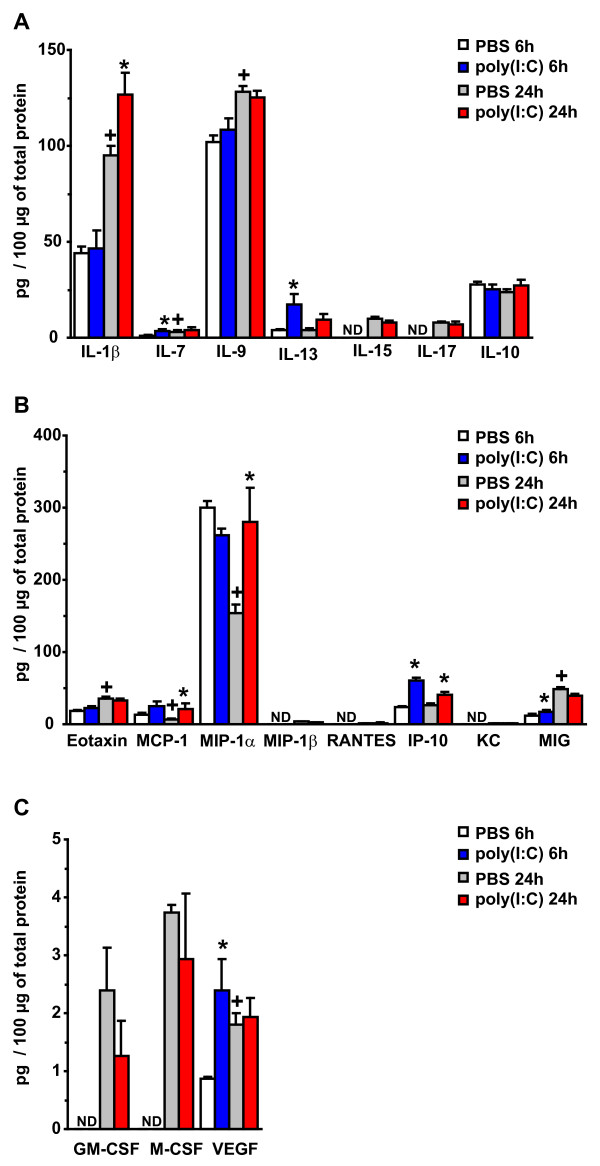
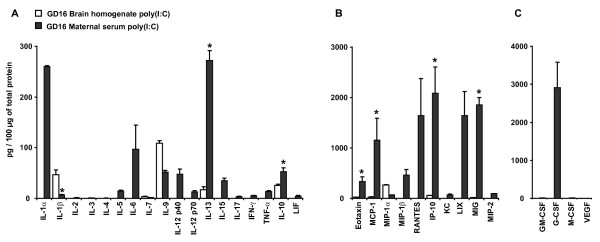
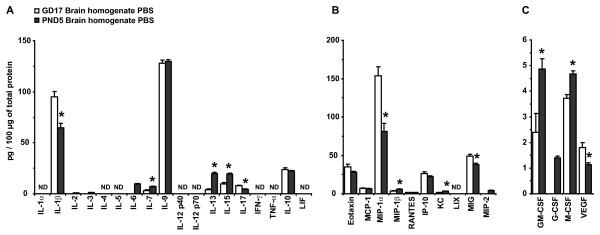
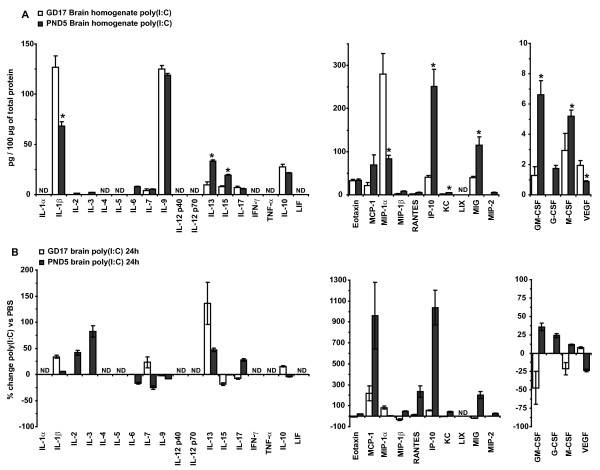
BACKGROUND: Maternal viral infection during pregnancy is associated with an increase in the incidence of psychiatric disorders with presumed neurodevelopmental origin, including autism spectrum disorders and schizophrenia. The enhanced risk for developing mental illness appears to be caused by deleterious effects of innate immune response-associated factors on the development of the central nervous system, which predispose the offspring to pathological behaviors in adolescence and adulthood. To identify the immune response-associated soluble factors that may affect central nervous system development, we examined the effect of innate immune response activation by polyriboinosinic-polyribocytidylic acid (poly(I:C)), a synthetic analogue of viral double-stranded RNA, on the expression levels of pro- and anti-inflammatory cytokines, chemokines and colony stimulating factors in fetal and postnatal mouse brain 6 h and 24 h after treatment. METHODS: C57BL/6J pregnant mice (gestational day 16) or newborn mice (postnatal day 4) received a single intraperitoneal injection of the synthetic analogue of viral double-stranded RNA poly(I:C) (20 mg/kg). Thirty-two immune response-associated soluble factors, including pro- and anti-inflammatory cytokines, chemokines and colony stimulating factors, were assayed 6 h and 24 h after poly(I:C) injection using multiplexed bead-based immunoassay (Milliplex Map) and processed in a Luminex 100 IS instrument. RESULTS: Maternal exposure to poly(I:C) at gestational day 16 induced a significant increase in cytokines interleukin (IL)-1β, IL-7 and IL-13; chemokines monocyte chemoattractant protein 1 (MCP-1), macrophage inflammatory protein (MIP)-1α, interferon gamma-induced protein (IP)-10 and monokine induced by IFN-gamma (MIG); and in the colony stimulating factor vascular endothelial growth factor (VEGF) in the fetal brain. IL-1β showed the highest concentration levels in fetal brains and was the only cytokine significantly up-regulated 24 h after maternal poly(I:C) injection, suggesting that IL-1β may have a deleterious impact on central nervous system development. In contrast, poly(I:C) treatment of postnatal day 4 pups induced a pronounced rise in chemokines and colony stimulating factors in their brains instead of the pro-inflammatory cytokine IL-1β. CONCLUSIONS: This study identified a significant increase in the concentration levels of the cytokines IL-1β and IL-13, the chemokine MCP-1 and the colony stimulating factor VEGF in the developing central nervous system during activation of an innate immune response, suggesting that these factors are mediators of the noxious effects of maternal immune activation on central nervous system development, with potential long-lasting effects on animal behavior.
Overview
The claims and statistics of this paper haven’t been checked yet.
Free: it reads the open-access text and checks the first 5 claims that cite a source we can check. Create a free account to check every claim.
Integrity signals
Registry
Cites
Statistics
Figures
Verification
Claims the paper makes
The claims and statistics of this paper haven’t been checked yet.
Free: it reads the open-access text and checks the first 5 claims that cite a source we can check. Create a free account to check every claim.
Claims other papers make about this one
Each is checked against this paper’s own text: does it say what the citing paper says it does?
In the citing paper
“A broad spectrum of cytokines are elevated in the fetal brain hours after poly(I:C) injection in pregnant mice142,143 and many of these cytokines remain chronically altered in the brains of offspring throughout postnatal development and into adulthood144.”
From Immune mediators in the brain and peripheral tissues in autism spectrum disorder (2015) · cites this paper as [143]
Self-check
Percentages, sums and reported differences re-computed from the paper’s own numbers.
The self-check needs the paper’s full text.
Citations
Cites
Akira, S., & Takeda, K. (2004) · Nature reviews. Immunology · doi:10.1038/nri1391 · Cited by 8,312 · cited 1×
“Binding of IL-1β to the IL-1R1 induces formation of a signaling complex with the IL-1 receptor accessory protein, which are both members of the Toll-like receptor family of proteins [73,74].”
Recognition of double-stranded RNA and activation of NF-κB by Toll-like receptor 3
Alexopoulou, L., Holt, A. C., Medzhitov, R., & Flavell, R. A. (2001) · Nature · doi:10.1038/35099560 · Cited by 6,129
Toll-like receptors and innate immunity
Medzhitov, R. (2001) · Nature Reviews Immunology · doi:10.1038/35100529 · Cited by 4,308
Rare Structural Variants Disrupt Multiple Genes in Neurodevelopmental Pathways in Schizophrenia
Walsh, T., McClellan, J. M., McCarthy, S. E., Addington, A. M., Pierce, S. B., Cooper, G. M., Nord, A. S., Kusenda, M., Malhotra, D., Bhandari, A., et al. (2008) · Science · doi:10.1126/science.1155174 · Cited by 1,800 · cited 1×
“However, epidemiological and genetic studies suggest that the interaction between genetic abnormalities and epigenetic factors perturb the formation of the central nervous system (CNS), resulting in the cognitive, sensorial and emotional dysfunctions observed in mental illness [1-5].”
Maternal Immune Activation Alters Fetal Brain Development through Interleukin-6
Smith, S. E. P., Li, J., Garbett, K., Mirnics, K., & Patterson, P. H. (2007) · The Journal of Neuroscience · doi:10.1523/jneurosci.2178-07.2007 · Cited by 1,605 · cited 4×
“Treatment of pregnant mice with poly(I:C) alters cytokine expression levels in the fetal brain and causes behavioral abnormalities in post-pubertal offspring [21,22,26-29].”
InfluentialVascular endothelial growth factor (VEGF) stimulates neurogenesis in vitro and in vivo
Jin, K., Zhu, Y., Sun, Y., Mao, X. O., Xie, L., & Greenberg, D. A. (2002) · Proceedings of the National Academy of Sciences · doi:10.1073/pnas.182296499 · Cited by 1,507 · cited 1×
“Finally, VEGF contributes to various mechanisms of CNS development including neuronal migration, differentiation and axonal growth and path-finding [90-94], indicating that deregulation of VEGF expression during critical periods of brain development may perturb neuronal migration and formation of neural circuits.”
Linked Regularities in the Development and Evolution of Mammalian Brains
Finlay, B. L., & Darlington, R. B. (1995) · Science · doi:10.1126/science.7777856 · Cited by 1,217 · cited 1×
“Postnatal day (PND) 4 was chosen because at this developmental stage formation of neural circuits is not completed [34-36] and, therefore, the CNS is vulnerable to epigenetic insults, including viral infections.”
Adult Schizophrenia Following Prenatal Exposure to an Influenza Epidemic
Mednick, S. A. (1988) · Archives of General Psychiatry · doi:10.1001/archpsyc.1988.01800260109013 · Cited by 1,193 · cited 1×
“One important epigenetic risk factor for autism and schizophrenia is the occurrence of maternal infection during pregnancy [2,6-12], suggesting that the increased risk for mental illness arises from the effect of the innate immune response (for example, cytokines) on CNS formation [2,13,14].”
Serologic Evidence of Prenatal Influenza in the Etiology of Schizophrenia
Brown, A. S., Begg, M. D., Gravenstein, S., Schaefer, C. A., Wyatt, R. J., Bresnahan, M., Babulas, V. P., & Susser, E. S. (2004) · Archives of General Psychiatry · doi:10.1001/archpsyc.61.8.774 · Cited by 1,053 · cited 2×
“We choose to mimic a viral infection instead of the most frequently used bacterial mimic agent lipopolysaccharide (LPS), because viral infections during pregnancy are common during the influenza season and appear to predispose the offspring to develop psychiatric illness [10,13].”
Maternal influenza infection causes marked behavioral and pharmacological changes in the offspring
Shi, L., Fatemi, S. H., Sidwell, R. W., & Patterson, P. H. (2003) · The Journal of Neuroscience · doi:10.1523/jneurosci.23-01-00297.2003 · Cited by 1,025 · cited 2×
“This dose of poly(I:C) causes long-lasting behavioral abnormalities in the progeny [33].”
Cited by
Items 101–147 of 147
Knutson, A. O., & Watters, J. J. (2019) · Respiratory Physiology & Neurobiology · doi:10.1016/j.resp.2019.103361 · Cited by 10
“Thus, given the similarity in cytokines that are upregulated in OSA as well as in various models of MIA, we propose that maternal sleep apnea may be another previously unconsidered, yet highly prevalent, model of MIA.”
BackgroundInfluentialАлфимова, М. В., Коровайцева, Г. И., Лежейко, Т. В., & Голимбет, В. Е. (2017) · Schizophrenia Research and Treatment · doi:10.1155/2017/5763094 · Cited by 9
“We focused on the proinflammatory cytokine interleukin- (IL-) 1β because of (1) its suggestive role in altered brain development [27] and schizophrenia etiology and pathogenesis [28, 29] and (2) findings indicating its higher concentration in infants born in winter [6].”
BackgroundInterleukin 15 modulates the effects of poly I:C maternal immune activation on offspring behaviour
Haddad, F. L., Patel, S. V., Doornaert, E. E., Oliveira, C. D., Allman, B. L., Baines, K. J., Renaud, S. J., & Schmid, S. (2022) · Brain Behavior & Immunity - Health · doi:10.1016/j.bbih.2022.100473 · Cited by 8
Singh, A. S., Naqvi, A. R., & Chanu, M. T. (2026) · Journal of Psychiatric Research · doi:10.1016/j.jpsychires.2026.01.050 · Cited by 7
Malouf, C., & Ottersbach, K. (2019) · Experimental Hematology · doi:10.1016/j.exphem.2019.07.004 · Cited by 7
“Cytokine expression in fetal tissue after a maternal immune activation is also very dynamic: some changes occur quickly (6-hours), while some changes become noticeable after a longer period of time (24-hours) [23].”
BackgroundBrown, A. M., Conn, I., Boerrigter, D., Weickert, C. S., & Purves-Tyson, T. D. (2022) · Journal of Neuroimmunology · doi:10.1016/j.jneuroim.2022.577813 · Cited by 7
Effects of sivelestat treatment on acute lung injury in paraquat-intoxicated rats
Park, J. S., Park, K. H., Kim, H., & Choi, S. (2013) · Drug and Chemical Toxicology · doi:10.3109/01480545.2013.834351 · Cited by 6
“Analyses were conducted according to the manufacturer’s instructions and described previously in another report (Arrode-Brusés & Brusés, 2012).”
MethodMostallino, R., Santoni, M., Sagheddu, C., Serra, V., Orrù, V., Pistis, M., & Castelli, M. P. (2023) · European Journal of Pharmacology · doi:10.1016/j.ejphar.2023.176172 · Cited by 5
The Role of Inflammation in Autism Spectrum Disorder
Ferretti, C. J., & Hollander, E. (2015) · Current topics in neurotoxicity · doi:10.1007/978-3-319-13602-8_14 · Cited by 7
Estes, M. L., Elmer, B. M., Carter, C., & McAllister, A. K. (2018) · bioRxiv (Cold Spring Harbor Laboratory) · doi:10.1101/490466 · Cited by 6
“Alterations in fetal brain cytokine expression also occur within hours of infection, specifically upregulating canonical immune pathways (Arrode-Bruses and Bruses, 2012; Choi et al., 2016; Garbett et al., 2012; Meyer et al., 2006a), including increases in several pro-inflammatory cytokines (Fatemi…”
BackgroundCouch, A. C. M., Brown, A. M., Raimundo, C., Solomon, S., Taylor, M., Sichlinger, L., Matulevičiūtė, R., Srivastava, D. P., & Vernon, A. C. (2024) · Brain Behavior and Immunity · doi:10.1016/j.bbi.2024.08.007 · Cited by 6
Harbi, R. A., & Mouihate, A. (2025) · Neuroscience · doi:10.1016/j.neuroscience.2025.01.055 · Cited by 4
Creighton, S. D., Palmer, D. D., Mitchnick, K. A., & Winters, B. D. (2018) · Handbook of behavioral neuroscience · doi:10.1016/b978-0-12-812012-5.00006-9 · Cited by 6
Bucknor, M. C., Keating, B., Han, V., Gloss, B., Dey, P., Aryamanesh, N., Marshall, L. L., Graham, M. E., Dissanayake, R., Lau, X., et al. (2026) · Inflammation Research · doi:10.1007/s00011-025-02152-y
“The dose was chosen based on previous literature [66–68].”
Bryan, E. E., Bode, N., Chen, X., Burris, E. S., Johnson, D. C., Dilger, R. N., & Dilger, A. C. (2024) · Journal of Animal Science · doi:10.1093/jas/skad424 · Cited by 3
Milazzo, F., Gigase, F. A. J., Suleri, A., Amreen, B., D’souza, D., Kim‐Schulze, S., Bergink, V., de Witte, L. D., Lesseur, C., & Rommel, A. (2026) · Frontiers in Immunology · doi:10.3389/fimmu.2026.1715880 · Cited by 2
Immune Involvement in Autism Spectrum Disorder as a Basis for Animal Models
Hsiao, E. Y. (2012) · Autism - Open Access · doi:10.4172/2165-7890.s1-003 · Cited by 4
“Shortly after MIA, the fetal brain exhibits elevated levels of pro-inflammatory cytokines [44], suggesting a possible feed-forward propagation of pro-inflammatory MIA responses from the maternal circulation to the placenta, and to the fetus itself.”
BackgroundModeling the Maternal Immune Activation Risk Factor for Schizophrenia
Malkova, N. V., Wu, W., & Hsiao, E. Y. (2015) · Handbook of behavioral neuroscience · doi:10.1016/b978-0-12-800981-9.00011-0 · Cited by 2
Kumari, E., Velloso, F. J., & Levison, S. W. (2019) · OBM Neurobiology · doi:10.21926/obm.neurobiol.1902027 · Cited by 2
Salia, S., Burry, N., Hinks, M., Sparkes, K. M., Randell, A. M., Maekawa, A. S., Reid, N., Fowler, L. F., Kelly, R. Q., Francis, J.-L., et al. (2026) · Journal of Neuroinflammation · doi:10.1186/s12974-026-03881-5 · Cited by 1
“Consistent with prior reports [15, 63, 64], MIA elicited a robust maternal systemic inflammatory response among dams, with elevations in circulating cytokines and chemokines.”
Ratnayake, U., & Hill, R. (2015) · Neuromethods · doi:10.1007/978-1-4939-3014-2_13 · Cited by 2
Fetal muscle extract improves muscle function and performance in aged mice
Lo, H. T. J., Yiu, T. L., Wang, Y., Feng, L., Li, G., Lui, M. P.-M., & Lee, W. (2022) · Frontiers in Physiology · doi:10.3389/fphys.2022.816774 · Cited by 2
“During fetal development, several growth factors and cytokines such as IL-10, IL-15, VEGF, and brain-derived neurotrophic factor are upregulated which are able to induce an anti-inflammatory response (Guzeloglu-Kayisli et al., 2009; Arrode-Brusés and Brusés, 2012; Redondo-Castro et al., 2017).”
BackgroundAL-Hasnawi, S. M. J., Noori, M., Alhaideri, A. F., & Hussain, M. J. (2024) · PubMed Central · doi:10.30476/ijms.2023.97556.2934 · Cited by 1
“9-11 Previous reports suggested high levels of persistent oxidative stress markers in children with ADHD, and it was interpreted to probably lead to immune disturbances and abnormalities.”
BackgroundKiriyama, N., Shikata, T., Sugiyama, R., Yoshisaka, M., & Komada, M. (2025) · Biochimica et Biophysica Acta (BBA) - Molecular Basis of Disease · doi:10.1016/j.bbadis.2025.167980 · Cited by 2
Systemic inflammation causes microglial dysfunction with a mixed AD-like pathologyPreprint
Bathini, P., Dupanloup, I., Zenaro, E., Terrabuio, E., Fischer, A., Ballabani, E., Doucey, M., & Alberi, L. A. (2020) · bioRxiv (Cold Spring Harbor Laboratory) · doi:10.1101/2020.07.27.223198 · Cited by 1
“…a lifetime, including the prenatal stages, we investigated whether systemic immune challenge using PolyI:C during prenatal (Wischhof et al. 2015; Arrode-Brusés and Brusés 2012; Patrich et al. 2016) and postnatal stages can induce a sustained peripheral inflammation with long-term effects on…”
BackgroundEffects on the fetal cholinergic basal forebrain followingmaternal immune activation
Pratt, L. (2013) · Rutgers University Community Repository (Rutgers University) · doi:10.7282/t34q7sq5
“Chemokines are upregulated in the fetal mouse brain in response to MIA (Arrode-Bruses and Bruses, 2012), and microglia isolated from embryonic brains following maternal inflammation produce a variety of cytokines and chemokines (Jonakait et al., 2012).”
BackgroundAn investigation into the role of TLR3 activation on hippocampal function
Ritchie, L. (2015) · STAX · doi:10.48730/t659-vj95
Rôle des acides gras polyinsaturés n-3 dans le développement cérébral normal et pathologique
Leyrolle, Q. (2018) · theses.fr (ABES) · doi:10.70675/fdca5023zf0e0z4e14za647z153137b2be38
Systemic Inflammation Causes Microglial Dysfunction with a Mixed AD-Like Pathology.Preprint
Bathini, P., Dupanloup, I., Zenaro, E., Terrabuio, E., Fisher, A., Babaliani, E., Doucey, M., & Alberi, L. A. (2020) · Research Square · doi:10.21203/rs.3.rs-48807/v1
Inflammation and accumulating risk for developing psychiatric disorders
Money, K. M. (2016)
Systemic Inflammation Causes Microglial Dysfunction With a Mixed Ad-like PathologyPreprint
Bathini, P., Dupanloup, I., Zenaro, E., Terrabuio, E., Fisher, A., Babaliani, E., Doucey, M., & Alberi, L. A. (2020) · Research Square · doi:10.21203/rs.3.rs-80087/v1
Chen, C., Zhou, Y., Zhang, C., Zeng, F., Zhang, H., Liu, Z., Ren, F., & Qi, M. (2025) · Reviews in Medical Microbiology · doi:10.1097/mrm.0000000000000419
Current and emerging tools for studying animal models of sleep and autism
Kyriakakis, P., & Gonzalez, O. C. (2025) · Journal of Psychiatric Research · doi:10.1016/j.jpsychires.2025.11.031
Ballendine, S. A. (2014) · HARVEST (University of Saskatchewan)
Burke, F. F. (2023) · Memorial University Research Repository (Memorial University) · doi:10.48336/ba43-fb84 · Cited by 1
Atanasova, E., Arévalo, A. P., Graf, I., Zhang, R., Bockmann, J., Lutz, A.-K., & Boeckers, T. M. (2024) · Figshare · doi:10.6084/m9.figshare.26559329
Zhou, X., Zhang, D., Liu, C., Chen, H., CHONG, Y.-S., Fortier, M. V., Gluckman, P. D., & Qiu, A. (2026) · Brain Behavior and Immunity · doi:10.1016/j.bbi.2026.106477
Manzo, J., Hernández‐Aguilar, M. E., Toledo‐Cárdenas, M. R., Coria‐Ávila, G. A., Pérez-Estudillo, C. A., Espinosa-Rayón, M., & Barradas‐Moctezuma, M. (2025) · eNeurobiología · doi:10.25009/eb.v16i41.2659
Murru, E., Santoni, M., Manca, C., Carta, G., Cabboi, M., Mastio, A., Banni, S., & Pistis, M. (2026) · Scientific Reports · doi:10.1038/s41598-026-73525-4
Spagnuolo, M. S., Macchioni, G., Petecca, N., Petruccioli, G., Magistris, M. D., Palma, F. D., Prisco, M., Cipriani, C., Siracusano, M., Calamandrei, G., et al. (2026) · Brain Behavior and Immunity · doi:10.1016/j.bbi.2026.106820
Paternal cytokine administration alters sperm small ncRNAs and offspring brain and behavior
Kiridena, P., van de Garde, N., Masson, B. A., Gubert, C., Reisinger, S. N., & Hannan, A. J. (2026) · Molecular Psychiatry · doi:10.1038/s41380-026-03674-5
“These fi ndings suggest that IL-6 may be driving the effects of offspring phenotypic changes in MIA models, however it is unclear whether these changes occur via epigenetic mechanisms, placental mechanisms, or other indirect or direct effects on the developing fetal brain [69].”
Maternal folic acid modulates neurotrophins and behavior in an animal schizophrenia model
Rodrigues, S. F., Canever, L., Rohling, J. P. V., Tomé, B., da Silva, G. P., Schillickmann, Y., Gatonni, G., Dagostin, M., Bosa, M. P., Malgaresi, L. L., et al. (2026) · Progress in Neuro-Psychopharmacology and Biological Psychiatry · doi:10.1016/j.pnpbp.2026.111825
From Perinatal Stress to Schizophrenia: The Emerging Role of Glial Pathology
Sarkar, T., Patro, N., & Patro, I. K. (2026) · Annals of Neurosciences · doi:10.1177/09727531261445799
Tran, N. T., Kamareddine, R., Bellofiore, N., Olson, D. M., Chemtob, S., Robertson, S. A., Keelan, J. A., & Ellery, S. J. (2026) · Developmental Neurobiology · doi:10.1002/dneu.70064
The impact of maternal immune activation on pig muscle development and postnatal immune function
Bryan, E. E. (2022) · Illinois Digital Environment for Access to Learning and Scholarship (University of Illinois at Urbana-Champaign)
Effect of the Ketogenic Diet on Behavioral Symptoms of Autism in the Poly(IC) Mouse Model
Slade, S. L. (2015) · Trinity College Digital Repository (Trinity College, Hartford CT)
Metadata
- Authors
- Arrode-Brusés, G., & Brusés, J. L.
- Affiliations
- University of Kansas (US)
- Corresponding author
- Brusés, Juan L
- ORCID
- Brusés, Juan L
- Venue
- Journal of Neuroinflammation
- Published
- 2012-04-30
- Volume
- 9
- Issue
- 1
- Pages
- 83-83
- ISSN
- 1742-2094 (ISSN-L)
- PMC
- PMC3413576
- OpenAlex
- W2116134868
- Cited by
- 146
- References
- 96
- Citations by year
- 2026: 11 · 2025: 7 · 2024: 5 · 2023: 11 · 2022: 11 · 2021: 7 · 2020: 12 · 2019: 8 · 2018: 13 · 2017: 9 · 2016: 3 · 2015: 16 · 2014: 12 · 2013: 19 · 2012: 2
- FWCI
- 4.80
- Type
- journal article
- Language
- en
- Open access
- gold
- doi.org
- Locations
- Journal of Neuroinflammation (publishedVersion, cc-by)
- Europe PMC (PubMed Central) (publishedVersion, cc-by)
- PubMed Central (publishedVersion, cc-by)
- PubMed (publishedVersion)
- DOAJ (DOAJ: Directory of Open Access Journals) (submittedVersion)
- Funders
- International Rett Syndrome Foundation
- Topics
- Life Sciences › Neuroscience › Biological Psychiatry › Tryptophan and brain disorders
- Life Sciences › Neuroscience › Neurology › Neuroinflammation and Neurodegeneration Mechanisms
- Life Sciences › Immunology and Microbiology › Immunology › Immunotoxicology and immune responses
- Keywords
- maternal immune activation, poly(I:C), maternal viral infection, fetal brain development, brain development, cytokines, IL-1β, IL-13, MCP-1, chemokines, vascular endothelial growth factor, colony-stimulating factors, innate immune response, autism spectrum disorder, schizophrenia, neuroinflammation, pregnancy, postnatal development, mouse model, maternal-fetal immune transfer
- MeSH terms
- Animals, Animals, Newborn, Brain, Colony-Stimulating Factors, Female, Immunity, Innate, Male, Mice, Inbred C57BL, Polynucleotides, Pregnancy, Prenatal Exposure Delayed Effects, Interleukin-7, Gene Expression Regulation, Developmental, Interleukin-13, Chemokine CCL2, Vascular Endothelial Growth Factor A, Mice, Interleukin-1beta
About these checks
Registry, retraction, Cites and statistics results are computed, not judged, with one exception: a printed reference that no index lists is read once by a model before it counts as a citation error. Claims are extracted by a model and kept only when their quote appears verbatim in the text; each cited source is then checked, with a model’s help, for whether it says what the claim relies on. Those verdicts can be wrong — read the claim’s quote and the cited source before relying on one.
Statistics and arithmetic are recomputed, not judged.
Confidence bands are shown only for fields calibrated on our annotated test set. None is calibrated yet, so no band is shown.
What counts as a claim ›How we measure confidence ›How we check this ›
Are you an author, or do you see a problem with this page? Request a review
Data sources
Bibliographic data: Semantic Scholar, OpenAlex, Crossref.
Contains information from the Semantic Scholar Academic Graph Datasets, made available under the ODC Attribution License (ODC-BY 1.0).
Semantic Scholar’s data is described in: Kinney, R., et al. (2023). The Semantic Scholar Open Data Platform. arXiv:2301.10140.
