

The DOI matches its Crossref record; 62 of the 64 references it cites were found in a registry or an index.
A systematic study of the N-glycosylation sites of HIV-1 envelope protein on infectivity and antibody-mediated neutralization
Open accessAbstract
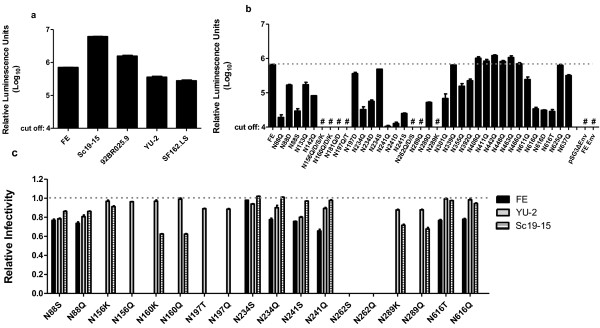
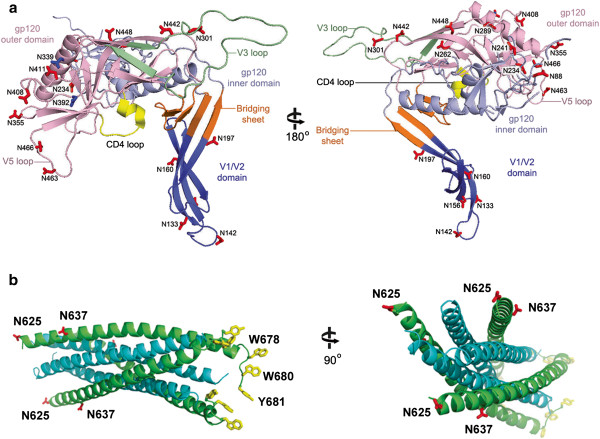
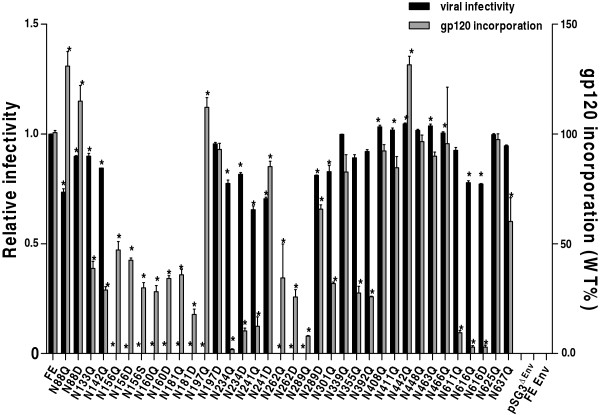
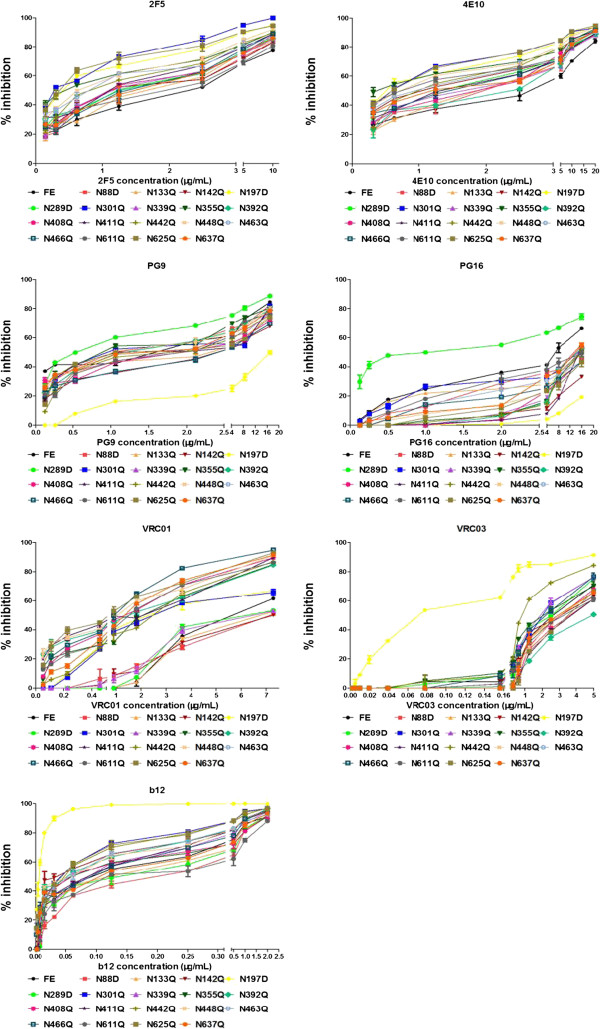
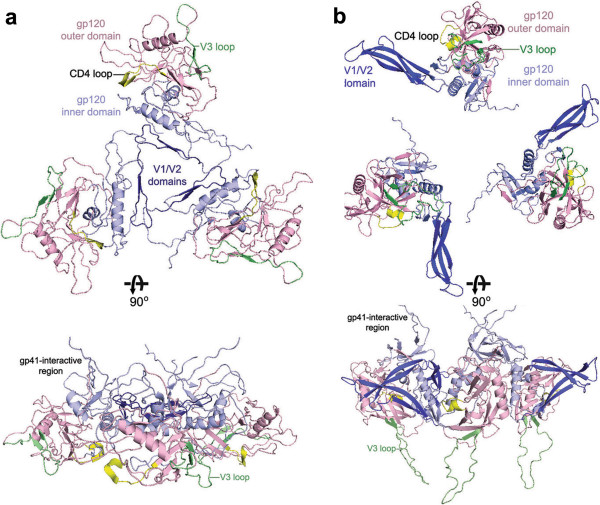
BACKGROUND: Glycans on the human immunodeficiency virus (HIV) envelope glycoprotein (Env) play an important role in viral infection and evasion of neutralization by antibodies. In this study, all 25 potential N-linked glycosylation sites (PNGS) on the HIV-1 CRF07_BC Env, FE, were mutated individually to study the effect of their removal on viral infectivity, virion production, and antibody-mediated neutralization. RESULTS: Removal of specific N-glycosylation sites has a significant effect on viral infectivity and antibody-mediated neutralization phenotype. Six of these glycosylation mutants located on the V1/V2 and C1/C2 domains lost infectivity. PNGS mutations located on V4/C4/V5 (except N392 on V4), were shown to increase viral infectivity. Furthermore, FE is much more dependent on specific glycans than clade B Env YU-2. On neutralization effect, PNGS mutations at N197 (C2), N301 (V3), N442 (C4) and N625 (gp41) rendered the virus more susceptible to neutralization by the monoclonal antibodies (MAbs) that recognize the CD4 binding site or gp41. Generally, mutations on V4/V5 loops, C2/C3/C4 regions and gp41 reduced the neutralization sensitivity to PG16. However, mutation of N289 (C2) made the virus more sensitive to both PG9 and PG16. Furthermore, we showed that mutations at N142 (V1), N355 (C3) and N463 (V5) conferred resistance to neutralization by anti-gp41 MAbs. We used the available structural information of HIV Env and homology modeling to provide a structural basis for the observed biological effects of these mutations. CONCLUSIONS: This report provides the first systematic experimental account of the biological role of the entire PNGS on an HIV-1 Env, which should provide valuable insights for understanding the function of Env in HIV infection cycle and for developing future anti-HIV strategies.
Overview
The claims and statistics of this paper haven’t been checked yet.
Run the check — free, no account needed. It reads the open-access text and checks the sources it cites.
Integrity signals
Registry
Cites
Statistics
Figures
Verification
Claims the paper makes
The claims and statistics of this paper haven’t been checked yet.
Run the check — free, no account needed. It reads the open-access text and checks the sources it cites.
Claims other papers make about this one
Each is checked against this paper’s own text: does it say what the citing paper says it does?
The source backs part of the claim, not all of it — or backs it for a different population, condition or comparison.
In the citing paper
“Unlike HIV-1 Env, which contains ~25 glycosylation sites [101], and forms a “glycan shield” protecting the virus from neutralizing antibodies [102], HTLV-1 Env contains only five sites for N-glycan attachment [103].”
From HIV-1 and HTLV-1 Transmission Modes: Mechanisms and Importance for Virus Spread (2022) · cites this paper as [101]
Experimental — accuracy not yet measured
Self-check
Percentages, sums and reported differences re-computed from the paper’s own numbers.
The self-check needs the paper’s full text.
Citations
Cites
Kwong, P. D., Wyatt, R. T., Robinson, J. E., Sweet, R. W., Sodroski, J., & Hendrickson, W. A. (1998) · Nature · doi:10.1038/31405 · Cited by 2,963
Antibody neutralization and escape by HIV-1
Wei, X., Decker, J. M., Wang, S., Hui, H., Kappes, J. C., Wu, X., Salazar-Gonzalez, J. F., Salazar, M. G., Kilby, J. M., Saag, M. S., et al. (2003) · Nature · doi:10.1038/nature01470 · Cited by 2,421
Self-citationBroad and Potent Neutralizing Antibodies from an African Donor Reveal a New HIV-1 Vaccine Target
Walker, L., Phogat, S., Chan-hui, P., Wagner, D., Pham, P., Goss, J. L., Wrin, T., Simek, M., Fling, S., Mitcham, J., et al. (2009) · Science · doi:10.1126/science.1178746 · Cited by 1,849
Atomic structure of the ectodomain from HIV-1 gp41
Weissenhorn, W., Dessen, A., Harrison, S. C., Skehel, J. J., & Wiley, D. C. (1997) · Nature · doi:10.1038/387426a0 · Cited by 1,625
The HIV-1 Envelope Glycoproteins: Fusogens, Antigens, and Immunogens
Wyatt, R. T., & Sodroski, J. (1998) · Science · doi:10.1126/science.280.5371.1884 · Cited by 1,605
Structural Basis for Broad and Potent Neutralization of HIV-1 by Antibody VRC01
Zhou, T., Georgiev, I. S., Wu, X., Yang, Z., Dai, K., Finzi, A., Kwon, Y. D., Scheid, J. F., Shi, W., Xu, L., et al. (2010) · Science · doi:10.1126/science.1192819 · Cited by 1,123
Li, M., Gao, F., Mascola, J. R., Stamatatos, L., Polonis, V. R., Koutsoukos, M., Voss, G., Goepfert, P., Gilbert, P. B., Greene, K., et al. (2005) · Journal of Virology · doi:10.1128/jvi.79.16.10108-10125.2005 · Cited by 1,077
A conserved neutralizing epitope on gp41 of human immunodeficiency virus type 1
Muster, T., Steindl, F., Purtscher, M., Trkola, A., Klima, A., Himmler, G., Rüker, F., & Katinger, H. W. D. (1993) · Journal of Virology · doi:10.1128/jvi.67.11.6642-6647.1993 · Cited by 1,011
Leonard, C. K., Spellman, M. W., Riddle, L. M., Harris, R. J., Thomas, J. N., & Gregory, T. (1990) · Journal of Biological Chemistry · doi:10.1016/s0021-9258(18)86956-3 · Cited by 986
Crystal Structure of a Neutralizing Human IgG Against HIV-1: A Template for Vaccine Design
Saphire, E. O., Parren, P. W. H. I., Pantophlet, R. A., Zwick, M. B., Morris, G. M., Rudd, P. M., Dwek, R. A., Stanfield, R. L., Burton, D. R., & Wilson, I. A. (2001) · Science · doi:10.1126/science.1061692 · Cited by 959
Structure of HIV-1 gp120 V1/V2 domain with broadly neutralizing antibody PG9
McLellan, J. S., Pancera, M., Carrico, C., Gorman, J., Julien, J.-P., Khayat, R., Louder, R., Pejchal, R., Sastry, M., Dai, K., et al. (2011) · Nature · doi:10.1038/nature10696 · Cited by 830
Molecular architecture of native HIV-1 gp120 trimers
Liu, J., Bartesaghi, A., Borgnia, M. J., Sapiro, G., & Subramaniam, S. (2008) · Nature · doi:10.1038/nature07159 · Cited by 815
Focused Evolution of HIV-1 Neutralizing Antibodies Revealed by Structures and Deep Sequencing
Wu, X., Zhou, T., Zhu, J., Zhang, B., Georgiev, I. S., Wang, C., Chen, X., Longo, N. S., Louder, M. K., McKee, K., et al. (2011) · Science · doi:10.1126/science.1207532 · Cited by 797
Self-citationZwick, M. B., Labrijn, A. F., Wang, M., Spenlehauer, C., Saphire, E. O., Binley, J. Μ., Moore, J. P., Stiegler, G. M., Katinger, H. W. D., Burton, D. R., et al. (2001) · Journal of Virology · doi:10.1128/jvi.75.22.10892-10905.2001 · Cited by 797
Structural definition of a conserved neutralization epitope on HIV-1 gp120
Zhou, T., Xu, L., Dey, B., Hessell, A. J., Van Ryk, D., Xiang, S.-H., Yang, X., Zhang, M.-Y., Zwick, M. B., Arthos, J., et al. (2007) · Nature · doi:10.1038/nature05580 · Cited by 770
HIV vaccine design and the neutralizing antibody problem
Burton, D. R., Desrosiers, R. C., Doms, R. W., Koff, W. C., Kwong, P. D., Moore, J. P., Nabel, G. J., Sodroski, J., Wilson, I. A., & Wyatt, R. T. (2004) · Nature Immunology · doi:10.1038/ni0304-233 · Cited by 765
Structure of a V3-Containing HIV-1 gp120 Core
Huang, C.-C., Tang, M., Zhang, M.-Y., Majeed, S., Montabana, E. A., Stanfield, R. L., Dimitrov, D. S., Korber, B., Sodroski, J., Wilson, I. A., et al. (2005) · Science · doi:10.1126/science.1118398 · Cited by 731
Binley, J. Μ., Wrin, T., Korber, B., Zwick, M. B., Wang, M., Chappey, C., Stiegler, G. M., Kunert, R., Zolla‐Pazner, S., Katinger, H. W. D., et al. (2004) · Journal of Virology · doi:10.1128/jvi.78.23.13232-13252.2004 · Cited by 701
A Potent and Broad Neutralizing Antibody Recognizes and Penetrates the HIV Glycan Shield
Pejchal, R., Doores, K. J., Walker, L. M., Khayat, R., Huang, P.-S., Wang, S.-K., Stanfield, R. L., Julien, J.-P., Ramos, A., Crispin, M., et al. (2011) · Science · doi:10.1126/science.1213256 · Cited by 694
Self-citationScanlan, C. N., Pantophlet, R. A., Wormald, M. R., Saphire, E. O., Stanfield, R. L., Wilson, I. A., Katinger, H. W. D., Dwek, R. A., Rudd, P. M., & Burton, D. R. (2002) · Journal of Virology · doi:10.1128/jvi.76.14.7306-7321.2002 · Cited by 665
Björndal, Å. S., Deng, H., Jansson, M., Fiore, J. R., Colognesi, C., Karlsson, A., Albert, J., Scarlatti, G., Littman, D. R., & Fenyö, E. M. (1997) · Journal of Virology · doi:10.1128/jvi.71.10.7478-7487.1997 · Cited by 608
Marshall, R. (1972) · Annual Review of Biochemistry · doi:10.1146/annurev.bi.41.070172.003325 · Cited by 604
Sanders, R. W., Venturi, M., Schiffner, L., Kalyanaraman, R., Katinger, H. W. D., Lloyd, K. O., Kwong, P. D., & Moore, J. P. (2002) · Journal of Virology · doi:10.1128/jvi.76.14.7293-7305.2002 · Cited by 553
Atomic structure of a thermostable subdomain of HIV-1 gp41
Tan, K., Liu, J.-H., Wang, J., Shen, S. S., & Lu, M. (1997) · Proceedings of the National Academy of Sciences · doi:10.1073/pnas.94.23.12303 · Cited by 534
Structure of an unliganded simian immunodeficiency virus gp120 core
Chen, B., Vogan, E. M., Gong, H., Skehel, J. J., Wiley, D. C., & Harrison, S. C. (2005) · Nature · doi:10.1038/nature03327 · Cited by 520
Pancera, M., Majeed, S., Ban, Y. A., Chen, L., Huang, C.-C., Kong, L., Kwon, Y. D., Stuckey, J., Zhou, T., Robinson, J. E., et al. (2009) · Proceedings of the National Academy of Sciences · doi:10.1073/pnas.0911004107 · Cited by 339
Crystal Structure of HIV-1 gp41 Including Both Fusion Peptide and Membrane Proximal External Regions
Buzón, V., Natrajan, G., Schibli, D. J., Campelo, F., Kozlov, M. M., & Weissenhorn, W. (2010) · PLoS Pathogens · doi:10.1371/journal.ppat.1000880 · Cited by 309
Helseth, E., Olshevsky, U., Furman, C., & Sodroski, J. (1991) · Journal of Virology · doi:10.1128/jvi.65.4.2119-2123.1991 · Cited by 292
Hartley, O., Klasse, P. J., Sattentau, Q. J., & Moore, J. P. (2005) · AIDS Research and Human Retroviruses · doi:10.1089/aid.2005.21.171 · Cited by 290
The Role of Human Immunodeficiency Virus Type 1 Envelope Glycoproteins in Virus Infection
Freed, E. O., & Martin, M. A. (1995) · Journal of Biological Chemistry · doi:10.1074/jbc.270.41.23883 · Cited by 274
Pantophlet, R. A., Saphire, E. O., Poignard, P., Parren, P. W. H. I., Wilson, I. A., & Burton, D. R. (2002) · Journal of Virology · doi:10.1128/jvi.77.1.642-658.2003 · Cited by 244
Pollakis, G. P., Kang, S., Kliphuis, A., Chalaby, M. I. M., Goudsmit, J., & Paxton, W. A. (2001) · Journal of Biological Chemistry · doi:10.1074/jbc.m009779200 · Cited by 234
A fusion-intermediate state of HIV-1 gp41 targeted by broadly neutralizing antibodies
Frey, G., Peng, H., Rits‐Volloch, S., Morelli, M. J., Cheng, Y., & Chen, B. (2008) · Proceedings of the National Academy of Sciences · doi:10.1073/pnas.0800255105 · Cited by 225
Mechanism of Membrane Fusion by Viral Envelope Proteins
Harrison, S. C. (2005) · Advances in virus research · doi:10.1016/s0065-3527(05)64007-9 · Cited by 208
White, T., Bartesaghi, A., Borgnia, M. J., Meyerson, J. R., de la Cruz, M. J., Bess, J. W., Nandwani, R., Hoxie, J. A., Lifson, J. D., Milne, J. L. S., et al. (2010) · PLoS Pathogens · doi:10.1371/journal.ppat.1001249 · Cited by 165
Li, Y., Cleveland, B., Klots, I. N., Travis, B. M., Richardson, B. A., Anderson, D., Montefiori, D. C., Polacino, P. S., & Hu, S.-L. (2007) · Journal of Virology · doi:10.1128/jvi.01691-07 · Cited by 164
Kolchinsky, P., Kiprilov, E., Bartley, P., Rubinstein, R., & Sodroski, J. (2001) · Journal of Virology · doi:10.1128/jvi.75.7.3435-3443.2001 · Cited by 163
Harris, A. K., Borgnia, M. J., Shi, D., Bartesaghi, A., He, H., Pejchal, R., Kang, Y., Depetris, R. S., Marozsan, A. J., Sanders, R. W., et al. (2011) · Proceedings of the National Academy of Sciences · doi:10.1073/pnas.1101414108 · Cited by 162
Rusert, P., Krarup, A., Magnus, C., Brandenberg, O. F., Weber, J., Ehlert, A.-K., Regoes, R. R., Günthard, H. F., & Trkola, A. (2011) · The Journal of Experimental Medicine · doi:10.1084/jem.20110196 · Cited by 108
Glycosylation Site-Specific Analysis of Clade C HIV-1 Envelope Proteins
Go, E. P., Chang, Q., Liao, H., Sutherland, L. L., Alam, S. M., Haynes, B. F., & Desaire, H. (2009) · Journal of Proteome Research · doi:10.1021/pr9002728 · Cited by 95
Thali, M., Furman, C., Helseth, E., Repke, H., & Sodroski, J. (1992) · Journal of Virology · doi:10.1128/jvi.66.9.5516-5524.1992 · Cited by 89
Ma, B.-J., Alam, S. M., Go, E. P., Lu, X., Desaire, H., Tomaras, G. D., Bowman, C. M., Sutherland, L. L., Scearce, R. M., Santra, S., et al. (2011) · PLoS Pathogens · doi:10.1371/journal.ppat.1002200 · Cited by 85
Shang, L., Yue, L., & Hunter, E. (2008) · Journal of Virology · doi:10.1128/jvi.02666-07 · Cited by 83
Bazán, H. A., Alkhatib, G., Broder, C. C., & Berger, E. A. (1998) · Journal of Virology · doi:10.1128/jvi.72.5.4485-4491.1998 · Cited by 82
Lavine, C. L., Lao, S., Montefiori, D. C., Haynes, B. F., Sodroski, J., & Yang, X. (2011) · Journal of Virology · doi:10.1128/jvi.06201-11 · Cited by 64
Glycan profiles of the 27 N-glycosylation sites of the HIV envelope protein CN54gp140
Pabst, M., Chang, M. W.-F., Stadlmann, J., & Altmann, F. (2012) · Biological Chemistry · doi:10.1515/hsz-2012-0148 · Cited by 63
Yang, X., Mahony, E. M., Holm, G. H., Kassa, A., & Sodroski, J. (2003) · Virology · doi:10.1016/s0042-6822(03)00273-3 · Cited by 58
Bhakta, S. J., Shang, L., Prince, J. L., Claiborne, D. T., & Hunter, E. (2011) · Retrovirology · doi:10.1186/1742-4690-8-37 · Cited by 51
Huang, X., Jin, W., Hu, K., Luo, S., Du, T., Griffin, G. E., Shattock, R. J., & Hu, Q. (2011) · Virology · doi:10.1016/j.virol.2011.11.023 · Cited by 49
Gp120 stability on HIV-1 virions and Gag-Env pseudovirions is enhanced by an uncleaved Gag core
Hammonds, J. E., Chen, X., Ding, L., FOUTS, T. R., Vico, A. L. D., Megede, J. Z., Barnett, S. W., & Spearman, P. W. (2003) · Virology · doi:10.1016/s0042-6822(03)00467-7 · Cited by 47
Self-citationStructure-based Vaccine Design in HIV: Blind Men and the Elephant?
Pejchal, R., & Wilson, I. A. (2010) · Current Pharmaceutical Design · doi:10.2174/138161210794079173 · Cited by 43
Utachee, P., Nakamura, S., Isarangkura-na-ayuthaya, P., Tokunaga, K., Sawanpanyalert, P., Ikuta, K., Auwanit, W., & Kameoka, M. (2010) · Journal of Virology · doi:10.1128/jvi.02619-09 · Cited by 40
Improving immunogenicity of HIV-1 envelope gp120 by glycan removal and immune complex formation
Kumar, R., Tuen, M., Li, H., Tse, D. B., & Hioe, C. E. (2011) · Vaccine · doi:10.1016/j.vaccine.2011.09.057 · Cited by 36
Genetic and Neutralization Properties of HIV-1 env Clones From Subtype B/BC/AE Infections in China
Chong, H., Hong, K., Zhang, C., Nie, J., Song, A., Kong, W., & Wang, Y. (2008) · JAIDS Journal of Acquired Immune Deficiency Syndromes · doi:10.1097/qai.0b013e3181663967 · Cited by 35
Self-citationRole of the HIV gp120 Conserved Domain 1 in Processing and Viral Entry
Wang, J., Sen, J., Rong, L., & Caffrey, M. S. (2008) · Journal of Biological Chemistry · doi:10.1074/jbc.m806099200 · Cited by 32
The Highly Conserved Glycan at Asparagine 260 of HIV-1 gp120 Is Indispensable for Viral Entry
François, K. O., & Balzarini, J. M. (2011) · Journal of Biological Chemistry · doi:10.1074/jbc.m111.274456 · Cited by 30
Role of the HIV gp120 Conserved Domain 5 in Processing and Viral Entry
Sen, J., Jacobs, A., & Caffrey, M. S. (2008) · Biochemistry · doi:10.1021/bi800227z · Cited by 28
Leavitt, M. G., Park, E. J., Sidorov, I. A., Dimitrov, D. S., & Quinnan, G. V. (2002) · Journal of Virology · doi:10.1128/jvi.77.1.560-570.2003 · Cited by 23
Nie, J., Zhang, C., Liu, W. Y., Wu, X., Li, F., Wang, S., Liang, F., Song, A., & Wang, Y. (2010) · JAIDS Journal of Acquired Immune Deficiency Syndromes · doi:10.1097/qai.0b013e3181cb8300 · Cited by 20
Self-citationWang, S., Nie, J., & Wang, Y. (2010) · Virus Research · doi:10.1016/j.virusres.2010.09.012 · Cited by 17
Self-citationImproving immunogenicity of HIV-1 envelope gp120 by glycan removal and immune complex formation
Kumar, R., Tuen, M., Li, H., Tse, D., & Hioe, C. (2012) · Retrovirology · doi:10.1186/1742-4690-9-s2-p292 · Cited by 16
HIV gp120 V1/V2 and C2-V3 domains glycoprotein compatibility is required for viral replication
Chen, M., Shi, C., Kalia, V., Tencza, S. B., Montelaro, R. C., & Gupta, P. (2001) · Virus Research · doi:10.1016/s0168-1702(01)00322-7 · Cited by 14
Research works printed but not linked: 1
- Human Retroviruses and AIDS 1989: A Compilation and Analysis of Nucleic Acid and Amino Acid Sequences. Edited by: Myers GRA, Josephs SF, Smith TF, Wong-Staal F, Berzofsky JA. 1989, Los Alamos, NM: Theoretical Biology and Biophysics Group, Los Alamos National Laboratory
Cited by
Sorted by citations
The Impact of Mutations in SARS-CoV-2 Spike on Viral Infectivity and Antigenicity
Li, Q., Wu, J., Nie, J., Zhang, L., Hao, H., Liu, S., Zhao, C., Zhang, Q., Liu, H., Nie, L., et al. (2020) · Cell · doi:10.1016/j.cell.2020.07.012 · Cited by 1,420
Self-citationCryo-EM Structure of a Fully Glycosylated Soluble Cleaved HIV-1 Envelope Trimer
Lyumkis, D., Julien, J., de Val, N., Cupo, A., Potter, C. S., Klasse, P.-J., Burton, D. R., Sanders, R. W., Moore, J. P., Carragher, B. O., et al. (2013) · Science · doi:10.1126/science.1245627 · Cited by 683
Exploitation of glycosylation in enveloped virus pathobiology
Watanabe, Y., Bowden, T. A., Wilson, I. A., & Crispin, M. (2019) · Biochimica et Biophysica Acta (BBA) - General Subjects · doi:10.1016/j.bbagen.2019.05.012 · Cited by 489
SARS-CoV-2 escape from a highly neutralizing COVID-19 convalescent plasma
Andreano, E., Piccini, G., Licastro, D., Casalino, L., Johnson, N. V., Paciello, I., Monego, S. D., Pantano, E., Manganaro, N., Manenti, A., et al. (2021) · Proceedings of the National Academy of Sciences · doi:10.1073/pnas.2103154118 · Cited by 429
SARS-CoV-2 escape in vitro from a highly neutralizing COVID-19 convalescent plasma
Andreano, E., Piccini, G., Licastro, D., Casalino, L., Johnson, N. V., Paciello, I., Monego, S. D., Pantano, E., Manganaro, N., Manenti, A., et al. (2020) · doi:10.1101/2020.12.28.424451
“The introduction of a glycan is a well-known immunogenic escape strategy described in influenza (29), HIV-1 and other viruses (30-32), although to our knowledge this finding presents the first patient-derived escape mutant utilizing this mechanism for SARS-CoV-2.”
Metadata
- Authors
- Wang, W., Nie, J., Prochnow, C., Truong, C., Jia, Z., Wang, S., Chen, X. S., & Wang, Y.
- Affiliations
- National Institutes for Food and Drug Control (CN)
- University of Southern California (US)
- Corresponding author
- Wang, Youchun
- Venue
- Retrovirology
- Published
- 2013-02-06
- Volume
- 10
- Issue
- 1
- Pages
- 14-14
- ISSN
- 1742-4690 (ISSN-L)
- PMC
- PMC3648360
- OpenAlex
- W2137366946
- Cited by
- 114
- References
- 64
- Citations by year
- 2026: 3 · 2025: 10 · 2024: 6 · 2023: 4 · 2022: 5 · 2021: 16 · 2020: 8 · 2019: 9 · 2018: 8 · 2017: 11 · 2016: 8 · 2015: 13 · 2014: 8 · 2013: 4
- FWCI
- 5.05
- Type
- journal article
- Language
- en
- Open access
- gold
- doi.org
- Licence
- Locations
- Retrovirology (publishedVersion, cc-by)
- Europe PMC (PubMed Central) (publishedVersion, cc-by)
- PubMed Central (publishedVersion, cc-by)
- PubMed (publishedVersion)
- Funders
- National Institutes of Health (GM087986)
- National Institute of General Medical Sciences (GM087986, R01GM087986)
- Topics
- Life Sciences › Immunology and Microbiology › Virology › HIV Research and Treatment
- Life Sciences › Biochemistry, Genetics and Molecular Biology › Molecular Biology › Glycosylation and Glycoproteins Research
- Physical Sciences › Chemistry › Organic Chemistry › Carbohydrate Chemistry and Synthesis
- Keywords
- HIV-1 envelope glycoprotein, N-glycosylation sites, viral infectivity, antibody neutralization, CRF07_BC, V1V2 loop, gp41, CD4 binding site, monoclonal antibodies, PG9, homology modeling, HIV-1 clade B
- MeSH terms
- Glycosylation, Humans, Neutralization Tests, Virus Replication, HIV Antibodies, HIV-1, env Gene Products, Human Immunodeficiency Virus, Antibodies, Neutralizing
About these checks
Registry, retraction, Cites and statistics results are computed, not judged, with one exception: a printed reference that no index lists is read once by a model before it counts as a citation error. Claims are extracted by a model and kept only when their quote appears verbatim in the text; each cited source is then checked, with a model’s help, for whether it says what the claim relies on. Those verdicts can be wrong — read the claim’s quote and the cited source before relying on one.
Statistics and arithmetic are recomputed, not judged.
Confidence bands are shown only for fields calibrated on our annotated test set. None is calibrated yet, so no band is shown.
What counts as a claim ›How we measure confidence ›How we check this ›
Are you an author, or do you see a problem with this page? Request a review
