

Autonomous identification of freezing of gait in Parkinson's disease from lower-body segmental accelerometry
Open accessThe DOI matches its Crossref record; 33 of the 34 references it cites were found in a registry or an index.
Abstract
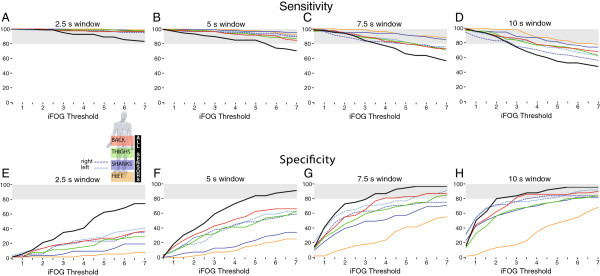
BACKGROUND: We have previously published a technique for objective assessment of freezing of gait (FOG) in Parkinson's disease (PD) from a single shank-mounted accelerometer. Here we extend this approach to evaluate the optimal configuration of sensor placement and signal processing parameters using seven sensors attached to the lumbar back, thighs, shanks and feet. METHODS: Multi-segmental acceleration data was obtained from 25 PD patients performing 134 timed up and go tasks, and clinical assessment of FOG was performed by two experienced raters from video. Four metrics were used to compare objective and clinical measures; the intraclass correlation coefficient (ICC) for number of FOG episodes and the percent time frozen per trial; and the sensitivity and specificity of FOG detection. RESULTS: The seven-sensor configuration was the most robust, scoring highly on all measures of performance (ICC number of FOG 0.75; ICC percent time frozen 0.80; sensitivity 84.3%; specificity 78.4%). A simpler single-shank sensor approach provided similar ICC values and exhibited a high sensitivity to FOG events, but specificity was lower at 66.7%. Recordings from the lumbar sensor offered only moderate agreement with the clinical raters in terms of absolute number and duration of FOG events (likely due to musculoskeletal attenuation of lower-limb 'trembling' during FOG), but demonstrated a high sensitivity (86.2%) and specificity (82.4%) when considered as a binary test for the presence/absence of FOG within a single trial. CONCLUSIONS: The seven-sensor approach was the most accurate method for quantifying FOG, and is best suited to demanding research applications. A single shank sensor provided measures comparable to the seven-sensor approach but is relatively straightforward in execution, facilitating clinical use. A single lumbar sensor may provide a simple means of objective FOG detection given the ubiquitous nature of accelerometers in mobile telephones and other belt-worn devices.
Overview
The claims and statistics of this paper haven’t been checked yet.
Free: it reads the open-access text and checks the first 5 claims that cite a source we can check. Create a free account to check every claim.
Integrity signals
Registry
Cites
Statistics
Figures
Verification
Claims the paper makes
The claims and statistics of this paper haven’t been checked yet.
Free: it reads the open-access text and checks the first 5 claims that cite a source we can check. Create a free account to check every claim.
Claims other papers make about this one
Each is checked against this paper’s own text: does it say what the citing paper says it does?
The cited source doesn’t support the claim as written.
In the citing paper
“Whereas, when using a short window size, it has been reported an important decrease in the sensitivity at short episodes, which are normally the most frequent in patients with FOG [61,68].”
From Deep Learning Approaches for Detecting Freezing of Gait in Parkinson’s Disease Patients through On-Body Acceleration Sensors (2020) · cites this paper as [61]
Checked by a reasoning model — may be wrong.
Experimental — accuracy not yet measured
Self-check
Percentages, sums and reported differences re-computed from the paper’s own numbers.
The self-check needs the paper’s full text.
Citations
Cites
Folstein, M. F., Folstein, S. E., & McHugh, P. R. (1975) · Journal of Psychiatric Research · doi:10.1016/0022-3956(75)90026-6 · Cited by 88,282 · cited 1×
“All patients satisfied UKPDS Brain Bank criteria [27], had a MiniMental State Examination (MMSE) [28] score of ≥ 24 and were deemed unlikely to have dementia or major depression according to DSM-IV criteria by consensus rating of a neurologist (SJGL) and a neuropsychologist (SLN).”
MethodIntraclass correlations: Uses in assessing rater reliability.
Shrout, P. E., & Fleiss, J. L. (1979) · Psychological Bulletin · doi:10.1037/0033-2909.86.2.420 · Cited by 24,532 · cited 1×
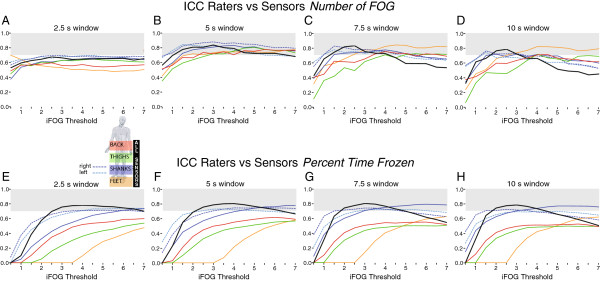
“The reliability of the quantification of the number of FOG episodes and percent time frozen was calculated between the clinical observers and the objective accelerometer-derived (iFOG) measures using the ICC [32]; the 134-element arrays for frequency, and relative duration of FOG, obtained from clinical assessment wer…”
MethodParkinsonism: onset, progression, and mortality
Hoehn, M. M., & Yahr, M. D. (1967) · Neurology · doi:10.1212/wnl.17.5.427 · Cited by 12,107
Unified Parkinson's Disease Rating Scale
(2012) · SpringerReference · doi:10.1007/springerreference_184495 · Cited by 3,066
Recent developments in Parkinson's disease
Fahn, S., Elton, R., MARSDEN, C. D., Calne, D. B., & Goldstein, M. (1986) · Raven Press eBooks · Cited by 2,306
JENKINSON, C., FITZPATRICK, R., PETO, V., GREENHALL, R., & HYMAN, N. (1997) · Age and Ageing · doi:10.1093/ageing/26.5.353 · Cited by 1,321 · cited 1×
“3], Parkinson's Disease Questionnaire (PDQ) 39 [30] 67.”
Bloem, B. R., Hausdorff, J. M., Visser, J. E., & Giladi, N. (2004) · Movement Disorders · doi:10.1002/mds.20115 · Cited by 1,297 · cited 4×
“Current treatment options for FOG are largely ineffective [1].”
BackgroundInfluentialStefani, A., Lozano, A. M., Peppe, A., Stanzione, P., Galati, S., Tropepi, D., Pierantozzi, M., Brusa, L., Scarnati, E., & Mazzone, P. (2007) · Brain · doi:10.1093/brain/awl346 · Cited by 807 · cited 1×
“Patients may undergo deep brain stimulation surgery to relieve symptoms of 'off' state FOG, although these surgical interventions are currently viewed as a treatment option only in the latter stages of PD [26].”
BackgroundSchaafsma, J. D., Balash, Y., Gurevich, T., Bartels, A. L., Hausdorff, J. M., & Giladi, N. (2003) · European Journal of Neurology · doi:10.1046/j.1468-1331.2003.00611.x · Cited by 725 · cited 3×
“Increasing levodopa dosage can reduce the frequency of 'off' (unmedicated) state freezing [1,22], likely by increasing the threshold for FOG to occur without altering the underlying pathophysiology [22].”
BackgroundRascol, O., Brooks, D., Melamed, E., Oertel, W., Poewe, W., Stocchi, F., & Tolosa, E. (2005) · The Lancet · doi:10.1016/s0140-6736(05)71083-7 · Cited by 641 · cited 1×
“A Freezing of Gait Questionnaire (FOG-Q) [7] and the new FOG-Q (NFOG-Q) [8] have recently been proposed as more sensitive tools to identify FOG behavior and assess the efficacy of interventions [9].”
MethodNieuwboer, A., Rochester, L., Herman, T., Vandenberghe, W., Emil, G. E., Thomaes, T., & Giladi, N. (2009) · Gait & Posture · doi:10.1016/j.gaitpost.2009.07.108 · Cited by 637 · cited 3×
“Patient characteristics were as follows; mean age 69.0 [SD 8.4], disease duration 10.5 years [SD 8.2], Hoehn and Yahr stage [29] 2.7 [SD 0.5], UPDRS – Section III 41.3 [SD 12.3], Parkinson's Disease Questionnaire (PDQ) 39 [30] 67.4 [SD 23.5], and NFOG-Q 18.2 [SD 5.9].”
MethodInfluentialDyskinesias and motor fluctuations in Parkinson's disease
Schrag, A., & Quinn, N. (2000) · Brain · doi:10.1093/brain/123.11.2297 · Cited by 600 · cited 1×
“However, FOG commonly shows only partial response to levodopa [22], and the benefits of increasing levodopa dosage in reducing FOG must be balanced with the increased likelihood of levodopa-induced dyskinesias, also associated with a greater fall risk [25].”
BackgroundFreezing of gait in PD: Prospective assessment in the DATATOP cohort
Giladi, N., McDermott, M. P., Fahn, S., Przedborski, S., Jankovic, J., Stern, M., Tanner, C., & The Parkinson Study Group (2001) · Neurology · doi:10.1212/wnl.56.12.1712 · Cited by 545 · cited 2×
“This was the primary outcome measure (UPDRS 14 ≥1) used in a large study of selegiline as a prophylactic treatment for FOG in early PD [6].”
BackgroundMethodAmbulatory monitoring of freezing of gait in Parkinson’s disease
Moore, S. T., MacDougall, H. G., & Ondo, W. G. (2008) · Journal of Neuroscience Methods · doi:10.1016/j.jneumeth.2007.08.023 · Cited by 526 · cited 10×
“In addition, FOG identification from individual shank IMUs (left or right) was assessed to allow comparison with our previous study [14], which utilized a single sensor on the left shank.”
BackgroundMethodResultInfluentialSelf-citationImpaired regulation of stride variability in Parkinson's disease subjects with freezing of gait
Hausdorff, J. M., Schaafsma, J. D., Balash, Y., Bartels, A. L., Gurevich, T., & Giladi, N. (2003) · Experimental Brain Research · doi:10.1007/s00221-002-1354-8 · Cited by 442 · cited 1×
“Clinical evaluation of video recordings of ambulating patients to identify the number of FOG events utilizing one [11-15], two [10,15-19], or three observers [20-23] has emerged as a de facto 'gold standard' in the past decade.”
BackgroundValidation of the freezing of gait questionnaire in patients with Parkinson’s disease
Giladi, N., Tal, J., Azulay, T., Rascol, O., Brooks, D. J., Melamed, E., Oertel, W., Poewe, W. H., Stocchi, F., & Tolosa, E. (2009) · Movement Disorders · doi:10.1002/mds.21745 · Cited by 431 · cited 3×
“Patient characteristics were as follows; mean age 69.0 [SD 8.4], disease duration 10.5 years [SD 8.2], Hoehn and Yahr stage [29] 2.7 [SD 0.5], UPDRS – Section III 41.3 [SD 12.3], Parkinson's Disease Questionnaire (PDQ) 39 [30] 67.4 [SD 23.5], and NFOG-Q 18.2 [SD 5.9].”
MethodInfluentialMotor blocks in Parkinson's disease
Giladi, N., McMahon, D., Przedborski, S., Flaster, E., Guillory, S., Kostic, V., & Fahn, S. (1992) · Neurology · doi:10.1212/wnl.42.2.333 · Cited by 429 · cited 1×
“; licensee BioMed Central Commons Attribution License (http://creativec reproduction in any medium, provided the or disease duration and severity [1,2], although some earlystage PD patients (patients not yet administered levodopa [2,3] or with mild symptoms [4]) also experience freezing.”
BackgroundFreezing of gait in patients with advanced Parkinson's disease
Giladi, N., Treves, T. A., Simon, E. S., Shabtai, H., Orlov, Y., Kandinov, B., Paleacu, D., & Korczyn, A. D. (2001) · Journal of Neural Transmission · doi:10.1007/s007020170096 · Cited by 404 · cited 1×
“; licensee BioMed Central Commons Attribution License (http://creativec reproduction in any medium, provided the or disease duration and severity [1,2], although some earlystage PD patients (patients not yet administered levodopa [2,3] or with mild symptoms [4]) also experience freezing.”
BackgroundA comparison of clinical and pathological features of young‐ and old‐onset Parkinson's disease
Gibb, W. R. G., & Lees, A. J. (1988) · Neurology · doi:10.1212/wnl.38.9.1402 · Cited by 369 · cited 1×
“All patients satisfied UKPDS Brain Bank criteria [27], had a MiniMental State Examination (MMSE) [28] score of ≥ 24 and were deemed unlikely to have dementia or major depression according to DSM-IV criteria by consensus rating of a neurologist (SJGL) and a neuropsychologist (SLN).”
MethodPredictors of freezing in Parkinson's disease: A survey of 6,620 patients
Macht, M., Kaussner, Y., Möller, J. C., Stiasny‐Kolster, K., Eggert, K. M., Krüger, H., & Ellgring, H. (2007) · Movement Disorders · doi:10.1002/mds.21458 · Cited by 319 · cited 1×
“; licensee BioMed Central Commons Attribution License (http://creativec reproduction in any medium, provided the or disease duration and severity [1,2], although some earlystage PD patients (patients not yet administered levodopa [2,3] or with mild symptoms [4]) also experience freezing.”
BackgroundMarching to the beat of the same drummer: the spontaneous tempo of human locomotion
MacDougall, H. G., & Moore, S. T. (2005) · Journal of Applied Physiology · doi:10.1152/japplphysiol.00138.2005 · Cited by 266 · cited 1×
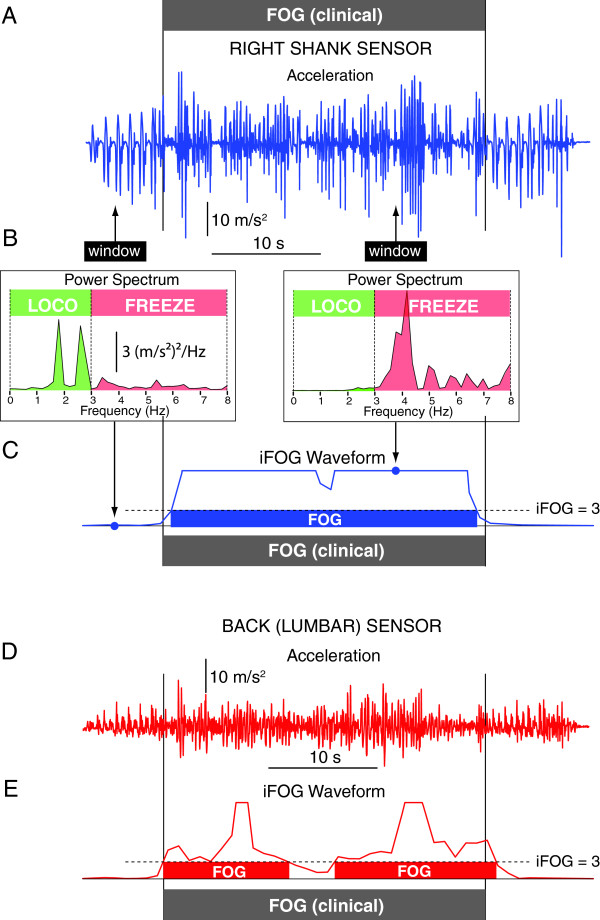
“Peaks at the stride and step frequencies (approximately 1 and 2 Hz, respectively [31]) characterize the power spectrum of vertical leg acceleration during an epoch of walking, with the vast majority of power occurring at frequencies below 3 Hz [14].”
BackgroundSelf-citationGait freezing in Parkinson's disease and the stride length sequence effect interaction
Chee, R., Murphy, A., Danoudis, M., Georgiou-Karistianis, N., & Iansek, R. (2009) · Brain · doi:10.1093/brain/awp053 · Cited by 259 · cited 1×
“Clinical evaluation of video recordings of ambulating patients to identify the number of FOG events utilizing one [11-15], two [10,15-19], or three observers [20-23] has emerged as a de facto 'gold standard' in the past decade.”
BackgroundKnee trembling during freezing of gait represents multiple anticipatory postural adjustments
Jacobs, J. V., Nutt, J. G., Carlson-Kuhta, P., Stephens, M., & Horak, F. B. (2009) · Experimental Neurology · doi:10.1016/j.expneurol.2008.10.019 · Cited by 256 · cited 1×
“Clinical evaluation of video recordings of ambulating patients to identify the number of FOG events utilizing one [11-15], two [10,15-19], or three observers [20-23] has emerged as a de facto 'gold standard' in the past decade.”
BackgroundNieuwboer, A., Dom, R., De Weerdt, W., Desloovere, K., Janssens, L., & Stijn, V. (2004) · Brain · doi:10.1093/brain/awh189 · Cited by 222 · cited 1×
“Clinical evaluation of video recordings of ambulating patients to identify the number of FOG events utilizing one [11-15], two [10,15-19], or three observers [20-23] has emerged as a de facto 'gold standard' in the past decade.”
BackgroundBartels, A. L., Balash, Y., Gurevich, T., Schaafsma, J. D., Hausdorff, J. M., & Giladi, N. (2003) · Journal of Clinical Neuroscience · doi:10.1016/s0967-5868(03)00192-9 · Cited by 168
A new rating instrument to assess festination and freezing gait in Parkinsonian patients
Ziegler, K., Schroeteler, F., Ceballos‐Baumann, A. O., & Fietzek, U. M. (2010) · Movement Disorders · doi:10.1002/mds.22993 · Cited by 154
Assessing the utility of Freezing of Gait Questionnaires in Parkinson’s Disease
Shine, J. M., Moore, S. T., Bolitho, S. J., Morris, T. R., Dilda, V., Naismith, S. L., & Lewis, S. J. G. (2012) · Parkinsonism & Related Disorders · doi:10.1016/j.parkreldis.2011.08.002 · Cited by 116 · cited 6×
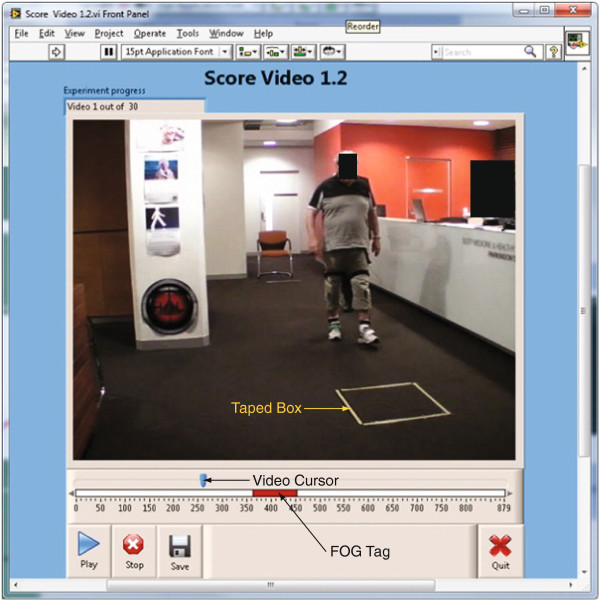
“The frequency and relative duration of freezing episodes were determined for each video utilizing a FOG tagging program described previously [10,24].”
BackgroundMethodInfluentialSelf-citationA comparison of clinical and objective measures of freezing of gait in Parkinson's disease
Morris, T. R., Cho, C., Dilda, V., Shine, J. M., Naismith, S. L., Lewis, S. J. G., & Moore, S. T. (2012) · Parkinsonism & Related Disorders · doi:10.1016/j.parkreldis.2012.03.001 · Cited by 114 · cited 7×
“Agreement (ICC) between 10 movement disorder specialists scoring a set of 14 videos of patients performing the TUG task was 16% higher for percent time frozen relative to number of FOG [24] (our two raters demonstrated a similar relative agreement in the same study, with an ICC of 0.”
BackgroundMethodInfluentialSelf-citationHausdorff, J. M., Balash, Y., & Giladi, N. (2003) · Physica A Statistical Mechanics and its Applications · doi:10.1016/s0378-4371(02)01744-2 · Cited by 95
Lo, A. C., Chang, V. C., Gianfrancesco, M. A., Friedman, J. H., Patterson, T. S., & Benedicto, D. F. (2010) · Journal of NeuroEngineering and Rehabilitation · doi:10.1186/1743-0003-7-51 · Cited by 91 · cited 1×
“Clinical evaluation of video recordings of ambulating patients to identify the number of FOG events utilizing one [11-15], two [10,15-19], or three observers [20-23] has emerged as a de facto 'gold standard' in the past decade.”
BackgroundDoes freezing in Parkinson’s disease change limb coordination?
Nieuwboer, A., Chavret, F., Willems, A., & Desloovere, K. (2007) · Journal of Neurology · doi:10.1007/s00415-006-0514-3 · Cited by 73 · cited 1×
“Clinical evaluation of video recordings of ambulating patients to identify the number of FOG events utilizing one [11-15], two [10,15-19], or three observers [20-23] has emerged as a de facto 'gold standard' in the past decade.”
BackgroundMoreau, C., Defebvre, L., Bleuse, S., Blatt, J. L., Duhamel, A., Bloem, B. R., Destée, A., & Krystkowiak, P. (2008) · Journal of Neural Transmission · doi:10.1007/s00702-008-0099-3 · Cited by 62 · cited 1×
“Clinical evaluation of video recordings of ambulating patients to identify the number of FOG events utilizing one [11-15], two [10,15-19], or three observers [20-23] has emerged as a de facto 'gold standard' in the past decade.”
BackgroundObstacle avoidance to elicit freezing of gait during treadmill walking
Snijders, A. H., Weerdesteyn, V., Hagen, Y. J., Duysens, J., Giladi, N., & Bloem, B. R. (2009) · Movement Disorders · doi:10.1002/mds.22894 · Cited by 60 · cited 1×
“Clinical evaluation of video recordings of ambulating patients to identify the number of FOG events utilizing one [11-15], two [10,15-19], or three observers [20-23] has emerged as a de facto 'gold standard' in the past decade.”
Background
Cited by
Technology in Parkinson’s disease: challenges and opportunities
Espay, A. J., Bonato, P., Nahab, F. B., Maetzler, W., Dean, J. M., Klucken, J., Eskofier, B. M., Merola, A., Horak, F., Lang, A. E., et al. (2016) · Movement Disorders · doi:10.1002/mds.26642 · Cited by 654
“The system may detect an increase in cadence with a corresponding decrease in step length or a change in frequency of the lower leg oscillations.(34) The detection of such motor behaviors could trigger a device designed to deliver proprioceptive cues that could lead to a change in postural control and stepping pattern…”
BackgroundFree‐living monitoring of Parkinson's disease: Lessons from the field
Del Din, S., Godfrey, A., Mazzà, C., Lord, S., & Rochester, L. (2016) · Movement Disorders · doi:10.1002/mds.26718 · Cited by 370
“74%) for detection of FOG and moderate agreement with clinical measures.(43,44) These results provide a critical step from which validation can be extended to free living.”
ResultFreezing of gait: a practical approach to management
Nonnekes, J., Snijders, A. H., Nutt, J. G., Deuschl, G., Giladi, N., & Bloem, B. R. (2015) · The Lancet Neurology · doi:10.1016/s1474-4422(15)00041-1 · Cited by 365
Rodríguez-Martín, D., Samà, A., Pérez-López, C., Català, A., Moreno Arostegui, J. M., Cabestany, J., Bayés, À., Alcaine, S., Mestre, B., Prats, A., et al. (2017) · PLOS ONE · doi:10.1371/journal.pone.0171764 · Cited by 237
“In 2008, Moore et al. proposed a methodology for detecting FoG with an accelerometer at the ankle where they described the Freezing Index (FI), which is the quotient of the power spectral density (PSD) from 3 to 8 Hz (Freezing Band, FB) and the PSD from 0.5 to 3 Hz (Walking Band, WB) [21].”
BackgroundMethodInfluentialCamps, J., Samà, A., Martín, M., Rodríguez-Martín, D., Pérez-López, C., Moreno Arostegui, J. M., Cabestany, J., Català, A., Alcaine, S., Mestre, B., et al. (2018) · Knowledge-Based Systems · doi:10.1016/j.knosys.2017.10.017 · Cited by 224
“…the already preprocessed data was windowed using a window size of 2.56 s since sensor measurements employed were acquired at435 50 Hz, according to Moore et al. (2013) [57], window sizes for FOG detection should be at least of 2.5 s to achieve accurate results, and GPUs are more efficient for…”
MethodResultInfluential
Metadata
- Authors
- Moore, S. T., Yungher, D. A., Morris, T. R., Dilda, V., MacDougall, H. G., Shine, J. M., Naismith, S. L., & Lewis, S. J.
- Affiliations
- Icahn School of Medicine at Mount Sinai (US)
- The University of Sydney (AU)
- Corresponding author
- Moore, Steven T
- Venue
- Journal of NeuroEngineering and Rehabilitation
- Published
- 2013
- Volume
- 10
- Issue
- 1
- Pages
- 19
- ISSN
- 1743-0003 (ISSN-L)
- PMC
- PMC3598888
- OpenAlex
- W2122354382
- Cited by
- 204
- References
- 34
- Citations by year
- 2026: 8 · 2025: 11 · 2024: 9 · 2023: 18 · 2022: 18 · 2021: 24 · 2020: 17 · 2019: 20 · 2018: 17 · 2017: 15 · 2016: 17 · 2015: 12 · 2014: 12 · 2013: 5
- FWCI
- 39.85
- Type
- journal article
- Language
- en
- Open access
- gold
- doi.org
- Licence
- cc-by
- Locations
- Journal of NeuroEngineering and Rehabilitation (publishedVersion, cc-by)
- Europe PMC (PubMed Central) (publishedVersion, cc-by)
- PubMed Central (publishedVersion, cc-by)
- PubMed (publishedVersion)
- Acquire (CQUniversity) (submittedVersion, cc-by)
- Figshare (submittedVersion, cc-by)
- Funders
- National Aeronautics and Space Administration (NNX09AL14G, NNX12AM25G)
- National Space Biomedical Research Institute (1008117)
- University of Sydney
- Garnett Passe and Rodney Williams Memorial Foundation
- National Health and Medical Research Council (1008117)
- Topics
- Health Sciences › Health Professions › Physical Therapy, Sports Therapy and Rehabilitation › Balance, Gait, and Falls Prevention
- Physical Sciences › Computer Science › Computer Vision and Pattern Recognition › Context-Aware Activity Recognition Systems
- Physical Sciences › Engineering › Biomedical Engineering › Gait Recognition and Analysis
- Keywords
- freezing of gait, Parkinson's disease, accelerometry, sensor placement, Timed Up and Go test, objective gait assessment, wearable sensors
- MeSH terms
- Biomechanical Phenomena, Data Interpretation, Statistical, Electrodes, Female, Foot, Humans, Leg, Locomotion, Lumbosacral Region, Male, Musculoskeletal Physiological Phenomena, Neuropsychological Tests, Parkinson Disease, Psychomotor Performance, Signal Processing, Computer-Assisted, Software, Thigh, Reproducibility of Results, Cohort Studies, Gait Disorders, Neurologic, Lower Extremity
About these checks
Registry, retraction, Cites and statistics results are computed, not judged, with one exception: a printed reference that no index lists is read once by a model before it counts as a citation error. Claims are extracted by a model and kept only when their quote appears verbatim in the text; each cited source is then checked, with a model’s help, for whether it says what the claim relies on. Those verdicts can be wrong — read the claim’s quote and the cited source before relying on one.
Statistics and arithmetic are recomputed, not judged.
Confidence bands are shown only for fields calibrated on our annotated test set. None is calibrated yet, so no band is shown.
What counts as a claim ›How we measure confidence ›How we check this ›
Are you an author, or do you see a problem with this page? Request a review
Data sources
Bibliographic data: Semantic Scholar, OpenAlex, Crossref.
Contains information from the Semantic Scholar Academic Graph Datasets, made available under the ODC Attribution License (ODC-BY 1.0).
Semantic Scholar’s data is described in: Kinney, R., et al. (2023). The Semantic Scholar Open Data Platform. arXiv:2301.10140.
