

The DOI matches its Crossref record; 106 of the 107 references it cites were found in a registry or an index.
Biofeedback in rehabilitation
Open accessAbstract
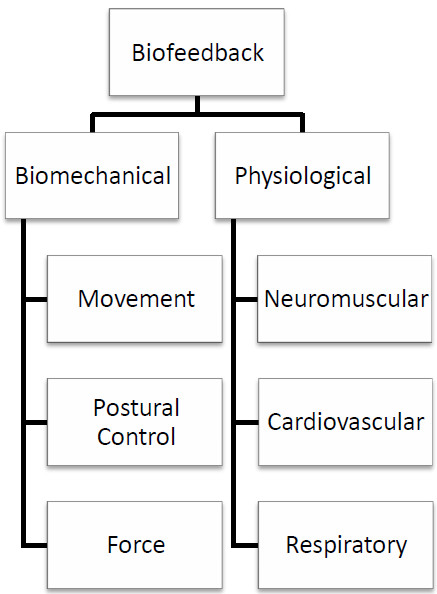
This paper reviews the literature relating to the biofeedback used in physical rehabilitation. The biofeedback methods used in rehabilitation are based on biomechanical measurements and measurements of the physiological systems of the body. The physiological systems of the body which can be measured to provide biofeedback are the neuromuscular system, the respiratory system and the cardiovascular system. Neuromuscular biofeedback methods include electromyography (EMG) biofeedback and real-time ultrasound imaging (RTUS) biofeedback. EMG biofeedback is the most widely investigated method of biofeedback and appears to be effective in the treatment of many musculoskeletal conditions and in post cardiovascular accident (CVA) rehabilitation. RTUS biofeedback has been demonstrated effective in the treatment of low back pain (LBP) and pelvic floor muscle dysfunction. Cardiovascular biofeedback methods have been shown to be effective in the treatment of a number of health conditions such as hypertension, heart failure, asthma, fibromyalgia and even psychological disorders however a systematic review in this field has yet to be conducted. Similarly, the number of large scale studies examining the use of respiratory biofeedback in rehabilitation is limited. Measurements of movement, postural control and force output can be made using a number of different devices and used to deliver biomechanical biofeedback. Inertial based sensing biofeedback is the most widely researched biomechanical biofeedback method, with a number of studies showing it to be effective in improving measures of balance in a number of populations. Other types of biomechanical biofeedback include force plate systems, electrogoniometry, pressure biofeedback and camera based systems however the evidence for these is limited. Biofeedback is generally delivered using visual displays, acoustic or haptic signals, however more recently virtual reality (VR) or exergaming technology have been used as biofeedback signals. VR and exergaming technology have been primarily investigated in post-CVA rehabilitation, however, more recent work has shown this type of biofeedback to be effective in improving exercise technique in musculoskeletal populations. While a number of studies in this area have been conducted, further large scale studies and reviews investigating different biofeedback applications in different clinical populations are required.
Overview
The claims and statistics of this paper haven’t been checked yet.
Run the check — free, no account needed. It reads the open-access text and checks the sources it cites.
Integrity signals
Registry
Cites
Statistics
Figures
Verification
Claims the paper makes
The claims and statistics of this paper haven’t been checked yet.
Run the check — free, no account needed. It reads the open-access text and checks the sources it cites.
Claims other papers make about this one
Each is checked against this paper’s own text: does it say what the citing paper says it does?
The source backs part of the claim, not all of it — or backs it for a different population, condition or comparison.
In the citing paper
“Force plate systems provide feedback on balance, movement, and gait and have been shown to reduce the incidence of falls.24”
From A Review of Movement and Functional Impairments in Fibromyalgia: Implications for Targeted Treatment (2025) · cites this paper as [24]
Experimental — accuracy not yet measuredThe source backs part of the claim, not all of it — or backs it for a different population, condition or comparison.
In the citing paper
“Moderate exercise, integrative neuromuscular training, Tai Chi, and Virtual Reality (VR) based exergaming show promise in improving postural stability and physical functioning.5,24”
From A Review of Movement and Functional Impairments in Fibromyalgia: Implications for Targeted Treatment (2025) · cites this paper as [24]
Experimental — accuracy not yet measuredThe cited source says what the claim attributes to it.
In the citing paper
“Providing patients with EMDR,4 CBT,9,12,17 biofeedback24 or rTMS26,33 may enable them to gain control over physical processes, allowing for improved functional task performance and increased autonomy in their rehabilitation.24”
From A Review of Movement and Functional Impairments in Fibromyalgia: Implications for Targeted Treatment (2025) · cites this paper as [24]
The cited source says what the claim attributes to it.
In the citing paper
“The addition of VR and therapeutic exergames offer patients opportunities to engage in meaningful, intensive, and enjoyable tasks related to their real-life interests and daily activities.24”
From A Review of Movement and Functional Impairments in Fibromyalgia: Implications for Targeted Treatment (2025) · cites this paper as [24]
Self-check
Percentages, sums and reported differences re-computed from the paper’s own numbers.
The self-check needs the paper’s full text.
Citations
Cites
Virtual Reality–Augmented Rehabilitation for Patients Following Stroke
Merians, A. S., Jack, D., Boian, R., Tremaine, M. M., Burdea, G., Adamovich, S., Recce, M. L., & Howard Poizner, A. (2002) · Physical Therapy · doi:10.1093/ptj/82.9.898 · Cited by 570
Karavidas, M. K., Lehrer, P. M., Vaschillo, E., Vaschillo, B., Marin, H., Buyske, S., Malinovsky, I., Radvanski, D., & Hassett, A. (2007) · Applied Psychophysiology and Biofeedback · doi:10.1007/s10484-006-9029-z · Cited by 440
The Use of Ultrasound Imaging of the Abdominal Drawing-in Maneuver in Subjects With Low Back Pain
Teyhen, D. S., Miltenberger, C. E., Deiters, H. M., Toro, Y. M. D., Pulliam, J. N., Childs, J. D., Boyles, R. E., & Flynn, T. W. (2005) · Journal of Orthopaedic and Sports Physical Therapy · doi:10.2519/jospt.2005.35.6.346 · Cited by 415
Standing balance training: effect on balance and locomotion in hemiparetic adults.
Winstein, C., Gardner, E. R., McNeal, D. R., Barto, P. S., & De, N. (1989) · PubMed · Cited by 337
Zucker, T. L., Samuelson, K. W., Muench, F., Greenberg, M. A., & Gevirtz, R. N. (2009) · Applied Psychophysiology and Biofeedback · doi:10.1007/s10484-009-9085-2 · Cited by 335
Recent developments in biofeedback for neuromotor rehabilitation
Huang, H., Wolf, S. L., & He, J. (2006) · Journal of NeuroEngineering and Rehabilitation · doi:10.1186/1743-0003-3-11 · Cited by 333
Geiger, R. A., Allen, J. B., O’Keefe, J., & Hicks, R. R. (2001) · Physical Therapy · doi:10.1093/ptj/81.4.995 · Cited by 333
Yamanouchi, K., Shinozaki, T., Chikada, K., Nishikawa, T., Ito, K., Shimizu, S., Ozawa, N., Suzuki, Y., Maeno, H., Kato, K., et al. (1995) · Diabetes Care · doi:10.2337/diacare.18.6.775 · Cited by 330 · cited 1×
“Much work has been conducted evaluating pedometers as a means of improving exercise compliance in people with diabetes, obesity and congestive heart failure [72-74].”
BackgroundHassett, A. L., Radvanski, D. C., Vaschillo, E. G., Vaschillo, B., Sigal, L. H., Karavidas, M. K., Buyske, S. G., & Lehrer, P. M. (2007) · Applied Psychophysiology and Biofeedback · doi:10.1007/s10484-006-9028-0 · Cited by 282
Balance Retraining After Stroke Using Force Platform Biofeedback
Nichols, D. S. (1997) · Physical Therapy · doi:10.1093/ptj/77.5.553 · Cited by 270
Research works printed but not linked: 1
- 10.1007/s10484-010-9140-z · DOI
Cited by
Sorted by citations
Items 101–200 of 761
Doheny, E. P., Goulding, C., Flood, M. W., McManus, L. M., & Lowery, M. M. (2019) · IEEE Sensors Journal · doi:10.1109/jsen.2019.2953354 · Cited by 35
Wearable Sensor Array Design for Spine Posture Monitoring During Exercise Incorporating Biofeedback
Caviedes, J. E., Li, B., & Jammula, V. C. (2020) · IEEE Transactions on Biomedical Engineering · doi:10.1109/tbme.2020.2971907 · Cited by 35
Forno, S. D., Arena, A., Alessandrini, M., Pellizzone, V., Lenzi, J., Raimondo, D., Casadio, P., Youssef, A., Paradisi, R., & Seracchioli, R. (2020) · Journal of Sex & Marital Therapy · doi:10.1080/0092623x.2020.1765057 · Cited by 35
Effectiveness of robo-assisted lower limb rehabilitation for spastic patients: A systematic review
Shakti, D., Mathew, L., Kumar, N., & Kataria, C. (2018) · Biosensors and Bioelectronics · doi:10.1016/j.bios.2018.06.027 · Cited by 34
Engels, L. F., Shehata, A. W., Scheme, E., Sensinger, J. W., & Cipriani, C. (2019) · Frontiers in Neuroscience · doi:10.3389/fnins.2019.00578 · Cited by 37
Rehabilitation of high upper limb amputees after Targeted Muscle Reinnervation
Sturma, A., Stamm, T., Hruby, L. A., Bischof, B., Salminger, S., Gstoettner, C., Prahm, C., Pittermann, A., Wakolbinger, R., Höfer, C., et al. (2020) · Journal of Hand Therapy · doi:10.1016/j.jht.2020.10.002 · Cited by 34
Differentiation among bio- and augmented- feedback in technologically assisted rehabilitation
Morone, G., Ghooshchy, S. G., Palomba, A., Baricich, A., Santamato, A., Ciritella, C., Ciancarelli, I., Molteni, F., Gimigliano, F., Iolascon, G., et al. (2021) · Expert Review of Medical Devices · doi:10.1080/17434440.2021.1927704 · Cited by 34
Cisnal, A., Gordaliza, P., Turiel, J. P., Fraile, J. C., & Sierra, D. (2023) · Sensors · doi:10.3390/s23042048 · Cited by 34
Functional Magnetic Resonance Connectivity in Patients With Temporomadibular Joint Disorders
Festa, F., Rotelli, C., Scarano, A., Navarra, R., Caulo, M., & Macrì, M. (2021) · Frontiers in Neurology · doi:10.3389/fneur.2021.629211 · Cited by 33
Azola, A. M., Sunday, K. L., & Humbert, I. A. (2016) · Dysphagia · doi:10.1007/s00455-016-9749-z · Cited by 33
Zhang, M., You, H., Zhang, H., Zhao, W., Han, T., Liu, J., Jiang, S., & Feng, X. (2020) · Medicine · doi:10.1097/md.0000000000022425 · Cited by 32
Argent, R., Bevilacqua, A., Keogh, A., Daly, A., & Caulfield, B. (2021) · Sensors · doi:10.3390/s21072346 · Cited by 32
Self-citationIn vivo prediction of the carcass fatness using live body measurements in Pekin ducks
Lin, F.-B., Zhu, F., Hao, J.-P., Yang, F., & Hou, Z. (2018) · Poultry Science · doi:10.3382/ps/pey079 · Cited by 32
Gámez, A. B., Morante, J. J. H., Gil, J. L. M., Esparza-Ros, F., & Martínez, C. M. (2019) · Scientific Reports · doi:10.1038/s41598-019-49720-x · Cited by 32
Calderone, A., Masi, V. M. M., Luca, R. D., Gangemi, A., Bonanno, M., Floridia, D., Corallo, F., Morone, G., Quartarone, A., Maggio, M. G., et al. (2025) · Heliyon · doi:10.1016/j.heliyon.2025.e41917 · Cited by 31
Robot-Assisted Rehabilitation Therapy: Recovery Mechanisms and Their Implications for Machine Design
Bejarano, N. C., Maggioni, S., Rijcke, L. D., Cifuentes, C. A., & Reinkensmeyer, D. J. (2015) · Biosystems & biorobotics · doi:10.1007/978-3-319-24901-8_8 · Cited by 32
A Research Roadmap: Connected Health as an Enabler of Cancer Patient Support
Signorelli, G. R., Lehocki, F., Fernández, M. M., O'Neill, G., O’Connor, D., Brennan, L. K., Monteiro-Guerra, F., Rivero-Rodriguez, A., Hors-Fraile, S., Munoz-Penas, J., et al. (2019) · Journal of Medical Internet Research · doi:10.2196/14360 · Cited by 31
Levinger, P., Zeina, D., Teshome, A. K., Skinner, E. H., Begg, R. K., & Abbott, J. H. (2015) · Disability and Rehabilitation Assistive Technology · doi:10.3109/17483107.2015.1080767 · Cited by 30
Battel, I., Calvo, I., & Walshe, M. (2020) · Archives of Physical Medicine and Rehabilitation · doi:10.1016/j.apmr.2020.06.033 · Cited by 30
Kiper, P., Rimini, D., Falla, D., Baba, A., Rutkowski, S., Maistrello, L., & Turolla, A. (2021) · Sensors · doi:10.3390/s21248175 · Cited by 30
Validation of smartphone gyroscopes for mobile biofeedback applications
Umek, A., & Kos, A. (2016) · Personal and Ubiquitous Computing · doi:10.1007/s00779-016-0946-4 · Cited by 30
Use of Integrative Medicine in the United States Military Health System
Madsen, C., Vaughan, M., & Koehlmoos, T. P. (2017) · Evidence-based Complementary and Alternative Medicine · doi:10.1155/2017/9529257 · Cited by 31
A survey on the state of the art of force myography technique (FMG): analysis and assessment
Sherif, O., Bassuoni, M. M., & Mehrez, O. (2024) · Medical & Biological Engineering & Computing · doi:10.1007/s11517-024-03019-w · Cited by 29
A bibliometric analysis of metaverse technologies in healthcare services
Damar, S., & Köksalmış, G. H. (2024) · Service Business · doi:10.1007/s11628-024-00553-3 · Cited by 33
Baptista, R. D. S., Bó, A. P. L., & Hayashibe, M. (2016) · IEEE Transactions on Neural Systems and Rehabilitation Engineering · doi:10.1109/tnsre.2016.2591783 · Cited by 29
Brennan, L. K., Kessie, T., & Caulfield, B. (2020) · JMIR mhealth and uhealth · doi:10.2196/19721 · Cited by 29
Self-citationSemprini, M., Cuppone, A. V., Delis, I., Squeri, V., Panzeri, S., & Konczak, J. (2016) · IEEE Transactions on Neural Systems and Rehabilitation Engineering · doi:10.1109/tnsre.2016.2636122 · Cited by 28
A Technical Framework for Musical Biofeedback in Stroke Rehabilitation
Kantan, P. R., Spaich, E. G., & Dahl, S. (2022) · IEEE Transactions on Human-Machine Systems · doi:10.1109/thms.2021.3137013 · Cited by 28
Intercorporeal Biofeedback for Movement Learning
Vidal, L. T., Segura, E. M., & Wærn, A. (2023) · ACM Transactions on Computer-Human Interaction · doi:10.1145/3582428 · Cited by 32
The Evolution of Swallowing Rehabilitation and Emergence of Biofeedback Modalities
Huckabee, M., Mills, M., Flynn, R., & Doeltgen, S. (2023) · Current Otorhinolaryngology Reports · doi:10.1007/s40136-023-00451-8 · Cited by 28
The Role of High Performance Computing and Communication for Real-Time Biofeedback in Sport
Umek, A., & Kos, A. (2016) · Mathematical Problems in Engineering · doi:10.1155/2016/4829452 · Cited by 28
Lee, B.-C., Fung, A., & Thrasher, T. A. (2017) · IEEE Transactions on Neural Systems and Rehabilitation Engineering · doi:10.1109/tnsre.2017.2762239 · Cited by 28
Factors That Contribute to the Use of Stroke Self-Rehabilitation Technologies: A Review
Vourganas, I., Stanković, V., Stanković, L., & Kerr, A. (2019) · JMIR Biomedical Engineering · doi:10.2196/13732 · Cited by 29
Bonnette, S., DiCesare, C. A., Kiefer, A. W., Riley, M. A., Foss, K. D. B., Thomas, S. M., Diekfuss, J. A., & Myer, G. D. (2020) · Europe PMC (PubMed Central) · Cited by 28
Mind-body therapy for treating fibromyalgia: a systematic review
Steen, J. P., Kannan, V., Zaidi, A., Cramer, H., & Ng, J. Y. (2024) · Pain Medicine · doi:10.1093/pm/pnae076 · Cited by 34
Liu, J., Santucci, V., Eicholtz, S. P., & Kesar, T. M. (2020) · Gait & Posture · doi:10.1016/j.gaitpost.2020.10.014 · Cited by 27
Pereira, A., Folgado, D., Nunes, F., Almeida, J., & Sousa, I. (2019) · IEEE International Symposium on Medical Measurements and Applications (MeMeA) · doi:10.1109/memea.2019.8802152 · Cited by 27
The Effectiveness of Technology-Supported Exercise Therapy for Low Back Pain
Matheve, T., Brumagne, S., & Timmermans, A. A. A. (2016) · American Journal of Physical Medicine & Rehabilitation · doi:10.1097/phm.0000000000000615 · Cited by 27
Segmentation of shoulder rehabilitation exercises for single and multiple inertial sensor systems
Brennan, L. K., Bevilacqua, A., Kechadi, T., & Caulfield, B. (2020) · Journal of Rehabilitation and Assistive Technologies Engineering · doi:10.1177/2055668320915377 · Cited by 26
Self-citationBailly, F., Ceglia, A., Michaud, B., Rouleau, D. M., & Begon, M. (2021) · Frontiers in Bioengineering and Biotechnology · doi:10.3389/fbioe.2021.642742 · Cited by 26
Myofascial Low Back Pain Treatment
Sharan, D., Rajkumar, J. S., Mohandoss, M., & Ranganathan, R. (2014) · Current Pain and Headache Reports · doi:10.1007/s11916-014-0449-9 · Cited by 26
Gamecho, B., Silva, H., Guerreiro, J., Gardeazabal, L., & Abascal, J. (2015) · Journal of Medical Systems · doi:10.1007/s10916-015-0296-1 · Cited by 26
Advancing Remote Healthcare Using Humanoid and Affective Systems
Tripathi, U., Rittvik Saran, J., Chamola, V., Jolfaei, A., & Chintanpalli, A. (2021) · IEEE Sensors Journal · doi:10.1109/jsen.2021.3049247 · Cited by 26
Electromyography biofeedback exergames to enhance grip strength and motivation
Garcia-Hernandez, N., Garza-Martinez, K., & Parra-Vega, V. (2018) · Games for Health Journal · doi:10.1089/g4h.2017.0054 · Cited by 25
Marandi, R. Z., Madeleine, P., Omland, Ø., Vuillerme, N., & Samani, A. (2019) · PLoS ONE · doi:10.1371/journal.pone.0213704 · Cited by 27
A Wearable Sensor-Based Exercise Biofeedback System: Mixed Methods Evaluation of Formulift
O’Reilly, M., Slevin, P., Ward, T. E., & Caulfield, B. (2018) · JMIR mhealth and uhealth · doi:10.2196/mhealth.8115 · Cited by 24
Self-citationFung, A., Lai, E. C., & Lee, B.-C. (2018) · IEEE Transactions on Neural Systems and Rehabilitation Engineering · doi:10.1109/tnsre.2018.2808139 · Cited by 24
O’Connor, D., Brennan, L. K., & Caulfield, B. (2018) · Maturitas · doi:10.1016/j.maturitas.2018.04.009 · Cited by 24
Self-citationVieira, M. D. A., de Oliveira‐Souza, A. I. S., Hahn, G. A., Bähr, L., Armijo-Olivo, S. L., & Ferreira, A. P. D. L. (2023) · International Journal of Environmental Research and Public Health · doi:10.3390/ijerph20021558 · Cited by 23
Sonification for Personalised Gait Intervention
Wall, C., McMeekin, P. J., Walker, R. W., Hetherington, V., Graham, L., & Godfrey, A. (2023) · Sensors · doi:10.3390/s24010065 · Cited by 23
IoT-driven augmented reality and virtual reality systems in neurological sciences
Sahu, M., Gupta, R. V., Ambasta, R. K., & Kumar, P. (2024) · Internet of Things · doi:10.1016/j.iot.2024.101098 · Cited by 23
Use of Game Console for Rehabilitation of Parkinson's Disease
Özgönenel, L., Çağırıcı, S., Çabalar, M., & Durmuşoğlu, G. (2016) · Balkan Medical Journal · doi:10.5152/balkanmedj.2016.16842 · Cited by 23
Figueroa-Fankhanel, F. (2014) · Psychiatric Clinics of North America · doi:10.1016/j.psc.2014.08.001 · Cited by 24
Fragile X Premutation: Medications, Therapy and Lifestyle Advice
Sodhi, D. K., & Hagerman, R. J. (2021) · Pharmacogenomics and Personalized Medicine · doi:10.2147/pgpm.s338846 · Cited by 22
Shin, H., Kim, J., Fadell, N. R., Pewitt, L. B., Shaaban, Y., Liu, C. Y., Jo, M., Bozovic, J., Tzavelis, A., Park, M., et al. (2025) · Nature Communications · doi:10.1038/s41467-025-59619-z · Cited by 21
Luo, Z., Wang, Y., Zhang, T., & Wang, J. (2025) · Frontiers in Bioengineering and Biotechnology · doi:10.3389/fbioe.2025.1660524 · Cited by 21
Human–Robot Interaction for Rehabilitation Robotics
Guo, Y., Gu, X., & Yang, G. (2021) · Future of business and finance · doi:10.1007/978-3-030-65896-0_23 · Cited by 22
Robotic Biofeedback for Post-Stroke Gait Rehabilitation: A Scoping Review
Pinheiro, C., Figueiredo, J., Cerqueira, J., & Santos, C. P. (2022) · Sensors · doi:10.3390/s22197197 · Cited by 21
Biofeedback EMG alternative therapy for chronic low back pain (the BEAT-pain study)
Lazaridou, A., Paschali, M., Vilsmark, E. S., Sadora, J., Burton, D., Bashara, A., & Edwards, R. R. (2023) · Digital Health · doi:10.1177/20552076231154386 · Cited by 22
Ananías, J., Vidal, C., Ortiz-Muñoz, L. E., Irarrázaval, S., & Besa, P. (2023) · Physiotherapy · doi:10.1016/j.physio.2023.12.005 · Cited by 21
Neurofeedback and the Neural Representation of Self: Lessons From Awake State and Sleep
Ioannides, A. A. (2018) · Frontiers in Human Neuroscience · doi:10.3389/fnhum.2018.00142 · Cited by 23
Chou, C.-H., Wang, T., Sun, X., Niu, C. M., Hao, M., Xie, Q., & Lan, N. (2020) · Medical Engineering & Physics · doi:10.1016/j.medengphy.2020.09.001 · Cited by 21
Asocjacyjne zniekształcenia pamięci. Metody ich badania i redukcji
Ulatowska, J., & Olszewska, J. M. (2020) · Wydawnictwo Liberi Libri eBooks · doi:10.47943/lib.9788363487430.rozdzial17 · Cited by 20
Phase-Dependent Effects of Closed-Loop Tactile Feedback on Gait Stability in Parkinson’s Disease
Fino, P. C., & Mancini, M. (2020) · IEEE Transactions on Neural Systems and Rehabilitation Engineering · doi:10.1109/tnsre.2020.2997283 · Cited by 20
Kim, H., Cho, N.-B., Kim, J., Kim, K. M., Kang, M., Choi, Y., Kim, M., You, H., Nam, S. I., & Shin, S. (2020) · JMIR mhealth and uhealth · doi:10.2196/22080 · Cited by 20
Measurement method of a microspring-supported force plate with an external laser displacement meter
Sugimoto, T., Kawasaki, Y., Toda, H., & Takahashi, H. (2022) · Measurement Science and Technology · doi:10.1088/1361-6501/ac7b12 · Cited by 20
Designing Ecological Auditory Feedback on Lower Limb Kinematics for Hemiparetic Gait Training
Kantan, P. R., Dahl, S., Jørgensen, H. R. M., Khadye, C., & Spaich, E. G. (2023) · Sensors · doi:10.3390/s23083964 · Cited by 20
Joshi, J., Wang, K., & Cho, Y. (2023) · Sensors · doi:10.3390/s23198244 · Cited by 24
Morone, G., Papaioannou, F., Alberti, A., Ciancarelli, I., Bonanno, M., & Calabrò, R. S. (2024) · Sensors · doi:10.3390/s24196269 · Cited by 22
Tamburella, F., Moreno, J. C., Iosa, M., Pisotta, I., Cincotti, F., Mattia, D., Pons, J. L., & Molinari, M. (2017) · Topics in Stroke Rehabilitation · doi:10.1080/10749357.2017.1318340 · Cited by 20
Aftanas, L. I., Bazanova, O. M., & Novozhilova, N. (2018) · Frontiers in Human Neuroscience · doi:10.3389/fnhum.2018.00108 · Cited by 20
Xie, Y., Wang, S., Gong, Q.-J., Wang, J., Sun, F.-H., Miyamoto, A., Ou, X., Wang, L., Wang, S., & Zhang, C. (2021) · Journal of Biomechanics · doi:10.1016/j.jbiomech.2021.110386 · Cited by 20
SMART EQUIPMENT DESIGN CHALLENGES FOR REAL TIME FEEDBACK SUPPORT IN SPORT
Umek, A., & Kos, A. (2018) · Facta Universitatis Series Mechanical Engineering · doi:10.22190/fume171121020u · Cited by 20
Kinect-driven Patient-specific Head, Skull, and Muscle Network Modelling for Facial Palsy Patients
Nguyen, T., Dakpé, S., Tho, M. H. B., & Dao, T. T. (2020) · Computer Methods and Programs in Biomedicine · doi:10.1016/j.cmpb.2020.105846 · Cited by 19
Pagé, I., Marchand, A.-A., Nougarou, F., O’Shaughnessy, J., & Descarreaux, M. (2015) · Journal of Manipulative and Physiological Therapeutics · doi:10.1016/j.jmpt.2015.08.005 · Cited by 19
Beuchert, J., Solowjow, F., Trimpe, S., & Seel, T. (2020) · Sensors · doi:10.3390/s20010260 · Cited by 19
Muscle Activity Detectors—Surface Electromyography in the Evaluation of Abductor Hallucis Muscle
Mortka, K., Wiertel-Krawczuk, A., & Lisiński, P. (2020) · Sensors · doi:10.3390/s20082162 · Cited by 19
Kamonseki, D. H., Calixtre, L. B., Barreto, R. P. G., & Camargo, P. R. (2021) · Clinical Rehabilitation · doi:10.1177/0269215521990950 · Cited by 19
O’Reilly, M., Duffin, J., Ward, T. E., & Caulfield, B. (2017) · JMIR Rehabilitation and Assistive Technologies · doi:10.2196/rehab.7259 · Cited by 19
Self-citationUlatowska, J. (2020) · Wydawnictwo Liberi Libri eBooks · doi:10.47943/lib.9788363487430.rozdzial18 · Cited by 21
Effect of balance training with Pro-kin System on balance in patients with white matter lesions
You, H., Zhang, H., Liu, J., Han, T., Zhang, M., Zhao, W., & Jiang, S. (2017) · Medicine · doi:10.1097/md.0000000000009057 · Cited by 18
d’Ornellas, M. C., Cargnin, D. J., & Prado, A. L. C. (2014) · Brazilian Symposium on Computer Games and Digital Entertainment (SBGames) · doi:10.1109/sbgames.2014.22 · Cited by 18
Recent developments in computer assisted rehabilitation environments
van der Meer, R. (2014) · Military Medical Research · doi:10.1186/2054-9369-1-22 · Cited by 19
Antunes, A., Carnide, F., & Matias, R. (2016) · Human Movement Science · doi:10.1016/j.humov.2016.04.004 · Cited by 18
sEMG Signal Acquisition Strategy towards Hand FES Control
Toledo-Peral, C. L., Gutiérrez-Martínez, J., Mercado-Gutierrez, J. A., Martín-Vignon-Whaley, A. I., Vera, A., & Leija, L. (2018) · Journal of Healthcare Engineering · doi:10.1155/2018/2350834 · Cited by 18
Souto, T., da Silva, H., Leite, Â. M. T., Baptista, A., Queirós, C. M. L., & Marques, A. J. (2019) · Rehabilitation Counseling Bulletin · doi:10.1177/0034355219847284 · Cited by 18
Effects of vibrotactile feedback on postural sway in trans-femoral amputees: A wavelet analysis
Khajuria, A., & Joshi, D. (2020) · Journal of Biomechanics · doi:10.1016/j.jbiomech.2020.110145 · Cited by 18
Effects of Sono-feedback during aspiration of Baker’s cysts: A controlled clinical trial
Çağlayan, G., Özçakar, L., Kaymak, S., Kaymak, B., & Tan, A. (2016) · Journal of Rehabilitation Medicine · doi:10.2340/16501977-2049 · Cited by 18
Arpa, S., & Ozcakir, S. (2019) · Journal of Rehabilitation Medicine · doi:10.2340/16501977-2513 · Cited by 18
Alyanak, B., Inanir, M., Sade, I., & Kablanoğlu, S. (2025) · Dysphagia · doi:10.1007/s00455-025-10819-1 · Cited by 17
The sonic instructor: A music-based biofeedback system for improving weightlifting technique
Lorenzoni, V., Staley, J., Marchant, T., Onderdijk, K. E., Maes, P., & Leman, M. (2019) · PLoS ONE · doi:10.1371/journal.pone.0220915 · Cited by 17
Lee, B.-C., An, J., Kim, J., & Lai, E. C. (2022) · IEEE Transactions on Neural Systems and Rehabilitation Engineering · doi:10.1109/tnsre.2022.3226368 · Cited by 17
Shin, D. (2019) · Technology and Health Care · doi:10.3233/thc-191647 · Cited by 17
Yassin, M. M., Saber, A. M., Saad, M. N., Said, A. M., & Khalifa, A. M. (2021) · Medicine in Novel Technology and Devices · doi:10.1016/j.medntd.2020.100056 · Cited by 17
Roll, S. C., Asai, C., & Tsai, J. (2016) · PubMed · Cited by 17
Gulatowska, J. (2020) · Wydawnictwo Liberi Libri eBooks · doi:10.47943/lib.9788363487430.rozdzial07 · Cited by 20
de Oliveira, A. K. A., da Costa, K. S. A., de Lucena, G. L., Sousa, C. D. O., Filho, J. F. D. M., & Brasileiro, J. S. (2022) · Clinical Biomechanics · doi:10.1016/j.clinbiomech.2022.105596 · Cited by 16
Carpinella, I., Bertoni, R., Anastasi, D., Cardini, R., Lencioni, T., Ferrarin, M., Cattaneo, D., & Gervasoni, E. (2024) · Sensors · doi:10.3390/s24227284 · Cited by 16
Assessing Donor Site Morbidity and Impact on Quality of Life in Free Flap Microsurgery: An Overview
Hodea, F.-V., Hariga, C.-S., Bordeanu-Diaconescu, E.-M., Cretu, A., Dumitru, C.-Ş., Ratoiu, V.-A., Lascăr, I., & Grosu-Bularda, A. (2024) · Life · doi:10.3390/life15010036 · Cited by 16
Metadata
- Authors
- Giggins, O. M., Persson, U., & Caulfield, B.
- Affiliations
- University College Dublin (IE)
- Corresponding author
- Giggins, Oonagh M
- Venue
- Journal of NeuroEngineering and Rehabilitation
- Published
- 2013
- Volume
- 10
- Issue
- 1
- Pages
- 60
- ISSN
- 1743-0003 (ISSN-L)
- PMC
- PMC3687555
- OpenAlex
- W2158721732
- Cited by
- 760
- References
- 107
- Citations by year
- 2026: 75 · 2025: 86 · 2024: 90 · 2023: 72 · 2022: 59 · 2021: 61 · 2020: 87 · 2019: 55 · 2018: 52 · 2017: 27 · 2016: 49 · 2015: 32 · 2014: 15
- FWCI
- 5.04
- Type
- journal article
- Language
- en
- Open access
- gold
- doi.org
- Licence
- cc-by
- Locations
- Journal of NeuroEngineering and Rehabilitation (publishedVersion, cc-by)
- Europe PMC (PubMed Central) (publishedVersion, cc-by)
- PubMed Central (publishedVersion, cc-by)
- PubMed (publishedVersion)
- Lenus, The Irish Health Repository (Dr Steevens Hospital Library) (submittedVersion)
- Funders
- Science Foundation Ireland
- Topics
- Health Sciences › Medicine › Rehabilitation › Stroke Rehabilitation and Recovery
- Health Sciences › Health Professions › Physical Therapy, Sports Therapy and Rehabilitation › Medical Practices and Rehabilitation
- Physical Sciences › Engineering › Biomedical Engineering › Muscle activation and electromyography studies
- Keywords
- biofeedback, physical rehabilitation, EMG biofeedback, real-time ultrasound, respiratory biofeedback, inertial sensing, balance, stroke rehabilitation, low back pain, pelvic floor dysfunction, virtual reality, exergames, musculoskeletal disorders, haptic feedback
- MeSH terms
- Biofeedback, Psychology, Humans, Rehabilitation
About these checks
Registry, retraction, Cites and statistics results are computed, not judged, with one exception: a printed reference that no index lists is read once by a model before it counts as a citation error. Claims are extracted by a model and kept only when their quote appears verbatim in the text; each cited source is then checked, with a model’s help, for whether it says what the claim relies on. Those verdicts can be wrong — read the claim’s quote and the cited source before relying on one.
Statistics and arithmetic are recomputed, not judged.
Confidence bands are shown only for fields calibrated on our annotated test set. None is calibrated yet, so no band is shown.
What counts as a claim ›How we measure confidence ›How we check this ›
Are you an author, or do you see a problem with this page? Request a review
