

The DOI matches its Crossref record; 106 of the 107 references it cites were found in a registry or an index.
Biofeedback in rehabilitation
Open accessAbstract
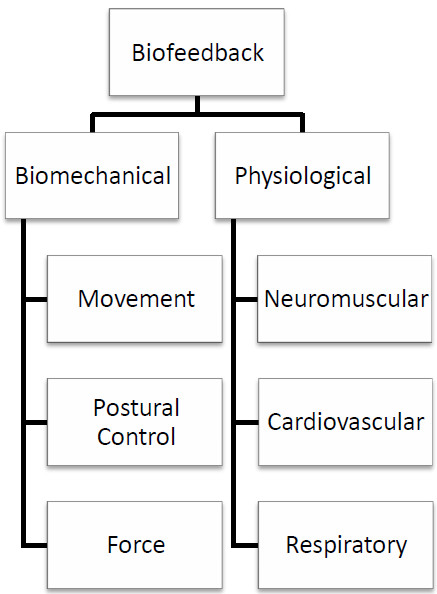
This paper reviews the literature relating to the biofeedback used in physical rehabilitation. The biofeedback methods used in rehabilitation are based on biomechanical measurements and measurements of the physiological systems of the body. The physiological systems of the body which can be measured to provide biofeedback are the neuromuscular system, the respiratory system and the cardiovascular system. Neuromuscular biofeedback methods include electromyography (EMG) biofeedback and real-time ultrasound imaging (RTUS) biofeedback. EMG biofeedback is the most widely investigated method of biofeedback and appears to be effective in the treatment of many musculoskeletal conditions and in post cardiovascular accident (CVA) rehabilitation. RTUS biofeedback has been demonstrated effective in the treatment of low back pain (LBP) and pelvic floor muscle dysfunction. Cardiovascular biofeedback methods have been shown to be effective in the treatment of a number of health conditions such as hypertension, heart failure, asthma, fibromyalgia and even psychological disorders however a systematic review in this field has yet to be conducted. Similarly, the number of large scale studies examining the use of respiratory biofeedback in rehabilitation is limited. Measurements of movement, postural control and force output can be made using a number of different devices and used to deliver biomechanical biofeedback. Inertial based sensing biofeedback is the most widely researched biomechanical biofeedback method, with a number of studies showing it to be effective in improving measures of balance in a number of populations. Other types of biomechanical biofeedback include force plate systems, electrogoniometry, pressure biofeedback and camera based systems however the evidence for these is limited. Biofeedback is generally delivered using visual displays, acoustic or haptic signals, however more recently virtual reality (VR) or exergaming technology have been used as biofeedback signals. VR and exergaming technology have been primarily investigated in post-CVA rehabilitation, however, more recent work has shown this type of biofeedback to be effective in improving exercise technique in musculoskeletal populations. While a number of studies in this area have been conducted, further large scale studies and reviews investigating different biofeedback applications in different clinical populations are required.
Overview
The claims and statistics of this paper haven’t been checked yet.
Run the check — free, no account needed. It reads the open-access text and checks the sources it cites.
Integrity signals
Registry
Cites
Statistics
Figures
Verification
Claims the paper makes
The claims and statistics of this paper haven’t been checked yet.
Run the check — free, no account needed. It reads the open-access text and checks the sources it cites.
Claims other papers make about this one
Each is checked against this paper’s own text: does it say what the citing paper says it does?
The source backs part of the claim, not all of it — or backs it for a different population, condition or comparison.
In the citing paper
“Force plate systems provide feedback on balance, movement, and gait and have been shown to reduce the incidence of falls.24”
From A Review of Movement and Functional Impairments in Fibromyalgia: Implications for Targeted Treatment (2025) · cites this paper as [24]
Experimental — accuracy not yet measuredThe source backs part of the claim, not all of it — or backs it for a different population, condition or comparison.
In the citing paper
“Moderate exercise, integrative neuromuscular training, Tai Chi, and Virtual Reality (VR) based exergaming show promise in improving postural stability and physical functioning.5,24”
From A Review of Movement and Functional Impairments in Fibromyalgia: Implications for Targeted Treatment (2025) · cites this paper as [24]
Experimental — accuracy not yet measuredThe cited source says what the claim attributes to it.
In the citing paper
“Providing patients with EMDR,4 CBT,9,12,17 biofeedback24 or rTMS26,33 may enable them to gain control over physical processes, allowing for improved functional task performance and increased autonomy in their rehabilitation.24”
From A Review of Movement and Functional Impairments in Fibromyalgia: Implications for Targeted Treatment (2025) · cites this paper as [24]
The cited source says what the claim attributes to it.
In the citing paper
“The addition of VR and therapeutic exergames offer patients opportunities to engage in meaningful, intensive, and enjoyable tasks related to their real-life interests and daily activities.24”
From A Review of Movement and Functional Impairments in Fibromyalgia: Implications for Targeted Treatment (2025) · cites this paper as [24]
Self-check
Percentages, sums and reported differences re-computed from the paper’s own numbers.
The self-check needs the paper’s full text.
Citations
Cites
Virtual Reality–Augmented Rehabilitation for Patients Following Stroke
Merians, A. S., Jack, D., Boian, R., Tremaine, M. M., Burdea, G., Adamovich, S., Recce, M. L., & Howard Poizner, A. (2002) · Physical Therapy · doi:10.1093/ptj/82.9.898 · Cited by 570
Karavidas, M. K., Lehrer, P. M., Vaschillo, E., Vaschillo, B., Marin, H., Buyske, S., Malinovsky, I., Radvanski, D., & Hassett, A. (2007) · Applied Psychophysiology and Biofeedback · doi:10.1007/s10484-006-9029-z · Cited by 440
The Use of Ultrasound Imaging of the Abdominal Drawing-in Maneuver in Subjects With Low Back Pain
Teyhen, D. S., Miltenberger, C. E., Deiters, H. M., Toro, Y. M. D., Pulliam, J. N., Childs, J. D., Boyles, R. E., & Flynn, T. W. (2005) · Journal of Orthopaedic and Sports Physical Therapy · doi:10.2519/jospt.2005.35.6.346 · Cited by 415
Standing balance training: effect on balance and locomotion in hemiparetic adults.
Winstein, C., Gardner, E. R., McNeal, D. R., Barto, P. S., & De, N. (1989) · PubMed · Cited by 337
Zucker, T. L., Samuelson, K. W., Muench, F., Greenberg, M. A., & Gevirtz, R. N. (2009) · Applied Psychophysiology and Biofeedback · doi:10.1007/s10484-009-9085-2 · Cited by 335
Recent developments in biofeedback for neuromotor rehabilitation
Huang, H., Wolf, S. L., & He, J. (2006) · Journal of NeuroEngineering and Rehabilitation · doi:10.1186/1743-0003-3-11 · Cited by 333
Geiger, R. A., Allen, J. B., O’Keefe, J., & Hicks, R. R. (2001) · Physical Therapy · doi:10.1093/ptj/81.4.995 · Cited by 333
Yamanouchi, K., Shinozaki, T., Chikada, K., Nishikawa, T., Ito, K., Shimizu, S., Ozawa, N., Suzuki, Y., Maeno, H., Kato, K., et al. (1995) · Diabetes Care · doi:10.2337/diacare.18.6.775 · Cited by 330 · cited 1×
“Much work has been conducted evaluating pedometers as a means of improving exercise compliance in people with diabetes, obesity and congestive heart failure [72-74].”
BackgroundHassett, A. L., Radvanski, D. C., Vaschillo, E. G., Vaschillo, B., Sigal, L. H., Karavidas, M. K., Buyske, S. G., & Lehrer, P. M. (2007) · Applied Psychophysiology and Biofeedback · doi:10.1007/s10484-006-9028-0 · Cited by 282
Balance Retraining After Stroke Using Force Platform Biofeedback
Nichols, D. S. (1997) · Physical Therapy · doi:10.1093/ptj/77.5.553 · Cited by 270
Research works printed but not linked: 1
- 10.1007/s10484-010-9140-z · DOI
Cited by
Sorted by citations
Control strategies for active lower extremity prosthetics and orthotics: a review
Tucker, M. R., Olivier, J., Pagel, A., Bleuler, H., Bouri, M., Lambercy, O., Millán, J. D. R., Riener, R., Vallery, H., & Gassert, R. (2015) · Journal of NeuroEngineering and Rehabilitation · doi:10.1186/1743-0003-12-1 · Cited by 1,047
The Importance of Respiratory Rate Monitoring: From Healthcare to Sport and Exercise
Nicolò, A., Massaroni, C., Schena, E., & Sacchetti, M. (2020) · Sensors · doi:10.3390/s20216396 · Cited by 440
Multimodal non-invasive non-pharmacological therapies for chronic pain: mechanisms and progress
Shi, Y., & Wu, W. (2023) · BMC Medicine · doi:10.1186/s12916-023-03076-2 · Cited by 292
A new integrated behavioural intervention for knee osteoarthritis: development and pilot study
Preece, S. J., Brookes, N., Williams, A. E., Jones, R. K., Starbuck, C., Jones, A. K. P., & Walsh, N. E. (2021) · BMC Musculoskeletal Disorders · doi:10.1186/s12891-021-04389-0 · Cited by 245
McManus, L. M., VITO, G. D., & Lowery, M. M. (2020) · Frontiers in Neurology · doi:10.3389/fneur.2020.576729 · Cited by 208
Booth, A., Buizer, A. I., Meyns, P., Lansink, I. L. B. O., Steenbrink, F., & van der Krogt, M. M. (2018) · Developmental Medicine & Child Neurology · doi:10.1111/dmcn.13708 · Cited by 196
Computational neurorehabilitation: modeling plasticity and learning to predict recovery
Reinkensmeyer, D. J., Burdet, E., Casadio, M., Krakauer, J. W., Kwakkel, G., Lang, C. E., Swinnen, S. P., Ward, N., & Schweighofer, N. (2016) · Journal of NeuroEngineering and Rehabilitation · doi:10.1186/s12984-016-0148-3 · Cited by 184
Mitsea, E., Drigas, A. S., & Skianis, C. (2022) · Technium Social Sciences Journal · doi:10.47577/tssj.v29i1.6145 · Cited by 176
A Comprehensive Review of the Treatment and Management of Myofascial Pain Syndrome
Galasso, A. C., Urits, I., An, D., Nguyen, D., Borchart, M. R., Yazdi, C., Manchikanti, L., Kaye, R. J., Kaye, A. D., Mancuso, K. F., et al. (2020) · Current Pain and Headache Reports · doi:10.1007/s11916-020-00877-5 · Cited by 166
Bowman, T., Gervasoni, E., Arienti, C., Lazzarini, S. G., Négrini, S., Crea, S., Cattaneo, D., & Carrozza, M. C. (2021) · Sensors · doi:10.3390/s21103444 · Cited by 132
Chen, Y., Zhang, Y., Guo, Z., Bao, D., & Zhou, J. (2021) · Journal of NeuroEngineering and Rehabilitation · doi:10.1186/s12984-021-00917-0 · Cited by 121
Awad, L. N., Lewek, M. D., Kesar, T. M., Franz, J. R., & Bowden, M. G. (2020) · Journal of NeuroEngineering and Rehabilitation · doi:10.1186/s12984-020-00747-6 · Cited by 116
Correia, F. D., Nogueira, A., Magalhães, I., Guimarães, J., Moreira, M., Barradas, I., Teixeira, L., Tulha, J., Seabra, R., Lains, J., et al. (2018) · Scientific Reports · doi:10.1038/s41598-018-29668-0 · Cited by 110
Leardini, A., Lullini, G., Giannini, S., Berti, L., Ortolani, M., & Caravaggi, P. (2014) · Journal of NeuroEngineering and Rehabilitation · doi:10.1186/1743-0003-11-136 · Cited by 110
Review of Real-Time Biomechanical Feedback Systems in Sport and Rehabilitation
Hribernik, M., Umek, A., Tomažič, S., & Kos, A. (2022) · Sensors · doi:10.3390/s22083006 · Cited by 108
Advanced technology for gait rehabilitation: An overview
Mikołajczyk, T., Ciobanu, I., Badea, D. I., Iliescu, A. N., Pizzamiglio, S., Schauer, T., Seel, T., Seiciu, P. L., Turner, D. L., & Berteanu, M. (2018) · Advances in Mechanical Engineering · doi:10.1177/1687814018783627 · Cited by 106
Lind, C. M., Abtahi, F., & Forsman, M. (2023) · Sensors · doi:10.3390/s23094259 · Cited by 116
Genthe, K., Schenck, C. S., Eicholtz, S. P., Zajac-Cox, L., Wolf, S. L., & Kesar, T. M. (2018) · Topics in Stroke Rehabilitation · doi:10.1080/10749357.2018.1436384 · Cited by 104
Vibrotactile feedback in virtual motor learning: A systematic review
Islam, M. S., & Lim, S. I. (2022) · Applied Ergonomics · doi:10.1016/j.apergo.2022.103694 · Cited by 102
The Role of Engagement in Teleneurorehabilitation: A Systematic Review
Matamala-Gomez, M., Maisto, M., Montana, J. I., Mavrodiev, P. A., Baglio, F., Rossetto, F., Mantovani, F., Riva, G., & Realdon, O. (2020) · Frontiers in Neurology · doi:10.3389/fneur.2020.00354 · Cited by 100
EMG Biofeedback for online predictive control of grasping force in a myoelectric prosthesis
Dosen, S. S., Marković, M., Somer, K., Graimann, B., & Farina, D. (2015) · Journal of NeuroEngineering and Rehabilitation · doi:10.1186/s12984-015-0047-z · Cited by 99
Sturma, A., Hruby, L. A., Prahm, C., Mayer, J. A., & Aszmann, O. C. (2018) · Frontiers in Neuroscience · doi:10.3389/fnins.2018.00906 · Cited by 98
Harris‐Love, M. O., Seamon, B. A., Teixeira, C., & Ismail, C. (2016) · PeerJ · doi:10.7717/peerj.1721 · Cited by 93
Biofeedback flutter device for managing the symptoms of patients with COPD
Kaja, R., Vaiyapuri, A., Sirajudeen, M. S., Muthusamy, H., Unnikrishnan, R., Waly, M. I., Doss, S. S., Seyam, M. K., & Nambi, G. S. (2020) · Technology and Health Care · doi:10.3233/thc-202222 · Cited by 92
Kos, A., Milutinović, V. M., & Umek, A. (2018) · Future Generation Computer Systems · doi:10.1016/j.future.2018.03.032 · Cited by 90
Benfield, J. K., Everton, L., Bath, P., & England, T. (2019) · Archives of Physical Medicine and Rehabilitation · doi:10.1016/j.apmr.2018.04.031 · Cited by 76
Paszkiel, S., Dobrakowski, P. P., & Łysiak, A. (2020) · Brain Sciences · doi:10.3390/brainsci10100728 · Cited by 89
Cibrian, F. L., Lakes, K. D., Schuck, S. E. B., & Hayes, G. R. (2021) · International Journal of Child-Computer Interaction · doi:10.1016/j.ijcci.2021.100421 · Cited by 96
Tosti, B., Corrado, S., Mancone, S., Libero, T. D., Rodio, A., Andrade, A., & Diotaiuti, P. (2024) · Frontiers in Neuroscience · doi:10.3389/fnins.2024.1358481 · Cited by 93
A mobile VR-based respiratory biofeedback game to foster diaphragmatic breathing
Rockstroh, C., Blum, J., & Göritz, A. S. (2021) · Virtual Reality · doi:10.1007/s10055-020-00471-5 · Cited by 83
Abadiyan, F., Hadadnezhad, M., Khosrokiani, Z., Letafatkar, A., & Akhshik, H. (2021) · Trials · doi:10.1186/s13063-021-05214-8 · Cited by 82
Clinical Practice Guidelines for Oropharyngeal Dysphagia
Yang, S., Park, J., Min, K., Lee, Y. S., Song, Y. J., Choi, S. H., Kim, D.-Y., Lee, S. H., Yang, H. S., Cha, W., et al. (2023) · Annals of Rehabilitation Medicine · doi:10.5535/arm.23069 · Cited by 85
Rasa, A. R. (2024) · BioMed Research International · doi:10.1155/bmri/9554590 · Cited by 89
Adaptation in Affective Video Games: A Literature Review
Bontchev, B. (2016) · Cybernetics and Information Technologies · doi:10.1515/cait-2016-0032 · Cited by 82
Temporomandibular disorders and mental health: shared etiologies and treatment approaches
Wan, J., Lin, J., Zha, T., Ciruela, F., Jiang, S., Wu, Z., Fang, X., Chen, Q., & Chen, X. (2025) · The Journal of Headache and Pain · doi:10.1186/s10194-025-01985-6 · Cited by 77
Semprini, M., Laffranchi, M., Sanguineti, V., Avanzino, L., Icco, R. D., Michieli, L. D., & Chiappalone, M. (2018) · Frontiers in Neurology · doi:10.3389/fneur.2018.00212 · Cited by 79
Toledo-Peral, C. L., Vega-Martínez, G., Mercado-Gutierrez, J. A., Rodríguez‐Reyes, G., Vera, A., Leija, L., & Gutiérrez-Martínez, J. (2022) · Electronics · doi:10.3390/electronics11142271 · Cited by 76
Argent, R., Slevin, P., Bevilacqua, A., Neligan, M. C., Daly, A., & Caulfield, B. (2019) · Sensors · doi:10.3390/s19020432 · Cited by 75
Self-citationEscamilla-Nunez, R., Michelini, A., & Andrysek, J. (2020) · Sensors · doi:10.3390/s20061628 · Cited by 74
Sensor Technologies to Manage the Physiological Traits of Chronic Pain: A Review
Naranjo-Hernández, D., Reina‐Tosina, J., & Roa, L. M. (2020) · Sensors · doi:10.3390/s20020365 · Cited by 78
Deng, W., Papavasileiou, I., Qiao, Z., Zhang, W., Lam, K.-Y., & Han, S. (2018) · IEEE Reviews in Biomedical Engineering · doi:10.1109/rbme.2018.2830805 · Cited by 72
Use of audio biofeedback to reduce tibial impact accelerations during running
Wood, C. M., & Kipp, K. (2014) · Journal of Biomechanics · doi:10.1016/j.jbiomech.2014.03.008 · Cited by 69
Mennella, C., Maniscalco, U., Pietro, G. D., & Esposito, M. (2023) · Computers in Biology and Medicine · doi:10.1016/j.compbiomed.2023.107485 · Cited by 65
Non-Pharmacological Pain Management
Geziry, A. E., Toble, Y. M. R. A., Kadhi, F. A., & Nobani, M. P. A. M. A. (2018) · IntechOpen eBooks · doi:10.5772/intechopen.79689 · Cited by 64
Evaluation of Biofeedback Usefulness in Masticatory Muscle Activity Management—A Systematic Review
Florjański, W., Małysa, A., Orzeszek, S., Smardz, J., Olchowy, A., Paradowska-Stolarz, A. M., & Wieckiewicz, M. A. (2019) · Journal of Clinical Medicine · doi:10.3390/jcm8060766 · Cited by 64
Wearable and wireless gait analysis platforms
Lemoyne, R. C., & Mastroianni, T. (2016) · Elsevier eBooks · doi:10.1016/b978-0-08-100449-4.00006-3 · Cited by 63
Kang, D.-Y. (2015) · Journal of Physical Therapy Science · doi:10.1589/jpts.27.3207 · Cited by 62
Surface Electromyographic (SEMG) Biofeedback for Chronic Low Back Pain
Neblett, R. (2016) · Healthcare · doi:10.3390/healthcare4020027 · Cited by 62
Pizzolato, C., Gunduz, M. A., Palipana, D. B., Wu, J., Grant, G. D., Hall, S., Dennison, R., ZAFONTE, R. D., Lloyd, D. G., & Teng, Y. D. (2021) · Experimental Neurology · doi:10.1016/j.expneurol.2021.113612 · Cited by 64
Tutorial. Surface electromyogram (sEMG) amplitude estimation: Best practices
Clancy, E. A., Morin, E. L., Hajian, G., & Merletti, R. (2023) · Journal of Electromyography and Kinesiology · doi:10.1016/j.jelekin.2023.102807 · Cited by 61
Behavioral therapy approaches for the management of low back pain: an up-to-date systematic review
Vitoula, K., Venneri, A., Varrassi, G., Paladini, A., Sykioti, P., Adewusi, J., & Zis, P. (2018) · Pain and Therapy · doi:10.1007/s40122-018-0099-4 · Cited by 60
Electromyography-signal-based muscle fatigue assessment for knee rehabilitation monitoring systems
Kim, H., Lee, J., & Kim, J. (2018) · Biomedical Engineering Letters · doi:10.1007/s13534-018-0078-z · Cited by 60
Development and Pilot Test of a Virtual Reality Respiratory Biofeedback Approach
Blum, J., Rockstroh, C., & Göritz, A. S. (2020) · Applied Psychophysiology and Biofeedback · doi:10.1007/s10484-020-09468-x · Cited by 66
Tamburella, F., Moreno, J. C., Valenzuela, D. S. H., Pisotta, I., Iosa, M., Cincotti, F., Mattia, D., Pons, J. L., & Molinari, M. (2019) · Journal of NeuroEngineering and Rehabilitation · doi:10.1186/s12984-019-0558-0 · Cited by 59
Flux, E., van der Krogt, M. M., Cappa, P., Petrarca, M., Desloovere, K., & Harlaar, J. (2020) · Human Movement Science · doi:10.1016/j.humov.2020.102585 · Cited by 59
Future Directions: Advances and Implications of Virtual Environments Designed for Pain Management
Wiederhold, B. K., Soomro, A., Riva, G., & Wiederhold, M. D. (2014) · Cyberpsychology Behavior and Social Networking · doi:10.1089/cyber.2014.0197 · Cited by 57
AbuAlrob, M. A., & Mesraoua, B. (2024) · Frontiers in Neurology · doi:10.3389/fneur.2024.1485799 · Cited by 58
Real-time feedback to improve gait in children with cerebral palsy
Gelder, L. V., Booth, A., van de Port, I. G. L., Buizer, A. I., Harlaar, J., & van der Krogt, M. M. (2016) · Gait & Posture · doi:10.1016/j.gaitpost.2016.11.021 · Cited by 56
Bell, K. M., Onyeukwu, C., McClincy, M. P., Allen, M., Bechard, L., Mukherjee, A., Hartman, R. A., Smith, C., Lynch, A. D., & Irrgang, J. J. (2019) · Sensors · doi:10.3390/s19051021 · Cited by 64
Management of Urinary Incontinence Following Radical Prostatectomy: Challenges and Solutions
Castellan, P., Ferretti, S., Litterio, G., Marchioni, M., & Schips, L. (2023) · Therapeutics and Clinical Risk Management · doi:10.2147/tcrm.s283305 · Cited by 55
Wearables, Biomechanical Feedback, and Human Motor-Skills’ Learning & Optimization
Zhang, X., Shan, G., Wang, Y., Wan, B., & Li, H. (2019) · Applied Sciences · doi:10.3390/app9020226 · Cited by 60
Brennan, L. K., Zubiete, E. D., & Caulfield, B. M. (2019) · Sensors · doi:10.3390/s20010181 · Cited by 54
Self-citationWearable Biofeedback Suit to Promote and Monitor Aquatic Exercises: A Feasibility Study
Gandolla, M., Simona, F., Andrea, C., Bortolotti, D., Stefano, S. D., Federico, V., Bocciolone, M., Braghin, F., Masiero, S., & Alessandra, P. (2019) · IEEE Transactions on Instrumentation and Measurement · doi:10.1109/tim.2019.2911756 · Cited by 51
Machine learning in biosignals processing for mental health: A narrative review
Sajno, E., Bartolotta, S., Tuena, C., Cipresso, P., Pedroli, E., & Riva, G. (2023) · Frontiers in Psychology · doi:10.3389/fpsyg.2022.1066317 · Cited by 59
Argent, R., Slevin, P., Bevilacqua, A., Neligan, M. C., Daly, A., & Caulfield, B. M. (2018) · BMJ Open · doi:10.1136/bmjopen-2018-026326 · Cited by 50
Self-citationMedved, V., Medved, S., & Kovač, I. (2020) · Frontiers in Neurology · doi:10.3389/fneur.2020.560363 · Cited by 49
Yoo, J. W., Lee, D. R., Cha, Y. J., & You, S. H. (2017) · Neurorehabilitation · doi:10.3233/nre-161402 · Cited by 49
Colyer, S., & McGuigan, P. M. (2018) · Europe PMC (PubMed Central) · Cited by 48
Respiratory Biofeedback Does Not Facilitate Lowering Arousal in Meditation Through Virtual Reality
Tinga, A. M., Nyklíček, I., Jansen, M.-P., de Back, T. T., & Louwerse, M. M. (2018) · Applied Psychophysiology and Biofeedback · doi:10.1007/s10484-018-9421-5 · Cited by 49
Sikka, I., Chawla, C., Seth, S., Alghadir, A. H., & Khan, M. (2020) · BioMed Research International · doi:10.1155/2020/8327565 · Cited by 47
Projection-Based AR: Effective Visual Feedback in Gait Rehabilitation
Sekhavat, Y. A., & Namani, M. S. (2018) · IEEE Transactions on Human-Machine Systems · doi:10.1109/thms.2018.2860579 · Cited by 51
Ultrasound Imaging as a Visual Biofeedback Tool in Rehabilitation: An Updated Systematic Review
Valera‐Calero, J. A., Fernández‐de‐las‐Peñas, C., Varol, U., Ortega‐Santiago, R., Gallego‐Sendarrubias, G. M., & Arias‐Buría, J. L. (2021) · International Journal of Environmental Research and Public Health · doi:10.3390/ijerph18147554 · Cited by 48
Merchán-Baeza, J. A., González‐Sánchez, M., & Vargas, A. I. C. (2014) · BioMed Research International · doi:10.1155/2014/637671 · Cited by 46
Effects of unilateral real-time biofeedback on propulsive forces during gait
Schenck, C. S., & Kesar, T. M. (2017) · Journal of NeuroEngineering and Rehabilitation · doi:10.1186/s12984-017-0252-z · Cited by 46
The role of science and technology in sport
Kos, A., Wei, Y., Tomažič, S., & Umek, A. (2018) · Procedia Computer Science · doi:10.1016/j.procs.2018.03.029 · Cited by 46
Montoya, M. F., Muñoz, J. E., & Henao, O. A. (2020) · IEEE Transactions on Neural Systems and Rehabilitation Engineering · doi:10.1109/tnsre.2020.2968869 · Cited by 46
Wearable training system with real-time biofeedback and gesture user interface
Umek, A., Tomažič, S., & Kos, A. (2015) · Personal and Ubiquitous Computing · doi:10.1007/s00779-015-0886-4 · Cited by 45
Suitability of Smartphone Inertial Sensors for Real-Time Biofeedback Applications
Kos, A., Tomažič, S., & Umek, A. (2016) · Sensors · doi:10.3390/s16030301 · Cited by 45
Drużbicki, M., Przysada, G., Guzik, A., Brzozowska-Magoń, A., Kołodziej, K., Wolan-Nieroda, A., Majewska, J., & Kwołek, A. (2018) · BioMed Research International · doi:10.1155/2018/3812602 · Cited by 45
Mitsea, E., Drigas, A. S., & Skianis, C. A. (2024) · Electronics · doi:10.3390/electronics13122253 · Cited by 46
Weeks, D. L., Whitney, A. A., Tindall, A. G., & Carter, G. T. (2015) · American Journal of Physical Medicine & Rehabilitation · doi:10.1097/phm.0000000000000285 · Cited by 42
My heart is racing! Psychophysiological dynamics of skilled racecar drivers
Filho, E., di Fronso, S., Mazzoni, C., Robazza, C., Bortoli, L., & Bertollo, M. (2015) · Journal of Sports Sciences · doi:10.1080/02640414.2014.977940 · Cited by 42
Raeissadat, S. A., Rayegani, S. M., Sedighipour, L., Bossaghzade, Z., Abdollahzadeh, M. H., Nikray, R., & Mollayi, F. (2018) · Journal of Pain Research · doi:10.2147/jpr.s169613 · Cited by 42
Pietrosimone, B., McLeod, M. M., Florea, D., Gribble, P. A., & Tevald, M. A. (2014) · Journal of Electromyography and Kinesiology · doi:10.1016/j.jelekin.2014.11.007 · Cited by 42
3Mo: A Model for Music-Based Biofeedback
Maes, P., Buhmann, J., & Leman, M. (2016) · Frontiers in Neuroscience · doi:10.3389/fnins.2016.00548 · Cited by 49
Persistent Postural-Perceptual Dizziness in Children and Adolescents
Wang, A., Fleischman, K. M., Kawai, K., Corcoran, M., & Brodsky, J. R. (2021) · Otology & Neurotology · doi:10.1097/mao.0000000000003212 · Cited by 40
Pagel, A., Arieta, A. H., Riener, R., & Vallery, H. (2015) · Medical & Biological Engineering & Computing · doi:10.1007/s11517-015-1432-2 · Cited by 39
Heald, E., Hart, R. L., Kilgore, K. L., & Peckham, P. H. (2017) · Neurorehabilitation and neural repair · doi:10.1177/1545968317704904 · Cited by 39
Shin, D., & Song, C. H. (2016) · American Journal of Physical Medicine & Rehabilitation · doi:10.1097/phm.0000000000000447 · Cited by 39
Munoz-Novoa, M., Kristoffersen, M., Sunnerhagen, K. S., Naber, A., Murphy, M. A., & Ortiz-Catalan, M. (2022) · Frontiers in Human Neuroscience · doi:10.3389/fnhum.2022.897870 · Cited by 38
Human motion capture, reconstruction, and musculoskeletal analysis in real time
Lugrís, U., Soto, M. P., Michaud, F., & Cuadrado, J. (2023) · Multibody System Dynamics · doi:10.1007/s11044-023-09938-0 · Cited by 38
Drużbicki, M., Guzik, A., Przysada, G., Kwołek, A., Brzozowska-Magoń, A., & Sobolewski, M. (2016) · Medical Science Monitor · doi:10.12659/msm.898420 · Cited by 38
Argent, R., Drummond, S. P. A., Remus, A., O’Reilly, M., & Caulfield, B. (2019) · Journal of Rehabilitation and Assistive Technologies Engineering · doi:10.1177/2055668319868544 · Cited by 38
Self-citationGatti, R., Tettamanti, A., Lambiase, S., Rossi, P., & Comola, M. (2014) · Physiotherapy Research International · doi:10.1002/pri.1600 · Cited by 38
Cerfoglio, S., Capodaglio, P., Rossi, P., Conforti, I., D’Angeli, V., Milani, E., Galli, M., & Cimolin, V. (2023) · Sensors · doi:10.3390/s23136156 · Cited by 38
Reference values and reliability for lumbopelvic strength and endurance in asymptomatic subjects
de Oliveira, I. O., Pilz, B., Santos, R. L. G., de Vasconcelos, R. A., Junior, W. A. D. M., & Bevilaqua‐Grossi, D. (2017) · Brazilian Journal of Physical Therapy · doi:10.1016/j.bjpt.2017.09.008 · Cited by 37
Boocock, M., Naudé, Y., Taylor, S., Kilby, J., & Mawston, G. A. (2019) · Gait & Posture · doi:10.1016/j.gaitpost.2019.07.127 · Cited by 37
Szabo, D. A., Neagu, N. E., Teodorescu, S., Apostu, M., Predescu, C., Pârvu, C., & Veres, C. (2023) · Sensors · doi:10.3390/s23218950 · Cited by 35
Bevilacqua, A., Huang, B., Argent, R., Caulfield, B., & Kechadi, T. (2018) · Wearable and Implantable Body Sensor Networks · doi:10.1109/bsn.2018.8329649 · Cited by 35
Self-citationLiu, X., Zhu, Y., Huo, H., Wei, P., Wang, L., Sun, A., Hu, C., Yin, X., Lv, Z., & Fan, Y. (2019) · IEEE Transactions on Neural Systems and Rehabilitation Engineering · doi:10.1109/tnsre.2019.2909287 · Cited by 35
Metadata
- Authors
- Giggins, O. M., Persson, U., & Caulfield, B.
- Affiliations
- University College Dublin (IE)
- Corresponding author
- Giggins, Oonagh M
- Venue
- Journal of NeuroEngineering and Rehabilitation
- Published
- 2013
- Volume
- 10
- Issue
- 1
- Pages
- 60
- ISSN
- 1743-0003 (ISSN-L)
- PMC
- PMC3687555
- OpenAlex
- W2158721732
- Cited by
- 760
- References
- 107
- Citations by year
- 2026: 75 · 2025: 86 · 2024: 90 · 2023: 72 · 2022: 59 · 2021: 61 · 2020: 87 · 2019: 55 · 2018: 52 · 2017: 27 · 2016: 49 · 2015: 32 · 2014: 15
- FWCI
- 5.04
- Type
- journal article
- Language
- en
- Open access
- gold
- doi.org
- Licence
- cc-by
- Locations
- Journal of NeuroEngineering and Rehabilitation (publishedVersion, cc-by)
- Europe PMC (PubMed Central) (publishedVersion, cc-by)
- PubMed Central (publishedVersion, cc-by)
- PubMed (publishedVersion)
- Lenus, The Irish Health Repository (Dr Steevens Hospital Library) (submittedVersion)
- Funders
- Science Foundation Ireland
- Topics
- Health Sciences › Medicine › Rehabilitation › Stroke Rehabilitation and Recovery
- Health Sciences › Health Professions › Physical Therapy, Sports Therapy and Rehabilitation › Medical Practices and Rehabilitation
- Physical Sciences › Engineering › Biomedical Engineering › Muscle activation and electromyography studies
- Keywords
- biofeedback, physical rehabilitation, EMG biofeedback, real-time ultrasound, respiratory biofeedback, inertial sensing, balance, stroke rehabilitation, low back pain, pelvic floor dysfunction, virtual reality, exergames, musculoskeletal disorders, haptic feedback
- MeSH terms
- Biofeedback, Psychology, Humans, Rehabilitation
About these checks
Registry, retraction, Cites and statistics results are computed, not judged, with one exception: a printed reference that no index lists is read once by a model before it counts as a citation error. Claims are extracted by a model and kept only when their quote appears verbatim in the text; each cited source is then checked, with a model’s help, for whether it says what the claim relies on. Those verdicts can be wrong — read the claim’s quote and the cited source before relying on one.
Statistics and arithmetic are recomputed, not judged.
Confidence bands are shown only for fields calibrated on our annotated test set. None is calibrated yet, so no band is shown.
What counts as a claim ›How we measure confidence ›How we check this ›
Are you an author, or do you see a problem with this page? Request a review
