

The DOI matches its Crossref record; 106 of the 107 references it cites were found in a registry or an index.
Biofeedback in rehabilitation
Open accessAbstract
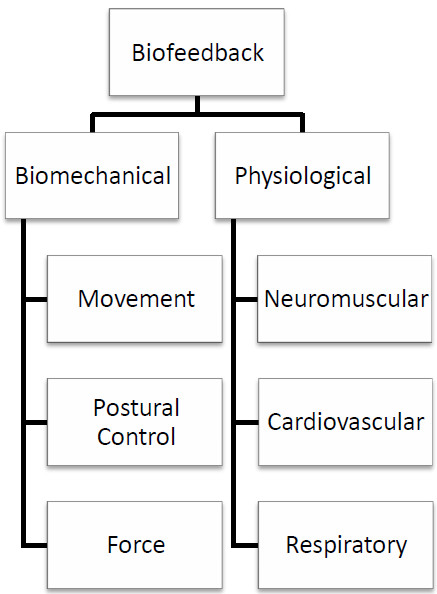
This paper reviews the literature relating to the biofeedback used in physical rehabilitation. The biofeedback methods used in rehabilitation are based on biomechanical measurements and measurements of the physiological systems of the body. The physiological systems of the body which can be measured to provide biofeedback are the neuromuscular system, the respiratory system and the cardiovascular system. Neuromuscular biofeedback methods include electromyography (EMG) biofeedback and real-time ultrasound imaging (RTUS) biofeedback. EMG biofeedback is the most widely investigated method of biofeedback and appears to be effective in the treatment of many musculoskeletal conditions and in post cardiovascular accident (CVA) rehabilitation. RTUS biofeedback has been demonstrated effective in the treatment of low back pain (LBP) and pelvic floor muscle dysfunction. Cardiovascular biofeedback methods have been shown to be effective in the treatment of a number of health conditions such as hypertension, heart failure, asthma, fibromyalgia and even psychological disorders however a systematic review in this field has yet to be conducted. Similarly, the number of large scale studies examining the use of respiratory biofeedback in rehabilitation is limited. Measurements of movement, postural control and force output can be made using a number of different devices and used to deliver biomechanical biofeedback. Inertial based sensing biofeedback is the most widely researched biomechanical biofeedback method, with a number of studies showing it to be effective in improving measures of balance in a number of populations. Other types of biomechanical biofeedback include force plate systems, electrogoniometry, pressure biofeedback and camera based systems however the evidence for these is limited. Biofeedback is generally delivered using visual displays, acoustic or haptic signals, however more recently virtual reality (VR) or exergaming technology have been used as biofeedback signals. VR and exergaming technology have been primarily investigated in post-CVA rehabilitation, however, more recent work has shown this type of biofeedback to be effective in improving exercise technique in musculoskeletal populations. While a number of studies in this area have been conducted, further large scale studies and reviews investigating different biofeedback applications in different clinical populations are required.
Overview
The claims and statistics of this paper haven’t been checked yet.
Run the check — free, no account needed. It reads the open-access text and checks the sources it cites.
Integrity signals
Registry
Cites
Statistics
Figures
Verification
Claims the paper makes
The claims and statistics of this paper haven’t been checked yet.
Run the check — free, no account needed. It reads the open-access text and checks the sources it cites.
Claims other papers make about this one
Each is checked against this paper’s own text: does it say what the citing paper says it does?
The source backs part of the claim, not all of it — or backs it for a different population, condition or comparison.
In the citing paper
“Force plate systems provide feedback on balance, movement, and gait and have been shown to reduce the incidence of falls.24”
From A Review of Movement and Functional Impairments in Fibromyalgia: Implications for Targeted Treatment (2025) · cites this paper as [24]
Experimental — accuracy not yet measuredThe source backs part of the claim, not all of it — or backs it for a different population, condition or comparison.
In the citing paper
“Moderate exercise, integrative neuromuscular training, Tai Chi, and Virtual Reality (VR) based exergaming show promise in improving postural stability and physical functioning.5,24”
From A Review of Movement and Functional Impairments in Fibromyalgia: Implications for Targeted Treatment (2025) · cites this paper as [24]
Experimental — accuracy not yet measuredThe cited source says what the claim attributes to it.
In the citing paper
“Providing patients with EMDR,4 CBT,9,12,17 biofeedback24 or rTMS26,33 may enable them to gain control over physical processes, allowing for improved functional task performance and increased autonomy in their rehabilitation.24”
From A Review of Movement and Functional Impairments in Fibromyalgia: Implications for Targeted Treatment (2025) · cites this paper as [24]
The cited source says what the claim attributes to it.
In the citing paper
“The addition of VR and therapeutic exergames offer patients opportunities to engage in meaningful, intensive, and enjoyable tasks related to their real-life interests and daily activities.24”
From A Review of Movement and Functional Impairments in Fibromyalgia: Implications for Targeted Treatment (2025) · cites this paper as [24]
Self-check
Percentages, sums and reported differences re-computed from the paper’s own numbers.
The self-check needs the paper’s full text.
Citations
Cites
Virtual Reality–Augmented Rehabilitation for Patients Following Stroke
Merians, A. S., Jack, D., Boian, R., Tremaine, M. M., Burdea, G., Adamovich, S., Recce, M. L., & Howard Poizner, A. (2002) · Physical Therapy · doi:10.1093/ptj/82.9.898 · Cited by 570
Karavidas, M. K., Lehrer, P. M., Vaschillo, E., Vaschillo, B., Marin, H., Buyske, S., Malinovsky, I., Radvanski, D., & Hassett, A. (2007) · Applied Psychophysiology and Biofeedback · doi:10.1007/s10484-006-9029-z · Cited by 440
The Use of Ultrasound Imaging of the Abdominal Drawing-in Maneuver in Subjects With Low Back Pain
Teyhen, D. S., Miltenberger, C. E., Deiters, H. M., Toro, Y. M. D., Pulliam, J. N., Childs, J. D., Boyles, R. E., & Flynn, T. W. (2005) · Journal of Orthopaedic and Sports Physical Therapy · doi:10.2519/jospt.2005.35.6.346 · Cited by 415
Standing balance training: effect on balance and locomotion in hemiparetic adults.
Winstein, C., Gardner, E. R., McNeal, D. R., Barto, P. S., & De, N. (1989) · PubMed · Cited by 337
Zucker, T. L., Samuelson, K. W., Muench, F., Greenberg, M. A., & Gevirtz, R. N. (2009) · Applied Psychophysiology and Biofeedback · doi:10.1007/s10484-009-9085-2 · Cited by 335
Recent developments in biofeedback for neuromotor rehabilitation
Huang, H., Wolf, S. L., & He, J. (2006) · Journal of NeuroEngineering and Rehabilitation · doi:10.1186/1743-0003-3-11 · Cited by 333
Geiger, R. A., Allen, J. B., O’Keefe, J., & Hicks, R. R. (2001) · Physical Therapy · doi:10.1093/ptj/81.4.995 · Cited by 333
Yamanouchi, K., Shinozaki, T., Chikada, K., Nishikawa, T., Ito, K., Shimizu, S., Ozawa, N., Suzuki, Y., Maeno, H., Kato, K., et al. (1995) · Diabetes Care · doi:10.2337/diacare.18.6.775 · Cited by 330 · cited 1×
“Much work has been conducted evaluating pedometers as a means of improving exercise compliance in people with diabetes, obesity and congestive heart failure [72-74].”
BackgroundHassett, A. L., Radvanski, D. C., Vaschillo, E. G., Vaschillo, B., Sigal, L. H., Karavidas, M. K., Buyske, S. G., & Lehrer, P. M. (2007) · Applied Psychophysiology and Biofeedback · doi:10.1007/s10484-006-9028-0 · Cited by 282
Balance Retraining After Stroke Using Force Platform Biofeedback
Nichols, D. S. (1997) · Physical Therapy · doi:10.1093/ptj/77.5.553 · Cited by 270
Biofeedback: Principles and Practice for Clinicians.
(1984) · Annals of Internal Medicine · doi:10.7326/0003-4819-100-5-773_2 · Cited by 270
Biofeedback treatment for asthma.
Lehrer, P. M., Vaschillo, E., Vaschillo, B., Lu, S.-E., Scardella, A., Siddique, M., & Habib, R. H. (2004) · Chest · doi:10.1378/chest.126.2.352 · Cited by 264
Breathing-control lowers blood pressure
Grossman, E., Grossman, A., Schein, M. H., Zimlichman, R., & Gavish, B. (2001) · Journal of Human Hypertension · doi:10.1038/sj.jhh.1001147 · Cited by 234
Nolan, R. P., Kamath, M. V., Floras, J. S., Stanley, J., Pang, C., Picton, P., & Young, Q. R. (2005) · American Heart Journal · doi:10.1016/j.ahj.2005.03.015 · Cited by 219
Video Game–Based Exercises for Balance Rehabilitation: A Single-Subject Design
Betker, A. L., Szturm, T. J., Moussavi, Z., & Nett, C. (2006) · Archives of Physical Medicine and Rehabilitation · doi:10.1016/j.apmr.2006.04.010 · Cited by 213
Reducing Impact Loading During Running With the Use of Real-Time Visual Feedback
Crowell, H. P., Milner, C. E., Hamill, J., & Davis, I. S. (2010) · Journal of Orthopaedic and Sports Physical Therapy · doi:10.2519/jospt.2010.3166 · Cited by 211
Broeren, J., Rydmark, M., & Sunnerhagen, K. S. (2004) · Archives of Physical Medicine and Rehabilitation · doi:10.1016/j.apmr.2003.09.020 · Cited by 190
Henry, S. M., & Westervelt, K. (2005) · Journal of Orthopaedic and Sports Physical Therapy · doi:10.2519/jospt.2005.35.6.338 · Cited by 189
Sihvonen, S. E., Sipilä, S., & Era, P. A. (2004) · Gerontology · doi:10.1159/000075559 · Cited by 183
Steele, B. G., Belza, B. L., Cain, K. C., Warms, C. A., Coppersmith, J., & Howard, J. (2003) · The Journal of Rehabilitation Research and Development · doi:10.1682/jrrd.2003.10.0045 · Cited by 176
Management of patellofemoral problems
McConnell, J. (1996) · Manual Therapy · doi:10.1054/math.1996.0251 · Cited by 175
The Use of Perineal Ultrasound to Quantify Levator Activity and Teach Pelvic Floor Muscle Exercises
Dietz, H. P., Wilson, P. D., & CLARKE, B. (2001) · International Urogynecology Journal · doi:10.1007/s001920170059 · Cited by 175
EMG biofeedback for the recovery of motor function after stroke
Woodford, H. J., & Price, C. (2007) · Cochrane Database of Systematic Reviews · doi:10.1002/14651858.cd004585.pub2 · Cited by 171
Van, K. A. T., Hides, J. A., & Richardson, C. A. (2006) · Journal of Orthopaedic and Sports Physical Therapy · doi:10.2519/jospt.2006.2304 · Cited by 170
Fitzgerald, D., Trakarnratanakul, N., Smyth, B., & Caulfield, B. M. (2009) · Journal of Orthopaedic and Sports Physical Therapy · doi:10.2519/jospt.2010.3121 · Cited by 170
Self-citationAudio-Biofeedback Improves Balance in Patients With Bilateral Vestibular Loss
Dozza, M., Chiari, L., & Horak, F. B. (2005) · Archives of Physical Medicine and Rehabilitation · doi:10.1016/j.apmr.2004.12.036 · Cited by 169
Performance of the Craniocervical Flexion Test in Subjects With and Without Chronic Neck Pain
Chiu, T. T. W., Law, E. Y. H., & Chiu, T. H. F. (2005) · Journal of Orthopaedic and Sports Physical Therapy · doi:10.2519/jospt.2005.2055 · Cited by 169
Schein, M. H., Gavish, B., Herz, M., Rosner-Kahana, D., Naveh, P., Knishkowy, B., Zlotnikov, E., BEN-ZVI, N., & Melmed, R. N. (2001) · Journal of Human Hypertension · doi:10.1038/sj.jhh.1001148 · Cited by 168
Augmented Feedback Reduces Jump Landing Forces
Oñate, J. A., Guskiewicz, K. M., & Sullivan, R. J. (2001) · Journal of Orthopaedic and Sports Physical Therapy · doi:10.2519/jospt.2001.31.9.511 · Cited by 162
Feedback of end-tidal pCO2 as a therapeutic approach for panic disorder
Meuret, A. E., Wilhelm, F. H., Ritz, T., & Roth, W. T. (2008) · Journal of Psychiatric Research · doi:10.1016/j.jpsychires.2007.06.005 · Cited by 159
Van Peppen, R., Kortsmit, M., Lindeman, E., & Kwakkel, G. (2006) · Journal of Rehabilitation Medicine · doi:10.1080/16501970500344902 · Cited by 157
Tate, J. J., & Milner, C. E. (2010) · Physical Therapy · doi:10.2522/ptj.20080281 · Cited by 154
Sackley, C. M., & Lincoln, N. B. (1997) · Disability and Rehabilitation · doi:10.3109/09638289709166047 · Cited by 151
Cynn, H., Oh, J., Kwon, O.-Y., & Yi, C. (2006) · Archives of Physical Medicine and Rehabilitation · doi:10.1016/j.apmr.2006.08.327 · Cited by 147
Luskin, F., Reitz, M., Newell, K., Quinn, T. G., & Haskell, W. L. (2002) · Preventive Cardiology · doi:10.1111/j.1520.037x.2002.01029.x · Cited by 142
Dingwell, J. B., Davis, B. L., & Frazder, D. M. (1996) · Prosthetics and Orthotics International · doi:10.3109/03093649609164426 · Cited by 142
Draper, V., & Ballard, L. (1991) · Physical Therapy · doi:10.1093/ptj/71.6.455 · Cited by 137
Electrogoniometric feedback: its effect on genu recurvatum in stroke.
Morris, M. E., Matyas, T. A., Bach, T. M., & Goldie, P. A. (1992) · PubMed · Cited by 135
Giardino, N. D., Chan, L. E., & Soo Borson, B. (2004) · Applied Psychophysiology and Biofeedback · doi:10.1023/b:apbi.0000026638.64386.89 · Cited by 129
Ng, G. Y. F., Zhang, A. Q., & Li, C. K. (2006) · Journal of Electromyography and Kinesiology · doi:10.1016/j.jelekin.2006.08.010 · Cited by 127
Pressure Biofeedback: A useful tool in the quantification of abdominal muscular dysfunction?
Cairns, M. C., Harrison, K., & Wright, C. (2000) · Physiotherapy · doi:10.1016/s0031-9406(05)61155-8 · Cited by 124
Fall incidence in frail older women after individualized visual feedback-based balance training
Sihvonen, S., Sipilä, S., Taskinen, S., & Era, P. (2004) · Gerontology · doi:10.1159/000080180 · Cited by 116
Dursun, N., Dursun, E., & Kiliç, Z. (2001) · Archives of Physical Medicine and Rehabilitation · doi:10.1053/apmr.2001.26253 · Cited by 114
Effects of biofeedback treatment on gait in children with cerebral palsy
Dursun, E., Dursun, N., & Alican, D. (2003) · Disability and Rehabilitation · doi:10.1080/09638280310001629679 · Cited by 110
Stroke Rehabilitation: An International Perspective
Teasell, R. W., Meyer, M. J., McClure, J. A., Pan, C., Murie-Fernández, M., Foley, N. C., & Salter, K. L. (2009) · Topics in Stroke Rehabilitation · doi:10.1310/tsr1601-44 · Cited by 108
Audio-Biofeedback training for posture and balance in Patients with Parkinson's disease
Mirelman, A., Herman, T., Nicolai, S., Zijlstra, A., Zijlstra, W., Becker, C., Chiari, L., & Hausdorff, J. M. (2011) · Journal of NeuroEngineering and Rehabilitation · doi:10.1186/1743-0003-8-35 · Cited by 108
Influence of a portable audio-biofeedback device on structural properties of postural sway
Dozza, M., Chiari, L., Chan, B., Rocchi, L., Horak, F. B., & Cappello, A. (2005) · Journal of NeuroEngineering and Rehabilitation · doi:10.1186/1743-0003-2-13 · Cited by 108
Electromyographic Biofeedback in the Treatment of the Hemiplegic Hand
Armağan, O., Taşçıoğlu, F., & Öner, C. (2003) · American Journal of Physical Medicine & Rehabilitation · doi:10.1097/01.phm.0000091984.72486.e0 · Cited by 105
The effectiveness of EMG biofeedback in the treatment of arm function after stroke
Crow, J. L., Lincoln, N. B., Nouri, F., & Weerdt, W. D. (1989) · International Disability Studies · doi:10.3109/03790798909166667 · Cited by 104
Fogelholm, M., Kukkonen-Harjula, K. T., & Oja, P. (1999) · International Journal of Obesity · doi:10.1038/sj.ijo.0800825 · Cited by 102
Virtual Environment Training Therapy for Arm Motor Rehabilitation
Piron, L., Tonin, P., Piccione, F., Iaia, V., Trivello, E., & Dam, M. (2005) · PRESENCE Virtual and Augmented Reality · doi:10.1162/105474605775196580 · Cited by 98
EMG Biofeedback as Treatment for Patellofemoral Pain Syndrome
Wise, H. H., Fiebert, I. M., & Kates, J. (1984) · Journal of Orthopaedic and Sports Physical Therapy · doi:10.2519/jospt.1984.6.2.95 · Cited by 98
Use of real-time ultrasound imaging for feedback in rehabilitation
Hides, J. A., Richardson, C. A., & Jull, G. A. (1998) · Manual Therapy · doi:10.1016/s1356-689x(98)80002-7 · Cited by 95
Ma, C., Szeto, G. P. Y., Yan, T., Wu, S., Lin, C., & Li, L. (2011) · Archives of Physical Medicine and Rehabilitation · doi:10.1016/j.apmr.2010.12.037 · Cited by 93
Force Platform Feedback for Standing Balance Training After Stroke
Barclay, R., Stevenson, T. J., Poluha, W., MOFFATT, M. E. K., & Taback, S. P. (2005) · Stroke · doi:10.1161/01.str.0000152342.01701.96 · Cited by 92
Effects of biofeedback on trunk sway during dual tasking in the healthy young and elderly
Verhoeff, L. L., Horlings, C. G. C., Janssen, L. J. F., Bridenbaugh, S. A., & Allum, J. H. J. (2009) · Gait & Posture · doi:10.1016/j.gaitpost.2009.03.002 · Cited by 88
Biofeedback heart rate training during exercise
Goldstein, D. S., Ross, R. S., & Brady, J. V. (1977) · Applied Psychophysiology and Biofeedback · doi:10.1007/bf00998662 · Cited by 86
Feedback of triceps surae EMG in gait of children with cerebral palsy: A controlled study
Colborne, G., Wright, F. V., & Naumann, S. (1994) · Archives of Physical Medicine and Rehabilitation · doi:10.1016/0003-9993(94)90335-2 · Cited by 85
Trunk sway reductions in young and older adults using multi-modal biofeedback
Davis, J. R., Carpenter, M. G., Tschanz, R., Meyes, S., Debrunner, D., Burger, J., & Allum, J. H. J. (2010) · Gait & Posture · doi:10.1016/j.gaitpost.2010.02.002 · Cited by 84
White, S. C., & Lifeso, R. M. (2005) · Archives of Physical Medicine and Rehabilitation · doi:10.1016/j.apmr.2005.04.010 · Cited by 79
Doğan-Aslan, M., Yuzer, G. F. N., Doğan, A., Karabay, İ., & Özgirgin, N. (2010) · Journal of Stroke and Cerebrovascular Diseases · doi:10.1016/j.jstrokecerebrovasdis.2010.06.006 · Cited by 76
Feedback of ankle joint angle and soleus electromyography in the rehabilitation of hemiplegic gait
Colborne, G., Olney, S. J., & Griffin, M. P. (1993) · Archives of Physical Medicine and Rehabilitation · doi:10.1016/0003-9993(93)90069-m · Cited by 76
Efficacy of EMG-biofeedback in knee osteoarthritis
Yılmaz, O. O., Şenocak, Ö., Şahin, E., Baydar, M., Gülbahar, S., Bircan, Ç., & Alper, S. (2009) · Rheumatology International · doi:10.1007/s00296-009-1070-9 · Cited by 75
Voerman, G. E., Sandsjö, L., Vollenbroek-Hutten, M. M. R., Larsman, P., Kadefors, R., & Hermens, H. J. (2007) · Journal of Occupational Rehabilitation · doi:10.1007/s10926-007-9066-3 · Cited by 74
Use of ultrasound imaging by physiotherapists: A pilot study to survey use, skills and training
Potter, C. L., Cairns, M. C., & Stokes, M. J. (2011) · Manual Therapy · doi:10.1016/j.math.2011.08.005 · Cited by 71
Kaushik, R., Kaushik, R. M., Mahajan, S. K., & Rajesh, V. (2005) · Complementary Therapies in Medicine · doi:10.1016/j.ctim.2005.04.004 · Cited by 69
Electromyographic biofeedback for gait training after stroke
Bradley, L., Hart, B. B., Mandana, S., Flowers, K. A., Riches, M., & Sanderson, P. (1998) · Clinical Rehabilitation · doi:10.1191/026921598677671932 · Cited by 68
Yip, S. L., & Ng, G. Y. F. (2006) · Clinical Rehabilitation · doi:10.1177/0269215506071259 · Cited by 68
Electromyographic biofeedback and physical therapy of the hemiplegic upper limb.
Inglis, J., Mw, D., Tn, M., Sproule, M. K. J., & Young, M. J. (1984) · PubMed · Cited by 67
Hudswell, S., von Mengersen, M., & Lucas, N. P. (2005) · International journal of osteopathic medicine · doi:10.1016/j.ijosm.2005.07.003 · Cited by 67
Breen, P. P., Nisar, A., & OLaighin, G. M. (2009) · Annual International Conference of the IEEE Engineering in Medicine and Biology Society (EMBC) · doi:10.1109/iembs.2009.5334726 · Cited by 63
Hemmen, B., & Seelen, H. A. M. (2007) · Clinical Rehabilitation · doi:10.1177/0269215507075502 · Cited by 60
Akkaya, N., Ardıç, F., Özgen, M., Akkaya, S., Şahin, F., & Kılıç, A. (2011) · Clinical Rehabilitation · doi:10.1177/0269215511419382 · Cited by 57
Dellve, L., Åhlström, L., Jönsson, A., Sandsjö, L., Forsman, M., Lindegård, A., Ahlstrand, C., Kadefors, R., & Hagberg, M. (2010) · International Archives of Occupational and Environmental Health · doi:10.1007/s00420-010-0568-5 · Cited by 56
Bloom, R. J., Przekop, A., & Sanger, T. D. (2010) · Journal of Child Neurology · doi:10.1177/0883073810369704 · Cited by 55
Delk, K. K., Gevirtz, R., Hicks, D. A., Carden, F., & Rucker, R. W. (1994) · CHEST Journal · doi:10.1378/chest.105.1.23 · Cited by 54
Hatzitaki, V., Amiridis, I. G., Nikodelis, T., & Spiliopoulou, S. I. (2008) · Gerontology · doi:10.1159/000142386 · Cited by 53
Visual EMG Biofeedback to Improve Ankle Function in Hemiparetic Gait
Aiello, E., Gates, D. H., Patritti, B. L., Cairns, K. D., Meister, M., Clancy, E. A., & Bonato, P. (2005) · Annual International Conference of the IEEE Engineering in Medicine and Biology Society (EMBC) · doi:10.1109/iembs.2005.1616297 · Cited by 53
Kapitza, K. P., Passie, T., Bernateck, M., & Karst, M. (2010) · Applied Psychophysiology and Biofeedback · doi:10.1007/s10484-010-9130-1 · Cited by 52
Improvement of balance after audio-biofeedback
Nicolai, S., Mirelman, A., Herman, T., Zijlstra, A., Mancini, M., Becker, C., Lindemann, U., Berg, D. J., & Maetzler, W. (2010) · Zeitschrift für Gerontologie und Geriatrie · doi:10.1007/s00391-010-0125-6 · Cited by 47
Clinical Electromyographic Feedback Following Meniscectomy
Krebs, D. E. (1981) · Physical Therapy · doi:10.1093/ptj/61.7.1017 · Cited by 45
Voerman, G. E., Vollenbroek-Hutten, M. M. R., & Hermens, H. J. (2006) · Clinical Journal of Pain · doi:10.1097/01.ajp.0000210911.88041.df · Cited by 43
Efficacy of an Accelerometer-Guided Physical Activity Intervention in Community-Dwelling Older Women
Koizumi, D., Rogers, N. L., Rogers, M. E., Islam, M. M., Kusunoki, M., & Takeshima, N. (2009) · Journal of Physical Activity and Health · doi:10.1123/jpah.6.4.467 · Cited by 42
Kırnap, M., Çalış, M., Turgut, A. O., Halici, M., & Tuncel, M. (2005) · PubMed · Cited by 38
Piron, L., Tombolini, P., Turolla, A., Zucconi, C. S., Agostini, M., Dam, M., Santarello, G., Piccione, F., & Tonin, P. (2007) · International Conference on Virtual Rehabilitation · doi:10.1109/icvr.2007.4362151 · Cited by 37
Reduced customary activity in chronic heart failure: assessment with a new shoe-mounted pedometer
Hoodless, D. J., Stainer, K., Savic, N., Batin, P. D., Hawkins, M., & Cowley, A. J. (1994) · International Journal of Cardiology · doi:10.1016/0167-5273(94)90088-4 · Cited by 36
A smartphone based respiratory biofeedback system
Zhang, Z., Wu, H., Wang, W., & Wang, B. (2010) · International Conference on Biomedical Engineering and Informatics (BMEI) · doi:10.1109/bmei.2010.5640072 · Cited by 35
A Preliminary Study of Modification of Gait in Real-Time Using Surface Electromyography
Bolek, J. E. (2003) · Applied Psychophysiology and Biofeedback · doi:10.1023/a:1023810608949 · Cited by 34
Morarend, Q. A., Spector, M. L., Dawson, D. V., Clark, S. H., & Holmes, D. C. (2011) · Applied Psychophysiology and Biofeedback · doi:10.1007/s10484-011-9148-z · Cited by 33
Lourenção, M. I. P., Battistella, L. R., de Brito, C. M. M., Tsukimoto, G. R., & Miyazaki, M. H. (2008) · International Journal of Rehabilitation Research · doi:10.1097/mrr.0b013e3282f4524c · Cited by 32
Ehrenborg, C., & Archenholtz, B. (2010) · Clinical Rehabilitation · doi:10.1177/0269215510362325 · Cited by 32
The effects of visual feedback in therapeutic exergaming on motor task accuracy
Doyle, J., Kelly, D., Patterson, M., & Caulfield, B. M. (2011) · International Conference on Virtual Rehabilitation · doi:10.1109/icvr.2011.5971821 · Cited by 31
Self-citationAmbulatory assessment of human body kinematics en kinetics
Schepers, H. M. (2009) · doi:10.3990/1.9789036528443 · Cited by 29
Sokhadze, E. M., Tasman, A., Tamas, R. L., & El‐Mallakh, R. S. (2010) · Applied Psychophysiology and Biofeedback · doi:10.1007/s10484-010-9140-z · Cited by 29
Ariail, A., Sears, T., & Hampton, E. (2008) · Physical Therapy · doi:10.2522/ptj.20070330 · Cited by 25
Kuiken, T., Amir, H., & Scheidt, R. A. (2004) · Archives of Physical Medicine and Rehabilitation · doi:10.1016/j.apmr.2003.08.088 · Cited by 24
Motor Learning and the Use of Videotape Feedback After Stroke
Gilmore, P. E., & Spaulding, S. J. (2007) · Topics in Stroke Rehabilitation · doi:10.1310/tsr1405-28 · Cited by 23
Palomba, D., Ghisi, M., Scozzari, S., Sarlo, M., Bonso, E., Dorigatti, F., & Palatini, P. (2011) · Applied Psychophysiology and Biofeedback · doi:10.1007/s10484-011-9160-3 · Cited by 22
Kim, B. G., Gong, W., & Lee, S.-Y. (2010) · Journal of Physical Therapy Science · doi:10.1589/jpts.22.355 · Cited by 21
Crosbie, J., Lennon, S., McGoldrick, M., McNeill, M. D. J., Burke, J., & McDonough, S. (2008) · Cited by 20
Souques, M., Magne, I., & Lambrozo, J. (2010) · International Archives of Occupational and Environmental Health · doi:10.1007/s00420-010-0599-y · Cited by 18
Effects of Biofeedback Training on Voluntary Heart Rate Control During Dynamic Exercise
Álvarez, M., & Villamarı́n, F. (2001) · Applied Psychophysiology and Biofeedback · doi:10.1023/a:1013149703402 · Cited by 13
Learned control of heart rate during exercise in patients with borderline hypertension
Fredrikson, M. G., & Engel, B. T. (1985) · European Journal of Applied Physiology · doi:10.1007/bf00426152 · Cited by 12
Heart rate variability and its clinical application for biofeedback
Ahuja, N., Raghavan, V., Lath, V., til, A., & Pillai, S. (2004) · Proceedings - IEEE Symposium on Computer-Based Medical Systems · doi:10.1109/cbms.2004.48 · Cited by 12
Overview of Robot-Aided Gait Biofeedback and Assessment
Riener, R., Colombo, G., & Lünenburger, L. (2006) · IEEE/RAS-EMBS International Conference on Biomedical Robotics and Biomechatronics (BioRob) · doi:10.1109/biorob.2006.1639216 · Cited by 7
Soon, K.-S., Lee, M., Tsai, W., & Lin, C.-F. (2011) · International Conference on System Science and Engineering · doi:10.1109/icsse.2011.5961988 · Cited by 7
Research works printed but not linked: 1
- 10.1007/s10484-010-9140-z · DOI
Cited by
Sorted by citations
Control strategies for active lower extremity prosthetics and orthotics: a review
Tucker, M. R., Olivier, J., Pagel, A., Bleuler, H., Bouri, M., Lambercy, O., Millán, J. D. R., Riener, R., Vallery, H., & Gassert, R. (2015) · Journal of NeuroEngineering and Rehabilitation · doi:10.1186/1743-0003-12-1 · Cited by 1,047
The Importance of Respiratory Rate Monitoring: From Healthcare to Sport and Exercise
Nicolò, A., Massaroni, C., Schena, E., & Sacchetti, M. (2020) · Sensors · doi:10.3390/s20216396 · Cited by 440
Multimodal non-invasive non-pharmacological therapies for chronic pain: mechanisms and progress
Shi, Y., & Wu, W. (2023) · BMC Medicine · doi:10.1186/s12916-023-03076-2 · Cited by 292
A new integrated behavioural intervention for knee osteoarthritis: development and pilot study
Preece, S. J., Brookes, N., Williams, A. E., Jones, R. K., Starbuck, C., Jones, A. K. P., & Walsh, N. E. (2021) · BMC Musculoskeletal Disorders · doi:10.1186/s12891-021-04389-0 · Cited by 245
McManus, L. M., VITO, G. D., & Lowery, M. M. (2020) · Frontiers in Neurology · doi:10.3389/fneur.2020.576729 · Cited by 208
Metadata
- Authors
- Giggins, O. M., Persson, U., & Caulfield, B.
- Affiliations
- University College Dublin (IE)
- Corresponding author
- Giggins, Oonagh M
- Venue
- Journal of NeuroEngineering and Rehabilitation
- Published
- 2013
- Volume
- 10
- Issue
- 1
- Pages
- 60
- ISSN
- 1743-0003 (ISSN-L)
- PMC
- PMC3687555
- OpenAlex
- W2158721732
- Cited by
- 760
- References
- 107
- Citations by year
- 2026: 75 · 2025: 86 · 2024: 90 · 2023: 72 · 2022: 59 · 2021: 61 · 2020: 87 · 2019: 55 · 2018: 52 · 2017: 27 · 2016: 49 · 2015: 32 · 2014: 15
- FWCI
- 5.04
- Type
- journal article
- Language
- en
- Open access
- gold
- doi.org
- Licence
- cc-by
- Locations
- Journal of NeuroEngineering and Rehabilitation (publishedVersion, cc-by)
- Europe PMC (PubMed Central) (publishedVersion, cc-by)
- PubMed Central (publishedVersion, cc-by)
- PubMed (publishedVersion)
- Lenus, The Irish Health Repository (Dr Steevens Hospital Library) (submittedVersion)
- Funders
- Science Foundation Ireland
- Topics
- Health Sciences › Medicine › Rehabilitation › Stroke Rehabilitation and Recovery
- Health Sciences › Health Professions › Physical Therapy, Sports Therapy and Rehabilitation › Medical Practices and Rehabilitation
- Physical Sciences › Engineering › Biomedical Engineering › Muscle activation and electromyography studies
- Keywords
- biofeedback, physical rehabilitation, EMG biofeedback, real-time ultrasound, respiratory biofeedback, inertial sensing, balance, stroke rehabilitation, low back pain, pelvic floor dysfunction, virtual reality, exergames, musculoskeletal disorders, haptic feedback
- MeSH terms
- Biofeedback, Psychology, Humans, Rehabilitation
About these checks
Registry, retraction, Cites and statistics results are computed, not judged, with one exception: a printed reference that no index lists is read once by a model before it counts as a citation error. Claims are extracted by a model and kept only when their quote appears verbatim in the text; each cited source is then checked, with a model’s help, for whether it says what the claim relies on. Those verdicts can be wrong — read the claim’s quote and the cited source before relying on one.
Statistics and arithmetic are recomputed, not judged.
Confidence bands are shown only for fields calibrated on our annotated test set. None is calibrated yet, so no band is shown.
What counts as a claim ›How we measure confidence ›How we check this ›
Are you an author, or do you see a problem with this page? Request a review
