

Power spectral density analysis of physiological, rest and action tremor in Parkinson’s disease patients treated with deep brain stimulation
Open accessThe DOI matches its Crossref record; 43 of the 43 references it cites were found in a registry or an index.
Abstract
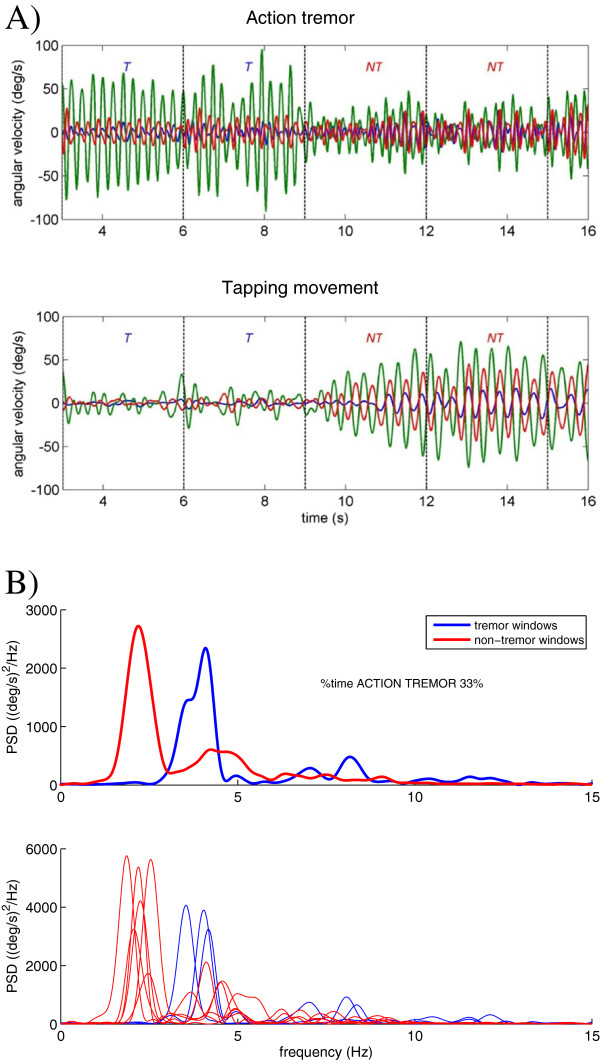
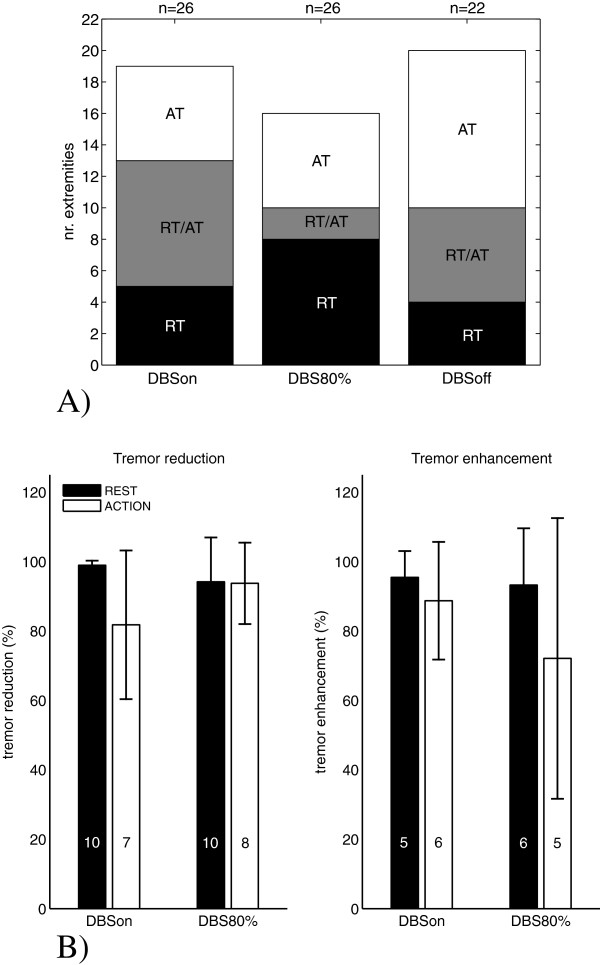
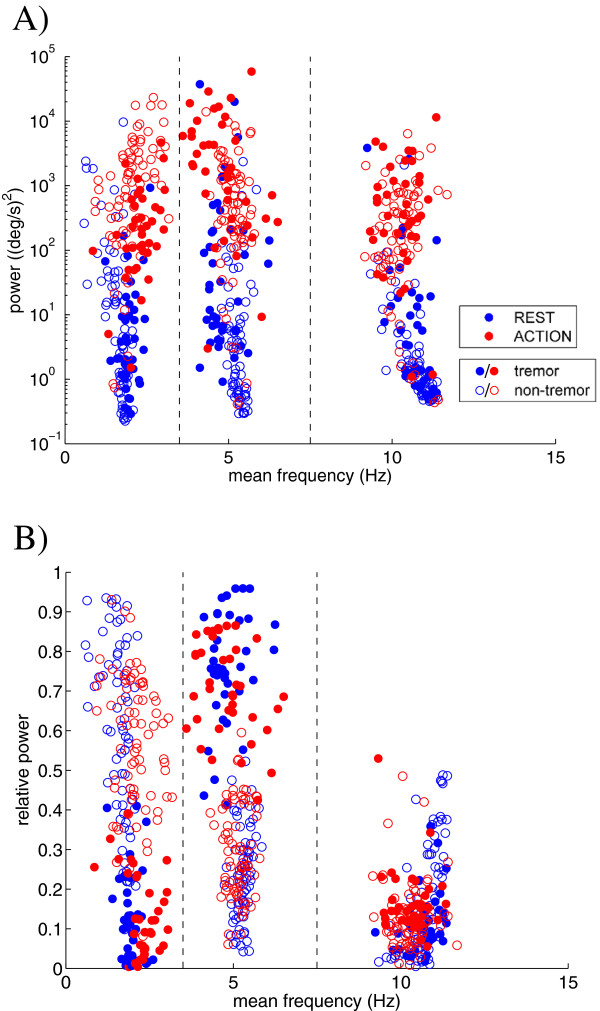
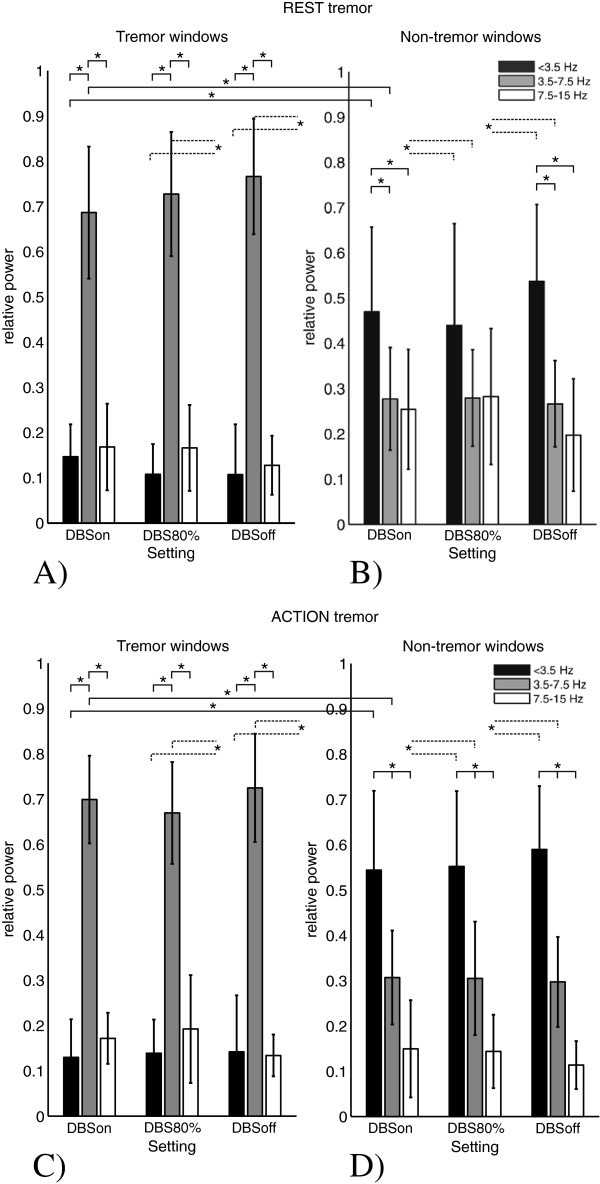
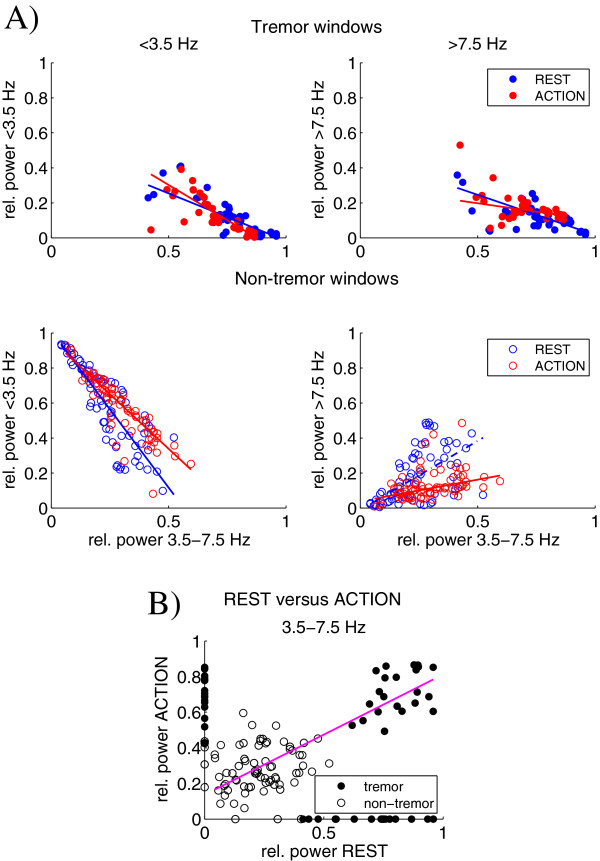
BACKGROUND: Observation of the signals recorded from the extremities of Parkinson's disease patients showing rest and/or action tremor reveal a distinct high power resonance peak in the frequency band corresponding to tremor. The aim of the study was to investigate, using quantitative measures, how clinically effective and less effective deep brain stimulation protocols redistribute movement power over the frequency bands associated with movement, pathological and physiological tremor, and whether normal physiological tremor may reappear during those periods that tremor is absent. METHODS: The power spectral density patterns of rest and action tremor were studied in 7 Parkinson's disease patients treated with (bilateral) deep brain stimulation of the subthalamic nucleus. Two tests were carried out: 1) the patient was sitting at rest; 2) the patient performed a hand or foot tapping movement. Each test was repeated four times for each extremity with different stimulation settings applied during each repetition. Tremor intermittency was taken into account by classifying each 3-second window of the recorded angular velocity signals as a tremor or non-tremor window. RESULTS: The distribution of power over the low frequency band (<3.5 Hz - voluntary movement), tremor band (3.5-7.5 Hz) and high frequency band (>7.5 Hz - normal physiological tremor) revealed that rest and action tremor show a similar power-frequency shift related to tremor absence and presence: when tremor is present most power is contained in the tremor frequency band; when tremor is absent lower frequencies dominate. Even under resting conditions a relatively large low frequency component became prominent, which seemed to compensate for tremor. Tremor absence did not result in the reappearance of normal physiological tremor. CONCLUSION: Parkinson's disease patients continuously balance between tremor and tremor suppression or compensation expressed by power shifts between the low frequency band and the tremor frequency band during rest and voluntary motor actions. This balance shows that the pathological tremor is either on or off, with the latter state not resembling that of a healthy subject. Deep brain stimulation can reverse the balance thereby either switching tremor on or off.
Overview
The claims and statistics of this paper haven’t been checked yet.
Free: it reads the open-access text and checks the first 5 claims that cite a source we can check. Create a free account to check every claim.
Integrity signals
Registry
Cites
Statistics
Figures
Verification
Claims the paper makes
The claims and statistics of this paper haven’t been checked yet.
Free: it reads the open-access text and checks the first 5 claims that cite a source we can check. Create a free account to check every claim.
Claims other papers make about this one
Each is checked against this paper’s own text: does it say what the citing paper says it does?
The source backs part of the claim, not all of it — or backs it for a different population, condition or comparison.
In the citing paper
“Previous research has shown the effectiveness of power spectral analysis of acceleration signal is effective in the detection of tremor24,39–41.”
From Wearable sensors during drawing tasks to measure the severity of essential tremor (2022) · cites this paper as [41]
Experimental — accuracy not yet measured
Self-check
Percentages, sums and reported differences re-computed from the paper’s own numbers.
The self-check needs the paper’s full text.
Citations
Cites
Huber, P. J. (1981) · Wiley Series in Probability and Statistics · doi:10.1002/0471725250 · Cited by 7,066
Parkinson's disease: clinical features and diagnosis
Jankovic, J. (2008) · Journal of Neurology, Neurosurgery & Psychiatry · doi:10.1136/jnnp.2007.131045 · Cited by 5,720 · cited 1×
“Rest tremor generally has a frequency of about 4–6 Hz [1-4].”
BackgroundConsensus Statement of the Movement Disorder Society on Tremor
Deuschl, G., Bain, P., & Brin, M. (2008) · Movement Disorders · doi:10.1002/mds.870131303 · Cited by 1,981 · cited 5×
“With action tremor we mean the tremor occurring during voluntary movement, which is also termed kinetic tremor [7].”
BackgroundInfluentialPathophysiology of bradykinesia in Parkinson's disease
Berardelli, A. (2001) · Brain · doi:10.1093/brain/124.11.2131 · Cited by 906 · cited 1×
“In advanced stages of the disease, tremor may influence the onset of voluntary movements and therewith slow down the movement, while the tremor oscillations may attract voluntary repetitive movements [29-32].”
BackgroundUncovering the mechanism(s) of action of deep brain stimulation: activation, inhibition, or both
McIntyre, C. C., Savasta, M., Kerkerian-Le Goff, L., & Vitek, J. L. (2004) · Clinical Neurophysiology · doi:10.1016/j.clinph.2003.12.024 · Cited by 741 · cited 1×
“It is hypothesized that by applying high frequency deep brain stimulation (DBS) the pathological neural activity patterns are overridden [19,39,40].”
BackgroundEvent‐related beta desynchronization in human subthalamic nucleus correlates with motor performance
Kühn, A. A., Williams, D., Kupsch, A., Limousin, P., Hariz, M., Schneider, G., Yarrow, K., & Brown, P. (2004) · Brain · doi:10.1093/brain/awh106 · Cited by 740 · cited 1×
“These findings support the hypothesis that the inability to suppress the activity of pathological oscillator(s) responsible for the action tremor may play a fundamental role in akinesia associated with PD [4,33-37].”
BackgroundDependence of subthalamic nucleus oscillations on movement and dopamine in Parkinson’s disease
Levy, R., Ashby, P., Hutchison, W. D., Lang, A. E., Lozano, A. M., & Dostrovsky, J. O. (2002) · Brain · doi:10.1093/brain/awf128 · Cited by 683
Physiological and pathological tremors and rhythmic central motor control
McAuley, J. H. (2000) · Brain · doi:10.1093/brain/123.8.1545 · Cited by 509 · cited 3×
“Deep brain stimulation (DBS) seems to have a similar effect on rest and postural tremor [12-15], with the latter type of tremor also referred to as a re-emergent rest tremor during postural tasks, but considered to be a form of action tremor [7].”
BackgroundHow do parkinsonian signs return after discontinuation of subthalamic DBS?
Temperli, P., Ghika, J., Villemure, J.-G., Burkhard, P. R., Bogousslavsky, J., & Vingerhoets, F. J. G. (2003) · Neurology · doi:10.1212/wnl.60.1.78 · Cited by 418 · cited 1×
“The expected effect on tremor from STN DBS has been found to occur within seconds of the onset of stimulation [39,41].”
BackgroundSalarian, A., Russmann, H., Wider, C., Burkhard, P. R., Vingerhoets, F. J. G., & Aminian, K. (2007) · IEEE Transactions on Biomedical Engineering · doi:10.1109/tbme.2006.886670 · Cited by 416 · cited 1×
“[24].”
Research works printed but not linked: 1
- Valls-Solé J Valldeoriola F Neurophysiological correlate of clinical signs in Parkinson’s disease Clin Neurophysiol 2002 113 792 805 10.1016/S1388-2457(02)00080-9 12048039 · DOI
Cited by
Abdulhay, E., Arunkumar, N., Narasimhan, K., Vellaiappan, E., & Venkatraman, V. (2018) · Future Generation Computer Systems · doi:10.1016/j.future.2018.02.009 · Cited by 260
Automatic Classification of Tremor Severity in Parkinson’s Disease Using a Wearable Device
Jeon, H., Lee, W., Park, H., Lee, H., Kim, S., Kim, H., Jeon, B., & Park, K. (2017) · Sensors · doi:10.3390/s17092067 · Cited by 144
“Plenty of researchers have studied tremor analysis to provide informative features with high and significant correlations to the UPDRS [10,11,18], with linear and nonlinear characteristics of tremors [9] to detect Parkinsonian tremors [11], and to distinguish Parkinsonian tremors from healthy people or other tremor sy…”
BackgroundMethodGait and tremor assessment for patients with Parkinson’s disease using wearable sensors
Perumal, S. V., & Sankar, R. T. (2016) · ICT Express · doi:10.1016/j.icte.2016.10.005 · Cited by 126
“The tremor characteristics that was observed to provide differentiation between a PD tremor and tremors due to atypical Parkinsonism [30] are as follows, (1) Amplitude The peak RMS (root mean square) value is defined as the square root of the mean of all the input-squared value and is found out to…”
BackgroundThe adaptive deep brain stimulation challenge
Arlotti, M., Rosa, M., Marceglia, S. R. F., Barbieri, S., & Priori, A. (2016) · Parkinsonism & Related Disorders · doi:10.1016/j.parkreldis.2016.03.020 · Cited by 122
Tatinati, S., Veluvolu, K. C., & Ang, W. T. (2015) · IEEE Transactions on Cybernetics · doi:10.1109/tcyb.2014.2381495 · Cited by 77
A novel deep learning strategy for classifying different attack patterns for deep brain implants
Rathore, H., Al-Ali, A. K., Mohamed, A., Du, X., & Guizani, M. (2019) · IEEE Access · doi:10.1109/access.2019.2899558 · Cited by 65
A-WEAR Bracelet for Detection of Hand Tremor and Bradykinesia in Parkinson’s Patients
Channa, A., Ifrim, R., Popescu, D., & Popescu, N. (2021) · Sensors · doi:10.3390/s21030981 · Cited by 70
“[22] 4 inertial sensors taped on hands, feet and around the waist Clinical 7 PD patients Wilcoxon’s two-tailed rank sum test, bonferroni correction and spearman’s rank correlation coefficient testing Angular velocity and power spectral density Two tests.”
MethodQuantitative Analysis of Parkinsonian Tremor in a Clinical Setting Using Inertial Measurement Units
Lukšys, D., Jonaitis, G., & Griškevičius, J. (2018) · Parkinson s Disease · doi:10.1155/2018/1683831 · Cited by 56
“Tremor, in addition to rigidity, bradykinesia, and postural instability, is generally considered to be one of the cardinal features of PD [3].”
High-accuracy automatic classification of Parkinsonian tremor severity using machine learning method
Jeon, H., Lee, W., Park, H., Lee, H. J., Kim, S. K., Kim, H. B., Jeon, B., & Park, K. S. (2017) · Physiological Measurement · doi:10.1088/1361-6579/aa8e1f · Cited by 43
“( Unlike Heida et al (2013), the frequency was not fixed in this study, because every patient had a different MF.) For each of the three frequency bands, the power values were calculated, being denoted as P Low , P Tr , and P High for the low-, tremor, and high-frequency bands, respectively.”
BackgroundMethodInfluentialMovement Quantification in Neurological Diseases: Methods and Applications
Vilas-Boas, M. D. C., & Cunha, J. P. S. (2016) · IEEE Reviews in Biomedical Engineering · doi:10.1109/rbme.2016.2543683 · Cited by 51
“In what concerns the movement quantification, the most relevant techniques used for these measurements are inertial sensors [58], [59], [62]–[64], [66]–[71], [92], [95], [98], [101], [107], [109], [111], [120]–[125] and optical systems [57], [76], [77], [79], [81]–[85], [88]–[90], [93], [94], [98]–[100], [102]–[105],…”
MethodTian, F., Fan, X., Fan, J., Zhu, Y., Gao, J., Wang, D., Bi, X., & Wang, H. (2019) · Proceedings of the 2019 CHI Conference on Human Factors in Computing Systems · doi:10.1145/3290605.3300313 · Cited by 38
“These results were consistent with findings in prior studies investigating the action or postural tremor of PD [7, 18, 20, 47], which confirmed that the IMU data collected during touchscreen gestural interactions can also be informative and useful for PD assessment.”
BackgroundResultInfluentialWearable sensors during drawing tasks to measure the severity of essential tremor
Ali, S. M., Arjunan, S. P., Peters, J., Perju-Dumbrava, L., Ding, C., Eller, M., Raghav, S., Kempster, P., Motin, M. A., Radcliffe, P. J., et al. (2022) · Scientific Reports · doi:10.1038/s41598-022-08922-6 · Cited by 35
Mohammed, A., Zamani, M., Bayford, R. H., & Demosthenous, A. (2017) · IEEE Transactions on Neural Systems and Rehabilitation Engineering · doi:10.1109/tnsre.2017.2722986 · Cited by 38
“Furthermore, the correlation of gamma [7], [13], [14], and tremor [15] bands with PD symptoms, raises more ques-”
BackgroundHao, M.-Z., Xu, S.-Q., Hu, Z.-X., Xu, F.-L., Niu, C.-X. M., Xiao, Q., & Lan, N. (2017) · Journal of NeuroEngineering and Rehabilitation · doi:10.1186/s12984-017-0286-2 · Cited by 29
1D-convolutional transformer for Parkinson disease diagnosis from gait
Naimi, S., Bouachir, W., & Bilodeau, G.-A. (2023) · Neural Computing and Applications · doi:10.1007/s00521-023-09193-6 · Cited by 44
“Spectral analysis [7, 8] and wavelet analysis [9, 10] are examples of handcrafted signal processing methods that have been used to detect Parkinson’s disease by decomposing signals into frequency components.”
Luft, F., Sharifi, S., Mugge, W., Schouten, A., Bour, L., van Rootselaar, A.-F., Veltink, P., & Heida, T. (2019) · Sensors · doi:10.3390/s19194301 · Cited by 27
“, in 2013 [15], divided data into tremor windows (TWs) and non-tremor windows (NTWs) to determine the effect of deep brain stimulation on tremor during rest and movement in patients with PD.”
BackgroundSelf-citationDiagnosis and Treatment of Tremor in Parkinson’s Disease Using Mechanical Devices
Fujikawa, J., Morigaki, R., Yamamoto, N., Nakanishi, H., Oda, T., Izumi, Y., & Takagi, Y. (2022) · Life · doi:10.3390/life13010078 · Cited by 30
Tremor quantification of Parkinson's disease - a pilot study
Alam, M. N., Johnson, B., Gendreau, J. L., Tavakolian, K., Combs, C. K., & Fazel-Rezai, R. (2016) · IEEE International Conference on Electro Information Technology · doi:10.1109/eit.2016.7535334 · Cited by 23
Tremor Assessment during Virtual Reality Brain Tumor Resection
Siyar, S., Azarnoush, H., Rashidi, S., & Maestro, R. F. D. (2019) · Journal of surgical education · doi:10.1016/j.jsurg.2019.11.011 · Cited by 24
Spiral drawing analysis with a smart ink pen to identify Parkinson's disease fine motor deficits
Toffoli, S., Lunardini, F., Parati, M., Gallotta, M., MARIA, B. D., Longoni, L., Dell'Anna, M. E., & Ferrante, S. (2023) · Frontiers in Neurology · doi:10.3389/fneur.2023.1093690 · Cited by 26
“As for Frequency, the occurrence of tremor in PD spirals was highlighted by a different power distribution in the PSD for both acceleration and angular velocity signals: patients were characterized by a higher relative power in the band associated with PD tremor (4–7Hz), while lower proportions were observed in the lo…”
BackgroundDinesh, K., Xiong, M., Adams, J., Dorsey, R. E., & Gaurav Sharma, A. (2016) · IEEE Western New York Image and Signal Processing Workshop (WNYISPW) · doi:10.1109/wnyipw.2016.7904834 · Cited by 22
Toward Adaptive Deep Brain Stimulation in Parkinson’s Disease: A Review
Mohammed, A., Bayford, R. H., & Demosthenous, A. (2018) · Neurodegenerative Disease Management · doi:10.2217/nmt-2017-0050 · Cited by 30
Wearable Accelerometer and Gyroscope Sensors for Estimating the Severity of Essential Tremor
Ali, S. M., Arjunan, S. P., Peter, J., Perju-Dumbrava, L., Ding, C., Eller, M., Raghav, S., Kempster, P., Motin, M. A., Radcliffe, P. J., et al. (2024) · IEEE Journal of Translational Engineering in Health and Medicine · doi:10.1109/jtehm.2023.3329344 · Cited by 22
“The principle has been used to examine various clinical aspects of ET [63].”
BackgroundDifferent Dopaminergic Dysfunctions Underlying Parkinsonian Akinesia and Tremor
Caligiore, D., Mannella, F., & Baldassarre, G. (2019) · Frontiers in Neuroscience · doi:10.3389/fnins.2019.00550 · Cited by 24
“, 1994) and humans (e.g., RodriguezOroz et al., 2001; Heida et al., 2013) concerning the neural discharge of subthalamic nucleus neurons during parkinsonian tremor.”
BackgroundAn In–Laboratory Validity and Reliability Tested System for Quantifying Hand–Arm Tremor in Motions
Chan, P. Y., Ripin, Z. M., Halim, S. A., Tharakan, J., Mustapha, M., Ng, K. S., Kamarudin, M. I., Eow, G. B., Hor, J. Y., Tan, K., et al. (2017) · IEEE Transactions on Neural Systems and Rehabilitation Engineering · doi:10.1109/tnsre.2017.2782361 · Cited by 16
Hu, Z.-X., Xu, S., Hao, M., Xiao, Q., & Lan, N. (2019) · Journal of Neural Engineering · doi:10.1088/1741-2552/ab186f · Cited by 17
A Framework for Adapting Deep Brain Stimulation Using Parkinsonian State Estimates
Mohammed, A., Bayford, R. H., & Demosthenous, A. (2020) · Frontiers in Neuroscience · doi:10.3389/fnins.2020.00499 · Cited by 22
“, 2012, 2013; Grant and Lowery, 2013); gamma (Brown and Williams, 2005; Little and Brown, 2012; Brittain and Brown, 2014); and tremor (Heida et al., 2013) bands.”
Ziogas, I., Lamprou, C., & Hadjileontiadis, L. J. (2023) · IEEE Access · doi:10.1109/access.2023.3324987 · Cited by 16
“Nonetheless, there are studies where the rest tremor band is taken over a broader region, e.g. [3.5 - 7.5 Hz] [42], [4 - 8] Hz [43], whereas physiological tremor is identified in the [8 - 12] Hz band [42].”
BackgroundInfluentialHilbert–Huang transform based instrumental assessment of intention tremor in multiple sclerosis
Carpinella, I., Cattaneo, D., & Ferrarin, M. (2015) · Journal of Neural Engineering · doi:10.1088/1741-2560/12/4/046011 · Cited by 12
Goubault, É., Nguyen, H., Bogard, S., Blanchet, P. J., Bézard, E., Vincent, C., Sarna, J. R., Monchi, O., & Duval, C. (2019) · Frontiers in Neurology · doi:10.3389/fneur.2019.00256 · Cited by 13
Nguyen, T. Q. (2021) · Advances in Materials Science and Engineering · doi:10.1155/2021/3328684 · Cited by 10
Mendonça, M., Ferreira, P. C., Oliveira, F. P. M., Barbosa, R., Meira, B., Costa, D. C., Oliveira-Maia, A. J., & da Silva, J. A. (2024) · npj Parkinson s Disease · doi:10.1038/s41531-024-00818-8 · Cited by 15
Amoozegar, S., Pooyan, M., & Roughani, M. (2019) · Medical Hypotheses · doi:10.1016/j.mehy.2019.109360 · Cited by 12
“[59] bands with PD symptoms were the subjects of some other researchers which impressed suitability of using beta band activities alone.”
BackgroundThe Rehapiano—Detecting, Measuring, and Analyzing Action Tremor Using Strain Gauges
Ferenčík, N., Jaščur, M., Bundzel, M., & Cavallo, F. (2020) · Sensors · doi:10.3390/s20030663 · Cited by 11
“The Rehapiano is suited for measuring action tremor produced during voluntary muscle contraction [37,38].”
A Multimodal Approach to the Quantification of Kinetic Tremor in Parkinson’s Disease
Szumilas, M., Lewenstein, K., Ślubowska, E., Szlufik, S., & Koziorowski, D. (2019) · Sensors · doi:10.3390/s20010184 · Cited by 11
“Additionally, it is a highly intermittent symptom [5].”
BackgroundDeficits in tapping accuracy and variability in tremor patients
Luft, F., Sharifi, S., Mugge, W., Schouten, A. C., Bour, L. J., van Rootselaar, A., Veltink, P. H., & Heida, T. (2019) · Journal of NeuroEngineering and Rehabilitation · doi:10.1186/s12984-019-0528-6 · Cited by 11
Self-citationDefining the Rhythm: Developing a New Method to Describe Tremor and Myoclonus
Latorre, A., Hale, B., Cordivari, C., Humaidan, K., Rothwell, J. C., Bhatia, K. P., & Rocchi, L. (2025) · Movement Disorders · doi:10.1002/mds.70034 · Cited by 9
“8 High synchronization among motor units at the tremor frequency has already been demonstrated in ET.”
Schifino, G. P., da Cunha, M. J., Marchese, R. R., Mabília, V., Vian, L. H. A., Pereira, F. D. S., Cimolin, V., & Pagnussat, A. S. (2025) · Sensors · doi:10.3390/s25144313 · Cited by 10
“This highlights spectral analysis’s sensitivity to subtle movement deviations and its potential for a more comprehensive assessment of motor abnormalities [15,44,46,48–51].”
Wilkinson, M. F., Ajoku, U., Pederson, K., McIntrye, I., & Zarrabian, M. (2022) · Journal of Clinical Neurophysiology · doi:10.1097/wnp.0000000000000952 · Cited by 5
“13 We hypothesized that MEP recordings sharing a common source potential will possess similar signal frequency pro fi les.”
BackgroundHeida, T., Wentink, E. C., Zhao, Y., & Marani, E. (2014) · Journal of NeuroEngineering and Rehabilitation · doi:10.1186/1743-0003-11-135 · Cited by 4
“These tests were part of a more extended measurement protocol, which also included a rest tremor test and a self-paced tapping test performed with the same DBS settings [32].”
BackgroundMethodResultSelf-citationRamirez‐Zamora, A., Kaszuba, B. C., Gee, L. E., Prusik, J., Danisi, F. O., Shin, D. S.-H., & Pilitsis, J. G. (2016) · Europe PMC (PubMed Central) · doi:10.7916/d8rj4jt8 · Cited by 5
Goubault, É., Bogard, S., Blanchet, P. J., Bézard, E., Vincent, C., Martino, D., Sarna, J. R., Monchi, O., & Duval, C. (2020) · Tremor and Other Hyperkinetic Movements · doi:10.5334/tohm.403 · Cited by 6
Objective assessment of tremor in Parkinson's disease using the RehaBEElitation serious game
Mendes, L. C., Cabral, A. M., Alves, C. M., Morère, Y., & Andrade, A. D. O. (2023) · IEEE International Conference on Metrology for eXtended Reality, Artificial Intelligence and Neural Engineering (MetroXRAINE) · doi:10.1109/metroxraine58569.2023.10405668 · Cited by 4
Bravhar, K., & Juric, R. (2017) · Hawaii International Conference on System Sciences (HICSS) · doi:10.24251/hicss.2017.422 · Cited by 4
Notch filter and MPC for powered wheelchair operation under Parkinson's tremor
Meyer, R., Just, F., DeCarlo, R. A., Žefran, M., & Oishi, M. (2014) · Proceedings of the ... American Control Conference/Proceedings of the American Control Conference · doi:10.1109/acc.2014.6859442 · Cited by 3
“5 Hz with 5 Hz being the representative frequency considered herein [5], [6], [7].”
BackgroundShanghavi, A. A., Larrañaga, D., Patil, R., Frazier, E. M., Ambike, S., Duerstock, B. S., & Sereno, A. B. (2024) · Scientific Reports · doi:10.1038/s41598-024-60286-1 · Cited by 3
Ruonala, V., Pekkonen, E., Airaksinen, O., Kankaanpaa, M. J., Karjalainen, P. A., & Rissanen, S. M. (2022) · PLoS ONE · doi:10.1371/journal.pone.0266936 · Cited by 3
Mixed-reality assistive robotic power chair simulator for Parkinson’s tremor testing
Meyer, R. T., & Sergeeva, Y. (2020) · Medical Engineering & Physics · doi:10.1016/j.medengphy.2020.05.005 · Cited by 2
Automatic Classification of Parkinson’s Disease Based on Severity Estimation
Gupta, K., Khajuria, A., Joshi, D., & Chatterjee, N. (2020) · Lecture notes in electrical engineering · doi:10.1007/978-981-15-1420-3_20 · Cited by 2
Mendonça, M., Ferreira, P., Oliveira, F. P. M., Barbosa, R. P., Meira, B., Costa, D. C., Oliveira-Maia, A. J., & da Silva, J. A. (2024) · medRxiv · doi:10.1101/2024.04.04.24305353 · Cited by 2
“Because tremor is not represented by a distinct resonance peak in the power spectral density(39), and due to the known distribution of frequency representation of RT in PD, we used the log of maximum power spectral density between 4 and 6 Hz as a metric to characterize oscillations within this…”
MethodSmartphone-Based System for Quantifying Tremor and Freezing of Gait in Parkinson’s Disease
Armoa, G. J., Abarca, V. E., & Elías, D. A. (2025) · International Conference on Intelligent Informatics and Biomedical Sciences (ICIIBMS) · doi:10.1109/iciibms66230.2025.11316764 · Cited by 1
“As reported in the literature [21], Parkinsonian tremors manifest higher spectral power in the 4-6 Hz range.”
Interpretable features for quantifying motor symptoms of Parkinson’s disease with wearable sensors
Xie, J., Zhao, H., Zhang, M., Deng, Y., Qu, Q., Liao, W.-H., Lei, Y., Zhang, Y., Sarkodie-Gyan, T., & Cao, J. (2026) · Measurement · doi:10.1016/j.measurement.2026.121402 · Cited by 1
Ferraris, C., Amprimo, G., Coppo, G., Bellanova, F., Bigoni, M., Mauro, A., & Priano, L. (2026) · Frontiers in Neurology · doi:10.3389/fneur.2026.1800332 · Cited by 1
Analysis and visualisation of tremor dynamics in deep brain stimulation patients
Bremm, R. P., Koch, K. P., Krüger, R., Gonçalves, J. M., & Hertel, F. (2020) · Current Directions in Biomedical Engineering · doi:10.1515/cdbme-2020-3030 · Cited by 1
“A previous study reported that the PD patients with isolated hand resting tremor continuously balance between tremor and tremor suppression during the transition from RP to movement [13].”
A strategy for minimizing Parkinsonian noise from a joystick controlled wheeled mobile robot
Just, F. (2013) · Purdue e-Pubs (Purdue University System) · Cited by 1
Wang, Y., Hua, R., & Almuteb, I. (2023) · Research Square · doi:10.21203/rs.3.rs-3645803/v1 · Cited by 1
Suppression of parkinsonian tremor with deep brain stimulation and auditory cueing
Heida, T., Zhao, Y., & Wezel, R. J. A. V. (2013) · University of Twente Research Information
Self-citationLuft, F. (2020) · doi:10.3990/1.9789036549752
Parkinson’s Detection: Emotional Intelligence Perspective
-, A. B., Mir, K. H., & Singh, Y. P. (2023) · International Journal For Multidisciplinary Research · doi:10.36948/ijfmr.2023.v05i03.4090
“, including (I)Power spectral density analysis: This method involves calculating the power spectral density of the EEG signals to identify changes in the frequency distribution of the signals, which are associated with Parkinson's disease [63].”
MethodHarnessing Neurotechnology: Advancements and applications of brain implant
Divya, B., Maheshwari, K., Balakoti, J., Pravalika, P., Shirisha, G., & Sharma, J. (2024) · International Journal of Pharmaceutical Sciences and Drug Analysis · doi:10.22271/27889246.2024.v4.i1a.78
Defining the rhythm: a new method to classify tremor and myoclonusPreprint
Latorre, A., Hale, B., Cordivari, C., Humaidan, K., Rothwell, J. C., Bhatia, K. P., & Rocchi, L. (2025) · medRxiv · doi:10.1101/2025.04.13.25325747
Joint Bayesian Hidden Markov Model With Subject‐Specific Transitions for Wearable Sensor Data
Fei, W., Miao, Z., Xu, T., & Wang, Y. (2025) · Statistics in Medicine · doi:10.1002/sim.70334 · Cited by 1
Reithe, H., Pătraşcu, M., Torrado, J. C., Førsund, E., Husebo, B. S., Kverneng, S. U., Sheard, E., Tzoulis, C., & Marty, B. (2025) · IEEE Journal of Translational Engineering in Health and Medicine · doi:10.1109/jtehm.2025.3648704 · Cited by 1
A multi-scale spatiotemporal learning framework for Parkinsonian gait analysis
Wang, J., Hou, Z., Lin, E., Li, X., Liang, J., & Zhou, X. (2025) · Journal of Applied Biomedicine · doi:10.1016/j.bbe.2025.12.004 · Cited by 1
Koop, M. M., Waltz, C., Bazyk, A. S., Lapin, B., Li, Y., Houltham, S., Blum, D., Liao, J., Phillips, O., Siddiqui, J., et al. (2026) · Sensors · doi:10.3390/s26144497
Quantification of Neuromotor Control in STXBP1 -Related Disorders With Wearable Sensors
Orlando, J. M., Bane, B., Chisari, T., Magielski, J. H., Pierce, S. R., Cunningham, K. G., Woo, C., Tefft, S., Nolan, J., Ruggiero, S. M., et al. (2026) · Neurology Genetics · doi:10.1212/nxg.0000000000200439 · Cited by 1
Metadata
- Authors
- Heida, T., Wentink, E., & Marani, E.
- Affiliations
- University of Twente (NL)
- Corresponding author
- Heida, Tjitske
- ORCID
- Heida, Tjitske
- Venue
- Journal of NeuroEngineering and Rehabilitation
- Published
- 2013
- Volume
- 10
- Issue
- 1
- Pages
- 70
- ISSN
- 1743-0003 (ISSN-L)
- PMC
- PMC3722015
- OpenAlex
- W2132168580
- Cited by
- 66
- References
- 43
- Citations by year
- 2026: 4 · 2025: 7 · 2024: 4 · 2023: 7 · 2022: 4 · 2021: 2 · 2020: 7 · 2019: 10 · 2018: 3 · 2017: 6 · 2016: 6 · 2015: 1 · 2014: 3 · 2013: 2
- FWCI
- 2.54
- Type
- journal article
- Language
- en
- Open access
- gold
- doi.org
- Licence
- cc-by
- Locations
- Journal of NeuroEngineering and Rehabilitation (publishedVersion, cc-by)
- Europe PMC (PubMed Central) (publishedVersion, cc-by)
- PubMed Central (publishedVersion, cc-by)
- PubMed (publishedVersion)
- University of Twente Research Information (publishedVersion, cc-by)
- University of Twente Research Information (submittedVersion, other-oa)
- University of Twente Research Information (submittedVersion, cc-by)
- Topics
- Health Sciences › Medicine › Clinical Neurology › Deep Brain Stimulation and Movement Disorders
- Social Sciences › Psychology › Clinical Psychology › Obsessive-Compulsive Spectrum Disorders
- Life Sciences › Neuroscience › Cognitive Neuroscience › Motor Control and Adaptation
- Keywords
- Parkinson's disease, deep brain stimulation, subthalamic nucleus, resting tremor, action tremor, physiological tremor, power spectral density, tremor suppression, tremor compensation
- MeSH terms
- Aged, Electromyography, Female, Humans, Male, Middle Aged, Movement, Parkinson Disease, Rest, Tremor, Deep Brain Stimulation
About these checks
Registry, retraction, Cites and statistics results are computed, not judged, with one exception: a printed reference that no index lists is read once by a model before it counts as a citation error. Claims are extracted by a model and kept only when their quote appears verbatim in the text; each cited source is then checked, with a model’s help, for whether it says what the claim relies on. Those verdicts can be wrong — read the claim’s quote and the cited source before relying on one.
Statistics and arithmetic are recomputed, not judged.
Confidence bands are shown only for fields calibrated on our annotated test set. None is calibrated yet, so no band is shown.
What counts as a claim ›How we measure confidence ›How we check this ›
Are you an author, or do you see a problem with this page? Request a review
Data sources
Bibliographic data: Semantic Scholar, OpenAlex, Crossref.
Contains information from the Semantic Scholar Academic Graph Datasets, made available under the ODC Attribution License (ODC-BY 1.0).
Semantic Scholar’s data is described in: Kinney, R., et al. (2023). The Semantic Scholar Open Data Platform. arXiv:2301.10140.
