

Power spectral density analysis of physiological, rest and action tremor in Parkinson’s disease patients treated with deep brain stimulation
Open accessThe DOI matches its Crossref record; 43 of the 43 references it cites were found in a registry or an index.
Abstract
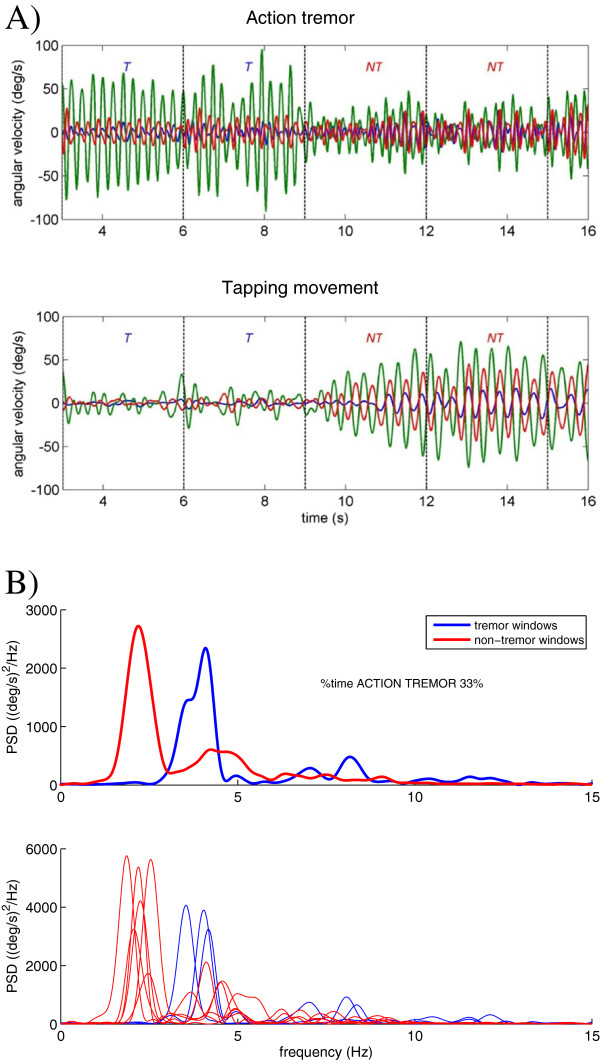
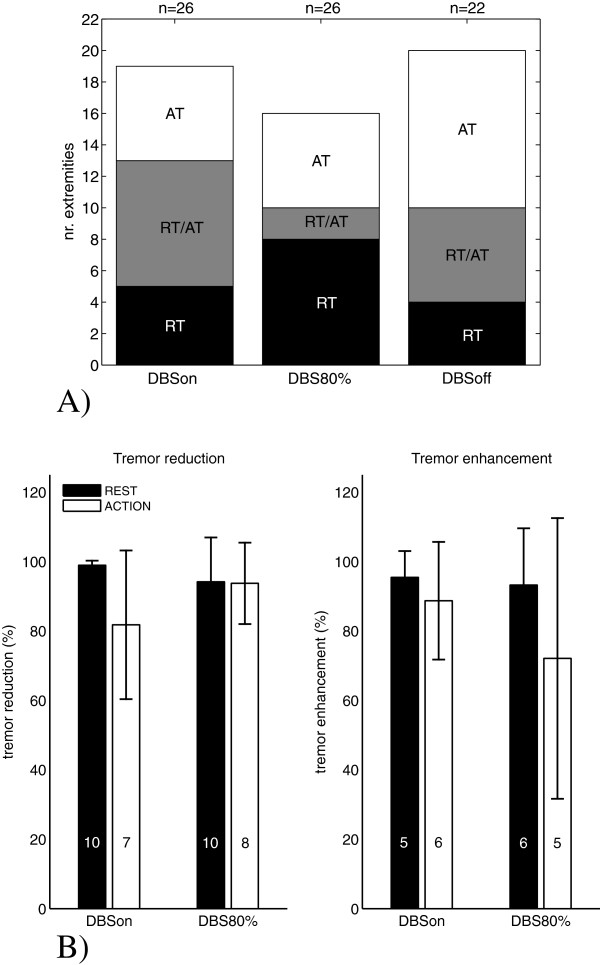
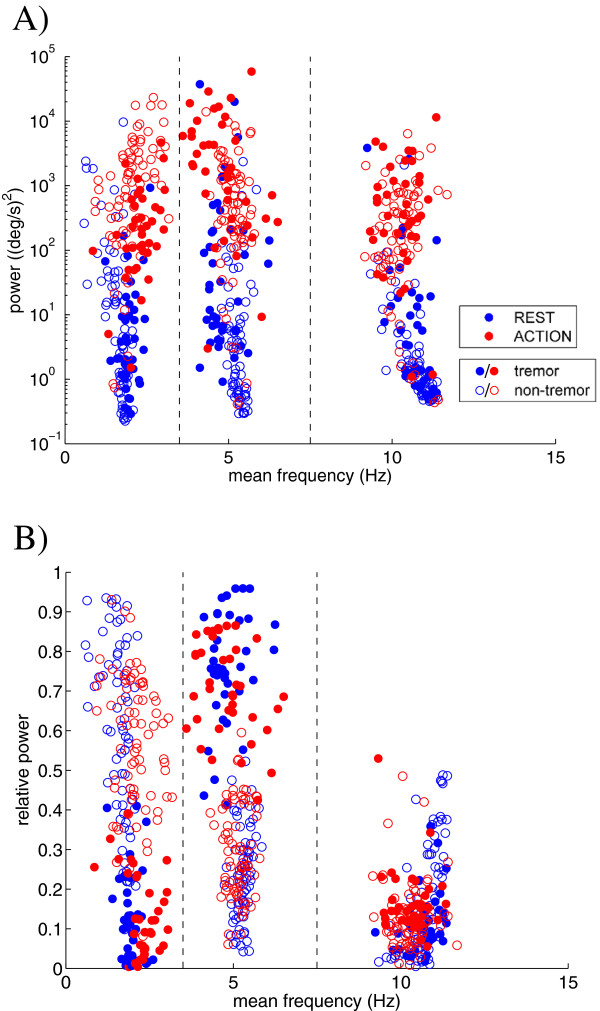
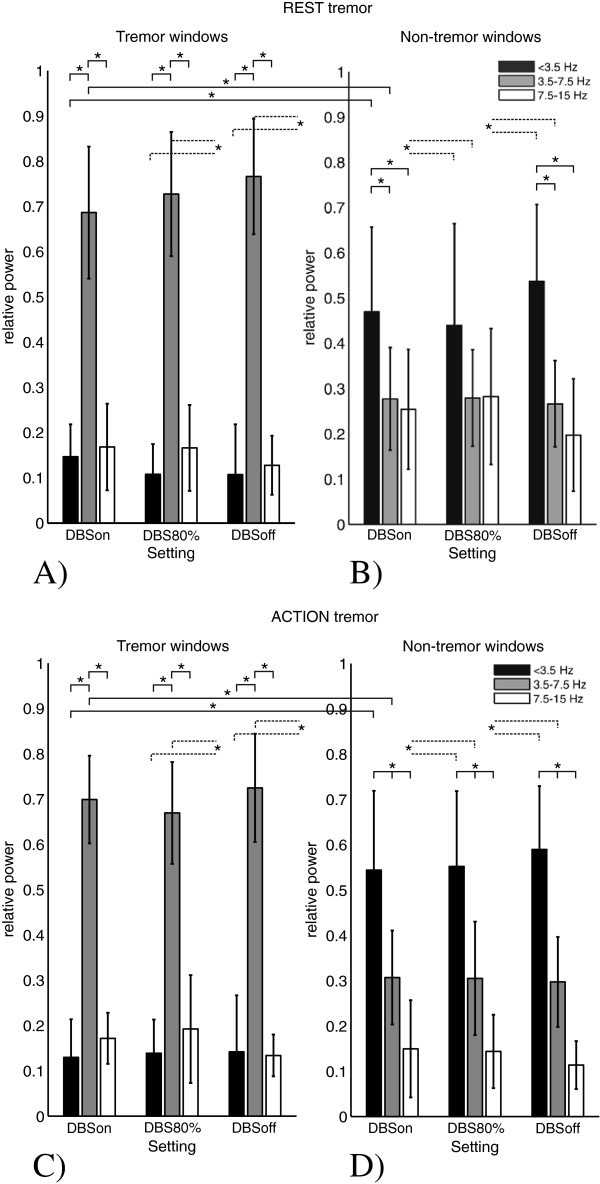
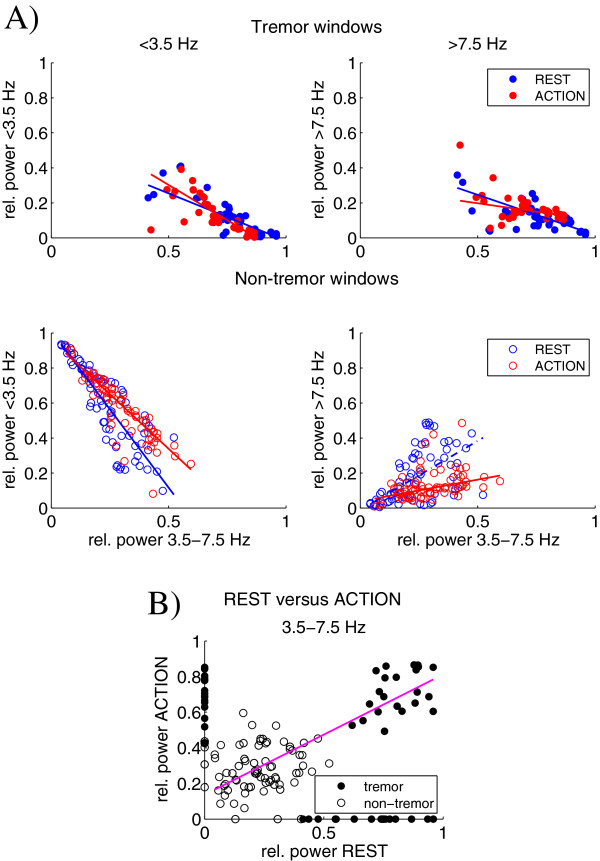
BACKGROUND: Observation of the signals recorded from the extremities of Parkinson's disease patients showing rest and/or action tremor reveal a distinct high power resonance peak in the frequency band corresponding to tremor. The aim of the study was to investigate, using quantitative measures, how clinically effective and less effective deep brain stimulation protocols redistribute movement power over the frequency bands associated with movement, pathological and physiological tremor, and whether normal physiological tremor may reappear during those periods that tremor is absent. METHODS: The power spectral density patterns of rest and action tremor were studied in 7 Parkinson's disease patients treated with (bilateral) deep brain stimulation of the subthalamic nucleus. Two tests were carried out: 1) the patient was sitting at rest; 2) the patient performed a hand or foot tapping movement. Each test was repeated four times for each extremity with different stimulation settings applied during each repetition. Tremor intermittency was taken into account by classifying each 3-second window of the recorded angular velocity signals as a tremor or non-tremor window. RESULTS: The distribution of power over the low frequency band (<3.5 Hz - voluntary movement), tremor band (3.5-7.5 Hz) and high frequency band (>7.5 Hz - normal physiological tremor) revealed that rest and action tremor show a similar power-frequency shift related to tremor absence and presence: when tremor is present most power is contained in the tremor frequency band; when tremor is absent lower frequencies dominate. Even under resting conditions a relatively large low frequency component became prominent, which seemed to compensate for tremor. Tremor absence did not result in the reappearance of normal physiological tremor. CONCLUSION: Parkinson's disease patients continuously balance between tremor and tremor suppression or compensation expressed by power shifts between the low frequency band and the tremor frequency band during rest and voluntary motor actions. This balance shows that the pathological tremor is either on or off, with the latter state not resembling that of a healthy subject. Deep brain stimulation can reverse the balance thereby either switching tremor on or off.
Overview
The claims and statistics of this paper haven’t been checked yet.
Free: it reads the open-access text and checks the first 5 claims that cite a source we can check. Create a free account to check every claim.
Integrity signals
Registry
Cites
Statistics
Figures
Verification
Claims the paper makes
The claims and statistics of this paper haven’t been checked yet.
Free: it reads the open-access text and checks the first 5 claims that cite a source we can check. Create a free account to check every claim.
Claims other papers make about this one
Each is checked against this paper’s own text: does it say what the citing paper says it does?
The source backs part of the claim, not all of it — or backs it for a different population, condition or comparison.
In the citing paper
“Previous research has shown the effectiveness of power spectral analysis of acceleration signal is effective in the detection of tremor24,39–41.”
From Wearable sensors during drawing tasks to measure the severity of essential tremor (2022) · cites this paper as [41]
Experimental — accuracy not yet measured
Self-check
Percentages, sums and reported differences re-computed from the paper’s own numbers.
The self-check needs the paper’s full text.
Citations
Cites
Huber, P. J. (1981) · Wiley Series in Probability and Statistics · doi:10.1002/0471725250 · Cited by 7,066
Parkinson's disease: clinical features and diagnosis
Jankovic, J. (2008) · Journal of Neurology, Neurosurgery & Psychiatry · doi:10.1136/jnnp.2007.131045 · Cited by 5,720 · cited 1×
“Rest tremor generally has a frequency of about 4–6 Hz [1-4].”
BackgroundConsensus Statement of the Movement Disorder Society on Tremor
Deuschl, G., Bain, P., & Brin, M. (2008) · Movement Disorders · doi:10.1002/mds.870131303 · Cited by 1,981 · cited 5×
“With action tremor we mean the tremor occurring during voluntary movement, which is also termed kinetic tremor [7].”
BackgroundInfluentialPathophysiology of bradykinesia in Parkinson's disease
Berardelli, A. (2001) · Brain · doi:10.1093/brain/124.11.2131 · Cited by 906 · cited 1×
“In advanced stages of the disease, tremor may influence the onset of voluntary movements and therewith slow down the movement, while the tremor oscillations may attract voluntary repetitive movements [29-32].”
BackgroundUncovering the mechanism(s) of action of deep brain stimulation: activation, inhibition, or both
McIntyre, C. C., Savasta, M., Kerkerian-Le Goff, L., & Vitek, J. L. (2004) · Clinical Neurophysiology · doi:10.1016/j.clinph.2003.12.024 · Cited by 741 · cited 1×
“It is hypothesized that by applying high frequency deep brain stimulation (DBS) the pathological neural activity patterns are overridden [19,39,40].”
BackgroundEvent‐related beta desynchronization in human subthalamic nucleus correlates with motor performance
Kühn, A. A., Williams, D., Kupsch, A., Limousin, P., Hariz, M., Schneider, G., Yarrow, K., & Brown, P. (2004) · Brain · doi:10.1093/brain/awh106 · Cited by 740 · cited 1×
“These findings support the hypothesis that the inability to suppress the activity of pathological oscillator(s) responsible for the action tremor may play a fundamental role in akinesia associated with PD [4,33-37].”
BackgroundDependence of subthalamic nucleus oscillations on movement and dopamine in Parkinson’s disease
Levy, R., Ashby, P., Hutchison, W. D., Lang, A. E., Lozano, A. M., & Dostrovsky, J. O. (2002) · Brain · doi:10.1093/brain/awf128 · Cited by 683
Physiological and pathological tremors and rhythmic central motor control
McAuley, J. H. (2000) · Brain · doi:10.1093/brain/123.8.1545 · Cited by 509 · cited 3×
“Deep brain stimulation (DBS) seems to have a similar effect on rest and postural tremor [12-15], with the latter type of tremor also referred to as a re-emergent rest tremor during postural tasks, but considered to be a form of action tremor [7].”
BackgroundHow do parkinsonian signs return after discontinuation of subthalamic DBS?
Temperli, P., Ghika, J., Villemure, J.-G., Burkhard, P. R., Bogousslavsky, J., & Vingerhoets, F. J. G. (2003) · Neurology · doi:10.1212/wnl.60.1.78 · Cited by 418 · cited 1×
“The expected effect on tremor from STN DBS has been found to occur within seconds of the onset of stimulation [39,41].”
BackgroundSalarian, A., Russmann, H., Wider, C., Burkhard, P. R., Vingerhoets, F. J. G., & Aminian, K. (2007) · IEEE Transactions on Biomedical Engineering · doi:10.1109/tbme.2006.886670 · Cited by 416 · cited 1×
“[24].”
Introduction to the programming of deep brain stimulators
Volkmann, J., Herzog, J., Kopper, F., & Deuschl, G. (2002) · Movement Disorders · doi:10.1002/mds.10162 · Cited by 372 · cited 2×
“The expected effect on tremor from STN DBS has been found to occur within seconds of the onset of stimulation [39,41].”
BackgroundCentral motor loop oscillations in parkinsonian resting tremor revealed magnetoencephalography
Volkmann, J., Joliot, M., Mogilner, A., Ioannides, A. A., Lado, F., Fazzini, E., Ribary, U., & Llinás, R. (1996) · Neurology · doi:10.1212/wnl.46.5.1359 · Cited by 327 · cited 2×
“These findings support the hypothesis that the inability to suppress the activity of pathological oscillator(s) responsible for the action tremor may play a fundamental role in akinesia associated with PD [4,33-37].”
BackgroundMotor-unit activity responsible for 8- to 12-Hz component of human physiological finger tremor
Elble, R. J., & Randall, J. E. (1976) · Journal of Neurophysiology · doi:10.1152/jn.1976.39.2.370 · Cited by 300 · cited 1×
“When hypothesizing that action tremor is an exaggeration of physiological tremor, suppression of action tremor by stimulation may be expected to also have an effect on the characteristic 8–12 Hz central component, associated with physiological tremor [7,21-23].”
BackgroundThe pathophysiology of parkinsonian tremor: a review
Deuschl, G., Raethjen, J., Baron, R., Lindemann, M., Wilms, H., & Krack, P. (2000) · Journal of Neurology · doi:10.1007/pl00007781 · Cited by 251 · cited 1×
“Rest tremor generally has a frequency of about 4–6 Hz [1-4].”
BackgroundBaudrexel, S., Witte, T., Seifried, C., von Wegner, F., Beissner, F., Klein, J. C., Steinmetz, H., Deichmann, R., Roeper, J., & Hilker, R. (2011) · NeuroImage · doi:10.1016/j.neuroimage.2011.01.017 · Cited by 247 · cited 1×
“Since during voluntary movement different pathways through the basal ganglia are activated compared to the resting state [38], the occurrence of rest and action tremor may mainly be determined by the pathways involved in different brain states and the involvement of these pathways in the degenerative processes.”
BackgroundExcessive synchronization of basal ganglia neurons at 20 Hz slows movement in Parkinson's disease
CHEN, C., LITVAK, V, GILBERTSON, T., KUHN, A., LU, C., LEE, S., TSAI, C., TISCH, S., LIMOUSIN, P., & HARIZ, M. (2007) · Experimental Neurology · doi:10.1016/j.expneurol.2007.01.027 · Cited by 229
Tremor, the cogwheel phenomenon and clonus in Parkinson's disease.
Findley, L. J., Gresty, M. A., & Halmagyi, G. M. (1981) · Journal of Neurology, Neurosurgery & Psychiatry · doi:10.1136/jnnp.44.6.534 · Cited by 210 · cited 2×
“Less well recognized in PD, but often more disabling is the occurrence of action tremor, which is any tremor that is produced during voluntary muscle contraction [3,7].”
BackgroundTremor amplitude is logarithmically related to 4- and 5-point tremor rating scales
Elble, R. J. (2006) · Brain · doi:10.1093/brain/awl190 · Cited by 186
Subthalamic Stimulation for Parkinson's Disease
Benabid, A. L., Koudsié, A., Benazzouz, A., Fraix, V., Ashraf, A., Bas, J. F. L., Chabardès, S., & Pollak, P. (2000) · Archives of Medical Research · doi:10.1016/s0188-4409(00)00077-1 · Cited by 163
Time-frequency analysis of tremors
O'Suilleabhain, P. (1998) · Brain · doi:10.1093/brain/121.11.2127 · Cited by 157 · cited 1×
“It may occur unilaterally or bilaterally, with the latter showing similar frequencies on both sides, but lacking a sideto-side coherency [5,6].”
BackgroundImpact of deep brain stimulation on upper limb akinesia in Parkinson's disease
Brown, R. G., Limousin Dowsey, P., Brown, P., Jahanshahi, M., Pollak, P., Benabid, A. L., Rodriguez-Oroz, M. C., Obeso, J., & Rothwell, J. C. (1999) · Annals of Neurology · doi:10.1002/1531-8249(199904)45:4<473::aid-ana9>3.0.co;2-v · Cited by 153 · cited 1×
“In general, STN DBS operates with different magnitudes of clinical efficacy based on the specific motor deficit, but its effect may also be taskspecific [14,18-20].”
BackgroundThe functional anatomy of parkinsonian bradykinesia
Turner, R. S., Grafton, S. T., McIntosh, A. R., DeLong, M. R., & Hoffman, J. M. (2003) · NeuroImage · doi:10.1016/s1053-8119(03)00059-4 · Cited by 152 · cited 2×
“In general, STN DBS operates with different magnitudes of clinical efficacy based on the specific motor deficit, but its effect may also be taskspecific [14,18-20].”
BackgroundThe role of spectroscopy in parkinsonism
Davie, C. A. (1998) · Movement Disorders · doi:10.1002/mds.870130104 · Cited by 148
Clinical Correlates of Action Tremor in Parkinson Disease
Louis, E. D., Levy, G., Côte, L. J., Mejia, H., Fahn, S., & Marder, K. (2001) · Archives of Neurology · doi:10.1001/archneur.58.10.1630 · Cited by 131 · cited 1×
“[10] observed that the action tremor score (WashingtonHeights-Inwood Genetic Study of Essential Tremor Rating Scale) was associated with the rest tremor score (Unified Parkinson’s Disease Rating Scale), and suggested that both rest and action tremor are a manifestation of the underlying basal ganglia pathophysiology.”
ResultSturman, M. M. (2004) · Brain · doi:10.1093/brain/awh237 · Cited by 126 · cited 4×
“In general, STN DBS operates with different magnitudes of clinical efficacy based on the specific motor deficit, but its effect may also be taskspecific [14,18-20].”
BackgroundInfluentialClinical response to varying the stimulus parameters in deep brain stimulation for essential tremor
Kuncel, A. M., Cooper, S. E., Wolgamuth, B. R., Clyde, M. A., Snyder, S. A., Montgomery, E. B., Rezai, A. R., & Grill, W. M. (2006) · Movement Disorders · doi:10.1002/mds.21087 · Cited by 121
Bradykinesia and impairment of EEG desynchronization in Parkinson's disease
Brown, P., & Marsden, C. D. (1999) · Movement Disorders · doi:10.1002/1531-8257(199905)14:3<423::aid-mds1006>3.0.co;2-v · Cited by 104 · cited 1×
“These findings support the hypothesis that the inability to suppress the activity of pathological oscillator(s) responsible for the action tremor may play a fundamental role in akinesia associated with PD [4,33-37].”
BackgroundNeurophysiological correlate of clinical signs in Parkinson's disease
Valls‐Solé, J., & Valldeoriola, F. (2002) · Clinical Neurophysiology · doi:10.1016/s1388-2457(02)00080-9 · Cited by 93 · cited 1×
“These findings support the hypothesis that the inability to suppress the activity of pathological oscillator(s) responsible for the action tremor may play a fundamental role in akinesia associated with PD [4,33-37].”
BackgroundSide-to-side correlation of muscle activity in physiological and pathological human tremors
Lauk, M., Köster, B., Timmer, J., Guschlbauer, B., Deuschl, G., & Lücking, C. H. (1999) · Clinical Neurophysiology · doi:10.1016/s1388-2457(99)00130-3 · Cited by 82
Association of Deep Brain Stimulation Washout Effects With Parkinson Disease Duration
Cooper, S. E., McIntyre, C. C., Fernandez, H. H., & Vitek, J. L. (2012) · JAMA Neurology · doi:10.1001/jamaneurol.2013.581 · Cited by 72 · cited 1×
“The time it takes for symptoms to reoccur after termination of the stimulation was, however, found to vary across patients and to be related to disease duration [42].”
BackgroundQuantitative assessment of bradykinesia in patients with parkinson's disease
Dunnewold, R. J. W., Jacobi, C. E., & van Hilten, J. J. (1997) · Journal of Neuroscience Methods · doi:10.1016/s0165-0270(97)02254-1 · Cited by 72 · cited 1×
“3 Hz), which is expected to be lower in PD patients due to bradykinesia and rigidity [25]); 3.”
BackgroundKinetic tremor in Parkinson’s disease – an underrated symptom
Kraus, P. H., Lemke, M. R., & Reichmann, H. (2006) · Journal of Neural Transmission · doi:10.1007/s00702-005-0354-9 · Cited by 69 · cited 2×
“It may occur unilaterally or bilaterally, with the latter showing similar frequencies on both sides, but lacking a sideto-side coherency [5,6].”
BackgroundBeuter, A. (2001) · Thalamus & Related Systems · doi:10.1016/s1472-9288(01)00020-6 · Cited by 58 · cited 2×
“Deep brain stimulation (DBS) seems to have a similar effect on rest and postural tremor [12-15], with the latter type of tremor also referred to as a re-emergent rest tremor during postural tasks, but considered to be a form of action tremor [7].”
BackgroundKinetic tremor in a reach-to-grasp movement in Parkinson's disease
Wenzelburger, R., Raethjen, J., L�ffler, K., Stolze, H., Illert, M., & Deuschl, G. (2000) · Movement Disorders · doi:10.1002/1531-8257(200011)15:6<1084::aid-mds1005>3.0.co;2-y · Cited by 57 · cited 1×
“[9] a different pathophysiology of oscillations during motion must be considered compared to the generation of tremor at rest, and they hypothesized that action tremor is an exaggeration of physiological tremor.”
BackgroundTremor reduction by subthalamic nucleus stimulation and medication in advanced Parkinson’s disease
Blahak, C., Wöhrle, J. C., Capelle, H., Bäzner, H., Grips, E., Weigel, R., Hennerici, M. G., & Krauss, J. K. (2007) · Journal of Neurology · doi:10.1007/s00415-006-0305-x · Cited by 53 · cited 2×
“On average it was found that deep brain stimulation (DBS) in the subthalamic nucleus (STN) reduces (rest) tremor amplitude and increases tremor frequency to values that are closer to those observed in normal physiological tremor [13,14,16,17].”
BackgroundDuval, C., & Jones, J. L. (2005) · Experimental Brain Research · doi:10.1007/s00221-005-2233-x · Cited by 53 · cited 2×
“When hypothesizing that action tremor is an exaggeration of physiological tremor, suppression of action tremor by stimulation may be expected to also have an effect on the characteristic 8–12 Hz central component, associated with physiological tremor [7,21-23].”
BackgroundAction tremor in Parkinson's disease.
Teravainen, H., & Calne, D. B. (1980) · Journal of Neurology, Neurosurgery & Psychiatry · doi:10.1136/jnnp.43.3.257 · Cited by 52
Bilateral tremor relations in Parkinson's disease: Effects of mechanical coupling and medication
Morrison, S., Kerr, G., & Silburn, P. A. (2007) · Parkinsonism & Related Disorders · doi:10.1016/j.parkreldis.2007.09.004 · Cited by 50 · cited 1×
“Deep brain stimulation (DBS) seems to have a similar effect on rest and postural tremor [12-15], with the latter type of tremor also referred to as a re-emergent rest tremor during postural tasks, but considered to be a form of action tremor [7].”
BackgroundRelationship between tremor and the onset of rapid voluntary contraction in Parkinson's disease.
Wierzbicka, M. M., Staude, G., Wolf, W., & Dengler, R. (1993) · Journal of Neurology, Neurosurgery & Psychiatry · doi:10.1136/jnnp.56.7.782 · Cited by 43
Intermuscular coherence in Parkinson's disease: relationship to bradykinesia
Brown, P., Marsden, J. F., Defebvre, L., Cassim, F., Mazzone, P. A. M., Oliviero, A., Altibrandi, M. G., Lazzaro, V. D., Limousin, P. D., Fraix, V., et al. (2001) · Neuroreport · doi:10.1097/00001756-200108080-00057 · Cited by 36
Carboncini, M. C., Manzoni, D., Strambi, S., Bonuccelli, U., Pavese, N., Andre, P., & Rossi, B. (2001) · Movement Disorders · doi:10.1002/1531-8257(200101)16:1<47::aid-mds1012>3.0.co;2-v · Cited by 35 · cited 2×
“They conclude that the inability to suppress the activity of pathological oscillator(s) responsible for the action tremor plays a fundamental role in the bradykinesia associated with PD [11].”
BackgroundModulation of tremor amplitude during deep brain stimulation at different frequencies
Beuter, A. C., & Titcombe, M. S. (2003) · Brain and Cognition · doi:10.1016/s0278-2626(03)00107-6 · Cited by 31 · cited 1×
“On average it was found that deep brain stimulation (DBS) in the subthalamic nucleus (STN) reduces (rest) tremor amplitude and increases tremor frequency to values that are closer to those observed in normal physiological tremor [13,14,16,17].”
BackgroundDuval, C., Panisset, M., & Sadikot, A. F. (2001) · Experimental Brain Research · doi:10.1007/s002210100780 · Cited by 28 · cited 2×
“When hypothesizing that action tremor is an exaggeration of physiological tremor, suppression of action tremor by stimulation may be expected to also have an effect on the characteristic 8–12 Hz central component, associated with physiological tremor [7,21-23].”
Background
Research works printed but not linked: 1
- Valls-Solé J Valldeoriola F Neurophysiological correlate of clinical signs in Parkinson’s disease Clin Neurophysiol 2002 113 792 805 10.1016/S1388-2457(02)00080-9 12048039 · DOI
Cited by
Abdulhay, E., Arunkumar, N., Narasimhan, K., Vellaiappan, E., & Venkatraman, V. (2018) · Future Generation Computer Systems · doi:10.1016/j.future.2018.02.009 · Cited by 260
Automatic Classification of Tremor Severity in Parkinson’s Disease Using a Wearable Device
Jeon, H., Lee, W., Park, H., Lee, H., Kim, S., Kim, H., Jeon, B., & Park, K. (2017) · Sensors · doi:10.3390/s17092067 · Cited by 144
“Plenty of researchers have studied tremor analysis to provide informative features with high and significant correlations to the UPDRS [10,11,18], with linear and nonlinear characteristics of tremors [9] to detect Parkinsonian tremors [11], and to distinguish Parkinsonian tremors from healthy people or other tremor sy…”
BackgroundMethodGait and tremor assessment for patients with Parkinson’s disease using wearable sensors
Perumal, S. V., & Sankar, R. T. (2016) · ICT Express · doi:10.1016/j.icte.2016.10.005 · Cited by 126
“The tremor characteristics that was observed to provide differentiation between a PD tremor and tremors due to atypical Parkinsonism [30] are as follows, (1) Amplitude The peak RMS (root mean square) value is defined as the square root of the mean of all the input-squared value and is found out to…”
BackgroundThe adaptive deep brain stimulation challenge
Arlotti, M., Rosa, M., Marceglia, S. R. F., Barbieri, S., & Priori, A. (2016) · Parkinsonism & Related Disorders · doi:10.1016/j.parkreldis.2016.03.020 · Cited by 122
Tatinati, S., Veluvolu, K. C., & Ang, W. T. (2015) · IEEE Transactions on Cybernetics · doi:10.1109/tcyb.2014.2381495 · Cited by 77
Metadata
- Authors
- Heida, T., Wentink, E., & Marani, E.
- Affiliations
- University of Twente (NL)
- Corresponding author
- Heida, Tjitske
- ORCID
- Heida, Tjitske
- Venue
- Journal of NeuroEngineering and Rehabilitation
- Published
- 2013
- Volume
- 10
- Issue
- 1
- Pages
- 70
- ISSN
- 1743-0003 (ISSN-L)
- PMC
- PMC3722015
- OpenAlex
- W2132168580
- Cited by
- 66
- References
- 43
- Citations by year
- 2026: 4 · 2025: 7 · 2024: 4 · 2023: 7 · 2022: 4 · 2021: 2 · 2020: 7 · 2019: 10 · 2018: 3 · 2017: 6 · 2016: 6 · 2015: 1 · 2014: 3 · 2013: 2
- FWCI
- 2.54
- Type
- journal article
- Language
- en
- Open access
- gold
- doi.org
- Licence
- cc-by
- Locations
- Journal of NeuroEngineering and Rehabilitation (publishedVersion, cc-by)
- Europe PMC (PubMed Central) (publishedVersion, cc-by)
- PubMed Central (publishedVersion, cc-by)
- PubMed (publishedVersion)
- University of Twente Research Information (publishedVersion, cc-by)
- University of Twente Research Information (submittedVersion, other-oa)
- University of Twente Research Information (submittedVersion, cc-by)
- Topics
- Health Sciences › Medicine › Clinical Neurology › Deep Brain Stimulation and Movement Disorders
- Social Sciences › Psychology › Clinical Psychology › Obsessive-Compulsive Spectrum Disorders
- Life Sciences › Neuroscience › Cognitive Neuroscience › Motor Control and Adaptation
- Keywords
- Parkinson's disease, deep brain stimulation, subthalamic nucleus, resting tremor, action tremor, physiological tremor, power spectral density, tremor suppression, tremor compensation
- MeSH terms
- Aged, Electromyography, Female, Humans, Male, Middle Aged, Movement, Parkinson Disease, Rest, Tremor, Deep Brain Stimulation
About these checks
Registry, retraction, Cites and statistics results are computed, not judged, with one exception: a printed reference that no index lists is read once by a model before it counts as a citation error. Claims are extracted by a model and kept only when their quote appears verbatim in the text; each cited source is then checked, with a model’s help, for whether it says what the claim relies on. Those verdicts can be wrong — read the claim’s quote and the cited source before relying on one.
Statistics and arithmetic are recomputed, not judged.
Confidence bands are shown only for fields calibrated on our annotated test set. None is calibrated yet, so no band is shown.
What counts as a claim ›How we measure confidence ›How we check this ›
Are you an author, or do you see a problem with this page? Request a review
Data sources
Bibliographic data: Semantic Scholar, OpenAlex, Crossref.
Contains information from the Semantic Scholar Academic Graph Datasets, made available under the ODC Attribution License (ODC-BY 1.0).
Semantic Scholar’s data is described in: Kinney, R., et al. (2023). The Semantic Scholar Open Data Platform. arXiv:2301.10140.
