

A survey of ex vivo/in vitro transduction efficiency of mammalian primary cells and cell lines with Nine natural adeno-associated virus (AAV1-9) and one engineered adeno-associated virus serotype
Open accessThe DOI matches its Crossref record; 62 of the 63 references it cites were found in a registry or an index.
Abstract
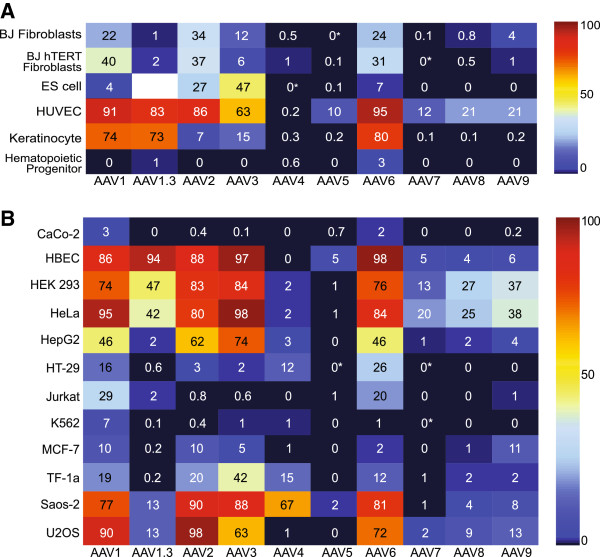
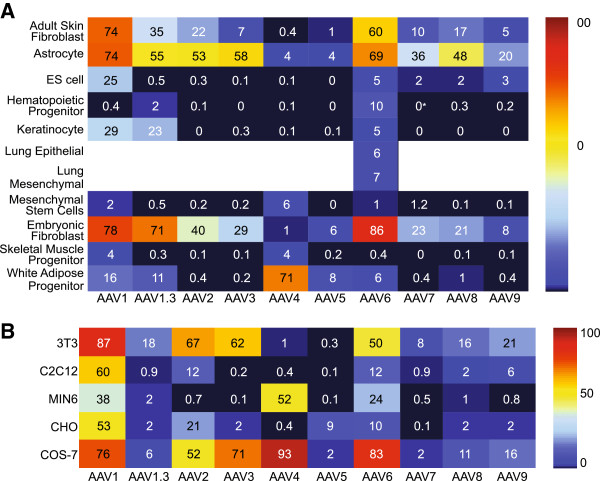
Background: The ability to deliver a gene of interest into a specific cell type is an essential aspect of biomedical research. Viruses can be a useful tool for this delivery, particularly in difficult to transfect cell types. Adeno-associated virus (AAV) is a useful gene transfer vector because of its ability to mediate efficient gene transduction in numerous dividing and quiescent cell types, without inducing any known pathogenicity. There are now a number of natural for that designed AAV serotypes that each has a differential ability to infect a variety of cell types. Although transduction studies have been completed, the bulk of the studies have been done in vivo , and there has never been a comprehensive study of transduction ex vivo/in vitro . Methods: Each cell type was infected with each serotype at a multiplicity of infection of 100,000 viral genomes/cell and transduction was analyzed by flow cytometry + . Results: We found that AAV1 and AAV6 have the greatest ability to transduce a wide range of cell types, however, for particular cell types, there are specific serotypes that provide optimal transduction. Conclusions: In this work, we describe the transduction efficiency of ten different AAV serotypes in thirty-four different mammalian cell lines and primary cell types. Although these results may not be universal due to numerous factors such as, culture conditions and/ or cell growth rates and cell heterogeneity, these results provide an important and unique resource for investigators who use AAV as an ex vivo gene delivery vector or who work with cells that are difficult to transfect.
Overview
The claims and statistics of this paper haven’t been checked yet.
Free: it reads the open-access text and checks the first 5 claims that cite a source we can check. Create a free account to check every claim.
Integrity signals
Registry
Cites
Statistics
Figures
Verification
Claims the paper makes
The claims and statistics of this paper haven’t been checked yet.
Free: it reads the open-access text and checks the first 5 claims that cite a source we can check. Create a free account to check every claim.
Claims other papers make about this one
Each is checked against this paper’s own text: does it say what the citing paper says it does?
The source backs part of the claim, not all of it — or backs it for a different population, condition or comparison.
In the citing paper
“For example, rAAV5 vectors infect very poorly HEK293 cells, HeLa cells, and BJ fibroblasts [264] but infect RPE cells and human retinal organoids efficiently [62,265].”
From Recombinant Adeno-Associated Viral Vectors (rAAV)-Vector Elements in Ocular Gene Therapy Clinical Trials and Transgene Expression and Bioactivity Assays (2020) · cites this paper as [264]
Experimental — accuracy not yet measured
Self-check
Percentages, sums and reported differences re-computed from the paper’s own numbers.
The self-check needs the paper’s full text.
Citations
Cites
Cermak, T., Doyle, E. L., Christian, M., Wang, L., Zhang, Y., Schmidt, C., Baller, J. A., Somia, N. V., Bogdanove, A. J., & Voytas, D. F. (2011) · Nucleic Acids Research · doi:10.1093/nar/gkr218 · Cited by 1,787 · cited 1×
“These site-specific double-strand breaks could be induced by a homing endonuclease [21,41,42], by zinc finger nucleases [43], or by some other nuclease, like TAL effector nucleases (TALENs) [44-47].”
BackgroundAnalysis of AAV Serotypes 1–9 Mediated Gene Expression and Tropism in Mice After Systemic Injection
Zincarelli, C., Soltys, S., Rengo, G., & Rabinowitz, J. E. (2008) · Molecular Therapy · doi:10.1038/mt.2008.76 · Cited by 1,490 · cited 1×
“For example, a broad study of AAV serotypes 1-9 has been done in mice [19].”
BackgroundSummerford, C., & Samulski, R. J. (1998) · Journal of Virology · doi:10.1128/jvi.72.2.1438-1445.1998 · Cited by 1,406 · cited 1×
“The primary receptor for AAV2 and AAV3 is heparan sulfate-proteoglycan [6].”
BackgroundGenetic engineering of human pluripotent cells using TALE nucleases
Hockemeyer, D., Wang, H., Kiani, S., Lai, C. S., Gao, Q., Cassady, J. P., Cost, G. J., Zhang, L., Santiago, Y., Miller, J. C., et al. (2011) · Nature Biotechnology · doi:10.1038/nbt.1927 · Cited by 1,135
White Fat Progenitor Cells Reside in the Adipose Vasculature
Tang, W., Zeve, D., Suh, J. M., Bosnakovski, D., Kyba, M., Hammer, R. E., Tallquist, M. D., & Graff, J. M. (2008) · Science · doi:10.1126/science.1156232 · Cited by 1,113 · cited 1×
“The white adipose progenitor cells were isolated and cultured as described previously [58] (isolation instruction was generously provided by Jon Graff at UTSW).”
MethodGene therapy using adeno-associated virus vectors
Daya, S., & Berns, K. I. (2008) · Clinical Microbiology Reviews · doi:10.1128/cmr.00008-08 · Cited by 926
Adeno-associated Virus Serotypes: Vector Toolkit for Human Gene Therapy
Wu, Z., Asokan, A., & Samulski, R. J. (2006) · Molecular Therapy · doi:10.1016/j.ymthe.2006.05.009 · Cited by 922 · cited 2×
“Expansion in the number of AAV serotypes, both through the identification of novel natural serotypes and new, engineered serotypes [16,23,25-35], has resulted in improved gene transfer to specific cell types in vivo.”
BackgroundAbsence of cancer–associated changes in human fibroblasts immortalized with telomerase
Morales, C. P., Holt, S. E., Ouellette, M., Kaur, K. J., Yan, Y., Wilson, K. S., White, M. A., Wright, W. E., & Shay, J. W. (1999) · Nature Genetics · doi:10.1038/5063 · Cited by 803 · cited 1×
“BJ fibroblasts and BJ hTERT fibroblasts were a generous gift from Jerry Shay and Woodring Wright and were cultured as previously described [52].”
MethodFerrari, F. K., Samulski, T., Shenk, T., & Samulski, R. J. (1996) · Journal of Virology · doi:10.1128/jvi.70.5.3227-3234.1996 · Cited by 761 · cited 2×
“scAAV vectors have shown earlier onset of transgene expression and overall higher transduction efficiencies than ssAAV vectors [4,5].”
BackgroundMcCarty, D., Monahan, P., & Samulski, R. (2001) · Gene Therapy · doi:10.1038/sj.gt.3301514 · Cited by 735 · cited 2×
“scAAV vectors have shown earlier onset of transgene expression and overall higher transduction efficiencies than ssAAV vectors [4,5].”
BackgroundMethod
Cited by
Items 101–200 of 251
In Search of Adeno-Associated Virus Vectors With Enhanced Cardiac Tropism for Gene Therapy
Sasaki, N., Kok, C., Westhaus, A., Alexander, I. E., Lisowski, L., & Kizana, E. (2023) · Heart Lung and Circulation · doi:10.1016/j.hlc.2023.06.704 · Cited by 19
AAV-Mediated Gene Editing via Double-Strand Break Repair
Hirsch, M. L., & Samulski, R. J. (2014) · Methods in molecular biology · doi:10.1007/978-1-62703-761-7_19 · Cited by 18
“In general, the AAV2 capsid works well in transformed cell lines, while AAV1 and 6 transduce stem cells most efficiently [1, 18].”
BackgroundSelf-citationPotential of Mitochondrial Genome Editing for Human Fertility Health
Fu, L., Luo, Y., Liu, Y., Liu, H., Li, H., & Yu, Y. (2021) · Frontiers in Genetics · doi:10.3389/fgene.2021.673951 · Cited by 17
“Different serotypes of AAV vectors can be generated to transduce a wide range of tissues and cells (Zincarelli et al., 2008; Ellis et al., 2013).”
BackgroundCurrent developments in gene therapy for epidermolysis bullosa
Köcher, T., Petković, I., Bischof, J., & Koller, U. (2022) · Expert Opinion on Biological Therapy · doi:10.1080/14712598.2022.2049229 · Cited by 14
Gene Delivery to Human Limbal Stem Cells Using Viral Vectors
Song, L., Song, Z., Fry, N. J., Conatser, L., Llanga, T., Mei, H., Kafri, T., & Hirsch, M. L. (2019) · Human Gene Therapy · doi:10.1089/hum.2019.071 · Cited by 15
“First, AAV6 was deemed best for transduction at 24 h, which is consistent with a lot of reports demonstrating that to date, AAV6 appears best, in general, for AAV gene delivery to most types stems cells.(32,33) However, this result is not simply a measure of cell entry as AAV2 internalized more efficiently but was hin…”
ResultSelf-citationReibetanz, U., Hübner, D., Jung, M., Liebert, U. G., & Claus, C. (2016) · ACS Nano · doi:10.1021/acsnano.6b00999 · Cited by 14
Dudek, A. M., & Porteus, M. H. (2019) · Molecular Therapy · doi:10.1016/j.ymthe.2019.09.005 · Cited by 14
“These data are consistent with previous reports that AAV6 is more efficient at transducing HSPCs than other AAV serotypes.(29,30) Long-term GFP expression was quantified at 12 to 14 days post-transduction in three independent experiments using cord blood-derived CD34+ HSPCs from three”
ResultSelf-citationChou, S.-W., Mortberg, M. A., Marlen, K., Ojala, D. S., Parman, T., Howard, M., DeSouza-Lenz, K., Lian, Y., Mehrabian, M., Tiffany, M. R., et al. (2025) · bioRxiv (Cold Spring Harbor Laboratory) · doi:10.1101/2025.03.05.636713 · Cited by 17
Julien, L., Chassagne, J., Peccate, C., Lorain, S., Piétri-Rouxel, F., Danos, O., & Benkhelifa-Ziyyat, S. (2018) · Scientific Reports · doi:10.1038/s41598-017-18604-3 · Cited by 13
Tissue and cell-type-specific transduction using rAAV vectors in lung diseases
Kochergin-Nikitsky, K. S., Belova, L., Лавров, А. В., & Smirnikhina, S. (2021) · Journal of Molecular Medicine · doi:10.1007/s00109-021-02086-y · Cited by 17
“[112] showed that HS/PCs are generally refractory to many AAV serotypes with the exception of AAV6.”
BackgroundSchieferecke, A. J., Lee, H., Chen, A. T., Kilaru, V., Williams, J. K., & Schaffer, D. V. (2023) · Molecular Therapy · doi:10.1016/j.ymthe.2023.12.015 · Cited by 15
Khan, N., Bammidi, S., & Jayandharan, G. R. (2019) · Bioconjugate Chemistry · doi:10.1021/acs.bioconjchem.9b00511 · Cited by 12
The Evolution of Gene Therapy in the Treatment of Metabolic Liver Diseases
Moscoso, C. G., & Steer, C. J. (2020) · Genes · doi:10.3390/genes11080915 · Cited by 15
“Specifically, AAV2, AAV3 and AAV6 are able to transduce HEK293, HeLa, HBEC and Saos-2 cell lines efficiently [46].”
BackgroundA Practical Guide to Genome Editing Using Targeted Nuclease Technologies
Porter, S. N., Levine, R. M., & Pruett‐Miller, S. M. (2019) · Comprehensive physiology · doi:10.1002/cphy.c180022 · Cited by 18
Chung, M., Imanaka, K., Huang, Z., Watarai, A., Wang, M., Tao, K., Ejima, H., Aida, T., Feng, G., & Okuyama, T. (2024) · Nature Communications · doi:10.1038/s41467-024-48430-x · Cited by 12
“Cas9 and EGFP - targeting sgRNA encoding AAV vectors were packaged with AAV ser-otype2,whichhasbeenpreviouslyreportedtoshowhightransduction ef fi ciency in HEK-293 cells 32 .”
MethodRindler, T. N., Brown, K. M., Stockman, C. A., van Lieshout, L. P., Martin, E. P., Weaver, T. E., Zacharias, W. J., Wootton, S. K., Whitsett, J. A., & Bridges, J. P. (2021) · American Journal of Respiratory Cell and Molecular Biology · doi:10.1165/rcmb.2021-0049le · Cited by 11
“AAVs are small, nonenveloped, single-stranded DNA parvoviruses capable of transducing nondividing cells (1, 2), making them ideal candidates to target the alveolar epithelium,wherein,0.”
BackgroundOptimizing rAAV6 transduction of primary T cells for the generation of anti-CD19 AAV-CAR-T cells
Wang, D., Zhou, Q., Qiu, X., Liu, X., & Zhang, C. (2022) · Biomedicine & Pharmacotherapy · doi:10.1016/j.biopha.2022.113027 · Cited by 13
Yao, S., Rong, W., Yuan, Y., & Wen, X. (2023) · Stem Cell Investigation · doi:10.21037/sci-2022-042 · Cited by 13
“…into hBMSCs successfully; (II) AAV1 and AAV6 were selected because a study showed they have a great ability to transduce a wide range of cell types (14); (III) AAV-DJ is an engineered chimeric capsid of AAV-2, 8 and 9 containing a heparin-binding domain in its capsid, which may efficiently…”
Bougioukli, S., Chateau, M., Morales, H., Vakhshori, V., Sugiyama, O., Oakes, D. A., Longjohn, D. B., Cannon, P. M., & Lieberman, J. R. (2020) · Gene Therapy · doi:10.1038/s41434-020-0182-4 · Cited by 13
Meierrieks, F., Kour, A., Pätz, M., Pflanz, K. B., Wolff, M. W., & Pickl, A. (2023) · Molecular Therapy — Methods & Clinical Development · doi:10.1016/j.omtm.2023.101118 · Cited by 13
“However, the transducing titers of AAV5 and AAV8 could not be determined through the transduction of HEK293 cells, as AAV5 and AAV8 bind to different cell receptors than AAV2.”
MethodInfluentialRecombinant adeno‐associated virus production evaluation in Chinese hamster ovary cells
Cao, T., Chen, D., Barnard, G. C., & Shen, A. Y. (2023) · Biotechnology and Bioengineering · doi:10.1002/bit.28578 · Cited by 10
“A typical AAV transduction assay requires about 1 – 3 × 10 9 vg for a given cell type (Ellis et al., 2013; Weinberg et al., 2014), which translates to ~10 L of transfected CHO materials for a single transduction test making it impractical to carry out.”
BackgroundUse of Adeno-Associated Virus to Enrich Cardiomyocytes Derived from Human Stem Cells
Guan, X., Wang, Z., Czerniecki, S., Mack, D. L., François, V., Blouin, V., Moullier, P., & Childers, M. K. (2015) · Human Gene Therapy Clinical Development · doi:10.1089/humc.2015.052 · Cited by 10
“A comprehensive in vitro survey of AAV transduction efficiency on various mammalian cell types has been conducted.(4) Though previous study has proven the feasibility of AAV to transduce stem cell differentiated cardiomyocytes on a small scale,(5) an extensive optimization of AAV on stem cell-derived cardiomyocytes ha…”
Fleischmann, T. T. (2023) · Journal of Environmental Management · doi:10.1016/j.jenvman.2023.118754 · Cited by 9
Wooley, D. P., Sharma, P., Weinstein, J. R., Narayan, P. K. L., Schaffer, D. V., & Excoffon, K. J. D. A. (2017) · Journal of Virological Methods · doi:10.1016/j.jviromet.2017.09.008 · Cited by 10
“Only AAV1 and AAV6 scored above 2% with efficiencies of only 29% and 20%, respectively, and very high multiplicities of infection (100,000) were required to achieve these efficiencies (Ellis et al., 2013).”
Khan, N., Cheemadan, S., Saxena, H., Bammidi, S., & Jayandharan, G. R. (2020) · Cancer Medicine · doi:10.1002/cam4.2935 · Cited by 10
Beloukhova, M. I., Lukashev, A. N., Volchkov, P., Zamyatnin, A. A., & Deviatkin, A. A. (2022) · Viruses · doi:10.3390/v14051038 · Cited by 9
Kono, K., Sawada, R., Kuroda, T., Yasuda, S., Matsuyama, S., Matsuyama, A., Mizuguchi, H., & Sato, Y. (2019) · Scientific Reports · doi:10.1038/s41598-018-36848-5 · Cited by 9
Planet of the AAVs: The Spinal Cord Injury Episode
Štěpánková, K., Jendelová, P., & Urdzíková, L. M. (2021) · Biomedicines · doi:10.3390/biomedicines9060613 · Cited by 10
“These differences in the cell receptors that they recognize determine the cell type and tissue type tropism of AAV serotypes [51,52].”
BackgroundEfficient removal of antibodies to adeno‐associated viruses by immunoadsorption
Boedecker-Lips, S. C., Judel, A., Holtz, S., Mayer, M., Klimpke, P., Kraus, D., Schreiner, T., Gerstmayer, B., Eulitz, K., Mayer, M., et al. (2023) · Journal of Clinical Apheresis · doi:10.1002/jca.22069 · Cited by 9
“cultured cells.(29) Therefore, higher AAV5 doses were applied in this study (MOI AAV2: 200; MOI AAV5: 1500), which, however, potentially masked detection of low amounts of NAb to AAV5.”
BackgroundiPSC-hepatocyte organoids as a novel platform to predict AAV gene therapy efficacy
Berreur, E., Lazzaroni, G., Roth, C., Zihlmann, M., Stirn, M., Matheis, R., Xicluna, R., Breous-Nystrom, E., & Roth, A. B. (2025) · Molecular Therapy — Methods & Clinical Development · doi:10.1016/j.omtm.2025.101467 · Cited by 10
Characteristics of BAY 2599023 in the Current Treatment Landscape of Hemophilia A Gene Therapy
Pipe, S. W., Arruda, V. R., Lange, C., Kitchen, S., Eichler, H., & Wadsworth, S. C. (2022) · Current Gene Therapy · doi:10.2174/1566523222666220914105729 · Cited by 9
“AAV vectors have several other characteristics that are beneficial for their use in gene therapy, including tropism for a range of cell types, and the ability to transduce both actively proliferating cells as well as those no longer undergoing division [37, 38].”
BackgroundMoço, P. D., Farnós, O., Sharon, D. M., & Kamen, A. (2023) · Current Issues in Molecular Biology · doi:10.3390/cimb45100486 · Cited by 9
Roach, M. K., Wirz, P., Rouse, J. L., Schorzman, A., Beard, C. W., & Scott, D. (2024) · Molecular Therapy — Methods & Clinical Development · doi:10.1016/j.omtm.2024.101320 · Cited by 9
Basic Concepts in Viral Vector-Mediated Gene Therapy
Benskey, M. J., Sandoval, I. M., Miller, K., Sellnow, R. C., Gezer, A. O., Kuhn, N. C., Vashon, R., & Manfredsson, F. P. (2019) · Methods in molecular biology · doi:10.1007/978-1-4939-9065-8_1 · Cited by 10
Chen, M. Y., Chen, W., Tong, J., Ho, M., & Suh, J. (2021) · Virology · doi:10.1016/j.virol.2021.08.010 · Cited by 8
Syndecan-4 Mediates the Cellular Entry of Adeno-Associated Virus 9
Hudák, A., Roach, M., Pusztai, D., Pettkó‐Szandtner, A., Letoha, A., Szilák, L., Azzouz, M., & Letoha, T. (2023) · International Journal of Molecular Sciences · doi:10.3390/ijms24043141 · Cited by 9
“A survey of ex vivo/in vitro transduction efficiency of mammalian cell lines with AAV1-9 showed that none of the AAV serotypes efficiently transduce the human myelogenous leukemia cell line K562 [64].”
BackgroundSanchez–Daza, A., Li, C., Andrews, B. A., Asenjo, J. A., & Samulski, R. J. (2017) · Human Gene Therapy · doi:10.1089/hum.2017.043 · Cited by 10
Sherpa, C., & Grice, S. F. J. L. (2020) · Current HIV Research · doi:10.2174/1570162x18666200210121339 · Cited by 8
Wang, H., Li, R., Sadekar, S., Kamath, A. V., & Shen, B. (2024) · Molecular Therapy — Methods & Clinical Development · doi:10.1016/j.omtm.2024.101326 · Cited by 8
“33 The AAV2-Y444F variant is derived from AAV2 with a site-directed mutant of surface-exposed tyrosine residues that allow the AAV vectors to evade phosphorylation and subsequent ubiquitination and, thus, signi fi cantly enhancing intracellular traf fi cking and delivery of the viral genome to the…”
Endothelial ADAR1 Deficit Induces the NOCT-IRF7 Axis in Pulmonary Hypertension
Woodcock, C.-S. C., Maroli, G., Kim, H., Tai, Y., Tang, Y. M., Okawa, S., Homsi, R., Kim, Y., Cho, S., Jiang, S., et al. (2025) · Circulation Research · doi:10.1161/circresaha.125.326277 · Cited by 10
Araujo, A. E., Bentler, M., Garmendia, X. P., Kaleem, A., Fabian, C., Morgan, M. A., Hacker, U. T., & Büning, H. (2024) · Human Gene Therapy · doi:10.1089/hum.2024.114 · Cited by 7
“79,96 These observations have fostered vector engineering approaches that aim to develop more ef fi cient AAV capsid variants.”
Optimization of whole-brain rabies virus tracing technology for small cell populations
Roelofs, T. J. M., Menting-Henry, S., Gol, L. M., Speel, A. M., Wielenga, V. H., Garner, K. M., Luijendijk, M. C. M., Hennrich, A. A., Conzelmann, K., & Adan, R. A. H. (2021) · Scientific Reports · doi:10.1038/s41598-021-89862-5 · Cited by 7
Weinmann, J., Söllner, J. F., Abele, S., Zimmermann, G., Zuckschwerdt, K., Mayer, C. A., Danner-Liskus, J., Peltzer, A., Schuler, M. J., Lamla, T., et al. (2022) · Human Gene Therapy · doi:10.1089/hum.2022.109 · Cited by 16
“(18) AAV5 Wild type 72 (43) AAV-LK03 Chimera 15”
Emerging technologies for genetic control systems in cellular therapies
de Rossi, J., Arefeayne, Y., Robinson, A. J., & Segatori, L. (2022) · Current Opinion in Biotechnology · doi:10.1016/j.copbio.2022.102833 · Cited by 7
Zhao, H., Meisen, W. H., Wang, S., & Lee, K. J. (2022) · Human Gene Therapy · doi:10.1089/hum.2022.153 · Cited by 7
PEG-mediated transduction of rAAV as a platform for spatially confined and efficient gene delivery
Zou, L., Wang, J., Fāng, Y., & Tian, H. (2022) · Biomaterials Research · doi:10.1186/s40824-022-00322-1 · Cited by 8
“Prior studies have shown that rAAV9 is moderately effective at transfecting HeLa and HEK293T cells but has no transduction in K562 cells [12].”
BackgroundResultElectroporation of Functional Bacterial Effectors into Mammalian Cells
Sontag, R. L., Mihai, C., Orr, G., Savchenko, A. V., Skarina, T., Cui, H., Cort, J., Adkins, J., & Brown, R. N. (2015) · Journal of Visualized Experiments · doi:10.3791/52296 · Cited by 7
Designing nucleic acid-based therapeutics for cancer treatment: Updates on the state of the art
Peng, B., Jayasinghe, M. K., Le, A. H., Tran, N. M., & Le, M. T. N. (2025) · Molecular Therapy · doi:10.1016/j.ymthe.2025.09.041 · Cited by 12
Polo-like kinase inhibitors increase AAV production by halting cell cycle progression
Fisher, K., Grafton, F., Ispaso, F., Tworig, J. M., Derler, R., Sonntag, F., Hörer, M., Schulze, A., Reid, C. A., & Mandegar, M. A. (2025) · Molecular Therapy — Methods & Clinical Development · doi:10.1016/j.omtm.2025.101412 · Cited by 8
“To overcome the low ef fi ciency of in vitro AAV9 transduction in cells, 37 we developed a reporter cell line that contains a fl ipped mCherry-P2A-NanoLuciferase (NLuc) fl anked by loxP sites.”
Mnyandu, N., Limani, S. W., Ely, A., Wadee, R., Arbuthnot, P. B., & Maepa, M. B. (2025) · Virology Journal · doi:10.1186/s12985-025-02662-5 · Cited by 8
“Although AAVs transduce liver-derived cell lines inefficiently [36, 37], and anti-HBV effects are lower than silencing following transduction with adenoviral vectors bearing the same cassettes [22, 38], these data indicate that scAnc80 transduces cells in vitro and reduce HBV gene expression.”
Wasserman, S. R., Muron, S., Lee, H. R., Routh, M. L., Hepperla, A. J., Scoville, D. M., Huber, A. K., Umana, J. M., Pereira, N. E., Foley, C. A., et al. (2025) · Nucleic Acids Research · doi:10.1093/nar/gkaf345 · Cited by 6
“However, rAAV9 poorly transduces most human cell lines [ 8 ].”
InfluentialPark, J.-Y., Sivasankar, C., Hewawaduge, C., & Lee, J. H. (2023) · Microbial Pathogenesis · doi:10.1016/j.micpath.2023.106079 · Cited by 6
Leverage of nuclease-deficient CasX for preventing pathological angiogenesis
Han, H., Yang, Y., Jiao, Y., Qi, H., Han, Z., Wang, L., Dong, L., Tian, J., Vanhaesebroeck, B., Li, X., et al. (2023) · Molecular Therapy — Nucleic Acids · doi:10.1016/j.omtn.2023.08.001 · Cited by 7
Jakobsen, M., Askou, A. L., Stenderup, K., Rosada, C., Dagnæs‐Hansen, F., Jensen, T. G., Corydon, T. J., Mikkelsen, J. G., & Aagaard, L. (2015) · Human Gene Therapy Methods · doi:10.1089/hgtb.2014.135 · Cited by 6
Reverse transduction can improve efficiency of AAV vectors in transduction‐resistant cells
Lee, E. J., Robinson, T. M., Tabor, J. J., Mikos, A. G., & Suh, J. (2018) · Biotechnology and Bioengineering · doi:10.1002/bit.26830 · Cited by 8
“Widely variable gene expression outcomes were observed, with a handful of cell types refractory to AAV even at a high MOI of 100,000 (Ellis et al., 2013).”
InfluentialGFP-on mouse model for interrogation of in vivo gene editing
Dib, C., Queenan, J. A., Swartzrock, L., Willner, H., Denis, M., Ahmed, N., Zada, F. M., Borges, B., Charlesworth, C. T., Lum, T., et al. (2025) · Nature Communications · doi:10.1038/s41467-025-61449-y · Cited by 8
“However, the potential off-target effects of the sgRNA on other genes and the absence of unexpected C-to-T substitutions or indels were not addressed.”
Advances in Bone-Targeting Drug Delivery: Emerging Strategies Using Adeno-Associated Virus
Sato, T., Chaugule, S. R., Greenblatt, M. B., Gao, G., & Shim, J. (2024) · Human Gene Therapy · doi:10.1089/hum.2024.034 · Cited by 5
“78 Multiple studies have employed rAAV vectors to modify cells ex vivo , a process involving the isolation of cells from patients, their genetic modi fi cation using vectors, and subsequent re-transplantation into the host.”
Zengel, J. R., Esterman, E. S., Ponnuswami, A., Wall, N. R., & Carette, J. E. (2025) · Molecular Therapy — Methods & Clinical Development · doi:10.1016/j.omtm.2025.101416 · Cited by 5
Matsudaira, N., Honda, Y., Kinoh, H., Liu, X., Nagao, S., Nitta-Matsutomo, S., Guo, H., Hayashita‐Kinoh, H., Aizawa, M., Muguruma, K., et al. (2025) · Journal of Controlled Release · doi:10.1016/j.jconrel.2025.114477 · Cited by 5
Cinel, V. D. P., Taketa, T. B., de Carvalho, B. G., de la Torre, L. G., de Mello, L. R., da Silva, E. R., & Han, S. W. (2021) · Biopolymers · doi:10.1002/bip.23432 · Cited by 6
Thomas, O. S., Rebmann, B., Tonn, M., Schirmeister, I., Wehrle, S., Becker, J., Jimenez, G. J. Z., Hook, S., Jäger, S., Klenzendorf, M., et al. (2021) · Small · doi:10.1002/smll.202105157 · Cited by 5
Fisher, C. R., Ebeling, M. C., & Ferrington, D. A. (2022) · Experimental Eye Research · doi:10.1016/j.exer.2022.108981 · Cited by 5
Zhang, Y., Wang, L., Wang, L., Yang, J. C., Wu, X., Xiao, X., & Wang, J. (2023) · Human Gene Therapy · doi:10.1089/hum.2023.041 · Cited by 7
Zhu, Q.-X., Zhang, Y., Zhang, H., Leng, C., Deng, C.-L., Wang, X., Li, J.-J., Ye, X.-L., Zhang, B., & Li, X. (2024) · PLoS neglected tropical diseases · doi:10.1371/journal.pntd.0012604 · Cited by 6
Wang, N., Adewumi, H. O., Lende-Dorn, B. A., Beitz, A. M., O’Shea, T. M., & Galloway, K. E. (2025) · Cell Systems · doi:10.1016/j.cels.2025.101206 · Cited by 9
Development and validation of a reporter cell line for rapid AAV quality control assessment
Kopera, H. C., Hilgarth, R., Kopas, T. L., & Lanigan, T. M. (2020) · MethodsX · doi:10.1016/j.mex.2020.100800 · Cited by 5
“However, rAAV transduces different cell lines in culture to varying efficiencies which complicates functional validation of rAAV in cell lines [1].”
BackgroundYu, D. L., van Lieshout, L. P., Stevens, B. A. Y., Near, K. J., Stodola, J. K., Stinson, K. J., Slavić, Ð., & Wootton, S. K. (2023) · Viruses · doi:10.3390/v16010057 · Cited by 5
“The human AAV serotype 6 was included as a benchmark for in vitro transduction performance, since AAV6 and AAV1 are considered among the best serotypes for the transduction of a wide variety of cell types [34].”
BackgroundInactivation of Adeno-Associated Viral Vectors by Oxidant-Based Disinfectants
Korte, J. C., Mienert, J., Hennigs, J. K., & Körbelin, J. (2021) · Human Gene Therapy · doi:10.1089/hum.2020.120 · Cited by 6
“17 Such low transduction rates render classical in vitro infectivity assays unfeasible for AAV5.”
Lehman, S. E., Vreeland, W. N., Blaszczyk, A. J., Adams-Hall, S., Ahuja, S., Arnaout, A., Balduf, H., Budyak, I. L., Carbonell, R. G., Charlebois, T., et al. (2024) · Human Gene Therapy · doi:10.1089/hum.2024.124 · Cited by 10
Lunev, E. A., Klementieva, N. V., Vassilieva, S. G., Volovikov, E. A., Jappy, D., Savchenko, I. M., Svetlova, E. A., Polikarpova, A. V., Shubina, M. Y., Spirin, D., et al. (2025) · Gene Therapy · doi:10.1038/s41434-025-00532-x · Cited by 6
Adeno-associated virus neutralising antibodies in type 1 diabetes mellitus
Andrzejewski, S., Murali, A., Ramlogan‐Steel, C. A., Edwards, K. P., Efron, N., Steel, J. C., & Layton, C. J. (2019) · Gene Therapy · doi:10.1038/s41434-019-0076-5 · Cited by 6
rAAV Production and Titration at the Microscale for High-Throughput Screening
Quan, D. N., & Shiloach, J. (2022) · Human Gene Therapy · doi:10.1089/hum.2021.080 · Cited by 5
“37,38 To induce transduction of COS7 cells, rAAV2 standard or putative virus from transfected cultures was mixed with COS7 cells at the time of plating.”
Sato, M., Morohoshi, K., Ohtsuka, M., Takabayashi, S., Inada, E., Saitoh, I., Watanabe, S., & Nakamura, S. (2023) · OBM Genetics · doi:10.21926/obm.genet.2304207 · Cited by 4
Long-term in vitro monitoring of AAV-transduction efficiencies in real-time with Hoechst 33342
Hu, X., Meister, R., Tode, J., Framme, C., & Fuchs, H. R. (2024) · PLoS ONE · doi:10.1371/journal.pone.0298173 · Cited by 5
“Flow cytometry is one of the most frequently used methods of determining the transfection efficiency of fluorescent-positive cells [8–15].”
MethodLarin, I. I., Shatalova, R. O., Laktyushkin, V. S., Александрович, Р. С., Lapshin, E. V., Shevyrev, D., Karabelsky, A. V., Moskalets, A. P., Klinov, D. V., & Ivanov, D. A. (2024) · Polymers · doi:10.3390/polym16091187 · Cited by 4
“As previously found, the AAV6 serotype effectively transduces primary cell cultures, including fibroblasts and keratinocytes [26].”
BackgroundTrophectoderm-specific gene manipulation using adeno-associated viral vectors
Nakagawa, T., Emori, C., & Ikawa, M. (2025) · EXPERIMENTAL ANIMALS · doi:10.1538/expanim.24-0165 · Cited by 4
“There are more than 100 variants of AAV vectors, and different serotypes have different tissue specificities [ 8, 9 ].”
Fiber Photometry Analysis of Spontaneous Dopamine Signals: The Z -Scored Data Are Not the Data
Wallace, C. W., DiMarco, E. K., Slinkard, C. Y., Shaughnessy, R., Holleran, K. M., Centanni, S. W., Lapish, C. C., & Jones, S. R. (2025) · ACS Chemical Neuroscience · doi:10.1021/acschemneuro.5c00078 · Cited by 9
Adeno-associated Virus as a Mammalian DNA Vector
Salganik, M., Hirsch, M. L., & Samulski, R. J. (2015) · ASM Press eBooks · doi:10.1128/9781555819217.ch37 · Cited by 5
Self-citationGuapo, F., Donohue, N., Strasser, L., Boi, S., Füssl, F., Rainbow-Fletcher, A., Getty, P., Anderson, I., Barron, N., & Bones, J. (2024) · International Journal of Molecular Sciences · doi:10.3390/ijms25052785 · Cited by 4
“CHO-K1 cells were chosen because the AAV5 sero-type has a very limited tropism and CHO cells have been reported to be more easily transduced than many human cell lines [16].”
BackgroundYin, V. C., Devine, P. W. A., Saunders, J. C., Hines, A. R., Shepherd, S., Dembek, M., Dobson, C., Snijder, J., Bond, N. J., & Heck, A. J. R. (2022) · bioRxiv (Cold Spring Harbor Laboratory) · doi:10.1101/2022.08.27.505551 · Cited by 5
Assessment of Adipocyte Transduction Using Different AAV Capsid Variants
Boychenko, S. S., Abdullina, A., Laktyushkin, V. S., Brovin, A. N., & Egorov, A. D. (2024) · Pharmaceuticals · doi:10.3390/ph17091227 · Cited by 4
“However, it was revealed that AAV transduction capacity for in vitro and in/ex vivo applications differ significantly [19].”
BackgroundJiang, J., Tian, Y., He, Z., Wang, L., Zhao, J., & Xu, C. (2025) · International Journal of Surgery · doi:10.1097/js9.0000000000003115 · Cited by 4
Reduced rAAV interference enhances rcAAV detection sensitivity
Yang, M., Shaheen, S., Yang, K., Gao, X., Wu, K., Zhu, X., Kang, Q., Wang, L., Hemmatzadeh, F., Zheng, Q., et al. (2025) · Molecular Therapy — Methods & Clinical Development · doi:10.1016/j.omtm.2025.101584 · Cited by 3
Methodologies for Sample Multiplexing and Computational Deconvolution in Single‐Cell Sequencing
Gao, Y., Yin, W., Hu, W., & Chen, W. (2025) · Advanced Science · doi:10.1002/advs.202513396 · Cited by 6
Li, A., Yi, J., Li, X., Dong, L., Ostrow, L. W., Ma, J., & Zhou, J. (2023) · eLife · doi:10.7554/elife.92644 · Cited by 3
Bieńkowska, A., & Małecki, M. (2021) · Journal of Biomedical Nanotechnology · doi:10.1166/jbn.2021.3183 · Cited by 3
The effects of endothelial progenitor cells on rat atherosclerosis
Wang, X., Wang, F., Li, N., Hu, M., Chen, Y., & Tan, M. (2014) · Biotechnology and Applied Biochemistry · doi:10.1002/bab.1254 · Cited by 3
Wang, Z., Fu, Q., Cao, J., Deng, X., Li, Y., Wang, Q., & Zheng, Z. (2016) · Biotechnology Letters · doi:10.1007/s10529-016-2082-7 · Cited by 3
Samie, M., Parman, T., Jalan, M., Lee, J., Dunn, P. J., Eshleman, J. A., Vidales, D. B., Holter, J., Jones, B., Pan, Y., et al. (2024) · bioRxiv (Cold Spring Harbor Laboratory) · doi:10.1101/2024.09.06.609976 · Cited by 3
“AAV6 has exhibited the greatest ability to transduce a wide range of primary cells in culture compared to other serotypes ( 32 ), thus AAV6 was used for the in vitro characterization of ZFRs in neurons.”
MethodGenome engineering with Cas9 and AAV repair templates, successes and pitfalls
Birling, M., Hérault, Y., & Pavlovic, G. (2025) · Mammalian Genome · doi:10.1007/s00335-024-10099-4 · Cited by 3
“In rodents, a few papers have studied the tropism of the different AAV serotypes in different cells (Ellis et al. 2013; Zincarelli et al. 2008), rAAV1 and rAAV6 were found to be the most efficient to transduce pre-implantation mouse (Chen et al. 2019; Mizuno et al. 2018; Yoon et al. 2018) and rat…”
Viral vectors: design and delivery for small RNA
Koh, W. C., Yusoff, K., Song, A. A. L., Saad, N., & Chia, S. L. (2025) · Journal of Medical Microbiology · doi:10.1099/jmm.0.001972 · Cited by 2
Papillomavirus-like particles as vectors for ex vivo gene therapy of the skin
Diversi, F., Dabin, J., Mazza, E., Rinaldin, M., Reis, F. D. C., Hackett, J. A., & Heppenstall, P. A. (2025) · Molecular Therapy — Nucleic Acids · doi:10.1016/j.omtn.2025.102501 · Cited by 2
“AAV1/2 exhibited the highest transduction rates, aligning with the results of Ellis et al. 19 in their comparative study.”
Kim, H., Kim, K.-H., Kang, L., Seol, Y., Chung, S. H., & Park, S. (2025) · JBMR Plus · doi:10.1093/jbmrpl/ziaf060 · Cited by 3
“28 In this study, we assessed the transduction efficiency of 4 AAV serotypes by quantifying the proportion of ZsGreen1 + cells following transduction with AAV1-, AAV2-, AAV5-, and AAV6-ZsGreen1 in rGFs, rDPSCs, hGFs, and hDPSCs.”
Choy, E. Y.-W., Leong, C., Cheong, S.-K., Then, K.-L., & Then, K.-Y. (2025) · Life · doi:10.3390/life15050728 · Cited by 2
Lung-tropic dual AAV-SP-C and microRNA gene therapy attenuates lung injury in mutant Sftpc mice
Bardin, P., Xu, L., Pei, Y., Achuthan, A., Nangle, K., Zhong, S., Cyr-Depauw, C., Vadivel, A., Martin, E. P., Weaver, T. E., et al. (2025) · Molecular Therapy · doi:10.1016/j.ymthe.2025.12.049 · Cited by 4
Local gene editing of fibroblasts in tumors reveals a new cancer-associated fibroblast state
Kuhn, N. F., Zaleta-Linares, I., Hu, K. H., Courau, T., Davidson, B. R., Tam, T., Chu, C.-W., Kinet, M., Rosenblum, M. D., Combes, A. J., et al. (2026) · The Journal of Experimental Medicine · doi:10.1084/jem.20251228 · Cited by 5
Transgene Expression in Cultured Cells Using Unpurified Recombinant Adeno-Associated Viral Vectors
Benyamini, B., Esbin, M. N., Whitney, O. N., Walther, N., & Maurer, A. C. (2023) · Journal of Visualized Experiments · doi:10.3791/65572 · Cited by 2
Bella, T. L., Bertin, B., Mihaljevic, A., Nozi, J., Vidal, P., Imbeaud, S., Nault, J., Zucman‐Rossi, J., & Ronzitti, G. (2024) · Molecular Therapy — Methods & Clinical Development · doi:10.1016/j.omtm.2024.101327 · Cited by 2
Donohue, N., Li, S., Boi, S., Rainbow-Fletcher, A., & Barron, N. (2025) · International Journal of Molecular Sciences · doi:10.3390/ijms26020567 · Cited by 2
“CHO-K1 was chosen as the target cell line as it has been reported to be more susceptible to transduction by rAAV5, however low levels of DR5 expression mean it would potentially not be as susceptible to TRAIL signaling [21].”
Challenges in Humoral Immune Response to Adeno-Associated Viruses Determination
Naumova, D. A., Krokunova, T., Maksimov, D. O., Mityaeva, O. N., Astakhova, E. A., & Volchkov, P. (2025) · International Journal of Molecular Sciences · doi:10.3390/ijms26020816 · Cited by 3
“…ratio of full and empty capsids is important in in vitro neutralization assays, how the ratio of serum antibodies and used viral particles influences the result, and why the differences in the transduction efficiency of cell lines between AAV serotypes are a crucial problem with this assay [23,24].”
Metadata
- Authors
- Ellis, B. L., Hirsch, M. L., Barker, J. C., Connelly, J. P., Steininger, R. J., & Porteus, M. H.
- Affiliations
- The University of Texas Southwestern Medical Center (US)
- University of North Carolina at Chapel Hill (US)
- Harold C. Simmons Comprehensive Cancer Center (US)
- Corresponding author
- Porteus, Matthew H
- Venue
- Virology Journal
- Published
- 2013-03-06
- Volume
- 10
- Issue
- 1
- Pages
- 74-74
- ISSN
- 1743-422X (ISSN-L)
- PMC
- PMC3607841
- OpenAlex
- W2112808685
- Cited by
- 252
- References
- 63
- Citations by year
- 2026: 21 · 2025: 32 · 2024: 25 · 2023: 24 · 2022: 27 · 2021: 28 · 2020: 20 · 2019: 22 · 2018: 10 · 2017: 15 · 2016: 7 · 2015: 11 · 2014: 7 · 2013: 1
- FWCI
- 5.74
- Type
- journal article
- Language
- en
- Open access
- gold
- doi.org
- Licence
- cc-by
- creativecommons.org/licenses/by/2.0 (tdm)
- Locations
- Virology Journal (publishedVersion, cc-by)
- Europe PMC (PubMed Central) (publishedVersion, cc-by)
- PubMed Central (publishedVersion, cc-by)
- PubMed (publishedVersion)
- Carolina Digital Repository (University of North Carolina at Chapel Hill) (submittedVersion, cc-by)
- Carolina Digital Repository (University of North Carolina at Chapel Hill) (submittedVersion)
- eScholarship (California Digital Library) (submittedVersion)
- UNC Libraries
- Funders
- Amon G. Carter Foundation
- University of Texas Southwestern Medical Center
- Topics
- Life Sciences › Biochemistry, Genetics and Molecular Biology › Genetics › Virus-based gene therapy research
- Life Sciences › Biochemistry, Genetics and Molecular Biology › Molecular Biology › RNA Interference and Gene Delivery
- Life Sciences › Biochemistry, Genetics and Molecular Biology › Molecular Biology › Viral Infectious Diseases and Gene Expression in Insects
- Keywords
- adeno-associated virus, AAV serotypes, AAV1, AAV6, AAV9, transduction efficiency, ex vivo gene delivery, in vitro gene transfer, mammalian cell lines, primary cells, viral vectors
- MeSH terms
- Dependovirus, Animals, Haplorhini, Cell Line, Cells, Cultured, Genetic Engineering, Genetic Vectors, Cricetinae, Humans, Mammals, Transduction, Genetic, Genetic Therapy, Mice, Viral Tropism
About these checks
Registry, retraction, Cites and statistics results are computed, not judged, with one exception: a printed reference that no index lists is read once by a model before it counts as a citation error. Claims are extracted by a model and kept only when their quote appears verbatim in the text; each cited source is then checked, with a model’s help, for whether it says what the claim relies on. Those verdicts can be wrong — read the claim’s quote and the cited source before relying on one.
Statistics and arithmetic are recomputed, not judged.
Confidence bands are shown only for fields calibrated on our annotated test set. None is calibrated yet, so no band is shown.
What counts as a claim ›How we measure confidence ›How we check this ›
Are you an author, or do you see a problem with this page? Request a review
Data sources
Bibliographic data: Semantic Scholar, OpenAlex, Crossref.
Contains information from the Semantic Scholar Academic Graph Datasets, made available under the ODC Attribution License (ODC-BY 1.0).
Semantic Scholar’s data is described in: Kinney, R., et al. (2023). The Semantic Scholar Open Data Platform. arXiv:2301.10140.
